
Safewatch QuickConnect
|
|
|
- Wendy Farmer
- 9 years ago
- Views:
Transcription
1 Safewatch QuickConnect Security System User Guide ARMED READY OFF ESCAPE AWAY ADD STAY DELETE AUX RECORD VOLUME PLAY TEST CODE 0 # BYPASS CHIME SELECT STATUS FUNCTION V1 K14853V2 2/08 Rev. A Ref: LYNXR-ISIA

2 Your ADT security system is designed for use with devices manufactured or approved by ADT for use with your security system. Your ADT security system is not designed for use with any device that may be attached to your security system's keypad or other communicating bus if ADT has not approved such device for use with your security system. Use of any such unauthorized device may cause damage or compromise the performance of your security system and affect the validity of your ADT limited warranty. When you purchase devices that have been manufactured or approved by ADT, you acquire the assurance that these devices have been thoroughly tested to ensure optimum performance when used with your ADT security system. 2

3 TABLE OF CONTENTS SYSTEM OVERVIEW...5 Features...5 General Operation...7 Quick View of System Functions...9 About the Master Keypad...11 Master Keypad Definitions...12 About the Display and Indicators...15 SECURING THE PREMISES...15 Checking System Status...15 Arming the System...16 Entry/Exit Delays...17 Disarming the System...18 Bypassing Protection Zones...20 Panic Keys / Chime Mode...21 USER FUNCTIONS...22 Message Recording/Playback/Volume Control...22 Aux Function...24 Clock/Calendar...25 Remote Phone Control Feature...27 Speaker Phone Feature...29 Remote Services...31 FIRE ALARM SYSTEM...32 General Information...32 National Fire Protection Association s Smoke Detector Recommendations...33 Emergency Evacuation...34 SYSTEM FUNCTIONS...35 Security Codes...35 Testing the System...36 Trouble Messages...37 Maintaining Your System...38 SUMMARY OF AUDIBLE NOTIFICATION...39 FCC STATEMENTS...41 SERVICING INFORMATION...45 LIMITATIONS OF THIS ALARM SYSTEM...46 OWNER S INSURANCE PREMIUM CREDIT REQUEST...47 INDEX...51 ONE YEAR WARRANTY

4 4

5 SYSTEM OVERVIEW Features General Information This system offers you three forms of protection: burglary, fire, and emergency, depending on the configuration of your system. The system consists of a master keypad for controlling system operation, various wireless sensors that provide perimeter and interior burglary protection, and optional smoke or combustion detectors to provide early fire warning. In addition, optional wireless keypads may have been installed to allow you to control the system away from the master keypad. The system may also be controlled from a remote telephone and can be used as a speaker phone. The system uses microcomputer technology to monitor all protection zones and system status, display appropriate information on the keypad display, and initiate appropriate alarms. Your system may also have been programmed to automatically send alarm or status messages over the phone lines to a central alarm monitoring station, and may also be capable of two-way voice communication with the central station. The user features of this security system are listed below. Ask your installer which features have been programmed for your system. STAY and AWAY arming modes: By using these modes you can protect either the perimeter only, or the entire premises. 3 panic key functions: Designated keys allow you to manually activate fire, personal emergency, or silent alarms. Refer to the PANIC KEYS section for detailed information. Real-time clock: Keypad displays current time. Refer to the CLOCK/CALENDAR section for procedures for setting the time. Voice announcement of system status: The master keypad s built-in speaker announces system status at the press of a key. Refer to the CHECKING SYSTEM STATUS section for detailed information. Message center: The system allows recording and play back of brief messages. Refer to the RECORDING/PLAYBACK MESSAGES section for procedures. AUX key function: Designated key lets you activate a predefined series of keystrokes with a single press of the AUX key plus user code. Ask your installer which of these features has been assigned to the AUX key in your ADT Safewatch QuickConnect Security System. Refer Security System to the AUX FUNCTION section for detailed information. Two-way voice: Allows the central station to listen, talk to or conduct two-way conversations with individuals on the premises Refer to the TWO-WAY VOICE section for detailed information. Phone Control: Provides a remote interactive phone capability that permits access to the security system from any off-site touch-tone telephone. Speaker Phone Operation: The system is capable of operating as a speaker phone allowing hands free telephone conversation. Security Codes: The system is capable of supporting an Installer code, Master user code and six additional User codes. Refer to the SECURITY CODES section for detailed information. 5

6 SYSTEM OVERVIEW Features False Alarm Prevention Many false alarms are caused by simple accidents, like forgetting to close a door when you leave. The LYNXR-ENSIA is equipped with several features that help prevent false alarms. Some of these features are optional or programmable. Although turning off some of these features may provide additional security, it may also increase the chances of false alarms. Your installer can help you decide if you want to use the optional false alarm prevention features or not. The following provides a brief explanation of the features included with your security system that help prevent false alarms from occurring, and what you should do if such alarms occur. Exit/Entry Delays: Your security system has been programmed with delay times that allow you to exit the premises after arming, and to disarm the system upon entry before an alarm occurs. If you leave the premises too late when exiting, or disarm too late when arriving home, it will cause a false alarm. If an alarm occurs, you should disarm the system immediately, and wait for your security monitoring company to call you. Exit Alarms: Leaving the premises and forgetting to close the door is a common cause of false alarms. The security system will sound an alarm, and display EA, indicating, exit alarm. The security system provides extra time for you to disarm the system before dialing your monitoring company. Disarming the system immediately may prevent a call to your alarm monitoring company. Exit Time Restart-Exit Delay Restart/Reset: If you leave the premises and enter again before the exit delay has expired, the system will restart the exit time giving you more time to leave. If there are less than 10 seconds left to exit, the system will sound fast beeps, indicating an alarm will occur soon if you don t exit or disarm immediately. When this occurs, you should disarm the system and arm again when you are ready to leave. The Exit Delay can also be restarted by entering CODE + STAY Auto Stay Feature: If you arm the system in the AWAY mode from the LYNXR keypad or RF keypad but no one exits, the alarm system will automatically change to the STAY mode. This will prevent you from tripping alarms by remaining on premises. Disarm the system and arm away again when you are ready to leave. Burglary Abort Window: Your security system has a delay between the time a burglary alarm sounds, and the time the monitoring company is called. This delay gives you time to disarm the security system before the alarm is reported to the monitoring company. This delay is factory preset at 30 seconds, but may be increased or decreased by your installer. False Alarms: If a burglary or fire alarm condition occurs and the system has been disarmed, the keypad will display CA or cancel. If this was a false alarm, wait for the monitoring company to call you. They will verify your security code or password and prevent them from calling emergency personnel to respond to a false alarm. 6

7 SYSTEM OVERVIEW General Operation Zones Your system's sensing devices have been assigned to various "zones." For example, the sensing device on your entry/exit door may have been assigned to zone 01, sensing devices on windows in the master bedroom to zone 02, and so on. These numbers appear on the display when an alarm or trouble condition occurs. Fire Protection The fire protection portion of your security system (if used) is always active and will sound an alarm if a fire condition is detected. Refer to the FIRE ALARM SYSTEM section for important information concerning fire protection, smoke detectors and planning emergency exit routes from the premises. Burglary Protection Your system provides two modes of burglary protection: STAY and AWAY. STAY mode protects the perimeter only, allowing you to freely move within the premises. AWAY mode protects the entire system. Both modes provide an entry delay time that allows you to reenter the premises without setting off an alarm. The system also allows you to bypass selected zones before arming the system, if desired. Refer to the BYPASSING PROTECTION ZONES section. The system also provides a CHIME mode, for alerting users to the opening of protected doors and windows while the system is disarmed. You must turn on ("arm") the burglary protection portion of your system before it will sense burglary alarms. To arm the system, enter your user code then press the desired arming key (AWAY or STAY). Refer to the ARMING THE SYSTEM section for detailed procedures and information. Security Codes At the time of installation, you were assigned a personal 4-digit security or master user code. You must enter the user code when arming and disarming the system, and when performing other system functions. As an additional security feature, other users who do not need to know your code can be assigned up to 6 different security codes. Refer to the SECURITY CODES section for procedures on adding security codes to the system. Alarms When an alarm occurs, the keypad and optional external sounders will sound for about 15-seconds, and the keypad will display the zone(s) causing the alarm. After 15-seconds, the siren stops temporarily and voice announcements of the zones in alarm begins. When these zones have been announced, the siren sounds again and the cycle repeats itself, until the system is disarmed (code + OFF) or until alarm bell timeout occurs. (To reduce false alarms message reporting is delayed 30 seconds. The delay can be reduced to 15 seconds, or increased up to 60 seconds at your option. Consult with your installer to ensure that the correct delay has been programmed.) If your system is connected to a central monitoring station, an alarm message will be sent. To stop the alarm sounding, simply disarm the system. The zone(s) causing the alarm remain displayed indicating memory of alarm. Refer to the DISARMING THE SYSTEM section for information about clearing the memory of alarm display 7

8 SYSTEM OVERVIEW General Operation Two-Way Voice Feature The ADT Safewatch QuickConnect Security System supports voice dialog between an operator at the central station and an individual at the premises. This feature allows the central station to listen, talk to or conduct a two-way conversation with an individual(s) at the premises and allows the operator to gather information about the nature and location of the alarm that may be helpful in responding to police or rescue departments. If the Two-way Voice Feature has been programmed and an alarm condition is detected, the system sends an alarm message to the central station. After acknowledgement is received, a listen in to follow message is sent to the central station. In response to this message, the central station operator can enter commands that allow him to initiate a 5-minute voice session. The options allow the operator to enter the following modes: Talk: Allows the operator to speak to individuals at the premises through the system speaker. VOX (2-way voice): Allows the operator to hold a two-way (speak and listen) conversation with individuals at the premises. Listen: Allows the operator to listen to any activity at the premises through the system microphone. If a subsequent zone is violated during a voice session, the system will terminate the session and process the alarm. During the voice session, the ARMED (red) and READY (green) LEDs will alternately blink in the Talk and VOX Modes but not during Listen Mode. 8

9 QUICK VIEW OF SYSTEM FUNCTIONS NOTE: = Boxes represent the entering of your 4-digit user code. SECURITY FUNCTIONS Checking system status: STATUS To arm in STAY mode: * + STAY To restart exit delay: STAY (only if programmed and system armed in Stay mode) To arm in AWAY mode: * + AWAY To arm with NO DELAY: * + AWAY or STAY + NO DELAY To arm if Quick Arm is active: AWAY or STAY (hold down for at least 2 seconds) To disarm system and silence alarms: + OFF Note: During Entry Delay or when an Alarm Condition exists the system can be disarmed by entering the User Code. Entering the OFF key is not required To bypass a zone(s): BYPASS + 2-digit zone number(s) To turn Chime mode on or off: FUNCTION + CHIME * Security code is not required if Quick Arm is active. Instead, press and hold down the STAY or AWAY key. MESSAGE CENTER To record a message: FUNCTION + RECORD To stop recording before end of 85 secs: OFF To play back a message: FUNCTION + PLAY To skip a message: [ ] To delete all messages: FUNCTION + DELETE (during message replay) VOLUME ADJUSTMENT To adjust message playback/announcement volume: FUNCTION + VOLUME + [3] or [6] To mute system announcements: - FUNCTION + VOLUME + OFF To restore/unmute announcements: FUNCTION + VOLUME + [3] or [6] SPEAKER PHONE OPERATION To enter speaker phone mode: [#] + AUX To exit speaker phone mode: OFF *To return to first call wait at least two (2) seconds and enter AUX again. To enable/disable (toggle) ringer: [#] + VOLUME + AUX To return keypad to telephone mode (after clearing an alarm or trouble or disarming the system): [#] + AUX To flash (switch between two calls using call waiting): AUX * 9

10 QUICK VIEW OF SYSTEM FUNCTIONS REMOTE PHONE CONTROL OPERATION To remotely disarm: [1] To remotely arm in AWAY mode: - + [2] To remotely arm in STAY mode: -- + [3] To remotely bypass a zone: [6] + zone no. To remotely activate forced bypass: [6] + [#]* To remotely check system status: - [*] To hang up: [9] *If forced bypass was enabled by your installer. OTHER FUNCTIONS To set the time and date: FUNCTION + [63] To add a user code: ** + CODE + user no. (02-08)+ user code To delete a user code (except Master Code): ** + CODE + user number (02-08) To turn Test mode on: TEST To turn Test mode off: OFF To use the defined AUX function: - Press and hold AUX key 2 seconds (4 beeps) + ** Only the master code can be used to add or delete another user code. 10
![To remotely activate forced bypass: ------------ + [6] + [#]* To remotely check system status: - [*] To hang up: ---------------------------------- + [9] *If forced bypass was enabled by your](/docs-images/46/21104136/images/page_10.jpg "installer. OTHER FUNCTIONS To set the time and date: -------------- + FUNCTION + [63] To add a user code: --------------------- ** + CODE + user no.")
11 General SYSTEM OVERVIEW About the Master Keypad IMPORTANT! If the keypad beeps rapidly upon entering the premises, an alarm has occurred during your absence and an intruder may still be on the premises. LEAVE IMMEDIATELY and CONTACT THE POLICE from a nearby safe location. The keypad allows you to control all system functions. In the speaker phone mode the keypad becomes a full-function telephone keypad. The keypad features telephone-style keys and a Liquid Crystal Display (LCD), which shows the nature and location of all occurrences. ARMED READY OFF ESCAPE AWAY ADD STAY DELETE AUX SELECT RECORD VOLUME PLAY TEST BYPASS CODE CHIME 0 # STATUS FUNCTION V0 The keypad also features a built-in sounder, which will sound during alarms and troubles. The keypad also "beeps" during certain system functions, such as during entry/exit delay times, in Chime mode, and when depressing any of the keys (to acknowledge the key press). In addition, a built-in speaker announces system status. The voice announcement volume is adjustable, however the beeps that sound in response to alarms always sound at the maximum volume level. All other beeps (trouble, chime, exit/entry, etc) can be set to either low or high volume. 11

12 SYSTEM OVERVIEW About the Display and Indicators Display Definitions (for other displays, see Trouble Messages) ALARM: AWAY: STAY: UL FIRE: LOW BAT: AC: CHIME: TEST: REC: MESSAGE: BYPASS: FAULT: PH: PC: 12 ALARM AWAY STAY FIRE LOW BAT AC CHIME TEST REC MESSAGE BYPASS FAULT Appears when the system is armed and an intrusion has been detected (also appears during a fire alarm or audible emergency alarm). Accompanied by the protection zone that is in alarm. All burglary zones, interior and perimeter, are armed. Perimeter burglary zones, such as protected windows and doors, are armed. ADT Safewatch QuickConnect Security System is not intended for UL985 Household Fire applications unless a 24-hour backup battery (P/N LYNXRCHKIT-HC) is installed. LED Meanings ARMED LED: (Red) READY LED: (Green) Appears when a fire alarm or fire fault is present. Accompanied by a display of the zone that is in alarm. Low battery condition in a wireless sensor (if zone number is displayed) or low system battery (if no zone number is displayed). If 00 is displayed, a wireless keypad (5827) has a low battery condition. Appears when AC power is present. If not displayed, the system is operating on backup battery power. Appears when the Chime feature is activated. Appears when the system is in Test mode. Blinks during the last 5 minutes of test. Appears when the system is in Recording mode. Appears when a message has been recorded and has not yet been played back. Appears when one or more burglary protection zones have been bypassed. Appears at any time a malfunction is discovered in the system; or any time an open is detected in a fire zone; or when a fault in a day/night burglary zone is discovered during a disarmed period. Accompanied by a display of the zone number in trouble. Appears in place of the clock when the speaker phone mode is active. Appears during a remote phone control session. ON = System armed OFF = System disarmed Blinking = System armed, but a fault exists Blinking alternately with READY LED = AVM (VOX or Talk) or speaker phone mode is active ON = System disarmed, ready to arm OFF = System armed Blinking = System disarmed, not ready to arm (a fault exists) Blinking alternately with ARMED LED = AVM (VOX or Talk) or speaker phone mode is active V0

13 SYSTEM OVERVIEW Master Keypad Definitions ARMED OFF 1 2 ESCAPE RECORD VOLUME READY 3 PLAY AWAY ADD TEST BYPASS STAY DELETE CODE CHIME AUX 0 # SELECT STATUS FUNCTION V0 IMPORTANT! When you use the keypad to enter codes and commands, press the keys within 2 seconds of one another. If 2 seconds elapse without a key depression, the entry is aborted and must be repeated from its beginning. NOTE: Different timeouts may occur when defining auxiliary functions and setting the real-time clock. NOTE: The system functions described below are for reference only and require additional key entries to activate. 1. DISPLAY WINDOW: Liquid Crystal Display (LCD). Displays protection point identification and system status, messages, and user instructions. 2. ARMED INDICATOR: (RED) Lit when the system has been armed (STAY, AWAY). Blinks when armed and fault exists, or once per second when AVM (VOX or Talk) or speaker phone mode is active. 13

14 SYSTEM OVERVIEW Master Keypad Definitions 3. READY INDICATOR: When lit, indicates system is ready to be armed; blinking indicates system is not ready (a zone is open). Blinks once per second when AVM (VOX or Talk) or speaker phone mode is active. 4. PLAY KEY: Announces a user s message if one was previously recorded. See RECORD function. Used to adjust volume of voice messages 5. TEST KEY: Tests the system and alarm sounder. 6. BYPASS KEY: Removes individual protection zones from being monitored by the system. Displays currently bypassed zones. Used to adjust volume of voice messages. 7. CODE KEY: Allows entry of additional user codes that can be given to other system users. 8. CHIME KEY: Turns the Chime mode on and off. When on, any entry through a protected delay or perimeter zone while the system is disarmed will cause a tone and voice descriptor to sound at the keypad. 9. INTERNAL SOUNDER: Source of alarm sounds (see "Summary of Audible Notifications" section). 10. FUNCTION KEY: Allows alternate key functions. It is used as a repeat key during Clock/Calendar setting. 11. STATUS KEY: When pressed prior to arming, the keypad will display all open zones, and will announce system status. 12. AUX / SELECT KEY: Can be programmed to perform a predefined function. 13. STAY / DELETE KEY: Arms the perimeter burglary protection, guarding protected doors, windows and other perimeter protection points, and sounds an alarm if one is opened. Interior protection is not armed, which allows movement within your house without causing an alarm. Entrance can be made through an entry delay zone without causing an alarm if the system is disarmed before the entry delay time expires. Used to delete messages. 14. AWAY / ADD KEY: Completely arms both perimeter and interior burglary protection for backup protection by sensing an intruder's movements through protected interior areas as well as guarding protected doors, windows, etc. Entrance can be made through an entry delay zone without causing an alarm if the system is disarmed before the entry delay time expires. Used to accept Clock/ Calendar mode entries. 15. OFF / ESCAPE KEY: Disarms the burglary portion of the system, silences alarms and audible trouble indicators, and clears alarm trouble display after the problem has been corrected. Used to exit/abort Clock/Calendar mode. 16. MICROPHONE: Used to record personal messages up to 85 seconds long, and for 2 way voice and speaker phone. 17. SPEAKER: Source of audible internal warning and confirmation sounds, status announcements, as well as alarms (see "Summary of Audible Notifications"). 18. RECORD: Activates the recording function to record personal messages. 19. VOLUME: Sets the volume of system announcements and status beeps. KEYS 0-9: Used to enter your individual security access code(s). 14

15 SECURING THE PREMISES Checking System Status General Information Before arming your system, all protected doors, windows, and other protection zones must be closed or bypassed (see the BYPASSING PROTECTION section). Pressing the STATUS key will announce all zones that are faulted, as well as any other abnormal system condition, making it easier for you to secure any open zones. READY LIGHT: The green READY indicator on the keypad will be lit if the system is ready to be armed. If blinking, the system is not ready. Press the STATUS Key Press the STATUS key once to announce the general status of the system. Depending on the current state of the system the following phrases may be heard: disarmed, ready to arm [message] [check system] disarmed, [not ready to arm], [message] armed [away] [stay] [check system] [message] NOTE: The phrases shown in brackets are variable, and are announced only if appropriate in the current state of the system. Press the STATUS key a second time to announce specific system status. Depending on the current state of the system the following phrases may be heard: fire alarm [zone voice descriptors] alarm [zone voice descriptors] carbon monoxide alarm [zone voice descriptors] carbon monoxide fault [zone voice descriptors] fire fault [zone voice descriptors] fault [zone voice descriptors] low battery [zone voice descriptor] system low battery check system AC loss zones bypassed chime (second depression must be made within 10 seconds of the first) VOLUME LEVEL: The volume level of system announcements can be increased or decreased. Refer to the MESSAGE RECORDING/PLAYBACK section for the procedure. System Can Be Armed The READY LED will be lit once all protection zones have been closed or bypassed. You may now arm the system as usual. 15

16 SECURING THE PREMISES Arming the System NOTE: The control will provide a short confirmation ding when it has been armed using an RF Key Fob. Arming in Stay Mode Use this mode when you are staying home, but expect someone to use the entrance door later. Close all protected perimeter windows and doors before arming. The green READY indicator on the keypad should be lit if the system is ready to be armed. To arm in STAY mode: + STAY or press and hold STAY ** Your User code** The keypad beeps three times and displays the armed STAY message. The red ARMED indicator lights and the system announces armed STAY exit now. When armed in STAY mode, the system will sound an alarm if a protected door or window is opened, but you may otherwise move freely throughout the premises. Late arrivals can enter through the entrance door without causing an alarm, but they must disarm the system within the entry delay period or an alarm will occur. Restarting Exit Delay While System Armed Ask your installer if this feature is active for your system. If active, you can restart the exit delay at any time after arming in STAY mode. This is useful if you wish to open the entry/exit door to let someone in after arming the system, and avoids having to disarm the system and then re-arm it again. To restart exit delay while system is armed in STAY mode: Press STAY key Arming In Away Mode Use this mode when no one will be staying on the premises. Close all protected perimeter windows and doors before arming. The green READY indicator on the keypad should be lit if the system is ready to be armed. To arm in AWAY mode: + AWAY or press and hold AWAY ** Your User code ** ** See Quick Arming paragraph. The keypad beeps twice, or beeps continuously if exit warning has been programmed for your system, and displays the armed AWAY message. The red ARMED indicator lights and the system announces armed AWAY exit now. When armed in AWAY mode, the system will sound an alarm if a protected door or window is opened, or if any movement is detected inside the premises. You may leave through the entrance door during the exit delay period without causing an alarm. You may also re-enter through the entrance door, but you must disarm the system within the entry delay period or an alarm will occur. 16

17 SECURING THE PREMISES Arming the System Auto Stay Feature If this feature is enabled by installer, the system, when armed AWAY from the control keypad or a Wireless Keypad, switches to the STAY mode if the Exit Time expires and no one has exited the premises. NOTES: (1) If the exit route entry/exit sensor is in a check condition or has been bypassed it will result in a loss of interior protection because the alarm system will arm STAY in this case. Consult with your installer for servicing of the entry exit zones or to turn off this feature if a check condition on entry exit zones occurs. (2) The Auto Stay Arming feature will not function if the system has Armed Away using a wireless keyfob (e.g.; 5804, ). Quick Arming If Quick Arm was programmed by the installer, you do not need to enter the security code to arm the system. Instead, simply press and hold down the desired arming key for at least 2 seconds. The security code must always be used to disarm the system, however. To arm if Quick Arm is active: AWAY or STAY hold down for at least 2 seconds IMPORTANT: The Babysitter Code and Installer Code cannot disarm the system unless it was used to arm the system. In addition, if the system is armed by pressing and holding the Quick-Arm buttons, neither the Babysitter Code nor Installer Code can disarm the system. 17

18 SECURING THE PREMISES Entry/Exit Delays Exit Delay Exit delay begins immediately after arming the system, and gives you time to leave through the designated exit door without setting off an alarm. A slow beeping will sound throughout the exit delay period, if programmed.. During the last 10 seconds of the exit delay fast beeps will sound as a warning that the delay time is nearing its end. The exit beeps cannot be silenced. Exit Alarms Exit Alarm Active To minimize false alarms sent to the alarm monitoring company, your system may have been programmed for this feature. Ask your installer if Exit Alarm is active for your system. Whenever you arm the system, the exit delay begins. If an entry/exit door or interior zone is faulted when the exit delay ends (e.g., exit door left open), the system sounds an alarm and starts the entry delay timer. If you disarm the system before the entry delay ends, the alarm sound stops and the message "CA" is displayed on the keypad, along with a zone number indicating the faulted zone. No message is sent to the alarm monitoring company. To clear the exit alarm condition, the open zone must be made re-secured; to clear the display, enter your security code and press the OFF key. If you do not disarm the system before the entry delay ends, and an entry/exit door or interior zone is still open, the alarm sound continues and an "exit alarm" message is sent to the alarm monitoring company. The message "EA" is displayed on the keypad, along with a zone number indicating the faulted zone. The alarm will continue to sound until the system is disarmed or timeout ocurs. To stop the alarm, the system must be disarmed by entering your security code and pressing the OFF key; and the message "CA" is displayed on the keypad, indicating that the alarm has been cancelled (if this feature is enabled by the installer). To clear the display, enter your security code and press the OFF key a second time. An exit alarm also results if an entry/exit door or interior zone is faulted within two minutes after the end of the exit delay. Entry Delay Entry Delays give you time to disarm the system when you re-enter through the designated entrance door. You must disarm the system before the entry delay period ends, or an alarm will occur. The keypad beeps during the entry delay period, reminding you to disarm the system. There are two entry delays (if programmed). The first is for your primary entrance and the second can be used for a secondary entrance, where a longer delay is required to walk to the keypad to disarm the system. See your installer for delay times programmed for your system. Exit Delay: 46-96, 120 seconds Entry Delay 1: 30-96, 120, 180, 240 seconds Entry Delay 2: 30-96, 120, 180, 240 seconds 18

19 SECURING THE PREMISES Disarming the System NOTE: The control will provide a long confirmation ding when it is disarmed using an RF Key Fob. Use the OFF key to disarm the system and to silence alarm and trouble sounds. See the SUMMARY OF AUDIBLE NOTIFICATION section for information, which will help you to distinguish between fire and burglary alarm sounds. IMPORTANT! If you return and the main burglary sounder is on, DO NOT enter the premises, but call the police from a nearby safe location. If you return after an alarm has occurred and the main sounder has shut itself off, the keypad will beep rapidly upon entering. This indicates that an alarm has occurred during your absence and an intruder may still be on the premises. LEAVE IMMEDIATELY and CONTACT THE POLICE from a nearby safe location. To disarm the system and silence burglary alarms: Your user code + OFF During Entry Delay or when an Alarm Condition exists the system will be disarmed as soon as the correct user code is entered on the keypad. Entering the OFF key is not required. The entry beeps or alarm sound can be silenced by pressing any key however, it will restart in 10 seconds if the correct User Code is not entered. The READY indicator will light (if no alarms have occurred while armed) and the keypad will beep once to confirm that the system is disarmed. Memory of Alarm If an alarm occurs, the keypad displays the zone number (s) that caused the alarm and the type of alarm (e.g., FIRE ALARM ). These messages remain displayed until cleared by a user. To clear the display, note the zone number displayed and enter an OFF sequence (enter your security code and press the OFF key). If the READY indicator is blinking, go to the displayed zone and correct the fault (close windows, etc.). If the fault cannot be corrected, notify your alarm company. 19

20 SECURING THE PREMISES Bypassing Protection Zones Bypassing Individual Zones Use the BYPASS key when you want to arm your system with one or more zones intentionally unprotected. Bypassed zones are unprotected and will not cause an alarm when violated while your system is armed. All bypasses are removed when an OFF sequence (security code plus OFF) is performed. Bypasses are also removed if the arming procedure that follows the bypass command is not successful. The system will not allow fire zones to be bypassed. The system must be disarmed first. To bypass a zone(s): Your user code + BYPASS + 2-digit zone number(s) for zone(s) to be bypassed (e.g., 02, 03, etc.) Important! All single-digit numbers must be preceded by a zero (for example, enter 02 for zone 2). The keypad will provide a confirmation beep and display the word BYPASS along with each bypassed zone number. Wait for these zones to be displayed, to be sure that intended zones are bypassed. Arm the system as usual when the keypad displays the READY LED on steady. Forced Bypass Your system may allow you to easily bypass all open (faulted) zones without having to enter zone numbers individually. Ask your installer if this feature is active. To bypass a zone(s): + BYPASS + FUNCTION Your user code In a few moments, all open zones will be displayed along with the word BYPASS. Wait for these zones to be displayed before arming. Arming the system before zones are displayed eliminates all bypasses. Arm the system as usual when the keypad displays the READY LED on steady. Displaying Bypassed Zones The system allows you to determine what zones have been previously bypassed. Bypassed zones can be displayed only when the system is disarmed, and when the BYPASS message described above is displayed. To display bypassed zone(s): + BYPASS + WAIT Your user code In a few moments, all open zones will be sequentially displayed along with the word BYPASS. 20

21 SECURING THE PREMISES Panic Keys / Chime Mode Panic Keys Your system may have been programmed to use special keys to manually activate panic functions. The functions that might be programmed are listed below. See your installer for the function(s) that may have been programmed for your system. Your installer should note the functions that are active in your system. Active Panic Functions Keys Zone Function 1 and 95 3 and # 96 and # 99 To use a paired key panic function, simply press both keys of the assigned pair at the same time. If your keypad has lettered keys for panic functions, press the designated key and hold down for at least 2 seconds to activate the panic function. Panic keys can also be activated by wireless devices such as the 5827 wireless keypad. Ask your installer about this feature. Types of Panic Alarms A silent emergency/silent alarm sends an alarm signal to the alarm monitoring company, but there will be no audible alarms or visual displays. An audible emergency/audible alarm sends an emergency message to the alarm monitoring company and sounds a loud, steady alarm at your keypad and at any external sounders that may be connected ( ALARM plus a zone number are also displayed). A personal emergency/aux alarm sends an emergency message to the alarm monitoring company and sounds at keypads, but not at external sounders. ( ALARM plus a zone number are also displayed). A supervised fire alarm sends a fire alarm message to the alarm monitoring company and uniquely activates keypad and any external sounders ( FIRE ALARM plus a zone number are also displayed). If your system is connected to an alarm monitoring company Chime Mode Your system can be set to alert you to the opening of a door or window, while it is disarmed, by using CHIME mode. When activated, three beeps will sound at the keypad whenever a protected perimeter door is opened and the zone voice descriptor will be announced. Pressing the STATUS key will display the open protection points. Note that the Chime mode can be turned on only when the system is disarmed. To turn Chime mode on or off: FUNCTION + CHIME The CHIME message displays while Chime mode is on, and disappears from the display when Chime mode is off. 21
22 USER FUNCTIONS Message Recording/Playback/Volume Control The ADT Safewatch QuickConnect Security System Message Center allows you to record, play and delete messages. The maximum message duration is 85 seconds. NOTES: (1) The Record/playback functions can only be performed from the master keypad. It cannot be performed from any other wireless keypad (ex. 5827). (2) If the system loses electrical power, all messages will be erased. (3) Message Play/Record will not be available if a report must be sent. (4) Individual messages cannot be played back or deleted. Recording a Message To record a message: FUNCTION + RECORD The keypad displays REC MESSAGE. Begin speaking into the microphone. The recording will automatically stop after 85 seconds, if a message has been recorded. The keypad will beep twice and REC will no longer be displayed. MESSAGE will still be displayed. To stop recording before the end of 85 seconds: Press OFF The keypad beeps twice, the REC display turns off, but the MESSAGE display remains on. Additional messages can be recorded, as long as there is recording time remaining, by repeating the above steps. NOTE: If you are trying to record a new message and the message center is already full, the system will announce END MESSAGE and REC MESSAGE will not be displayed. If the message center is full all old messages must be deleted before new messages can be recorded. See Deleting Messages section. Message Playback The lighted word MESSAGE indicates that a new message is in memory. After playing the message, the MESSAGE display turns off. To play back a message: FUNCTION + PLAY All recorded messages will be announced sequentially. A short beep will sound between messages. To skip a message: Press [ ] NOTE: If a wireless keypad (5827) has been installed and is programmed for quick arming, it cannot be used to activate message playback or adjust the volume. In this case, you must use the master keypad to perform these functions. Deleting Messages To delete all messages: FUNCTION + PLAY While the messages are being announced: Press FUNCTION + DELETE A double beep will sound confirming that the messages have been deleted. 22
23 USER FUNCTIONS Message Recording/Playback/Volume Control Adjusting the Volume The volume level of message playback, system announcements, and status beeps can be changed. You can also mute system announcements if desired. To adjust message playback/system announcement volume: FUNCTION + VOLUME + [3] or [6] [3] = increases volume one level, [6] = decreases volume one level. Repeat the key sequence until the desired volume level is achieved. To mute system announcements: FUNCTION + VOLUME + OFF When muted, no system announcements will be made. Recorded messages will be announced, though, when PLAY is pressed. To restore announcement sounding: FUNCTION + VOLUME + [3] or [6] Volume level will be restored to the level that was selected prior to muting the sound. NOTE: If a wireless keypad (e.g., 5827) has been installed and is programmed for quick arming, it cannot be used to activate message playback or adjust the volume. In this case, you must use the master keypad to perform these functions. 23
24 USER FUNCTIONS AUX Function General Information The AUX key may have been programmed to either perform a predefined function. Ask your installer which function has been assigned for your system. AUX Key: PRE-DEFINED FUNCTION If programmed for the AUX function, you can use the AUX key to activate a string of up to 20 keystrokes that have been stored in the system s memory. Typical functions include: Seldom used but repeatable sequences Arming sequences that involve bypassing zones before arming Defining the AUX Function The system must be disarmed before defining a function. 1. Enter + FUNCTION + AUX (hold down at least 2 seconds until 4 beeps sound). Master user code 2. Press the desired command sequence, up to 20 keystrokes. Press the AUX key between each command in the sequence. 3. Press the AUX key twice to end the definition. For example, to bypass Zones 10 and 11 and arm AWAY, enter the following string: Master user code + FUNCTION + AUX + [6] + [10] + [11] + AUX + AWAY + [0] + AUX Note that the AUX key is included in the 20 keystroke maximum. Performing the AUX function Press and hold down the AUX key (hold down at least 2 seconds until 4 beeps sound), then enter Your user code The defined function will begin. 24
25 USER FUNCTIONS Clock/Calendar Your system can display the current time (see your installer). The date is not displayed, but has an internal function. The system must be disarmed. To set the time and date: + FUNCTION + [63] Master user code or Installer Code The system will enter the Voice Prompt Calendar Setting mode. The [#] key can be pressed at any time to repeat a voice prompt. NOTES: 1. The keypad beeps twice for invalid data entries (e.g., an hour greater than 12), and the entry will not be accepted. The keypad beeps once for valid entries. 2. Clock-Setting mode automatically ends if no keys are pressed for one minute. 3. It is not possible to enter the real time clock programming mode from a wireless keypad 4. Pressing any key on a wireless (RF) keypad terminates Clock/Calendar setup. 5. It is not possible to enter the real time clock programming mode when either FC or CA is displayed on the display. 1. The system will announce, Enter two-digit hour then press ADD to accept, ESCAPE to quit. Hour 12 : A (The current hour will be displayed with the AM/PM indication.) Enter the 2-digit hour (i.e., 01-12). Press [ADD] to accept the entry and continue to the AM/PM selection. Press [ESCAPE] to exit Clock/Calendar mode (keypad beeps 4 times). 2. The system will announce, Enter one for PM, zero for AM, press ADD to accept, ESCAPE to quit. AM/PM 12: P (The current AM/PM setting will display A or P.) Enter 1 for PM or 0 for AM. Press [ADD] to accept the entry and continue to the minute selection. Press [ESCAPE] to back up to hour selection. 3. The system will announce, Enter two-digit minute press ADD to accept, ESCAPE to quit. Minute : 25 (The current minute will display.) Enter the 2-digit minute (i.e., 00-59). Press [ADD] to accept the entry and continue to the month selection. Press [ESCAPE] to back up to AM/PM selection. 4. The system will announce, Enter two-digit month press ADD to accept, ESCAPE to quit. Month 1 (The current month will display.) Enter the 2-digit month designation (i.e., 01-12). Press [ADD] to accept the entry and continue to the day selection. Press [ESCAPE] to back up to Minute selection. 25
26 USER FUNCTIONS Clock/Calendar 5. The system will announce, Enter two-digit day press ADD to accept, ESCAPE to quit. Day 01 (The current day of the month will display.) Enter the 2-digit day of the month (i.e., 01-31). Press [ADD] to accept the entry and continue to the year setting. Press [ESCAPE] to back up to Month selection. 6. The system will announce, Enter two-digit year press ADD to accept, ESCAPE to quit. Year 08 (The current year will be displayed.) Enter the last two digits of the year (i.e., 00-99). Press [ADD] to accept the entry and exit Clock-Setting mode (keypad beeps 4 times). Press [ESCAPE] to back up to Day selection. 26
27 USER FUNCTIONS Remote Phone Control Feature The ADT Safewatch QuickConnect Security System is equipped with a remote interactive phone capability that permits access to the security system from any off-site touch-tone telephone using all user codes. If this feature has been programmed, the system will provide the appropriate voice messages and any system beeping sounds indicating the status of the security system over the phone line. (Refer to Summary of Audible Notification for further information.) The following functions can be performed from any remote touch-tone telephone: Disarm the system. Arm the system in STAY or AWAY mode. Bypass zones. Check system status. The remote access session will be aborted if: A report must be sent. Any local or wireless key entry (e.g. 5827), except [*], is made. User Code is not entered within eight (8) seconds of call pickup (during the system..system announcement). No keys are depressed for a period of 15 seconds and while no announcement has been made by the system. Any remote key entry will, however extend this timeout back to 15 seconds. It will not be possible to begin a remote access session if: A report must be sent The system is in any Test mode. During real time clock setting. Panel is in shutdown mode (programmed by your installer). Panel is in Macro learning mode. Remote phone control feature has not been enabled by your installer. NOTE: NOTES (1) All voice announcements on the phone line will also be announced on the local speaker, unless the system has been placed in the mute mode. (2) Entry/Exit beeps will be terminated if you enter the remote phone access mode. If a remote phone session is not granted by the system, for any of the reasons identified above, a modem tone will be generated before the end of the session. Using Remote Phone Control Feature Dial the controls s phone number. If no answering machine is present, the control will pick up between 1 and 14 rings, depending on the number programmed by your installer and will periodically announce SYSTEM ENTER CODE. During a remote phone control session PC will be displayed on the control. Enter: (within eight seconds) Your user code The system status will be announced. Enter phone control commands as described on the next page: If an answering machine is on the premises, you need to dial the premises and hang up on the first ring. Wait at least five (5) seconds (but no more than 22 seconds) and dial the premises phone number again. The control will pick up and periodically announce SYSTEM. 27
28 USER FUNCTIONS Remote Phone Control Feature Enter: Your user code (within eight seconds) Upon entering remote phone control mode the ADT Safewatch QuickConnect Security System will announce System, enter code. Remote Phone Control Commands To remotely disarm system: + [1] Your user code To remotely arm in AWAY mode: + [2] Your user code To remotely arm in STAY mode: + [3] Your user code To remotely Bypass zones: Your user code + [6] + zone no. To remotely activate Forced Bypass: + [6] + [#] Your user code To remotely check system status: [ ] To end remote phone session: Hang Up or + [9] Your user code NOTES: (1) Check with your installer to see if the Forced Bypass mode has been enabled. (2) When bypassing zones, make sure a confirmation beep sounds for each zone that has been bypassed. 28
29 USER FUNCTIONS Speaker Phone Feature If this feature has been programmed, the ADT Safewatch QuickConnect Security System is capable of operating as a speaker phone. During speaker phone operation, the system will provide the following functions: All function/event processing will continue to operate, but there will be no announcements. The ARMED (red) and READY (green) LEDs will alternately blink. PH will be displayed. NOTE: The system will enter the Speaker Phone mode even if an alarm or trouble is stored in the system memory. Although PH may not appear, the LEDs will alternately blink indicating you are currently in the Speaker Phone mode.! Do not use the speaker phone as the only telephone in your home since in some special cases the speaker phone is not functional. The system will not enter speaker phone mode and ADT Safewatch QuickConnect will not ring if: The feature has not been programmed. A report is being sent. An audible alarm is present. An announcement is being made or a recorded message is being played back. A message is being recorded. The system is in test or sniffer mode. AC power is not present The speaker phone will be aborted if: A report must be sent. An audible alarm or trouble has ocurred. AC power is lost. Using the Speaker Phone Feature When the ADT Safewatch QuickConnect Security System is operating in the Speaker Phone mode, the system keypad functions as a telephone keypad and the only security keypad functions that will remain enabled are the panic keys and the speaker volume control. (refer to Volume Adjustment section) You may adjust the volume before entering speaker phone mode or after dialing the desired number. In the speaker phone mode, if a zone is violated and has triggered an entry/exit delay, the system will automatically change the keypad from telephone to security mode. This allows the user to disarm the system or take other appropriate actions in the security mode without interrupting the telephone session. To regain telephone keypad control (i.e., to enter an account number or menu selection) you will need to reactivate the telephone keypad. 29
30 USER FUNCTIONS Speaker Phone Feature ADT Safewatch QuickConnect Security System Speaker Phone Functions To place a call using the Speaker Phone: [#] + AUX and dial the desired phone number. To answer a call using the Speaker Phone: [#] + AUX To flash (switch between two calls using call waiting): AUX To hang up: OFF To activate/deactivate (toggle) ringer: [#] + VOLUME + AUX NOTE If you are using pulse (rotary) dialing, allow enough time for the system to finish dialing the last digit you dialed, (listen to pulses) before dialing the next digit. To return the keypad to telephone mode after disarming the system: [#] + AUX NOTES: (1) The speaker phone ringer can only be enabled/disabled when the speaker phone mode is not active. The system will ring once to confirm the ringer is enabled. Entering [#] + VOLUME + AUX a second time will disable the ringer. No ring will confirm that the ringer is disabled. (2) The speaker phone ringer will not ring when an alarm, trouble or entry/exit delay are sounding. (3) The ADT Safewatch QuickConnect Security System speaker phone does not provide a hold feature. 30
31 USER FUNCTIONS Remote Services Your security system may be capable of providing a series of web-based services that allow you to communicate with your security system remotely in a number of ways. These services provide the ability to: Access to your security system from a computer via website (Remote Access Feature) Receive and text message notification of system events (Multi-Mode Feature) Perform system functions and receive confirmations using text messages (SMS Feature) Ask you installer if your system employs a remote services capable device. 31
32 FIRE ALARM SYSTEM (If Installed) General Information UL ADT Safewatch QuickConnect Security System is not intended for UL985 Household Fire applications unless a 24-hour backup battery (P/N LYNXRCHKIT-HC) is installed. General Your fire alarm system (if installed) is active 24 hours a day, providing continuous protection. In the event of an emergency, the installed smoke and heat detectors will automatically activate your security system, triggering a loud, intermittent sound from the keypad. An intermittent sound will also be produced by optional exterior sounders, and interlaced with the voice descriptor, sounding every 15 seconds. A FIRE message will appear at your keypad and remain on until you silence and clear the alarm display. In Case of Fire 1. Should you become aware of a fire emergency before your detectors sense the problem, go to your nearest keypad and press the single panic key (or panic key pair) assigned as FIRE emergency (if programmed by the installer) and hold down for at least 2 seconds. The alarm will sound. 2. Evacuate all occupants from the premises. 3. If flames and/or smoke are present, leave the premises and notify your local Fire Department immediately. 4. If no flames or smoke are apparent, investigate the cause of the alarm. The zone number of the zone(s) in an alarm condition will appear at the keypad. Silencing a Fire Alarm 1. Silence the alarm by entering: Your user code To clear the alarm display, enter: + OFF key Your user code 2. If the keypad indicates a trouble condition after the second OFF sequence, check that smoke detectors are not responding to smoke- or heat-producing objects in their vicinity. Should this be the case, eliminate the source of heat or smoke. 3. If this does not remedy the problem, there may still be smoke in the detector. Clear it by fanning the detector for about 30 seconds. 4. When the problem has been corrected, clear the display by entering: + OFF key. Your user code 32
33 FIRE ALARM SYSTEM National Fire Protection Association s Smoke Detector Recommendations UL ADT Safewatch QuickConnect Security System is not intended for UL985 Household Fire applications unless a 24-hour backup battery (P/N LYNXRCHKIT-HC) is installed. With regard to the number and placement of smoke and heat detectors, we subscribe to the recommendations contained in the National Fire Protection Association's (NFPA) Standard #72 noted below. Early warning fire detection is best achieved by the installation of fire detection equipment in all rooms and areas of the household. The equipment should be installed as follows: A smoke detector installed outside of each separate sleeping area, in the immediate vicinity of the bedrooms and on each additional story of the family living unit, including basements and excluding crawl spaces and unfinished attics. In addition, the NFPA recommends that you install heat or smoke detectors in the living room, dining room, bedroom(s), kitchen, hallway(s), attic, furnace room, utility and storage rooms, basements and attached garages. DINING KITCHEN BEDROOM BEDROOM TV ROOM KITCHEN DINING LIVING ROOM BEDROOM BEDROOM LIVING ROOM BEDROOM BEDROOM BEDROOM Smoke Detectors for Minimum Protection Smoke Detectors for Additional Protection Heat-Activated Detectors BEDROOM BEDROOM LIVING ROOM TO BEDROOM BASEMENT KTCHN. CLOSED DOOR GARAGE V0 33
34 FIRE ALARM SYSTEM Emergency Evacuation UL ADT Safewatch QuickConnect Security System is not intended for UL985 Household Fire applications unless a 24-hour backup battery (P/N LYNXRCHKIT-HC) is installed. Establish and regularly practice a plan of escape in the event of fire. The following steps are recommended by the National Fire Protection Association: 1. Position your detector or your interior and/or exterior sounders so that they can be heard by all occupants. 2. Determine two means of escape from each room. One path of escape should lead to the door that permits normal exit from the building. The other should be an alternative escape, such as a window, should your path to that door be unpassable. Station an escape ladder at such windows if there is a long drop to the ground. 3. Sketch a floor plan of the building. Show windows, doors, stairs and rooftops that can be used to escape. Indicate escape routes for each room. Keep these routes free from obstruction and post copies of the escape routes in every room. 4. Assure that all bedroom doors are shut while you are asleep. This will prevent deadly smoke from entering while you escape. 5. Try the door. If the door is hot, check your alternate escape route. If the door is cool, open it cautiously. Be prepared to slam the door if smoke or heat rushes in. 6. When smoke is present, crawl on the ground. Do not walk upright, since smoke rises and may overcome you. Clearer air is near the floor. 7. Escape quickly; don't panic. 8. Establish a place outdoors, away from your house, where everyone can meet and then take steps to contact the authorities and account for those missing. Choose someone to assure that nobody returns to the house many die going back. PORCH KITCHEN BEDROOM BACK DOOR CLOSET BEDROOM BEDROOM BATH 2nd FLOOR BEDROOM BATH 1st FLOOR BACK FRONT BEDROOM V0 34
35 SYSTEM FUNCTIONS Security Codes General Information For additional security you (the Master User Code) can assign secondary user codes to individual users enabling them to perform specific system functions. These secondary users are identified by "user numbers" when their codes are assigned. You can assign up to 6 user codes (2-digit user numbers 03-08). Note that the master user is the only one who can assign codes to secondary users, and is designated user no. 02; user no. 01 is the Installer s code. All codes can be used interchangeably when performing system functions (a system armed with one user's code can be disarmed by another user's code), with the exception of the Babysitter Code described below. Babysitter Code (User 07): This code can be used to arm the system, but cannot disarm the system unless the system was armed with this code. This code is typically assigned to someone (such as a babysitter) who needs to arm/disarm the system only at certain times. The Babysitter Code is assigned to User 07. Duress Code (User 08): This feature is intended for use when you are forced to disarm or arm the system under threat. When used, the system will act normally, but can silently notify the alarm monitoring company of your situation, if that service has been provided. Duress Code is assigned to User 08. The Duress Code is useful only when the system is connected to an alarm monitoring company. To Add/Delete a User or Change a User's Code Changing the Master User Code Follow the procedure for changing a user's code, but enter User No. 02 and enter the new code twice. IMPORTANT: Temporary users of the system (e.g., babysitters, cleaning staff) should not be shown how to use any system function they do not need to know, such as bypassing protection zones for example. Sequential key depressions for all steps in a procedure must be made within 2 seconds of one another, or else the entire entry is aborted and must be repeated from its beginning. Note: The system prevents User Codes (including the duress code) from being duplicated. If you have attempted to assign a duplicate 4 digit code, 4 beeps will sound and the entry is rejected. Any previous existing code will remain unchanged. Choose a different new 4 digit code and repeat the procedure. Add a user code: + CODE Key + user number (03-08) + user s code Master user code Delete a user code: + CODE Key + user number (03-08) Master user code Wait (about 3 seconds) until the keypad beeps once before pressing any other key. The code is automatically deleted. 35
36 SYSTEM FUNCTIONS Testing the System (to be conducted weekly) Entering Test Mode The TEST key puts your system into the Test mode, which allows each protection point to be checked for proper operation. The keypad sounds a single beep every 45 seconds as a reminder that the system is in the Test mode. NOTE: An alarm message will not be sent to your alarm monitoring company during the following tests. Disarm the system and close all protected windows, doors, etc. The READY indicator should be lit. Enter: Your user code + TEST key WATCH. All LCD segments will light for 3 seconds. LISTEN. The external sounder should sound for 2 seconds and then turn off. If the sounder does not sound, notify your service company. FAULT ZONES. Open each protected door and window in turn and listen for three beeps from the keypad, followed by the zone s Voice Descriptor, if it is programmed. Identification of each faulted protection point should appear on the display. The display will clear when the door or window is closed. Walk in front of any interior motion detectors (if used) and listen for three beeps and/or voice descriptors, if programmed. The identification of the detector should appear on the display when it is activated, and its voice descriptor will be announced (if programmed). The display will clear when no motion is detected. Note that if wireless motion detectors are used, there is a 3-minute delay between activations. This is to conserve battery life. To test all smoke detectors, follow the manufacturer's instructions. The identification of each detector should appear on the display when each is activated. If a problem is experienced with any protection point (no confirming sounds, no display), notify your service company. When all protection points have been checked and are intact (closed), there should be no zone identification numbers displayed on the keypad. Exit Test Mode When testing is completed, exit the TEST mode by entering: Your user code + OFF key. NOTES: (1) If the Test mode is inadvertently left active, it automatically turns off after 4 hours. Before turning off, the system will flash the TEST segment on its display as a warning for the last 10 minutes of test mode. (2) Macros cannot be run from the Test mode. 36
37 Typical Trouble Condition Displays To silence the beeping sound for fault conditions, press any key. 37 SYSTEM FUNCTIONS Trouble Messages FAULT Indicates that a problem exists with the zone(s) displayed, accompanied by rapid beeping. First, determine if the zone(s) displayed are intact and make them so if they are not. If the zone uses a wireless detector, check that changes in the room (moving furniture, televisions, etc.) are not blocking wireless signals from the detector. If the problem has been corrected, the zone descriptor(s) and FAULT should disappear from the display. If not, key an OFF sequence (security code plus OFF) to clear the display. A fault condition can also indicate a wiring problem. If the FAULT display persists, notify your service company. Note that the system will not allow arming if a fault condition exists. To arm the system with a fault condition present, you must first bypass the zone(s) having the fault condition. FAULT 103 Indicates an ECP communications/supervision failure, case tamper or low battery. FC Indicates that a failure has occurred in the telephone communication portion of your system or a problem with the phone line existed when dialing was attempted. CC Indicates that the control is on-line with the central station's remote computer. The control will not operate while on-line. Wait a few minutes. The display should disappear. di If this remains displayed for more than 1 minute, the system is disabled. bf Indicates backup LRR/GSM/IP module communication failure (displayed on RF Keypad only) CA Indicates a cancelled alarm. See Entry/Exit Delay section EA Indicates an exit alarm. See Entry/Exit Delay section. 90 Indicates that the system has detected an RF jam condition or excessive interference. If the condition persists, notify your service company. LOW BAT Accompanied by a once-per 45 seconds beeping at the keypad, indicates a low system (no zone no.) battery condition exists. Refer to the Changing the ADT Safewatch QuickConnect Security System Battery section. LOW BAT Accompanied by a once-per-45 seconds beeping at the keypad, indicates a low battery (with zone no.) condition exists in the wireless transmitter displayed. LOW BAT Accompanied by a once-per-45 seconds beeping at the keypad, indicates a low battery (with zone 00) condition exists in a wireless keypad. Notify your service company. Routine Care Treat the components of your security system as you would any other electrical equipment. Do not slam sensor-protected doors or windows. Keep dust from accumulating on the keypad and all protective sensors, particularly on motion sensors and smoke detectors. The keypad and sensors should be cleaned carefully with a dry soft cloth. Do not spray water or any other fluid on the units.
38 SYSTEM FUNCTIONS Maintaining your system The components of your security system are designed to be as maintenance-free as possible. To make sure that your system is in working condition, do the following: 1. Test your system weekly. 2. Test your system after any alarm occurs (see the TESTING THE SYSTEM section). Low Battery Conditions in Wireless Sensors Each wireless sensor in your system has a 9-volt or 3-volt battery. The system detects low battery conditions in wireless sensors, including smoke detectors, personal emergency transmitter, and the portable wireless keypad, and displays a LOW BAT message, on the master keypad, which also beeps. A low battery in a wireless keypad is detected as soon as one of its keys is pressed, and the master keypad (e.g. 5827) will display 00. In addition, a wireless smoke detector with a low battery also emits a "chirp" sound approximately once every seconds, identifying itself as the smoke detector with the weak battery. NOTE: A low battery message means that battery replacement in the indicated sensor(s) is due within 30 days. In the meantime, a sensor with a low battery is still operational. To silence Low Battery Warning Tones at the Keypad: Press the OFF key. The low battery message display will remain on as a reminder. When you replace the weak battery with a fresh one, the sensor will send a "good battery" signal to the control when the sensor is activated (opening/closing of door, window, etc.). To clear the LOW BAT message enter: + OFF key. Your user code When replacing batteries, use only those recommended by your installer. Alkaline batteries provide a minimum of 1 year of operation, and in most units and applications, provide 2 4 years of service. 3-volt lithium batteries may provide from 4-7 years of operation. Actual battery life will depend on the environment in which the sensor is used, the number of signals that the transmitter in the sensor has had to send, and the specific type of sensor. Factors such as humidity, high or low temperatures, and large swings in temperature may all lead to the reduction of actual battery life in an installation. Changing the ADT Safewatch QuickConnect Security System Battery In the event of an AC power loss, the ADT Safewatch QuickConnect Security System is powered by a rechargeable, nickel-metal hydride battery pack. The battery pack should be replaced when a LOW BAT message with no zone number is displayed. NOTE: The battery pack (P/N LYNXRCHKIT-SHA) should be changed every four years and must be replaced by a qualified service technician. Following battery pack replacement, rechargeable batteries may take up to 48 hours to charge. The LOW BAT message may be displayed after one minute, however it should clear within 4 hours or by entering Test Mode. It is your responsibility to make sure that your system is in good working order. It's easy to test your system; just refer to your owner handbook or call and follow the simple instructions. If you find that a part of your system is not working properly, call ADT at to request repair service. 38
39 Summary of Audible Notification *UPPER CASE indicates announcements after pressing STATUS once. Lower case indicates announcements after pressing STATUS twice. SOUND CAUSE DISPLAY ANNOUNCEMENT* INTERRUPTED Speaker and external piezo and bell FIRE ALARM Or CARBON MONOXIDE ALARM FIRE ALARM is displayed; zone number in alarm displayed. Or ALARM is displayed; zone number in alarm displayed. fire alarm + zone voice descriptor Or carbon monoxide alarm + zone voice descriptor (Voice descriptor is interlaced with the siren and sounds every 45 seconds) CONTINUOUS Speaker and external piezo and bell ONE SHORT BEEP (not repeated) Speaker and external piezo ONE SHORT BEEP (once every 45 secs) Speaker and external piezo TWO SHORT BEEPS Speaker and external piezo THREE SHORT BEEPS Speaker and external piezo RAPID BEEPING Speaker and external piezo SLOW BEEPING Speaker and external piezo BURGLARY/AUDIBLE EMERGENCY ALARM a. SYSTEM DISARM b. SYSTEM ARMING ATTEMPT WITH AN OPEN ZONE. c. BYPASS VERIFY a. SYSTEM IS IN TEST MODE b. LOW BATTERY AT A TRANSMITTER c. SYSTEM LOW BATTERY d. FAIL TO COMMUNICATE ARM AWAY a. ARM STAY b. ZONE OPENED WHILE SYSTEM IS IN CHIME MODE. a. TROUBLE b. MEMORY OF ALARM a. ENTRY DELAY WARNING b. EXIT DELAY WARNING ALARM is displayed; zone number in alarm displayed. a. Green LED on steady b. The number of the open protection zone is displayed after pressing STATUS. c. Numbers of the bypassed protection zones are displayed (One beep is heard for each zone displayed). a. Opened zone identifications will appear. b. LOW BAT displayed with zone number of transmitter. c. LOW BAT displayed with no zone no. d. FC displayed with no zone no. AWAY is displayed. Red ARMED indicator is lit. a. STAY is displayed. Red ARMED indicator is lit. b. CHIME displayed, number of open protection zone will be displayed if the Status key is pressed. a. FAULT displayed. Number of troubled protection zone is displayed. b. FIRE ALARM or ALARM is displayed; zone number in alarm is displayed. a. Exceeding the delay time without disarming causes alarm. b. AWAY is displayed 39 alarm + zone voice descriptor (Voice descriptor is interlaced with the siren and sounds every 45 seconds) a. DISARMED READY TO ARM b. DISARMED NOT READY TO ARM c. zones bypassed a. No announcement b. low battery + zone voice descriptor c. system low battery d. check system ARMED AWAY EXIT NOW a. ARMED STAY EXIT NOW b. zone voice descriptor a. fault + zone voice descriptor b. fire alarm or alarm + zone voice descriptor a. DISARM SYSTEM NOW b. ARMED [AWAY] EXIT NOW
40 Summary of Audible Notification Additional Announcements: Pressing STATUS key once will announce the following primary messages, depending on the system s status at the time: Disarmed Ready to Arm [check system] Disarmed [not ready to arm] Armed [away] [stay] [check system] [exit now] Pressing the STATUS key twice will announce the following secondary messages, depending on the system s status at the time: Fire Alarm + zone voice descriptor Alarm + zone voice descriptor Carbon Monoxide Alarm + zone voice descriptor Carbon Monoxide Fault + zone voice descriptor Fire Fault + zone voice descriptor Fault + zone voice descriptor Low Battery + zone voice descriptor System Low Battery Check System AC Loss Zones Bypassed Chime NOTE: If there are no secondary messages, the primary status messages will be announced. LED Meanings ARMED LED: (Red) READY LED: (Green) ON = System armed OFF = System disarmed Blinking = System armed, but a fault exists or once per second when AVM (VOX or Talk) or speaker phone mode is active. ON = System disarmed, ready to arm Blinking = System disarmed, not ready to arm (a fault exists) or once per second when AVM (VOX or Talk) or speakerphone mode is active. NOTE: When the system is armed, the READY LED turns off. 40
41 FCC AND INDUSTRY CANADA STATEMENT THIS DEVICE COMPLIES WITH PART 15 OF FCC RULES AND RSS210 OF INDUSTRY CANADA. OPERATION IS SUBJECT TO THE FOLLOWING TWO CONDITIONS: (1) THIS DEVICE MAY NOT CAUSE HARMFUL INTERFERENCE, AND (2) THIS DEVICE MUST ACCEPT ANY INTERFERENCE RECEIVED, INCLUDING INTERFERENCE THAT MAY CAUSE UNDESIRED OPERATION. Federal Communications Commission (FCC) Part 15 Statement This equipment has been tested to FCC requirements and has been found acceptable for use. The FCC requires the following statement for your information: This equipment generates and uses radio frequency energy and if not installed and used properly, that is, in strict accordance with the manufacturer's instructions, may cause interference to radio and television reception. It has been type tested and found to comply with the limits for a Class B computing device in accordance with the specifications in Part 15 of FCC Rules, which are designed to provide reasonable protection against such interference in a residential installation. However, there is no guarantee that interference will not occur in a particular installation. If this equipment does cause interference to radio or television reception, which can be determined by turning the equipment off and on, the user is encouraged to try to correct the interference by one or more of the following measures: If using an indoor antenna, have a quality outdoor antenna installed. Reorient the receiving antenna until interference is reduced or eliminated. Move the radio or television receiver away from the receiver/control. Move the antenna leads away from any wire runs to the receiver/control. Plug the receiver/control into a different outlet so that it and the radio or television receiver are on different branch circuits. If necessary, the user should consult the dealer or an experienced radio/television technician for additional suggestions. The user or installer may find the following booklet prepared by the Federal Communications Commission helpful: "Interference Handbook." This booklet is available from the U.S. Government Printing Office, Washington, DC The user shall not make any changes or modifications to the equipment unless authorized by the Installation Instructions or User's Manual. Unauthorized changes or modifications could void the user's authority to operate the equipment. Industry Canada This Class B digital apparatus complies with Canadian ICES-003. Cet Appareil numérique de la classe B est conforme à la norme NMB-003 du Canada. 41
42 Federal Communications Commission (FCC) Part 68 This equipment complies with Part 68 of the FCC rules and the requirements adopted by ACTA. On the front cover of this equipment is a label that contains the FCC registration number and Ringer Equivalence Number (REN). You must provide this information to the telephone company when requested. This equipment uses the following USOC jack: RJ31X This equipment may not be used on telephone-company-provided coin service. Connection to party lines is subject to state tariffs. This equipment is hearing-aid compatible. Industry Canada NOTICE: The Industry Canada Label identifies certified equipment. This certification means that the equipment meets telecommunications network protective, operational and safety requirements as prescribed in the appropriate Terminal Equipment Technical Requirements document(s). The Department does not guarantee the equipment will operate to the user s satisfaction. Before installing this equipment, users should ensure that it is permissible to be connected to the facilities of the local telecommunications company. The equipment must also be installed using an acceptable method of connection. The customer should be aware that compliance with the above conditions may not prevent degradation of service in some situations. Repairs to certified equipment should be coordinated by a representative designated by the supplier. Any repairs or alterations made by the user to this equipment, or equipment malfunctions, may give the telecommunications company to request the user to disconnect the equipment. Users should ensure for their own protection that the electrical ground connections of the power utility, telephone lines and internal metallic water pipe system, if present, are connected together, This precaution may be particularly important in rural areas. Caution: Users should not attempt to make such connections themselves but should contact appropriate electric inspection authority, or electrician, as appropriate. Ringer Equivalence Number Notice: The Ringer Equivalence Number (REN) assigned to each terminal device provides an indication of the maximum number of terminals allowed to be connected to a telephone interface. The termination on an interface may consist of any combination of devices subject only to the requirement that the sum of the Ringer Equivalence Numbers of all the devices does not exceed 5. 42
43 IN THE EVENT OF TELEPHONE OPERATIONAL PROBLEMS In the event of telephone operational problems, disconnect the control by removing the plug from the RJ31X (CA38A in Canada) telephone wall jack. We recommend that your certified installer demonstrate disconnecting the phones on installation of the system. Do not disconnect the phone connection inside the control/communicator. Doing so will result in the loss of your phone lines. If the regular phone works correctly after the control/communicator has been disconnected from the phone lines, the control/communicator has a problem and should be returned for repair. If upon disconnection of the control/communicator, there is still a problem on the line, notify the telephone company that they have a problem and request prompt repair service. The user may not under any circumstances (in or out of warranty) attempt any service or repairs to the system. It must be returned to the factory or an authorized service agency for all repairs. 43
44 44
45 SERVICING INFORMATION Your local ADT Installer is the person best qualified to service your alarm system. Arranging some kind of regular service program with him is advisable. Your local ADT Installer is: Name: Address: Phone: 45
46 WARNING! THE LIMITATIONS OF THIS ALARM SYSTEM While this system is an advanced design security system, it does not offer guaranteed protection against burglary or fire or other emergency. Any alarm system, whether commercial or residential, is subject to compromise or failure to warn for a variety of reasons. For example: Intruders may gain access through unprotected openings or have the technical sophistication to bypass an alarm sensor or disconnect an alarm warning device. Intrusion detectors (e.g. passive infrared detectors), smoke detectors, and many other sensing devices will not work without power. Battery operated devices will not work without batteries, with dead batteries, or if the batteries are not put in properly. Devices powered solely by AC will not work if their AC power supply is cut off for any reason, however briefly. Signals sent by wireless transmitters may be blocked or reflected by metal before they reach the alarm receiver. Even if the signal path has been recently checked during a weekly test, blockage can occur if a metal object is moved into the path. A user may not be able to reach a panic or emergency button quickly enough. While smoke detectors have played a key role in reducing residential fire deaths in the United States, they may not activate or provide early warning for a variety of reasons in as many as 35% of all fires, according to data published by the Federal Emergency Management Agency. Some of the reasons smoke detectors used in conjunction with this System may not work are as follows. Smoke detectors may have been improperly installed and positioned. Smoke detectors may not sense fires that start where smoke cannot reach the detectors, such as in chimneys, in walls, or roofs, or on the other side of closed doors. Smoke detectors also may not sense a fire on another level of a residence or building. A second floor detector, for example, may not sense a first floor or basement fire. Moreover, smoke detectors have sensing limitations. No smoke detector can sense every kind of fire every time. In general, detectors may not always warn about fires caused by carelessness and safety hazards like smoking in bed, violent explosions, escaping gas, improper storage of flammable materials, overloaded electrical circuits, children playing with matches, or arson. Depending upon the nature of the fire and/or the locations of the smoke detectors, the detector, even if it operates as anticipated, may not provide sufficient warning to allow all occupants to escape in time to prevent injury or death. Passive Infrared Motion Detectors can only detect intrusion within the designed ranges as diagrammed in their installation manual. Passive Infrared Detectors do not provide volumetric area protection. They do create multiple beams of protection, and intrusion can only be detected in unobstructed areas covered by those beams. They cannot detect motion or intrusion that takes place behind walls, ceilings, floors, closed doors, glass partitions, glass doors, or windows. Mechanical tampering, masking, painting or spraying of any material on the mirrors, windows or any part of the optical system can reduce their detection ability. Passive Infrared Detectors sense changes in temperature; however, as the ambient temperature of protected area approaches the temperature range of 90 to 105 F, the detection performance can decrease. Alarm warning devices such as sirens, bells or horns may not alert people or wake up sleepers if they are located on the other side of closed or partly open doors. If warning devices sound on a different level of the residence from the bedrooms, then they are less likely to waken or alert people inside the bedrooms. Even persons who are awake may not hear the warning if the alarm is muffled from a stereo, radio, air conditioner or other appliance, or by passing traffic. Finally, alarm warning devices, however loud, may not warn hearing-impaired people or waken deep sleepers. Telephone lines needed to transmit alarm signals from a premises to a central monitoring station may be out of service or temporarily out of service. Telephone lines are also subject to compromise by sophisticated intruders. Even if the system responds to the emergency as intended, however, occupants may have insufficient time to protect themselves from the emergency situation. In the case of a monitored alarm system, authorities may not respond appropriately. This equipment, like other electrical devices, is subject to component failure. Even though this equipment is designed to last as long as 10 years, the electronic components could fail at any time. The most common cause of an alarm system not functioning when an intrusion or fire occurs is inadequate maintenance. This alarm system should be tested weekly to make sure all sensors and transmitters are working properly. Installing an alarm system may make one eligible for lower insurance rates, but an alarm system is not a substitute for insurance. Homeowners, property owners and renters should continue to act prudently in protecting themselves and continue to insure their lives and property. We continue to develop new and improved protection devices. Users of alarm systems owe it to themselves and their loved ones to learn about these developments. 46
47 OWNER'S INSURANCE PREMIUM CREDIT REQUEST This form should be completed and forwarded to your homeowner's insurance carrier for possible premium credit. A. GENERAL INFORMATION: Insured's Name and Address: Insurance Company: Policy No.: ADT Safewatch QuickConnect Security System Other Type of Alarm: Burglary Fire Both Installed by: Name Serviced by: Name Address Address B. NOTIFIES (Insert B = Burglary, F = Fire) Local Sounding Device Police Dept. Fire Dept. Central Station Name: Address: Phone: C. POWERED BY: A.C. With Rechargeable Power Supply D. TESTING: Quarterly Monthly Weekly Other (continued on other side) 47
48 OWNER'S INSURANCE PREMIUM CREDIT REQUEST (cont.) E. SMOKE DETECTOR LOCATIONS Furnace Room Kitchen Bedrooms Attic Basement Living Room Dining Room Hall F. BURGLARY DETECTING DEVICE LOCATIONS: Front Door Basement Door Rear Door All Exterior Doors 1st Floor Windows All Windows Interior Locations All Accessible Openings, Including Skylights, Air Conditioners and Vents G. ADDITIONAL PERTINENT INFORMATION: Signature: Date: 48
49 NOTES 49
50 NOTES 50
51 INDEX A AC...12 Adjusting the volume...23 Alarm...12 Alarm monitoring company...21 Alarms...7 Armed indicator...13 Audible emergency/audible alarm...21 Auto stay feature...6, 17 Aux function...10, 24 Aux key function...5 Away...12 Away mode...7, 9, 16 B Babysitter code...35 Battery...38 Battery conditions...38 Battery pack...38 BF...37 Burglary protection...7 Bypass...12 Bypass a zone...9, 20 C CA...18 CC...37 Central monitoring station...7 Chime...12 Chime mode...7, 9, 11, 21 Clock/calendar...25, 26 D di...37 Disarm...9 Disarming the system...19 Display definitions...12 Displaying bypassed zones...20 Duress code...35 E EA...18 Emergency evacuation...34 Entry delay...18 Exit alarms...18 Exit delay...18 F Fault...12, 37 Fault FC FCC statement Features... 5, 6 Fire Fire alarm system Fire protection... 7 Forced bypass I Internal sounder L Low bat...12, 37, 38 M Master code Master keypad...5, 11, 13 Master user... 7, 35 Master user code Memory of alarm Message Message center... 5, 9 Message playback Microphone Multi-mode feature N No delay... 9 P Panic key... 5,21 Personal emergency/aux. Alarm Phone access feature...27, 29 Phone control... 5 Play back a message... 9 Q Quick arm... 9 Quick arming
52 R Ready indicator...14, 19 Ready LED...20 Ready light...15 Real-time clock...5 Rec...12 Rechargeable, nickel-metal hydride battery pack...38 Record...14 Record a message...9, 22 Remote access feature...31 Remote interactive phone capability...27 Remote services...31 Restart exit delay...9 Restarting exit delay...16 RF jam condition...37 S Security codes...5, 7, 35 Security functions...9 Servicing information...45 Silence alarm...19 Silencing a fire alarm...32 Silencing low battery warning tones...38 Silent emergency/silent alarm...21 Smoke detectors...7 SMS feature...31 Speaker...14 Speaker phone feature...29, 30 Status...40 Status of the system...15 Stay...12 Stay mode...7, 9, 16 Stop recording...9 Supervised fire alarm...21 System battery...38 T Test Test mode...10, 36 Time and date Trouble messages Two-way voice... 5, 8 U User code... 7, 35 Voice announcement... 5 Voice dialog... 8 Volume Volume adjustment... 9 Volume level W Wireless keypads... 5 Wireless sensors Z Zones
53 LIMITED WARRANTY Terms and Conditions Applying to Sale of Equipment 1. Limited Warranty. Any part of the system, including the wiring, installed under this Agreement which proves to be defective in material or workmanship within 90 days of the date of completion of installation will be repaired or replaced at ADT's option with a new functionally operative part. Labor and material required to repair or replace such defective components or to make mechanical adjustments to the system will be free of charge for a period of 90 days following the completion of the original installation. This warranty is extended only to the original consumer purchaser of the system and may be enforced only by such person. To obtain service under this warranty, call or write our local ADT Service Department at the telephone number or address found in your local yellow pages. Service pursuant to the warranty will be furnished only during ADT's normal working hours 8:00A.M. to 4:30P.M., Monday through Friday, except holidays. Services rendered outside the normal working hours of ADT are not within the scope of this warranty and any services requested to be performed at such times shall be charged for at ADT's then applicable rates for labor and material. This warranty does not apply to the conditions listed below, and in the event customer calls ADT for service under the warranty and upon inspection it is found that one of these conditions has led to the inoperability or apparent inoperability of the system, a charge will be made for the service call of the ADT representative, whether or not he actually works on the system. Should it actually be necessary to make repairs to the system due to one of the "conditions Not Covered By Warranty", a charge will be made for such work at ADT's then applicable rates for labor and material. Conditions Not Covered By Warranty. A. Damage from accidents, acts of God, alterations, misuse, tampering or abuse. B. Failure of the customer to properly close or secure a door, window, or other point protected by a burglar alarm device. C. Failure of customer to properly follow operating instructions provided by ADT at time of installation or at a later date. D. Trouble in leased telephone. E. Trouble due to interruption of commercial power. F. Battery replacements. This warranty is in lieu of all other express warranties. Any implied warranties of merchantability and fitness for a particular purpose are limited in duration to a period of 90 days from the date of completion of installation. The exclusive remedy of the customer hereunder shall be repair or replacement as stated above. Under no circumstances shall ADT be liable to the customer or any other person for incidental or consequential damages of any nature, including without limitation, damages for personal injury or damages to property, and, however occasioned, whether alleged as resulting from breach of warranty by ADT, the negligence of ADT, or otherwise, ADT's liability will in no event exceed the purchase price of the system. Some states may not allow limitations on how long an implied warranty lasts, or the exclusion or limitations of incidental or consequential damages, so the above limitations and exclusions may not apply to you, unless a longer period is required by applicable law. Any action against ADT in connection with a system must be commenced within one year after the cause of action has occurred. 53
54 No agent, employee or representative of ADT nor any other person is authorized to modify this warranty in any respect. This warranty gives you specific legal rights and you may also have other rights which vary from state to state. 2. Installation. ADT agrees to install the equipment in a workmanlike manner in accordance with the following conditions: A. Customer will make premises available without interruption during ADT normal working hours 8:00A.M. to 4:30P.M., Monday through Friday, except Holidays. B. Customer understands that the installation will necessitate drilling into various parts of the premises: ADT intends, generally, to conceal wiring in the finished areas of the premises; however, there may be areas which, due to construction, decoration, or furnishing of the premises, ADT determines, in its sole discretion, that it would be impractical to conceal wiring and, in such cases, wiring will be exposed. C. Customer agrees to provide 110 VAC electrical outlets at designated locations for equipment requiring AC power. D. Customer to provide for lifting and replacing carpeting, if required, for installation of floor mats or wiring ALL RIGHTS RESERVED No part of this publication may be reproduced, stored in a retrieval system, or transmitted in any form, or by any means electronic, mechanical, photocopying, recording, or otherwise without the written permission of ADT Security Systems, Inc. The material in this publication is for information purposes and subject to change without notice. ADT Security Systems, Inc. assumes no responsibility for any errors which may appear in this publication. 54
55 NOTES
56 ADT and SAFEWATCH are registered trademarks of ADT Services AG and are used under license. ADT Security Services, Inc. One Town Center Road Boca Raton, FL Copyright 2008 ÊK14853V2PŠ K14853V2 2/08 Rev. A
ADEMCO LYNXR-I Security System
 ADEMCO LYNXR-I Security System User Guide ARMED READY OFF ESCAPE AWAY ADD STAY RECORD LIGHTS ON 1 2 3 VOLUME 4 5 6 TEST 7 8 9 PLAY BYPASS DELETE AUX SELECT LIGHTS OFF CODE CHIME 0 # STATUS NO DELAY FUNCTION
LYNXR-2 Series Security System
 LYNXR-2 Series Security System User Guide ARMED READY OFF 1 2 3 ESCAPE RECORD VOLUME AWAY 4 5 6 PLAY ADD STAY LIGHTS ON TEST BYPASS 7 8 9 DELETE LIGHTS OFF CODE CHIME AUX 0 SELECT STATUS NO DELAY FUNCTION
Lynx Plus Series Security System
 Lynx Plus Series Security System User Guide ARMED READY ESCAPE ADD OFF AWAY RECORD LIGHTS ON 1 2 3 VOLUME TEST PLAY 4 5 6 BYPASS 7 8 9 STAY DELETE AUX SELECT LIGHTS OFF 0 CODE CHIME STATUS NO DELAY FUNCTION
ADEMCO LYNXR-EN Security System
 ADEMCO LYNXR-EN Security System User Guide ARMED READY OFF ESCAPE AWAY ADD STAY RECORD LIGHTS ON 1 2 3 VOLUME 4 5 6 TEST 7 8 9 PLAY BYPASS DELETE AUX SELECT LIGHTS OFF CODE CHIME 0 # STATUS NO DELAY FUNCTION
5HDG\*XDUG5 6HFXULW\6\VWHP 8VHU*XLGH K5481-1 8/00 OFF AWAY STAY AUX
 5HDG\*XDUG5 6HFXULW\6\VWHP OFF AWAY STAY AUX 8VHU*XLGH K5481-1 8/00 7$%/(2)&217(176 SYSTEM OVERVIEW...3 Features...3 General Operation...4 Quick View of System Functions...6 About the Master Keypad...7
LYNX Touch Security System
 LYNX Touch Security System User Guide 1:35 2 PM October 26, 2011 72 Mostly Sunny 68 F F Feels Like 71 Security Messages Automation 5-Day Forecast News Traffic 800-10615 1/12 Rev. A LYNX Touch L5100 Series
LYNX Touch Security System
 LYNX Touch Security System User Guide 800-10615V1 12/12 Rev. A LYNX Touch L5100 Series Your Honeywell security system is designed for use with devices manufactured or approved by Honeywell for use with
LYNX Touch L5200 Series Security System
 LYNX Touch L5200 Series Security System User Guide 800-16083V1 12/14 Rev. A LYNX Touch L5200 Series Your Honeywell security system is designed for use with devices manufactured or approved by Honeywell
LYNX Touch L7000 Series Security System
 LYNX Touch L7000 Series Security System User Guide 800-16084 12/13 Rev. A LYNX Touch L7000 Series Your Honeywell security system is designed for use with devices manufactured or approved by Honeywell for
LYNX Touch L5210 Series Security System
 LYNX Touch L5210 Series Security System User Guide 800-19975 12/14 Rev. A LYNX Touch L5210 Series Your Honeywell security system is designed for use with devices manufactured or approved by Honeywell for
3 6HFXULW\6\VWHP 8VHU*XLGH K4333 9/99 AWAY BYPASS STAY ALARM FIRE ARMED OFF AWAY STAY READY MAX TEST BYPASS INSTANT CODE CHIME
 ARMED READY OFF AWAY STAY MAX TEST BYPASS INSTANT CODE CHIME READY ARMED READY NIGHT NO AC PHONE TEST NOT READY CHIME BAT CHECK INSTANT CANCELED OFF AWAY STAY MAX TEST BYPASS INSTANT CODE CHIME READY 3
VISTA-128FBP VISTA-250FBP Commercial Fire and Burglary Partitioned Security Systems with Scheduling
 VISTA-128FBP VISTA-250FBP Commercial Fire and Burglary Partitioned Security Systems with Scheduling User Guide K0377V2 7/09 Rev. C 2 TABLE OF CONTENTS SYSTEM OVERVIEW... 5 General... 5 A Partitioned System...
8VHU V*XLGH 6HFXULW\6\VWHPV (QWUHSUHQHXU(1 6HFXULW\0DQDJHU(1. Meets ADT Security Services Triple Standards Requirements:
 6DIHZDWFK3UR Š (1 (QWUHSUHQHXU(1 6HFXULW\0DQDJHU(1 6HFXULW\6\VWHPV 8VHU V*XLGH Meets ADT Security Services Triple Standards Requirements: C US LISTED Standards for Security and Fire Standard for False
VISTA-50P VISTA-50PUL
 S e c u r i t y S y s t e m User's Manual VISTA-50P VISTA-50PUL N5943-6 7/95 TABLE OF CONTENTS SYSTEM OVERVIEW... 3 A Partitioned System... 3 Zones... 3 Fire Protection... 4 Burglary Protection... 4 Alarms...
ADEMCO VISTA SERIES VISTA-20P / VISTA-20PSIA VISTA-15P / VISTA-15PSIA Security Systems
 ADEMCO VISTA SERIES VISTA-20P / VISTA-20PSIA VISTA-15P / VISTA-15PSIA Security Systems User Guide K5309-1V7 3/15 Rev A IMPORTANT! PROPER INTRUSION PROTECTION For proper intrusion coverage, sensors should
ADEMCO VISTA-10P ADEMCO VISTA-10PSIA Security Systems
 ADEMCO VISTA-10P ADEMCO VISTA-10PSIA Security Systems User Guide K0736V5 3/15 Rev A IMPORTANT! PROPER INTRUSION PROTECTION For proper intrusion coverage, sensors should be located at every possible point
6HFXULW\6\VWHPV 8VHU V*XLGH K5309-1V1 8/01
 9,67$39,67$3&1 9,67$39,67$3&1 6HFXULW\6\VWHPV 8VHU V*XLGH K5309-1V1 8/01 1 IMPORTANT! PROPER INTRUSION PROTECTION For proper intrusion coverage, sensors should be located at every possible point of entry
FIRST ALERT INSTRUCTION MANUAL FOR FA 270 KEYPADS SECURITY SYSTEM
 FIRST ALERT INSTRUCTION MANUAL FOR FA 270 KEYPADS SECURITY SYSTEM Page 0 Table of Contents Introduction 1 System Basics.. 1 Burglary Protection.. 1 Fire Protection.. 1 Security Codes. 1 Zones and Partitions
User's Manual. Safewatch Pro 2000. N7527 5V3 Rev. B 1/01 Model SAVS20ADT-1 or SAVS20ADTG UL File No. S1632
 Security System User's Manual Safewatch Pro 2000 N7527 5V3 Rev. B 1/01 Model SAVS20ADT-1 or SAVS20ADTG UL File No. S1632 IMPORTANT! PROPER INTRUSION PROTECTION For proper intrusion coverage, sensors should
ADEMCO VISTA SERIES VISTA-20P / VISTA-20PSIA VISTA-15P / VISTA-15PSIA Security Systems
 ADEMCO VISTA SERIES VISTA-20P / VISTA-20PSIA VISTA-15P / VISTA-15PSIA Security Systems User Guide K5309-1V4 10/04 Rev. A IMPORTANT! PROPER INTRUSION PROTECTION For proper intrusion coverage, sensors should
SECURITY SYSTEM NOTES
 SECURITY SYSTEM NOTES Installing/Service Company For Service Call Central Station Duress Code FUNCTION CODES Function Code Controls Function EMERGENCY ACTIVATION KEYS (check if enabled) Fire Auxiliary
SECURITY SYSTEM NOTES. EMERGENCY ACTIVATION KEYS (check if enabled) PROGRAMMED FUNCTIONS
 SECURITY SYSTEM NOTES Installing/Service Company For Service Call Installation Date / / Central Station Duress Code EMERGENCY ACTIVATION KEYS (check if enabled) Fire Auxiliary Emergency Police PROGRAMMED
VISTA-100. Commercial Fire and Burglary 8VHU*XLGH. Partitioned Security System. N6020-2 Rev B 4/99 FIRE FIRE PULL
 VISTA-100 Commercial Fire and Burglary Partitioned Security System 8VHU*XLGH FIRE FIRE * PULL N6020-2 Rev B 4/99 TABLE OF CONTENTS SYSTEM OVERVIEW... 3 A Partitioned System... 3 Zones... 3 Fire Protection...
Destiny 4100. Destiny 4100. Owners Manual
 Destiny 4100 Destiny 4100 Owners Manual TABLE OF CONTENTS INTRODUCTION Control Panel...3 Detection Devices...3 Telephone Keypads...3 GLOSSARY... 4-5 LOCAL PHONE ACCESS Using Your Telephones As Keypads...6
SECURITY SYSTEM NOTES
 SECURITY SYSTEM NOTES Installing/Service Company For Service Call Central Station Duress Code FUNCTION CODES Function Code Controls Function This system is is not partitioned. EMERGENCY ACTIVATION KEYS
READY ARMED 2 AWAY 1 OFF 3 STAY B 5 TEST 6 C D MAX BYPASS 9 CHIME # 8 CODE INSTANT READY I I I I I I FA560 K4855V1 3/00
 ARMED MAX INSTANT READY READY R BYPASS R R )$& )$&&1 6HFXULW\6\VWHP A 1 OFF 2 AWAY 3 STAY B 4 5 TEST 6 C D 7 * FA560 8 CODE 0 9 CHIME # I I I I I I HEAT COOL BYPASS ACTIVE 8VHU*XLGH K4855V1 3/00 TABLE
$'(0&2 9,67$ 6(5,(6 9,67$ )% 9,67$ )% &RPPHUFLDO )LUH DQG %XUJODU\ 3DUWLWLRQHG 6HFXULW\ 6\VWHP :LWK 6FKHGXOLQJ 8VHU *XLGH K3522V2 6/04 Rev A
 $'(0&29,67$6(5,(6 9,67$)%9,67$)% &RPPHUFLDO)LUHDQG%XUJODU\ 3DUWLWLRQHG6HFXULW\6\VWHP :LWK6FKHGXOLQJ 8VHU*XLGH K3522V2 6/04 Rev A 2 TABLE OF CONTENTS SYSTEM OVERVIEW...5 General...5 A Partitioned System...6
Enhanced. Commercial Burglary Partitioned Security System with Scheduling. User Guide. K4970-1V3 4/09 Rev. B FA560 3 STAY 2 AWAY 1 OFF 5 TEST 9 CHIME
 BS/ESC N/Y SHIFT ARMED READY A D S SPACE R B E T C F X ENTER ARMED READY MAX INSTANT READY R BYPASS FA1660C Enhanced Commercial Burglary Partitioned Security System with Scheduling 4 1 5 FA560 6 7 8 9
NetworX NX-6V2. LED Keypad User Manual
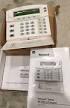 NetworX NX-6V2 LED Keypad User Manual POWER Light is on when AC power is present; flashes to indicate a low battery condition. ARMED Light is on when armed; off when disarmed; flashes to indicate a previous
DESTINY OWNER S MANUAL
 DESTINY OWNER S MANUAL DESTINY You have made a wise decision to protect your family and property with the DESTINY Security System. The DESTINY has been designed to provide you with a maximum level of security
Using your LED Plus keypad
 Using your LED Plus keypad System 238 System 2316 System 238i System 2316i Part Number 5-051-372-00 Rev B Thank you for purchasing this C&K alarm system Your system is one of the most powerful and advanced
Understanding the Code Pad lights...4. Code Pad tones...5. Fully arming the system On MODE...6. Fully arming the system - Quick Arm MODE...
 TABLE OF CONTENTS...Glossary of terms...2...code Pad Diagram...3 Understanding the Code Pad lights...4 Code Pad tones...5 Fully arming the system On MODE...6 Fully arming the system - Quick Arm MODE...6
User's Manual 5120XM N8031 6/96
 Fire and Burglary System User's Manual 5120XM N8031 6/96 SYSTEM OVERVIEW...3 General...3 Zones...3 Fire & Emergency Protection...3 Burglary Protection...4 Alarms...4 Memory of Alarm...4 ABOUT THE KEYPADS...5
Security System. User's Manual VISTA-20BAY. N7527-4 03/98 File No: S1632 SINCE 1946
 Security System User's Manual VISTA-20BAY SINCE 1946 N7527-4 03/98 File No: S1632 TABLE OF CONTENTS System Overview...4 General Information...4 Zones...4 Burglary Protection...4 Security Codes...5 Fire
GC2 Panel User Guide
 GC2 Panel User Guide ENGLISH (International) WIRELESS SECURITY SYSTEM WARNING: OWNER S I NSTRUCTION NOTICE Not to be removed by anyone except occupant THIS PAGE INTENTIONALLY LEFT BLANK CONTENTS System
Security System. User Guide for the LED Command Center
 Security System User Guide for the LED Command Center MY SECURITY COMPANY IS: CALL BEFORE TEST: THIS SECURITY SYSTEM IS CONNECTED TO TELEPHONE NUMBER: THE SECURITY CONTROL PANEL IS CONNECTED TO THE PHONE
SECURITY SYSTEM NOTES SPECIAL CODES AUXILIARY ARM / DISARM CODES ENTRY / EXIT DELAY TIMES ZONE DESCRIPTIONS
 SECURITY SYSTEM NOTES Installing/Service Company For Service Call SPECIAL CODES Master Code Duress Code "Quick Arm" Digit "Chime" Digit "Entry-Guard" Digit AUXILIARY ARM / DISARM CODES 02 12 22 03 13 23
SECURITY SYSTEM NOTES SPECIAL CODES. Security System Configuration
 Installing / Service Company: SECURITY SYSTEM NOTES For Service Call: Master Code SPECIAL CODES Duress Code Security System Configuration Auxiliary Code(s) Quick Arm" Digit: 2 9 3 10 4 11 5 12 6 13 7 14
SECURITY SYSTEM NOTES. Security System Configuration
 Installing / Service Company: For Service Call: SECURITY SYSTEM NOTES Security System Configuration Master Code: Auxiliary Code(s) 2 3 4 5 6 "Quick Arm" Digit: Exit Delay Time Auxiliary Exit Delay Time
NetworX Series. NX- 4/8 Code Pad. User Manual (Australian Version)
 NetworX Series NX- 4/8 Code Pad User Manual (Australian Version) Table Of Contents Code Pad Diagram... Inside Front Glossary of Terms...2 Understanding the Code Pad lights...3 Code Pad Tones...4 Fully
SECURITY SYSTEM MANUAL
 SECURITY SYSTEM MANUAL CONTACT NUMBERS: Phase 3 Security 403-783-2199 Technical Difficulties, Account Updates, & Any Other Inquiries: Consolidated Monitoring 1-800-232-7290 False Alarms & Holiday Procedures
SPECIAL CODES AUXILIARY CODES SYSTEM NOTES
 Installing/Service Company Monitoring Center SPECIAL CODES Master Code Duress Code AUXILIARY CODES "Quick Arm" " Chime" 08 02 09 03 10 04 11 05 12 06 13 07 14 SYSTEM NOTES Exit Delay Time Entry Delay Time
FA701 Series. User s Guide. K6249-2V2 5/09 Rev. A
 FA701 Series TouchCenter Keypads User s Guide K6249-2V2 5/09 Rev. A Table of Contents ABOUT THE TOUCHCENTER... 5 Introduction... 5 2 The TouchCenter Interface... 5 Navigating through the TouchCenter...
SCORPION. micron security products
 SCORPION 4120 6020 & 8020 USER INSTRUCTIONS Thank you for purchasing a Quality Micron Security Alarm Controller. Micron product is manufactured to exacting quality standards. We understand the importance
Wireless Security System
 Wireless Security System 2GIG-CNTRL2 (2GIG-CP2) User s Guide WARNING: Owner s Instruction Notice Not to be removed by anyone except occupant The Go!Control Security System Congratulations on your ownership
HILLS Series LED Code Pad User Manual
 HILLS Series LED Code Pad User Manual Not all features may be available on your system Check with your installer to find out which features are programmed Page 2 TABLE OF CONTENTS Code Pad Diagrams...2
USER'S MANUAL. N7527-1V2 Rev B 4/99
 USER'S MANUAL FA162C Security System N7527-1V2 Rev B 4/99 2 SYSTEM OVERVIEW... 4 General... 4 A Partitioned System... 4 Zones... 4 Burglary Protection... 5 Security Codes... 5 Fire Protection... 6 Alarms...
SECURITY SYSTEM NOTES SPECIAL CODES ENTRY / EXIT DELAY TIMES ARM / DISARM CODES
 SECURITY SYSTEM NOTES Installing/Service Company For Service Call SPECIAL CODES "Chime" Digit 1 "Partial Arm" Digit 2 "Quick Arm" Digit 3 ENTRY / EXIT DELAY TIMES Exit Delay Time Entry Delay Time Secondary
MANUAL. FA142C Security System. N7229 1V2 Rev B 4/99
 USER'S MANUAL FA142C Security System N7229 1V2 Rev B 4/99 SYSTEM OVERVIEW...3 General...3 Keypads...3 Zones...3 Burglary Protection...4 Fire Protection...4 Alarms...4 Memory of Alarm...4 Phone Access &
USER'S MANUAL. N7527-1V2 Rev B 4/99
 USER'S MANUAL FA162C Security System N7527-1V2 Rev B 4/99 2 SYSTEM OVERVIEW... 4 General... 4 A Partitioned System... 4 Zones... 4 Burglary Protection... 5 Security Codes... 5 Fire Protection... 6 Alarms...
User's Manual VIA-30PSE, VISTA-10SE. N7229V2 Rev B. 1/97
 Security System User's Manual VIA-30PSE, VISTA-10SE N7229V2 Rev B. 1/97 SYSTEM OVERVIEW...3 General...3 Zones...3 Burglary Protection...3 Chime Feature...3 Alarms...4 Fire Protection...4 Memory of Alarm...4
First Alert N8600 2/97
 USER'S MANUAL FA145C Security System First Alert N8600 2/97 SYSTEM OVERVIEW... 3 General... 3 Zones... 3 Burglary Protection... 3 Chime Feature... 3 Alarms... 4 Fire Protection... 4 Memory of Alarm...
Wireless Security System
 Wireless Security System 2GIG-CP2 User s Guide WARNING: Owner s Instruction Notice Not to be removed by anyone except occupant The Go!Control Security System Congratulations on your ownership of a Go!Control
Solution-16 Operators Manual ISSUE 1.60
 Solution-16 Operators Manual ISSUE 1.60 !"#$%&"'()*+ Operators Manual Copyright 2002 by, SYDNEY, AUSTRALIA Document Part Number MA880O DOCUMENT ISSUE 1.60 Printed 22 March 2002 This documentation is provided
HILLS Series LED Code Pad User Manual
 HILLS Series LED Code Pad User Manual Not all features may be available on your system Check with your installer to find out which features are programmed Page 2 TABLE OF CONTENTS Code Pad Diagrams...2
Accenta/Optima. User Guide. Servicing Organisation (Installer) name: Telephone Number: Date of Installation: Account Number: Honeywell Security
 Accenta/Optima User Guide ZONE 1 2 3 4 5 6 7 8 9 Chime Omit Prog PA 0 1 2 3 4 5 6 7 8 9 CHIME OMIT RESET PROG SET Accenta + TA PA DAY POWER PA! " # $ % & 0 1 2 3 5 6 7 8 Chime Omit Reset Prog 4 9 Set PA
Using Your. Security System With Icon Keypad S5020, S5021, S5022
 Using Your Security System With Icon Keypad S5020, S5021, S5022 Contents 1 Overview Your Security System... 1 How Your Security System Works... 2 Your System's Programming... 3 Getting Used to Your System...
MONITOR ISM / AFx Multi-Tenant Security System User Guide V1.3
 MONITOR ISM / AFx Multi-Tenant Security System User Guide V.3 Multi-Tenant Security System User Guide Welcome New Users! There are two types of suite security keypads. Follow the instructions in the proceeding
800-06905 6/10 Rev C
 VISTA-128BPT/ VISTA-250BPT/ VISTA-128BPTSIA Commercial Burglary Partitioned Security System With Scheduling User Guide 800-06905 6/10 Rev C Your Honeywell security system is designed for use with devices
616, 626, 636 & 646 Keypads
 616, 626, 636 & 646 Keypads User s Manual TABLE OF CONTENTS 1.0 BASIC OPERATION...2 2.0 ACCESS CODES...4 3.0 ARMING & DISARMING...6 4.0 PANIC ZONES...13 5.0 KEY ACCESS PROGRAMMING.14 6.0 ADDITIONAL FEATURES...15
User's Manual. Safewatch Pro
 S e c u r i t y S y s t e m User's Manual Safewatch Pro N7229 6V2 1/00 Model SA10ADTEG IMPORTANT! PROPER INTRUSION PROTECTION For proper intrusion coverage, sensors should be located at every possible
User Guide. N7527V2 Rev.B 11/98
 Security System User Guide N7527V2 Rev.B 11/98 2 SYSTEM OVERVIEW... 4 General... 4 A Partitioned System... 4 Zones... 4 Burglary Protection... 5 Security Codes... 5 Fire Protection... 6 Alarms... 6 Memory
Simon XTi Quick Operation Guide
 Simon XTi Quick Operation Guide This is the Quick Operation Guide for the Simon XTi system (models 600-1054-95R-12 & 600-1054-95R-12-CN). The Simon XTi provides a graphical user interface for programming
User s Guide. Security Systems D220
 User s Guide Security Systems D220 Table of Contents About This User s Guide... 3 Introduction... 3 Security System Basics... 4 Controlled Points... 5 24-Hour Points... 6 Keypad Keys... 6 Keypad Lights...
SECURITY SYSTEM NOTES AREA LISTINGS SPECIAL CODES ENTRY / EXIT DELAY TIMES ARM / DISARM CODES ZONE DESCRIPTIONS
 SECURITY SYSTEM NOTES Installing/Service Company For Service Call Area 1 Area 2 Area 3 AREA LISTINGS SPECIAL CODES "Quick Arm" Digit "Partial Arm" Digit "Chime" Digit ENTRY / EXIT DELAY TIMES Exit Delay
www.ealarm.com.my P/N 5-051-371-00 Rev D
 System 236 System 236i P/N 5-051-371-00 Rev D Thank you for purchasing this C&K alarm system Your system is one of the most powerful and advanced alarm systems on the market today, designed to provide
IDS. Users Guide to Keypad Functions S E C U R I T Y MANUAL NO. 700-171-01B ISSUED AUG 2002 VERSION 1.18
 INHEP DIGITAL IDS S E C U R I T Y Users Guide to Keypad Functions MANUAL NO. 700-171-01B ISSUED AUG 2002 VERSION 1.18 Summary of Operation A rm/ disarm [#] + [USER CODE] Quick Quick Quick Away Arm Stay
XT30/XT50. User s Guide
 XT30/XT50 User s Guide Silencing an Alarm When the alarm bell or siren is sounding, enter your user code or present your card to a keypad or reader during the Status List display. All/Perimeter or Home/Sleep/Away
Simon XT User Manual. 600-1054-95R-11 and 600-1054-95R-11-CN P/N 466-2266-02 REV B ISS 13JAN11
 Simon XT User Manual 600-1054-95R-11 and 600-1054-95R-11-CN P/N 466-2266-02 REV B ISS 13JAN11 Copyright Trademarks and patents Manufacturer FCC compliance Contact information 2011 UTC Fire & Security.
Go!Control Panel User Guide
 Go!Control Panel User Guide ENGLISH (International) WIRELESS SECURITY SYSTEM WARNING: OWNER S I NS TRUCTION NOTICE Not to be removed by anyone except occup ant CONTENTS System Overview..................
ADEMCO VISTA-48A ADEMCO VISTA-48E Security Systems
 ADEMCO VISTA-48A ADEMCO VISTA-48E Security Systems User Guide K0750-1EN 11/04 Rev. A Table of Contents Burglary System Overview...3 Basic Features... 3 Exit/Entry Delays... 3 Before Arming (Ready [ ] Key)...
GE Concord 4 Quick User Guide
 GE Concord 4 Quick User Guide GE Concord 4 Quick User Guide Page 1 Before Calling Is the keypad beeping? Press *. This will silence the beeping and let you know where the trouble is. Is there a flashing
Security System Owner s Manual
 Security System Owner s Manual Interactive Technologies Inc. 2266 North 2nd Street North St. Paul, MN 55109 FCC Notices FCC Part 15 Information to the User Changes or modifications not expressly approved
National Security Systems Inc (800)457-1999. Security System User's Guide
 National Security Systems Inc (800)457-1999 Security System User's Guide Security System Glossary As security system technology has evolved, a special jargon has developed. Some terms widely used within
Control/Communicator Installation Manual
 DAS NETWORX NX-8 Control/Communicator Installation Manual Page General Description... 2 Ordering Information... 2 Option Definitions... 2 Programming the LED Code Pads... 4 Programming the NX-8... 8 Types
Security System. User's Guide. Keypad
 Security System EN User's Guide Keypad Security System User's Guide This system includes a telephone line seizure feature. The system can be programmed to communicate with a central monitoring station
Security System User's Guide
 Security System User's Guide Security System Glossary As security system technology has evolved, a special jargon has developed. Some terms widely used within the industry are these: Arm and Disarm Your
D1260/D1260B. Keypad. National Security Systems Inc (800)457-1999. Owner's Manual
 D1260/D1260B EN Owner's Manual Keypad National Security Systems Inc (800)457-1999 D1260/D1260B Owner's Manual This system includes a telephone line seizure feature. The system may be programmed to communicate
ICP-CC404 ICP-CC404 EN. Control Panel. User s Guide
 ICP-CC404 EN User s Guide ICP-CC404 Control Panel ICP-CC404 User's Guide Copyright Notice Copyright Notice Unless otherwise indicated, this publication is the copyright of Bosch Security Systems, Inc.
HUNTER-PRO 32 Ver. 3.8 Intruder Alarm System RXN-9/416 User Guide
 HUNTER-PRO 32 Ver. 3.8 Intruder Alarm System RXN-9/416 User Guide PIMA Electronic Systems Ltd. 5 Hatzoref Street, Holon 58856, Israel +972-3-5587722 +972-3-5500442 [email protected] http://www.pima-alarms.com
Intruder alarm system Operating Instructions
 New remote keypad Intruder alarm system Operating Instructions 0 2 3 4 5 6 7 8 9 CHIME OMIT RESET PROG SET Power Power 0 2 3 5 6 7 8 Chime Omit Prog 4 9 Set AccentaG3 mini Servicing organisation details
Simon XT V2 User Manual
 GE Security Simon XT V2 User Manual P/N 466-2266-01 REV A ISS 24FEB10 Copyright Disclaimer Trademarks and patents 2010 GE Security, Inc. This document may not be copied in whole or in part or otherwise
HARDWIRED CONTROL PANELS
 USER GUIDE 9651 HARDWIRED CONTROL PANELS Contents 1. Introduction...3 The Alarm System...3 The Keypad...3 About This Guide...5 2. Everyday Operation...6 How Do I Know if the System is Working?...6 Setting
User Guide for the DS7060 Control/Communicator
 DS7060 User Guide Copyright 1996-97 Detection Systems, Inc. User Guide for the DS7060 Control/Communicator Copyright 1996-97 Detection Systems, Inc. Detection Systems, Inc., 130 Perinton Parkway, Fairport,
IDS X-Series User Manual 700-398-01D Issued July 2012
 1 2 Contents 1. Introduction to the IDS X-Series Panels... 7 2. Before Operating Your Alarm System... 7 3. Understanding the Keypad LEDs... 8 3.1 Viewing Data on an LED Keypad... 12 3.1.1 LED Status Indicators...
Users Guide to Keypad Functions
 Users Guide to Keypad Functions MANUAL NO. 700-175-01J ISSUED JAN 2002 VERSION 1.41 Summary of Operation A rm/ disarm [#] + [USER CODE] Quick Quick Quick Panic Fire Medical Away Arm Stay Arm Stay Arm &
astec Integrated Alarm System USER GUIDE
 astec Integrated Alarm System USER GUIDE 020008599 CONTENTS Full Set, Part Set and Disarm 3 Instant Full Set 3 Part Set with exit time 4 Bell Test 4 Bypassing zones 4 Switch Lights on/off 4 Bypass (24
NetworX Series. NX-148E LCD Keypad. User Manual
 NetworX Series NX-148E LCD Keypad User Manual TABLE OF CONTENTS I. GLOSSARY OF TERMS... 3 II. UNDERSTANDING THE LIGHTS... 4 III. KEYPAD FUNCTIONS... 5 ARMING YOUR SYSTEM IN THE AWAY MODE... 5 MAKING YOUR
PowerWave-8. Users Operating and Programming Guide Version 8.64. 8 zone Control panel Communicator
 ELECTRONIC ENGINEERING LTD. PowerWave-8 8 zone Control panel Communicator Users Operating and Programming Guide Version 8.64 P/N 7101261 Rev. C N.A July 2002 2 Contents Introduction...5 Meet the Crow Alarm
User's Manual AM100. N7527-3V1 Rev B 4/99
 Security System User's Manual AM100 N7527-3V1 Rev B 4/99 2 SYSTEM OVERVIEW... 4 General... 4 Zones... 4 Burglary Protection... 5 Security Codes... 5 Fire Protection... 5 Alarms.... 6 Memory of Alarm...
Using Your. Security System. With LED Keypad S5030, S5031, S5032
 Using Your Security System With LED Keypad S5030, S5031, S5032 Contents 1 Overview Your Security System... 1 How Your Security System Works... 2 Your System's Programming... 3 Getting Used to Your System...
Silencing an Alarm All/Perimeter or Home/Sleep/Away System What to do when a trouble tone is sounding
 Silencing an Alarm When the alarm bell or siren is sounding, enter your user code or present your card to a keypad or reader during the Status List display. All/Perimeter or Home/Sleep/Away System CANCEL
USER GUIDE. Go!Control WIRELESS SECURITY SYSTEM. WARNING: OWNER S INSTRUCTION NOTICE Not to be removed by anyone except occupant
 Go!Control USER GUIDE WIRELESS SECURITY SYSTEM WARNING: OWNER S INSTRUCTION NOTICE Not to be removed by anyone except occupant CONTENTS System Overview...................3 Features................................3
642 LCD Keypad User Manual
 642 LCD Keypad User Manual TABLE OF CONTENTS Introduction...3 Legend... 3 Basic Operation...5 Keypad Indicator Lights... 5 Visual Feedback... 5 Auditory Feedback... 6 Info List... 7 Access Codes...8 User
Wireless Security System
 Wireless Security System 2GIG-CNTRL2 Operation & User s Guide WARNING: Owner s Instruction Notice Not to be removed by anyone except occupant Technical Support 866-670-1591 www.2gig.com The GO!control
CONTENTS 4. HOW TO UNSET THE PANEL...7
 Pi-8 USER MANUAL CONTENTS 1. THE KEYPAD AND ITS OPERATION...3 1.1 DESCRIPTION OF THE KEYPAD LEDS... 3 1.1.1 READY LED (RED)...3 1.1.2 TAMPER LED (RED)...3 1.1.3 POWER LED (GREEN)...3 1.1.4 CIRCUIT LEDs
ADEMCO LYNXR-I Security Systems
 K14117 3/06 Rev. A ADEMCO LYNXR-I Security Systems Quick Start Guide UL LYNXR-I is not intended for UL985 Household Fire applications unless a 24-hour backup battery (P/N LYNXRCHKIT-HC or LYNXRCHKIT-SHA)