
INSTALLATION AND OPERATION INSTRUCTIONS
|
|
|
- Allan Ward
- 9 years ago
- Views:
Transcription
1 TM Eagle Explorer INSTALLATION AND OPERATION INSTRUCTIONS TM 1
2 Copyright 1996 Eagle Electronics All rights reserved. Eagle Explorer is a trademark of Eagle Electronics Eagle is a registered trademark of Eagle Electronics WARNING! USE THIS UNIT ONLY AS AN AID TO NAVIGATION. A CAREFUL NAVIGATOR NEVER RELIES ON ONLY ONE METHOD TO OBTAIN POSITION INFORMATION. Never use this product while operating a vehicle. CAUTION When showing navigation data to a position (waypoint), this unit will show the shortest, most direct path to the waypoint. It provides navigation data to the waypoint regardless of obstructions. Therefore, the prudent navigator will not only take advantage of all available navigation tools when travelling to a waypoint, but will also visually check to make certain a clear, safe path to the waypoint is always available. The storage temperature for your unit is from -4 degrees to +167 degrees Fahrenheit (-20 to +75 degrees Celsius). Extended storage temperatures higher or lower than specified will cause the liquid crystal display to fail. Neither this type of failure nor its consequences are covered by the warranty. For more information, consult the factory customer service department. All features and specifications subject to change without notice. Eagle Electronics may find it necessary to change or end our policies, regulations, and special offers at any time. We reserve the right to do so without notice. All screens in this manual are simulated. 2
3 INTRODUCTION... 5 INSTALLATION... 6 BATTERY INSTALLATION... 6 EXTERNAL POWER... 7 KEYBOARD... 7 OPERATION... 8 TURNING POWER ON... 8 MENUS... 8 FINDING YOUR POSITION... 8 COLD START... 8 INITIALIZATION... 9 POSITION/NAVIGATION DISPLAYS NAVIGATION SCREENS PLOTTER SCREENS PLOTTER CURSOR PLOTTER OPTIONS PLOTTER ORIENTATION CLEAR PLOT TRAIL GRID LINES PLOTTER UPDATE ICONS PLACE ICON - CURSOR LOCATION ERASE ICONS WINDOWS SATELLITE INFORMATION SCREEN CLOCK CLOCK ALARM TIMERS REPROGRAM BOXES WAYPOINTS SAVING YOUR PRESENT POSITION (QUICK SAVE) SAVING CURSOR POSITION SAVING YOUR PRESENT POSITION EDIT WAYPOINT LAT/LON EDIT WAYPOINT NAME MOVE A WAYPOINT DISTANCE BETWEEN WAYPONTS WAYPOINT OPTIONS DELETE A WAYPOINT ROUTES CREATE A ROUTE SELECT WAYPOINTS FOR ROUTE FINISHING THE ROUTE DELETE A WAYPOINT FROM ROUTE EXPLORER WAYPOINT DETAIL FOLLOW A ROUTE DELETE A ROUTE NAVIGATION NAVIGATE TO A WAYPOINT NAVIGATE TO A CURSOR LOCATION NAVIGATING TO A WAYPOINT USING THE PLOTTER CANCEL NAVIGATION SYSTEM SETUP CONTRAST UNITS OF MEASURE
4 POSITION FORMAT NMEA/DGPS NMEA OUTPUT DGPS SERIAL COMMUNICATION SETUP RESET OPTIONS RESET GROUPS SYSTEM INFO GPS SETUP EXECUTE GPS COLD START DATUM PCF POSITION PINNING ALARMS MESSAGES SIMULATOR STARTING POSITION USER ARROW KEYS TO STEER BACKLIGHT DEFINITION OF TERMS/ABBREVIATIONS WINDOW GROUPS WARRANTY STATEMENT UPS RETURN SERVICE ACCESSORY ORDERING HOW TO OBTAIN SERVICE - INTERNATIONAL...INSIDE BACK COVER HOW TO OBTAIN SERVICE - U.S.A. ONLY... BACK COVER 4
5 Congratulations! You have purchased one of the finest 12-channel GPS receivers Eagle has ever made. With its high contrast LCD screen, easy to use menus, and outstanding performance, we think you ll be happy with your Eagle Explorer for many years. GPS works from satellites that transmit information to the world at very high frequencies. One disadvantage to this frequency is that it s line-ofsight. In other words, the signals don t bounce around like your local radio or television. If you don t have a clear view of the sky, or if you re inside a building (such as a house), the unit probably won t be able to pick up the signals from the satellites. This is common among all GPS receivers. Like most GPS receivers, your Eagle Explorer doesn t have a compass or any other navigation aid built into it. It relies solely on the signals from the satellites to determine its position. Speed, direction of travel, and distance are all calculated from position information. Therefore, in order for it to determine the direction you re travelling, you must be moving, and the faster - the better. This is not to say the unit won t work at walking speeds - it will. But the faster you travel, the easier it is for the unit to determine your direction. Another factor that influences the GPS position and navigation capabilities is called selective availability or S/A. This is small errors purposefully injected into the transmitted signal from the satellites. The government does this to degrade the system s accuracy to civilian and foreign users. Even with S/A, GPS is the most accurate navigation system ever invented on such a large scale. The Government s accuracy specification is 100 meters horizontally and 150 meters vertically 95% of the time. In other words, the position shown on your Eagle Explorer could be up to 100 meters in any direction from your actual position, and the altitude could be plus or minus 150 meters from what s shown on the screen, 95% of the time. There are two ways around the S/A problem. One is to have the government simply turn it off. In fact, there is growing pressure on them to do that, but it s not likely to happen anytime soon. The other method is to purchase a DGPS receiver and connect it to your Eagle Explorer. A DGPS receiver (commonly called a beacon receiver), picks up correction signals broadcast from ground stations. The Eagle Explorer takes these corrections and applies them to the position and altitude screens, giving you much better accuracy. 5
6 Even with S/A on, and without a DGPS receiver, your Eagle Explorer gives you outstanding position and navigation information. Most people are amazed when they actually use a GPS receiver and see what it does. Please sit down with the unit and this manual and familiarize yourself with them before using the Eagle Explorer in the real world. A simulator is built in, which lets you practice. INSTALLATION The Explorer will operate from four AA batteries, one DuraCell rechargeable battery, or from 6 to 16 volts DC. An optional cigarette lighter adapter is available to plug into a car or boat s electrical system. The Explorer automatically switches to external power when it s plugged into the unit. If, for any reason, the external power fails, the unit will automatically switch to the batteries. The Explorer does not require batteries when the external power is in use, however they make a good backup in case of power failure. BATTERY INSTALLATION For battery operation, the Explorer requires four AA batteries or the optional DuraCell rechargeable battery. We recommend DuraCell alkaline batteries, but other brands will work. You can also use rechargeable nicad batteries (however, they won t last as long as standard alkalines). Rechargeable alkaline batteries such as RayOVac Renewals will also work. Do not use heavy-duty batteries or any battery type other than the ones listed above. Do not mix different types of batteries. (For example, don t use both alkaline and ni-cad batteries at the same time.) To install the batteries, first turn the over on its back. Now push the two tabs to the left and raise the battery cover as shown below. The bottom part of the case holds the batteries. 6
7 There are + and - marks on a decal at the bottom of the battery compartment. Place the batteries into the compartment according to the marks and replace the battery cover. The Explorer is now ready for use. EXTERNAL POWER Instead of batteries, the Explorer can operate on 6 to 16 volts DC from an external power source. To use external power, an adapter cable must be purchased (model CA-2) that will plug into your vehicle s cigarette lighter. To use this cable, simply plug one end into the connector on the Explorer and the other end into the cigarette lighter. KEYBOARD The keyboard has twelve keys. The arrow keys are tied to most of the features, letting you easily move the plotter s cursor, navigate through the menus, make selections from menus, and other tasks. MODE WPT MENU EXIT ZOUT ZIN ENT PWR The WPT key lets you create, save, and recall waypoints and routes. The MODE key switches the unit between the three major displays: windows, navigation, and plotter. To select different features, or to modify functions, press the MENU key. The Z-IN and Z-OUT keys zoom-in and zoomout your view on the plotter screen. The ENT and EXIT keys let you enter or erase selections. The PWR key turns both the Eagle Explorer and it s lights on and off. Note: To prevent an accidental power shutdown, you must hold the PWR key down for a few seconds in order to turn the unit off. 7
8 OPERATION Turning Power On To turn the Eagle Explorer on, simply press the PWR key. A screen similar to the one at right appears. Read the message on the screen, then press the EXIT key to erase it. The Explorer is now ready for use. MENUS Most of the Eagle Explorer s adjustments and features are found on menus. Pressing the MENU key lets you view the menus. Different menu items are added to the basic list, depending on which mode (plotter, navigation, or windows) the unit is in. This gives you the features that are specific to the mode you are in, but also has items that are used on all modes. Pressing the up or down arrow keys moves the black box to highlight different menus on the list. Pressing the right arrow key selects the highlighted menu item. To erase a menu, press the EXIT key. Finding Your Position Cold Start When the Eagle Explorer is turned on for the very first time, it doesn t know where it is, nor what the local time or date is. If you tell it your position, time, and date, the unit will take much less time to lock-on to the satellites and give you a fix or position. However, if you don t want to push buttons at this time, that s fine. The Eagle Explorer will lock onto the satellites and give you a position without any input from you. This is called a cold-start. It simply means that the unit is searching without help for the satellites that are in orbit. A coldstart can take over two minutes to acquire enough satellite data to determine your position, although it typically takes less time than that. 8
9 To use your Explorer, first make certain you have a clear view of the sky, free from any obstructions such as trees or buildings. Also, don t try to use it under a carport, covered boat dock, or inside a building. Turn the power on, press the EXIT key to erase the opening message and watch the display. As you wait for the Eagle Explorer to find your position, you ll see numbers flashing on the display. Anytime you see flashing numbers, it means the Eagle Explorer does not have a position! Do not rely on any data that is flashing! Once the Explorer locks on to the satellites and finds your position, it shows a Position Acquired message on the screen. It also stores the satellite data in its memory. The next time you use the unit, it should take much less time to lock on. That s all you have to do to find your position. Your local time display may not be correct when the cold start method is used. See the initialization section for details on changing the time. Finding Your Position Initialization A cold-start as described above can take over two minutes to find your position. A faster method is to initialize the Eagle Explorer manually. To do this, first press the PWR key. Next, read the message on the screen and press the EXIT key to erase it. Now press the MENU key. Press the up or down arrow keys until the GPS SETUP menu is highlighted. Now press the right arrow key. Next, using the down arrow key, highlight the INIT GPS (initialize GPS) menu, then press the right arrow key. The screen shown at right appears. This is the GPS initialization screen. The position, altitude, time, and date the Eagle Explorer is currently using to find the satellites is shown at the bottom of this screen. Changing these values to your local position and time will speed the position lock. 9
10 To change the position, press the right arrow key while the LAT/LON EDIT box is highlighted. The screen shown at right appears. If your latitude is south, press the up or down arrow key to change it. If it is north, press the right arrow key to move the change box to the first number in the latitude. Now press the up arrow key to increase the number or the down arrow key to decrease it. Once the first number in the latitude is set, press the right arrow key once to move to the next number in the latitude. Keep pressing the arrow keys until the latitude and longitude are set to your local position. (Note: This position does not have to be very accurate. If you can get it within one degree of your actual position, that will be fine.) When it s set, press the ENT key. The Explorer accepts your entry and returns to the GPS setup menu. Now change the local time and date (if they re incorrect) on this screen. (Don t worry about altitude.) When everything is acceptable, press the EXIT key repeatedly to return to a mode screen. The Explorer will instantly use the data you entered to find the satellites in the sky. (The unit knows which satellites will be available at the position, date, and time you entered. Therefore, it will only look for those satellites, making the search time much shorter than a cold start which looks for all of the satellites until it finds three.) Once the Eagle Explorer finds and locks on to three satellites, it stops flashing the numbers on the display. (Note: Altitude will still flash until the unit locks on to the fourth satellite. It takes four satellites to determine altitude.) IMPORTANT! If the data shown in digital numbers on any screen is flashing, it means that data is invalid. DO NOT RELY ON ANY NUMBERS THAT ARE FLASHING! Usually, this happens when the Eagle Explorer has lost its lock on the satellites. The data that is flashing was the last known when the unit lost its navigational capability. DO NOT NAVIGATE WITH THIS UNIT UNTIL THE DATA STOPS FLASHING! 10
11 POSITION/NAVIGATION DISPLAYS The Eagle Explorer has navigation, plotter, and windows group modes. These screens were designed to show data that is used most often. The three default screens are shown below. NAV-1 PLOT-1 GROUP A To change screens, simply press the MODE key. A screen similar to the one at right appears. Now press the up or down arrow keys to change modes. (The windows display is shown as "GRP" (groups). For example, Group A is the first windows group on the MODE menu.) Press the right arrow key to see more screens on each mode. When the desired screen appears, press the EXIT key to clear the menu. Note: For a list of abbreviations used on the displays, see the back of this manual. Navigation Screens There are two navigation screens. Nav screen number one shows a graphical view of your trip, the other screen shows all navigation details in large digital numbers. You can customize the navigation screens to show different data than the ones chosen by Eagle. See the Customize Screen section for more details. 11
12 Nav Screen #1 This screen is dominated by a compass rose (See the screen at right.) Your position is in the center of the circle, designated by an arrow that always points straight up. Your track (direction of travel) is indicated by an arrow pointing down toward the compass rose at the top center of the screen. Your track in digital numbers is also shown to the right of the arrow. On the screen shown at right, the track is 167. The line extending behind the arrow in the center shows your track history, or path you ve travelled. Your speed over ground or Ground Speed (GS) shows in the digital box in the bottom left corner of the screen. The screen looks like the one above when you re not navigating to a waypoint. (See page 28 for information on waypoint navigation.) If you navigate to a waypoint, the screen looks like the one at right. NAV-1 The bearing to the destination waypoint is shown in the upper left corner of the screen. Bearing is also shown by the large arrow pointing up to the compass. The bearing is 176 on the screen at right. The lines on either side of the present position arrow show the cross track error range. In other words, (using the screen above as an example) if the arrow crosses the line on either side, you are.10 miles to the left or right of the desired course. A circle depicting your destination appears on the screen as you approach the waypoint as shown on the screen at right. The digital boxes on the bottom of the screen show your distance to go to the destination (DIS), ground speed (GS), cross track error (XTK), and course (CRS). Course (CRS) is the bearing from your starting location to your destination. (Remember, course 12
13 has nothing to do with your present position, except for your starting location.) It s shown as a dotted line on the NAV 1 display. This is shown as a reminder so that if you deviate from your original course, you can easily return to it. (A course is a proposed path over the ground. A track is your actual path over ground.) Nav Screen #2 This navigation screen shows navigation information in large digital numbers. To view this screen, press the MODE key, then press the up arrow key until the NAV 1 label is highlighted. Now press the right arrow key. A screen similar to the one at right appears. Press the EXIT key to erase the mode menu. This screen is composed of eight digital display boxes, showing your track (TRK), and ground speed (GS). The other boxes show navigation data when a waypoint is recalled, including bearing to the waypoint (BRG), course (CRS), distance to waypoint (DIS), estimated time en route (ETE), and cross track error (XTK) along with a CDI. See below for more information on the CDI. Course Deviation Indicator (CDI) The CDI shows your distance to the left or right of the desired course. You must recall a waypoint or run a route to use the CDI. The vertical line in the center of the box shows the direction to the destination. For example, if you re travelling straight towards the destination, the line stays in the center of the CDI. If you turn to the right, the line moves to the left, showing that the destination is to your left.the CDI s range shows in the upper left corner. The default is 0.25 mile. The dots at the far right and left side of the CDI represent 0.25 mile. If the line is on either of these dots, then you are 0.25 miles off course. Remember, if the bar moves to the left, then you are too far to the right of the desired course line, and vice-versa. On the indicator shown above, we are almost 0.2 mile to the left of the desired course. You can adjust the CDI s range through the ALARMS/CDI menu. Using the CDI with the plotter helps you visualize your position in relation to the course. The CDI is on several of the Explorer s windows. 13
14 Plotter The plotter lets you see your course and track from a birds-eye view. If you ve recalled a waypoint, the plotter show your starting location, present position, and destination. However, you don t have to recall a waypoint to use the plotter. To use the plotter, simply press the MODE key, then press the up or down arrow keys until the Plot label is highlighted. Press the EXIT key to erase the mode menu. A screen similar to the one at right appears. This is plot-1. The diamond flashing in the center of the screen is your present position. The solid line extending from the diamond is your track, or path you ve travelled. The plotter s range is shown in the lower left corner of the screen. In this example, the plotter s range is two miles from the left edge of the screen to the right. There are two different plotter screens available. Plot screen number 1 shows by default. Your current position displays at the center of the screen as a cross surrounded by a flashing diamond. To view the other plotter screen, press the MODE key. Press the up or down arrow key to move the black box to the "PLOT" label. Now press the right arrow or left arrow key to select plot-2. This screen (as shown at right) has navigation data displayed at the bottom of the screen in digital numbers. This data is active whenever you ve recalled a waypoint. Press the EXIT key to erase the mode menu. This screen shows bearing to waypoint (BRG), distance to waypoint (DIS), ground speed (GS), and track (TRK). Use the Z-IN and Z-OUT keys to enlarge or reduce the plotter area. This changes the plotter s range. The available ranges are: 0.1, 0.15, 0.2, 0.3, 0.4, 0.6, 0.8, 1, 1.5, 2, 3, 4, 5, 6, 8, 10, 15, 20, 30, 40, 60, 80, 100,150, 200, 300, 400, 600, 800, 1000, 1500, and 2000 miles. Cursor Pressing an arrow key while the plotter is on shows two dotted lines that intersect at your present position. These dotted lines are called a cursor and have a variety of uses. 14
15 You can move the cursor around the display by pressing the arrow keys in the direction you want it to move. This lets you view different areas of the plotter, away from your present position. When it s turned on, the zoom-in and zoom-out keys work from the cursor s position - not the present position, so you can zoom in on any detail, anywhere while navigating. The latitude/longitude of the cursor shows in the box at the top of the plot-1 screen whenever the cursor is activated. The cursor is also used to place and erase icons and waypoints. Press the EXIT key to erase the cursor. PLOTTER OPTIONS The Eagle Explorer lets you customize the plotter using the Plotter Options menu. To use this menu, first press the MENU key, then use the up or down arrow keys to highlight the Plotter Options label. Finally, press the right arrow key. The screen shown at right appears. Plotter Orientation Normally, the Eagle Explorer shows the plotter with north always at the top of the screen. This is the way most maps and charts are printed on paper. This is fine if you re always travelling due north. Waypoints you see to your left corresponds to the left side of the plotter, to your right shows on the right side of the plotter, and so on. However, if you travel any other direction, the plotter doesn t line up with your view of the world. To correct this problem, the Eagle Explorer has a track-up mode that rotates the plotter as you turn. Thus, what you see on the left side of the screen should always be to your left, and so on. It also has a course-up mode that keeps the plotter at the same orientation as your initial bearing to the waypoint. 15
16 In the examples shown below, we're travelling southeast (about 150 magnetic). In the north-up view, the present position indicator appears to move towards the lower right corner of the screen. The anchor icon shown on the right side of the screen is actually on our left. North is always at the top center of this screen. NORTH-UP MODE TRACK-UP MODE COURSE-UP MODE In the track-up view, the present position symbol (which has changed to an arrow) moves straight towards the top of the display. As you can see, the anchor icon is now shown in its proper orientation - to our right. A "N" shows to help you see which direction is north when the track-up mode is on. Remember, in the track-up mode, the screen rotates as you change direction. It always keeps your direction of travel (track) heading towards the top of the screen. In the course-up mode, the screen is locked into your original bearing to the recalled waypoint, regardless of your track. To select the desired mode, highlight the ROTATE label on the Plotter Options menu, then press the left or right arrow keys until the desired mode appears. Press the EXIT key to leave this menu Clear Current Plot Trail The line extending from the present position diamond on the plotter shows the path you ve taken, This is the plot trail. To erase the plot trail, highlight the ClearTrail label on the Plotter Options menu, then press the right arrow key. A message box appears, asking you if you really want to erase the plot trail. Follow the directions on this message box. The Explorer returns to the plotter screen with the plot trail erased from the screen. 16
17 Grid Lines The Eagle Explorer can place grid lines on the plotter to help you see your position, or the position of waypoints and icons. To do this, highlight the Grid label on the Plotter Options menu, then press the right arrow key to turn them on. Press the EXIT key to exit this menu. A plotter screen similar to the one at right appears. The grid lines appear as vertical and horizontal dashed lines. GRID LINES Plotter Update The plotter places a dot on your trail as you move. It determines when to place a dot depending on either time or distance. By default, it places a dot every three seconds. To change the update method from time to distance, highlight the Update By label, then press the right arrow key. This moves the label from TIME to DIST. If you want to change the update time or distance, simply highlight either the UPDT RATE to change the update time or the UPDT DIST to change the update distance, then press the left or right arrow keys until the desired setting appears. Press the EXIT key to erase the plotter menu. ICONS The Eagle Explorer has fifteen symbols or icons available. These icons can be placed anywhere on the plotter screens. These can be used to mark fishing or hunting spots, boat ramps, rest stops, or whatever. You can place an icon at your present position, or at the cursor location. Place Icon - Present Position To place an icon at your present position, simply press the ENT key. The screen shown at right appears. Use the arrow keys to move the black box to the desired icon. Now press the ENT key. The plotter screen appears with the icon you selected placed at your position when you first pressed the ENT key, not your present position. 17
18 Place Icon - Cursor Location To place an icon at cursor's location, first use the arrow keys to move the cursor to the position that you want to place the icon. Next, press the ENT key. Now select the desired icon using the arrow keys. When it's selected, press the ENT key again. The plotter screen reappears with the icon at the cursor's location. Press the EXIT key to erase the cursor. On the screens shown below, the house icon was selected and placed at the cursor location. PLACE CURSOR PRESS ENT KEY AND SELECT ICON ICON ON PLOTTER Erase Icons To erase an icon from the screen, first press the MENU key, then select the WPT/Icon Options menu. A screen similar to the one at right appears. There are three methods used to erase icons from the screen. You can delete all of the icons, regardless of their position on the display, delete all of the icons of a certain type, or selectively erase individual icons. You can also simply turn all of the icons off without erasing them. To turn all of the icons off, without erasing them, highlight the ICONS OFF ON label, then press the left arrow key. To erase all of the icons, highlight the DEL ALL ICONS menu, then press the right arrow key. A message appears, asking you if you want to delete all icons. Press the right arrow key to erase them. The unit returns to the plotter screen with all icons deleted. 18
19 To remove only icons of a certain type, highlight the DEL ICON TYPE label. Press the right arrow key. The icon selection menu appears. Use the arrow keys to highlight the icon style that you wish to erase. Press the ENT key when you re ready to erase the icons. A message appears, asking you if you want to delete the icons of that type. Press the left arrow key to erase them. The unit returns to the plotter screen with all icons of the type you selected erased. To remove only certain icons, highlight the DEL FROM PLOTTER label. Press the right arrow key. The unit returns to the plotter screen with the cursor centered on your present position as shown at right. Use the arrow keys to move the cursor to the icon on the map that you wish to erase. Press the ENT key to erase the icon. If you wish to delete another icon, move the cursor over it and press the ENT key. When you re finished, press the EXIT key to erase the cursor. WINDOWS This feature gives you 15 different groups of windows so you can use the best navigation display for your situation. To use the windows feature, press the MODE key, then highlight the GROUP A label as shown at right. Group A is visible in the background when you switch to the windows groups. To view each group, simply press the right or left arrow key while the mode menu is showing. Each group shows in the background as you press the arrow keys. When you see the group you want to use, simply press the EXIT key to erase the mode menu. 19
20 Satellite Information Screen (Group O) This screen shows technical information about the status of the GPS receiver. The receiver has twelve channels. Data for each channel is shown as bar graphs on the right side of the display. Every satellite in the constellation has a number assigned to it, called the PRN. The bar graph is beside each satellite s number. The higher the bar on the graph, the better the signal is being received from the satellite. Each satellite is also shown on the circular graph at the top of the screen. This shows you not only which satellites are in your area, but also their direction from your position, and their elevation (distance above the horizon.) The small inner circle represents 45 above the horizon and the large outer circle represents the horizon. A satellite is straight above you when it is at the intersection of the horizontal and vertical lines that pass through the circles. The FIX number in the upper right corner of the screen show the quality of fix. If the FIX is 9, then it's the best you can get. A FIX of 1 is the worst. CLOCK Whenever a clock, timer, or alarm is showing on a display, new items appear in the list when you press the MENU key. These items let you set the clock s time, alarms, or the timers. Set Local Time If the time shown on the clock display is not your local time, change it using the Set Local Time function. To do this, press the MENU key, then highlight the Set Clock label. Press the right arrow key. The screen at right appears. Using the right and left arrow keys, move the black box to the first number in the time that you want to change. Now press the up or down arrow keys until the desired number shows. Continue until the time shown in the display is correct, then press the ENT key. This enters the new time and erases the set local time menu. 20
21 Clock Alarm You can set the alarm by using the Clock Alarm menu. To set this alarm, press the MENU key while group J is showing, then highlight the Clk Alm Set label. Press the right arrow key. The screen shown below appears. Using the right and left arrow keys, move the black box to the first number in the time that you want to set. Now press the up or down arrow keys until the desired number shows. Continue until the time shown in the display is correct, then press the ENT key. The alarm is now set. To turn the alarm on, press the MENU key, then highlight the CLK ALM menu. Press the right arrow key. The alarm is now activated. When the alarm goes off, a message flashes on the screen. Press the EXIT key to turn the alarm off. Note: The Eagle Explorer must be on in order for the alarms to work. In other words, if you set the alarm to go off at 7:00 a.m., then the Eagle Explorer will have to be on at 7:00 a.m., also. Timers The Eagle Explorer has two timers built in. One is a countdown timer and the other is a count-up timer. The countdown timer counts down from the time you put in to zero. The count-up timer starts at zero and counts up to the time you entered. To set either timer, first switch to a window group with a timer. Next, press the MENU key, then highlight the desired timer set menu. In this example, we re setting the countdown timer. Now press the right arrow key. A screen similar to the one at right appears. Using the right and left arrow keys, move the black box to the first number in the time that you want to set. (The time is in hours, minutes, and seconds) Now press the up or down arrow keys until the desired number shows. Continue until the time 21
22 shown in the display is correct, then press the ENT key. To start the timer, press the MENU key, then move the black box to the Dn Tmr Off On label. Press the right arrow key to start the timer. The timer continues counting until you stop it. If you turn the up timer s alarm on (press the right arrow key when the black box is on the (Up ALM...Off/ On label), it will flash a message when it reaches the time you entered in the up timer set menu. Press the EXIT key to erase the message. You can reset either alarm to the time you originally set by pressing the MENU key, then moving the black box to either the Up Tmr Reset or DN Tmr Reset label, then press the right arrow key. REPROGRAM BOXES The digital boxes on the PLOT-2 and both NAV screens can be reprogrammed. The changes you make to the screen will remain in memory, even if all power is removed from the unit. You can, however, return the boxes to the factory settings from the Preset Groups item in the System Setup menu. To customize a screen, first switch to the screen that you want to customize. In this example, we ll change Plot-2. Next, press the MENU key, then highlight the Reprgr Boxes menu. Press the right arrow key. The screen shown below center appears. This is the plot-2 edit screen. The BRG box near the left corner flashes, which means it s ready for change. If you don t want to change this box, 22
23 simply press the up or down arrow key to move to the box that you do want to change. In this example, we will change the BRG box to altitude (ALT). To do this, simply press the left or right arrow key while the box is flashing. The box changes each time the arrow key is pressed. When the desired box appears, then you can change another box or save your changes by pressing the ENT key. If you want to leave this screen without saving the changes, simply press the EXIT key. In this example, we simply changed the BRG to ALT, then pressed the ENT key. The screen at right is the final version. Use this same method to change the NAV screens. WAYPOINTS The Eagle Explorer gives you the capability of creating your own database of locations, called waypoints. You can save your present position, cursor position, or enter a latitude/longitude and save it as a waypoint. The Eagle Explorer can store up to 250 waypoints. Saving Your Present Position as a Waypoint (Quick Save Method) To save your present position, simply press the WPT key twice. The Eagle Explorer puts your current position into the first available waypoint number on the list. A message appears on the display telling you the waypoint number it just used. This also momentarily places you in the database menu. Anytime a database menu is showing, simply press the WPT key once and the unit will store your present position in the waypoint list. Every time you save a waypoint, the date and time are logged along with the position data. It s position is also placed on the plotter as shown above. In this case, waypoint number one was assigned when we quick-saved our position. Saving The Cursor Position as a Waypoint When the cursor is showing on the plotter and you press the WPT key twice, the Eagle Explorer puts the cursor s position into the first available waypoint number. In the example screen shown at right, the cursor is placed at the desired location. Pressing the WPT twice causes waypoint number two to be placed at the cursor s crosshairs. (See the screen at the top of the next page.) A message appears on the display telling you the 23
24 waypoint number it just used. Wait a few seconds and the menu will clear automatically. Press the EXIT key to erase the cursor. Saving Your Present Position as a Waypoint (Select Number Method) The method shown above doesn t let you choose the waypoint number. You can pick the waypoint number, then save your present position. To do this, first press the WPT key once. A screen similar to the one at right appears. Now press the up arrow key once. This is the waypoint number selection menu. Press the left or right arrow keys until the waypoint number appears that you wish to store your present position. In this example, we re going to store a position as waypoint number 6. Now press the down arrow key until the WPT Options label is highlighted. Press the right arrow key. A screen similar to the one shown at right appears. Highlight the SaveWPT As label (shown at the bottom of the menu) and press the right arrow key when you re at the location you wish to save. This saves your present position under the waypoint number you selected on the first page. Saving Cursor Position as a Waypoint (Select Number Method) To save the cursor position under a specific waypoint number, first position the cursor at the de- 24
25 sired position. Then follow the previous instructions for saving your present position as a waypoint using the select number method. Remember, the method of saving your present position and the cursor s position is identical. Edit Lat/Lon The Eagle Explorer lets you enter any latitude/ longitude using the keyboard and save it under any waypoint number, from 1 to 250. You can also change any waypoint s position using this method. To do this, first select the waypoint number that you want to save a position under from the waypoint menu. In this example, we ll use waypoint number 10. Next, highlight the Options menu and press the right arrow key. Now highlight the Edit Lat/Lon menu and press the right arrow key. The screen shown at right appears. Using the left and right arrow keys, highlight each number in the position and change it using the up and down arrow keys. When you re ready to save this position and return to the waypoint screen, press the ENT key. The location you entered shows at the bottom of the screen under the waypoint number you selected. Note: You can also use this method to change the position of an existing waypoint. WAYPOINT NAMES The Explorer automatically assigns the waypoint number as a name when the waypoint position is saved. You can find a waypoint by highlighting the name on the waypoint menu as shown below left. Now press the right arrow key. The screen shown below right appears. Use the arrow keys to scroll through the saved waypoints. Only waypoints that have a position will show using this method. 25
26 Edit Name The Eagle Explorer also lets you assign a name to each waypoint. The name can have up to eight characters. To name a waypoint, first select the waypoint number that you wish to name. Now highlight the WPT Options label and press the right arrow key. Finally, highlight the EDIT NAME label and press the right arrow key. A screen similar to the one at right appears. Press the up or down arrow keys to select the first letter in the name. Press the right arrow key to move the black box to the next position in the name. Repeat this sequence until you ve entered all of the letters in the waypoint name. Press the ENT key to accept this name, the WPT key to erase all characters in the name, or the EXIT key to leave this screen without saving any changes. MOVE A WAYPOINT You can move all information from one waypoint number to another. In this example, we ll move all of the information in waypoint number 10 to waypoint number 20. To do this, highlight the waypoint options label on the waypoint screen and press the right arrow key. Now highlight the Move WPT label. Press the right arrow key. The screen shown at right appears. The black box is resting on the From label. Now press the down arrow key once to highlight the Number label. Press the left or right arrow key until the number 10 appears. Now highlight the TO label, as shown below. Highlight the Number label, then press the right arrow key until the desired waypoint number shows in the box. When everything on this page is correct, press the ENT key. Note:The names in the From and To boxes are not the waypoint numbers - they are the waypoint names. When a waypoint is moved from one number to another, the new waypoint number gets the old waypoint name. For example, moving waypoint number 2 to waypoint number 5 deposits the name WPT 2 in waypoint 5 s name field. 26
27 DISTANCE BETWEEN WAYPOINTS The Eagle Explorer can easily give you the distance between two user waypoints. To do this, first press the WPT key, highlight the Options menu and press the right arrow key, then highlight the Dist Btwn WPTS label and press the right arrow key. The screen at right appears. The black box is resting on the WPT B label. Now press the down arrow key to highlight the waypoint number label. Press the left or right arrow keys until the desired waypoint appears in the WPT B box. Once you have the first waypoint showing on the screen, then you need to choose the other waypoint that you re going to measure. Move the black box back to the Select label at the top of the screen, then press the left arrow key to select A. Now choose the waypoint that you wish to measure. The distance and bearing from the first waypoint A to the second waypoint B shows at the bottom of the screen. You can select more waypoints to measure at this time or press the EXIT key to erase this screen. WAYPOINT OPTIONS You can customize the look of the waypoints on the plotter, or even turn them off. To do this, first press the MENU key, then highlight the WPT/ Icon Opts label. Press the right arrow key. The screen shown at right appears. To keep the waypoints from showing on the plotter, simply press the right arrow key when the Waypoints label is highlighted. To change the method waypoints show on the plotter, highlight the SHOW WPT label. The default is numbers. In other words, when the waypoint shows on the plotter, it s number appears in a box, showing both its identity and location. You can change this from number to name, or simply an empty box (position) showing no identifiable name or number by pressing the left or right arrow keys until the desired method appears. Now press the EXIT key. This erases the menu and returns to the plotter with your selection. 27
28 Delete a Waypoint To erase all of the information in a waypoint, first press the WPT key, then select the waypoint you want to erase. Now highlight the Options label and press the right arrow key. Finally, highlight the Delete WPT label and press the right arrow key. A message appears, asking if you really want to delete this waypoint. Press the right arrow key to delete it, the left to exit without deleting the waypoint. ROUTES You can connect several user waypoints together to form a route. When you recall the route, the Eagle Explorer will show you navigation information to the first waypoint in the route, then when you reach that waypoint, it switches to the next waypoint, and so on until you reach the last waypoint in the route. To create a route, first press the MENU key, highlight the PLAN/EDIT ROUTES label, and press the right arrow key. The screen shown at right appears. This unit can store up to twenty different routes. Route number one shows on this page. If you wish to create a route using a different number, simply press the left or right arrow keys until the desired route number appears. In this example, however, we ll use route number one. At the bottom of this menu is the Edit Name label. If you wish to name the route, highlight that label, then press the right arrow key. Use the arrow keys to name the route, (you can use up to eight characters in the name) then press the ENT key when you re finished. To add waypoints to the route, highlight the Edit Route label and press the right arrow key. The screen shown at the top of the next page appears. This is the waypoint list screen. This shows all of the waypoints 28
29 that form the route. To select the first waypoint in the route, press the right arrow key. A new menu appears as shown below right. This menu lets you go to the waypoint selection menu, delete a waypoint from the route, or see details about any waypoint in the route. Since we want to add a waypoint to the route, press the right arrow key on the Insert From WPTS label. The screen shown below appears. Select Waypoints Select the first waypoint either by using the waypoint number at the top of the screen or waypoint name menus. As you move through the list of saved waypoints, their date and time saved, position, and distance and bearing from your present position show at the bottom of the screen. When the desired waypoint appears that you want to use as the first waypoint on the route, move the black box to the Add WPT label, then press the right arrow key. The unit returns to the route planning screen with this waypoint placed in the first location on the list. To add more waypoints to the route, simply press the down arrow key to the next position on the list and press the right arrow key. Continue until all of the waypoints have been added to the route. 29
30 As you add waypoints to the list, their bearing and distance from each other is shown to the right of the waypoint name. On the screen at right, waypoint 2 is on a bearing of 133 and 4.68 miles from waypoint 1. The total route distance is shown at the bottom of this screen. Finishing the Route When you ve selected all of the waypoints for the route, simply press the EXIT key until you return to the navigation, plotter, or windows screen. Your route is saved in memory. Delete a Waypoint To delete a waypoint from a route, first select the route, then highlight the EDIT ROUTE label and press the right arrow key. Now highlight the waypoint that you want to remove from the route s list. Press the right arrow key. The screen shown at right appears. Highlight the Delete label on this menu and press the right arrow key. The unit returns to the route list with the waypoint removed from the list. (Note: This doesn t delete the waypoint from the database, it only removes it from the route.) Waypoint Detail To view the position, bearing, distance, and other information about a waypoint saved in a route, first select the route, then highlight the desired waypoint from the route s list. Now press the right arrow key. The screen shown above appears. Move the black box to the Detail label and press the right arrow key. The screen at right appears. This screen shows the waypoint s name, number creation time and date, icon, position, distance, and bearing from your present position. When you re finished viewing this information, press the EXIT key to erase it. 30
31 Following a Route Before starting the route, you ll need to decide if you want to start at the beginning and travel forward or start at the last waypoint in the route and travel backwards (reverse) to the first waypoint. The default is forward. To change it, press the MENU key, then select the PLAN/EDIT ROUTES label and press the right arrow key. The screen shown at right appears.to run a route from the end to the beginning, highlight the RUN label, then press the right arrow key to change it. To follow a route, first select the route number that you wish to follow by highlighting the Route No label, and pressing the left or right arrow keys until the desired route number appears. In this example we re using route number one. Now highlight the START ROUTE label and press the right arrow key. The screen shown at right appears. The black box is on the Start RTE Auto label. This starts the navigation to the waypoint that is closest to your present position. If you want to start the route with the first waypoint in the route, press the right arrow key until the number 1 appears. If you want to see details about the highlighted waypoint, press the WPT key. When you have everything on this screen set as desired, press the ENT key to start the Eagle Explorer navigating to the first waypoint on the route. As you travel to the first waypoint, the unit shows navigation data to the waypoint. If you use the plotter, as shown at right, the unit draws a dotted line from your starting position (shown by the S ), and a dashed line from the first waypoint to each of the other waypoints in the route. When you enter the radius set by the arrival alarm, the Explorer automatically switches to the next waypoint on the list, showing navigation data to that waypoint, and so on until the last waypoint on the route 31
32 list has been reached. (Note: The arrival alarm does not have to be turned on in order to use the route feature.) Delete a Route To erase a route, first press the MENU key, then highlight the Plan/Edit Routes label and press the right arrow key. The screen shown at right appears. Now select the route you want to erase at the top of the screen, then highlight the Delete Route label and press the right arrow key. A message appears, asking if you really want to erase the route. If you press the right arrow key, the route will be erased. NAVIGATION Navigate To a Waypoint The Eagle Explorer makes it easy to navigate to any waypoint. First, press the WPT key, then select the desired waypoint by first highlighting the waypoint number at the top of the screen, then pressing the left or right arrow keys until the desired waypoint number appears. Now highlight the Go To label and press the right arrow key. The unit immediately returns to the navigation, plotter, or windows screen and shows navigation information to the selected location. In this example, we recalled waypoint number 1. Switching to a plotter screen (shown at right) shows our starting location S, the recalled waypoint 1, and our present position. Navigating to a cursor location The Eagle Explorer lets you navigation to a location without storing it in the waypoint database by using the plotter and cursor. To do this, first switch to the plotter screen. Now move the cursor to the location that you want to navigate to. Next, press the MENU key. A new menu appears on the list: Go To Cursor. Press the right arrow key. The Eagle Explorer shows nav data to the cursor location (shown as D on the plotter). See the screens at the top of the next page. 32
33 Navigating to a Waypoint using the Plotter The unique birds-eye view used by the plotter gives you an easy way to navigate to a waypoint. On the plotter screen shown on the previous page, the diamond with a cross in it is your present position. The box with the S in it was your starting location when you recalled the waypoint. The dotted line is called a track line and is the shortest path from the starting location to the destination. The number 1 is waypoint number one, which is the recalled waypoint and the destination. The D on the plotter screen at the top of this page is the cursor destination, when the cursor position is used as a destination. If you follow the track line, you ll reach the destination, covering the shortest distance in the least time. CAUTION! The Eagle Explorer does NOT take land features, altitudes, restricted or prohibited areas, or any other feature into account when it projects the track line on the screen. Therefore, you must use care when navigating on the track line and avoid any object that may be in your path to the destination. CANCEL NAVIGATION The Eagle Explorer continues to navigate to a recalled waypoint, the last waypoint in a route, or the cursor position until you stop it. To stop the navigation function, press the MENU key, then press the up or down arrow keys until the Cancel Navigation label is highlighted. Press the right arrow key. The unit stops showing navigation information. 33
34 SYSTEM SETUP The Eagle Explorer has several menus and commands listed under the System Setup label on the main menu. These commands affect the basic operation of the unit. To use them, press the MENU key, then highlight the System Setup label. Press the right arrow key. The screen shown at right appears. CONTRAST To adjust the display s contrast, highlight the Contrast label on the System Setup menu as shown above. Press the right or left arrow keys until the screen s contrast is best for the lighting conditions. Press the EXIT key to erase this screen. Units of Measure The Eagle Explorer can show data in many different formats. For example, distance can be displayed in statute miles (MI), nautical miles (NM), or kilometers (KM). The following can be changed on the Change Units menu: (Defaults shown in bold) Distance... miles, nautical miles, kilometers Speed... miles per hour, knots, kilometers per hour Bearing... magnetic, true Altitude... feet, meters Clock hour (a.m.-p.m.), 24 hour Position Format... degrees, minutes, and thousands of a minute degrees, minutes, seconds UTM To change a unit of measure, first select the Change Units label from the System Setup menu. The screen shown at right appears. Highlight the desired selection, then press the left or right arrow key. You can change one or all of the settings on this page. When you re finished, press the EXIT key. 34
35 Position Format To change the position format, highlight the Position Format label on the Units of Measure menu, (shown on the bottom of the previous page) then press the right arrow key. A screen similar to the one at right appears. The Eagle Explorer can show the position in degrees, minutes, and thousandths of a minute ( ') or degrees, minutes, seconds, and tenths of a second (36 28' 40.9". It can also show position in UTM s or Universal Transverse Mercator projection. UTM s are marked on USGS topographic charts. This system divides the Earth into 60 zones, each approximately 6 degrees wide in longitude. Their unit of measure is in meters. For example, 15 N means that the position shown to the right of the N is in grid 15, and it s north of the equator. Press the up or down arrow keys to highlight the desired position format. Press the EXIT key to both select the format and erase the position format menu. NMEA / DGPS The Eagle Explorer transmits data through the data port in the back of the unit using NMEA 0183 format, version 1.5 or 2.0. This data is used by other electronic devices such as marine autopilots for position and steering information. DGPS on the other hand, is a data input. DGPS is an acronym for Differential Global Positioning System. Currently, it relies on a system of groundbased transmitters that send correction signals to small DGPS receivers. DGPS gives you a more accurate position than is otherwise possible. All wiring connections to the Eagle Explorer are made to it s power cable. See the sample wiring diagrams on the next page for general wiring procedures. Read your other product s owner s manual for more wiring information. Once the cables are wired, turn the Explorer on, press the menu key, and select NMEA / DGPS from the System Setup menu. A screen similar to the one at the top of the next page appears. 35
36 NMEA OUTPUT To turn the NMEA output on, highlight the NMEA OUTPUT menu, then press the right arrow key. If your other equipment works, then no setup will need to be performed. If your other equipment doesn t recognize the NMEA data being sent by the Eagle Explorer and the wiring is correct, then you may need to change the NMEA or the serial communication settings. Configure NMEA Output Highlight the Configure NMEA Output menu, then press the right arrow key. A screen similar to the one at right appears. NMEA 0183 Version There are two versions of the NMEA data, 1.5 and 2.0. If your other equipment requires 2.0, press the right arrow key to select it. GLL Sentences - RMC/RMB Sentences - APB Sentences Some equipment requires different sentence. The Eagle Explorer s default setting for these sentences is on. In other words, it automatically sends these sentences when NMEA is turned on. To turn any of these off, move the black box to the desired menu and press the left arrow key. Press the EXIT key when everything on this screen is the way you want it. DGPS The Eagle Explorer will recognize Starlink and Magnavox DGPS receivers. If you have either one of these receivers, simply highlight the Starlink DGPS or Magnavox DGPS on the NMEA / DGPS menu and press the right arrow key to turn it on. (Note: If you have a Magnavox DGPS receiver connected, the Eagle Explorer can t send NMEA data.) With the exception of serial communications, typically no other setup needs to be made with these receivers. If you have any other Magnavox or Starlink compatible DGPS receiver connected to the Eagle Explorer, you may need to change the settings. To do this, move the black box to the Configure DGPS Beacon Receiver label and press the right arrow key. A screen similar to the one at the top of page 34 appears. 36
37 TO EXPLORER EXPLORER TRANSMITTING NMEA DATA TO ANOTHER DEVICE EXPLORER S WIRES WHITE WIRE RED WIRE TO +12V BLACK WIRE GROUND WIRES OTHER DEVICE S RECEIVE DATA WIRE OTHER DEVICE S WIRES OTHER DEVICE 12 VDC BATTERY TO EXPLORER EXPLORER RECEIVING DATA FROM A DGPS RECEIVER EXPLORER S WIRES GREEN WIRE WHITE WIRE RED WIRE TO +12V BLACK WIRE GROUND WIRES DGPS RECEIVER S TRANSMIT DATA WIRE DGPS RECEIVER S RECEIVE DATA WIRE (IF NEEDED) DGPS RECEIVER 12 VDC BATTERY 37
38 These menus select the beacon receiver s frequency and bit rate (in bits per second). If you are using a Starlink receiver, turning the auto mode on causes the Explorer to auto-detect the frequency and bit rate. To change one of these settings, simply highlight the menu item you wish to change, then press the right or left arrow key until the desired number appears. Press the EXIT key when you re finished. SERIAL COMMUNICATIONS SETUP To set the data port, move the black box to the Com Port Setup on the System Setup menu. Press the right arrow key. The screen shown at right appears. Check your DGPS receiver s manual for the proper data settings. Highlight the menu item you need to change. Press the left or right arrow keys to change them. The serial port defaults are 4800 baud, no parity, and 8 data bits. Press the EXIT key to erase this menu. RESET OPTIONS To return the Eagle Explorer to its original factory settings, highlight the Preset Options menu on the System Setup screen. Now press the right arrow key. A message appears, asking if you want to restore the original options. Press the right arrow key if you do, the left arrow key to quit. If you restore the unit to the factory settings, all options such as contrast, alarms, and other system choices are returned to their default values. However, no waypoints, routes, or icons are erased. RESET GROUPS To return all groups on the navigation and plot-2 screens to their factory defaults, highlight the RESET GROUPS label on the System Setup menu. Finally, press the right arrow key. All digital boxes on these screens are reset to their factory settings. 38
39 SYSTEM INFO The system information screen shows the release date and the version number of the code stored inside the Eagle Explorer. To view this screen, highlight the System Info label on the System Setup menu. Now press the right arrow key. A screen similar to the one at right appears. Press the EXIT key when you re finished reading this screen. GPS SETUP The GPS Setup menu has sub-menus that affect the GPS receiver. From these menus you can set the update rate, initialize the GPS receiver, do a self-test on the receiver, and do a cold-start. (Note: The Initialize GPS receiver is covered in the Finding Your Position section in the front of this manual. To view these menu items, press the MENU key, then highlight the GPS Setup menu. Press the right arrow key. The screen at right appears. GPS Cold Start When the Eagle Explorer is turned on for the first time out of the box, it automatically sends a coldstart message to the GPS receiver. You can also send a cold start message to the receiver at any time. If the unit can t lock on to the satellites using the data you ve given it, or if it has trouble finding the satellites, perhaps it is using the wrong data. This can happen if you ve entered the wrong data by accident when initializing the receiver. For example, if you entered east longitude instead of west. Or if you ve moved a long distance with the unit turned off. To send a cold start message to the receiver, highlight the GPS Cold Start label, then press the right arrow key. A message appears, asking you if you really want to do a cold start. Follow the instructions on this message page. The unit will begin searching for the satellites. It can take as long as 5 minutes for it to lock on to the necessary satellites. Remember, when it does, your local time and possibly date can be wrong. Use the method shown in the initialization section at the front of this manual to change 39
40 them, if needed. Once this is done, an internal clock will keep the correct time, even when the unit is turned off. The GPS system updates this clock when the unit is locked on to the satellites. DATUM Maps and charts are based on a survey of the area that s covered by the map or chart. These surveys are called Datums. Maps that are created using different datums will show the same latitude/longitude in slightly different locations. All datums are named. The GPS system is based on the WGS-84 datum, which covers the entire world. Other datums may also cover the entire world, or just a small portion. By default, the Eagle Explorer shows your position on the map using the WGS-84 datum. However, it can show your position using one of 189 different datums. To change the datum, first press the MENU key, then highlight the GPS Setup label and press the right arrow key. Now highlight the Select Datum label. Finally, press the right arrow key again. A screen similar to the one at right appears. The WGS-84 label is highlighted. To change it, simply press the up or down arrow keys to highlight the desired datum, then press the ENT key. This selects the datum and erases the select datum menu. PCF (Position Correction Factor) Another method used to make your display match a chart or map is called PCF or Position Correction Factor. This unit gives you the capability to move or offset the position shown on the display to match one on the chart. The unit will add this offset to all position and navigation displays at all times. Remember, the position error on any radio navigation system is very dynamic and the PCF offset should never be used in an attempt to cancel the error. In general terms, PCF should only be used if your map indicates what the possible error is. PCF should always be reset to zero when you re finished with the chart. For example, suppose you are stopped at a location that is accurately 40
41 marked on a chart. Your unit shows a longitude position that is.244 minutes east of the one on the chart and.047 minutes north latitude. Using the PCF feature, you can make the Eagle Explorer match the chart you re using. If you move, the unit will continuously add the change to all position, navigation, and mapping displays. This makes it more closely match the datum used by the chart. For this reason, you should be careful when entering the PCF offset. It s saved in memory and doesn t change when the unit is turned off. However, resetting the unit does erase the PCF offset. To change the PCF offset, first press the MENU key, then highlight the GPS Setup label and press the right arrow key. Now highlight the Set PCF Offset label. Finally, press the right arrow key again. A screen similar to the one at right appears. Now enter the correction for your location. Remember, this is the difference between the location shown on the present position display and the position shown on the chart. In this example, we entered 0 degrees, minutes north latitude and 0 degrees, minutes east longitude. That is the difference between the present position shown by the Eagle Explorer and the one on our chart. After you ve entered the latitude/longitude correction, press the ENT key to accept it. The Eagle Explorer erases the PCF entry screen and returns to the navigation or mapping screens with the correction factor applied. POSITION PINNING When using a GPS receiver at extremely low speeds, it can have trouble determining your course over ground, or direction you re travelling. This is due in large part to SA, or selective availability. SA is small inaccuracies purposefully put into the GPS satellite s signal by the government. This cause wide variations in the track display and other navigation displays when using the unit at slow speeds. 41
42 If you re using the Eagle Explorer without DGPS and stop, the position pinning feature locks the present position indicator on the plotter until you ve moved a short distance or exceed a very slow speed. This prevents the wandering plot trail seen when you re stopped with position pinning turned off. This also affects the navigational displays. The easiest way to see the effects of S/A is to stand still with the Explorer turned on and watch your plot trail with position pinning turned off. You ll see the present position change, speed increase and decrease, and a random plot trail on the plotter s screen. If you wish to turn the position pinning feature off, press the MENU key, then highlight the GPS Setup label and press the right arrow key. Now highlight the Pinning label. Finally, press the left arrow key. ALARMS The Eagle Explorer has several alarms. You can set an arrival alarm to flash a warning message when you cross a preset distance from a waypoint. For example, if you have the arrival alarm set to.1 mile, then the alarm will flash a message when you come within.1 mile of the recalled waypoint. The course deviation indicator alarm (CDI) can warns when your track drifts too far to the right or left of the line to the waypoint. For example, if the alarm is set to.1 mile, then the alarm flashes a message if you drift.1 of a mile or more to the right or left of the line to the waypoint. The anchor alarm is triggered when you drift outside of a preset radius. Again, using the.1 mile as an example, if you re anchored and your boat moves more than.1 of a mile, the alarm will flash a message. To use any of these alarms, first press the MENU key, then select the SETUP ALARMS menu. A screen similar to the one shown at right appears. Press the up or down arrow key to move the black box to the desired alarm, then press the right arrow key to turn it on. To adjust an alarm s distance, move the black box to the alarm s DIST menu item, then press the right or left arrow keys to increase or decrease the alarm s distance. 42
43 When you re finished adjusting the alarms, press the EXIT key to erase this menu. Important Alarm Notes: Anchor Alarm - Since civilian users don t receive the accuracy given to military users, the anchor alarm may be triggered even when you re sitting still. This typically happens when using small (less than.05 mile) anchor alarm ranges. If you have a DGPS beacon receiver connected to the Eagle Explorer, smaller ranges may be usable. Arrival Alarm - If you set the arrival alarm s distance to zero (0), and you run a route (see the routes section), the Eagle Explorer may not show navigation data to the next waypoint, once you arrive at the first one. If you use the routes feature, never set the arrival alarm to zero. MESSAGES On the GPS Alarms menu are the position and DGPS message selections. When turned on, the position message appears for a few seconds whenever the Eagle Explorer locks onto the satellites and shows a position. It also appears when the unit loses the lock onto the satellites and cannot navigate. Pressing the EXIT key erases these messages. The DGPS message appears whenever the unit begins or stops using DGPS data to help determine your position. The default setting for these messages is on. To turn either message off, select the Setup Alarms menu from the main menu, then move the black box to the desired message and press the left arrow key. Press the EXIT key to erase this screen. SIMULATOR A simulator is built into the Eagle Explorer that has several options. You can use nearly all of the unit s features - even save and recall waypoints. This is useful for trip planning. To use the simulator, press the MENU key, then press the up or down arrow keys until the Simulator Setup menu is surrounded by the black 43
44 box. Now press the right arrow key. The screen shown at right appears. If you simply press the right arrow key, turning the simulator on, the Eagle Explorer will start from your present position and follow a track of 355 at 100 miles per hour. To change either the track or speed, highlight the one you want to change, then press the right or left arrow key. When the numbers are correct, press the EXIT key. Starting Position Normally, the starting position for the simulator is your present position. If you want to change the starting position, highlight the Set Starting Waypoint label on the Simulator Setup menu, then press the right arrow key. The screen shown at right appears. You can select any waypoint as the simulator s starting point. Select the starting point by pressing the right arrow key on the WPT# label until the desired starting waypoint number appears. Now highlight the Start At label and press the right arrow key. The Eagle Explorer returns to the Simulator Setup menu using the waypoint you specified as the starting waypoint. Use Arrow Keys to Steer This option lets you change both the course and speed on the screen as the simulator is running. To do this, highlight the Steer With Arrows label on the Simulator Setup screen, then press the right arrow key. The screen shown at right appears. Use the up and down arrow keys to increase or decrease the speed. Use the right and left arrow keys to change the track. Press the EXIT key to erase these menus. When you re finished changing the track and speed, press the EXIT key to erase the menus. 44
45 To turn the simulator off, press the MENU key, then move the black box to the Simulator Setup label. Finally, press the left arrow key. Note: Your plot trail will be erased when you turn the simulator on or off. BACKLIGHT The Explorer s display has lights that can be turned on for night use. To turn the lights on, simply press the PWR key. To turn them off, press the PWR key again. The Explorer automatically turns the lights off after 30 seconds to preserve the battery power. It will do this even if the external power is applied to the unit. The time delay is adjustable from 0 to 240 seconds. You can change this from the System Setup menu. To do this, press the MENU key, then highlight the System Setup menu and press the right arrow key. Next, highlight the Light Dly (light delay) menu. Press the right arrow key to increase the time the lights are on, the left arrow key to decrease it. Press the EXIT key to erase this menu. DEFINITION OF TERMS/ABBREVIATIONS Due to space considerations, the digital displays use abbreviations for some names. They are as follows: ALT... Altitude - Your height above sea level. BRG... Bearing - The direction from your present position to a waypoint. CLOCK... Your local time. TRK... Track - The direction you re travelling. DIS... Distance - Distance remaining between your present position and a waypoint. DNT/UPT... Countdown timer (DNT) and Count up timer (UPT) ETE... Estimated Time En route FIX... A measure of your receiver s position quality. A fix of 1 is bad, 9 is the best. ICON... A symbol you can place on the map, representing a landmark. POSITION... Your present position. 45
46 GS... Ground Speed - Your actual speed. TTG... Time To Go - Time remaining at your present speed until you reach a waypoint. VOLTS... Electrical system voltage. VMG... Velocity Made Good - Your ground speed towards a recalled waypoint, airport, etc. XTK... Cross Track Error - Shows your distance to the side of the desired course line. 46
47 WINDOWS The following is a listing of windows groups A through O. GROUP A GROUP B GROUP C GROUP D GROUP E GROUP F GROUP G GROUP H GROUP I 47
48 GROUP J GROUP K GROUP L GROUP M GROUP N GROUP O 48
49 EAGLE ELECTRONICS FULL ONE-YEAR WARRANTY We", our, or us refers to EAGLE ELECTRONICS, a division of LEI, the manufacturer of this product. You or your refers to the first person who purchases this product as a consumer item for personal, family, or household use. We warrant this product against defects or malfunctions in materials and workmanship, and against failure to conform to this product s written specifications, all for one year (1) from the date of original purchase by you. WE MAKE NO OTHER EXPRESS WARRANTY OR REPRESENTATION OF ANY KIND WHATSOEVER CONCERNING THIS PRODUCT. Your remedies under this warranty will be available so long as you can show in a reasonable manner that any defect or malfunction in materials or workmanship, or any non-conformity with the product s written specifications, occurred within one year from the date of your original purchase, which must be substantiated by a dated sales receipt or sales slip. Any such defect, malfunction, or non-conformity which occurs within one year from your original purchase date will either be repaired without charge or be replaced with a new product identical or reasonably equivalent to this product, at our option, within a reasonable time after our receipt of the product. If such defect, malfunction, or non-conformity remains after a reasonable number of attempts to repair by us, you may elect to obtain without charge a replacement of the product or a refund for the product. THIS REPAIR, REPLACEMENT, OR REFUND (AS JUST DESCRIBED) IS THE EXCLUSIVE REMEDY AVAILABLE TO YOU AGAINST US FOR ANY DEFECT, MALFUNCTION, OR NON-CON- FORMITY CONCERNING THE PRODUCT OR FOR ANY LOSS OR DAMAGE RESULT- ING FROM ANY OTHER CAUSE WHATSOEVER. WE WILL NOT UNDER ANY CIR- CUMSTANCES BE LIABLE TO ANYONE FOR ANY SPECIAL, CONSEQUENTIAL, INCI- DENTAL, OR OTHER INDIRECT DAMAGE OF ANY KIND. Some states do not allow the exclusion or limitation of incidental or consequential damages, so the above limitations or exclusions may not apply to you. This warranty does NOT apply in the following circumstances: (1) when the product has been serviced or repaired by anyone other than us, (2) when the product has been connected, installed, combined, altered, adjusted, or handled in a manner other than according to the instructions furnished with the product, (3) when any serial number has been effaced, altered, or removed, or (4) when any defect, problem, loss, or damage has resulted from any accident, misuse, negligence, or carelessness, or from any failure to provide reasonable and necessary maintenance in accordance with the instructions of the owner s manual for the product. We reserve the right to make changes or improvements in our products from time to time without incurring the obligation to install such improvements or changes on equipment or items previously manufactured. This warranty gives you specific legal rights and you may also have other rights which may vary from state to state. REMINDER: You must retain the sales slip or sales receipt proving the date of your original purchase in case warranty service is ever required. EAGLE ELECTRONICS PO BOX 669 CATOOSA, OK (800)
50 Eagle's UPS Return Service - U.S.A. Only Eagle Electronics and United Parcel Service (UPS) are proud to offer all of our customers free shipping for all units sent to us for repair or service. If you have to send this unit to the factory, and you are in the continental United States, use the enclosed UPS shipping label for easy, free shipping to our factory customer service department. There are six easy steps: 1. Call Eagle at the toll-free number on the back of this manual for a Return Authorization (RA) number and instructions about what accessories to return. Do not return a product to the factory without a Return Authorization (RA) Number! 2. Pack your unit and any accessories in the original shipping container, if possible. Be sure to include proof of purchase for warranty verification! 3. Write a brief note detailing the problem you're having with the unit. Please include your name, address, and daytime telephone number. 4. Please include payment for non-warranty repairs. Check, money order, Visa, or MasterCard may be used. 5. Fill in your name, address, zip code, date, and RA number in the blanks provided on the UPS form included with your unit. 6. Attach the label to the shipping box, tear off the tab for your receipt and give the package to any UPS driver or take the package to any UPS Customer Center. You will not be charged for this shipment. That's it! Your unit will be shipped to Eagle's customer service department at no charge to you. Units under warranty will be returned to you at no charge. NOTE! Eagle will pay UPS surface shipping charges both to and from the factory for this unit in the event it needs repair. Your unit is insured against loss or shipping damage when you use the enclosed UPS label. This UPS shipping offer is good only in the continental United States (excludes Alaska and Hawaii). 50
51 KEEP THIS LABEL! YOU WILL NEED IT IF YOU EVER NEED TO RETURN YOUR UNIT TO THE FACTORY FOR REPAIR. Accessory Ordering Information To order accessories such as power cables, please contact: 1) Your local marine dealer. Most quality dealers that handle marine electronic equipment should be able to assist you with these items. Consult your local telephone directory for listings. 2) LEI Extras, Inc. P.O. Box 129 Catoosa, OK or call (USA orders only.) Eagle Electronics may find it necessary to change or end our shipping policies, regulations, and special offers at any time. We reserve the right to do so without notice. 51
52 52
53 How to Obtain Service (Canadian Customers Only) We back your investment in quality products with quick, expert service and genuine Eagle replacement parts. If you need service or repairs, contact the Eagle Factory Customer Service Department at the toll-free number listed below. A technician may be able to solve the problem and save you the inconvenience of returning your unit. You will be asked for your unit's serial number Canada Only. Monday through Friday 8:00 A.M. - 8:00 P.M. Central Time. When sending a product for repair, please do the following: 1. Always use the original shipping container and filler material the product was packed in when shipping your product. 2 Always insure the parcel against damage or loss during shipment. Eagle does not assume responsibility for goods lost or damaged in transit. 3. For proper testing, repair, and service, send a brief note with the product describing the problem. Be sure to include your name, return shipping address, and a daytime telephone number. How to Obtain Service (International Customers Only - Except Canada) If you need service or repairs, contact the dealer in the country you purchased your unit. WARRANTY REPAIR WILL BE HONORED ONLY IN THE COUNTRY UNIT WAS PURCHASED. Please follow the shipping instructions shown below on this page if you have to mail your unit to the dealer. For proper testing, repair, and service, send a brief note with the product describing the problem. Be sure to include your name, return shipping address, and a daytime telephone number. Accessory Ordering Information - All Countries To order accessories such as power cables or transducers, please contact: 1. Your local dealer. Most quality dealers that handle GPS navigation equipment should be able to assist you with these items. Consult your local telephone directory for listings. 2. Canadian customers only can write: Eagle/Eagle Canada, 919 Matheson Blvd., E. Mississauga, Ontario L4W2R7 or fax
54 Your unit's serial number How to Obtain Service - U.S.A. Only We back your investment in quality products with quick, expert service and genuine Eagle replacement parts. If you're in the United States and you have questions, please contact the Factory Customer Service Department using our toll-free number listed below. You must send the unit to the factory for warranty service or repair. Please call the factory before sending the unit. You will be asked for your unit's serial number (shown above). Use the following toll-free number: U.S.A.only. Monday through Friday 8:00 A.M. - 8:00 P.M. Central time, except holidays. Your unit is covered by a full one-year warranty. (See page 63 inside this manual for complete warranty details.) If your unit fails and the failure is not covered by the original warranty, Eagle has a flat-rate repair policy that covers your unit and accessories packed with the unit at the factory. There is a 180-day warranty on all non-warranty repairs from the factory, which is similar to the original warranty, but is for 180 days rather than one year. For further details, please call us at the above number. Eagle also gives you free UPS shipping from anywhere in the continental United States both to and from the factory for all warranty repairs. You can also use the enclosed UPS shipping label for non-warranty shipments. See the inside of this flyer for more information. Remember, nonwarranty repairs are subject to Eagle's published flat-rate charges and 180-day warranty. LITHO IN U.S.A Rev A 54
GPSMAP 62 series quick start manual. For use with the GPSMAP 62, 62s, 62st, 62sc, and 62stc
 GPSMAP 62 series quick start manual For use with the GPSMAP 62, 62s, 62st, 62sc, and 62stc Getting Started warning See the Important Safety and Product Information guide in the product box for product
GPSMAP 78 series. quick start manual. for use with the GPSMAP 78, GPSMAP 78s, and GPSMAP 78sc
 GPSMAP 78 series quick start manual for use with the GPSMAP 78, GPSMAP 78s, and GPSMAP 78sc Getting Started warning See the Important Safety and Product Information guide in the product box for product
Dear Customer, Yours sincerely, Jean Pierre MAQUAIRE C.E.O
 Dear Customer, Thank you for choosing the MLR FX312 GPS or the MLR FX412 DGPS Navigator. We are confident it will give you many years of excellent service and you will enjoy exploring the numerous functions
Garmin GNC 300XL Pilot s Quick Reference Guide ---------------------------------------------------------------
 Garmin GNC 300XL Pilot s Quick Reference Guide --------------------------------------------------------------- CURSOR/ DATA ENTRY Cursor control: The cursor key is used to activate the cursor in the comm
GPS 72. Personal Navigator. Read This First! quick start guide
 GPS 72 Personal Navigator Read This First! quick start guide Internal Antenna Quick Start Unit Overview Interface keys MOB ZOOM Battery Compartment MARK External Data/Auxilary Power Port 120 x 160 Four
GPSMAP 62 series quick start manual. For use with the GPSMAP 62, 62s, 62st, 62sc, and 62stc
 GPSMAP 62 series quick start manual For use with the GPSMAP 62, 62s, 62st, 62sc, and 62stc Getting Started warning See the Important Safety and Product Information guide in the product box for product
GPSMAP 62 series quick start manual. For use with the GPSMAP 62, 62s, and 62st
 GPSMAP 62 series quick start manual For use with the GPSMAP 62, 62s, and 62st Getting Started warning See the Important Safety and Product Information guide in the product box for product warnings and
Contents. Introduction... Shorthand... Tappable Items... Arrows... The Basics: Finding and Navigating to a Destination
 Contents Introduction... Shorthand... Tappable Items... Arrows... The Basics: Finding and Navigating to a Destination Simple Search and Navigation... Part 1. Getting Started Touch Gestures... Using Touch
Using the Garmin etrex 10 GPS
 Using the Garmin etrex 10 GPS Topic 1: Getting started... 2 1. What is Garmin etrex 10 GPS?... 2 2. About this guide... 2 Topic 2: Getting to know your etrex 10... 3 1. Buttons and components... 3 2. Getting
How to use Garmin Rino 130
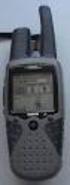 How to use Garmin Rino 130 Created by: John Cruz, Vladimir Ivanov, UH-Hilo EPSCoR-ITER 1 //.../sdal/how-to/ht_garmin_rino130.doc Installing Batteries Note: The Rino 130 operates on three AA alkaline batteries
Windows XP Pro: Basics 1
 NORTHWEST MISSOURI STATE UNIVERSITY ONLINE USER S GUIDE 2004 Windows XP Pro: Basics 1 Getting on the Northwest Network Getting on the Northwest network is easy with a university-provided PC, which has
Leaf River Outdoor Products Vibrashine, Inc. P.O. Box 557 Taylorsville, MS 39168 (601) 785-9854 FAX (601) 785-9874 www.vibrashine.
 MULTI-CARD PICTURE VIEWER Model PV-2.5 Leaf River Outdoor Products Vibrashine, Inc. P.O. Box 557 Taylorsville, MS 39168 (601) 785-9854 FAX (601) 785-9874 www.vibrashine.com 2 THANKS and WELCOME What does
The Parts of the System
 2 The Parts of the System THE RECEIVER THE RECEIVER FRONT PANEL Power Light This green light on the receiver front panel lights up when the receiver is turned ON. This light flashes when the receiver memory
GPS 12XL. Personal Navigator. Owner s Manual &Reference
 GPS 12XL Personal Navigator Owner s Manual &Reference Software Version 3.0 or above 1997 GARMIN Corporation 1200 E. 151st Street, Olathe, Kansas 66062 USA Tel: 913-397-8200 or 800-800-1020 Fax: 913-397-8282
DVR GUIDE. Using your DVR/Multi-Room DVR. 1-866-WAVE-123 wavebroadband.com
 DVR GUIDE Using your DVR/Multi-Room DVR 1-866-WAVE-123 wavebroadband.com Table of Contents Control Live TV... 4 Playback Controls... 5 Remote Control Arrow Buttons... 5 Status Bar... 5 Pause... 6 Rewind...
GO7. Getting Started ENGLISH. simrad-yachting.com
 GO7 Getting Started ENGLISH simrad-yachting.com GO7 Getting Started 3 4 GO7 Getting Started Contents 7 Introduction 7 The Home page 8 Application pages 9 Integration of 3 rd party devices 9 GoFree wireless
GPSMAP 295 Quick Start Guide. Read This First!
 Q uick Start GPSMAP 295 Quick Start Guide Read This First! 1 Q uick Start Unit Features Color LCD Display On-screen information is referred to as a page. Press the PAGE key to select a different screen.
MAGICAR M871A. Car alarm with two-way remote User s guide
 MAGICAR M871A Car alarm with two-way remote User s guide EN MAGICAR M871A Car alarm with two-way remote User s guide TABLE OF CONTENTS Table of contents...2 1. Important notice...4 2. Introduction...4
English... 2 Español... 41 Português... 79
 TRACKER 5500, 5500i 5100 and 5100i C H A R T P L O T T E R S Installation and Operation Manual English... 2 Español... 41 Português...79 TRACKER 5100i TRACKER 5500 www.navman.com TRACKER 5100 TRACKER 5500i
To start using your phone as a navigation device, tap the TomTom button in the Windows Mobile start menu.
 TomTom NAVIGATOR 1. Before you start... Before you start... Setting up To start using your phone as a navigation device, tap the TomTom button in the Windows Mobile start menu. To set up your navigation
Learning about GPS and GIS
 Learning about GPS and GIS Standards 4.4 Understand geographic information systems (G.I.S.). B12.1 Understand common surveying techniques used in agriculture (e.g., leveling, land measurement, building
etrex 10 quick start manual
 etrex 10 quick start manual Getting Started Device Overview warning See the Important Safety and Product Information guide in the product box for product warnings and other important information. ➊ ➍ ➌
Trimble R8 Base and Rover Quick Setup Guide. Inland GPS Inc.
 Trimble R8 Base and Rover Quick Setup Guide Inland GPS Inc. Setting up the GPS Base Equipment Hardware First Find the best, most advantageous secure place to setup the GPS base equipment. Look for a high
G1000 Search Patterns. National Emergency Services Academy Mission Aircrew School (June 2013 Rev D)
 G1000 Search Patterns National Emergency Services Academy Mission Aircrew School (June 2013 Rev D) Standardized Visual Search Pattern method Visual search pattern techniques include: Minimum # of user
Chapter 1 What s in the box
 TomTom ONE Chapter 1 What s in the box What s in the box a Your TomTom ONE A Touchscreen B Charging LED C On/off button D Speaker E External antenna connector F Memory card slot G USB connector b Windscreen
Using the System ORDER YOUR BELL EXPRESSVU PROGRAMMING. Page 3-1
 Using the System ORDER YOUR BELL EXPRESSVU PROGRAMMING This procedure notifies the Bell ExpressVu Customer Service Call Centre that your system is on-line and installed. You need to have your services
What s in the box. TomTom XL. EasyPort TM mount. Car Charger. Documentation pack. USB cable
 TomTom XL 1. What s in the box What s in the box TomTom XL EasyPort TM mount Car Charger Documentation pack USB cable 2 2. Getting started Getting started Install your TomTom XL in your car following the
Installation and Operation Manual NAVMAN
 Tracker 5505/5605 Pilot 3380 C H A RA TU PT LO OP T I TL E O R T Installation and Operation Manual w w w. n a v m a n. c o m NAVMAN ! CAUTION IMPORTANT SAFETY INFORMATION! WARNING Please read carefully
RADIO CONTROLLED DIGITAL CLOCK MODELS 88905 / 88906
 RADIO CONTROLLED DIGITAL CLOCK MODELS 88905 / 88906 QUICK SETUP GUIDE IMPORTANT! INSTALL BATTERIES IN THE OUTDOOR TRANSMITTER BEFORE INSTALLING BATTERIES IN THE RADIO-CONTROLLED CLOCK. ALKALINE BATTERIES
History of Revisions. Ordering Information
 No part of this document may be reproduced in any form or by any means without the express written consent of II Morrow Inc. II Morrow, Apollo, and Precedus are trademarks of II Morrow Inc. Windows is
Getting to Know Xsight... 3. Home Screen and Everyday Use... 9. Settings... 11. PC Setup... 17. 2 www.oneforall.com
 User Manual English English Getting to Know Xsight........................................ 3 Unpacking and Setting Up Xsight............................................................. 3 Using Xsight
TRACKER950. Installation and Operation Manual. English...4 Français...44. www.navman.com NAVMAN
 TRACKER950 C H A R T P L O T T E R Installation and Operation Manual English...4 Français...44 www.navman.com NAVMAN Contents 1 Introduction... 6 1-1 Care... 6 1-2 C-MAP chart cartridges... 7 1-3 Removing
MoTeC USA GPS. Part # M GPS BL Available in 10 Hz or 20 Hz. USER MANUAL Version 1.4
 MoTeC USA GPS Part # M GPS BL Available in 10 Hz or 20 Hz. USER MANUAL Version 1.4 MoTeC USA GPS Copyright Motec Systems USA 2008 The information in this document is subject to change without notice. While
Weather Direct Displays show Lost Forecast (blank boxes in the picture icons)
 Weather Direct Displays show Lost Forecast (blank boxes in the picture icons) Many routine events can cause a Lost Forecast situation. Examples include: Power outage Change batteries Internet down in your
FOR MORE INFORMATION. 125 8880 or from a non-telstra phone 13 2200 and say pre-paid telstra.com/ppmbb visit a telstra store or partner
 FOR MORE INFORMATION 125 8880 or from a non-telstra phone 13 2200 and say pre-paid telstra.com/ppmbb visit a telstra store or partner getting to know your telstra pre-paid 4G WI-FI (760S) LET S GET THIS
5. Tutorial. Starting FlashCut CNC
 FlashCut CNC Section 5 Tutorial 259 5. Tutorial Starting FlashCut CNC To start FlashCut CNC, click on the Start button, select Programs, select FlashCut CNC 4, then select the FlashCut CNC 4 icon. A dialog
The CAD interface is comprised of two different screens: the graphic/drawing screen and the text screen.
 That CAD Girl J ennifer dib ona Website: www.thatcadgirl.com Email: [email protected] Phone: (919) 417-8351 Fax: (919) 573-0351 Overview of AutoCAD or IntelliCAD with Carlson Software Screens and
Ethernet Networking Installation & Operations Manual Humminbird ETHERNET
 Ethernet Networking Installation & Operations Manual 531906-2EN_A GPS Unit 1 Humminbird ETHERNET Unit 2 Thank You! Thank you for choosing Humminbird, the #1 name in marine electronics. Humminbird has built
Model 288B Charge Plate Graphing Software Operators Guide
 Monroe Electronics, Inc. Model 288B Charge Plate Graphing Software Operators Guide P/N 0340175 288BGraph (80207) Software V2.01 100 Housel Ave PO Box 535 Lyndonville NY 14098 1-800-821-6001 585-765-2254
User Manual igo primo
 User Manual igo primo Navigation software for the igo primo UK English July 2012, ver. 2.0 Thank you for choosing the igo primo as your navigator. Start using igo primo right away. This document is the
PeopleGIS Leica RTK GPS Instructions
 PeopleGIS Leica RTK GPS Instructions Equipment List GG02 Receiver (Antenna) GPS Range Pole Zeno Tablet MiFi MiFi External Battery Carrying Case 1) Turning on the MiFi Power on the MiFi. This little gadget
Part 1 Product introduction 2. Part 2 Features 3. Part 3 Safety notes 4. Part 4 Quick user s guide 5. Part 5 Operation notes 7
 Table of contents Part 1 Product introduction 2 Part 2 Features 3 Part 3 Safety notes 4 Part 4 Quick user s guide 5 Part 5 Operation notes 7 Part 6 USB driver installation guide 9 Part 7 Connecting with
Petrel TIPS&TRICKS from SCM
 Petrel TIPS&TRICKS from SCM Knowledge Worth Sharing Building Montages in Petrel Most Petrel projects require display maps to be made for presentations; either for partners or peers. This TIPS&TRICKS provides
Lenovo Miix 2 8. User Guide. Read the safety notices and important tips in the included manuals before using your computer.
 Lenovo Miix 2 8 User Guide Read the safety notices and important tips in the included manuals before using your computer. Notes Before using the product, be sure to read Lenovo Safety and General Information
User Guide Sygic. Sygic
 Sygic 1 Thank you for choosing Sygic nagivation software. This manual will guide you through our navigation software. When using this manual you will learn how to operate basic functions and setting options
Digital Radio/DAB+/FM RDS digital clock radio with dual alarm Operating instruction
 381SE1D-A Digital Radio/DAB+/FM RDS digital clock radio with dual alarm Operating instruction GB Contents Controls... 2-3 Using the clock radio for the first time... 4 Operating your clock radio... 5 Selecting
User Manual igo primo
 User Manual igo primo Navigation software for the igo primo UK English August 2011, ver. 2.0 Thank you for choosing the igo primo as your navigator. Read the Quick Start Guide first and start using your
DAB1001. Wireless Digital Radio Interface. Installation & User Guide
 DAB1001 Wireless Digital Radio Interface Installation & User Guide Contents Contents... 2 Introduction... 3 Contents of Package... 4 Installation... 5 Product Overview... 5 Installation Procedure... 5
MapQuest Navigator User Manual
 MapQuest Navigator User Manual Legal Notice This guide and the information it contains belongs solely to MapQuest, Inc. and Telmap Ltd. The guide and the software products described therein are furnished
PRODUCTIVITY THROUGH INNOVATION 600 CONTROL DIRECT DRIVE TECHNICAL/OPERATION MANUAL
 Rev. D PRODUCTIVITY THROUGH INNOVATION 600 CONTROL DIRECT DRIVE TECHNICAL/OPERATION MANUAL 10 BORIGHT AVENUE, KENILWORTH NEW JERSEY 07033 TELEPHONE: 800-524-0273 FAX: 908-686-9317 TABLE OF CONTENTS Page
A Charging LED B Touchscreen C On/Off button D Speaker E External antenna connector F USB connector G RDS-TMC connector H Memory card slot
 TomTom ONE XL 1. What s in the box What s in the box a Your TomTom ONE XL A B C D E F G H A Charging LED B Touchscreen C On/Off button D Speaker E External antenna connector F USB connector G RDS-TMC connector
2006 Cadillac Escalade, Escalade ESV and Escalade EXT Navigation System M
 2006 Cadillac Escalade, Escalade ESV and Escalade EXT Navigation System M Overview... 1-1 Overview... 1-2 Features and Controls... 2-1 Features and Controls... 2-2 Navigation Audio System... 3-1 Navigation
Creating Drawings in Pro/ENGINEER
 6 Creating Drawings in Pro/ENGINEER This chapter shows you how to bring the cell phone models and the assembly you ve created into the Pro/ENGINEER Drawing mode to create a drawing. A mechanical drawing
Nav-Cam 7000 TripMaster Software User Guide
 Nav-Cam 7000 TripMaster Software User Guide 1 Contents INSTALLATION... 2 IN-VEHICLE INSTALLATION... 3 TRIPMASTER MAIN MENU... 4 Follow Map... 4 Drive To... 5 PLAN ROUTE... 5 Browse Map... 5 Select Place
>> smart cross connect Users Guide. November 2014.
 >> smart cross connect Users Guide November 2014. >> Table of Contents 1 Overview 1.1 Getting Around 1.2 Pairing your smart with smart cross connect 2 In-Car Mode 2.1 Car Info 2.2 Navigation 2.2.1 Addresses
Xerox DocuPrint P12 Print Driver User Guide
 Xerox DocuPrint P12 Print Driver User Guide Xerox Corporation 800 Phillips Road Webster, New York 14580 1998 Xerox Corporation. Xerox, The Document Company, the stylized X, and the identifying product
CM HOST CM CardTransporter Fuel Communication and Management Software 10.10.06 Software version up to 3.1
 CM HOST CM CardTransporter Fuel Communication and Management Software 10.10.06 Software version up to 3.1 CM Host Manual For CardMaster Fuel Control www.cardlockvending.com customers call 888-487-5040
CATIA Basic Concepts TABLE OF CONTENTS
 TABLE OF CONTENTS Introduction...1 Manual Format...2 Log on/off procedures for Windows...3 To log on...3 To logoff...7 Assembly Design Screen...8 Part Design Screen...9 Pull-down Menus...10 Start...10
Online Monitoring User Guide
 High Resolution Temperature Sensing Strip Online Monitoring User Guide 888.637.3282 www.nerdata.com Page 1 of 26 Contents The Aurora Online Monitoring System... 3 1. Creating an Account on the Aurora Online
Protocol for Microscope Calibration
 Protocol for Microscope Calibration A properly calibrated system is essential for successful and efficient software use. The following are step by step instructions on how to calibrate the hardware using
PowerView Model PV1000. Operations Manual. 00-02-0619 01-22-08 Section 78
 PowerView Model PV1000 Operations Manual 00-02-0619 01-22-08 Section 78 In order to consistently bring you the highest quality, full featured products, we reserve the right to change our specifications
User Manual. Humidity-Temperature Chart Recorder. Model RH520
 User Manual Humidity-Temperature Chart Recorder Model RH520 Introduction Congratulations on your purchase of the Extech RH520 Temperature + Humidity Chart Recorder. The RH520 measures and displays Temperature,
RFID Logger Software User Manual Rev 1.0
 RFID Logger Software User Manual Rev 1.0 Table of Contents 1. System Overview... 2 2. Installation... 2 3. USB RFID Interface Box... 3 4. Operation... 4 4.1. Start Up... 4 4.2. Menu overview... 4 4.2.1.
igo Primo User Manual
 igo Primo User Manual OE Replacement Media units Navigation software for car-vision UK & FlyAudio UK UK English December 2012, ver. 1.2a Thank you for choosing our product as your navigator. Read the Quick
TomTom App for Android Reference Guide
 TomTom App for Android Reference Guide Contents Getting started 5 Start TomTom App for Android... 5 Updating your TomTom App for Android... 5 Map updates... 5 GPS reception... 6 Planning a route 7 Planning
GPS 55 AVD. Personal Navigator TM OWNER'S MANUAL
 GPS 55 AVD Personal Navigator TM OWNER'S MANUAL 1992 GARMIN, 9875 Widmer Road, Lenexa, KS 66215 Printed in Taiwan. All rights reserved. No part of this manual may be reproduced or transmitted in any form
Receiver and Remote Controls
 9242_4_Ch2_eng 6/11/07 9:29 AM Page 1 2 Receiver and Remote Controls ABOUT YOUR SATELLITE RECEIVER This chapter helps you get to know your remote control, which lets you use all the functions of your receiver.
Video Baby Monitor System. User Guide
 Video Baby Monitor System User Guide What s inside Welcome!... 2 Getting started... 3 Tour of the system... 7 Everyday use...13 Cameras... 14 Motion/Alerts... 18 Recording... 21 Playing Back Pictures and
Using Microsoft Word. Working With Objects
 Using Microsoft Word Many Word documents will require elements that were created in programs other than Word, such as the picture to the right. Nontext elements in a document are referred to as Objects
Job Streaming User Guide
 Job Streaming User Guide By TOPS Software, LLC Clearwater, Florida Document History Version Edition Date Document Software Trademark Copyright First Edition 08 2006 TOPS JS AA 3.2.1 The names of actual
UNIVERSAL REMOTE CONTROL GUIDE
 UNIVERSAL REMOTE CONTROL GUIDE Service provided by We Keep You Connected Your new AT6400 AllTouch Infrared (IR) Universal Remote Control (remote) is a true universal remote, functioning as four remotes
SCORPION. micron security products
 SCORPION 4120 6020 & 8020 USER INSTRUCTIONS Thank you for purchasing a Quality Micron Security Alarm Controller. Micron product is manufactured to exacting quality standards. We understand the importance
Advanced Programming with LEGO NXT MindStorms
 Advanced Programming with LEGO NXT MindStorms Presented by Tom Bickford Executive Director Maine Robotics Advanced topics in MindStorms Loops Switches Nested Loops and Switches Data Wires Program view
Multimedia Navigation Philadelphia 835
 www.blaupunkt.com Multimedia Navigation Philadelphia 835 Operating instructions Navigation Thank you for choosing our product as your navigator. Start using Blaupunkt Navigation right away. This document
Keep it Simple Timing
 Keep it Simple Timing Support... 1 Introduction... 2 Turn On and Go... 3 Start Clock for Orienteering... 3 Pre Start Clock for Orienteering... 3 Real Time / Finish Clock... 3 Timer Clock... 4 Configuring
Sierra Wireless AirCard Watcher Help for Mac OS X
 Sierra Wireless AirCard Watcher Help for Mac OS X Sierra Wireless AirCard Watcher allows you to manage and monitor the connection between your modem and the network. With Watcher, you can: Determine signal
TomTom ONE. EasyPort TM mount. Car Charger. RDS-TMC Traffic Receiver* Documentation pack. USB cable. * Not included with all products.
 TomTom ONE 1. What s in the box What s in the box TomTom ONE EasyPort TM mount Car Charger RDS-TMC Traffic Receiver* Documentation pack USB cable * Not included with all products. 2 2. Getting started
Golfshot : Golf GPS User Guide
 Golfshot : Golf GPS User Guide Version 3.0 Scorecard Version 3.0 QUICK TIPS: New in 3.0: Track Menu Track Menu Press the Golf Ball icon in the upper left corner to peel back the Track Menu. Here you can
User Manual igo primo
 User Manual igo primo Navigation software UK English May 2010, ver. 1.0 Thank you for choosing our product as your navigator. Read the Quick Start Guide first and start using your device right away. This
Getting Started on the Computer With Mouseaerobics! Windows XP
 This handout was modified from materials supplied by the Bill and Melinda Gates Foundation through a grant to the Manchester City Library. Getting Started on the Computer With Mouseaerobics! Windows XP
The easy way to accept EFTPOS, Visa and MasterCard payments on the spot. Mobile Users... 2. Charging your PayClip. 2. Downloading the PayClip app.
 PayClip User Guide The easy way to accept EFTPOS, Visa and MasterCard payments on the spot. Contents Getting started made easy 2 Information for Merchants....................................................2
DOING MORE WITH WORD: MICROSOFT OFFICE 2010
 University of North Carolina at Chapel Hill Libraries Carrboro Cybrary Chapel Hill Public Library Durham County Public Library DOING MORE WITH WORD: MICROSOFT OFFICE 2010 GETTING STARTED PAGE 02 Prerequisites
Renewable Energy Monitor User Manual And Software Reference Guide. [email protected] (979) 703-1925
 Renewable Energy Monitor User Manual And Software Reference Guide [email protected] (979) 703-1925 1 Introducing the Horizon Renewable Energy Monitor The Renewable Energy Monitor is an educational
WORDPAD TUTORIAL WINDOWS 7
 WORDPAD TUTORIAL WINDOWS 7 Quick Access bar Home Tab Triangles = More Commands Groups on the Home tab Right paragraph margin Left paragraph Margin & Indent Paragraphs Ruler Hover the mouse pointer over
H203D 中文 GB Version 1
 H203D 中 GB文 Version 1 Contents Installing batteries... 4 Using the AC adapter (not supplied)... 5 Setting the clock... 6-7 Updating your radio - DAB... 8 Selecting a station - DAB... 9 Secondary services
PloneSurvey User Guide (draft 3)
 - 1 - PloneSurvey User Guide (draft 3) This short document will hopefully contain enough information to allow people to begin creating simple surveys using the new Plone online survey tool. Caveat PloneSurvey
Weather Capture Software Guide Version 1.4 Revision: June 10 2008
 Weather Capture Software Guide Version 1.4 Revision: June 10 2008 1 Introduction 2 Menu screen structure and navigation Menu Bar i. File ii. Display iii. Settings Alarm User Download Language iv. Help
3D-GIS in the Cloud USER MANUAL. August, 2014
 3D-GIS in the Cloud USER MANUAL August, 2014 3D GIS in the Cloud User Manual August, 2014 Table of Contents 1. Quick Reference: Navigating and Exploring in the 3D GIS in the Cloud... 2 1.1 Using the Mouse...
Navigator. Welcome 1 pg.3. Router Setup 2 pg.5. Send Expedition Data to Ventus Navigator 3 pg.6. Using Ventus Navigator 4 pg.8
 Navigator www.ventusnavigation.com Welcome 1 pg.3 Router Setup 2 pg.5 Send Expedition Data to Ventus Navigator 3 pg.6 Number of Network Connections... 3-1 pg.6 Configure Network Connection.. 3-1 pg.6 Select
Dash 18X / Dash 18 Data Acquisition Recorder
 75 Dash 18X / Dash 18 Data Acquisition Recorder QUICK START GUIDE Supports Recorder System Software Version 3.1 1. INTRODUCTION 2. GETTING STARTED 3. HARDWARE OVERVIEW 4. MENUS & BUTTONS 5. USING THE DASH
IT Quick Reference Guides Using Windows 7
 IT Quick Reference Guides Using Windows 7 Windows Guides This sheet covers many of the basic commands for using the Windows 7 operating system. WELCOME TO WINDOWS 7 After you log into your machine, the
Part 2. Copyright 1998 Philips Consumer Communications L.P. All rights reserved. Printed in Mexico. Issue 1AT&T 848229506
 2 User's Manual for Two-Line Digital Answering System Telephone with Speakerphone 1872 Fold open this paper for information about this telephone's installation and operation. Please read Part 1 Important
mini box User s Manual
 mini box User s Manual Version. Updated: 0/0/4 04 Cox Communications, Inc. Table of Contents Chapter : Introduction... About This Manual... Chapter : Installing & Activating Your mini box... 4 Connecting
Automated Inventory System
 Automated Inventory System User Manual Developed by USDA Food and Nutrition Service June 2009 (Incomplete) Table of Contents Welcome Menu Client Services Report System Inventory System Operations Tailgate