
Legacy_Drums_LB_Master_v6 8/5/08 8:42 AM Page 1
|
|
|
- Ella Doyle
- 9 years ago
- Views:
Transcription
1 Legacy_Drums_LB_Master_v6 8/5/08 8:42 AM Page 1

2 Legacy_Drums_LB_Master_v6 8/5/08 8:42 AM Page 2 Table of Contents SESSIONS PAGE 1) Starting Off Right 4 Playing the Bass Drum, Heel Down Position, Heel Up Position, Bass Drum Exercises, Setting Up the Snare Drum, Proper Hand Movement, Gripping the Drumstick, Developing a Rebounding Stroke, Basic Rebound Strokes 2) Basics of the Beat 9 Introduction to the Hi-Hat, Hi-Hat Exercises, Playing the Bass Drum and Hi-Hat Together, Adding the Snare Drum, The Mother of All Beats, Subdividing the Beat: Quarters, 8ths and 16ths, Alternating Sixteenth Notes, The Dance Beat 3) Musical Notation 13 The Basics of Reading Music, Clefs, Notes, and Rests, Time Signatures, The Note Tree, Dotted Notes, Musical Terms, Straight vs. Swing Beats, Music Reading Using the Reading Pages 4) The Ride Cymbal 19 Ride Cymbal Technique, Drum Notation, Coordination with Bass, Snare and Hi-Hat, Quarter Note Ride Cymbal Exercises, Eighth Note Ride Cymbal Exercises, Playing the Bell of the Ride Cymbal 5) Expanding on the Basics 24 Snare Alternating 16th Notes, Alternating 16th Note Snare Drum Exercises, Dynamics in Music, Accents, Accented Alternating 16th Note Exercises, 16ths with Bass Drum and Hi-Hat Exercises, Variations on the Bo Diddley Beat 6) Blues & Shuffles 29 Blues & Shuffle Basics, Blues Shuffle Beats, 12/8 Blues Beats, Blues Dynamics 7) Basic Rock Beats 34 Introduction to Rock Drumming, Basic Rock Beats, The Money Beat, 2 Bar Rock Grooves, Early Rock Beats 8) The Jazz Ride & Brushes 39 The Jazz Ride Pattern, Four Positions of the Jazz Ride, Playing with Brushes 9) Jazz Coordination 42 Jazz Coordination & Independence, Two Way Jazz Coordination, Charleston Rhythm, Three Way Jazz Coordination, Three Bar Exercises, Triplets Between Bass & Snare, Four Way Jazz Coordination, Jazz Coordination Using the Reading Pages 10) Rudiments 48 Rudiments, Grace Notes, Ruffs and Drags, Flams, Paradiddles, Swiss Rudiments, Applying Rudiments to the Drumset 11) Rolls 53 Single Stroke Roll, Closed Rolls, Open Rolls, Rolls Exercises SESSIONS PAGE 12) Moeller Technique 57 The Fundamental Moeller Strokes: the Downstroke, the Tap and the Upstroke, Moeller Technique Practice, Moeller Triplet Exercises, Moeller Sixteenth Note Exercises 13) Drum Fills 63 Introduction to Fills, Tips for Playing Fills, Developing Coordination, Playing in Shapes, Three Over Two Phrases, Practical Drum Fills 14) Advanced Rock Coordination 68 Rock Systems, Systems with Hi-Hat Eighth Notes, Snare Backbeats & Melody on Bass Drum, Advanced Rock Systems 15) Advanced Sticking & Linear Drumming 71 Advanced Sticking, Type A Stickings, Type A Stickings in 16th Notes Exercises, Type A Stickings in Triplets Exercises,Type B Stickings, Type C Stickings, Linear Drumming, Linear Drumming Sequence 16) Time, Groove & Pocket 76 Time, Groove & Pocket, Improving Your Time Practice Ideas, The Note Tree Exercise, The Jazz Ride Meditation, The Charleston Warm Down, The 20 Minute Groove, Making the Most of Your Metronome 17) Double Bass Drumming 80 Double Bass Drum Technique, Alternating Strokes, Latin Variations, Enhanced Rock Grooves, Sixteenth Note Variations, Bass Drum Reinforcement, Double Bass Fills, Double Bass Shuffles, Latin Double Bass Grooves 18) New Orleans and R & B Drumming 86 New Orleans Drumming, Second Line & New Orleans Beats, R & B Beats, Motown Beats, Memphis Rock Beats, Funk Beats, Modern Beats, Half Time Grooves, Hip Hop Beats 19) Latin, Brazilian & Reggae Drumming 91 Latin Drumming, Clave, The 6/8 and Cut Time Relationship, Rumba Clave, Son Clave, The Tumbao, Ponche, Bombo Note & the Cascara Rhythm, Cha-Cha, Songo, Brazilian Music, Samba, Reggae Beats 20) Song Structure & Musicality 97 Song Structure, Jazz Song Form, Writing a Drum Chart, Drum Figures, Drum Set Ups 21) Soloing 100 Free Form Soloing, Soloing Over Song Form, Working Out a Solo vs. Improvising, Soloing Over an Ostinato, Exploring Alternative Sounds, Trading Fours in Jazz 22) Beyond Drumming Technique 103 Left-Right-Right Running Pattern, The Never-Ending Charleston, The Eight Combinations Quarter Note Reading Page 108 Eighth Note Reading Page Eighth Note Reading Page Sixteenth Note Reading Page 111

3 Legacy_Drums_LB_Master_v6 8/5/08 8:42 AM Page 3 Play-Along CD Tracks CD 1 Blues & Early Rock 1 1. Slow Blues (12/8 Blues) 8th Note = 160 bpm 2. Slow Blues - Minus Drums 3. Gut Bucket (12/8 Blues) 100 bpm 4. Gut Bucket - Minus Drums 5. Texas Shuffle (Texas Shuffle Blues) 128 bpm 6. Texas Shuffle - Minus Drums 7. La Grunge (Fast Driving Shuffle) 150 bpm 8. La Grunge - Minus Drums 9. O Jeraldine (50 s Rock & Roll) 141 bpm 10. O Jeraldine - Minus Drums CD 2 Blues & Early Rock 2 1. When the Saints Go Marching In (New Orleans Gospel 2 Beat) Half Note = 120 bpm 2. When the Saints Go Marching In - Minus Drums 3. I Hear Ya Fats (12/8 50 s New Orleans Rock) 90 bpm 4. I Hear Ya Fats - Minus Drums 5. Great Googly Moogly (50 s New Orleans Rock) 152 bpm 6. Great Googly Moogly - Minus Drums 7. Little Lucy (50 s New Orleans Rock) 135 bpm 8. Little Lucy - Minus Drums 9. Baby Huey (50 s Slow New Orleans Rock/New Orleans Mambo) 116 bpm 10. Baby Huey - Minus Drums 11. Hey Wocky Pay (New Orleans Funk) 90 bpm 12. Hey Wocky Pay - Minus Drums CD 3 Basic Rock, 60's Rock & Modern Rock 1. Detroit Rock & Roll (60 s Rock & Roll) 135 bpm 2. Detroit Rock & Roll - Minus Drums 3. You Rascal You (60 s Fast Rock & Roll) 182 bpm 4. You Rascal You - Minus Drums 5. I Don't Want To Know (80 s Rock) 113 bpm 6. I Don't Want To Know - Minus Drums 7. Mysticized (70 s R&B Jazz Fusion) 121 bpm 8. Mysticized - Minus Drums 9. Do You Know Jack (70 s Rock) 121 bpm 10. Do You Know Jack - Minus Drums 11. Rock n' Mo (Modern Rock) 121 bpm 12. Rock n' Mo - Minus Drums 13. Rock My World (Modern Rock) 126 bpm 14. Rock My World - Minus Drums CD 4 Soul and R & B 1. Stay with Me (70 s Memphis Soul) 102 bpm 2. Stay with Me - Minus Drums 3. Perfume (Shuffle Funk) 80 bpm 4. Perfume - Minus Drums 5. J.B. Machine (60 s Funk) 110 bpm 6. J.B. Machine - Minus Drums 7. No Sweat (60 s Funk) 116 bpm 8. No Sweat - Minus Drums 9. Hold Up (60 s Memphis Soul) 102 bpm 10. Hold Up - Minus Drums 11. Livin' Single (80 s Funk) 112 bpm 12. Livin' Single - Minus Drums 13. Y B Cruel (80 s Funk) 100 bpm 14. Y B Cruel - Minus Drums 15. Air (70 s R&B) 86 bpm 16. Air - Minus Drums 17. Emily (Half Time 70 s Shuffle Funk) 116 bpm 18. Emily - Minus Drums CD 5 Soul and R & B, Jazz & Brazilian 1. Bullabunga (Modern Funk) 81 bpm 2. Bullabunga - Minus Drums 3. Kill Joy (Medium Swing) 106 bpm 4. Kill Joy - Minus Drums 5. Bull's Bash (Swing Blues) 115 bpm 6. Bull's Bash - Minus Drums 7. Goosy Lucy (Medium Swing) 135 bpm 8. Goosy Lucy - Minus Drums 9. Someday My Prints Will Come (3/4 Jazz Waltz) 134 bpm 10. Someday My Prints Will Come - Minus Drums 11. This is Real (Bossa Nova) 112 bpm 12. This Is Real - Minus Drums 13. The Dream (Bossa Nova) 118 bpm 14. The Dream - Minus Drums 15. Once Dropped (One Drop Reggae) 148 bpm 16. Once Dropped - Minus Drums 17. Winter (Latin/Funk Fusion) 91 bpm 18. Winter - Minus Drums Play-Along CD Tracks 3

4 Legacy_Drums_LB_Master_v6 8/5/08 8:42 AM Page 4 SESSION 1 - Starting Off Right KEY CONCEPTS Playing the Bass Drum Setting Up the Snare Drum Proper Hand Movement Basic Rebound Strokes Playing the Bass Drum Estimated Time to Learn These Concepts - 1 Week If thine enemy wrongs thee, buy each of his children a drum. ~ Unknown SKILLS TO MASTER Playing the bass drum with good technique. Holding the sticks properly with a loose grip. Playing the snare drum using proper technique. Counting and playing the bass drum while playing 8th notes on the snare. The bass drum is the foundation of the drumset. The basic function of the bass drum is to state the beat or pulse of the song. The BASS DRUM is played with the bass drum pedal by the right foot. The bass drum pedal beater should rebound off of the bass drum head like a bouncing ball. Properly adjusting the angle of the bass drum pedal beater is important to playing comfortably. In general, angling the beater around the 2 o'clock position is a good place to start. After the pedal is attached to the bass drum, position yourself so that your right knee is bent at a slightly greater than 90 degree angle when your foot is on the pedal. There are two basic techniques of playing the bass drum HEEL UP and HEEL DOWN. It is important to learn both techniques. Both use a rebound stroke where the beater strikes the bass drum head then bounce back to the at rest position. Beater Position Heel Down Position In the HEEL DOWN position, the heel of the right foot is in constant contact with the bass drum pedal when striking the bass drum. This position works best for achieving delicacy in your bass drum playing and is mostly used when playing soft passages or slow songs called ballads. Heel Up Position The HEEL UP position uses the front part or ball of the foot to press the bass drum pedal. This position works great when playing Rock and Funk or any heavy kind of music where a strong powerful bass drum hit is desired. To get the rebound or bounce while playing with the heel up, immediately return the heel to the footboard, but only for a moment. Playing Tip: Keep it Relaxed Remember to relax at all times. There should be no stress or tension anywhere in your body while playing. Key Idea: Pulse and Beat Angle of the Knee Heel Down Position Heel Up Position The words Pulse and Beat will be used often and mean the same thing the fundamental rhythm or beat of the song. It's what you tap your feet to. Session 1 4 Starting Off Right

5 Legacy_Drums_LB_Master_v6 8/5/08 8:42 AM Page 5 Bass Drum Exercises Now that you know the proper technique for playing the bass drum and getting a good rebound, practice the following exercises. Practice playing a steady beat on the bass drum using the heel down technique. Then use the heel up technique. Once you can play a steady beat using both techniques try to find the beat and play along with Play-Along CD 3, Tracks 11 & 12, Rock n' Mo. Playing Tip: The Play-Along Tracks Each song on the play-along CDs has two versions. The first version plays the song with the drums. The second version does not have the drums, but a click track is provided to help you keep the tempo. Play-Along Songs The Bass Drum exercises can be practiced with CD 3, TRACK 11 - Rock n Mo CD 3, TRACK 12 - Rock n Mo minus Drums Bass Drum Exercise 1 Play the Bass Drum using the heel down technique, then using the heel up technique. Bass Drum Exercise 2 Play the pulse for 4 beats, then double pulse for 4 beats. Setting Up the Snare Drum The SNARE DRUM has metal wires called snares attached to the bottom head. It rests in the stand s cradle without being clamped down. The height affects the comfort level of the drummer, so set the height where your hands are comfortable and your shoulders are relaxed. Angle the snare drum back toward you. Playing Tip: Using a Click Track The click track on Rock n' Mo plays at twice the note rate of the beat of the song. Subdividing the click into smaller segments than the beat helps musicians stay in tempo (keep the beat) on slower songs. Proper Hand Movement When playing the drums, your hands should move in a motion similar to waving good-bye or bouncing a basketball. Place your hands in front of you, palms down, and flex at the wrist. Practice this motion without sticks, one hand at a time Session 1 5 Starting Off Right

6 Legacy_Drums_LB_Master_v6 8/5/08 8:42 AM Page 6 Learning proper hand technique will enable you to 1. Maximize your rebound 2. Get a good, beefy sound 3. Maximize your ability to transfer your ideas from your brain to the drums with minimum effort Gripping the Drumstick The DRUMSTICK has four basic parts: the BUTT, the SHAFT, the SHOULDER, and the TIP. Butt Shaft Shoulder Tip Fulcrum The BUTT is the end of the stick and can be used to strike the snare drum when a more powerful sound is required, as in heavier Rock or Funk. The SHAFT is the part of the stick that the player grips. The SHOULDER is the part of the stick that tapers down to the tip. The TIP is the main playing end of the stick. Hold the stick between your thumb and index finger about 2/3 of the way from the tip at a point called the fulcrum. The FULCRUM is the perfect balance point of the drumstick and is the optimum place for gripping the sticks to achieve maximum bounce or rebound. The hand should grip the stick at the fulcrum loosely. Both hands should grip the sticks identically forming a MATCHED GRIP. Developing a Rebounding Stroke Now, let's learn the proper way to strike a drum. Take the sticks and form your grip. The stroke we will employ makes use of the fingers, wrist, forearm, and elbow. You will make a whip-like motion similar to cracking a whip or casting a fishing rod. Here is how the stroke should look Start with both sticks in an at-rest position using a loose matched grip. Raise elbow and forearm of lead hand. The lead wrist and hand follow. Bring elbow down first, deadweight fashion, creating a whipping motion. The stick strikes drum. The stick rebounds off the drum. Session 1 6 Starting Off Right

7 Legacy_Drums_LB_Master_v6 8/5/08 8:42 AM Page 7 Practice this motion first without striking the drums, like air drums, then practice playing the snare drum with a proper rebounding stroke. Strike the snare drum dead center to get a full sound. Maximizing rebound allows the sticks to do the work, not the drummer. Basic Rebound Strokes Practice the following exercises on the snare drum using a proper rebounding stroke and a loose grip. Exercise 1 Play the Snare on the beat with the right hand first, then the left hand. Key Idea: Maintain a Relaxed Grip Remember, the sticks are our connection to the instrument so it is important to have a relaxed grip and a proper stroke in order to get a good sound out of the drum. Exercise 2 Play the Snare doubling the beat, alternating hands. Once you can play a steady beat on the snare drum with good technique play along with Play-Along CD 4, Track 2. Exercise 3 is the same rhythm as Exercise 2, played with the track. Exercise 3 Play with the track, the Snare doubling the beat, alternating hands. Exercise 4 Play 4 beats with the right hand, then alternating strokes with both hands. Play-Along Songs The Basic Rebound Strokes exercises can be practiced with CD 4, TRACK 1 - Stay with Me CD 4, TRACK 2 - Stay with Me minus Drums ALTERNATING STROKES are when the hands alternate individual hits of the drum. Exercise 5 Play alternating strokes. Session 1 7 Starting Off Right

8 Legacy_Drums_LB_Master_v6 8/5/08 8:42 AM Page 8 Exercise 6 Play the BD and Snare on the beat, then alternating strokes on the Snare. Stay with Me Exercise You're Ready to Move On When You can find the beat of any song on the Play-Along CDs and play it on the bass drum heel down and heel up. You can count the beat of any song while playing it on the bass and snare drums simultaneously using both the heel up and heel down techniques in the bass drum and the fishing rod technique in the right and left hands. With your metronome at 90 beats per minute (bpm), you can play a good solid pulse (quarter notes) in the bass drum and play alternating 8th notes with the snare drum as in Exercise 6. Tips for Improving You don t need to be at the drums to do the exercises. Relax at all times. Get rebound from your strokes on the snare drum and bass drum. When you feel pain... Stop! Take a break. Don t get frustrated. Play-Along Songs The Stay with Me exercise can be practiced with CD 4, TRACK 1 - Stay with Me CD 4, TRACK 2 - Stay with Me minus Drums Going Further Listen to some of the other songs on the Play-Along CDs. As you go through them, listen for songs that are slow enough to play along with comfortably. Then, try to find the pulse of each song and play it on the bass drum. Next, add the snare drum, playing on the beat and doubling the beat as in Exercise 6. Build up your endurance to eventually play with the track for the length of the entire song. Online Resources Detailed assignments for the sessions and other helpful resources are online at Session 1 8 Starting Off Right

9 Legacy_Drums_LB_Master_v6 8/5/08 8:42 AM Page 9 SESSION 2 - Basics of the Beat KEY CONCEPTS Introduction to the Hi-Hat Playing the Bass Drum and Hi-Hat Together Adding the Snare Drum Playing Your First Drumbeats Introduction to the Hi-Hat The HI-HAT is a pair of cymbals struck together by a spring loaded pedal. The top cymbal is pulled toward the bottom cymbal by a rod connected to the pedal. The hi-hat combined with the bass drum and snare form the nucleus of the drumset. SKILLS TO MASTER Playing 8th notes on the hi-hat. Playing the bass drum while playing 8th notes on the hi-hat. Playing a backbeat on the snare while playing the bass drum with 8ths or 16ths on the hi-hat. The hi-hat can be played with the foot, with the sticks, or a combination of both, creating endless expressive possibilities. The player is able to change the feel or mood of a song instantaneously by playing the hi-hat closed, open, or even slightly open. Quickly opening and closing the hi-hat while striking it also adds excitement to the groove. In setting up the hi-hat, be careful not to set the height too low or too high. If the height is set too low the stick in your right hand will hit the stick in your left hand when playing. If it is set too high your right arm will stick out, putting stress on your shoulder. Set the distance between the top and bottom cymbals to one inch. The left foot heel up position is a good starting position to play the hi-hat. The weight of the leg in this position keeps the cymbals together. Hi-Hat Exercises Play through these exercises for practice using the hi-hat. Lift the leg up slightly on the and of 1 and drop the weight of your leg on 2. Do the same on the and of 3 and drop it on 4. Exercise 1 Playing the Hi-Hat with the foot Estimated Time to Learn These Concepts - 1 Week If you think of practicing as developing the muscles, you will eliminate the nervousness and hesitation in your playing. Remember, before anything can groove, it must feel good body-wise. The muscles have to be trained and stretched slowly in order for you to make them do what you want them to do. ~ Gary Chester, Drum teacher, author, studio musician Playing Tip: Comfort Correctly setting up the drumset and comfortably playing its basic components are the keys to freedom of expression on the instrument. Playing Tip: Don t Lift Your Foot Remember, don't lift your foot off the hi-hat footboard. The left foot should always remain in contact with the footboard. Session 2 9 Basics of the Beat

10 Legacy_Drums_LB_Master_v6 8/5/08 8:42 AM Page 10 Start out playing the following exercise on the pulse for a while, then try doubling the pulse. Remember to use the fishing rod motion covered in session 1. Play the following exercise with CD 5, Track 2. Play-Along Songs Exercises 2 & 3 can be practiced with CD 5, TRACK 2 - Bullabunga Exercise 2 Play the Hi-Hat on the pulse, then double the pulse. Playing the Bass Drum and Hi-Hat Together Developing the correct muscle coordination to play several different components of the drumset at once takes repetition. In the following exercise, practice playing the bass drum in both the heel down and heel up positions and remember to play the hi-hat with a relaxed, loose grip in the right hand. Play the following exercise with CD 5, Track 2. Key Idea: Bass Drum & Hi-Hat Coordination Coordinating the right foot on the bass drum and the right hand on the hi-hat is vital. Exercise 3 Play 8th notes on the Hi-Hat and the pulse on the Bass Drum. Adding the Snare Drum We're going to put together your first groove on the drums with three limbs (right hand, right foot, and left hand) by incorporating the snare drum on backbeats. Working the three limbs in this fashion is the basis of what we'll be doing in many future sessions. Play the following exercise a couple of times through using a heel down approach on the bass drum. Then play through it again using the heel up approach. Exercise 4: The Mother of All Beats Bass Drum on the pulse, 8th notes on the Hi-Hat and the Snare on beats 2 & 4 Key Idea: Backbeat The BACKBEATS are beats 2 and 4 of a 4 count. A backbeat is the part of the groove that you clap your hands or snap your fingers to. Play-Along Songs The Mother of All Beats can be practiced with CD 3, TRACK 6 - I Don t Want to Know CD 3, TRACK 8 - Mysticized CD 4, TRACK 2 - Stay with Me CD 4, TRACK 6 - J.B. Machine CD 5, TRACK 2 - Bullabunga Session 2 10 Basics of the Beat

11 Legacy_Drums_LB_Master_v6 8/5/08 8:42 AM Page 11 Playing Tip: The Mother of All Beats When looking for inspiration, use this beat as a starting point for more creative beats. Experiment playing this beat at various tempos slow and fast. Try incorporating other drums into the rhythm, like substituting a tom for the hi-hat rhythm, for example. Subdividing the Beat: Quarters, 8ths, and 16ths You might be asking, What does he mean by bars, quarter notes, 8th notes, and sixteenth notes? These terms and the rhythms they represent are just that terms. They're a way to communicate between musicians. Right now it's important to know the difference between the sounds of quarter notes, 8th notes, and 16th notes in a rhythmic stream. So far, each beat has been subdivided one of two ways either one quarter note or two eighth notes. Now we are going to subdivide the beat one step further into four sixteenth notes. Alternating Sixteenth Notes Playing alternating sixteenth notes involves playing eighth notes with the right hand and inserting left hand beats between each of the right hand eighth notes. Sixteenth notes are counted One - e - and - a, two - e - and -a, etc. Set your metronome to 60 beats per minute (bpm) and practice the following exercises, playing alternating sixteenth notes on a closed hi-hat. Alternating Sixteenth Notes Play on a closed Hi-Hat with metronome set to 60 bpm Exercise 5 Play 8th notes on Hi-Hat then alternating 16ths Exercise 6 Alternating 16ths on the Hi-Hat with pulse in the Bass Drum Session 2 11 Basics of the Beat

12 Legacy_Drums_LB_Master_v6 8/5/08 8:42 AM Page 12 This next exercise is your second full beat. Set your metronome to 50 bpm and practice it slowly at first then raise the tempo. This beat can be played with many of the songs on the Play-Along CDs. Exercise 7: The Dance Beat Alternating 16ths on the Hi-Hat with Bass Drum and Snare on 2 & 4 Play-Along Songs The Dance Beat can be practiced with CD 3, TRACK 12 - Rock n Mo CD 4, TRACK 10 - Hold Up CD 4, TRACK 12 - Livin Single You're Ready to Move On When The bass drum, snare drum, and hi-hat are set up properly so that there is no tension in your body as you play. You can play all the tunes in the session assignment given online and hold the tempo through the entire song. Tips for Improving Remember to stretch a little before each practice session. Take breaks every 15 minutes or so of practicing, especially if the music is difficult for you. You'll be amazed how quickly you master the problem you had only 10 minutes before! Going Further Purchase a metronome and a set of noise isolation headphones. These will become two of your most important drumming tools. Go through your music collection find songs or CDs of your favorite music. Put on the headphones and play along. Try out some of the beats from this session and see if they fit the music. If not, how can you modify them to make them fit? Playing along with recordings is a great way to learn drumming. Try it! Online Resources Detailed assignments for the sessions and other helpful resources are online at Session 2 12 Basics of the Beat

13 Legacy_Drums_LB_Master_v6 8/5/08 8:42 AM Page 13 SESSION 3 - Musical Notation Estimated Time to Learn These Concepts - 2 Weeks I know that the twelve notes in each octave and the variety of rhythm offer me opportunities that all of human genius will never exhaust. ~ Igor Stravinsky, Composer ( ) KEY CONCEPTS The Basics of Reading Music Notes and Rests Time Signatures Musical Terms SKILLS TO MASTER To be the best you can be on the drums, it is important that you learn how to read standard musical notation. In the world of the working musician, there isn't much time for rehearsing songs over and over until the band gets it right. You need to get it right the first time and that s how reading musical charts will help. Learning to read music will make your life, and the lives of the other musicians you work with, much easier. Don't worry. Learning to read music won t take away your earthiness or contaminate your ability to play from your heart. What it will do is make you much more employable. Reading music is vitally important for your musicianship but don t let it substitue for developing your ears. The Basics of Reading Music Music is written on a STAFF consisting of 5 horizontal lines. Music is read from left to right just like you would read a book. BARLINES split the music staff into equal segments called MEASURES or BARS. At the end of a section of music you will see a DOUBLE BARLINE. An ENDING BARLINE is used to indicate the end of a piece of music. Parts of a Music Staff Understanding the music staff, repeat signs, and time signatures. Understanding note and rest values. Reading quarter notes. Reading eighth notes. Understanding straight and swing interpretations of the beats. A REPEAT SIGN is a double barline with two dots. It means to repeat a section of music. The player would repeat back to a previous backwards repeat sign or the beginning of the song, whichever comes first. Repeat Sign A double barline with two dots, indicating repetition of music. Session 3 13 Musical Notation

14 Legacy_Drums_LB_Master_v6 8/5/08 8:42 AM Page 14 Clefs At the beginning of each staff is a clef. Music uses CLEFS to indicate to the player what types of instruments a particular piece of music is written for. The clef used for higher pitched instruments is a TREBLE CLEF. The clef used for lower pitched instruments is a BASS CLEF. The clef used for drums is the NEUTRAL CLEF. Notes and Rests Music is made up of sound and silence. Sound is notated in music with NOTES and silence is indicated by symbols called RESTS. The notes tell you when to play and the rests tell you when not to play. Notes and rests are used on the music staff to indicate rhythm and duration. Parts of a Note A NOTE has three basic parts: the NOTE HEAD, the STEM, and the FLAG. When two or more notes of the same type are played together in succession, the flags are connected and change to BEAMS. Instead of We have Each type of note has a corresponding rest which takes up the same amount of musical duration. Here is a chart of the types of notes, their corresponding rests, and their duration. Type of Note Symbol Rest Duration Whole Note 4 Beats Half Note 2 Beats Playing Tip: Triplets TRIPLETS are used to indicate three equal subdivisions of one beat. They are notated as three beamed eighth notes with a 3 over the beam. Triplets are counted as 1-trip-let. Quarter Note 1 Beat Eighth Note 1/2 Beat Sixteenth Note 1/4 Beat Thirty-Second Note 1/8 Beat Session 3 14 Musical Notation

15 Legacy_Drums_LB_Master_v6 8/5/08 8:42 AM Page 15 Time Signatures In music TIME SIGNATURES to define how measures are divided in a piece of music. Time signatures are expressed numerically as a fraction. The TOP NUMBER or numerator tells you how many beats are in each measure. The BOTTOM NUMBER or denominator tells you what kind of note gets the beat. Playing Tip: Time Signature Abbreviations The time signature of 4/4 is often referred to as COMMON TIME and is sometimes represented as a for the time signature. The time signature of 2/2 is often referred to as CUT TIME and is sometimes represented as a for the time signature. Here are some examples: The Note Tree Note values are subdivisions of each other. To fill a measure of 4/4 time, you could use one whole note or 4 quarter notes or 16 sixteenth notes or a variety of different note combinations. Think of the notes within a measure as a musical pie that can be sliced in a variety of different ways. Session 3 15 Musical Notation

16 Legacy_Drums_LB_Master_v6 8/5/08 8:42 AM Page 16 Dotted Notes A DOT following a note changes the rhythmic value of the note. DOTS increase a note's value by one half. Here are some examples. DOTTED HALF NOTE DOTTED WHOLE NOTE DOTTED QUARTER NOTE /2 Beats Beats Beats (2+1) (4+2) (1+1/2) Musical Terms Dal Segno Go back to the sign occurring earlier in the music, then read the music to the end. Go back to the beginning of the piece. When you see a coda sign, jump to the same sign at the end of the piece. You've reached the end of the musical piece. SYNCOPATION DOWNBEAT UPBEAT BACKBEAT PULSE METER / TIME GROOVE GHOST NOTES SYNCOPATION means playing off the beat. The DOWNBEAT is the first beat of the measure beat 1. The downbeat can also refer to the first part of the beat of a more complex rhythm. The UPBEAT refers to the and s of the beat or eighth note off beats. BACKBEAT refers to beats 2 and 4 of a measure. They are often accented, as in Rock or R & B drumming. PULSE is the main organization of beats and is represented by the lower number in the time signature. METER or TIME refers to the even space between notes in a composition. If the space between the notes is perfectly even from note to note, the musician is playing in perfect meter. GROOVE is used to indicate an underlying rhythmic feel of a song. It can also indicate that the drummer is playing with good time and generally is used in the context of blending with other musicians. GHOST NOTES are subdivisions of the beat which are played very softly and extremely deemphasized. They are deemphasized almost to the point of silence so that the ghost note then represents a rhythmic placeholder in much the same way as a rest. Session 3 16 Musical Notation

17 Legacy_Drums_LB_Master_v6 8/5/08 8:42 AM Page 17 METRONOME A METRONOME is an electronic device that clicks off tempos in beats per minute. A metronome is an invaluable practice tool for any musician to develop and improve timing. BEATS PER MINUTE The tempo or speed of a piece of music is expressed as BEATS PER MINUTE or abbreviated BPM. The lower the number, the slower the tempo or click of the metronome will be. Straight vs. Swing Beats When looking at a piece of music, the drummer can interpret the rhythms shown in a variety of ways. Identical rhythms can be interpreted or played with different approaches creating two very different sounds. The two methods of interpreting music are STRAIGHT and SWING. Playing music STRAIGHT means playing the rhythms exactly as they are written, often with strict, even eighth notes. When playing music SWING, the eighth notes are played as a triplet feel with the middle note left out, creating a lope in the rhythm. This type of rhythm is called a SHUFFLE. For example: MUSIC AS WRITTEN STRAIGHT MUSIC AS PLAYED SWING Using the Reading Pages Several times during the course you will need to refer to the Reading Pages at the back of the book for exercises. In Session 3 on the DVD, you will need to use the Quarter Note Reading Page found on page 108 and the Eighth Note Reading Page 1 found on page 109. Quarter Note Music Reading Exercises These exercises, demonstrated on the DVD, use the Quarter Note Reading Page on page 108. Play through the quarter note exercises to practice reading quarter notes and rests. Play them slowly at first, then gradually increase your speed. Remember to use a metronome. Quarter Note Warm-Up Exercises Practice playing the rhythms using quarter notes and rests. Repeat each measure as indicated. Session 3 17 Musical Notation

18 Legacy_Drums_LB_Master_v6 8/5/08 8:42 AM Page 18 Quarter Note Reading Page Play the exercise on the Snare Drum using alternating (R,L,R,L) sticking. Eighth Note Music Reading Exercises These exercises, demonstrated on the DVD, use the Eighth Note Reading Page 1 on page 109. Play through the eighth note exercises to practice reading eighth notes. Play them slowly at first, then gradually increase your speed. Eighth Note Reading Page 1 Play the exercise on the Snare Drum using alternating (R,L,R,L) sticking. After playing through the page several times, try playing the rhythms using a swing feel. As demonstrated on the DVD, the exercise can also be played as an ongoing stream of triplets with the written notes played as accents. (This is a fairly advanced concept, so don't feel discouraged if this is a bit beyond your ability right now-you'll get there.) You're Ready to Move On When You can play the entire Quarter Note Reading Page on page 108 and the Eighth Note Reading Page 1 on page 109 with no mistakes at 100 bpm. Going Further Purchase the book The Reading Encyclopedia by Gary Hess and work through the reading exercises. This book and the others recommended online include reading exercises that will become the melodies for practicing all kinds of different drumming techniques dealt with throughout this course from independence, to the development of technique in the hands, to fill ideas. Online Resources Detailed assignments for the sessions and other helpful resources are online at Session 3 18 Musical Notation

19 Legacy_Drums_LB_Master_v6 8/5/08 8:42 AM Page 19 SESSION 4 - The Ride Cymbal Estimated Time to Learn These Concepts Weeks I didn't play drums to make money. I played drums because I loved them... My soul is that of a drummer... I didn't do it to become rich and famous, I did it because it was the love of my life. ~ Ringo Starr, Drummer for The Beatles KEY CONCEPTS Ride Cymbal Technique Drum Notation Quarter Note Coordination with Bass, Snare, and Hi- Hat Eighth Note Coordination with Bass, Snare, and Hi-Hat Playing the Bell of the Ride Cymbal SKILLS TO MASTER Ride Cymbal Technique The RIDE CYMBAL is the largest of the cymbals on the drum set. It should be positioned so that your arm does not have to reach out very far to play it. You should be able to reach it comfortably, without stretching. Play the ride cymbal using the fishing rod or rebounding stroke discussed in Session 1 but with your hand turned slightly so that the back of the hand is facing up. There are several techniques to play this versatile sounding cymbal. 1. Strike the cymbal two-thirds of the distance from the bell for general playing. 2. Use the tip of the stick on the bell for a light, high-pitched effect. 3. Use the shaft of the stick on the bell for a sharp, aggressive sound. 4. Use the shaft of the stick to ride on the cymbal during loud driving passages. 5. Use the shaft of the stick on the edge of the cymbal. Developing a proper ride cymbal stroke. Playing basic Rock rhythms with quarter note ride. Playing basic Rock rhythms with eighth note ride. Playing basic Rock rhythms with eighth note ride and accented upbeats. Drum Notation DRUM NOTATION in music indicates the different drums and cymbals of the set by changing the notehead and position of the notes on the staff. All cymbals are notated with an X notehead and all drums use a traditional notehead. Quarter Note Ride Cymbal Exercises Play the following exercises using proper fishing rod rebounding technique on the ride cymbal. Eventually work up to a metronome speed of beats per minute or bpm. Playing Tip: Grip When playing the ride cymbal, strive for a loose grip with lots of rebound. A tight grip that jams the stick into the cymbal will produce a bad sound and hurt your hand. Session 4 19 The Ride Cymbal

20 Legacy_Drums_LB_Master_v6 8/5/08 8:42 AM Page 20 Exercise 1 Quarter Notes on the Ride Cymbal Play-Along Songs Exercises 1 4 can be practiced with CD 1, TRACK 4 - Gut Bucket CD, 4, TRACK 10 - Hold Up CD, 1, TRACK 6 - Texas Shuffle Exercise 2 Quarter Notes on the Ride Cymbal and Bass Drum Exercise 3 Quarter Note Ride Cymbal and Bass Drum, Snare on 2 & 4 Exercise 4 Quarter Note Ride Cymbal and Bass Drum, Snare and Hi-Hat on 2 & 4 Exercise 4 Hi-Hat Variation Quarter Notes on closed Hi-Hat and Bass Drum, Snare on 2 & 4 Session 4 20 The Ride Cymbal

21 Legacy_Drums_LB_Master_v6 8/5/08 8:42 AM Page 21 Exercise 5 Half Notes on Bass Drum, Ride Quarter Notes, Snare and Hi-Hat on 2 & 4 Play-Along Songs Exercise 5 can be practiced with CD 2, TRACK 10 - Baby Huey Key Idea: Two Beat Feel in Cut Time The rhythm used in Exercise 5 has the bass drum and snare playing on alternate beats the bass on 1 and the snare on 2. This combination is called a TWO BEAT and implies what is called CUT TIME or a time signature of 2/2. There are two beats to the measure and the half note gets the beat. Two beat feels are heard in many musical styles around the world. Exercise 5 Two Beat Feel Up Tempo in Cut Time Play-Along Songs Exercise 5 Two Beat Feel can be practiced with CD 2, TRACK 2 - When the Saints Go Marchin In Eighth Note Ride Cymbal Exercises Eighth note ride cymbal patterns are the foundation of Rock music. Play the following exercises using eighth notes on the ride cymbal, gradually increasing the tempo until you can play them comfortably at bpm. Exercise 6 Eighth Notes on the Ride Cymbal Exercise 7 Eighth Note Ride, Quarter Notes on Bass Drum called 4 on the floor Session 4 21 The Ride Cymbal
22 Legacy_Drums_LB_Master_v6 8/5/08 8:42 AM Page 22 Exercise 8 Eighth Note Ride, Bass Drum Quarter Notes, Snare backbeats on 2 & 4 Exercise 9 Eighth Note Ride, Bass Drum Quarter Notes, Snare and Hi-Hat on 2 & 4 Play-Along Songs Exercise 9 can be practiced with CD 4, TRACK 10 - Hold Up Playing the Bell of the Ride Cymbal The next exercise involves hitting the ride cymbal on the bell of the cymbal with the shaft of the stick on the upbeats. Remember to use proper ride cymbal technique as you alternate between playing the cymbal with the tip of the stick as you normally would and playing upbeats on the bell. Exercise 10 Eighth Note Ride with Upbeats on the Bell Play-Along Songs Exercise 10 can be practiced with CD 5, TRACK 18 - Winter Playing Tip: Building Grooves Layer by Layer Bonus Groove Quarter Note Ride adding Upbeats with foot on Hi-Hat If you're having trouble with this groove, practice the 8th note ride with the upbeats by itself for a while. Then add the bass drum and hi-hat. When comfortable, add the snare. Build the groove layer by layer, bar by bar. Session 4 22 The Ride Cymbal
23 Legacy_Drums_LB_Master_v6 8/5/08 8:42 AM Page 23 You're Ready to Move On When You have developed a proper, rebounding stroke on the ride cymbal. You can play all the exercises at the given metronome markings with a balanced sound. You can play all of the exercises heel up and heel down on the bass drum. Going Further Go through your music collection and listen to some of your favorite artists. Check out how the drummer uses the ride cymbal. Listen for things like: Use of a loping feel by accenting the pulse when playing eighth notes Use of straight eighths in a Rock ballad Playing just the pulse (quarter notes) on the bell Playing upbeats on the bell Playing with the lead hand on the ride and the other hand on the hi-hat Riding on a crash cymbal, creating a powerful wash Online Resources Detailed assignments for the sessions and other helpful resources are online at Session 4 23 The Ride Cymbal
24 Legacy_Drums_LB_Master_v6 8/5/08 8:42 AM Page 24 SESSION 5 - Expanding on the Basics KEY CONCEPTS Estimated Time to Learn These Concepts Weeks Use the talents you possess, for the woods would be very silent if no birds sang except for the best. Snare Alternating 16th Notes Dynamics in Music Accents On and Off the Beat Snare 16ths with Bass Drum and Hi-Hat SKILLS TO MASTER Snare Alternating 16th Notes In Session 2, you played alternating 16th notes on the hi-hat. In this session we begin to apply them to the snare drum. Playing alternating 16th notes requires the use of reciprocal sticking. RECIPROCAL STICKING is when the sticks move in contrary motion. When one stick is at its lowest point, the other is at its highest point. The 16th notes should be evenly spaced with accurate timing using the fishing rod stroke. Strike both hands at the same level of volume. In other words, one hand shouldn't be louder than the other. Alternating 16th Note Snare Drum Exercises Play each exercise starting at a slow tempo of 60 bpm. Start slowly and count out loud. Exercise 1 2 bars 8ths with the right hand and 2 bars alternating 16ths with both hands ~ Henry Van Dyke, Author ( ) Playing even, alternating 16th notes. Playing accents on any of the 16th notes. Playing the hi-hat on and off the beat while playing 16th notes. Playing Tip: Strong & Weak Hand Lead It is good to have the ability to lead with both your strong and weak hand when playing. If you're right handed, your strong hand will be your right. Lefthanded players should reverse the sticking to LRLR so that you lead with your strong hand. Exercise 2 Alternating 16th Notes Session 5 24 Expanding on the Basics
25 Legacy_Drums_LB_Master_v6 8/5/08 8:42 AM Page 25 Exercise 3 2 bars 8ths with the left hand and 2 bars alternating 16ths with left hand lead Exercise 4 Alternating 16ths left hand lead Dynamics in Music DYNAMICS indicate to play music at particular volume levels. Dynamic markings are written directly below the music staff. Accents ACCENTS are the emphasis of certain beats over the others. An accent written directly above the note represents an increase in volume over the span of one note and is indicated by this symbol (>). Accents provide variety, excitement, and add feel to otherwise static rhythms. Accented Alternating 16th Note Exercises The following exercises apply accents to various parts of the beat. The accented notes should be played moderately loud and the unaccented notes should be played soft. Use the fishing rod stroke for accented notes and light taps for all others. Start at 40 bpm and gradually increase the tempo. Exercise 5 Alternating 16th notes with accents on the beat Dynamic Markings Key Idea: Syncopation SYNCOPATION is rhythms or notes played off the beat or played on the weak beats. Exercise 6 Alternating 16th notes with accents off the beat Session 5 25 Expanding on the Basics
26 Legacy_Drums_LB_Master_v6 8/5/08 8:42 AM Page 26 Exercise 7: The Wipe Out Beat Alternating 16th Notes with accents on and off the beat Bonus Exercise: The Bo Diddley Beat New Orleans Clave Play-Along Songs This Bonus Exercise can be practiced with CD 2, TRACK 12 - Hey Wocky Pay 16ths with Bass Drum and Hi-Hat Exercises Play the following exercises with heel up and heel down at 60 bpm. Exercise 8 Alternating 16th Notes with BD Quarter Notes and HH on 2 & 4 Key Idea: Ostinato OSTINATO is a repetitive rhythm over which other rhythms are played. Exercise 9 Accented Snare 16th Notes with BD Quarter Notes and HH on 2 & 4 Session 5 26 Expanding on the Basics
27 Legacy_Drums_LB_Master_v6 8/5/08 8:42 AM Page 27 Exercise 10 Alternating 16th Notes with BD Quarter Notes and HH on Upbeats Exercise 11 Accented Snare 16th Notes with BD Quarter Notes and HH on Upbeats Variations on the Bo Diddley Beat Here are some bonus exercises with common variations of the Bo Diddley beat. Bonus Exercise The Bo Diddley Beat with BD Quarter Notes and HH on 2 & 4 Play-Along Songs These Bonus Exercises can be practiced with CD 2, TRACK 12 - Hey Wocky Pay CD 4, TRACK 10 - Hold Up CD 4, TRACK 12 - Livin Single Bonus Exercise Variation 1 The Bo Diddley Beat with BD Quarter Notes and HH on Upbeats Session 5 27 Expanding on the Basics
28 Legacy_Drums_LB_Master_v6 8/5/08 8:42 AM Page 28 Bonus Exercise Variation 2 The Bo Diddley Beat on HH with BD Quarter Notes Bonus Exercise Variation 3 The Bo Diddley Beat adding the Snare on the a of 1 Bonus Exercise Variation 4 The Bo Diddley Beat adding the Snare on the a of 1 & 4 You're Ready to Move On When You can play all of the exercises using both the heel up and heel down bass drum techniques. You can play each of the exercises cleanly with steady and even alternating 16th notes at around 120 bpm. You can play the Bo Diddley Beat and its variations along with Hey Wocky Pay on CD 2, Track 12. Tips for Improving Stretch before practice sessions. Work out rhythms on a practice pad first. Practice in 20 minute segments with frequent 5 minute breaks. Don't be too harsh on yourself. Keep working at it. Online Resources Detailed assignments for the sessions and other helpful resources are online at Session 5 28 Expanding on the Basics
29 Legacy_Drums_LB_Master_v6 8/5/08 8:42 AM Page 29 SESSION 6 - Blues & Shuffles Estimated Time to Learn These Concepts Weeks KEY CONCEPTS Blues & Shuffle Basics Blues Shuffle Beats 12/8 Blues Beats Blues Dynamics SKILLS TO MASTER Blues & Shuffle Basics Much of the drumming in American music is built on the blues and shuffle rhythms covered in this session. BLUES songs typically use a 12 bar form that has an underlying feel based on an eighth note triplet pattern. A SHUFFLE has a triplet feel with the middle eighth note triplet left out. When played at a slower tempo, this shuffle is felt in a 12/8 time signature as 4 groups of 3 eighth notes. The Blues are the roots; everything else is the fruits. ~ Willie Dixon, Blues singer Understanding the shuffle. Playing basic shuffle beats and variations. Playing 12/8 blues beats and variations. Interpreting blues dynamics on the drums. When played at a faster tempo, this shuffle is felt in a 4/4 time signature as 4 beats of triplets. Blues Shuffle Beats In the following beats the ride cymbal can be used interchangeably with the written hi-hat part. When switching to the ride cymbal the foot would play the hi-hat on beats 2 & 4. These blues shuffle beats can also be varied by using a cross-stick on the snare instead of the full snare. Shuffle Foundation Bass Drum every beat, Snare 2 & 4, Cymbal Quarter Notes Play-Along Songs The Blues Shuffles can be practiced with CD 1, TRACK 4 - Gut Bucket CD 1, TRACK 6 - Texas Shuffle CD 1, TRACK 8 - La Grunge The Texas Shuffles can be practiced with CD 5, TRACK 4 - Kill Joy CD 5, TRACK 6 - Bull s Bash CD 5, TRACK 8 - Goosy Lucy Basic Shuffle Beat Shuffle on Ride or Hi-Hat Session 6 29 Blues & Shuffles
30 Legacy_Drums_LB_Master_v6 8/5/08 8:42 AM Page 30 Flat Tire Shuffle Snare upbeats on the last triplet 8th Texas Shuffle Shuffle played on Ride and Snare Texas Shuffle with Quarters on Ride Texas Shuffle with Jazz Ride Driving Shuffle Shuffle in BD and Shuffle on Ride or Hi-Hat Driving Shuffle with Quarters Shuffle in BD, Quarters on Ride or Hi-Hat Charleston Shuffle Charleston rhythm in BD, Shuffle on Hi-Hat Session 6 30 Blues & Shuffles
31 Legacy_Drums_LB_Master_v6 8/5/08 8:42 AM Page 31 12/8 Blues Beats At slow tempos every grouping of triplets is felt as individual triplets. As the tempo increases, it evolves into a quarter note feel with triplets, which you may count in 4/4. Here are some great variations on a basic 12/8 blues triplet feel. Practice each variation slowly until you get the rhythm. Then bring them up to tempo. Use the heel down bass drum technique and sawing motion on cymbals. Play-Along Songs All 12/8 Blues Beats can be practiced with CD 1, TRACK 2 - Slow Blues CD 2, TRACK 4 - I Hear Ya Fats 12/8 Blues Variation 1 Bass Drum Quarters with heel down 12/8 Blues Variation 2 BD on 1 & 3 12/8 Blues Variation 3 BD on 1 & 3, add and of 4 12/8 Blues Variation 4 BD on 1 & 3, add and s of 2 & 4 12/8 Blues Variation 5 Various BD shuffle triplets Session 6 31 Blues & Shuffles
32 Legacy_Drums_LB_Master_v6 8/5/08 8:42 AM Page 32 12/8 Blues Variation 6 16th Note triplets on Hi-Hat on beat 1 12/8 Blues Variation 7 16th Note triplets on Hi-Hat on all beats 12/8 Blues Variation 8 16th Note triplets in BD 12/8 Blues Variation 9 All 16th Note triplets on Hi-Hat Blues Dynamics Playing with dynamics is one of the most important aspects of drumming and a vital vehicle of expression for the drums. The blues come alive when proper dynamics are used. Here are some tips to remember. When the soloist starts his solo, the drummer should bring the volume of the band down to a level that gives the soloist a chance to develop his solo. As the soloist's ideas develop and the intensity increases, the drummer must match his intensity to what is being played. Once the solo climaxes, bring it back down again for the next soloist or vocalist. Session 6 32 Blues & Shuffles
33 Legacy_Drums_LB_Master_v6 8/5/08 8:42 AM Page 33 You're Ready to Move On When You can play all of the beats in this session with the given Play-Along tracks. Going Further Play the Texas Shuffle with quarters on the ride and reverse the lead hand. In other words, the left hand leads on a crash/ride with quarter notes and the right hand shuffles on the snare. The bass and hi-hat stay the same. Notice the difference in the feel. While playing the same motif (leading with quarter notes in the left hand, hi-hat on 2 & 4, quarter notes in the bass drum), begin moving the right hand around the kit shuffling, playing triplets or broken triplets, improvising in an open arm fashion. While playing the same motif, go back to playing 2 & 4 on the snare. Next, shuffle the bass drum and play 2 & 4 on the hi-hat. You are now playing the Driving Shuffle with left hand lead. Now, start improvising with your right hand moving around the kit. Online Resources Detailed assignments for the sessions and other helpful resources are online at Session 6 33 Blues & Shuffles
34 Legacy_Drums_LB_Master_v6 8/5/08 8:42 AM Page 34 SESSION 7- Basic Rock Beats KEY CONCEPTS Estimated Time to Learn These Concepts Weeks Practice in minute detail until every note is imbued with internal life and has taken its place in the overall design. ~Pablo Casals, One of the most influencial cellists of the 20th century Basic Rock Beats The Money Beat 2 Bar Rock Grooves Early Rock Beats SKILLS TO MASTER Playing using the sawing motion. Rock syncopation of the bass drum with the ostinato of the hi-hat and snare drum. Understanding the different ways to approach playing the hi-hat. Applying the beats in this session to the Play-Along tracks. Introduction to Rock Drumming In this session you are going to learn many of the most popular Rock beats of all time. Most Rock beats demand a driving straight eighth note feel on the hi-hat which is often played with the shank of the stick instead of the tip. Some of the early Rock beats are played halfway between straight and shuffle. Use the sawing motion as described in session 5 on the hi-hat for an aggressive Rock beat. A rimshot on the snare can also be used. A RIMSHOT is where the drummer strikes the rim and head of the snare drum simultaneously with the stick. I also will refer to the Moeller technique several times in this session. Hitting with Shank of Stick The MOELLER TECHNIQUE utilizes a downstroke and a tap of the stick on the upstroke when playing eighth notes. An in-depth explanation of it is covered in Session 12. Basic Rock Beats Practice each of the following beats starting at 60 bpm slowly increasing the tempo to at least 140 bpm. Play-Along Songs Rimshot The Basic Rock Beats can be practiced with CD 3, TRACK 6 - I Don't Want to Know CD 3, TRACK 8 - Mysticized CD 3, TRACK 10 - Do You Know Jack CD 3, TRACK 14 - Rock My World Basic Rock Beat 1 Basic Rock Beat 2 Quarters on BD, Snare on 2 & 4, Eighths on Hi-Hat Bass Drum on 1 & 3 Session 7 34 Basic Rock Beats
35 Legacy_Drums_LB_Master_v6 8/5/08 8:42 AM Page 35 Basic Rock Beat 3 Basic Rock Beat 4 Bass Drum on 1, and of 1 & 3 Bass Drum on 1, 3 and and of 3 Basic Rock Beat 5 Basic Rock Beat 6 Bass Drum on 1 and the and of 3 Bass Drum on 1 and and s of 3 & 4 Basic Rock Beat 7 Basic Rock Beat 8 Charleston rhythm on Bass Drum Bass Drum on 1 and and s of 2 & 4 Basic Rock Beat 9 Basic Rock Beat 10 Bass Drum on 1 and and s of 2, 3, & 4 Toms on 4 and and of 4 The Money Beat The Money Beat is one of the most versatile beats in Rock. It can be played in a variety of tempos slow to create a smooth ballad or medium to fast for the foundation of a Rock or Pop tune. Play-Along Songs The Money Beat can be practiced with CD 3, TRACK 6 - I Don't Want to Know CD 3, TRACK 8 - Mysticized CD 3, TRACK 10 - Do You Know Jack The Money Beat The Money Beat in Sixteenths 8ths on Hi-Hat, Cross-Stick or Snare on 2 & 4 16ths on Hi-Hat, Snare on 2 & 4 Playing Tip: Rock Beat Variations Here are some helpful variations to try with these beats. Use a half-open hi-hat. Use quarter notes in right hand instead of eighth notes. Use up & down Moeller technique on hi-hat to create a Interpret the eighth notes with a shuffle triplet feel. slight accent on every other beat. Session 7 35 Basic Rock Beats
36 Legacy_Drums_LB_Master_v6 8/5/08 8:42 AM Page 36 2 Bar Rock Grooves Many Rock songs use patterns that are longer than one measure. As before, practice each of the following 2 bar grooves starting at 60 bpm slowly increasing the tempo to at least 140 bpm. Here are some very common 2 bar Rock grooves. 2 Bar Rock Groove 1 2 Bar Rock Groove 2 2 Bar Rock Groove 3 2 Bar Rock Groove 4 2 Bar Rock Groove 5 2 Bar Rock Groove 6 2 Bar Rock Groove 7 Session 7 36 Basic Rock Beats
37 Legacy_Drums_LB_Master_v6 8/5/08 8:42 AM Page 37 Early Rock Beats The following are examples of Rock beats characteristic of certain early Rock songs and artists. Some variations occur but the foundation beats are written below. The ride cymbal and hi-hat are used interchangeably. Practice each slowly starting at 60 bpm and gradually increase the tempo. Play-Along Songs The Early Rock Beats can be practiced with CD 1, TRACK 10 - O Jeraldine CD 2, TRACK 2 - When the Saints CD 2, TRACK 4 - I Hear Ya Fats CD 2, TRACK 6 - Great Googly Moogly CD 2, TRACK 8 - Little Lucy CD 2, TRACK 10 - Baby Huey CD 3, TRACK 2 - Detroit Rock & Roll Early Rock Beat 1 Early Rock Beat 2 (a la Johnny B. Goode) (a la Carol) Early Rock Beat 3 Early Rock Beat 4 Two-Handed Blues Beat with Backbeat (a la Josephine) Early Rock Beat 5 Early Rock Beat 6 When the Saints Go Marchin' In Two Beat (Played as fast four) (a la I Hear You Knockin') Early Rock Beat 7 Early Rock Beat 8 (a la Good Golly Miss Molly) Ride on Hi-Hat & Tom (a la Lucille) Early Rock Beat 9 Early Rock Beat 10 (a la Rockin' Pneumonia) Boogaloo Beat (a la Sock It to Me Baby) Early Rock Beat 11 (a la Good Lovin') Session 7 37 Basic Rock Beats
38 Legacy_Drums_LB_Master_v6 8/5/08 8:42 AM Page 38 You're Ready to Move On When You can play all the Rock beat grooves in this session comfortably at the tempo of the play-along tracks. You'll be able to learn and play these basic grooves relatively quickly say in a couple of weeks. However, to make the beats breathe and to make people want to dance when they hear you play them may take awhile. Do not worry though. Just practice with your metronome and with the tracks and enjoy the process. You'll get it. Tips for Improving Devote time to the material. Play with a band, with friends, or by yourself. Play with CDs. Play with loops. Experiment with different Rock beat variations like using quarters instead of eighths on the hi-hat or by using a shuffle feel with the beat. Going Further After you have the grooves in this section under control, I encourage you to dig into your music collection and see if you can find some of these beats. Listen for how the drummer interacts with the bassist and the other musicians. Listen for the nuances of how the hi-hat is played. Is it a loping beat or straight eighths? Is the snare drum on the beat or a little behind? It's important to know that the same beat can generate a completely different feel depending on how it is played. Online Resources Detailed assignments for the sessions and other helpful resources are online at Session 7 38 Basic Rock Beats
39 Legacy_Drums_LB_Master_v6 8/5/08 8:42 AM Page 39 SESSION 8 - The Jazz Ride & Brushes KEY CONCEPTS The Jazz Ride Pattern Four Positions of the Jazz Ride Playing with Brushes Estimated Time to Learn These Concepts - 2 Weeks I hear violins in my ride cymbal. ~ Art Blakey, Jazz drummer SKILLS TO MASTER The Jazz Ride Pattern Jazz is based on an underlying feeling of triplets with the middle note removed. The musical key to Jazz drumming is the pattern played on the ride cymbal the JAZZ RIDE PATTERN. In order to play a good swinging Jazz Ride you have to be able to sing the pattern and make it swing with nothing but your voice. Singing a grooving Jazz ride pattern. Playing the Jazz ride pattern at a variety of tempi and making it swing. Applying the Jazz ride pattern to the recommended Play-Along tracks. Playing all of the brush beats. Key Idea: Jazz Ride Technique Obtaining good Jazz ride technique involves: The Touch on the Ride Cymbal A Distinct Triplet Feel A Solid Time Feel A Sense of Relaxation In the first exercise only sing the rhythm. Singing the Jazz Ride Pattern Sing the rhythm to internalize the Jazz Ride Pattern. Play-Along Songs The Jazz Ride Pattern and Brush Beats can be practiced with CD 5, TRACK 4 - Kill Joy CD 5, TRACK 6 - Bull s Bash CD 5, TRACK 8 - Goosy Loosy Next, sing and play the Jazz ride using the sawing motion on the ride cymbal with a very loose grip. Begin this exercise very slowly by counting in triplets at a speed of 120 bpm for each eighth note triplet and playing the Jazz ride pattern on the ride cymbal for a long time to internalize the triplet feel and the Jazz ride pattern. Playing the Jazz Ride Pattern Count triplets and play the Jazz Ride Pattern. Session 8 39 The Jazz Ride & Brushes
40 Legacy_Drums_LB_Master_v6 8/5/08 8:42 AM Page 40 Next, increase the tempo to 80 bpm for each quarter note. Play the Jazz ride pattern starting with the ride cymbal, adding the bass drum, and finally adding the hi-hat on beats 2 and 4. Jazz Ride with Bass Drum & Hi-Hat Jazz Ride, BD Quarters, Hi-Hat 2 & 4 Four Positions of the Jazz Ride This is a fantastic exercise called the Four Positions of a Three Beat Figure in a Two Bar Phrase. When we say Three Beat Figure we are referring to the figure which is found on beats 1, 2, and 3 of the first position. Notice that the three beat figure moves over one beat in each successive line. The Three Beat Figure Play through each position exercise using the deadweight sawing motion with a loose grip. Put a slight accent on the quarter notes. All the other notes are played very light. Position 1 Three beat figure on beats 1, 2 & 3 Playing Tip: Jazz Ride Pattern with Accents Experiment with adding accents on various parts of the Jazz ride pattern. Try adding accents on: Beats 2 and 4 Quarter Notes The Triplet Upbeat Position 2 Three beat figure on beats 2, 3 & 4 Position 3 Three beat figure on beats 3, 4 & 1 of next bar Session 8 40 The Jazz Ride & Brushes
41 Legacy_Drums_LB_Master_v6 8/5/08 8:42 AM Page 41 Position 4 Three beat figure on beats 4, 1 & 2 of next bar Playing with Brushes Learning brushes is an integral part of learning to play the drums. The brushes are an indispensable part of the drummer's artistic color and timbre palette. Brushes use side to side horizontal motion as the brush slides on the snare drum head. The DVD outlines several brush motions and the conventional brush beats used by drummers. Here is a brief outline of the conventional brush beats. Circular Brush Beat Quarter Note LH clockwise circles, RH Jazz ride pattern, HH on 2 & 4 Rotating Brush Beat Quarter Note LH rotating strokes, RH Jazz ride pattern, HH on 2 & 4 Ballad Brush Beat Quarter Note LH concentric circles and HH on 2 & 4 You're Ready To Move On When You can sing a convincing Jazz ride pattern at tempi ranging from bpm. You can play a swinging Jazz ride pattern at tempi from bpm. You can play all the Brush Beats demonstrated in the session. You can play the Four Positions of a Three Beat Figure at 140 bpm and make it swing. Going Further See the Going Further section of Session 9 for some recommended videos on Jazz history. You must see this to appreciate from where today's American music came. The drummers that were the main innovators in the evolution of the Jazz ride pattern are Kenny Clarke, Max Roach, Art Blakey, Art Taylor, Elvin Jones, and Tony Williams. Get some CDs featuring these drummers and check out their swinging interpretations of the Jazz ride pattern. Session 8 41 The Jazz Ride & Brushes
42 Legacy_Drums_LB_Master_v6 8/5/08 8:42 AM Page 42 SESSION 9 - Jazz Coordination Estimated Time to Learn These Concepts - 2 Months to a Lifetime KEY CONCEPTS If you were a drumset player in the 30's or 40's you were a jazz drummer. ~ Steve Smith, Virtuoso drummer and educator Jazz Coordination & Independence Two, Three & Four Way Jazz Coordination Charleston Rhythms Jazz Coordination in Triplets Reading & Playing a Melody in the Snare and Bass Drum (with Jazz Ride) SKILLS TO MASTER Developing motor skill independence. Keeping a Jazz ostinato going on the ride cymbal and hi-hat while playing anything on the snare or bass drum. Keeping a Jazz ride pattern in the ride cymbal while playing the snare, bass drum, and hi-hat. Jazz Coordination & Independence This session is our first foray into the concept of independence on the drumset. INDEPENDENCE on the drumset is the ability to keep an ostinato (a repetitive pattern) going with one or two limbs and improvise with the other limbs. For this session on Jazz, the ostinato will be the Jazz ride pattern over which other voices of the drumset will be improvised. Two Way Jazz Coordination TWO WAY JAZZ COORDINATION involves playing various rhythms on the snare while keeping the Jazz ride ostinato going. The idea is for the ostinato part consisting of the Jazz ride in the lead hand, the bass drum quarters, and the hi-hat on 2 & 4 to be on autopilot while the snare independently plays. The following exercises are based on the Charleston rhythm. The snare is played on the DVD using traditional grip. TRADITIONAL GRIP involves playing the drumstick in the left hand from an underhanded position. Play the following exercises with quarter notes on the ride cymbal, then play them using the Jazz ride pattern. Play-Along Songs Jazz coordination can be practiced with CD 5, TRACK 4 - Kill Joy CD 5, TRACK 6 - Bull s Bash CD 5, TRACK 8 - Goosy Lucy Key Idea: Charleston Rhythm The Charleston rhythm consists of a dotted quarter note and an eighth note. Charleston 1 Charleston 2 Charleston on 1 and let of 2 Charleston on 2 and let of 3 Session 9 42 Jazz Coordination
43 Legacy_Drums_LB_Master_v6 8/5/08 8:42 AM Page 43 Charleston 3 Charleston 4 Charleston on 3 and let of 4 Charleston on 4 and let of 1 Reverse Charleston 1 Reverse Charleston 2 Reverse Charleston on let of 1 and beat 3 Reverse Charleston on let of 2 and beat 4 Reverse Charleston 3 Reverse Charleston 4 Reverse Charleston on let of 3 and beat 1 Reverse Charleston on let of 4 and beat 2 Three Way Jazz Coordination THREE WAY JAZZ COORDINATION involves playing various rhythms between the snare & bass drum while keeping the Jazz ride ostinato going. This further develops a drummer's independence between the left hand on the snare drum and the right foot on the bass drum while still keeping the ostinato going on the Jazz ride and the hi-hat on 2 & 4. Start slowly at 70 bpm and raise the tempo as your ability and confidence increase. Only the bass and snare parts are shown here. Three Way Exercise 1 Three Way Exercise 2 Three Way Exercise 3 Three Way Exercise 4 Three Way Exercise 5 Three Way Exercise 6 Three Way Exercise 7 Three Way Exercise 8 Session 9 43 Jazz Coordination
44 Legacy_Drums_LB_Master_v6 8/5/08 8:42 AM Page 44 Three Way Exercise 9 Three Way Exercise 10 Three Way Exercise 11 Three Way Exercise 12 Three Way Exercise 13 Three Way Exercise 14 Three Way Exercise 15 Three Way Exercise 16 Three Bar Exercises The following exercises combine bass drum and snare drum combinations into three measure phrases that use a three over two motif. Keep the ostinato going on the Jazz ride and hi-hat as before. Start slowly at 70 bpm and raise the tempo as your ability and confidence increase. Three Bar Exercise 1 Three Bar Exercise 2 Three Bar Exercise 3 Three Bar Exercise 4 Three Bar Exercise 5 Session 9 44 Jazz Coordination
45 Legacy_Drums_LB_Master_v6 8/5/08 8:42 AM Page 45 Three Bar Exercise 6 Triplets Between Bass & Snare When practicing the following Jazz coordination exercises, keep a steady flow of triplets on the snare and bass drum while holding the Jazz ride on the ride cymbal and hi-hat on 2 and 4. Initially practice them with a quarter note ride, then incorporate the Jazz ride pattern. Exercise 1 Exercise 2 Exercise 3 Exercise 4 Exercise 5 Exercise 6 Exercise 7 Exercise 8 Exercise 9 Exercise 10 Session 9 45 Jazz Coordination
46 Legacy_Drums_LB_Master_v6 8/5/08 8:42 AM Page 46 Four Way Jazz Coordination FOUR WAY JAZZ COORDINATION involves playing various rhythms between the snare, bass drum and a new element the hi-hat while still keeping the Jazz ride ostinato going. As before, begin these exercises using a quarter note ride pattern. Once that is mastered, then incorporate the Jazz ride pattern in the lead hand on the ride cymbal. Start slowly at 70 bpm and raise the tempo as your ability and confidence increase. Exercise 1 Exercise 2 Exercise 3 Exercise 4 Exercise 5 Exercise 6 Jazz Coordination Using Eighth Note Reading Page 2 Here are two exercises for extra practice on Jazz coordination using the Eighth Note Reading Page 2 on page 110. Start with quarters in the ride then add the Jazz ride pattern. Exercise 1 Play the reading page melody in the snare drum. Play quarters in the bass drum, hi-hat on 2 and 4 and the Jazz ride pattern on the ride cymbal. Exercise 2 Play the reading page melody in the snare drum and bass drum. Play all of the eighth notes of the melody on the snare drum and anything larger than an eighth note on the bass drum. The ostinato part will be the hi-hat on 2 and 4 and the Jazz ride pattern on the ride cymbal. Session 9 46 Jazz Coordination
47 Legacy_Drums_LB_Master_v6 8/5/08 8:42 AM Page 47 You're Ready to Move on When... You can play all of the exercises in this session at a reasonably bright tempo (120 bpm or faster) all the way through while still making it groove. Playing these exercises at this tempo is not a hard and fast rule; it's just a challenge. Going Further For a full immersion in Jazz history there is no better source than to watch the PBS documentary Jazz: The Story of America's Music by Ken Burns. One of the most informative sites on the internet regarding folk arts is Folkstreams.net. It has several helpful streaming video documentaries on New Orleans Jazz. Here are some great books that every drummer should have. Advanced Techniques for the Modern Drummer by Jim Chapin The Drummer's Complete Vocabulary as Taught by Alan Dawson by John Ramsay Progressive Steps to Syncopation for the Modern Drummer by Ted Reed (You'll need this book to work with the above book.) The Art of Bop Drumming and Beyond Bop Drumming by John Riley Chart Reading Workbook for Drummers by Bobby Gabrielle Listen to some great Jazz drumming. Here s a list of Jazz tunes every drummer should know. Blues: Blue Monk Straight No Chaser Billie s Bounce Au Privave Sugar C-jam Blues Stolen Moments AABA tunes: Jordu Autumn Leaves Satin Doll Oleo So What I Got Rhythm Anthropology Have You Met Miss Jones There Will Never Be Another You Just Friends Joy Spring Green Dolphin Street Recordame Stella By Starlight There Is No Greater Love What Is This Thing Called Love? Impressions Don t Get Around Much Anymore Ballads: Misty My One and Only Love Body and Soul Round Midnight My Romance ABAB tunes (or atypical form): The Days of Wine and Roses All the Things You Are Four Giant Steps Alone Together Cherokee I ll Remember April Invitation AAB Tunes Song For My Father Donna Lee Jazz Waltzes: Bluesette Up Jumped Spring Someday My Prince Will Come Waltz for Debbie My FavoriteThings Bossa Novas: Black Orpheus Meditation Corcovado Girl From Ipanema Blue Bossa How Insensative Check out the Oscar Peterson Trio with Herb Ellis, Ray Brown and Oscar. Many of the songs do not have drums on them, just guitar, bass, and piano which are perfect to play along and pracitice with. Get together with some friends and play through the Jazz repertoire in the Real Book by Hal Leonard available from Jamey Aebersold Jazz, Inc. at Aebersold.com. Jazz musicians refer to this as a FAKE BOOK and it contains basic charts of all the most played songs in that genre. These defining songs of Jazz are called STANDARDS. Session 9 47 Jazz Coordination
48 Legacy_Drums_LB_Master_v6 8/5/08 8:42 AM Page 48 SESSION 10 - Rudiments Estimated Time to Learn These Concepts - 1 Month I hope that young drummers understand that technical virtuosity should always go hand in hand with musicality and taste if they ever aspire to work in the real world. ~ Antonio Sanchez, Grammy award winning Jazz drummer KEY CONCEPTS Ruffs and Drags Flams Paradiddles Swiss Rudiments SKILLS TO MASTER Playing all the rudiments in a relaxed, fluid way. Playing the rudiments with precision. Playing the rudiments with feeling and emotion. Applying rudiments to the drum set. Rudiments RUDIMENTS are the basic elements of drum technique like scales would be for melodic instruments. Each rudiment has a name that describes in some way the motion it indicates. The following rudiments are grouped into families of similar rudiments with some overlapping between families. Make rudiments part of your normal playing and practicing routine. Rudiments should be practiced every day for a couple of years, until you can get them to blaze a bit. Practice rudiments from slow to fast to increase the agility of the hands. It is better to play slow with grace and agility, than to play fast and sloppy. Ruffs & Drags RUFFS and DRAGS use two grace note taps before the main note. The RUFF is the single element of the grace notes and the main note. The DRAG is a combination of ruffs forming a rudiment. The lead hand alternates in the following rudiments. Key Idea: Grace Notes GRACE NOTES are small notes written before the main note and should be played as close as possible to the main note. Three Stroke Ruff Four Stroke Ruff Single Drag Double Drag Session Rudiments
49 Legacy_Drums_LB_Master_v6 8/5/08 8:42 AM Page 49 Single Ratamacue Double Ratamacue Triple Ratamacue Drag Paradiddle 1 Drag Paradiddle 2 Lesson 25 Key Idea: Accents in Rudiments Play close attention to the accents given in the rudiments. The accent should be significantly louder than the body of the rudiment. The accents give each rudiment a unique rhythmic flavor that sets each apart from the others. Flams A FLAM uses one grace note tap before the main note. The single grace note is notated as a single eighth note with a slash through its stem. A flam is played by two sticks dropping together with one hitting slightly ahead of the other. Flam Flam Tap Session Rudiments
50 Legacy_Drums_LB_Master_v6 8/5/08 8:42 AM Page 50 Flam Accent Flam on first note of triplet Reverse Flam Accent Flam on last note of triplet Flam Accent Variation Flam on middle note of triplet Flamacue Flam Paradiddle Double Flam Paradiddle Paradiddles A PARADIDDLE is a rudiment that combines alternating strokes with pairs of double strokes. The Moeller technique described in Session 12 is very helpful for playing paradiddles. Paradiddle One set of alternating strokes followed by one pair of double strokes, lead hand alternates Para Triplets Four note paradiddle played as triplets Double Paradiddle Two sets of alternating strokes followed by one pair of double strokes Session Rudiments
51 Legacy_Drums_LB_Master_v6 8/5/08 8:42 AM Page 51 Double Paradiddle with Triplets Two sets of alternating strokes followed by one pair of double strokes played as triplets Triple Paradiddle Three sets of alternating strokes followed by one pair of double strokes Swiss Rudiments SWISS RUDIMENTS are a family of rudiments derived from military drumming used by the Swiss to signal and instruct their troops in the field. Tap Flam Pataflafla Swiss Army Triplets Berger 25 Dragadiddle Windmill Double Windmill Single Ratamaflam Session Rudiments
52 Legacy_Drums_LB_Master_v6 8/5/08 8:42 AM Page 52 Applying Rudiments to the Drums Rudiments can be used on the drumset to create some great fills and beats. Here are some ways to incorporate these rudiments into your drumset playing. Single Ratamacue Fill Double Ratamacue Fill Paradiddle-diddle Fill 6 Stroke Roll Fill Afro-Cuban 6/8 Beat Double paradiddle cycled in triplets between Snare and Hi-Hat You're Ready To Move On When You're able to play all of the rudiments at a moderate tempo. This is a life study. Going Further Get a copy of Lalo Davila's rudimental book Contemporary Rudimental Studies and Solos. It is a collection of snare drum etudes (short drum solos) each of which focuses on one rudiment and all its permutations. This is a masterpiece. One extremely cool thing about it is that it comes with two play-along CDs. (Each piece is accompanied by a play-along song). You get immediate feedback on the types of musical situations where you might apply a particular rudiment. It is the most fun way I ve found to practice rudiments and rolls. Check out The Drummer's Complete Vocabulary as Taught by Alan Dawson by John Ramsay for more in-depth instruction in rudiments. Session Rudiments
53 Legacy_Drums_LB_Master_v6 8/5/08 8:42 AM Page 53 SESSION 11 - Rolls Estimated Time to Learn These Concepts - 1 Month Rhythm is there in the cycles of the seasons, in the migrations of the birds and animals, in the fruiting and withering of plants, and in the birth, maturation and death of ourselves ~ Mickey Hart, drummer for the Grateful Dead KEY CONCEPTS Single Stroke Rolls Closed Rolls Open Rolls SKILLS TO MASTER A ROLL is a series of small, even taps or strokes played in quick succession to create sustaining notes. There are two basic types of rolls those that involve multiple bounces of the stick for each stroke and those that involve only one bounce per stroke. Single Stroke Roll A SINGLE STROKE ROLL alternates single hits of the drum between both hands. Single Stroke Roll Alternating reciprocal sticking Playing fluid single stroke rolls, slow to fast. Playing fluid closed rolls. Playing the various stroke rolls accurately with the proper accents. Applying the rolls to the drumset. Playing Tip: Practicing Rolls Practicing rolls on a surface that does not have very much rebound, like a piece of foam, helps develop your hand coordination and strength. Closed Rolls CLOSED ROLL or ORCHESTRAL ROLL uses multiple bounces each time the stick hits the drum. The drummer uses a loose grip so that the stick bounces multiple times per stroke propelled by the weight of the hand and stick. This type of multiple bounce roll has many names Closed, Orchestral, Buzz, or Press Roll. It is notated with a Z on the stem of the note. New Orleans Beat with Rolls Swing Eighth Notes played as orchestral rolls Playing Tip: Playing Closed Rolls When playing closed rolls, use the deadweight of your arms instead of your wrists to take the velocity out of the stroke. Don't break your wrist. Use the weight of your arms and a very light grip at the fulcrum of the stick to achieve the most bounce or buzz. Session Rolls
54 Legacy_Drums_LB_Master_v6 8/5/08 8:42 AM Page 54 Open Rolls An OPEN ROLL is executed in such a way that all notes of the roll are distinguishable and played deliberately. Open rolls are a feature of rudimental drum solos and marching band music but are also used routinely in any or all types of music where precise articulation is required. Double Stroke Open Roll Two hits for each hand, accent on second hit of each pair 5 Stroke Roll On the Beat Two double strokes followed by one accented note 5 Stroke Roll Off the Beat Two double strokes and one accented note on the beat 6 Stroke Roll 6 Stroke Roll Variation Two accented notes followed by two double strokes Two double strokes followed by two accented notes 7 Stroke Roll on the Beat Three double strokes followed by one accented note Key Idea: Changing Lead Hands Notice that some of the combinations of the various strokes require that the lead hand change after every time through. All of the rolls shown in this section should be played with either hand. 7 Stroke Roll Off the Beat Three double strokes and one accented note on the beat Session Rolls
55 Legacy_Drums_LB_Master_v6 8/5/08 8:42 AM Page 55 9 Stroke Roll Four double strokes followed by one accented note, lead hand alternates 10 Stroke Roll 11 Stroke Roll Four double strokes followed by two accented notes Five double strokes followed by one accented note 13 Stroke Roll Six double strokes followed by one accented note, lead hand alternates 15 Stroke Roll Seven double strokes followed by one accented note Key Idea: Notating Rolls Drummers have developed a short hand for notating rolls. A slash through a note means that the drum should be struck in eighth note intervals. Two slashes indicate 16th notes. Three slashes indicate 32nd notes. Rolls Exercises Here are a couple of exercises to help you practice your open rolls. Rolls Exercise 1 Alternating single stroke 16ths and double stroke 32nd Notes, Hi-Hat Quarters Session Rolls
56 Legacy_Drums_LB_Master_v6 8/5/08 8:42 AM Page 56 Rolls Exercise 2 Alternating five stroke rolls, lead hand alternates, Hi-Hat Quarters You're Ready to Move on When You can cycle the rolls in time with the metronome at a comfortable tempo. In other words, each note should be given its correct note value at whatever tempo you are playing. Do not worry too much about speed when you begin to learn the rolls. Just concern yourself with their proper sound. Speed will come. Going Further Purchase Lalo Davilas book Contemporary Drum Rudiments and Solos. It contains etudes with rolls as well as rudiments. Purchase The Drummer's Complete Vocabulary As Taught by Alan Dawson by John Ramsey. There is a complete discussion and demonstration of the rudiments and rolls. In addition, it provides an efficient way to practice all the rudiments and rolls in one long exercise called the The Rudimental Ritual. This exercise should be memorized and played as a warm-up for every practice session. Online Resources Detailed assignments for the sessions and other helpful resources are online at Session Rolls
57 Legacy_Drums_LB_Master_v6 8/5/08 8:42 AM Page 57 SESSION 12 - Moeller Technique Estimated Time to Learn These Concepts - 2 Weeks A musician needs internal motivation to want to achieve satisfaction and have a feeling of accomplishment and pride. Once you lose your motivation, or let someone or something distract you from it, you're in trouble. You're doing this for yourself and to yourself. You're practicing to please someone else in a performance situation, but before all this you must satisfy YOURSELF. ~ Gary Chester, Drum teacher, author, studio musician KEY CONCEPTS The Three Fundamental Moeller Strokes: the Downstroke, the Tap and the Upstroke Moeller Triplets Moeller Sixteenth Notes SKILLS TO MASTER Understanding of Moeller technique. Proper execution of the strokes. Applying Moeller strokes to the drums without thinking. The Fundamental Moeller Strokes Moeller technique is a name given to a natural and intuitive way of playing the drums developed by Sanford Moeller. He analyzed the playing technique of all the major drummers of his day and discovered certain commonalities in their playing, which he translated into a practical series of strokes and grips. MOELLER TECHNIQUE is a method of playing in which one can achieve multiple bounces with one initial motion. This technique incorporates the use of accents. The three fundamental Moeller strokes are the DOWNSTROKE, the TAP and the UPSTROKE. The Moeller technique will bring great relaxation and fluidity into your playing and help to remove stiffness in your groove. And the best thing, it will keep your hands healthy and strong. The Downstroke The DOWNSTROKE begins with the stick resting on or slightly above the drum with the back of the hand facing up, not the thumbs. The stick is gripped very loosely on the fulcrum of the stick between the first joint of the index finger and thumb. Next, move the whole arm up, leading with the elbow. Begin the downward motion, again leading with the elbow, creating a whip-like motion from the elbow to the forearm, to the wrist and hand. Let the stick fully rebound to whatever height it wants based on the intensity and force of the stroke. Rest Position Upward Motion Downward Motion Point of Impact Rebound Position Stick about an inch off of drum, hands loosely gripping stick, back of hand facing up. Arm up leading with elbow, stick just raising off the drum. Arm coming down with deadweight whip-like motion. Stick striking drum. Stick rebounding off the drum head and returning to rest position. Session Moeller Technique
58 Legacy_Drums_LB_Master_v6 8/5/08 8:42 AM Page 58 The Tap The TAP is a light tap following the downstroke with the stick no more than 1 to 1.5 inches off of the drum head. The tap is the most simple of the three Moeller strokes. Playing Tip: Practice with a Mirror Practice the Moeller technique in front of a mirror in order to visually latch on to the concept. This is a very important step in order to make the connection between the brain and the hands. Rest Position Tap Return to Rest Position The Upstroke The UPSTROKE is basically a second tap and a quick upward movement with the elbow in preparation for another downstroke. The upstroke only occurs when a downstroke accent is needed. Rest Position A Second Tap Quick Upstroke Moeller Technique Practice Here are several important exercises to help you build your Moeller technique. They should be practiced very slowly in front of a mirror to assure that the motions are very fluid. Key Idea: Moeller Notation The three motions of the Moeller technique are shown here as a triplet. Exercise 1 Single-handed Moeller Triplets with right or left hands Session Moeller Technique
59 Legacy_Drums_LB_Master_v6 8/5/08 8:42 AM Page 59 Exercise 2 Alternating Moeller Triplets Exercise 3 Moeller Sixteenth Notes with right or left hands Rock Beat with Moeller 8ths Moeller Eighth Notes on Hi-Hat or Ride Play-Along Songs The Rock Beat with Moeller 8ths can be practiced with CD 2, TRACK 6 - Great Googly Moogly CD 2, TRACK 8 - Little Lucy CD 3, TRACK 10 - Do You Know Jack Moeller Triplet Exercises MOELLER TRIPLETS combine the three motions of downstroke, tap, and upstroke into a triplet rhythm. These exercises help you gain muscle control and coordination. First practice them on a pad slowly without a metronome to get the motions down. Then add the metronome to help your timing. As you increase tempo the motions will become smaller. Moeller Triplet Exercise 1 Moeller Triplet Exercise 2 Right-handed Moeller Triplets Left-handed Moeller Triplets Moeller Triplet Exercise 3 One bar right-handed triplets, one bar left handed triplets Session Moeller Technique
60 Legacy_Drums_LB_Master_v6 8/5/08 8:42 AM Page 60 Moeller Triplet Exercise 4 Moeller Triplet Exercise 5 Two right-handed triplets, two left-handed triplets One right-handed triplet, one left-handed triplet Moeller Triplet Exercise 6 Two alt. triplets RH lead, two RH only, two alt. triplets LH lead, two LH only Moeller Triplet Exercise 7 Four alt. triplets RH lead, four RH only, four alt. triplets LH lead, four LH only Moeller Sixteenth Note Exercises MOELLER SIXTEENTH NOTES incorporate an additional tap after the downstroke creating a pattern of downstroke, tap, tap and upstroke. Practice these sixteenth note exercises very slowly without a metronome at first to get the motions down, and then add the metronome. As before, when you increase the tempo the motions will become smaller. Moeller 16ths Exercise 1 Right-handed Moeller 16ths Moeller 16ths Exercise 2 Left-handed Moeller 16ths Session Moeller Technique
61 Legacy_Drums_LB_Master_v6 8/5/08 8:42 AM Page 61 Moeller 16ths Exercise 3 One bar RH 16ths, one bar LH 16ths Moeller 16ths Exercise 4 Two beats RH 16ths, two beats LH 16ths Moeller 16ths Exercise 5 One beat RH 16ths, one beat LH 16ths Moeller 16ths Exercise 6 Two beats alt. RH lead, two RH only, two beats alt. LH lead, two LH only Moeller 16ths Exercise 7 Four beats alt. RH lead, four RH only, four beats alt. LH lead, four LH only Session Moeller Technique
62 Legacy_Drums_LB_Master_v6 8/5/08 8:42 AM Page 62 Moeller 16ths Exercise 8 One bar Moeller 8ths RH, one bar alt. paradiddles RH lead Moeller 16ths Exercise 9 One bar Moeller 8ths LH, one bar alt. paradiddles LH lead You're Ready to Move On When You can play all of the Moeller Triplet exercises at a minimum of 90 bpm. You can play all of the Moeller Sixteenth Note exercises at a minimum of 80 bpm. You can play Moeller 8th Notes at 120 bpm over a Rock beat. Online Resources Detailed assignments for the sessions and other helpful resources are online at Session Moeller Technique
63 Legacy_Drums_LB_Master_v6 8/5/08 8:42 AM Page 63 SESSION 13 - Drum Fills KEY CONCEPTS Developing Coordination Playing in Shapes Three Over Two Phrases Practical Drum Fills Cymbal Crashes Estimated Time to Learn These Concepts - 2 Weeks Where words fail, music speaks. ~ Hans Christian Andersen, Author ( ) SKILLS TO MASTER Knowing when or not to play a fill. Avoiding speeding up or slowing down during a fill. Moving the hands in any direction on the kit while keeping the rhythm. Thinking in shapes while playing. Introduction to Fills DRUM FILLS accentuate the transition between sections of a song or different musical ideas. Often beginning drummers misunderstand the purpose of fills, so here are some tips. Tips for Playing Fills Most of the time it's better not to play a fill and to let the music make the statement. If you are not sure that a fill is appropriate, it is probably best to leave it out. Fills should always serve the music. Never use a fill to show off your chops. Let the song dictate the actual rhythm, complexity and dynamics of your drum fills. Be mindful of what musical events are going to occur after your fill. For example, if a verse is coming up, it is not a good idea to play a big cymbal crash on beat one which will obscure the first line of the singer's lyrics. One of the most difficult things about drum fills is staying in tempo. Try practicing with a metronome playing 7 bars of time and 1 bar of fill. This will help you learn about your tendencies. Do you speed up or slow down? Relax during the execution of a fill. Try breathing in while playing a fill to help you relax. Go into a fill knowing what you are going to play so that you don't get into it, get stuck, and then lose the time. To emphasize big dynamic shifts from soft to loud, play the bass drum in unison with the snare and/or the toms. To shift from loud to soft, try going from the floor toms up to the snare drum as you fill. Developing Coordination COORDINATION EXERCISES help you develop coordination around the kit. Play the bass drum quarter notes and the hi-hat on 2 and 4 as you play between the snare and toms. Start at 60 bpm and gradually increase the tempo. Exercise 1 Two hits per drum in 8th Notes, BD Quarters, HH 2 & 4 Playing Tip: Lead Hand Changing The lead hand changes as you change directions moving around the kit. When changing directions use a double hit of the current lead hand to start with the new lead hand. Session Drum Fills
64 Legacy_Drums_LB_Master_v6 8/5/08 8:42 AM Page 64 Exercise 2 Four hits per drum in 8th Notes Exercise 2 Variation Four hits per drum in 16th Notes Exercise 3 Around the kit RH lead, drums vary but sticking is consistently R-L-R-L Playing in Shapes Often it helps to think in shapes when playing fills. The following SHAPE EXERCISES play from the snare outward to the toms emphasizing different parts of the beat. Keep the bass drum quarters and hi-hat on 2 and 4 going as you play the various snare and tom rhythms. Playing on the Downbeats Play various Toms on the Downbeats. Playing on the e Crossover for LH Tom hits on the e s. Playing on the and Play various Toms on the and s. Playing on the a Crossover for LH Tom hits on the a s. Session Drum Fills
65 Legacy_Drums_LB_Master_v6 8/5/08 8:42 AM Page 65 Three Over Two Phrases These shape exercises have a three over two feel as they move between the toms and snare. Three Over Two Phrase 1 Three Over Two Phrase 2 Three Over Two Phrase 3 Three Over Two Phrase 4 Three Over Two Phrase 5 Practical Drum Fills These are practical every day fills that you can use. Practice each fill until they can be played comfortably without speeding up or slowing down the beat. Fill 1 Works as an intro or turnaround Fill 1 Tom Variation Works as an intro or turnaround Session Drum Fills
66 Legacy_Drums_LB_Master_v6 8/5/08 8:42 AM Page 66 Fill 2 Motown feel, works for transitions within a song Fill 2 Tom Variation Works for transitions within a song Fill 3 Fill 4 Works for general use Half time feel, works for Reggae Fill 5 Fill 6 Works for Power Ballads Works for Rock and R&B Fill 7 Fill 8 Works for half time grooves '60s Rock fill, works for Shuffle Fill 9 Works for '80s Pop Rock Fill 9 Tom Variation Works for '80s Pop Rock Fill 10 Six stroke roll, works for Motown feel Playing Tip: Breathing Don t forget to breathe when playing a fill. Often drummers tend to hold their breath when playing a fill. Remembering to breathe when filling keeps the tempo from speeding up or slowing down. Session Drum Fills
67 Legacy_Drums_LB_Master_v6 8/5/08 8:42 AM Page 67 You're Ready to Move On When You can play all of the coordination exercises and shape exercises cleanly at 130 bpm. If you can play them faster, great. But the goal is not speed, it is articulation. You can play all of the Practical Drum Fills cleanly at a variety of tempi. Going Further Go through your music collection and listen to how drummers handle their fills. Listen for how the fills fit the mood, intensity, and dynamics of the song. Does the drummer do accents with the lead vocal? Does the drummer play fills over the barline? These are fills that don't end on the one at the end of a phrase, but end on some beat after the one or the downbeat. Does the drummer lay out at the end of a phrase rather than play a fill? Remember, sometimes what you don't play can be more effective than what you do play. Dive into the play-along songs and have some fun practicing these concepts. Practice with your metronome playing in 8 or 16 bar phrases with a fill on the last bar or last 2 bars. You'll get an idea about your tendencies. Most drummers tend to speed up during fills. This exercise will help you to be more conscious of tempo. If you have a programmable metronome, program three bars of time and one bar of silence. Fill during the silence and see if you can come back on the beat. For an even greater challenge, program four bars of time and four bars of silence. This takes practice! Online Resources Detailed assignments for the sessions and other helpful resources are online at Session Drum Fills
68 Legacy_Drums_LB_Master_v6 8/5/08 8:42 AM Page 68 SESSION 14 - Advanced Rock Coordination Estimated Time to Learn These Concepts - 1 Month to a Lifetime I have never known a musician who regretted being one. Whatever deceptions life may have in store for you, music itself is not going to let you down. ~ Virgil Thomson, American composer ( ) KEY CONCEPTS Rock Systems Systems with Hi-Hat 8th notes, Snare Backbeats, Melody on BD Systems with Melody on the Snare Advanced Rock Systems SKILLS TO MASTER Building coordination through the use of systems. Placing the repeating system on autopilot while playing the melody line and singing the click of one of the voices of the kit and while giving each note its full value. Introduction to Rock Systems In this session you will be given the tools necessary to conceive and execute any multi-layered Rock or R&B groove. This will be accomplished by viewing rhythms as a repeating ostinato part of several elements called a SYSTEM over which a variable melody part is played. ROCK SYSTEMS are ostinato rhythmic patterns played by two or three limbs to which a melody line is added by a fourth limb. The following exercises will help your time, inner clock, ability to hear phrases, independence, and reading. They will also help you improve quickly and recognize different Rock beats in songs you hear. But it takes time, so enjoy the process. As you practice these different Rock systems, the voice should be added to sing either the click, one of the limb assignments, or the melody. In the systems that have no accents in the lead hand use the sawing motion. In the systems that have accents use the Moeller technique. Playing Tip: Singing Rhythms Singing various parts of the rhythm will help you internalize the rhythm. Try singing the click or another part of the rhythm as you play. Singing or saying the rhythm will improve your sight reading as well as your ability to play good time. Rock Systems Play the following Rock systems using the Eighth Note Reading Page 2 on page 110 and Sixteenth Note Reading Page on page 111. Play the reading page melody on various voices of the drumset while playing the Rock Systems. Try to sing the click as you play. Start slowly at 60 bpm using the heel down technique. When you can play the system and the reading page melody perfectly then raise the tempo in increments of 5 bpm and play it again. Rock System 1 Rock System 2 LH on Hi-Hat, RH on Cowbell Eighths on HH, Snare backbeats Session Advanced Rock Coordination
69 Legacy_Drums_LB_Master_v6 8/5/08 8:42 AM Page 69 Rock System 3 Rock System 4 Eighths on Ride, HH on 2 & 4, Snare backbeats Eighths on HH, BD Quarters Advanced Rock Systems Play these advanced Rock systems with the reading pages as before. Work out the system coordination first, then add the reading page melody on the bass drum. Start at 60 bpm and gradually increase the tempo. Remember to sing the click. Advanced Rock System 1 Advanced Rock System 2 Advanced Rock System 3 Advanced Rock System 4 Advanced Rock System 5 Advanced Rock System 6 Session Advanced Rock Coordination
70 Legacy_Drums_LB_Master_v6 8/5/08 8:42 AM Page 70 You're Ready to Move On When You can play the Rock Systems with the Eighth Note Reading Pages on pages 109 and 110 at 120 bpm. You can play the Rock Systems with the Sixteenth Note Reading Page on page 111 at 80 bpm. You can play the first three of the Advanced Rock Systems with the Eighth Note Reading Pages on pages 109 and 110 at 100 bpm. You can play the first three of the Advanced Rock Systems with the Sixteenth Note Reading Page on page 111 at 80 bpm. Going Further Practice the systems using a shuffle or swing feel on the eighth and sixteenth notes with the reading pages. Buy Gary Chester's books The New Breed and The New Breed II (co-authored by Chris Adams). These books should be in every drummer's library. It is important that you own these books to get the full picture of the systems studied in this session. Online Resources Detailed assignments for the sessions and other helpful resources are online at Session Advanced Rock Coordination
71 Legacy_Drums_LB_Master_v6 8/5/08 8:42 AM Page 71 SESSION15-Advanced Sticking&LinearDrumming KEY CONCEPTS Advanced Stickings Type A, B & C Stickings Stickings in Sixteenth Notes and Triplets Type A Exercises in Triplets Linear Drumming Linear Drumming Sequences Estimated Time to Learn These Concepts - 3 Months to a Lifetime A good drummer listens as much as he plays. ~ An Indian proverb SKILLS TO MASTER Playing and hearing combinations of 5s, 7s, and 9s in 16th notes over a 4 beat pulse using stickings and linear drumming. Fluidly playing stickings and linear ideas in both 16th notes & triplets. Advanced Sticking In drumming, STICKING refers to the specific combinations of left or right motions of the hands as you play. In this session we will be focusing on great sticking and linear drumming concepts that have become standards in drumming methodology. ADVANCED STICKING involves playing one, two, three, or four single strokes followed by any number of double strokes. Learning these sticking concepts will give you a beautiful, legato way of expressing yourself on the drums. It is also a great way to build variety in where you place accents. You will begin to put accents in places you would not have normally put them. These skills will greatly expand your creativity, rhythmic awareness, and hearing of different rhythmic phrases. Type A Stickings TYPE A STICKINGS use one single stroke followed by any number of double strokes. Practice the following stickings with right and left hand lead. Notice that the 5 A and 9 A Stickings require the pattern to be played twice in order to cycle back to the original lead hand. 3 A Sticking 5 A Sticking One single stroke followed by one double stroke One single stroke followed by two double strokes 7 A Sticking 9 A Sticking One single stroke followed by three double strokes One single stroke followed by four double strokes Session Advanced Sticking & Linear Drumming
72 Legacy_Drums_LB_Master_v6 8/5/08 8:42 AM Page 72 Type A Sticking in 16th Notes Exercise This exercise mixes the different Type A Stickings to create an accented pattern over running sixteenth notes. First play these exercises on the snare drum. Once you know them, put the accents on various toms. You can also add an ostinato part of quarter notes in the bass drum and the hi-hat on 2 & 4 or even a samba bass drum and hi-hat pattern. Session Advanced Sticking & Linear Drumming
73 Legacy_Drums_LB_Master_v6 8/5/08 8:42 AM Page 73 Type A Stickings in Triplets Exercise These exercises use combinations of all the Type A Stickings over a triplet running pattern. Notice how the lead hand changes as you move throughout the exercises. More Type A Sticking in Triplets exercises can be found online. Type A Stickings in Triplets 1 Type A Stickings in Triplets 2 Type A Stickings in Triplets 3 Type A Stickings in Triplets 4 Type B Stickings TYPE B STICKINGS use two single strokes followed by any number of double strokes. A common variation is to put accents on the first two notes. On the DVD the lead hand alternates on the 4 B, 6 B, and 8 B exercises. They can also be played with accents on the first two single strokes, instead of just the first one. 4 B Sticking 6 B Sticking Two single strokes followed by one double stroke Two single strokes followed by two double strokes 8 B Sticking Two single strokes followed by three double strokes Playing Tip: Alternating Lead Hands You will notice that certain combinations of stickings like the 5 A, 9 A and 7 C require the lead hand to alternate before coming back to the original cycle again. Alternating your lead hand on these particular exercises as well as on the other ones is a helpful skill to further develop your coordination. Session Advanced Sticking & Linear Drumming
74 Legacy_Drums_LB_Master_v6 8/5/08 8:42 AM Page 74 Type C Stickings TYPE C STICKINGS use three single strokes followed by any number of double strokes. Notice that the 7 C Sticking requires the pattern to be played twice in order to cycle back to the original lead hand. As a variation, try incorporating the toms with the snare as you do the sticking pattern. 5 C Sticking 7 C Sticking Three single strokes followed by one double stroke Three single strokes followed by two double strokes Linear Drumming LINEAR DRUMMING is a style of playing in which no two sound sources play at the same time. This is an expressive way of playing that can also be incredibly funky. Linear drumming also is very helpful in creating fills and ideas for solos. Here are some common linear patterns. Linear 3s Linear 4s Linear 5s Linear 6s Linear 7s Linear 8s Session Advanced Sticking & Linear Drumming
75 Legacy_Drums_LB_Master_v6 8/5/08 8:42 AM Page 75 Linear Drumming Sequence This is just one example of the type of sequence that can be put together using the linear patterns. Work out the coordination first on the snare and bass drums and then add in other sound sources, such as the toms. In making up sequences of your own, find combinations that add up to sixteen so that you have one bar to work with. An idea can be further developed by changing the various sound sources. Check online for more linear drumming sequences. You're Ready To Move On When You have mastered the basic sticking sequences presented in this session along with all the combinations presented in the exercises at a variety of tempi-slow to fast. You have mastered the basic linear sequences on the drumset and can start to combine them together to form the linear phrases, which you will use as fills or actual grooves. Again, play them at a variety of tempi slow to fast. Tips for Improving You have just learned one of the most important sessions in the course, so try to dig in and realize the benefits of new found fluidity in your drumming. Stay totally relaxed and loose at all times. Use your brain and apply the motions you learned with Moeller Technique to both the stickings and linear drumming. Keep a loose grip and think about how to make your arm motions look snakey and loose. Take frequent breaks. Many of the sequences are hard to hear and will take a little time before your ears get used to them. Give your ears a break about every 20 minutes. Going Further Go out and get the books in Gary Chaffee's Patterns series, especially Time Functioning (linear drumming) and Sticking Patterns (Type A, B, C, D & E stickings). Online Resources Detailed assignments for the sessions and other helpful resources are online at Session Advanced Sticking & Linear Drumming
76 Legacy_Drums_LB_Master_v6 8/5/08 8:42 AM Page 76 SESSION 16 - Time, Groove & Pocket Estimated Time to Learn These Concepts Months but primarily the drummer's supposed to sit back there and swing the band. ~ Buddy Rich, Jazz drummer and bandleader ( ) KEY CONCEPTS Keeping Solid Time The Note Tree Exercise The Jazz Ride Meditation The Charleston Warm Down The 20 Minute Groove Using Your Metronome SKILLS TO MASTER Developing solid, steady time. Playing shifting note rates over a constant pulse. Hearing the spaces between the notes. Relaxing and holding a steady tempo throughout a song. Time, Groove, and Pocket Playing good, solid time is of primary importance and virtually no one spends any time teaching it. No matter what your abilities on the drums are, it is always possible to improve your time and your relationship to the quarter note. This session introduces several key exercises to help you improve your time. TIME refers to a drummer's ability to play a steady beat without speeding up or slowing down the tempo. Also, TIME refers to the ability of not varying each note's relationship to the other in the subdivision as you play in various tempos. GROOVE is the ability to play a beat with all of the higher subdivisions of the beat correctly relating to the quarter note. The musical slang term IN THE POCKET refers to the drummer's ability to play collectively with a band and create a feel with everyone in the band on the same page in relation to the quarter note. If one person is out of sync, the pocket will be gone. Improving Your Time Practice Ideas Record Yourself. The best way to discover your natural tendencies in relation to the groove is to record yourself. As you listen to your playing, you may discover that your adrenaline is causing you to count the songs off too fast or play too far on top of the beat which makes the songs sound frantic. You may also discover that the fill you thought was so cool is really not appropriate for the song and throws off the pocket. Play with the Play-Along Tracks. One of the best things you can do for your time feel and groove is to play along with the CDs in this course. They are designed to help you learn to groove and stay in the pocket in many different styles of music. Work with a Metronome. Working with the metronome should be a major part of every practice session. Session Time, Groove & Pocket
77 Legacy_Drums_LB_Master_v6 8/5/08 8:42 AM Page 77 The Note Tree Exercise This exercise helps you make smooth transitions between different note rates. Begin by playing each line with a click until each can be played correctly. Then, practice transitioning from one line to the next by taking two lines at a time and practicing them until you can transition between them smoothly. Finally, play the whole Note Tree Exercise from top to bottom and back without stopping. Whole Notes Half Notes Half Note Triplets Quarter Notes Quarter Notes Triplets Eighth Notes Eighth Notes Triplets Sixteenth Notes Sixteenth Notes Triplets Thirty-Second Notes Session Time, Groove & Pocket
78 Legacy_Drums_LB_Master_v6 8/5/08 8:42 AM Page 78 The Jazz Ride Meditation The objective of this exercise is to stay with the click and learn about your playing tendencies in relationship with the quarter note. This exercise brings calmness and focus to your playing improving your groove no matter what style you play. Start with the metronome at 120 bpm with each click representing 1 triplet eighth note. Play through the exercise for five minutes focusing on the spaces between the beats. Then, reduce the metronome in increments of 10 bpm. Practice each exercise for five minutes until you get down to 60 bpm. Refer to the online resources for extensive instructions on getting the most from the exercise. The Charleston Warm Down This exercise is a profoundly simple but effective means of improving your time and groove. The goal is to use the metronome at all tempi no matter how slow it is. This exercise uses a foundational Charleston rhythm that is shifted over one beat for each subsequent exercise. Practice this on a drum pad with your sticks positioned at a 90 degree angle and your elbows and arms swinging in a pendulum motion as shown on the DVD. Use light taps for the regular notes and a dead-weight motion in the arm to create the accents with a very loose grip. Here s how to practice the exercise. Start with the metronome at 120 bpm with each click representing 1 triplet eighth note. Practice the first Charleston rhythm as an 8 bar phrase while counting and visualizing the rhythm for about five minutes. Reduce the metronome by increments of 10 bpm. Practice each subsequent Charleston rhythm in the same way until you get down to 50 bpm for the last exercise. Memorize this exercise and the various Charleston and Inverted Charleston rhythms. See the online resources for extensive instructions for getting the most from this exercise. Charleston 1 Charleston 2 Charleston on 1 and let of 2 Charleston on 2 and let of 3 Stick Placement Charleston 3 Charleston 4 Charleston on 3 and let of 4 Charleston on 4 and let of 1 Session Time, Groove & Pocket
79 Legacy_Drums_LB_Master_v6 8/5/08 8:42 AM Page 79 Inverted Charleston 1 Inverted Charleston 2 Inverted Charleston on let of 1 and beat 3 Inverted Charleston on let of 2 and beat 4 Inverted Charleston 3 Inverted Charleston 4 Inverted Charleston on let of 3 and beat 1 Inverted Charleston on let of 4 and beat 2 The 20 Minute Groove Another great exercise for improving your time is to take a groove that you want to focus on and play it for 20 minutes straight. Do not play fills or any other embellishments just play the groove. Play with a metronome, and as you play, focus on the spaces between the notes, the volume of each part, and locking in with the metronome. Using Your Metronome Another helpful exercise is to interpret your metronome click differently. Try hearing the metronome clicks as upbeats or other parts of the beat. Then, play a groove along with the metronome. This exercise will help you internally feel subtle accents or points of emphasis within the groove. You're Ready To Move On When You can consistently play the Note Tree Exercise at 100 bpm. You can perform the Jazz Ride Meditation at every tempo listed in the Session 16 Assignment while staying with the metronome. The Session 16 assignment, as well as other session assignments, is found at You can perform the Charleston Warm Down exercise at every tempo listed in the Session 16 assignments while staying with the metronome. You have developed the discipline to play any of your favorite grooves for 20 minutes with no fills or embellishments without stopping. Going Further For a real test of the consistency of your groove, program a loop in your metronome to play three bars of time and one bar of silence. Work on playing through the silence and see if you can come back perfectly on the one of each four bar phrase. Do the same exercise, except program four bars of time and four bars of silence. This is a very tough exercise, which will yield results the more you practice it. Try to get into a calm meditative state when practicing this. Session Time, Groove & Pocket
80 Legacy_Drums_LB_Master_v6 8/5/08 8:42 AM Page 80 SESSION 17 - Double Bass Drumming KEY CONCEPTS Double Bass Drum Technique Alternating Strokes Incorporating Double Bass Drumming into Many Types of Grooves Bass Drum Reinforcement Double Bass Fills Double Bass Drum Shuffles SKILLS TO MASTER Double Bass Drumming DOUBLE BASS DRUMMING uses an extra pedal played by the same foot as the hi-hat that triggers an additional beater on the bass drum head. This extra pedal in combination with the normal bass drum pedal opens up a world of creative possibilities. Playing double bass drums effectively requires a solid foundation in all the basics of drumming including stick control, rudiments, and basic Jazz and Rock independence. Alternating Strokes ALTERNATING STROKES on the bass drum are the foundation for double bass drum playing. These technique building exercises on alternating strokes use various ride and snare patterns. Also, notice that the ride cymbal is struck on the bell. Alternating 16th Notes Estimated Time to Learn These Concepts Months kids are playing stuff on two kick drums that I can only dream about... Kids today think that this is the way you are supposed to play, and the talented guys will take it further. ~ Simon Phillips, Virtuoso drummer from England Keeping the body balanced while playing alternating strokes (running 16th notes) in the feet. Playing a variety of ride and snare patterns with running 16th notes in feet. Understanding and playing double bass drum fills. Playing a double bass shuffle. Playing Tip: Double Bass Drum Technique Here are some things to keep in mind when you sit down to play the double bass drums. Knee is Behind Ankle Hip is Elevated Above Knee Use Heel Up Approach Keep Ankle Relaxed and Flexible Alternating Sextuplets Session Double Bass Drumming
81 Legacy_Drums_LB_Master_v6 8/5/08 8:42 AM Page 81 Alternating 32nd Notes Running 16ths with Ride Variation 1 Running 16ths with Ride Variation 2 Running 16ths with Ride Variation 3 Latin Variations Here are some variations that include more complex Latin rhythms. CLAVE refers to specific underlying rhythms common in Latin music. Latin and Brazilian rhythms are covered in depth in Session 19. Latin Variation 1 Son clave rhythm on Ride, Snare on 2 & 4 Key Idea: Two Latin Clave Rhythms Son Clave rhythm Rumba Clave rhythm Latin Variation 2 Rumba clave rhythm on Cowbell, Snare on 2 & 4 Session Double Bass Drumming
82 Legacy_Drums_LB_Master_v6 8/5/08 8:42 AM Page 82 Latin Variation 3 Cascara rhythm on Cowbell, Snare on 2 & 4 Latin Variation 4 Cascara rhythm on Cowbell, Son clave rhythm on Snare The following example adds a paradiddle in the handsto the running 16th double bass drum pattern. The double stroke of the paradiddle rudiment, called the diddle, is put in the middle of the pattern. Paradiddle Variation Running BD 16ths with Snare and Ride paradiddle Enhanced Rock Grooves The double bass drum can be used to enhance a basic Rock groove by adding shorter, more complex figures with the bass drums. The double bass drum doubles the rhythm of the original bass drum figure by using alternating bass drum strokes. Basic Rock Groove Enhanced Rock Groove Original Bass Drum rhythm enhanced with alternating Double Bass Drum Strokes Sixteenth Note Variations Syncopation can be added by varying the 16th note rhythms in the double bass drum. Here is an example that omits and adjusts each one of the four 16th notes in the pattern. Session Double Bass Drumming
83 Legacy_Drums_LB_Master_v6 8/5/08 8:42 AM Page 83 16th Note Variations Snare doubles BD pattern 16th Note Variations with Ride Quarter Note Ride, Snare backbeat on 2 & 4 BASS DRUM REINFORCEMENT accentuates a rhythm played elsewhere on the kit by doubling it on the bass drum. This exercise uses an accented running 16th note pattern in the snare that is doubled with the bass drum. Notice the time signature change from 4/4 to 3/4 then back to 4/4. Bass Drum Reinforcement Snare running 16ths with accents doubled by BD Session Double Bass Drumming
84 Legacy_Drums_LB_Master_v6 8/5/08 8:42 AM Page 84 Double Bass Fills When incorporating double bass drum fills into your playing, it helps to think of the combinations as groups. These groups can be combined with other voices on the kit. Here are some examples of three note combinations of the bass drum and snare using the triplet cycle to create a wide variety of bass drum fills. The TRIPLET CYCLE is a combination of 6 variations of triplets played between the snare and bass drum. For ease of reading the exercise is written in 12/8, but it can also be interpreted in 4/4 as triplets. Triplet Cycle Variations Various Snare and Bass Drum combinations In the following exercise, the rhythm of each variation is doubled. For example, instead of 2 snare hits followed by 1 bass drum hit, it becomes 4 snare hits and 2 bass drum hits. Triplet Cycle with Double Bass Variations Each Triplet Cycle rhythm is doubled Session Double Bass Drumming
85 Legacy_Drums_LB_Master_v6 8/5/08 8:42 AM Page 85 Double Bass Shuffles The double bass drum can be used to create some fantastic shuffle grooves. These shuffles use alternating strokes in the feet swung in a triplet fashion. Double Bass Shuffle 1 Double Bass Shuffle 2 Quarters on Hi-Hat, Snare on 2 & 4 Jazz Ride, Snare on 2 & 4 Latin Double Bass Grooves Here are some possibilities of using double bass drumming to enhance Latin grooves. Afro-Cuban 6/8 Double Bass Guanguanco Online Resources Detailed assignments for the sessions and other helpful resources are online at Session Double Bass Drumming
86 Legacy_Drums_LB_Master_v6 8/5/08 8:42 AM Page 86 SESSION 18 - New Orleans and R & B Drumming Estimated Time to Learn These Concepts - 2 Months Well, New Orleans has the best drummers in the world. There may be other places with other instrumentalists that do great, but the drummers were primarily from here. ~ Ellis Marsalis, Legendary jazz educator KEY CONCEPTS New Orleans Drumming New Orleans Beats R & B and Motown Beats Memphis Beats Funk Beats Modern Beats Half Time Grooves Hip Hop Beats SKILLS TO MASTER Playing beats that are halfway between swing and straight 8ths. Playing a funky 16th note half time groove. Hearing a funky bass or guitar pattern and coming up with an appropriate groove to go with it. Maintaining the endurance and discipline to play each of the beats in this section unembellished for 15 minutes without stopping or losing the groove. New Orleans Drumming NEW ORLEANS DRUMMING has the beats that define most backbeat oriented drumming in America. New Orleans drumming uses a characteristic accent called the big four. The BIG FOUR is an accent on the and of four or beat four in New Orleans music. Second Line & New Orleans Beats Second Line Beat Foundation Play-Along Songs Second Line Drumming can be practiced with CD 2, TRACK 2 - When the Saints Go Marching In CD 2, TRACK 12 - Hey Wocky Pay New Orleans Beats can be practiced with CD 2, TRACK 10 - Baby Huey CD 2, TRACK 12 - Hey Wocky Pay Basic Second Line Beat New Orleans Mambo Ride Cymbal played on bell New Orleans Clave Beat (This beat can also be played with a slight swing feel.) Session New Orleans and R & B Drumming
87 Legacy_Drums_LB_Master_v6 8/5/08 8:42 AM Page 87 R & B Beats The following beats use an alternating pattern between the hi-hat and ghost notes on the snare. Combined with accented snare backbeats, this pattern was the basis for many famous R & B songs. Play-Along Songs The R&B Shuffle can be practiced with CD 4, TRACK 18 - Emily R & B Shuffle Shuffle on Hi-Hat, Snare ghost notes, Backbeat on 2 & 4 R & B Funk Beat Hi-Hat Upbeat accents R & B Shuffle Variation (a la Rosanna) Motown Beats Here are some examples of beats used by the drummers on many famous Motown recordings. Motown Latin Intro (a la I Heard It Through the Grape Vine) Motown Shuffle Beat (a la Jimmy Mack) Motown Snare Quarters (a la Ain't No Mountain High Enough) Session New Orleans and R & B Drumming
88 Legacy_Drums_LB_Master_v6 8/5/08 8:42 AM Page 88 Memphis Rock Beats The following Rock beats keep a strong backbeat on 2 & 4 and add varying bass drum rhythms to create simple but powerful grooves. Play-Along Songs Memphis Rock Beats can be practiced with CD 4, TRACK 2 - Stay with Me Rock Groove 1 Rock Groove 2 (a la Hip Hug-Her) (a la Let's Stay Together) Rock Groove 3 (a la Land of 1000 Dances) Funk Beats These beats are foundational beats for modern Funk, as well as the beats used for drum and bass programmed beats. These beats, sometimes called a house groove are beats you should know based on the grooves in many James Brown songs. Play-Along Songs Funk Beats can be practiced with CD 4, TRACK 6 - J.B. Machine CD 4, TRACK 8 - No Sweat Funk Beat 1 (a la I Feel Good) Snare ghost notes and Backbeats Funk Beat 2 (a la Cold Sweat) Session New Orleans and R & B Drumming
89 Legacy_Drums_LB_Master_v6 8/5/08 8:42 AM Page 89 Modern Beats These Go-Go beats use a shuffle feel to create a modern Funk groove. Go-Go Beat 1 Go-Go Beat 2 Played on half-open Hi-Hat Alternating strokes on Hi-Hat, swing 16th Notes Go-Go Beat 3 Adds Cowbell and Mid-Tom, swing HH 16ths Tower of Power Beat Modern Funk Beat (a la Soul Vaccination) (a la Don't Be Cruel) Half Time Grooves HALF TIME refers to the feel of the main pulse of the song. A half time feel adjusts the snare backbeat and bass drum to a pulse that is half the rate of normal. Play-Along Songs The Modern Funk Beat can be practiced with CD 4, TRACK 14 - Y B Cruel Half Time Groove 1 Half Time Groove 2 Half Time Groove 3 Half Time Groove 4 Session New Orleans and R & B Drumming
90 Legacy_Drums_LB_Master_v6 8/5/08 8:42 AM Page 90 Hip Hop Beats Hip Hop Beat 1 (a la She's Strange) Play-Along Songs Hip Hop Beats can be practiced with CD 4, TRACK 12 - Livin Single Hip Hop Beat 2 (a la Word Up) You're Ready To Move On When You feel comfortable with all the New Orleans beats and can play along with the appropriate songs on the play-along CDs. You have mastered the R&B Shuffle and the R&B Funk Beat. You have mastered the Funk beats at the tempo of the tracks. You can play a convincing Go-Go Beat. You can lock down a great Half Time groove and improvise on it. Online Resources Detailed assignments for the sessions and other helpful resources are online at Session New Orleans and R & B Drumming
91 Legacy_Drums_LB_Master_v6 8/5/08 8:42 AM Page 91 SESSION 19 - Latin, Brazilian & Reggae Drumming Estimated Time to Learn These Concepts - 3 Months We Cubans changed your music from the ground up. Before us it was all boom boom boom, 4 on the floor. We are responsible for the syncopated bass lines in your music. ~ Mario Bauza, Latin musician, composer and innovator of the Mambo KEY CONCEPTS The Clave The 6/8 and Cut Time Relationship The Tumbao and Cascara Rhythms The Ponche and Bombo note The Cha-Cha & Songo The Partido Alto (Brazilian clave) Samba Beats Reggae Beats SKILLS TO MASTER Hearing cut time clave and 6/8 clave as one elastic rhythm and improvise over it. Playing the Cascara pattern with Tumbao in the bass. Understanding the Ponche and Bombo note. Understanding the Partido Alto as Brazilian clave and playing a convincing samba. Playing all the Reggae beats in this session. Latin Drumming LATIN MUSIC or Afro-Cuban is the music of any Spanish-speaking country, although we will be mainly studying the music of Cuba and Puerto Rico. Learning a little about the conga drums, timbales, and the bongos will help you play these rhythms on the drumset. Latin music uses an underlying rhythmic pattern called a clave. The CLAVE is a specific rhythmic pattern of groups of 2 and 3 that forms the rhythmic underpinning for the rest of the music. Two of the main Latin rhythmic patterns, or claves, are the RUMBA CLAVE and the SON CLAVE. These were rhythmic patterns originally derived from African 6/8 rhythms. The following example shows the relationship of these different rhythms. The African Connection of Clave Development African Bembe Cowbell Pattern 6/8 Clave Rumba Clave Son Clave Session Latin, Brazilian & Reggae Drumming
92 Legacy_Drums_LB_Master_v6 8/5/08 8:42 AM Page 92 The Tumbao The TUMBAO is an ostinato rhythmic pattern common in Latin music. There is usually a rest on beat one of a Tumbao. Once you can play the Tumbao foundation rhythm, add the snare and alternate playing between 6/8 and cut time. Tumbao Foundation Tumbao rhythm in Bass Drum Tumbao in Cut Time Tumbao in 6/8 Tumbao with Rumba Clave Tumbao rhythm on Bass Drum, Rumba Clave on Cowbell Ponche, Bombo Note & the Cascara Rhythm Latin drumming also emphasizes two additional parts of the rhythm called the PONCHE and the BOMBO NOTE as well as a specific rhythm, often played on the timbales, called the CASCARA RHYTHM. The PONCHE occurs on the last beat of a measure, usually played by the congas. Tumbao with Ponche Tumbao rhythm on Bass Drum, Ponche on Hi-Tom The BOMBO NOTE is second note of the three side of a clave. Tumbao with Bombo Note Tumbao on Bass Drum, Rumba Clave on Cowbell, Bombo Note on Mid-Tom The CASCARA RHYTHM is the basic ride pattern in Cuban music. Session Latin, Brazilian & Reggae Drumming
93 Legacy_Drums_LB_Master_v6 8/5/08 8:42 AM Page 93 Tumbao with Cascara Rhythm Tumbao on Bass Drum, Cascara Rhythm on Hi-Hat Tumbao with Accented Cascara Rhythm Tumbao on Bass Drum, Accented Cascara Rhythm on Hi-Hat Cha-Cha The CHA-CHA is a Latin dance beat combining many different Latin rhythmic elements. You can create many variations by adjusting and combining the different elements. (Note that the hi-tom is notated on the mid-tom line to accommodate the cowbell.) Cha-Cha Beat Cowbell Quarters, alternating Cross-Stick on 2 & 4 and Tom, Bombo Note on BD, HH Quarters open and close Cha-Cha Variation 1 Double slap on Cross-Stick Cha-Cha Variation 2 Cross-Stick on 2 and and of 3 Session Latin, Brazilian & Reggae Drumming
94 Legacy_Drums_LB_Master_v6 8/5/08 8:42 AM Page 94 Cha-Cha Variation 3 Double hit on BD or Toms Songo The SONGO is a style of Latin music combining Son clave based Cuban music and Guaguanco played on the drumset. Songo 1 Quarters on rim Play-Along Songs The Songo Beats can be practiced with CD 5, TRACK 18 - Winter Songo 2 Quarters on Cowbell Songo 3 Snare Drum approach Songo 4 Various Tom and Snare hits Session Latin, Brazilian & Reggae Drumming
95 Legacy_Drums_LB_Master_v6 8/5/08 8:42 AM Page 95 Brazilian Music BRAZILIAN MUSIC has a heavy African influence that uses a rhythmic clave called the PARTIDO ALTO. The order of this clave is commonly played inverted. Partido Alto Play-Along Songs The Partido Alto Beats can be practiced with CD 5, TRACK 12 - This is Real CD 5, TRACK 14 - The Dream Reverse Partido Alto Samba Beat Samba beat on BD, Hi-Hat Upbeats, Tom Quarters open and close, various Upbeat rhythms Samba Cruzado Samba foundation on BD and HH, Tom Downbeats, Cross-Stick Upbeat rhythm Playing Tip: Samba Beats When playing the samba bass drum pattern, the tendency is to accent the one. Instead, practice accenting the a of the beat. It creates a more authentic feel. Samba Batucada 16th Note Variation Samba foundation on BD and HH, Tom Downbeats, Snare accented 16ths Session Latin, Brazilian & Reggae Drumming
96 Legacy_Drums_LB_Master_v6 8/5/08 8:42 AM Page 96 Reggae Beats REGGAE is an R&B derived style of music from Jamaica. The One Drop Half time feel, Upbeat shuffle triplets on Hi-Hat, Cross-Stick on 3 Play-Along Songs The Reggae Beats can be practiced with CD 5, TRACK 16 - Once Dropped The One Drop with Quarters in BD Rocker Half time feel, straight HH 16ths, BD Quarters, various Cross-Stick rhythms You're Ready To Move On When You understand the concept of Clave and can play all of the Latin beats at 115 bpm. You understand the Brazilian clave Partido Alto and can play the Brazilian beats. You can play and improvise over all of the Reggae beats. Going Further Check out these great Latin drumming resources. Afro-Cuban Rhythms for Drumset by Frank Malabe The Essence of Afro-Cuban Percussion and Drumset by Ed Uribe The Essence of Brazillian Percussion and Drumset by Ed Uribe Latin Soloing for Drumset by Phil Maturano Session Latin, Brazilian & Reggae Drumming
97 Legacy_Drums_LB_Master_v6 8/5/08 8:42 AM Page 97 SESSION 20 - Song Structure & Musicality Estimated Time to Learn These Concepts - 2 Weeks Five out of ten drummers who 'made it' aren't good musicians; they just got a break. That's sad. But they'll never advance, but in this business, when you stop learning, you're old hat. Remember, it's hard to get there, but it's twice as hard to stay there. ~ Gary Chester, Educator, studio drummer KEY CONCEPTS Song Structure Jazz Song Form Writing a Drum Chart Drum Figures Drum Set Ups SKILLS TO MASTER Understanding song structure. Reading a drum chart. Writing your own drum charts. Knowing when to set up a figure. Song Structure Most songs share certain common elements in their forms. Here are the common sections of most songs. INTRO VERSE CHORUS BRIDGE PRE-CHORUS/ CHANNEL OUTRO The INTRO gets the listener ready to hear the story of the song. Musically, it is the first part of the song and it sets up the feel and main musical ideas of the song. The VERSE is where the story of the song occurs. The CHORUS drives across the point of the song. The chorus is repetitive and usually played as the strongest part of the song. The BRIDGE is a diversion from the verse and chorus. Different ideas are introduced in the bridge, which offer a musical and thematic variation to what has occurred in the verse and chorus. The PRE-CHORUS or CHANNEL are musical statements that occur after the verse that set up the chorus. The OUTRO restates the intro at the end of the song. Jazz Song Form Jazz songs have a unique song form structure, usually containing two or three repeating sections. These sections are called by letter names. The first section is labeled A, the second section is labeled B, and the third section is labeled C. A typical Jazz song form is A-A-B-A. Going through these sections in this order would be considered one time through the song, which in Jazz is called a CHORUS. After the melody is played one time completely through this A-A-B-A form, then soloists often solo through the A-A-B-A form again. The Jazz song typically finishes with a final restatement of the melody through the entire A-A-B-A form again. Session Song Structure & Musicality
98 Legacy_Drums_LB_Master_v6 8/5/08 8:42 AM Page 98 Writing a Drum Chart Writing a chart is a vitally important skill for drummers. It will help you to learn and remember a song. When trying to learn a song, it is best to get away from the drumset to a quiet place free from distractions and listen to the song. When writing out a drum chart, here are some things to listen for and notate: The Style of the Song What Type of Sticks are Needed The General Groove of the Song The Tempo and Meter of the Song The Song Structure Ensemble and Section Figures Drum Hits Drum Set Ups Solos Tempo Main beat of the song Type of sticks needed General feel of the song In this example that is written on the DVD session, you will notice the use of various song form notations like REPEAT SIGNS, D.C., CODA SIGNS, and FINE. Refer back to Session 3 for more in-depth explanation of these terms. Check out the online resources for this session for more in-depth explanation and practice of writing out drum charts. Session Song Structure & Musicality
99 Legacy_Drums_LB_Master_v6 8/5/08 8:42 AM Page 99 Drum Figures At times the drums will need to reinforce rhythms being played by other instruments during a song. This drum reinforcement of other rhythmic figures played in the band is an important aspect of Big Band music but it also has tremendous application in all styles of American music. Rhythms, or figures, that need reinforcement by the drums come in two typesensemble figures and section figures. An ENSEMBLE FIGURE occurs when the whole band plays a figure. For an ensemble figure, the drummer has to be powerful and reinforce the figure with the bass drum and cymbals. A SECTION FIGURE occurs when only one section of the band has a specific rhythm that needs reinforcement. Section figures are subtler and can be emphasized on the snare, hi-hat, cymbal bell or any sound source dictated by the music. Drum Set Ups A SET UP is a short preparatory phrase played by the drummer to help the band execute an ensemble figure or section figure. These set up phrases before figures can be long and elaborate or short and simple, depending on what the music needs. On the DVD, these set ups were demonstrated in both a Jazz and Rock style. Since drum figures can occur in any part of the measure, you should practice setting up drum figures that occur on various parts of the beat. You're Ready To Move On When You can chart out any Pop song that you encounter. You can play set ups for hits on each part of the beat. Going Further There is a play-along book and CD by Phil Maturano called Working the Inner Clock in which each of the author's compositions focuses on a different syncopation. Certain compositions focus on combinations of figures on the and s. Others songs feature the e s of the beat. Still others highlight the a s of the beat. This is a great book for exercising your reading skills. Find the Chart Reading Workbook by Bobby Gabriele and go through the material. Learn another instrument, like the guitar or piano, to help you understand and relate to the other musicians in the band. Online Resources Detailed assignments for the sessions and other helpful resources are online at Session Song Structure & Musicality
100 Legacy_Drums_LB_Master_v6 8/5/08 8:42 AM Page 100 SESSION 21 - Soloing Estimated Time to Learn These Concepts - 2 Weeks I don't like drum solos, to be honest with you, but if anybody ever told me he didn't like Buddy Rich I'd right away say go and see him, at least the once. ~ Charlie Watts, Drummer for the Rolling Stones KEY CONCEPTS Free Form Soloing Soloing Over a Song Form Working Out a Solo vs. Improvising Soloing Over an Ostinato Using Space in a Solo Exploring Alternative Sounds Trading Fours in Jazz SKILLS TO MASTER Free Form Soloing A drum solo can be approached in two main ways soloing over the song form or free form soloing. FREE FORM SOLOING involves soloing without regard to the song form. Soloing free form can be an exhilarating experience provided you have developed some drumming vocabulary. In soloing without a set structure, it can be helpful to create some structure to give the listener and the player something to latch on to. It is very helpful to create a musical theme called a MOTIF. It is best to start with a simple idea and gradually expand it, creating variations on it with each repetition. Taking an idea, expanding on it, and letting it evolve gives the music someplace to go. Free form soloing is not just about playing with reckless abandon. Carefully using the space between phrases helps the listener hear what you are trying to say musically and keeps the audience with you. Free Form Soloing Tips Play in phrases as opposed to disjointed ideas. Use lots of repetition. Take a simple idea or motif and develop it. Make simple and clear statements before making complex ones. Don't make difficulty, or a chops display, the basis for your expression. Hearing a song in your head and keeping the arrangement while soloing. Having a variety of motifs to draw upon when soloing over an ostinato. Creatively applying alternate sounds & creating new ones. Keeping your place in a Jazz song when trading fours with another soloist. Key Idea: Motif A MOTIF is a short musical idea which can be repeated several times and varied upon. Playing Tip: Repetition Using lots of repetition in your solos gives the listener something to latch onto compositionally and will help keep them interested in what you are doing. Repetition also creates some breathing room for you to organize your next phrase or statement. Use dynamics gradually moving from soft to loud or from loud to soft. Try sudden shifts in dynamics, suddenly loud to soft or soft to loud. Soloing Over Song Form SOLOING OVER SONG FORM is a concept that occurs mainly in Jazz in which the drummer, like the rest of the musicians, makes his solo conform to the exact form of the song. The drummer basically sings the melody of the song in his head Session Soloing
101 Legacy_Drums_LB_Master_v6 8/5/08 8:42 AM Page 101 while soloing over the form of the song, called a chorus in Jazz. The length of the solo, or number of choruses, is usually predetermined and agreed upon by the band in advance. You might notice that by restricting yourself to a particular song form, you are playing ideas that you may not have otherwise. Placing restrictions on certain dimensions of your playing is a great way to plumb the depths of your creativity. Working Out a Solo vs. Improvising You may ask, Should I work my solo out in advance or just go for it and improvise during the show? Playing Tip: Pace Your Solo Generally, solos should start simply and gradually build in intensity/complexity to the end for a grand finale. Don't just come out blasting with everything you have in the first few seconds, because you want to take the audience on a journey. Have a destination in mind! Here are a couple of examples when you might want to consider constructing your solo before the gig. The High Profile Gig. You may be working with an artist who wants to feature you. In this situation, your solo may have to follow a specific sequence of events for lighting and other visual effects all the while seeming impromptu. Nerves. Perhaps you are the kind of person who needs to structure a solo in advance in order to keep the anxiety down and your nerves at bay on the gig. The great pianist Oscar Peterson admitted to structuring almost every note of every solo he ever played, working them out at home before the gig! So, when should you just wing it and improvise? There are no rules. It is simply a function of your skill on the drums and your nerve. What makes playing music so addictive is the element of risk. Here are some common situations in which to consider improvising a solo. Trading fours in Jazz. Soloing over multiple choruses in a Jazz tune. The Casual Gig. For a wedding, bar mitzvah, or some other gig playing cover tunes and the band leader looks at you says, Take it! If you are just such a virtuoso with a profound command of the instrument that you can effortlessly take an audience with you on your solo journey. Soloing Over an Ostinato SOLOING OVER AN OSTINATO involves the drummer providing his own accompaniment by holding down a repetitive rhythm in one or more limbs while soloing with the remaining limbs. This takes practice, but is fun once you have the coordination. Here are some ostinato ideas to try. Play the hi-hat with the left foot, opening and closing it with the heel / toe method creating open sounds on the quarter note (closing with the toe on the and s). This creates a nice ostinato and frees up three limbs for soloing. Next, add bass drum quarter notes to add power and make the solo build. Next, try the same concept but open the hi-hat on the upbeats, disco style. Play a Brazilian Samba pattern on the bass drum and upbeats on the hi-hat while soloing with the hands. Play an Afro-Cuban tumbao rhythm in the bass drum and hi-hat quarter notes or upbeats while soloing with the hands. Session Soloing
102 Legacy_Drums_LB_Master_v6 8/5/08 8:42 AM Page 102 Exploring Alternative Sounds The use of alternate sounds, when strategically played, can be a great enhancement to your solos. Many possibilities are demonstrated on the DVD. Other ideas might involve: Playing the bass drum hoop or bass drum head with sticks. Playing the hi-hat stand with sticks. Taking a drum key or looped end of your wire brushes and scraping down the body of the ride or crash cymbal. Cymbal catching is a great effect in solos. CYMBAL CATCHING is when you strike a cymbal and quickly mute it by grabbing the edge between the index finger, middle finger, and thumb. This can also be reinforced with the bass drum. Joe Morello did an effect in which he held the stick caveman style at the taper and poked the butt end of the stick into the center of the floor tom head at 90 degrees while running his fist lightly down the stick producing a lion roar sound. Paul Wertico put bed sheets over his toms to get a wonderful muted effect. Inserting surgical tubing into the air vent of a floor tom and blowing into it will raise and lower the pitch of the floor tom. Make sure you have a tight fit. Trading Fours in Jazz TRADING FOURS is alternating four bar solos between the drums and another instrument. These alternating four bar solos are repeated back and forth between instruments. This is one situation where you should be totally in the moment creating drum ideas on the spot and actually having a musical conversation with another musician. Here are some ideas to help you as you trade fours with another instrument. The paramount rule is Learn The Tune! Strict adherence to song form is all-important. You must know exactly where you are in the song at all times, whether it's a blues form, an AABA or 32 bar form, or an odd form. The melody of the song may dictate what you play. In other words, use the melody of a section of the song as a springboard for your improvisation. Draw on all of your experience. Linear drumming, Jazz independence, rudiments, or alternate sounds can all be used in trading fours, just be strategic in your ideas. Expound on a musical idea that the other soloist played right before you. Use dynamics. Mean what you play. Don't be wishy-washy. Use space. Listen to yourself and think about what you are doing. You're Ready To Move On When You can keep the song form while soloing. You can use dynamics, space and a variety of motifs while soloing. You can use alternative sounds in your soloing. You can keep the beat while trading fours with another instrumentalist. Session Soloing
103 Legacy_Drums_LB_Master_v6 8/5/08 8:42 AM Page 103 SESSION 22 - Beyond Drumming Technique Estimated Time to Learn These Concepts Months of consistent effort A good groove releases adrenaline in your body. You feel uplifted, you feel centered, you feel calm, you feel powerful. You feel that energy. That's what good drumming is all about. ~ Mickey Hart, Drummer, solo artist, and former drummer for the Grateful Dead KEY CONCEPTS Left-Right-Right Running Pattern The Never-Ending Charleston The Eight Combinations SKILLS TO MASTER This session of Learn and Master Drums is quite a bit different from anything else we have done in the course. It is not about technique. It is about developing your ear and your time. When your ear and time improve, your technique will automatically improve. The exercises are so much more than they appear to be at first glance. They may look deceptively simple, but they should be practiced slowly and deliberately at first. Left-Right-Right Running Pattern These first exercises use a three-over-two rhythm pattern played between the snare and ride cymbal. The initial pattern is a three bar phrase alternating one snare hit with two cymbal hits. These initial three bars will then be adjusted into various combinations. In these exercises, remember to use the sawing motion in the right hand on the ride cymbal. Keep a light touch and loose grip in the left hand on the snare. Start with the metronome at 80 bpm counting half notes, then carefully and gradually work up to 160 bpm. There are extensive notes on how to practice this pattern to achieve maximum results given in the online resources at L-R-R Running Pattern L-R-R pattern on Snare and Ride, BD on 1 & 3, HH on 2 & 4 Hearing the spaces between beats. Hearing and internalizing the 3 over 2 American Polyrhythm. Seeing relationships between the rhythms in this session and memorizing them all. Running Pattern Combination 1 Combining bars 1 and 2 Session Beyond Drumming Technique
104 Legacy_Drums_LB_Master_v6 8/5/08 8:42 AM Page 104 Running Pattern Combination 2 Combining bars 1 and 3 Running Pattern Combination 3 Combining bars 3 and 1 Running Pattern Combination 4 Combining bars 2 and 3 Running Pattern Combination 5 Combining bars 3 and 2 The Never-Ending Charleston The next exercise uses the American three-over-two polyrhythm. The NEVER-ENDING CHARLESTON is a three bar exercise in triplets designed to help you with many aspects of your playing simultaneously. When practicing the Never-Ending Charleston be sure to count out loud and visualize the line as you play it. Start each exercise with your metronome at 120 bpm as one triplet eighth note. Play the exercise then take it down by 10 bpm after every five minutes. When it starts to fall apart, move the metronome back up to 120 bpm and repeat the process until you can play the problem tempo. Then, take a break and set the metronome at a quarter note at 40 bpm, play and repeat each time increasing the tempo by 10 bpm. Never-Ending Charleston Three bar phrase of accented triplets Practice the Hand to Hand Never-Ending Charleston, playing one cycle with your right hand, and then one cycle with your left hand. Play very light taps on unaccented notes using a mini dead weight approach. Be careful not to be too loud with the accented notes. Using a light touch will be vital as you increase the tempo. Start with your metronome set at 80 bpm and play the exercise for five minutes. Then, increase the tempo by 10 bpm and play the exercise again for five minutes. Keep repeating the exercise and increasing the tempo until it can be played at 130 bpm. Session Beyond Drumming Technique
105 Legacy_Drums_LB_Master_v6 8/5/08 8:42 AM Page 105 Hand to Hand Never-Ending Charleston Alternate hands every three bar cycle Tom Variation Snare triplets, accents on various Toms, BD Quarters, HH 2 & 4 Bass Drum & Crash Cymbal Variation Snare triplets, accents on Bass Drum and Crash Cymbals The Eight Combinations The EIGHT COMBINATIONS are two bar phrases of various combinations taken from the Never-Ending Charleston. Play each exercise first right handed then left handed. Practice these exercises as 12 bar phrases starting at 80 bpm increasing the tempo by 10 bpm and repeating as before. Eight Combination 1 Eight Combination 2 Eight Combination 3 Session Beyond Drumming Technique
106 Legacy_Drums_LB_Master_v6 8/5/08 8:42 AM Page 106 Eight Combination 4 Eight Combination 5 Eight Combination 6 Eight Combination 7 Eight Combination 8 Online Resources Detailed assignments for the sessions and other helpful resources are online at Session Beyond Drumming Technique
107 Legacy_Drums_LB_Master_v6 8/5/08 8:42 AM Page 107 Closing Thoughts Congratulations! Well, you've done it! You've made it to the end and demonstrated your determination to stick with it. If you were able to do that and master most of the concepts presented here, taking your drumming skills to the next level will be a pure joy. You can choose to do this on your own or with a teacher. Up to this point there's been no shortage of ideas and drumming concepts to keep you occupied. However, sometimes in life we can run out of ideas, get stuck in a rut or have some technical issues that we can't resolve by ourselves. This is where a competent drum teacher can really be helpful to give a different viewpoint with new ideas to help you move on to the next level. I highly recommend taking lessons from a competent teacher. Learning is a lifelong process. So learn to enjoy it. The possibilities of your improvement are limitless. Take care. God bless and we'll see you again soon. Closing Thoughts 107
108 Legacy_Drums_LB_Master_v6 8/5/08 8:42 AM Page 108 READING PAGES - Quarter Note Reading Page Using the Reading Pages These reading pages are designed to give you help in a variety of musical settings. From basic note reading to complex rhythmic systems, these reading pages are used to work on a variety of drumming skills and are referred to many times throughout the DVD sessions. Quarter Note Warm Up Exercises Quarter Note Reading Page Reading Pages 108 Quarter Note Reading Page
109 Legacy_Drums_LB_Master_v6 8/5/08 8:42 AM Page 109 READING PAGES - Eighth Note Reading Page 1 Eighth Note Reading Page 1 Reading Pages 109 Eighth Note Reading Page 1
110 Legacy_Drums_LB_Master_v6 8/5/08 8:42 AM Page 110 READING PAGES - Eighth Note Reading Page 2 Eighth Note Reading Page 2 Reading Pages 110 Eighth Note Reading Page 2
111 Legacy_Drums_LB_Master_v6 8/5/08 8:42 AM Page 111 READING PAGES - Sixteenth Note Reading Page Sixteenth Note Reading Page Reading Pages 111 Sixteenth Note Reading Page
112 Legacy_Drums_LB_Master_v6 8/5/08 8:42 AM Page 112 Acknowledgments I want to personally offer my thanks to some amazing individuals without whom this project would have never seen the light of day. First off, my mother Betty Jo Sherrill for her unwavering support of my oddball career choice and for being the absolute best mother in the world, my brother Phillip Sherrill for never once complaining and being a great bro', my late father Kent Sherrill for instilling in me a the desire for learning and for showing me how to conduct myself as a man. I wish to personally thank all the folks at Legacy Learning Systems for their belief in this project, and their tireless efforts in seeing it through. Thank you Gabriel Smith for being such a savvy marketer, a visionary and for being such a great guy and great friend. Thank you Steve Krenz for your sage advice, attention to detail, technical ability, creativity, your musicianship, your patience and friendship, Paulette Krenz for your tireless efforts in getting the graphics on the video, Jason Crossman for being such a great director, Paul Williams & Beverly Wood for your awesome video editing work, Jeff Hall for your help in creating Finale files, Micah Calloway for keeping the production office running smoothly. You are all an inspiration to me. Thank you to Andy Smith for a brilliant double bass drumming session. I want to offer my profound thanks to the great folks at Pearl Drums, Glen Caruba, Steve Armstrong and Gene Okamoto for the use of their beautiful sounding Reference and Vision drumsets. Thank you to my friends at Innovative Percussion, Eric Johnson and Nick Phillips for their wonderful drumsticks and mallets and for helping me with the segment on choosing drumsticks. My instruments sound so much better struck with your sticks and mallets. Also, thanks to my great musician friends who help us record the Play-Along CDs: Ross Sermons played the bass, Dave Martin played guitar and Larry Bullion played the piano and organ, Nathan Zwald engineered and mixed everything at the Sonic Cellar in Nashville owned by my good friend Jeremy Whaley. I am deeply indebted to you all! Credits Executive Producer L. Gabriel Smith Instructor/Author Dann Sherrill Project Coordinator Steve Krenz Video Jason Crossman (Director) Paul Williams(Post Production) David Crossman Bev Wood Erik Anschicks Yon Gautsch Michelle Abnet Kyle Lollis Ashley Lollis Video Editing Paul Williams Jason Crossman Bev Wood Paulette Krenz David Crossman Greg Smith Kyle Lollis Audio Matt Hunt Nick Sparks Makeup Meagan Callaway Craft Services Heidi Crossman Filmed at Eclectic Productions Nashville, TN 3D Animation Jonathan Richter DVD Design Paul Williams Bert Elliott Book Dann Sherrill Steve Krenz Paulette Krenz Book Editor Emily Garman Book Photography Paulette Krenz Musical Graphics Jeff Hall Steve Krenz Paulette Krenz Dann Sherrill Graphic Design Jared McDaniel, Studio430.com DVD Musicians Dann Sherrill (drums) Dave Martin (guitar) Will Barrow (piano) Play-Along CDs Dann Sherrill (drums) Ross Sermons (bass) Dave Martin (guitar) Larry Bullion (piano/organ) Engineering/Mixing Nathan Zwald The Sonic Cellar Nashville, TN Acknowledgments 112
2010 Barry Liesch ch8 Drumming Guide for 10 Worship Styles 1
 2010 Barry Liesch ch8 Drumming Guide for 10 Worship Styles 1 9 pages 63 examples Chapter 8 Drumming Guide for 10 Worship Styles This chapter explores ways drumming can be performed in ten worship styles.
2015 Pride Percussion TECHNIQUE & EXERCISE PROGRAM
 2015 Pride Percussion TECHNIQUE & EXERCISE PROGRAM Table of Contents Technique..3 Matched Grip Traditional Grip Bass Drum Grip Set Positions/Playing Areas..6 Snare Drum Keyboards Tenor Drums Bass Drum
Beginners Guide to the Walkingbass
 Beginners uide to the Walkingbass Learning to play a new instrument can open up a whole new world of creativity. It certainly has for me. The 3-string Walkingbass is an easy instrument to learn, yet it
Standard 1: Skills and Techniques 1
 1 Standard 1: Skills and Techniques 1 CB.1.1 Instrument Knowledge Skills CB.1.1.1 Instrument in good playing condition- including proper assembly, reed care, and cleaning. CB.1.2 Playing Posture Skills
Keyboard FUNdamentals James Lambert & Judy Moonert
 1 I. BASIC MUSIC THEORY A beginning mallet percussionist must memorize the 12 major scales. These scales relate to other harmonic information that the student will need. With each marimba bar one half
Study Kit No 9. Aura Lee (Love Me Tender)
 Study Kit No 9 Aura Lee (Love Me Tender) Reharmonization Study Kit No. 9 Aura Lee Author: Rosablanca Suen Web: www.learnpianowithrosa.com Email: [email protected] Cover Design: Raymond Suen Copyright
Advanced Techniques for the Walkingbass
 Advanced Techniques for the Walkingbass I have seen guys with 5 string basses who can t get half the sounds that you are getting out of just three. -Buddy Fo of the Invitations If you have read the Beginners
Sample Entrance Test for CR125-129 (BA in Popular Music)
 Sample Entrance Test for CR125-129 (BA in Popular Music) A very exciting future awaits everybody who is or will be part of the Cork School of Music BA in Popular Music CR125 CR126 CR127 CR128 CR129 Electric
Latin Rhythms Crash Course September 2012 Master Class One. Brought to you by. Cantieri Musicali. with support from: DW DRUMS!!
 Latin Rhythms Crash Course September 2012 Master Class One Brought to you by Cantieri Musicali with support from: DW DRUMS!! 1 Working on Hands Warmups Using Afro-Caribbean Rhythms I began using these
YMCA Basketball Games and Skill Drills for 3 5 Year Olds
 YMCA Basketball Games and s for 3 5 Year Olds Tips ( s) Variations Page 2 Dribbling Game 10 Players will learn that they must be able to dribble to attack the basket (target) to score in basketball. The
Rhythm Rascal Quick Start Guide Overview
 Rhythm Rascal Quick Start Guide Overview Rhythm Rascal is a virtual drum machine that can be programmed to play any style of music. It allows you to create unlimited patterns within a song, and each pattern
Range of Motion Exercises
 Range of Motion Exercises Range of motion (ROM) exercises are done to preserve flexibility and mobility of the joints on which they are performed. These exercises reduce stiffness and will prevent or at
Youth Volleyball Coaches Drill Book
 Youth Volleyball Coaches Drill Book Volleyball - 4 X 2 Pepper Drill Practice ball control with a wide variety of types of contacts. Put players in pairs. Player one hits the ball down to player two. Player
Written by Benny Greb. Edited by Joe Bergamini. Book Design by Rick Gratton and Benny Greb. Layout by Rick Gratton
 Written by Benny Greb Edited by Joe Bergamini Book Design by Rick Gratton and Benny Greb Layout by Rick Gratton Music Engraving by Willie Rose and Rick Gratton Cover Design and Book Illustrations/Sketches
GRADE THREE THEORY REVISION
 GRADE THREE THEORY REVISION Note Pitches Use flashcards to make sure you know all your notes including leger lines. Whenever you name a note remember to check the clef, keysignature, and for accidentals
Spinning Basics Page 1 of 7
 Spinning Basics Page 1 of 7 Why Spinning? Its fun, challenging and you get a great cardiovascular workout in a short amount of time in a group environment. It is like taking a two-hour bike ride in 45
Coaching Tips Tee Ball
 Coaching Tips Tee Ball Tee Ball Overview The great thing about tee ball is that there are very few rules to learn and that the game is all about involving lots of kids. It s about making sure all players
JUNIPERO SERRA VOLLEYBALL OFF SEASON TRAINING SCHEDULE
 JUNIPERO SERRA VOLLEYBALL OFF SEASON TRAINING SCHEDULE 2007 OFF SEASON WORKOUT Our off season workout is centered around Speed, Agility & Quickness which are athletic attributes that are very trainable
Posture: Alive and kicking
 Posture: Alive and kicking Bring your swing to life; get out of your own way and your golf will be Alive and Kicking. You should be comfortable when you go for a walk in the park or when you lie in bed
Passive Range of Motion Exercises
 Exercise and ALS The physical or occupational therapist will make recommendations for exercise based upon each patient s specific needs and abilities. Strengthening exercises are not generally recommended
FLAG FOOTBALL SKILLS
 FLAG FOOTBALL SKILLS Colonial Baptist Church SNAPPING SKILLS Each play begins with the snap. There are 2 types of snaps used in Flag Football; Under Center and Shot Gun. Without a good center to quarterback
Suitable for: Beginners with absolutely no previous experience. Beginners who appear particularly shy or nervous.
 Lesson plan 1: CHORD STRUMMING FOR THE BEGINNER Suitable for: Beginners with absolutely no previous experience. Beginners who appear particularly shy or nervous. Prerequisites: None General Objective:
The Lose-the-Last-1o-Pounds Workout
 Printable Workout: www.myfitstation.com The Lose-the-Last-1o-Pounds Workout From The Women s Health Big Book of Exercises Phase 1) Week 1-4 It s time to finish off that fat for good! This 8-week plan from
BEGINNER GUITAR - LESSON 1
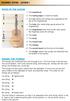 BEGINNER GUITAR - LESSON 1 PARTS OF THE GUITAR 1- The headstock. 2- The tuning pegs or machine heads. 3- The nut (where the strings are supported at the top of the fingerboard). 4- The frets (the metal
THE SPEED PROGRAM THE following is A list Of POinTS THAT PRODucE RESulTS in SPEED improvement: CHANGE THE GAME
 THE SPEED PROGRAM Remember, perfect technique is the #1 emphasis with the BFS Speed Program. Faster times will follow perfect technique. The Speed Program is as follows: 1. Start with a Sprint Learning
Kriya for Negative Mind
 Kriya for Negative Mind Bron: The Ten Light Bodies of Conciousness van Nirvair Singh Khalsa So So So So Hung Hung Hung Hung 3 MINUTES. Let s start with this pranayam. It s going to be a 4:4 breathing pattern.
Bell Music Reading Course #1 Introduction 101. D. Rod Lloyd Columbia River Handbells 2010
 Bell Music Reading Course #1 Introduction 101 D. Rod Lloyd Columbia River Handbells 2010 1 How Music Works Music is a graphical presentation of sounds played in a precise, predetermined order. Music is
Lesson Plans: Stage 3 - Module One
 Lesson Plans: Stage 3 - Module One TM Music Completes the Child 1 Stage Three Module One Contents Week One Music Time Song 2 Concept Development Focus: Tempo 4 Song Clap Your Hands 5 George the Giant Pitch
General Guidelines. Neck Stretch: Side. Neck Stretch: Forward. Shoulder Rolls. Side Stretch
 Stretching Exercises General Guidelines Perform stretching exercises at least 2 3 days per week and preferably more Hold each stretch for 15 20 seconds Relax and breathe normally Stretching is most effective
National Standards for Music Education
 National Standards for Music Education 1. Singing, alone and with others, a varied repertoire of music. 2. Performing on instruments, alone and with others, a varied repertoire of music. 3. Improvising
MUSIC GLOSSARY. Accompaniment: A vocal or instrumental part that supports or is background for a principal part or parts.
 MUSIC GLOSSARY A cappella: Unaccompanied vocal music. Accompaniment: A vocal or instrumental part that supports or is background for a principal part or parts. Alla breve: A tempo marking indicating a
C Chord. Play these three notes at the same time with your right hand. These three notes make up a C chord.
 This book will get you playing keyboard instantly-whether you read music or not. We put together a band with some of our friends and recorded some really fun music. The Instant Keyboard CD has songs ready
Handale Primary School Music Curriculum Year EYFS ( 4-5 year olds)
 Handale Primary School Music Curriculum Year EYFS ( 4-5 year olds) Music at EYFS stage reflects the different ways in which children learn and engage with other people. Many examples of stories, songs
How to Read Music Notation
 How to Read Music Notation The New School of American Music IN JUST 30 MINUTES! C D E F G A B C D E F G A B C D E F G A B C D E F G A B C D E F G A B C D E 1. MELODIES The first thing to learn about reading
IMPROVING TODAY S PERCUSSION SECTION
 Commander s Clinics LT COL STEVEN GRIMO Commander USAF Band of Mid-America Scott Air Force Base IMPROVING TODAY S PERCUSSION SECTION United States Air Force Band of Mid-America 900 Chapman Drive Scott
Tee Ball Practice Plans and Drills
 Tee Ball Practice Plans and Drills Introduction: Whether you are a parent whose child is about to start Tee Ball for the first time or you are about to take on the responsibility of coaching a Tee Ball
KODÁLY METHOD AND ITS INFLUENCE ON TEACHING WIND INSTRUMENTS IN HUNGARY
 KODÁLY METHOD AND ITS INFLUENCE ON TEACHING WIND INSTRUMENTS IN HUNGARY Jozsef Csikota Midwest Clinic Chicago, Illinois U.S.A. 15th December 2004 KODÁLY METHOD IN HUNGARIAN SCHOOLS In Hungary, every student
BEACH VOLLEYBALL TRAINING PROGRAM
 2008 ELITE PERFORMANCE ATHLETE CONDITIONING BEACH VOLLEYBALL TRAINING PROGRAM Team BC 2008 Steve Van Schubert, CAT(C), CSCS Training Schedule General Outline Phase 1 2 Weeks Phase 2 3 Weeks Phase 3 3 Weeks
Cathy Benedict, Ed.D Florida International University NAfME Nashville, 2013 Doing Away With Classroom Management: Teaching for Musical Transitions
 Cathy Benedict, Ed.D Florida International University NAfME Nashville, 2013 Doing Away With Classroom Management: Teaching for Musical Transitions The following can be made appropriate for 1st-5th grade
Qigong. Ba Duan Jin. The Eight Pieces of Brocade
 Qigong Ba Duan Jin The Eight Pieces of Brocade by Col and g Hamilton Yiheyuan Martial Arts Contents Page Introduction 2 Preparation 2 1. Hold up the Sky 3 2. The Archer 4 3. Join Heaven and Earth 5 4a.
Unit Overview Template. Learning Targets
 ENGAGING STUDENTS FOSTERING ACHIEVEMENT CULTIVATING 21 ST CENTURY GLOBAL SKILLS Content Area: Orchestra Unit Title: Music Literacy / History Comprehension Target Course/Grade Level: 3 & 4 Unit Overview
Rehearsal Strategies A Night in Tunisia By Reginald Thomas, Professor of Jazz Piano Michigan State University, East Lansing, MI
 Rehearsal Strategies A Night in Tunisia By Reginald Thomas, Professor of Jazz Piano Michigan State University, East Lansing, MI Do you remember the first time you heard this jazz classic, A Night In Tunisia?
The Dance Lesson. A good dance lesson should contain some or all of the following:-
 The Dance Lesson The Primary School Curriculum says:- Dance in education involves the child in creating, performing and appreciating movement as a means of expression and communication. Dance differs from
1. interpret notational symbols for rhythm (26.A.1d) 2. recognize and respond to steady beat with movements, games and by chanting (25.A.
 FIRST GRADE CURRICULUM OBJECTIVES MUSIC I. Rhythm 1. interpret notational symbols for rhythm (26.A.1d) 2. recognize and respond to steady beat with movements, games and by chanting (25.A.1c) 3. respond
Suggested Practice Plan Rookie and Tee Ball
 Suggested Practice Plan Rookie and Tee Ball Table of Contents General Coaching Tips --------------------------------------------------------- 2 Stretching Exercises ------------------------------------------------------------
Basic Stretch Programme 3. Exercise Circuit 4
 Basic Stretch Programme 3 Exercise Circuit 4 2 1 Calves Stand approximately 1 metre away from wall with legs straight and heels on floor. Step and lean forward and slowly push hips towards wall. Should
Conditioning From Gym To Home To Gym
 Page 1 of 6 Conditioning From Gym To Home To Gym by Vladimir Artemov, Olympic and World Champion and USA Gymnastics Women's National Clinician In the beginning, and throughout the training process, conditioning
Bass Clef Sight-Reading Exercise Worksheet
 Bass Clef Sight-Reading Exercise Worksheet Instructions: In this exercise you will work through five different levels of sight-reading ability. You may wish to print four copies of the music sheet for
Learning To Play The Guitar An Absolute Beginner s Guide By Anthony Pell
 Learning To Play The Guitar An Absolute Beginner s Guide By Anthony Pell http://www.learningtoplaytheguitar.net All Rights Reserved. No part of this publication may be reproduced in any form or by any
2 Step 2 Dance Studio Cha-Cha Basics. Cha-Cha Basics. Pre-requisite None (These are basic patterns)
 Pre-requisite Introduction The Music None (These are basic patterns) Cha-Cha Basics Although Cha-cha is one of the Cuban family of dances that is danced throughout the Latin American countries, it is one
Jim Hall Chords and Comping Techniques
 Jim Hall Chords and Comping Techniques Jazz guitar comping is an art form in its own right. The comping rhythms, melodies, and voicings of the greatest Jazz guitarists are delightful to listen to, with
This document fully describes the 30 Day Flexibility Challenge and allows you to keep a record of your improvements in flexibility.
 Welcome to the StretchTowel 30 Day Flexibility Challenge! You can Be More Flexible in 30 days by following our stretching program for 10 minutes a day. The best part is that you can stretch using the StretchTowel
How to Read Chord Charts
 How to Read Chord Charts Learning to read chord charts is fun, easy and it will open a new world of songs to you, as you will now be able to decipher the code. As a teacher and studio guitarist, I use
MUSIC. Syllabus for Primary Schools. Curriculum Department, Floriana Year 3 19
 MUSIC Syllabus for Primary Schools Curriculum Department, Floriana Year 3 19 YEAR 3 Curriculum Department, Floriana Year 3 20 LEARNING OUTCOMES for YEAR 3 Curriculum Department, Floriana Year 3 21 3.1
How to create bass lines
 First rule: always memorize the melody of the song! Always. Always. Always. You should be able to sing and play it in the original key. If you really want to be totally extra, extra awesome, you will be
Coaching the High School Discus Throw
 Coaching the High School Discus Throw By: Paul Brueske Talent Identification: To establish a successful high school throws program, the first thing a coach must to do is find the right type of athletes.
AUTOMATIC FITNESS IN GENERATIVE JAZZ SOLO IMPROVISATION
 AUTOMATIC FITNESS IN GENERATIVE JAZZ SOLO IMPROVISATION ABSTRACT Kjell Bäckman Informatics Department University West Trollhättan, Sweden Recent work by the author has revealed the need for an automatic
acousticguitarworkshop.com RICK PAYNE SP FINGERSTYLE BLUES More chapters in the story of how to play Fingerstyle Blues
 acousticguitarworkshop.com RICK PAYNE SP FINGERSTYLE BLUES More chapters in the story of how to play Fingerstyle Blues 2 Fingerstyle Blues 2 - Contents Welcome to Fingerstyle Blues 2! In the first course,
GRASP. Graded Repetitive Arm Supplementary Program. Exercise manual. Level. This research project is funded by UBC and the Heart and Stroke Foundation
 GRASP Graded Repetitive Arm Supplementary Program Exercise manual Level 1 This research project is funded by UBC and the Heart and Stroke Foundation 1 Welcome to the Grasp study! Thank you for volunteering
This PDF is designed to go right along with the DVD. Print it out and keep it in front of you while working through the lessons.
 Beginner Strumming This PDF is designed to go right along with the DVD. Print it out and keep it in front of you while working through the lessons. Introduction You don t need to know much to get started
Hurdle Training. Manual. Drills and exercises to help you get the most out of your Hurdle training program!
 Hurdle Training Manual Drills and exercises to help you get the most out of your Hurdle training program! Performance Hurdles USAGE GUIDELINES Words of Caution 1. Are you physically fit? Do not enter into
Golf Swing. Golf Swing Mechanics. Address Position. Posture To position the upper body correctly you must have the proper stance as described above.
 The golf swing is just that, a swing. In nearly all sports that involve swinging an implement, a bat, a hockey stick or racquet, the object to be struck is moving. In golf, the ball is always stationary.
Learning to play the piano
 Learning to play the piano INTRODUCTION TO THE KEYBOARD... 2 STEPPING UP... 2 TREBLE SPACES... 7 BASS SPACES... 9 TIME SIGNATURE... 12 UP AND DOWN THE HILLS... 15 UP AND DOWN THE HILLS IN G MAJOR... 16
Greenwich Public Schools Electronic Music Curriculum 9-12
 Greenwich Public Schools Electronic Music Curriculum 9-12 Overview Electronic Music courses at the high school are elective music courses. The Electronic Music Units of Instruction include four strands
WING-T OFFENSIVE LINE BLOCKING TECHNIQUES DRILLS AND PRACTICE ORGANIZATION 2014 EDITION
 WING-T OFFENSIVE LINE BLOCKING TECHNIQUES DRILLS AND PRACTICE ORGANIZATION 2014 EDITION By: Tom Herman TABLE OF CONTENTS I. INTRODUCTION -------------------------------------------------- 4 II. CHAPTER
SHOULDER EXERCISE ROUTINE
 8 SHOULDERS The shoulders are the key to many full-bodied movements. Skill in such sports as swimming, baseball, golf, and tennis and other racquet sports is improved with the help of strong shoulders.
THE CHOIR: SING WHILE YOU WORK. THE BASICS OF SINGING bbc.co.uk/thechoir
 THE BASICS OF ING THE BASICS OF ING Gareth Malone Welcome to The Choir: Sing While You Work guide to singing. If you re reading this, congratulations, as you have either already taken that first step and
Speed, Agility, Quickness Training
 Speed, Agility, Quickness Training Goal: To develop Speed, Agility, and Quickness (SAQ) and functional football strength for young football players through a consistent and safe format. Place the stations
6) Minor Seventh & Suspended Chords. 7) Barre Chords on the 6 th String. 8) Barre Chords on the 5 th String. 9) The Secret to Great Strumming
 Table of Contents SESSIONS 1) Starting Off Right Overview 3 Finger Exercise 1 5 Finger Exercise 2 6 Finger Exercise 3 7 Alternating Finger Exercise 8 C & G7 Chord Exercise 9 2) Reading Music & Notes on
Swinginʼ Transitions For Drummers
 By Keith Hall Swinginʼ Transitions For Drummers It is safe to say that all of us have either listened to or played in a young jazz group and that we are well aware of that awkward point in the music...when
The Samba Experience
 Sarfati, Aaron MIT 21M030 Ruckert December 7, 2006 The Samba Experience In examining and researching a foreign culture, there are two ways one may go about conducting the research: 1) reading and studying
COMMON OVERUSE INJURIES ATTRIBUTED TO CYCLING, AND WAYS TO MINIMIZE THESE INJURIES
 COMMON OVERUSE INJURIES ATTRIBUTED TO CYCLING, AND WAYS TO MINIMIZE THESE INJURIES Listed are a few of the most common overuse injuries associated with cycling long distances. 1. Cervical and upper back
2017 NAfME All-Northwest Jazz Audition Materials Saxophones and Brass
 2017 NAfME All-Northwest Jazz Audition Materials Saxophones and Brass Track 1 Track 2 Track 3 Basic Audition The following three tracks are required of all wind applicants ALTO SAXOPHONE (pages 5-6) TENOR
The Swing Speed Report
 The Swing Speed Report Learning the Secrets of Longer Drives Table of Contents Learning the Secrets of Longer Drives... 2 1. Keep it Flowing... 4 2. Load the swing around the right leg... 5 4. Swing Faster
The following are sample ideas for physical activity breaks.
 Appendix D. Ideas for Physical Activity Breaks in Meetings Ideas for Physical Activity Breaks in Meetings Benjamin Franklin once said, You don t stop playing because you grow old, you grow old because
Exercises for the Hip
 Exercises for the Hip Gluteal Sets: Lie on your back, tighten buttocks and hold for 3-5 seconds. Repeat 20 times. Supine Hip ER/IR: Lie on your back with legs straight. Gently rotate knees out and in limited
How to increase Bat Speed & Bat Quickness / Acceleration
 How to increase Bat Speed & Bat Quickness / Acceleration What is Bat Speed? Bat Speed: Bat speed is measured in miles per hour (MPH) and considers only the highest speed of the bat head (peak velocity)
Catch the Calypso Beat and Put it in Your Feet! A Smithsonian Folkways Lesson Designed by: Katie Wood Seattle Public Schools, Seattle WA
 Catch the Calypso Beat and Put it in Your Feet! A Smithsonian Folkways Lesson Designed by: Katie Wood Seattle Public Schools, Seattle WA Summary: In this lesson students will travel to the island of Trinidad
MUSIC A. PROGRAM RATIONALE AND PHILOSOPHY
 MUSIC A. PROGRAM RATIONALE AND PHILOSOPHY The systematic development of musical skills, knowledge and perception is fundamental to the total development of the individual. Music education should begin
Youth Football Drills
 Angle Tackle Drill Combines tackling skills with proper pursuit and leverage and position. Align two cones five yards apart. Divide defenders into two single file lines five yards apart facing one another
Fact sheet Exercises for older adults undergoing rehabilitation
 Fact sheet Exercises for older adults undergoing rehabilitation Flexibility refers to the amount of movement possible around a joint and is necessary for normal activities of daily living such as stretching,
IMPORTANT INFORMATION - PLEASE READ. Table of Contents. Introduction. General Information
 IMPORTANT INFORMATION - PLEASE READ Introduction Congratulations! Welcome to the world of the ELLIPTICAL CROSS TRAINER. The ELLIPTICAL CROSS TRAINER is one of the finest and most comprehensive pieces of
How To Stretch Your Body
 Exercise Module A New Leaf Choices for Healthy Living University of North Carolina at Chapel Hill 2007 Center for Health Promotion and Disease Prevention Physical Activity Exercises for Keeping Active
2012 Music Standards GRADES K-1-2
 Students will: Personal Choice and Vision: Students construct and solve problems of personal relevance and interest when expressing themselves through A. Demonstrate how musical elements communicate meaning
SELF-MASSAGE HANDOUTS
 SELF-MASSAGE HANDOUTS Self-Massage for the Head and Face Self-Massage for the Low Back and Buttocks Self-Massage for Runners Self-Massage for the Neck Self-Massage for the Feet Self-Massage for the Arms
Trunk Strengthening and Muscle and Coordination Exercises for Lower Limb Amputees
 Trunk Strengthening and Muscle and Coordination Exercises for Lower Limb Amputees Part One: Trunk Strengthening Trunk Extension Needed: Sturdy chair or stool, Theraband, and a Theraball if necessary. Sit
Scoring Percussion and Drum Set Parts in Sibelius Tom Rudolph, presenter Email: [email protected] Website: www.tomrudolph.com
 Scoring Percussion and Drum Set Parts in Sibelius Tom Rudolph, presenter Email: [email protected] Website: www.tomrudolph.com The PAS Standard Sibelius uses the Percussive Arts Society (PAS) standard
Musical Literacy. Clarifying Objectives. Musical Response
 North Carolina s Kindergarten Music Note on Numbering/Strands: ML Musical Literacy, MR Musical Response, CR Contextual Relevancy Musical Literacy K.ML.1 Apply the elements of music and musical techniques
5 Ways To A Monster Guitar Technique Bill Tyers - February 2015
 5 Ways To A Monster Guitar Technique Bill Tyers - February 2015 The age old saying 'practice makes perfect' is still the very best advice that any student of the guitar can follow. Unfortunately for some
BASS BLUES LICKS AND PROGRESSIONS BOOK ON DEMAND V1.1, 2004
 BASS BLUES LICKS AND PROGRESSIONS BOOK ON DEMAND V1.1, 2004 Get It All.Net!, 2004, All Rights Reserved http://www.get-it-all.net/ 1 TABLATURE REFERENCE BASS FRETBOARD MAP (Past the 12 th fret the pattern
Table of Contents. Stretching Exercises --------------------------------------------------------------------5
 Table of Contents General Coaching Tips --------------------------------------------------------------------3 Basic Practice Set-Up --------------------------------------------------------------------4
DIGITAL MUSIC DAY 1 WHAT IS SOUND? ANALOG AND DIGITAL EARLY RECORDING WAX FOR YOUR EARS ROUND BUT FLAT WIRE AND TAPE PURE SOUND
 DIGITAL MUSIC DAY 1 WHAT IS SOUND? 1. Making a sound playing a musical instrument, moves the surrounding the instrument. 2. Making a sound sends out air which hit your ears. 3. Waves of changing air pressure
Bass Clarinet 101, Bass Clarinet for Dummies. By Edward Palanker
 Bass Clarinet 101, Bass Clarinet for Dummies By Edward Palanker The bass clarinet is a unique member of the clarinet family. If you don t voice it correctly in the upper register you re in for a surprise,
LEVEL I SKATING TECHNICAL. September 2007 Page 1
 SKATING September 2007 Page 1 SKATING SKILLS The game of Ice Hockey is a fast-paced, complex, team sport, which demands quick thinking, fast reactions and special athletic skills. Skating is the most important
Topic: Passing and Receiving for Possession
 U12 Lesson Plans Topic: Passing and Receiving for Possession Objective: To improve the players ability to pass, receive, and possess the soccer ball when in the attack Dutch Square: Half of the players
SHOULDER PULL DOWNS. To learn efficient use of the shoulder blades and arms while maintaining a neutral spine position.
 SHOULDER INTRODUCT ION Welcome to your shoulder exercise program The exercises in the program are designed to improve your shoulder mobility, posture and the control of the muscles in your neck and shoulder
WWW.ALPHADOGSPORTS.COM SPEED TRAINING MANUAL
 WWW.ALPHADOGSPORTS.COM SPEED TRAINING MANUAL ALPHA DOG SPEED TRAINING We would like to thank you for your commitment to Alpha Dog Sports. Alpha Dog Sports is proud to bring the top equipment from around
At the piano; learning a natural hand position; the steady beat; pre-reading: two black keys Learning finger numbers, posture, and arm weight;
 PREPARATORY 0 1 At the piano; learning a natural hand position; the steady beat; pre-reading: two black keys Learning finger numbers, posture, and arm weight; pre-reading: three black keys; double bar
Time allowed: 1 hour 30 minutes
 SPECIMEN MATERIAL GCSE MUSIC 8271 Specimen 2018 Time allowed: 1 hour 30 minutes General Certificate of Secondary Education Instructions Use black ink or black ball-point pen. You may use pencil for music