
SHADE AND ORNAMENTAL TREES
|
|
|
- Ashlynn Lawrence
- 9 years ago
- Views:
Transcription
1 ACER SHADE AND ORNAMENTAL TREES A. x freemanii Bailston Matador Maple (40 x 40 ) Rate 1-2. Deeper red fall color than Autumn Blaze and more consistent colors than Sienna Glen. Very adaptable tree. (Zone 4). A. ginnala - Amur Maple - (15-18 x ) Rate 1-2. Available in clump and single stem form. Dark green lobed leaves are light green beneath. Graceful irregular head. Fine to medium textured foliage that turns a combination of yellow, orange, and brilliant rusty red in fall. Seeds are persistent into the spring. Fragrant yellow flowers appear in April and May. One of the hardiest maples. (Zone 3). A. miyabi Morton State Street Maple (20 x 20 ) Rate 1-2. Tolerant of heat, drought, salt, and pollution. Fall color is soft, buttery to golden yellow. Very adaptable. (Zone 4). A. negundo Sensation Sensation Boxelder (30 x 25 ) Rate 2 +. Very uniform growth habit. Excellent scarlet red fall color. Very hardy tree tolerant of a wide variety of soil conditions. Male clone, does NOT attract Boxelder bugs. (Zone 3) A. palmatum Emperor 1 - Emperor 1 Japanese Maple-(20 x 15 ) A vigorous upright grower with large, red leaves that hold their color better than most red-leafed palmatums, lasting late into summer. Fall colors are usually bright crimson. (Zone 5) NOT WARRANTED A. saccharinum Silver Maple (50 x 40 ) Rate 1-2. Hardy tree, easy to grow. Transplants well. Tolerant of a wide range of soils. Nice golden yellow fall color. Upright oval shape. (Zone 3) A. tataricum - Tatarian Maple - (20-25 x ) Rate 1-2. Large shrub or small tree with dark green foliage, similar to, but arguably better than, Amur maple. Oval irregular shape. Tolerant of alkalinity and dry conditions. Yellow to red in fall. Variety Hot Wings produces showy red samaras. (Zone 3) A. x freemanii Sienna Sienna Glen Maple (60 x 40 ) Rate 1-2. A fast growing, hardy maple with uniform branching and a Pyramidal form. Tolerant of alkaline, acidic and wet soil conditions. Superior to Autumn Blaze Maple in withstanding strong winds. Is considered a very good substitute for Ash varieties. (Zone 3) AESCULUS A. glabra - Ohio Buckeye - (30 x 30 ) Rate < 12. Native buckeye is more drought tolerant than the European Horsechestnuts. Compound leaves turn orange yellow before dropping in early fall. Flowers small in upright clusters pale yellow, followed by buckeye seeds. Best planted in parks or open areas, not a street tree. (Zone 3) 8

2 BETULA B. papyrifera - Paper Birch - (40-50 x ) Rate 1-2. Available in clump and single stem form. White-barked birch that is perfectly chalk-white, and exfoliating when older. Very hardy. Bright yellow in fall. Longer lived than other white barked birches. Loosly pyramidal in youth, with oval to rounded crown at maturity. We have both smaller single stem and larger clumps of this tree. (Zone 2) B. platyphylla Fargo - Dakota Pinnacle Birch-(30 x 7-8 ) Rate 1-2. Developed at NDSU, this tree was selected for its narrow, columnar habit. After several years, bark matures to a yellow white. Tolerant of heat, drought, and alkaline soils! (Zone 3) CERCIS C. Canadensis Eastern Redbud (20 x 25 ) Rate <12. This handsome tree bears small pink flowers in spring before leaves appear. Later brown fruit pods form. It does well in full sun and part shade. (Zone 4). CRATAEGUS C. laevigata Supurba Crimson Cloud Hawthorne (15 x10-15 ) Rate ~ 6. A thornless hawthorn that exhibits large red flowers with white star shaped centers. Resistant to leaf spot, and displays a colorful glossy red fruit in fall that can continue into winter. (Zone 4) FRAXINUS F. americana Junginger Autumn Purple Ash (50-60 x ) Rate 1-2. Similar to Calypso White Ash. Seedless and tolerant of moist soil conditions. Glossy, green leaves in the summer change to deep purple in fall. Few seeds produced. (Zone 4) F. mandschurica Mancana Mancana Ash - (30-40 x ) Rate ~12. A seedless selection of Manchurian ash from Morden research station. It forms a tailored, formal-looking tree with a compact, narrow oval-shaped crown. The foliage remains attractive throughout the growing season. In fall the leaves drop in 2-3 days. Growing slower than green ash. Tolerates drought and excess moisture. Disease tolerant. Yellow fall color. (Zone 3). F. nigra Fall Gold Fall Gold Ash ( 50 x 20 ) Rate <12. Fall Gold is a columnar, medium sized tree. Has long lasting golden-yellow fall foliage, bears no fruit, and tolerates wet areas. Is adaptable to a wide range of soil conditions. (Zone 3) F. pennsylvanica Patmore - Patmore Ash - (40-50 x ) Rate 1-2. A very hardy tree from the harsh climate of western Alberta, Canada. Has an oval growth habit, and the foliage is a very attractive, glossy, deep green. Seedless. Disease resistant and relatively pest free. Tolerant of a wide variety of soil conditions. Excellent for street use. (Zone 2). 9

3 F. pennsylvanica Cimmzam Cimmaron Ash-(50-60 x 30 ) Rate 1-2. An uprightbranched, narrow tree while young, developing a rounded crown as it matures. Pinnate foliage is dark, glossy green through the summer, becoming orange-red to brick red in the fall. Seedless. (Zone 4) F. pennsylvanica Rugby Prairie Spire Ash - (50-60 x 30 ) Rate 1-2. This seedless cultivar was selected for hardiness in adverse prairie conditions. Pyramidal growth habit, and the foliage is a very attractive, glossy, deep green with gold fall color. Disease resistant and relatively pest free. Tolerant of a wide variety of soil conditions. Excellent for street use. (Zone 3) GLEDITSIA G. triacanthos Imperial - Imperial Honeylocust - (30-35 x ) Rate 1-2. A strong, graceful, spreading variety with dainty, refined foliage. More compact than other honeylocusts. Thornless and mostly seedless. Lends well to trimming. Bright green summer foliage, turning yellow in the fall. Transplants readily, very adaptable to soils. Tolerant of heat, drought, compaction, etc. Full sun. (Zone 4) G. triacanthos Skyline - Skyline Honeylocust - (50-55 x ) Rate 1-2. Essentially the same features as Shademaster, but perhaps more pyramidal. Thornless. Few seeds. Transplants readily. Adaptable to a wide range of soils. Tolerates heat, salt, drought, compaction, etc. Prefers full sun. (Zone 4) JUGLANS Juglans nigra- Black Walnut-(50 ). A large growing shade tree with a rounded habit and coarse branching. (Zone 4) MALUS - Crabapple (* means the fruit is persistent and hangs on the tree into winter, making no mess) * Kelsey (15 x 15 ) Rate <12. Canadian crab with double pink/purple blooms. White markings at the base of the petals give a bicolor appearance. Foliage is bronze green, the fruit is dark purple and persistent. (Zone 2) * Morning Princess (8-12 x 8 ) Rate <12. One of the most unique of all the crabs. Its dwarf weeping form benefits the smaller urban garden. Has attractive pinkish-red blossoms in the spring which are later replaced with persistent purple ornamental fruit. (Zone 2) *Perfect Purple - (20 x 20 ) Rate <12. Perfect Purple has reddish young foliage that turns purple with a green undercast. Deep pink flowers. Uniform habit finishes to a superbly rounded shape. (Zone 3) 10

4 Pink Spires (15-20 x 12 ) Rate <12. Red-purple foliage in spring turns to dark green-bronze in summer. Covered with lavender-pink blossoms. Purplish-red small fruit is fairly persistent and holds well into the winter. Ideal for confined screen or border planting. (Zone 2) * Radiant (15 x 20 ) Rate <12. A compact selection from the University of Minnesota. Single, deep pink flowers are followed by bright red fruit. Foliage is reddish purple when young, ages to dark green. (Zone 3) Red Barron- (12-15 x 5-6 ) Rate<12. This crab is uniquely columnar in form at a young age, and then matures to a more rounded shape. The foliage is purple fading to bronze-green. The buds, flowers, and fruit are all dark red. (Zone 4) Spring Snow - (25-30 x ) Rate <12. An introduction from Canada. Bears masses of pure white, very fragrant blossoms, rich bright green foliage in the spring, fine rounded shape. Nearly sterile, bearing no or few fruit. Heat tolerant. (Zone 4) Thunderchild - (15-20 x ) Rate <12. Introduced from Saskatoon, Saskatchewan. Compact, upright, spreading with deep purple leaves. Single pink blooms arrive before foliage. Very resistant to fireblight and powdery mildew. Dark red fruit. (Zone 3) PHYSOCARPUS P. opulifolius Seward Summer Wine Ninebark Tree Form (6 x 5 ) Rate ~6. Fine textured wine colored foliage, with white button like flowers in June. (Zone 3) POPULUS P. alba Silver Poplar (60 plus) Rate >2. Fast growing, large shade tree. Leaves are green on top and white on bottom. Tolerant of alkaline soils and salt. Full sun. (Zone 3). P. sargentii Plains Cottonwood (80 x 50 ) Rate > 2. Fast growing, broadly crowned native cottonwood for large rural areas. The most common native cottonwood of the Great Plains. Produces cotton. (Zone 3) P. sargentii 'Jeronimus' Jeronimus Poplar (70-80 x ) Rate > 2. This cotton-less variety has become quite popular in Colorado and the western states. Valued for its tall, straight growth habit. Fast growing with a broad, oval crown. Only moderate water needs. (Zone 4) P. tremuloides - Quaking Aspen - (30-40 x ) Rate 2. Hardy, fast growing native with open habit. Smooth, powdery, greenish-gray to white bark. Green heart-shaped leaves tremble in the slightest breeze. Brilliant yellow, orange, or red in the fall. Excellent in groups of natural wooded sections. Spreads underground to form groves. Can take a lot of water. Indifferent to soil conditions. Excellent for naturalizing. (Zone 2) P. tremula Erecta - Swedish Aspen or Swedish Poplar - (60 x 10 ) Rate 2. Hardy, fast growing with distinctively columnar shape. Smooth white bark with bright yellow foliage in fall. Hardier and more attractive than Lombardy or Theves poplars. (Zone 2) 11

5 P. x acuminata Lanceleaf Poplar (45 x ) Rate > 2. Hardy, cottonless cottonwood with upright rounded crown. Fast growing, with large, glossy, dark green leaves. (Zone 3) P. Highland - Highland Poplar (45-50 x ) Rate > 2. Originally a seedling from Cheyenne Experiment Station. Large dark green, waxy leaves on an upright, oval shaped tree. Broad spreading shape. Expected to be resistant to canker. Light colored bark, smaller than most poplars. Disease resistant. Seedless. (Zone 3) PRUNUS P. cerasifera Newport Plum (15 x 15 ) Rate 1. A small ornamental tree with beautiful reddish-purple foliage and red tips throughout the summer. Blooms early in the spring with fragrant pink flowers, followed by medium sized purple fruit. (Zone 4) P.x cistena - Purpleleaf Sandcherry Tree (8 x 8 ) Rate < 12. Popular Purpleleaf Sandcherry pruned to a tree form. Rounded head and short stature make this a perfect choice for a small area. Outstanding reddish purple foliage. Profuse pink flowers in the spring followed by a small crop of blackish purple fruit. (Zone 3) P. sargentii Hokkaido Normandale - Spring Wonder Sargent Cherry- (20 x 20 ). This upright vase-shaped tree is native to Japan and blooms in early May with single pink flowers. The bark is a polished, reddish brown. New growth is purplish while the summer foliage is a shiny dark green. Good looking tree with three season appeal. No fruit noticed to date! (Zone 4) P.virginiana var. melanocarpa Western or Native Chokecherry (20-30 x ) Rate 1-2. Tree form of chokecherry that is native to the Rocky Mountains. Will tend to multi-stem form. Tough, will withstand harsh conditions. Dark green foliage. Small, white flowers in April and May. Produces red fruit that turns dark purple. (Zone 2) P. virginiana Canada Red - Canada Red Cherry - (20-25 x 20 ) Rate 1-2. Noted for vigorous growth, straight trunk, and uniform top. New leaves green, turning to dark maroon-red foliage as leaves mature. Soil needs good drainage and aeration. White fragrant flowers followed by a few reddish/black fruits. (Zone 2) PYRUS P. calleryana Autumn Blaze - Autumn Blaze Pear- (35 x 20 ). Rate 1-2. This cultivar has a distinct rounded form that distinguishes it from other pears. The most cold hardy of the calleryana cultivars, it has white flowers in spring, dark glossy foliage, and good red fall color. Has insignificant, inedible, small olive brown fruit. (Zone 4) 12

6 QUERCUS Q. macrocarpa - Burr Oak - (60-80 x ) Rate < 12. Majestic large shade tree with a rounded open form. Drought resistant and faster growing than most other oaks. Large mossy fringed acorn. Yellowish brown to purple fall color hanging on to tree into winter and corky branches add winter interest. Long-lived and very hardy. Native to central North America. Tolerant of a wide variety of soil types and air pollutants. (Zone 3-8) SALIX S. alba vitellina Golden Willow (50 x 35 ) Rate 2 +. Large, fast growing tree with graceful form and bright yellow branches. Bright green leaves with silver cast underneath. Fall color an excellent golden yellow. Good for wet, moist areas. (Zone 2) S. pentandra Silver Lake Prairie Reflection Laurel Leaf Willow-(35 x 25 ) Rate 1-2. From NDSU! Grows rapidly, producing a dense rounded tree with very dark green, highly glossy foliage. Does not tend to suffer from chlorosis due to iron deficiency. (Zone 2) S. Prairie Cascade - Prairie Cascade Willow - (35-45 x ) Rate 2 +. An exceptionally hardy weeping willow from the Morden Research Station in Manitoba, Canada. Has the hardiness and glossy green foliage of the Laurel Willow while inheriting the weeping habit and predominate winter golden stem color of the Weeping Willow. Landscape use for large properties, particularly where moisture is plentiful. (Zone 3) SORBUS S. decora - Showy Mountain Ash - (20 x 20 ) Rate <12. Smaller ornamental tree grown for its white flowers, handsome foliage, and showy red fruit. Hardiest of the species in this country. Slow growing. Disease resistant. Foliage dark green turning red in the fall. (Zone 2) S. hybrida Oak Leaf Mountain Ash (30 x 20 ) Rate <12. Upright shape with dark green lobed leaves turning to rusty brown in fall. Orange-red fruit is very showy. Fireblight resistant. Originally found at the Cheyenne research station. (Zone 4) SYRINGA S. meyeri Palibin Dwarf Korean Lilac Tree (5 x 4 ) Rate < 6. Tiny tree for that hard-tofit space. Dwarf plant has excellent, uniform globe-shaped habit and red-purple buds that open to fragrant pale lilac flowers. Grafted. (Zone 4) S. reticulata Ivory Silk Ivory Silk Japanese Tree Lilac - (25 x 15 ) Rate <12. Creamy white flowers in large panicles in June and July. Handsome deep green foliage. Cherry like bark. Useful as small specimen tree or large shrub. (Zone 4) 13

7 TILIA T. americana Redmond - Redmond Linden (40-60 x ) Rate <12. Glossy light green foliage turns to bright yellow in fall. Nice pyramidal form. Largest leaves of any Linden tree. Branches show reddish color in winter. Basswood. A valuable street tree. (Zone 4) T. cordata Greenspire - Greenspire Linden - (40-50 x ) Rate <12. A fine tree but a slow grower. Forms a shapely, pyramidal head. Growth uniform. Foliage leathery, dark green, very dense shade. Small pale yellow flowers with a spicy fragrance. A good street tree. (Zone 4-7) ULMUS U. davidiana var. japonica Discovery - Discovery Elm (35-40 x ) Rate 12. Developed in Canada. Upright, vase like habit, that generally forms a more arched shaped canopy. Resistant to Dutch Elm disease, elm leaf beetles, and aphids. Clean looking throughout all seasons. (Zone 3) 14

8 Discontinued items: ACER A. ginnala Embers - Embers Amur Maple - (15-20 x 15 ) Rate 1-2. A graceful tree with an overall, irregular head. Spreading slender branches. Extremely hardy. Xeriscape plant. Medium green foliage turning scarlet in fall with red fruit. (Zone 3) A. grandidentatum Big Tooth Big Tooth Maple (45 x 30 ) Rate 2 +. Brilliantly colored fall foliage. Lustrous green leaves, seeds emerge rosy pink. Shrubby in youth, rounded head at maturity. (Zone 3) A. ginnala Flame - Flame Amur Maple (15-20 x ) Rate Round, multistemmed tree noted for its drought tolerance and magnificent fiery red fall color. It is widely adaptable to all soils, and can survive in full sun or partial shade. They make an excellent screen or hedge. (Zone 3) A. rubrum Northwood Northwood Maple (40 x 35 ) Rate 1-2. Excellent fall colors of orange and red, good clean summer foliage. More resistant to sun scald. (Zone 3) A. platanoides Royal Red Royal Red Maple (35 x 40 ) Rate 1-2. Dense shade tree. Maroon red all season long. Large, well-shaped canopy. Requires full sun. (Zone 4) A. palmatum Bloodgood - Bloodgood Maple (13 x 18 ) Rate < 6. Upright habit. Burgundy foliage throughout the entire growing season. Attractive red samara fruit/seed. New growth is red/burgundy color, aging to gray. Prefers moist soil and afternoon shade for best look. (Zone 5) A. palmatum dissectum Crimson Queen -Crimson Queen Japanese Maple- (10 x 10 ) Laceleaf Japanese Maple. A low branching dwarf tree with cascading branches. Lace-like foliage retains color through the summer. (Zone 5) NOT WARRANTED A.rubrum Franksred - Red Sunset Maple (50 x 40 ) Rate 1-2. A dense, upright crown, with an oval habit. Showy orange-red fall color that lasts for a long time. Requires full sun to partial shade. Prefers moist, well-drained soil, but tolerates clay soils. (Zone 4) A. x freemanii Sienna Sienna Glen Maple (60 x 40 ) Rate 1-2. A fast growing, hardy maple with uniform branching and a Pyramidal form. Tolerant of alkaline, acidic and wet soil conditions. Superior to Autumn Blaze Maple in withstanding strong winds. Is considered a very good substitute for Ash varieties. (Zone 3) A. rubrum Autumn Spire Autumn Spire Maple (50 x25 ) Rate 1-2. From Minnesota, this specimen offers showy flowers in spring, consistently beautiful red fall color, and good hardiness. (Zone 3) BETULA 15

9 B. pendula European White Birch (30-35 x ) Rate 1-2. Graceful, open branched pyramidal form tree. Distinctive flaky white bark. A wonderful yard tree with yellow fall color. Leaves broadly ovate, tolerates wet soil and does best in moist well drained sandy or loamy soil. (Zone 2-6) B. pendula Dalecarlica previously Laciniata Cutleaf European White Weeping Birch - (30-40 x ) Rate 1-2. Very attractive tree with silvery white bark. Tolerates wet soil, but does best in moist well-drained, sandy or loamy soil. Yellow-green fall color. Recommended for lawn or park plantings. Bark does not exfoiate as much as paper birch. (Zone 2-6) CELTIS C. occidentalis - Common Hackberry (40-60 x ) Rate <12. Broad ascending branches with corky, gray brown bark. Name possibly from the hacked appearance of the bark? Purplish fruits relished by birds and wildlife. Tolerates urban environments, winds, dry soils. Grows well in a variety of soil types. Yellow fall color. (Zone 2-7) CORNUS C. alternifloia Pagoda Dogwood (15 x 20 ) Rate < 12. Small rounded tree, with horizontal branching. Pale yellow flowers in May turn into attractive blue-black fruits. Good red color in fall. (Zone 4). CRATAEGUS C. crus-galli var. inermis Thornless Cockspur Hawthorn - (15-20 x ) Rate ~6. Multi-season interest. White flowering in June, red persistent fruit in the fall. Prefers moist conditions, however, it can tolerate drought conditions. (Zone 4). EUONYMUS E. alatus Burning Bush Tree Form - (10 x 8 ) Rate < 12. Wonderful small tree for a spacelimited area. Yellow flowers in May-June, winged, corky bark, and nice fall color. May be pruned to smaller size if desired. (Zone 3) F. pennsylvanica Green Ash Native Green Ash (50-60 x ) Rate 1-2. This hardy native is widely recommended for street and lawn plantings.. Native to moist sites, it is extremely adaptable and tolerates alkalinity, salt, drought, wind, and poor soils. Rarely to never fed on by Japanese beetles. (Zone 2-7) F. americana Calypso Calypso White Ash (50-60 x ) Rate 1-2. Similar to Autumn Blaze Ash, but hardier, and with a much more uniform branch habit, producing a significantly improved crown. Dark green leaves in the summer change to deep purple in fall. Few seeds produced. (Zone 3 16

10 GLEDITSIA G. triacanthos inermis Shademaster - Shademaster Honeylocust - (50-60 x ) Rate 1-2. Rapid grower with a straight trunk and ascending branches. Dark green foliage. An outstanding variety of honeylocust. Drought resistant. Vase shaped. Thornless. Few seeds. Transplants readily. Adaptable to a wide range of soils. Tolerates heat, salt, drought, compaction, etc. Prefers full sun. (Zone 4-7) G. triacanthos Harve Northern Acclaim Honeylocust - (35-45 x ) Rate 1-2. Essentially the same features as Skyline, but wider with age. Thornless and seedless. Very winter hardy, sturdy and vigorous. Tolerates heat, drought, compaction, etc. Prefers full sun. (Zone 3) G. triacanthos Sunburst - Sunburst Honeylocust - (40-45 x ) Rate 1-2. Bright golden-bronze foliage on the tips of growing branches fading to green as it matures. Tree is well formed and broadly pyramidal. Thornless and seedless. Valuable for light shade. (Zone 4) CATALPA C. speciosa Northern Catalpa (50-60 x ) This tree has few branches at an early age. Once branched, limbs are gnarled and twisted. White tube-like flowers appear in 4-8 panicles in early summer. Fruit is a long persistent pod. Tolerant and adaptable. Great for xeriscapes. Zone 4) CLADRASTIS C. kentuckea Yellowwood (30-40 x ) Rate <12. Yellowwood is most spectacular in the spring with large creamy white flowers. When mature, the bark turns gray similar to a beech. Yellowwood is named after the yellow heartwood. Adapts well in either high or low ph soils. (Zone 4) CRATAEGUS C. laevigata Crimson Cloud Hawthorne C. x mordenesis Toba Toba Hawthorne - (12-15 x 12 ) Rate ~12. Introduced by Morden Research Station of Manitoba, Canada. Glossy foliage, fragrant large double white flowers. ½ inch red fruit. Complimented by twisted trunk. (Zone 3) C. ambigua Russian Hawthorn - (15-18 x ) Rate ~6. This early blooming, spreading, small ornamental tree is not only desired for the bright red fruits in the early spring, but also for the beautiful yet somewhat irregular branching that is visible during the winter months. Resistant to cedar apple rust. A great addition to the home landscape. (Zone 4) CORNUS C. racemosa Jade Snow Mantle Gray Dogwood (12 x 7 ) Rate < 12. Small tree developed in North Dakota blooms profusely in spring with white flowers followed by small white fruit. Lingering pink flower/fruit stalks and purple fall foliage add autumn interest. Gray to red/brown bark provides winter color. Can be grown as a single stem or multi-stem tree. C.kousa chinensis Milky Way Milky Way Chinese Dogwood (20 x20 ) Rate <12. Very floriferous small tree with large creamy white flowers. Striking in late May/early June. Pinkish red fruit and exfoliating bark. Requires protection. NOT GUARANTEED. (Zone 5) 17

11 CELTIS C. occidentalis - Common Hackberry (40-60 x ) Rate <12. Broad ascending branches with corky, gray brown bark. Name possibly from the hacked appearance of the bark? Purplish fruits relished by birds and wildlife. Tolerates urban environments, winds, dry soils. Grows well in a variety of soil types. Yellow fall color. (Zone 2-7) ELAEAGNUS E. angustifolia - Russian Olive - (12-20 x ) Rate 1-2. Can be grown as a very hardy shrub or small tree. Handsome silvery-gray foliage. A desirable landscape plant with highly fragrant flowers in spring followed by decorative silvery yellow berries that are eaten by birds. Also used as a windbreak. Medium to fast growing. Transplants readily. Salt and drought tolerant. Useful in hedges, along roadways or as an accent plant in a shrub border. Fixes nitrogen. (Zone 2) E. bungeana Prairie Radiance Winterberry (18 x 15 ) Rate < 12. Small, low branching tree with superior winter hardiness. Pink fruit in mid-august that split open to expose bright red arils. (Zone 3) FRAXINUS F. americana Junginger Autumn Purple Ash (50-60 x ) Rate 1-2. Similar to Calypso White Ash. Seedless and tolerant of moist soil conditions. Glossy, green leaves in the summer change to deep purple in fall. Few seeds produced. (Zone 4) F. americana Autumn Purple - Autumn Purple Ash - (50-60 x ) Rate 1-2. Deep green foliage changing to deep purple to mahogany in fall and lasting 2 to 4 weeks. Rapid grower. Variety of white ash. Seedless. Tolerates moist, well-drained conditions, and acid to neutral soil. Excellent street and lawn tree. Transplants easily. (Zone 4) GINKGO G.biloba Autumn Gold Autumn Gold Ginkgo (50 x30 ) Rate <12. Male selection (so no fruit) of Ginkgo with broad, upright, conical shape. Nice yellow fall color. One of the oldest surviving tree species in the world. EXPERIMENTAL, NOT GUARANTEED. (Zone 4) HYDRANGEA H. paniculata Pink Diamond - Pink Diamond Hydrangea Tree Form (6-8 x 8-10 ) Rate Large cream to pure white double flowers bloom in June and July, gradually turning to a rich pink shade. Thrives in full or partial shade. Rich green foliage. Would like to be mulched in the fall. (Zone 4) MALUS *Royal Raindrops (15-20 x 15 ) Red to purple cut-leafed crabapple, brilliant color especially noteworthy during summer. Plentiful magenta-pink blossoms. (Zone 4) *Louisa (15 x 15 ) Rate < 12. Pink flowering weeping crab with persistent yellow fruit. Disease resistant. Special order only. (Zone 4) Red Jade - (12-15 x ) Rate <12. A dependable weeping variety. Good specimen plant. Glossy vibrant green foliage. White to light pink, single flowers. Persistent, bright red 1/2" fruit. An introduction of the Brooklyn Botanical Garden. (Zone 4) 18

12 Purple Prince (20 x 20 ) Rate <12. Outstanding rose-red blooms and maroon fruits. Rounded shape. New purple foliage ages to bronze green. Fireblight and cedar apple rust resistant! Faster growing than other crabs. (Zone 4) Selkirk (20 x ) Rate <12. Glossy foliage, red at first turning bronze-green. Large single purplish pink flower and bright glossy red fruit. (Zone 2) Perfect Purple - (20 x 20 ) Rate <12. Perfect Purple has reddish young foliage that turns purple with a green undercast. Deep pink flowers. Uniform habit finishes to a superbly rounded shape. (Zone 3) * Prairifire - (15-20 x 20 ) Rate <12. Upright, spreading form, becoming rounded with age. Crimson buds open to true red flowers. Flowering later than most varieties. Fruit is 1/2" maroon and is persistent. Red-maroon foliage ages to reddish green. Beautiful glossy dark red bark. Scab resistant. (Zone 4) Rudolph (16 x 13 ) Rate <12. Uniform and somewhat upright. Showy red fruit and greenbronze foliage with small, dark, orange-yellow persistent fruit. Very deep rose-red flower buds opening to rose-red flowers. (Zone 2) Spring Bride (15-25 x ) Rate <12. Double white blossoms in the spring that follow the branch structure closely, creating a garland of white flowers. Hardy variety with limited fruit production. (Zone 3) *Royalty - (15-20 x ) Rate <12. Outstanding for its foliage. New growth reddish, turning purplish with green undercast. Leaves have a bright varnished appearance. Leaves turning orange in the fall. Very hardy and blight resistant. Fruits and flowers dark red. Introduced from Saskatchewan. (Zone 3) PHYSOCARPUS P. opulifolius Monlo Diabolo Ninebark Tree Form (8 x 8 ) Rate ~6. Reddish purple foliage adorns a tree like form, adding a whole new dimension to the home landscape. Its unique white exfoliating bark is simply unforgettable. (Zone 3) POPULUS P.deltoides Siouxland Siouxland Poplar (70 x35 ) Rate>2. Cottonless cottonwood from South Dakota. Foliage is slightly larger than common cottonwoods. Round head. (Zone 3) PRUNUS P.triloba Double Flowering Plum Tree Form (10 x 10 ) Rate < 12. Vigorous small tree trained to a single stem with a nicely branched head. Handsome shape with a profusion of pink flowers in May. (Zone 2) P.virginiana var. melanocarpa Western Chokecherry (20 x 15 ) Rate 1-2. Tree form of chokecherry that is native to the Rocky Mountains. Will tend to multi-stem form. Tough, will withstand harsh conditions. Dark green foliage. Small, white flowers in April and May. Produces red fruit that turns dark purple. (Zone 2-6) P. cerasifera Cripoizam Crimson Point Plum (20 x 6 ) Rate 1. Columnar shaped, purple leafed, ornamental plum has glossy bronze foliage, which turns maroon green as it ages. (Zone 4) P. padus Drietree Merlot Birdcherry or Mayday Tree (20 x 15 ) Rate 1-2. Green spring foliage changes to red in summer. Does not sucker. Better habit and more columnar form than Summer Glow. (Zone 3) 19

13 ROBINIA R. pseudoacacia Purple Robe - Purple Robe Locust - (30-40 x ) Rate 1-2. Very attractive form of Black Locust with dark rose-pink flowers on a compact rounded tree. New growth emerges bronzy red. Yellow fall color. Drought tolerant. Nitrogen fixer, tolerates a wide range of soils (alkaline, salt, acid). (Zone 3) SALIX S. matsudana Tortuosa - Corkscrew Willow (30-40 x ) Rate ~2. A medium sized tree with corky twisting branches. Picturesque, broad, rounded habit. Young branches turn yellowish green in color and make great cut stems for floral arrangements. Like most willows, the corkscrew prefers moist soils. (Zone 4) S. pentandra - Laurel Leaf Willow - (30-35 x 30 ) Rate 2 +. Very desirable upright grower with shiny green foliage. Excellent for shade and quick screen or windbreak planting. Grows well in any soil, even in moist conditions. Golden yellow fall color. (Zone 2) S. Golden Curls Golden Curls Willow (30-35 x ) Rate 2 +. Hybrid Willow that resembles Corkscrew Willow with its curly branches, but has golden bark in winter. (Zone 4) SORBUS S. aucuparia Black Hawk -Black Hawk European Mountain Ash-(30-40 ) Rate <12. A very dense growing Mountain Ash. Has large, white, flat topped flower clusters and orange fruit. A very suitable shade tree where uniformity is important in boulevard plantings, entryways, etc. (Zone 3) S. aucuparia Skinneri European / Skinner Mountain Ash - (30 x 25 ) Rate 1. An improved selection of European Mountain Ash with better sunscald resistance and a more columnar form. Dark green foliage has a silvery underside, turns red in fall. Moderate to vigorous grower. Valuable ornamental tree with white flowers and showy orange-red fruits, August - September. Dense, pyramidal shape. Needs good drainage. (Zone 2) S. aucuparia- European Mountain Ash (25 x 25 ) Rate ~1. Ornamental tree that has multiseason interest, with white flowers in the spring, showy orange red fruit in late summer, and red fall color. (Zone 2) SYRINGA S. patula Miss Kim - Miss Kim Tree Lilac - (8 x 6 ) Rate < 6. Hardy compact lilac from Korea with dark glossy green foliage turns burgundy-red in the fall. Purple buds form single fragrant pale lilac flowers bloom late in the season when other lilacs have finished. (Zone 3) S. reticulata Japanese Tree Lilac (20 x 20 ) Rate <12. Handsome small specimen tree with creamy, fragrant white flowers in late spring. Very hardy. (Zone 3) S. pekinensis SunDak - Copper Curls Lilac (20 x 15 ) Rate <6. A small tree selected for its very showy coppery-orange, peeling bark and large, attractive creamy-white flower panicles. Large seed clusters remain on the tree and these capsules add winter interest. (Zone 4) S. pekinensis - Pekin Lilac (18 x 15 ) Rate <6. Pekin Lilac is a hardy, tough, upright tree. The flowers are fragrant, small, and creamy-white. The peeling or flaking bark adds to the ornamental value of the plant. This tree is attractive to bees, butterflies and/or birds. (Zone 3) 20

14 TILIA T. Americana American Linden (70 x40 ) Rate <12. Hardy native linden, with large dense foliage that provides excellent shade. Flowers are yellow and fragrant. (Zone 3) T. cordata Boulevard Boulevard Linden (60 x30 ) Rate <12. Strongly columnar, narrow, pyramidal habit with ascending branches. Great for locations where height is desired but width is limited. Fragrant yellow flowers. (Zone 3). T. cordata Shamrock Shamrock Linden (40 x30 ) Rate <12. Broadly conical, with stouter branching than Greenspire, and a more open canopy. More vigorous growth than Greenspire with slightly larger foliage. (Zone 4 T. cordata Baileyi Shamrock Linden (40 x30 ) Rate <12. Broadly conical, but with stouter branching than Greenspire and a more open canopy. More vigorous growth than Greenspire with slightly larger foliage. (Zone 4) ULMUS U. pumila Siberian (Chinese) Elm (60 x 40 ) Rate ~2. Incredibly tough and fast growing single stem or multi-stem tree. Suitable for difficult sites where it has plenty of room, but can be messy and invasive. Tolerant of poor soils, wet or dry conditions, and air pollution. (Zone 2) U. Morton Plainsman Vanguard Elm (50 x 50 ) Rate 1-2. A hybrid of Japanese and Siberian Elm that has excellent Dutch Elm disease resistance. Glossy deep green foliage turning yellow in the fall. Drought tolerant. (Zone 3) U. Morton Plainsman - Vanguard Elm (40-50 x ) Rate 1-2. This hybrid of Japanese and Siberian elm closely resembles Japanese elm. Excellent glossy deep green foliage and resistance to elm leaf beetle damage. Vanguard will tolerate drought prone areas of the Midwest and Great Plains. (Zone 3). 21

Cercis Ruby Falls. www.planthaven.com. Origin: Redbud breeding program at NCSU Species: Cercis canadensis Protection Status: US PPAF
 Cercis Ruby Falls Origin: Redbud breeding program at NCSU Protection Status: US PPAF Key Features Unique weeping habit. Full crown of foliage at the top. Large heart shaped purple leaves. Attractive reddish-purple
Crabapple Information Chart
 Page 1 Malus Adams Adams Crabapple Deep pink buds open to single pink blooms. This reliable performer has symmetrical form. 20 20 Dense, rounded Green with reddish tint in spring Deep pink buds open to
Updated: 5/31/2016. Acer, 'MAPLE' Acer Rubrum 'Armstrong Red' 2.0" 1 $255. Acer Rubrum 'Armstrong Red' 2.5" $280
 Acer, 'MAPLE' Acer Rubrum 'Armstrong Red' 2.0" 1 $255 Acer Rubrum 'Armstrong Red' 2.5" $280 Acer Rubrum 'Armstrong Red' 3.5" 4 $355 Acer Rubrum 'Armstrong Red' 4.0" 3 $400 Acer X Freemanii ' Autumn Blaze"'
Invasive Tree Species
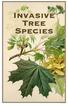 Invasive Tree Species A Contents Invasive Tree Species................. 1 Removal Permit Process.............. 2 Mitigation......................... 3 Identification Guide: Norway maple - Acer platanoides............
Dichotomous Keys for the Arboretum Walk. Plant List
 1 Dichotomous Keys for the Arboretum Walk Plant List Common name 1. Pin oak 2. Sweet gum 3. Red maple 4. Bur oak 5. River birch 6. Black cherry 7. Tulip poplar 8. Kentucky coffeetree 9. Catalpa 10. Honeylocust
Tree Landscape Planting
 City of Pierre Tree Landscape Planting The value of Woody Plant Landscaping Locally Adapted Species List Tips for Successful Planting Pierre Ordinances Public Needs to Know Community Tree Statistics: Trees
Japanese Maples. Fall 2015 List
 Japanese Maples Fall 2015 List Japanese maples (Acer palmatum) and their relatives offer a large group of plants that can be adapted to almost any garden style and situation. In fact, a wonderful garden
Tree Diversity Activity
 Tree Diversity Activity A Classroom Activity from The National Arbor Day Foundation You and your class may have participated recently in the Vote for America s National Tree, an historic opportunity for
Trees help us experience connections with our natural heritage and with our most deeply held spiritual and cultural values.
 REASONS FOR PLANTING TREES Shade from trees cools hot streets and parking lots and drive ways. Cities are "heat islands" that are 5-9 degrees hotter than surrounding areas. Trees and shrubs add beauty
Apricot Tree Prunus armeniaca
 Apricot Tree Prunus armeniaca Up to 25-30 tall x 15-20 wide or partial shade 10 degrees F. General: The Apricot Tree is a subspecies of the peach and dates back 3,000 years to northeastern China. Apricots
2011 Needles and Leaves Nursery Plant Availability
 2011 Needles and Leaves Nursery Plant Availability BOTANICAL NAME EVERGREENS - Arborvitae Dark Green Arborvitae 8' w/h 10' w/h Emerald Green Arborvitae 4' w/h 5' w/h 6' w/h 7' w/h Globe Arborvitae 6' w/h
Recommended Alternatives to Ash Trees for Michigan's Lower Peninsula
 Extension Bulletin E-2925 Revised, January 2006 Recommended Alternatives to Ash Trees for Michigan's Lower Peninsula Bert Cregg and Robert Schutzki Michigan State University Department of Horticulture
New York City Approved Street Trees
 LARGE TREES: Mature height greater than 50 feet tall Acer rubrum Red Maple 'Red Sunset' Aesculus hippocastanum Horsechestnut White May flowers 'Baumanni' Aesculus octandra Yellow Buckeye Yellow May Betula
PLANTING UNDER OR AROUND POWERLINES & ELECTRICAL EQUIPMENT
 PLANTING UNDER OR AROUND POWERLINES & ELECTRICAL EQUIPMENT TABLE OF CONTENTS INTRODUCTION.............................................. 3 DEFINING THE RISK.......................................... 4 ELECTRICAL
2016 Healthy Yards Plant Guide
 2016 Healthy Yards Plant Guide SUN KIT Each Wildflower Kit includes a tray of 17 wildflowers in 10cm pots Black-Eyed Susan Rudbeckia hirta Average Height: 30 to 150 cm Quantity: 3 Flowers: Yellow, Orange,
The Basics of Tree Pruning
 The Basics of Tree Pruning By John Ball, Forest Health Specialist and Aaron Kiesz, Urban and Community Forestry Specialist Until the end of the 19 th century, trees were not a common sight in many parts
Cotinus coggygria. Cotoneaster sp. Shrubs
 Cotinus coggygria Common Name: Smoke Bush Family: Anacardiaceae Characteristics of plant: A large shrub/small tree which grows to 15 with bluish-green foliage that turns red in fall. Flowers appear as
Flood Damage Tree and Shrub Assessment Minot Park District, North Dakota
 Flood Damage Tree and Shrub Assessment Minot Park District, North Dakota Executive Summary NDSU-North Dakota Forest Service Compiled by: Joel Nichols and Sharon Bartels, Community Forestry Specialists
A New Hampshire Plant Palette
 Family, Home & Garden Education Center practical solutions to everyday questions Toll free Info Line 1-877-398-4769 M-F 9 AM - 2 PM A New Hampshire Plant Palette Despite their challenging plant growing
GENERAL WATERING & CARE GUIDE
 GENERAL WATERING & CARE GUIDE Between 30-60 percent of water applied to lawns and gardens is never absorbed by the plants. Water is often wasted because it is applied too quickly and runs off, evaporates
www.bostonhillnursery.com 662-7411
 Photo taken by: Betsy Meyers Boston Hill Nursery is located on the corner of Cole and Old Lower East Hill Roads near the southern border of Orchard Park. We are centrally located in the southtowns only
Identifying Pennsylvania Trees. Pennsylvania Forest Stewardship Program
 Identifying Pennsylvania Trees Pennsylvania Forest Stewardship Program Tree Identification In this presentation you will learn to identify trees using the Summer Key to Pennsylvania Trees. Trees can be
Grade 4 Title: My Name is Magnolia Whittney McCray
 Grade 4 Title: My Name is Magnolia Whittney McCray Student Learning Objective(s): The students will understand why Magnolias are a type of evergreen. The students will create a story based on the information
Why Fruit Trees Die D. B. Meador, Extension Specialist (retired) University of Illinois
 Why Fruit Trees Die D. B. Meador, Extension Specialist (retired) University of Illinois Occasionally, fruit trees decline and often die. Diseases affecting the leaves, fruit, and twigs of fruit trees usually
JAPANESE MAPLE VARIETIES Spectacular Fall Color Excellent Winter Interest Owner's Favorite Cultivars Variegated/Mottled Leaves Nice in Shade
 info # 55 Palmatum Maples JAPANESE MAPLE VARIETIES Spectacular Fall Color Excellent Winter Interest Owner's Favorite Cultivars Nice in Shade A. palmatum (Green Japanese Maple) The standard green Japanese
Care of Mature Backyard Apple Trees
 Education Center and Info Line practical solutions to everyday questions Toll free Info Line 1-877-398-4769 M-F 9 AM - 2 PM Care of Mature Backyard Apple Trees Introduction Backyard apple trees can be
[ Erysimum ] CULTURAL INFORMATION
![[ Erysimum ] CULTURAL INFORMATION](/thumbs/40/21640269.jpg "[ Erysimum ] CULTURAL INFORMATION") [ Erysimum ] CULTURAL INFORMATION Erysimum GLOW Series A new series of hybrid perennial wallflowers with a ground-hugging, tight plant habit, and myriads of small, honey-scented flowers in a range of sunny
[ Erysimum ] CULTURAL INFORMATION Erysimum GLOW Series A new series of hybrid perennial wallflowers with a ground-hugging, tight plant habit, and myriads of small, honey-scented flowers in a range of sunny
Alberta Tree Species Rating Guide
 Alberta Tree Species Rating Guide Official publication of the Prairie Chapter International Society of Arboriculture 2003 2003 Prairie Chapter International Society of Arboriculture This publication may
DEVELOPMENT GUIDELINES OAK TREES CARE AND MAINTENANCE
 DEVELOPMENT GUIDELINES OAK TREES CARE AND MAINTENANCE This guide will offer basic information for the preservation and maintenance of oak trees as a part of an overall landscape use. Unfortunately, oak
KINGMAN IS GROWING! COLUMN
 KINGMAN IS GROWING! COLUMN THE INTRIGUING AGAVE BY LINDA REDDICK, KINGMAN AREA MASTER GARDENER An Agave is a tough, easy-care succulent that can add style to your garden, tolerate less than ideal conditions
As closely related members of the rose family,
 E-612 2-13 Texas Fruit and Nut Production lums, Nectarines, Apricots Cherries, Almonds and Prunus hybrids Larry Stein, Jim Kamas, and Monte Nesbitt Extension Fruit Specialists, The Texas A&M University
Managing Black Walnut
 Managing Black Walnut Mel Baughman Professor Emeritus University of Minnesota Lenny Farlee Extension Forester Purdue University Why Grow Black Walnut? Wood Products Rich, brown color Novelty items Lumber
2015 WHOLESALE PRICE LIST
 6818 Friedens Church Road Gibsonville, NC 27249 CELEBRATING 25 YEARS 2015 WHOLESALE PRICE LIST 6818 Frieden Church Road Gibsonville, NC 27249 (336)449-5532 (336)449-0134 fax (336)516-3995 cell [email protected]
Growing Cocoa Beans. Growing Region
 Growing Cocoa Beans All chocolate begins with cocoa beans, the fruit of the cacao tree (also called a cocoa tree). Scientists know that the cacao tree originated somewhere in South or Central America.
Dwarf Fruiting Shrubs...
 well, Dwarf Fruiting Shrubs... by MARGO W. REYNOLDS To the average gardener the chief attraction of any usually its flowers: the bigger the better, and if it s bright and showy, too - that s just an added
April s Featured Plants
 Genus: Geum (Avens) Genus of about 50 perennials, mostly with dense clusters of hairy leaves Geum chiloense Species originating from Island of Chiloe, Chile which enjoys a cold, wet climate. These plants
Tree Talk. Customer Care. www.lipower.org
 Customer Care Tree Talk Did you know that trees can help improve your safety and electric reliability? This booklet will help you select the best trees for your home, and provide tips about their maintenance
Capital Village Community Architecture and Landscape Guidelines
 Community Architecture and Landscape Guidelines Capital Village Community Association Revised December 2012 c/o Landmark Limited LLC 1731 E. Roseville Pkwy., Suite 100 Roseville, CA 95661 (916) 746-0011
Determining the Age and Benefits of a Tree
 Grades: 6-8 Illinois State Science Standards: Determining the Age and Benefits of a Tree 11.A.3a Formulate hypotheses that can be tested by collecting data. 11.A.3c Collect and record data accurately using
2008 Bulletproof Perennials for the Redding Area
 2008 Bulletproof Perennials for the Redding Area Easy to grow plants with great foliage, form, and blooms LISA ENDICOTT, Horticulture Manager KAREN McGRATH, Landscaper Designer Aloe striatula (HARDY ALOE)
Power Planting. The Right Tree in the Right Place
 Power Planting The Right Tree in the Right Place 2 Power Planting Trees and Power Lines We are committed to providing safe, reliable, low-cost electricity for the benefit of all our customers. However,
Anthracnose on Dogwoods and Other Trees
 Anthracnose on Dogwoods and Other Trees Several cultural practices are recommended for control. Healthy trees can fight off the infection. To reduce stress, apply 3-4 inches of mulch around the base of
Gaillardia x grandiflora Arizona Sun North American Native Cultivar
 Arizona Sun French magistrate and botanical Zones: 3 8 Flower Color: Red & Yellow Height: 12 Spacing: 15 Arizona Sun is an outstanding new variety that produces a profusion of large fiery red and yellow
Planting and Tree Care for Roxborough Park. Keith Worley, Forester ISA Certified Arborist
 Planting and Tree Care for Roxborough Park Keith Worley, Forester ISA Certified Arborist Where We Live: High elevation at the edge of Mountains and Plains. Harsh climates with: High winds. Drought periods
Pruning Trees. Center for Landscape and Urban Horticulture. University of California Cooperative Extension Central Coast & South Region
 University of California Cooperative Extension Central Coast & South Region Center for Landscape and Urban Horticulture Pruning Trees Pruning Trees at Planting Landscape trees should not be pruned at planting
THE PLANTSMAN'S LIST OF RECOMMENDED TREES AND SHRUBS FOR OUTDOOR CONTAINER PLANTINGS
 THE PLANTSMAN'S LIST OF RECOMMENDED TREES AND SHRUBS FOR OUTDOOR CONTAINER PLANTINGS The most important criteria for selecting plants for outdoor containers are: (i) hardiness for site; (ii) suitability
TREES FOR WESTMINSTER
 TREES FOR WESTMINSTER In this section you ll find a list of tree species and cultivated varieties (cultivars). Additional comments on each tree are provided concerning the previously discussed considerations
runing & Orchard Renewal
 P runing & Orchard Renewal Richard G. St-Pierre, Ph.D. (January 2006) The Basics Of Pruning & Orchard Renewal Pruning is defined as the art and science of cutting away a portion of a plant to improve its
Identification and Prevention of Frost or Freeze Damage By Linda Reddick, Kingman Area Master Gardener
 KINGMAN IS GROWING! COLUMN Identification and Prevention of Frost or Freeze Damage By Linda Reddick, Kingman Area Master Gardener Again this year we have been experiencing some very cold weather, with
SPECIAL REPORT FROM STIHL STIHL PRUNING GUIDE BROUGHT TO YOU BY STIHL INC. 2010
 SPECIAL REPORT FROM STIHL STIHL PRUNING GUIDE BROUGHT TO YOU BY STIHL INC. 2010 STIHL Pruning Guide Introduction Watching a professional prune a tree or shrub can cause confusion in a layperson. It makes
JAPANESE KNOTWEED. What is Japanese Knotweed?
 JAPANESE KNOTWEED What is Japanese Knotweed? Japanese Knotweed (botanical name Fallopia japonica) was introduced into Britain from Japan in the early 1800 s. It was originally grown as an ornamental plant,
Hydrangea: A Southern Tradition
 Hydrangea: A Southern Tradition By Michele Browne Cobb County Extension Service Program Assistant There are certain plants that just have a natural association with gardening in the South: magnolias, azaleas,
Japanese Knotweed (Polygonum cuspidatum) Japanese honeysuckle (Lonicera japonica)
 Japanese Knotweed (Polygonum cuspidatum) Japanese Barberry (Berberis thunbergii) Photo: www.emmitsburg.net Description: Aggressive plant that forms thickets 3-6 feet tall. Stems are hollow and bamboo-like.
Trees and Reliable Electric Service. Answers to Questions About Tree Pruning and Electric Power. We re connected to you by more than power lines.
 Trees and Reliable Electric Service Answers to Questions About Tree Pruning and Electric Power We re connected to you by more than power lines. How is Line Clearance Done? Pepco s tree contractor will
Picea abies Pusch Pusch Dwarf Norway Spruce
 Picea abies Pusch Pusch Dwarf Norway Spruce Tiny bright red cones in the spring on lime green new growth tips crown this dwarf Norway the flowering spruce! Its 2-3 rounded flat size in 10 years is a dainty
Using Degree-Days and Plant Phenology to Predict Pest Activity
 Using Degree-Days and Plant Phenology to Predict Pest Activity Daniel A. Herms The Ohio State University Accurate prediction of insect development and emergence is essential for effective pest management,
Central Oregon Climate and how it relates to gardening
 Central Oregon Climate and how it relates to gardening Garden Note #1 Amy Jo Detweiler Horticulture Faculty Rev. July 2009 Behind the beauty of the High Desert landscape lies many factors that create challenges
NATIVE PLANT LIST. ~Sun, Dry Soil~ SMALL SHRUBS (<6 )
 NATIVE PLANT LIST ~Sun, Dry Soil~ Portland Water District Although this is not an exhaustive list, the following native plants are carried at local nurseries. If a particular plant is not available at
Part 1: Knowing how to identify the problem. Author: Damon Polta, Friendly Aquaponics Farm Manager. For free distribution.
 Diseases, Deficiencies, and Toxicities in Plants Part 1: Knowing how to identify the problem. Author: Damon Polta, Friendly Aquaponics Farm Manager. For free distribution. Diseases Beet Western Yellow
Portland State University. Campus Tree Care Plan
 Portland State University Campus Tree Care Plan 1. Purpose Portland State University (PSU) resides in a densely populated urban setting in downtown Portland, Oregon. With green space in short supply, maintaining
Bombax ceiba. Family: Malvaceae Red Silk-Cotton; Red Cotton Tree; Kapok; Flower Display: A+ Silk Cotton
 Stephen H. Brown, Horticulture Agent Lee County Extension, Fort Myers, Florida (239) 533-7513 [email protected] http://lee.ifas.ufl.edu/hort/gardenhome.shtml Bombax ceiba Family: Malvaceae Red Silk-Cotton;
Power Planting. The Right Tree in the Right Place
 Power Planting The Right Tree in the Right Place Trees and Power Lines We are committed to providing safe, reliable, low-cost electricity for the benefit of all our customers. However, trees that grow
Public Utility District #1 of Jefferson County Vegetation Clearance Policy And Specifications
 Jefferson County PUD Company Policy Policy No. Date: Public Utility District #1 of Jefferson County Vegetation Clearance Policy And Specifications Purpose The purpose of this policy statement and these
Pruning Mature Trees. Reasons for Pruning
 Pruning Mature Trees Pruning is the most common tree maintenance procedure. Although forest trees grow quite well with only nature's pruning, landscape trees require a higher level of care to maintain
Tree Care Guide. W.A. Industries: 3655 N. Southport Ave., Chicago, IL 60613 (888) 333-9352 www.megagro.com
 Tree Care Guide Think of the tree you just purchased as a lifetime investment and considering many tree species live for many decades, they are a wonderful legacy. How well your tree, and investment, grows
Pruning fruit, ornamental
 Pruning fruit, ornamental and flowering trees a basic guide for home gardeners Fleming s Nurseries Pty Ltd Victoria, Australia DISCLAIMER The information contained herein is not a definitive or exhaustive
Introducing Our First Newsletter
 RORAIMA NURSERY Newsletter No. 1 20 Swan Street Lara Vic 3212 Spring 2011 Ph: 03 5282 8704 Email: [email protected] Website: www.roraimanursery.com.au Introducing Our First Newsletter Welcome
Dry Bean Types and Development Stages
 Dry Bean Types and Development Stages Two basic plant growth habits are found in dry edible bean: determinate (bush) or indeterminate (vining or trailing). Cultivars may be classified according to plant
What Are Those Plants Worth?
 Agricultural Extension Service The University of Tennessee What Are Those Plants Worth? SP614 Stephen Garton Assistant Professor Plant Sciences Larry Tankersley Extension Associate Forestry, Wildlife &
Proper Pruning Basic Techniques and Tips. 2012 ECCFC Rocky Ford, CO
 Proper Pruning Basic Techniques and Tips 2012 ECCFC Rocky Ford, CO 1 The Pro-Active Pruner! Plan BEFORE Planting Select the Right Tree For the Right Place Begin pruning trees while they are young Common
Why hire an arborist?
 Why hire an arborist? Spring is fast approaching and that means gardens to attend and flowers to plant, but what about your trees? Now is the best time to hire an arborist to maintain your trees before
WHAT IS WRONG WITH MY LAWN?
 WHAT IS WRONG WITH MY LAWN? Lawn problems can occur in small areas or larger patches and entire lawns can be affected. Sometimes the problems are due to poor growing conditions, improper lawn care practices,
Design for: Het Groeilokaal. By Henk Eshuis. Online PDC 2015 given by Geoff Lawton
 Design for: Het Groeilokaal By Henk Eshuis Online PDC 2015 given by Geoff Lawton Project description Through facebook I got in contact with Astrid Huijbregts (http://www.hetgroeilokaal.nl/) who is starting
P omegranates. Texas Fruit and Nut Production. Larry Stein, Jim Kamas, and Monte Nesbitt, Extension Fruit Specialists, The Texas A&M University System
 E-613 2-13 Texas Fruit and Nut Production P omegranates Larry Stein, Jim Kamas, and Monte Nesbitt, Extension Fruit Specialists, The Texas A&M University System I nterest in growing pomegranates has increased
Maintaining Cactus and Succulents
 Maintaining Cactus and Succulents Master Gardener Education February 22, 2011 Jack Kelly University of Arizona College of Agriculture and Life Sciences Pima County Cooperative Extension Tucson, Arizona
How To Plan A Buffer Zone
 Backyard Buffers Protecting Habitat and Water Quality What is a buffer? A buffer (also called a riparian buffer area or zone) is the strip of natural vegetation along the bank of a stream, lake or other
SELL CUT FLOWERS FROM PERENNIAL SUMMER-FLOWERING BULBS Andy Hankins Extension Specialist-Alternative Agriculture, Virginia State University
 SELL CUT FLOWERS FROM PERENNIAL SUMMER-FLOWERING BULBS Andy Hankins Extension Specialist-Alternative Agriculture, Virginia State University Commercial producers of field-grown flower cut flowers generally
Small Flowering Trees for Tennessee Landscapes
 SP 513 Small Flowering Trees for Tennessee Landscapes Donna C. Fare Assistant Professor Ornamental Horticulture & Landscape Design Wayne K. Clatterbuck Assistant Professor Forestry, Wildlife & Fisheries
Extension SP656. Shade and Flood Tolerance of Trees
 Extension SP656 Shade and Flood Tolerance of Trees Wayne K. Clatterbuck, Associate Professor Forestry, Wildlife & Fisheries Most trees have very specific requirements for how much sunlight or shade that
Tree and forest restoration following wildfire
 Peter F. Kolb (PhD) MSU Extension Forestry Specialist Adj. Assistant Professor Forest Ecology School of Forestry, University of Montana, Missoula, MT 59808 Tel. (406) 243-4705, e-mail: [email protected]
Symptoms Include: Stippled, bronzed or bleached appearance of leaves
 Common Tree Pests & Diseases Of Central Texas Lara Schuman City of Austin Urban Forestry Program Stress and Trees City life can be stressful, and trees feel stress too. Common urban tree issues include:
Oak Trees BASIC GROWING REQUIREMENTS FOR YOUR
 They are beautiful in their peace, They are wise in their silence. They will stand after we are dust. They teach us, and we tend them. G.A. MacDunelmor BASIC GROWING REQUIREMENTS FOR YOUR Oak Trees The
Hollies. for the Home Garden MP310. University of Arkansas, United States Department of Agriculture, and County Governments Cooperating
 Hollies for the Home Garden MP310 University of Arkansas, United States Department of Agriculture, and County Governments Cooperating Contents Culture............................. 3 Pruning............................
ARTICLE 25 REGULATION OF THE PLANNING, MAINTENANCE, AND REMOVAL OF TREES, SHRUBS, AND OTHER PLANTS
 ARTICLE 25 REGULATION OF THE PLANNING, MAINTENANCE, AND REMOVAL OF TREES, SHRUBS, AND OTHER PLANTS SECTION 1: DEFINITIONS PARK TREES: Park Trees are herein defined as trees, shrubs, bushes, and all other
Fastigiate trees: fools gold or a winning strategy? Article in essentialarb Issue 13
 Fastigiate trees: fools gold or a winning strategy? Article in essentialarb Issue 13 BTC/17/2004 Under the ever-increasing pressure for economic growth and better living conditions in the UK, the new battleground
Questions for Discussion. Introduction. What is ph? Neutralization
 Questions for Discussion Why do leaves change color in autumn? What are acids and bases? How does red cabbage fit in? How are all these things related? Introduction The questions above may not seem related,
Growing Balaton - Horticultural Considerations
 Growing Balaton - Horticultural Considerations Amy Iezzoni Dept. of Horticulture Michigan State University Jim Nugent District Horticulturist MSU Extension The fruit industry in Michigan has generations
Oscoda County. Conservation Plants & Products Catalog Conservation District News TREE SALE ORDER DEADLINE April 12, 2013
 Oscoda County Conservation District s 2013 Spring Tree Sale Conservation Plants & Products Catalog Conservation District News TREE SALE ORDER DEADLINE April 12, 2013 Oscoda County Conservation District
Onion & Leek Planting Guide
 Onion & Leek Planting Guide Important Remove plants from box immediately. Do not put in soil or water before planting. Keep cool and dry until you can plant. Follow the instructions inside for best results.
Pruning Fruit Trees. Develop strong tree structure. This should begin when trees are planted and continue each year thereafter.
 Agriculture and Natural Resources Pruning Fruit Trees Extension Horticulture Arkansas Is Our Campus Visit our web site at: http://www.uaex.edu Fruit trees should be pruned every year to maintain their