
Version 1.0 English. Leica TM6100A User Manual
|
|
|
- Lucas Harrell
- 9 years ago
- Views:
Transcription
1 Version 1.0 English Leica User Manual

2 Introduction Introduction Purchase Congratulations on the purchase of a instrument. 2 This manual contains important safety directions as well as instructions for setting up the product and operating it. Refer to "6 Safety Directions" for further information. Read carefully through the User Manual before you switch on the product. Product identification The type and the serial number of your product are indicated on the type plate. Enter the type and serial number in your manual and always refer to this information when you need to contact your agency or Leica Geosystems authorized service workshop. Type: Serial No.:

3 Symbols The symbols used in this manual have the following meanings: Type Danger Warning Caution Description Indicates an imminently hazardous situation which, if not avoided, will result in death or serious injury. Indicates a potentially hazardous situation or an unintended use which, if not avoided, could result in death or serious injury. Indicates a potentially hazardous situation or an unintended use which, if not avoided, may result in minor or moderate injury and/or appreciable material, financial and environmental damage. Important paragraphs which must be adhered to in practice as they enable the product to be used in a technically correct and efficient manner. Trademarks CompactFlash and CF are trademarks of SanDisk Corporation Bluetooth is a registered trademark of Bluetooth SIG, Inc All other trademarks are the property of their respective owners. Validity of this manual General Description This manual applies to all instruments. Introduction 3

4 Introduction 4 Available documentation Name Description and Format User Manual All instructions required in order to operate the product to a basic level are contained in the User Manual. Provides an overview of the product together with technical data and safety directions. Name Description and Format System Field Manual Describes the general working of the product in standard use and specific onboard application programs. Intended as a quick reference field guide. Technical Reference Manual Overall comprehensive guide to the product and program functions. Included are detailed descriptions of special software/hardware settings and software/hardware functions intended for technical specialists. Refer to the following resources for all documentation and software the TPS6000 Product CD

5 Table of Contents In this manual Chapter Page 1 Description of the System System Components System Concept Software Concept Data Storage and Data Conversion Concept Power Concept Container Contents Instrument Components 17 2 User Interface Keyboard Hot Key Assignments Screen Operating Principles Icons 35 3 Operation Instrument Setup Battery Operating Principles 40 Table of Contents 5

6 Table of Contents Instrument Battery Working with the CompactFlash Card Accessing Survey Application Program Built-in autocollimation device Connection to Application Computer Limitation of the horizontal and vertical movements 55 4 Check & Adjust Overview Preparation Combined Adjustment (l, t, i and c) Tilting Axis Adjustment (a) Adjusting the Circular Level of the Instrument and Tribrach Adjusting the Circular Level of the Prism Pole Inspecting the Laser Plummet of the Instrument Servicing the Tripod Adjustment of the autocollimation reticule 80 5 Care and Transport Transport Storage Cleaning and Drying Maintenance 87

7 6 Safety Directions General Introduction Intended Use Limits of Use Responsibilities Hazards of Use Laser Classification General Laser Plummet Electromagnetic Compatibility EMC FCC Statement, Applicable in U.S Technical Data Angle Measurement Conformity to National Regulations Communication side cover with Bluetooth General Technical Data of the Instrument International Limited Warranty, Software License Agreement 119 Table of Contents 7

8 Description of the System 1 Description of the System 1.1 System Components 1-8 Main components _001 Component Description an instrument of highest accuracy for measuring, calculating and capturing data. Application Software LGO Tools connected with LGO Tools to view, exchange and manage data. Third party metrology software with an interface to the for acquisition, analysis, management and reporting of data. An office software consisting of a suite of standard and extended programs for the viewing, exchange and management of data.

9 Terminology The following terms and abbreviations may be found in this manual: Term TPS LGO Tools Motorised Communication side cover Description Total Station Positioning System LEICA Geo Office Tools instruments are fitted with internal motors, enabling automatic horizontal and vertical turning are referred to as Motorised. Communication side cover with integrated Bluetooth is a component with external devices, i.e. laptop with application software. Description of the System 1-9

10 Description of the System 1-10 Instrument models Model Description Electronic theodolite, motorised, 0.5" accuracy. LEICA Geo Office Tools LGO Tools supports instruments. It also supports all other Leica TPS instruments. LGO Tools is based on a graphical user interface with standard Windows operating procedures. LGO Tools provides the following functionality: Functionality Standard Functionality Description Includes data exchange between computer and instrument, data management including viewing and editing, reporting, creation and management of codelists, creation and use of format files for data conversion, uploading and deleting of system software and application programs. Supported operating systems: Windows XP, Windows Refer to the online help of LGO Tools for additional information.

11 1.2 System Concept Software Concept Description instruments support the following types of software. Software type Software type System software Language software Description This software comprises the central functions of the instrument. It is also referred to as firmware. The programs Survey and Setup are integrated into the firmware and cannot be deleted. The English language is integrated into the firmware and cannot be deleted. Numerous languages are available for the instruments. This software is also referred to as system language. The system software enables a maximum of three languages which can be stored at any one time - the English language and two other languages. The English language is the default language and cannot be deleted. One language is chosen as the active language. Description of the System 1-11

12 Description of the System 1-12 Software type Application programs Third party application programs Customised application programs Description A suite of optional specific application programs are available for the instrument. Some of the programs are activated freely and require no license key and others require purchasing and are only activated with a license key. There are various third party applications available for the, onboard or computer based software. Please contact your Leica Geosystems representative for details. Customised software specific to user requirements can be developed using the GeoC++ development kit. Information on the GeoC++ development environment is available on request from a Leica Geosystems representative. Software upload All instrument software is stored in the System RAM of the instrument. The software can be uploaded onto the instrument using the following methods: Using LGO Tools the software is transferred via the serial interface to the CompactFlash card in the instrument, which is then stored to the System RAM. By connecting the CompactFlash card directly to the computer either via an internal card slot housing or an external OMNI drive, the software is transferred to the card, which is then stored to the System RAM.

13 1.2.2 Data Storage and Data Conversion Concept Description Data is stored within a job in a database on a memory device. This is either a CompactFlash card or an internal memory. Memory device CompactFlash card: A CompactFlash card housing is standard. A CompactFlash card can be inserted and removed. Available capacity: 256 MB and 1 GB. Whilst other CompactFlash cards may be used, Leica recommends Leica CompactFlash cards and cannot be held responsible for data loss or any other error that may occur when using a non-leica card. Internal memory: An internal memory is always fitted. It resides inside the instrument. Available capacity: 256 MB. Unplugging connecting cables or removing the CompactFlash card during the measurement may cause loss of data. Always return to Main Menu before removing the CompactFlash card and switch off the instrument before removing cables. Description of the System 1-13

14 Description of the System 1-14 Data conversion Transfer raw data to LGO Tools Export Data can be exported from a job in a wide range of ASCII formats. A standard set of Export Formats is delivered with the system. Customized export format can defined in Format Manager which is a PC tool in LEICA Geo Office Tools. Refer to the online help of LGO Tools for information on creating format files. Data can also be exported from a job in DXF or LandXML format. Import Data can be imported from ASCII, DXF, GSI8 or GSI16 format. Raw data can be transferred between the database on the CompactFlash card or the internal memory of the instrument and LGO Tools in two ways: From the CompactFlash card or the internal memory directly via a serial interface to a project in LGO Tools on a PC. From the CompactFlash card using for example an OMNI drive as supplied by Leica Geosystems to a project in LGO Tools on a PC. CompactFlash cards can be used directly in an OMNI drive as supported by Leica Geosystems. Other PC card drives may require an adapter.

15 1.2.3 Power Concept General Power options Use the Leica Geosystems batteries, chargers and accessories or accessories recommended by Leica Geosystems to ensure the correct functionality of the instrument. Instrument Power for the instrument can be supplied either internally or externally. An external battery is connected to the instrument using a LEMO cable. Internal battery: One GEB241 battery fitted into the battery compartment. External battery: One GEB171 battery connected via cable Description of the System 1-15

16 Description of the System 1.3 Container Contents 1-16 Container for instrument and delivered accessories a b c d e _039 f g h i j k l m n o a) Protective cover for instrument and sunshade for objective lens b) Container straps c) Counterweight for diagonal eyepiece or zenith eyepiece - optional d) Allen key e) Spare stylus f) Room for normal handle g) Compact Flash card with cover h) User manual i) Autocollimation lamp AL51 - optional j) CompactFlash card adapter with cover - optional k) Internal battery GEB241 - optional l) Instrument with supplied stylus and tribrach m) Data transfer cable GEV218 - optional n) Diagonal eyepiece GFZ3 or zenith eyepiece GOK6 (eyepiece for steep sighting) - optional o) Ball pen - optional

17 1.4 Instrument Components Instrument components part 1 of 2 The instrument components of a instrument are shown below. a b c d _002 e f g h i a) Carry handle b) Optical sight c) Panfocal telescope d) CompactFlash card compartment e) Horizontal drive f) User defined SmartKey g) Vertical drive h) Lemo connector i) Tribrach Description of the System 1-17

18 Description of the System Instrument components part 2 of 2 j k l m 1-18 _003 n o p q r s j) Vertical drive k) Focusing ring l) Autocollimation device m) Interchangeable eyepiece n) Battery compartment o) Stylus for touch screen p) Screen q) Circular level r) Footscrew s) Keyboard

19 Internal target An internal target GUS29 may be factory fitted to the telescope of the to facilitate the mutual accurate collimation of two theodolites. Depending on the measurement task, the internal target can be rotated into or out of position. a b _004 c a) b) Knob to rotate internal target GUS29 c) Panfocal telescope The internal target GUS29 is rotated into the visible positions when the marker line on the knob is perpendicular to the line of sight. When the marker line on the knob is parallel to the line of sight, the internal target GUS29 is out of sight. Description of the System 1-19

20 User Interface 2 User Interface 2.1 Keyboard 20 Keyboard a ABC DEF GHI F JKL MNO PQR F b F10 STU VWX YZ /$% _@& *?! F9 0. F8 CE ESC c F7 USER OFF PROG ON PgUp d _005 F1 F2 F3 F4 F5 F6 SHIFT PgDn e f g

21 a) Hot keys F7-F12 b) Alphanumeric keys c) CE, ESC, USER, PROG d) ENTER e) Arrow keys f) SHIFT g) Function keys F1-F6 Keys H Key Description Hot keys F7-F12 Pre-defined keys to execute commands or access chosen screens. The hot key F13, the user defined SmartKey, is located between the horizontal and vertical drive on the right hand side cover. Alphanumeric keys To type letters and numbers. CE Clears all entry at the beginning of user input. Clears the last character during user input. ESC Leaves the current menu or dialog without storing changes made. USER Calls the user defined menu. PROG (ON) If the instrument is off: to turn instrument on. If the sensor is on: press at any time to select an application program. User Interface 21
22 User Interface 22 Key Description ENTER Selects the highlighted line and leads to the next logical dialog/menu. Starts the edit mode for edit fields. Opens a list box. SHIFT Changes between the first and the second level of function keys. Arrow keys Move the focus on the screen. Function keys F1-F6 Correspond to the six softkeys that appear on the bottom of the screen when the screen is activated.
23 Key combinations Keys PROG plus USER SHIFT F12 SHIFT F11 SHIFT USER SHIFT SHIFT Description Turns instrument off. Calls STATUS Level & Laser Plummet. Calls CONFIGURE Lights, Display, Beeps, Text, Lights page. Calls QUICK SET Change Settings to:. Pages up. Pages down. User Interface 23
24 User Interface 2.2 Hot Key Assignments 24 General instruments contain two standard configurations at delivery. Two more configurations are available on the Factory CD. Configuration Set Description Angle Unit BT Standard configuration set for Bluetooth Degree connection Cable Standard configuration set for Cable connection Degree
25 Hot Keys All default configurations contain the following Hot Key & Shift Hot Key assignments: Key Description F7 Autocollimation lamp On/Off F8 Reticule illumination On/Off F9 Change face F10 Position Hz/V F11 TPS Correction (Environmental Parameters) F12 Check & Adjust F13 (Trigger Key) Rec (Take an angle measurement) Shift - F7 Compensator functions Shift - F8 Telescope accessories Shift - F9 Units & Formats Shift - F10 Battery & Memory Status Shift - F11 Lights & Display Settings Shift - F12 Electronic Level & Plummet User Interface 25
26 User Interface 26 Keyboard Overlay A self adhesive keyboard overlay is available for the default Hot Key assignments. The keyboard overlay can be affixed to the keyboard as shown below if required. ABC DEF GHI F F11 JKL MNO PQR F10 F9 F8 CE ESC F7 USER PROG OFF ON PgUp SHIFT F1 F2 F3 F4 F5 F6 PgDn _006
27 2.3 Screen Screen a) Time b) Caption c) Title d) Screen area e) Message line f) Icons g) ESC h) CAPS i) SHIFT icon j) Quick coding icon k) Softkeys Elements of the screen Element Time Caption Title Screen area Description The current local time is shown. Shows location either in Main Menu, under PROG key or USER key. Name of the screen is shown. The working area of the screen. User Interface 27
28 User Interface 28 Element Message line Messages are shown for 10 s. Icons ESC CAPS SHIFT icon Quick coding icon Softkeys Scroll bar Description Shows current status information of the instrument. Refer to "2.5 Icons". Can be used with touch screen. Can be used with touch screen. Same functionality as the fixed key ESC. The last operation will be undone. The caps mode for upper case letters is active.the caps mode is activated and deactivated by pressing UPPER (F5) or LOWER (F5) in some screens. Shows the status of the SHIFT key; either first or second level of softkeys is selected. Can be used with touch screen and has the same functionality as the fixed key SHIFT. Shows the quick coding configuration. Can be used with touch screen to turn quick coding on and off. Commands can be executed using F1-F6 keys. The commands assigned to the softkeys are screen dependent. Can be used directly with touch screen. Scrolls the screen area up and down.
29 2.4 Operating Principles Keyboard and touch screen The user interface is operated either by the keyboard or by the touch screen with supplied stylus. The workflow is the same for keyboard and touch screen entry, the only difference lies in the way information is selected and entered. Turn instrument on Press and hold PROG for 2 s. Turn instrument off step-by-step Step Description The instrument can only be turned off in Main Menu. 1. Press and hold both USER and PROG simultaneously. OR Press ESC for more then 2 s. 2. Press YES (F6) to continue or NO (F4) to cancel. Lock/Unlock keyboard Option Description Lock To lock the keyboard press and hold SHIFT for 3 s. The message Keyboard locked is momentarily displayed on the Message Line. Unlock To unlock the keyboard press and hold SHIFT for 3 s. The message Keyboard unlocked is momentarily displayed on the Message Line. User Interface 29
30 User Interface 30 Selecting from a menu Appearance Description To select an item from a menu, do one of the following: Move the focus to the item. ENTER or CONT (F1). OR Type the complete selection number in front of the item. ENTER or CONT (F1) are not required. OR Tap on the item with the stylus. Selecting a page Appearance Description To select a page in a screen, do one of the following: PAGE (F6). OR Tap on the page tab with the stylus.
31 Edit an entire value in input fields Appearance Description 1. Highlight the field. 2. Type numeric and/or alphanumeric characters to overwrite. 3. ENTER or tap outside of the field. Edit an individual character in input fields Appearance Description A character can be inserted or overwritten. The procedure is the same for both cases. 1. Highlight the field. 2. For the keyboard: ENTER. The edit mode is activated where additional functions like insert and overwrite are available. 3. For the touch screen: Highlight the characters to be changed. 4. Type numeric and/or alphanumeric characters. 5. ENTER or tap outside of the field. User Interface 31
32 User Interface 32 Access special alphanumeric characters for input Step Description 1. Highlight the input field. 2. For the keyboard: ENTER. 3. Toggle to the desired special character set by using the up/down arrow keys. 4. Press the function key assigned to the required character group. 5. Press the function key with the required character. 6. Repeat step 4. and 5. for entering more special characters of the same character set. 7. ENTER. Appearance and selection from a choicelist Choicelists have various appearances. Closed choicelist Appearance Description Selection Triangles on the right indicate further available choices. Use the arrow keys to change through the list or tap the triangles on the screen.
33 ENTER or tap on the field to access the choicelist. Opening a choicelist reveals either a simple listbox or a comprehensive listbox dialog. Simple listbox. Appearance Description Selection Choicelist shows items to select. A search field is shown if necessary. A scroll bar is shown if necessary. Highlight the item and ENTER. To exit without changes ESC, tap or outside the simple listbox. User Interface 33
34 User Interface 34 Listbox dialog. Appearance Description Selection Choicelist fills the whole screen. A search field is shown. A scroll bar is shown if necessary. The functionality comprise adding, editing and deleting of items. Listbox dialogs are explained in detail at appropriate places in the manuals. Highlight the item and CONT (F1). To exit without changes press ESC or tap.

35 2.5 Icons Description The screen icons display the current status information of the instrument. Position of the icons on the screen a) Compensator/face I&II b) Bluetooth c) CompactFlash card/internal memory d) Battery e) SHIFT f) Quick coding Icons Icon Reflector Compensator/face I&II Description The currently active reflector is displayed. Compensator off, out of range or face I&II icon is displayed. User Interface 35
36 User Interface 36 Icon Bluetooth CompactFlash card/internal memory Battery SHIFT Quick coding Description The status of each Bluetooth port and any Bluetooth connection is displayed. The status of the CompactFlash card and internal memory are displayed. For the CompactFlash card, the capacity of used space is shown in seven levels. For the internal memory, the capacity of used memory is shown in nine levels. The status and source of the battery is displayed. The percentage of remaining power capacity for all batteries are displayed numerically and graphically. For internal and external battery being attached at the same time the internal battery is used until it is empty and then the external battery is used. The status of the SHIFT key is displayed. Shows the quick coding configuration. Can be used with touch screen to turn quick coding on and off.
37 3 Operation 3.1 Instrument Setup Description This topic describes an instrument setup over a marked ground point using the laser plummet. It is always possible to set up the instrument without the need for a marked ground point. Important features: It is always recommended to shield the instrument from direct sunlight and avoid uneven temperatures around the instrument. The laser plummet described in this topic is built into the vertical axis of the instrument. It projects a red spot onto the ground, making it appreciably easier to centre the instrument. The laser plummet cannot be used in conjunction with a tribrach equipped with an optical plummet. Operation 37
38 Operation 38 Setup step-by-step SHIFT F _007 Step Shield Description the instrument from direct sunlight and avoid uneven temperatures around the instrument. 1. Extend the tripod legs to allow for a comfortable working posture. Position the tripod over the marked ground point, centring it as well as possible. 2. Fasten the tribrach and instrument onto the tripod.
39 Step Description 3. Turn on the instrument by pressing PROG for 2 s. Press SHIFT (F12) to access STATUS Level & Laser Plummet, activating the laser plummet. 4. Move the tripod legs (1) and use the tribrach footscrews (6) to centre the plummet (4) over the ground point. 5. Adjust the tripod legs to level the circular level (7). 6. By using the electronic level turn the tribrach footscrews (6) to precisely level the instrument. 7. Centre the instrument precisely over the ground point (4) by shifting the tribrach on the tripod plate (2). 8. Repeat steps 6. and 7. until the required accuracy is achieved. Operation 39
40 Operation Battery Operating Principles Primary use/charging The battery must be charged prior to using it for the first time because it is delivered with an energy content as low as possible. For new batteries or batteries that have been stored for a long time (> three months), it is effectual to make only one charge/discharge cycle. For Li-Ion batteries, a single discharging and charging cycle is sufficient. We recommend carrying out the process when the battery capacity indicated on the charger or on a Leica Geosystems product deviates significantly form the actual battery capacity available. The permissible temperature range for charging is between 0 C to +40 C/+32 F to +104 F. For optimal charging we recommend charging the batteries at a low ambient temperature of +10 C to +20 C/+50 F to +68 F if possible. It is normal for the battery to become warm during charging. Using the chargers recommended by Leica Geosystems, it is not possible to charge the battery if the temperature is too high. Operation/Discharging The batteries can be operated from -20 C to +55 C/-4 F to +131 F. Low operating temperatures reduce the capacity that can be drawn; very high operating temperatures reduce the service life of the battery.
41 3.2.2 Instrument Battery Change battery step-by-step _008 Step Description 1. Face the instrument on the side with the single finedrive. The battery compartment is located just below. Turn the knob to the vertical position, opening the lid of the battery compartment. 2. Pull out the battery housing. 3. Pull the battery from the battery housing. Operation 41
42 Operation 42 Step Description 4. A pictogram of the battery is displayed inside the battery housing. This is a visual aid to assist in placing the battery correctly. 5. Place the battery into the battery housing, ensuring that the contacts are facing outward. Click the battery into position. 6. Place the battery housing into the battery compartment. Push the battery housing in until it fits completely into the battery compartment. 7. Turn the knob to lock the battery compartment. Ensure that the knob is returned to its original horizontal position.
43 3.3 Working with the CompactFlash Card Keep the card dry. Use it only within the specified temperature range. Do not bend the card. Protect the card from direct impacts. Insert and remove a CompactFlash card step-by-step Failure to follow these instructions could result in data loss and/or permanent damage to the card _009 Operation 43
44 Operation 44 Step Description 1. Face the instrument so that the CompactFlash card compartment is on the right side of the instrument. Turn the knob to the vertical position, opening the lid of the CompactFlash card compartment. 2. Open the lid of the CompactFlash card compartment. 3. Pull the front of the CompactFlash card up and take the card out of the lid. 4. Place the lower end of the CompactFlash card at the lower end of the CompactFlash card compartment. The extended edge of the card has to be on the upper side as shown on the pictogram in the CompactFlash card compartment. 5. Press the card down on the lid. 6. Close the lid. 7. Turn the knob to lock the CompactFlash card compartment. The lid is closed correctly when the knob is turned to a horizontal position.
45 Format a CompactFlash card step-by-step Formatting the CompactFlash card before starting to store data is required if a completely new CompactFlash card is used or if all existing data needs to be deleted. Step Description 1. Main Menu: Tools...\Format Memory Device. 2. TOOLS Format Memory Device <Memory Device: CF Card> <Format Method: Format Quick> Select the memory device to be formatted. By activating the format command all data will be lost. Make sure that all important data on the CompactFlash card has been backed up before formatting the card. Before formatting the internal memory make sure that all important data is first transferred to the PC. To exit the screen without formatting the memory device, press ESC. This returns to the previous screen without execution of any command. 3. CONT (F1). 4. YES (F4) to complete the formatting of the CompactFlash card. NO (F6) to abort the formatting of the CompactFlash card and return to TOOLS Format Memory Device. 5. Once the formatting of the CompactFlash card is completed the system returns to Main Menu. Operation 45
46 Operation 3.4 Accessing Survey Application Program 46 Access Select Main Menu: Survey. OR Press PROG. Highlight Survey. CONT (F1). SURVEY Survey Begin CONT (F1) To accept changes and access the subsequent screen. The chosen settings become active. CONF (F2) To access SURVEY Configuration. SETUP (F3) Opens SETUP Station Setup to set station and orientation. CSYS (F6) To select a different coordinate system. Not available for <Use Auto CrdSys: Yes> configured in CONFIGURE Additional Rover Settings.
47 Description of fields Field Option Description <Job:> Choicelist The active job. All jobs from Main Menu: Manage...\Jobs can be selected. <Coord System:> Output The coordinate system currently attached to the selected <Job:>. Cannot be edited for <Use AutoCrdSys: Yes> configured in CONFIGURE Additional Rover Settings. <Codelist:> Choicelist No codes are stored in the selected <Job:>. All codelists from Main Menu: Manage...\Codelists can be selected. Output Codes have already been stored in the selected <Job:>. If codes had been copied from a System RAM codelist, then the name of the codelist is displayed. If codes have not been copied from a System RAM codelist but typed in manually, then the name of the active job is displayed. <Config Set:> Choicelist The active configuration set. All configuration sets from Main Menu: Manage...\Configuration Sets can be selected. Operation 47
48 Operation 48 Field Option Description The instrument has numerous user configuration parameters and functions. This allows a variety of preferences to be addressed. The configuration of the parameters and functions for an individual measuring technique are combined in a configuration set. <Reflector:> Choicelist Displays the active reflector. All reflectors from Main Menu: Manage...\Reflectors. All listed reflectors can be selected. <Add. Constant:> Output Displays the additive constant stored with the chosen reflector. Next step CONT (F1) to access SURVEY Survey: Job Name, where measurements can be performed with ALL (F1) or DIST (F2) and/or REC (F3).
49 3.5 Built-in autocollimation device AL51 plug-in lamp Illumination The is equipped with a built-in autocollimation device. To illuminate the autocollimation reticule and project it to an autocollimation mirror, plug the AL51 plug-in lamp into the socket on the telescope. To switch the illumination on or off select SHIFT (F11) to access CONFIGURE Lights Display, Beeps, Text. Highlight the line Autocollim, toggle On or Off and press to CONT (F1) to continue. The brightness of the autocollimation lamp may be adjusted by turning the knob on the autocollimation lamp. Operation 49
50 Operation 50 a _041 a) Intensity actuator
51 3.6 Connection to Application Computer Connection types There are three basic connection types to connect a to an application computer: Cable connection via T-LINK Cable connnection via USB Download Cable GEV218 or Y-Cable GEV220 Wireless Bluetooth connection Operation 51
52 Operation 52 T-LINK The connection via T-LINK connects up to 8 to an application computer. The connection requires the following components: T-LINK Data Cable GEV86-I (20 m) Data transfer cable to RS232 port of the application computer. _010 It is not recommended to upload any firmware or software via the T-LINK and the 20 m data cable. Use the short data cable or the USB Download Cable GEV218.
53 Direct cable connection The direct cable connection connects a single instrument to an application computer. The connection requires the following components: USB Download Cable GEV218 or Y-Cable GEV220 _011 Operation 53
54 Operation 54 Bluetooth connection A Bluetooth connection to an application computer can be established through the internal bluetooth modul. The connection requires the following setup: Paired bluetooth communication between and application computer. _012
55 3.7 Limitation of the horizontal and vertical movements General Vertical Limitations Due to the size of the panfocal telescope of the a face change can only be done through the lens side. This requires a turning restriction for the vertical movement of the telescope. In addition the motorized horizontal movements can be restricted because of accesssories attached, i.e. Diode Laser DL2/3. If a turning restriction is defined, the will not pass or enter a certain vertical or horizontal sector. The default limits for vertical movements are applied as shown below. Telescope side Range Value Eyepiece V Begin 55 gon V End 344 gon Lens V Begin n/a V End n/a Use Limit Eyepiece Operation 55
56 Operation Free turning range for eyepiece: Zenith 56 Lens Lens Eyepiece 55 gon Eyepiece 344 gon _042 Custom limitations Access In case of additional accessories used on the telescope, Individual limitations can be applied to the horizontal and vertical movements. Select Main Menu: Config...\Instrument Settings...\Telescope Accessories.
57 CONFIGURE, Telescope Accessories, Hz Limits CONT (F1) To accept changes and return to the Main Menu. NEW (F2) To define new horizontal limits for motorized rotation. SHOW (F5) To position the telescope to its rotation limits. PAGE (F6) To change to another page on this screen. Description of fields: Field Option Description <Hz Begin:> <Hz End:> Output/user Input The boundaries of the window within the instrument is allowed to turn. <Use Limit:> Yes Motorized instrument turning is restricted to the defined window. Operation 57
58 Operation Field Option Description No Instruments turns without any limitation. Next step PAGE (F6) to change to the V Limit page. 58 CONFIGURE, Telescope Accessories, V Limits CONT (F1) To accept changes and return to the Main Menu. NEW (F2) To define new horizontal limits for motorized rotation. SHOW (F5) To position the telescope to its rotation limits. PAGE (F6) To change to another page on this screen.
59 Description of fields: Field Option Description <V Begin:> <V End:> Output/user Input Vertical extent of the window in which the instrument is allowed to turn the telescope. <Use Limit:> None Instruments turns without any limitation. Do not use with. Eyepiece The movement of the telescope is limited by the stored Eyepiece Accessories limits. Lens The movement of the telescope is limited by the stored Lens Accessories limits. Eyepiece & Lens The movement of the telescope is limited by the combination of both areas with the least vertical extent. Operation 59
60 Check & Adjust 4 Check & Adjust 4.1 Overview 60 Description Electronic adjustment Leica instruments are manufactured, assembled and adjusted to the best possible quality. Quick temperature changes, shock or stress can cause deviations and decrease the instrument accuracy. It is therefore recommended to check and adjust the instrument from time to time. This can be done in the field by running through specific measurement procedures. The procedures are guided and have to be followed carefully and precisely as described in the following chapters. Some other instrument errors and mechanical parts can be adjusted mechanically. The following instrument errors can be checked and adjusted electronically: l, t Compensator longitudinal and transversal index errors i Vertical index error, related to the standing axis c Hz collimation error, also called line of sight error a Tilting axis error Every angle measured in the daily work is corrected automatically if the compensator and the Hz-corrections are activated in the instrument configuration. Select Main Menu: Config...\Instrument Settings...\Compensator to check the settings.
61 View current adjustment errors Mechanical adjustment The currently used adjustment errors can be viewed under Main Menu: Tools.../Check & Adjust...\Current Values. The following instrument parts can be adjusted mechanically: Circular level on instrument and tribrach Laser plummet Optical plummet - option on tribrach Allen screws on tripod Precise measurements To get precise measurements in the daily work, it is important: To check and adjust the instrument from time to time. To take high precision measurements during the check and adjust procedures. To measure targets in two faces. Some of the instrument errors are eliminated by averaging the angles from both faces. Refer to "4.2 Preparation" to find more important points. During the manufacturing process, the instrument errors are carefully determined and set to zero. As mentioned above, these errors can change and it is highly recommended to redetermine them in the following situations: Before the first use Before every high precision survey After rough or long transportations After long working periods Check & Adjust 61
62 Check & Adjust 62 After long storage periods If the temperature difference between current environment and the temperature at the last calibration is more than 20 C Summary of errors to be adjusted electronically Instrument error Effects Hz Effects V Elimination with two face measurement Automatically corrected with proper adjustment c - Line of sight error --- a - Tilting axis error --- l - Compensator index --- error t - Compensator index --- error i - V-Index error ---
63 4.2 Preparation Before determining the instrument errors, the instrument has to be levelledup using the electronic level. SHIFT F12 to access STATUS Level & Laser Plummet, Level page. The tribrach, the tripod and the underground should be very stable and secure from vibrations or other disturbances. The instrument should be protected from direct sunlight in order to avoid thermal warming. It is also recommended to avoid strong heat shimmer and air turbulence. The best conditions are usually early in the morning or with overcast sky. Before starting to work, the instrument has to become acclimatised to the ambient temperature. Approximately two minutes per C of temperature difference from storage to working environment but at least 15 min should be taken into account. Take the carry handle off the when calibrating and measuring as the telescope may not turn to the second face with the carry handle mounted. Generally calibration and measurement set up should be carried out with the same instrument configuration. Check & Adjust 63
64 Check & Adjust 64 Next step IF the task is to adjust a combination of instrument errors adjust the tilting axis adjust the circular level adjust the laser/optical plummet adjust the tripod THEN Refer to "4.3 Combined Adjustment (l, t, i and c)" Refer to "4.4 Tilting Axis Adjustment (a)" Refer to "4.5 Adjusting the Circular Level of the Instrument and Tribrach" Refer to "4.7 Inspecting the Laser Plummet of the Instrument" Refer to "4.8 Servicing the Tripod"
65 4.3 Combined Adjustment (l, t, i and c) Description Combined adjustment procedure step-by-step The combined adjustment procedure determines the following instrument errors in one process: l, t Compensator longitudinal and transversal index errors i Vertical index error, related to the standing axis c Hz collimation error, also called line of sight error The following table explains the most common settings. Step Description 1. Main Menu: Tools...\Check & Adjust TOOLS Check & Adjust Menu Select the option: Combined (l,t,i,c,atr) 3. TOOLS Combined I Check & Adjust 65
66 Check & Adjust 66 Step 4. Description ~ * m ± 9 Aim the telescope accurately at a target at about the usual working distance. The target must be positioned within ± 9 /± 10 gon of the horizontal plane. The procedure can be started in any telescope face. *: Typical working distance, minimum 15 meter. _013
67 Step Description 5. MEAS (F1) to measure and to continue to the next screen. are motorised instruments and change automatically to the other face. 180 The fine pointing has to be performed manually in both faces. 180 _ TOOLS Combined II MEAS (F1) to measure the same target in the other face and to calculate the instrument errors. If one or more errors are bigger than the predefined limits, the procedure has to be repeated. All measurements of the current run are rejected and none of them is averaged with the results from previous runs. 7. TOOLS Adjustment Accuracy Check & Adjust 67
68 Check & Adjust 68 Step Description <No.of Meas:> Shows the number of runs executed. One run consists of a measurement in face I and face II. <σ l Comp:> and similar lines show the standard deviations of the determined adjustment errors. The standard deviations can be calculated from the second run onwards. It is recommended to measure at least two runs. 8. MEAS (F5) if more runs have to be added. Continue with step 3. OR CONT (F1) to accept the measurements and to proceed to TOOLS Adjustment Results. No more runs can be added later. Next step IF the results are to be stored to be determined again THEN CONT (F1) overwrites the old adjustment errors with the new ones, if the Use status is set to Yes. REDO (F2) rejects all new determined adjustment errors and repeats the whole procedure. Refer to step 3. of paragraph "Combined adjustment procedure step-by-step".
69 4.4 Tilting Axis Adjustment (a) Description This adjustment procedure determines the following instrument error: a Tilting axis error Determination of tilting axis error step-by-step The following table explains the most common settings. Step Description The Hz collimation error (c) has to be determined before starting this procedure. 1. Main Menu: Tools...\Check & Adjust TOOLS Check & Adjust Menu Select the option: Tilting Axis (a) Check & Adjust 69
70 Check & Adjust 70 Step Description 3. TOOLS Tilting-Axis Adjustment I Aim the telescope accurately at a target at about the usual working distance. The target must be positioned at least 27 /30 gon above or beneath the horizontal plane The procedure can be started in any telescope face. V=90-27 _015
71 Step Description 4. MEAS (F1) to measure and to continue to the next screen. are motorised instruments and change automatically to the other face. The fine pointing has to be + 27 performed manually in both faces. V= _ TOOLS Tilting-Axis Adjustment II MEAS (F1) to measure the same target in the other face and to calculate the tilting axis error. Check & Adjust 71
72 Check & Adjust 72 Step If Description the error is bigger than the predefined limit, the procedure has to be repeated. The tilting axis measurements of the current run are then rejected and not averaged with the results from previous runs. 6. TOOLS T-Axis Adjustment Accuracy <No.of Meas:> Shows the number of runs executed. One run consists of a measurement in face I and face II. <σ a T-axis:> shows the standard deviation of the determined tilting axis error. The standard deviation can be calculated from the second run onwards. It is recommended to measure at least two runs. 7. MEAS (F5) if more runs have to be added. Continue with step 3. OR CONT (F1) to accept the measurements and to proceed to TOOLS T-Axis Adjustment Result. No more runs can be added later.
73 Next step IF the results are to be stored to be determined again THEN CONT (F1) overwrites the old tilting axis error with the new one. REDO (F2) rejects the new determined tilting axis error and repeats the whole procedure. Refer to step 3. of paragraph "Determination of tilting axis error step-by-step". Check & Adjust 73
74 Check & Adjust Adjusting the Circular Level of the Instrument and Tribrach Adjusting the circular level step-by-step SHIFT F Step Description 1. Place and secure the instrument into the tribrach and onto a tripod. 2. Using the tribrach footscrews, level the instrument with the electronic level. SHIFT (F12) to access STATUS Level & Laser Plummet. 3. Check the position of the circular level on the instrument and tribrach. 4. a) If both circular levels are centered, no adjustments are necessary b) If one or both circular levels are not centered, adjust as follows:
75 Step After Description Instrument: If it extends beyond the circle, use the supplied allen key to centre it with the adjustment screws. Turn the instrument by 200 gon (180 ). Repeat the adjustment procedure if the circular level does not stay centered. Tribrach: If it extends beyond the circle, use the supplied allen key to centre it with the adjustment screws. the adjustments, all adjusting screws should have the same tightening tension and no adjusting screw shall be loose. Check & Adjust 75
76 Check & Adjust 4.6 Adjusting the Circular Level of the Prism Pole 76 Adjusting the circular level step-by-step Step Description 1. Suspend a plumb line. 2. Using a pole bipod, align the prism pole parallel to 4b the plumb line. 3. Check the position of the circular level on the prism pole a) If the circular level is centered, no adjustment is necessary. 4a b) If the circular level is not centered, use an _017 allen key to centre it with the adjustment screws. After the adjustments, all adjusting screws should have the same tightening tension and no adjusting screw shall be loose. 1
77 4.7 Inspecting the Laser Plummet of the Instrument The laser plummet is located in the vertical axis of the instrument. Under normal conditions of use, the laser plummet does not need adjusting. If an adjustment is necessary due to external influences, the instrument has to be returned to any Leica Geosystems authorized service workshop. Inspecting the laser plummet step-by-step 2 SHIFT F Ø 2.5 mm / 1.5 m 3 F6 4 _018 The following table explains the most common settings. 6 3 mm / 1.5 m Check & Adjust 77
78 Check & Adjust 78 Step Description 1. Place and secure the instrument into the tribrach and onto a tripod. 2. Using the tribrach footscrews, level the instrument with the electronic level. SHIFT (F12) to access STATUS Level & Laser Plummet. 3. PAGE (F6) to access the Laser Plummet page. Switch on the laser plummet. Inspection of the laser plummet should be carried out on a bright, smooth and horizontal surface, like a sheet of paper. 4. Mark the centre of the red dot on the ground. 5. Turn the instrument through 360 slowly, carefully observing the movement of the red laser dot. The maximum diameter of the circular movement described by the centre of the laser point should not exceed 3 mm at a distance of 1.5 m. 6. If the centre of the laser dot describes a perceptible circular movement or moves more than 3 mm away from the point which was first marked, an adjustment may be required. Inform your nearest Leica Geosystems authorized service workshop. Depending on brightness and surface, the diameter of the laser dot can vary. At 1.5 m it is about 2.5 mm.
79 4.8 Servicing the Tripod Servicing the tripod step-by-step _019 The following table explains the most common settings. Step Description The connections between metal and timber components must always be firm and tight. 1. Tighten the leg cap screws moderately, with the supplied allen key. 2. Tighten the articulated joints on the tripod head just enough to keep the tripod legs open when lifting the tripod off the ground. 3. Tighten the allen screws of the tripod legs. Check & Adjust 79
80 Check & Adjust 4.9 Adjustment of the autocollimation reticule 80 Description Check The built-in autocollimation device has an additional "negative" reticle, which is projected through the telescope and observed by the linear cross of the standard reticule. To achieve accurate results the negative reticule must coincide to the standard reticule. Set up an autocollimation mirror about 5 m (16 ft) from the instrument. Adjust the reflecting surface perpendicular to the telescope s line of sight. Adjust the telescope to focus on the image of the negative linear cross reflected by the mirror, i.e. focus to double the distance between telescope and mirror. Do not focus to infinity. The standard black reticule and the negative green linear cross should be aligned and centered. When moving the telescope over the mirror both reticules stay aligned. Adjustment If the two crosshairs do not coincide. adjust by means of the four setting screws (1 to 4). Screws 1 and 2 move the negative reticule sideways, screws 3 and 4 move it up and down. These screws are paired and act reciprocal. When loosening one of a pair, immediately tighten the other one by the same amount. Do not over tighten! To access screw 4 remove the metal cover plate by unscrewing the slotted screw.
81 _020 Check & Adjust 81
82 Care and Transport 5 Care and Transport 5.1 Transport 82 Telescope protection cushion To protect the telescope from damage, a protection cushion holds the telescope in a particular position when the instrument is stored in the transport container. Position the telescope and attach the protection cushion according to the picture located on the bottom of the transport container.
83 Transport in the field Transport in a road vehicle Shipping Shipping, transport of batteries Field adjustment When transporting the equipment in the field, always make sure that you either carry the product in its original transport container, or carry the tripod with its legs splayed across your shoulder, keeping the attached product upright. Never carry the product loose in a road vehicle, as it can be affected by shock and vibration. Always carry the product in its transport container and secure it. When transporting the product by rail, air or sea, always use the complete original Leica Geosystems packaging, transport container and cardboard box, or its equivalent, to protect against shock and vibration. When transporting or shipping batteries, the person in charge of the product must ensure that the applicable national and international rules and regulations are observed. Before transportation or shipping, contact your local passenger or freight transport company. After transport inspect the field adjustment parameters given in this user manual before using the product. Care and Transport 83
84 Care and Transport 5.2 Storage 84 Product Field adjustment Respect the temperature limits when storing the equipment, particularly in summer if the equipment is inside a vehicle. Refer to "7 Technical Data" for information about temperature limits. After long periods of storage inspect the field adjustment parameters given in this user manual before using the product. Li-Ion batteries Refer to "7.3 General Technical Data of the Instrument" for information about storage temperature range. A storage temperature range of -20 C to +30 C/-4 F to +86 F in a dry environment is recommended to minimize self-discharging of the battery. At the recommended storage temperature range, batteries containing a 10% to 50% charge can be stored for up to one year. After this storage period the batteries must be recharged. Remove batteries from the product and the charger before storing. After storage recharge batteries before using. Protect batteries from damp and wetness. Wet or damp batteries must be dried before storing or use.
85 5.3 Cleaning and Drying Product and accessories Fogging of prisms Damp products Blow dust off lenses and prisms. Never touch the glass with your fingers. Use only a clean, soft, lint-free cloth for cleaning. If necessary, moisten the cloth with water or pure alcohol. Do not use other liquids; these may attack the polymer components. Reflector prisms that are cooler than the ambient temperature tend to fog. It is not enough simply to wipe them. Keep them for some time inside your jacket or in the vehicle to allow them to adjust to the ambient temperature. Dry the product, the transport container, the foam inserts and the accessories at a temperature not greater than 40 C / 104 F and clean them. Do not repack until everything is completely dry. Always close the transport container when using in the field. Care and Transport 85
86 Care and Transport 86 Cables and plugs Keep plugs clean and dry. Blow away any dirt lodged in the plugs of the connecting cables.
87 5.4 Maintenance An inspection of the product must be done in a Leica Geosystems authorized service workshop. Leica Geosystems recommends an inspection of the product every 24 months. As instruments are equipped with a self-surveillance system designed for maximum motor performance and long maintenance cycles Leica Geosystems recommends inspection of the product whenever indicated in the message line of the user interface. Care and Transport 87
88 Safety Directions 6 Safety Directions 6.1 General Introduction 88 Description The following directions should enable the person responsible for the product, and the person who actually uses the equipment, to anticipate and avoid operational hazards. The person responsible for the product must ensure that all users understand these directions and adhere to them.
89 6.2 Intended Use Permitted use Measuring horizontal and vertical angles. Recording measurements. Visualizing the aiming direction and vertical axis. Remote control of product. Data communication with external appliances. Transmission of measurement data to an external application PC. Transmission of coordinates from an external application PC to the product for inspection and build measurements. Computing by means of software. Adverse use Use of the product without instruction. Use outside of the intended limits. Disabling safety systems. Removal of hazard notices. Opening the product using tools, for example screwdriver, unless this is specifically permitted for certain functions. Modification or conversion of the product. Use after misappropriation. Use of products with obviously recognizable damages or defects. Safety Directions 89
90 Safety Directions 90 Use with accessories from other manufacturers without the prior explicit approval of Leica Geosystems. Aiming directly into the sun. Inadequate safeguards at the working site, for example when measuring on roads. Deliberate dazzling of third parties. Controlling of machines, moving objects or similar monitoring application without additional control- and safety installations. Warning Adverse use can lead to injury, malfunction and damage. It is the task of the person responsible for the equipment to inform the user about hazards and how to counteract them. The product is not to be operated until the user has been instructed on how to work with it.
91 6.3 Limits of Use Environment Danger Suitable for use in an atmosphere appropriate for permanent human habitation: not suitable for use in aggressive or explosive environments. Local safety authorities and safety experts must be contacted before working in hazardous areas, or in close proximity to electrical installations or similar situations by the person in charge of the product. Safety Directions 91
92 Safety Directions 6.4 Responsibilities 92 Manufacturer of the product Manufacturers of non Leica Geosystems accessories Person in charge of the product Warning Leica Geosystems AG, CH-9435 Heerbrugg, hereinafter referred to as Leica Geosystems, is responsible for supplying the product, including the user manual and original accessories, in a completely safe condition. The manufacturers of non Leica Geosystems accessories for the product are responsible for developing, implementing and communicating safety concepts for their products, and are also responsible for the effectiveness of those safety concepts in combination with the Leica Geosystems product. The person in charge of the product has the following duties: To understand the safety instructions on the product and the instructions in the user manual. To be familiar with local regulations relating to safety and accident prevention. To inform Leica Geosystems immediately if the product and the application becomes unsafe. To ensure that the national laws, regulations and conditions for the operation of radio transmitters are respected. The person responsible for the product must ensure that it is used in accordance with the instructions. This person is also accountable for the training and the deployment of personnel who use the product and for the safety of the equipment in use.
93 6.5 Hazards of Use Warning Caution Caution The absence of instruction, or the inadequate imparting of instruction, can lead to incorrect or adverse use, and can give rise to accidents with far-reaching human, material, financial and environmental consequences. Precautions: All users must follow the safety directions given by the manufacturer and the directions of the person responsible for the product. Watch out for erroneous measurement results if the product has been dropped or has been misused, modified, stored for long periods or transported. Precautions: Periodically carry out test measurements and perform the field adjustments indicated in the user manual, particularly after the product has been subjected to abnormal use and before and after important measurements. Reflectors can cause personal injury and/or mechanical damage, when dropped. Precautions: Secure the reflector with a lanyard when moving the reflector. Safety Directions 93
94 Safety Directions Warning Danger Mounting the sensor on unstable or uneven ground may cause the sensor to tip over or cause unreliable measurement results. Precautions: Ensure the ground is stable and even. Do not place the sensor over cracks in the floor. Because of the risk of electrocution, it is very dangerous to use poles and extensions in the vicinity of electrical installations such as power cables or electrical railways. Precautions: Keep at a safe distance from electrical installations. If it is essential to work in this environment, first contact the safety authorities responsible for the electrical installations and follow their instructions. 94 Caution With the remote control of products, it is possible that extraneous targets will be picked out and measured. Precautions: When measuring in remote control mode, always check your results for plausibility.
95 Warning Caution Warning Warning If the product is used with accessories, for example masts, staffs, poles, you may increase the risk of being struck by lightning. Precautions: Do not use the product in a thunderstorm. Be careful when pointing the product towards the sun, because the telescope functions as a magnifying glass and can injure your eyes and/or cause damage inside the product. Precautions: Do not point the product directly at the sun. During dynamic applications, for example stakeout procedures there is a danger of accidents occurring if the user does not pay attention to the environmental conditions around, for example obstacles, excavations or traffic. Precautions: The person responsible for the product must make all users fully aware of the existing dangers. Inadequate securing of the measurement site can lead to dangerous situations, especially at industrial installations. Precautions: Always ensure that the measurement site is adequately secured. Adhere to the regulations governing safety and accident prevention and road traffic. Safety Directions 95
96 Safety Directions Warning Warning Caution Caution Only Leica Geosystems authorized service workshops are entitled to repair these products. If computers intended for use indoors are used in the field there is a danger of electric shock. Precautions: Adhere to the instructions given by the computer manufacturer with regard to field use in conjunction with Leica Geosystems products. If the accessories used with the product are not properly secured and the product is subjected to mechanical shock, for example blows or falling, the product may be damaged or people may sustain injury. Precautions: When setting-up the product, make sure that the accessories are correctly adapted, fitted, secured, and locked in position. Avoid subjecting the product to mechanical stress. During the transport, shipping or disposal of batteries it is possible for inappropriate mechanical influences to constitute a fire hazard. Precautions: Before shipping the product or disposing of it, discharge the batteries by running the product until they are flat. When transporting or shipping batteries, the person in charge of the product must ensure that the applicable national and international rules and regulations are 96
97 observed. Before transportation or shipping contact your local passenger or freight transport company. Warning Warning Warning Warning Using a battery charger not recommended by Leica Geosystems can destroy the batteries. This can cause fire or explosions. Precautions: Only use chargers recommended by Leica Geosystems to charge the batteries. High mechanical stress, high ambient temperatures or immersion into fluids can cause leakage, fire or explosions of the batteries. Precautions: Protect the batteries from mechanical influences and high ambient temperatures. Do not drop or immerse batteries into fluids. Short circuited battery terminals can overheat and cause injury or fire, for example by storing or transporting in pockets if battery terminals come in contact with jewellery, keys, metallized paper or other metals. Precautions: Make sure that the battery terminals do not come into contact with metallic objects. If the product is improperly disposed of, the following can happen: If polymer parts are burnt, poisonous gases are produced which may impair health. Safety Directions 97
98 Safety Directions 98 If batteries are damaged or are heated strongly, they can explode and cause poisoning, burning, corrosion or environmental contamination. By disposing of the product irresponsibly you may enable unauthorized persons to use it in contravention of the regulations, exposing themselves and third parties to the risk of severe injury and rendering the environment liable to contamination. Improper disposal of silicone oil may cause environmental contamination. Precautions: The product must not be disposed with household waste. Dispose of the product appropriately in accordance with the national regulations in force in your country. Always prevent access to the product by unauthorized personnel. Product specific treatment and waste management information can be downloaded from the Leica Geosystems home page at or received from your Leica Geosystems dealer.
99 6.6 Laser Classification General General The following directions (in accordance with the state of the art - international standard IEC ( ) and IEC TR ( )) provide instruction and training information to the person responsible for the product and the person who actually uses the equipment, to anticipate and avoid operational hazards. The person responsible for the product must ensure that all users understand these directions and adhere to them. Products classified as laser class 1, class 2 and class 3R do not require: laser safety officer involvement, protective clothes and eye wear, special warning signs in the laser working area if used and operated as defined in this user manual due to the low eye hazard level. Products classified as laser class 2 or class 3R may cause dazzle, flashblindness and afterimages, particularly under low ambient light conditions. Safety Directions 99
100 Safety Directions Labelling Type: Equip.No.: Power: 12V/14,8V ---, 2,5A max Leica Geosystems AG CH-9435 Heerbrugg Manufactured: Made in Switzerland Art.No.: S.No.:..... Complies with FDA performance standards for laser products except for deviations pursant to Laser Notice No.50, dated June 24, This device complies with part 15 of the FCC Rules. Operation is subject to the following two conditions: (1) This device may not cause harmful interference, and (2) this device must accept any interference received, including interference that may cause undesired operation. 100 _024
101 6.6.2 Laser Plummet General The laser plummet built into the product produces a visible red laser beam which emerges from the bottom of the product. The laser product described in this section, is classified as laser class 2 in accordance with: IEC ( ): "Safety of laser products" EN ( ): "Safety of laser products" Class 2 laser products: These products are safe for momentary exposures but can be hazardous for deliberate staring into the beam. Description Maximum average radiant power Pulse duration Pulse repetition frequency Wavelength Value 1.00 mw c.w. c.w. 620 nm nm Safety Directions 101
102 Safety Directions Warning Labelling 102 From a safety perspective class 2 laser products are not inherently safe for the eyes. Precautions: Avoid staring into the beam or pointing the beam at other people. Type: Equip.No.: Power: 12V/14,8V ---, 2,5A max Leica Geosystems AG CH-9435 Heerbrugg Manufactured: Made in Switzerland Art.No.: S.No.:..... Complies with FDA performance standards for laser products except for deviations pursant to Laser Notice No.50, dated June 24, This device complies with part 15 of the FCC Rules. Operation is subject to the following two conditions: (1) This device may not cause harmful interference, and (2) this device must accept any interference received, including interference that may cause undesired operation. Laser Radiation Do not stare into the beam Class 2 Laser Product according to IEC ( ) Po 1.00 mw l = nm _022
103 b a _023 a) Laser beam b) Exit for laser beam Safety Directions 103
104 Safety Directions 6.7 Electromagnetic Compatibility EMC 104 Description Warning Caution The term Electromagnetic Compatibility is taken to mean the capability of the product to function smoothly in an environment where electromagnetic radiation and electrostatic discharges are present, and without causing electromagnetic disturbances to other equipment. Electromagnetic radiation can cause disturbances in other equipment. Although the product meets the strict regulations and standards which are in force in this respect, Leica Geosystems cannot completely exclude the possibility that other equipment may be disturbed. There is a risk that disturbances may be caused in other equipment if the product is used in conjunction with accessories from other manufacturers, for example field computers, personal computers, two-way radios, non-standard cables or external batteries. Precautions: Use only the equipment and accessories recommended by Leica Geosystems. When combined with the product, they meet the strict requirements stipulated by the guidelines and standards. When using computers and two-way radios, pay attention to the information about electromagnetic compatibility provided by the manufacturer.
105 Caution Warning Disturbances caused by electromagnetic radiation can result in erroneous measurements. Although the product meets the strict regulations and standards which are in force in this respect, Leica Geosystems cannot completely exclude the possibility that the product may be disturbed by very intense electromagnetic radiation, for example, near radio transmitters, two-way radios or diesel generators. Precautions: Check the plausibility of results obtained under these conditions. If the product is operated with connecting cables attached at only one of their two ends, for example external supply cables, interface cables, the permitted level of electromagnetic radiation may be exceeded and the correct functioning of other products may be impaired. Precautions: While the product is in use, connecting cables, for example product to external battery, product to computer, must be connected at both ends. Safety Directions 105
106 Safety Directions 106 Radios or digital cellular phones Warning Use of product with radio or digital cellular phone devices: Electromagnetic radiation can cause disturbances in other equipment, in installations, in medical devices, for example pacemakers or hearing aids and in aircraft. It can also affect humans and animals. Precautions: Although the product meets in combination with radio or digital cellular phone devices recommended by Leica Geosystems the strict regulations and standards which are in force in this respect, Leica Geosystems cannot completely exclude the possibility that other equipment may be disturbed or that humans or animals may be affected. Do not operate the product with radio or digital cellular phone devices in the vicinity of filling stations or chemical installations, or in other areas where an explosion hazard exists. Do not operate the product with radio or digital cellular phone devices near to medical equipment. Do not operate the product with radio or digital cellular phone devices in aircraft. Do not operate the product with radio or digital cellular phone devices for long periods immediately next to your body.
107 6.8 FCC Statement, Applicable in U.S. Applicability Warning The greyed paragraph below is only applicable for products of the System without radio, digital cellular phone devices or Bluetooth. This equipment has been tested and found to comply with the limits for a Class B digital device, pursuant to part 15 of the FCC rules. These limits are designed to provide reasonable protection against harmful interference in a residential installation. This equipment generates, uses and can radiate radio frequency energy and, if not installed and used in accordance with the instructions, may cause harmful interference to radio communications. However, there is no guarantee that interference will not occur in a particular installation. If this equipment does cause harmful interference to radio or television reception, which can be determined by turning the equipment off and on, the user is encouraged to try to correct the interference by one or more of the following measures: Reorient or relocate the receiving antenna. Increase the separation between the equipment and the receiver. Connect the equipment into an outlet on a circuit different from that to which the receiver is connected. Consult the dealer or an experienced radio/tv technician for help. Safety Directions 107
108 Safety Directions Warning Labelling Changes or modifications not expressly approved by Leica Geosystems for compliance could void the user's authority to operate the equipment. Type: Equip.No.: Power: 12V/14,8V ---, 2,5A max Leica Geosystems AG CH-9435 Heerbrugg Manufactured: Made in Switzerland Art.No.: S.No.:..... Complies with FDA performance standards for laser products except for deviations pursant to Laser Notice No.50, dated June 24, This device complies with part 15 of the FCC Rules. Operation is subject to the following two conditions: (1) This device may not cause harmful interference, and (2) this device must accept any interference received, including interference that may cause undesired operation. 108 _024
109 Labelling internal battery GEB This device complies with part 15 of the FCC Rules. Operation is subject to the following two conditions: (1) This device may not cause harmful interference, and (2) this device must accept any interference received, including _043 Safety Directions 109
110 Technical Data 7 Technical Data 7.1 Angle Measurement 110 Accuracy Type Std. Dev. Hz, V, ISO Display least count ["] [mgon] ["] [mgon] Characteristics Absolute, continuous, quadruple
111 7.2 Conformity to National Regulations Communication side cover with Bluetooth Conformity to national regulations Frequency band FCC Part 15 (applicable in US) Hereby, Leica Geosystems AG, declares that the Communication side cover with Bluetooth is in compliance with the essential requirements and other relevant provisions of Directive 1999/5/EC. The declaration of conformity may be consulted at Class 1 equipment according European Directive 1999/5/EC (R&TTE) can be placed on the market and be put into service without restrictions in any EU Member state. The conformity for countries with other national regulations not covered by the FCC part 15 or European directive 1999/5/EC has to be approved prior to use and operation MHz Output power Bluetooth: 5 mw Antenna Type Internal Microstrip antenna Gain 1.5 dbi Technical Data 111
112 Technical Data 7.3 General Technical Data of the Instrument 112 Telescope Type Panfocal alignment telescope Image Erect Objective aperture 52 mm Clear objective diameter: 40 mm Focusing: Coarse and fine Field of view and magnification Focussing Field of view Magnification distance Standard Eyepiece Eyepiece FOK x 59 x 100 m 2.08 m 41 x 56 x 10 m 0.26 m 32 x 44 x 3 m 0.11 m 24 x 33 x 0.6 m 0.04 m 13 x 18 x
113 Focussing distance Shortest focussing distance Distance [m] From telescope front lens 0.51 From telescope tilting axis 0.60 Telescope tilt Pointing direction Telescope pointing down Telescope pointing up Vertical Angle - 55 (-60 gon) + 47 (+52 gon) Special features Feature Built-in autocollimation device Illumination Description Green negative crosshair AL51 plug-in lamp, keyboard switch Compensator Type Setting accuracy Setting range ["] [mgon] [ ] [gon] Level Compensation: Centralized quadruple axis compensation Technical Data 113
114 Technical Data Circular level sensitivity: 6 /2 mm Electronic level resolution: 2" 114 Control unit Display: 1/4 VGA (320 x 240 pixels), color, graphics capable LCD, illumination, touch screen Keyboard: 34 keys including 12 function keys, 12 alphanumeric keys and a user defined SmartKey, illumination Angle Display: 360 ", 360 decimal, 400 gon, 6400 mil, V % Position: Face I (optional both faces) Touch screen: Toughened film on glass Instrument Ports Port Name Description Port 1 Port 1 8 pin LEMO-1 for power, communication, data transfer. This port is located at the base of the instrument. Port 2 Handle Not applicable Port 3 BT Bluetooth module for communication. This port is housed within Communication side cover.
115 Instrument Dimensions 196 mm 351 mm _ mm 79 mm 114 mm 228 mm Weight Instrument: 7.25 kg Tribrach: 0.8 kg Internal battery GEB241: 0.43 kg Technical Data 115
116 Technical Data Recording Data can be recorded onto a CompactFlash card or into internal memory. 116 Type Capacity [MB] Number of measurements per MB CompactFlash card 256, Internal memory Laser plummet Type: Visible red laser class 2 Location: In standing axis of instrument Accuracy: Deviation from plumbline: 1 mm at 1.5 m instrument height Diameter of laser point: 2 mm at 1.5 m instrument height Operation Three endless drives: For one and two hand manual operation User defined Smartkey: Fast precision triggerkey for manual high precision measurements Motorisation Maximum acceleration: 400 gon/s 2 Maximum rotating speed: 200 gon/s Time for change face: Typically 2.9 s Power External supply voltage: Nominal voltage 12.8 V DC, Range 11.5 V-13.5 V Standby power consumption: Typically 5.9 W
117 Internal battery Type: Li-Ion Voltage: 14.8 V Capacity: GEB241: 4.8 Ah Typical operating time: 9 h External battery Type: NiMH Voltage: 12 V Capacity: GEB171: 9.0 Ah Typical operating time: h Environmental specifications Temperature Type Operating temperature Storage temperature [ C] [ C] -20 to to +70 Leica CompactFlash -40 to to +80 cards, all sizes Battery internal -20 to to +70 Bluetooth -20 to to +70 Technical Data 117
118 Technical Data Protection against water, dust and sand Type Protection IP54 (IEC 60529) Humidity 118 Type Protection Max 95 % non condensing The effects of condensation are to be effectively counteracted by periodically drying out the instrument. Automatic corrections The following automatic corrections are made: Line of sight error Tilting axis error Circle eccentricity Compensator index error Vertical index error Standing axis tilt
119 8 International Limited Warranty, Software License Agreement International Limited Warranty This product is subject to the terms and conditions set out in the International Limited Warranty which you can download from the Leica Geosystems home page at or collect from your Leica Geosystems distributor. The foregoing warranty is exclusive and is in lieu of all other warranties, terms or conditions, express or implied, either in fact or by operation of law, statutory or otherwise, including warranties, terms or conditions of merchantability, fitness for a particular purpose, satisfactory quality and non-infringement, all of which are expressly disclaimed. Software License Agreement This product contains software that is preinstalled on the product, or that is supplied to you on a data carrier medium, or that can be downloaded by you online pursuant to prior authorization from Leica Geosystems. Such software is protected by copyright and other laws and its use is defined and regulated by the Leica Geosystems Software License Agreement, which covers aspects such as, but not limited to, Scope of the License, Warranty, Intellectual Property Rights, Limitation of Liability, Exclusion of other Assurances, Governing Law and Place of Jurisdiction. Please make sure, that at any time you fully comply with the terms and conditions of the Leica Geosystems Software License Agreement. International Limited Warranty, Software License Agreement 119
120 International Limited Warranty, Software License Agreement 120 Such agreement is provided together with all products and can also be referred to and downloaded at the Leica Geosystems home page at or collected from your Leica Geosystems distributor. You must not install or use the software unless you have read and accepted the terms and conditions of the Leica Geosystems Software License Agreement. Installation or use of the software or any part thereof, is deemed to be an acceptance of all the terms and conditions of such license agreement. If you do not agree to all or some of the terms of such license agreement, you may not download, install or use the software and you must return the unused software together with its accompanying documentation and the purchase receipt to the dealer from whom you purchased the product within ten (10) days of purchase to obtain a full refund of the purchase price.
121 A Abbreviations... 8 Acclimatise to the ambient temperature Accuracy Angle measurement Adjustment Combined (l, t, i, c and ATR) Electronic Inspecting the laser plummet Mechanical Of circular level on instrument Of circular level on prism pole Of circular level on tribrach Of laser plummet Preparation Titling axis (a) Adjustment Errors View current Angle Measurement Antenna Communication side cover Automatic Corrections B Battery For instrument...41 Icon...36 Overview...40 Technical data GEB Technical data GEB Bluetooth, icon...36 C CE...21 Check & Adjust...60 Cleaning and Drying...85 Communication side cover...9 Technical data CompactFlash Card...13, 43 Format card...45 Icon...36 Insert card...43 Remove card...43 Safety instructions...43 Compensator Container Contents For instrument
122 122 Control unit Conversion, data conversion Corrections Automatic D Data Conversion Data Storage Dimensions Of instrument Documentation... 4 Drive OMNI Drives E Edit Value in input field Electromagnetic Compatibility EMC Electronic Adjustment ENTER Environmental Specifications ESC F FCC Statement Frequency Band Communication side cover G GeoC++ Software Development Kit...12 GUS H Hazards of Use...93 I Icons Overview...35 Instrument Dimensions Ports Technical data Turn on and turn off...29 Weight Instrument Components...17 Instrument Models...10 Instrument Setup Conventional...37
123 Intended Use Internal Memory Internal memory, icon Internal target K Keyboard...20, 29 Locking and unlocking Operating principles Keys Keys, Alphanumeric Keys, Arrow Keys, Combinations Keys, Function Keys, Hot L Laser Classification Electronic Guide Light EGL Integrated Distancer, Invisible Laser Laser Plummet PowerSearch PS Laser Plummet Adjustment Technical data LEICA Geo Office LGO Tools, description...8, 10 Level...23, 113 Lights...23 Lock, keyboard...29 M Maintenance...87 Manual Validity of user manual...3 Mechanical Adjustment...61 Menu, selecting from a...30 O OMNI drive...14 ON...21 Operation Output Power Communication side cover P Page, selecting from a...30 Pages down...23 Pages up...23 Ports Power Supply
124 124 PowerSearch PS Precise Measurements PROG Q Quick coding, icon Quick settings R Raw data transfer to LGO Tools Recording Reflectors Responsibilities S Safety Directions Screen Scroll bar, description Service of tripod Setup Conventional SHIFT...22, 36 Software Application programs Customised application programs Language software...11 Software type...11 Software upload...12 System software...11 Software Concept...11 Storage...84 Survey Application...46 System Concept...11 T Technical Data Telescope Telescope Protection Cushion...82 Temperature Battery Internal Operating Storage Bluetooth Operating Storage CompactFlash Card Operating Storage Instrument
125 Operating Storage Terminology... 8 T-LINK Touch Screen, operating principles Transfer raw data to LGO Tools Transport Tripod, service of U Unlock, keyboard USB Download Cable USER User Interface V Value, edit in input field View Current Adjustment Errors W Weight Of instrument Y Y-Cable
126 Total Quality Management: Our commitment to total customer satisfaction. Leica Geosystems AG, Heerbrugg, Switzerland, has been certified as being equipped with a quality system which meets the International Standards of Quality Management and Quality Systems (ISO standard 9001) and Environmental Management Systems (ISO standard 14001). Ask your local Leica Geosystems dealer for more information about our TQM program en Original text Printed in Switzerland 2009 Leica Geosystems AG, Heerbrugg, Switzerland Leica Geosystems AG Heinrich-Wild-Strasse CH-9435 Heerbrugg Switzerland Phone
Version 6.0 English. Leica TPS1200+ User Manual
 Version 6.0 English Leica User Manual Introduction Introduction 2 Purchase Congratulations on the purchase of a series instrument. This manual contains important safety directions as well as instructions
Version 1.0 English. Leica FlexLine TS02/TS06/TS09 Quick Guide
 Version 1.0 English Leica FlexLine TS02/TS06/TS09 Quick Guide To use the product in a permitted manner, please refer to the detailed safety instructions in the User Manual. Container Contents a b c d e
Version 2.0 English. Leica GPS900 User Manual
 Version 2.0 English Leica User Manual Introduction Introduction Purchase Congratulations on the purchase of a series instrument. 2 This manual contains important safety directions as well as instructions
RL HW / RL HW+ / RL HGW / RL HV / RL HVPW/RL HVPW-G
 Auto-Levelling Rotary Laser Level RL HW / RL HW+ / RL HGW / RL HV / RL HVPW/RL HVPW-G 77-496 / 77-429 / 77-439 / 77-497 / 77-427/ 77-441 Please read these instructions before operating the product Auto-Levelling
Version 7.0 English. Leica GPS1200+ User Manual
 Version 7.0 English Leica User Manual Introduction Introduction 2 Purchase Congratulations on the purchase of a series instrument. This manual contains important safety directions as well as instructions
Version 2.0 English. Leica TS11/TS15 User Manual
 Version 2.0 English Leica TS11/TS15 User Manual TS11/TS15, Introduction Introduction 2 Purchase Congratulations on the purchase of a Leica TS11/TS15. This manual contains important safety directions as
Version 6.0 English. Leica TPS1200+ System Field Manual
 Version 6.0 English Leica TPS1200+ System Field Manual Introduction Purchase Product identification Congratulations on the purchase of a TPS1200+ series instrument. To use the product in a permitted manner,
Version 5.0 English. Leica TPS400 Series User Manual
 Version 5.0 English Leica TPS400 Series User Manual Electronical Total Station Congratulations on your purchase of a new Leica Geosystems Total Station. This manual contains important safety directions
BLU Vivo 4.3 User Manual
 BLU Vivo 4.3 User Manual 1 Table of Contents Phone Safety Information... 3 Appearance and Key Functions... 4 Installation and Charging... 5 Phone Operation... 7 Communication... 10 Camera... 11 Gallery...
Ted MacKinnon & Jonathan Murphy
 Introduction & Simple Guide to Using the Leica Total Station Ted MacKinnon & Jonathan Murphy This document was originally submitted as part of a requirement for the Applied Geomatics Research advanced
CALIBRATION FOR LAL20X & LAL24X
 CALIBRATION AND FAULT FINDING FOR LAL20X & LAL24X DUMPY LEVELS MEASURING EXPERTS SINCE 1869 How The LAL20X & LAL24X Works The Automatic level is called Automatic because it requires only a simple basic
TRIMBLE TX5 3D LASER SCANNER QUICK START GUIDE
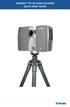 TRIMBLE TX5 3D LASER SCANNER QUICK START GUIDE Equipment 1 8 9 5 6 7 4 3 2 The TX5 laser scanner ships with the following equipment: 1 Scanner transport and carry case 6 USB memory card reader 2 AC power
HP 22-in-1 Media Card Reader
 HP 22-in-1 Media Card Reader Introduction This document describes how to install the HP 22-in-1 Media Card Reader into an HP Workstations adapter bracket, and then install the media card reader and bracket
PROFESSIONAL REFRACTOR MODEL 78-0040 25
 30 0 30 60 90 1 2 3 4 PROFESSIONAL REFRACTOR MODEL 78-0040 25 24 22 21 20 19 5 9060 18 6 7 17 16 15 8 14 13 9 11 12 10 Figure 1 1. Objective Lens 2. Mounting Screws (2) 3. Declination Axis 4. Equatorial
Nokia Wireless Keyboard (SU-8W) User Guide
 Nokia Wireless Keyboard (SU-8W) User Guide DECLARATION OF CONFORMITY We, NOKIA CORPORATION declare under our sole responsibility that the product SU-8W is in conformity with the provisions of the following
Version 3.0 English. Leica CS10/CS15 User Manual
 Version 3.0 English Leica CS10/CS15 User Manual CS10/CS15, Introduction Introduction 2 Purchase Congratulations on the purchase of a Leica CS10/CS15. This manual contains important safety directions as
SP AF 300mm F/2.8 LD [IF] for Canon (Model 360EE)
![SP AF 300mm F/2.8 LD [IF] for Canon (Model 360EE)](/thumbs/40/21493790.jpg "SP AF 300mm F/2.8 LD [IF] for Canon (Model 360EE)") SP AF 300mm F/2.8 LD [IF] for Canon (Model 360EE) We greatly appreciate your purchase of this Tamron lens. The Tamron SP AF 300mm F/2.8 LD [IF] is a fast telephoto lens developed for Canon AF single-reflex
SP AF 300mm F/2.8 LD [IF] for Canon (Model 360EE) We greatly appreciate your purchase of this Tamron lens. The Tamron SP AF 300mm F/2.8 LD [IF] is a fast telephoto lens developed for Canon AF single-reflex
EDGE 800. quick start manual TOUCHSCREEN GPS-ENABLED BIKE COMPUTER
 EDGE 800 quick start manual TOUCHSCREEN GPS-ENABLED BIKE COMPUTER 2010 Garmin Ltd. or its subsidiaries All rights reserved. Except as expressly provided herein, no part of this manual may be reproduced,
Version 7.0 English. Leica RX1200 User Manual
 Version 7.0 English Leica RX1200 User Manual Introduction Introduction RX1200 2 Purchase Congratulations on the purchase of an RX1200. This manual contains important safety directions as well as instructions
Trimble R8 Base and Rover Quick Setup Guide. Inland GPS Inc.
 Trimble R8 Base and Rover Quick Setup Guide Inland GPS Inc. Setting up the GPS Base Equipment Hardware First Find the best, most advantageous secure place to setup the GPS base equipment. Look for a high
Transmitter Interface Program
 Transmitter Interface Program Operational Manual Version 3.0.4 1 Overview The transmitter interface software allows you to adjust configuration settings of your Max solid state transmitters. The following
Protocol for Microscope Calibration
 Protocol for Microscope Calibration A properly calibrated system is essential for successful and efficient software use. The following are step by step instructions on how to calibrate the hardware using
EDGE 800. quick start manual TOUCHSCREEN GPS-ENABLED BIKE COMPUTER
 EDGE 800 quick start manual TOUCHSCREEN GPS-ENABLED BIKE COMPUTER 2010 2012 Garmin Ltd. or its subsidiaries All rights reserved. Except as expressly provided herein, no part of this manual may be reproduced,
Laserlyte-Flex Alignment System
 Laserlyte-Flex Alignment System LaserLyte-Flex The LaserLyte-Flex Alignment System is a unique, interchangeable, low cost plug and play laser system. Designed specifically for aligning and positioning
Small form factor bay converter and hard drive installation
 Small form factor bay converter and hard drive installation HP xw6600 and HP xw8600 Workstations This document describes how to convert HP xw6600 and HP xw8600 Workstation 3.5-inch hard drive bays to hold
4-Channel Thermometer / Datalogger
 USER GUIDE 4-Channel Thermometer / Datalogger RTD and Thermocouple Inputs Model SDL200 Introduction Congratulations on your purchase of the Extech SDL200 Thermometer, an SD Logger Series meter. This meter
Total Station Setup and Operation. Sokkia SET Total Station
 Total Station Setup and Operation Sokkia SET Total Station Parts of the SET Total Station Parts of the SET Total Station Sokkia SET 550 Total Station Keys/Screen SET 550 Menu Pages SET 550 Menu Pages Leveling
SE05: Getting Started with Cognex DataMan Bar Code Readers - Hands On Lab Werner Solution Expo April 8 & 9
 SE05: Getting Started with Cognex DataMan Bar Code Readers - Hands On Lab Werner Solution Expo April 8 & 9 Learning Goals: At the end of this lab, the student should have basic familiarity with the DataMan
EUROPE S LARGEST SELECTION OF TEST & MEASUREMENT EQUIPMENT FOR HIRE INLEC.COM. Nationwide Low Call 0333 6000 600
 EUROPE S LARGEST SELECTION OF TEST & MEASUREMENT EQUIPMENT FOR HIRE INLEC.COM Nationwide Low Call 0333 6000 600 WHY BUY WHEN YOU CAN HIRE SlopeView TLL-90 User Guide V20100426 1 CONTENT Title Page 1 Introduction
Version 1.0 English. Leica Builder Series User Manual
 Version 1.0 English Leica Builder Series User Manual Builder, Introduction Introduction 2 Purchase Congratulations on the purchase of a Builder series instrument. This manual contains important safety
HP SATA/SAS hard drive and Solid State Drive installation
 HP SATA/SAS hard drive and Solid State Drive installation This document describes how to install Serial ATA (SATA) and Serial Attached SCSI (SAS) hard drives or Solid State Drives (SSD) in an internal
User Guide LUXXOR VIDEO MICROSCOPE. 2 Luxxor Video Microscope Set Up
 2 Luxxor Video Microscope Set Up User Guide LUXXOR VIDEO MICROSCOPE Column When removed from its packaging, the Luxxor Video Microscope will be configured as shown, with the Vertical Slide and Slide Stop
Leica DISTO TM D210 The original laser distance meter
 Leica DISTO TM D0 The original laser distance meter Table of Contents Instrument Set-up - - - - - - - - - - - - - - - - - - - - - - - - - - Overview - - - - - - - - - - - - - - - - - - - - - - - - - -
Installation and use of Millett Tactical TRS-1 and TRS-2 scopes TRS-1 TRS-2. Before starting, make sure firearm is UNLOADED!!
 I N S T R U C T I O N a n d O P E R A T I O N TRS-1 TRS-2 Tactical Rifle scope Installation and use of Millett Tactical TRS-1 and TRS-2 scopes TRS-1 TRS-2 Before starting, make sure firearm is UNLOADED!!
MAKING MODERN LIVING POSSIBLE. living connect. Installation and User Guide. Danfoss Heating Solutions
 MAKING MODERN LIVING POSSIBLE living connect Installation and User Guide Danfoss Heating Solutions 2 living connect Thank you for buying a Danfoss product Danfoss Heating Solutions 3 Contents 1. System
Quick Start Guide See Inside for Use and Safety Information
 3 rd Generation Personal 3D Printer Quick Start Guide See Inside for Use and Safety Information The USB Mass Storage Device Contains the User Guide and Quick Start Guide in other Languages Congratulations
Service Guide. Gateway M275
 Service Guide Gateway M275 Contents Replacing Gateway M275 Components.................................... 1 Identifying the convertible tablet PC model...................................... 2 Identifying
SURVEY PRO. GPS Quick Start Guide
 SURVEY PRO GPS Quick Start Guide ii Table of Contents Before You Leave the Office...1 Survey Method: RTK or Post Processing...2 Receiver Setup...2 Receiver Settings...3 RTK Data Collection and Stake Out...4
Be careful not to scratch or hit front edge of the side viewing micro prisms onto hard objects!
 Instructions Manual Flexia BGA Inspection Systems This manual describes how to use Flexia BGA Inspection System Optilia Instruments 1 AB Contents 1. Safety and maintenance Instructions 3 2. About Flexia
3 LEVELLING & SURVEYING
 3 LEVELLING & SURVEYING 3.1 General The primary reference at water-level recording stations is a set of stable bench-marks, installed in locations where their level should not change. Upon initial set-up
REDWALL-V adjustment procedures guide
 Page 1/18 Ver1.2 July 1. 2011 REDWALL-V adjustment procedures guide This document is provided as a reference tool for installing the Optex Redwall SIP passive infrared detector. Before starting, read the
PlaneWave CDK Telescope Instructions CDK12.5, 17, 20 and 24
 PlaneWave CDK Telescope Instructions CDK12.5, 17, 20 and 24 V112712 1 Collimation and Secondary Spacing Procedure The CDK optical design has four optical elements shown in Figure 1. The primary mirror
ExStik TM ph Waterproof Meters
 User Guide ExStik TM ph Waterproof Meters Models PH100 & PH110 Patent Pending ExStik TM Description Front Panel Controls 1. Battery compartment cap 2. LCD Display 3. MODE / HOLD button 4. CAL / RECALL
Remote Head REMO ONE. Code 5750. Manual
 Remote Head REMO ONE Code 5750 Manual by sachtler. All rights reserved Version: 1.2/09/05 Issue date: September 2005 Order no.: srh20t010a We want you to receive Sachtler products that are always state
Version 5.0 English. Leica CS10/CS15 & GS Sensors User Manual
 Version 5.0 English Leica CS10/CS15 & GS Sensors User Manual CS10/CS15 & GS Sensors, Introduction Introduction 2 Purchase Congratulations on the purchase of a Leica SmartWorx Viva instrument. This manual
PeopleGIS Leica RTK GPS Instructions
 PeopleGIS Leica RTK GPS Instructions Equipment List GG02 Receiver (Antenna) GPS Range Pole Zeno Tablet MiFi MiFi External Battery Carrying Case 1) Turning on the MiFi Power on the MiFi. This little gadget
Nokia Bluetooth Headset BH-607. Issue 2. 1
 Nokia Bluetooth Headset BH-607 2 3 1 4 5 6 7 8 9 11 10 Issue 2. 1 12 13 14 DECLARATION OF CONFORMITY Hereby, NOKIA CORPORATION declares that this BH-607 product is in compliance with the essential requirements
Version 1.0 English. Leica FlexLine TS02/TS06/TS09 User Manual
 Version 1.0 English Leica FlexLine TS02/TS06/TS09 User Manual Introduction Introduction FlexLine, 2 Purchase Congratulations on the purchase of a FlexLine instrument. This manual contains important safety
quick reference guide Edge 605/705 GPS-ENABLED BIKE COMPUTER
 quick reference guide Edge 605/705 GPS-ENABLED BIKE COMPUTER MB Warning: This product contains a lithium-ion battery. See the Important Safety and Product Information guide in the product box for important
Instruction Manual FL
 3. Operation Overview The most common used features (such as displaying force, peak hold, zero and changing of displayed units) can all be done by pressing a single dedicated key identified on the front
Introduction Configuring Your HP Mouse Batteries Replacing the Batteries Mouse Sensor Technology Navigating the HP Mouse Control Center
 Introduction Congratulations on your purchase of an HP mouse. This mouse is the latest in a wide range of computer peripherals manufactured by HP. It is designed to provide you with the highest level of
Version 1.1 English. Rugby 50 User Manual
 Version 1.1 English User Manual Introduction Congratulations on the purchase of a new Rotating Laser product. Product The is a laser tool for general construction and other leveling applications. It is
MAINTENANCE & TROUBLESHOOTING
 MAINTENANCE & TROUBLESHOOTING This section describes how to: clean the lens replace the projection lamp replace the batteries in the remote use the security lock feature troubleshoot the projector Cleaning
Contents Contents Contents Overview Charging your headset Wearing the headset Powering on the headset Connecting your headset for dictation
 1 Contents Contents Contents 2 Overview 3 Charging your headset 4 Wearing the headset 4 Powering on the headset 4 Connecting your headset for dictation 5 The adapter 5 Adjusting your computer's audio settings
Leica FlexLine TS09plus Full precision at high performance
 Leica FlexLine TS09plus Full precision at high performance The First Plus: Original Leica Geosystems quality For most, quality is relative. Not so at Leica Geosystems. To ensure our instruments meet the
Contents. Installing the upgrade memory kit in the G450 and G430 Media Gateway May 2014 1
 Contents Installing the upgrade memory kit in the G450 / G430 Media Gateway... 3 Equipment ordering... 3 Inserting or replacing a RAM card... 4 Inserting or replacing a RAM card in the G450... 4 Replacing
Nokia Bluetooth Headset BH-800 User Guide. 9246974 Issue 2
 Nokia Bluetooth Headset BH-800 User Guide 9246974 Issue 2 DECLARATION OF CONFORMITY We, NOKIA CORPORATION declare under our sole responsibility that the product HS-24W is in conformity with the provisions
VISM CQB Scope Series
 1 VISM CQB Scope Series Congratulations on the purchase of your new VISM CQB Scope! The CQB Series of Scopes give you many great options so you can choose the scope that best fits your needs. Backed by
HCS-3300/3302/3304 USB Remote Programmable Laboratory Grade Switching Mode Power Supply
 1. INTRODUCTION HCS-3300/3302/3304 USB Remote Programmable Laboratory Grade Switching Mode Power Supply User Manual This family of efficient, upgraded SMPS with small form factor, auto cross over CV CC,
STEREO BLUETOOTH WIRELESS SPORTS In-Ear Headphones
 STEREO BLUETOOTH WIRELESS SPORTS In-Ear Headphones USER MANUAL model: X7 PACKAGE CONTENTS EN X7 Stereo Bluetooth Wireless Sports In-Ear Headphones Micro-USB charging cable Carrying case 3 pairs of eartips
Stereoscopic 3D Digital Theater System. Operator Manual (MI-2100)
 Stereoscopic 3D Digital Theater System Operator Manual (MI-2100) -1- All information contained in or disclosed by this document is confidential and propriety to masterimage Co., Ltd. (hereinafter referred
SwitchView 1000 Switch. Installer/User Guide
 SwitchView 1000 Switch Installer/User Guide SwitchView 1000 Switch Installer/User Guide Avocent, the Avocent logo, The Power of Being There and SwitchView are registered trademarks of Avocent Corporation.
FCC COMPLIANCE STATEMENT FOR AMERICAN USERS
 FCC COMPLIANCE STATEMENT FOR AMERICAN USERS This equipment has been tested and found to comply with the limits for a CLASS A digital device, pursuant to Part 15 of the FCC Rules. These limits are designed
e 1 0 0 I N S T RUC TION M ANU A L
 e 1 0 0 I N S T RUC TION M ANU A L The Empire Digital Level Accuracy, Readability, Durability one FEATURES: Easy to read back light Display reads right side up even if the level is upside down Audio beep
Bulb Replacement REPLACING BULBS WARNING
 Bulb Replacement REPLACING BULBS Check the operation of all exterior lamps before you drive the vehicle. Caution: Before attempting to replace a bulb, ensure that both the affected lamp and the vehicle's
HP Pavilion All-in-One MS200 series PC. Upgrading and Servicing Guide. Printed in
 HP Pavilion All-in-One MS200 series PC *579907-001* *579907-001* Printed in Upgrading and Servicing Guide Replacing a Wireless Keyboard or Mouse...2 Before You Begin... 2 Replacing the Keyboard or Mouse...
CYMAQ Marking System AS200 + DS7050 N-14
 CYMAQ Marking System AS200 + DS7050 N-14 Serial Number: 13716 CYMAQ www.cymaq.com INDEX 1. PRESENTATION AND GENERAL POINTS 1.1. General Points 1.2. Identification plate 2. MACHINE CHARACTERISTICS 2.1.
How to connect your D200 using Bluetooth. How to connect your D200 using GPRS (SIM Card)
 D200 En User Guide Content 3 Introduction 3 Scope 3 Related Documentation 4 Internet Connectivity 4 Using D200 with Mobile Phone 5 Using D200 with wireless (Wi-Fi) router 6 Using D200 with GPRS (requires
FLUORESCENT UV- RING LIGHT OPERATING INSTRUCTION
 FLUORESCENT UV- RING LIGHT OPERATING INSTRUCTION Caution! UV-radiation of this device is in the range of UV-A (320-400 nm). Direct exposure to eyes shall therefore be avoided. UV protection glasses shall
LEN s.r.l. Via S. Andrea di Rovereto 33 c.s. 16043 CHIAVARI (GE) Tel. +39 0185 318444 - Fax +39 0185 472835 mailto: [email protected] url: http//www.len.
 MA511 General Index 1 INTRODUCTION... 3 1.1 HARDWARE FEATURES:... 4 2 INTERFACE... 5 2.1 KEYBOARD... 6 2.2 POWER ON... 7 2.3 POWER OFF... 7 2.4 DETECTOR CONNECTION... 7 2.5 DETECTOR SUBSTITUTION...7 3
LED MOTION ACTIVATED FLOOD LIGHT
 Utilitech & UT Design are registered trademarks of LF, LLC. All Rights Reserved. ITEM #0611551, #0611550 LED MOTION ACTIVATED FLOOD LIGHT MODEL #SE1036-BP2-02LF0-U, SE1036-WH3-02LF0-U Français p. 10 Español
Drayton Digistat +2RF/+3RF
 /+3RF Programmable Room Thermostat Wireless Model: RF700/22090 Model: RF701/22092 Power Supply: Battery - Thermostat Mains - Digistat SCR Invensys Controls Europe Customer Service Tel: 0845 130 5522 Customer
430 Power/Electronics Replacement
 Replacing the main board WARNING Before proceeding, turn off the main power switch and unplug the power cord. Caution Make sure you are properly grounded with an ESD strap before continuing. The main printed
Smart Cam, CC-Smart-Cam, and Smart Cam Packages Installation and Quick Start Operating Instructions
 Smart Cam, CC-Smart-Cam, and Smart Cam Packages Installation and Quick Start Operating Instructions 12/12/2013 FRONT VIEW BACK VIEW TYPICAL PACKAGE 1 Installation Assemble video coupler to the zoom body
TS-E24mm f/3.5l TS-E45mm f/2.8 TS-E90mm f/2.8 Instructions
 TS-E24mm f/3.5l TS-E45mm f/2.8 TS-E90mm f/2.8 ENG Instructions Thank you for purchasing a Canon product. Canon s TS-E lenses are tilt-shift lenses designed for EOS cameras. The tilt-shift mechanism enables
Quick Start Turning on the Tablet PC for the First Time
 User s Manual DL46 Getting Started Congratulations on your purchase of a Tablet PC. The Tablet PC is a fully functional PC with built-in LAN, and wireless connectivity. With your Tablet PC you will be
Using GIGABYTE Notebook for the First Time
 Congratulations on your purchase of the GIGABYTE Notebook! This Manual will help you to get started with setting up your notebook. For more detailed information, please visit our website at http://www.gigabyte.com.
Replacing the Gateway M320 Keyboard
 Replacing the Gateway M320 Keyboard This package includes a replacement keyboard for your Gateway M320 notebook and these printed instructions. Tools you need You need a small Phillips and a small flat-blade
iloq P10S.10/20 Programming device User's Guide
 iloq P10S.10/20 Programming device User's Guide CONTENTS CONTENTS... 2 GENERAL... 3 USING THE PROGRAMMING DEVICE... 5 Starting the programming device... 5 Programming of locks... 5 Programming of keys...
Table of Contents. Dewalt DW03101 1. Delete Memory - - - - - - - - - - - - - - - - - - - - - - - - - - -15
 Table of Contents EN Instrument Set-up - - - - - - - - - - - - - - - - - - - - - - - Introduction- - - - - - - - - - - - - - - - - - - - - - - - - - - - - - - Overview - - - - - - - - - - - - - - - - -
4.3-inch Back-Up Camera
 TM 4.-inch Back-Up Camera Model No.: PKC0BU4 Owner s Manual and Warranty Information Read these instructions completely before using this product. Retain this Owner s Manual for future reference. INTRODUCTION
SW10. User Guide. Smart Watch. Please read the manual before use.
 SW10 Smart Watch User Guide www. ScinexUSA.com Please read the manual before use. 1 About this manual You can use this Watch as a companion device to most Android and IOS mobile devices. This user manual
The Swivl Solution. Uses. Swivl User Guide. Swivl is more than just video capture, it is a 3-part solution.
 The Swivl Solution Swivl is more than just video capture, it is a 3-part solution. Swivl Robot Swivl Capture App Swivl Cloud The Swivl Robot works with any tablet device and follows the movement of the
VISM Evolution Scope Series
 1 VISM Evolution Scope Series Congratulations on the purchase of your New VISM Evolution (EVO) Series Scope! The EVO Series of Scopes give you many great high end features and various magnification ranges
OCSM Series. High Resolution Digital Crane Scale. User Guide
 OCSM Series High Resolution Digital Crane Scale Content 1. Safety Guide... 1 2. Features... 1 3. Specifications... 2 4. Capacity... 3 5. Display & Keys... 3 Scale & Remote Keys... 3 Indicators... 4 Message...
Doc. No: 412-121033 Issue: 1 Date: Aug 2014. BTT-02 card printer manual THERMAL TRANSFER CARD PRINTER BTT-02
 Date: Aug 2014 THERMAL TRANSFER CARD PRINTER BTT-02 TABLE OF CONTENTS Introduction... 3 System Contents and Initial Checks... 3 Installation... 4 Preparation of Installation Site... 4 Printer Connections...
Leica DISTO TM X310 The original laser distance meter
 Leica DISTO TM X30 The original laser distance meter Table of Contents Instrument Set-up - - - - - - - - - - - - - - - - - - - - - - - - - - Introduction - - - - - - - - - - - - - - - - - - - - - - - -
Inspiron 15. Service Manual. 3000 Series
 Inspiron 15 3000 Series Service Manual Computer Model: Inspiron 15 3541/Inspiron 15 3542/Inspiron 15 3543 Regulatory Model: P40F Regulatory Type: P40F001/P40F002 Notes, Cautions, and Warnings NOTE: A NOTE
Digital Postage Meter. Quick Install Guide US English Version
 Digital Postage Meter Quick Install Guide US English Version Lock. Lock Class *#_ Funds GHI Menu ABC JKL PQRS DEF TUV Back MNO WXYZ Space Shift. Review no Enter yes Contents mailstation 2 Scale (optional)
MAKING MODERN LIVING POSSIBLE. living connect. Installation and User Guide. Danfoss heating
 MAKING MORN LIVING POSSIBLE Danfoss heating living connect Installation and User Guide Contents 1.0 System overview... 3 2.0 Overview of display and control buttons... 3 3.0 Installation - step by step...
SYMBOL MC9060 HAND HELD TERMINAL USER MANUAL
 SYMBOL MC9060 HAND HELD TERMINAL USER MANUAL CORPORATE VERSION FEBRUARY 2007 TABLE OF CONTENTS Welcome... 3 Getting Started... 3 Equipment Setup... 3 Battery Installation... 4 About the Stylus... 5 Aligning
Version 3.0 English. Leica Viva TPS Getting Started Guide
 Version 3.0 English Leica Viva TPS Getting Started Guide Viva TPS, Introduction Introduction To use the products in a permitted manner, please refer to the detailed safety instructions in the Leica CS10/CS15
Original Assembly Guide
 TCT Multipurpose Single Bevel Sliding Compound Mitre Saw Original Assembly Guide Read instructions before assembling this tool. Table of Contents GB Assembly Guide Read instructions before assembling this
ONYX Portable HD. Portable Video Magnifier. User s Guide. Freedom Scientific, Inc. www.freedomscientific.com. 440783-001 Rev. B
 ONYX Portable HD Portable Video Magnifier User s Guide Freedom Scientific, Inc. www.freedomscientific.com 440783-001 Rev. B Freedom Scientific, Inc., 11800 31 st Court North, St. Petersburg, Florida 33716-1805,
MANUAL TR-110 TR-110
 MANUAL TR-110 TR-110 CONTENTS 1. GENERAL INTRODUCTION 2 2. WORK PRINCIPLE 3 3. STANDARD DELIVERY 4 4. NAME OF EACH PART 5 5. OPERATION 6 5.1 Preparation before operation 6 5.2 Switch on, Switch off and
What Smartphones and Tablets are supported by Smart Measure PRO?
 What Smartphones and Tablets are supported by Smart Measure PRO? The following Smartphones and Tablets have gone through camera calibration procedure and provide the highest level of accuracy for capturing
PA500II Enterprise Mobile Computer
 PA500II Enterprise Mobile Computer - PA500II - Quick Reference Guide 400891G Version 1.0 PA500II Product Introduction & Accessory Kit After opening the box, ensure the following accessories for the PA500II
Modular I/O System Analog and Digital Interface Modules
 OPERATING INSTRUCTIONS Modular I/O System Analog and Digital Interface Modules Installation Operation Maintenance Document Information Document ID Title: Operating Instructions Modular I/O System Part
Compaq Presario Desktop Products. Upgrading and Servicing Guide
 Compaq Presario Desktop Products Upgrading and Servicing Guide The information in this document is subject to change without notice. Hewlett-Packard Company makes no warranty of any kind with regard to
Point of view HDMI Smart TV dongle Mini RF Keyboard
 Point of view HDMI Smart TV dongle Mini RF Keyboard English Contents Contents... 1 General notices for use... 2 Disclaimer... 2 Box Contents... 2 1. HDMI TV dongle... 3 1.1. Product display... 3 1.2. Instructions