
IFSSH Scientific Committee on Bone and Joint Injuries: Distal Radioulnar Joint Instability
|
|
|
- Brendan Thornton
- 9 years ago
- Views:
Transcription
1 IFSSH Scientific Committee on Bone and Joint Injuries: Distal Radioulnar Joint Instability Chair: Goo Hyun Baek (Korea) Committee: Hiroyuki Kato (Japan) Leszek Romanowski (Romania) Report submitted November 2012

2 Distal Radioulnar Joint Instability Introduction The distal radioulnar joint (DRUJ) links the radius and ulna with the proximal radioulnar joint. The osseous structure of the DRUJ has minimal inherent stability. Thus, the DRUJ relies heavily on soft tissue structures, and instability of the joint is a common clinical problem. The current concept of the anatomy, clinical presentation and examination, imaging studies, classification of the triangular fibrocartilage complex lesions, and treatment of DRUJ instability, will be reviewed. Anatomy 1. Bony anatomy The axis of forearm rotation is near the centers of the radial head proximally and ulnar head distally. The radius of curvature of the sigmoid notch is 50% to 100% greater than that of the ulnar head. Therefore, translation occurs between the ulnar head and sigmoid notch, and rolling and sliding movements occur with forearm rotation. At the level of the DRUJ, the ulnar head shifts dorsally with pronation and volarly with supination. Total dorsal and volar translation of the DRUJ was 8 to 9 mm when force was applied externally in a cadaver study.[1] At the extremes of pronation and supination, articular contact decreases significantly, to as little as 10% of the articular surface area.[2] Although the sigmoid notch is shallow, its dorsal and volar rims contribute to DRUJ stability, and deficiencies in these rims due to trauma considerably reduce the stability of the joint.[3-5] In the coronal and transverse planes, the DRUJ has some variations in shape. A study has found that the slope of the sigmoid notch articular surface may be parallel, oblique, or reverse oblique relative to the long axis of the radius in the coronal plane, and that there are four different sigmoid notch shapes: flat face, ski slope, C type, and S type in the transverse plane.[4] A flat type may be associated with suboptimal outcome after soft tissue reconstruction for DRUJ instability. 2. Soft tissue anatomy The triangular fibrocartilage complex (TFCC) is the most important anatomical structure for maintaining normal DRUJ kinematics, and is composed of the articular disc, the dorsal and volar radioulnar ligaments, the meniscus homologue, the sheath of the extensor carpi ulnaris, and the ulnolunate and ulnotriquetral ligaments (Figure 1).[6] The radioulnar ligaments are the principal stabilizers of the DRUJ. The deep limb attaches to the fovea, and the superficial limb attaches to the base of the ulnar styloid. The superficial limb becomes unstable with a fracture of the base of the ulnar styloid. The articular disc is composed of fibrocartilage that bears compressive loads through its

3 central portion, but does not contribute much to the DRUJ stability. The ECU sheath augments the dorsal capsule and provides some stabilizing effects. The ulnocarpal ligaments are thought to contribute to both DRUJ and ulnocarpal stability. Other soft tissue structures, such as the pronator quadratus, extensor carpi ulnaris tendon, interosseous membrane, and DRUJ capsule also contribute to DRUJ stability.[7] Figure 1. Anatomy around distal radioulnar joint There are some debates regarding the role of the radioulnar ligaments.[8,9] One theory is that the dorsal ligament prevents the ulna from dorsal displacement during pronation and the volar ligament prevents volar displacement during supination.[8] Another theory is that the volar ligament prevents dorsal displacement in pronation and the dorsal ligament prevents volar displacement in supination.[9] An in vivo study has found that in forearm pronation, the dorsal superficial radioulnar ligament and volar deep radioulnar ligament tighten, and in forearm supination, the volar superficial radioulnar ligament and dorsal deep radioulnar ligament tighten, maintaining stability of the DRUJ.[10] Therefore, although one ligament may provide the dominant restraint, the other ligament provides a secondary restraint. Clinical presentation and physical examination In an acute isolated dislocation of the DRUJ, a deformity with the dislocated ulnar head, local tenderness, swelling, and limited motion can be observed. Deep tenderness along the interosseous membrane and pain at the proximal radioulnar joint may indicate a concomitant Essex-Lopresti injury. The most common cause for DRUJ instability is a distal radius fracture. Although instability after accurate reduction and fixation of the distal radius is relatively uncommon, it is important to evaluate DRUJ stability after treatment of a distal radius fracture. Patients with DRUJ instability after a malunion of the distal radius fracture
![Other soft tissue structures, such as the pronator quadratus, extensor carpi ulnaris tendon, interosseous membrane, and DRUJ capsule also contribute to DRUJ stability.[7] Figure 1.](/docs-images/47/20958112/images/page_3.jpg "Anatomy around distal radioulnar joint There are some debates regarding the role of the radioulnar ligaments.")
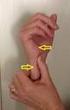
4 usually present with loss of forearm rotation, prominence of the ulnar head, weakness, or ulnar-sided wrist pain. A dorsally angulated malunion usually presents with volar displacement of the ulna and volar instability, and a volarly angulated malunion usually presents with dorsal displacement of the ulna that may limit forearm supination. Patients may present with chronic DRUJ instability without a history of a distal radius fracture. The most common history is a traumatic event involving a fall on the outstretched hand or an unexpected forcible rotation of the wrist. Patients usually report ulnar-sided wrist pain of a mechanical nature that is increased with wrist positions and activities that reproduce the mechanism of injury, such as forearm rotation or ulnar deviation of the wrist. Localized swelling, crepitus, weakness, and a sense of instability may exist. In severe cases, there may be a painful clunk and loss of rotation due to chronic subluxation. In addition, patients with ulnar impaction syndrome with a considerably large ulnar positive variance may have instability symptoms in addition to typical ulnar abutment symptoms. The ulnar fovea sign consists of tenderness when pressure is applied to the region of the fovea, in the soft depression between the flexor carpi ulnaris (FCU) tendon, ulnar styloid, and triquetrum (Figure 2). This sign is the most specific clinical examination for injuries of the TFCC at this location.[11] The physician should test the DRUJ stability by stabilizing the radius and translating the ulna to its volar and dorsal limits. The amount of translation and the firmness of the end point should be compared with the contralateral side in neutral, pronation, and supination of the forearm. In addition, the physician should measure active and passive ranges of supination and pronation of the DRUJ. Decreased motion and crepitus during rotation are signs of DRUJ arthritis. ECU instability can be evaluated by testing for abnormal ECU motion during forearm rotation in ulnar deviation, and ECU subluxation is most apparent in supination and ulnar deviation. In the shear or ballottement test for examining the lunotriquetral joint, the physician stabilizes the lunate with one hand while manually shearing the triquetrum against the lunate articular surface volarly and dorsally with the other hand. The ulnocarpal stress test is useful for provocating symptoms due to articular disc tear or ulnar impaction syndrome (Figure 3). For this test, the forearm is placed vertically on the table, and the physician holds the hand and compresses the wrist ulnarly. This test is performed in neutral, pronation and supination.[12] The press test, which axially loads the wrist in ulnar deviation as the patient pushes him or herself up from a seated position, can also provoke pain by dynamic loading of the TFCC.

5 Figure 2. Test for ulnar fovea sign Figure 3. Ulnocarpal stress test Imaging studies Initial radiographic evaluation of the DRUJ includes a standard posteroanterior (PA) view and a true lateral radiograph of the wrist in neutral forearm rotation. A neutral rotation position is necessary to standardize ulnar variance measurement. A PA view with the forearm pronated and the patient making a power grip may reveal a dynamic ulnar positive variance,[14] and may reveal an increase in the DRUJ gap distance.[15] The lateral view is not accurate for the diagnosis of DRUJ subluxation, because as little as 10 degrees of rotation can make the joint appear reduced even when the joint is dislocated. The physician should search for signs of arthritic changes of the DRUJ, such as osteophytes at the ulnar head. Computed tomography (CT) can be used to evaluate DRUJ congruency, using several methods including the Mino method,[16] the congruency method,[17] and the radioulnar ratio method.[18] As distal radius fractures frequently involve the sigmoid notch, especially the dorsal rim, the extent of involvement can be better evaluated by CT. Magnetic resonance imaging (MRI) is the primary advanced imaging method used for evaluating TFCC injuries. Magnetic resonance arthrography (MRA) is superior to MRI in the investigation of full-thickness TFCC tear.[19] Arthroscopy is the gold standard for the diagnosis of TFCC articular disc tear. However, tears of the radioulnar ligaments at the radius or at the fovea are not visualized from the radiocarpal joint. DRUJ arthroscopy is necessary to see the foveal

6 attachment. By radiocarpal arthroscopy, an avulsion of the foveal TFCC insertion can be determined by a loss of the normal trampoline effect (trampoline test) and a displacement of the TFCC radially by pulling on the TFCC using a probe (hook test) (Figure 4). Figure 4. Radial displacement of the TFCC by pulling on it using a probe, indicates avulsion of the foveal TFCC insertion (hook test). TFCC lesions and DRUJ instability Management of an acute ulnar wrist injury needs defining the disrupted anatomic structures. Palmer's classification divides TFCC lesions into two categories: traumatic (class 1) and degenerative (class 2). Traumatic TFCC injuries are classified according to the tear location (Figure 5). Degenerative TFCC tears result from chronic and excessive loading through the ulnocarpal joint, and are classified according to the location and severity of degeneration involving the TFCC, ulnar head, and carpal bones. Figure 5. Palmer s classification of traumatic TFCC injuries The Palmer class 1A tear involves a simple tear near the radial insertion of the articular disc in the sagittal plane (anterior to posterior) because the strain is usually applied in the radioulnar axis. This lesion is relatively common and does not cause DRUJ instability. The Palmer class 1B tear involves injury to the ulnar attachment of the TFCC either by ligament avulsion from the fovea or via fracture through the base of

7 the ulnar styloid, resulting in DRUJ instability. DRUJ instability may not be present with partial tear, and DRJU instability may be present without a styloid fracture or a tip fracture of the styloid. For this type of injury, integrity of the ulnar styloid or the radioulnar ligament should be restored, either by immobilization or surgery. The Palmer class 1C lesion is an injury to the volar ulnar extrinsic ligaments. Complete disruption of these ligaments is rare, requiring high-energy. Most of these injuries occur in combination with class 1B tears and/or lunotriquetral ligament tears. These injuries are generally managed conservatively unless mechanical instability is present. The Palmer class 1D lesion is a partial or complete traumatic avulsion of the TFCC from the radius. These injuries usually occur with a distal radius fracture at the margin of the sigmoid notch, and do not cause DRUJ instability if the fixation and reduction of the fracture is adequate. Treatment Initial management of isolated TFCC injury is nonsurgical such as immobilization with splinting, medication, and physical therapy according to the stability of the DRUJ. When the DRUJ is unstable, the forearm should be immobilized for 4 to 6 weeks, and the stability should be reevaluated. When DRJU instability is associated with a distal radius fracture, accurate reduction of the fracture and maintenance of the radial alignment is important to allow stable healing of soft tissues around the DRUJ. When there is an ulnar styloid fracture, stable fixation of the radius alone without fixation of the styloid can obtain equivalent results compared with ulnar styloid fixation.[20] However, in young patients with a distal radius fracture, unrepaired peripheral tears of the TFCC can be a common cause of persistent symptomatic instability.[21] Therefore, when severe instability exists after reduction of the radius, especially in young or active patients, fixation of the ulnar styloid or repair of the TFCC should be considered. In some cases with ulnar head dislocation, reduction and fixation with temporary K-wire can be performed. Surgical treatment of TFCC injury includes debridement and repair, and most surgical procedures can be performed arthroscopically. For the Palmer class 1A lesion, surgical treatment usually involves arthroscopic debridement of the torn flap of the articular disc and making the residual rim smooth and stable. Arthroscopic repair is used in Palmer class 1B or 1D lesion. Radial-sided detachments can be repaired using double-armed long meniscal repair sutures. Advancing age as well as postoperative ulnar positive variance are poor prognostic factors.[22] Ulnar detachment can also be repaired arthroscopically or by open technique.[23,24] Direct reinsertion of the radioulnar ligaments to the fovea can be done by using transosseous drill holes or by using a bone anchor. Type 1B lesions can be classified into reparable and non-reparable lesions.[25] Reparable tear of distal component of TFCC which shows none to slight DRUJ instability, can be repaired by ligament-to-capsule suture. Reparable tear of both components or proximal component of TFCC which shows mild to severe DRUJ instability, can be repaired by arthroscopic foveal fixation.

8 The first surgical option for DRUJ instability is delayed direct repair of the TFCC. However, when repair of the TFCC is impossible, other reconstructive techniques can be used to restore DRUJ stability. Late reconstructions for DRUJ instability include 3 categories: (1) a direct radioulnar tether extrinsic to the joint, (2) an indirect radioulnar link via tenodesis, and (3) reconstruction of the radioulnar ligaments.[26] A radioulnar tether is not anatomic, and does not restore normal joint stability or mechanics of the DRUJ. Reconstruction of the distal radioulnar ligaments offers the best possibility of restoring normal DRUJ primary constraints and kinematics. In patients with ulnar impaction syndrome and combined DRUJ instability, ulnar shortening osteotomy can improve DRUJ stability by increasing the tension of the ulnocarpal ligaments.[27,28] A recent biomechanical study found that ulnar shortening with osteotomy carried out proximal to the attachment of the distal interosseous membrane had a more favorable effect on DRUJ stability compared with distal osteotomy.[29] References 1. Pirela-Cruz MA, Goll SR, Klug M, Windler D. Stress computed tomography analysis of the distal radioulnar joint: A diagnostic tool for determining translational motion. J Hand Surg [Am] 1991;16(1): af Ekenstam F, Hagert CG. Anatomical studies on the geometry and stability of the distal radioulnar joint. Scand J Plast Reconstr Surg 1985;19(1): Stuart PR, Berger RA, Linscheid RL, An KN. The dorsopalmar stability of the distal radioulnar joint. J Hand Surg [Am] 2000;25(4): Tolat AR, Stanley JK, Trail IA. A cadaveric study of the anatomy and stability of the distal radioulnar joint in the coronal and transverse planes. J Hand Surg [Br] 1996;21(5): Wallwork NA, Bain GI. Sigmoid notch osteoplasty for chronic volar instability of the distal radioulnar joint: A case report. J Hand Surg [Am] 2001;26(3): Palmer AK, Werner FW. The triangular fibrocartilage complex of the wristanatomy and function. J Hand Surg [Am] 1981;6(2): Kihara H, Short WH, Werner FW, Fortino MD, Palmer AK. The stabilizing mechanism of the distal radioulnar joint during pronation and supination. J Hand Surg [Am] 1995;20(6): Schuind F, An KN, Berglund L, Rey R, Cooney WP 3 rd, Linscheid RL, Chao EY. The distal radioulnar ligaments: A biomechanical study. J Hand Surg [Am] 1991;16(6):

9 9. af Ekenstam F. Anatomy of the distal radioulnar joint. Clin Orthop Relat Res 1992;275: Xu J, Tang JB. In vivo changes in lengths of the ligaments stabilizing the distal radioulnar joint. J Hand Surg [Am] 2009;34(1): Tay SC, Tomita K, Berger RA. The ulnar fovea sign for defining ulnar wrist pain: An analysis of sensitivity and specificity. J Hand Surg [Am] 2007;32(4): Nakamura R, Horii E, Imaeda T, Nakao E, Kato H, Watanabe K. The ulnocarpal stress test in the diagnosis of ulnar-sided wrist pain. J Hand Surg [Br] 1997;22(6): Lester B, Halbrecht J, Levy IM, Gaudinez R. Press test for office diagnosis of triangular fibrocartilage complex tears of the wrist. Ann Plast Surg 1995;35(1): Tomaino MM. The importance of the pronated grip x-ray view in evaluating ulnar variance. J Hand Surg [Am] 2000;25(2): Iida A, Omokawa S, Akahane M, Kawamura K, Takayama K, Tanaka Y. Distal radioulnar joint stress radiography for detecting radioulnar ligament injury. J Hand Surg [Am] 2012;37(5): Mino DE, Palmer AK, Levinsohn EM. The role of radiography and computerized tomography in the diagnosis of subluxation and dislocation of the distal radioulnar joint. J Hand Surg [Am] 1983;8(1): Wechsler RJ, Wehbe MA, Rifkin MD, Edeiken J, Branch HM. Computed tomography diagnosis of distal radioulnar subluxation. Skeletal Radiol. 1987;16(1): Lo IK, MacDermid JC, Bennett JD, Bogoch E, King GJ. The radioulnar ratio: a new method of quantifying distal radioulnar joint subluxation. J Hand Surg [Am] 2001;26(2): Smith TO, Drew B, Toms AP, Jerosch-Herold C, Chojnowski AJ. Diagnostic accuracy of magnetic resonance imaging and magnetic resonance arthrography for triangular fibrocartilaginous complex injury: a systematic review and metaanalysis. J Bone Joint Surg [Am] 2012;94(9): Kim JK, Koh YD, Do NH. Should an ulnar styloid fracture be fixed following volar plate fixation of a distal radial fracture? J Bone Joint Surg [Am] 2010;92(1): Lindau T, Hagberg L, Adlercreutz C, Jonsson K, Aspenberg P. Distal radioulnar instability is an independent worsening factor in distal radial fractures. Clin
![12. Nakamura R, Horii E, Imaeda T, Nakao E, Kato H, Watanabe K. The ulnocarpal stress test in the diagnosis of ulnar-sided wrist pain. J Hand Surg [Br] 1997;22(6):719-723. 13.](/docs-images/47/20958112/images/page_9.jpg "Lester B, Halbrecht J, Levy IM, Gaudinez R. Press test for office diagnosis of triangular fibrocartilage complex tears of the wrist. Ann Plast Surg 1995;35(1):41-45. 14. Tomaino MM.")
10 Orthop Relat Res 2000;376: Ruch DS, Papadonikolakis A. Arthroscopically assisted repair of peripheral triangular fibrocartilage complex tears: Factors affecting outcome. Arthroscopy 2005;21(9): Sennwald GR, Lauterburg M, Zdravkovic V. A new technique of reattachment after traumatic avulsion of the TFCC at its ulnar insertion. J Hand Surg [Br] 1995;20(2): Iwasaki N, Nishida K, Motomiya M, Funakoshi T, Minami A. Arthroscopicassisted repair of avulsed triangular fibrocartilage complex to the fovea of the ulnar head: a 2- to 4-year follow-up study. Arthroscopy 2011;27(10): Atzei A, Rozzo A, Luchetti R, Fairplay T. Arthroscopic foveal repair of triangular fibrocartilage complex peripheral tear with distal radioulnar joint instability. Tech Hand Up Extrem Surg. 2008;12(4): Adams BD, Berger RA. An anatomic reconstruction of the distal radioulnar ligaments for posttraumatic distal radioulnar joint instability. J Hand Surg [Am] 2002;27(2): Friedman SL, Palmer AK. The ulnar impaction syndrome. Hand Clin. 1991;7: Baek GH, Chung MS, Lee YH, Gong HS, Lee S, Kim HH. Ulnar shortening osteotomy in idiopathic ulnar impaction syndrome. J Bone Joint Surg Am 2005;87(12): Arimitsu S, Moritomo H, Kitamura T, Berglund LJ, Zhao KD, An KN, Rizzo M. The stabilizing effect of the distal interosseous membrane on the distal radioulnar joint in an ulnar shortening procedure: a biomechanical study. J Bone Joint Surg Am. 2011;93(21):
![J Hand Surg [Br] 1995;20(2):178-184. 24. Iwasaki N, Nishida K, Motomiya M, Funakoshi T, Minami A.](/docs-images/47/20958112/images/page_10.jpg "Arthroscopicassisted repair of avulsed triangular fibrocartilage complex to the fovea of the ulnar head: a 2- to 4-year follow-up study. Arthroscopy 2011;27(10):1371-1378 25.")
Ulnar sided Wrist Pain
 Ulnar sided Wrist Pain 1 Susan Cross, 1 Anshul Rastogi, 2 Brian Cohen, 1 Rosy Jalan 1 Dept of Radiology, Barts Health NHS Trust, London, UK 2 London Orthopaedic Centre Contact: [email protected]
Fractures around wrist
 Fractures around wrist Colles Fracture Smiths fracture Barton s fracture Chauffer s fracture Scaphoid fracture Lunate dislocation Vivek Pandey Colles fracture Definition: Fracture of the distal end radius
INJURIES OF THE HAND AND WRIST By Derya Dincer, M.D.
 05/05/2007 INJURIES OF THE HAND AND WRIST By Derya Dincer, M.D. Hand injuries, especially the fractures of metacarpals and phalanges, are the most common fractures in the skeletal system. Hand injuries
RADIOGRAPHIC EVALUATION
 Jeff Husband MD Objectives Evaluate, diagnose and manage common wrist injuries due to high energy trauma in athletes Appropriately use radiographs, CT scans and MRI Know when to refer patients for additional
WRIST EXAMINATION. Look. Feel. Move. Special Tests
 WRIST EXAMINATION Look o Dorsum, side, palmar- palmar flex wrist to exacerbate dorsal swellings o Deformity e.g. radial deviation after colles, prominent ulna o Swellings e.g. ganglion o Scars, muscle
Distal Radius Fractures. Lee W Hash, MD Affinity Orthopedics and Sports Medicine
 Distal Radius Fractures Lee W Hash, MD Affinity Orthopedics and Sports Medicine The Problem of Distal Radius Fractures Common injury: >450,000/yr. in USA High potential for functional impairment and frequent
Common wrist injuries in sport. Chris Milne Sports Physician Hamilton,NZ
 Common wrist injuries in sport Chris Milne Sports Physician Hamilton,NZ Overview / Classification Acute injuries Simple - wrist sprain Not so simple 1 - Fracture of distal radius/ulna 2 - Scaphoid fracture
Posttraumatic medial ankle instability
 Posttraumatic medial ankle instability Alexej Barg, Markus Knupp, Beat Hintermann Orthopaedic Department University Hospital of Basel, Switzerland Clinic of Orthopaedic Surgery, Kantonsspital Baselland
Pediatric Sports Injuries of the Wrist and Hand. Sunni Alford, OTR/L,CHT Preferred Physical Therapy
 Pediatric Sports Injuries of the Wrist and Hand Sunni Alford, OTR/L,CHT Preferred Physical Therapy Wrist injuries TFCC ECU/ FCU tendonitis Instability Growth Plate Fractures Ulnar abutment syndrome Triangular
Treatment of Injuries to the Ulnar Side of the Wrist Occuring with Distal Radial Fractures
 Hand Clin 21 (2005) 417 425 Treatment of Injuries to the Ulnar Side of the Wrist Occuring with Distal Radial Fractures Tommy Lindau, MD, PhD a,b, * a Department of Orthopedics, Hospital of A ngelholm,
Wrist Fractures. Wrist Defined: Carpal Bones Distal Radius Distal Ulna
 Wrist Fractures Wrist Fractures Wrist Defined: Carpal Bones Distal Radius Distal Ulna Wrist Fractures Wrist Joints: CMC Intercarpal Radiocarpal DRUJ drudge Wrist Fractures Wrist Fractures: (that we are
Wrist and Hand Injuries Keep Your Edge: Hockey Sports Medicine 2015 Toronto, Canada August 28-30
 Wrist and Hand Injuries Keep Your Edge: Hockey Sports Medicine 2015 Toronto, Canada August 28-30 Steven E. Rokito, MD Division Chief, Sports Medicine, NSLIJ Associate team orthopedist NY Islanders Wrist
ASSOCIATED LESIONS COMPLICATIONS OSTEOARTICULAR COMPLICATIONS
 Corrective Osteotomy of Distal Radius Malunion---New Horizons I certify that, to the best of my knowledge, no aspect of my current personal or profession situation might reasonably be expected to affect
EXTENSOR CARPI ULNARIS TENDINOPATHY. Amanda Cooper
 EXTENSOR CARPI ULNARIS TENDINOPATHY Amanda Cooper OVERVIEW Anatomy Biomechanics Injury Pathology Assessment Treatment Anatomy Origin: Middle third of the posterior border of ulna Lateral epicondyle of
Wrist Fractures. Wrist Injuries/Pain. Upper Extremity Care in an Aging Population. Objectives. Jon J. Cherney, M.D. Fractures of the Distal Radius
 Upper Extremity Care in an Aging Population Hand and Upper Extremity Center of Northeast Wisconsin, Ltd. Symposium February 24, 2012 1 2 Objectives Wrist Injuries/Pain by Jon J. Cherney, M.D. Anatomy History/Evaluation
Arthroscopy of the Hand and Wrist
 Arthroscopy of the Hand and Wrist Arthroscopy is a minimally invasive procedure whereby a small camera is inserted through small incisions of a few millimeters each around a joint to view the joint directly.
DIAGNOSING SCAPHOID FRACTURES. Anthony Hewitt
 DIAGNOSING SCAPHOID FRACTURES Anthony Hewitt Introduction Anatomy of the scaphoid Resembles a deformed peanut Articular cartilage covers 80% of the surface It rests in a plane 45 degrees to the longitudinal
Radial Head Fracture Repair and Rehabilitation
 1 Radial Head Fracture Repair and Rehabilitation Surgical Indications and Considerations Anatomical Considerations: The elbow is a complex joint due to its intricate functional anatomy. The ulna, radius
IFSSH Scientific Committee on. Wrist Biomechanics and Instability
 IFSSH Scientific Committee on Wrist Biomechanics and Instability Chair: Hisao Moritomo (Japan) Committee: Emmanuel Apergis (Greece) Guillaume Herzberg (France) Scott Wolfe (USA) Jose Maria Rotella (Argentina)
Recognition and Management of Triangular Fibrocartilage Complex Injury
 INJURY EVALUATION AND MANAGEMENT Recognition and Management of Triangular Fibrocartilage Complex Injury Gary E. McIlvain, EdD, LAT, ATC; Neil A. Evans, PT, DPT, OCS, CSCS; and Suzanne M. Konz, PhD, ATC,
Distal Radio-Ulnar Joint Instability. Literature Review. And. Case Studies
 Distal Radio-Ulnar Joint Instability Literature Review And Case Studies Email: [email protected] PO Box 88 East Lyme CT 06333 Phone: 860/739-4497 Fax: 860/739-7256 By Joanne Moore, MS, PT, OCS, MTC In
Shoulder Pain and Weakness
 Shoulder Pain and Weakness John D. Kelly IV, MD THE PHYSICIAN AND SPORTSMEDICINE - VOL 32 - NO. 11 - NOVEMBER 2004 For CME accreditation information, instructions and learning objectives, click here. A
NOW PLAYING THE WRIST. David Costa, OTR/L October 20, 2007
 NOW PLAYING THE WRIST David Costa, OTR/L October 20, 2007 Starring Radius Ulna Scaphoid Lunate Triquetrum Trapezium Trapezoid Capitate Hamate Pisiform TFCC Transverse Carpal Ligament Scapholunate Ligament
MR and CT Arthrography of the Wrist
 27 Luis Cerezal, M.D. 1 Juan de Dios Berná-Mestre, M.D., Ph.D. 2 Ana Canga, M.D. 3 Eva Llopis, M.D. 4 Alejandro Rolon, M.D. 5 Xavier Martín-Oliva, M.D. 6 Francisco del Piñal, M.D., Ph.D. 7 1 Department
PERILUNATE AND LUNATE DISLOCATIONS
 PERILUNATE AND LUNATE DISLOCATIONS Rebecca Morris Advanced Practitioner Plain Film Reporting March 2011 Perilunate and Lunate dislocations Introduction Definition Anatomy Clinical presentation Mechanism
Wrist Ligaments and Instability
 Wrist Ligaments and Instability The Wrist The wrist or carpus provides a stable support for the hand, allowing for the transmission of grip forces as well as positioning of the hand and digits for fine
Wrist and Hand. Patient Information Guide to Bone Fracture, Bone Reconstruction and Bone Fusion: Fractures of the Wrist and Hand: Carpal bones
 Patient Information Guide to Bone Fracture, Bone Reconstruction and Bone Fusion: Wrist and Hand Fractures of the Wrist and Hand: Fractures of the wrist The wrist joint is made up of the two bones in your
Acute Scapholunate and Lunotriquetral Dissociation
 CHAPTER 10 Acute Scapholunate and Lunotriquetral Dissociation Craig M. Rodner, MD Arnold-Peter C. Weiss, MD INTRODUCTION: The scapholunate (SL) and lunotriquetral (LT) ligaments are interosseous carpal
QUESTION I HAVE BEEN ASKED TO REHAB GRADE II AND III MCL INJURIES DIFFERENTLY BY DIFFERENT SURGEONS IN THE FIRST 6WEEKS FOLLOWING INJURY.
 QUESTION I HAVE BEEN ASKED TO REHAB GRADE II AND III MCL INJURIES DIFFERENTLY BY DIFFERENT SURGEONS IN THE FIRST 6WEEKS FOLLOWING INJURY. SOME ARE HINGE BRACED 0-90 DEGREES AND ASKED TO REHAB INCLUDING
Bankart Repair using the Smith & Nephew BIORAPTOR 2.9 Suture Anchor
 Shoulder Series Technique Guide *smith&nephew BIORAPTOR 2.9 Suture Anchor Bankart Repair using the Smith & Nephew BIORAPTOR 2.9 Suture Anchor Gary M. Gartsman, M.D. Introduction Arthroscopic studies of
A Simplified Approach to Common Shoulder Problems
 A Simplified Approach to Common Shoulder Problems Objectives: Understand the basic categories of common shoulder problems. Understand the common patient symptoms. Understand the basic exam findings. Understand
Hand and Upper Extremity Injuries in Outdoor Activities. John A. Schneider, M.D.
 Hand and Upper Extremity Injuries in Outdoor Activities John A. Schneider, M.D. Biographical Sketch Dr. Schneider is an orthopedic surgeon that specializes in the treatment of hand and upper extremity
Rotator Cuff Tears in Football
 Disclosures Rotator Cuff Tears in Football Roger Ostrander, MD Consultant: Mitek Consultant: On-Q Research Support: Arthrex Research Support: Breg Research Support: Arthrosurface 2 Anatomy 4 major muscles:
Scaphoid Fractures- Anatomy And Diagnosis: A Systemic Review Of Literature
 Article ID: WMC001268 ISSN 2046-1690 Scaphoid Fractures- Anatomy And Diagnosis: A Systemic Review Of Literature Corresponding Author: Dr. Dharm Meena, junior resident, orthopaedics, PGIMER, E 402, MDH,PGIMER,CHANDIGARH,
Hand and Wrist Injuries and Conditions
 Hand and Wrist Injuries and Conditions Julia Wild Hand Therapist www.southernhandtherapy.com.au 02 9553 8597 POSI Position of Safe Immobilisation So everything is balanced Wrist 30⁰ ext MCP 70⁰ flex for
Malleolar fractures Anna Ekman, Lena Brauer
 Malleolar fractures Anna Ekman, Lena Brauer How to use this handout? The left column is the information as given during the lecture. The column at the right gives you space to make personal notes. Learning
Syndesmosis Injuries
 Syndesmosis Injuries Dr. Alex Rabinovich Outline Anatomy Injury types and classification Treatment options Nonoperative vs. Operative Indications for operative Operative technique Postoperative management
Wrist Fractures: What the Clinician Wants to Know 1
 What the Clinician Wants to Know Charles A. Goldfarb, MD Yuming Yin, MD Louis A. Gilula, MD Andrew J. Fisher, MD Martin I. Boyer, MD Index terms: Bones, CT, 43.1211 Wrist, fractures, 43.41 Wrist, MR, 43.12141,
Systemic condition affecting synovial tissue Hypertrohied synovium destroys. Synovectomy. Tenosynovectomy Tendon Surgery Arthroplasty Arthrodesis
 Surgical Options for Rheumatoid Arthritis of the Wrist Raj Bhatia Consultant Hand & Orthopaedic Surgeon Bristol Royal Infirmary & Avon Orthopaedic Centre Rheumatoid Arthritis Systemic condition affecting
How To Fix A Radial Head Plate
 Mayo Clinic CoNGRUENT RADIAL HEAD PLATE Since 1988 Acumed has been designing solutions to the demanding situations facing orthopedic surgeons, hospitals and their patients. Our strategy has been to know
Scaphoid Non-union. Dr. Mandel Dr. Gyomorey. May 3 rd 2006
 Scaphoid Non-union Dr. Mandel Dr. Gyomorey May 3 rd 2006 Introduction Scaphoid fracture incidence: 8-38/100,000 Non-union 5% (0-22%) Adams and Leonard (1928) first described operative treatment of the
Imaging of Lisfranc Injury
 November 2011 Imaging of Lisfranc Injury Greg Cvetanovich, Harvard Medical School Year IV Agenda Case Presentation Introduction Anatomy Lisfranc Injury Classification Imaging Treatment 2 Case Presentation
.org. Shoulder Pain and Common Shoulder Problems. Anatomy. Cause
 Shoulder Pain and Common Shoulder Problems Page ( 1 ) What most people call the shoulder is really several joints that combine with tendons and muscles to allow a wide range of motion in the arm from scratching
9 DISTAL RADIUS AND ULNA FRACTURES
 9: DISTAL RADIUS AND ULNA FRACTURES Rockwood and Wilkins Fractures in Children 9 DISTAL RADIUS AND ULNA FRACTURES PETER M. WATERS Classification Anatomy Physeal Injuries Diagnosis Treatment Options Complications
At the completion of the rotation, the resident will have acquired the following competencies and will function effectively as:
 Goals and Objectives Orthopedic Surgery Residency Program - Memorial University Plastic Surgery DEFINITION Traumatic or acquired problems of the musculoskeletal system frequently have a soft tissue component
Most active and intricate part of the upper extremity Especially vulnerable to injury Do not respond well to serious trauma. Magee, 2008. pg.
 PTA 216 Most active and intricate part of the upper extremity Especially vulnerable to injury Do not respond well to serious trauma Magee, 2008. pg. 396 28 bones Numerous articulations 19 intrinsic muscles
Musculoskeletal Trauma of the Wrist
 September 2000 Musculoskeletal Trauma of the Wrist Murat Akalin, Harvard Medical School, Year- IV Gillian Lieberman, MD The Wrist Most common site of injury in entire skeleton Distal radius and ulna fractures
.org. Lisfranc (Midfoot) Injury. Anatomy. Description
 Lisfranc (Midfoot) Injury Page ( 1 ) Lisfranc (midfoot) injuries result if bones in the midfoot are broken or ligaments that support the midfoot are torn. The severity of the injury can vary from simple
Chpter 2 Nonoperative Management of Non-displaced Acute Scaphoid Fracture
 Chpter 2 Nonoperative Management of Non-displaced Acute Scaphoid Fracture Megan Tomaino and Thomas B. Hughes Case Presentation The patient is a 15-year-old male with a history of left wrist pain following
.org. Ankle Fractures (Broken Ankle) Anatomy
 Ankle Fractures (Broken Ankle) Page ( 1 ) A broken ankle is also known as an ankle fracture. This means that one or more of the bones that make up the ankle joint are broken. A fractured ankle can range
UPPER EXTREMITY INJURIES IN SPORTS
 UPPER EXTREMITY INJURIES IN SPORTS Wrist and Hand Injuries in the Athlete Tim L. Uhl, PhD, ATC, PT Philip Blazar, MD Greg Pitts, MS, OTR/L, CHT Kelly Ramsdell, ATC CHAPTER 2 Sports Physical Therapy Section
Semmelweis University Department of Traumatology Dr. Gál Tamás
 Semmelweis University Department of Traumatology Dr. Gál Tamás Anatomy Ankle injuries DIRECT INDIRECT Vertical Compression (Tibia plafond Pilon) AO 43-A,B,C Suppination (adduction + inversion) AO 44-A
The Hand Exam: Tips and Tricks
 The Hand Exam: Tips and Tricks Nikki Strauss Schroeder, MD Assistant Clinical Professor, UCSF Department of Orthopaedic Surgery November 4, 2013 Outline Surface Anatomy Hand Anatomy Exam Management of
The Wrist I. Anatomy. III. Wrist Radiography Typical wrist series: Lateral Oblique
 [email protected] The Wrist I. Anatomy The wrist is a complex system of articulations comprising 27 articular surfaces among the radius, ulna, carpus, and metacarpals. It is generally agreed that the
Arthroscopic Shoulder Procedures. David C. Neuschwander MD. Shoulder Instability. Allegheny Health Network Orthopedic Associates of Pittsburgh
 Arthroscopic Shoulder Procedures David C. Neuschwander MD Allegheny Health Network Orthopedic Associates of Pittsburgh Shoulder Instability Anterior Instability Posterior Instability Glenohumeral Joint
Scaphoid Fracture of the Wrist
 Page 1 of 6 Scaphoid Fracture of the Wrist Doctors commonly diagnose a sprained wrist after a patient falls on an outstretched hand. However, if pain and swelling don't go away, doctors become suspicious
THE WRIST. At a glance. 1. Introduction
 THE WRIST At a glance The wrist is possibly the most important of all joints in everyday and professional life. It is under strain not only in many blue collar trades, but also in sports and is therefore
The Emergent Evaluation and Treatment of Hand and Wrist Injuries
 The Emergent Evaluation and Treatment of Hand and Wrist Injuries Michael K. Abraham, MD, MS a,b, *, Sara Scott, MD a,c KEYWORDS Hand and wrist injuries Emergency physician Emergent evaluation Treatment
Elbow, Forearm, Wrist, & Hand. Bony Anatomy. Objectives. Bones. Bones. Bones
 Objectives Elbow, Forearm, Wrist, & Hand Chapter 19 Identify and discuss the functional anatomy of the elbow and forearm Discuss the common injuries associated with these anatomical structures Bones Humerus
Injury to the Scapholunate Ligament in Sport A Case Report
 World Journal of Sport Sciences 7 (3): 154-159, 2012 ISSN 2078-4724 IDOSI Publications, 2012 DOI: 10.5829/idosi.wjss.2012.7.3.71228 Injury to the Scapholunate Ligament in Sport A Case Report 1 1 1 SoutAkbar
The distal radioulnar joint in rheumatoid arthritis
 Acta Orthop. Belg., 2006, 72, 381-386 REVIEW ARTICLE The distal radioulnar joint in rheumatoid arthritis Luc DE SMET From the University Hospital Pellenberg, Pellenberg, Belgium Rheumatoid arthritis (RA)
Ms. Ruth Delaney ROTATOR CUFF DISEASE Orthopaedic Surgeon, Shoulder Specialist
 WHAT DOES THE ROTATOR CUFF DO? WHAT DOES THE ROTATOR CUFF DO? WHO GETS ROTATOR CUFF TEARS? HOW DO I CLINICALLY DIAGNOSE A CUFF TEAR? WHO NEEDS AN MRI? DOES EVERY CUFF TEAR NEED TO BE FIXED? WHAT DOES ROTATOR
AAOS Guideline of The Diagnosis and Treatment of Osteochondritis Dissecans
 AAOS Guideline of The Diagnosis and Treatment of Osteochondritis Dissecans Summary of Recommendations The following is a summary of the recommendations in the AAOS clinical practice guideline, The Diagnosis
Elbow & Forearm H O W V I T A L I S T H E E L B O W T O O U R D A I L Y L I V E S?
 Elbow & Forearm H O W V I T A L I S T H E E L B O W T O O U R D A I L Y L I V E S? Clarification of Terms The elbow includes: 3 bones (humerus, radius, and ulna) 2 joints (humeroulnar and humeroradial)
.org. Tennis Elbow (Lateral Epicondylitis) Anatomy. Cause
 Tennis Elbow (Lateral Epicondylitis) Page ( 1 ) Tennis elbow, or lateral epicondylitis, is a painful condition of the elbow caused by overuse. Not surprisingly, playing tennis or other racquet sports can
SHOULDER INSTABILITY IN PATIENTS WITH EDS
 EDNF 2012 CONFERENCE LIVING WITH EDS SHOULDER INSTABILITY IN PATIENTS WITH EDS Keith Kenter, MD Associate Professor Sports Medicine & Shoulder Reconstruction Director, Orthopaedic Residency Program Department
Sports Injuries of the Foot and Ankle. Dr. Travis Kieckbusch August 7, 2014
 Sports Injuries of the Foot and Ankle Dr. Travis Kieckbusch August 7, 2014 Foot and Ankle Injuries in Athletes Lateral ankle sprains Syndesmosis sprains high ankle sprain Achilles tendon injuries Lisfranc
Scaphoid Fractures 1
 1 Scaphoid Fractures Scaphoid Fractures Introduction Anatomy Biomechanics History Clinical examination Radiographic evaluation DDx Classification Treatment Complications 2 Scaphoid fractures Introduction
Upper Limb QUESTIONS UPPER LIMB: QUESTIONS
 1 Upper Limb QUESTIONS 1.1 Which of the following statements best describes the scapula? a. It usually overlies the 2nd to 9th ribs. b. The spine continues laterally as the coracoid process. c. The suprascapular
Technique Guide. 2.4 mm LCP Distal Radius System. A comprehensive plating system to address a variety of fracture patterns.
 Technique Guide 2.4 mm LCP Distal Radius System. A comprehensive plating system to address a variety of fracture patterns. Table of Contents Introduction 2.4 mm LCP Distal Radius System 2 AO Principles
.org. Rotator Cuff Tears. Anatomy. Description
 Rotator Cuff Tears Page ( 1 ) A rotator cuff tear is a common cause of pain and disability among adults. In 2008, close to 2 million people in the United States went to their doctors because of a rotator
Commonly Missed Fractures in the Emergency Department
 Commonly Missed Fractures in the Emergency Department Taylor Sittler MS IV - UMASS Images courtesy of Jim Wu, MD, Sanjay Shetty, MD and Mary Hochman, MD Diagnostic Errors in the ED Taylor Sittler, MS IV
The intricate anatomy and compartmentalization of structures
 Radiographic Evaluation of the Wrist: A Vanishing Art Rebecca A. Loredo, MD,* David G. Sorge, MD, Lt. Colonel, and Glenn Garcia, MD The intricate anatomy and compartmentalization of structures in the wrist
Avulsion Fracture of the Ulnar Sublime Tubercle in Overhead Throwing Athletes
 0363-5465/102/3030-0426$02.00/0 THE AMERICAN JOURNAL OF SPORTS MEDICINE, Vol. 30, No. 3 2002 American Orthopaedic Society for Sports Medicine Avulsion Fracture of the Ulnar Sublime Tubercle in Overhead
SHOULDER INSTABILITY. E. Edward Khalfayan, MD
 SHOULDER INSTABILITY E. Edward Khalfayan, MD Instability of the shoulder can occur from a single injury or as the result of repetitive activity such as overhead sports. Dislocations of the shoulder are
Chapter 7 The Wrist and Hand Joints
 Chapter 7 The Wrist and Hand Manual of Structural Kinesiology R.T. Floyd, EdD, ATC, CSCS Many Archery, Relate wrist require sports require precise functioning of flexion, & hand & hand functional combined
.org. Posterior Tibial Tendon Dysfunction. Anatomy. Cause. Symptoms
 Posterior Tibial Tendon Dysfunction Page ( 1 ) Posterior tibial tendon dysfunction is one of the most common problems of the foot and ankle. It occurs when the posterior tibial tendon becomes inflamed
ASOP Exams PO Box 7440 Seminole, FL 33775. The Manual of Fracture Casting & Bracing Exam 80% Passing ID # Name Title. Address. City State Zip.
 The Manual of Fracture Casting & Bracing Exam 80% Passing ID # Name Title Address City State Zip Tel# Email Certification Organization Cert# Mail a copy of your completed exam to: ASOP Exams PO Box 7440
SPECT/CT Wrist. Wrist pain 3/27/2012
 Wrist pain Wrist joint - complicated anatomy complex biomechanics Imaging and management of wrist pain presents a significant challenge Significant economic burden SPECT/CT Wrist HK Mohan GSTT London Intra-capsular
A patient s s guide to: Arthroscopy of the Hip
 A patient s s guide to: Arthroscopy of the Hip Brian J. White MD Assistant Team Physician Denver Nuggets Western Orthopaedics - Denver, Colorado Introduction This is designed to provide you with a better
Adult Forearm Fractures
 Adult Forearm Fractures Your forearm is made up of two bones, the radius and ulna. In most cases of adult forearm fractures, both bones are broken. Fractures of the forearm can occur near the wrist at
Calcaneus (Heel Bone) Fractures
 Copyright 2010 American Academy of Orthopaedic Surgeons Calcaneus (Heel Bone) Fractures Fractures of the heel bone, or calcaneus, can be disabling injuries. They most often occur during high-energy collisions
Thoracolumbar Spine Fractures. Outline. Outline. Holmes Criteria. Disclosure:
 Thoracolumbar Spine Fractures C. Craig Blackmore, MD, MPH Department of Radiology Virginia Mason Medical Center Affiliate Professor, University of Washington Disclosure: Book Royalties, Springer-Verlag
Whether a physician is
 ILLUSTRATIONS BY SCOT BODELL Hand and Wrist Injuries: Part I. Nonemergent Evaluation JAMES M. DANIELS II, M.D., M.P.H., Southern Illinois University School of Medicine, Quincy, Illinois ELVIN G. ZOOK,
WRIST DISORDERS IN THE YOUNG ATHLETE
 WRIST DISORDERS IN THE YOUNG ATHLETE PETER G. GERBINO, II, MD In the young athlete, forced dorsiflexion causes most wrist injuries. Sudden dorsiflexion from a fall onto the outstretched hand results in
Anatomic Percutaneous Ankle Reconstruction of Lateral Ligaments (A Percutaneous Anti ROLL)
 Anatomic Percutaneous Ankle Reconstruction of Lateral Ligaments (A Percutaneous Anti ROLL) Mark Glazebrook James Stone Masato Takao Stephane Guillo Introduction Ankle stabilization is required when a patient
August 1st, 2006. Scaphoid Fractures. Dr. Christine Walton, PGY 2 Orthopedics
 August 1st, 2006 Scaphoid Fractures Dr. Christine Walton, PGY 2 Orthopedics Injury Patterns to the Carpal Bones 1) Perilunate pattern injuries 2) Axial pattern injuries 3) Local impaction/avulsion injuries
.org. Distal Radius Fracture (Broken Wrist) Description. Cause
 Distal Radius Fracture (Broken Wrist) Page ( 1 ) The radius is the larger of the two bones of the forearm. The end toward the wrist is called the distal end. A fracture of the distal radius occurs when
ASSOCIATE PROFESSOR BO POVLSEN Emeritus Consultant Orthopaedic Surgeon Guy s & St Thomas Hospitals NHS Trust GMC no. 3579329
 ASSOCIATE PROFESSOR BO POVLSEN Emeritus Consultant Orthopaedic Surgeon Guy s & St Thomas Hospitals NHS Trust GMC no. 3579329 Consultant Orthopaedic Surgeon London Bridge Hospital Medico-Legal Secretary:
Standard Terminology Wrist Disorders
 Standard Terminology Wrist Disorders Gregory I Bain, Luigi Pederzini, Gary Poehling Corresponding Author Ass Prof G.I.Bain University of Adelaide, Australia www.gregbain.com.au 1. Introduction The aim
1 of 6 1/22/2015 10:06 AM
 1 of 6 1/22/2015 10:06 AM 2 of 6 1/22/2015 10:06 AM This cross-section view of the shoulder socket shows a typical SLAP tear. Injuries to the superior labrum can be caused by acute trauma or by repetitive
Citation International Orthopaedics, 2011, v. 35 n. 3, p. 389-394. Creative Commons: Attribution 3.0 Hong Kong License
 Title Operative treatment of distal radial fractures with locking plate system - A prospective study Author(s) Kwan, KYH; Lau, TW; Leung, F Citation International Orthopaedics, 2011, v. 35 n. 3, p. 389-394
On Cervical Zygapophysial Joint Pain After Whiplash. Spine December 1, 2011; Volume 36, Number 25S, pp S194 S199
 On Cervical Zygapophysial Joint Pain After Whiplash 1 Spine December 1, 2011; Volume 36, Number 25S, pp S194 S199 Nikolai Bogduk, MD, PhD FROM ABSTRACT Objective To summarize the evidence that implicates
Achilles Tendon Repair, Operative Technique
 *smith&nephew ANKLE TECHNIQUE GUIDE Achilles Tendon Repair, Operative Technique Prepared in Consultation with: C. Niek van Dijk, MD, PhD KNEE HIP SHOULDER EXTREMITIES Achilles Tendon Repair, Operative
Abdominal Pedicle Flaps To The Hand And Forearm John C. Kelleher M.D., F.A.C.S.
 Abdominal Pedicle Flaps To The Hand And Forearm John C. Kelleher M.D., F.A.C.S. Global-HELP Publications Chapter Eight: TECHNICAL REQUIREMENTS FOR FORMATION OF A TUBED PEDICLE FLAP Creating a tube pedicle