
Comparison of Traditional Bone-Conduction Hearing Aids with the Baha â System DOI: /jaaa
|
|
|
- Scott Richard
- 9 years ago
- Views:
Transcription
1 J Am Acad Audiol 21: (2010) Comparison of Traditional Bone-Conduction Hearing Aids with the Baha â System DOI: /jaaa Lisa Christensen* Laura Smith-Olinde Jillian Kimberlain* Gresham T. Richter John L. Dornhoffer Abstract Background: Little research exists to demonstrate efficacy and verification measures of the Baha â system versus traditional bone-conduction hearing aids. This study gives statistical data about 10 children who have used traditional bone-conduction hearing aids, Baha coupled to a Softband, and the Baha system implanted. Purpose: The purpose of this study was to compare functional gain at 500, 1000, 2000, and 4000 Hz for infants and children with bilateral conductive hearing loss who were initially fit with traditional bone-conduction devices then progressed to Baha with Softband and finally to unilateral Baha implants. Research Design: Retrospective five-year chart review. Study Sample: 10 children with bilateral conductive hearing loss due to congenital atresia and/or microtia. Participants ranged in age from 6 mo to 16 yr; three were male and seven were female. Two participants were African-American, five Caucasian, and three Hispanic. Intervention: The intervention was the Baha system used in children via a Softband or implanted as compared to traditional bone-conduction hearing aids. Data Collection and Analysis: Single-factor, repeated analyses of variance were run to examine the amount of functional gain delivered by the various devices as well as the threshold measures with each device at each frequency. Results: Participants in this study showed a statistically significant improvement when using the Baha Softband over traditional bone-conduction hearing aids. An implanted Baha has statistically as much gain as a bone-conduction transducer at all frequencies tested. Conclusions: The Baha system is a valid treatment in conductive hearing loss via a Softband or implanted. It statistically outperforms the traditional bone-conduction hearing aids and should be used as a first choice in intervention rather than a last option for inoperable conductive hearing loss. Key Words: Baha â, bone-anchored implants, bone-conduction hearing aids, children, conductive hearing loss, pediatric Abbreviations: FDA 5 Food and Drug Administration *Department of Audiology and Speech Pathology, Arkansas Children s Hospital, Little Rock, AR; University of Arkansas for Medical Sciences, University of Arkansas at Little Rock; Department of Otolaryngology Head and Neck Surgery, University of Arkansas for Medical Sciences, University of Arkansas at Little Rock Lisa Christensen, Au.D., Department of Audiology and Speech Pathology, Arkansas Children s Hospital, One Children s Way, Slot 113, Little Rock, AR 72202; Phone: ; Fax: ; [email protected] In the interest of full disclosure, it should be noted that the first author is a consultant for Cochlear Americas, manufacturer of the Baha â system, but has no other financial interest in Cochlear Americas. This article was presented at CI 2009, the 12th International Symposium on Cochlear Implants in Children, June 18, 2009, Seattle, WA. 267

2 Journal of the American Academy of Audiology/Volume 21, Number 4, 2010 Previously amplification technologies for atresia and microtia have been limited to conventional bone-conduction devices with wire headbands for infants and children. More recently, the Baha â system offers an alternative for these cases. Some research exists that compares the Baha with conventional boneconduction hearing aids and shows improved functional gain in the high frequencies and better speech recognition; however, those studies use a traditional metal headband that can be at times uncomfortable to patients and difficult to fit on small children. (Browning and Gatehouse, 1994; Hakansson, Carlsson, Tjellstron, Liden, 1994; van der Pouw et al, 1999). The Baha system is a surgically implantable amplification option to consider for children with bilateral congenital conductive and/or mixed hearing loss. It was first introduced in 1977 (Tjellstrom and Hakansson, 1995), and then received approval by the Food and Drug Administration (FDA) for use with conductive and mixed hearing loss in 1999 (FDA, 1999), for pediatric patients older than five years of age and adults. The FDA approved it for bilateral implantation in 2001 (FDA, 2001) and for use with unilateral or single-sided deafness for persons five years of age and older in 2002 (FDA, 2002). The implantable Baha system consists of external and internal components. The sound processor and abutment are the external components of the system, and the titanium implant is the internal component. The titanium implant and the abutment when connected are referred to as the fixture. The sound processor connects via the abutment when the Baha system is implanted in the skull bone behind the ear. This surgical procedure provides an alternative pathway for sound via direct bone conduction without the use of headbands. The Baha Softband (Fig. 1) is utilized for infants and young children who do not fit into the surgical category due to current FDA age requirements, offering a solution for children awaiting surgery and/or for older children as a trial prior to surgery. The Baha Softband is comprised of an elastic band with a Velcro fastener, with the sound processor connected via a plastic disk. In 2005, Snik et al published consensus statements on the Baha System. Snik et al reported on the performance of the Baha system versus conventional bone-conduction devices in children and adults (Powell et al, 1996; Lustig et al, 2001; Tietze and Papsin, 2001; Snik et al, 2004). The results of transcutaneous application of the Baha system were found comparable to those of conventional bone-conduction devices (Hol et al, 2005). Snik et al also concluded that better gain and output can be obtained with percutaneous transmission of sound versus transcutaneous (Hakansson et al, 1985; Tjellstrom et al, 2001). Hol et al (2005) assessed audibility performance with the Baha Softband. Their study investigated two children with bilateral congenital aural atresia fit with the Baha Compact coupled to a Softband. Hol et al found that while the overall difference in functional gain between the Baha Compact on a Softband and the Oticon E 300P was similar, there was more functional gain in the low and midfrequencies as compared to the conventional bone-conduction device (Oticon E 300P). Despite the small sample size, the Hol et al study demonstrated that the results of Baha use with a Softband are at least comparable if not a little more favorable than conventional bone-conduction devices. Verstraeten et al (2009) studied the comparison of the audiologic results between three conditions: the Baha implanted unilaterally, the Baha coupled to a headband (Fig. 2), and the Baha coupled to the test band (Fig. 3). Their studies revealed significant differences in the audiometric thresholds and the speech understanding scores in the preoperative test conditions and in the final postoperative conditions. Also studied was the difference between the Baha headband versus the Baha test band. The test band is a tighter fitting metal headband that gives more acute audiological testing prior to implantation; however, the test band gives most patients significant discomfort after about two hours. The results in Verstraeten et al s study of the two headbands revealed that these two headbands are comparable and the regular headband should be given to patients to avoid the discomfort of the test band. Their results indicate that for frequencies 1 to 4 khz, significant differences were found between the Baha coupled to the abutment and the preoperative testing conditions versus either of the headbands. This difference for 1 to 4 khz was in the range of 5 to 20 db. Significant differences were also noted in speech reception thresholds by approximately 4 to 7 db. Past clinical experiences with the Baha Softband at Arkansas Children s Hospital have proven more comfortable and an easier-to-wear alternative for infants and toddlers. Because of the sizing and elastic component of the Baha Softband, it can be fit as soon as the hearing loss has been diagnosed, reducing the auditory deprivation. Because bone-conduction devices are unable to be verified electroacoustically in a clinical situation, there is less attention in the literature to this dilemma. Children born with atresia and microtia are unable to wear air-conduction hearing aids, which are more easily verified clinically. The Pediatric Amplification Protocol published in 2003 by the American Academy of Audiology (Academy) recommended aided sound-field thresholds as a verification procedure for bone-conduction devices. This measure is the most appropriate fitting verification for Baha and/or other bone-conduction devices as traditional real ear measures with boneconduction devices are not a clinically viable alternative at this time. Because of the Academy s protocol, functional 268

3 Traditional Bone Conduction vs. Baha â System/Christensen et al gain was the verification method chosen for this study and is used consistently with other measures in the Audiology Clinic at Arkansas Children s Hospital for Baha verification for bilateral conductive and mixed hearing loss. The purposeofthisstudywastocomparefunctionalgainat 500, 1000, 2000, and 4000 Hz for infants and children with bilateral conductive hearing loss who were initially fit with traditional bone-conduction devices then progressed to Baha with Softband and finally to unilateral Baha implants. METHOD Following approval by the University of Arkansas for Medical Sciences institutional review board, a retrospective chart review of 80 infants and children fit with the Baha device through the Department of Audiology and Speech Pathology at Arkansas Children s Hospital between 2002 and 2008 was conducted. Participants Ten participants met the following inclusion criteria: (1) 6 mo to 18 yr of age, (2) congenital bilateral conductive hearing loss, (3) initially fit with a traditional boneconduction hearing aid, (4) fit unilaterally with a Baha Compact or Divino via the Softband, (5) implanted unilaterally with the Baha system, (6) unaided and aided soundfield thresholds available for four frequencies from 500 to 4000 Hz, and (7) consistent full-time use of amplification. Participants ranged in age from 6 mo to 16 yr of age; three were male and seven were female. Two participants were African-American, five Caucasian, and three Hispanic. Procedures Medical records of participants with bilateral conductive hearing loss fit with amplification at Arkansas Children s Hospital were reviewed. From the audiograms in the medical records, ear- and frequency-specific thresholds obtained via supra-aural headphones at 500, 1000, 2000, and 4000 Hz were recorded on data sheets and transferred to an Excel spreadsheet. Audiometric data for frequency-specific unaided and aided sound-field thresholds obtained with the speaker positioned at a 90 o azimuth to the target ear were likewise recorded and transferred to the Excel spreadsheet at corresponding frequencies. The ear-specific data were averaged for statistical analysis. Single-factor, repeated analyses of variance (ANOVAs; repeated on frequency) were run to examine the amount of functional gain delivered by the various devices as well as the threshold measures with each device at each frequency. The general model employed for these ANOVAs was E(Y) 5amplification device 1 error (1). Also of interest was the effect of frequency on each individual device for both functional gain and threshold measures. Similar to above, single-factor repeated ANOVAs (repeated on device) were used to look at differences across frequency in functional gain and threshold using the following model: E(Y) 5 frequency 1 error (2). RESULTS The current study was undertaken to examine whether functional gain and threshold measures varied among the frequencies of 500, 1000, 2000, and 4000 Hz when measured with the following devices: bone-conduction transducer, traditional boneconduction hearing aid, bone-anchored implant (Baha) attached to a Softband headband and an implanted Baha. Functional gain was calculated by subtracting the threshold measured with a device in place from the sound-field threshold measured for that individual with no device in place. An a priori p-value of 0.05 was chosen for significance on all statistical tests. Functional Gain The mean functional gain values in db are graphed as a function of frequency in Figure 4, with the standard error indicated for each measure. The open circles represent functional gain for the bone-conduction transducer, the open diamonds for a traditional boneconduction hearing aid, open squares for the Baha device attached to a Softband, and the open triangle the Baha device implanted. There are several interesting points to note about these data. First, as expected, a bone-conduction transducer provides the most gain of any device tested, followed closely by the implanted Baha, the Baha on a Softband, and finally, with much less gain, a traditional bone-conduction hearing aid. Second, among these 16 measures of functional gain Statistical Analysis Figure 1. The Softband, shown with the BP100, photo courtesy of Cochlear Americas, Bone Anchored Solutions. 269

4 Journal of the American Academy of Audiology/Volume 21, Number 4, 2010 Figure 4. Mean functional gain as a function of frequency for each device. *p,.001; # p #.02. Figure 2. Headband, photo courtesy of Cochlear Americas Bone Anchored Solutions. there is minimal overlap among devices at, but at no other frequency. We undertook a series of ANOVAs to compare the functional gain of these four devices at each frequency. Asterisks can be seen above the open circle markers at each frequency, indicating overall significant differences of p, in each case. Because the ANOVAs indicated at least one difference at each frequency, post hoc pairwise comparisons with Bonferroni correction were run to determine where those differences were. Table 1 contains the mean differences as well as asterisks to indicate the significant differences. In Table 1, positive values indicate more functional gain for the device at the top of each column compared to the device listed at the left of each row, while negative values indicate the device at left yielded higher gain than the device at the column head. We use asterisks to denote the p-value for each statistical difference, with one asterisk representing p # 0.05, two asterisks p # 0.01, and three asterisks p # Results of interest include: (1) an implanted Baha has statistically as much gain as a bone-conduction transducer at all frequencies tested; (2) an implanted Baha provides statistically more gain at than the Baha attached to a Softband; and (3) a traditional bone-conduction hearing aid provides significantly less gain than all the other devices at all frequencies with the exception of the Baha with Softband at. We suspect this comparison was not significant due to the small number of subjects. Even in that comparison, however, the Baha on a Softband yields 6.7 db more mean gain than the bone-conduction hearing aid, an amount that is clinically significant. In a second series of ANOVAs each device was assessed across frequency. A number sign to the right of each set of markers in Figure 4 indicates significance across frequency for that device at p, 0.02 or less. Results of the analyses are delineated in Table 2. Although each ANOVA did reveal an overall effect, the post hoc analyses show that only the bone-conduction Figure 3. Testband, photo courtesy of Cochlear Americas, Bone Anchored Solutions. Figure 5. Mean threshold as a function of frequency for the unaided condition as well as the four device conditions. *p,

5 Traditional Bone Conduction vs. Baha â System/Christensen et al Table 1. Functional Gain Differences between Devices at Each Frequency BC Transducer BC Hearing Aid Baha with Softband BC Hearing Aid 19.4*** Baha with Softband 10.6** 28.9*** Baha Implanted *** 27.8* BC Hearing Aid 16.1*** Baha with Softband * Baha Implanted * 25.6 BC Hearing Aid 13.9* Baha with Softband 7.2* 26.7 Baha Implanted * Hz BC Hearing Aid 25.6*** Baha with Softband 13.9*** 211.7* Baha Implanted * 26.7 Note: Positive values indicate higher (more) gain for the device at the column head compared to the device at left; negative values indicate higher (more) gain for the device at left compared to the device at the column head. *p # 0.05; **p # 0.01; ***p # transducer had a significant difference in functional gain between 500 and and the traditional bone-conduction hearing aid a difference between 500 and 4000 Hz. Measures of functional gain with the Baha, both on the Softband and implanted, had no significant differences across frequency. Threshold Also of interest was examining the children s threshold measures across device and frequency. An analysis similar to that for functional gain was used, that is, a series of ANOVAs followed by Bonferroni-corrected post hoc analyses, as indicated. Figure 5 contains the mean threshold measures in db hearing level as a function of frequency. The open circles represent thresholds measured with the bone-conduction transducer, the open diamonds those with a traditional bone-conduction hearing aid, open squares the Baha device attached to a Softband, open triangles the Baha device implanted, and X s the unaided or sound-field thresholds. The error bars indicate standard errors of the means. It is easily seen in Figure 5 that the unaided thresholds are much poorer, and significantly so, than any of the thresholds with an amplification device in place. One striking finding is that a traditional bone-conduction hearing aid yields thresholds at each frequency that are db poorer than the Baha device and db poorer than a bone-conduction transducer. Although a small difference, the implanted Baha does yield slightly better thresholds than the Baha on a Softband, and the transducer supplies slightly better thresholds than the Baha. The ANOVAs revealed at least one difference (in addition to the unaided thresholds) between some pair of devices at each frequency, as indicated by the asterisks below the open diamonds/traditional bone-conduction aid thresholds. The p-values were less than 0.02 at each frequency. Table 3 displays the mean differences among all pairs of devices as well as the significance, if any. As expected, unaided thresholds are significantly poorer than all others at all frequencies with p, in each case. The post hoc analyses also show that thresholds measured with a traditional bone-conduction hearing aid are significantly poorer than the bone-conduction transducer and the Baha, whether the Baha is attached to a Softband or is implanted at 500, 1000, and 4000 Hz. At, the bone-conduction aid exhibits its most Table 2. Differences in Functional Gain for Each Device across Frequency 4000 Hz BC Transducer * 6.5 Baha Implanted Baha with Softband BC Hearing Aid * BC Transducer Baha Implanted Baha with Softband BC Hearing Aid BC Transducer 24.5 Baha Implanted 1.1 Baha with Softband 1.5 BC Hearing Aid 5.0 *p #

6 Journal of the American Academy of Audiology/Volume 21, Number 4, 2010 Table 3. Threshold Differences between Devices at Each Frequency BC Transducer BC Hearing Aid Baha with Softband Baha Implanted BC Hearing Aid 219.4*** Baha with Softband 210.6* 8.9** Baha Implanted 26.1* 13.3*** 24.4 Unaided 255.0*** 235.6*** 244.4*** 248.9*** BC Hearing Aid 216.4* Baha with Softband * Baha Implanted ** 2.8 Unaided 248.3* 232.2*** 242.8*** 245.6*** BC Hearing Aid Baha with Softband Baha Implanted * 4.4 Unaided 243.3*** 229.4*** 236.1*** 240.6*** 4000 Hz BC Hearing Aid 225.6*** Baha with Softband 213.9*** 11.7* Baha Implanted * 5.0 Unaided 249.4*** 223.9*** 235.6*** 24.06*** Note: Positive values indicate higher (poorer) thresholds for the frequency at the column head compared to the frequency at left; negative values indicate higher (poorer) thresholds for the frequency at left compared to the frequency at the column head. *p # 0.05; **p # 0.01; ***p # sensitive threshold and is not statistically different from either Baha measure or the bone-conduction transducer (a small N and a large standard error probably account for this nonsignificant finding). The implanted Baha thresholds are statistically similar to the transducer at 1000, 2000, and 4000 Hz, but with a mean threshold difference of 6 db is not statistically similar to the bone-conduction transducer at. The Softband Baha has thresholds 6 14 db poorer (higher) than the bone-conduction transducer, values that are clinically significant, yet statistical significance was reached at only 500 and 4000 Hz. A final comparison between the two Baha devices indicates no statistical differences between these measures. The implanted Baha has a poorer mean threshold (4.4 db) at than the Softband Baha; however, the implanted Baha provides better (lower) thresholds at 1000, 2000, and 4000, and further, that difference increases as frequency increases. We also examined the thresholds across frequency for each device; mean differences can be seen in Table 4. There were few significant findings in these analyses. The ANOVAs for the implanted Baha and the bone-conduction transducer indicated no differences across frequency. The ANOVA run for the boneconduction hearing aid was significant (p ), but no significance was found for any pair in the post hoc analysis. The Softband Baha was significant in the ANOVA and did yield three differences among frequencies in its post hoc analysis: had better thresholds than either 500 or 4000 Hz, and the threshold at was better than that at 4000 Hz. Finally, the unaided threshold at was significantly better than that at, a notunexpected result given the transmission characteristics of the ear. Table 4. Differences in Threshold for Each Device across Frequency 4000 Hz BC Transducer Baha Implanted Baha with Softband 4.0* BC Hearing Aid Unaided * 7.0 BC Transducer Baha Implanted Baha with Softband * BC Hearing Aid Unaided BC Transducer 1.5 Baha Implanted 23.9 Baha with Softband 24.5** BC Hearing Aid 28.0 Unaided 23.0 *p # 0.05; **p #

7 Traditional Bone Conduction vs. Baha â System/Christensen et al CONCLUSIONS The results of this study demonstrate the benefits of the Baha Softband and the Baha implanted system over traditional bone-conduction hearing aids. Softband results are consistent with the conclusions of Snik et al (2005) that support the use of the Baha system as a viable treatment for permanent congenital and acquired conductive hearing loss for infants and children. Furthermore, the results are consistent with the results of Verstraeten et al (2009), which found significant differences between the Baha coupled to the abutment and the preoperative testing conditions of either the testband or the headband. Participants in this study showed a statistically significant improvement when using the Baha Softband over traditional bone-conduction hearing aids. An implanted Baha had statistically as much gain as a bone-conduction transducer at all frequencies tested. These results demonstrate the benefit of the Baha system, either on a Softband or implanted. Based on these results the Baha system should be used as a first choice in intervention rather than a last option for inoperable conductive hearing loss. We feel strongly that the results of this study provide data necessary to demonstrate support for third-party reimbursement for the bone-anchored implants. REFERENCES American Academy of Audiology. (2003) Pediatric Amplification Protocol. Accessed February 25, Browning GG, Gatehouse S. (1994) Estimation of the benefit of bone-anchored hearing aids. Ann Otol Rhinol Laryngol 103(11): Food and Drug Administration (FDA). (1995) Summary of Safety and Effectiveness, [Initial FDA Approval] K (December 15, 1995). pdf. Accessed February 25, Food and Drug Administration (FDA). (1999) Summary of Safety and Effectiveness, [Bilateral Fitting] K (June 28, 1999). Accessed February 25, Food and Drug Administration (FDA). (2001) Summary of Safety and Effectiveness, [5 Years of Age and Older] K (July 2, 2001). Accessed February 25, Food and Drug Administration (FDA). (2002) Summary of Safety and Effectiveness, [Single Sided Deafness] K (June 30, 2002). Accessed February 25, Hakansson B, Carlsson P, Tjellstrom A, Liden G. (1994) The boneanchored hearing aid: principal design and audiometric results. Ear Nose Throat J 73(9): Hakansson B, Tjellstrom A, Rosenhall U, Carlsson P. (1985) The bone-anchored hearing aid. Principal design and a psychoacoustical evaluation. Acta Otolaryngol (Stockh) 100: Hol MK, Cremers CW, Coppens-Schellenkens W, Snik AF. (2005) The BAHA Softband: a new treatment for young children with bilateral congenital aural atresia. Int J Pediatr Otorhinolaryngol 69: Lustig LR, Arts HA, Brackmann DE, et al. (2001) Hearing rehabilitation using the BAHA bone-anchored hearing aid: results in 40 patients. Otol Neurotol 22: Powell RH, Burrell SP, Cooper HR, Proops DW. (1996) The Birmingham bone anchored hearing aid programme: paediatric experience and results. J Laryngol Otol Suppl 21: Snik AF, Bosman AJ, Mylanus EA, Cremers CW. (2004) Candidacy for the bone-anchored hearing aid. Audiol Neurootol 9(4): Snik AF, Mylanus EA, Proops DW, Wolfaardt JF, Hodgetts WE, Somers T. (2005) Consensus statements on the BAHA system: where do we stand at present? Ann Otol Rhinol Laryngol 195: Tietze L, Papsin B. (2001) Utilization of bone-anchored hearing aids in children. Int J Pediatr Otorhinolaryngol 58(1): Tjellstrom A, Hakansson B. (1995) The bone-anchored hearing aid. Design principles, indications, and long-term clinical results. Otolaryngol Clin North Am 28(1): Tjellstrom A, Hakansson B, Granstrom G. (2001) Bone-anchored hearing aids: current status in adults and children. Otolaryngol Clin North Am 34: van der Pouw CT, Snik AF, Cremers CW. (1999) The BAHA HC200/300 in comparison with conventional bone conduction hearing aids. Clin Otolaryngol Allied Sci 24(3): Verstraeten N, Zarowski A, Somers T, Riff D, Offeciers E. (2009) Comparison of the audiologic results obtained with the boneanchored hearing aid attached to the headband, the testband, and to the snap abutment. Otol Neurotol 30(1):

Cochlear Implant, Bone Anchored Hearing Aids, and Auditory Brainstem Implant
 Origination: 06/23/08 Revised: 10/13/14 Annual Review: 11/12/15 Purpose: To provide cochlear implant, bone anchored hearing aids, and auditory brainstem implant guidelines for the Medical Department staff
CONVENTIONAL AND DIGITAL HEARING AIDS
 CONVENTIONAL AND DIGITAL HEARING AIDS Coverage for services, procedures, medical devices and drugs are dependent upon benefit eligibility as outlined in the member's specific benefit plan. This Medical
Bone Anchored Hearing Aids (BAHA)
 B-ENT, 2007, 3, Suppl. 6, 45-50 Bone Anchored Hearing Aids (BAHA) G. E. J. Forton* and P. H. Van de Heyning** *E.N.T. department, Heilig Hart General Hospital, Roeselare; **University E.N.T. department,
Implantable Bone-Conduction and Bone-Anchored Hearing Aids. Original Policy Date
 MP 7.01.02 Implantable Bone-Conduction and Bone-Anchored Hearing Aids Medical Policy Section Surgery Issue 12:2013 Original Policy Date 12:2013 Last Review Status/Date Reviewed with literature search/12:2013
Protocol. Implantable Bone-Conduction and Bone-Anchored Hearing Aids
 Protocol Implantable Bone-Conduction and Bone-Anchored Hearing Aids (70103) Medical Benefit Effective Date: 04/01/13 Next Review Date: 01/17 Preauthorization Yes Review Dates: 11/07, 07/08, 05/09, 03/10,
Clinical Commissioning Policy: Bone Anchored Hearing Aids. April 2013. Reference: NHSCB/ D09/P/a
 Clinical Commissioning Policy: Bone Anchored Hearing Aids April 2013 Reference: NHSCB/ D09/P/a NHS Commissioning Board Clinical Commissioning Policy: Bone Anchored Hearing Aids First published: April 2013
Unilateral (Hearing Loss in One Ear) Hearing Loss Guidance
 Unilateral (Hearing Loss in One Ear) Hearing Loss Guidance Indiana s Early Hearing Detection and Intervention Program Before universal newborn hearing screening, most children with unilateral hearing loss
Introduction Bone Anchored Implants (BAI), Candidacy and Pre-Operative Testing for Adult Patients
 Introduction Bone Anchored Implants (BAI), Candidacy and Pre-Operative Testing for Adult Patients Developed by Hakanssonand his colleagues in Sweden in the late 1970s 3 Components Sound Processor (#1)
Clinical Policy Bulletin: Bone-Anchored Hearing Aid
 Bone-Anchored Hearing Aid Page 1 of 20 Aetna Better Health 2000 Market Suite Ste. 850 Philadelphia, PA 19103 AETNA BETTER HEALTH Clinical Policy Bulletin: Bone-Anchored Hearing Aid Number: 0403 Policy
SEMI-IMPLANTABLE AND FULLY IMPLANTABLE MIDDLE EAR HEARING AIDS
 Coverage for services, procedures, medical devices and drugs are dependent upon benefit eligibility as outlined in the member's specific benefit plan. This Medical Coverage Guideline must be read in its
Candidacy Guide. Ponto TM The Bone Anchored Hearing System
 Candidacy Guide Ponto TM The Bone Anchored Hearing System Contents Identifying patients Introduction Introduction... 3 Identifying patients for a bone anchored solution... 5 Conductive or mixed hearing
Bone-Anchored (BAHA) and Semi Implantable Hearing Aids
 Bone-Anchored (BAHA) and Semi Implantable Hearing Aids Policy Number: 2016M0023B Effective Date: February 1, 2016 Table of Contents: Page: Cross Reference Policy: POLICY DESCRIPTION 2 Cochlear Implants,
The new wide Ponto implant design clinical and surgical aspects
 The new wide Ponto implant design clinical and surgical aspects Partik Westerkull, MSc. Eng. Ph., Senior Research Consultant to Oticon Medical Lars Jinton, Director of Engineering, Oticon Medical With
GUIDELINES DEFINITIONS:
 U n i t e d H e a l t h C a r e G u i d e l i n e Division Departments Community Plan Products State :Arizona UnitedHealthcare Children s Rehabilitative Services Title: CRS IMPLANTABLE BONE CONDUCTION
KANSAS MEDICAL ASSISTANCE PROGRAM PROVIDER MANUAL. Audiology
 KANSAS MEDICAL ASSISTANCE PROGRAM PROVIDER MANUAL Audiology PART II Introduction Section BILLING INSTRUCTIONS Page 7000 Audiology Billing Instructions............... 7-1 Submission of Claim................
Bone Conduction Implants Recent Changes in Surgical Techniques, Hearing Technology & Implant Options
 2 0 1 5 A G B e l l L S L S y m p o s i u m Bone Conduction Implants Recent Changes in Surgical Techniques, Hearing Technology & Implant Options J u l y 1 0, 2 0 1 5 The Oticon Medical company Part of
Hearing with Bone-anchored Hearing Aid (BAHA)
 REVIEW ARTICLE Hearing with Bone-anchored Hearing Aid (BAHA) AIJOC Hearing with Bone-anchored Hearing Aid (BAHA) 1 Gauri Mankekar, 2 Payal Bhattacharya Chitranshi, 3 MV Kirtane 1 ENT Consultant, PD Hinduja
6/18/2015. Bone Conduction Implants Recent Changes in Technology, Implant Options and Surgical Techniques Rebecca Cihocki AuD Clinical Trainer
 Bone Conduction Implants Recent Changes in Technology, Implant Options and Surgical Techniques Rebecca Cihocki AuD Clinical Trainer Our Company The Oticon Medical Company Part of William Demant Global
HEARING AIDS AND DEVICES INCLUDING WEARABLE, BONE-ANCHORED AND SEMI- IMPLANTABLE
 MEDICAL POLICY HEARING AIDS AND DEVICES INCLUDING WEARABLE, BONE-ANCHORED AND SEMI- IMPLANTABLE Policy Number: 2015T0396O Effective Date: December 1, 2015 Table of Contents BENEFIT CONSIDERATIONS COVERAGE
ORIGINAL ARTICLE. attitude toward the new hearing (REPRINTED) ARCH OTOLARYNGOL HEAD NECK SURG/ VOL 130, APR 2004 394
 The Bone-Anchored Hearing Aid Quality-of-Life Assessment ORIGINAL ARTICLE Myrthe K. S. Hol, MD; Marian A. Spath, MSc; Paul F. M. Krabbe, PhD; Catharina T. M. van der Pouw, MD, PhD; Ad F. M. Snik, PhD;
BONE-CONDUCTION HEARING AIDS
 BONE-CONDUCTION HEARING AIDS Introduction Conventional hearing aids fit in the ear canal and amplify sounds, which the hearing aid user then hears in the normal way. However, these hearing aids are not
Ponto The bone anchored hearing system from Oticon Medical. Audiological Manual. Ponto, Ponto Pro & Ponto Pro Power
 Ponto The bone anchored hearing system from Oticon Medical Audiological Manual US Ponto, Ponto Pro & Ponto Pro Power Contents Introduction...3 Patient selection...4 Pre-operative evaluation and counseling...
DIAGNOSTIC TESTING GUIDELINES for Audiology
 DIAGNOSTIC TESTING GUIDELINES for Audiology In 1999, the Illinois legislature passed the Hearing Screening for Newborns Act. By December 31, 2002, hospitals delivering babies were required to provide hearing
How To Know If A Cochlear Implant Is Right For You
 MEDICAL POLICY SUBJECT: COCHLEAR IMPLANTS AND PAGE: 1 OF: 6 If the member's subscriber contract excludes coverage for a specific service it is not covered under that contract. In such cases, medical policy
Bone Anchored Hearing Aid
 Ontario Health Technology Assessment Series 2002; Vol. 2, No. 3 Bone Anchored Hearing Aid An Evidence Based Analysis September 2002 Medical Advisory Secretariat Ministry of Health and Long Term Care Suggested
Bone Anchored Hearing Aids B.A.H.A
 Bone Anchored Hearing Aids B.A.H.A Dr. Abdulrahman Hagr MBBS FRCS(c) Assistant Professor King Saud University Otolaryngology Consultant Otologist, Neurotologist & Skull Base Surgeon King Abdulaziz Hospital
Hearing Devices Policy and Administration Manual
 Hearing Devices Policy and Administration Manual Assistive Devices Program, Ministry of Health and Long-Term Care Table of Amendments This page will list all substantive changes to policies and procedures
HEARING & HEARING LOSS. Dr I Butler 2015
 HEARING & HEARING LOSS Dr I Butler 2015 DISCLOSURE Sponsorship to attend local and international workshops Cochlear (Southern ENT) Med el TOPICS Anatomy Classification of hearing loss Congenital hearing
PURE TONE AUDIOMETRY Andrew P. McGrath, AuD
 PURE TONE AUDIOMETRY Andrew P. McGrath, AuD Pure tone audiometry is the standard behavioral assessment of an individual s hearing. The results of pure tone audiometry are recorded on a chart or form called
GONCA SENNAROĞLU PhD LEVENT SENNAROĞLU MD. Department of Otolaryngology Hacettepe University ANKARA, TURKEY
 GONCA SENNAROĞLU PhD LEVENT SENNAROĞLU MD Department of Otolaryngology Hacettepe University ANKARA, TURKEY To present the audiological findings and rehabilitative outcomes of CI in children with cochlear
GUIDELINES ON THE ACOUSTICS OF SOUND FIELD AUDIOMETRY IN CLINICAL AUDIOLOGICAL APPLICATIONS
 NOTE Although care has been taken in preparing the information supplied by the British Society of Audiology, the BSA does not and cannot guarantee the interpretation and application of it. The BSA cannot
REGULATIONS FOR THE DEGREE OF MASTER OF SCIENCE IN AUDIOLOGY (MSc[Audiology])
![REGULATIONS FOR THE DEGREE OF MASTER OF SCIENCE IN AUDIOLOGY (MSc[Audiology])](/thumbs/27/10327872.jpg "REGULATIONS FOR THE DEGREE OF MASTER OF SCIENCE IN AUDIOLOGY (MSc[Audiology])") 224 REGULATIONS FOR THE DEGREE OF MASTER OF SCIENCE IN AUDIOLOGY (MSc[Audiology]) (See also General Regulations) Any publication based on work approved for a higher degree should contain a reference to
224 REGULATIONS FOR THE DEGREE OF MASTER OF SCIENCE IN AUDIOLOGY (MSc[Audiology]) (See also General Regulations) Any publication based on work approved for a higher degree should contain a reference to
Mississippi Medicaid. Provider Reference Guide. For Part 203. Physician Services
 Mississippi Medicaid Provider Reference Guide For Part 203 Physician Services This is a companion document to the Mississippi Administrative Code Title 23 and must be utilized as a reference only. January
Florida Medicaid. Hearing Services Coverage Policy
 Florida Medicaid Agency for Health Care Administration June 2016 Table of Contents 1.0 Introduction... 1 1.1 Description... 1 1.2 Legal Authority... 1 1.3 Definitions... 1 2.0 Eligible Recipient... 2 2.1
Fundamental Components of Hearing Aid Fitting for Infants. Josephine Marriage PhD
 Fundamental Components of Hearing Aid Fitting for Infants Josephine Marriage PhD Neonatal Hearing Screening Screening efforts have far out stripped our habilitation efforts, leaving parents with diagnosis
Hearing Aids - Adult HEARING AIDS - ADULT HS-159. Policy Number: HS-159. Original Effective Date: 3/18/2010. Revised Date(s): 3/18/2011; 3/1/2012
 Harmony Behavioral Health, Inc. Harmony Behavioral Health of Florida, Inc. Harmony Health Plan of Illinois, Inc. HealthEase of Florida, Inc. Ohana Health Plan, a plan offered by WellCare Health Insurance
Early vs. Late Onset Hearing Loss: How Children Differ from Adults. Andrea Pittman, PhD Arizona State University
 Early vs. Late Onset Hearing Loss: How Children Differ from Adults Andrea Pittman, PhD Arizona State University Heterogeneity of Children with Hearing Loss Chronological age Age at onset Age at identification
A new method of partial deafness treatment
 Signature: Med Sci Monit, 3; 9(4): CS-24 PMID: 129676 WWW.MEDSCIMONIT.COM Case Study Received: 2.12.5 Accepted: 3.2. Published: 3.4.23 A new method of partial deafness treatment Henryk Skarżyński, Artur
COCHLEAR IMPLANTATION IN A PATIENT WITH LARGE VESTIBULAR AQUEDUCT SYNDROME: A CASE REPORT GENİŞ VESTİBÜLER SENDROMLU HASTADA KOKLEAR İMPLANTASYON
 CASE REPORT COCHLEAR IMPLANTATION IN A PATIENT WITH LARGE VESTIBULAR AQUEDUCT SYNDROME: A CASE REPORT Ufuk Derinsu, Ayça Çiprut, Sezer Külekçi, Ferda Akdaş Sub-department of Audiology, Department of Otorhinolaryngology,
Treatment Guide Understanding Hearing Loss. Cleveland Clinic Hearing Specialists. Choosing Care for Hearing Loss
 Treatment Guide Understanding Hearing Loss Good hearing is part of a full and active life. Let us help you achieve a world of better hearing and improve your quality of life. Choosing Care for Hearing
Questions and Answers for Parents
 Questions and Answers for Parents There are simple, inexpensive tests available to detect hearing impairment in infants during the first days of life. In the past, most hearing deficits in children were
- Review ear anatomy. Evaluation of Hearing. - Specific causes of hearing loss
 Hearing Loss in Primary Care Aaron C. Moberly, MD Otolaryngologist Department of Otorhinolaryngology The Ohio State University Wexner Medical Center Overview - Review ear anatomy - Evaluation of hearing
The NAL Percentage Loss of Hearing Scale
 The NAL Percentage Loss of Hearing Scale Anne Greville Audiology Adviser, ACC February, 2010 The NAL Percentage Loss of Hearing (PLH) Scale was developed by John Macrae of the Australian National Acoustic
Changing the Landscape for Auditory Bone Conduction Device Recipients. Michael Scott, AuD., CCC/A Cincinnati Children s Hospital ISHA: 4/16/2016
 Changing the Landscape for Auditory Bone Conduction Device Recipients Michael Scott, AuD., CCC/A Cincinnati Children s Hospital ISHA: 4/16/2016 Disclosures I am an employee of Cincinnati Children s Hospital.
Behavioural Audiometry for Infants and Young Children Whose hearing loss has been detected in infancy
 Behavioural Audiometry for Infants and Young Children Whose hearing loss has been detected in infancy Alison King, Principal Audiologist, Paediatric Services, Australian Hearing International Paediatric
The Disability Tax Credit Certificate Tip sheet for Audiologists
 The Disability Tax Credit Certificate Tip sheet for Audiologists Developed by: The Canadian Academy of Audiology (CAA) & Speech- Language and Audiology Canada (SAC) Purpose of This Document The Canada
Understanding Hearing Loss 404.591.1884. www.childrensent.com
 Understanding Hearing Loss 404.591.1884 www.childrensent.com You just found out your child has a hearing loss. You know what the Audiologist explained to you, but it is hard to keep track of all the new
Practice Standards for Hearing Service Providers
 Practice Standards for Hearing Service Providers The WCB has been unsuccessful in obtaining input from the SASLPA for the development of practice standards and a fee schedule to cover hearing service providers
Margaret Winter M.S., CCC-A Board Certified in Audiology
 Margaret Winter M.S., CCC-A Board Certified in Audiology WORK House Ear Institute 2100 West Third Street Los Angeles, CA 90057 (213) 353 7005 Education: 1977: Master of Science, Communicative Disorders,
The Role of the Educational Audiologist 2014. Introduction:
 The Role of the Educational Audiologist 2014. Introduction: As the current CHAIR of the BAEA I felt that it was time for the Role of the Educational Audiologist to be updated. There has been a period of
Vibrant Soundbridge Implantable Hearing System
 Vibrant Soundbridge Implantable Hearing System Kristin M. Avitabile, MS, CCC-A Clinical Manager, Southeastern U.S. MED-EL Corporation Hearing Technology Hearing Aids Mild to severe HL Problems with feedback
Audiometry and Hearing Loss Examples
 Audiometry and Hearing Loss Examples An audiogram shows the quietest sounds you can just hear. The red circles represent the right ear and the blue crosses represent the left ear. Across the top, there
AMPLIFICATION, IMPLANTS, AND FM SYSTEMS FOR INFANTS AND YOUNG CHILDREN WITH HEARING LOSS
 AMPLIFICATION, IMPLANTS, AND FM SYSTEMS FOR INFANTS AND YOUNG CHILDREN WITH HEARING LOSS Estimates of the prevalence of congenital/prelingual hearing loss in infants are 3/1000 for well-babies and 3/100
The benefit and success of the Bone Anchored Hearing Aid. Ann-Louise McDermott
 The benefit and success of the Bone Anchored Hearing Aid Ann-Louise McDermott Print: Lay-out: Cover-design: Print Partners Ipskamp Nijmegen Diny Helsper Mr. Adam Field. Department of Medical Illustration,
Position Paper on Cochlear Implants in Children
 Position Paper on Cochlear Implants in Children Position: The Canadian Association of Speech-Language Pathologists and Audiologists (CASLPA) supports cochlear implantation in children where appropriate
Portions have been extracted from this report to protect the identity of the student. RIT/NTID AURAL REHABILITATION REPORT Academic Year 2003 2004
 Portions have been extracted from this report to protect the identity of the student. Sessions: 9/03 5/04 Device: N24 cochlear implant Speech processors: 3G & Sprint RIT/NTID AURAL REHABILITATION REPORT
Implantable Bone Conduction Clinical Coverage Policy No: 1A-36 Hearing Aids (BAHA) Amended Date: October 1, 2015.
 Implantable Bone Conduction Clinical Coverage Policy No: 1A-36 Table of Contents 1.0 Description of the Procedure, Product, or Service... 1 1.1 Conductive Hearing Loss... 1 1.2 Sensorineural Hearing Loss...
GUIDELINES FOR HEARING AID FITTING FOR ADULTS
 GUIDELINES FOR HEARING AID FITTING FOR ADULTS By Rony Ganguly MSc, Clinical Scientist (Audiology) and Peter Ferguson FISHAA, FSHAA, Fd.Sc.HAA., BSc (Pharm), MPSI Introduction The aim of these protocols
Evaluation of Wireless, Digital, Audio-Streaming Accessories Designed for the Cochlear Nucleus 6 Sound Processor
 Evaluation of Wireless, Digital, Audio-Streaming Accessories Designed for the Cochlear Nucleus 6 Sound Processor Jace Wolfe, Mila Morais Duke, and Erin Schafer Cochlear Ltd. and the GN Resound hearing
Prescriptive Fitting Algorithms: New and Improved! Michelle Mattingly, Au.D. and Lisa Perhacs, Au.D.
 1 Prescriptive Fitting Algorithms: New and Improved! Michelle Mattingly, Au.D. and Lisa Perhacs, Au.D. TM 2 What is the goal of a prescriptive algorithm? Optimize audibility Optimize speech intelligibility
Australian Hearing Aided Cortical Evoked Potentials Protocols
 Australian Hearing Aided Cortical Evoked Potentials Protocols Alison King, Principal Audiologist, Paediatric Services. Lyndal Carter (NAL), Bram Van Dun (NAL), Vicky Zhang (NAL) Wendy Pearce (Principal
Hearing Tests And Your Child
 HOW EARLY CAN A CHILD S HEARING BE TESTED? Most parents can remember the moment they first realized that their child could not hear. Louise Tracy has often told other parents of the time she went onto
S ilman, Gelfand, and Silverman (1984)
 J Am Acad Audiol 4: 285-295 (1993) Monaural Hearing Aid Effect : Case Presentations Raymond M. Hurley* Abstract A phenomenon associated with a monaural hearing aid fitting has previously been identified.
HEARING SCREENING: PURE TONE AUDIOMETRY
 HEARING SCREENING: PURE TONE AUDIOMETRY QUALIFIED SCREENERS 7-005.01 For the purposes of the school officials verifying that a qualified screener is carrying out the required screening activity, the qualified
Instructions for the use of E-A-RTONE 3A. Insert Earphones. Revised 1997 per ANSI S3.6-1996 and ISO 389-2:1994 12/99
 Instructions for the use of E-A-RTONE 3A Insert Earphones Revised 1997 per ANSI S3.6-1996 and ISO 389-2:1994 12/99 INTRODUCTION Congratulations on the purchase of your new E-A-RTONE 3A Insert Earphones.
CURRICULUM VITAE THOMAS G. DOLAN. March, 2011
 CURRICULUM VITAE THOMAS G. DOLAN March, 2011 Address: Department of Speech and Hearing Sciences Portland State University P.O. Box 751 Portland, OR 97207-0751 Telephone: (503) 725-3264 Fax: (503) 725-9171
Official CPT Description
 s CPT 69210 Removal impacted cerumen (separate procedure), one or both ears 92507 Treatment of speech, language, voice, communication, and/or auditory processing disorder; individual 92516 Facial nerve
Guide for families of infants and children with hearing loss
 With early detection, Early Intervention can begin! Guide for families of infants and children with hearing loss Birth to 3 2008 Cover photograph Geneva Marie Durgin was born January 20, 2007. She lives
The NSW Statewide Infant Screening Hearing (SWISH) Program
 The NSW Statewide Infant Screening Hearing (SWISH) Program The NSW Statewide Infant Screening Hearing (SWISH) Program is aimed at identifying all babies born in NSW with significant permanent bilateral
A home based model of cochlear implantation: The role of telepractice
 A home based model of cochlear implantation: The role of telepractice Melissa McCarthy 3 ; Colleen Psarros 1,2,3; Emma van Wanrooy 1,2 ; Steve Pascoe 1,2 1 Hearing CRC 2 SCIC 3 RIDBC Acknowledgements Kim
Integrating best practice in hearing care
 Integrating best practice in hearing care Accurate fi t t i n g, easy verification True DSL Targets for accurate target transparency SPLogram view for easy fit-to-target verification EasyRECD for adjusting
Bone Anchored Hearing Aid Programme
 Information Leaflet for parents Bone Anchored Hearing Aid Programme (BAHA) & Facial Prosthetics (FAITEC) This Information Leaflet is available in Large Print and on Computer Disk (it is also available
Does premium listening require premium hearing aids?
 Does premium listening require premium hearing aids? Effectiveness of basic and premium hearing aids on speech understanding and listening effort outcomes. Jani Johnson, Jingjing Xu, Robyn Cox Presented
Scientific Method. 2. Design Study. 1. Ask Question. Questionnaire. Descriptive Research Study. 6: Share Findings. 1: Ask Question.
 Descriptive Research Study Investigation of Positive and Negative Affect of UniJos PhD Students toward their PhD Research Project : Ask Question : Design Study Scientific Method 6: Share Findings. Reach
The impact of using real ear measures to calculate prescriptive targets on hearing aid follow-up visits
 Washington University School of Medicine Digital Commons@Becker Independent Studies and Capstones Program in Audiology and Communication Sciences 2013 The impact of using real ear measures to calculate
SPEECH AUDIOMETRY. @ Biswajeet Sarangi, B.Sc.(Audiology & speech Language pathology)
 1 SPEECH AUDIOMETRY Pure tone Audiometry provides only a partial picture of the patient s auditory sensitivity. Because it doesn t give any information about it s ability to hear and understand speech.
NEW YORK STATE MEDICAID PROGRAM HEARING AID/ AUDIOLOGY SERVICES PROCEDURE CODES
 NEW YORK STATE MEDICAID PROGRAM HEARING AID/ AUDIOLOGY SERVICES PROCEDURE CODES Table of Contents GENERAL INFORMATION AND INSTRUCTIONS----------------------------------------------- 2 A. DIAGNOSTIC SERVICES
Hearing Tests And Your Child
 How Early Can A Child s Hearing Be Tested? Most parents can remember the moment they first realized that their child could not hear. Louise Tracy has often told other parents of the time she went onto
Chapter 5. Pure-tone and speech audiometry in patients with Menière s disease
 Chapter 5 Pure-tone and speech audiometry in patients with Menière s disease Mateijsen DJM, van Hengel PWJ, van Huffelen WM, Wit HP, Albers FWJ. Pure-tone and speech audiometry in patients with Menière
Provider Handbooks. Vision and Hearing Services Handbook
 Provider Handbooks January 2016 Vision and Hearing Services Handbook The Texas Medicaid & Healthcare Partnership (TMHP) is the claims administrator for Texas Medicaid under contract with the Texas Health
MA33 & MA55. PC Based Audiometers. The ideal choice for health care professionals on the go. www.maico-diagnostics.com. by Maico Diagnostics
 PC Based Audiometers by Maico Diagnostics MA33 & MA55 The ideal choice for health care professionals on the go 6 4 MA33 Pictured www.maico-diagnostics.com Portable - PC Based Audiometers Our PC based Audiometers
The E-Scope Electronic Stethoscope Catalog of Products April 25, 2012
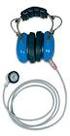 The E-Scope Electronic Stethoscope Catalog of Products April 25, 2012 Cardionics, 910 Bay Star Blvd., Webster, Texas 77598 USA Telephone: 281-488-5901 Toll-free USA & Canada 1-800-364-5901 Web: www.cardionics.com
Hearing Aid Styles. Siemens Phonak Widex Starkey. Sonic Oticon Unitron. Resound
 Hearing Aid Styles The purpose of this paper is to assist you in becoming an educated consumer. It should not be construed that this is a definitive paper. Rather, it is merely a starting point, an overview.
NEW YORK STATE MEDICAID PROGRAM HEARING AID/ AUDIOLOGY SERVICES FEE SCHEDULE
 NEW YORK STATE MEDICAID PROGRAM HEARING AID/ AUDIOLOGY SERVICES FEE SCHEDULE Table of Contents GENERAL INFORMATION AND INSTRUCTIONS----------------------------------------------- 2 CODES -------------------------------------------------------------------------------------------------------
10/23/09 NewProgram-AuD-2009
 AUDIOLOGY Type of program you would like to see: Describe. We are proposing a clinical doctorate program in audiology that meets the 2007 certification standards of both the American Speech-Language and