
Leopard Gecko Care Sheet By Steve Sykes
|
|
|
- Shonda Reeves
- 9 years ago
- Views:
Transcription
1 Leopard Gecko Care Sheet By Steve Sykes Table of Contents (Click link below to skip to a section) 1. Housing 2. Substrate 3. Heating 4. Shelter 5. Shedding and Moist Shelter 6. Water 7. Food (HEAD PICTURE HERE) 8. Vitamins 9. Cage Maintenance 10. Hibernation 11. Health Leopard geckos are undoubtedly one of the best reptile pets available today. They are easy to care for, extremely docile, do not require a large cage, easy to breed, and come in a staggering array of color morphs. I have been breeding this species since 1996 and have produced thousands of leopard geckos over the years. I have designed this detailed care sheet with the beginner reptile keeper in mind, for whom this may be your first reptile pet. If this describes you, congratulations, you have made a great choice! More advanced leopard gecko breeders will also find this information useful because it is always interesting to hear the various ways people take care of their animals and the experiences they have had. HOUSING One or two adult leopard geckos can be housed comfortably in a 10-gallon aquarium. Of course they would appreciate a larger cage, so you might want to consider a 20-gallon long or 30-gallon, especially if you may want to expand your collection or consider breeding. A screen top for the aquarium is not necessary to prevent your leopard geckos from escaping because they do not have toe pads that would allow them to climb glass, but you may consider purchasing one for other reasons. I strongly recommend you get a screen top if you have cats or small children, as both could be hazardous to the health of your geckos. A fine-mesh screen top may also be important to you to prevent crickets from escaping the aquarium by climbing the strips of silicone in the corners. (BASIC CAGE PICTURE) Multiple females can be housed together (if approximately the same size), but sexually mature males are territorial and will fight. A male and multiple females can be housed together without problems, but they should not be introduced until they are of a safe breeding size (45 grams for both males and females). If you purchase a male and female

2 gecko and plan for them to live together in the future, you must raise them to adult size separately. Males grow faster and get larger than females, and a drastic size difference can develop if young males and females are housed together. The larger animal (male) is better able to compete for food, often stealing it away from the smaller animal (female). Additionally, males become sexually mature at a smaller size than females, and will breed females as soon as they are able to reproduce. I have heard of female leopard geckos as small as grams laying eggs, but breeding at this size is often too stressful and can cause health problems, in addition to reducing the female s lifetime reproductive potential. To put this in human terms, a 13-year-old girl can have kids, but it is just not a good idea! If you are raising multiple females together in one cage be mindful that sometimes one female grows faster than others, and as discussed above can out compete smaller cage mates at feeding time. If a drastic size difference does develop you should separate the largest animal from the smaller ones. SUBSTRATE Sand is the best substrate for subadult (at least 5 or 6 inches in total length) and adult leopard geckos. I recommend Play Sand (purchased from hardware stores such as Home Depot) because it has been screened and washed. Do not use industrial sand because it contains a lot of dust that can be harmful to your geckos. Be sure to check the grain size of the play sand before you buy it. Only use extremely fine sand (grain size 0.5 mm or less). In early-mid 2002 I had problems getting the right size sand from the local Home Depot. I am not sure if they changed suppliers or localities for mining sand, but the grain size was three to four times larger (1.5-2 mm) than usual. Since grain size was much larger, I was only able to use it with adult leopards. Recently I have observed grain size to be quite variable between different palettes of sand at Home Depot, all labeled Play Sand (Quikrete brand). The picture below shows three different grain sizes of sand packaged as Quikrete play sand. The pile on the left is extremely fine and suitable for juvenile leopard geckos; the other two piles are much coarser and only suitable for adults. (Click on photo to enlarge) (SAND PICTURE) Young leopards should be kept on paper towels until they are 5-6 inches long. Leopard geckos are very active feeders, and usually end up ingesting some of the substrate in the process of catching a cricket. Young leopard geckos have narrower digestive systems than adults, and it is easier for their system to become blocked if they consume sand. I have talked to other leopard gecko breeders who have said they raise their babies on sand with no impaction problems. Sand is a lot easier to spot clean than paper towels, so I decided to experiment raising some of my babies on sand. I put two hatchlings on sand, and they appeared fine for two weeks. One day I opened their cage and one of the babies didn t look happy and was acting very lethargic. I picked her up and her entire belly felt very hard with all the sand she had ingested. The other baby had also ingested a

3 considerable amount of sand, but not as much as the lethargic gecko. Both geckos were able to pass the sand in their digestive systems, but the heavily impacted gecko required numerous doses of mineral oil down its throat and up the other end. Moral of the story, just to be safe don t use sand until they are 5-6 inches! HEATING All reptiles require a temperature gradient that will allow them to select the temperature that best suits their needs at that moment. Sometimes your leopard geckos will want to heat up, other times they will want to be cooler. The best way to heat your gecko enclosure is with an under-the-tank heater. I recommend the Zoo Med Repti Therm U.T.H. These come in various sizes; choose the one appropriate for the size of aquarium you are using. The heat pad should be placed all the way on one side of the tank, creating a thermal gradient. You can peel the back of heat pad and stick it directly onto the aquarium, but once you stick it to the tank it cannot be removed (if the tank breaks in the future or you decide to use it on a different cage). I have found it works equally well to place a piece of wood or book under the tank of a proper thickness that it will push the heat pad directly against the glass. Heat tape is another alternative and it works equally well for heating leopard gecko enclosures. (UNDER TANK HEATER PICTURE) You should have a thermometer available to check the temperature gradient of the enclosure. I do not recommend you purchase a fancy reptile thermometer that sticks to the side of the tank, as these are more expensive than what you need and will only give you the temperature of the air inside the tank. It is more important to know the surface temperature of the areas where the gecko actually resides. I recommend the stainless steel aquarium thermometers that you should be able to find in most pet stores. (THERMOMETER PICTURE) A thermometer of this type will allow you to take the temperature of the sand surface at various places within your gecko s cage, most importantly the hot spot above the underthe-tank-heater. You should know these temperatures and check them at least once a week. The warm side of the cage should be at 90? F. If you find the warm side of the cage is hotter than 90? you can decrease the temperature by using a lamp dimmer (Lutron Lamp Dimmer, available at Home Depot). I recommend using the type that allows you to just plug in, rather than the type that requires you to cut the cord for the under tank heater. (DIMMER PICTURE). Leopard geckos are typically not active during the day and do not require a basking (heat) light or any UV bulbs. They prefer to remain in a dark hiding place during the day, and bright lights constantly shining in their eyes can stress them out. I have seen instances where people who have used basking lights on their leopard geckos have caused them to become stressed to a point where they stopped eating and the geckos eventually died.

4 Red bulbs are better because red light is invisible to leopard geckos, but you should be able to meet the heating requirements of your leopard gecko with an under-the-tank heater alone. Hot rocks or heat stones are another alternative for heating that you will commonly see for sale at pet stores, but I do not recommend using them with leopard geckos (or any other reptiles). These are ceramic rocks with a cord coming out of it (leading to central heating element). The hot rock does not allow you to control the temperature of the stone; it just heats to whatever temperature was set by the manufacturer. When I was younger I used heat stones for years with iguanas and never had any major problems. I have heard horror stories and have seen pictures of reptiles that have been burned by hot rocks that have malfunctioned or ran too hot. Again, you should be able to provide the necessary heat for your leopard geckos with an under-the-tank-heater alone. SHELTER Leopard geckos are nocturnal, and in the wild they remain hidden under rocks or other debris during the day. For these reasons, they appreciate some sort of shelter to hide in during the day. The shelter can consist of may things: paper towel roll, small cardboard boxes (bottom third of a cracker or cereal box), small plastic cottage cheese or margarine containers, or the white deli cup you brought your gecko home in (if you bought you gecko at a reptile show). Each of these shelters should have a hole cut on the side large enough for the gecko to enter. It is good to have several shelters in your cage, one on the warm side, one on the cool side. There are a lot of choices available if you want to get a fancier shelter for your gecko. Many different shelters are available at you local pet store or reptile show including ceramic caves, half rounds of wood, or you can fashion your own hiding place out of loose rocks attached together with silicone caulk (used for constructing aquariums). If you do make a rock cave with loose rocks, be very sure that it is sturdy and will not collapse and crush your gecko. (DELI CUP HIDE PICTURE) (PAPER TOWEL ROLL PICTURE) SHEDDING AND MOIST SHELTER Leopard geckos shed their skin like all reptiles and amphibians, and leopards shed their entire skin all at once. Frequency of shedding varies, depending on the age and growth rate of the gecko. Babies shed much more often than adults. You will know when your gecko is preparing to shed because its colors will get duller, and then it will turn whitish immediately before the shed. Leopards usually eat their entire skin in the process of shedding. This strategy is important for wild leopard geckos for two reasons. First, they expended the energy to make the skin; they aren t just going to let it go to waste! Second, bits of lizard skin in an area may tip off predators that they are in a good place to hunt tasty lizards. Usually the gecko is able to pull the shed off easily, but sometimes they have problems, especially if they do not have the proper humidity during shedding. You should always check your gecko after it has shed to make sure it was able to peel all the skin off.

5 Leopard geckos often have problems with removing skin from their toes. If dead skin is not removed promptly from a toe it will become constricted, and as the lizard grows the toe will become constricted to the point where the dead skin can cut off blood flow to the toe. If this is not caught in time the toe can die and fall off. This is not a big problem, as it usually heals quickly, but I think they are happier with all their toes! (SHEDDING PROBLEM PICTURE) A moist shelter should be provided so your gecko can have access to high humidity when it is shedding. I have found leopards usually prefer the moist hiding place, even when they are not in the process of shedding. The moist shelter can consist of a small plastic container. A plastic cottage cheese container with a hole cut in the side works well, or you could use a Rubbermaid sandwich container with a hole cut in the top. I typically use cypress mulch (Zoo Med Forest Floor Bedding) as the bedding in the moist shelter, but peat moss should work equally well. You want to keep the cypress mulch or peat moist, but not sopping wet. Below is an example of a 1.8-quart Rubbermaid container that I use for moist shelters and egg-laying boxes for my adult leopard geckos. This is a group of female Rainwater albino hets and a Rainwater albino male. Note: container top was moved for this photo. (MOIST SHELTER PICTURE) If you do find your gecko has not been able to remove some skin after shedding, you need to lend a helping hand. Place the gecko in a small plastic container with a small amount of lukewarm water. The gecko SHOULD NOT be swimming in the water (it will drown if the water is too deep), only use 1/16 ¼ inch of water depending on the gecko s size. Put a top on the container and let the gecko sit for 30 minutes. High humidity will develop in the container and this should loosen the skin enough to allow you to remove it easily with a pair of tweezers. If the skin has not loosened enough for it to be removed easily, repeat the soaking process above for another 30 minutes. WATER Leopard geckos come from a dry environment, but require some humidity and water. Water should be made available two or three times a week. I use plastic bottle tops from Gatorade, large Aquafina, and 1-liter Mountain Dew bottles for water dishes. I typically use the shorter Gatorade tops for smaller leopards, and the larger Aquafina and Mountain Dew tops for larger leopards. Although these may not be the most decorative water dishes, they are the perfect size for leopards, free, and easily replaceable. Larger, more decorative water dishes can be used, but they usually become dirty very quickly (harboring bacteria) and require a rock in the center to prevent crickets from drowning. Plastic bottle tops have the benefit that they usually dry out or are tipped over in a day or two, preventing bacteria from multiplying in the water dish. I recommend placing the water dish on the cool side of the cage; otherwise the water will evaporate too quickly.

6 Young leopard geckos should be misted occasionally. I recommend misting the entire cage once or twice a week, especially if you notice your gecko is preparing to shed its skin. The misted water should have all evaporated within 24 hours. FOOD Leopard geckos will eat many kinds of live prey items, including crickets, mealworms, superworms, wax worms, and even pink mice (a.k.a. pinkies baby mice only a few days old). I feed my geckos on a primary diet of crickets, and this appears to be perfectly fine for them. Other breeders feed a diet entirely of mealworms, and they have successfully raised many generations of leopards. Mealworms appear to be easier because you can keep them in the fridge, don t have to worry about them getting loose, and no chirping will keep you awake at night. An additional benefit is that you can contain the mealworms in a dish, so you do not have to worry about them hiding in the cage furnishing or eating gecko feces in the cage (and reinfecting your geckos with any parasites the gecko may be carrying). I prefer crickets because they are more active, and this appears to stimulate geckos more than mealworms. Crickets are also nutritionally superior to mealworms, containing more moisture, protein, calcium, and vitamin C than mealworms (information from Grubco). Additionally, the exoskeleton of mealworms is more difficult to break down than that on crickets. Wax worms are very high in fat, and are very useful to help a skinny or sick gecko gain weight. They can also be fed as part of the normal diet, but should only be used as an occasional treat rather than a mainstay of the diet. Many adult leopard geckos will also eat live pinkies. I feed pinkies to my breeding females; both during the breeding season and after the season to give them additional calories to regain weight they lost from laying eggs. I have found that some females will refuse pinkies before they begin breeding, but once they start laying eggs they will eat as many as they can fit in their stomach (usually two or three). It is difficult to feed your leopard gecko too much, but it is possible for a gecko to become obese if fed on a high fat diet (too many wax worms or pinkies). A healthy, well-fed leopard gecko will store fat in its tail and they can utilize this fat during the breeding season or during hibernation. If you decide to feed mealworms, they can be provided in a shallow dish at all times. Crickets can be offered daily if you want to spoil your gecko, but a minimum of twice a week. The number of crickets in the cage at one time should be limited. Uneaten crickets quickly get hungry and can annoy your gecko, chewing on its toes or tail. Hungry crickets will often eat gecko feces in the cage, ingesting any parasite eggs or oocysts (stage in the life cycle of coccidia and crytosporidium that is shed in feces; basically an egg). These crickets will now carry these parasite eggs in their stomach, and when the gecko eats these crickets those eggs will hatch, increasing the parasite load in your gecko (see page on leopard gecko health for more about this). To prevent this you should only feed as many crickets as your gecko can eat in minutes. Pre-feeding time would be a good time to spot clean your cage, picking out any feces or dead crickets in the cage.

7 It is important to select the proper prey size for your gecko. Smaller geckos need to be fed smaller prey items than larger geckos. The general rule of thumb for selecting the proper size is the prey item should be no longer than the length of the gecko s head. For hatchling geckos this usually means 3/8-inch crickets (cricket age 2 weeks, maybe 3 weeks old), for juvenile geckos ½-inch crickets (3 weeks old), and subadult geckos can handle smaller adult crickets (male crickets are generally smaller) by the time they are 6 inches long. Note: cricket size varies by sex, but it can also vary greatly depending on your cricket supplier. VITAMINS Gut loading your crickets is very important! Gut loading is defined as filling the gut of crickets with nutritious foods before they are fed to your geckos. Remember the old saying You are what you eat! ; a more nutritious cricket will make for a healthier gecko. I feed my crickets Flukers High Calcium Cricket Diet (can be purchased at your local pet store or directly from Fluker Farms), and give them pieces of orange for water. If you are buying one or many dozen crickets from the pet store, put the crickets in a separate container with high calcium cricket food and orange slices for at least several hours before you feed them to your geckos. Feed only as many crickets as your gecko can eat at one time, or the crickets will pass the nutritious food and fill their bellies with gecko feces or dead crickets they find in the gecko cage. (CRICKET FOOD AND MINER ALL PICTURE) Vitamins are also very important for your geckos. I (and many, many other breeders) recommend Miner-All vitamin supplement made by Sticky-Tongue Farms. Miner-All comes in two types I and O. I is for indoor animals and contains vitamin D3. O is for outdoor animals and does not contain vitamin D3. Since leopard geckos are not basking lizards (such as bearded dragons), it is important to use the I to provide them with vitamin D3. The typical method of administering vitamins to your geckos is the shake and bake method. Put a small amount of the vitamin supplement in a jar, plastic bag, or other small container, place the crickets in the container, and shake until the crickets are covered with white powder. This should be done immediately before you feed your geckos because the crickets will clean themselves and remove the powder. Juvenile leopard geckos require a lot of calcium and vitamins during the growing process, so food items should be coated with vitamin powder at each feeding. Non-breeding adult geckos do not require as much calcium, so supplementation twice a week is sufficient. Egglaying females require a lot of calcium; so all prey items should be dusted with vitamin powder. Some leopard gecko breeders provide a shallow dish (jar lid, Gatorade bottle top, etc.) with a pinch of vitamin supplement to their geckos at all times. I do not give dishes of vitamin powder to my geckos, I have found these dishes are quickly buried, tipped over,

8 or fouled. I feel gut loading and dusting with vitamin powder is sufficient, for juveniles, subadults, and even egg-laying females. CAGE MAINTENANCE Leopard geckos only require minimal routine cage maintenance. They are fairly clean and usually poop in only one corner of the cage. A sand substrate allows for simple spot cleaning of feces and dead crickets, and this should typically be conducted at least once a week. The sand substrate should be dumped and the entire cage (including water dishes, cage furniture, etc.) washed and sterilized with a mild bleach solution (1 part bleach: 9 parts water) or Nolvasan (diluted to robin s egg blue) at least once every two months. You should be able to order Nolvasan through your vet. If you see many small bits of feces mixed throughout the sand it is definitely time to clean the entire cage. Paper towels do not allow for easy spot cleaning, and should be replaced entirely once a week. Sterilization of the entire cage is not required each week, but should be done at least every two months. HIBERNATION Hibernation is a natural part of the yearly cycle for leopard geckos, but it does not appear necessary for pet geckos to hibernate. It is perfectly fine to keep heat on your geckos throughout the winter season, and they should eat, drink, and be active as they would normally. But, maybe you are planning on breeding your geckos or would just like a break and choose to hibernate your geckos. Simply turning off the under tank heater is often enough to hibernate your geckos, as they can be hibernating at 70 degrees Fahrenheit (as low as 65 degrees is fine). During the hibernation period your geckos will eat less, drink less, and be less active. They can remain in hibernation for up to three months without losing much weight because their metabolism has slowed, requiring less energy. You can choose to feed your geckos occasionally, but only feed lightly. If your geckos do not want to eat during this period that is fine, remove uneaten crickets so they do not annoy your geckos. RECOMMENDED READING The Leopard Gecko Manual Authors: Philippe de Vosjoli, Roger Klingenberg, Ron Tremper, and Brian Viets. Publisher: Advanced Vivarium Systems, Inc. 85 pp. (LEOPARD GECKO MANUAL PICTURE)

Order of the Weather Experiments
 Order of the Weather Experiments 1. Staying Dry Towel in bottle--student i. Magic Air Pushing the stick down-- Student ii. Air Power Water in funnel--teacher 2. Tipping the Scale Weighing air--student
Bottle Feeding Puppies and Kittens
 Bottle Feeding Puppies and Kittens Formula Goats milk works as a temporary substitute, but it can get expensive. Goats milk is sold at Wal-Mart and most grocery stores. Cow s milk is not an alternative;
Virginia Gardener http://www.hort.vt.edu/envirohort
 The Virginia Gardener http://www.hort.vt.edu/envirohort Name Help Sheets: Seeds What Is a Seed? A seed is a very young plant that is in the dormant, or resting stage. It is very much alive. There are three
Green Anole Anolis carolinensis
 Green Anole Anolis carolinensis LIFE SPAN: 4-8 years AVERAGE SIZE: 6-9 inches CAGE TEMPS: Daytime 75-80 0 F CAGE HUMIDITY: 60%-70% Basking 85-90 0 F Cool side 65-75 0 F If temp falls below 65 at night,
Naturalist Activity Badge Outline -- Outdoor Group
 Naturalist Activity Badge Outline -- Outdoor Group The Naturalist Activity Badge is recommended to be presented in a one month format, as outlined in the Webelos Program Helps booklet. This example outline
Preparing For a New Dog
 Preparing For a New Dog Contents Are you ready to get a dog? 3 Choosing a breed 4 Hypoallergenic breeds 4 Should you get a puppy or an adult dog? 5 Where to find your dog 5 Picking up your dog 6 Bringing
Making a Terrarium. fairchild tropical botanic garden 1
 Making a Terrarium What is a Terrarium? A terrarium is a collection of small plants growing in a transparent, sealed container. A terrarium is a closed environment, and can actually be used to illustrate
THERAPEUTIC USE OF HEAT AND COLD
 THERAPEUTIC USE OF HEAT AND COLD INTRODUCTION Heat and cold are simple and very effective therapeutic tools. They can be used locally or over the whole body, and the proper application of heat and cold
Guidelines for caring for injured turtles
 Guidelines for caring for injured turtles Background The NT is home to six of the world s seven different marine turtles, five of which are listed internationally as endangered. Along with the sea turtles,
Growing Oyster Mushrooms In A Box. Dennis Morgeson Agent for Horticulture Washington County
 Growing Oyster Mushrooms In A Box Dennis Morgeson Agent for Horticulture Washington County Oyster Mushrooms Scientific Name: Pleurotus species A delicate woodland fungi native to temperate forests around
Growth & Feeding Puppies Karen Hedberg BVSc 2007. Growth
 Growth & Feeding Puppies Karen Hedberg BVSc 2007 Size and End Weight : Growth Dogs come in all sizes and shapes and have enormous variation in their final body weights. Dogs generally can be fed a very
Healthy Menu Planning
 Healthy Menu Planning Please save paper and print the pages of this resource back-to-back! Table of Contents Considerations for Planning Menus... 4 Menu Planning Principles... 4 Menu Cycling...5 Guidelines
Poultry Sample Questions from Animals In Pursuit
 Q. What is barring on a chicken s feather? A. Two alternating colors on a feather, running across its width Q. What commercial strain of layers is best for egg production? A. White Leghorn strains Q. How
Rainforest Concern Module 2 Why do we need rainforests?
 Rainforest Concern Module 2 Why do we need rainforests? Rainforest Concern Module 2: Why do we need Rainforest? Before we go any further, there are some words you may not understand, and these words and
Phonics. High Frequency Words P.008. Objective The student will read high frequency words.
 P.008 Jumping Words Objective The student will read high frequency words. Materials High frequency words (P.HFW.005 - P.HFW.064) Choose target words. Checkerboard and checkers (Activity Master P.008.AM1a
What is a Terrarium? Supplies Choosing your container Choosing your plants Building Your Terrarium
 What is a Terrarium? A terrarium is a collection of small plants growing in a transparent, sealed container. A terrarium is a closed environment, and can actually be used to illustrate how an ecosystem
EVERYTHING YOU WANTED TO KNOW ABOUT SHOWPIGS BUT WERE AFRAID TO ASK. ELITE SWINE INC. www.eliteswineinc.com
 EVERYTHING YOU WANTED TO KNOW ABOUT SHOWPIGS BUT WERE AFRAID TO ASK ELITE SWINE INC. www.eliteswineinc.com There are many things to be considered when deciding on your next project. In this article we
How to Clean and Care for Reclaimed Wood Furniture
 How to Clean and Care for Reclaimed Wood Furniture How to Clean and Care for Reclaimed Wood Furniture "Is unfinished reclaimed wood furniture difficult to care for?" "No, it's not if you follow these few
Fry Phrases Set 1. TeacherHelpForParents.com help for all areas of your child s education
 Set 1 The people Write it down By the water Who will make it? You and I What will they do? He called me. We had their dog. What did they say? When would you go? No way A number of people One or two How
Water It s Crucial Role in Health. By: James L. Holly, MD
 Water It s Crucial Role in Health By: James L. Holly, MD After a two week hiatus, we return to our series entitled, Aging Well. It is often the case that in health we become so infatuated with the exotic,
Grade 5 Standard 5 Unit Test Heredity. 1. In what way will a kitten always be like its parents? The kitten will...
 Grade 5 Standard 5 Unit Test Heredity Multiple Choice 1. In what way will a kitten always be like its parents? The kitten will... A. be the same color. B. learn the same things. C. have the same body structures.
Animals of the Desert
 Animals of the Desert (NatureScope Discovering Deserts page 26-27) Third Grade Core: Standard 2 Objective 2 Describe the interactions between living and nonliving things in a small environment. Teach a
Beech Maple Forest Classroom Unit
 Beech Maple Forest Classroom Unit Theme: Forest Overview What makes up a Michigan forest? Unit Connection: Introductory lesson to Beech Maple Forest Unit (lesson #1) Subject: Science Recommended Grade
Your Hearing Aids A guide for helping children and their families understand and take care of their hearing aids
 Your Hearing Aids A guide for helping children and their families understand and take care of their hearing aids Congratulations on your new hearing aids!! This booklet will show you how to use your behind-the-ear
How to prepare your baby s bottle
 How to prepare your baby s bottle Cleaning and Sterilising Using or storing sterilised bottles Preparing a bottle feed Storing and warming feeds Feeding your baby Crèches, childminders and other childcare
Cholera Prevention and Control: Introduction and Community Engagement. Module 1
 Cholera Prevention and Control: Introduction and Community Engagement Module 1 Introduction This guide instructs how to prevent cholera illnesses and deaths in your communities. These slides and modules
Time: Depending on the size and behavior of the dog, this procedure will take no longer than approximately two hours.
 How to Groom a Dog Purpose This set of basic grooming instructions inform dog owners, veterinary staff, groomers and even interested animal lovers on how to groom a dog. The dog grooming instructional
Understanding Lead Poisoning
 Understanding Lead Poisoning A guide for parents of children with high lead levels FOR MORE INFORMATION, CONTACT: Childhood Lead Poisoning Prevention Program (CLPPP) Massachusetts Department of Public
How to build a Pizza Oven in 4 days
 How to build a Pizza Oven in 4 days Preparation day (slab) 1. Foundation 1500 deep x 1300 wide x 75mm deep Required 20 bags cement pre mix. If you already have a concrete base, you save this prep day DAY
ADAPTATION: A WAY OF LIFE
 PLANT AND ANIMAL DESERT ADAPTATIONS Activities that show how desert plants and animals are welladapted to life in the desert and thrive with little moisture and high temperatures. ARIZONA SCIENCE STANDARDS
Family Meals: Easy, Tasty, and Healthy
 Family Meals: Easy, Tasty, and Healthy Session Overview: This session is intended to help busy parents plan, shop, and prepare healthy, low-cost meals for their families, learn ways to let their children
Presentation Prepared By: Jessica Rivers, BASc., PTS
 Presentation Prepared By: Jessica Rivers, BASc., PTS Presentation Outline Why should we care about our eating habits? Why is nutrition so important as we age? How do we know if we are eating healthy? What
There s no place like home!
 2Discovery Card Teacher Time: 2.5 hours (split into two sessions) Information (suitable for 7-12 year olds) This is an opportunity for children to make their own bug boxes and test the habitat preference
ZOOS GO BLUE. Your Trip to Zoo Atlanta! Sunday, April 6
 ZOOS GO BLUE Your Trip to Zoo Atlanta! Sunday, April 6 Autism Awareness Day at Zoo Atlanta! Going to the Zoo can be a lot of fun. Here are some things you can do to prepare for your exciting trip and make
Idaho Falls School District 91 Effective Date January 25, 2010
 PLN-4 CONTENTS 1. PURPOSE... 2 2. SCOPE AND APPLICABILITY... 2 3. SPIDERS... 2 4. COCKROACH CONTROL... 3 PLN-4 1. PURPOSE It is the policy of Idaho Falls School District #91 to provide a place of education
RAISING LAMBS ON MILK REPLACER
 RAISING LAMBS ON MILK REPLACER Yves M. Berger and Richard A. Schlapper Spooner Agricultural Research Station University of Wisconsin-Madison Introduction It is well known that the number of lambs born
The Seven Characteristics of Life
 Jennifer Hepner Maureen Frandsen Fall 2003 Grade Level: 3 rd grade The Seven Characteristics of Life Abstract: The purpose of this lesson is for students to learn the characteristics of living organisms.
Mission 7: Saving Energy
 Mission 7: Saving Energy How can we save energy? Converting one type of energy to another often damages the environment. For example, burning coal to make electricity causes air pollution. That s why we
4THE UNIVERSITY OF THE STATE OF NEW YORK
 4THE UNIVERSITY OF THE STATE OF NEW YORK GRADE 4 ELEMENTARY-LEVEL SCIENCE TEST WRITTEN TEST JUNE 6, 2011 Student Name School Name Print your name and the name of your school on the lines above. The test
The Cricket Lab. Introduction
 The Cricket Lab Introduction Humans have always been fascinated by crickets, mostly because crickets sing. Movie producers add their songs to sound tracks. The Chinese have used them for medicinal purposes,
1. Which list contains only nonliving things in an environment?
 Grade 3 Standard 2 Unit Test Environment Multiple Choice 1. Which list contains only nonliving things in an environment? A. snails, water, mushrooms B. soil, trees, worms C. sunlight, water, soil D. rocks,
Humidity the story for teachers
 Humidity the story for teachers As we have learned earlier, water may exist as a gas (water vapour). Even in the driest desert there is some water vapour in the air. Water vapour is the most important
Composting: Biology Curriculum
 Cornell Waste Management Institute cwmi.css.cornell.edu Composting: Biology Curriculum Understanding what composting is and how it works. Table of Contents Goal, Objectives, Keywords, Scientific Concepts...
A guide to infant formula for parents who are bottle feeding
 A guide to infant formula for parents who are bottle feeding Introduction This document is designed to help parents who are not breastfeeding decide which infant formula to use to feed their baby. There
Wild About... Frogs and Frogspawn
 a Wild About... Rutland County Council Nature notes Frogs belong to a group of animals called amphibians, which also includes newts and toads. Amphibians live both on land and in water. Water is needed
M O L D & M I L D E W
 Volume 1 HOWARD DOUGHMAN, MBA R E M O V E M O L D & M I L D E W F R O M F A B R I C S REMOVE MOLD & MILDEW FROM FABRICS Howard Doughman 3202 Chelmsford Drive Spring Grove, IL 60081 Phone 815.276.2465 [email protected],
The Blue Box Program is Changing
 The Blue Box Program is Changing No sorting anymore Now we recycle Those plastic containers We couldn t take before Like margarine tubs, ice cream pails Yogurt and cottage cheese Just toss em or squash
Dairy. Extra Cheese, Please! by: Cris Peterson. Talking Points: Activity: Butter Grade Level: Any Subject Area: Science & Social Studies
 Dairy Extra Cheese, Please! by: Cris Peterson Activity: Butter Grade Level: Any Subject Area: Science & Social Studies Materials Whipping cream (room temperature works best) Small jar, with lid (like a
The Digestive System: Where does food go? Teacher Version
 The Digestive System: Where does food go? Teacher Version In this lab you will learn about your digestive system. We will use everyday objects like yarn and a ziplock bag to understand how long our digestive
Feeding. Baby. Your. Infant. Formula
 Feeding Your Infant Baby Formula 1 Feeding Your Baby Infant Formula There are many reasons why some mothers don t breastfeed. If you feel sad and/or disappointed that you are not fully breastfeeding your
Caring for your adult cat
 CAT 3 Caring for your adult cat The charity dedicated to helping sick, injured and homeless pets since 1897. Caring for your adult cat Although considered independent pets, cats are reliant on their owners
Exhibit Inquiry. Rainforest. Aug 11
 Exhibit Inquiry Exhibit Inquiry Have students look for the following exhibits related to living things during their visit to the Ontario Science Centre: Where to go: (Level 6) What it's about: Tropical
How clean is your kitchen?
 Learning Objectives - There can be harmful microbes found on raw food, especially raw meat - The best way to destroy harmful microbes on meat is to cook thoroughly - Always wash your hands after touching
Biliary Drain. What is a biliary drain?
 Biliary Drain What is a biliary drain? A biliary drain is a tube to drain bile from your liver. It is put in by a doctor called an Interventional Radiologist. The tube or catheter is placed through your
Peasouper Operator s Manual
 Peasouper Operator s Manual Contact Information Le Maitre Special Effects, Inc. Canada 1960 Blue Heron Drive, London, ON. N6H 5L9 Phone Direct: (519) 659.7972 Phone Toll Free Direct: (800) 388.0617 Fax:
The Water Cycle Now You See It, Now You Don t
 The Water Cycle Now You See It, Now You Don t Unit: Salinity Patterns & the Water Cycle l Grade Level: Elementary l Time Required: Introduction - 30 min. - Activity as groups 45min Wrap Up 20 min l Content
A diet fit for a pig: seven basic rules
 A diet fit for a pig: seven basic rules June 2013 Primefact 1292 1 st edition Jayce Morgan, Livestock Officer Pigs, Tamworth NSW Introduction When a pig is fed a proper diet there are benefits to the pig
Your Own Teeth and Gums
 Your Own Teeth and Gums CHAPTER1 Next time you look in a mirror, look at your teeth and the skin (gums) around them. Look in your children s mouths, too. Look at both gums and teeth, because the health
Taking Care of Your Skin During Radiation Therapy
 Taking Care of Your Skin During Radiation Therapy Princess Margaret Information for patients who are having radiation therapy Read this pamphlet to learn about: What a radiation skin reaction is How to
potassium which is of special importance in treating rheumatic diseases and arthritis.
 Vegetable Broth: This drink is used in all the fasting clinics in Europe. Use it first thing in the morning and before going to bed. It is a cleansing and alkalizing drink which supplies a great amount
Selecting, Feeding, Fitting, Grooming and Showing Beef Cattle
 Selecting, Feeding, Fitting, Grooming and Showing Beef Cattle Today, there are many breeders of quality show steers and heifers. Anymore, a show animal is not a mistake, or freak, but is the result of
SEE HOW TO MAKE LIME PLASTER WHY USE LIME? PATTI STOUTER, BUILD SIMPLE INC. FEBRUARY 2013
 SEE HOW TO MAKE LIME PLASTER PATTI STOUTER, BUILD SIMPLE INC. FEBRUARY 2013 WHY USE LIME? Lime plaster forms a light, clean, and durable surface that is resistant to weather and mold. A thin layer attaches
Reptiles and Amphibians by Guy Belleranti
 Name: Take a look at the four animals pictures below. Do you know which ones are reptiles and which ones are amphibians? The chameleon is an unusual lizard that can change the color of its scaly body.
Materials For each student (or group of students): Caterpillar data sheets Pencil For teacher: Chart paper Markers
 Insects! Concepts Life cycles and metamorphosis are common to all insects. Butterflies, like most insects, go through complete metamorphosis involving four distinct phases egg, caterpillar (larva), chrysalis
Managing Heat Stress in Poultry
 Managing Heat Stress in Poultry Amy E. Halls, Monogastric Nutritionist Shur-Gain, Nutreco Canada Inc. Heat stress has several serious and economical effects on poultry. In broilers and turkeys, it can
Solids, Liquids, and Gases
 Solids, Liquids, and Gases nd Intended for Grade: 2 Grade Subject: Science Description: Activities to help students understand solids, liquids, gases, and the changes between these states. Objective: The
PREPARE AHEAD OF TIME FOR CRAFTS
 1 Crafts Bible Story: Paul s Conversion Acts 1-3; 9:1-9 Bottom Line: If you want to know who God is, find out more about Jesus. Memory Verse: When you walk, nothing will slow you down. When you run, you
How to Prepare Formula for Bottle-Feeding at Home
 How to Prepare Formula for Bottle-Feeding at Home Printed in Ireland This document is published by the Department of Food Safety, Zoonoses and Foodborne Diseases, WHO, in collaboration with the Food and
Animals and Adaptation
 Animals and Adaptation From: http://www.learninghaven.com/science/articles/animals_and_adaptation.htm In order for animals to survive, they need to be able to adapt. In this lesson we will look at the
Preschool March Lessons. Dr. Seuss Day. One Day Free Sample
 Preschool March Lessons Dr. Seuss Day One Day Free Sample Kids R Learning Preschool Lesson Plans Letter R - Number 9 Dr. Seuss Day Circle Time: Left & Right Feet Read the story the Foot Book Explain to
For all turfgrass areas. Now you can test soil reaction at different levels in the soil profile. Check Soil ph on:
 Turf-Tec ph Meter Test soil ph in the mat, thatch and above and below the root zone. ph can be checked, 0" to 4" inch level right on the turfgrass area. Simply insert probe to desired depth, allow to stand
* Readily available from supermarkets and health food stores. 80-145 minutes (total over 3 to 7 days) SOSE: Investigate Australia s salinity crisis
 Lesson Plan 12 Salt and germination Brief description This fascinating, cheap and very reliable experiment clearly demonstrates the damaging effects of salinity (salt) on seed germination. Mung beans are
Instruction Manual. Image of SP-3015 & SP-3815. Important Safeguards. Automatic Dispensing Hot Water Pot with Reboil Function
 Important Safeguards READ ALL INSTRUCTIONS BEFORE USE. Instruction Manual Automatic Dispensing Hot Water Pot with Reboil Function Image of SP-3015 & SP-3815 SP-3015: 3.0L SP-3815: 3.8L SP-3017: 3.0L (Stainless
Companion Animals Amphibians & Reptiles Cats Dogs Horses Veterinary Science
 Making the Character Connection with Companion Animals Amphibians & Reptiles Cats Dogs Horses Veterinary Science Being a person of good character means you follow the Six Pillars of Character SM everyday.
UVB Lighting for Companion Birds, Reptiles, Amphibians and Arachnids
 UVB Lighting for Companion Birds, Reptiles, Amphibians and Arachnids The wild cousins of our captive pets get exposed to solar ultraviolet light during certain periods of the day. Depending on the species,
Frequently Asked Questions about Water Features
 Frequently Asked Questions about Water Features Due to the high volume of questions I receive regarding water, please scan the common questions below to find your answer. If your question is not answered
Sterile Dressing Change with Tegaderm CHG for Central Venous Catheter (CVC)
 Sterile Dressing Change with Tegaderm CHG for Central Venous Catheter (CVC) The dressing protects your catheter site. It also helps prevent infection at the site. Keep your dressing clean and dry at all
S.T.O.R.M Foreskin Restoration (Staggered Tapered O-Ring Method)
 Type: Tapeless, Self-contained, Non-Metallic Focus: 75% Inner foreskin, 25% Outer S.T.O.R.M Foreskin Restoration (Staggered Tapered O-Ring Method) How It Works The use of O-Rings for Foreskin Restoration
A guide to living with Urban Coyotes
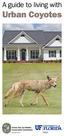 A guide to living with Urban Coyotes Living with coyotes ThinkStock Coyotes are found throughout Florida. This adaptable animal belongs to the dog family and resembles a small German shepherd. In Florida,
Institute. BioSnacky. Fantastic nutrition with sprouted seeds. by Alison Cullen H E A L T H I N F O R M A T I O N S E R I E S
 BioSnacky Fantastic nutrition with sprouted seeds by Alison Cullen Institute H E A L T H I N F O R M A T I O N S E R I E S Sprouted seeds: An excellent source of nutrients! Question: Do you eat enough
Key Idea 2: Ecosystems
 Key Idea 2: Ecosystems Ecosystems An ecosystem is a living community of plants and animals sharing an environment with non-living elements such as climate and soil. An example of a small scale ecosystem
FARM INNOVATORS GUIDE TO INCUBATION
 FARM INNOVATORS GUIDE TO INCUBATION WHERE TO GET HATCHING EGGS Obtaining fertile eggs may present a problem, especially if you live in an urban area. Most of the eggs sold in grocery stores are not fertile
California Treasures High-Frequency Words Scope and Sequence K-3
 California Treasures High-Frequency Words Scope and Sequence K-3 Words were selected using the following established frequency lists: (1) Dolch 220 (2) Fry 100 (3) American Heritage Top 150 Words in English
Sanitary Food Preparation & Safe Food Handling
 70 Feeding Infants 10 Sanitary Food Preparation & Safe Food Handling Babies are more susceptible to bacteria than older children, and unsanitary food conditions can cause serious infections. General cleanliness,
How to make a Solitary Bee Box
 How to make a Solitary Bee Box **Note: The following instructions include the use of tools that may be dangerous. Ensure there is adult supervision with children. Time: 1 hour People: 1-2+ Materials: Wood
How to Play Walking the Dog a Pablo Puppy Game
 How to Play Walking the Dog a Pablo Puppy Game Supplies You Will Need scissors paper (for the printer) a piece of cardboard 17 x 22 cardboard cut into 10 small pieces, each ¾ x ¾ glue or paste How to Construct
Protection Against Hantavirus. How to safely clean-up rodent droppings, dead rodents, and nests
 Protection Against Hantavirus How to safely clean-up rodent droppings, dead rodents, and nests 1 Hantavirus Carriers Other culprits include: the white-footed mouse, the rice rat, and the cotton rat Deer
Glass Jar Beekeeping Creating Edible Art By Morris Ostrofsky
 1 Glass Jar Beekeeping Creating Edible Art By Morris Ostrofsky Bees have always perfectly packaged honey in wax comb. Before the advent of modern bee hives, the bees built honey comb in straw skeps. Around
call 811 to get advice from a nurse, or have someone drive the patient to a hospital Emergency Department. Patients should NOT drive themselves.
 Taking Care at Home After Surgery This checklist is to help you and your support person know what to do after you go home following your surgery. If you are given instructions verbally or in writing by
HOUSEBREAKING A PUPPY
 Three C s Kennel - Puppy House-Breaking - Page 1 HOUSEBREAKING A PUPPY The time proven housebreaking method. Housebreaking a puppy can be an easy process or difficult depending on the method chosen. Before
Paper Chromatography: Separation and Identification of Five Metal Cations
 Paper Chromatography: Separation and Identification of Five Metal Cations Objectives Known and unknown solutions of the metal ions Ag +, Fe 3+, Co 2+, Cu 2+ and Hg 2+ will be analyzed using paper chromatography.
SIBIR MANUAL V110 KE. English page 5 RKE - 1D 822 70 66-02
 SIBIR MANUAL RKE - 1D V110 KE English page 5 822 70 66-02 2 1 A. Flue tube E. Adapter I. Thermostat B. Flue baffle F. Burner base J. Lever arm C. Control knob G. Lamp glass D. Fuel gauge H. Lamp glass
Got Mold? Frequently Asked Questions About Mold
 Office of Environmental Health & Safety Got Mold? Frequently Asked Questions About Mold What are molds? With more than 100,000 species in the world, it is no wonder molds can be found everywhere. Neither
MAKING & FERMENTING THE MASH
 MAKING & FERMENTING THE MASH Contents 1. Table of Ingredients for the Mash 2. About Myths 3. Making and Fermenting Mash from Whole Corn or Directly from Corn Meal 4. For Starters in Distillation 5. Sugar
Recommended Resources: The following resources may be useful in teaching this
 Unit B: Anatomy and Physiology of Poultry Lesson 4: Artificial Poultry Reproduction Student Learning Objectives: Instruction in this lesson should result in students achieving the following objectives:
Last name: State/ Province: Home telephone number:
 60 Ages & Stages Questionnaires 57 months 0 days through 66 months 0 days Month Questionnaire Please provide the following information. Use black or blue ink only and print legibly when completing this
www.irishseedsavers.ie Natural surface water on earth includes lakes, ponds, streams, rivers, estuaries, seas and oceans.
 www.irishseedsavers.ie POND LIFE FACT SHEET Natural surface water on earth includes lakes, ponds, streams, rivers, estuaries, seas and oceans. A pond is a small body of fresh water shallow enough for sunlight
Owls. Choose words from the list at the end of the page to fill in the blank spaces.
 Owls Choose words from the list at the end of the page to fill in the blank spaces. Owls are _ of prey. A bird of prey is one that catches its food in its Owls hunt for their at night. A bird that hunts
Your NEW Improved Recycling Service
 Your NEW Improved Recycling Service Ur Seirbheis Ath-chuairteachaidh ÙR Leasaichte Plastic pots, tubs, trays, aerosols and cartons now collected. Inverness City Helping you recycle more Gur cuideachadh