
MONOGRAPHS of the Boreal Environment Research
|
|
|
- Sharyl Hutchinson
- 9 years ago
- Views:
Transcription
1 MONOGRAPH No PAULIINA URONEN Harmful algae in the planktonic food web of the Baltic Sea MONOGRAPHS of the Boreal Environment Research

2

3 MONOGRAPHS OF THE BOREAL ENVIRONMENT RESEARCH 28 Pauliina Uronen Harmful algae in the planktonic food web of the Baltic Sea Yhteenveto: Haitalliset levät Itämeren planktisessa ravintoverkossa FINNISH ENVIRONMENT INSTITUTE, FINLAND Helsinki 2007

4 The publication is available in the internet: ISBN ISBN (PDF) ISSN (print.) ISSN (PDF) Vammalan Kirjapaino Oy Vammala 2007

5 Contents List of original articles...4 Abstract Introduction to harmful algal blooms Species Algal toxins Increase of HABs in the world The planktonic food web and harmful algal blooms The planktonic food web Bottom-up regulation and eutrophication Top-down control The microbial food web Allelopathy and mixotrophy Effects, transfer, detoxification and degradation of algal toxins Harmful algae in the Baltic Sea General Aim of the study Species in the study and background to the aims Prymnesium parvum Dinophysis acuminata, D. norvegica and D. rotundata Nodularia spumigena Methods Experiments with Prymnesium parvum Paper I Paper II Dinophysis spp. occurrence and toxicity Paper III Experiments with Nodularia spumigena Paper IV Results and discussion Prymnesium parvum Factors controlling toxicity and bloom formation Allelopathy Indirect effects on bacteria Dinophysis acuminata, D. norvegica and D. rotundata Toxicity and occurrence in the Baltic Sea Transfer of DSP toxins Nodularia spumigena Transfer of nodularin Summary and concluding remarks...32 Yhteenveto...33 Acknowledgements...34 References...35

6 4 Uronen Monographs of the Boreal Environment Research No. 28 List of original articles This thesis is based on the following papers, which are referred to in the text by their Roman numerals Paper I Uronen, P., Lehtinen, S., Legrand, C., Kuuppo, P. & Tamminen, T. 2005: Haemolytic activity and allelopathy of the haptophyte Prymnesium parvum in nutrient-limited and balanced growth conditions. Marine Ecology Progress Series 299: Paper II Uronen, P., Kuuppo, P., Legrand, C. & Tamminen, T.: Allelopathic activity of toxic haptophyte Prymnesium parvum leads to release of dissolved organic carbon and increase in bacterioplankton biomass. Microbial Ecology (in press, published Online First DOI: /s ) Paper III Kuuppo, P., Uronen, P., Petermann, A., Tamminen, T. & Granéli, E. 2006: Pectenotoxin-2 and dinophysistoxin- 1 in suspended and sedimenting organic matter in the Baltic Sea. Limnology and Oceanography 51(5): Paper IV Uronen, P., Sopanen, S., Kuuppo, P., Svensen, C., Legrand, C., Rühl, A., Tamminen, T. & Granéli, E.: Transfer of nodularin to the copepod Eurytemora affi nis through the microbial food web (submitted manuscript) Contributions I II III IV Original idea CL, EG PK, CL PK TT, MK, PK Study design and CL, TT, PU, SL PK, CL, PU, TT PU, PK, TT TT, PK, SS, PU methods Data gathering PU, SL, CL, PK, TT PU, PK, CL PU, PK, AP PU, SS, PK, CS, CL, AR Contribution in result interpretation and manuscript preparation Responsible in result interpretation and manuscript preparation SL, CL, PK, TT PK, CL, TT PU, AP, TT, EG PU PU PK PU, SS PK, CS, CL, AR, TT, EG AP = Anika Petermann, AR = Alexander Rühl, CL = Catherine Legrand, CS = Camilla Svensen, EG = Edna Granéli, MK = Marja Koski, PK = Pirjo Kuuppo, PU = Pauliina Uronen, SL = Sirpa Lehtinen, SS = Sanna Sopanen, TT = Timo Tamminen

7 Harmful algae in the planktonic food web of the Baltic Sea 5 Harmful algae in the planktonic food web of the Baltic Sea Pauliina Uronen University of Helsinki, Faculty of Biosciences, Department of Biological and Environmental Sciences, 2007 This study deals with algal species occurring commonly in the Baltic Sea: haptophyte Prymnesium parvum, dinoflagellates Dinophysis acuminata, D. norvegica and D. rotundata, and cyanobacterium Nodularia spumigena. The hypotheses are connected to the toxicity of the species, to the factors determining toxicity, to the consequences of toxicity and to the transfer of toxins in the aquatic food web. Since the Baltic Sea is severely eutrophicated, the fast-growing haptophytes have potential in causing toxic blooms. In our studies, the toxicity (as haemolytic activity) of the haptophyte P. parvum was highest under phosphorus-limited conditions, but the cells were toxic also under nitrogen limitation and under nutrient-balanced growth conditions. The cellular nutrient ratios were tightly related to the toxicity. The stoichiometric flexibility for cellular phosphorus quota was higher than for nitrogen, and nitrogen limitation led to decreased biomass. Negative allelopathic effects on another algae (Rhodomonas salina) could be observed already at low P. parvum cell densities, whereas immediate lysis of R. salina cells occurred at P. parvum cell densities corresponding to natural blooms. Release of dissolved organic carbon from the R. salina cells was measured within 30 minutes, and an increase in bacterial number and biomass was measured within 23 h. Because of the allelopathic effect, formation of a P. parvum bloom may accelerate after a critical cell density is reached and the competing species are eliminated. A P. parvum bloom indirectly stimulates bacterial growth, and alters the functioning of the planktonic food web by increasing the carbon transfer through the microbial loop. Our results were the first reports on DSP toxins in Dinophysis cells in the Gulf of Finland and on PTX-2 in the Baltic Sea. Cellular toxin contents in Dinophysis spp. ranged from 0.2 to 149 pg DTX-1 cell -1 and from 1.6 to 19.9 pg PTX-2 cell -1 in the Gulf of Finland. D. norvegica was found mainly around the thermocline (max. 200 cells L -1 ), whereas D. acuminata was found in the whole mixed layer (max cells L -1 ). Toxins in the sediment trap corresponded to 1 % of DTX-1 and 0.01 % PTX-2 of the DSP pool in the suspended matter. This indicates that the majority of the DSP toxins does not enter the benthic community, but is either decomposed in the water column, or transferred to higher trophic levels in the planktonic food chain. We found that nodularin, produced by Nodularia spumigena, was transferred to the copepod Eurytemora affi nis through three pathways: by grazing on filaments of small Nodularia, directly from the dissolved pool, and through the microbial food web by copepods grazing on ciliates, dinoflagellates and heterotrophic nanoflagellates. The estimated proportion of the microbial food web in nodularin transfer was % and % in our two experiments, respectively. This highlights the potential role of the microbial food web in the transfer of toxins in the planktonic food web. Keywords: harmful algal bloom, Baltic Sea, toxin, phytoplankton, aquatic food web, microbial food web, nutrients, eutrophication, DSP toxins, nodularin, allelopathy, dissolved organic carbon, sedimentation, toxin transfer, Prymnesium parvum, Dinophysis acuminata, Dinophysis norvegica, Dinophysis rotundata, Nodularia spumigena

8 6 Uronen Monographs of the Boreal Environment Research No Introduction to harmful algal blooms 1.1 Species Harmful algal blooms (HABs) are caused by microscopic planktonic algae, ranging in size from less than 10 μm to over 100 μm. Globally, about 300 algal species cause harmful effects and about 80 species produce toxins that can reach even humans through the food web (see Hallegraeff 2004 for review). Species that cause harmful blooms can occur in high abundances, like haptophytes with cell densities up to millions per liter (Carlsson et al. 1990), or they may cause negative effects at low cell densities counted in only few hundred cells per liter, like some dinoflagellates (Lindahl & Andersson 1996). Harmful species are found in all microalgal groups including for example diatoms, dinoflagellates, haptophytes and raphidophytes, in addition to cyanobacterium species. A harmful species cannot be distinguished from others by taxonomical ways: Even one species can act in a harmful way, or not, depending on e.g. its genotype (e.g. Larsen & Bryant 1998), growth phase (e.g. Lehtimäki et al. 1997), or nutrient conditions (e.g. Siu et al. 1997). The variety of harmful effects is large, ranging from toxin production to ecosystem effects and effects to humans. Thus, non-toxic species may be harmful in many ways as well. Their effects are caused by high biomass production, which may lead to oxygen depletion and consecutive fish kills, or by slime or scum production which may disturb tourism activities and fisheries. Toxin producers, in turn, may be separated into two groups: species that produce intracellular toxins, and species that excrete their toxins into the water (GEOHAB 2001). An inventory of species producing toxins or causing other negative effects is presented in Table Algal toxins Most hazardous algal toxins are those which cause paralytic shellfish poisoning (PSP), diarrhetic shellfish poisoning (DSP), amnesic shellfish poisoning (ASP) and ciguatera shellfish poisoning (CSP) to humans after consumption of shellfish. Additionally, cyanobacterial hepatotoxins and neurotoxins cause negative effects while ichtyotoxins damage fish. The harmful consequences of these toxins are presented in Tables 1 and 2. PSP toxins are potential neurotoxins, which block the excitation current in nerve and muscle cells leading in worst cases to paralysis and death (reviewed by Wasmund 2002, Luckas et al. 2005). At least 21 PSP toxins have been identified, the most acute being saxitoxin (FAO 2004). The main producers of PSP toxins are dinoflagellates from the genus Alexandrium (Hallegraeff 2004). DSP toxins, in turn, are grouped to okadaic acid (OA) and its derivatives dinophysistoxins (DTXs), pectenotoxins (PTXs), and yessotoxin (YTX) and its derivative. These toxins differ regarding to their chemical structure and their effects on humans, and they have not caused human mortalities (Burgess & Shaw 2001). The okadaic acid group affects the intestinal villi causing diarrhea, pectenotoxins are hepatotoxins damaging the liver, and yessotoxin affects cardiac muscle cells (van Egmond et al. 1993). Okadaic acid, dinophysistoxins and pectenotoxins are mainly produced by dinoflagellates Dinophysis spp., Prorocentrum spp., and yessotoxin by Protoceratium reticulatum (FAO 2004). Cyanobacteria may produce hepatotoxins and neurotoxins. The most important hepatotoxins are microcystins and nodularin (e.g. Sivonen et al. 1989, Sivonen et al. 1992, Sivonen & Jones 1999), which inhibit the eukaryotic serine- and threonine-specific protein phosphatase 1 and 2A, act as tumor promoters and cause mutagenic effects (reviewed by Vaitomaa 2006). These toxins are produced by Nodularia spumigena and by Anabaena and Microcystis genera, in addition to several other cyanobacteria. Cyanobacterial neurotoxins (saxitoxins and anatoxins) are produced by the genus Anabaena (reviewed by Vaitomaa 2006). Because of the known threat of algal toxins, monitoring programmes are run all over the world, and toxin levels are followed both in the water and especially in shellfish meat in countries with important shellfish farming industry (FAO 2003). As a result of poisoning incidents, allowance levels have been recommended for many toxin groups, for example PSP and DSP toxins (FAO 2004). Cyanobacterial toxins are regularly found in drinking water supplies, and although acute symptoms are reported, a relatively low long-term exposure can also lead to, for example, liver damage (Fleming et al. 2002). Thus, standardized methods on these toxins (methods reviewed by Spoof 2004) are run for monitoring of drinking water and public beaches with the guidance of World Health Organization s safety limits (WHO 2003).

9 Harmful algae in the planktonic food web of the Baltic Sea 7 Table 1. Deletorious effects caused by harmful algae in coastal and brackish waters (rewritten from GEOHAB 2001; original version modified from Zingone & Enevoldsen 2000) Effect Human health Paralytic shellfish poisoning (PSP) Diarrhetic shellfish poisoning (DSP) Neurotoxic shellfish poisoning (NSP) Amnesic shellfish poisoning (ASP) Azaspiracid shellfish poisoning (AZP) Ciguatera fish poisoning (CFP) Respiratory problems and skin irritation, neurological effects Natural and cultured marine resources Haemolytic, hepatotoxic, osmoregulatory effects, and other unspecified toxicity Negative effects on feeding behaviour Hypoxia, anoxia Gill glogging and necrosis Tourism and recreational activities Production of foam, mucilage, discolouration, repellent odour Marine ecosystem impacts Hypoxia, anoxia Negative effects on feeding behaviour Reduction of water clarity Toxicity to marine wild fauna Examples of causative organisms Dinoflagellates Alexandrium spp., Pyrodinium bahamense var. compressum, Gymnodinium catenatum, Cyanobacterium Anabaena circinalis Dinoflagellates Dinophysis spp., Prorocentrum spp. Dinoflagellate Gymnodinium breve Diatoms Pseudo-nitzschia spp., Nitzschia navis-varingica unknown Dinoflagellate Gambierdiscus toxicus Dinoflagellates Gymnodinium breve, Pfiesteria piscida Cyanobacteria Microcystis aeruginosa, Nodularia spumigena Dinoflagellates Gymnodinium spp., Cochlodinium polykrikoides, Pfiesteria piscida, Gonyaulax spp., Raphidophytes Heterosigma akashiwo, Chattonella spp., Prymnesiophytes Chrysochromulina spp., Phaeocystis pouchetii, Prymnesium spp. Cyanobacteria Microcystis aeruginosa, Nodularia spp. Pelagophyte Aureococcus anophagefferens Dinoflagellates Prorocentrum micans, Ceratium furca Prymnesiophyte Phaeocystis spp. Dinoflagellates Noctiluca scintillans, Prorocentrum spp. Prymnesiophyte Phaeocystis spp. Diatom Cylindrotheca closterium Cyanobacteria Nodularia spumigena, Aphanizomenon flos-aquae, Microcystis aeruginosa, Lyngbya spp. Dinoflagellates Noctiluca scintillans, Heterocapsa triquetra Diatom Skeletonema costatum Prymnesiophyte Phaeocystis spp. Pelagophytes Aureococcus anophagefferens, Aureoumbra lagunensis Dinoflagellate Prorocentrum minimum Dinoflagellates Gymnodinium breve, Alexandrium spp. Diatom Pseudo-nitzschia australis

10 8 Uronen Monographs of the Boreal Environment Research No. 28 Table 2. Types of harmful consequences associated with marine phytoplankton blooms (rewritten from Wasmund 2002 who refers to Hallegraeff 1993, Richardson 1997 and Cembella et al. 1995). Toxins abbreviated as in Table 1. Type of toxicity DSP PSP ASP CFP Hepatotoxins Neurotoxins Ichtyotoxins Symptoms After 30 min. to a few hours: diarrhea, nausea, vomiting, abdominal pain. Chronic exposure may promote tumor formation in the digestive system. Recovery after 3 days, irrespective of medical treatment Tingling sensation or numbness around lips, prickling sensation in fingertips and toes, headache, dizziness, nausea, vomiting, diarrhea, muscular paralysis, respiratory difficulty, rapid pulse, in extreme cases death through respiratory paralysis within 2-24 h. After 3-5 h: nausea, vomiting, diarrhea, abdominal cramps; in extreme cases decreased reaction to deep pain, dizziness, hallucinations, confusion, short-term memory loss, seizures Within h gastro-intestinal symptoms: diarrhea, nausea, vomiting, abdominal pain. Neurological symptoms: numbness and tingling of hands and feet; cold objects feel hot to touch; difficulty in balance; low heart rate and blood pressure; rashes. In extreme cases, death through respiratory failure. Neurological symptoms may last for months and years. Stupor, spasm, convulsions, unconsciousness, death by causing blood to pool in the liver. This pooling can lead to circulatory shock within a few hours or lead over several days to death by liver failure. Non-lethal doses might contribute to cancer. Muscle twitching and cramping, followed by fatigue and paralysis; may cause death within minutes by paralysis of the respiratory muscles. Inhibiting the respiration of fish. Death of fish but not of men. 1.3 Increase of HABs in the world Harmful algal blooms occur all around the world in all kinds of water bodies. During recent decades, an increasing trend of harmful algal blooms has been reported in the marine coastal waters (GEOHAB 2001), and toxic blooms are reported from new areas, such as South America and Thailand in addition to traditional HAB areas like North American, Japanese and European coasts (Hallegraeff 2004). One reason for the reported increase is obviously more intensive monitoring, but also increased scientific knowledge about the toxic species, their autecology and effects on the ecosystem (Hallegraeff 1993). Thus, harmful species are more efficiently found and the effects of toxins are better understood. In addition, methods in toxin analyses have improved, which has led to finding of new toxins. Due to the increased importance of aquaculture, fisheries and tourism in coastal zones, negative economical impacts touch a larger audience. The effects of HABs are related to direct economical losses for fisheries and shellfish farming, but also to decreased value of recreational areas and to general health concerns and avoidance of seafood consumption (Hoagland & Scatasta 2006). Additionally, new areas are invaded by alien species. One important way in more efficient dispersal is the increase of maritime activities and, in consequence, increased ballast water discharge (International Maritime Organization 2006). The effects of human induced changes in aquatic ecosystems are under research. The climatic change affects for example water temperature, stratification and freshwater run-off (Dale et al. 2006), and on the other hand, eutrophication and over-fishing may have severe effects on the food web (see chapters below). 1.4 The planktonic food web and harmful algal blooms The planktonic food web The mechanisms behind bloom formation are in the heart of the HAB studies. What are the factors leading to HABs and increased toxin production? Why are some species harmful or toxic? The answers are searched for in bottom-up and top-down regulation, and in the complicated interactions within the planktonic food web (Fig. 1). Photoautotrophs (phytoplankton) use sunlight and CO 2 producing organic matter through photosynthesis. In the traditional food chain, zooplankton is important grazer of phytoplankton (Fig. 1) and is further grazed by mysids and fish. Excretion of inorganic nutrients acts as feed-back from the heterotrophs to the autotrophs, and all the organisms release dissolved organic matter by excretion (Lignell 1990), viral induced lysis of cells (Fuhrmann 1999) and sloppy feeding (Strom et al. 1997) (Fig. 1). Dissolved

11 Harmful algae in the planktonic food web of the Baltic Sea 9 Figure 1. Interactions within the planktonic food web. Solid arrows represent carbon fl ow and dashed arrows represent release of dissolved organic matter. DOM and POM = dissolved and particulate organic matter. Redrawn with modifi cations from Sherr and Sherr (2000). organic carbon is utilized by heterotrophic bacteria as the base of the microbial food web (Azam et al. 1983, Sherr & Sherr 1988, Sherr & Sherr 2000). The microbial food web concept adds the pathway from dissolved organic matter via bacteria to heterotrophic nanoflagellates (Fenchel 1984, Kuuppo-Leinikki 1990) and microprotozoa (Fig. 1). Microprotozoa is by definition the functional group of unicellular planktonic organisms (for example ciliates and heterotrophic dinoflagellates) that use particulate organic matter as their food source (Kivi 1996). Ciliates, rotifers, cladocerans and young stages of copepods graze on heterotrophic nanoflagellates (e.g. Verity 1986, Stoecker & Egloff 1987, Egloff 1988), and ciliates are preferred food for copepods (Merrell & Stoecker 1998, Paper IV) (Fig. 1) Bottom-up regulation and eutrophication In addition to light and carbon, phytoplankton need other elements for their growth. Hydrogen, oxygen and nitrogen are needed most, whereas for example phosphorus, sulphur and potassium are needed in smaller amounts, and for example iron and manganese are needed in traces (Sterner & Elser 2002). The Redfield ratio (Redfield 1934) describes the general global phenomenon that during balanced growth, marine phytoplankton contain carbon, nitrogen and phosphorus in the average ratio of 106:16:1 by atoms. According to von Liebig s Law of the minimum, growth is limited by the factor that is least available relative to the demand. In phytoplankton studies, nitrogen and phosphorus play the most important role in estimating the limiting factor. Each species utilizes the nutrients in a specific ratio under certain conditions (e.g. Geider & La Roche 2002), and the critical N: P nutrient ratio describes the conditions where nitrogen limitation switches to phosphorus limitation (or vice versa). The variation in the critical N:P ratio among the species together with the nutrient availability affects competition and leads to algal species succession (Sommer 1989). Margalef (1978) combined the available nutrient conditions to the prevailing turbulence of the water column to describe how growth conditions are associated with certain types of species with different growth rates. In his model, the r strategists prevail in turbulent waters with high nutrient concentrations and grow with high growth rates, whereas species with the K growth strategy prefer low turbulence, but can grow in low nutrient concentrations with better competing ability for nutrients. In his model, diatoms represent the r strategists and dinoflagellates the K strategists.

12 10 Uronen Monographs of the Boreal Environment Research No. 28 Reynolds characterized phytoplankton species into three groups: the C-strategists are small-sized, invasive opportunists; the S-strategists are slowgrowing, nutrient stress-tolerant species; and the R- strategists are disturbance-tolerant species (references in Reynolds 2006). Smayda and Reynolds (2001) used the models of Margalef and Reynolds to examine and classify the harmful dinoflagellate species in regard to their demand and tolerance to different nutrient and turbulence conditions. Their analyses resulted in a matrix of pelagic marine habitats, and a description of dinoflagellate species associated with them. Eutrophication, which means the process of increased organic enrichment of an ecosystem through increased nutrient inputs (Nixon 1995), may lead to shifts in the natural species ratios in a community, and in worst scenarios result in dominance of harmful algal species. Both the increase in nutrient availability and changes in nutrient ratios restructure the pelagic food web (e.g. Sommer et al. 2002). For example, the increased anthropogenic nutrient input has resulted in an 8-fold increase of harmful algal blooms in waters surrounding Hong Kong (Hallegraeff 2004), and the increased use of urea fertilizers can be connected to toxic algal outbreaks (Glibert et al. 2006). Harmful blooms formed by haptophytes, chlorophytes and euglenophytes are explained as responses to coastal enrichment by these fast-growing species with invasive life-history strategies (Smayda & Reynolds 2001). However, the mechanisms between nutrient inputs and the initiation of harmful algal blooms are not always straight-forward (GEOHAB 2006). For example, nitrogen limitation does not necessarily invoke nitrogen-fixing cyanobacterial blooms in the Baltic Sea (Tamminen & Andersen 2007 in press), and on the other hand, the increase of HABs has been suggested to be a side-effect of the overall increase of phytoplankton biomass in the coastal areas (Riegman 1998). Nutrients influence also toxin production. Toxicity may increase during nutrient limitation as a result of cellular stress (Johansson & Granéli 1999b), and toxin production can be connected to the ability to compete for nutrients: Dinoflagellate Alexandrium spp. increase in toxicity when phosphorus is limiting their growth (Béchemin et al. 1999). Frangópulos et al. (2004) show that those Alexandrium species that have a lower ability to compete for phosphorus are more toxic than species with higher nutrient uptake affinity under low nutrient concentrations. Thus, toxicity might act as a means to eliminate competitive phytoplankton species Top-down control Top-down control refers to mechanisms linked to higher trophic levels such as grazing and predation. Microprotozoa (Kivi 1996), for example ciliates and heterotrophic or mixotrophic dinoflagellates, are important grazers of phytoplankton, and they may feed on harmful species, too (reviewed by Turner 2006). Copepods feed on the plankton community which is suitable in size (Hansen et al. 1994), and they are able to actively choose and reject their food. Switching between foods enables copepods to react to the availability of the food, but also it leads to obtaining a nutritionally complete diet (reviewed by Kleppel 1993). Because of the lower growth rates of copepods compared to phytoplankton, there is a time-lag in the response of the copepod abundance to the phytoplankton growth. For example in temperate areas, when nutrients and light become abundant in spring, phytoplankton escape from grazing control and start to bloom (Kiørboe 1998). Zooplankton may have an important role in grazing on a harmful species at low cell densities (Deonarine et al. 2006), but if the harmful species has traits leading to avoidance of its grazing (Tillmann 2004), other algal species may become selectively grazed and the harmful species may gain competitive advantage (Nejstgaard et al. 1997). Thus, toxin production may have evolved as one way to escape grazing (reviewed by Turner & Tester 1997, Turner 2006). However, Turner (2006) shows that toxins which accumulate in the food web and cause negative effects on higher trophic levels, have surprisingly little effects on their primary grazers, which questions whether the algal toxins are actually effective grazer deterrents in the nature. Top-down control of the aquatic food web is recently severely altered by human overexploitation of fish. Removal of the top-grazers has cascading effects in the food web, but the connections between fisheries and promotion of harmful algal blooms are still unclear (Turner & Granéli 2006) The microbial food web After bacteria were shown to be the major consumers of dissolved organic matter (Pomeroy 1974, Cole et al. 1982), the importance of the microbial food web to the marine food webs in general was recognized (Azam et al. 1983). The main source for dissolved organic matter (DOM) is undoubtedly phytoplankton excretion (reviewed by Dafner & Wangersky 2002), but sloppy feeding by zooplankton (Strom et al. 1997)

13 Harmful algae in the planktonic food web of the Baltic Sea 11 and viral lysis of phytoplankton cells (Fuhrmann 1999) are important sources of DOM as well. In the Baltic Sea, phytoplankton excrete organic matter corresponding to about 10 % (annual mean) of the algal biomass, and bacteria satisfy 8-25 % of their carbon demand via uptake of these exudates (Lignell 1990). The microbial food web is recognized as an important part of the Baltic plankton community, and a whole spectrum of the interactions within the microbial food web has been studied from the sources of dissolved organic matter and bacterial production (Lignell 1993, Autio 2000) to heterotrophic nanoflagellates (Kuuppo 1994) and ciliates as grazers (Kivi 1996, Johansson 2002, Setälä 2004). The interactions between harmful algae and different organisms belonging to the microbial food web, for example bacteria and ciliates (e.g. Kodama 1990, Hansen 1991, Doucette et al. 1998), have been studied globally. However, there are only few studies that handle the whole microbial food web in the context of harmful algal blooms. Kamiyama et al. (2000) have described, how during and after a raphidophyte Heterosigma akashiwo bloom, bacteria flourished and heterotrophic nanoflagellates increased in their abundance but ciliates were absent. In another case, the decline of a haptophyte Phaeocystis bloom in the North Sea led to DOM release, which boosted the activity of the microbial loop (van Boekel et al. 1992). In the Baltic Sea, cyanobacterial blooms have raised interest also with respect to dynamics of the microbial food web. As the cyanobacterial bloom decomposes, the release of organic carbon, nitrogen and phosphorus increases thereby supporting the growth of heterotrophic bacteria and other microbes (reviewed by Sellner 1997). Thus, a cyanobacterial bloom leads to increased bacterial production (Tamminen et al. 1984), and effective grazing control by heterotrophic nanoflagellates and ciliates (Kuuppo et al. 2003). Nielsen et al. (1990) describe how a heavy toxic Chrysochromulina spp. bloom in the Kattegat- Skagerrak area strongly inhibited bacterial production and lowered bacterial cell density, but the microbial food web (heterotrophic nanoflagellates, ciliates and copepods) rapidly recovered during the bloom decline. Similarly, Kononen et al. (1998) have observed a Chrysochromulina spp. subsurface (10-15-m depth) bloom in the western part of the Gulf of Finland, together with low concentration of ciliates. In the surface layer, the opposite was found: Chrysochromulina spp. occurred in low cell densities and the ciliates were abundant. The authors suggest that the difference in the vertical distribution was due to the ability of the ciliates to remain in the surface water by active movement and due to their low grazing potential in the colder thermocline water. The authors do not refer to the toxicity of Chrysochromulina spp. which, however, might be one reason for this phenomenon Allelopathy and mixotrophy In addition to the bottom-up and top-down controlling factors, interactions between algal species shape the algal community as well. In a broad sense, allelopathy is defined as any process involving secondary metabolites produced by plants, algae, bacteria, and fungi that influence the growth and development of agricultural and biological systems (International Allelopathy Society 1996). However, in our and related studies, allelopathy is defined as chemical interactions among competing microalgae and bacteria, in which allelochemicals inhibit the growth of competing algae and bacteria (Legrand et al. 2003). Negative allelopathic effects occur when algal species release chemical compounds into the water, and in that way struggle against other species by hindering their growth and damaging their cells (Legrand et al. 2003). Allelopathy is common among phytoplankton species, not only among so-called harmful species, and allelopathic compounds can be non-toxic, but beneficial in competition for limited resources (Fistarol 2004). Mixotrophic species can combine autotrophic and heterotrophic modes of nutrition. Thus, algal species that are primarily photoautotrophic may utilize organic particles or dissolved organic substances (Setälä 2004 and references therein), and supplement their nutrition when light or inorganic nutrients are low (Caron et al. 1993, Arenovski et al. 1995). Inversely, species that are primarily heterotrophs may improve their survival through photosynthesis when food is depleted (Andersson et al. 1989). For example, dinoflagellates commonly feed on other algal species (Jacobson & Anderson 1996), and the haptophyte Prymnesium parvum may ingest bacteria (Nygaard & Tobiesen 1993) and species that are its potential grazers by first immobilizing them with the toxins and then feeding them phagotrophically (Tillmann 2003).

14 12 Uronen Monographs of the Boreal Environment Research No Effects, transfer, detoxification and degradation of algal toxins The effects of HABs on aquatic organisms range from acute to chronic impacts. Exposure to algal toxins can lead to mass mortalities of aquatic organisms, but chronic, sublethal effects can have severe consequences to the ecosystem as well (reviewed by Landsberg 2002). Aquatic organisms suffer due to grazing inhibition which results in starvation (e.g. Turner et al. 1998, Sopanen et al. 2006) and reduced reproduction, for example reduced egg hatching success (e.g. Frangópulos et al. 2000). Toxic algae also affect negatively development and growth, as reported for blue mussels by Nielsen and Strømgren (1991). Changes in behavior include avoidance of the blooms and abnormal swimming direction and movements (e.g. Valkanov 1964, Hansen 1989). The transfer of algal toxins has gained most attention in regard to accumulation to shellfish due to human exposure to the toxins through this route. Shellfish are effective in filtering the water which leads to accumulation of algal toxins in the shellfish tissues (e.g. Marasigan et al. 2001). Toxins and effects caused by toxins are, however, found on all trophic levels in the aquatic food web. Accumulated toxins have been found in heterotrophic dinoflagellates (Jeong et al. 2001), ciliates (Maneiro et al. 2000), copepods (e.g. Lehtiniemi et al. 2002, Karjalainen et al. 2006), fish (Kankaanpää et al. 2002b), birds (Gochfeld & Burger 1997) and mammals (Scholin et al. 2000). Cellular toxins can be incorporated through feeding of toxic algal cells, which is typical for the transfer of dinoflagellate PSP and DSP toxins (Maneiro et al. 2000, Hamasaki et al. 2003). On the other hand, dissolved toxins (for example microcystins) may adsorb to the surfaces of the particles (Hyenstrand et al. 2001) and might be transferred to higher other trophic levels that way (Karjalainen et al. 2003, Paper IV). Detoxification of tissues demands resources which otherwise could be allocated to growth or reproduction. After for example nodularin is transferred to higher organisms, such as copepods, fish or mussels, detoxification takes place in their tissues (e.g. Kankaanpää et al. 2002a, Sipiä et al. 2002, Svensen et al. 2005). Depuration of copepod tissues occurs rapidly after the exposure to toxins ends: Karjalainen et al. (2006) have shown, how the nodularin content in copepods decreased sharply within less than 3 hours, but traces of nodularin still remained in the tissues after 24 h. Dinoflagellate toxins are likewise detoxificated. This has been reported with PSP toxins, produced by Alexandrium species, which were transformed in copepods (Guisande et al. 2002, Teegarden et al. 2003) and in mussels (Suzuki et al. 2003). In the study of Teegarden et al. (2003), 5 % of the ingested PSP toxins were found in the copepod tissues, whereas over 90 % of the toxins was transformed and excreted into the water. DSP toxins also may be transformed in animal tissues: for example PTX-2 can be found as PTX-2 seco-acid in mussels (Burgess & Shaw 2001). In general, detoxification seems to be more efficient in zooplankton than in bivalves and benthic invertebrates (Doucette et al. 2006). Bacteria degrade and transform toxins, and the toxins can be metabolized in the tissues of other organisms. The bacterial assembly in the water plays a crucial role in determining the ability and the rate of degradation of algal toxins (Jones et al. 1994, Hagström 2006 and references therein). For example, bacteria degrade nodularin both in particulate and dissolved forms, but with a different rate: Degradation of particulate nodularin occurs within few days, whereas dissolved nodularin is degraded within few weeks (Hagström 2006). 2 Harmful algae in the Baltic Sea 2.1 General ICES (2006) has recently collected a list of potentially harmful species in the Baltic Sea. This list contains over 60 species with effects connected to toxicity, mechanical disturbance, bloom formation and water coloration. Due to the special salinity characteristics of the Baltic Sea, the species in the list range from freshwater to marine species. Species occurring in the Bothnian Bay must be adapted salinities close to freshwater (less than 4 psu), whereas many of the Atlantic species are present in the Danish straits, where the salinity ranges psu. Thus, salinity tolerance is one of the most important factors determining the distribution of the species occupying the Baltic Sea. Most of the species occurring primarily in freshwaters, but are found in the Baltic Sea as well, are cyanobacteria, for example species of genera Microcystis and Anabaena. Instead, mainly dinoflagellates, for example Dinophysis spp., Protoperidinium spp., Protoceratium reticulatum and Alexandrium spp., but also diatoms such as

15 Harmful algae in the planktonic food web of the Baltic Sea 13 Pseudo-nitzschia spp. are found at the higher end of the salinity range. Filamentous cyanobacteria are the most commonly known harmful species in the Baltic Sea. They have gained attention by forming dense surface-accumulating blooms during late summer. Main bloom formers are Nodularia spumigena, Aphanizomenon sp. and Anabaena spp. Intensive studies have been carried out in order to reveal the toxin content of these species, the effects of blooms on other algal species and on zooplankton, effects on mussels and fish, and the transfer of nodularin to higher trophic levels (e.g. Ph. D. theses of Sivonen 1990b, Kononen 1992, Lehtimäki 2000, Engström- Öst 2002, Kozlowsky-Suzuki 2004, Spoof 2004, Karjalainen 2005). In contrast, the toxicity of other groups of potentially harmful algal species is still little studied in the Baltic Sea (Table 3). Species such as haptophytes Prymnesium parvum and Chrysochromulina spp. and dinoflagellates Dinophysis spp. occur regularly in the Baltic plankton (Hällfors 2004), and they are well-known as potentially harmful species around the world (review by Hallegraeff 2004). The largest effects have been reported in the late 1980s, when haptophyte Chrysochromulina spp. caused massive blooms in the Skagerrak-Kattegat (Lindahl & Dahl 1990), excreting its toxins into the water and affecting negatively both plankton and fish (Nielsen et al. 1990). In addition, haptophyte Prymnesium parvum blooms associated with fish kills have been reported in Finland and Sweden (Lindholm & Virtanen 1992, Holmquist & Willén 1993, Lindholm et al. 1999). Dinoflagellate DSP toxins are not excreted into the water, but instead, the toxic effects are caused through accumulation in the food web. Thus, risks on human health and economics are faced mainly through accumulation of these toxins in shellfish. Because mussels in the Baltic Sea are not used for human consumption, reports on HAB events caused by dinoflagellates are limited, and until now, little is known about the toxicity of dinoflagellates in the main Baltic Sea. Dinoflagellate Prorocentrum minimum has established in the Baltic Sea during last decades, but no reports on the toxicity of this species exist in the Baltic Sea (Hajdu et al. 2005, Heil et al. 2005), although it is known to produce toxins worldwide (Heil et al. 2005). Alexandrium species are well known PSP toxin producers globally, but they have occupied the Baltic Sea only in recent years (Wasmund 2002). For example, A. ostenfeldii has created massive blooms during few last years around the Baltic Sea (Hajdu et al. 2006), and very preliminary results show that also the Baltic Sea strains produce saxitoxins (Anke Kremp, pers. comm.). 2.2 Aim of the study In this study (Fig. 2), we examinated the toxicity of potentially toxic species (Papers I and III), evaluated factors that are connected to cellular toxicity (Paper I), studied the consequences of toxicity (Papers I and II), and estimated the transfer of toxins in the food web (Papers III and IV). These questions were studied with haptophyte Prymnesium parvum, dinoflagellates Dinophysis acuminata, D. norvegica and D. rotundata, and cyanobacterium Nodularia spumigena. Our aims in the experiments with P. parvum were connected to (1) cellular nutrient ratios, affecting the haemolytic activity; (2) cellular nutrient ratios and cell densities, affecting the allelopathic activity; and (3) dissolved organic carbon release due to the allelopathic effects and the subsequent bacterial responses (i.e. changes in bacterial production and biomass) (Papers I and II). In Paper III, we studied (1) the occurrence and toxicity of Dinophysis species, and (2) the sedimentation of the DSP toxins in order to evaluate the pathway of toxins from the pelagic ecosystem to the benthos. The toxins were measured in suspended matter in the water column and in sedimenting organic matter during several weeks in late summer on one location in the Gulf of Finland, and the measurements were linked to microscopic analyses of occurrence of Dinophysis species. The aim of the experiments with Nodularia spumigena was to evaluate three potential pathways of nodularin transfer to the copepods: (1) direct grazing on Nodularia filaments; (2) obtaining nodularin from the dissolved pool; and (3) the role of the microbial food web in the nodularin transfer (Paper IV).

16 14 Uronen Monographs of the Boreal Environment Research No. 28 Table 3. Reports on algal toxins and on toxic effects in the Baltic Sea. The Skagerrak-Kattegat area and the cyanobacterial toxins are excluded from this list. Please see reviews on cyanobacterial toxins in Sivonen 1990b, Spoof 2004 and Karjalainen Source Toxin Observation Area Reference Dinophysis norvegica OA and DTX pg cell -1 Southern Baltic Goto et al and E. Granèli pers. comm. Dinophysis spp. DTX pg cell -1 Längden, Gulf of Finland, summer 2004 Paper III Dinophysis spp. PTX pg cell -1 Längden, Gulf of Finland, summer 2004 Paper III Dinophysis acuminata and D. norvegica PTX ng L -1 Baltic proper, June and July 2001 Kozlowsky-Suzuki et al Dinophysis acuminata and D. norvegica PTX-2 seco-acid ng L -1 Baltic proper, June and July 2001 Kozlowsky-Suzuki et al Dinophysis spp. PTX pg cell -1 Gulf of Finland, August 2006 Uronen, Kuuppo, Kremp, Erler & Tamminen, unpublished data Dinophysis spp. DTX-2, PTX-1 group, PTX-2sa toxins detected qualitatively Gulf of Finland, August 2006 Uronen, Kuuppo, Kremp, Erler & Tamminen, unpublished data zooplankton, size fractions μm and >150 μm no detection of okadaic acid Baltic proper, June and July 2001 Kozlowsky-Suzuki et al copepods Acartia bifilosa and Eurytemora affinis PTX pg ind -1 Storfjärden and LL3, Gulf of Finland 2005 Setälä et al. submitted manuscript zooplankton, size fraction >100 μm PTX-2 seco-acid detected qualitatively Baltic proper, Gulf of Finland, Bothnian Bay 2005 Setälä et al. submitted manuscript zooplankton, size fraction >100 μm PTX-2 2 of 48 samples contained 0.78 and 2.48 ng L -1 Gulf of Finland, August 2006 Uronen, Kuuppo, Kremp, Erler & Tamminen, unpublished data zooplankton, size fraction >100 μm no OA, DTX-1, DTX-2, PTX-2 seco-acid, YTXs Gulf of Finland, August 2006 Uronen, Kuuppo, Kremp, Erler & Tamminen, unpublished data sedimenting organic matter DTX-1 sedimentation rate ng m- 2 d -1 Längden, Gulf of Finland, summer 2004 Paper III sedimenting organic matter PTX-2 sedimentation rate ng m -2 d -1 Längden, Gulf of Finland, summer 2004 Paper III blue mussel Mytilus edulis okadaic acid 21.7 ± ± 16.5 ng g -1 dw soft tissue Storgadden and Huovari, Gulf of Finland, 1993 Pimiä et al flounder Platichthys flesus okadaic acid 222 ± 10 ng ww pooled liver sample -1 Western Gulf of Finland, August 1996 Sipiä et al Protoceratium reticulatum YTX ng L -1 Gulf of Finland, August 2006 Uronen, Kuuppo, Kremp, Erler & Tamminen, unpublished data Alexandrium ostenfeldii PSP toxins found in preliminary measurements Åland Archipelago, summer 2006 A. Kremp, pers. comm. Pseudo-nitzschia spp. no reports of toxicity Prorocentrum minimum no reports of toxicity Hajdu et al Prymnesium parvum fish kills artificial lake connected with Saaler Bodden (Darss), Germany, July 1970 Kalbe & Tscheu-Schlüter 1972, reference in Wasmund 2002 Prymnesium parvum fish kills carp pond connected with the Baltic, 1975 Hickel 1976, reference in Wasmund 2002 Prymnesium saltans fish kills Kleiner Jasmunder Bodden (Rügen), April 1990 Kell & Noack 1991, reference in Wasmund 2002 Prymnesium parvum fish kills Dragsfjärd, Finland, June 1990 Lindholm & Virtanen 1992 Prymnesium parvum fish kills Holmingeviken, NO Stockholm, Sweden, May-June 1991 Holmquist & Willén 1993 Prymnesium parvum fish kills, no rotifers and cladocerans, ciliates in low concentrations Vargsundet, Åland, Finland, July 1997 Lindholm et al. 1999

17 Harmful algae in the planktonic food web of the Baltic Sea 15 Figure 2. The questions in the study are connected to the occurrence of potentially harmful algae, to the factors controlling cellular toxicity, to the effects of HABs and to the transfer of the toxins in the aquatic food web. 2.3 Species in the study and background to the aims Prymnesium parvum Prymnesium parvum Carter 1937 is a haptophyte, with the cell size in the range of 5-15 x 5-20 μm. It has two flagella and a short haptonema (Tikkanen 1986, Edvardsen & Paasche 1998). Recent taxonomical research suggests that haptophytes P. parvum and P. patelliferum represent different generations rather than separate gene pools both belonging to the species P. parvum (Larsen 1999). P. parvum occurs commonly in the Baltic Sea (Hällfors 2004). Globally, the maximum cell density reported in P. parvum blooms has reached x 10 3 cells ml -1, and relatively dense blooms, i.e. cell abundance over x 10 3 cells ml -1, are needed to cause fish kills (Edvardsen & Paasche 1998). P. parvum releases its toxins into the water (Shilo & Rosenberger 1960, Yariv & Hestrin 1961, Igarashi et al. 1996), and the toxicity is caused by several compounds, but only two of them are described and called prymnesin-1 and -2 (Igarashi et al. 1996, Morohashi et al. 2001). Because the chemical structures of the toxins are poorly known, quantitative measurements cannot be performed. Instead, toxicity in this species is estimated indirectly with indicators (Meldahl et al. 1995), such as haemolytic activity on blood cells (Shilo & Rosenberger 1960, Igarashi et al. 1998) and tests on shrimp Artemia salina nauplii (Simonsen & Moestrup 1997). Using indicative measurements of toxicity causes obvious difficulties in comparison between species, strains, locations and experimental studies. Valkanov (1964) examined the negative effects of P. parvum on a wide range of organisms from flagellates, rotifers, cladocerans and copepods to oligochaeta and insects. The effects varied from cellular damage to changes in movement and death. P. parvum can affect the whole planktonic food web through the release of allelopathic compounds (Fistarol et al. 2003), causing the death of other phytoplankton species (Shilo & Aschner 1953, Shilo & Rosenberger 1960, Fistarol et al. 2003, Legrand et al. 2003, Skovgaard et al. 2003, Paper I) and ciliates (Granéli & Johansson 2003), and fish are killed due to the toxins that destroy the chloride cells in fish gills (Terao et al. 1996). In a study by Sopanen et al. (2006), calanoid copepods Eurytemora affi nis and Acartia bifi losa, which are common in the Baltic Sea, became inactive, they avoided feeding and produced hardly any eggs during the exposure to P. parvum. Similarly, another copepod species (Calanus finmarchicus) showed decreased grazing rates and egestion, and decreased egg production and hatching success during a P. parvum bloom (Nejstgaard et al. 1995). However, in another study, small amounts of P. parvum offered together with another algae increased the egg production of copepod Eurytemora affi nis, which means that P. parvum could add some valuable elements to the copepod diet if the toxic effects were not too strong (Koski et al. 1999b). Besides copepods, rotifers suffer from P. parvum both indirectly when other prey items are lysed, and directly through ingestion of the toxic cells which decreases their survival (Barreiro et al. 2005).

18 16 Uronen Monographs of the Boreal Environment Research No. 28 Besides toxin production, Prymnesium parvum attacks other organisms by phagotrophy (Nygaard & Tobiesen 1993, Tillmann 1998, Martin-Cereceda et al. 2003). Its prey can vary in size remarkably: it can utilize organisms as small as bacteria (Nygaard & Tobiesen 1993, Legrand et al. 2001) or large as dinoflagellates (Tillmann 1998). The importance of allelopathy by P. parvum on the structure of plankton communities has been examined at high cell densities, for example 460 x 10 3 cells ml -1 by Fistarol et al. (2003), but evidence that allelopathy plays a role at lower cell densities (less or equal than 10 x 10 3 cells ml -1 ) is scarce (Skovgaard & Hansen 2003, Skovgaard et al. 2003). Therefore, we focused in our experiments on relatively low cell densities of P. parvum (final cell densities 2 and 5 x 10 3 cells ml -1 ) and observed the effects on another algae, cryptomonad Rhodomonas salina (Paper I). To examine the combined effect of nutrient limitation and low cell densities, we used P. parvum cultures grown in three different nutrient treatments. The experiments were carried out with diluted cultures which contained both P. parvum cells and the filtrate, although allelopathy usually is examined using cell-free filtrates excluding the bias of potential competition between the cells and potential phagotrophy. It was necessary to keep P. parvum cells in the samples to ensure continuous toxin production during the experiments, because excreted toxins are quickly eliminated in light (Reich & Parnas 1962, Meldahl et al. 1995). Since current information on P. parvum toxicity is based on only single measurements, our aim was to follow the toxicity of P. parvum as haemolytic activity over a long time period (Paper I). Toxicity as well as particulate organic nutrients (carbon, phosphorus and nitrogen) were measured on 14 days during steady state culturing. Cellular organic nutrient contents were used to estimate nitrogen and phosphorus minimum demands and nutrient ratios in the cells. First, the intracellular nutrient contents were examined in relation to haemolytic activity and second, in relation to the allelopathic effects caused by P. parvum. The aim was to evaluate the significance of nutrient limitation to the toxicity and thereby to the allelopathic potential of P. parvum. An increase in bacterial abundance and biomass has been observed in field studies of harmful algal blooms (Kamiyama et al. 2000) and harmful algae lyse and damage co-existing algae (Smayda 1997) as known with Prymnesium parvum (Fistarol et al. 2003, Skovgaard & Hansen 2003). Thus, our hypothesis was that P. parvum would enhance the release of dissolved organic carbon (DOC) (Bratbak et al. 1998) and stimulate heterotrophic production in the microbial food web in the same manner as viruses (Fuhrmann 1999). Although the effects of HAB species on individual components of the planktonic food web have gained increasing attention, very few data are available on such functional alterations in the food web. To test the hypothesis on DOC release and stimulation of bacteria, we followed the allelopathic effect of toxic Prymnesium parvum on a coexisting phytoplankton species, and measured the subsequent release of DOC and increase in bacterial production and biomass (Paper II) Dinophysis acuminata, D. norvegica and D. rotundata Dinoflagellates Dinophysis acuminata Claparède & Lachmann 1859, Dinophysis norvegica Claparède & Lachmann 1859, and Dinophysis rotundata Claparède & Lachmann 1859 are common members of the summer plankton community in the entire Baltic Sea except the Bothnian Bay (Hällfors 2004). The cell size of D. acuminata, D. norvegica and D. rotundata ranges x μm, x μm and x μm, respectively (Tikkanen 1986). The ecology of Dinophysis species has been studied by monitoring and field studies (e.g. Kononen & Niemi 1984, Gisselson et al. 2002, Setälä et al. 2005, Hajdu & Larsson 2006, Hällfors et al. 2006), but limitations in culturing methods have prevented experimental studies until recently (Park et al. 2006). Park et al. (2006) showed that D. acuminata needs certain species combinations (ciliate Myrionecta rubra and diatom Teleaulax sp.) to be able to grow. The occurrence of Dinophysis species seems to be specialized to different layers in the water column: D. norvegica is often found around the thermocline (Paper III, Kuosa 1990, Carpenter et al. 1995, Gisselson et al. 2002, Hällfors et al. 2006), whereas D. acuminata is found in the whole photic layer (Paper III, Hällfors et al. 2006) and even below the thermocline (Setälä et al. 2005). The Dinophysis species produce DSP toxins (Table 1). These toxins are okadaic acid (OA) and its derivatives dinophysistoxins (DTX-1, -2 and -3), and pectenotoxins with their derivatives (PTX-1, -2, -3, -4, -6 and -7) (FAO 2004). Mussels are able to accumulate DSP toxins in their tissues, and therefore mussels cultivated for human consumption on the western coast of Sweden and Denmark are monitored for these toxins (Emsholm et al. 1996, Svensson

19 Harmful algae in the planktonic food web of the Baltic Sea ). In the Gulf of Finland, Pimiä et al. (1997) have found OA in bottom-dwelling blue mussels (Mytilus edulis), co-occurring with D. norvegica and D. acuminata in the water column, and Sipiä et al. (2000) have detected OA in the liver tissue of common flounder (Platichtys fl esus). Although Dinophysis species potentially produce DSP toxins, there is only one report on the toxin content in Dinophysis norvegica cells in the Baltic Sea before our study (Goto et al. 2000), and globally there are no measurements of sedimentation of these toxins Nodularia spumigena The cyanobacterium Nodularia spumigena Mertens ex Bornet & Flahault 1886 frequently forms extensive blooms in the Baltic Sea (Sivonen 1990b, Kononen 1992, Kahru et al. 1994). The filaments may be hundreds of micrometers long, with cell size of x <3-4 μm (Tikkanen 1986). Nitrogen is the limiting nutrient after the spring bloom in the Baltic Sea except the Bothnian Sea (Tamminen & Andersen 2007 in press). The lack of free inorganic nitrogen favors nitrogen-fixing species, for example cyanobacteria Nodularia spumigena and Aphanizomenon flosaquae (Niemi 1979, Lehtimäki et al. 1997, Vahtera et al in press), which as a result, contribute substantially to the nitrogen budget in the Baltic Sea (Larsson et al. 2001, Stal et al. 2003, Wasmund et al. 2005). Traditionally, research on harmful algal species in the Baltic Sea has concentrated on cyanobacteria, and as a consequence, cyanobacterial toxins are very well documented (e.g. Sivonen 1990b, Kononen et al. 1993, Lehtimäki et al. 1997, Spoof 2004). Cyanobacterium Nodularia spumigena produces hepatotoxin called nodularin (Sivonen et al. 1989), which is also a tumor promoter and carcinogenic (review by Karjalainen 2005). Nodularin is chemically closely related to microcystins (Sivonen & Jones 1999), which are produced by cyanobacteria genera Anabaena and Microcystis (Vaitomaa 2006). In contrast, although cyanobacterium Aphanizomenon fl os-aquae forms dense blooms, it is considered non-toxic in the Baltic Sea (Sivonen et al. 1989). Nodularia spumigena needs warm water (20-25 C) for its optimal growth (Kononen 1992), and environmental factors control besides growth, also its toxin production: Highest toxin production rates have been found at +20 C and under high phosphate concentrations (Lehtimäki et al. 1994). Thus, increased toxin production by Nodularia is closely related to increased biomass production and growth (Lehtimäki et al. 1997, Hobson & Fallowfield 2003). Nodularin remains intracellular under optimal growth (10-20 % appearing in dissolved form), but during bloom decay (Codd et al. 1989, Sivonen 1990a, Lehtimäki et al. 1997, Rapala et al. 1997) or high temperature and high irradiance (Hobson & Fallowfield 2003), nodularin is released into the water. Because nodularin is a stable molecule (Harada et al. 1996), it is transferred in the aquatic food web, as demonstrated for example with mysids (Engström- Öst et al. 2002b), fish (Sipiä et al. 2001) and eiders (Sipiä et al. 2003). Copepods are able to graze on Nodularia spumigena filaments (Sellner et al. 1994, Koski et al. 1999a, Kozlowsky-Suzuki et al. 2003) thereby obtaining nodularin (Kozlowsky-Suzuki et al. 2003, Karjalainen et al. 2006). Nodularin is transferred to copepods directly from the water in dissolved form as well (Karjalainen et al. 2003), and it is found in their faecal pellets (Lehtiniemi et al. 2002). Although nodularin may have negative effects on their reproduction (Koski et al. 1999a), copepods are able to produce eggs during a N. spumigena bloom (Koski et al. 1999a, Koski et al. 2002). The role of the microbial food web has been until now overlooked in studies of toxin transfer. No available information exists about the role of the microbial loop in the transfer of nodularin, although the microbial community associated to the bloom-forming filaments is valuable for the copepods (Sellner 1997, Engström-Öst 2002). We conducted experiments where the microbial food web was taken as an option in the toxin transfer. The experiments were designed to follow the transfer of nodularin to the copepod Eurytemora affi nis by incubating the copepods in two phases of Nodularia spumigena blooms. The experiments were carried out with natural microplankton communities grown in laboratory mesocosms. 3 Methods 3.1 Experiments with Prymnesium parvum Paper I Prymnesium parvum and Rhodomonas salina cultures: Prymnesium parvum (strain KAC 39, Kalmar Algal Collection, University of Kalmar) was grown for 8 days in modified f/20-medium in nine batch cultures (Guillard & Ryther 1962) after which they were turned into semi-continuous cultures with 20 % daily dilution with three different nutrient treatments. In the +NP treatment, the N:P molar ratio of the added

20 18 Uronen Monographs of the Boreal Environment Research No. 28 media was 16:1; in the N treatment 4:1; and in the P treatment 80:1 (Table 4). After 7 days, stationary growth was reached in all cultures, and samples were taken daily for nutrient analyses, cell densities and their chemical composition (carbon, nitrogen and phosphorus). Cryptomonad Rhodomonas salina (strain TV22/4, Tvärminne Zoological Station, University of Helsinki) was used in the experiments as a non-toxic target species. It was cultured in the modified f/20-medium as non-axenic batch. Cell density in the cultures: Cell density in the Prymnesium parvum cultures was estimated from fresh samples using particle counter ELZONE (Particle Data Inc.). Daily growth rates were calculated using the equation μ = (ln N 1 ln (N 0 *0.8): t), where N 0 and N 1 represented cell densities just before the 20 % dilution on consecutive days, and t = t 1 -t 0 (time in days) Nutrients and cellular chemical composition: Dissolved inorganic nutrients (NO 3 -N, PO 4 -P) and particulate organic carbon, nitrogen and phosphorus (POC, PON, POP) were measured daily during the stationary growth. Inorganic nutrients were measured spectrophotometrically with standard procedures (Grasshoff et al. 1983, Koroleff 1983), POP was analysed according to Solorzano & Sharp (1980) after addition of MgSO 4 and drying, and POC and PON were analyzed with a mass spectrometer (Roboprep/Tracermass, Europa Scientific, UK). Haemolytic activity: The toxicity was measured using a haemolytic test, Dr. Catherine Legrand (University of Kalmar, Sweden) being responsible for the analyses. The haemolytic activity of cell methanol extract was tested on horse blood cells as described by Igarashi et al. (1998) and Johansson & Granéli (1999b). Experimental set-up: P. parvum grown in different nutrient conditions (-N, -P, +NP) was mixed with R. salina respectively to final cell densities of cells ml -1 and cells ml -1. Control treatments were done by mixing corresponding growth media with the R. salina culture. Triplicate samples were incubated for 0, 15, 60, 120, 180, 360 min and 23 h. Table 4. Prymnesium parvum. Cultures during steady state growth (days 15-26) with 20 % daily dilution. Inorganic nutrients (NO 3 -N and PO 4 -P) in the inflowing and outflowing media (n = 10), the daily growth rate (n = 12), particulate organic C, N and P in the cultures and per cell, and the particulate organic C:N, C:P and N:P molar ratios (n = 11). Mean ± S. D. Levels of significance: *** = p < 0.001; ** = p < 0.01; * = p < 0.05, and n.s. = not significant; a, b, c indicate groups of treatments with significant differences with at least p < 0.05 (redrawn from Paper I). +NP -N -P nutrients in the inflowing media: NO 3 -N (μm) PO 4 -P (μm) N:P 16.1:1 4:1 80:1 nutrients in the outflowing media: NO 3 -N (μm) 1.1 ± ± ± 1.7 PO 4 -P (μm) 0.6 ± ± ± 0.2 cell density (cells ml -1 )*** 3.6 ± 0.2 x 10 5 a 1.5 ± 0.2 x 10 5 b 3.1 ± 0.1 x 10 5 c daily growth rate n.s ± ± ± 0.08 POC μm *** ± 56.9 a ± 59.8 b ± 79.1 a PON μm *** 59.0 ± 4.0 a 24.1 ± 4.0 b 60.5 ± 4.8 a POP μm *** 3.8 ± 0.4 a 2.1 ± 0.4 b 1.9 ± 0.3 c POC (pg C cell -1 ) ** 20.5 ± 1.9 a 22.2 ± 3.8 a,b 24.6 ± 2.8 b PON (pg N cell -1 ) *** 2.3 ± 0.1 a 2.4 ± 0.2 b 2.8 ± 0.2 c POP (pg P cell -1 ) *** 0.32 ± 0.03 a 0.46 ± 0.06 b 0.19 ± 0.03 c POC:PON n.s ± ± ± 0.9 POC:POP *** ± 15.5 a ± 11.7 b ± 68.1 c PON:POP *** 15.8 ± 1.2 a 11.6 ± 0.9 b 33.1 ± 4.4 c

21 Harmful algae in the planktonic food web of the Baltic Sea 19 Allelopathy: The allelopathic effect of Prymnesium parvum was expressed as the proportion of damaged R. salina cells relative to the total number of cells present at each time. The cells were counted as damaged when the cell still had a visible form but had a damaged cell structure. The cell number of Rhodomonas salina was counted with a light microscope using the Utermöhl technique (Utermöhl 1958). Statistical analyses: To analyse the results of the Prymnesium parvum cultures (POC, PON, POP, cell densities, growth rate, haemolytic activity), we used the one-way repeated measures analysis of variance, and to analyse the effects on Rhodomonas salina, we used the one-way analysis of variance and the t-test. If conditions for ANOVA (normality and equality of variances) were not met, the non-parametric Kruskall- Wallis test was used. The Student-Newman-Keuls method was used for pairwise multiple comparisons if a significant difference between the groups was found Paper II Experimental set-up: For experiments on bacterial responses caused by P. parvum allelopathic activity, nitrogen limited P. parvum cultures were used as described for Paper I. Two experiments were done: in the first (Experiment A), allelopathic effects, and bacterial production, cell number and biomass were observed for 23 h (incubation times 0, 1, 2, 3, 6, 12 and 23 h) with six treatments (three replicates for each time point). Because the results showed that the release of dissolved organic carbon was rapid (within minutes), and the measurements on dissolved organic carbon needed shorter time intervals for sampling, a second experiment (Experiment B) was carried out with incubation times of 0, 1, 3, 15 and 30 min with three treatments. In the second experiment, dissolved organic carbon was measured in addition to the measurements on allelopathy, bacterial production and abundance. In both experiments we used treatments with mixtures of Prymnesium + Rhodomonas cultures; GF/C filtrate of Prymnesium + Rhodomonas, and as control Rhodomonas + growth medium (Fig. 3). In the first experiment, we used additionally three treatments: <3 μm filtrate of Prymnesium cultures + Rhodomonas; <3 μm filtrate of Rhodomonas + Prymnesium; and as second control Prymnesium + growth medium (Fig. 3). Bacteria in the experiments were those originally associated with the Prymnesium parvum and Rhodomonas salina cultures. The treatments were planned to get information on allelopathic activity of the whole P. parvum culture and two different filtrates of P. parvum to R. salina cells. The treatment without R. salina cells but bacteria (<3 μm filtrate of the R. salina culture) acted as control for bacterial responses when allelopathy was absent. The cell-free filtrates were regularly checked for the presence of algae or bacteria. No algae and 1.5 % of the bacteria passed filtration through the GF/F filters. Correspondingly, % of bacteria passed filtration, when the < 3μm filtrates were prepared from the P. parvum and R. salina cultures. Allelopathy: Allelopathic activity was measured as described for Paper I. DOC measurements: Each replicate was filtered through an acid washed and precombusted GF/F filter into a precombusted glass vial with HCl, which lowered the ph immediately. The DOC concentrations were measured on the next day with a Shimadzu TOC-V CPH carbon nitrogen analyzer. For theoretical calculations of DOC release from Rhodomonas salina cells, we used a carbon content of 42 pg cell -1 (Koski et al. 1998). Bacterial production: Bacterial production was measured using the tritiated thymidine incorporation method (TTI) (Fuhrman & Azam 1982, Smith & Azam 1992). The incorporated thymidine was counted with a Wallac Winspectral 1414 Liquid Scintillation Counter. A conversion factor of 1.1 x cells per moles of incorporated thymidine was used to calculate cell production (cells ml -1 h -1 ) (Riemann et al. 1987). The bacterial cell production was further calculated to turnover rates (h -1 ) by relating the bacterial cell production to bacterial abundance. It was thus possible to compare the treatments, even if the bacterial density varied due to different mixtures of the cultures and filtrates, and due to changes during the incubation. Total bacterial production as carbon (μg C ml -1 ) during the experiment was calculated by multiplying the cell production rate (cells ml -1 h -1 ) with the cellular carbon content and incubation time. Bacterial number and cell size: A subsample was stained with 4 6-diamidino-2-phenylindole (DAPI) (Porter & Feig 1980), and counted using an epifluorescence microscope (Leitz Diaplan) with 100x oil immersion objective and UV excitation light. Bacterial cell volumes were measured using an image analysis system (Leitz Aristoplan microscope with Photometrics AT200 Camera System, PMIS 3.0 Image Processing Software, Labview for Windows by National Instruments), and their volume was calculated using the formula
22 20 Uronen Monographs of the Boreal Environment Research No. 28 V = (Π/4) x width 2 x (length-width/3). Cellular carbon content was obtained by converting the cell volume of to carbon with a conversion factor 0.35 pg C μm -3 (Bjørnsen 1986). The biomass of bacteria was obtained by multiplying the cellular carbon content with the bacterial cell density. Statistical analyses: Analysis of variance (ANOVA) and Tukey s HSD post hoc test were used to compare bacterial cell numbers and DOC concentrations between and within the treatments. The non-parametric Kruskall-Wallis test was used for analyzing changes in bacterial biomass and turnover rates, when the requirements of normality and equality in variances were not fulfilled. 3.2 Dinophysis spp. occurrence and toxicity Paper III Dinophysis spp. occurrence: Water samples were taken in the Gulf of Finland open sea area, at station Längden (Fig. 4), on 6 occasions: on 27 July, 02 August, 05 August, 18 August, 01 September, and 15 September The thermocline was determined with a CTD (conductivity-temperature-density probe) cast after which samples were taken in a vertical series (0 m, 10 m, several around the thermocline, and 1-2 below the thermocline). A subsample for microscopical analyses was fixed with acidic Lugol s solution and examined with inverted microscope Figure 3. Prymnesium parvum and Rhodomonas salina. Schematic representation of treatments used in Paper II for Experiments A and B. In Experiment B, treatments Prym + Rho, Prym-c-b + Rho, and Rho control were used (double frame). Symbols: P = Prymnesium parvum cells, R = Rhodomonas salina cells, = bacteria associated with the P. parvum culture, O = bacteria associated with the R. salina culture (redrawn from Paper II).
23 Harmful algae in the planktonic food web of the Baltic Sea 21 using the Utermöhl method (Utermöhl 1958), and another subsample was analysed fluorometrically (Shimadzu RFPC 5001; calibrated with pure Chl a; Sigma Aldrich) for Chl a after methanol extraction. DSP samples: On each sampling occasion, a 160-L water sample was collected from one or two depths from the lower part of the thermocline using a hose and a peristaltic pump. The sample was first filtered through a 150 μm mesh net in order to remove zooplankton and larger aggregates, after which it was concentrated to 1-2 -liter volume by inverse filtration through 20 μm and 25 μm mesh nets. From the concentrates, 2 to 3 replicate samples were prepared by filtering the concentrate on GF/A filters and frozen immediately. Each filter contained on average 3.2 x 10 5 (range 2.2 x 10 2 to 9.7 x 10 5 ) Dinophysis cells. Sedimentation: To measure sedimentation, an automatic sediment trap (Technicap, model PPS 4/3, height 1.2 m, collecting area 0.05 m 2 ) was installed at 40 m depth, close to the vertical water sampling site (59º N; 23º E; depth 50 m) (Fig. 4). The trap collected sedimenting material from the beginning of August to the beginning of October. Each sample was a result of a 3-d period. Prior to the deployment of the trap, the sampling bottles were filled with formaldehyde and brine (salinity 11) in order to prevent decomposition and diffusion of material from the sampling bottle, respectively, during the sampling period (Knap et al. 1996). In the laboratory, a subsample from each sampling bottle was filtered onto GF/A glass fiber filter and stored frozen until the analysis of DSP toxins. For visual examination of the sedimented material by microscopy, another subsample was fixed with formaldehyde. DSP toxin analyses: The research group of prof. Berndt Luckas (University of Jena, Germany) was responsible for the DSP toxin analyses. DSP toxin profiles were analyzed using HPLC-MS methodology (Goto 2001, Quilliam 2003). Material on the GF/A filters was extracted with methanol-water solution. The DSP toxins were detected by LC/MS mass spectrometer (Single Quadrupole LC/MS mass spectrometer API 165EX, Applied Biosystems). Due Figure 4. Sampling station (Längden) at the entrance of the Gulf of Finland, northern Baltic Sea (redrawn from Paper III).
24 22 Uronen Monographs of the Boreal Environment Research No. 28 to low DSP toxin content in the trap samples, three successive samples (i.e. 9 days of sampling) were pooled for final DSP toxin analyses. Calculation of sedimentation: Sedimentation rates (ng m -2 d -1 ) for DTX-1 and PTX-2 were calculated according to the JGOFs methods, by dividing the measured toxin concentrations with the number of deployment days and the trap area (Knap et al. 1996). The measured DTX-1 and PTX-2 concentrations (ng L -1 ) in the suspended sample from the thermocline region were calculated per m -2, assuming that the concentration was constant throughout the water column above the sediment trap (0 to 40 m). This assumption leads to a conservative estimate of the proportion entering the benthos. The m -2 values on each sampling occasion (ng m -2 ) were then integrated over the time period between 03 August and 05 September. Sedimentation rates (ng m -2 d -1 ) of the toxins were summed over a period that covered the sampling occasions (August 3 to September 19, altogether 6 weeks), and divided by the integrated toxin concentration in the water column. This quotient (x 100) was used as the percentage of the suspended PTX-2 and DTX-1 toxins (% 6 week -1 ) found in the sediment traps. 3.3 Experiments with Nodularia spumigena Paper IV Experimental set-up: Plankton fractions ( total, <45 μm, <20μm, <10 μm, <3 μm and <0.2 μm) were prepared from natural Baltic Sea communities grown in mesocosms and spiked with cultured Nodularia spumigena (strain KAC 13, Kalmar University, Sweden). In experiment I, two types of Nodularia spumigena were present in the samples: long-chained filaments, with cell size x μm and a short morphotype, with cell size 2-4 μm x 4-5 μm. In experiment II, only the long-chained form was present. In this text, we call the long-chained form natural Nodularia, and the small morphotype small Nodularia. Copepod Eurytemora affi nis was incubated in the different plankton size fractions for 24 hours. The animals originated from the Gulf of Finland, and they had grown in cultures at Tvärminne Zoological Station, Finland, without ever being in contact with Nodularia spumigena, thus containing no nodularin prior to the experiments. Thirty-five copepods were incubated in a 1.1-liter glass bottle, and 5 bottles with added copepods and 2 bottles without copepods as controls were used for each plankton fraction. Sampling and microscopy: After incubation, the copepods were hand-picked for nodularin analyses. Before and after the incubation, subsamples of different plankton fractions were fixed with glutaraldehyde, and stained with proflavine for flagellate and picocyanobacteria counts or with DAPI for bacterial counts. These samples were counted with an epifluorescence microscope using blue and ultraviolet excitation wavelengths. Other subsamples were preserved with Lugol s solution and analysed for larger phytoplankton and faecal pellets with inverted light microscopes. Before and after incubation, subsamples of all plankton fractions were also filtered to GF/F filters for particulate nodularin analyses, except the <0.2 μm fraction where nodularin was analysed in dissolved form. Nodularin analyses: The research group of prof. Berndt Luckas (University of Jena, Germany) was responsible for the nodularin analyses. Nodularin in the particulate and dissolved forms and in the copepods was analyzed with HPLC-MS with electrospray ionization (ESI) (Dahlmann et al. 2003). Water analysis for nodularin basically followed ISO 20179:2005 (Water quality - Determination of microcystins - Method using solid phase extraction (SPE) and high performance liquid chromatography (HPLC) with ultraviolet (UV) detection). Instead of ultraviolet detection the same LC-MS method as described by Dahlmann et al. (2003) was used. Calculations and statistical analyses: The species were converted to carbon using the following conversion factors: bacteria 0.35 pg C μm -3 (Bjørnsen 1986), picoplankton 0.22 pg C μm -3 (Børsheim & Bratbak 1987), dinoflagellates pg C cell -1 = x volume (Menden-Deuer & Lessard 2000); other algal groups 0.11 pg C μm -3 (Edler 1979), and ciliates 0.19 pg C μm -3 (Putt & Stoecker 1989). Clearance and ingestion rates were calculated according to Frost (1972) by comparing the abundance of plankton cells before and after incubation with copepods to the average of the controls. Weight-specific grazing was calculated using the carbon content of 3.6 μg C ind -1 for Eurytemora affi nis (Koski 1999). The Chesson selection index α was estimated as the ratio of the grazed units in the diet to the availability of certain food in the incubation bottles (Chesson 1983). One way ANOVA was used to compare copepod clearance rates on the plankton groups. Kruskal-Wallis one way analysis of variance on ranks was used if all the groups were not normally distributed. Student- Newman-Keuls method was used as post-hoc test to reveal the groups that differed from others. Dunnett s
25 Harmful algae in the planktonic food web of the Baltic Sea 23 method was used to distinguish those food groups which were significantly preferred in the copepods diet. Linear regression was performed to examine which variables explained variances in copepod nodularin contents, and to examine the interaction between HNF densities and bacterial growth rates. The following equation was used in order to estimate, how much of the nodularin found in the copepods was obtained through the microbial food web: NODmicr = NODZ NODfil NODdiss; and further: the proportion of the microbial food web = NODmicr / NODZ x 100 %. In the equation: NODmicr is the amount of nodularin originating from the microbial food web; NODZ is the amount of nodularin found in the copepods after incubation in the different size fractions; NODfil is the amount of nodularin obtained through direct grazing of the Nodularia filaments (estimated by linear regression); NODdiss is the amount of nodularin found in the copepods after incubation in the <0.2 μm size fraction. 4 Results and discussion 4.1 Prymnesium parvum Factors controlling toxicity and bloom formation The toxicity of the haptophyte Prymnesium parvum was highest in phosphorus limited conditions (Paper I), which is in accordance with a previous study of Johansson & Granéli (1999b). Also nitrogen limitation caused increased toxicity, and P. parvum was toxic under nutrient-balanced conditions as well (Fig. 5 and Table 4). The toxicity of the cells varied during growth (Paper I). The N: P ratio in the P. parvum cells was 16 ± 1: 1, 12 ± 1: 1 and 33 ± 4: 1 in the balanced, nitrogen-limited and phosphoruslimited cultures, respectively. Information on the critical nutrient ratio of P. parvum is scarce, and species-specific critical ratios can vary largely. For example, haptophyte Pavlova lutheri is known to have a critical N: P ratio as high as 40: 1 with high growth rates (Terry et al. 1985). Figure 5. Prymnesium parvum. Haemolytic activity (SnEq pg cell -1 ) in the -P, -N and +NP treatments. The arrow shows the beginning of the daily dilution with nutrient modifi ed media. The lines represent the mean haemolytic activity in each treatment during steady state growth (redrawn from Paper I).
26 24 Uronen Monographs of the Boreal Environment Research No. 28 In addition to nutrients, ph affects the toxicity of algae (Shilo 1971, 1981, Schmidt & Hansen 2001, Hansen & Hjorth 2002). Dense blooms are likely to become toxic because of nutrient limitation, but also because of the increased ph in the water. For example, during fish kills in a brackish-water lake in Finland, the ph was (Lindholm et al. 1999). In our cultures, however, the increase of ph was prevented by gentle bubbling of air in the culture vessels. There is no consensus on how other factors, such as light, temperature and salinity, control the toxicity of P. parvum (reviewed by Larsen & Bryant 1998). The flexibility in cellular phosphorus content was higher than for nitrogen, and nitrogen limitation led to smaller standing stocks. In our phosphorus-limited cultures the lowest cellular phosphorus content was 0.19 ± 0.03 pg cell -1. The cellular nitrogen content was reasonably constant (2.4 ± 0.2, 2.8 ± 0.2 and 2.3 ± 0.1 pg cell -1 in the nitrogen and phosphoruslimited and in the balanced growth conditions, respectively) (Table 4) (Paper I). These values were lower than previously reported cellular nutrient values (Johansson & Granéli 1999b), and because our results are based on a relatively long period of culturing, these cellular nutrient contents can be used as estimates of minimum nutrient demands in the P. parvum cells to maintain the very basic cellular functions. Fast-growing species seem to gain advantage of eutrophication and increased nutrient input (Reynolds 2006). HAB species that are r strategists with high growth rates often cause high biomass accumulation and fish kills due to toxin excretion (Stolte & Garcés 2006). The haptophyte Prymnesium parvum belongs to this group, because it gains advantage of imbalanced nutrient conditions through increased toxin production. In the Baltic Sea, combination of phosphorus and nitrogen limitation controls the late summer phytoplankton growth (Lignell et al. 2003), but high N: P ratios may be found locally (Lindholm et al. 1999) or during exceptionally high land runoff (Lindahl & Dahl 1990). Our results show that both nitrogen and phosphorus limitation increases the toxicity of this species (Paper I). In addition, P. parvum escapes grazing through production of toxins that kill or harm grazers such as ciliates, rotifers and copepods (e.g. Granéli & Johansson 2003, Barreiro et al. 2005, Sopanen et al. 2006). Toxic Prymnesium parvum blooms have been reported in the northern Baltic Sea (Lindholm & Virtanen 1992, Holmquist & Willén 1993, Lindholm et al. 1999), in addition to several haptophyte Chrysochromulina spp. blooms in the Skagerrak- Kattegat (Edvardsen & Paasche 1998). These blooms have caused fish kills and affected the whole plankton community. Because this species, together with haptophyte Chrysochromulina species, are abundant in the Baltic plankton, the potential in causing similar blooms also in the future is obvious. It is, in fact, interesting that similar blooms are not reported annually. Estimates of factors promoting bloom formation include increased nutrient input, warm and calm weather creating a strong pycnocline, and their toxin production (Lindahl & Dahl 1990), but toxic haptophyte bloom dynamics are still insufficiently understood for predicting their occurrence Allelopathy In both of our studies, haptophyte P. parvum had strong negative effects on another phytoplankton species, cryptomonad Rhodomonas salina, caused by allelopathic componds released into the water (Papers I and II). Exposure to P. parvum inhibited the growth of R. salina or destroyed the cells completely: P. parvum damaged R. salina cells already when it occurred at low cell density (2 x 10 3 cells ml -1 ). This could be seen as deformation of R. salina cell structures and damages in the cell membrane (Figs. 6A & B). A higher P. parvum cell density (5 x 10 3 cells ml -1 ) led to significant decrease in the R. salina cell density, and after 23 h, only 48 ± 2 63 ± 7 % of the R. salina cells remained (Figs. 6C & D) (Paper I). Thus, we can conclude that P. parvum affects co-occuring algal species even at low cell densities through the compounds it releases into the water, and thereby removes competing species. The nutrient conditions are important for toxin production, as seen in the experiment where the P. parvum cell density of cells ml -1 was used: the cellular nutrient ratio could explain 75 % of the variation in the allelopathic effect (r 2 = 0.751; p < 0.001). These observations are in accordance with Keating (1977), who points out that allelopathy, in addition to light, nutrients and predation, is one of the major factors affecting succession of phytoplankton species. With a P. parvum cell density that corresponds to bloom conditions (64 x 10 3 cells ml -1 ), all R. salina cells were completely lysed within few minutes (Figs. 7A & B), and also the two filtrates prepared from the dense P. parvum cultures significantly reduced the growth of R. salina (Figs. 7A & B) (Paper II). Similar results with P. parvum and Chrysochromulina spp. on several phytoplankton species have been reported
27 Harmful algae in the planktonic food web of the Baltic Sea 25 by Schmidt (2001), Tillmann (2003), and Fistarol et al. (2003). In addition to competitive species, the allelochemicals of P. parvum affect in a similar way also grazers, such as ciliates (Fistarol et al. 2003, Granéli & Johansson 2003). During a P. parvum bloom in Åland, all the rotifers and cladocerans were removed and ciliates were present only at low cell densities (Lindholm et al. 1999). Other Baltic Sea species release allelopathic compounds as well. Cyanobacteria Nodularia spumigena, Aphanizomenon fl os-aquae and Anabaena spp. produce metabolites that reduce the cell densities of diatom Thalassiosira spp. and cryptomonad Rhodomonas sp., whereas P. parvum is reported to be resistant to these chemicals (Suikkanen et al. 2004). The authors suggest that the resistance of P. parvum would be a result of co-evolution, since it co-occurs with these cyanobacteria during the summer in the Baltic Sea, in contrast to spring bloom diatoms. Some strains of dinoflagellates Alexandrium minutum and A. tamarense, which occur in the Danish straits at salinity of 30 psu, immobilize other dinoflagellates by their exudates. It is noteworthy that immobilization happened in the study with no correlation to the concentration of the PSP toxins (Tillmann & John 2002). In addition to damaging effects, allelochemicals can induce temporary cyst formation of dinoflagellates, as shown with Scrippsiella trochoidea, when it was exposed to filtrates of dinoflagellate Alexandrium tamarense and haptophyte Chrysochromulina polylepis. The reaction of S. trochoidea shows that it has receptors for allelochemicals, and the cyst formation could be a mechanism to escape the toxic conditions (Fistarol et al. 2004). Figure 6. Rhodomonas salina cell density (% of the beginning) and damaged cells (% of the total cell density). Prymnesium parvum cell density was (A & B) cells ml -1 and (C & D) 5000 cells ml -1. Mean ± S.D. (n = 3) in the -P, -N and +NP treatments (redrawn from Paper I).
28 26 Uronen Monographs of the Boreal Environment Research No. 28 Figure 7. Rhodomonas salina (A) cell density in mixtures with P. parvum culture (Prym + Rho), P. parvum <3 μm fi ltrate (Prym-c + Rho), P. parvum GF/F fi ltrate (Prym-c-b + Rho) or growth medium (Rho control). (B) Proportion (%) of R. salina cells with damage in cell structures of the total cell density. P. parvum cell density 64 x 10 3 cells ml - 1. Mean ± S.D. (n = 3; Rho control n = 2). (redrawn from Paper II) Indirect effects on bacteria In our studies with the haptophyte Prymnesium parvum, allelopathy led to increased concentrations of dissolved organic carbon (DOC) in the water (Paper II). In the mixture of whole cultures of P. parvum and R. salina, the DOC concentration increased from 5.05 ± 0.06 to 5.47 ± 0.12 mg C L -1 during 30 min (ANOVA, p < 0.01). In contrast, in the treatment with the P. parvum filtrate or in the R. salina control, no significant changes could be measured. Previously, e.g., Søndergaard et al. (2000) have reported a steep increase of DOC in 5 days during a freshwater diatom bloom, which was explained to be a result of algal lysis. In natural situations, algae excrete more dissolved organic matter into the water when they grow in suboptimal conditions and their production is relatively low (van Boekel et al. 1992, Maurin et al. 1997). The bacterial turnover rates were high during the first 3 h, after which they decreased. The average turnover rates varied between 0.02 to 1.16 h -1, which equals to 0.4 and 27.9 d -1. These rates are relatively high compared to values reported from natural sea areas; for example, 0.04 to 0.34 d -1 in the Baltic Sea (Lignell et al. 1992) and 0.03 to 0.37 d -1 in the East China Sea (Shiah et al. 2001). On the other hand, Hagström et al. (2001) have reported turnover rates between 0.48 and 2.4 d -1 in the Mediterranean Sea using nucleoid-containing bacterial cells for calculations. Possibly, the growth conditions in the laboratory cultures made it possible for bacteria to grow with these high rates. For example, the culture media were rich in inorganic phosphorus (Paper I). In the control treatment, P. parvum and R. salina cultures were mixed with their growth media, and bacteria may have benefited from this nutrient and volume addition. The high rates may also indicate imbalanced thymidine uptake with no corresponding cell division. The bacterial cell number and biomass increased significantly when the whole cultures of P. parvum and R. salina cells were mixed together. The cell number increased in 23 h by 66 ± 13 % (ANOVA, p < 0.001) (Fig. 8A) and the biomass by 49 ± 12 % (K-W, p = 0.05) (Fig. 8B). Similarly, the bacterial biomass increased in the treatments with P. parvum filtrate addition. In the controls, bacterial biomass did not change significantly. Furthermore, the bacterial biomass was not affected in the treatment, from which R. salina cells were removed, but P. parvum cells and bacteria from both cultures were present (Fig. 8A & B) (Paper II). Fistarol et al. (2003) observed similarly an increase of bacterial cell density after a P. parvum filtrate was mixed to a natural plankton community. Because some bacteria are able to degrade toxins, it is important, which bacterial species are present when a harmful algal species releases allelopathic compounds. These bacteria can protect toxinsensitive algal species and finally even prevent the development of a harmful algal bloom (Hulot & Huisman 2004). Doucette et al. (1998) suggest in their model that the bacterial species composition changes during the development and the decline of a harmful algal bloom, so that attached bacteria and species that decompose complex algal organics would be selectively stimulated.
29 Harmful algae in the planktonic food web of the Baltic Sea 27 Figure 8. (A) Bacterial abundance and (B) change (%) in bacterial biomass during 12 hours. Mean ± S.D. (n = 3; Rho control n = 2) (redrawn from Paper II). Our results suggest that an increase in bacterial production and biomass might stimulate the microbial loop during a harmful bloom, and thereby the carbon flux would be altered from the pre-bloom conditions. Thus, a shift in the plankton community occurs, and the production of flagellates that are main consumers of bacteria, would eventually also increase (Kuuppo- Leinikki 1990, Kuuppo-Leinikki et al. 1994). Giannakourou et al. (2005) observed indications of the shift in the ciliate community when toxic P. parvum cultures were mixed with natural Baltic Sea ciliate communities. Some of the ciliate species, for example Mesodinium sp., were more resistant to the toxins of P. parvum and finally bacterivorous ciliate species were favored (Giannakourou et al. 2005). In addition to the direct competitive advantages of allelopathy, P. parvum is a mixotroph and may thus profit indirectly from the release of dissolved organic matter. Mixotrophy, especially bacterivory, has been suggested to be an efficient strategy to acquire nutrients and other growth factors in oligotrophic or nutrient-depleted conditions (Nygaard & Tobiesen 1993, Legrand et al. 2001, Stibor & Sommer 2003). Thus, the ability of P. parvum to actively enhance
30 28 Uronen Monographs of the Boreal Environment Research No. 28 nutrient incorporation into bacterial biomass by allelopathy followed by bacterivory, can be a strategy to further improve its competitive performance, and boost the development of a bloom. 4.2 Dinophysis acuminata, D. norvegica and D. rotundata Toxicity and occurrence in the Baltic Sea Toxins produced by dinoflagellates are still poorly known in the Baltic Sea. During summer 2004, dinophysistoxin-1 (DTX-1) and pectenotoxin- 2 (PTX-2) were found in water samples close to Hanko peninsula (Längden), in the Gulf of Finland (Paper III). The samples contained Dinophysis acuminata, D. norvegica and D. rotundata, D. acuminata being the dominant species (Table 5). The cellular toxin contents in Dinophysis spp. ranged from 0.2 to 149 pg DTX-1 cell -1 and from 1.6 to 19.9 pg PTX-2 cell -1 (Table 5). These DSP toxin concentrations are in accordance with Dinophysis cellular toxicity in other marine waters (Lee et al. 1989, Suzuki et al. 1996, MacKenzie et al. 2005), and with measurements by Goto et al. (2000) who found OA and DTX-1 after hydrolysis of Baltic Sea Dinophysis norvegica cell extracts. Since our study, PTX-2 and PTX-2sa have been found in the Baltic proper Dinophysis spp., and OA in D. acuta in the Danish straits (Kozlowsky-Suzuki et al. 2006) (Table 3). During summer 2006, we took additional DSP samples from 51 locations along the whole southern coast of Finland, Gulf of Finland. PTX-2 and PTX-2 seco-acid, a group of PTX toxins with the same molecular weight than PTX-1, DTX-2, and yessotoxin were found (Uronen, Kuuppo, Kremp, Erler & Tamminen, unpublished data). In summer Table 5. Sampling date (in year 2004), depth from where the sample for the DSP toxins was taken, percentage of D. acuminata, D. norvegica, and D. rotundata in the sample, and DTX-1 and PTX-2 concentrations calculated per cell (all Dinophysis species included) (modified from Paper III). Date Sampling depth (m) % D. acuminata/ D. norvegica/ D. rotundata DTX-1 (pg cell -1 ) PTX-2 (pg cell -1 ) 27 Jul 23 59/39/ Aug 25 59/38/ Aug 34 76/0/ /0/28 18 Aug 27 97/0/ Sep 23 74/0/ Sep 22 97/0/ , we did not find DTX-1 as in summer 2004, and okadaic acid was not found in either of the years. This was the first time that yessotoxin, which is associated to Protoceratium reticulatum which commonly occurs in the Baltic Sea (Hällfors 2004), was found in the Baltic Sea (Table 3). In summer 2004, D. acuminata occurred regularly above the thermocline, in contrast to D. norvegica, which was found regularly at the thermocline region (Fig. 9) (Paper III). The cell density of D. acuminata was as high as cells L -1, and that of D. norvegica ranged cells L -1 (Fig. 9). D. rotundata was relatively evenly distributed throughout the water column, with cell densities between 20 and 920 cells L -1 (Fig. 9). The occurrence of Dinophysis spp. is determined partly by salinity (Godhe et al. 2002), but mainly by the stability of the thermocline (Delmas et al. 1992). However, in the Baltic Sea, the factors linked to Dinophysis spp. occurrence are still largely unknown. Kononen and Niemi (1984) analyzed monitoring data from years , and they conclude that clear connections between environmental changes and the abundance of D. acuminata or D. norvegica could not be found. In addition, it seems that the abundances of these two species were unrelated. Consequences of climate change could lead to increased stratification of the water column if the sea water temperature rises, which could favor these species (Dale et al. 2006). Because dinoflagellates are a heterogeneous group, with species ranging from obligate autotrophs to mixotrophs (Li et al. 1996), the variety of factors governing their growth and toxicity is also wide. For example Alexandrium minutum, which currently occurs in the Kattegat and Belt Sea area has a salinity range from 37.5 down to 7.5 psu. Its toxicity is enhanced by low temperatures, high salinities and low phosphorus concentrations (Hwang & Lu 2000). In contrast, although indications on increased toxicity under nutrient limited growth are reported for Dinophysis species (Johansson et al. 1996), their obligatory need for mixotrophic feeding (Park et al. 2006) blurs the role of inorganic nutrients in toxin production. Field studies and regular monitoring show that dinoflagellate Dinophysis species are an important part of the plankton community, and they contribute to the total phytoplankton biomass by % (Finnish Environment Institute database, unpubl. data). Valuable information about long-time trends exists in these national databases, which have been used relatively little for examination of the importance of these species in the Baltic Sea. However, the data also contains shortages regarding sampling methods, as
31 Harmful algae in the planktonic food web of the Baltic Sea 29 the routine samples are taken from the photic layer (for example 2 x Secchi-depth in Finland), regardless of the location of the thermocline. Our results (Fig. 9) (Paper III), and results by Hällfors et al. (2006) show, however, that especially D. norvegica is found close to the thermocline whereas D. acuminata and D. rotundata are found in the whole mixed layer. Therefore a majority of the Dinophysis cells may escape sampling done for monitoring purposes. It is likely that other dinoflagellates are also toxic in the Baltic Sea. Very recent preliminary results show that Alexandrium ostenfeldii, which has formed dense blooms in the Åland area, produces saxitoxins (Anke Kremp, pers. comm.). Thus, invading alien species may be potentially toxic like Prorocentrum minimum and Alexandrium spp., but established dinoflagellates still need examination in their toxicity, too Transfer of DSP toxins To study the downward flux of DSP toxins, we used an automatic sedimentation trap which collected sedimenting material for two months close to the Hanko peninsula, Gulf of Finland (Paper III). The same toxins (DTX-1 and PTX-2) as in the suspended matter in the water column were found in the sedimenting matter, and the calculated sedimentation rates were and ng m -2 d -1 for DTX-1 and PTX-2, respectively (Table 6). When the toxins in the sedimenting matter were compared to those in the suspended matter, the amount of toxins were found to be relatively low, and we estimate that 1 % of DTX-1 and 0.01 % of PTX-2 of the suspended toxins actually entered the benthos. The low sedimentation rates imply that DSP toxins were either decomposed, transformed to other derivatives, or moved along the pelagic food web to higher trophic levels. However, it is noteworthy that Table 6. Calculated sedimentation rates for DTX-1 and PTX-2 in sedimenting organic matter in year 2004 (modified from Paper III). Period DTX-1 (ng m -2 d -1 ) Aug Aug Aug Sep Sep Sep Sep-07 Oct PTX-2 (ng m -2 d -1 ) okadaic acid has previously been found in flounder (Sipiä et al. 2000) and blue mussel tissues (Pimiä et al. 1997). Copepod fecal pellets are suspected to be potential vectors for the transfer of DSP toxins to the benthos (Maneiro et al. 2002, Wexels Riser et al. 2003). Although only a fraction of produced copepod fecal pellets sediment out of the surface layer (Viitasalo et al. 1999), enough sedimentation occurs for toxin accumulation in benthic animals. Although copepods act as a link in the dinoflagellate toxin transfer in the oceans (Maneiro et al. 2000), their role in the Baltic Sea is currently under consideration. Recent studies show that Baltic copepods are able to graze on dinoflagellate Dinophysis species (Kozlowsky-Suzuki et al. 2006, Setälä et al. submitted manuscript). However, in a field study conducted in the Danish straits, only one zooplankton sample contained very low amounts of OA (Kozlowsky-Suzuki et al. 2006), and Setälä et al. (submitted manuscript) report that in grazing experiments with copepods Eurytemora affi nis and Acartia bifi losa, PTX-2 could be measured in the copepods only in few cases. In addition, they found PTX-2 in zooplankton only at two locations (Längden and LL3, Gulf of Finland) when zooplankton samples for DSP measurements were taken from 13 stations in different parts of the northern Baltic Sea. However, PTX-2 seco-acid was found in the zooplankton net samples at 9 of the 13 locations. Our observations from summer 2006 support these results. We took 36 times zooplankton samples (>100 μm fraction) along the southern coast of Finland in the Gulf of Finland, and only two of these samples contained PTX-2. Based on these preliminary results, we suggest that the link to higher trophic levels through zooplankton seems unimportant in the Baltic Sea (Uronen, Kuuppo, Kremp, Erler & Tamminen, unpublished data). Grazing experiments in the oceans show that zooplankton ingest toxic Alexandrium species (e.g. Frangópulos et al. 2000, da Costa & Fernández 2002), but potentially toxic Alexandrium species are only recently introduced to the Baltic Sea, and knowledge on their effects in the local plankton system is entirely lacking.
32 30 Uronen Monographs of the Boreal Environment Research No. 28 Figure 9. Distribution of Dinophysis acuminata, Dinophysis norvegica, and Dinophysis rotundata, in relation to temperature and Chl a. Note different scales in the top x-axis (redrawn from Paper III). 4.3 Nodularia spumigena Transfer of nodularin The biomass of Nodularia spumigena was at the beginning of the first experiment 58 μg C l -1, which is slightly higher than average Nodularia bloom biomass (8-31 μg C l -1 ) in the Gulf of Finland, Baltic Sea, whereas at the beginning of the second experiment, the biomass was 215 μg C l -1, which is in the range of maximum values ( μg C l -1 ) in the same area (Kanoshina et al. 2003). The initial nodularin concentrations (387 and 199 ng l -1 ) were in the range of natural concentrations in the Baltic Sea ( ng l -1 ) (Kononen et al. 1993). Copepods in the Baltic Sea obtain nodularin mainly through grazing on toxic filaments (e.g. Engström-Öst et al. 2002b, Kozlowsky-Suzuki et al. 2003, Karjalainen et al. 2006), but also directly from the water (Karjalainen et al. 2003). We wanted to examine the transfer of nodularin in more detail, and especially we focused on the importance of the microbial food web in the toxin transfer (Paper IV). The results revealed that nodularin was transferred to the copepod Eurytemora affinis through all plankton
33 Harmful algae in the planktonic food web of the Baltic Sea 31 size fractions in our two experiments. The copepods contained nodularin 14.7 ± 11.9 and 6.6 ± 0.8 pg ind -1 after incubation in the whole plankton community (Table 7). Lower concentrations (1.3 ± 2.8 and 5.6 ± 1.3 pg ind -1 ) were found in the copepods after incubation in the pre-screened <45, <20, <10 <3 and <0.2 μm fractions (Table 7). This indicated that copepods which were incubated in the presence of dissolved nodularin incorporated nodularin as well. In both of our experiments, large filaments of natural Nodularia were avoided, and the ingestion rates were negative, but in the first experiment, small Nodularia filaments were grazed in the proportion they were available without significant preference or avoidance. Grazing on the small filaments correlated with the amount of nodularin found in the animals. Ingestion of these small Nodularia filaments accounted for 39 % of nodularin found in the animals (r 2 = 0.39, p < 0.05). However, the correlation was not strong enough to exclude other pathways to the animals. Table 7. Nodularin (pg ind -1 ) in the copepod Eurytemora affinis after incubation. Mean ± S.D. (n = 5 replicates with 35 copepods in each) (redrawn from Paper IV). EXP 1 EXP 2 total 14.7 ± ± 0.8 <45 μm 5.6 ± ± 3.3 <20 μm 3.8 ± 2.6 <10 μm 4.3 ± ± 4.7 <3 μm 1.3 ± ± 4.1 <0.2 μm 1.7 ± ± 3.5 In a previous study, Karjalainen et al. (2003) incubated Eurytemora with labelled dissolved nodularin at an initial concentration significantly higher than in our experiments, but nodularin found in the animals was similar to our results. Thus, the possibility that copepods obtain nodularin directly from the water has to be taken in account, when considering the possible routes in nodularin accumulation. However, nodularin is a hydrophobic compound which is known to easily attach on surfaces (Hyenstrand et al. 2001). Therefore it is possible that some of the toxin may be adsorbed on the copepod s surface instead of being incorporated in the tissues. If so, the toxin does not interfere with the metabolism of the animals and degradation of the toxin will not take place in the animal. The copepods would still act as vectors to higher trophic levels also with adsorbed nodularin. The copepod clearance rates were the highest for dinoflagellates and large and small ciliates. In the first experiment, dinoflagellates and small ciliates were the most important carbon sources in the total plankton community, and they covered 64 % and 27 % of the ingested carbon, respectively. Although large ciliates were preferred food, they were not an important carbon source due to their relatively low cell density. Also in the second experiment, dinoflagellates were the most important carbon source (66 % of ingested carbon) in the total plankton community, and large and small ciliates corresponded to 13 and 10 % of ingested carbon, respectively. Our results support previous studies that although E. affi nis prefers ciliates as food, it is able to feed on nanoplankton as well (Stoecker & McDowell Capuzzo 1990 and references therein, Merrell & Stoecker 1998). The removal of ciliates led to cascading effects in the microbial food web during the two experiments, and the linear negative relationship between heterotrophic nanoflagellate abundance and bacteria was strong (r 2 = 0.81; p < and r 2 = 0.83, p < 0.001, in the two experiments respectively). In the first experiment, the ingestion of dinoflagellates by copepods correlated with the nodularin transfer (r 2 = 0.47, p = 0.01). Recent studies reveal that dinoflagellates are more often mixotrophs than known before with the ability to utilise organic matter for their growth (review by Hansen 1998). Thereby they act as a trophic link and modify the nutritional value of the food for the copepods (Ptacnik et al. 2004). Thus, nodularin transfer via dinoflagellates cannot be excluded from our results, but instead, it raises questions for future studies. The copepods obtained roughly 2-3 times more nodularin in the <45, <20 and <10 μm fractions than in the <0.2 μm fraction (Table 7). This indicates that nodularin was mainly transferred from other organisms to the animals. The results from the second experiment were especially interesting in this comparison, because these small fractions did not contain any Nodularia filaments, whereas in the first experiment, a part of the nodularin was obtained via grazing directly on the filaments of small Nodularia. The animals obtained as much nodularin from particulate form as from the dissolved form in the <20 and <10 μm fractions in the first experiment, and in the <45 and <10 μm fractions in the second experiment, and the level of nodularin in the animals was similar in both experiments. Although the results show that feeding on organisms of the microbial food web was an important source of
34 32 Uronen Monographs of the Boreal Environment Research No. 28 nodularin for the copepods, the results do not show if the obtained nodularin originated from the surfaces of the particles (Hyenstrand et al. 2001), thereby reflecting overall grazing on any particles. However, although nodularin might have been adsorbed on the surfaces of for example bacteria, grazing on bacteria by heterotrophic nanoflagellates (as seen in the experiments), would have resulted in nodularin transfer in the tissues of the organisms on the higher trophic levels in the microbial food web. Comparison of the different size-fractions suggests that nodularin incorporated in the copepods in the dissolved fraction corresponded to 16 ± 7 % and 24 ± 3 % of nodularin found in the total in the two experiments, respectively. In the <10, <20 and <45 μm fractions, this proportion was between 28 ± 15 % and 39 ± 13 %. Grazing on Nodularia spumigena filaments during the first experiment accounted for 39 % of nodularin transfer (according to linear regression), but in contrast, during the second experiment, we could not verify any importance of this route. Combining these results gives us a rough estimate of % obtained from the microbial food web during the first experiment, and % during the second experiment. These results suggest an important role of the microbial food web in the toxin transfer. To our knowledge, no previous studies on this topic exist. As a conclusion, nodularin was transferred to the copepod Eurytemora affi nis through all three potential pathways: (1) grazing on filaments of small Nodularia, (2) directly from the dissolved pool, and (3) through the microbial food web by copepod grazing on ciliates, dinoflagellates and heterotrophic nanoflagellates. The estimated proportion of toxin transfer through the microbial food web was % and % in our two experiments. This highlights the potential role of the microbial food web in the transfer of HAB toxins in aquatic ecosystems. 4.4 Summary and concluding remarks Our studies were connected to the toxicity of potentially toxic algal species (Papers I and III), to factors determining toxicity (Paper I), to consequences of toxicity (Papers I and II) and to the transfer of toxins in the aquatic food web (Papers III and IV) (Fig. 2). In Paper I, we measured the toxicity of the haptophyte Prymnesium parvum. The stoichiometric flexibility for cellular phosphorus quota was higher than for nitrogen, and nitrogen limitation led to decreased biomass. The haemolytic activity of P. parvum was highest under phosphorus-limited conditions, but the cells were toxic also under nitrogen limitation and under nutrient-balanced growth conditions. The cellular nutrient ratios reflected the toxicity to a large extent. In Papers I and II, we studied the consequences of allelopathic effects of P. parvum. Negative effects on another algae Rhodomonas salina, like damage in cell structures, could be observed already at low P. parvum cell densities (2 000 cells ml -1 ). Reduced growth and immediate lysis of R. salina were observed at higher P. parvum cell densities ( cells ml -1 ). Release of dissolved organic carbon from the R. salina cells was observed within 30 minutes, leading to an increase in bacterial number and biomass within 23 h. In Paper III we observed the dinoflagellates Dinophysis acuminata, D. norvegica and D. rotundata. In our monitoring study in the Gulf of Finland, D. norvegica was found mainly around the thermocline, whereas D. acuminata was found in the whole mixed layer. Our measurements on DSP toxins revealed that the cellular toxin contents in Dinophysis spp. ranged from 0.2 to 149 pg DTX-1 cell -1 and from 1.6 to 19.9 pg PTX-2 cell -1. These were the first reports on DSP toxins in Dinophysis cells in the Gulf of Finland and on PTX-2 in the Baltic Sea. We found that toxins in the sediment trap corresponded to 1 % of DTX-1 and 0.01 % PTX-2 of the DSP pool in the suspended matter. This indicated that the majority of the DSP toxins did not enter the benthic community. In Paper IV, we estimated the transfer of nodularin to the copepod Eurytemora affi nis. We found that nodularin was transferred to the copepods through three pathways: by grazing on filaments of small Nodularia, directly from the dissolved pool, and through the microbial food web by copepods grazing on ciliates, dinoflagellates and heterotrophic nanoflagellates. The estimated proportion of the microbial food web was % and % in our two experiments, respectively. Two potential risks can be pointed out in regard to the harmful algal species in the Baltic Sea. First, since the Baltic Sea is severely eutrophicated (Larsson et al. 1985), the high nutrient levels offer the fastgrowing haptophytes the potential of causing toxic blooms (Reynolds 2006). For example haptophytes Prymnesium parvum and Chrysochromulina spp. are well-known for their negative effects on the whole plankton community and on fish (e.g. Nielsen et al.
35 Harmful algae in the planktonic food web of the Baltic Sea , Edvardsen & Paasche 1998, Fistarol et al. 2003). Second, the Baltic Sea faces pressure by invading alien species. Oil transport and maritime activities have been increasing during the current years remarkably, and species causing harmful effects in other marine waters are potentially entering the Baltic ecosystem. Highest risks include dinoflagellate Alexandrium species which produce toxins causing paralytic shellfish poisoning, for example saxitoxins. Recent findings of saxitoxin producing Alexandrium ostenfeldii in the Finnish Archipelago indicate that this scenario is already taking place (A. Kremp, pers. comm.). Although species from other parts of the world have to be taken seriously, also species already occupying the Danish straits might expand their occurrence. For example Alexandrium minutum has a wide salinity tolerance, which would allow it to occur in the Baltic proper as well (Hwang & Lu 2000). The factors behind toxin production and occurrence of Dinophysis species are complicated, including inorganic nutrient ratios in the water (Johansson et al. 1996), and the stability of the thermocline (Delmas et al. 1992). In addition, these species need certain co-occurring species in order to get specific organic matter by mixotrophy (Park et al. 2006). This connects the Dinophysis species tightly to the plankton food web interactions, and increases the challenges in evaluating the factors that control their growth. Because mussel industry is practiced only in the Danish straits (Svensson 2003), the risks of dinoflagellate toxins on human health or economics are limited in the rest of the Baltic Sea. However, although transfer of DSP toxins to shellfish has been studied around the world, surprisingly little is known about the transfer to fish (FAO 2004). Results from the Gulf of Finland indicate transfer of dinoflagellate toxins to flounders (Sipiä et al. 2000), which should be examined further in detail. Since the Dinophysis species belong naturally to the plankton community in the Baltic Sea, there is no reason to aim at reducing their occurrence, but there is a need of understanding the factors controlling their toxicity and succession. The haptophyte P. parvum affects the functioning of the microbial community remarkably. As seen in our studies, the lysis of non-toxic species and the following release of dissolved organic matter stimulate bacterial growth (Paper II). Although P. parvum is known to affect the planktonic community in a severe negative way, a part of the bacterial community benefits from the extra release in organic substrates. Thus, some of bacterial species which grow together with P. parvum are not killed by the otherwise toxic compounds, and they are able to utilize the remains of the destroyed plankton species. On the other hand, our study with Nodularia spumigena show the potential of the microbial food web as a link in toxin transfer (Paper IV). Nodularin produced by the cyanobacterium Nodularia spumigena may enter the food web from the dissolved form and be transferred to higher trophic levels such as copepods (Karjalainen 2005). This is especially important during late phases of the cyanobacterial bloom when the release of the toxins is highest (Sivonen & Jones 1999). Ciliates and heterotrophic nanoflagellates are important food sources for copepods (e.g. Stoecker & McDowell Capuzzo 1990, Paper IV), and the microbial community is active in and around cyanobacterial filaments during the decay of the bloom (Engström-Öst et al. 2002a). Because nodularin is chemically closely related to microcystins, which are produced by for example freshwater Microcystis and Anabaena species (e.g. Vaitomaa 2006), our results can be applied as hypotheses in studies on the role of these toxins in lakes and low-salinity areas as well. This study shows that the planktonic community of the Baltic Sea contains a variety of potential harmful algal species, and their growth and toxicity are controlled by interactions within the pelagial food web. Harmful algal species affect negatively co-occurring species by excretion and release of toxic and allelopathic compounds, and the microbial food web is restructured when most species are destroyed but some endure the toxic conditions. Toxin transfer occurs as well through the microbial food web as through sedimenting to the benthic community. Thus, harmful algal species have effects on the whole planktonic food web in the Baltic Sea. Yhteenveto Tutkimus käsittelee Itämeressä esiintyviä haitallisia planktonleviä: Prymnesium parvum -tarttumalevää, Dinophysis acuminata-, D. norvegica- ja D. rotundata -panssarisiimaleviä, sekä Nodularia spumigena -syanobakteeria. Hypoteesit liittyvät lajien myrkyllisyyteen, myrkyllisyyteen vaikuttaviin tekijöihin, myrkyllisyyden seurauksiin, ja levämyrkkyjen siirtymiseen ravintoverkossa.
36 34 Uronen Monographs of the Boreal Environment Research No. 28 Nopeasti kasvavat tarttumalevät voivat hyötyä Itämeren rehevöitymisestä ja muodostaa myrkyllisiä leväkukintoja. Tutkimuksissamme Prymnesium parvum -tarttumalevä oli myrkyllisin silloin, kun fosforin puute rajoitti sen kasvua. Myrkyllisyys mitattiin hemolyyttisenä aktiivisuutena. Merkittävää on, että laji oli kokeissamme myrkyllinen myös typpirajoitteisissa olosuhteissa ja olosuhteissa, joissa ravinteita oli sopivassa suhteessa kasvua varten. Solunsisäiset ravinnepitoisuudet olivat tiukasti sidoksissa solujen myrkyllisyyteen. Fosforipitoisuus vaihteli soluissa huomattavasti enemmän kuin typpipitoisuus, ja typen puute johti biomassan vähenemiseen. Näin ollen vaatimukset solujen sisäisestä ravinnesuhteesta olivat joustavampia fosforin osalta. Havaitsimme, että P. parvumin veteen erittämät allelopaattiset yhdisteet vahingoittivat toista, myrkytöntä levälajia (Rhodomonas salina) jo alhaisissa solutiheyksissä. Korkeammissa solutiheyksissä, jotka vastasivat luonnossa havaittuja kukintoja, R. salina -solut hajosivat välittömästi joutuessaan kosketuksiin P. parvumin kanssa. Tämän seurauksena liuenneen orgaanisen hiilen pitoisuus kasvoi vedessä 30 minuutissa, ja bakteerien lukumäärä ja biomassa kasvoivat 23 tunnin sisällä. Muiden levälajien tuhoaminen allelokemikaaleilla vähentää kilpailua ja voi näin edistää haitallisen lajin kasvua. Haitallinen leväkukinta hyödyttää epäsuorasti osaa bakteereista. Tällöin ravintoverkon hiilen virtaus muuttuu ja mikrobisilmukan merkitys voimistuu. Panssarisiimalevien myrkkyjä ei ole aiemmin mitattu Suomenlahden levistä, ja PTX-2 -myrkkyä löydettiin nyt ensimmäisen kerran Itämeren panssarisiimalevistä. Löysimme Suomenlahden Dinophysis-panssarisiimalevistä DTX-1 -myrkkyä ( pg solu -1 ) ja PTX-2 -myrkkyä ( pg solu -1 ). Seuratessamme näiden panssarisiimalevien esiintymistä huomasimme, että D. norvegica esiintyi yleensä lähellä lämpötilan harppauskerrosta (max. 200 solua L -1 ), kun taas D. acuminata esiintyi koko sekoittuvassa vesipatsaassa (max solua L -1 ). Pohjan lähelle asennettuun sedimentaationoutimeen laskeutui noin 1 % ja 0.01 % vesipatsaan DTX-1- ja PTX-2 -myrkyistä. Tämä viitaa siihen, että suurin osa näistä myrkyistä ei tavoita pohjaeläimistöä, vaan joko hajoaa ennen vajoamistaan tai siirtyy ravintoverkossa eteenpäin. Syanobakteeri Nodularia spumigenan tuottama nodulariini-myrkky siirtyi Eurytemora affinis hankajalkaiseen kolmea reittiä pitkin: Hankajalkaiset söivät pieniä Nodularia-rihmoja, hankajalkaisiin siirtyi veteen liuennutta nodulariinia, ja mikrobisilmukka toimi linkkinä niin, että nodulariinia siirtyi hankajalkaisiin, kun ne söivät ripsieläimiä, panssarisiimaleviä ja heterotrofisia siimaeliöitä. Mikrobisilmukan kautta hankajalkaisiin siirtyneen nodulariinin osuus oli toisessa kokeessamme % ja toisessa %. Mikrobisilmukan rooli myrkkyjen siirtymisessä planktisessa ravintoverkossa voi siten olla merkittävä. Acknowledgements This work was funded by the European Commission through the FATE project Transfer and Fate of Harmful Algal Bloom (HAB) Toxins in European Marine Waters (EVK3-CT ) as part of the EC-EUROHAB cluster, and by Maj and Tor Nessling Foundation through the projects Harmful microalgae in the planktonic food web of the Baltic Sea and Toxicity of Dinophysis spp. in the Baltic Sea. The pre-examiners, Dr. Risto Lignell and Dr. Agneta Andersson, are acknowledged for constructive comments. Dr. Kevin G. Sellner is thanked for acting as opponent in my defense. My warmest thanks belong self-evidently to my dear supervisor, docent Pirjo (Purjo) Kuuppo. Her enthusiastic support, good ideas, and everlasting patience in giving advice and comments were essential in getting my work forward and finished. I enjoyed our discussions about all the things in the world, and I admire her way of preparing and writing applications and reports. We shared many funny, happy and unforgettable days during our experiments in Tvärminne, Kalmar and Vigo. Besides work issues I remember warmly the evenings we could spend together with and without the families both in Tvärminne and in get-togethers. Dr. Timo Tamminen must be thanked for the comments and ideas during all phases of my work, and for being there as a backbone in our experiments. I thank for the possibility of seeing how large projects are organized and how new projects are developed. I also want to thank Timo for showing how life has many important sides. I want to thank our research team Sirpa Lehtinen, Sanna Sopanen, Kristian Spilling and Anke Kremp for everything we shared together. I will always remember the numerous days and nights with good and mad moments in Tvärminne with Sirpa and Sanna preparing the cultures, running the experiments and using the ELZONE. The discussions with Sirpa always cheer me up, and it was great to drive together with Kristian back-and-forth to Tvärminne and talk about everything. I thank you, Anke, for sharing the
37 Harmful algae in the planktonic food web of the Baltic Sea 35 office with me for two years. These years taught me a lot about life, and I appreciate all our dicussions. Dr. Catherine Legrand from the University of Kalmar introduced me the world of Prymnesium, and she supported me during our first experiment. She taught me how to keep focused with clear aims, and she always gave constructive criticism about my work. Also, I want to thank prof. Edna Granéli who coordinated the FATE project. Thank you for a great time during our joint experiments in FATE: Dr. Marja Koski (Danish Institute for Fisheries Research), Dr. Johannes Hagström (University of Kalmar), prof. Cástor Guisande, Dr. Isabel Maneiro, Dr. Isabel Riveiro and Dr. Aldo Barreiro (University of Vigo), Dr. Popi Pagou and Dr. Antonia Giannakourou (National Centre for Marine Research, Athens), Dr. Jens Dahlmann, Dr. Alexander Rühl and Katrin Erler (University of Jena), Dr. Camilla Svensen (University of Tromsø), and Dr. Kalle Olli (University of Tartu). I had my office in the Finnish Environment Institute (Suomen ympäristökeskus, SYKE). The working athmosphere in ITO (Research Programme for the Protection of the Baltic Sea) was great, and the coffee breaks were the most important times of the day - at least for me ; ). These breaks were filled with interesting discussions, funny talk or bingo games depending on the day and who was present. Thank you Väiski, Jouni, Saara, Pirkko, Ritva, Kirsi, Maria, Anna, Henna, Mimma, Jonni, Päivi, Code, Hexi, Petra, Antti, Paula, Jussi, Kari and Heikki. I want to thank especially Outi Setälä for good advice in microscopy and comments on my writings, and Seppo Knuuttila who let me feel that our work is really important. He was also the leader of our great research trip with R/V Muikku during summer I also want to thank the crew of Muikku for the trip. The ladies in the third floor in SYKE, Maija Niemelä, Reija Jokipii, Pirkko Kokkonen and Liisa Lepistö, were always ready to help me to recognise the very strange looking algal species in my samples, and Ritva Koskinen made a big effort in the lay-out of this book. Thank you! The Prymnesium experiments and the Dinophysis monitoring were run at the Tvärminne Zoological Station. My thanks for the whole personell for all the help during our work and for the excellent facilities. Especially I want to mention Elina Salminen, Mervi Sjöblom, and Ulla and Totti Sjölund. Your work was essential in getting all the data together. Thank you also for the always needed coffee breaks! You forced me to learn how to drink coffee. I also thank the collegues from the Finnish Institute of Marine Research (MTL) for good times together in Tvärminne. The Nodularia experiments were done in the laboratories at the University of Kalmar. Thank you for the great facilities and preparations of the experiments. Of course, there is life outside the plankton world also. I am thankful to all my friends and family. The best and the worst moments have been shared with you. Thank you Katja, Sini, Minni, Marjo, Satu, Nana, Boxeri, Penna and Hanna-Leena, and your families. I want to thank my family for your love and support: my parents Aulikki and Timo, my sister Hanna and Lauri, my brother Juha and Kirsti, my sister Varpu and Sebastian, Pekka s parents Kaisa and Jaakko, and Pekka s sisters and brother with families: Mari, Antti, Asta, Kaisa, Ville-Waltteri, Hanna, Marko, Veera, Anna, Juha, Petra, Eetu and Iida. My extra-special regards to my loving husband Pekka and our sweet little son Tuomas. References Andersson A, Falk S, Samuelsson G, Hagström Å (1989) Nutritional charasteristics of a mixotrophic nanoflagellate, Ochromonas sp. Microbial Ecology 17: Arenovski AL, Lim EL, Caron DA (1995) Mixotrophic nanoplankton in oligotrophic surface waters of the Sargasso Sea may employ phagotrophy to obtain major nutrients. J. Plankton Res. 17: Autio R (2000) Studies on bacterioplankton in the Baltic Sea with special emphasis on the regulation of growth. Ph. D. thesis. University of Helsinki. Walter and Andrée de Nottbeck Foundation Scientific Reports No. 19, p 34 Azam F, Fenchel T, Field JG, Gray JS, Meyer-Reil LA, Thingstad F (1983) The ecological role of water-column microbes in the sea. Mar. Ecol. Prog. Ser. 10: Barreiro A, Guisande C, Maneiro I, Lien TP, Legrand C, Tamminen T, Lehtinen S, Uronen P, Granéli E (2005) Relative importance of the different negative effects of the toxic haptophyte Prymnesium parvum on Rhodomonas salina and Brachionus plicatilis. Aquat. Microb. Ecol. 38: Béchemin C, Grzebyk D, Hachame F, Hummert C, Maestrini SY (1999) Effect of different nitrogen/phosphorus nutrient ratios on the toxin content in Alexandrium minutum. Aquat. Microb. Ecol. 20: Bjørnsen PK (1986) Automatic determination of bacterioplankton biomass by image analysis. Appl. Environ. Microbiol. 51: van Boekel WHM, Hansen FC, Bak RPM (1992) Lysisinduced decline of a Phaeocystis spring bloom and coupling with the microbial food web. Mar. Ecol. Prog. Ser. 81:
38 36 Uronen Monographs of the Boreal Environment Research No. 28 Bratbak G, Jacobsen A, Heldal M (1998) Viral lysis of Phaeocystis pouchetii and bacterial secondary production. Aquat. Microb. Ecol. 16:11-16 Burgess V, Shaw G (2001) Pectenotoxins - an issue for public health. A review of their comparative toxicology and metabolism. Environment International 27: Børsheim KY, Bratbak G (1987) Cell volume to cell carbon conversion factors for a bacterivorous Monas sp. enriched from seawater. Mar. Ecol. Prog. Ser. 36: Carlsson P, Granéli E, Olsson P (1990) Grazer elimination through poisoning: one of the mechanisms behind Chrysochromulina polylepis blooms? In: Granéli Eea (ed) Toxic Marine Phytoplankton. Elsevier Science Publishing Co., Inc., p Caron DA, Sanders RW, Lim EL, Marrasé C, Amaral LA, Whitney S, Aoki RB, Porter KG (1993) Light-dependent phagotrophy in the freshwater mixotrophic chrysophyte Dinobryon cylindricum. Microb. Ecol. 25: Carpenter EJ, Janson S, Boje R, Pollehne F, Chang J (1995) The dinoflagellate Dinophysis norvegica: biological and ecological observations in the Baltic Sea. Eur. J. Phycol. 30:1-9 Chesson J (1983) The estimation and analysis of preference and its relationship to foraging models. Ecology 64: Codd GA, Bell SG, Brooks WP (1989) Cyanobacterial toxins in water. Wat. Sci. Tech. 21:1-13 Cole JJ, Likens GE, Strayer DL (1982) Photosynthetically produced dissolved organic carbon: An important carbon source for planktonic bacteria. Limnol. Oceanogr. 27: da Costa R, Fernández F (2002) Feeding and survival rates of the copepods Euterpina acutifrons Dana and Acartia grani Sars on the dinoflagellates Alexandrium minutum Balech and Gyrodinium corsicum Paulmier and the Chryptophyta Rhodomonas baltica Karsten. Journal of Experimental Marine Biology and Ecology 273: Dafner EV, Wangersky PJ (2002) A brief overview of modern directions in marine DOC studies. Part II - Recent progress in marine DOC studies. J. Environ. Monit. 4:55-69 Dahlmann J, Budakowski WR, Luckas B (2003) Liquid chromatography-electrospray ionisation-mass spectrometry based method for the simultaneous determination of algal and cyanobacterial toxins in phytoplankton in marine waters and lakes followed by tentative structural elucidation of microcystins. J. Chromatogr. A 994:45-57 Dale B, Edwards M, Reid PC (2006) Climate change and harmful algal blooms. In: Granéli E, Turner JT (eds) Ecology of Harmful Algae. Ecological Studies, Vol Springer-Verlag. Berlin Heidelberg Delmas D, Herbland A, Maestrini SY (1992) Environmental conditions which lead to increase in cell density of the toxic dinoflagellates Dinophysis spp. in nutrient-rich and nutrient-poor waters of the French Atlantic coast. Mar. Ecol. Prog. Ser. 89:53-61 Deonarine SN, Gobler CJ, Lonsdale DJ, Caron DA (2006) Role of zooplankton in the onset and demise of harmful brown tide blooms (Aureococcus anophagefferens) in US mid-atlantic estuaries. Aquat. Microb. Ecol. 44: Doucette GJ, Kodama M, Franca S, Gallacher S (1998) Bacterial interactions with harmful algal bloom species: bloom ecology, toxigenesis, and cytology. In: Anderson DM, Cembella AD, Hallegraeff GM (eds) Physiological ecology of harmful algal blooms. NATO ASI Series, Vol. G 41. Springer-Verlag, Berlin Heidelberg, p Doucette GJ, Maneiro I, Riveiro I, Svensen C (2006) Phycotoxin pathways in aquatic food webs: Transfer, accumulation and degradation. In: Granéli E, Turner JT (eds) Ecology of Harmful Algae. Ecological Studies, Vol Springer-Verlag. Berlin Heidelberg Edler L (ed) (1979) Recommendations on methods for marine biological studies in the Baltic Sea. Phytoplankton and chlorophyll. Baltic Marine Biologists Publication No. 5 Edvardsen B, Paasche E (1998) Bloom dynamics and physiology of Prymnesium and Chrysochromulina. In: Anderson DM, Cembella AD, Hallegraeff GM (eds) Physiological Ecology of Harmful Algal Blooms. NATO ASI Series, Vol. G 41. Springer-Verlag, Berlin Heidelberg, p Egloff DA (1988) Food and growth relations of the marine microzooplankter, Synchaeta cecilia (Rotifera). Hydrobiologia 157: van Egmond HP, Aune T, Lassus P, Speijers GJA, Waldock M (1993) Paralytic and diarrhoeic shellfish poisons: occurrence in Europe, toxicity, analysis and regulation. Journal of Natural Toxins 2:41-83 Emsholm H, Andersen P, Hald B (1996) Results of the Danish monitoring programme on toxic algae and algal toxins in relation to the mussel fisheries In: Yasumoto T, Oshima Y, Fukuyo Y (eds) Harmful and Toxic Algal Blooms. Intergovernmental Oceanographic Commission of UNESCO, p Engström-Öst J (2002) Effects of cyanobacteria on plankton and planktivores. Ph. D. thesis. University of Helsinki. Walter and Andreé de Nottbeck Foundation Scientific Reports No. 24, p 29 Engström-Öst J, Koski M, Schmidt K, Viitasalo M, Jónasdóttir SH, Kokkonen M, Repka S, Sivonen K (2002a) Effects of toxic cyanobacteria on a plankton assemblage: community development during decay of Nodularia spumigena. Mar. Ecol. Prog. Ser. 232:1-14 Engström-Öst J, Lehtiniemi M, Green S, Kozlowsky- Suzuki B, Viitasalo M (2002b) Does cyanobacterial toxin accumulate in mysid shrimps and fish via copepods? Journal of Experimental Marine Biology and Ecology 276: FAO (2003) Assessment and management of seafood safety and quality. Food and Agriculture Organization of the
39 Harmful algae in the planktonic food web of the Baltic Sea 37 United Nations, FAO FISHERIES TECHNICAL PAPER 444, Rome, Italy FAO (2004) Marine Biotoxins. Food and Agriculture Organization of the United Nations, FAO FOOD AND NUTRITION PAPER 80, Rome, Italy Fenchel T (1984) Suspended marine bacteria as a food source. In: Fasham MJR (ed) Flow of energy and material in marine ecosystems. Plenum Press, New York, p Fistarol GO (2004) The role of allelopathy in phytoplankton ecology. Ph. D. thesis. University of Kalmar, Faculty of Natural Sciences, Dissertation series No. 11, p 112 Fistarol GO, Legrand C, Granéli E (2003) Allelopathic effect of Prymnesium parvum on a natural plankton community. Mar. Ecol. Prog. Ser. 255: Fistarol GO, Legrand C, Rengefors K, Granéli E (2004) Temporary cyst formation in phytoplankton: a response to allelopathic competitors? Environmental Microbiology 6(8): Fleming LE, Rivero C, Burns J, Williams C, Bean JA, Shea KA, Stinn J (2002) Blue green algal (cyanobacterial) toxins, surface drinking water, and liver cancer in Florida. Harmful Algae 1: Frangópulos M, Guisande C, Maneiro I (2004) Toxin production and competitive abilities under phosphorus limitation of Alexandrium species. Harmful Algae 3: Frangópulos M, Guisande C, Maneiro I, Riveiro I, Franco J (2000) Short-term and long-term effects of the toxic dinoflagellate Alexandrium minutum on the copepod Acartia clausi. Mar. Ecol. Prog. Ser. 203: Frost BW (1972) Effects of size and concentration of food particles on the feeding behavior of the marine planktonic copepod Calanus pacifi cus. Limnology and Oceanography 17: Fuhrmann JA (1999) Marine viruses and their biogeochemical and ecological effects. Nature 399: Fuhrmann JA, Azam F (1982) Thymidine incorporation as a measure of heterotrophic bacterioplankton production in marine surface waters. Mar. Biol. 66: Geider RJ, La Roche J (2002) Redfield revisited: variability of C : N : P in marine microalgae and its biochemical basis. Eur. J. Phycol. 37:1-17 GEOHAB (2001) Global ecology and oceanography of harmful algal blooms, Science plan. In: Glibert P, Pitcher G (eds). SCOR and IOC, Baltimore and Paris, p 86 GEOHAB (2006) Global ecology and oceanography of harmful algal blooms, Harmful algal blooms in eutrophic systems. IOC and SCOR, Paris and Baltimore Giannakourou A, Legrand C, Tamminen T (2005) The lethal effect of Prymnesium parvum on ciliate populations. Is there a shift in community composition during toxic blooms? In: Transfer and Fate of Harmful Algal Bloom (HAB) Toxins in European Marine Waters (FATE) (EVK3-CT ). WP4. Accumulation of HAB toxins in micro- and mesozooplankton and mesozooplankton faeces. Scientific report. pp Gisselson L-Å, Carlsson P, Granéli E, Pallon J (2002) Dinophysis blooms in the deep euphotic zone of the Baltic Sea: do they grow in the dark? Harmful Algae 1: Glibert PM, Harrison J, Heil C, Seitzinger S (2006) Escalating worldwide use of urea - a global change contributing to coastal eutrophication. Biogeochemistry 77: Gochfeld M, Burger J (1997) Apparent paralytic shellfish poisoning in captive herring gulls fed commercial scallops. Toxicon 36: Godhe A, Svensson S, Rehnstam-Holm A-S (2002) Oceanographic settings explain fluctuations in Dinophysis spp. and concentrations of diarrethic shellfish toxin in the plankton community within a mussel farm on the Swedish west coast. Mar. Ecol. Prog. Ser. 240:71-83 Goto H (2001) Quantitative determination of marine biotoxins associated with diarrhetic shellfish poisoning by liquid chromatography coupled with mass spectrometry. J. Chromatogr. A 907: Goto H, Igarashi T, Watai M, Yasumoto T, Gomez OV, Valdivia GL, Noren F, Gisselson L-Å, Granéli E (2000) Worldwide occurence of pectenotoxins and yessotoxins in shellfish and phytoplankton. Talk abstract. 9th Conference of Harmful Algal Blooms, Tasmania. Granéli E, Johansson N (2003) Effects of the toxic haptophyte Prymnesium parvum on the survival and feeding of a ciliate: the influence of different nutrient conditions. Mar. Ecol. Prog. Ser. 254:49-54 Grasshoff K, Ehrhardt M, Kremling K (1983) Methods of seawater analysis. Verlag Chemie, Weinheim, p 419 Guillard RR, Ryther JH (1962) Studies of marine planktonic diatoms. I. Cyclotella nana Hustedt, and Detonula confervacea Cleve. Can. J. Microbiol. 8: Guisande C, Frangópulos M, Carotenuto Y, Maneiro I, Riveiro I, Vergara AR (2002) Fate of paralytic shellfish poisoning toxins ingested by the copepod Acartia clausi. Mar. Ecol. Prog. Ser. 240: Hagström J (2006) Fate of marine algal toxins in presence of bacteria and mussel or copepod faecal matter. Ph. D. thesis. University of Kalmar, Faculty of Natural Science, Dissertation series No. 28, p 58 Hagström Å, Pinhassi J, Li Zweifel U (2001) Marine bacterioplankton show bursts of rapid growth induced by substrate shifts. Aquat. Microb. Ecol. 24: Hajdu S, Larsson U (2006) Life-cycle stages of Dinophysis acuminata (Dinophyceae) in the Baltic Sea. African Journal of Marine Science 28: Hajdu S, Olenina I, Wasmund N, Edler L, Witek B (2006) Unusual phytoplankton events in HELCOM Indicator Fact Sheets Online Hajdu S, Pertola S, Kuosa H (2005) Prorocentrum minimum (Dinophyceae) in the Baltic Sea: morphology, occurrence - a review. Harmful Algae 4:
40 38 Uronen Monographs of the Boreal Environment Research No. 28 Hallegraeff GM (1993) A review of harmful algal blooms and their apparent global increase. Phycologia 32:79-99 Hallegraeff GM (2004) Harmful algal blooms: a global overview. In: Hallegraeff GM, Anderson DM, Cembella AD (eds) Manual on harmful marine microalgae. UNESCO, p Hamasaki K, Takahashi T, Uye S-i (2003) Accumulation of paralytic shellfish poisoning toxins in planktonic copepods during a bloom of the toxic dinoflagellate Alexandrium tamarense in Hiroshima Bay, western Japan. Marine Biology 143: Hansen PJ (1989) The red tide dinoflagellate Alexandrium tamarense: effects on behaviour and growth of a tintinnid ciliate. Mar. Ecol. Prog. Ser. 53: Hansen PJ (1991) Dinophysis - a planktonic dinoflagellate genus which can act both as prey and predator of a ciliate. Mar. Ecol. Prog. Ser. 69: Hansen PJ (1998) Phagotrophic mechanisms and prey selection in mixotrophic phytoflagellates. In: Andersson DM, Cembella AD, Hallegraeff GM (eds) Physiological Ecology of Harmful Algal Blooms. NATO ASI Series, Vol G 41. Springer-Verlag, Berlin Heidelberg, p Hansen B, Bjørnsen PK, Hansen PJ (1994) The size ratio between planktonic predators and their prey. Limnol. Oceanogr. 39: Hansen PJ, Hjorth M (2002) Growth and grazing responses of Chrysochromulina ericina (Haptophyceae): the role of irradiance, prey concentration and ph. Marine Biology 141: Harada K-i, Tsuji K, Watanabe MF, Kondo F (1996) Stability of microcystins from cyanobacteria - III. Effect of ph and temperature. Phycologia 35:83-88 Heil CA, Glibert PM, Fan C (2005) Prorocentrum minimum (Pavillard) Schiller A review of a harmful algal bloom species of growing worldwide importance. Harmful Algae 4: Hickel B (1976) Fischsterben in einem Karpfenteich bei einer Massenentwicklung des toxischen Phytoflagellaten Prymnesium parvum Carter (Haptophyceae). Arch. Fisch. Wiss. 27: Hoagland P, Scatasta S (2006) The economic effects of harmful algal blooms. In: Granéli E, Turner JT (eds) Ecology of Harmful Algae. Ecological Studies, Vol Springer-Verlag. Berlin Heidelberg, p Hobson P, Fallowfield HJ (2003) Effect of irradiance, temperature and salinity on growth and toxin production by Nodularia spumigena. Hydrobiologia 493:7-15 Holmquist E, Willén T (1993) Fiskdöd orsakad av Prymnesium parvum, Fish mortality caused by Prymnesium parvum. Vatten 49: Hulot FD, Huisman J (2004) Allelopathic interactions between phytoplankton species: The roles of heterotrophic bacteria and mixing intensity. Limnol. Oceanogr. 49: Hwang DF, Lu YH (2000) Influence of environmental and nutritional factors on growth, toxicity, and toxin profile of dinoflagellate Alexandrium minutum. Toxicon 38: Hyenstrand P, Metcalf JS, Beattie KA, Codd GA (2001) Losses of the cyanobacterial toxin microcystin-lr from aqueous solution by adsorption during laboratory manipulations. Toxicon 39: Hällfors G (2004) Checklist of Baltic Sea phytoplankton species (including some heterotrophic protistan groups). Baltic Sea Environment Proceedings No. 95, Helsinki Commission, Baltic Marine Environment Protection Commission Hällfors HA, Hajdu S, Kuosa H, Larsson U (2006) Vertical distribution of two potentially toxic Dinophysis species (Dinophyceae) in the northern Baltic Sea. Poster presentation. 12th International Conference on Harmful Algae, Copenhagen, Denmark, 4-8 September ICES (2006) Report of the ICES-IOC-SCOR Working Group on GEOHAB Implementation in the Baltic (WGGIB), 6-7 April 2006, Gdynia, Poland. ICES CM 2006/BCC:06 Igarashi T, Aritake S, Yasumoto T (1998) Biological activities of prymnesin-2 isolated from a red tide alga Prymnesium parvum. Natural Toxins 6:35-41 Igarashi T, Satake M, Yasumoto T (1996) Prymnesin-2: A potent ichtyotoxic and hemolytic glycoside isolated from the red tide alga Prymnesium parvum. J. Am. Chem. Soc. 118: International Allelopathy Society (1996) Constitution. International Maritime Organization (2006) Global ballast water management programme. org/ Jacobson DM, Anderson DM (1996) Widespread phagocytosis of ciliates and other protists by marine mixotrophic and heterotrophic thecate dinoflagellates. J. Phycol. 32: Jeong HJ, Kang H, Shim JH, Park JK, Kim JS, Song JY, Choi H-J (2001) Interactions among toxic dinoflagellate Amphidinium carterae, the heterotrophic dinoflagellate Oxyrrhis marina, and the calanoid copepods Acartia spp. Mar. Ecol. Prog. Ser. 218:77-86 Johansson M (2002) Ciliates in marine food webs - behaviours structuring plankton communities. Ph. D. thesis. Stockholm University, Department of Systems Ecology, Sweden, p 36 Johansson N, Granéli E (1999a) Cell density, chemical composition and toxicity of Chrysocromulina polylepis (Haptophyta) in relation to different N:P supply ratios. Marine Biology 135: Johansson N, Granéli E (1999b) Influence of different nutrient conditions on cell density, chemical composition and toxicity of Prymnesium parvum (Haptophyta) in semi-continuous cultures. J. Exp. Mar. Biol. Ecol. 239:
41 Harmful algae in the planktonic food web of the Baltic Sea 39 Johansson N, Granéli E, Yasumoto T, Carlsson P, Legrand C (1996) Toxin production by Dinophysis acuminata and D. acuta cells grown under nutrient sufficient and deficient conditions. In: Yasumoto T, Oshima Y, Fukuyo Y (eds) Harmful and Toxic Algal Blooms. Intergovernmental Oceanographic Commission UNESCO, p Jones GJ, Bourne DG, Blakeley RL, Doelle H (1994) Degradation of the Cyanobacterial Hepatotoxin Microcystin by Aquatic Bacteria. Natural Toxins 2: Kahru M, Horstmann U, Rud O (1994) Satellite detection of increased cyanobacteria blooms in the Baltic Sea: Natural fluctuation or ecosystem change? Ambio 23: Kalbe L, Tscheu-Schlüter M (1972) Fischsterben durch Prymnesium parvum Carter in einem Nebengewässer eines Boddens der Ostsee. Z. Binnenfischerei DDR 19:40-44 Kamiyama T, Itakura S, Nagasaki K (2000) Changes in microbial loop components: effect of a harmful algal bloom formation and its decay. Aquat. Microb. Ecol. 21:21-30 Kankaanpää H, Vuorinen PJ, Sipiä V, Keinänen M (2002a) Acute effects and bioaccumulation of nodularin in sea trout (Salmo trutta m. trutta L.) exposed orally to Nodularia spumigena under laboratory conditions. Aquatic Toxicology 61: Kankaanpää HT, Vuorensola KM, Sipiä VO, Meriluoto JAO (2002b) Chromatographic and spectral behaviour and detection of hepatotoxic nodularin in fish, clam, mussel and mouse tissues using HPLC analysis. Chromatographia 55: Karjalainen M (2005) Fate and effects of Nodularia spumigena and its toxin, nodularin, in Baltic Sea planktonic food webs. Ph. D. thesis. University of Helsinki, Finland. Finnish Institute of Marine Research - Contributions No. 10, p 34 Karjalainen M, Kozlowsky-Suzuki B, Lehtiniemi M, Engström-Öst J, Kankaanpää H, Viitasalo M (2006) Nodularin accumulation during cyanobacterial blooms and experimental depuration in zooplankton. Mar. Biol. 148: Karjalainen M, Reinikainen M, Lindvall F, Spoof L, Meriluoto JAO (2003) Uptake and accumulation of dissolved, radiolabelled nodularin in Baltic Sea zooplankton. Environ Toxicol 18:52-60 Keating KI (1977) Allelopathic influence on blue-green bloom sequence in a eutrophic lake. Science 196: Kell V, Noack B (1991) Fischsterben surch Prymnesium saltans Massart im Kleinen Jasmunder Bodden (Rügen) im April J. Appl. Ichthyol. 7: Kivi K (1996) On the ecology of planktonic microprotozoans in the Gulf of Finland, northern Baltic Sea. Ph. D. thesis. University of Helsinki. Walter and Andrée de Nottbeck Foundation Scientific Reports No. 11, p 36 Kiørboe T (1998) Population regulation and role of mesozooplankton in shaping marine pelagic food webs. In: Tamminen T, Kuosa H (eds) Eutrophication in planktonic ecosystems: Food web dynamics and elemental cycling. Kluwer Academic Publishers, p Hydrobiologia 363: Kleppel GS (1993) On the diets of calanoid copepods (Review). Mar. Ecol. Prog. Ser. 99: Knap A, Michaels A, Close A, Ducklow H, Dickson A (eds) (1996) Protocols for the joint global ocean flux study (JGOFS) core measurements. JGOFS Report 19. UNESCO Kodama M (1990) Possible links between bacteria and toxin production in algal blooms. In: Granéli Eea (ed) Toxic Marine Phytoplankton. Elsevier Science Publishing Co., Inc., p Kononen K (1992) Dynamics of the toxic cyanobacterial blooms in the Baltic Sea. University of Helsinki, Faculty of Science, Department of Hydrobiology, p 36 Kononen K, Hällfors S, Kokkonen M, Kuosa H, Laanemets J, Pavelson J, Autio R (1998) Development of a subsurface chlorophyll maximum at the entrance to the Gulf of Finland, Baltic Sea. Limnol. Oceanogr. 43: Kononen K, Niemi Å (1984) Long-term variation of the phytoplankton composition at the entrance to the Gulf of Finland. Ophelia, Suppl. 3: Kononen K, Sivonen K, Lehtimäki J (1993) Toxicity of phytoplankton blooms in the Gulf of Finland and Gulf of Bothnia, Baltic Sea. In: Smayda TJ, Shimizu Y (eds) Toxic Phytoplankton Blooms in the Sea. Elsevier Science Publishers B. V., p Koroleff F (1983) Determination of phosphorus. In: Grasshoff K, Ehrhardt M, Kremling K (eds) Methods of seawater analysis. Verlag Chemie, Weinheim, p Koski M (1999) Carbon: nitrogen ratios of Baltic Sea copepods - indication of mineral limitation? J. Plankton Res. 21: Koski M, Engström J, Viitasalo M (1999a) Reproduction and survival of the calanoid copepod Eurytemora affinis fed with toxic and non-toxic cyanobacteria. Mar. Ecol. Prog. Ser. 186: Koski M, Klein Breteler W, Schogt N (1998) Effect of food quality on rate of growth and development of the pelagic copepod Pseudocalanus elogatus (Copepoda, Calanoida). Mar. Ecol. Prog. Ser. 170: Koski M, Rosenberg M, Viitasalo M, Tanskanen S, Sjölund U (1999b) Is Prymnesium patelliferum toxic for copepods? - Grazing, egg production and egestion of the calanoid copepod Eurytemora affi nis in mixtures of good and bad food. ICES J. Mar. Sci. 56: Koski M, Schmidt K, Engström-Öst J, Viitasalo M, Jónasdóttir S, Repka S, Sivonen K (2002) Calanoid copepods feed and produce eggs in the presence of toxic cyanobacteria Nodularia spumigena. Limnol. Oceanogr. 47:
42 40 Uronen Monographs of the Boreal Environment Research No. 28 Kozlowsky-Suzuki B (2004) Effects of toxin-producing phytoplankton on copepods: feeding, reproduction and implications to the fate of toxins. Ph. D. thesis. Lund University, Sweden, p 22 Kozlowsky-Suzuki B, Carlsson P, Rühl A, Granéli E (2006) Food selectivity and grazing impact on toxic Dinophysis spp. by copepods feeding on natural plankton assemblages. Harmful Algae 5:57-68 Kozlowsky-Suzuki B, Karjalainen M, Lehtiniemi M, Engström-Öst J, Koski M, Carlsson P (2003) Feeding, reproduction and toxin accumulation by the copepods Acartia bifi losa and Eurytemora affi nis in the presence of the toxic cyanobacteria Nodularia spumigena. Mar. Ecol. Prog. Ser. 249: Kuosa H (1990) Subsurface chlorophyll maximum in the northern Baltic Sea. Arch. Hydrobiol. 118: Kuuppo P (1994) Heterotrophic nanoflagellates in the microbial food web of the SW coast of Finland, the Baltic Sea. Grazing on planktonic bacteria. Ph. D. thesis. University of Helsinki. Walter and Andrée de Nottbeck Foundation Scientific Reports No. 10, p 20 Kuuppo P, Samuelsson K, Lignell R, Seppälä J, Tamminen T, Andersson A (2003) Fate of increased production in late-summer plankton communities due to nutrient enrichment of the Baltic Proper. Aquat. Microb. Ecol. 32:47-60 Kuuppo P, Uronen P, Peterman A, Tamminen T, Granéli E (2006) Pectenotoxin-2 and dinophysistoxin-1 in suspended and sedimenting organic matter in the Baltic Sea. Limnol. Oceanogr. 51: Kuuppo-Leinikki P (1990) Protozoan grazing on planktonic bacteria and its impact on bacterial population. Mar. Ecol. Prog. Ser. 63: Kuuppo-Leinikki P, Autio R, Hällfors S, Kuosa H, Kuparinen J, Pajuniemi R (1994) Trophic interactions and carbon flow between picoplankton and protozoa in pelagic enclosures manipulated with nutrients and a top predator. Mar. Ecol. Progr. Ser. 107: Landsberg JH (2002) The effect of harmful algal blooms on aquatic organisms. Reviews in Fisheries Science 10: Larsen A (1999) Prymnesium parvum and P. patelliferum (Haptophyta) - one species. Phycologia 38: Larsen A, Bryant S (1998) Growth rate and toxicity of Prymnesium parvum and Prymnesium patelliferum (Haptophyta) in response to changes in salinity, light and temperature. Sarsia 83: Larsson U, Elmgren R, Wulff F (1985) Eutrophication and the Baltic Sea: Causes and consequences. Ambio 14:9-14 Larsson U, Hajdu S, Walve J, Elmgren R (2001) Baltic Sea nitrogen fixation estimated from the summer increase in upper mixed layer total nitrogen. Limnol. Oceanogr. 46: Lee J-S, Igarashi T, Fraga S, Dahl E, Hovgaard PY, Yasumoto T (1989) Determination of diarrhetic shellfish toxins in various dinoflagellate species. J. Appl. Phycol. 1: Legrand C, Johansson N, Johnsen G, Børsheim KY, Granéli E (2001) Phagotrophy and toxicity variation in the mixotrophic Prymnesium patelliferum (Haptophyceae). Limnol. Oceanogr. 46: Legrand C, Rengefors K, Fistarol GO, Granéli E (2003) Allelopathy in phytoplankton - biochemical, ecological and evolutionary aspects. Phycologia 42: Lehtimäki J (2000) Characterisation of cyanobacterial strains originating from the Baltic Sea with emphasis on Nodularia and its toxin, nodularin. Ph. D. thesis. University of Helsinki, Finland. Dissertationes Biocentri Viikki Universitatis Helsingiensis 15/2000, p 79 Lehtimäki J, Moisander P, Sivonen K, Kononen K (1997) Growth, nitrogen fixation, and nodularin production by two Baltic Sea cyanobacteria. Appl. Environ. Microbiol. 63: Lehtimäki J, Sivonen K, Luukkainen R, Niemelä SI (1994) The effects of incubation time, temperature, light, salinity, and phosphorus on growth and hepatotoxin production by Nodularia strains. Arch. Hydrobiol. 130: Lehtiniemi M, Engström-Öst J, Karjalainen M, Kozlowsky- Suzuki B, Viitasalo M (2002) Fate of cyanobacterial toxins in the pelagic food web: transfer to copepods or to faecal pellets? Mar. Ecol. Prog. Ser. 241:13-21 Li A, Stoecker DK, Coats DW, Adam EJ (1996) Ingestion of fluorescently labeled and phycoerythrin-containing prey by mixotrophic dinoflagellates. Aquat. Microb. Ecol. 10: Lignell R (1990) Excretion of organic carbon by phytoplankton: its relation to algal biomass, primary productivity and bacterial secondary productivity in the Baltic Sea. Mar. Ecol. Prog. Ser. 68:85-99 Lignell R (1993) Carbon flow supplied by algae and bacteria in the planktonic food web off the SW coast of Finland. Ph. D. thesis. University of Helsinki. Walter and Andrée de Nottbeck Foundation Scientific Reports No. 9, p 55 Lignell R, Kaitala S, Kuosa H (1992) Factors controlling phyto- and bacterioplankton in late spring on a salinity gradient in the northern Baltic. Mar. Ecol. Prog. Ser. 84: Lignell R, Seppälä J, Kuuppo P, Tamminen T, Andersen T, Gismervik I (2003) Beyond bulk properties: Responses of coastal summer plankton communities to nutrient enrichment in the northern Baltic Sea. Limnol. Oceanogr. 48: Lindahl O, Andersson B (1996) Environmental factors regulating the occurence of Dinophysis spp. in the Koljö fjord, Sweden. In: Yasumoto T, Oshima Y, Fukuyo Y (eds) Harmful and Toxic Algal Blooms. Intergovernmental Oceanographic Commission of UNESCO, p Lindahl O, Dahl E (1990) On the development of the Chrysochromulina polylepis bloom in the Skagerrak in May - June In: Granéli Eea (ed) Toxic Marine Phytoplankton. Elsevier Science Publishing Co., Inc., p
43 Harmful algae in the planktonic food web of the Baltic Sea 41 Lindholm T, Virtanen S (1992) A bloom of Prymnesium parvum Carter in a small coastal inlet in Dragsfjärd, Southwestern Finland. Environmental Toxicology and Water Quality: An international Journal 7: Lindholm T, Öhman P, Kurki-Helasmo K, Kincaid B, Meriluoto J (1999) Toxic algae and fish mortality in a brackish-water lake in Åland, SW Finland. Hydrobiologia 397: Luckas B, Dahlmann J, Erler K, Gerdts G, Wasmund N, Hummert C, Hansen PD (2005) Overview of key phytoplankton toxins and their recent occurrence in the North and Baltic Seas. Environ Toxicol 20:1-17 MacKenzie L, Beuzenberg V, Holland P, McNabb P, Suzuki T, Selwood A (2005) Pectenotoxin and okadaic acidbased toxin profiles in Dinophysis acuta and Dinophysis acuminata from New Zealand. Harmful Algae 4:75-85 Maneiro I, Frangópulos M, Guisande C, Fernández M, Reguera B, Riveiro I (2000) Zooplankton as a potential vector of diarrhetic shellfish poisoning toxins through the food web. Mar. Ecol. Prog. Ser. 201: Maneiro I, Guisande C, Frangópulos M, Riveiro I (2002) Importance of copepod faecal pellets to the fate of the DSP toxins produced by Dinophysis spp. Harmful Algae 1: Marasigan AN, Sato S, Fukuyo Y, Kodama M (2001) Accumulation of a high level of diarrethic shellfish toxins in the green mussel Perna viridis during a bloom of Dinophysis caudata and Dinophysis miles in Sapian Bay, Panay Island, the Philippines. Fisheries Science 67: Margalef R (1978) Life-forms of phytoplankton as survival alternatives in an unstable environment. Oceanologica Acta 1: Martin-Cereceda M, Novarino G, Young JR (2003) Grazing by Prymnesium parvum on small planktonic diatoms. Aquat. Microb. Ecol. 33: Maurin N, Amblard C, Bourdier G (1997) Phytoplanktonic excretion and bacterial reassimilation in an oligomesotrophic lake: molecular weight fractionation. J. Plankton Res. 19: Meldahl A-S, Kvernstuen J, Grasbakken GJ, Edvardsen B, Fonnum F (1995) Toxic activity of Prymnesium spp and Chrysochromulina spp tested by different test methods. In: Lassus P, Arzul G, Erard E, Gentien P, Marcaillou C (eds) Harmful Marine Algal Blooms. Technique et Documentation - Lavoisier, Intercept Ltd., p Menden-Deuer S, Lessard EJ (2000) Carbon to volume relationship for dinoflagellates, diatoms, and other protist plankton. Limnol. Oceanogr. 45: Merrell JR, Stoecker DK (1998) Differential grazing on protozoan microplankton by developmental stages of the calanoid copepod Eurytemora affinis Poppe. J. Plankton Res. 20: Morohashi A, Satake M, Oshima Y, Igarashi T, Yasumoto T (2001) Absolute configuration at C14 and C85 in prymnesin-2, a potent hemolytic and ichtyotoxic glycoside isolated from the red tide alga Prymnesium parvum. Chirality 13: Nejstgaard JC, Båmstedt U, Bagoien E, Solberg PT (1995) Algal constrains on copepod grazing. Growth state, toxicity, cell size, and season as regulating factors. ICES J. Mar. Sci. 52: Nejstgaard JC, Gismervik I, Solberg PT (1997) Feeding and reproduction by Calanus fi nmarchicus, and microzooplankton grazing during mesocosm blooms of diatoms and the coccolithophore Emiliana huxley. Mar. Ecol. Prog. Ser. 147: Nielsen TG, Kiørboe T, Bjørnsen PK (1990) Effects of a Chrysochromulina polylepis subsurface bloom on the planktonic community. Mar. Ecol. Prog. Ser. 62:21-35 Nielsen MV, Strømgren T (1991) Shell growth response of mussels (Mytilus edulis) exposed to toxic microalgae. Mar. Biol. 108: Niemi Å (1979) Blue-green algal blooms and N:P ratio in the Baltic Sea. Acta Bot. Fennica 110:57-61 Nixon SW (1995) Coastal marine eutrophication: A definition, social causes, and future concerns. Ophelia 41: Nygaard K, Tobiesen A (1993) Bacterivory in algae: A survival strategy during nutrient limitation. Limnol. Oceanogr. 38: Park M, Kim S, Kim HS, Myung G, Kang YG, Yih W (2006) First successful culture of the marine dinoflagellate Dinophysis acuminata. Aquat. Microb. Ecol. 45: Pimiä V, Kankaanpää H, Kononen K (1997) The first observation of okadaic acid in Mytilus edulis from the Gulf of Finland. Boreal Env. Res. 2: Pomeroy LR (1974) The ocean s food web, a changing paradigm. BioScience 24: Porter KG, Feig YS (1980) The use of DAPI for identifying and counting aquatic microflora. Limnol. Oceanogr. 25: Ptacnik R, Sommer U, Hansen T, Martens V (2004) Effects of microzooplankton and mixotrophy in an experimental planktonic food web. Limnol. Oceanogr. 49: Putt M, Stoecker DK (1989) An experimentally determined carbon : volume ratio for marine oligotrichous ciliates from estuarine and coastal waters. Limnol. Oceanogr. 34: Quilliam MA (2003) Chemical methods for lipophilic shellfish toxins. In: Hallegraeff GM, Anderson DM, Cembella AD (eds) Manual on harmful marine microalgae. Monographs on Oceanographic Methodology. UNESCO, p Rapala J, Sivonen K, Lyra C, Niemelä SI (1997) Variation of microcystins, cyanobacterial hepatotoxins, in Anabaena spp. as a function of growth stimuli. Appl. Environ. Microbiol. 63: Redfield AC (1934) On the proportion of organic derivatives in sea water and their relation to the composition of plankton. In: James Johnstone memorial volume. Liverpool University Press, Liverpool, p
44 42 Uronen Monographs of the Boreal Environment Research No. 28 Reich K, Parnas I (1962) Effect of illumination on ichtyotoxin in an axenic culture of Prymnesium parvum Carter. J. Protozool. 9:38-40 Reynolds CS (2006) Community assembly in the plankton: pattern, process and dynamics. In: The ecology of phytoplankton. Cambridge University Press, p Riegman R (1998) Species composition of harmful algal blooms in relation to macronutrient dynamics. In: Anderson DM, Cembella AD, Hallegraeff GM (eds) Physiological Ecology of Harmful Algal Blooms. NATO ASI Series, Vol. G 41. Springer-Verlag, Berlin Heidelberg, p Riemann B, Bjørnsen PK, Newell S, Fallon R (1987) Calculation of cell production of coastal marine bacteria based on measured incorporation of ( 3 H)thymidine. Limnol. Oceanogr. 32: Schmidt LE, Hansen PJ (2001) Allelopathy in the prymnesiophyte Chrysochromulina polylepis: effect of cell concentration, growth phase and ph. Mar. Ecol. Prog. Ser. 216:67-81 Scholin CA, Gulland F, Doucette GJ, Benson S, Busman M, Chavez FP, Cordaro J, DeLong R, De Vogelaere A, Harveys J, Haulena M, Lefebvre K, Lipscomb T, Loscutoff S, Lowenstine LJ, Marin III R, Miller PE, McLellan WA, Moeller PDR, Powell CL, Rowles T, Silvagni P, Silver M, Spraker T, Trainer V, Van Dolah FM (2000) Mortality of sea lions along the central California coast linked to a toxic diatom bloom. Nature 403:80-84 Sellner KG (1997) Physiology, ecology, and toxic properties of marine cyanobacterial blooms. Limnol. Oceanogr. 42: Sellner KG, Olson MM, Kononen K (1994) Copepod grazing in a summer cyanobacteria bloom in the Gulf of Finland. Hydrobiologia 292/293: Setälä O (2004) Studies on planktonic brackish water microprotozoans with special emphasis on the role of ciliates as grazers. Ph. D. thesis. University of Helsinki. Walter and Andrée de Nottbeck Foundation Scientific Reports No. 25 Setälä O, Autio R, Kuosa H, Rintala J, Ylöstalo P (2005) Survival and photosynthetic activity of different Dinophysis acuminata populations in the northern Baltic Sea. Harmful Algae 4: Setälä O, Sopanen S, Autio R, Erler K (submitted manuscript) Grazing and prey selectivity of the calanoid copepods Eurytemora affinis and Acartia bifilosa feeding on Dinophysis spp. and the distribution of PTX-2 in zooplankton assemblages of the northern Baltic Sea. Sherr E, Sherr B (1988) Role of microbes in pelagic food webs: a revised concept. Limnol. Oceanogr. 33: Sherr E, Sherr B (2000) Marine microbes, an overview. In: Kirchman DL (ed) Microbial ecology of the oceans. Wiley-Liss, New York, USA, p Shiah F-K, Chen T-Y, Gong G-C, Chen C-C, Chiang K-P, Hung J-J (2001) Differential coupling of bacterial and primary production in mesotrophic and oligotrophic systems of the East China Sea. Aquat. Microb. Ecol. 23: Shilo M (1971) Toxins of Chrysophyceae. In: Kadis S, Ciegler A, Ajl SJ (eds) Microbial toxins: a comprehensive treatise. Vol VII. Algal and fungal toxins. Academic Press, New York, p Shilo M (1981) The toxic principles of Prymnesium parvum. In: Carmichael WW (ed) The Water Environment. Algal Toxins and Health. Plenum Press, New York, p Shilo M, Aschner M (1953) Factors governing the toxicity of cultures containing the phytoflagellate Prymnesium parvum Carter. J. gen. Microbiology 8: Shilo M, Rosenberger RF (1960) Studies on the toxic principles formed by the chrysomonad Prymnesium parvum Carter. Annals New York Academy of Sciences 90: Simonsen S, Moestrup O (1997) Toxicity tests in eight species of Chrysochromulina (Haptophyta). Can. J. Bot. 75: Sipiä V, Kankaanpää H, Lahti K, Carmichael WW, Meriluoto J (2001) Detection of nodularin in flounders and cod from the Baltic Sea. Environ Toxicol 16: Sipiä V, Kankaanpää H, Meriluoto J (2000) The first observation of okadaic acid in flounder in the Baltic Sea. Sarsia 85: Sipiä VO, Kankaanpää HT, Pflugmacher S, Flinkman J, Furey A, Jamen KJ (2002) Bioaccumulation and detoxification of nodularin in tissues of flounder (Platichthys flesus), mussels (Mytilus edulis, Dreissena polymorpha), and clams (Macoma balthica) from the northern Baltic Sea. Ecotoxicology and Environmental Safety 53: Sipiä VO, Karlsson KM, Meriluoto JAO, Kankaanpää HT (2003) Eiders (Somateria mollissima) obtain nodularin, a cyanobacterial hepatotoxin, in Baltic Sea food web. Environ. Toxicol. Chem. 23: Siu GKY, Young MLC, Chan DKO (1997) Environmental and nutritional factors which regulate population dynamics and toxin production in the dinoflagellate Alexandrium catenella. Hydrobiologia 352: Sivonen K (1990a) Effects of light, temperature, nitrate, ortophosphate, and bacteria on growth of and hepatotoxin production by Oscillatoria agardhii strains. Appl. Environ. Microbiol. 56: Sivonen K (1990b) Toxic cyanobacteria in Finnish fresh waters and the Baltic Sea. Ph. D. thesis. University of Helsinki. Reports from Department of Microbiology 39, p 87 Sivonen K, Jones G (1999) Cyanobacterial toxins. In: Chorus I, Bartram J (eds) Toxic cyanobacteria in water: A guide to their public health consequences, monitoring and management. E & FN Spon, London, p
45 Harmful algae in the planktonic food web of the Baltic Sea 43 Sivonen K, Kononen K, Carmichael WW, Dahlem AM, Rinehart KL, Kiviranta J, Niemelä I (1989) Occurence of the hepatotoxic cyanobacterium Nodularia spumigena in the Baltic Sea and structure of the toxin. Applied and Environmental Microbiology 55: Sivonen K, Namikoshi M, Evans WR, Carmichael WW, Sun F, Rouhiainen L, Luukkainen R, Rinehart KL (1992) Isolation and characterization of a variety of microcystins from seven strains of the cyanobacterial genus Anabaena. Appl. Environ. Microbiol. 58: Skovgaard A, Hansen PJ (2003) Food uptake in the harmful alga Prymnesium parvum mediated by excreted toxins. Limnol. Oceanogr. 48: Skovgaard A, Legrand C, Hansen PJ, Granéli E (2003) Effects of nutrient limitation on food uptake in the toxic haptophyte Prymnesium parvum. Aquat. Microb. Ecol. 31: Smayda TJ (1997) Harmful algal blooms: Their ecophysiology and general relevance to phytoplankton blooms in the sea. Limnol. Oceanogr. 42: Smayda TJ, Reynolds CS (2001) Community assembly in marine phytoplankton: application of recent models to harmful algal blooms. J. Plankton Res. 23: Smith DC, Azam F (1992) A simple, economical method for measuring bacterial protein synthesis in seawater using 3 H-leucin. Mar. Microb. Food Webs 6: Solorzano C, Sharp J (1980) Determination of total dissolved phosphorus and particulate phosphorus in natural waters. Limnol. Oceanogr. 25: Sommer U (1989) The role of competition for resources in phytoplankton succession. In: Sommer U (ed) Plankton Ecology. Succession in Plankton Communities. Springer- Verlag. Berlin, Heidelberg, New York, London, Paris, Tokyo, p Sommer U, Stibor H, Katechakis A, Sommer F, Hansen T (2002) Pelagic food web configuration at different levels of nutrient richness and their implications for the ratio fish production:primary production. Hydrobiologia 484:11-20 Sopanen S, Koski M, Kuuppo P, Uronen P, Legrand C, Tamminen T (2006) Toxic haptophyte Prymnesium parvum affects grazing, survival, egestion and egg production of the calanoid copepods Eurytemora affi nis and Acartia bifi losa. Mar. Ecol. Prog. Ser. 327: Spoof L (2004) High-performance liquid chromatography of microcystins and nodularins, cyanobacterial peptide toxins. Ph. D. thesis. Åbo Akademi University, Finland, p 72 Stal LJ, Albertano P, Bergman B, von Bröckel K, Gallon JR, Hayes PK, Sivonen K, Walsby AE (2003) BASIC: Baltic Sea cyanobacteria. An investigation of the structure and dynamics of water blooms of cyanobacteria in the Baltic Sea - responses to changing environment. Continental Shelf Research 23: Sterner RW, Elser JJ (2002) Ecological stoichiometry: the biology of elements from molecules to the biosphere. Princeton University Press, U.K., p 439 Stibor H, Sommer U (2003) Mixotrophy of a photosynthetic flagellate viewed from an optimal foraging theory. Protist 154:91-98 Stoecker DK, Egloff DA (1987) Predation by Acartia tonsa Dana on planktonic ciliates and rotifers. Journal of Experimental Marine Biology and Ecology 110:53-68 Stoecker DK, McDowell Capuzzo J (1990) Predation on Protozoa: its importance to zooplankton (Review). J. Plankton Res. 12: Stolte W, Garcés E (2006) Ecological aspects of harmful algal in situ population growth rates. In: Granéli E, Turner JT (eds) Ecology of Harmful Algae. Ecological Studies, Vol Springer-Verlag. Berlin Heidelberg, p Strom SL, Benner R, Ziegler S, Dagg MJ (1997) Planktonic grazers are a potentially important source of marine dissolved organic carbon. Limnol. Oceanogr. 42: Suikkanen S, Fistarol GO, Granéli E (2004) Allelopathic effects of the Baltic cyanobacteria Nodularia spumigena, Aphanizomenon flos-aquae and Anabaena lemmermannii on algal monocultures. Journal of Experimental Marine Biology and Ecology 308: Suzuki T, Beuzenberg V, Imai I, Yamasaki M (1996) DSP toxin contents in Dinophysis fortii and scallops collected at Mutsu Bay, Japan. J. Appl. Phycol. 8: Suzuki T, Ichimi K, Oshima Y, Kamiyama T (2003) Paralytic shellfish poisoning (PSP) toxin profiles and short-term detoxification kinetics in mussels Mytilus galloprovincialis fed with the toxic dinoflagellate Alexandrium tamarense. Harmful Algae 2: Svensen C, Strogyloudi E, Wexels Riser C, Dahlmann J, Legrand C, Wassmann P, Granéli E, Pagou K (2005) Reduction of cyanobacterial toxins through coprophagy in Mytilus edulis. Harmful Algae 4: Svensson S (2003) Effects, dynamics and management of okadaic acid in blue mussels, Mytilus edulis. Ph. D. thesis. Göteborg University, p 50 Søndergaard M, Borch NH, Riemann B (2000) Dynamics of biodegradable DOC produced by freshwater plankton communities. Aquat. Microb. Ecol. 23:73-83 Tamminen T, Andersen T (2007 in press) Seasonal phytoplankton nutrient limitation patterns are revealed by bioassays over Baltic Sea gradients of salinity and eutrophication. Mar. Ecol. Prog. Ser. Tamminen T, Kuparinen J, Lignell R (1984) Diurnal cycles of phytoplankton exudation and bacterial uptake of organic substrates. Arch. Hydrobiol. Beih. Ergebn. Limnol. 19: Teegarden GJ, Cembella AD, Capuano CL, Barron SH, Durbin EG (2003) Phytotoxin accumulation in zooplankton feeding on Alexandrium fundyense - vector or sink? J. Plankton Res. 25:
46 44 Uronen Monographs of the Boreal Environment Research No. 28 Terao K, Ito E, Igarashi T, Aritake S, Seki T, Satake M, Yasumoto T (1996) Effects of prymnesin, maitotoxin and gymnodimine on the structure of gills of small fish akahire, Tanichthys albonubes Lin. In: Yasumoto T, Oshima Y, Fukuyo Y (eds) Harmful and Toxic Algal Blooms. Intergovernmental Oceanographic Commission of UNESCO, p Terry KL, Laws EA, Burns DJ (1985) Growth rate variation in the N:P requirement ratio of phytoplankton. J. Phycol. 21: Tikkanen T (1986) Kasviplanktonopas. Forssan kirjapaino, Forssa, p 278 Tillmann U (1998) Phagotrophy by a plasticid haptophyte Prymnesium patelliferum. Aquat. Microb. Ecol. 14: Tillmann U (2003) Kill and eat your predator: a winning strategy of the planktonic flagellate Prymnesium parvum. Aquat. Microb. Ecol. 32:73-84 Tillmann U (2004) Interactions between Planktonic Microalgae and Protozoan Grazers. J. Eukaryot. Microbiol. 51: Tillmann U, John U (2002) Toxic effect of Alexandrium spp. on heterotrophic dinoflagellates: an allelochemical defence mechanism independent of PSP-toxin content. Mar. Ecol. Prog. Ser. 230:47-58 Turner JT (2006) Harmful algae interactions with marine planktonic grazers. In: Granéli E, Turner JT (eds) Ecology of Harmful Algae. Ecological Studies, Vol Springer-Verlag. Berlin Heidelberg, p Turner JT, Granéli E (2006) Top-down predation control on marine harmful algae. In: Granéli E, Turner JT (eds) Ecology of Harmful Algae. Ecological Studies, Vol Springer-Verlag. Berlin Heidelberg, p Turner JT, Lincoln JA, Cembella AD (1998) Effects on toxic and nontoxic dinoflagellates on copepod grazing, egg production and egg hatching success. In: Reguera B, Blanco J, Fernández F, Wyatt T (eds) Harmful Algae. Paris: Xunta de Galicia, IOC, p Turner JT, Tester PA (1997) Toxic marine phytoplankton, zooplankton grazers, and pelagic food webs. Limnol. Oceanogr. 42: Uronen P, Legrand C, Kuuppo P, Tamminen T (2007 in press) Allelopathic effects of toxic Prymnesium parvum lead to release of dissolved organic carbon and increase in bacterial biomass. Microb Ecol, published Online First DOI: /s Uronen P, Lehtinen S, Legrand C, Kuuppo P, Tamminen T (2005) Haemolytic activity and allelopathy of the haptophyte Prymnesium parvum in nutrient-limited and balanced growth conditions. Mar. Ecol. Prog. Ser. 299: Uronen P, Sopanen S, Kuuppo P, Svensen C, Legrand C, Rühl A, Tamminen T, Granéli E (submitted) Transfer of nodularin to copepod Eurytemora affi nis through the microbial food web. Utermöhl H (1958) Vervollkommung der quantitativen Phytoplankton-Methodik. Mitt. Internat. Ver. Limnol. 9:1-38 Vahtera E, Conley DJ, Gustafsson B, Kuosa H, Pitkänen H, Savchuk O, Tamminen T, Viitasalo M, Voss M, Wasmund N, Wulff F (2007 in press) Internal ecosystem feedbacks enhance nitrogen-fixing cyanobacteria blooms and complicate management in the Baltic Sea. Ambio 36:1-10 Vaitomaa J (2006) The effects of environmental factors on biomass and microcystin production by the freshwater cyanobacterial genera Microcystis and Anabaena. Ph. D. thesis. University of Helsinki, Finland. Dissertationes bioscientiarum molecularium Universitatis Helsingiensis in Viikki, 15/2006, p 56 Valkanov A (1964) Untersuchungen über Prymnesium parvum Carter und seine toxische Einwirkung auf die Wasserorganismen. Kieler Meeresforschungen 20:65-81 Verity PG (1986) Grazing of phototrophic nanoplankton by microzooplankton in Narragansett Bay. Mar. Ecol. Prog. Ser. 29: Viitasalo M, Rosenberg M, Heiskanen A-S, Koski M (1999) Sedimentation of copepod fecal material in the coastal northern Baltic Sea: Where did all the pellets go? Limnology and Oceanography 44: Wasmund N (2002) Harmful algal blooms in coastal waters of the south-eastern Baltic Sea. In: Schernewski G, U. S (eds) Baltic coastal ecosystems. CEEDES-Series. Springer-Verlag Berlin, Heidelberg, New York, p Wasmund N, Nausch G, Schneider B, Nagel K, Voss M (2005) Comparison of nitrogen fixation rates determined with different methods: a study in the Baltic Proper. Mar. Ecol. Prog. Ser. 297:23-31 Wexels Riser C, Jansen S, Bathmann U, Wassmann P (2003) Grazing of Calanus helgolandicus on Dinophysis norvegica during bloom conditions in the North Sea: evidence from investigations of faecal pellets. Mar. Ecol. Prog. Ser. 256: WHO (2003) Cyanobacterial toxins: Microcystin-LR in drinking-water. Background document for preparation of WHO Guidelines for drinking-water quality. WHO/SDE/ WSH/03.04/57 at health/dwq/chemicals/cyanobactoxins.pdf Yariv J, Hestrin S (1961) Toxicity of the extracellular phase of Prymnesium parvum cultures. J. gen. Microbiol. 24: Zingone A, Enevoldsen HO (2000) The diversity of harmful algal blooms: A challenge for science and management. Ocean and Coastal Management 43:
47 ISBN (print) ISBN (PDF) ISSN (print) ISSN (online) MONOGRAPHS of the Boreal Environment Research No
8, 27 2009 MARINE WATERS SURROUNDING SWEDEN
 Oceanographic Unit No 8, 27 July-1 Aug 2009 ALGAL SITUATION IN MARINE WATERS SURROUNDING SWEDEN Abstract The phytoplankton diversity was overall low in the Skagerrak area. The diversity was although higher
Ecosystems and Food Webs
 Ecosystems and Food Webs How do AIS affect our lakes? Background Information All things on the planet both living and nonliving interact. An Ecosystem is defined as the set of elements, living and nonliving,
Section 3: Trophic Structures
 Marine Conservation Science and Policy Service learning Program Trophic Structure refers to the way in which organisms utilize food resources and hence where energy transfer occurs within an ecosystem.
AP Biology Unit I: Ecological Interactions
 AP Biology Unit I: Ecological Interactions Essential knowledge 1.C.1: Speciation and extinction have occurred throughout the Earth s history. Species extinction rates are rapid at times of ecological stress.
Introduction to Animals
 Introduction to Animals Unity and Diversity of Life Q: What characteristics and traits define animals? 25.1 What is an animal? WHAT I KNOW SAMPLE ANSWER: Animals are different from other living things
Welcome to the Understanding Dissolved Oxygen learning module. This section provides information on the following topics:
 Introduction Welcome to the learning module. This section provides information on the following topics: How dissolved oxygen is defined and measured in numbers Why dissolved oxygen is important Natural
A build-up of dirt and decaing organic matter is undesirable in koi ponds.
 Hydrogen Sulphide in Koi Ponds A build-up of dirt and decaing organic matter is undesirable in koi ponds. KOISA No. 33 June 010 Hydrogen Sulphide Gas (HS) and Koi Ponds A build up of dirt and decaying
ROLE OF NUTRIENTS IN REGULATION OF THE PHYTOPLANKTON COMMUNITY IN THE ARCHIPELAGO SEA, NORTHERN BALTIC SEA
 TURUN YLIOPISTON JULKAISUJA ANNALES UNIVERSITATIS TURKUENSIS SARJA - SER. AII OSA - TOM. 239 BIOLOGICA - GEOGRAPHICA - GEOLOGICA ROLE OF NUTRIENTS IN REGULATION OF THE PHYTOPLANKTON COMMUNITY IN THE ARCHIPELAGO
Biology Keystone (PA Core) Quiz Ecology - (BIO.B.4.1.1 ) Ecological Organization, (BIO.B.4.1.2 ) Ecosystem Characteristics, (BIO.B.4.2.
 Biology Keystone (PA Core) Quiz Ecology - (BIO.B.4.1.1 ) Ecological Organization, (BIO.B.4.1.2 ) Ecosystem Characteristics, (BIO.B.4.2.1 ) Energy Flow 1) Student Name: Teacher Name: Jared George Date:
Which of the following can be determined based on this model? The atmosphere is the only reservoir on Earth that can store carbon in any form. A.
 Earth s Cycles 1. Models are often used to explain scientific knowledge or experimental results. A model of the carbon cycle is shown below. Which of the following can be determined based on this model?
STUDY GUIDE ECOLOGY. CHAPTER 21: Populations 1. An overview of ecology. Ecology is the study of interactions between organisms and their environment.
 STUDY GUIDE ECOLOGY CHAPTER 21: Populations 1. An overview of ecology. Ecology is the study of interactions between organisms and their environment. 2. A Hierarchy of interactions: cells tissues organs
RECALLING Paragraph b of Article 13 of the Convention on the Protection of the Marine Environment of the Baltic Sea Area, 1974 (Helsinki Convention),
 CONVENTION ON THE PROTECTION OF THE MARINE ENVIRONMENT OF THE BALTIC SEA AREA HELSINKI COMMISSION - Baltic Marine HELCOM 19/98 Environment Protection Commission 15/1 Annex 3 19th Meeting Helsinki, 23-27
REVIEW UNIT 10: ECOLOGY SAMPLE QUESTIONS
 Period Date REVIEW UNIT 10: ECOLOGY SAMPLE QUESTIONS A. Sample Multiple Choice Questions Complete the multiple choice questions to review this unit. 1. All of the following are density-dependent factors
AlgAware. Oceanographic Unit No 6, 7 12 July 2008 ALGAL SITUATION IN MARINE WATERS SURROUNDING SWEDEN
 Oceanographic Unit No 6, 7 12 July 2008 AlgAware ALGAL SITUATION IN MARINE WATERS SURROUNDING SWEDEN Abstract Diatoms dominated the samples from the Skagerrak coast station, as well as from the open Skagerrak.
Primary producers. Primary consumers (herbivores) Secondary consumers (carnivores) Tertiary consumers
 Primary producers Primary consumers (herbivores) Secondary consumers (carnivores) Tertiary consumers The way biomass is distributed among trophic levels in the food web provides clues to the efficiency
Energy Flow in the Pond Teacher s Guide February 2011
 Energy Flow in the Pond Teacher s Guide February 2011 Grades: 6, 7 & 8 Time: 3 hours With the pond as a model, students explore how energy that originates from the sun keeps changing shape and form as
The Seven Characteristics of Life
 Jennifer Hepner Maureen Frandsen Fall 2003 Grade Level: 3 rd grade The Seven Characteristics of Life Abstract: The purpose of this lesson is for students to learn the characteristics of living organisms.
Endocrine System: Practice Questions #1
 Endocrine System: Practice Questions #1 1. Removing part of gland D would most likely result in A. a decrease in the secretions of other glands B. a decrease in the blood calcium level C. an increase in
Quantification of Reactive Phosphorus in Lake Mendota Sediments
 Quantification of Reactive Phosphorus in Lake Mendota Sediments By: Jeremy, Advisor Dr. Mike Penn Most of the phosphorus (P) that enters lakes from external inputs is attached to soil or sediment. This
Total Suspended Solids Total Dissolved Solids Hardness
 Total Suspended Solids (TSS) are solids in water that can be trapped by a filter. TSS can include a wide variety of material, such as silt, decaying plant and animal matter, industrial wastes, and sewage.
Nitrite Poisoning or "Brown Blood" Disease- A Preventable Problem
 Nitrite Poisoning or "Brown Blood" Disease- A Preventable Problem Jesse A. Chappell. Extension Fisheries Specialist, Assistant Professor, Auburn University ( 2008 ) Introduction Nitrite poisoning commonly
2. What kind of energy is stored in food? A. chemical energy B. heat energy C. kinetic energy D. light energy
 Assessment Bank Matter and Energy in Living Things SC.8.L.18.4 1. What is energy? A. anything that takes up space B. anything that has mass C. the ability to conduct current D. the ability to do work 2.
Chapter 3. 3.3 Energy Flow in Ecosystems
 Chapter 3 3.3 Energy Flow in Ecosystems Key Questions: 1) What happens to energy stored in body tissues when one organism eats another? 2) How does energy flow through an ecosystem? 3) What do the three
Urban Ecology: Watersheds and Aquatic Ecology A BIOBUGS program
 NAME: Urban Ecology: Watersheds and Aquatic Ecology A BIOBUGS program Objective: To describe the health of the Muddy River in the Fens wetlands system of Boston by examining abiotic and biotic parameters.
The concepts developed in this standard include the following: Oceans cover about 70% of the surface of the Earth.
 Name Date Grade 5 SOL 5.6 Review Oceans Made by SOLpass - www.solpass.org [email protected] Reproduction is permitted for SOLpass subscribers only. The concepts developed in this standard include
The economics of micro-algae production
 The economics of micro-algae production and processing into biofuel December 2006 Thomas Schulz Research Economist Farming Systems, Department of Agriculture Western Australia Key Message The Research
www.irishseedsavers.ie Natural surface water on earth includes lakes, ponds, streams, rivers, estuaries, seas and oceans.
 www.irishseedsavers.ie POND LIFE FACT SHEET Natural surface water on earth includes lakes, ponds, streams, rivers, estuaries, seas and oceans. A pond is a small body of fresh water shallow enough for sunlight
Curriculum vitae. Name: Aldo Barreiro Felpeto
 Curriculum vitae Name: Aldo Barreiro Felpeto Date: 22/7/2010 Name: Aldo Barreiro Felpeto Date of birth: 03/05/1979 Nationality: Spanish CURRENT PROFESSIONAL STATUS Position: Postdoctoral researcher Organism:
LIMNOLOGY, WATER QUALITY
 LIMNOLOGY, WATER QUALITY PA RANI ET E R S, AN D c 0 IV D IT I 0 N S AND ECOREGIONS Water Quality Parameters Nutrients are important parameters because phosphorous and nitrogen are major nutrients required
Use this diagram of a food web to answer questions 1 through 5.
 North arolina Testing Program EO iology Sample Items Goal 4 Use this diagram of a food web to answer questions 1 through 5. coyotes 3. If these organisms were arranged in a food pyramid, which organism
a. a population. c. an ecosystem. b. a community. d. a species.
 Name: practice test Score: 0 / 35 (0%) [12 subjective questions not graded] The Biosphere Practice Test Multiple Choice Identify the letter of the choice that best completes the statement or answers the
Curt Kerns, M.S., R.P.Bio., C.F.S. WetlandsPacific Corp. 250-722-7117 www.wetlandspacific.com
 Curt Kerns, M.S., R.P.Bio., C.F.S. WetlandsPacific Corp. 250-722-7117 www.wetlandspacific.com Presentation Historical perspectives Present perspectives How wetlands function Examples of natural wetlands
FUTURE CHALLENGES OF PROVIDING HIGH-QUALITY WATER - Vol. II - Environmental Impact of Food Production and Consumption - Palaniappa Krishnan
 ENVIRONMENTAL IMPACT OF FOOD PRODUCTION AND CONSUMPTION Palaniappa Krishnan Bioresources Engineering Department, University of Delaware, USA Keywords: Soil organisms, soil fertility, water quality, solar
Kleptoplasty in Dinophysis spp. Ecological role and evolutionary implications
 Kleptoplasty in Dinophysis spp Ecological role and evolutionary implications Linnaeus University Dissertations No 19/2010 KLEPTOPLASTY IN DINOPHYSIS SPP Ecological role and evolutionary implications SUSANNA
You are What You Eat
 You are What You Eat By: Tanja Schollmeier, marine biologist, School of Fisheries and Ocean Sciences, University of Alaska Fairbanks Grade level: 6-8th grade Context: This lesson emphasizes human impacts
Pond Ecosystem Field Study MOLS
 This multi-week lab involves field studies comparing ecosystem-level ecology between 2 freshwater ponds in Marshfield Outdoor Learning Sanctuary. We will be investigating a correlation between weather
A User s Guide for the Ambient Water Quality Guidelines for Cadmium
 A User s Guide for the Ambient Water Quality Guidelines for Cadmium What is a Water Quality Guideline? The British Columbia Ministry of Environment develops ambient water quality guidelines (WQGs) to assess
7 Energy Flow Through an Ecosystem investigation 2 c l a s s se s s i o n s
 7 Energy Flow Through an Ecosystem investigation 2 c l a s s se s s i o n s Overview Students create a food web of a kelp forest ecosystem with which they explore the flow of energy between ecosystem organisms.
PRINCIPLES OF OCEANOGRAPHY AND MARINE ECOLOGY
 BRIEF PREFACE XIV PRINCIPLES OF OCEANOGRAPHY AND MARINE ECOLOGY CHAPTER 1 Sounding the Deep 1 C H A P T E R 2 The Oceanic Environment 13 CHAPTER 3 Ecological and Evolutionary Principles of Marine Biology
Food Web Crasher. An introduction to food chains and food webs
 Food Web Crasher An introduction to food chains and food webs Activity Students create a physical food web and watch what happens when an aquatic nuisance species is introduced into the ecosystem. Grade
Whale Jenga Food Web Game
 Whale Jenga Food Web Game Baleen whales feed on crustaceans such as amphipods, copepods,and krill, as well as small fish. With changes in ocean temperature, upwelling, acidification and other urban influences,
MCAS Biology. Review Packet
 MCAS Biology Review Packet 1 Name Class Date 1. Define organic. THE CHEMISTRY OF LIFE 2. All living things are made up of 6 essential elements: SPONCH. Name the six elements of life. S N P C O H 3. Elements
Impact of leakages on marine ecosystems
 Impact of leakages on marine ecosystems Cinzia De Vittor ph When dissolves in seawater, H2CO3 is formed. Most of the H2CO3 quickly dissociates into a hydrogen ion (H+) and HCO3- + H2O H2CO3 HCO3- + H+
The main source of energy in most ecosystems is sunlight.
 Energy in Ecosystems: Ecology: Part 2: Energy and Biomass The main source of energy in most ecosystems is sunlight. What is the amount of energy from the sun? 100 W/ft 2 The energy gets transferred through
Carbon Dioxide in Fish Ponds
 SRAC Publication No. 468 Southern Regional Aquaculture Center April 1996 PR VI Carbon Dioxide in Fish Ponds John Hargreaves and Martin Brunson* * Mississippi State University A pond breathes in and out
The animals at higher levels are more competitive, so fewer animals survive. B.
 Energy Flow in Ecosystems 1. The diagram below shows an energy pyramid. Which of the following best explains why the number of organisms at each level decreases while moving up the energy pyramid? The
Ecology 1 Star. 1. Missing from the diagram of this ecosystem are the
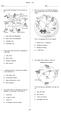 Name: ate: 1. Missing from the diagram of this ecosystem are the 5. ase your answer(s) to the following question(s) on the diagram below and on your knowledge of biology.. biotic factors and decomposers.
Coral Reefs Lecture Notes
 Coral Reefs Lecture Notes (Topic 10D) page 1 Coral Reefs Lecture Notes Corals Polyps & Zooxanthellae Coral Polyps Are coral polyps algae or animals? Description (What do coral polyps look like? Make a
Chapter 14 Quiz. Multiple Choice Identify the choice that best completes the statement or answers the question.
 Chapter 14 Quiz Multiple Choice Identify the choice that best completes the statement or answers the question. 1. Which of the following is NOT true regarding the Chesapeake Bay? a. it is one of many small
What are the causes of air Pollution
 What are the causes of air Pollution Pollutant Particulate Matter (PM-PM 10 and PM 2.5 ) Description and main UK sources Particulate Matter is generally categorised on the basis of the size of the particles
GLOBAL CIRCULATION OF WATER
 Global Circulation of Water MODULE - 8A 27 GLOBAL CIRCULATION OF WATER More than three-fourths of the earth s surface is covered by water. Water is an odorless, tasteless, substance than can naturally
WASTEWATER TREATMENT
 Freshwater WASTEWATER TREATMENT Water Quality 1. INDICATOR (a) Name: Wastewater treatment. (b) Brief Definition: Proportion of wastewater that is treated, in order to reduce pollutants before being discharged
FOOD CHAINS, FOOD WEBS AND ECOLOGICAL PYRAMIDS
 FOOD CHAINS, FOOD WEBS AND ECOLOGICAL PYRAMIDS SECTION 1 In an ecosystem, plants capture the sun's energy and use it to convert inorganic compounds into energy-rich organic compounds. This process of using
Introduction to Ecology
 Introduction to Ecology Ecology is the scientific study of the interactions between living organisms and their environment. Scientists who study ecology are called ecologists. Because our planet has many
Energy Flow Through an Ecosystem. Food Chains, Food Webs, and Ecological Pyramids
 Energy Flow Through an Ecosystem Food Chains, Food Webs, and Ecological Pyramids What is Ecology? ECOLOGY is a branch of biology that studies ecosystems. Ecological Terminology Environment Ecology Biotic
GUIDELINES FOR THE REGISTRATION OF BIOLOGICAL PEST CONTROL AGENTS FOOD AND AGRICULTURE ORGANIZATION OF THE UNITED NATIONS
 GUIDELINES FOR THE REGISTRATION OF BIOLOGICAL PEST CONTROL AGENTS FOOD AND AGRICULTURE ORGANIZATION OF THE UNITED NATIONS -ii- GUIDELINES ON THE REGISTRATION OF BIOLOGICAL PEST CONTROL AGENTS FOOD AND
Ecosystems Processes: Energy Flow
 Ecosystems Processes: Energy Flow 6 STRUCTURE 6.1 Introduction 6.2 Objectives 6.3 Understanding Energy Flow 6.4 Energy in Ecological Systems 6.5 Food Chains 6.6 Understanding Food Chains 6.7 Conclusion
Section 5.1 Food chains and food webs
 Section 5.1 Food chains and food webs The ultimate source of energy in an ecosystem comes from sunlight This energy is converted to an organic form using photosynthesis which is then passed between organisms
ABU DHABI FOOD CONTROL AUTHORITY. Food Poisoning. www.facebook.com/adfca1. www.twitter.com/adfca. www.youtube.com/adfcamedia
 Food Poisoning جهاز أبوظبي للرقابة الغذائية ABU DHABI FOOD CONTROL AUTHORITY Food Poisoning www.facebook.com/adfca1 www.twitter.com/adfca www.youtube.com/adfcamedia Creating awareness among the consumers
Aquatic Biomes, Continued
 Aquatic Biomes, Continued Introduction Extent of Marine biomes Issues & challenges Factors influencing distribution Dynamics in time & space Depth Tour of marine biomes Issues (by biome) Freshwater biomes
Chapter 55: Ecosystems
 Name Period Overview: 1. What is an ecosystem? 2. Where does energy enter most ecosystems? How is it converted to chemical energy and then passed through the ecosystem? How is it lost? Remember this: energy
ECOSYSTEM 1. SOME IMPORTANT TERMS
 ECOSYSTEM 1. SOME IMPORTANT TERMS ECOSYSTEM:- A functional unit of nature where interactions of living organisms with physical environment takes place. STRATIFICATION:- Vertical distribution of different
Keystone Review Practice Test Module A Cells and Cell Processes. 1. Which characteristic is shared by all prokaryotes and eukaryotes?
 Keystone Review Practice Test Module A Cells and Cell Processes 1. Which characteristic is shared by all prokaryotes and eukaryotes? a. Ability to store hereditary information b. Use of organelles to control
MEPC 56/23 ANNEX 2 Page 1 ANNEX 2 RESOLUTION MEPC.162(56) Adopted on 13 July 2007
 Page 1 RESOLUTION MEPC.162(56) Adopted on 13 July 2007 GUIDELINES FOR RISK ASSESSMENT UNDER REGULATION A-4 OF THE BWM CONVENTION (G7) THE MARINE ENVIRONMENT PROTECTION COMMITTEE, RECALLING Article 38(a)
Nano Ecology. Activity 8: Core Concept: Nanoparticles may disrupt food chains. Class time required: Approximately 40-60 minutes of class time
 Activity 8: Nano Ecology Core Concept: Nanoparticles may disrupt food chains. Class time required: Approximately 40-60 minutes of class time Teacher Provides: A copy of student handout Nano Ecology for
How To Manage Water Resources
 NB: Unofficial translation; legally binding texts are those in Finnish and Swedish Ministry of the Environment, Finland Government Decree on Water Resources Management (1040/2006) Given in Helsinki on
Natural Resources. Air and Water Resources
 Natural Resources Key Concepts Why is it important to manage air and water resources wisely? How can individuals help manage air and water resources wisely? Air and Water Resources What do you think? Read
How To Understand The Human Body
 Introduction to Biology and Chemistry Outline I. Introduction to biology A. Definition of biology - Biology is the study of life. B. Characteristics of Life 1. Form and size are characteristic. e.g. A
Phosphorus and Sulfur
 Global Change Instruction Program Phosphorus and Sulfur The Important Nutrient Phosphorus Phosphorus is a key nutrient, fueling organic productivity on land and in water. A portion of its cycle is shown
Topic 3: Nutrition, Photosynthesis, and Respiration
 1. Base your answer to the following question on the chemical reaction represented below and on your knowledge of biology. If this reaction takes place in an organism that requires sunlight to produce
Matter and Energy in Ecosystems
 Matter and Energy in Ecosystems The interactions that take place among biotic and abiotic factors lead to transfers of energy and matter. Every species has a particular role, or niche, in an ecosystem.
Ecology Module B, Anchor 4
 Ecology Module B, Anchor 4 Key Concepts: - The biological influences on organisms are called biotic factors. The physical components of an ecosystem are called abiotic factors. - Primary producers are
HÄSSLEHOLM COMMUNITY MUNICIPAL OFFICE THE RESTORATION OF LAKE FINJASJÖN
 HÄSSLEHOLM COMMUNITY MUNICIPAL OFFICE THE RESTORATION OF LAKE FINJASJÖN Summary After having lowered the sea-level twice to gain farmland and heavy nutrient load mainly from sewage, Lake Finjasjön in 1950
Pond Recirculating Production Systems
 SRAC Publication No. 455 November 1997 PR VI Pond Recirculating Production Systems Andrew M. Lazur and Deborah C. Britt* Water conservation and reuse has become a major issue in aquaculture in recent years.
CHAPTER 20 COMMUNITY ECOLOGY
 CHAPTER 20 COMMUNITY ECOLOGY MULTIPLE CHOICE 1. The relationship between a predator and its prey is best illustrated by a. a snake eating a bird. c. a lion eating a zebra. b. a fox eating a mouse. d. a
U.S. Environmental Protection Agency, Region IX Response to Comments on the Goleta Sanitary District Draft NPDES Permit and 301(h) TDD
 U.S. Environmental Protection Agency, Region IX Response to Comments on the Goleta Sanitary District Draft NPDES Permit and 301(h) TDD A. Kamil S. Azoury of Goleta Sanitary District provided comments on
Biomes An Overview of Ecology Biomes Freshwater Biomes
 Biomes An Overview of Ecology Ecology is the scientific study of the interactions between organisms and their environments. Ecology can be divided into four increasingly comprehensive levels: Organismal
Managing Ammonia in Fish Ponds
 SRAC Publication No. 4603 December 2004 PR VI Managing Ammonia in Fish Ponds John A. Hargreaves 1 and Craig S. Tucker 2 Ammonia is toxic to fish if allowed to accumulate in fish production systems. When
An Introduction to Algae Measurements Using In Vivo Fluorescence
 An Introduction to Algae Measurements Using In Vivo Fluorescence Submersible fluorescence sensors enable real-time field estimates of phytoplankton that can be directly correlated to standard laboratory
8.2 - A Local Ecosystem:
 8.2 - A Local Ecosystem: 1. The distribution, diversity and numbers of plants and animals found in ecosystems are determined by biotic and abiotic factors: Distinguish between the abiotic and biotic factors
SEMESTER AT SEA COURSE SYLLABUS University of Virginia, Academic Sponsor
 Voyage: Fall 2015 Discipline: Biology Course Title: Introduction to Marine Biology Division: Lower Division Faculty Name: Dr Christine Dudgeon Credit Hours: 3; Contact Hours: 38 Pre-requisites: SEMESTER
THE ECOSYSTEM - Biomes
 Biomes The Ecosystem - Biomes Side 2 THE ECOSYSTEM - Biomes By the end of this topic you should be able to:- SYLLABUS STATEMENT ASSESSMENT STATEMENT CHECK NOTES 2.4 BIOMES 2.4.1 Define the term biome.
Long-term Marine Monitoring in Willapa Bay. WA State Department of Ecology Marine Monitoring Program
 Long-term Marine Monitoring in Willapa Bay WA State Department of Ecology Marine Monitoring Program Ecology s Marine Waters Monitoring Program Goal: establish and maintain baseline environmental data Characterize
Baltic Sea Perspective on - Building a Gas Pipeline and - Oil Spills
 Baltic Sea Perspective on - Building a Gas Pipeline and - Oil Spills Dr Juha-Markku Leppänen Head of the Monitoring and Assessment Unit, Marine Research Centre, Finnish Environment Institute (SYKE) Content
A Traditional Island Industry
 A Traditional Island Industry The PEI wild public fishery has remained a productive Island industry for 150 years Wild public oyster fishers still fish in the traditional methods of their ancestors, using
Unit I: Introduction To Scientific Processes
 Unit I: Introduction To Scientific Processes This unit is an introduction to the scientific process. This unit consists of a laboratory exercise where students go through the QPOE2 process step by step
Mark Scheme (Results) November 2011. GCSE Biology 5BI1H/01
 Mark Scheme (Results) November 2011 GCSE Biology 5BI1H/01 Edexcel is one of the leading examining and awarding bodies in the UK and throughout the world. We provide a wide range of qualifications including
STORMWATER MONITORING: POLLUTANTS, SOURCES, AND SOLUTIONS
 RICHLAND COUNTY STORMWATER MANAGEMENT DIVISION STORMWATER MONITORING: POLLUTANTS, SOURCES, AND SOLUTIONS As part of the federal government s National Pollutant Discharge Elimination System Permit (NPDES)
Cellular Energy. 1. Photosynthesis is carried out by which of the following?
 Cellular Energy 1. Photosynthesis is carried out by which of the following? A. plants, but not animals B. animals, but not plants C. bacteria, but neither animals nor plants D. all living organisms 2.
Criteria for Quality Control Protocols for Various Algal Toxin Methods [Project #2942]
![Criteria for Quality Control Protocols for Various Algal Toxin Methods [Project #2942]](/thumbs/24/4276497.jpg "Criteria for Quality Control Protocols for Various Algal Toxin Methods [Project #2942]") Criteria for Quality Control Protocols for Various Algal Toxin Methods [Project #2942] ORDER NUMBER: 2942 DATE AVAILABLE: April 2012 PRINCIPAL INVESTIGATORS: John Papageorgiou, Brenton Nicholson, Wasa
Criteria for Quality Control Protocols for Various Algal Toxin Methods [Project #2942] ORDER NUMBER: 2942 DATE AVAILABLE: April 2012 PRINCIPAL INVESTIGATORS: John Papageorgiou, Brenton Nicholson, Wasa