
NON-CONTACT 3D DIGITIZER VIVID 9i/VI-9i
|
|
|
- Beryl Perkins
- 9 years ago
- Views:
Transcription
1 NON-CONTACT 3D DIGITIZER VIVID 9i/VI-9i Instruction Manual (HARDWARE) NOTE The VI-9i is model name for Europe and the VIVID 9i is model name for other countries. Please note that the VIVID 9i model name is intended only for reference with this manual.

2 Safety Symbols The following symbols are used in this manual to prevent accidents which may occur as result of incorrect use of the instrument. Denotes a sentence regarding safety warning or note. Read the sentence carefully to ensure safe and correct use. Denotes a prohibited operation. The operation must never been performed. Denotes an instruction. The instruction must be strictly adhered to. Denotes an instruction. Disconnect the AC power cord from the AC outlet. Denotes a prohibited operation. The part must never be disassembled. Denotes an instruction. Connect the grounding terminal as instructed. Denotes a sentence regarding safety precaution for laser. Read the sentence carefully to ensure safe and correct use. s on this Manual Copying or reproduction of all or any part of the contents of this manual without KONICA MINOLTA SENSING s permission is strictly prohibited. The contents of this manual are subject to change without prior notice. Every effort has been made in the preparation of this manual to ensure the accuracy of its contents. However, should you have any questions or find any errors, please contact a KONICA MINOLTA SENSING-authorized service facility. KONICA MINOLTA SENSING will not accept any responsibility for consequences arising from the use of the instrument. Company names and product names which appear in this manual are their trademarks or registered trademarks. Contents and display examples given in this manual are subject to change. About This Manual and Related Documents The VIVID 9i Non-Contact 3D Digitizer offers rapid, high-precision 3D scanning ideal for imaging of industrial products in a wide range of shapes and configurations. This manual describes the digitizer s features and operating procedures, and calls attention to relevant precautions. Please also refer to documents listed below for related information. Document Content Polygon Editing Tool Instruction Manual Explains how to install and use the Polygon Editing software, and gives details about all of the software s features. The Polygon Editing Tool software can be used to control the operation of VIVID non-contact 3D digitizers, to convert scanned data into polygon data, to edit and process the scanned data, and to save the data into standard formats. Polygon Editing Tool Basic Operations Guide Explains the basic operations of the Polygon Editing Tool software, with reference to the VIVID 910 digitizer. Photogrammetry System Explains the PSC-1 system, a high-precision alignment system based on photographic PSC-1 Instruction Manual measurement technology. This system is for use in the VIVID 9i only.

3 Safety Precautions When using this hardware, the following points must be strictly observed to ensure correct and safe use. After you have read this manual, keep it in a safe place so that it can be referred to easily whenever it is needed. WARNING Do not use the VIVID 9i in places where flammable or combustible gases (gasoline etc.) are present. Doing so may cause a fire. Always use the AC power cord supplied as a standard accessory with the VIVID 9i, and connect it to an AC outlet ( V, Hz). Failure to do so may damage the VIVID 9i, causing a fire or electric shock. Do not bend, twist or pull the AC power cord excessively. In addition, do not place heavy items on the AC power cord, or damage or modify it in any way. Doing so may cause damage to the AC power cord, resulting in fire or electric shock. If the VIVID 9i will not be used for a long time, disconnect the AC power cord from the AC outlet. Accumulated dirt or water on the prongs of the AC power cord s plug may cause a fire. If there is any dirt or water on the prongs of the AC power cord s plug, remove it. When disconnecting the AC power cord s plug, always hold the plug and pull it to remove it. Never pull the AC power cord itself. Doing so may damage the AC power cord, causing a fire or electric shock. In addition, do not insert or disconnect the AC power cord s plug with wet hands. Doing so may cause electric shock. The VIVID 9i should not be operated if it is damaged, or smoke or odd smells are detected. Doing so may result in a fire. In such situations, turn the power OFF immediately, disconnect the AC power cord from the AC outlet, and contact the nearest KONICA MINOLTA SENSING-authorized service facility. Failure to adhere to the following points may result in death or serious injury. Do not disassemble or modify the VIVID 9i. Doing so may cause a fire or electric shock. Do not remove the cover as doing so may cause electric shocks. Take special care not to allow liquid or metal objects to enter the VIVID 9i. Doing so may cause a fire or electric shock. Should liquid or metal objects enter the VIVID 9i, turn the power OFF immediately, disconnect the AC power cord from the AC outlet, and contact the nearest KONICA MINOLTA SENSING-authorized service facility. The VIVID 9i should not be operated if dirt or dust has entered through the vent holes. Doing so may result in a fire. For periodic inspection, contact the nearest KONICA MINOLTA SENS- ING-authorized service facility. Never stare into the laser emitting window. Do not place a lens, mirror or optical element in the passage of the laser beam. Doing so may converge the laser beam, resulting in damage to your eyes, burns or fire. To prevent the above accidents, make sure that a wall or similar which can block the laser beam is located behind the object. CAUTION Be sure to connect the AC power cord s plug to an AC outlet that has a grounding terminal. Make sure that the AC outlet is located near the VIVID 9i and that the AC power cord s plug can be easily connected and disconnected. Falling to adhere to the following points may result in injury or damage to the instrument or other property. Do not place the instrument on an unstable or sloping surface. Doing so may result in its dropping or overturning, causing injury. Take care not to drop the instrument when carrying it. 1

4 Laser Caution and Identification Label Laser Caution and Identification Label CAUTION LASER RADIATION DO NOT STARE INTO BEAM LASER STRAHLUNG NICHT IN DEN STRAHL SEHEN MAX 30mW 690nm CLASS 2 LASER PRODUCT Complied with IEC Publication :1993, Amendment-2:2001 AVOID EXPOSURE Laser radiation is emitted from this aperture. CLASS 1 LASER PRODUCT Complies with 21 CFR Chapter 1. Subchopter J. KONICA MINOLTA SENSING, INC. 3-91, Daisennishimachi, Sakai, Osaka , Japan manufactured Warning Label WARNING WARNUNG 2

5 s On Use The VIVID 9i is designed for indoor use only, and should never be used outside. This digitizer has been calibrated at 20 C. We recommend that you use it environments where ambient temperature is 20 C (68 F). Use an AC power source which is within ±10% of the rated voltage. The VIVID 9i should be used within a temperature range of 10 to 40 C at a relative humidity of 65% or less with no condensation. For North America: VIVID 9i should be used within a temperature range of 10 to 40 C, and relative humidity 50% or less (at 40 C ) with no condensation. Do not use the VIVID 9i in direct sunlight or near sources of heat such as stoves. Doing so will cause the temperature of the VIVID 9i to rise considerably higher than room temperature and may result in malfunctions. Use the VIVID 9i in a well ventilated area and make sure that the ventilation holes of the VIVID 9i are not blocked. Do not use the VIVID 9i in extremely dusty or humid areas. Doing so may result in malfunctions. VIVID 9i is classified into a Pollution Degree 2 as instrument used in mainly in manufacturing plant, laboratory, warehouse or equivalents. Use VIVID 9i in metal dust free and non condensing potential environment. VIVID 9i is categorized into Installation Category II as equipment connected to commercially available power source. Do not subject the VIVID 9i to strong vibration or shocks. Doing so may result in malfunctions. When using the VIVID 9i on upper floors of buildings or near high-traffic streets, the instrument and/or measurement subject may vibrate, adversely affecting measurement results. Do not allow the digitizer to fall on its side, as it may sustain damaged if knocked over. Do not disconnect cords and cables with the POWER switch of the VIVID 9i set to ON I. Doing so may result in malfunctions. The VIVID 9i has been tested and found to comply with the limits for a Class A digital device, pursuant to Part 15 of the FCC Rules. These limits are designed to provide reasonable protection against harmful interference when the equipment is operated in a commercial environment. This equipment generates, uses, and can radiate radio frequency energy and, if not installed and used in accordance with the instruction manual, may cause harmful interference to radio communications. Operation of this equipment in a residential area is likely to cause harmful interference in which case the user will be required to correct the interference at his own expense. The VIVID 9i is a class II instrument specified in IEC Publication 825. Use it according to the instructions given in this manual. Do not use the VIVID 9i at altitudes of higher than 2000 m. Contains Mercury in the backlighting of LCD used for display, Dispose According to Local, State or Federal Laws. Before using this unit for the first time, and before reusing it following transport, check that the lens is securely in place. If the lens is loose, tighten it in accordance with the tightening instructions included in the lens replacement procedure. Care On Storage The VIVID 9i should be stored in areas with temperatures of between 0 and +40 C. Do not store it in areas subject to high temperature or high humidity or where sudden changes in temperature or condensation are likely to occur. We recommend storing the VIVID 9i around room temperature (20 ± 3 C) with a desiccant (silica gel etc.). Do not leave the VIVID 9i inside a closed car or in the trunk of a car. Under direct sunlight, the increase in temperature can be extreme and may result in malfunctions. The VIVID 9i should not be stored in areas where there is an excessive amount of dust, cigarette smoke or chemical gas. Failure to adhere to this may result in performance degradation or break-down. When shipping the product, use the original packing materials in which the product was shipped. The materials will provide protection against vibrations and impact, and also provide some protection against sudden changes in temperature. Lenses that are not in use should be capped and kept in the lens case. Before storing this equipment, be sure to attach the receiving lens cap and the laser barrier. 3

6 s On Cleaning If the VIVID 9i needs cleaning, wipe with a soft dry cloth. Never use solvents such as thinner or benzene. If the lens or laser emitting window is soiled with sand or dust, blow off the dirt using a blower, and wipe them gently with a piece of cleaning paper dampened with cleaning agent. In cases of malfunction, do not disassemble the VIVID 9i or attempt to repair it yourself. Contact the nearest KONICA MINOLTA SENSING-authorized service facility. s On Maintenance To maintain the accuracy of the high-precision Galvano mirror, that plays the most important role in measurement accuracy, a drying agent is used inside the VIVID 9i. Normally, the dehumidification effect of the drying agent lasts more than one year. However, its life varies with the operating and storage environment. To maintain the designed performance of the VIVID 9i, you are recommended to replace the drying agent once a year. Contact the nearest KONICA MINOLTA SENSING-authorized service facility. 4

7 Contents Safety Precautions... 1 Laser Caution and Identification Label... 2 Warning Label... 2 s On Use... 3 Care On Storage... 3 s On Cleaning... 4 s On Maintenance... 4 Chapter 1 Package Contents (Standard Accessories)... 8 Optional Accessories System Configuration Names and Functions of Parts Main Body Operation Panel Chapter 2 Connecting the AC Power Cord Connecting the VIVID 9i to a Computer Setting the SCSI ID No Setting the Terminator Starting and Quitting Starting the VIVID 9i Quitting the VIVID 9i Mounting to the Tripod Chapter 3 Before Using the Instrument Replacing the Lens and Field Calibration Relationship between Measurement Distance and Object Replacing Procedure Field Calibration Field Calibration System Executing Field Calibration Adjusting the White Balance Displaying the Status Information Adjusting the Laser Power and CCD Gain Manually Setting the Scan Mode Chapter 4 Preparation Operation Appendix Error Messages Explanation of Measuring Principle Measuring Principle High-Speed Image Processing Circuit Time center of gravity and Space center of gravity Dimension Diagram Specifications

8 6

9 Chapter 1 Before Using the Instrument 7

10 Package Contents (Standard Accessories) Check that the following standard accessories are present. VIVID 9i Main Body Polygon Editing Tool (with USB protect key) White Balance Cap VI-A10 AC Power Cord SCSI Cable VI-A20 (Half-pitch, D-sub, 50-pin male plug 50-pin male plug) Laser Barrier 8

11 Package Contents (Standard Accessories) Lens Field Calibration System (3 types, TELE, MIDDLE, WIDE/ (Field Calibration System, Frame for Calibration with Lens Cap) System, Hex wrench (M5), 4 screws) Tripod Attachment Set (Tripod attachment, Hex wrench (M3), 4 screws) 9

12 Optional Accessories When you need to purchase the following optional items, contact a KONICA MINOLTA SENSING-authorized service facility. Rotary Stage Set Tripod/Panhead VI-B25 (Pan head, Tripod, Ball Adapter) 10

13 System Configuration Standard Accessories Optional Accessories (A commercially available computer can be used) AC Power Cord White Balance Cap VI-A10 SCSI Cable VI-A20 Polygon Editing Tool VIVID 9i Main Body Computer Tripod Attachment Set Tripod/Panhead VI-B25 Laser Barrier 3 types of lens Field Calibration System Rotary Stage Set 11

14 Names and Functions of Parts Main Body Handle Light-Receiving Lens Power Switch AC Power Connector SCSI Port Please keep the receiving lens cap and the laser barrier place in place when you are not carrying out scanning. Dust and scratches on the laser and lens can adversely affect scanning precision. Laser Emitting Window WARNING A laser beam is emitted from this window. Do not stare into this window. Rubber supports Use when necessary to lean the device on its side for installing the tripod attachment, etc. Viewfinder (5.7" LCD) Displays the lens image and various setup menus. In rare cases some dot breakup may be visible on the LCD, but this does not indicate a problem with the scan data itself. Operation Panel Used for adjusting the focus and making various settings. Rubber supports Support the device. 12

15 Names and Functions of Parts Operation Panel 2 FOCUS AUTO 1 MENU CANCEL SELECT ENTER FOCUS AUTO...Focuses the image automatically. 2 (Near) / (Far)...Focuses the image manually. indicates far and indicates near. 3...Press once to display the menu on the viewfinder. Press again to close the menu and return to the monitor image. CANCEL 4...Cancels the current operation and returns to the preceding level. 5...Selects an item at the viewfinder. 6...Sets the current selection, and moves to the next level (if any). ENTER SELECT 7...Moves to the next level for the item currently selected in the viewfinder. Memo If you wish to carry out a local operation while the unit is in REMOTE mode (while REMOTE is displayed in the viewfinder): Press any key to cancel REMOTE mode, and then press the appropriate keys for the operation you wish to carry out. (The MENU view may not be displayed even if is pressed depending on the view currently displayed.) 13

16 14 Names and Functions of Parts

17 Chapter 2 Preparation 15

18 Connecting the AC Power Cord To ensure correct connection of the AC power cord, read the points given in WARNING and CAUTION carefully. WARNING Always use the AC power cord supplied as a standard accessory with the VIVID 9i, and connect it to an AC outlet ( V, Hz). Failure to do so may damage the VIVID 9i, causing a fire or electric shock. Do not bend, twist or pull the AC power cord excessively. Do not place heavy items on it, scratch or modify it. Doing so may damage it, resulting in fire or electric shock. If you are not going to use the VIVID 9i for a long time, disconnect the AC power cord from the AC outlet. If dirt or water accumulates on the prongs of the AC power cord s plug, it may cause a fire. If there is any dirt or water on the prongs, it must be removed. When disconnecting the AC power cord s plug, always hold the plug and pull it to remove it. Never pull the AC power cord itself as it may be damaged, resulting in fire or electric shock. Also do not insert or disconnect the AC power cord s plug with wet hands. Doing so may cause electric shock. CAUTION Plug the power cord into the outlet on the tripod or into a standard outlet. If using a standard outlet, be sure that the ground terminal on the plug is correctly grounded. Improper connection may result in fire or electric shock. Make sure that the AC outlet is located near the VIVID 9i and the AC power cord s plug can be easily connected and disconnected. [Connecting Procedure] 1 Set the power switch of the VIVID 9i to OFF ( ). If the AC power cord is connected to an AC outlet with the power switch set to ON ( ), damage to the VIVID 9i or computer may result. Before connecting the AC power cord, always make sure that the power switch is set to OFF. POWER AC IN SCSI 2 3 Plug the AC power cord to the AC power connector on the VIVID 9i. Plug the other end of the AC power cord to an AC outlet. 16

19 Connecting the VIVID 9i to a Computer To operate the VIVID 9i from a computer using the Polygon Editing Tool, the VIVID 9i must be connected to the computer with an standard SCSI cable VI-A20. WARNING The computer must be operated correctly and safely according to its instruction manual. Memo The standard SCSI cable has a 50-pin male plug (half-pitch, D-Sub) on both its ends. It is also possible to use a commercially available USB adapter. For details, please contact a KONICA MINOLTA SENSING authorized service facility. Ref. For a description of the standard accessories, refer to page 8. [Connecting Procedure] 1 Set the power switch of both VIVID 9i and computer to OFF ( ). If the AC power cord is connected to an AC outlet with the power switch set to ON ( I ), damage to the VIVID 9i or computer may result. Always be sure that the digitizer and the computer are both OFF before making connections. POWER AC IN SCSI 2 3 Plug the SCSI cable to a SCSI port of the VIVID 9i. Plug the other end of the SCSI cable to the SCSI connector of the computer. Connecting procedure is now complete Before turning ON the power to the computer, always turn ON the power to the VIVID 9i and wait until it is ready for operation (see page 21). 17

20 Connecting the VIVID 9i to a Computer Setting the SCSI ID No. In order for the computer to recognize that the VIVID 9i is connected to the computer via the SCSI interface, a SCSI ID No. (0 to 6) must be set for the VIVID 9i. Memo SCSI ID No. 5 has been set as the default setting before shipment. If other devices are connected to the computer via the SCSI interface, make sure that the SCSI ID No. of the VIVID 9i differs from those set for the devices. [Setting Procedure] 1 Press. The MENU view will appear Press to locate the arrow cursor to SC- SI SETTINGS. SELECT ENTER Press (or ). The SCSI SETTINGS view will appear. Press to locate the arrow cursor to SC- SI ID. STANDARD 3 HQ ON NF ON COLOR OFF W.B. DEFAULT SCSI 5 ENABLED WHITE BALANCE INITIAL MODE INITIAL CONDITION SCSI SETTINGS INFO SCSI SETTINGS SCSI ID 5 TERMINATE ENABLED 5 6 SELECT ENTER Press (or ). The currently selected SCSI ID No. will turn to pink. Press to select the desired SCSI ID No. <Settings> 0 to 6: SCSI ID No. SCSI SETTINGS SCSI ID 6 TERMINATE ENABLED 7 Press. ENTER Setting is now complete. To cancel the setting and return the SCSI SETTINGS CANCEL screen to its original state, press. 18
![If other devices are connected to the computer via the SCSI interface, make sure that the SCSI ID No. of the VIVID 9i differs from those set for the devices. [Setting Procedure] 1 Press.](/docs-images/44/20803412/images/page_20.jpg "The MENU view will appear. 2 3 4 Press to locate the arrow cursor to SC- SI SETTINGS. SELECT ENTER Press (or ). The SCSI SETTINGS view will appear. Press to locate the arrow cursor to SC- SI ID.")
21 Connecting the VIVID 9i to a Computer Setting the Terminator The VIVID 9i has a built-in SCSI terminator. The terminator is required if the VIVID 9i is the last device of those connected in series to the SCSI interface (i.e., if only one of the SCSI ports on the VIVID 9i is used). If the terminator is not set correctly, the VIVID 9i or devices connected to the SCSI interface may malfunction. Memo ENABLED has been selected as the default setting before shipment. DISABLE must be selected if the VIVID 9i is connected via the SCSI interface but is not the last device of those connected in series, and ENABLE must be selected if it is not connected via the SCSI interface. [Setting Procedure] 1 Press. The MENU view will appear Press to locate the arrow cursor to SC- SI SETTINGS. SELECT ENTER Press (or ). The SCSI SETTINGS view will appear. Press to locate the arrow cursor to TERMINATE. STANDARD 3 HQ ON NF ON COLOR OFF W.B. DEFAULT SCSI 5 ENABLED WHITE BALANCE INITIAL MODE INITIAL CONDITION SCSI SETTINGS INFO SCSI SETTINGS SCSI ID 5 TERMINATE ENABLED 5 6 SELECT ENTER Press (or ). The currently selected option (ENABLED or DISA- BLED) will turn to pink. Press to select ENABLED or DISA- BLED. <Settings> ENABLED: Select this option if the terminator is to be used. DISABLED: Select this option if the terminator is not to be used. SCSI SETTINGS SCSI ID 5 TERMINATE ENABLED 19
22 Connecting the VIVID 9i to a Computer 7 Press. Setting is now complete. CANCEL To cancel the setting and return the SCSI SETTINGS screen to its original state, press. 20
23 Starting and Quitting Starting the VIVID 9i [Operating Procedure] 1 Set the power switch to ON ( ). Power will be supplied to the VIVID 9i and initial setup is performed. After several dozen seconds, PLEASE OPEN LASER BARRIER AND PRESS ANY KEY will be displayed on the viewfinder. POWER AC IN SCSI When turning power ON again after it has been turned OFF, wait at least 5 seconds before doing so. Failure to observe this may result in malfunction or breakdown of the VIVID 9i. Memo To ensure precise measurement, allow the unit to warm up for at least 10 minutes. 2 Remove the lens cap from the receiving lens. 3 Remove the laser barrier. 21
24 Starting and Quitting 4 Press any key. The MONITOR view will appear, indicating that the VIVID 9i is now ready for operation. EXTEND 720MM 22
25 Starting and Quitting Quitting the VIVID 9i [Operating Procedure] 1 Set the power switch to OFF ( ). Power will be turned OFF. POWER AC IN SCSI 2 Attach the lens barrier. WARNING To ensure safety, please keep the lens barrier in place at all times when the unit is not in use. 3 Fit the lens cap onto the receiving lens. Please keep the receiving lens cap and the laser barrier place in place when you are not carrying out scanning. Dust and scratches on the laser and lens can adversely affect scanning precision. 23
26 Mounting to the Tripod When using the instrument with the tripod, first attach the tripod attachment to the instrument, and then attach the instrument to the panhead/tripod. CAUTION Make sure that the tripod attachment, panhead and tripod are secured to the instrument and each fastener on the tripod is firmly tightened. Failure to observe this point may result in the tripod overturning or the instrument dropping. When placing the tripod on a floor, examine the floor conditions and flatness to make sure that the tripod is stably placed. After measurement is completed, the instrument must be removed from the tripod before storing them. If the instrument is stored with the tripod attached, the tripod may overturn or the instrument may drop, resulting in accidents. 1. Mounting the Tripod Attachment to the Instrument Before mounting the instrument to the tripod, mount the tripod attachment to the instrument as explained below. Memo Four screw holes for the tripod attachment are provided on base of the instrument. [Operating Procedure] 1 After checking to ensure that you have turned off the power to the both the digitizer and computer, disconnect the digitizer s power cord and the SCSI cable. that disconnection of cables while power is ON may result in damage to the digitizer and/or the computer. Be sure to turn off power at both sizes before disconnecting cables. 2 3 Slowly lean the digitizer over on a flat and stable surface, so that it is lying on the rubber supports on its rear side. Place the tripod attachment on the base of the instrument, and secure it with the four screws (supplied with the tripod attachment). Align the tripod attachment and digitizer so that the projecting area of the attachment fits into the receding area on the base of the digitizer. Tripod Attachment 24
27 Mounting to the Tripod 2. Mounting the Instrument to the Panhead After you have attached the tripod attachment to the instrument, they need to be mounted to the recommended panhead as explained below. First, remove the accessory plate from the panhead, attach it to the instrument, then attach both to the panhead. Memo Three screw holes are provided on the back of the tripod attachment, to allow mounting the tripod attachment to the panhead. [Operating Procedure] 1 2 Remove the accessory plate from the panhead. Place the top of the accessory plate on the tripod attachment (attached to the instrument), and secure them with two screws (U3/8, supplied with the accessory plate). Accessory Plate U3/8 Screw 3 4 Make sure that the tripod/panhead is secured in place. Slide the accessory plate (attached to the tripod attachment on the instrument) into the panhead. Memo Slide and attach the plate from front of the panhead. 5 Tighten the slide fixing knob to firmly secure the accessory plate to the panhead. Memo Refer to the tripod/panhead instruction manual for details on using the accessory plate locking knob. 25
28 26 Mounting to the Tripod
29 Chapter 3 Operation 27
30 Replacing the Lens and Field Calibration With the VIVID 9i, three types of lens are available: WIDE lens, MIDDLE lens and TELE lens. Be sure to mount the lens that best matches the subject s size and distance. Before taking scans of a subject, most suitable lens for the size of the object and distance must be used. After changing the lens, you need to recalibrate using the field calibration system. For Field Calibration, refer to page 32. Relationship between Measurement Distance and Object Select the most suitable lens by referring to the table given below. Memo The closer the object to the VIVID 9i, the higher the measurement accuracy is. On the other hand, influences of shades produced due to roughness on the surface of the object can be reduced if the object is positioned far from the VIVID 9i. WIDE Lens Measurement Distance Horizontal Object Size Vertical Unit (mm) MIDDLE Lens Measurement Distance Horizontal Object Size Vertical Unit (mm) TELE Lens Measurement Distance Horizontal Object Size Vertical Unit (mm) 28
31 Replacing the Lens and Field Calibration Replacing Procedure You can use the status information to see what type of lens is currently attached. The lens type is also written on the lens itself. The explanation below assume that the power to the digitizer is ON, but note that it is also possible to change the lens while the power is OFF. If the power is OFF, however, you cannot use the digitizer s viewfinder or control keys. Ref. For display of the status information, refer to page 44. Only the lenses supplied as standard accessories with the VIVID 9i can be used. (They are not compatible with other VIVID models since they have been calibrated with the VIVID 9i only.) Since the VIVID 9i is a precision instrument, do not leave it without lens when replacing the lens. Replace the lens as soon as possible. Do not touch the lens surface with fingers. Dust and scratches on the lens surface may adversely affect precision. When not using the digitizer, keep the lens cap on the lens. If the lens is dusty, clean it with a camera blower. Dust or dirt on the lens mount surface may produce incorrect measurement data. In this case, wipe the lens mount surface with a clean, dry cloth and then blow it with a camera air blower etc. Dust and dirt collected on the lens mount surface on the body side must also be removed with a camera air blower etc. SCSI communication is not available while the lens is being replaced. Please close the Polygon Editing Tool software s control dialog before starting replacement. [Operating Procedure] 1 Remove the lens hood. Turn counterclockwise to align with the cutouts. Memo The lens hood can be fixed with its bayonet mount. 2 Turn the lens fixing ring counter-clockwise to loose it completely. Memo The lens fixing ring can be fixed with its screw mount. 29
32 Replacing the Lens and Field Calibration 3 Hold the external edge of the fixing ring and pull it out. Memo Hold the ring with your finger located near the red mark on the lens. This will facilitate pulling the lens. Attach the lens cap to the removed lens, place it in the lens case and keep it in a safe place. The following information will appear in the viewfinder as shown on the right. CHANGE LENS S/N Attach the desired lens. Remove the lens cap. Align the red mark on the lens with the one on the lens mount socket, and insert the lens until a click is heard. Memo Hold the ring with your finger located near the red mark on the lens. This will facilitate inserting the lens. PRESS ANY KEY AND SCAN FIELD CALIBRATION SYSTEM Red mark 5 Turn the lens fixing ring clockwise to secure the lens. After tightening the lens, make sure that the red mark on the ring is aligned with the red mark on the body. Tightening ring Red mark 30
33 Replacing the Lens and Field Calibration 6 Attach the lens hood. Align the cutouts, and then turn clockwise. Memo The hood must be turned until it contacts the bayonet mount socket. 7 8 Press any key. After several dozen seconds, PLEASE OPEN LASER BARRIER AND PRESS ANY KEY will be displayed on the viewfinder. Press any key. The viewfinder displays the monitor screen, and the digitizer is ready for use. Place a lens cap on the lens you removed, put it in its case, and store in a safe place. 9 Use the field calibration system and the Polygon Editing Tool software to calibrate the system. Ref. For the field calibration procedure, refer to Field Calibration on the next page. 31
34 Field Calibration The field calibration on this unit is done using the Field Calibration System. Periodic field calibration is recommended to maintain measurement precision. Always carry out field calibration when changing lenses. The Field Calibration System that corresponds to the type of lens the unit is equipped with must be used when conducting field calibration. This unit and the Field Calibration System are paired, so it is not possible to correctly calibrate it when the serial numbers differ. Use the unit and Field Calibration System combination that have the same serial number. Memo The type of lens the unit is equipped with and the serial number of the unit can be confirmed in the Status information. Ref. For details on displaying the status information, refer to page 41. Field Calibration System The Field Calibration System is comprised of the Unit Section which contains the Field Calibration System, which corresponds to the type of lens on the unit, and the Frame Section, which maintains a facing position at a set distance from the unit. Parts Nomenclature Lock Lever B Lock Lever A Handle B Support Section Handle A Unit Section (Field Calibration System) * Equipped with field calibration systems for the WIDE lens type and MIDDLE/TELE lens type. Unit Section Cover Unit Attachment Section Frame Section (Frame for Calibration System) Main Unit Attachment Section Rubber Foot ( 6): With Height Adjustment Mechanism * The rubber feet adjustment mechanism has a structure shown in the drawing below. (Frame section) Stopper Lock nut Rubber foot block [Specifications] Lowest height: 43mm Adjustable range: Max. 10mm (with no preventive structure) 32
35 Field Calibration Installation Space A secure installation location that meets the dimensional requirements as shown in the drawing below is necessary to install the Field Calibration System. Before using the Field Calibration System, a Calibration Area for stable and high quality calibration is required, in addition to the place that is necessary to position the Field Calibration System. Approx. 73 cm Installation Space Approx. 145 cm Approx. 46 cm Calibration Area The Calibration Area is the box shaped area shown in the drawing below. The dimensions are: 30 cm or less in front of or behind the Chart unit 20 cm or less right or left to the Chart unit 20 cm or less above the Chart unit Prevent foreign matter from getting into the Calibration Area. When executing Field Calibration, do not allow workers into the area. It may result in incorrect calibration. Be careful to block incident light from the outside. Execute Field Calibration under fluorescent light at less than 500lx. Prevent light from windows. In 30 cm front of or behind the Chart unit In 20 cm above the Chart unit Calibration Area In 20 cm right or left to the Chart unit 33
36 Field Calibration Executing Field Calibration The Field Calibration System is made up of the Field Calibration System Section and the Frame Section. It is necessary to assemble it when it is to be used for the first time or after it has been temporarily disassembled to move the Field Calibration System, etc. In addition, it is necessary to attach the Field Calibration System to the main unit in order to carry out field calibration. Memo VIVID 9i/VI-9i has been calibrated at 20ºC. The allowable operating environment is 10ºC to 40ºC, but we recommend that you execute Field Calibration or scan the objects in environments where ambient temperature is 20ºC (68ºF). Assembling the Field Calibration System [Procedure] 1 Install the Frame Section. Install the Frame Section in a secure location with sufficient space. For the place that is necessary to install the Frame of the Field Calibration System, see page 33 of this instruction manual. A Calibration Area is also required for executing the calibration. 2 Adjust the Height of Rubber Feet to Stabilize the Frame Section. The Frame of the Field Calibration System is designed to be used on a sufficiently wide, stable, flat surface. However, even if a sufficiently wide space is available, the surface may not be completely flat, resulting in one or more of the rubber feet of the frame not being in contact with the surface. To solve this problem, the feet have been equipped evenly with a mechanism to allow their height to be adjusted. Memo All 6 rubber feet have height adjustment mechanisms. Adjust a height of the rubber feet without any item on the frame during the procedure for setting up the frame of this system. When transporting this system, set the rubber feet to their lowest height to avoid damage to the shopping box. 1Turn the lock nut counterclockwise to unlock the rubber foot block. Unlock the rubber foot block by turning the lock nut counterclockwise. 34
37 Field Calibration 2Turn the lock nut counterclockwise to unlock the rubber foot block. Memo Turn clockwise for lower heights and counterclockwise for higher heights. Because there is no preventive structure, moving the rubber foot block more than adjustable range may cause the rubber foot block to fall off. In this case, screw the rubber foot block onto the stopper unit clockwise. Adjust the height by turning the Rubber foot block. The lock nut moves in the same height direction as the rubber foot block. 3After adjusting the height correctly, move the lock nut to the stopper unit by turning it clockwise and lock the rubber foot block. After adjustment of the height, move the lock nut to the stopper unit by turning it clockwise and lock the rubber foot block in place. 3 Attach the Unit Attachment Section to the Field Calibration System Unit Section. Use the 4 screws and tighten them firmly with the included hex wrench. 4 Attach the VIVID 9i Attachment Section to the main unit. Make sure the footings at the base of the main unit are inserted into the 4 footing seats. 35
38 Field Calibration Field Calibration System Preparation There are two types of field calibration systems: one for WIDE lens type use and the other for MIDDLE/TELE lens type use. Use the Field Calibration System that corresponds to the type of lens the main unit is equipped with. [Procedure] Preparing the Wide Lens Field Calibration System 1 Open the cover of the Field Calibration System Unit Section. 1Pull Lock Lever A down to the UNLOCK position. 2Grasp Handle A and Handle B with both hands and pull to spread open. There may be instances where the Field Calibration System for the WIDE lens will slightly jut out when the Unit Section Cover is opened. When using the Field Calibration System for the WIDE lens, gently push on it to return the Field Calibration System to the unit side. Pull Lock Lever A down to the UNLOCK position. Grasp firmly with both hands and pull to open. 1 2 Preparing the MIDDLE/TELE Lens Field Calibration System * There may be cases in which the Field Calibration System for the WIDE lens type will jut out slightly when the Unit Section Cover is opened, so gently push on it to return it to its position. 1 Open the Field Calibration System Unit for the WIDE lens. 1Pull Lock Lever B down to the UNLOCK position. 2Grasp Handle B and the Support Section of the Field Calibration System Section using both hands and pull to spread open. Memo The Field Calibration System for the MIDDLE/TELE lens may be opened using the procedure for opening the Field Calibration System unit for the WIDE lens or it may be opened by opening the Unit Section Cover and then opening the Field Calibration System for the WIDE lens. Pull Lock Lever B down to the UNLOCK position. Grasp firmly with both hands and pull to open
39 Field Calibration Executing Field Calibration Field Calibration on this unit is carried out using the Polygon Editing Tool Software. After the assembly of the Field Calibration System has been completed and the unit connected to a PC and powered on, it will be necessary to start up the Polygon Editing Tool software. Prevent foreign matter from getting into the Calibration Area. When executing Field Calibration, do not allow workers into the area. It may result in incorrect calibration. Be careful to block incident light from the outside. Execute Field Calibration under fluorescent light at less than 500lx. Prevent light from windows. Ref. For details, refer to page 13, in the Polygon Editing Tool Instruction Manual. [Procedure] 1 2 At the [File] menu, click [Select Digitizer]. Select [VIVID9i (VI-9i)], and click [OK]. If you change the selection from one digitizer to another at this dialog, the newly selected digitizer cannot be used until you start the software again. 3 At the [File] menu, click [Exit] to close the software. Then start the software again. You can skip this step if none was originally selected when you opened the Select Digitizer dialog at Step 2 above. 37
40 Field Calibration 4 At the [File] menu, select [Import-Digitizer], and click [One Scan] or [Step Scan]. The software opens the [File-Import-Digitizer-One Scan] or [File-Import-Digitizer-Step Scan] dialog. The dialog s work window shows a field calibration image. Memo There is a possibility that the image of the Field Calibration Chart is displayed out of center in the Work window of the dialog box or the finder of the instrument due to individual differences of the VIVID 9i/VI-9i or Field Calibration System. It does not have an effect on the result of Field Calibration. If the image of the Calibration Chart isn t displayed in the angle of the VIVID 9i/VI-9i s finder or Work window of the dialog box of the Polygon Editing Tool, setting of Field Calibration Chart or the instrument might be incorrect. Reinstall them correctly again. (The following example is from the [File-Import-Digitizer-One Scan] dialog.) [OK] button [Calibration] button Work window 5 Click the [Calibration] button. The system carries out field calibration. 38
41 Field Calibration 6 Check that field calibration was successful. If you are using field calibration results to measure the dimensions of the field calibration system, the software shows the differences from the measurements made at time of shipping. Differences are shown for four places: X1, Y1, X2, and Y2. If field calibration was not successful, one of the following messages appears. Proceed in accordance with the displayed message. Message Meaning What To Do Field Calibration: Scan Error Field Calibration: Evaluate Error Field Calibration: Calibrate Error Failed to recognize the field calibration system. Failed to correctly measure the field calibration system. Adequate field calibration results cannot be obtained. Remove the laser barrier and the receiving lens cap. Check that you are using the correct system type for the lens used. Check that foreign matter is not in the Calibration Area. Check that there is no effect of light from outside. Be sure that the Field Calibration Chart unit is correctly mounted to the Frame section. Check that the image of the Field Calibration Chart is correctly displayed in the view angle of the finger of the VIVID 9i/VI-9i or the Work window of the dialog box of the Polygon Editing Tool. Check that you are using the correct system type for the lens used. Check that foreign matter is not in the Calibration Area. Check that there is no effect of light from outside. Be sure that the Field Calibration Chart unit is correctly mounted to the Frame section. Check that the image of the Field Calibration Chart is correctly displayed in the view angle of the finger of the VIVID 9i/VI-9i or the Work window of the dialog box of the Polygon Editing Tool. Remove the lens, and then set it again correctly. Check that foreign matter is not in the Calibration Area. Check that there is no effect of light from outside. Be sure that the Field Calibration Chart unit is correctly mounted to the Frame section. Check that the image of the Field Calibration Chart is correctly displayed in the view angle of the finger of the VIVID 9i/VI-9i or the Work window of the dialog box of the Polygon Editing Tool. When multiple units of the instrument are used, check to make sure that the Field Calibration System matches the serial number of the instrument. If there is any dirt on the laser window or the receiving lens, clean these as explained on page 3. Clean off any dust on the field calibration system. If the field calibration system is scratched or dented, contact a KONICA MINOLTA SENSING authorized service facility. If the same error recurs when you retry the field calibration, contact a KONICA MINOLTA SENSING authorized service facility. 7 Click the [Cancel] button. The dialog closes, and field calibration is completed. 39
42 Field Calibration Ending Field Calibration After the field calibration is finished, remove the unit from the Field Calibration System. Also close the Field Calibration System that was used and return it to its original condition. [Procedure] 1 Remove the unit from the Attachment Section of the main unit. 2 Close the Field Calibration System. Be careful not to pinch your fingers in the opening and closing section when you shut the Field Calibration System. The Field Calibration System may be degraded if left open. Always close and store the Field Calibration System after use. In the case where the MIDDLE/TELE lens type Field Calibration System has been opened after opening the WIDE lens type Field Calibration System, the Field Calibration System for the WIDE lens type and the Unit Section Cover will be separated so be sure to close the Unit Section Cover only after closing the WIDE lens type Field Calibration System. 1Close the Field Calibration System for the MIDDLE/TELE lens type. 2Close the Field Calibration System for the WIDE lens type. * In the case where the MIDDLE/TELE lens type Field Calibration System has been opened after opening the WIDE lens type Field Calibration System, first close the WIDE lens type Field Calibration System and then close the unit section cover. The Field Calibration System can be stored as is, without disassembling it into the Field Calibration System Unit Section and the Frame Section. In the case where the system has to be disassembled and stored for reasons related to installation space requirements or to move or transport it, follow the procedure outlined below to disassemble it. 40
43 Field Calibration Disassembling the Field Calibration System In cases where the Field Calibration System needs to be disassembled to move or transport it or for reasons related to its installation space, separate the Field Calibration System into the Field Calibration System Unit and the Frame sections. Do not disassemble any sections that are not covered in this document. Doing so may lead to a reduction in precision. [Procedure] 1 Remove the Unit Attachment Section from the Field Calibration System Unit Section. Use the included hex wrench to remove the 4 screws. Memo Carefully store the screws that are removed with the Field Calibration System Unit Section. 2 Store the Field Calibration System Unit Section and the Frame Section in an appropriate place. Do not store the Frame Section in an upright position. Store the Field Calibration System Section in a closed condition. Even when 2 or more persons are available to move or transport the Field Calibration System, always disassemble it before attempting to move it. 41
44 Adjusting the White Balance The color of an object varies slightly depending on the type of light source. To acquire accurate color image data, adjust the white balance as described below under the light source to be used. When scanning, we recommend that you use a stable, flicker-free light source (such as a high-frequency fluorescent lamp). Memo The white balance has been adjusted under fluorescent light before shipment. [Operating Procedure] 1 2 Set the light source so that the lighting condition is the same as that under which scan is to be performed. Attach the white balance cap to the VIVID 9i as illustrated. 3 Press. The MENU view will appear. 4 Press to locate the arrow cursor to WHITE BALANCE. STANDARD 3 HQ ON NF ON COLOR OFF W.B. DEFAULT SCSI 5 ENABLED WHITE BALANCE INITIAL MODE INITIAL CONDITION SCSI SETTINGS INFO 42
45 Adjusting the White Balance 5 6 SELECT ENTER Press (or ). The WHITE BALANCE view will appear. Press as necessary to select one of the following settings. <Setting> DEFAULT: Adjusts for fluorescent light. USER S: Uses the previously adjusted white balance. CALIBRATION: Adjusts white balance automatically. WHITE BALANCE DEFAULT 7 Press. ENTER If [CALIBRATION] was selected, the digitizer displays the screen shown at right and automatically adjusts the white balance. When adjustment is complete, the display returns to the Menu screen. The adjusted white balance is saved into USER S. If DEFAULT or USER S was selected, adjustment is completed and the display returns to the Menu page. CALIBRATING 43
46 Displaying the Status Information The model name, version, lens, field calibration system information can be displayed. [Operating Procedure] 1 Press. The MENU view will appear. 2 3 Press to locate the arrow cursor to IN- FO. SELECT ENTER Press (or ). The status information will be displayed as shown below. CAMERA Item MODEL NAME VERSION LENS S/N FIELD CALIBRATION SYSTEM S/N Explanation Displays information about the VIVID 9i digitizer. Shows the model name ( VIVID 9i ). Displays the internal software s version number. Identifies the lens that is currently mounted. TELE: Telephoto lens MIDDLE: Middle lens WIDE: Wide lens Shows the serial number. Shows information about the field calibration system. Shows the serial number of the field calibration system. STANDARD 3 HQ ON NF ON COLOR OFF W.B. DEFAULT SCSI 5 ENABLED WHITE BALANCE INITIAL MODE INITIAL CONDITION SCSI SETTINGS INFO INFO CAMERA MODEL NAME 9I VERSION 1.00 LENS MIDDLE S/N FIELD CALIBRATION SYSTEM S/N
47 Adjusting the Laser Power and CCD Gain Manually With certain objects, correct image data cannot be obtained. In this case, adjust the laser power and CCD gain as explained below. Adjustment must be made using the Polygon Editing Tool software. For information about how to proceed, refer to the software s operation manual. Memo With the following objects, correct data may not be acquired, the laser power or CCD gain must be adjusted manually. Glass etc. which transmit light Mirrors etc. which cause mirror reflection Electric bulbs etc. which themselves illuminate Black or blue cloth which has a low reflectance for red and similar colors 45
48 Setting the Scan Mode The setting of scan mode can be set with Polygon Editing Tool software, and the setting is the top priority. It is not required to set by VIVID 9i. If you are not making scan settings from your PC s software (for example, if using a customized program), please make the settings at the digitizer itself. Only settings are explained here. These settings become effective from the time of next start. STANDARD 3 HQ ON NF ON COLOR OFF W.B. DEFAULT SCSI 5 ENABLED WHITE BALANCE INITIAL MODE INITIAL CONDITION SCSI SETTINGS INFO Item INITIAL MODE DIGITIZE COLOR INITIAL CONDITION NUMBER OF SCANS NOISE FILTER HIGH QUALITY DARK LOG Explanation Selects one of the preset scan modes. Selects the scan mode. STANDARD: Allowable distance is 600 to 1000 mm. The following initial conditions cannot be changed: NOISE FILTER: ON; HIGH QUALITY: ON EXTENDED: Allowable distance is 500 to 2500 mm. The following initial conditions cannot be changed: NOISE FILTER: ON; HIGH QUALITY: OFF USER: Allowable distance is 500 to 2500 mm. Initial conditions can be changed as desired. Selects the color mode for image capture. ON: Full color OFF: No image Makes settings that are more detailed than the initial mode settings. Available settings vary according to the selected initial mode. Initial conditions that cannot be changed (as determined by the DIGITIZE scan mode) are not displayed. Sets number of scans. Allows for increased dynamic range. If ON, noise filtering is applied to scan data. If ON, unreliable scan data is discarded. If ON, dark correction is applied to color data. Use this feature when you want to remove the CCD offset components and get the signal components only. This setting is not shown if INITIAL MODE-COLOR is set to OFF.> If ON, log correction is applied to color data. Use this feature when you want to brighten intermediate colors. This setting is not shown if INITIAL MODE-COLOR is set to OFF. 46
49 Chapter 4 Appendix 47
50 Error Messages The following error messages appear if incorrect operation is performed or an abnormality occurs with the VIVID 9i. If an error message appears, take the appropriate corrective actions as shown in the table below. If the problem still does not disappear, contact a KONICA MINOLTA SENSING authorized service facility. Error Message (Alphabetically) AF ERROR LOW CONTRAST PRESS ANY KEY BACKUP ERROR PRESS ANY KEY BACKUP ERROR PRESS ANY KEY AND SCAN FIELD CALIBRATION SYS- TEM CAUTION LASER SCANNER IS OUT OF ORDER PLEASE TURN OFF CHANGE LENS S/N ******** PRESS ANY KEY AND SCAN FIELD CALIBRATION SYS- TEM Meaning Auto-focus failed due to low contrast of the object. Press any key. Failed to back up the data. Press any key. Failed to back up field calibration values. Press any key and scan field calibration system. The laser beam is not emitted properly. Turn off the power immediately. The lens is now being replaced. Press any key and scan field calibration system. Action Set the manual focus. All the settings will be initialized, so set them again. Field calibration values have been reinitialized. Please try field calibration again. Highly dangerous! Turn off the power immediately and contact a KONICA MINOLTA SENSING authorized service facility. Attach the lens hood properly. Check the serial No. of the lens, and replace the lens properly. LIGHT IMPROPER Inadequacy amount of light Illuminate the object brighter and scan it. SAME FILE NAME A file of the same file name already Specify another file name. exists. SYSTEM ERROR PLEASE TURN OFF TERMINATE ERROR PRESS ANY KEY SET TERMINATE ENABLE WB ERROR LIGHT IMPROPER PRESS ANY KEY A system error has occurred. Turn OFF the power. SCSI terminator error has occurred. Press any key and set the terminator to ENABLE. Failed to adjust white balance. Press any key. Turn OFF the power, then turn it ON again. If the problem still does not disappear, contact a KONICA MINOLTA SENSING-authorized service facility. Set the terminator to ENABLE. Adjust white balance in a bright place. (White balance in effect before occurrence of this error has not been updated.) 48
51 Explanation of Measuring Principle Measuring Principle The VIVID 9i uses the light-stripe method to emit a horizontal stripe light through a cylindrical lens to the object. The reflected light from the object is received by the CCD, and then converted by triangulation into distance information. This process is repeated by scanning the stripe light vertically on the object surface using a Galvano mirror, to obtain a 3D image data of the object. In addition, a color image of the object is also obtained by scanning the CCD through a RGB filter while the stripe light is not emitted. (A band pass filter is used when stripe light is emitted.) CCD Filter set (R, G, B, BP)/rotary type Laser beam Receiving lens (Exchange type) Emitting lens Galvano mirror Object 49
52 Explanation of Measuring Principle High-Speed Image Processing Circuit The stripe light is scanned on the CCD image plane at one horizontal line per frame, and the CCD is driven so that the block readout start position is shifted one line per frame. Approximately 600 frames are acquired. CCD drive rate: 12.5MHz Block readout: 125 lines Data acquisition speed: 2.5 sec. The output signal from the CCD is then converted into a digital signal, which is then subjected to digital signal processing. The signal processed data is finally saved in the frame memory. Frame Memory Frame interline Transfer CCD A/D FIFO DSP Clock Generator Host I/F Galvano Scanner Laser Diode CPU Driver CPU Data Bus Time center of gravity and Space center of gravity Time center of gravity is the center of gravity of the variation in the LD light passing CCD s one picture element over a period of time. Space center of gravity is the center of gravity of the spatial variation in the LD light on the CCD at a certain time. With this instrument, 3D images are obtained by calculating the Time center of gravity of each picture element of CCD. Intersection of the viewing angle of each picture element of the CCD and passing angle (time) of the stripe light is calculated. Compared to the Space center of gravity, use of Time center of gravity can reduce influences of sensitivity variation of CCD s picture elements and variation of brightness of the object. 50
53 Dimension Diagram (Unit: mm)
54 Specifications Model Name Non-contact 3D digitizer VIVID 9i/VI-9i Measurement Method Triangulation, light block method AF Image surface AF (contrast method), Active AF Light-Receiving lens (Interchangeable) TELE : Focal distance f=25 mm MIDDLE: Focal distance f=14 mm WIDE : Focal distance f=8 mm Object Distance Range 0.5 to 2.5 m Scan Range 0.6 to 1.0 m (In Standard mode), 0.5 to 2.5 m (In Extended mode) Laser Scan Method Galvano mirror Laser Class Class 2 (IEC ), Class 1 (FDA), Max. 30 mw, 690 nm X Direction Input Range (In Extended mode) 93 to 463 mm (TELE), 165 to 823 mm (MIDDLE), 299 to 1495 mm (WIDE) Y Direction Input Range (In Extended mode) 69 to 347 mm (TELE), 124 to 618 mm (MIDDLE), 224 to 1121 mm (WIDE) Z Direction Input Range (In Extended mode) 26 to 680 mm (TELE), 42 to 1100 mm (MIDDLE), 66 to 1750 mm (WIDE mode) Accuracy TELE XYZ: ±0.05 mm/ ±0.10 mm MIDDLE XYZ: ±0.10 mm/ ±0.20 mm WIDE XYZ: ±0.20 mm/ ±0.40 mm (Conditions:Distance 0.6 m/ 1.0 m, KONICA MINOLTA SENSING s standard 3D chart, KONICA MINOLTA SENSING s processing software, temperature 20ºC, relative humidity 65% or less) Precision (Z, σ) TELE mm/ ±0.024 mm MIDDLE mm/ ±0.048 mm WIDE mm/ ±0.096 mm (Conditions: Distance 0.6 m/ 1.0 m, KONICA MINOLTA SENSING s standard 2D chart, KONICA MINOLTA SENSING s processing software, temperature 20 C, relative humidity 65% or less) Input Time (per scan) 2.5 sec. Transfer Time to Host Computer Approx. 1.5 sec. Ambient Lighting Condition Office environment, 500 lx or less Imaging Element 3D data : 1/3-inch frame transfer CCD (340,000 pixels) Color data : Common with 3D data (color separation by rotary filter) Number of Output Pixels 3D data : (HIGH QUALITY ON : ) Color data : Output Format 3D data: Konica Minolta format, & (STL, DXF, OBJ, ASCII points, VRML) (Converted to 3D data by the Polygon Editing Tool Software / standard accessory) Color data : RGB 24-bit raster scan data Data File Size Total 3D and color data capacity: 3.6 MB per data Viewfinder 5.7-inch LCD ( picture elements) * There may be rare cases in which the point that is normally lit or unlit may break up (dot break up); however, this will not have any influence on the scanning data. Output Interface SCSI II (DMA synchronous transfer) Power Commercial AC power, V (50-60Hz), rated current 0.6 A (at 100 V AC) Dimensions 221 (W) 412 (H) 282 (D) mm Mass Approx. 15 kg (with lens attached) Operating temperature/ humidity range Storage temperature/ humidity range temperature range of 10 to 40 C (50 F to 104 F) at relative humidity 65% or less with no condensation *For North America: temperature range of 10 to 40 C, and relative humidity 50% or less (at 40 C) with no condensation temperature range of 0 to 40 C, and relative humidity 85% or less (at 35 C) with no condensation The above specifications are subject to change without prior notice. 52
55
56 KONICA MINOLTA SENSING, INC. AGKBKK(2) Printed in Japan
NON-CONTACT 3D DIGITIZER VIVID 910/VI-910
 NON-CONTACT 3D DIGITIZER VIVID 910/VI-910 Instruction Manual (HARDWARE) NOTE The VI-910 is model name for Europe and the VIVID 910 is model name for other countries. Please note that the VIVID 910 model
4.3-inch Back-Up Camera
 TM 4.-inch Back-Up Camera Model No.: PKC0BU4 Owner s Manual and Warranty Information Read these instructions completely before using this product. Retain this Owner s Manual for future reference. INTRODUCTION
TRIMBLE TX5 3D LASER SCANNER QUICK START GUIDE
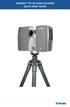 TRIMBLE TX5 3D LASER SCANNER QUICK START GUIDE Equipment 1 8 9 5 6 7 4 3 2 The TX5 laser scanner ships with the following equipment: 1 Scanner transport and carry case 6 USB memory card reader 2 AC power
SP AF 17~50 mm F/2.8 XR Di-II LD Aspherical [IF] (Model A16)
![SP AF 17~50 mm F/2.8 XR Di-II LD Aspherical [IF] (Model A16)](/thumbs/40/20837175.jpg "SP AF 17~50 mm F/2.8 XR Di-II LD Aspherical [IF] (Model A16)") SP AF 17~50 mm F/2.8 XR Di-II LD Aspherical [IF] (Model A16) Thank you for purchasing the Tamron lens as the latest addition to your photographic equipment. Di II lens (Digitally Intigrated) series are
SP AF 17~50 mm F/2.8 XR Di-II LD Aspherical [IF] (Model A16) Thank you for purchasing the Tamron lens as the latest addition to your photographic equipment. Di II lens (Digitally Intigrated) series are
SP AF 300mm F/2.8 LD [IF] for Canon (Model 360EE)
![SP AF 300mm F/2.8 LD [IF] for Canon (Model 360EE)](/thumbs/40/21493790.jpg "SP AF 300mm F/2.8 LD [IF] for Canon (Model 360EE)") SP AF 300mm F/2.8 LD [IF] for Canon (Model 360EE) We greatly appreciate your purchase of this Tamron lens. The Tamron SP AF 300mm F/2.8 LD [IF] is a fast telephoto lens developed for Canon AF single-reflex
SP AF 300mm F/2.8 LD [IF] for Canon (Model 360EE) We greatly appreciate your purchase of this Tamron lens. The Tamron SP AF 300mm F/2.8 LD [IF] is a fast telephoto lens developed for Canon AF single-reflex
TS-E24mm f/3.5l TS-E45mm f/2.8 TS-E90mm f/2.8 Instructions
 TS-E24mm f/3.5l TS-E45mm f/2.8 TS-E90mm f/2.8 ENG Instructions Thank you for purchasing a Canon product. Canon s TS-E lenses are tilt-shift lenses designed for EOS cameras. The tilt-shift mechanism enables
IMPORTANT SAFETY INSTRUCTIONS WARNING READ AND SAVE THESE OPERATING AND SAFETY INSTRUCTIONS BEFORE USING THIS HEATER.
 THERMAWAVE CERAMIC HEATER Model HZ-850 Series Model HZ-860 Series IMPORTANT SAFETY INSTRUCTIONS WARNING READ AND SAVE THESE OPERATING AND SAFETY INSTRUCTIONS BEFORE USING THIS HEATER. Warning Failure to
MAINTENANCE & TROUBLESHOOTING
 MAINTENANCE & TROUBLESHOOTING This section describes how to: clean the lens replace the projection lamp replace the batteries in the remote use the security lock feature troubleshoot the projector Cleaning
EF70-300mm f/4-5.6 IS USM
 EF70-300mm f/4-5.6 IS USM ENG Instruction Thank you for purchasing a Canon product. Dedicated to EOS cameras, the Canon EF70-300mm f/4-5.6 IS USM lens is a highperformance telephoto zoom lens equipped
18-270mm F/3.5-6.3 Di II VC PZD for Canon, Nikon (Model B008) 18-270mm F/3.5-6.3 Di II PZD for Sony (Model B008)
 R 18-270mm F/3.5-6.3 Di II VC PZD for Canon, Nikon (Model B008) 18-270mm F/3.5-6.3 Di II PZD for Sony (Model B008) Thank you for purchasing the Tamron lens as the latest addition to your photographic equipment.
AF 70~300 mm F/4-5.6 Di LD Macro 1:2 (Model A17)
 AF 70~300 mm F/4-5.6 Di LD Macro 1:2 (Model A17) Thank you for purchasing the Tamron lens as the latest addition to your photographic equipment. Di II lens (Digitally Integrated) series are designed for
aseries A13B Mini Bullet Camera User Manual
 aseries A13B Mini Bullet Camera User Manual Thank you for purchasing our product. If there are any questions, or requests, please do not hesitate to contact the dealer. This manual applies to the MicroView
Digital Photo Picture Frame. Operation Manual
 Digital Photo Picture Frame Operation Manual 20070309 CONGRATULATIONS on your purchase of a Polaroid 7 LCD Digital Photo Picture Frame. Please read carefully and follow all warnings and instructions in
=============================== WARNING
 =============================== WARNING EXPLANATION OF GRAPHICAL SYMBOLS This symbol is intended to alert the user to the presence of unprotected dangerous voltage" within the product's enclosure that
SP AF 90mm F/2.8 Di Macro 1:1 (Model 272E)
 SP AF 90mm F/2.8 Di Macro 1:1 (Model 272E) Thank you for purchasing this Tamron lens as the latest addition to your photographic equipment. Before using your new lens, please read the contents of this
Mercury Helios 2 ASSEMBLY MANUAL & USER GUIDE
 Mercury Helios 2 ASSEMBLY MANUAL & USER GUIDE TABLE OF CONTENTS INTRODUCTION...1 1.1 MINIMUM SYSTEM REQUIREMENTS 1.1.1 Apple Mac Requirements 1.1.2 PC Requirements 1.1.3 Supported PCIe Cards 1.2 PACKAGE
MAINTENANCE & TROUBLESHOOTING
 MAINTENANCE & TROUBLESHOOTING This section describes how to: clean the lens clean the fan intake filter replace the projection lamp replace the batteries in the remote control use the Kensington lock feature
BeoLab 1. User s guide
 BeoLab 1 User s guide Legal notice: CAUTION RISK OF ELECTRIC SHOCK DO NOT OPEN CAUTION: To reduce the risk of electric shock, do not remove cover (or back). No User-serviceable parts inside. Refer servicing
CAUTION RISK OF ELECTRIC SHOCK DO NOT OPEN
 BeoLab 4 Guide CAUTION RISK OF ELECTRIC SHOCK DO NOT OPEN CAUTION: To reduce the risk of electric shock, do not remove cover (or back). No User-serviceable parts inside. Refer servicing to qualified service
BeoLab 7-1 BeoLab 7-2. Guide
 BeoLab 7-1 BeoLab 7-2 Guide CAUTION: To reduce the risk of electric shock, do not remove cover (or back). No User-serviceable parts inside. Refer servicing to qualified service personnel. WARNING: To prevent
EF-S18-55mm f/3.5-5.6 IS II COPY ENG. Instruction
 EF-S18-55mm f/3.5-5.6 IS II ENG Instruction Thank you for purchasing a Canon product. The Canon EF-S18-55mm f/3.5-5.6 IS II lens is a high-performance standard zoom lens developed for digital SLRs compatible
Day / Night IR Color Camera User Manual V2.1.0
 Day / Night IR Color Camera User Manual V2.1.0 1 Thank you for purchasing our product. If there is any question or request, please do not hesitate to contact dealer. This manual is applicable to DS-2CC102P(N)-IR1(IR3)(IR5),
NewAir AC-10000E, AC-10000H Portable Air Conditioner Owner s Manual PLEASE READ AND SAVE THESE INSTRUCTIONS
 NewAir AC-10000E, AC-10000H Portable Air Conditioner Owner s Manual PLEASE READ AND SAVE THESE INSTRUCTIONS BEFORE USE GENERAL SAFETY INSTRUCTIONS: ALWAYS OPERATE THE UNIT IN AN UPRIGHT POSITION AND PLACE
Use and Care Manual. Model CPA12KH AIR CONDITIONER
 Use and Care Manual Model CPA12KH AIR CONDITIONER Introduction Thank you for choosing this air conditioner to provide you and your family with all of the "Home Comfort" requirements for your home, cottage
NOTE: Additional user information for your printer may be available in the "Manuals" section at support.dell.com.
 CAUTION: General Safety Instructions Use the following safety guidelines to help ensure your own personal safety and to help protect your equipment and working environment from potential damage. NOTE:
EF-S18-135mm f/3.5-5.6 IS
 EF-S18-135mm f/3.5-5.6 IS ENG Instruction Thank you for purchasing a Canon product. The Canon EF-S18-135mm f/3.5-5.6 IS lens is a high-performance high-magnification zoom lens equipped with an Image Stabilizer,
User Manual. RK-2d / RK-2t. dedicated KVM switch and rackmount screen technology. Designed and manufactured by Austin Hughes
 dedicated KVM switch and rackmount screen technology User Manual RK-2d / RK-2t 1U Short Depth Keyboard Drawer Designed and manufactured by Austin Hughes 751 Legal Information First English printing, October
Safety Precautions WARNINGS
 Safety Precautions This guide contains a variety of safety markings related to the safe and correct operation of the USB Data Transfer Cable. Be sure to read this guide and any related manuals carefully
CAUTION RISK OF ELECTRIC SHOCK DO NOT OPEN
 BeoLab 7-6 Guide CAUTION RISK OF ELECTRIC SHOCK DO NOT OPEN CAUTION: To reduce the risk of electric shock, do not remove cover (or back). No User-serviceable parts inside. Refer servicing to qualified
EF-S55-250mm f/4-5.6 IS STM COPY ENG. Instructions
 EF-S55-250mm f/4-5.6 IS STM ENG Instructions Thank you for purchasing a Canon product. The Canon EF-S55-250mm f/4-5.6 IS STM is a high-performance telephoto zoom lens that makes movie shooting comfortable.
OPERATOR S MANUAL 18 VOLT, 1 HOUR CHARGER
 OPERATOR S MANUAL 18 VOLT, 1 HOUR CHARGER P110 Your battery charger has been engineered and manufactured to Ryobi s high standard for dependability, ease of operation, and operator safety. When properly
focus TOuCh P10 FOR DISPLAYS: 55, 70 AND 82 ENgliSh V01.3-2014-7
 focus TOuCh P10 FOR DISPLAYS: 55, 70 AND 82 ENgliSh V01.3-2014-7 Thank you for purchasing our product. Please read this manual carefully before operation your set and retain it for future reference. FT55-P10
TABLE OF CONTENTS QUICK START... 1 DIAGRAM OF THE DIGITAL PHOTO FRAME... 2 KEYPAD BUTTON FUNCTIONS... 3 REMOTE CONTROL FUNCTIONS..
 TABLE OF CONTENTS QUICK START........ 1 DIAGRAM OF THE DIGITAL PHOTO FRAME... 2 KEYPAD BUTTON FUNCTIONS..... 3 REMOTE CONTROL FUNCTIONS..4 DIGITAL PHOTO FRAME NAVIGATION........5 OSD MENU FUNCTIONS..6
FLUORESCENT UV- RING LIGHT OPERATING INSTRUCTION
 FLUORESCENT UV- RING LIGHT OPERATING INSTRUCTION Caution! UV-radiation of this device is in the range of UV-A (320-400 nm). Direct exposure to eyes shall therefore be avoided. UV protection glasses shall
RL HW / RL HW+ / RL HGW / RL HV / RL HVPW/RL HVPW-G
 Auto-Levelling Rotary Laser Level RL HW / RL HW+ / RL HGW / RL HV / RL HVPW/RL HVPW-G 77-496 / 77-429 / 77-439 / 77-497 / 77-427/ 77-441 Please read these instructions before operating the product Auto-Levelling
Bulb Replacement REPLACING BULBS WARNING
 Bulb Replacement REPLACING BULBS Check the operation of all exterior lamps before you drive the vehicle. Caution: Before attempting to replace a bulb, ensure that both the affected lamp and the vehicle's
R&S ZVA-Z75, -Z110, -Z140, -Z170, -Z220, -Z325, -Z500 Converters Quick Start Guide
 R&S ZVA-Z75, -Z110, -Z140, -Z170, -Z220, -Z325, -Z500 Converters Quick Start Guide (=7ÔWÌ) 1307.7039.62 06 Test & Measurement Quick Start Guide This Quick Start Guide describes the following converter
Taurus Super-S3 LCM. Dual-Bay RAID Storage Enclosure for two 3.5-inch Serial ATA Hard Drives. User Manual March 31, 2014 v1.2 www.akitio.
 Dual-Bay RAID Storage Enclosure for two 3.5-inch Serial ATA Hard Drives User Manual March 31, 2014 v1.2 www.akitio.com EN Table of Contents Table of Contents 1 Introduction... 1 1.1 Technical Specifications...
Wide Range InfraRed (IR) Thermometer with Type K input and Laser Pointer
 User Manual Wide Range InfraRed (IR) Thermometer with Type K input and Laser Pointer MODEL 42515 Introduction Congratulations on your purchase of the Model 42515 IR Thermometer. The Model 42515 IR thermometer
USER INSTRUCTIONS FOR 10 LITRE PORTABLE DEHUMIDIFIER MODEL NO. DHMD102
 USER INSTRUCTIONS FOR 10 LITRE PORTABLE DEHUMIDIFIER MODEL NO. DHMD102 THANK YOU FOR CHOOSING YOUR NEW DEHUMIDIFIER. BEFORE USING THE UNIT READ THESE INSTRUCTIONS FULLY AND RETAIN THEM FOR FUTURE REFERENCE
NFC Communication Tray Model: HHX-IT3-Z
 INSTRUCTION MANUAL NFC Communication Tray Model: HHX-IT3-Z ENGLISH CONTENTS Introduction...3 Important safety information...4 Know your unit...6 Transferring data to the PC...7 Care and maintenance...8
OWNER S MANUAL Table Tennis Table Patent Pending
 OWNER S MANUAL Table Tennis Table Patent Pending Be sure to write your model number and serial number here for future reference. You can find these numbers printed on the bottom of the table. MODEL # T8179
FCC COMPLIANCE STATEMENT FOR AMERICAN USERS
 FCC COMPLIANCE STATEMENT FOR AMERICAN USERS This equipment has been tested and found to comply with the limits for a CLASS A digital device, pursuant to Part 15 of the FCC Rules. These limits are designed
WSD130 SOLDERING STATION
 NOTES S2032ACH 8/98 Rev. 11/01 WSD130 SOLDERING STATION 1. Power Switch 2. Digital Display 3. UP Button 4. DOWN Button 5. Optical Regulator, Right 6. Connection for Soldering Iron, Right 7. Selection Switch
Portable Air Conditioner
 Portable Air Conditioner Owner's Manual Model:3 in 1 12,000 Btu/h Series 3 Please read this owner s manual carefully before operation and retain it for future reference. CONTENTS 1. SUMMARY...1 2. PORTABLE
1. SAFETY INFORMATION
 RS-232 Sound Level Meter 72-860A INSTRUCTION MANUAL www.tenma.com 1. SAFETY INFORMATION Read the following safety information carefully before attempting to operate or service the meter. Use the meter
Radio BMR100 INSTRUCTION MANUAL. ENGLISH (Original instructions)
 ENGLISH (Original instructions) INSTRUCTION MANUAL Radio BMR00 WARNING: For your personal safety, READ and UNDERSTAND before using. SAVE THESE INSTRUCTIONS FOR FUTURE REFERENCE. Symbols The following show
User Manual. Video Doorphone CDV-1020AQ
 User Manual Video Doorphone CDV-1020AQ 513-11, Sangdaewon-dong, Jungwon-gu, Seongnam-si, Gyeonggi-do, Korea Int l Business Dept. Tel. : +82-31-7393-540~550 Fax. : +82-31-745-2133 Web site : www.commax.com
Single Lens Reflex (SLR) Camera
 690 Single Lens Reflex (SLR) Camera User Guide 690 Single Lens Reflex (SLR) Camera User Guide Contents IMPORTANT SAFEGUARDS: FCC Notice 1 Camera Features 1 Camera Parts 1 Opening the Camera 2 Closing the
Infrarot-Bewegungsmelder IP44
 Infrarot-Bewegungsmelder IP44 infrared motion sensors IP44 ODA (weiß) slim ODA (schwarz) slim 95174 96000 ODA (weiß) ODA (schwarz) 95175 96001 Betriebsanleitung User s Manual User s Manual infrared motion
SNQ-60x0-320 Series Data Center Switch. Quick Installation Guide
 Introduction This guide is to assist the reader with the most basic form of installation and connection to switches in this series. As there is more than one switch in this series, the diagrams might slightly
NewAir AC-10100E / AC-10100H Portable Air Conditioner Owner s Manual PLEASE READ AND SAVE THESE INSTRUCTIONS
 NewAir AC-10100E / AC-10100H Portable Air Conditioner Owner s Manual PLEASE READ AND SAVE THESE INSTRUCTIONS ELECTRICAL SAFETY This appliance is for indoor use only. Always turn off the unit and unplug
Adjustment functions for both span and shift have been incorporated
 SENSORS FOR SERIES LED Type Wafer Alignment Sensor FX-0-F FT-F9 FD-F7 EX-F70/F60 M SH-7 FD-L4 M-DW The use of a safe LED light beam now allows for high precision detection with a resolution of 0!m (.8
K E E P E TH T I H S I MA M N A U N A U L A FO F R
 Quad-C LED Moving Wash Pro SI-055 User Manual KEEP THIS MANUAL FOR FUTURE NEEDS 1. Unpacking Thank you for choosing Color Imagination s Quad-C LED Moving Wash Pro. For your own safety, please read this
VIDEO DOOR PHONE SYSTEM
 ENGLISH VIDEO DOOR PHONE SYSTEM USER MANUAL Manual covers IH-692 Master and IH-692 Slave Monitors PRECAUTIONS BEFORE INSTALLATION Connect this unit ONLY to other compatible units. Do not connect it to
COLOR VIDEO DOOR PHONE CDV-71BE/D
 COLOR VIDEO DOOR PHONE CDV-71BE/D 513-11, Sangdaewon-dong, Jungwon-gu, Seongnam-si, Gyeonggi-do, Korea Int l Business Dept. : Tel.; +82-31-7393-540~550 Fax.; +82-31-745-2133 Web site : www.commax.com Printed
Preface: HP w19 LCD Monitor
 Back to Contents Page Preface: HP w19 LCD Monitor About This Guide Notational Conventions About This Guide This guide is intended for anyone who uses the HP w19 LCD Monitor. It describes the monitor's
HYDRAULIC LIFT TABLE CART 2200-LB.
 HYDRAULIC LIFT TABLE CART 2200-LB. OWNER S MANUAL WARNING: Read carefully and understand all MACHINE ADJUSTMENT AND OPERATION INSTRUCTIONS before operating. Failure to follow the safety rules and other
Hygro-Thermometer + InfraRed Thermometer Model RH101
 User's Guide Hygro-Thermometer + InfraRed Thermometer Model RH101 Introduction Congratulations on your purchase of the Extech Hygro-Thermometer plus InfraRed Thermometer. This device measures relative
24 Wide Screen LED Monitor with HDMI
 24 Wide Screen LED Monitor with HDMI USER MANUAL L24LE11B_MANUAL_EN_R1 Please read this manual carefully before using, and keep it for future reference. TABLE OF CONTENTS GETTING STARTED Monitor Stand
15GAL STEEL OIL DRAIN WITH 110V PUMP
 15GAL STEEL OIL DRAIN WITH 110V PUMP OWNER S MANUAL WARNING: Read carefully and understand all ASSEMBLY AND OPERATION INSTRUCTIONS before operating. Failure to follow the safety rules and other basic safety
HP UPS R1500 Generation 3
 HP UPS R1500 Generation 3 Installation Instructions Part Number 650952-001 NOTE: The rating label on the device provides the class (A or B) of the equipment. Class B devices have a Federal Communications
IMPORTANT INSTRUCTIONS & OPERATING MANUAL. Houston 50 Inch Electric Wall Mounted Fireplace Black / White
 IMPORTANT INSTRUCTIONS & OPERATING MANUAL Houston 50 Inch Electric Wall Mounted Fireplace Black / White Model Number:MFE5050BK Model Number:MFE5050WH Read these instructions carefully before attempting
Senses SV series industrial monitor user manual
 Industrial Monitors Senses SV series Senses SV19 / SV17 User manual (Issue A) Part No: 85090084 Page 1 of 25 Copyright Copyright 2008 Amplicon Liveline Ltd. All rights reserved. This publication, including
8001782 Owner s Manual
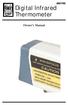 8001782 Digital Infrared Thermometer Owner s Manual Introduction This instrument is a portable, easy to use compact-size digital thermometer with laser sighting designed for one hand operation. The meter
How To Set Up An Ecm Display On A D210 (D210) (D2) (Ecm) (Emc) (Mcd) (Power Supply) (Mm) (Camellom) (Ios)
 English Customer Display DM-D210 Installation Manual 401285101 CAUTIONS This document shall apply only to the product(s) identified herein. No part of this document may be reproduced, stored in a retrieval
Business Audio System: Music & Messaging MP3 Player. by Grace Digital Audio. User Guide. Model No. GDI-USBM10
 Business Audio System: Music & Messaging MP3 Player by Grace Digital Audio User Guide Model No. GDI-USBM10 User Guide Contents Introduction 2 Safety & General Use Information 2 Features 3 Set Up & Operation
ENGLISH INSTRUCTION & INSTALLATION MANUAL DUCTLESS MINI SPLIT AIR CONDITIONING SYSTEMS
 ENGLISH INSTRUCTION & INSTALLATION MANUAL DUCTLESS MINI SPLIT AIR CONDITIONING SYSTEMS Céliera Corporation. All rights reserved. Unauthorized duplication, reproduction prohibited. CONTENTS SAFETY PRECAUTIONS...
EF24-105mm f/4l IS USM
 EF24-105mm f/4l IS USM ENG Instruction Thank you for purchasing a Canon product. The Canon EF24-105mm f/4l IS USM lens is a high-performance standard zoom lens developed for EOS cameras. It is equipped
PLL2210W LED LCD Monitor
 PLL2210W LED LCD Monitor USER'S GUIDE www.planar.com Content Operation Instructions...1 Safety Precautions...2 First Setup...3 Front View of the Product...4 Rear View of the Product...5 Quick Installation...6
Daily use. Never use alcohol or other solvents to clean any part of the loudspeakers!
 BeoLab 6002 Guide WARNING: To reduce the risk of fire or electric shock, do not expose this appliance to rain or moisture. Do not expose this equip ment to dripping or splashing and ensure that no objects
ClearView+ User Manual
 ClearView+ ClearView+ User Manual Rev. 2.0, December 2005 All rights, in particular the rights of reproduction as well as translation, are reserved. No parts of this manual may be copied, in any form whatsoever,
Wireless Indoor/ Outdoor Thermometer
 Wireless Indoor/ Outdoor Thermometer Owner s Manual Please read before using this equipment. ˆ Contents FCC Information... 3 FCC Declaration of Conformity... 5 Preparation... 5 Installing Batteries...
HP SATA/SAS hard drive and Solid State Drive installation
 HP SATA/SAS hard drive and Solid State Drive installation This document describes how to install Serial ATA (SATA) and Serial Attached SCSI (SAS) hard drives or Solid State Drives (SSD) in an internal
Original Assembly Guide
 TCT Multipurpose Single Bevel Sliding Compound Mitre Saw Original Assembly Guide Read instructions before assembling this tool. Table of Contents GB Assembly Guide Read instructions before assembling this
How To Install A Gel Doc Xr+ Camera On A Computer Or Mouse Or Tv (For A Powerbook) With A Zoom Lens (For An Ipa) With An Iphone Or Ipa (For Mac) With The Zoom Lens
 Molecular Imager Gel Doc XR+ Installation Guide To install your Gel Doc XR+, perform these seven steps in the following order: 1. Unpack the Gel Doc XR+ system. 2. Install Image Lab software. 3. Set up
Bullet Camera. Installation Guide. Hangzhou Hikvision Digital Technology Co., Ltd. http://www.hikvision.com
 Bullet Camera Installation Guide Hangzhou Hikvision Digital Technology Co., Ltd. http://www.hikvision.com 1 Thank you for purchasing our product. If there are any questions, or requests, please do not
MICA HEATER INSTRUCTION MANUAL Model No: UHM-786 230V 50Hz 2200W
 MICA HEATER INSTRUCTION MANUAL Model No: UHM-786 230V 50Hz 2200W Safety Precautions To reduce the risk of personal injury or damage to property, basic safety precautions must be observed including the
Wolverine 35mm Film to Digital Converter. Model F2D USER MANUAL
 Wolverine 35mm Film to Digital Converter Model F2D USER MANUAL Version 1.01 December 2008 TABLE OF CONTENTS DESCRIPTION PAGE Table of Contents 1 Before Using the F2D Converter 3 FCC Certifications 3 Warning
INSTALLATION INSTRUCTIONS for Bifold Doors (JII103)
 Thank you for selecting JELD-WEN products. Attached are JELD-WEN s recommended installation instructions for premium composite, hollow and solid core molded Bifold Doors. Bifolds are designed for fast
SMD Rework Station TABLE OF CONTENTS
 SMD Rework Station Thank you for purchasing the Hakko 50B SMD Rework Station. The Hakko 50B is designed to solder and desolder surface mounted devices with hot air. Please read this manual before operating
CAUTION RISK OF ELECTRIC SHOCK DO NOT OPEN
 BeoLab 4000 Guide CAUTION RISK OF ELECTRIC SHOCK DO NOT OPEN CAUTION: To reduce the risk of electric shock, do not remove cover (or back). No User-serviceable parts inside. Refer servicing to qualified
W850. Maintenance Guide
 W850 Maintenance Guide August 2011 www.lexmark.com Contents...3 Cleaning the exterior of the printer...3 Storing supplies...3 Conserving supplies...3 Checking the status of supplies...4 Checking the status
When you switch off your system, or mute the sound, the red indicator light appears immediately, indicating that the subwoofer is not in use.
 BeoLab 11 Guide WARNING: To reduce the risk of fire or electric shock, do not expose this appliance to rain or moisture. Do not expose this equip ment to dripping or splashing and ensure that no objects
Instruction Manual for IV-08MTV LCD Color Monitor
 Version 1.3 Created in December 2004 Instruction Manual for IV-08MTV LCD Color Monitor Thank you for purchasing our IV-08MTV LCD Color Monitor. Before using it, read this manual carefully to become familiar
Network Bullet Camera. Quick Operation Guide KNC-p3BR28V12IR
 Network Bullet Camera Quick Operation Guide KNC-p3BR28V12IR Thank you for purchasing our product. If there are any questions, or requests, please do not hesitate to contact the dealer. About This Document
Operating instructions Diffuse reflection sensor with background suppression O1D101 O1D104 706114 / 00 01 / 2012
 Operating instructions Diffuse reflection sensor with background suppression O1D101 O1D104 706114 / 00 01 / 2012 Contents 1 Preliminary note 3 1.1 Symbols used 3 1.2 Warning signs used 3 2 Safety instructions
e-4 AWT07MLED 7 Q TFT LCD MONITOR (LED Backlighted) USER MANUAL
 Thank you for purchasing our product. Please read this User s Manual before using the product. Change without Notice AWT07MLED 7 Q TFT LCD MONITOR (LED Backlighted) USER MANUAL e-4 SAFETY PRECAUTIONS Federal
GPS AutoSteer System Installation Manual
 GPS AutoSteer System Installation Manual Supported Vehicles John Deere Sprayers 4720 4630 4730 4830 AutoTrac Ready PN: 602-0227-01-A LEGAL DISCLAIMER Note: Read and follow ALL instructions in this manual
LBP-1210 Laser Printer
 LBP-1210 Laser Printer Getting Started Guide IMPORTANT: Read this manual carefully before using your printer. Save this manual for future reference. Copyright Copyright 2002 Canon Inc. All information
Care and Handling of Your VAIO Computer
 Care and Handling of Your VAIO Computer Proper Handling Use your computer on a clean dry, stable surface. Use only specified peripheral equipment and interface cables or you may experience problems. When
Hardware Guide for the Classic and Elite CR Systems. 2011-08-04 PN 9G9637 Version 1.0
 Hardware Guide for the Classic and Elite CR Systems 2011-08-04 PN 9G9637 Version 1.0 Use of the Content Carestream Health CR Systems are designed to meet international safety and performance standards.
User Manual AUDIO OUT OFF 9V DC USB POWER. Digital On-Hold Audio System with analog line capability
 MP On-Hold Audio System User Manual memory card IMPEDANCE PHONE LINES on speaker off ON OFF 9V DC USB AUDIO OUT 8Ω 6Ω // /4 POWER Digital On-Hold Audio System with analog line capability al /06 Before
3M Wrist Strap and Footwear Tester 740. User s Guide
 3M Wrist Strap and Footwear Tester 740 User s Guide Table of Contents Section Page Safety Information...3 1.0 General...4 2.0 Description...4 3.0 Operation...5 4.0 Wall Mounting...5 5.0 Wrist Strap Test...6
Express5800/120Ed. Rack Mount Kit Installation Procedures PN: 455-01607-001
 Express5800/120Ed Rack Mount Kit Installation Procedures PN: 455-01607-001 Proprietary Notice and Liability Disclaimer The information disclosed in this document, including all designs and related materials,
Power Supply Guide Version 1.0 for D-Show
 Power Supply Guide Version 1.0 for D-Show Digidesign 2001 Junipero Serra Boulevard Daly City, CA 94014-3886 USA tel: 650 731 6300 fax: 650 731 6399 Technical Support (USA) tel: 650 731 6100 fax: 650 731
Wall-Mounting your HP computer. User Guide
 Wall-Mounting your HP computer User Guide The only warranties for Hewlett-Packard products and services are set forth in the express statements accompanying such products and services. Nothing herein should
WARNING CANADIAN D.O.C. WARNING
 Each product and program carries a respective written warranty, the only warranty on which the customer can rely. Avery Dennison Corp. reserves the right to make changes in the product, the programs, and
EF70-200mm F2.8L IS USM. Instruction
 EF70-200mm F2.8L IS USM Instruction Thank you for purchasing a Canon USM lens. The Canon EF 70-200mm f/2.8l IS USM is a high-performance, telephoto zoom lens dedicated to Canon EOS cameras. It is equipped
WARNING: To prevent fire or electric shock, do not expose this appliance to rain or moisture.
 BeoVision 4 1 Guide CAUTION: To reduce the risk of electric shock, do not remove cover (or back). No User-serviceable parts inside. Refer servicing to qualified service personnel. WARNING: To prevent fire