
ÄKTA Laboratory-scale Chromatography Systems
|
|
|
- Gwendoline Harris
- 9 years ago
- Views:
Transcription
1 GE Healthcare Life Sciences ÄKTA Laboratory-scale Chromatography Systems Instrument Management Handbook imagination at work

2 GE Healthcare Life Sciences Principles and Methods GE Healthcare Life Sciences Principles and Methods GE Healthcare Life Sciences Instrument Management Handbook GE Healthcare Life Sciences GE Healthcare Life Sciences GE Healthcare Life Sciences imagination at work Sensor Surface Handbook GE Healthcare Life Sciences Methodology and applications GE Healthcare Life Sciences GE Healthcare Life Sciences Handbook GE Healthcare Life Sciences Principles and Methods GE Healthcare Life Sciences Handbook GE Healthcare Life Sciences Principles and Methods GE Healthcare Life Sciences Principles and Methods GE Healthcare Life Sciences UV Laser epi trans 312 UV CCD 365 epi GE Healthcare Life Sciences Principles and Methods GE Healthcare Life Sciences Methodology and applications GE Healthcare Life Sciences Principles and Methods GE Healthcare Life Sciences Handbook imagination at work IR W IR GE Healthcare Life Sciences Principles and Methods GE Healthcare Life Sciences Handbook GE Healthcare Life Sciences Principles and Methods GE Healthcare Life Sciences Principles and Methods GE Healthcare Life Sciences Handbook GE Healthcare Life Sciences Handbook GE Healthcare Life Sciences Handbooks from GE Healthcare Life Sciences For more information refer to 2-D Electrophoresis 2-D Electrophoresis using Immobilized ph Gradients Principles and Methods Size Exclusion Chromatography Size Exclusion Chromatography Principles and Methods Nucleic Acid Sample Preparation for Downstream Analyses Nucleic Acid Sample Preparation for Downstream Analyses Principles and Methods Affinity Chromatography Principles and Methods GST Gene Fusion System Handbook Protein Sample Preparation Handbook Affinity Chromatography GST Gene Fusion System Protein Sample Preparation ÄKTA Laboratory-scale Chromatography Systems ÄKTA Laboratory-scale Chromatography Systems Instrument Management Handbook High-throughput Process Development with PreDictor Plates High-throughput Process Development with PreDictor Plates Principles and Methods Purifying Challenging Proteins Purifying Challenging Proteins Principles and Methods Antibody Purification Handbook Antibody Purification Handbook Hydrophobic Interaction and Reversed Phase Chromatography Hydrophobic Interaction and Reversed Phase Chromatography Principles and Methods Recombinant Protein Purification Recombinant Protein Purification Handbook Principles and Methods Biacore Biacore Assay Handbook Assay Handbook Imaging Principles and Methods Spectrophotometry Handbook Imaging Principles and Methods Spectrophotometry Biacore Biacore Sensor Surface BR Ion Exchange Chromatography & Chromatofocusing Ion Exchange Chromatography and Chromatofocusing Principles and Methods Strategies for Protein Purif ication Strategies for Protein Purification Handbook Cell Separation Media Cell Separation Media Methodology and Applications Isolation of mononuclear cells Isolation of Mononuclear Cells Methodology and Applications Western Blotting Principles and Methods Western Blotting Principles and Methods CrossFlowFiltration MethodHandbook Cross Flow Filtration Method Handbook Microcarrier Cell Culture Principles and Methods Microcarrier Cell Culture Design of Experiments in Protein Production and Purification Design of Experiments in Protein Production and Purification Handbook Multimodal Chromatography Multimodal Chromatography Handbook

3 ÄKTA Laboratory-scale Chromatography Systems Instrument Management Handbook

4 Contents Chapter 1 Introduction...5 Common acronyms and abbreviations... 5 Chromatography terminology... 6 Symbols... 6 Chapter 2 Liquid chromatography systems and important considerations...7 Overview of chapters... 8 Chapter 3 System volume effects on resolution and fraction collection Tubing dimensions affect resolution...11 Peak broadening after the UV/Vis detector...12 System volume considerations...13 Effect of sample volume on resolution...14 Chapter 4 How to choose sample injection technique Tubing loop...15 Superloop...17 Autosampler...20 Sample loading using a pump...21 Chapter 5 Liquid delivery and pumps Conditioning the pump for accurate liquid delivery...23 Description of the pump and rinsing system...25 Air sensor to protect column...27 Chapter 6 Gradient formation and mixers Choosing mixer size...29 Conductivity disturbances...29 Gradient delay volume AB

5 Chapter 7 System pressure Back pressure effects...33 Tubing contribution to back pressure...34 Pressure alarms...34 Pressure monitoring...35 The effect of back pressure on column and packed bed...36 Function of a flow restrictor...37 Removal of flow restrictor...38 Troubleshooting high back pressure...39 Viscous samples and solutions...39 Pressure-controlled sample application...40 Chapter 8 Sample monitoring and detectors Monitoring UV/Vis absorbance...43 Monitoring conductivity...46 Monitoring ph...47 Other detectors...47 Chapter 9 Fraction collection Straight fractionation and peak fractionation...49 Fractionation delay volume...50 Spillage-free fractionation...51 Chapter 10 Cleaning and storage of system components Cleaning the system...54 System storage...54 Cleaning recommendations...55 Appendix System components in laboratory-scale ÄKTA systems Appendix 2 Tubing guide Tubing material and dimensions...63 Internal volume...64 Back pressure AB 3

6 Appendix 3 Determination of delay volumes Theoretical determination (preferred method)...65 Experimental methods...66 Appendix 4 Troubleshooting column issues Appendix 5 Troubleshooting fraction collection Appendix 6 Introducing laboratory-scale ÄKTA systems Upgraded ÄKTA system platform...76 Appendix 7 Principles and standard conditions for different purification techniques Affinity chromatography (AC)...77 Immobilized metal ion affinity chromatography (IMAC)...79 Size exclusion chromatography (SEC)...80 Ion exchange chromatography (IEX)...83 Hydrophobic interaction chromatography (HIC)...86 Reversed phase chromatography (RPC)...88 Chromatofocusing (CF)...89 Appendix 8 Columns for ÄKTA systems Prepacked columns...90 Empty columns...92 Appendix 9 Chemical resistance guide List of chemicals...96 Wetted materials...99 Related literature Ordering information AB

7 Chapter 1 Introduction This handbook, ÄKTA Laboratory-scale Chromatography Systems, is focused on liquid chromatography systems used for protein purification at research laboratory scale. Beginners can use the handbook to obtain an overview of how purification systems work and to learn about important considerations for achieving successful results. Experienced system users will also find valuable and detailed information on different hardware modules. A chromatography system should be used when reproducible results are important and when manual purification becomes too time-consuming and inefficient. Systems provide more control than manual purification because of the ability to automatically control the flow rate and monitor the progress of the purification as well as to make controlled gradients and automatically collect fractions. Systems can perform automatic, simple, step-gradient elution as well as high-resolution separations using accurately controlled linear-gradient elution. This handbook addresses different aspects of ÄKTA chromatography systems, such as the effect of system peak broadening on resolution, choosing sample injection technique, and selecting an appropriate mixer. It also gives straightforward advice on how to avoid problems such as air bubbles in the pump, how to troubleshoot problems such as high back pressure, and how to perform cleaning of system components. The appendices include a general introduction to the different ÄKTA laboratory-scale systems and columns as well as information on how to determine exact delay volumes for a specific system. Common acronyms and abbreviations A 280 AC CF CIP CV DS FPLC GF HIC i.d. IMAC IEX mau MPa mpas o.d. PM RPC R s s SEC UV/Vis Absorbance of light at specified wavelength, in this example, 280 nanometers Affinity chromatography Chromatofocusing Cleaning-in-place Column volume Desalting (group separation by gel filtration; buffer exchange) Fast protein liquid chromatography Gel filtration (sometimes referred to as SEC; size exclusion chromatography) Hydrophobic interaction chromatography Inner diameter Immobilized metal affinity chromatography Ion exchange chromatography (also seen as IEC in the literature) Milli absorbance unit MegaPascal; unit of pressure Unit for viscosity (1 mpas = 1 cp, i.e., 1 centipoise) Outer diameter Preventive maintenance Reversed phase chromatography Resolution, the degree of separation between peaks Second(s) Size exclusion chromatography (same as gel filtration) Ultraviolet/visible light AB 5

8 Chromatography terminology Back pressure Chromatogram Chromatography Chromatography medium/media CIP (cleaning-in-place) Column Column hardware Column hardware pressure Degassing Delay volume Efficiency Flow rate Flow velocity Inline Medium/media Peak broadening Pressure over the packed bed Resolution Selectivity System volume The pressure caused by column or system components in the system flow path. A graphical presentation of detector response(s). From Greek chroma, color, and graphein, to write. The stationary phase, also called resin. The chromatography medium is often composed of a porous matrix (base matrix). The matrix is usually functionalized by coupling it with ligands that can bind molecules to be separated. Common term for cleaning chromatography columns and/or systems with the purpose of removing unwanted/nonspecifically bound material. Usually column hardware packed with chromatography medium. The column tube and adapters. All pieces of the column except the chromatography medium/the packed bed. The pressure inside the column during chromatography. Column hardware pressure that is too high can break the column. Removal of dissolved air from buffers/solutions. The volume corresponding to a part of the system. Fractionation delay volume is the volume of tubing and system components between a monitor and the fraction collector. Gradient delay volume (also called dwell volume) relates to the volume between the point where two solutions are mixed and the column. Measured as number of theoretical plates. High efficiency means that sharp peaks will be obtained. Flow through a column and/or chromatography system. Expressed in ml/min. Flow rate divided by the cross-sectional area of a column. Expressed in cm/h. A component that is part of the flow path. Same as chromatography medium/media. The widening of a zone of solute (e.g., a protein) when passing through a column or a chromatography system. Gives rise to dilution of the solute and reduces resolution. Also termed band broadening or zone broadening. The pressure drop across the packed bed upon passage of solution through the column. Caused by flow resistance in the packed bed. Measurement of the ability of a packed column to separate two solutes (peaks). Measure of the relative retention of two solutes in a column. Related to the distance between two peaks. The total volume of all tubing and system components outside the packed chromatography bed. (Sometimes referred to as system dead volume.) Symbols This symbol indicates general advice on how to improve procedures or recommends measures to take in specific situations This symbol indicates where special care should be taken AB

9 Chapter 2 Liquid chromatography systems and important considerations A number of benefits can be derived from using an automated protein purification system. Such a system: Ensures more controlled conditions and reproducible results Purifies proteins automatically without the need for user interactions during the run Allows sensitive samples to be purified more efficiently Allows use of high-resolution media Provides inline detection that helps in making decisions, for example, when the column has become equilibrated, when to collect fractions, etc. Allows automated collection of purified protein in small or large volumes Uses software that makes it easy to create methods, monitor runs, and evaluate results Protein separation takes place in a column. Buffers and other liquids are delivered via the system pump, and sample can be applied in different ways (e.g., using a syringe to fill a sample loop or by using a sample pump). Detectors (e.g., UV/Vis absorbance, conductivity, ph) are placed after the column to monitor the separation process. The purified proteins are collected in the fraction collector. Figure 2.1 shows a typical system s flow path. Sample Mixer Tubing Pumps Injection valve Column Buffers/ solutions Fraction collector ph Conductivity UV/Vis absorbance Fig 2.1. Typical flow path for a chromatography system AB 7

10 Overview of chapters This section provides a short description of Chapters 3 to 10. Peak broadening and resolution To obtain a pure product it is important to optimize the system s flow path, assuring that it matches the column performance. A poor match where system volume is too large can result in diluted peaks with decreased resolution and less pure protein (Fig 2.2). Tubing that is too narrow might result in back pressure that is too high for the column hardware. Learn more about how to avoid these problems in Chapter 3, System volume effects on resolution and fraction collection. Fig 2.2. Peak broadening in tubing. Liquid flows faster in the middle of a tube as compared with closer to the walls. The farther a protein peak passes through a tube, the broader it becomes, as depicted in the chromatograms shown on the right. Sample loading The sample is typically applied to the column using either a prefilled sample loop or a pump. Learn more about the different techniques and when to use them in Chapter 4, How to choose sample injection technique. Liquid delivery The performance of the pump is important for ensuring reliable and reproducible results. One common cause of unsuccessful chromatography is air bubbles in the pump. This can cause pulsations in the flow delivery, resulting in an inaccurate flow rate. This effect can be observed as disturbances in the pressure curve. Learn how to condition the pump in a proper manner, as described in Chapter 5, Liquid delivery and pumps. See also Figure 2.3. Fig 2.3. Remove air bubbles by using a syringe to draw liquid from the purge valves. The figure shows a pump head from ÄKTA avant AB

11 Buffer mixing The mixer has two important functions in the system. The first is to provide a homogeneous mix during gradient formation where two or more liquids are used to create the gradient. The second is to even out pulsation effects from the pump. The mixer that is delivered with the system will cover most of the applications within the flow rate range of the system, but in some cases it might be necessary to switch to a mixer of a different volume to obtain optimal results. See Chapter 6, Gradient formation and mixers, for more information on this topic. See also Figure 2.4. Elution buffer (%B) Programmed gradient (%B) Conductivity curve; correct mixer Conductivity curve; mixer too large Distorted gradient Mixers of different sizes Volume (ml) Fig 2.4.The actual gradient will differ from the programmed gradient column in a system with too large a mixer. Pressure High-performance media used to achieve high resolution require a high-performance pump that can operate under high pressure. Generally, such pumps can generate a higher pressure than the column hardware and media can withstand. It is therefore important to monitor the system pressure so that it does not exceed the limits of the column. Read more about this in Chapter 7, System pressure. Detectors Different detectors are used to follow the progress of the purification. For protein detection, multiple wavelength absorbance detectors are often used. The majority of proteins can be detected by measuring UV absorbance at 280 nm, but other wavelengths can also be used to gather additional information (see example in Fig 2.5). The conductivity monitor is used to follow column equilibration and salt gradient formation. For some applications it is important to also monitor ph. For more information see Chapter 8, Sample monitoring and detectors. Absorbance (mau) A 280 A 490 Conductivity Volume (ml) Fig 2.5. Specific detection of green fluorescent protein (GFP) at 490 nm AB 9

12 Fraction collection Absorbance Preparative purification requires that the purified protein can be collected and fractionated. The eluted materials are collected in fractions using a fraction collector or an outlet valve. See Chapter 9, Fraction collection, for information about different ways of controlling protein peak fractionation and what the important parameters are for successful Volume protein collection. See also Figure 2.6. (B) Peak fractionation Absorbance Volume C) Straight/fixed fractionation and Peak fractionation Fig 2.6. During this run, peak fractionation was used to collect the eluted proteins. System cleaning To ensure the long-term performance of the system, regular maintenance is important. When not using the system for some time, it is important to store it properly. Chapter 10, Cleaning and storage of system components, describes how to properly clean the different components of the system. To minimize the risk of salt precipitation that can damage the seals, avoid long-term exposure of system components to high salt concentrations. Absorbance Volume AB

13 Chapter 3 System volume effects on resolution and fraction collection This chapter describes how the internal volume of the system affects liquid transportation and protein purification results. The main applications for protein chromatography are either to analyze a protein sample or to prepare pure protein, sometimes referred to as preparative purification. For a successful result in both of these applications, high resolution is often important. High resolution is obtained by the use of chromatography media with combined high selectivity and efficiency. High selectivity ensures that the protein is bound to the media. High efficiency means that the protein peaks obtained are narrow and that good separation can be achieved between them. Analytical chromatography systems generally handle small sample volumes. To minimize sample dilution and loss, components in an analytical system should have small internal volumes and allow usage of high-resolution media. In preparative chromatography, it is important to use a chromatography medium and column that generate an appropriate resolution. It is important to keep the distance between the column and the fraction collector short to avoid dilution of the separated proteins. This is also important when purifying small amounts of protein to avoid protein losses due to dilution effects. Tubing dimensions affect resolution All components in the system (flow cells, valves, etc.) must in some way be connected to each other with tubing. Excess tubing will give unnecessary peak broadening, that is, the separated proteins will be diluted, and resolution (purity obtained) will be decreased. Peak broadening is due to the flow rate in the tubing being higher toward the middle compared with close to the walls of the tubing. The result is that a protein peak passing through the system will become broader as it moves through the tubing, as illustrated in Figure 3.1. Fig 3.1. Schematic description of protein peak broadening in tubing. Liquid flows faster in the middle of a tube as compared with closer to the walls. The farther a protein peak passes through a tube, the broader it becomes, as depicted in the chromatograms shown on the right AB 11

14 To achieve the best purification result, it is important to find the optimal tubing parameters for the purification setup. Figure 3.2 shows an example in which a sample was analyzed using tubing of different inner diameters (i.d.). Here, the resolution is most affected when going from 0.75 mm to 0.25 mm i.d. tubing. Decreasing the tubing diameter further will not have a large effect on the resolution. At the same time, the back pressure in the system will increase as tubing diameter is decreased. This must also be taken into consideration. Tubing i.d., 0.75 mm Tubing i.d., 0.50 mm Tubing i.d., 0.25 mm Tubing i.d., 0.15 mm Abs. (mau) Vol. (ml) Vol. (ml) Vol. (ml) Vol. (ml) Abs. (mau) Fig 3.2. The resolution increases as the tubing diameter decreases. Column: Superdex 200 5/150 GL (CV t 3 ml). Flow rate: 0.3 ml/min. Abs. (mau) Abs. (mau) Peak broadening after the UV/Vis detector In a given chromatogram, the UV/Vis absorbance curve shows the purification result as it was while the proteins passed the absorbance detector. What happens between the UV/Vis absorbance detector and the fraction collector is not visible in the chromatogram. This hidden effect can sometimes be dramatic, especially for high-resolution columns. Figure 3.3 shows the effect of using larger i.d. and/or longer tubing and thereby increasing the system volume. The consequence of increasing the system volume is that the high resolution obtained in the column might be spoiled as the protein peaks progress to the fraction collector. Use tubing that is as short as possible between the absorbance detector and the fraction collector. Outlet valve UV/Vis absorbance Conductivity ph Fraction collector Optimal system setup Increased tubing i.d. and/or length between the UV/Vis absorbance detector and the fraction collector This is the peak separation at the UV/Vis absorbance detector. It is also what is displayed on the chromatogram. This is the actual separation obtained in the fraction collector. Fig 3.3. Consequence of the hidden system contribution if using tubing that is too long or that has a large i.d. between the UV/Vis absorbance detector and the fraction collector AB

15 In a system designed for high-performance separations, the recommendation is to use narrow and short tubing to keep the peak broadening low. The drawback is that narrow tubing will increase the back pressure. Read more about this in Chapter 7, System pressure. An optimal combination of tubing length and i.d. is required to achieve the resolution needed and at the same time keep the back pressure within the pressure limit of the column used. System volume considerations For a given chromatography system, the relative system contribution to peak broadening will depend on both the bead size of the chromatography medium and column dimensions. Small beads and narrow columns result in narrow peaks (a high-performance column), whereas large beads and wide columns result in wide peaks. The system volume can contribute significantly to the peak broadening of a narrow peak, but will contribute almost nothing to a wide peak. As illustrated in Figure 3.4, the system effect on resolution will be much larger for smaller peaks. Peak volume Watch out for the system volume + System contribution (peak broadening) Narrow peak from column Final peak broadened I don t care + System contribution (peak broadening) Wide peak from column Final peak similar Fig 3.4. Smaller peaks are more affected than larger peaks (same system in both cases). It is important to know that the effect of the system contribution on the peak width is nonlinear, as can be seen in Figure 3.5. This graph shows the contribution from a typical laboratory-scale system with 0.5 mm i.d. tubing. In this example, the system contribution has little effect on peaks that are larger (broader) than 3 to 4 ml. On the other hand, if the peaks are less than 1 ml, the system contribution becomes significant AB 13

16 (A) Peak broadening (%) Peak width (ml) (B) Abs. (mau) Peak width (ml) Fig 3.5. (A) The relative system contribution depends on the peak width. (B) Peak width is in this example determined at the half height of the peak. Besides tubing diameter, peak broadening is also affected by tubing length and the dimensions of valves and flow cells. It is therefore important to determine if the column to be used is suitable for the system. Do not run smaller columns than recommended for the system (see the selection guide in Related literature). If a smaller column is needed, consider minimizing the system volume by modifying the system, for example, by changing tubing to a smaller i.d. and/or excluding components from the flow path to minimize the system volume. If making hardware changes that will affect the system volume, remember to update relevant delay volumes in the software. (For more information refer to Chapter 9 and Appendix 3). Effect of sample volume on resolution Sample volume does not affect resolution in chromatography techniques involving adsorption of the target protein onto the column. Examples of binding techniques are affinity chromatography (AC), ion exchange chromatography (IEX), and hydrophobic interaction chromatography (HIC). Size exclusion chromatography (SEC), however, is a nonbinding chromatography technique, and a sample zone is therefore broadened during passage through the SEC column. As a result, the sample gets diluted, and the resolution will decrease with increasing sample volume. Figure 3.6 shows an SEC example in which different volumes of a sample were applied to a Superdex /300 GL column. In the first case, 250 µl of sample was applied, which correspond to 1% of the column volume. In the second case, 1000 µl of sample was applied, which corresponds to 4% of the column volume. As can be seen, the resolution was higher when a smaller sample volume was used. 250 µl, 1.0 ml/min (76 cm/h) 1000 µl, 1.0 ml/min (76 cm/h) A A 280 1% % Time (min) Time (min) Fig 3.6. Effect of sample volume on resolution in SEC. Sample volume as percentage of media volume. Column: Superdex /300 GL AB The loaded sample volume should be kept small when using a nonbinding chromatography technique. To achieve the highest resolution in SEC, a sample volume of less than 2% of the total column volume is recommended.

17 Chapter 4 How to choose sample injection technique There are three common ways of applying the sample to the column: 1. From a prefilled sample loop 2. Direct injection via the sample pump 3. Direct injection via the system pump Table 4.1. Sample application techniques Technique Sample volume Important Benefit Tubing loop Small 10 µl to 10 ml Filling and emptying the loop in a correct manner Handles small volumes High reproducibility Minimizes sample loss if partially filled Can be used at high pressure Superloop Intermediate 100 µl to 150 ml Filling and cleaning the loop Minimizes sample loss Allows repeated injections without manual interactions in-between Sample or system pump Large 5 ml* to several liters Removing air bubbles from pump Priming the tubing with buffer/ sample before start Cleaning the pump afterward * Sample volume in the lower range requires tubing with small i.d. to minimize sample loss. Is convenient for large volumes Tubing loop Tubing loops are used for smaller sample volumes. The loop must be filled and emptied in a correct manner. Reproducibility when using a loop will be high because the sample application is independent of any variation in flow rate. Sample loops of different volumes are available, ranging from a few microliters up to 10 ml. When filling the loop it is important to consider the fluid dynamics, as explained in Figures 4.1 and 4.2. The flow rate of the sample entering the loop will be higher toward the middle compared with close to the walls of the tubing; this creates a parabolic flow profile in the loop (Fig 4.1). Thus, in order to fill the loop completely, a larger volume needs to be loaded, which is explained in the next section and illustrated in Figure 4.2. Fluid dynamics This is a common view of a sample s flow in tubing, but it is not correct. This is the way the sample actually flows. Fig 4.1. Fluid dynamics through tubing AB 15

18 Filling a tubing loop There are two ways to fill a tubing loop: partial filling and overfilling; see Figure 4.2. With partial filling, there is no sample loss but reproducibility is lower if the same procedure is repeated. With overfilling, a better volume accuracy is obtained. For a complete fill, load three to five times the loop volume to obtain high accuracy. The needed volume depends on the loop dimensions (length and i.d.). Generally, the larger the loop volume the less overfill is needed. For a partially filled sample loop, do not fill more than half of the total loop volume. If more is applied, a portion of the sample might pass through and out of the loop, as shown in Figure 4.2. Partial filling minimal sample loss 50 µl load 60 µl load 100 µl load 200 µl load Overfilling high reproducibility 100 µl sample loop Fig 4.2. Filling a sample loop (here i.d. was 0.50 mm). Emptying a tubing loop To avoid dilution when emptying a tubing loop, empty it in the opposite direction from which it was filled. The volume to achieve complete recovery will vary with the flow rate, loop dimensions, and the properties of the sample, but usually three to five times the loop volume is sufficient. Figure 4.3 shows an example of the recovery achieved at different volumes when emptying a 100 µl loop at 0.5 ml/min. To empty the loop completely, in this example a buffer volume corresponding to three times the loop volume was needed. A 280 Loop volume: 100 µl Flow rate: 0.5 ml/min Loop volume Sample recovery (%) Fig 4.3. The elution profile and recovery when emptying the contents of a completely filled sample loop. In this setup a tubing loop with i.d mm was used AB

19 To achieve high sample recovery, use a large volume to empty the loop. For nonbinding techniques (e.g., desalting and SEC), there are sample volume limitations due to the size of the column used. Figure 4.4 shows an example of how resolution can be improved by decreasing the volumes used to empty the loop during sample injection. This is a common way of working when analytical studies are performed. 3 loop volumes 1 loop volume A 280 (mau) Column: Superdex 200 5/150 GL Loop volume: 50 µl Flow rate: 0.3 ml/min Volume (ml) Fig 4.4. The chromatogram shows how the separation in SEC is affected by the different volumes used to empty the loop during sample injection. Superloop Before starting, decide whether the most important aim is high recovery or high resolution. Superloop is available in three different sizes, 10, 50, and 150 ml, and can be used for sample volumes in the range of 100 µl to 150 ml. They can be used to inject the complete sample volume onto the column or to make repeated injections of a sample without manual interactions in between. Figure 4.5 depicts a 10 ml Superloop. Buffer Moveable seal Sample Fig 4.5. Schematic drawing of a 10 ml Superloop AB 17

20 How to fill and empty a Superloop A Superloop is connected to the injection valve and is initially filled with buffer. Sample is loaded from the bottom, either manually using a syringe or by using a sample pump (Fig 4.6A). The sample is injected onto the column by pushing buffer into the top of the Superloop so that the seal moves downward, pushing the sample out of the Superloop. The seal hinders mixing of sample and buffer (Fig 4.6B). When the moveable seal reaches the bottom position, the buffer will automatically bypass the seal to the column, following the sample (Fig 4.6C). (A) Sample load (B) Sample inject (C) Sample flush Pump or syringe Column Column Fig 4.6. Filling and emptying a Superloop. In these images, sample is colored yellow and buffer blue. Considerations when using a Superloop The flow rate delivered from a Superloop is determined by the system flow rate. In situations where it is more important to inject the entire sample, run the pump for slightly more than the estimated sample volume to make sure that the Superloop and tubing are completely emptied (Fig 4.6C). Superloop has a limited pressure range: 4 MPa (40 bar, 580 psi) for the 10 and 50 ml loops and 2 MPa (20 bar, 290 psi) for the 150 ml loop. Always make sure that the system pressure alarm limit does not exceed these values when the Superloop is connected inline. If using a column with a higher pressure tolerance than that of the Superloop being used, remember to lower the pressure limit during sample application. Also bypass the Superloop before increasing the flow rate to normal. The moveable seal in Superloop 10 ml and 50 ml has an O-ring made of fluorocarbon rubber that has limited chemical resistance. It can be used in aqueous buffer solutions and alcohols while other solvents should be used with caution. Solvent-resistant O-rings for Superloop 10 ml and 50 ml are available as accessories AB

21 How to prepare a Superloop Before connecting a Superloop to the system, remove the upper end piece, as shown in Figure 4.7. Fig 4.7. Upper end piece removed from a Superloop. Position the moveable seal in the bottom of the Superloop and fill it by pouring buffer into the glass cylinder as shown in Figure 4.8. Reassemble the top piece and make sure that no air bubbles are trapped inside, as shown in Figure 4.9. Fig 4.8. Moveable seal should be in bottom position (left). Buffer is poured into the cylinder (right). Fig 4.9. How to mount the top piece (left) to reassemble the Superloop (right). To apply sample at a preferred temperature, allow water of the desired temperature to circulate in the outer shield of the Superloop AB 19
22 How to connect a Superloop to the injection valve A Superloop is connected to the same ports as a tubing loop. To find out which port should be connected to the bottom of the Superloop, connect a syringe to the injection valve, and turn the valve to position load. Inject liquid, and check where it comes out, as shown in Figure Connect the tubing from the bottom of the Superloop to this port. Be careful not to introduce air bubbles in the sample compartment. Fig Check where to connect the bottom of the Superloop by injecting buffer into the injection valve. The top of the Superloop should be connected to the port where liquid from the pump is directed to during injection mode. If unsure, start a flow rate and change to position inject. Where the liquid comes out is the port to which the Superloop top should be attached. How to clean a Superloop A Superloop can be cleaned while connected to the system. This is achieved by pumping a cleaning or sanitizing agent through the Superloop. The standard recommendation is to pump 0.5 M NaOH for 30 min. Make sure to rinse the loop properly after using NaOH; for example, wash with water followed by buffer until a neutral ph is achieved. To avoid carryover when changing sample, it is recommended to disassemble the Superloop and clean all parts separately AB Wear gloves and safety glasses when using hazardous/corrosive chemicals. Autosampler By using an autosampler, several small sample volumes can be injected automatically, which is convenient in, for example, protein analysis or micro purification work. The autosampler ensures that one sample at a time is used to fill the sample loop. Table 4.2 lists different autosamplers and their capabilities. Table 4.2. Autosampler options Autosampler Capacity Cooling Use with A well plate, 1.5 ml vials or ml vials Yes ÄKTAexplorer/purifier A well plate, a 384-well plate, or ml vials Yes ÄKTAexplorer/purifier/micro Alias autosampler (Sparks Holland) 2 microplates according to recommended microplate (SBS) standards. 96-well high- and low-well in addition to 384-well, 2 48 (1.5 ml) vials, or 2 12 (10 ml) vials Yes ÄKTA avant, ÄKTA pure and I/O box 1 A-900 and A-905 have been discontinued. 2 Alias refers to the Alias autosampler supplied by Spark Holland. To connect Alias autosampler to ÄKTA pure, refer to Instructions
23 Sample loading using a pump A sample or system pump can be used to apply sample directly onto the column. Figure 4.11 shows an example of a flow path including a sample pump. When using a pump, a desired, predetermined volume can be chosen, or an air sensor can be used to allow loading of the entire sample (undefined volume) onto the column. When the sample container is emptied, air will trigger the air sensor and the sample valve will turn to another port. This also prevents air being injected into the column. For serial purification runs, the pump can be used together with an inlet valve to serially load different samples. Before applying sample onto the column, the following preparation is important: 1. To ensure correct volume delivery, air bubbles must be removed from the pump(s) as described in Chapter The flow path from the sample bottle to the injection valve must be filled with sample (primed) before starting the sample application. Preparing sample inlet When the pump is started, the volume from the sample container to the injection valve will be directed to the column. If the flow path has not been prefilled (i.e., primed) with sample, the actual sample volume applied to the column will be smaller than anticipated. (A) (B) Sample pump Injection valve Sample pump Injection valve Sample Waste Sample Waste Fig From the start, the flow path (including the sample inlet) is filled with buffer (A). Primed tubing, that is, the tubing between inlet and injection valve, is filled with sample (B), ensuring that the correct volume is injected onto the column during sample application. In the figure, sample is colored green and buffer blue. Sample inlet preparation volume The volume needed to fill the sample inlet depends on the tubing and components included in the flow path. The easiest way to determine this is to calculate the volume theoretically. To do this, all tubing and components from the sample vessel to the injection valve should be included. See Appendix 3 for details. It is also possible to determine the volume experimentally. Disconnect the column from the flow path. Fill the system with buffer and use buffer containing 1% acetone as sample. Use the pump to apply the acetone solution. Note the volume it takes until the UV/Vis absorbance detector (using A 280 ) detects acetone. NaCl can be used instead of acetone. In this case, measure the volume it takes for the conductivity monitor to detect the salt. Note: the volume obtained from experimental determination is slightly higher than when using the calculation method, because the path from the injection valve to the detector is added AB 21
24 Applying a fixed sample volume To apply a fixed sample volume using a pump, first determine the volume needed to prime the flow path with sample as described above. Place the sample inlet in buffer and remove air bubbles from all pumps that will be used by purging as described in Chapter 5. Immerse the sample inlet in the sample container and start the priming. After priming, the system is ready for sample application. Applying all of the sample using an air sensor To apply all the sample, use a pump and an air sensor. Prime the sample inlet to be used with buffer, and remove air bubbles from the pumps as described in Chapter 5. Then immerse the sample inlet in the sample container and use the pump to apply the sample (Fig 4.12A). Apply the sample to the column until the air sensor detects air bubbles (Fig 4.12B). After air has been detected, the sample valve switches to a buffer inlet allowing the remaining sample from the sample valve to the injection valve to be applied onto the column (Fig 4.12C). (A) Sample application (B) Switch from sample application to buffer application after detection of air Sample pump Injection valve Sample pump Injection valve Air sensor Sample inlet valve Waste Air sensor Sample inlet valve Waste Sample Buffer Sample Buffer (C) Continued buffer application to deliver sample to column Sample pump Injection valve Air sensor Sample inlet valve Waste Sample Buffer Fig Sample application example where a sample pump and air sensor are used to apply sample. In the figure, sample is colored green and buffer blue. Refer to text in images for descriptions of (A), (B), and (C) panels. In some systems, preprogrammed methods are available that can be used to prime the sample pump and air sensor with sample AB
25 Chapter 5 Liquid delivery and pumps This chapter describes the high-performance pumps used in laboratory-scale ÄKTA systems. Accurate flow rate, reproducible liquid delivery, and low pulsation are essential for an optimal purification result. Because the column and media used in laboratory-scale chromatography often generate varying back pressure, the pump must also function under both high and low pressure. Note: The descriptions in this chapter are not applicable for systems with peristaltic pumps, for example, ÄKTA start. Always make sure to remove all air bubbles in the pump before starting a run. For optimal separation, make sure that the pump delivers the correct flow rate. Conditioning the pump for accurate liquid delivery Some systems have two pumps to be able to create accurate gradients. Other systems use one pump and a switch valve to form gradients. Each pump normally contains two pump heads that work in opposite mode to create a homogeneous flow rate. How to detect air bubbles in the pump Air bubbles present in the pump cannot be detected by visual inspection of the pump. Instead, the pressure curve can be analyzed. When the pump runs against a back pressure above 0.2 MPa (20 bar, 290 psi), air bubbles present will be seen by disturbances in the pressure curve (Fig 5.1). To generate a back pressure above 0.2 MPa (20 bar, 290 psi), a reference tubing with smaller i.d. can be used (Table A2.1 in Appendix 2). 1.0 No air bubbles Air bubbles in one of the pump heads 0.8 Pressure (MPa) Volume (ml) Fig 5.1. System pressure curve appearance when air bubbles are present in the pump. The accuracy of the volume delivered is affected by even very small air bubbles (a few microliters) trapped in the pump AB 23
26 How to remove air bubbles Air bubbles are removed from the pump by using a syringe to draw liquid via the purge valve of the pump as described below. This procedure is referred to as purging. To avoid air entering the pump, make sure that all inlets are prefilled with liquid. Also, check that all tubing connections at the pump and inlets are tight. To purge the pump, connect a syringe to the purge valve (Fig 5.2). Open the purge valve and draw liquid slowly into the syringe. It is very important to draw the liquid slowly, no more than 1 ml/s, otherwise an under-pressure will be generated and more air bubbles will be released in the pump. The purging will be more efficient if the pump is run at a flow rate around 10% of the system s maximum flow rate. Such a flow rate will help to mechanically release any air bubbles adhering to the walls inside the pump head. Normally, pumps designed for higher flow rates are more easily purged because of the larger volume of the pump head. For optimal results, purge all pump heads of the pump. (A) (B) ml Fig 5.2. Remove air bubbles by using a syringe to draw liquid from the purge valves. (A) Two pump heads from ÄKTA avant 25 and (B) ÄKTAprime plus system pump. After purging, check that all air bubbles have been removed by analyzing the pressure curve (Fig 5.1). Start a flow and run the pump at a pressure above 0.2 MPa (2 bar, 29 psi). If the pressure curve indicates that there are still air bubbles present, repeat the purging process and check the pressure curve again. If air bubbles remain after purging using buffer, use 100% methanol instead. Make sure the pump contains water, then use a syringe to draw 100% methanol into the pump and let it run at 10% of the system s maximum flow rate until the pressure curve disturbances (Fig 5.1) disappear. To remove the methanol, stop the pump and switch to water. Make sure that no air bubbles are introduced. Run the pump at a flow rate of 1 ml/min for 5 min to wash away the methanol. Then purge the pump again using a syringe AB If the pump gives an inaccurate flow rate even after removal of air bubbles, contact your GE Healthcare's Life Sciences business Service representative. Air bubble origin Air bubbles may be released from the liquid when the pressure drops. When the pump is running, the pressure inside the pump will be higher than the atmospheric pressure during liquid delivery. When the pump is in the suction phase, the pressure will be below atmospheric pressure, and air bubbles might be released. To avoid this situation, place the bottles above (or at least at the same height as) the pumps.
27 NEVER place the liquids below the pump unless the user manual states that it is possible (some systems have a pump design that allows such placement). Because solutions are always in contact with air, it is recommended to degas them prior to use. Pay special attention to liquids stored at low temperature that will be used at room temperature. More air is dissolved at lower temperature, therefore allow time for the liquids to adjust to room temperature before use. Air bubbles might also be generated when switching between aqueous and organic solvents in the pump. Due to different capacities to dissolve air, bubbles can be released when two liquids are mixed. To avoid this situation, when switching between different liquids, direct the flow path to the waste position of the injection valve and pump at a fairly high flow rate (> 50% of the system s maximum flow rate) for some time. Description of the pump and rinsing system Functionality of the pump Due to the design of the ÄKTA pumps, they are virtually pulse-free and do not introduce sheer forces that disrupt or break down proteins mechanically. The pumps can also operate at both high and low pressure, which makes them convenient for various conditions encountered in protein purification. To generate the set flow rate during operation, the pumps use an algorithm to control how the pistons move. As long as there are no air bubbles in the pump, the flow rate accuracy will be high, with an error rate typically 2%. Most ÄKTA pumps consist of two pump heads (Fig 5.3). The individual heads are identical but operate in opposite phase to each other, using individual stepper motors. The two pistons and pump heads work alternately to provide continuous low-pulsation liquid delivery. Piston Pump head Stepper motor Fig 5.3. Schematic view of the P-901, P-903, P-905, P9, P9-S, and P9H pumps. Figure 5.4 shows the pump head design. As the piston moves out of the chamber during the suction phase, the inlet check valve will open and the outlet check valve will close, allowing the chamber to fill up with liquid. During the delivery phase, the outlet check valve will open while the inlet check valve will close. During this phase, the piston will move into the chamber, pushing the liquid out of the pump AB 25
28 Wash out Liquid out Outlet check valve Chamber Piston Inlet check valve High-pressure piston seal Wash in Liquid in Fig 5.4. Schematic view of one pump head from P-901, P-903, P-905, P9, P9-S, and P9H. Piston seal rinsing system The piston seal rinsing system has two functions: 1. It protects the piston seals and pump heads by preventing a buildup of deposits consisting of components from solutions used, for example, salt crystals. 2. It prolongs the lifetime of the seal by preventing it from drying. The inlet and outlet tubing of the rinsing system are most often placed in the same container. The rinsing system should always be filled with 20% ethanol, which then circulates on the back side of the pump head as shown in Figures 5.5 and In this process, deposits will be flushed out, and the ethanol prevents microbial growth. Wash out Inline one-way valve Liquid out High-pressure piston seal Chamber Piston Backwash pump diaphragm Wash in Liquid in Fig 5.5. Schematic view of the piston seal rinsing system of the P-901, P-903, P-905, P9, P9-S. and P9H pump. Check the 20% ethanol solution frequently. Change it once a week or if the solution appears opaque or the ethanol level in the container has decreased. To be reminded about the change, place the rinsing solution where it is visible, for example, on top of the system or mounted on the instrument wet side AB
29 Air sensor to protect column An air sensor used at the buffer inlet prevents introduction of air into the column and system. Once the air sensor alarm is triggered, the system will stop. To avoid air bubbles becoming trapped within the air sensor and subsequently triggering the alarm, always mount the air sensor s inlet and outlet vertically and in an upflow direction (i.e., opposite to gravity flow). Different levels of sensitivity of air detection can be set; see Table 5.1 for general advice. Table 5.1. Setting the level of sensitivity of air detection Level Detects Usage Low Large volume of air Provides protection against running out of buffer/solution Medium/Normal High 1 Air bubbles of medium size (e.g., 30 to 100 µl) Small air bubbles (e.g., tenths of microliters) Aborts sample application when using the pump to apply complete sample When the air sensor is placed between the injection valve and column 1 Use high sensitivity with care because it can catch stray air bubbles that are not detrimental to the process and this might unnecessarily activate the alarm, pause the run, and stop the flow AB 27
30 AB
31 Chapter 6 Gradient formation and mixers Gradients are used during elution of absorbed proteins from the column. High accuracy in flow rate delivery is key in generating an optimal gradient. How to ensure an accurate flow rate is described in Chapter 5. For proper gradient formation, it is important to minimize the effect of pump pulsation and to make sure that the liquids used to form the gradient are mixed to a homogeneous solution before entering the column. A mixer will accomplish these functions. Different approaches may be taken, and both dynamic and static mixers are used in chromatography systems. Some systems have two pumps to be able to create accurate gradients. Other systems use one pump and a switch valve to form gradients. Choosing mixer size The delivered volume and type of solutions will determine the mixer size needed (see Table 6.1). Usually the mixer supplied with the system will cover a broad range, but there are occasions when changing to a different mixer size should be considered. Check the system user manual to find out which mixer to use. Table 6.1. Recommendations for mixer size When running Small columns at a flow rate in the lower range and with small gradient volume. High flow rates and/or using solutions that are hard to mix, e.g., high salt concentration or mixing aqueous with organic solvents. What to do Changing to a smaller mixer will reduce the effects of the system volume. Change to a larger mixer for proper mixing. A larger might might be needed when creating gradients with aqueous and organic solvents. Improper mixing of aqueous and organic solvent can be seen as disturbances in the absorbance baseline. Change to a larger mixer and perform a test run without a column, to make sure that the absorbance baseline is stable. Conductivity disturbances Perturbations to the shape of the conductivity curve suggest improper mixing. If the internal volume of the mixer is too large, the shape and slope of the gradient will be affected, which can be observed on the conductivity curve as disturbances to the slope. This effect is most pronounced at low and high conductivity, as shown in Figure 6.1. It is especially important to be aware of this effect when scaling up to larger columns AB 29
32 When changing to a different mixer size, the slope of the actual gradient can be compared with the programmed gradient by performing a test run without a column. Elution buffer (%B) Programmed gradient (%B) Conductivity curve; correct mixer Conductivity curve; mixer too large Distorted gradient Mixers of different sizes Volume (ml) Fig 6.1.The actual gradient will differ from the programmed gradient in a system with too large a mixer. Gradient delay volume When planning a gradient run, it is important to consider the system s delay volume prior to the column. This is called the gradient delay volume. In the chromatogram, the actual gradient will be delayed compared with the programmed gradient (%B curve), as seen in Figure 6.2. The shape of the gradient is also affected by mixer effects. Make sure that the conductivity reaches the programmed gradient value by the end of the run, by continuing to run at the final elution conditions until the target value is reached. The volume to add needs to be determined experimentally. In ÄKTA systems, the default mixer effect has been included in the so-called gradient delay volume of the system/unicorn software Gradient delay volume: in this example, corresponding to the volume from the mixer to the conductivity monitor Elution buffer B (%B) Added volume to compensate for both the gradient delay volume and the mixer effect Volume (ml) Fig 6.2. Actual gradient (blue) compared with programmed gradient (green). Maintaining a constant gradient slope when changing column size Gradient length is often defined in terms of X column volumes (CV). Maintaining a constant gradient will ensure that the slope of the gradient will not change when scaling up or down. For example, if the gradient length is 10 CV, for a 1 ml column this corresponds to 10 ml and for a 10 ml column this corresponds to 100 ml AB
33 The gradient delay volume is independent of the column used; it will be the same as long as the columns are run in the same system and with the same mixer. For example, if the gradient delay volume is 5 ml, add 5 ml when running the columns in the example above. Thus, for the 1 ml column, the total volume added would correspond to 10 ml + 5 ml, and for the 10 ml column it would correspond to 100 ml + 5 ml. If the system comes with preprogrammed methods, the gradient delay volume is included in the method (e.g., in the system volume compensation block). Appendix 3 describes how to calculate delay volumes. During scale-up or scale-down, make sure that the optimal mixer size is used (see above). If the new scale requires a mixer change, remember to also update the gradient delay volume in the system/unicorn software AB 31
34 AB
35 Chapter 7 System pressure A back pressure will be generated when running liquid through the system. If the back pressure exceeds any of the set pressure limits, an alarm will be triggered and the system will stop. This is a common problem in chromatography. It is therefore important to understand the cause of high pressure to be able to avoid it. Back pressure effects It is important to keep the back pressure as low as possible because columns and system components are often sensitive to high pressure. Table 7.1 highlights contributions to high back pressure and includes suggestions on how to avoid it. Table 7.1. Factors contributing to increased back pressure Source How to minimize the contribution Note Tubing Keep the tubing as short as possible and optimize the i.d. A larger i.d. will decrease the back pressure but will have a negative effect on resolution; see Chapter 3. Inline filter Change the filter regularly. The inline filter will prevent particles in the solutions from entering the flow path and column. With time, the filter will start to clog and the pressure will increase. Buffer/solution Temperature Sample Column Decrease the flow rate when running high-viscosity buffers/solutions. Decrease the flow rate when running at low temperature. Dilute viscous samples or decrease the flow rate during sample application. Remove the inline filter if the system pump is used to apply the sample. Clean the column. Do not use smaller beads or column diameter than the application requires. Mixing different liquids, e.g., in a gradient, can increase the viscosity and result in higher back pressure. Viscosity increases at lower temperature. To avoid over-pressure, some systems have pressure-controlled sample application, where the flow rate is decreased as the pressure increases. See column instructions for cleaning procedures. Smaller beads will give higher resolution but also higher back pressure. Flow restrictor When using chromatography media that generate low pressure at high flow rate, consider removing the flow restrictor. Note, however, that there is a risk of air bubbles entering the UV/Vis absorbance cell. The reason the flow restrictor is present is to prevent air bubbles in the UV/Vis absorbance cell. This is important when running columns that generate high back pressure AB 33
36 Tubing contribution to back pressure To keep peak broadening low, the tubing should have a small i.d. and be short (see Chapter 3). The drawback is that narrow tubing increases the back pressure in the system. If the system is equipped with tubing that is too narrow, the pressure generated can be too high for the column being used Pressure (MPa) Pressure limit Tubing i.d. (mm) Fig 7.1. Effect of tubing i.d. on back pressure. Length of tubing: 200 cm. Flow rate: 10 ml/min. Solution used: water at room temperature. Figure 7.1 shows the pressure generated by tubing of different i.d. s. In the example, a tubing i.d. of at least 0.35 mm is required to run a column with a pressure limit of 0.5 MPa (5 bar, 72.5 psi). In practice, the recommendation is to not run close to the column pressure limit, because the pressure alarm will stop the system. In the example above, the recommendation would be to use 0.5 mm tubing. Pressure alarms To protect column hardware and packed bed of chromatography medium against pressure that is too high, it is important to use correct settings for the pressure alarms. To find out the pressure limits, check the column and medium instructions, and set the alarm(s) as described below. For systems that measure the pressure only at the system pump: The pressure alarm limit should be set to the lowest limit of either the column hardware or the packed medium bed. For a system with three pressure sensors: The pressure alarm for pre-column pressure should be set to the column hardware limit. This is affected by the pressure generated by the column plus the system flow path located after the column. The pressure alarm for Δp should be set to the limit for the packed bed, if available. The relationship between the pressures is: Δp = p1 (pressure generated by the column and the flow path after the column) p2 (pressure generated by the flow path after the column), see Table 7.2 and Figure AB
37 Table 7.2. Pressure monitoring Monitor Measured pressure Includes Pressure limit protects P System System pressure Complete flow path System* including column p1 Pre-column pressure Column + flow path Column hardware after column p2 Post-column pressure Flow path after column N/A Δp = p1 p2 Delta-column pressure Column Packed bed * For systems with one pressure monitor at the pump, the column can still be protected by setting the system pressure limit to whichever is the lowest limit of either the column hardware or the packed medium bed. Available in ÄKTA avant and ÄKTA pure (Column Valve V9-C for five columns). For ÄKTA pure (without column valve or with Column Valve V9-Cs [for one column]), p1 is calculated based on system pressure (P system ), flow rate, temperature, and tubing dimensions. To fully utilize the potential of columns (e.g., Superdex Increase and Superose Increase columns) the individual delta-column pressure limit need to be determined. A detailed description on the procedure is available in the Instruction for use included with the columns. Use Δp alarms for: Quality check of self-packed column A Δp that is too high for a newly packed column indicates that packing can be improved Notification for increased delta-pressure After repeated use the column collects impurities and the pressure will increase. To regain optimal column conditions, perform cleaning-in-place (CIP), and/or change the column top filter. Flow regulation Adapt flow to avoid pressure alarm using Pressure controlled sample application as described in the section Pressure-controlled sample application. Pressure monitoring The total system pressure is generated by the complete system flow path. All ÄKTA chromatography systems measure this pressure at the system pump (Fig 7.2), while some systems also have additional sensors located before and after the column (p1 and p2). This allows calculation of the pressure drop (Δp) over the column, which gives useful information about the condition of the packed bed. In ÄKTA pure systems using no column valve or including a single column valve, p1 is calculated and displayed as pre-column pressure. Pumps P system p1 p p2 Out Fig 7.2. Pressure is measured in ÄKTA chromatography systems at the system pump pre-column (p1) and post-column (p2) AB 35
38 Different alarm limits can be set for the different pressure monitors as explained in Table 7.2. The measured values include the tubing used to connect the column to the instrument. Tubing dimension (inner diameter, length) could affect the pressure value. The effect of back pressure on column and packed bed The pressure is generated by the flow through the system. For optimal chromatography performance it is important to understand the principle of the pressure drop over the different parts of a chromatography system. The column hardware and the packed bed have different pressure tolerance as described in Figure 7.3 and 7.4. To protect the column hardware: The pressure affecting the column hardware (p1) depends on the sum of back pressure generated by the column itself and the back pressure generated by the system after the column. Column hardware pressure limit is the maximum pressure the hardware can withstand without being damaged. This value is fixed for each column type. p1 For illustration only, This is not how an actual column will look. Fig 7.3. The pre-column pressure (p1) affects the column hardware. The column will break or start leaking when the column hardware pressure limit is reached. The column hardware pressure limit is included in User Instructions and in UNICORN column list for each column type, respectively. To protect the packed bed: The maximum flow rate is the maximum flow rate that the packed bed of chromatography medium can withstand without risking gap formation or bed collapse to occur. The maximum flow rate is found in the column instructions and UNICORN column type list and is determined at room temperature and with water. When changing running conditions such as temperature and viscosity, the maximum flow rate is affected (Table 7.3). It is therefore important to adjust the flow rate according to running conditions used AB
39 Table 7.3. How to set maximum flow rate at commonly used running conditions; rule of thumb Liquid Flow at room temperature Flow in cold room Typical application Water Max flow rate* Max flow rate/2 20% ethanol Max flow rate/2 Max flow rate/4 Storage 10% glycerol Max flow rate/2 Max flow rate/4 Stabilization 2 M ammonium sulfate Max flow rate/2 Max flow rate/4 HIC 0.5 to 1 M sodium hydroxide Max flow rate* Max flow rate/2 Cleaning * Determined at room temperature with water Most commonly used buffers such as PBS and Tris have approximately the same viscosity as water The maximum flow rate is fixed for a specific column type (column dimension and chromatography medium) at the defined viscosity and temperature while the maximum Δp generated at the maximum flow rate vary between individual columns. p1 p = p1 p2 p2 Fig 7.4. Δp is the pressure that affects the chromatography medium within the column. Maximum delta column pressure is defined as the pressure drop over the packed bed at maximum flow rate. Exceeding these limits can cause gap formation (indicated by arrow) or collapse of the packed bed. Δp or maximum pressure drop over the packed bed is provided for each column type in column instructions and UNICORN column list and gives a starting value. An adapted flow rate according to running conditions (Table 7.3) is a good way to protect the packed bed. Function of a flow restrictor A flow restrictor creates a steady back pressure. It therefore prevents air bubbles, which might interfere with detector signals, from forming after the column due to the column pressure drop. In addition, a flow restrictor can be used to prevent siphoning if, for example, solutions are placed above the pump. A flow restrictor can be compared to a cork on a bottle of champagne (Fig 7.5). The pressure generated by the restrictor will help to keep the air dissolved in the solution. With the cork on, no gas/air bubbles are visible. When the cork is removed, gas/air bubbles emerge. Fig 7.5. The flow restrictor can be compared to the cork on a champagne bottle AB 37
40 A hypothetical example of how a flow restrictor affects the packed column at a flow rate of 1 ml/min is shown in Figure 7.6. With no flow restrictor (Fig 7.6A), the flow rate generates a pump pressure reading of 0.3 MPa (3 bar, 44 psi). This pressure equals the pressure drop over both the chromatography medium and the column hardware. For simplification, the back pressure generated by tubing after the column is excluded in this example. When a flow restrictor generating a back pressure of 0.2 MPa (2 bar, 29 psi) is added after the column (Fig 7.6B), the pressure over the column hardware (p1) is affected and will be 0.5 MPa (5 bar, 72 psi). Hence, the system pressure reading at the system pump will be 0.5 MPa (5 bar, 72.5 psi). However, the pressure drop over the packed bed is still 0.3 MPa (3 bar, 44 psi), because Δp = p1 p2. (A) (B) Flow rate 1 ml/min Flow rate 1 ml/min System pressure 0.3 MPa System pressure 0.5 MPa Medium top pressure p1 = 0.3 MPa Medium pressure drop p = 0.3 MPa Column hardware pressure 0.3 MPa ( ) Medium top pressure p1 = 0.5 MPa Medium pressure drop p = 0.3 MPa Column hardware pressure 0.5 MPa ( ) Medium bottom pressure p2 = 0 MPa Medium bottom pressure p2 = 0.2 MPa Flow restrictor 0.2 MPa Fig 7.6. Flow restrictor effect on different pressure readings. (A) without flow restrictor, (B) with flow restrictor. The flow restrictor only affects the column hardware pressure whereas the pressure on the packed bed is unaffected. Removal of flow restrictor Our recommendation is to keep the flow restrictor inline because there is a risk of getting detector disturbances from air bubbles that are formed in the solution. When using HiTrap and HiPrep columns with a system that monitors the pressure only at the pump, consider the following modification: Instead of removing the flow restrictor to avoid triggering the high pressure alarm, increase the pressure limit to include the pressure contribution from the flow restrictor (e.g., 0.2 MPa [2 bar, 29 psi]). Do not set the pressure limit to more than 0.5 MPa (5 bar, 73 psi), however, because this is the column hardware pressure limit for HiTrap and HiPrep columns. (Note: This has already been implemented in the UNICORN column list for ÄKTAxpress supported columns) AB
41 Troubleshooting high back pressure A number of reasons could explain high back pressure (Table 7.1). A logical approach to identify the problem is presented in Figure 7.7. First bypass or disconnect the column. If the high pressure is released in bypass mode, the column needs to be checked and cleaned. See Appendix 4 for a workflow suggestion. If the high pressure is not related to the column, locate the system blockage as described below. For information about how to clean the column, please see the column instructions. High back pressure? Yes Bypass or remove column Pressure still high? Yes No Locate system blockage Check column connectors and tubing Clean column Fig 7.7. Troubleshooting high back pressure. To find the flow path blockage, start the pump at a flow rate that will keep the pressure low enough so that the alarm is not triggered. Take note of the measured system pressure. Then, starting from the fraction collector, loosen the first connector. If there is no change in pressure, tighten it again and move to the next connector (toward the pump). Loosen this connector, check for any change in pressure, tighten, etc. until the one that releases the pressure has been located. This is where the flow path blockage is. Very often the blockage is caused by obstructed tubing. If this is the case, replace as needed. In less severe cases, perform cleaningin-place of the system flow path. In some cases, a system calibration is needed to reset the pressure sensors. This should be performed at zero pressure. For details, see the specific system user manual. Viscous samples and solutions The system back pressure is affected by the viscosity of a liquid. Some salts, high salt concentrations, and low temperatures increase viscosity of the liquids, as well as mixtures between organic and aqueous solutions. Crude samples (e.g., cell lysates) are often highly viscous AB 39
42 Figure 7.8 shows some examples of how the viscosity varies for commonly used liquids and temperatures in chromatography. (A) Ammonium sulfate 1.6 Sodium chloride Urea Viscosity (mpas) Conc. (M) (B) (C) Viscosity (mpas) Isopropanol Ethanol Conc. (%) 1.8 Viscosity (mpas) water η (4 C to 25 C) = 0.68 mpas Temp ( C) Fig 7.8. Effect of type of salt, salt concentration (A), content of organic solvents in water (B), and temperature (C) on viscosity. 1 mpas = 1 cp. The viscosity of common buffers and solutions, even including 1 M NaCl and 1 M NaOH, will only be slightly higher than water and will therefore normally not become an issue during chromatographic runs (Fig 7.8A). When mixing water with organic solvents (e.g., 20% ethanol), the viscosity will be significantly higher (Fig 7.8B) and the generated back pressure substantially increased. This phenomenon is noticed when washing ethanol from a column. To keep within the pressure limit, the flow rate needs to be reduced. The pressure increases with decreasing temperature because viscosity is temperature dependent. At cold-room temperature (approximately 4 C), the pressure generated will be nearly twice as high compared with a room-temperature (approximately 25 C) run (Fig 7.8C). Due to the column pressure limit, a decreased flow rate is needed to avoid high pressure. Pressure-controlled sample application When applying sample, the buildup of material on the column can be significant, leading to the pressure limit being reached and the alarm triggered. The buildup consists of contaminants such as denatured proteins, nucleic acids, and lipids. This buildup of material can occur even if the sample has been clarified before the run AB
43 In some ÄKTA systems, pressure-controlled sample application can be used. During the run, the system will then monitor the pressure, and if it approaches the set pressure limit, the flow rate will gradually decrease to avoid triggering the alarm. Figure 7.9 shows an example in which 150 ml of a sample was applied onto a column. After approximately 110 ml (i.e., 44 min), the pressure became too high and the flow rate was automatically down-regulated so that the pressure stayed at an acceptable level. When the pressure decreased (during the wash phase), the flow rate was automatically up-regulated. Column: HiScreen Capto adhere Sample: Elution pool from MabSelect SuRe ; ph 6.75, conditions adjusted to 15 ms/cm conductivity with NaCl Load: Flowthrough mode, 150 ml of 200 mg MAb/ml Flow rate: 2.5 ml/min System: ÄKTA avant 25 Flow rate (ml/min) A 280 Pressure Flow rate Time (min) Fig 7.9. Pressure-controlled sample application AB 41
44 AB
45 Chapter 8 Sample monitoring and detectors Inline detectors are used in protein purification. To monitor the purification process, it is common to use a UV/Vis absorbance detector, because a majority of proteins will absorb light at 280 nm. The area under the absorbance curve corresponds to the protein concentration and gives an indication of the amount of protein. Other types of detectors can be used to gather more information about the purification process, for example, conductivity and ph monitors. Monitoring UV/Vis absorbance Wavelength to use Measuring UV absorbance at 280 nm will provide information about eluted proteins and the total protein content. The ability of proteins to absorb UV light is predominantly due to the presence of tryptophan, tyrosine, and phenylalanine, which strongly absorb at 280 nm. However, some proteins have only a few or nonexposed aromatic amino acid residues and therefore show weak absorbance at 280 nm. Apart from proteins, other biomolecules also have the ability to absorb light. For a purification scheme it is sometimes useful to check these. Table 8.1 shows some examples of wavelengths that can be used to detect different biomolecules. Table 8.1. Wavelength to detect different biomolecules Wavelength (nm) Absorption 214 Peptide bonds, part of peptides and proteins 230 Organic compounds or chaotropic salts 260 DNA/RNA 280 Aromatic amino acids residues (tryptophan, tyrosine, and phenylalanine) 390/420 Coenzymes (e.g., in hemoproteins) 490 Green fluorescent protein (GFP) 600 Protein aggregates If obtaining a low absorption reading at 280 nm, try detection at 214 nm where peptide bonds absorb light. ÄKTA UV/Vis absorbance detectors are linear up to 2000 mau. Signals higher than this are not proportional to the protein concentration. Some chromatography systems have multiwavelength detectors that view target protein and critical impurities simultaneously. Some proteins absorb at multiple wavelengths, for example, GFP, which also has an absorbance maximum at 490 nm. Measuring at both 280 and 490 nm will in this case help to identify which peak contains the target protein (Fig 8.1) AB 43
46 Absorbance (mau) A 280 A 490 Conductivity Volume (ml) Fig 8.1. Specific detection of GFP by absorbance measurements at 490 nm. The possibility of gaining information about contaminants in the sample can be useful during purification. Strong absorbance around 230 nm indicates that organic compounds or chaotropic salts are present. A high reading at 260 nm indicates the presence of nucleic acids. The ratio A 260 /A 280 is a measure of DNA and/or RNA purity, and is thus a useful analysis method when purifying DNA or RNA. If the ratio is close to 2 it indicates highly pure DNA/RNA. How to calculate protein concentration and amount The software for ÄKTA chromatography systems includes functionality for calculating concentrations and amounts. Simply enter the extinction coefficient for the protein and the path length of the UV/Vis flow cell used, and the software will calculate concentration and amount based on the UV absorbance data at 280 nm. To obtain highly accurate results, two criteria are very important: 1. The UV/Vis absorbance signal must be within the linear range of the UV/Vis detector. 2. The exact UV/Vis flow cell path length should be used in the calculation. For ÄKTA avant and ÄKTAxpress, the exact path length has been predetermined and is included in the software calculations. For other systems, the exact path length of each individual system needs to be determined experimentally by measuring the absorbance of one or several solutions with known absorbance (see ordering information to determine which UV/Vis flow cell calibration kit to use). When using a UV/Vis flow cell calibration kit, the exact path length is determined according to Lambert-Beer s law (see below). The exact path length must then be manually entered into the system setting of the software. Which UV/Vis flow cell to use According to Lambert-Beer s law, the relationship between absorbance and concentration can be described as: A = ε b c where A = absorbance, ε = extinction coefficient, b = cell path length, and c = concentration. To get the absorbance signal within the linear absorbance range, different cell lengths can be chosen (described in Table 8.2) AB
47 Table 8.2. Effect of UV/Vis flow cell path length Absorbance signal Low High Effect of UV/Vis flow cell path length Switching to a longer cell will increase the signal. If the absorbance is outside of the linear range, switching to a shorter cell will decrease the signal. The amino acid sequence of a protein can be used to calculate its theoretical absorbance coefficient. Web-based calculators are available to assist in determining this number. See, for example, for one such calculator. Liquids and compounds During purification runs, different solutions and compounds can cause deviations in the UV/Vis absorbance curve. Table 8.3 includes a list of some common examples and how to address them. Table 8.3. Dealing with deviations in the UV/Vis absorbance curve Effect Cause What to do Unexpected drift in the UV/Vis absorbance curve or False negative or positive peaks High UV/Vis absorbance baseline Difference in refractive index, e.g., when switching from: - Water to organic solvent during RPC - High salt to no salt during HIC The solution is absorbing UV light, e.g.: - Citrate buffers at 214 nm - Impure imidazole at 280 nm - Oxidized form of DTE at 280 nm Switch to a solvent with a different refractive index if possible. When evaluating results and performing peak integration, adjust the baseline. Use another buffer system instead of citrate if possible. Use imidazole of high purity. DTE, a reducing agent, oxidizes over time. Use only freshly made solutions. Noisy and insensitive UV/Vis absorbance measurements The most common cause of noisy and insensitive UV/Vis absorbance curves is a dirty flow cell. Clean the flow cell as described in Chapter 10. The problem can also be due to air bubbles within the flow cell. See the discussion on flow restrictors in Chapter 7 for more details. An aging UV lamp With time, the light intensity of the UV/Vis absorbance detector lamp will decrease. When a low intensity warning is given, it is time to replace the lamp. Note: The displayed UV/Vis absorbance signal will be the correct value as long as no intensity warning is issued. This is possible because the detector uses a reference signal against which the measured UV/Vis absorbance is normalized AB 45
48 Monitoring conductivity The conductivity monitor is used to detect changes in salt concentration and other charged molecules during a chromatographic run. It can be used to gather a variety of information as described in Table 8.4. Table 8.4. Examples of information gathered from conductivity monitoring Used during Equilibration Sample application and wash Gradient elution Desalting System troubleshooting Used for Stable signal indicates that column is equilibrated Detection of salt peaks Monitoring gradient formation Detection of salt peaks Erroneous flow rate seen as disturbances in conductivity curve A current is applied across the conductivity cell, and the electrical resistance between the electrodes is measured and used to calculate the conductivity in the eluent. The conductivity is linear only to a salt concentration of approximately 0.3 M. It is therefore important to measure the conductivity of the solution that is used rather than calculating it. In a salt gradient, a decrease in linearity will be seen with increasing salt concentration (Figure 8.2). Conductivity a linear relation actual relation Salt concentration Fig 8.2. Illustrated relationship between conductivity and salt concentration. Conductivity measurements are temperature dependent The conductivity signal will increase with temperature according to: C t = C t cal (1 + α) t where C t = the measured conductivity; C t cal = conductivity at reference temperature; and t = the difference between reference temperature and actual temperature. The constant α is concentration- and salt-dependent, but 0.02 is a good mean value for many salts. In all ÄKTA systems (except for ÄKTAxpress), a temperature sensor is mounted within the conductivity cell to allow temperature compensation. The compensated conductivity value is displayed, which means that conductivity curves generated at different temperatures can be compared AB
49 Monitoring ph For most ÄKTA systems, a ph electrode can be connected at the low pressure side (i.e., after the UV/Vis absorbance detector). To receive accurate measurements, it is important to calibrate the ph electrode. ph electrodes are sensitive to, for example, 20% ethanol, and it is therefore important to store them in appropriate storage solutions (see the ph detector s user manual). If a FR-904 flow restrictor is used, make sure that the ph sensor is placed after the flow restrictor because it cannot withstand the back pressure generated. Other detectors With some systems, it is possible to incorporate signals from an external detector, that is, from a non ÄKTA detector. This can be useful for applications where, for example, highly sensitive detectors or more qualitative information is needed. Common detectors used in combination with ÄKTA systems includes fluorescence, light scattering, and refractive index AB 47
50 AB
51 Chapter 9 Fraction collection Preparative chromatography requires that material eluted from the column is collected. Two common methods, employing either a fraction collector or a multiport outlet valve, are used to direct the eluent to different containers (tubes or bottles). Table 9.1 compares these methods. Table 9.1. Two methods for collecting purified sample Fraction collector Fraction size 100 µl to 250 ml Possible to collect many fractions (typically 20 to 200) Used for complex samples where several peaks are expected Outlet fractionation Fraction size > 5 ml Number of fractions limited to number of outlet valve ports (typically 8 to 10/valve) Used when a few, defined peaks are expected The volume of the collected fractions is often different during different steps in a chromatographic run. During sample application, larger fraction volumes are collected as a safety measure in case the target protein were to pass straight through the column. The flowthrough is collected in one or a few fractions corresponding to the volume of the sample applied and the subsequent wash. During elution, smaller fraction volumes are usually collected, and an eluting peak is normally divided into a number of fractions in order to obtain pure protein from overlapping peaks. Different fractionation modes can often be chosen for fraction collectors that have tubes or wells positioned in rows. Collection can then often be performed from left to right for each row or in serpentine mode, where every other row goes in the opposite direction. When serpentine mode is chosen, the risk of spillage is minimized. Straight fractionation and peak fractionation To be able to analyze different parts of the peak, the fraction size during elution is usually set to a value smaller than the expected peak volume. When straight (sometimes called fixed) fractionation is used, the fraction collector will continuously switch tubes according to the set volume throughout the entire fractionation, as shown in Figure 9.1A. To further increase the purity of the collected protein peaks, peak fractionation can be used. The UV/Vis detector is then used to determine when to start and stop peak fractionation, as shown in Figure 9.1B. Straight fractionation and peak fractionation can also be combined during a run AB 49
52 (A) Straight/fixed fractionation Absorbance Volume (B) Peak fractionation Absorbance Volume C) Fig Straight/fixed 9.1. Straight fractionation fractionation and Peak (A), Peak fractionation fractionation (B). Fractionation delay volume Absorbance The fractionation delay volume is the volume between the UV/Vis detector s flow cell and the fraction collector. It is important that the correct delay volume is entered in the software. The defined delay volume will be used by the system to calculate the time T 1, which is when the peak reaches the fraction collector. T 1 is used to synchronize the fractionation marks in the chromatogram with the tube switch of the fraction collector (Fig 9.2). Volume At the start of the fraction collection, the delay volume is directed to waste or the first fractionation tube depending on which system is used. Valve UV/Vis Conductivity ph Fraction collector The time when a peak is detected by the UV/Vis detector is called T 0 Delay volume The peak reaches the fraction collector at time T 1 Fig 9.2. T 1 is the time when the fraction collector moves in order to collect the fractions to match what was detected in the UV/Vis detector. T 1 = T 0 + Delay volume /flow rate AB
53 The delay volume depends on the tubing and components included in the flow path. Determine the delay volume theoretically or experimentally by including the volume from all tubing and components between the absorbance detector and the fractionation tip. Appendix 3 provides a detailed description of how to determine the delay volume. Remember to include the tubing to and from the fraction collector s accumulator if that is used. Spillage-free fractionation To minimize spillage, a drop synch function is often included in ÄKTA fraction collectors. A sensor at the fraction collector outlet detects the presence of droplets and synchronizes tube change. The maximum flow rate for drop sync depends on the surface tension of the liquid and the i.d. and shape of the fractionation tubing tip. When the liquid starts to flow continuously, it cannot be used. The maximum flow rate is also limited by how fast droplets can be detected. Typically, drop sync can be used for lower flow rates (i.e., below 2 to 3 ml/min). Another way to avoid spillage between fractionation tubes is to include an accumulator. During tube change, the accumulator stores liquid, which is then pushed out rapidly when a new tube is in position for collection. The accumulator can be used for higher flow rates and is included in Frac-950 and the fraction collector of ÄKTA avant. See Appendix 5 for how to troubleshoot fraction collection issues AB 51
54 AB
55 Chapter 10 Cleaning and storage of system components System lifetime and performance will be maximized if proper cleaning and storage routines are followed. This chapter describes how to maintain the system. Table 10.1 provides maintenance tips to help keep the system running problem-free for a long period of time. Table Tips on preventive maintenance Purpose Keep back pressure low by preventing particles entering the flow path. Clean system to prevent carryover between runs and contamination of the flow path. Keep system clean to prevent microbial growth in the flow path. Avoid condensation in system components. Protect exterior of the instrument. Prolong lifetime of the UV/Vis absorbance detector lamp. Avoid software connection problems. What to do Use filtered solutions. A filter pore size of 0.45 μm is recommended. Use inlet filters on all inlet tubing (Fig 10.1A). Replace the inline filter regularly (Fig 10.1B). Clean the system flow path regularly with 0.5 to 1 M NaOH. Create appropriate cleaning procedures. Replace pump rinse solution (20% ethanol) once a week (only applicable for pumps with a rinsing system). Use 20% ethanol as storage solution when system will not be used for 2 days or more. Leave the power ON if the system is in cold room (the UV/Vis absorbance detector lamp can be turned off to save lamp run time). When the system is moved to a new temperature, allow some time (usually hours) for it to adjust to ambient temperature. Wipe off spillage to avoid corrosion of metal parts. Turn off the UV/Vis absorbance detector lamp on UPC-900, ÄKTAxpress, and ÄKTAprime plus when not in use. If system is controlled by a computer, reboot the system and PC at least every 14 days. Remove temporary files regularly. (A) (B) Fig Inlet filter (A) is mounted on the inlet tubing. Inline filter (B) is connected in the flow path after or in the mixer. Note: An inline filter is also referred to as an online filter in some literature AB 53
56 Cleaning the system Minimal cleaning Because salt from buffer solutions might precipitate and clog valves and tubing, wash the entire system flow path with buffer or water after every run. It is also important to remove any sample from the inlet tubing as soon as possible after each run. Thorough cleaning A general cleaning recommendation is to flush the system once a week when it is in use, with 0.5 to 1 M NaOH. Start with flushing the pumps at a moderate flow rate. Prepare a system cleaning method and use it! Perform cleaning without a column attached or by bypassing the column(s). Make sure that the entire flow path is cleaned, and change valve position while washing the system flow path with cleaning solution. Clean all tubing including the fraction collector tubing, accumulator, and the manual injection port. See Table 10.2 for suggested cleaning solutions. By generating a back pressure, for example, by placing flow restrictors on used waste tubing, the cleaning solution will, during the cleaning method, more easily reach dead spaces, for example, within valves. Wear gloves and safety glasses when using hazardous/corrosive chemicals. Make sure that valve ports without tubing connected are plugged during cleaning and that all waste tubing is inserted in waste containers. Table Cleaning solution suggestions to use for system components, excluding the ph electrode To remove Buffers and salts Proteins, lipids, cell debris Proteins, lipids, and cell debris not removed by NaOH Lipids and other hydrophobic components not removed by NaOH or acetic acid Use Water 0.5 to 1 M NaOH 1 to 10 M acetic acid Organic solvent, for example, 100% isopropanol System storage Store the system in 20% ethanol to prevent microbial growth when not in use for more than 2 days. When preparing the system for storage, prevent precipitation of buffer components upon mixing with ethanol by rinsing the system with water. Then fill the system with a 20% ethanol solution. Make sure that the entire flow path is filled including all inlet and outlet tubing. For some ÄKTA systems, premade methods for preparing the system for storage are included in the software. Prior to using the system after storage, remove the ethanol using water AB
57 Cleaning recommendations System pump Because precipitated salts can clog valves and shorten seal lifetime, it is important to rinse the pump with buffer or water as soon as possible after a run. Most ÄKTA pumps have a rinsing system with a circulating 20% ethanol solution. Figure 10.2 shows an overview of the rinsing system. The rinsing solution is in contact with the back side of the pump heads at all times and prevents microbial growth. Change the rinsing solution once a week. Note that the solution evaporates over time. If the optional path (without recirculation) is used, the rinsing solution needs to be filled more frequently. Check valve Optional path without recirculation Rinsing solution: 20% ethanol Fig Schematic view of the pump rinsing system. Sample pump Rinse the sample pump after each run, with water, buffers, or cleaning agents that remove any sample traces. For a sample pump with a rinsing system, for example, ÄKTA avant, follow the same procedure as described above. UV/Vis flow cell The cleaning requirement of the UV/Vis flow cell will vary. For general cleaning, use 10% Decon 90 as described below. If use of a detergent is not desired or if the cell is not sufficiently clean after use of 10% Decon 90, test one of the solutions listed in Table Use a syringe to inject a small amount of 10% Decon 90 detergent directly into the flow cell and leave it for at least 20 min before rinsing with water. For a rigorous cleaning, use either warm Decon 90 solution (approximately 60 C) or leave the flow cell with the detergent overnight. Table 10.3 lists other solutions recommended for cleaning the UV/Vis flow cell. Table Solutions for cleaning absorbance detector flow cell To remove Buffers, salts, and detergents Proteins Lipids and other hydrophobic components Use Water 0.5 to 1 M NaOH for 15 min, then flush with water 30% to 100% isopropanol, then flush with water AB 55
58 ph electrode The ph electrode is one of the most sensitive components in the system. Recommended solutions for cleaning the ph electrode are listed in Table Table Solutions for cleaning ph electrode To remove Salt deposits Lipid deposits Protein deposits Use Alternating 100 mm HCl and 100 mm NaOH Detergent or organic solvent 1% pepsin in 100 mm HCl. Remove thoroughly afterwards! After the electrode has been cleaned, it needs to be restored and calibrated. See the user manual for guidance. Fraction collector It is important to keep both the exterior of the fraction collector and the drop synch photo cell clean. Wipe off spillage immediately and use a cloth and water or mild cleaning agent to clean the exterior. The drop sync photo cell should be wiped carefully with a damp cloth. Usually the tube rack can be disassembled for cleaning. After cleaning, check that the fractionation tubing is positioned correctly and that it does not block the light path of the drop sensor. If the light path is blocked, an error message will be received during fractionation. For fraction collectors that have an accumulator for spillage-free fractionation, remember to also add an accumulator wash in the system cleaning method AB
59 Appendix 1 System components in laboratory-scale ÄKTA systems Table A1.1 highlights some system components and the ÄKTA system they relate to. For each component, information such as pressure limit, flow rate range, internal volume, etc., is noted. Table A1.1. Parameters for ÄKTA system components Pumps ÄKTAprime plus pump ÄKTA start peristaltic pump Flow rate range Stroke volume 1 / total internal volume Max. pressure Used with to 50 ml/min 200 µl/1 ml 1 MPa (10 bar, 145 psi) 0.5 to 5 ml/min (for wash up to 10 ml/min) N/A/Internal volume: 126 µl 0.5 MPa (5 bar, 73 psi) P to 100 ml/min 286 µl/1.4 ml 10 MPa (100 bar, 1450 psi) P to 10 ml/min 36 µl/0.6 ml 25 MPa (250 bar, 3625 psi) P to 2 ml/min 36 µl/0.6 ml 35 MPa (350 bar, 5075 psi) P to 20 ml/min 10 ml/10 ml 5 MPa (50 bar, 725 psi) P to 50 ml/min 200 µl/1 ml 2 MPa (20 bar, 290 psi) ÄKTAxpress pump 0.1 to 65 ml/min 286 µl/1.4 ml 3 MPa (30 bar, 435 psi) P to 25 ml/min 54 µl/0.55 ml 20 MPa (200 bar, 2900 psi) P9-S 0.01 to 25 ml/min (for wash up to 65 ml/min) 286 µl/1.4 ml 10 MPa (100 bar, 1450 psi) P9H 0.01 to 150 ml/min 429 µl/1.8 ml 5 MPa (50 bar, 725 psi) ÄKTAprime plus ÄKTA start ÄKTApurifier UPC 100, ÄKTApurifier 100, ÄKTAexplorer 100 ÄKTApurifier UPC 10, ÄKTApurifier 10, ÄKTAexplorer 10 ÄKTAmicro ÄKTAfplc Sample pump to ÄKTApurifier UPC, ÄKTApurifier, ÄKTAexplorer ÄKTAxpress ÄKTA avant 25 ÄKTA pure 25 Sample pump to ÄKTA avant 25 and ÄKTA pure 25 System and sample pump to ÄKTA avant 150 and ÄKTA pure 150 Mixers Internal volume Max. pressure Used with 2 M-925 (magnetic stirrer) 90 μl 35 MPa (350 bar, 5075 psi) ÄKTAmicro M-925 (magnetic stirrer) 0.2 ml 35 MPa (350 bar, 5075 psi) ÄKTAmicro M-925 (magnetic stirrer) 0.6 ml 25 MPa (250 bar, 3625 psi) ÄKTAfplc, ÄKTApurifier UPC 10, ÄKTApurifier 10, ÄKTAexplorer 10 M-925 (magnetic stirrer) 2 ml 25 MPa (250 bar, 3625 psi) ÄKTApurifier UPC, ÄKTApurifier, ÄKTAexplorer M-925 (magnetic stirrer) 5 ml 25 MPa (250 bar, 3625 psi) ÄKTApurifier UPC 100, ÄKTApurifier 100, ÄKTAexplorer AB 57
60 Mixers continued Internal volume Max. pressure Used with 2 M-925 (magnetic stirrer) 12 ml 10 MPa (100 bar, 1450 psi) ÄKTApurifier UPC 100, ÄKTApurifier 100, ÄKTAexplorer 100 Static mixer 0.37 ml 3 MPa (30 bar, 435 psi) ÄKTAxpress, ÄKTA start M9 0.6 ml 20 MPa (200 bar, 2900 psi) ÄKTA avant 25, ÄKTA pure 25 M9 1.4 ml 20 MPa (200 bar, 2900 psi) ÄKTA avant, ÄKTA pure M9 5 ml 20 MPa (200 bar, 2900 psi) ÄKTA avant, ÄKTA pure M9 15 ml 5 MPa (50 bar, 725 psi) ÄKTA avant 150, ÄKTA pure 150 Inline filter Internal volume Max. pressure Used with 2 Filter holder 115 μl 35 MPa (350 bar, 5075 psi) ÄKTApurifier UPC 100, ÄKTApurifier 100, ÄKTAexplorer 100 Filter holder 20 μl 35 MPa (350 bar, 5075 psi) ÄKTApurifier UPC 10, ÄKTApurifier 10, ÄKTAexplorer 10, ÄKTAmicro Filter holder included in mixer M9 50 μl 20 MPa (200 bar, 2900 psi) ÄKTA avant, ÄKTA pure Absorbance detector flow cells Cell volume/ Total volume Max. pressure Used with 2 2 mm for UPC μl/30 μl 4 MPa (40 bar, 580 psi) ÄKTAprime plus, ÄKTAfplc, ÄKTApurifier UPC, ÄKTAxpress, ÄKTA start 5 mm for UPC μl/20 μl 4 MPa (40 bar, 580 psi) ÄKTAprime plus, ÄKTAfplc, ÄKTApurifier UPC 2 mm for UV μl/7 μl 2 MPa (20 bar, 290 psi) ÄKTApurifier, ÄKTAexplorer 3 mm for UV μl/3 μl 2 MPa (20 bar, 290 psi) ÄKTAmicro 10 mm for UV μl/13 μl 2 MPa (20 bar, 290 psi) ÄKTApurifier, ÄKTAexplorer 0.5 mm for U9-M 1 μl/10 μl 2 MPa (20 bar, 290 psi) ÄKTA avant, ÄKTA pure 2 mm for U9-M 2 μl/11 μl 2 MPa (20 bar, 290 psi) ÄKTA avant, ÄKTA pure 10 mm for for U9-M 8 μl/12 μl 2 MPa (20 bar, 290 psi) ÄKTA avant, ÄKTA pure 2 mm for U9-L 2 µl/30 µl 2 MPa (20 bar, 290 psi) ÄKTA avant, ÄKTA pure 5 mm for U9-L 6 µl/20 µl 2 MPa (20 bar, 290 psi) ÄKTA avant, ÄKTA pure Conductivity flow cells Internal volume Max. pressure Used with 2 Flow cell 24 μl 5 MPa (50 bar, 725 psi) ÄKTAprime plus, ÄKTAfplc, ÄKTApurifier UPC, ÄKTApurifier, ÄKTAexplorer, ÄKTAxpress, ÄKTA start Flow cell 22 μl 5 MPa (50 bar, 725 psi) ÄKTA avant, ÄKTA pure Flow cell 2 μl 35 MPa (350 bar, 5075 psi) ÄKTAmicro ph flow cells Internal volume Max. pressure Used with 2 Standard cell 88 μl 0.5 MPa (5 bar, 73 psi) ÄKTAprime plus, ÄKTAfplc, ÄKTA purifier UPC, ÄKTApurifier, ÄKTAexplorer V9-pH V9H-pH 76 μl 76 μl 0.5 MPa (5 bar, 73 psi) 0.5 MPa (5 bar, 73 psi) ÄKTA avant 25, ÄKTA pure 25 ÄKTA avant 150, ÄKTA pure AB
61 Flow restrictors Internal volume Back pressure from 10 ml/min water at 20 C Used with 2 FR μl 0.2 MPa ( 2 bar, 29 psi) ÄKTAprime plus, ÄKTAfplc, ÄKTApurifier 100, ÄKTAexplorer 100, ÄKTAxpress, ÄKTA avant, ÄKTA pure FR μl 0.4 MPa ( 4 bar, 58 psi) ÄKTApurifier UPC 10, ÄKTApurifier 10, ÄKTAexplorer 10, ÄKTAmicro Air sensors Internal diameter Connector to use Used with 2 Air-912 N mm Fingertight connector 1/16" M ÄKTAfplc, ÄKTApurifier UPC, ÄKTApurifier, ÄKTAexplorer, P-960 Air-925 N mm Tubing connector for o.d. 3/16'' with blue ferrule for 3/16'' o.d. tubing or Tubing connector for o.d. 1/8'' with yellow ferrule ÄKTAfplc, ÄKTApurifier UPC, ÄKTApurifier, ÄKTAexplorer, P-960 Air-915 N mm Tubing connector for o.d. 1/8'' with yellow ferrule ÄKTAfplc, ÄKTApurifier UPC, ÄKTApurifier, ÄKTAexplorer, ÄKTAxpress, P-960 ÄKTA avant, ÄKTA pure L mm Fingertight connector 1/16" M L mm Tubing connector for o.d. ÄKTA avant, ÄKTA pure 3/16'' with blue ferrule for 3/16'' o.d. tubing or Tubing connector for o.d. 1/8'' with yellow ferrule Built-in air sensor 1.5 mm - ÄKTA avant and ÄKTA pure inlet valves: V9-IA, V9H-IA, V9-IB, V9H-IB, V9-IS, and V9H-IS Valves Internal volume Max. pressure Used with 2 FV μl 0.2 MPa (2 bar, 29 psi) ÄKTAfplc, ÄKTApurifier UPC, ÄKTApurifier, ÄKTAmicro SV μl 0.2 MPa (2 bar, 29 psi) ÄKTApurifier, ÄKTAexplorer, ÄKTAmicro, ÄKTA start Switch valve 113 μl 0.2 MPa (2 bar, 29 psi) ÄKTAxpress Injection valve 17 μl 3 MPa (30 bar, 435 psi) ÄKTAxpress Loop valve 16 μl 3 MPa (30 bar, 435 psi) ÄKTAxpress Column valves 16 μl 3 MPa (30 bar, 435 psi) ÄKTAxpress Outlet valve 15 μl 3 MPa (30 bar, 435 psi) ÄKTAxpress IV μl 2 MPa (20 bar, 290 psi) ÄKTAfplc, ÄKTApurifier UPC, ÄKTApurifier, ÄKTAexplorer PV μl 25 MPa (250 bar, 3625 psi) ÄKTAfplc, ÄKTApurifier UPC, ÄKTApurifier, ÄKTAexplorer PV-908H 30 μl 3.5 MPa (35 bar, 508 psi) High Flow kit for ÄKTApurifier UPC 100, ÄKTApurifier 100, ÄKTAexplorer 100 INV-907 port 1/7 9 μl 25 MPa (250 bar, 3625 psi) ÄKTAfplc, ÄKTApurifier UPC, ÄKTApurifier, ÄKTAexplorer port 2/3 5 μl INV-907H port 1/7 41 μl 3.5 MPa (35 bar, 508 psi) ÄKTAfplc, ÄKTApurifier UPC, ÄKTApurifier, ÄKTAexplorer port 2/3 28 μl INV µl 35 MPa (350 bar, 5075 psi) ÄKTAmicro V9-IA, V9-IB, V9-IS, V9-I2, 88 μl 1 MPa (10 bar, 145 psi) ÄKTA avant 25, ÄKTA pure 25 V9-IX V9H-IA, V9H-IB, V9H-IS, V9H-I2, V9H-IX 212 μl 2 MPa (20 bar, 290 psi) ÄKTA avant 150, ÄKTA pure AB 59
62 Valves continued Internal volume Max. pressure Used with 2 V9-Inj 9 µl 20 MPa (200 bar, 2900 psi) ÄKTA avant 25 V9H-Inj 23 µl 5 MPa (50 bar, 725 psi) ÄKTA avant 150 V9-C 110 µl 20 MPa (200 bar, 2900 psi) ÄKTA avant 25 V9H-C 191 µl 5 MPa (50 bar, 725 psi) ÄKTA avant 150 V9-pH 15 μl (via bypass) 10 MPa (100 bar, 1450 psi) ÄKTA avant 25 V9H-pH 36 μl (via bypass) 2 MPa (20 bar, 290 psi) ÄKTA avant 150 V9-O 9 μl 10 MPa (100 bar, 1450 psi) ÄKTA avant 25 V9H-O 82 μl 2 MPa (20 bar, 290 psi) ÄKTA avant 150 V9-IAB 95 µl 1 MPa (10 bar, 145 psi) ÄKTA pure 25 V9H-IAB 212 µl 2 MPa (20 bar, 290 psi) ÄKTA pure 150 V9-M 14 µl 20 MPa (200 bar, 2900 psi) ÄKTA pure 25 V9H-M 31 µl 5 MPa (50 bar, 725 psi) ÄKTA pure 150 V9-Cs 14 µl 20 MPa (200 bar, 2900 psi) ÄKTA pure 25 V9H-Cs 31 µl 5 MPa (50 bar, 725 psi) ÄKTA pure 150 V9-L 17 µl 20 MPa (200 bar, 2900 psi) ÄKTA pure 25, ÄKTA avant 25 V9H-L 76 µl 5 MPa (50 bar, 725 psi) ÄKTA pure 150, ÄKTA avant 150 V9-O2, V9-O3, V9-C2 11 µl 20 MPa (200 bar, 2900 psi) ÄKTA avant 25 V9H-O2, V9H-O3, V9H-C2 82 µl 5 MPa (50 bar, 725 psi) ÄKTA avant 150 V9-Os 9 µl 20 MPa (200 bar, 2900 psi) ÄKTA pure 25 V9H-Os 28 µl 5 MPa (50 bar, 725 psi) ÄKTA pure 150 V9-V 14 µl 20 MPa (200 bar, 2900 psi) ÄKTA pure 25, ÄKTA avant 25 V9H-V 31 µl 5 MPa (50 bar, 725 psi) ÄKTA pure 150, ÄKTA avant 150 Fraction collectors Capacity Other function Used with 2 Frac ml/2 ml ÄKTA start microcentrifuge tubes 30 5 ml (12 75 mm) or ml tubes ( mm) or ml tubes ( mm) F9-R ml (o.d. 12 mm) Drop sync ÄKTA avant, ÄKTA pure or 95 8 or 15 ml (o.d. 12 to 18 mm) or ml (o.d. 30 mm) F9-C 6 cassettes or 55 bottles (50 ml) or 18 bottles (250 ml) Cassette options: 6 tubes (50 ml) 15 tubes (15 ml) 24 tubes (8 ml) 40 tubes (3 ml) 1 deep-well plate (24, 48, or 96 wells) Accumulator Cassette reader Mix up to six cassettes ÄKTA pure Frac tubes (o.d. 10 to 18 mm) or 175 tubes (o.d. 12 mm) or 40 tubes (o.d. 30 mm) Frac microplates (96 wells) and 8 tubes (o.d. 30 mm) or 120 tubes (o.d. 18 mm) and 8 tubes (o.d. 30 mm) or 240 tubes (o.d. 12 mm) or 45 tubes (o.d. 30 mm) Prep mode using: 80 tubes (o.d. 30 mm) or 20 bottles (250 ml) Drop sync Accumulator Drop sync Optional prep mode Optional micro mode ÄKTAfplc, ÄKTA purifier UPC, ÄKTApurifier, ÄKTAexplorer, or as stand-alone ÄKTAfplc, ÄKTA purifier UPC, ÄKTApurifier, ÄKTAexplorer, ÄKTAmicro AB
63 Fraction collectors continued Built-in with ÄKTAxpress Built-in with ÄKTAprime plus Built-in with ÄKTA avant Capacity Other function Used with 2 1 deep-well plate (96 or 24 wells) 95 tubes (o.d. 10 to Drop sync 18 mm) or 175 tubes (o.d. 12 mm) or 40 tubes (o.d. 30 mm) 6 cassettes or 55 bottles (50 ml) or 18 bottles (250 ml) Cassette options: 6 tubes (50 ml) 15 tubes (15 ml) 24 tubes (8 ml) 40 tubes (3 ml and 5 ml) 1 deep-well plate (24, 48, or 96 wells) Cooling Accumulator Cassette reader Mix up to six cassettes ÄKTAxpress ÄKTAprime, ÄKTAprime plus ÄKTA avant Autosamplers Capacity Other function Used with 2 A standard vials Cooling ÄKTApurifier, ÄKTAexplorer (1.5 ml) or 160 microvials (0.5 ml) A deep or micro plate (96 or 348 wells) or 48 vials (0.5 ml) Cooling ÄKTApurifier, ÄKTAexplorer, ÄKTAmicro Alias 4 Microplates: 2 Vials: 2 48 (1.5 ml) or optional 2 12 (10 ml) Cooling ÄKTA avant and ÄKTA pure via I/O box 1 Stroke volume is the amount of liquid that is pushed out from the pump per piston. 2 ÄKTAprime plus refers also to ÄKTAprime (except regarding the pump ÄKTAprime has a P-950 pump); ÄKTApurifier UPC refers to ÄKTApurifier UPC 10, ÄKTApurifier UPC 100; ÄKTApurifier refers to ÄKTApurifier 10, ÄKTApurifier 10 plus, ÄKTApurifier 100, ÄKTApurifier 100 plus; ÄKTAexplorer refers to ÄKTAexplorer 10, ÄKTAexplorer 10S, ÄKTAexplorer 100, ÄKTAexplorer 100 Air; ÄKTAxpress refers to ÄKTAxpress Single, ÄKTAxpress Twin, and ÄKTAxpress module; ÄKTA avant refers to ÄKTA avant 25 and ÄKTA avant 150; ÄKTApurifier 10 refers also to ÄKTApurifier 10 plus; ÄKTApurifier 100 refers also to ÄKTApurifier 100 plus; ÄKTAexplorer 10 refers also to ÄKTAexplorer 10S; ÄKTAexplorer 100 refers also to ÄKTAexplorer 100 Air. 3 To connect to ÄKTAfplc, ÄKTApurifier UPC, ÄKTApurifier, and ÄKTAexplorer, use the Air-900 N control box. 4 Alias refers to the Alias autosampler supplied by Spark Holland AB 61
64 AB
65 Appendix 2 Tubing guide Many different sizes/types of tubing can be connected to a chromatography system. Tubing with a smaller inner diameter (i.d.) holds less delay volume and will therefore generate less dilution of the protein peak. Narrow tubing, however, increases the system pressure, especially when running at high flow rates. The tubing used should match the application needs. Tubing material and dimensions PEEK PEEK (polyetheretherketone) is a biocompatible material that is often used for medium- to highpressure systems. For a color description, see Table A2.1. ETFE and PTFE In low- or medium-pressure parts of the system (e.g., inlet and outlet tubing), ETFE (ethylene tetrafluoroethylene) or PTFE (polytetrafluoroethylene) tubing is often used. With these transparent materials, for example, air bubbles can easily be detected. ETFE and PTFE are both biocompatible materials. ETFE is the more rigid of the two. Steel and titanium High-pressure systems often use steel or titanium tubing. Steel is prone to corrosion, which often makes it unsuitable for purification of biomolecules. Table A2.1. Tubing data i.d. Color of tubing 10 cm tubing corresponds to 100 cm tubing generates mm Red 1.3 μl 24 MPa (240 bar, 3481 psi) 0.15 mm Purple 1.8 μl 13 MPa (130 bar, 1885 psi) 0.25 mm Blue 4.9 μl 1.7 MPa (17 bar, 247 psi) 0.50 mm Orange 20 μl 0.11 MPa (1.1 bar, 16 psi) 0.75 mm Green 44 μl 0.02 MPa (0.2 bar, 2.9 psi) 1.0 mm Beige 78 μl MPa (0.07 bar, 1.02 psi) 1.0 mm Transparent 78 μl MPa (0.07 bar, 1.02 psi) Standard tubing with Optional for ÄKTA avant to generate high pressure ÄKTAmicro ÄKTApurifier UPC 10, ÄKTA purifier 10, ÄKTA explorer 10, ÄKTA pure 25 ÄKTAfplc, ÄKTApurifier UPC 10, ÄKTA purifier 10, ÄKTA explorer 10, ÄKTA avant 25, ÄKTA pure 25, ÄKTA start ÄKTApurifier UPC 100, ÄKTA purifier 100, ÄKTA explorer 100, ÄKTA avant 25, ÄKTA pure 25, ÄKTA pure 150, ÄKTA start ÄKTA avant 150, ÄKTA pure 150 ÄKTAxpress, ÄKTA start 1.6 mm Transparent 200 μl 2 Inlet tubing to ÄKTAfplc, ÄKTApurifier UPC 10, ÄKTA purifier 10, ÄKTA explorer 10, ÄKTAxpress, ÄKTA avant 25, ÄKTA pure 25, ÄKTA start 2.9 mm Transparent 660 μl 2 Inlet tubing to ÄKTApurifier UPC 100, ÄKTA purifier 100, ÄKTA explorer 100, ÄKTA avant 150, ÄKTA pure For water at 10 ml/min and room temperature 2 Negligible pressure AB 63
66 Internal volume To calculate the internal volume (V) of specific tubing, use the formula: V = L π d 2 /4 L = length in mm d = i.d. in mm If stating the dimensions in millimeters, the volume will be presented in microliters. Back pressure To calculate the back pressure (in MPa) generated over specific tubing, use the following formula, which is based on Hagen-Poiseuille s work: P = c L Q v/d 4 c = L = length in mm Q = flow rate in ml/min v = viscosity in mpas d = i.d. in mm This formula also applies to the back pressure generated over a column. However, the constant c differs and is dependent on the chromatography medium. Keep in mind that the viscosity increases with lower temperatures (Fig 7.7). 1 MPa = 10 bar = 145 psi Table A2.2. Viscosity values for common solutions at room temperature Solution Viscosity (in mpas) at 25 C Water M NaCl M NaOH M urea M guanidine hydrochloride % ethanol % ethanol % ethanol % methanol % methanol % isopropanol % isopropanol AB
67 Appendix 3 Determination of delay volumes A number of methods exist for determining the delay volume of a system. The easiest and recommended method is to perform a theoretical determination. Theoretical determination (preferred method) A theoretical determination is performed in three steps: 1. Identify all components in the system flow path that contribute to the delay volume of interest. 2. Determine the internal volumes of all parts. (See Appendix 1 with respect to hardware components and Appendix 2 with respect to tubing). 3. To obtain the total delay volume, sum up all the volumes. Example: Determination of fractionation delay volume, that is, components between the UV/Vis absorbance detector and the fraction collector. In this example, an ÄKTApurifier UPC 10 is used. See Figure A3.1 for system parts. UV/Vis absorbance Valve Conductivity ph Fraction collector The peak is detected by the absorbance detector at time T 0 Delay volume The peak reaches the fraction collector at time T 1 Fig A3.1. Identification of parts of the system used in example. 1. Identify all system parts: In this example, the following parts were identified: UV/Vis absorbance detector with 2 mm cell, tubing, conductivity cell, tubing, ph cell, tubing, outlet valve, tubing, fraction collector (Frac-950). 2. Create a table and fill in all the internal volumes of each system component. Measure tubing lengths with a ruler and use Appendices 1 and 2 (or the system manual) to find out all the components internal volumes. See Table A3.1 for this example AB 65
68 Table A3.1. Data for determining delay volume in example System part Details Internal volume Comment UPC-900 UV cell 2 mm cell s total volume 30 μl/2 = 15 μl* From Appendix 1 Blue tubing: UV/Vis absorbance detector Cond cell i.d mm, 8 cm 3.9 μl Formula in Appendix 2 Cond cell Standard 14 μl 14 μl From Appendix 1 Blue tubing: Cond cell ph cell i.d mm, 10 cm 4.9 μl Formula in Appendix 2 ph cell 88 μl From Appendix 1 Blue tubing: ph cell Outlet valve i.d mm, 12 cm 5.9 μl Formula in Appendix 2 Outlet valve PV μl From Appendix 1 Orange tubing: Outlet valve Fraction collector Total volume * Use half of the total internal volume of the UV/Vis absorbance cell i.d. 0.5 mm, 30 cm 58.9 μl Formula in Appendix 2 (Accumulator was bypassed.) 198 μl 3. The total volume is then used to update the delay volume in UNICORN System Control. If a fraction collector accumulator is used, remember to also include the volume of the tubing to and from the accumulator. Experimental methods Experimental determination is also possible. Two methods are described below: Measuring delay volume using the UV/Vis absorbance detector 1 To determine the delay volume experimentally, two volumes must be measured. These are V1 and V2. V1 = volume between injection valve and UV/Vis absorbance detector V2 = volume between injection valve and fractionation tubing tip 1. Check that the pump is delivering the correct flow rate at 1 ml/min. If not, make sure that the pump has no air bubbles within it (see Chapter 5). 2. Fill a small sample loop (i.e., 100 μl) with a 1% to 5% acetone solution. 3. Fill the system with water. Run the pump at 1 ml/min and inject the acetone solution as a sample. The volume from point of injection to peak appearance in the chromatogram is equal to V1. 4. Reconfigure the system: (a) To replace the UV/Vis flow cell, disconnect the two tubing segments and connect them with a low-dead-volume connector. Use, for example, a 1/16" female 1/16" female union connector. (b) Mount the fractionation tubing tip into the top of the UV/Vis flow cell and connect a waste tubing from the bottom of the UV/Vis flow cell. 5. Set the Frac size to a large volume, for example, 100 ml, so that the valve is in the Frac position during the entire run. Start the pump at 1 ml/min and inject acetone solution. The volume from point of injection to peak appearance in the chromatogram is equal to V2. 6. Subtract V1 from V2 to obtain the delay volume. 1 This method cannot be used with ÄKTA avant because the fractionation tubing cannot be disconnected by the user AB
69 Weighing water To determine the delay volume experimentally by weighing water, a preweighed container (e.g., a fractionation tube) is needed. 1. Make sure that the system flow path is set up so that the liquid is directed from the UV/Vis flow cell to the fraction collector. 2. Replace the inlet tubing of the UV/Vis flow cell with a Luer adapter. 3. Fill a syringe with at least 5 ml of water and inject it into the flow cell to make sure that the flow path to the fraction collector tubing tip is filled with water. 4. Fill a syringe with at least 20 ml of air (because of compression), and collect the water that is replaced while injecting the air. 5. Determine the delay volume by weighing the water. 6. Repeat at least two times for calculation of a mean value. 1 mg of water is equal to 1 µl (at 4 C; is temperature dependent) AB 67
70 AB
71 Appendix 4 Troubleshooting column issues If high system pressure is due to the column, the following procedure (Fig A4.1) can help to resolve the problem. High column back pressure? No Decreased capacity? No Gap between adapter and medium? Yes Yes Yes Clean column Clean column Adjust adapter Pressure still high? Capacity still decreased? Is resolution OK? No Yes Yes No Yes No Change top filter Clean column Pressure still high? Has resolution improved? No Yes Yes No Column is OK New column is needed Column is OK New column is needed Fig A4.1. Decision tree for dealing with column issues. For information about how to clean the column, see the column instructions. It is not unusual that the system back pressure increases for a short time at the start of the cleaning process AB 69
72 AB
73 Appendix 5 Troubleshooting fraction collection Some fraction collector problems and preventive/corrective actions are listed in Table A5.1. Table A5.1. Potential problems and solutions with fraction collectors General problems Issue Cause Preventive/corrective action Fractionation marks and actual tube change do not match Spillage between tubes Error message Sensor dirty Incorrect delay volume entered in the software No synchronization of collection defined in the software No tubes or filled tubes in fraction collector Too high flow rate is used Incorrect positioning of the tubing Make sure that the correct volume is entered. See Appendix 3 for a description of how to determine the delay volume. In the software, select drop sync or accumulator as appropriate, or collect in serpentine mode. Make sure to have the fraction collector filled with empty tubes prior to start. Lower the flow rate. Make sure to position the fractionation tubing tip so that it is not blocking the light path for the drop sync. Dirty photo cell Clean the drop sync photo cell; see Chapter 10. Frac-950 problems Issue Cause Preventive/corrective action Spillage between tubes Incorrect selection of tube type and/or rack in the method Make sure that the same tubes and racks used are selected in the method. Error message Controller Board Error 2012 Frac not Found Incorrect alignment during Frac-950 initialization Incorrect Frac-950 UniNet-1 connection Make sure that there is enough free space for the fraction collector movement. If the alignment is incorrect (even after a restart), contact Service so the Frac-950 can be recalibrated. Make sure that the UniNet-1 cable is placed in the correct socket. Consult the user manual for a detailed description. Frac-900/920 problems Issue Cause Preventive/corrective action Tubes are not fed Drive sleeve worn out Change drive sleeve. Tube change is not Tube sensor worn out Change tube sensor. performed properly, e.g., more than one tube is fed per movement Spillage between tubes Wrong tube center position is used Switch to the correct tube option on the fractionation arm, allowing the droplets to fall in the center of the tube. Fractionation arm not positioned correctly Make sure that the arm is positioned toward the tube as described in the manual AB 71
74 General problems continuing ÄKTA avant fraction collector problems Issue Cause Preventive/corrective action Failed scanning There can be a number of reasons for a failed scanning. Open and close fraction collector to allow system to repeat the scanning. Inspect cassettes and replace if, for example, identification bars are damaged or blocked. If problem remains, check the troubleshooting section for the fraction collector in the user manual. If problem cannot be solved, contact Service. Liquid appears when frac door is opened Liquid has entered the frac compartment instead of the waste container. To avoid waste blockage, make sure that the waste tubing is not bent, curved, or in touch with the bottom of the waste container. The scanning in the ÄKTA avant fraction collector reads only number and type of racks. If no tubes/plates are present, the system will still run the method, resulting in spoiled samples AB
75 Appendix 6 Introducing laboratory-scale ÄKTA systems ÄKTA systems are designed for protein purification ranges from micrograms to tens of grams of target protein. All systems except ÄKTA start and ÄKTA prime plus are controlled by UNICORN software. ÄKTA start is controlled by UNICORN start and ÄKTA prime plus is monitored by PrimeView software. Both are simplified versions of UNICORN. UNICORN has the benefits of one common control platform and user interface for all scales of operation in chromatography and filtration. Laboratory-scale ÄKTA systems are briefly described on the following pages. Table A6.1 lists the standard ÄKTA system configurations for currently available systems. Table A6.1. Ways of working with standard ÄKTA systems Way of working Simple, one-step desalting, buffer exchange Automated and reproducible protein purification using all common techniques including support for gradient elution Software compatible with regulatory requirements, e.g., good laboratory practice (GLP) Method development and optimization using Design of Experiments (DoE) Automatic buffer preparation ÄKTA protein purification system ÄKTA start ÄKTA pure ÄKTA avant ÄKTAprime plus ÄKTAxpress Automatic ph scouting o Automatic media or column scouting o Automatic multistep purification o o o Scale-up, process development o Software 1 for system control and data handling UNICORN start UNICORN 6 or later o UNICORN 6 or later PrimeView 2 UNICORN 5 1 A specific software version might be needed for the chosen system. See the web page for each respective system at 2 With PrimeView, you can monitor results and evaluate data but not create methods nor control the system. = included o = optional ÄKTA start ÄKTAprime plus ÄKTAxpress ÄKTA pure ÄKTA avant Fig A6.1 The standard ÄKTA system configurations AB 73
76 ÄKTA start is a one step preparative chromatography system for laboratory-scale protein purification (Fig A6.2). ÄKTA start is designed as a stand-alone system, with intuitive design, simple flow path, and user-friendly touchscreen interface. Fig A6.2 ÄKTA start system. ÄKTA start makes it easy to purify a wide variety of proteins using built-in quick start methods or predefined templates, or by creating your own methods. The system can be combined with the Frac30 fraction collector, the user-friendly UNICORN start 1.0 control software, and application-focused prepacked columns. ÄKTA pure is a flexible and easily customizable protein purification system that can be tailored to meet any protein purification challenge (Fig A6.3). The system is available in two versions with maximum flow rates of 25 ml/min and 150 l/min, respectively. ÄKTA pure 25 provides fast purification of proteins, peptides, and nucleic acids from picogram to microgram levels. ÄKTA pure 150 is designed for routine large-scale preparative purification and provides smooth handling of higher sample volumes and collection of larger amounts of target protein. Fig A6.3 ÄKTA pure system. ÄKTA pure replaces the discontinued systems ÄKTApurifier and ÄKTAfplc. ÄKTA avant (Fig A6.4) incorporates functionality for achieving fast and secure protein purification. ÄKTA avant is available in two versions, with 25 and 150 ml/min pumps. ÄKTA avant 25 is designed for screening of media and method optimization in laboratory-scale purification. ÄKTA avant 150 is designed for scale-up and robustness testing. ÄKTA avant together with UNICORN contains several features to facilitate and automate protein purification. Fig A6.4. ÄKTA avant system. A Design of Experiments (DoE) software module is integrated in UNICORN for ÄKTA avant. It allows automation of the run scheme for the experimental design and maximizes the amount of information obtained while keeping the number of experiments at a minimum during method development. BufferPro is an advanced inline buffer preparation function that enables buffer mixing without manual interaction. The built-in fraction collector provides security by cooling the purified samples and preventing dust from being introduced. ÄKTA avant has a versatile valve configuration to facilitate the purification and increase reproducibility: up to eight samples can be automatically purified; the delta pressure over the column is monitored; five columns can be connected in parallel; and built-in air sensors prevent air bubbles from being introduced AB
77 Fig A6.5. ÄKTAprime plus system. ÄKTAprime plus is an economical and easy-to-learn system for the purification of proteins (Fig A6.5). With push button control, it offers simple one-step purification of proteins (Fig A6.6). This system includes preprogrammed methods for the purification of affinity-tagged proteins (histidine, GST, Strep-tag II, and MBP tags) and antibodies. There are preprogrammed methods for the use of any HiTrap column. The chromatography runs are monitored with PrimeView software. In addition, recovery of the recombinant protein is often better than when the same protein is purified manually. With optimized purification protocols and prepacked columns, yields and purity are highly consistent. Microgramto gram-scale quantities of tagged proteins can be purified in a single chromatography step on ÄKTAprime plus used in conjunction with the appropriate columns. (A) (B) (C) (D) Fig A6.6. Typical procedures using ÄKTAprime plus. (A) Prepare the buffers. (B) Connect the column. (C) Prepare the fraction collector. (D) Load the sample and press start. ÄKTAxpress is designed for unattended multistep purification of tagged proteins and antibodies (Fig A6.7). Up to 12 ÄKTAxpress systems can be controlled from one computer, allowing parallel purification of up to 48 different samples. Due to its small footprint, two systems can fit in a cold cabinet. Fig A6.7. ÄKTAxpress systems. The purification protocols consist of up to four purification steps. A typical four-step protocol begins with AC followed by desalting, IEX, and SEC. In addition, automatic on-column or off-column tag-removal steps can be integrated in the purification protocols. Extended and automated washing procedures enable processing of a larger number of samples with minimal risk of cross-contamination AB 75
78 Upgraded ÄKTA system platform ÄKTA chromatography systems have offered versatile and reliable protein purification since the 1990s. As a consequence of the renewal and improvement of the ÄKTA system platform, ÄKTAexplorer, ÄKTApurifier, ÄKTAfplc, and ÄKTAmicro have been discontinued. These have all been replaced by improved systems and recommended upgrades are listed in Table A6.2. Table A6.2. Discontinued ÄKTA systems and their replacements Product code number Discontinued system Upgrade to ÄKTAexplorer 10 ÄKTA avant ÄKTAexplorer 10S ÄKTAexplorer 100 ÄKTA avant ÄKTAexplorer 100 Air ÄKTAfplc ÄKTA pure 25 L ÄKTApurifier UPC ÄKTApurifier 10 ÄKTA pure 25 M ÄKTApurifier 10 plus ÄKTApurifier UPC 100 ÄKTA pure 150 L ÄKTApurifier 100 ÄKTA pure 150 M ÄKTApurifier 100 plus ÄKTAmicro ÄKTA pure 25 with microgram-scale characterization flow path AB
79 Appendix 7 Principles and standard conditions for different purification techniques The most common methods for preparative purification of proteins all involve chromatography. The methods separate according to differences between the properties of the protein to be purified (the target protein) and the properties of other substances in the sample. This appendix gives an overview of the key purification methods. Further details regarding method descriptions and practical advice, including many examples, can be found in different handbooks from GE as listed under each technique. Affinity chromatography (AC) AC separates proteins on the basis of a reversible interaction between the target protein (or group of proteins) and a specific ligand attached to a chromatography matrix (Fig A7.1). Target molecule Unbound proteins Fig A7.1. Schematic depicting AC. The interaction can be biospecific, for example, antibodies binding protein A or a receptor binding a hormone. It can also be nonbiospecific, for example, a protein binding dye substance or histidine-containing proteins binding metal ions (by immobilized metal ion affinity chromatography [IMAC], which is described in a separate section due to its importance). AC offers high selectivity, and intermediate to high capacity. Elution can often be performed under mild conditions AB 77
80 Principles In AC, the target protein is specifically and reversibly bound by a complementary binding substance (ligand). The sample is applied under conditions that favor specific binding to the ligand. Unbound material is washed out of the column, and bound target protein is recovered by changing conditions to those favoring elution. Elution is performed specifically using a competitive ligand, or nonspecifically by changing, for example, ph, ionic strength, or polarity. The target protein is eluted in a purified and concentrated form. The key stages in an AC separation are shown in Figure A7.2. equilibration adsorption of sample and wash of unbound material wash away unbound material elute bound protein(s) regeneration of medium Absorbance begin sample application change to elution buffer >1 2 CV x CV 2 to 5 CV CV 2 to 3 CV Column volumes (CV) Fig A7.2. Typical affinity purification. Ligands in AC are divided into two categories: monospecific and group-specific. Ligands used for monospecific AC are structurally and biologically closely related to the target molecule. This makes the selection of the ligand specific for each case. This also makes it commercially difficult to produce AC media for monospecific separations. However, preactivated media ready for a variety of coupling chemistries are commercially available for the benefit of the user who intends to run monospecific AC. Such media include CNBr-activated Sepharose and NHS-activated Sepharose, for immobilizing proteins via primary amino groups, or Epoxyactivated Sepharose where hydroxyl groups on the molecule are utilized for immobilization. A group-specific ligand has an affinity for a group of related substances rather than for a single type of molecule. The same general ligand can be used to purify several substances (e.g., members of a class of enzymes) without the need to prepare a new medium for each different substance in the group. Ligands used for group-specific AC have much wider applicability and affinity media for this purpose are commercially available. Table A7.1 shows some examples of group-specific ligands and their specificities. Table A7.1. Examples of group-specific ligands and their specificities Ligand Protein A or Protein G Concanavalin A Cibacron Blue Lysine Benzamidine Calmodulin Heparin Metal ions (e.g., Ni 2+ ) Specificity Fc region of IgG Gluconpyranosyl and mannopyranosyl groups Broad range of enzymes, serum albumin Plasminogen, ribosomal RNA Serine proteases Proteins regulated by calmodulin Coagulation factors, lipoproteins, lipases, nucleic acid-binding enzymes Protein and peptides containing histidine AB
81 Due to its high selectivity, AC can sometimes be used for single-step purification or in instances when some impurities can be accepted. However, it is more common for AC to be used as the first purification step, followed by a second step to remove remaining impurities or aggregates. In cases when very high purity is required, one or more additional purification step might be required. Affinity-tagged proteins for lab-scale purification Today, most laboratory-scale purifications are performed with affinity-tagged proteins. A large number of different affinity tags as well as media and prepacked columns are available to allow selection of optimal conditions for each target protein and purification task. A common task is purification of histidine-tagged proteins using IMAC or glutathione S-transferase (GST)- tagged proteins on a medium with immobilized glutathione. AC is also used to remove specific contaminants, for example, Benzamidine Sepharose 4 Fast Flow, which is used for removal of serine proteases. A preactivated medium can be used for covalent coupling of various ligands. For example, antibodies can be raised against the target protein and coupled on NHS-activated Sepharose for immunoaffinity purification of the desired protein. Further information Handbooks Strategies for Protein Purification, Purifying Challenging Proteins, Principles and Methods, Affinity Chromatography, Principles and Methods, Antibody Purification, Principles and Methods, Recombinant Protein Purification Handbook: Principles and Methods, GST Gene Fusion System, Immobilized metal ion affinity chromatography (IMAC) IMAC is based on the interaction of proteins with certain amino acid residues on their surface and divalent metal ions (e.g., Ni 2+, Cu 2+, Zn 2+, Co 2+ ) immobilized via a chelating ligand. The interaction is primarily between histidine and metal ions, but also, for example, tryptophan and cysteine. Histidine-tagged proteins have exceptionally high affinity in IMAC because of the multiple (6 to 10) histidine residues of the tag. These proteins are usually the strongest binders among all the proteins in a crude sample extract (e.g., a bacterial lysate), while other cellular proteins will not bind or will bind weakly. Principles IMAC purification begins with equilibration of the column with a binding buffer containing a low concentration of imidazole. The concentration of imidazole depends on the selected medium (can be found in the instruction for the specific medium). Imidazole binds to the immobilized metal ion and becomes the counter ligand. The sample should be adjusted to the same imidazole concentration as the binding buffer before being loaded on the column. Proteins with histidines bind the column while displacing the imidazole counter ligands. The column is washed using the binding buffer. Elution of bound proteins is performed using a gradient of imidazole from 100 to 500 mm or by step elution. Gradient elution (Fig A7.3) often gives two peaks, an early peak corresponding to naturally binding proteins in the lysate and a later peak corresponding to the histidine-tagged protein, which has higher affinity for the medium. Step elution (Fig A7.4) gives a single peak, with the histidine-tagged protein often of slightly lower purity. It is, however, a powerful capture step that can be combined with a second purification step such as size-exclusion chromatography to obtain higher purity AB 79
82 Histidine tags are small and generally less disruptive to the properties of the protein than other tags. Because of this, tag removal after purification of a histidine-tagged protein is not always a high priority. Histidine-tagged protein expressed in E. coli can accumulate in two main forms; as biologically functional soluble proteins; or as large insoluble aggregates of more or less unfolded, inactive target protein. A 280 (mau) Co 2+ Target protein %B Volume (ml) 2+ Fig A7.3. Typical IMAC purification with gradient elution. A 280 (mau) Target protein %B Volume (ml) 0 Fig A7.4. Typical IMAC purification with step elution. Further information Handbooks Recombinant Protein Purification Handbook: Principles and Methods, Strategies for Protein Purification, Size exclusion chromatography (SEC) SEC allows separation of substances with differences in molecular size, under mild conditions. The technique can be used for protein purification (Fig A7.5) or for group separation where the sample is separated in two major groups (Fig A7.6). Group separation is mainly used for desalting and buffer exchange of samples. A 280 sample injection volum e high molecular weight low molecular weight equilibration intermediate molecular weight 1 CV Column volumes (CV) Fig A7.5. Principles of SEC purification AB
83 A (Histidine) 6 -protein Salt V o V t UV 280 nm Conductivity Void volume Total column volume 0.05 Inject V o V t Time (min) 2 Fig A7.6. Typical example of group separation used for desalting of protein. SEC is a nonbinding method (Fig A7.7), which means that no concentration of the sample components takes place. In fact, the sample zone is broadened during the passage through the column, resulting in dilution of the sample. The loaded sample volume must be kept small. In preparative SEC, maximum resolution can be obtained with sample volumes of 0.5% to 2% of the total column volume; however, up to 5% might give acceptable separation. Even larger sample volumes are appropriate if the resolution between target protein and the impurities is high. To increase capacity, the sample can be concentrated before SEC. Avoid concentrations above 70 mg/ml, because viscosity effects might cause severe band broadening (so-called viscous fingering), which reduces resolution. Sample components are eluted isocratically (single buffer, no gradient). Separation can be performed within a broad ph, ionic strength, and temperature range. Furthermore, the medium accepts a variety of additives: cofactor, protein stabilizers, detergents, urea, and guanidine hydrochloride. The buffer composition does not usually affect resolution, although including a low concentration of salt, for example, 25 to 150 mm NaCl, is recommended to eliminate weak electrostatic interactions between proteins and the SEC matrix. Buffer conditions are selected to suit the sample type and to maintain target protein activity. A benefit of SEC is that the sample does not have to be in exactly the same buffer as that used for equilibration and running. The buffer in the sample will be exchanged into the running buffer during the separation. Equilibration buffer can thus be selected according to conditions required for further purification, analysis, storage, or use. The selection of medium is the key parameter for optimization of resolution in SEC AB 81
84 Large molecule that cannot enter the pores of chromatography beads Salt or other low-molecular-weight substances that can use the entire pore volume of the beads Target protein that can use a fraction of the pore volume of the beads Fig A7.7. Schematic depicting SEC. SEC applications SEC is a powerful method for purification of proteins that have passed one or several initial purification steps. After those steps, the material has been concentrated and bulk impurities have been removed. SEC can be used to remove the remaining impurities. It will also remove oligomers or aggregates of the target protein. The purified target protein obtained after SEC will thus also be homogeneous in size. SEC is rarely used as a first purification step, but can be useful for small samples with moderate complexity. Further information Handbooks Size Exclusion Chromatography, Principles and Methods, Strategies for Protein Purification, Purifying Challenging Proteins, Principles and Methods, AB
85 Ion exchange chromatography (IEX) IEX separates proteins with differences in surface charge to give high-resolution separation with high sample-loading capacity (Fig A7.8). The separation is based on the reversible interaction between a charged protein and an oppositely charged medium. Target proteins are concentrated during binding and collected in a purified, concentrated form. IEX media can be used at high flow rates because binding kinetics for IEX are fast, and rigid chromatography particles can be used. Ion exchanger ligand Unbound proteins Shell of ions (counter ions) forming layers on the surface of the matrix, and unbound ions on the buffer Bound proteins Fig A7.8. Schematic depicting anion exchange chromatography (AIEX) with a positively charged ligand. The same principle applies to cation exchange chromatography (CIEX), but the ligand is negatively charged AB 83
86 The net surface charge of proteins varies according to the surrounding ph (Fig A7.9). Typically, when above its isoelectric point (pi) a protein will bind to a positively charged anion exchanger; when below its pi a protein will bind to a negatively charged cation exchanger. Selectivity and buffer ph Abs Abs Abs Abs V V V V Surface net char ge + 0 CIEX AIEX ph - Abs Abs Abs Abs V V V V Fig A7.9. Schematic view of the effects of ph on protein elution patterns. The middle diagram shows the surface net charge of three proteins (blue, green, and red). The four chromatograms on top describe the behavior of these proteins in cation exchange chromatography (CIEX) with salt gradient elution run at varying ph values as indicated by the vertical lines. The bottom chromatograms show the behavior in anion exchange chromatography (AIEX). Principles Proteins bind as they are loaded onto a column at low ionic strength. The conditions are then altered so that bound substances are desorbed differentially. Elution is usually performed by increasing salt concentration or changing ph in a gradient (Fig A7.10), or stepwise (Fig A7.11). The most common salt is NaCl, but other salts can also be used to modulate separation, for example, salts containing K +, Ca 2+, Mg 2+, CH 3 COO 2-, SO 4, I, or Br ions. The buffer used can also impact separation. Ions that bind to the protein might change its behavior in IEX. equilibration A 280 sample application unbound molecules are eluted before the gradient begins gradient elution wash high-salt wash 4 CV r e-equilibration %B 100 tightly bound molecules are eluted in a high-salt wash to 20 CV 10 to 20 CV Column volumes (CV) 5 CV 0 Fig A7.10. Typical IEX purification with gradient elution AB
87 equilibration A 280 sample application unbound molecules elute elution of unwanted material 2 to 4 CV elution of tar get molecul e 2 to 4 CV high-salt wash 4 CV tightly bound molecules elute re-equilibration %B to 20 CV Column volumes (CV) 5 CV 0 Fig A7.11. Typical IEX purification with step elution. Strong vs weak ion exchangers Ion exchange matrices are categorized as strong or weak for both anion and cation exchangers. A strong IEX medium has the same charge density on its surface over a broad ph range, whereas the charge density of a weak ion exchanger changes with ph. The selectivity and the capacity of a weak ion exchanger are different at different ph values. A recommendation is to first try strong ion exchangers. If other selectivity is desired, try a weak ion exchanger. IEX applications IEX can be used in any part of a multistep purification procedure: as a first step, in which high binding capacity and high flow rates allow capturing of both target protein and bulk impurities from a large-volume sample; as an intermediate purification step; or as a final step for highresolution purification to remove remaining impurities. Typically IEX is used to bind the target molecule, but it can also be used to bind impurities, letting the target protein pass through the column. IEX can be repeated at different ph values to separate several proteins that have distinctly different charge properties. Alternatively, a purification step using CIEX can be followed by a second purification step using AIEX at the same ph. Multimodal ion exchangers Multimodal ion exchangers, for example, Capto adhere and Capto MMC media, have been developed to offer novel selectivities. The charged ligands are complemented with extra functional groups that introduce additional cooperative interactions (combinations of hydrogen bond, hydrophobic, and van der Waals interactions). Capto adhere can be used for the removal of aggregated monoclonal antibodies (MAbs) to obtain pure monomers. Hydroxyapatite chromatography (HAC) can also be considered a multimodal ion exchange method. Crystals of hydroxyapatite (Ca 3 [PO 4 ] 3 OH) can be used as chromatography medium. Proteins are believed to bind cooperatively to both calcium and phosphate ions on the hydroxyapatite. The hydroxyapatite has a negative charge at neutral ph, and proteins that bind AIEX media tend to also bind to hydroxyapatite. HAC is a less common purification method, partly because of its unpredictable separation mechanism and low binding capacity. Further information Handbooks Ion Exchange Chromatography and Chromatofocusing, Principles and Methods, Multimodal Chromatography Handbook, Strategies for Protein Purification, Purifying Challenging Proteins, Principles and Methods, AB 85
88 Hydrophobic interaction chromatography (HIC) HIC separates proteins with differences in hydrophobicity. The method is well-suited for the capture or intermediate step in a purification protocol. Separation is based on the reversible interaction between a protein and the hydrophobic surface of a chromatography medium (Fig A7.12). This interaction is enhanced by high ionic-strength buffer, which makes HIC an excellent purification step after precipitation with ammonium sulfate or elution in high salt during IEX. There is no universally accepted theory on the mechanisms involved in HIC. For a brief discussion of the mechanisms, see Hydrophobic Interaction and Reversed Phase Chromatography: Principles and Methods, Bound hydrophobic proteins Unbound hydrophilic protein High-salt buffer Hydrophobic ligand Fig A7.12. Schematic depicting HIC AB
89 Principles Many sample components bind a HIC column in high ionic-strength solution, typically 1 to 2 M ammonium sulfate or 3 M NaCl. Conditions are then altered so that the bound substances are eluted differentially. Elution is usually performed by decreasing the salt concentration. Changes are made with a continuous decreasing salt gradient (Fig A7.13) or stepwise (Fig A7.14). Most commonly, samples are eluted with a decreasing gradient of ammonium sulfate. Target proteins are concentrated during binding and are collected in a purified and concentrated form. Other elution procedures include reducing eluent polarity (ethylene glycol gradient up to 50%), adding chaotropes (e.g., urea, and guanidine hydrochloride) or detergents, or changing ph or temperature. Optimization involves screening several HIC media with different ligands and ligand concentrations of the HIC medium, and scouting conditions for optimal binding selectivity and capacity. High concentrations of salt, especially ammonium sulfate, might precipitate proteins. Therefore, check the solubility of the target protein under the binding conditions to be used. equilibration sample application gradient elution salt-free wash r e-equilibration A M [ammonium sulfate] unbound molecules elute before gradient begins sample injection volume tightly bound molecules elute in salt fr ee conditions 10 to 15 CV 5 CV Column volumes (CV) Fig A7.13. Typical HIC purification with gradient elution. 5 CV 0 equilibration A 280 sample application unbound molecules elute elution of unwanted material 2 to 4 CV elution of tar get molecul e salt-free wash r e-equilibration 5 CV 1 M [ammonium sulfate] sampl e injection volume 2 to 4 CV tightly bound molecules elute 5 CV Column volumes (CV) 0 Fig A7.14. Typical HIC purification with step elution. Further information Handbooks Hydrophobic Interaction and Reversed Phase Chromatography, Principles and Methods, Strategies for Protein Purification, Purifying Challenging Proteins, Principles and Methods, AB 87
90 Reversed phase chromatography (RPC) RPC separates proteins and peptides on the basis of hydrophobicity (Fig A7.15). RPC is a high-resolution method, requiring the use of organic solvents. Hydrophobic ligand Eluent containing organic solvent Bound hydrophobic proteins Unbound hydrophilic protein Fig A7.15. Schematic depicting RPC. Principles RPC is widely used for purity check analyses when activity and tertiary structure are not a focus. Because many proteins are denatured by organic solvents, the method is not generally recommended for preparative protein purification the recovery of activity and native tertiary structure is often compromised. Proteins tend to denature and bind strongly to the RPC medium, and can be very difficult to elute. However, in the polishing phase, when the majority of protein impurities have been removed, RPC is excellent, particularly for small target proteins that are less commonly denatured by organic solvents. Sample components bind as they are loaded onto the column. Conditions are then altered so that the bound substances are eluted differentially. Due to the nature of the reversed-phase matrices, binding is usually very strong. Binding may be modulated by the use of organic solvents and other additives (ion pairing agents). Elution is usually performed by an increase in organic solvent concentration, where acetonitrile, methanol, ethanol, and propanol are most commonly used. The target protein is purified and concentrated in the process. The key stages in a separation are shown in Figure A AB
91 colum n equilibration A 280 sampl e application gradient elution column cleaning 2 to 4 CV r e-equilibration 100% [CH 3 CN/0.1% TFA] wash out unbound molecules befor e elution begins 10 to 15 CV 5 CV Column volumes (CV) 2 CV 0 Fig A7.16. Typical RPC purification with gradient elution. Further information Handbooks Hydrophobic Interaction and Reversed Phase Chromatography, Principles and Methods, Strategies for Protein Purification, Purifying Challenging Proteins, Principles and Methods, Chromatofocusing (CF) CF separates proteins according to differences in their isoelectric point (pi). It is a powerful method and can resolve very small differences in pi (down to 0.02 ph units) and thus separate very similar proteins. However, the capacity of the method is low; CF should preferably be used for partially pure samples. A ph gradient is generated on the column as buffer and medium interact. The medium is a weak anion exchanger, and the buffer is a polyampholyte elution buffer containing a mixture of polymeric buffering species that buffers a broad ph range. Proteins with different pi values migrate at different rates down the column as the ph gradient develops, continually binding and dissociating while being focused into narrow bands and finally eluted. CF applications CF is useful for high-resolution analytical separations and in preparative purification if IEX or other methods do not give a satisfactory purification. Further information Handbooks Ion Exchange Chromatography and Chromatofocusing, Principles and Methods, AB 89
92 Appendix 8 Columns for ÄKTA systems High-quality column packing is essential for a good separation. A poorly packed column gives rise to uneven flow dispersion, peak broadening, and loss of resolution. A wide variety of available columns are described below, covering different principles, matrices, and sizes. For packing a column, a range of empty columns is available. See Table A8.1 for guidelines on how to combine media and columns. Prepacked columns Prepacked columns from GE ensure reproducible results and excellent performance. For more information refer to the guide Prepacked chromatography columns for ÄKTA systems, Fig A8.1. RESOURCE columns. RESOURCE columns are prepacked with SOURCE 15 media for IEX, HIC, and RPC. RESOURCE columns are made of PEEK (polyetheretherketone), which has high pressure tolerance and high chemical resistance (Fig A8.1). The RPC media are packed into steel columns. SOURCE media are based on a hydrophilic matrix made from monodispersed, rigid, polystyrene/divinyl benzene. The media demonstrate very high chemical and physical stability. The small particle size allows fast binding and dissociation to facilitate high resolution, and the uniformity and stability of the particles ensure high flow rates at low back pressure. RESOURCE columns cannot be opened and repacked. Fig A8.2. Precision columns. Examples: Mini Q PC 3.2/3 (at left); and Superdex Peptide 3.2/300 (at right). Precision columns are designed for micropurification and analysis of proteins and peptides (Fig A8.2). The columns are used extensively in peptide sequencing and protein structure/ function studies. They are excellent for the polishing step of small-scale protein purification procedures and for purity check analysis. The small volume of the columns decreases the total area of the prepacked medium, which minimizes nonspecific binding and dilution effects. The column volumes have been scaled down 10-fold compared with Tricorn columns. Precision columns are available for SEC and IEX. SEC media are: Superdex Peptide, Superdex 75 and 200, Superose 6 and 12, Superose 6 Increase, and Superdex 200 Increase. IEX media are: Mono Q, Mono S, Mini Q, and Mini S. Precision columns require a special Precision column holder for use on ÄKTA systems, and the columns cannot be opened and repacked AB
93 Fig A8.3. HiTrap prepacked columns. HiTrap columns are convenient and reliable columns (1 or 5 ml) with a bed height of 2.5 cm for fast and easy preparative purifications, either alone or connected in series (Fig A8.3). They are designed for use with a syringe, peristaltic pump, or chromatography system. There are HiTrap columns for a broad range of chromatography media: for AC, immobilized metal affinity chromatography (IMAC), IEX, desalting, and HIC. A range of Sephadex, Sepharose High Performance, Sepharose XL, Sepharose 4B, and Sepharose Fast Flow columns, as well as Capto ImpRes, Capto, MabSelect, MabSelect Xtra, MabSelect SuRe, and MabSelect SuRe LX media. The HiTrap column inlet is molded with 1/16" female threads, and the outlet has 1/16" male threads for direct coupling to ÄKTA systems without the need for extra connectors. HiTrap columns cannot be opened and repacked. Fig A8.4. HiScreen columns. HiScreen columns are part of the process development platform available from GE (Fig A8.4). The columns are prepacked with a range of BioProcess chromatography media (for AC, IMAC, IEX, and HIC) and designed for parameter screening and method optimization. HiScreen columns have small bed volumes (4.7 ml) thus requiring low sample and buffer volumes. Process fluid velocities can be applied, because the 10 cm bed height gives enough residence time, and the results can then serve as the basis for linear process scale-up. If necessary, two columns can easily be connected in series to give a bed height of 20 cm. The small volume makes HiScreen columns suitable also for laboratory-scale purification. HiScreen columns cannot be opened and repacked. FigA8.5. HiPrep prepacked columns. HiPrep prepacked columns are designed for convenient scale-up purification (Fig A8.5). HiPrep columns are available for SEC, desalting, AC, IEX, and HIC in four different sizes, 20 ml, 53 ml, 120 ml, and 320 ml. HiPrep columns for SEC are prepacked with Sephacryl High Resolution media, in 120 ml and 320 ml sizes. The HiPrep Desalting column has a column volume of 53 ml for convenient desalting/buffer exchange of sample volumes up to 15 ml. IEX and HIC chromatography media are available in 20 ml HiPrep columns. The column inlet and outlet are molded with 1/16" female threads for direct connection to ÄKTA systems. HiPrep columns cannot be opened and repacked AB 91
94 Fig A8.6. HiLoad columns. HiLoad columns are prepacked with high-performance Superdex media for convenient and reliable SEC (Fig A8.6). HiLoad columns are available in 120 ml and 320 ml formats prepacked with Superdex 30 prep grade, Superdex 75 prep grade, and Superdex 200 prep grade to cover a wide range of high-resolution separation of proteins of different molecular weights. The columns have an outer plastic tube that protects the column and provides personal safety in the event of breakage. Tricorn high-performance columns are designed for highresolution protein purification at laboratory scale, making them an excellent choice for the polishing step in multi-step purification protocols (Fig A8.7). Tricorn columns are available with a range of chromatography media for SEC (Superose, Superose Increase, Superdex, Superdex Increase), IEX (Mono Q, Mono S, SOURCE 15Q, and SOURCE 15S), chromatofocusing (Mono P), and HIC (SOURCE 15PHE). Fig A8.7. Tricorn columns. The columns are simple to use, with specially designed fittings for easy connection to ÄKTA systems and other highperformance LC systems. The columns are coated with a protective plastic film that protects the column and provides personal safety in the event of breakage. Tricorn columns are also available empty for packing with a chromatography medium of choice (see below). Empty columns To obtain a column with high-quality packing and that can resist the pressure caused by the pressure drop across the selected chromatography bed, select the appropriate empty column based on the guidelines given in Table A8.1. During packing, follow the instructions supplied with the chromatography medium and empty column. Fig A8.8. Tricorn columns. Tricorn columns are designed for high-performance chromatography media such as MonoBeads, Sepharose High Performance, Superdex, and SOURCE (Fig A8.8). When working with capture media such as Capto, MabSelect, or Sepharose Fast Flow, a Tricorn Coarse Filter Kit is recommended to use for reducing the risk of clogging. Tricorn columns are available with an i.d. of 5 mm with lengths of 20, 50, 100, 150, and 200 mm, and with an i.d. of 10 mm and in lengths of 20, 50, 100, 150, 200, 300, and 600 mm. The maximum pressure is 100 bar for the 5 mm (i. d.) column and 50 bar for the 10 mm (i. d.) column AB
95 XK columns are specified to run most chromatography media including Superdex prep grade and Sepharose High Performance (Fig A8.9). They are jacketed and available as 16, 26, and 50 mm (i.d.) columns (XK16, XK26, and XK50) with lengths from 20 to 100 cm. The maximum pressure is 5 bar for XK 16 and XK 26 columns and 3 bar for XK 50 columns. Prepacked XK columns go under the name HiLoad. Fig A8.9. XK columns. Fig A8.10. HiScale columns. HiScale columns are designed for preparative laboratoryscale purification and for process development using standard chromatography media (Fig A8.10). HiScale columns are available with i.d. of 16, 26, and 50 mm and lengths of up to 20 or 40 cm. The maximum pressure is 20 bar. The QuickLock mechanism of the adapter shaft facilitates rapid and easy movement of the adapter, simplifying adjustments as well as disassembly and cleaning. Turning the column end caps enables controlled axial compression of the medium bed, which is suitable during packing of rigid media AB 93
96 Table A8.1 Empty column and chromatography media guide Recommended column Bulk media Tricorn XK HiScale Size exclusion Sephadex º º Sepharose º Sephacryl º Superdex prep grade 2 º Superose º Ion exchange Capto Capto ImpRes Capto S ImpAct Sepharose Fast Flow º Sepharose High Performance 1, 2 º Sepharose XL º SOURCE Affinity Capto Capto Blue Sepharose 6B/4B/CL-4B º Sepharose Fast Flow º Sepharose High Performance 1 º MabSelect/MabSelect Xtra/MabSelect SuRe/ MabSelect SuRe LX º 1 Reversed phase SOURCE Hydrophobic interaction Capto Capto Phenyl Capto Butyl Sepharose Fast Flow º Sepharose High Performance 1, 2 º SOURCE Systems ÄKTAmicro ÄKTAprime plus ÄKTApurifier 10 ÄKTApurifier 100 ÄKTA pure 25 ÄKTA avant 25 ÄKTA pure 150 ÄKTA avant 150 ÄKTA start º ÄKTAxpress º 2 º 2 Recommended combination º Can technically be used, but not an optimal combination - Not recommended or not applicable 1 Not recommended for XK 50 2 For optimal performance use prepacked columns where purification parameters are predefined For more information visit or AB
97 AB 95
98 Appendix 9 Chemical resistance guide This section specifies the chemical resistance of ÄKTA laboratory-scale systems to some of the most commonly used chemicals in liquid chromatography. ÄKTA start has certain chemical resistance limitations due to it's special pump tubing. Refer to ÄKTA start Operating instructions, ÄKTA systems are designed for maximum biocompatibility, with biochemically inert flow paths constructed mainly from titanium, PEEK, and highly resistant fluoropolymers and fluoroelastomers. Titanium is used as far as possible to minimize contribution of potentially deactivating metal ions such as iron, nickel and chromium. There is no standard stainless steel in the flow path. Plastics and rubber materials are selected to avoid leakage of monomers, plasticizers or other additives. Strong cleaning works well with 2 M sodium hydroxide, 70% acetic acid or the alcohols methanol, ethanol and isopropyl alcohol. Complete system cleaning with 1 M hydrochloric acid should be avoided due to sensitivity in the pressure sensors. For cleaning separation media with 1 M hydrochloric acid, use loop injections of the acid. Make sure that the column is not mounted on column valve V9-C or V9H-C (which contains a pressure sensor). If sodium hypochlorite is used as sanitizing agent instead of 2 M sodium hydroxide, use a concentration up to 10%. Reversed phase chromatography of proteins works well with 100% acetonitrile and additives trifluoroacetic acid (TFA) up to 0.2% or formic acid up to 5%. Strong organic solvents like ethyl acetate, 100% acetone or chlorinated organic solvents should be avoided. These might cause swelling of plastic material and reduce the pressure tolerance of PEEK tubing. For this reason, flash chromatography and straight ( normal ) phase is generally not recommended on the system. List of chemicals A list of chemicals compatible with ÄKTA systems is described in the following tables. In composing the list, the following assumptions have been made: Synergy effects of chemical mixtures have not been taken into account. Room temperature and limited overpressure is assumed. Chemical influences are time and pressure dependent. Unless otherwise stated, all concentrations are 100%. A user can be exposed to large volumes of chemical substances over a long period of time. Material Safety Data Sheets (MSDS) provide the user with information regarding characteristics, human and environmental risks, and preventive measures. Make sure that you have the MSDS available from your chemical distributor and/or databases on the internet. ÄKTA systems tolerate most aqueous buffers between ph 2 and ph 12 in continuous use AB
99 Table A9.1. Strong chemicals and salts for CIP Chemical 1 Concentration CAS number/ec number Acetic acid 70% / Decon 90 10% N/A Ethanol 100% / Methanol 100% / Hydrochloric acid mm / Isopropanol 100% / Sodium hydroxide 2 M / Sodium hydroxide/ethanol 1 M/40% N/A Sodium chloride 4 M / Sodium hypochlorite 10% Up to 2 h contact time at room temperature. 2 Hydrochloric acid concentration should not exceed 100 mm in the System pressure monitor or in the pressure monitor in Column valve V9-C and V9H-C. For other parts of the system up to 1 M HCl is acceptable for short periods of use. For cleaning of columns with HCl concentrations exceeding 100 mm, manually fill a loop with HCl and inject the cleaning agent. Table A9.2. Solubilization and denaturing agents Chemical 1 Concentration CAS number/ec number Guanidinium hydrochloride 6 M / Sodium dodecyl sulfate (SDS) 1% / Triton X-100 1% Tween 20 1% / Urea 8 M / Continuous use, as additives in separation and purification methods. Table A9.3. Chemicals used in reversed phase chromatography (RPC) Chemical 1 Concentration CAS number/ec number Acetonitrile 2 100% / Acetonitrile/tetrahydrofuran 2 85%/15% / Acetonitrile/water/TFA 3 Max. 0.2% TFA N/A Ethanol 100% / Isopropanol 100% / Methanol 100% / Water/organic mobile phase/formic acid Max. 5% formic acid N/A 1 Continuous use. 2 Organic solvents can penetrate weaknesses in PEEK tubing walls more easily than water based buffers. Special care should therefore be taken with prolonged use of organic solvents close to pressure limits. Depending on pressure, tubing between pump head and pressure monitor needs to be changed. 3 Mobile phase system. Replace the mixer sealing ring in ÄKTA avant and ÄKTA pure with the highly resistant O-ring (product code ) if the system is to be exposed to organic solvents or high concentrations of organic acids, such as acetic acid and formic acid, for a longer period of time AB 97
100 Table A9.4. Salts and additives for hydrophobic interaction chromatography (HIC) Chemical Concentration CAS number/ec number Ammonium chloride 2 M / Ammonium sulfate 3 M / Ethylene glycol 50% / Glycerol 50% / Continuous use. Table A9.5. Reducing agents and other additives Chemical 1 Concentration CAS number/ec number Arginine 2 M / Benzyl alcohol 2% / Dithioerythritol (DTE) 100 mm / Dithiothreitol (DTT) 100 mm / Ethylenediaminetetraacetic acid (EDTA) 100 mm / Mercaptoethanol 20 mm / Potassium chloride 4 M / Acetone 10% / Ammonia 30% / Dimethyl sulfoxide (DMSO) 5% / Ethanol for long-term storage 20% / Phosphoric acid 100 mm / Continuous use AB
101 Wetted materials The tables below list the typical materials that come into contact with process fluids in ÄKTA laboratory-scale systems. Table A9.6. Materials used in primary flow path and pump rinse system Material Primary flow path Ethylene ChloroTriFluoroEthylene Ethylene TetraFluoroEthylene Fluorinated Ethylene Propylene Fluorinated Propylene Monomer Fully Fluorinated Propylene Monomer PolyChloroTriFluoroEthylene PolyEtherEtherKetone PolyPropylene PolyTetraFluoroEthylene PolyVinylidene DiFluoride UltraHighMolecularWeightPolyEthylene Aluminum oxide Elgiloy Hastelloy C-276 Quartz glass Ruby Sapphire Titanium grade 2 Titanium grade 5 Pump rinse system EthylenePropyleneDiene M-class rubber PolyEtherEtherKetone PolyPropylene PolyPhenylene Sulfide PolyVinylidene DiFluoride Silicone Abbreviation ECTFE ETFE FEP FPM/FKM FFPM/FFKM PCTFE PEEK PP PTFE PVDF UHMWPE EPDM PEEK PP PPS PVDF AB 99
102 AB
103 Related literature Handbooks Product code GST Gene Fusion System Affinity Chromatography, Principles and Methods Antibody Purification, Principles and Methods Purifying Challenging Proteins Protein Sample Preparation Strategies for Protein Purification Recombinant Protein Purification, Principles and Methods Size Exclusion Chromatography, Principles and Methods Hydrophobic Interaction and Reversed Phase Chromatography, Principles and Methods Ion Exchange Chromatography and Chromatofocusing, Principles and Methods D Electrophoresis Design of Experiments in Protein Production and Purification Selection guide Prepacked chromatography columns for ÄKTA systems User manuals for ÄKTA system Refer to and search for specific system s user manual within the Literature Documents and Downloads section. CDs Column Packing CD The Movie Data files, interactive selection guides, apps, and application notes Refer to Cue cards Good ÄKTA systems practice ÄKTA routine maintenance AB 101
104 Ordering information Description Quantity/pack size Product code Tubing PEEK tubing i.d.: 0.25 mm, o.d.: 1/16" 2 m ETFE tubing i.d.: 0.25 mm, o.d.: 1/16" 2 m PEEK tubing i.d.: 0.50 mm, o.d.: 1/16" 2 m ETFE tubing i.d.: 0.50 mm, o.d.: 1/16" 2 m PEEK tubing i.d.: 0.75 mm, o.d.: 1/16" 2 m ETFE tubing i.d.: 0.75 mm, o.d.: 1/16" 2 m PEEK tubing i.d.: 1.0 mm, o.d.: 1/16" 2 m ETFE tubing i.d.: 1.0 mm, o.d.: 1/16" 3 m FEP tubing i.d.: 1/16'', o.d.: 1/8" 3 m FEP tubing i.d.: 1/8'', o.d.: 3/16" 3 m Fingertights and tubing connectors Fingertight connector 1/16" M -Narrow - Black Fingertight connector 1/16" M - Narrow - Red Fingertight connector 1/16" M Tubing connector for o.d. 1/16" Tubing connector for o.d. 1/8" Tubing connector for o.d. 3/16" M6 connector Unions Union Luer F - M6 F Union 1/16" F - 1/16" F Union Fingertight i.d. 0.3 mm Union 1/16" M - M6 F Union 1/16" F - 1/16" F Ti Union 1/16" F - M6 M Union Luer F - 1/16" M Union 1/16" M - 1/16" M - i.d mm Union 1/16" M - 1/16" M - i.d mm Union 1/16" M - 1/16" M - i.d. 0.5 mm Union 5/16" F - M6 M Union 5/16" F - 1/16" M Union M6 F - 1/16" M Union 1/16" M - 1/16" M - i.d. 0.5 mm Union M6 F-M6 F SRTC Ferrules Ferrules for 1/16" tubing connector - Blue Ferrules for 1/8" tubing connector - Yellow Ferrules for 3/16" tubing connector - Blue Stop plugs Stop plug 1/16" Narrow Stop plug 5/16" M Stop plug 1/16" M AB
105 Description Quantity/pack size Product code Sample loops Assorted sample loops, PTFE (25, 50, 100, 200, 500 µl) 1 each Sample loops, PTFE (1 and 2 ml) 1 each Sample loop, PTFE, 10 ml Sample loop, PEEK, 1 ml Sample loop, PEEK, 10 µl Sample loop, PEEK, 100 µl Sample loop, PEEK, 500 µl Sample loop, PEEK, 2.0 ml Sample loop, PEEK, 5.0 ml Sample loop for ÄKTAxpress, ETFE, 10.0 ml Loop extension kit for ÄKTAxpress, ETFE, 10.0 ml Superloop 10 ml, 1/16" fittings Superloop 50 ml, 1/16" fittings Superloop 150 ml, M6 fittings Solvent resistant O-rings to Superloop 10 and 50 ml O-ring to movable seal ( mm) KAL O-ring to movable seal ( mm) FFPM/FFKM Mixers Mixer M-925 Mixing chamber 90 µl Mixer M-925 Mixing chamber 200 µl Mixer M-925 Mixing chamber 0.6 ml Mixer M-925 Mixing chamber 2 ml Mixer M-925 Mixing chamber 5 ml Mixer M-925 Mixing chamber 12 ml ÄKTA avant and ÄKTA pure Mixer chamber 0.6 ml ÄKTA avant and ÄKTA pure Mixer chamber 1.4 ml ÄKTA avant and ÄKTA pure Mixer chamber 5 ml ÄKTA avant and ÄKTA pure Mixer chamber 15 ml Mixer ÄKTA start UV/Vis flow cells Flow cell, 2 mm for UPC Flow cell, 5 mm for UPC Flow cell, 2 mm for UV Flow cell, 3 mm for UV Flow cell, 10 mm for UV UV flow cell, 0.5 mm for U9-M UV flow cell, 2 mm for U9-M UV flow cell, 10 mm for U9-M UV flow cell, 2 mm for U9-L UV flow cell, 5 mm for U9-L UV-900 cell, 1 mm calibration kit UV-900 and UPC-900 cell, 2 mm calibration kit UV-900 cell and UPC-900, 5 mm calibration kit UV-900 cell, 10 mm calibration kit UV-900 cell calibration file AB 103
106 Description Quantity/pack size Product code ph detectors for ÄKTA systems ph electrode with cell and holder, round tip 1 each ph electrode, round tip ph electrode for ÄKTA avant and ÄKTA pure Dummy electrode, round tip Air sensors Air-900 N control unit Air-912 N flow cell (1.2 mm i.d.) Air-925 N flow cell (2.5 mm i.d.) AirSensor L AirSensor L Racks and cassettes for ÄKTA avant and ÄKTA pure fraction collectors Cassette, holds 6 50 ml tubes Cassette, holds ml tubes Cassette, holds 40 3 ml tubes Cassette, holds 40 5 ml tubes Cassette, holds 1 96-, 48-, or 24-deep-well plate Rack, holds ml tubes Rack, holds ml bottles Cassette, holds 24 8 ml tubes Racks and options for Frac-950 Rack A, 18 mm and 30 mm tubes Rack B, 12 mm tubes Rack C, 4 96-well and 30 mm tubes Rack D, 30 mm tubes Prep mode Prep Mode Conversion Kit (for use with Rack E and Rack F) Rack E for Prep mode using 30 mm tubes Rack F for Prep mode using 250 ml bottles Funnel to Flask Kit with funnels, tubing, and tubing organizer (for use with Rack E) Microfractionation Microfraction Collection Kit Racks for Frac-920 and F9-R Tube rack mm, Complete Tube rack mm, Complete Tube rack mm, Complete Frac30 Bowl Assembly AB
107 Description Quantity/pack size Product code Filter assemblies Inline 1 filter (10 and 20 ml/min systems) Inline 1 filter kit (10 ml/min systems) Inline 1 filter holder (20, 50, and 100 ml/min systems) Inline 1 filter kit (20, 50, and 100 ml/min systems) Inlet filter set Inline filter is sometimes also referred to as online filter. Column holders ÄKTA avant and ÄKTA pure Column block for 5 columns Column holder Flexible column holder Column clip Column holder HiScale ÄKTAxpress Large column holder Other ÄKTA Column holder, short, plastic Column holder XK Column holder, extra long, metal Column clamp, small column Clamp for lab rods ÄKTA extension equipment holder For external equipment AD-900 Analog/Digital Converter I/O box E For extra modules Extension Box for ÄKTA avant and ÄKTA pure AB 105
108 AB
109 For local office contact information, please visit GE Healthcare Bio-Sciences AB Björkgatan Uppsala Sweden imagination at work GE and GE monogram are trademarks of General Electric Company. ÄKTA, ÄKTAxpress, BioProcess, Capto, HiLoad, HiPrep, HiScale, HiScreen, HiTrap, MabSelect, MabSelect SuRe, MabSelect Xtra, Mini Q, Mini S, Mono Q, Mono S, PrimeView, RESOURCE, Sephacryl, Sephadex, Sepharose, SOURCE, Superdex, Superloop, Superose, Tricorn, and UNICORN are trademarks of General Electric Company or one of its subsidiaries Alias is a trademark of Spark Holland B.V. Decon is a trademark of Decon Laboratories, Inc. Cibacron is a trademark of Ciba-Geigy Corporation. Elgiloy is a trademark of Elgiloy Corp. Hastelloy is a trademark of Haynes International Inc. PEEK is a trademark of Victrex plc. Strep-tag is a trademark of IBA GmbH. TRITON is a trademark of Union Carbide Chemicals and Plastic Company Inc. Tween is a trademark of Croda Group of Companies. All other third-party trademarks are the property of their respective owners. StrepTrap HP and StrepTactin Sepharose High Performance: These products are covered by US patent number 6,103,493 and equivalent patents and patent applications in other countries. The purchase of StrepTrap HP and StrepTactin Sepharose High Performance includes a license under such patents for non-profit and in-house research only. Please contact IBA ([email protected]) for further information on licenses for commercial use of Strep-Tactin General Electric Company All rights reserved. First published Mar All goods and services are sold subject to the terms and conditions of sale of the company within GE Healthcare which supplies them. A copy of these terms and conditions is available on request. Contact your local GE Healthcare representative for the most current information. GE Healthcare UK Limited Amersham Place Little Chalfont Buckinghamshire, HP7 9NA UK GE Healthcare Europe, GmbH Munzinger Strasse 5 D Freiburg Germany GE Healthcare Bio-Sciences Corp. 800 Centennial Avenue, P.O. Box 1327 Piscataway, NJ USA GE Healthcare Japan Corporation Sanken Bldg., , Hyakunincho Shinjuku-ku, Tokyo Japan AB 06/2015
INSTRUCTIONS 56-1190-98. Edition AC
 Sephacryl S-100 High Resolution Sephacryl S-200 High Resolution Sephacryl S-300 High Resolution Sephacryl S-400 High Resolution Sephacryl S-500 High Resolution INSTRUCTIONS Sephacryl High Resolution chromatography
ÄKTA system Training Guide
 ÄKTA system Training Guide Explorer 00 / 0 amersham bioscience amersham bioscience amersham bioscience amersham bioscience ÄKTAexplorer ÄKTAexplorer Buffers Injector Box amersham bioscience Monitor Conductivity
Waters Corporation. Waters 2690/5 USER & TROUBLESHOOTING GUIDE
 Waters Corporation Waters 2690/5 USER & TROUBLESHOOTING GUIDE Contents 2690/5 Theory Setup procedures. Troubleshooting the 2690/5 User maintenance of the 2690/5 Spare Parts 2 2690/5 Theory 2690/5 Solvent
HiTrap Heparin HP, 1 ml and 5 ml
 Instructions 71-7004-00 AU HiTrap affinity columns HiTrap Heparin HP, 1 ml and 5 ml HiTrap Heparin HP is a prepacked ready to use, column for preparative affinity chromatography. The special design of
Transforming a ChromLab Software 2-D Purification Template into an Automated Multidimensional (Multi-D) Purification Workflow An Instructional Guide
 Transforming a ChromLab Software -D Purification Template into an Automated Multidimensional (Multi-D) Purification Workflow An Instructional Guide Instructional Guide Chromatography Bulletin 675 ChromLab
RESOURCE Q, 1 ml and 6 ml RESOURCE S, 1 ml and 6 ml
 GE Healthcare Life Sciences Instructions 71-7146-00 AI Ion Exchange Columns RESOURCE Q, 1 ml and 6 ml RESOURCE S, 1 ml and 6 ml Introduction RESOURCE Q and S are pre-packed columns for separating biomolecules
High-Throughput 3-D Chromatography Through Ion Exchange SPE
 High-Throughput 3-D Chromatography Through Ion Exchange SPE Application Note 205 Luke Roenneburg and Alan Hamstra (Gilson, Inc.) Introduction 2-dimensional (2-D) separation is the separation of a sample
FPLC standard operating procedure AKTA system (GE)
 1 of 9 FPLC standard operating procedure AKTA system (GE) Note: First-time users must coordinate an introduction with Natalie (#28447) before planning their first FPLC run Before any run should commence,
Chapter 28: High-Performance Liquid Chromatography (HPLC)
 Chapter 28: High-Performance Liquid Chromatography (HPLC) Scope Instrumentation eluants, injectors, columns Modes of HPLC Partition chromatography Adsorption chromatography Ion chromatography Size exclusion
Purification of reaction mixtures using flash chromatography.
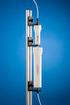 Purification of reaction mixtures using flash chromatography. This technical note details the use of ISOLUTE Flash chromatography columns for the purification of reaction mixtures. What is flash chromatography?
ENrich SEC 70 ENrich SEC 650 High-Resolution Size Exclusion Columns Instruction Manual
 ENrich SEC 70 ENrich SEC 650 High-Resolution Size Exclusion Columns Instruction Manual Catalog numbers 780-1070 780-1650 Please read these instructions before you use ENrich SEC high-resolution size exclusion
Blue Sepharose 6 Fast Flow
 GE Healthcare Life Sciences Instructions 71-7055-00 AI Affinity chromatography Blue Sepharose 6 Fast Flow Blue Sepharose 6 Fast Flow is Cibacron Blue 3G covalently attached to the Sepharose 6 Fast Flow
3.3. NGC Chromatography Systems and ChromLab Software Instrument Guide Version 3.3
 3.3 NGC Chromatography Systems and ChromLab Software Instrument Guide Version 3.3 NGC Chromatography Systems and ChromLab Software Instrument Guide Version 3.3 Bio-Rad Technical Support Department The
Process-scale purification of monoclonal antibodies polishing using Capto Q
 GE Healthcare Life Sciences Application note 28-937-16 AB Ion exchange chromatography Process-scale purification of monoclonal antibodies polishing using Capto Q Summary Anionic exchange media are an industry
Affi-Prep Protein A Matrix Instruction Manual
 Affi-Prep Protein A Matrix Instruction Manual Catalog Numbers 156-0005 156-0006 Bio-Rad Laboratories, 2000 Alfred Nobel Dr., Hercules, CA 94547 LIT-230 Rev B Table of Contents Section 1 Introduction...1
Guide to Reverse Phase SpinColumns Chromatography for Sample Prep
 Guide to Reverse Phase SpinColumns Chromatography for Sample Prep www.harvardapparatus.com Contents Introduction...2-3 Modes of Separation...4-6 Spin Column Efficiency...7-8 Fast Protein Analysis...9 Specifications...10
Fractional Distillation and Gas Chromatography
 Fractional Distillation and Gas Chromatography Background Distillation The previous lab used distillation to separate a mixture of hexane and toluene based on a difference in boiling points. Hexane boils
The Theory of HPLC. Gradient HPLC
 The Theory of HPLC Gradient HPLC i Wherever you see this symbol, it is important to access the on-line course as there is interactive material that cannot be fully shown in this reference manual. Aims
Data File. Sephadex G-25 media and pre-packed columns. Introduction. Sephadex G-25 Bead structure. Desalting/buffer exchange and gel filtration
 P H A R M A C I A B I O T E C H Sephadex G-25 media and pre-packed columns Data File Desalting/buffer exchange and gel filtration Reproducible desalting and buffer exchange in minutes with 90% 100% recovery
Paper Chromatography: Separation and Identification of Five Metal Cations
 Paper Chromatography: Separation and Identification of Five Metal Cations Objectives Known and unknown solutions of the metal ions Ag +, Fe 3+, Co 2+, Cu 2+ and Hg 2+ will be analyzed using paper chromatography.
Mitos P-Pump. product datasheet
 product datasheet page Product description 2 Main benefits 3 Why choose the Mitos P-Pump? 3 Closed-loop flow control 4 Product specifications 5 Accessories - overview 6 Mitos P-Pump Basic 7 Mitos P-Pump
HiPer Ion Exchange Chromatography Teaching Kit
 HiPer Ion Exchange Chromatography Teaching Kit Product Code: HTC001 Number of experiments that can be performed: 5 Duration of Experiment: Protocol: 5-6 hours Storage Instructions: The kit is stable for
Protocol: HPLC (amino acids)
 Page 1 of 6 1. Chemicals Composition M MW gram volume (ml) product code 0-pthaldialdehyde C 8H 6O 2 134.13 Sigma P0657 Perchloric acid HClO 4 3.5 100.46 Dilute 70% stock solution 1:1 with demi to obtain
MabSelect SuRe. GE Healthcare Life Sciences
 GE Healthcare Life Sciences Instructions 11-0026-01 AD Affinity Chromatography MabSelect SuRe MabSelect SuRe is an alkali-tolerant protein A-derived medium for capturing monoclonal antibodies from large
ChromQuest 5.0 Chromatography Data System
 ChromQuest 5.0 Chromatography Data System User Guide for the Surveyor LC CHROM-97257 Revision A March 2008 2008 Thermo Fisher Scientific Inc. All rights reserved. Surveyor and ChromQuest are trademarks
ÄKTAexplorer, ÄKTApurifier
 GE Healthcare ÄKTAexplorer, ÄKTApurifier and ÄKTAmicro Operating Instructions Original instructions Table of Contents Table of Contents 1 Introduction... 1.1 Important user information... 1.2 Regulatory
FRACTION COLLECTOR. Microcomputer Controlled CHF122SC
 FRACTION COLLECTOR Microcomputer Controlled CHF122SC From open column to HPLC liquid chromatography and general liquid samplings, the Super Fraction Collector, model CHF122SC has a wide range of uses.
Amino Acid Analyzer L-8900
 Amino Acid Analyzer L-8900 VWR - Hitachi Your Partner in Amino Acid Analysis Hitachi has manufactured more than 1800 Amino Acid Analysers for over 40 years. The new Amino Acid Analyser Model L-8900 is
POROS CaptureSelect affinity columns for highspeed quantification of IgG Fc fusion proteins
 APPLICATION NOTE POROS CaptureSelect affinity chromatography columns POROS CaptureSelect affinity columns for highspeed quantification of IgG Fc fusion proteins Introduction POROS columns, containing highperformance
Application Note. Determination of Nitrite and Nitrate in Fruit Juices by UV Detection. Summary. Introduction. Experimental Sample Preparation
 Application Note Determination of Nitrite and Nitrate in Fruit Juices by UV Detection Category Food Matrix Fruit Juice Method HPLC Keywords Ion pair chromatography, fruit juice, inorganic anions AZURA
IFC. A new perspective i l ifi ti. p p g p. Single softw FractPAL software plug-in for Agilent ChemStation. Medicinal Chemistry.
 IFC A new perspective i l ifi ti Medicinal Chemistry p p CombiChem Compound Isolation Autopurification Drug Discovery y y q p p p p g p Single softw FractPAL software plug-in for Agilent ChemStation The
Mechanical shaft seal types and sealing systems
 Chapter 2 Mechanical shaft seal types and sealing systems 1. Mechanical shaft seal types 2. Sealing systems 3. Selecting a mechanical shaft seal Mechanical shaft seal types and sealing systems 1. Mechanical
Application Note. Separation of three monoclonal antibody variants using MCSGP. Summary
 Application Note Separation of three monoclonal antibody variants using MCSGP Category Matrix Method Keywords Analytes ID Continuous chromatography, Biochromatography; FPLC Protein A-purified monoclonal
Gas Chromatography Liner Selection Guide
 Gas Chromatography Liner Selection Guide Peter Morgan, Thermo Fisher Scientific, Runcorn, Cheshire, UK Technical Note 20551 Key Words Liner, focus Abstract The liner serves an important function in allowing
QUANTITATIVE AMINO ACID ANALYSIS. Aurélie Lolia Applications Manager, Biochrom Ltd
 QUANTITATIVE AMINO ACID ANALYSIS Aurélie Lolia Applications Manager, Biochrom Ltd QUANTITATIVE AMINO ACID ANALYSIS Principles of amino acid analysis Ion exchange chromatography The Biochrom 30 physiological
Separation of Amino Acids by Paper Chromatography
 Separation of Amino Acids by Paper Chromatography Chromatography is a common technique for separating chemical substances. The prefix chroma, which suggests color, comes from the fact that some of the
Lab 10: Bacterial Transformation, part 2, DNA plasmid preps, Determining DNA Concentration and Purity
 Lab 10: Bacterial Transformation, part 2, DNA plasmid preps, Determining DNA Concentration and Purity Today you analyze the results of your bacterial transformation from last week and determine the efficiency
for IonSwift TM MONOLITH ANION CONCENTRATOR (MAC)
 for IonSwift TM MONOLITH ANION CONCENTRATOR (MAC) IonSwift MAC-100 & MAC-200 Product Manual Page 1 of 16 PRODUCT MANUAL for IonSwift TM MONOLITH ANION CONCENTRATOR (MAC) MAC-100, 0.5 x 80mm (P/N 074702)
Protocol Micro Lab. K:\Microlab_protocols\Protocols_active\03 Instrument manuals\ml03_001_001 DGGE.doc. Preparation of gels
 Preparation of gels Cautions: Wear gloves all times when handling acryl amide and form amide solutions and all work with acryl amide and form amide has to be done in a flow hood. Acryl amide is very toxic.
ORGANIC SAMPLE PREPARATION
 ORGANIC SAMPLE PREPARATION W W W.LA BT E C H S R L.CO M WSPE MANUAL VACUUM MANIFOLD SPE Process control of the flow rate is critical to guarantee reproducible extractions. Differently then any other systems,
105 Adopted: 27.07.95
 105 Adopted: 27.07.95 OECD GUIDELINE FOR THE TESTING OF CHEMICALS Adopted by the Council on 27 th July 1995 Water Solubility INTRODUCTION 1. This guideline is a revised version of the original Guideline
Classic Immunoprecipitation
 292PR 01 G-Biosciences 1-800-628-7730 1-314-991-6034 [email protected] A Geno Technology, Inc. (USA) brand name Classic Immunoprecipitation Utilizes Protein A/G Agarose for Antibody Binding (Cat.
Application Note. Purifying common light-chain bispecific antibodies using MCSGP. Summary
 Application Note Purifying common light-chain bispecific antibodies using MCSGP Category Matrix Method Keywords Analytes ID Continuous chromatography, biochromatography Antibodies MCSGP Bispecific antibody,
LUMEFANTRINE Draft proposal for The International Pharmacopoeia (October 2006)
 October 2006 RESTRICTED LUMEFANTRINE Draft proposal for The International Pharmacopoeia (October 2006) DRAFT FOR DISCUSSION World Health Organization 2006 All rights reserved. This draft is intended for
Determination of Calcium and Magnesium in Brine
 Application Note Determination of Calcium and Magnesium in Brine INTRODUCTION To prevent membrane poisoning, new membrane technology in chlor-alkali cells requires feed brine that is relatively free of
How To Test For Cleaning Efficiency With A Predictor 96 Well Filter Plate
 GE Healthcare Life Sciences Application note 28-9845-64 AA Process chromatography High-throughput process development for design of cleaning-in-place protocols Cleaning-in-place (CIP) of chromatography
For Chromatography, you must remember Polar Dissolves More, not like dissolves like.
 Chromatography In General Separation of compounds based on the polarity of the compounds being separated Two potential phases for a compound to eist in: mobile (liquid or gas) and stationary Partitioning
8.9 - Flash Column Chromatography Guide
 8.9 - Flash Column Chromatography Guide Overview: Flash column chromatography is a quick and (usually) easy way to separate complex mixtures of compounds. We will be performing relatively large scale separations
[ Care and Use Manual ]
![[ Care and Use Manual ]](/thumbs/23/1846121.jpg "[ Care and Use Manual ]") The Waters GPC Cleanup System uses two Envirogel GPC Cleanup Columns to perform routine cleanup of environmental samples as specified by EPA Method 3640A, GPC Cleanup. The columns, 19 x 150 mm and 19 x
The Waters GPC Cleanup System uses two Envirogel GPC Cleanup Columns to perform routine cleanup of environmental samples as specified by EPA Method 3640A, GPC Cleanup. The columns, 19 x 150 mm and 19 x
for SolEx TM HRP Cartridges SolEx TM HRP RSLC Columns
 for SolEx TM HRP Cartridges SolEx TM HRP RSLC Columns Product Manual for SolEx TM HRP Cartridges and SolEx TM HRP RSLC Columns Page 1 of 15 Product Manual for SolEx TM HRP Cartridges SolEx HRP (P/N 074400)
Experiment 5: Column Chromatography
 Experiment 5: Column Chromatography Separation of Ferrocene & Acetylferrocene by Column Chromatography Reading: Mohrig, Hammond & Schatz Ch. 18 pgs 235-253 watch the technique video on the course website!
Using the Spectrophotometer
 Using the Spectrophotometer Introduction In this exercise, you will learn the basic principals of spectrophotometry and and serial dilution and their practical application. You will need these skills to
Connect Alias autosampler to ÄKTA pure or ÄKTA avant. Instructions
 Connect Alias autosampler to ÄKTA pure or ÄKTA avant Instructions Table of Contents Table of Contents 1 About this Instruction... 2 Description... 3 Hardware installation... 3.1 Prepare Cable interface...
Gel Filtration Standard
 Gel Filtration Standard Instruction Manual Catalog # 151-1901 Table of Contents Section 1 Introduction... 1 1.1 Instructions... 1 1.2 Recommended Volume of Standard... 2 1.3 Shelf Life... 5 1.4 Storage...
Enhanced Organic Precursor Removals Using Aged Filter Media Page 1. Enhanced Organic Precursor Removals Using Aged Filter Media
 Enhanced Organic Precursor Removals Using Aged Media Page 1 Enhanced Organic Precursor Removals Using Aged Media O b j e c t i v e s The main goals of this project was to evaluate the dissolved organic
An In-Gel Digestion Protocol
 An In-Gel Digestion Protocol This protocol describes the digestion of a protein present in an SDS-PAGE gel band with trypsin. The band can be taken from either a 1D or 2D electrophoresis gel. Reagents
TECHNICAL BULLETIN. HIS-Select Nickel Affinity Gel. Catalog Number P6611 Storage Temperature 2 8 C
 HIS-Select Nickel Affinity Gel Catalog Number P6611 Storage Temperature 2 8 C TECHNICAL BULLETIN Product Description HIS-Select Nickel Affinity Gel is an immobilized metalion affinity chromatography (IMAC)
Diffusion and Fluid Flow
 Diffusion and Fluid Flow What determines the diffusion coefficient? What determines fluid flow? 1. Diffusion: Diffusion refers to the transport of substance against a concentration gradient. ΔS>0 Mass
Related topics: Application Note 27 Data Analysis of Tube Formation Assays.
 Tube Formation Assays in µ-slide Angiogenesis Related topics: Application Note 27 Data Analysis of Tube Formation Assays. Contents 1. General Information... 1 2. Material... 2 3. Work Flow Overview...
DNA SPOOLING 1 ISOLATION OF DNA FROM ONION
 DNA SPOOLING 1 ISOLATION OF DNA FROM ONION INTRODUCTION This laboratory protocol will demonstrate several basic steps required for isolation of chromosomal DNA from cells. To extract the chromosomal DNA,
Determination of Caffeine in Beverages HPLC-1
 Determination of in s HPLC-1 Introduction This experiment provides an introduction to the application of High Performance Liquid Chromatography (HPLC) to the solution of complex analytical problems. Cola
Cross Flow Filtration Method Handbook
 Cross Flow Filtration Method Handbook Page intentionally left blank Table of Contents Table of Contents 1 Introduction... 1.1 What is cross flow filtration?... 1.2 Key features of CFF... 1.3 CFF application
ENZYME KINETICS ENZYME-SUBSTRATE PRODUCTS
 ENZYME KINETICS INTRODUCTION The study of reaction rates catalyzed by enzymes and the factors affecting them is generally referred to as enzyme kinetics. The basic components of an enzyme catalyzed reaction
Method Development for Size-Exclusion Chromatography of Monoclonal Antibodies and Higher Order Aggregates
 Method Development for Size-Exclusion Chromatography of Monoclonal Antibodies and Higher Order Aggregates Paula Hong and Kenneth J. Fountain Waters Corporation, 34 Maple St., Milford, MA, USA APPLICATION
AKRON EDUCTORS TROUBLESHOOTING GUIDE OPERATION & THEORY OF EDUCTORS GENERAL OPERATING AND MAINTENANCE INSTRUCTIONS
 AKRON EDUCTORS TROUBLESHOOTING GUIDE OPERATION & THEORY OF EDUCTORS GENERAL OPERATING AND MAINTENANCE INSTRUCTIONS Products Include: 60 gpm eductors Style 3060, 3061, 3062 & 3070 95 gpm eductors Style
PrepTip. Reverse Phase PrepTip User Guide
 PrepTip Reverse Phase PrepTip User Guide All text, photographs and illustrations are copyrighted by Harvard Apparatus, Inc. 2004. PrepTip is a trademark of Harvard Apparatus, Inc. Harvard Apparatus 84
Purification of GST-tagged Proteins
 Purification of GST-tagged Proteins User Manual Protino GST/4B Columns 1 ml Protino GST/4B Columns 5 ml January 2010 / Rev. 01 MACHEREY-NAGEL MN Table of contents 1 Components 4 1.1 Kit contents and storage
How To Test For Contamination In Large Volume Water
 Automated Solid Phase Extraction (SPE) of EPA Method 1694 for Pharmaceuticals and Personal Care Products in Large Volume Water Samples Keywords Application Note ENV0212 This collaboration study was performed
BACTERIAL ENUMERATION
 BACTERIAL ENUMERATION In the study of microbiology, there are numerous occasions when it is necessary to either estimate or determine the number of bacterial cells in a broth culture or liquid medium.
Rheodyne Manual Sample Injector Valves
 Rheodyne Manual Sample Injector Valves Rotor Seal Shaft End Rotor Seal Groove Stator Face Stator Stator Face Seal Rotor Seal Grooves Position A Rotor Seal Grooves Position B Position C Flow paths showing
Experiment 446.1 SURFACE TENSION OF LIQUIDS. Experiment 1, page 1 Version of June 17, 2016
 Experiment 1, page 1 Version of June 17, 2016 Experiment 446.1 SURFACE TENSION OF LIQUIDS Theory To create a surface requires work that changes the Gibbs energy, G, of a thermodynamic system. dg = SdT
Gas Chromatography. Let s begin with an example problem: SPME head space analysis of pesticides in tea and follow-up analysis by high speed GC.
 Gas Chromatography Let s begin with an example problem: SPME head space analysis of pesticides in tea and follow-up analysis by high speed GC. Samples in 10mL sealed glass vials were placed in the MPS-2
RESTRICTION ENZYME ANALYSIS OF DNA
 University of Massachusetts Medical School Regional Science Resource Center SUPPORTING MATHEMATICS, SCIENCE AND TECHNOLOGY EDUCATION 222 Maple Avenue, Stoddard Building Shrewsbury, MA 01545-2732 508.856.5097
High-throughput Process Development with PreDictor Plates
 GE Healthcare High-throughput Process Development with PreDictor Plates Principles and Methods imagination at work Handbooks from GE Healthcare GST Gene Fusion System Handbook 18-1157-58 Affinity Chromatography
Appendix 5 Overview of requirements in English
 Appendix 5 Overview of requirements in English This document is a translation of Appendix 4 (Bilag 4) section 2. This translation is meant as a service for the bidder and in case of any differences between
COMMON LABORATORY APPARATUS
 COMMON LABORATORY APPARATUS Beakers are useful as a reaction container or to hold liquid or solid samples. They are also used to catch liquids from titrations and filtrates from filtering operations. Bunsen
GC-xt. The most flexible GC /GC-MS liquid sample injector
 GC-xt Prep and Load Platform The most flexible GC /GC-MS liquid sample injector Environmental Foods/Beverages Consumer Products Forensics Petrochemicals/Polymers Pharmaceuticals GC-xt Liquid mode Prep
The fastest spin-column based procedure for purifying up to 10 mg of ultra-pure endotoxin-free transfection-grade plasmid DNA.
 INSTRUCTION MANUAL ZymoPURE Plasmid Gigaprep Kit Catalog Nos. D4204 (Patent Pending) Highlights The fastest spin-column based procedure for purifying up to 10 mg of ultra-pure endotoxin-free transfection-grade
Flow-Through Cell ph SENSOR PROBES. Instruction Manual
 Flow-Through Cell ph SENSOR PROBES Instruction Manual Flow-Through Cell ph Specification: ph sensor integrated in a flow-through cell Document filename: IM_FTC_pH_dv1 All rights reserved. No parts of
Oasis HLB Cartridges and 96-Well Plates
 CONTENTS I. INTRODUCTION II. SAMPLE PRE-TREATMENT a. Biological Samples b. Solid Samples: Soil, Whole Foods, Tissue c. Aqueous Samples: Water, Beverages d. Non-Aqueous Liquid III. SOLID PHASE EXTRACTION
Covalent Conjugation to Cytodiagnostics Carboxylated Gold Nanoparticles Tech Note #105
 Covalent Conjugation to Cytodiagnostics Carboxylated Gold Nanoparticles Tech Note #105 Background Gold nanoparticle conjugates have been widely used in biological research and biosensing applications.
Waters 2695 Separations Module
 Waters 2695 Separations Module Quick Start Guide 34 Maple Street Milford, MA 01757 71500269503, Revision A NOTICE The information in this document is subject to change without notice and should not be
Troubleshooting Guide for DNA Electrophoresis
 Troubleshooting Guide for Electrophoresis. ELECTROPHORESIS Protocols and Recommendations for Electrophoresis electrophoresis problem 1 Low intensity of all or some bands 2 Smeared bands 3 Atypical banding
HPLC Analysis of Acetaminophen Tablets with Waters Alliance and Agilent Supplies
 HPLC Analysis of Acetaminophen Tablets with Waters Alliance and Agilent Supplies Application Note Small Molecule Pharmaceuticals Authors Jignesh Shah, Tiantian Li, and Anil Sharma Agilent Technologies,
23 The Thermal Conductivity Detector
 23 The Thermal Conductivity Detector General Information TCD pneumatics Conditions that prevent the detector from operating Filament passivation Carrier, reference, and makeup gas Negative polarity Analyzing
Environmental Water Testing: Surface Water, Groundwater, Hard Water, Wastewater, & Seawater
 Document: AND Sol Env 08 2013 Environmental Water Testing: Surface Water, Groundwater, Hard Water, Wastewater, & Seawater Matrix specific sample preparation and testing methods for environmental waters
experiment5 Understanding and applying the concept of limiting reagents. Learning how to perform a vacuum filtration.
 81 experiment5 LECTURE AND LAB SKILLS EMPHASIZED Synthesizing an organic substance. Understanding and applying the concept of limiting reagents. Determining percent yield. Learning how to perform a vacuum
UltraClean Soil DNA Isolation Kit
 PAGE 1 UltraClean Soil DNA Isolation Kit Catalog # 12800-50 50 preps New improved PCR inhibitor removal solution (IRS) included Instruction Manual (New Alternative Protocol maximizes yields) Introduction
PART 1 - INTRODUCTION...
 Table of Contents PART 1 - INTRODUCTION... 3 1.1 General... 3 1.2 Sensor Features... 3 1.3 Sensor Specifications (CDE-45P)... 4 Figure 1-1 CDE-45P Sensor Dimensions (standard, convertible style)... 4 PART
Bio-Gel P Polyacrylamide Gel Instruction Manual
 Bio-Gel P Polyacrylamide Gel Instruction Manual Table of Contents Section 1 Introduction...1 Section 2 Technical Description...3 Section 3 Instructions for Use...6 3.1 Column Selection...6 3.2 Eluant Selection...6
1.1 This test method covers the qualitative and quantitative determination of the content of benzene and toluene in hydrocarbon wax.
 Standard Method for Analysis of Benzene and Toluene Content in Hydrocarbon Waxes by Headspace Gas Chromatography EWF METHOD 002/03 (Version 1 Reviewed 2015) 1 Scope 1.1 This test method covers the qualitative
ACID-BASE TITRATIONS: DETERMINATION OF CARBONATE BY TITRATION WITH HYDROCHLORIC ACID BACKGROUND
 #3. Acid - Base Titrations 27 EXPERIMENT 3. ACID-BASE TITRATIONS: DETERMINATION OF CARBONATE BY TITRATION WITH HYDROCHLORIC ACID BACKGROUND Carbonate Equilibria In this experiment a solution of hydrochloric
PAPER CHROMATOGRAPHY
 PAPER CHROMATOGRAPHY INTRODUCTION Chromatography is a technique that is used to separate and to identify components of a mixture. This analytical technique has a wide range of applications in the real
SUCRALOSE. White to off-white, practically odourless crystalline powder
 SUCRALOSE Prepared at the 41st JECFA (1993), published in FNP 52 Add 2 (1993). Metals and arsenic specifications revised at the 63rd JECFA (2004). An ADI of 0-15 mg/kg bw was established at the 37th JECFA
Vitamin C quantification using reversed-phase ion-pairing HPLC
 Vitamin C quantification using reversed-phase ion-pairing HPLC Thomas Grindberg and Kristy Williams Department of Chemistry, Concordia College, 901 8 th St S, Moorhead, MN 56562 Abstract Vitamin C, an
Reversed Phase High Presssure Liquid Chromatograhphic Technique for Determination of Sodium Alginate from Oral Suspension
 International Journal of PharmTech Research CODEN (USA): IJPRIF ISSN : 0974-4304 Vol.2, No.2, pp 1634-1638, April-June 2010 Reversed Phase High Presssure Liquid Chromatograhphic Technique for Determination
www.gbo.com/bioscience Tissue Culture 1 Cell/ Microplates 2 HTS- 3 Immunology/ HLA 4 Microbiology/ Bacteriology Purpose Beakers 5 Tubes/Multi-
 11 Cryo 5 Tubes/Multi 2 HTS 3 Immunology / Immunology Technical Information 3 I 2 96 Well ELISA 3 I 4 96 Well ELISA Strip Plates 3 I 6 8 Well Strip Plates 3 I 7 12 Well Strip Plates 3 I 8 16 Well Strip
Solubility Product Constants
 Solubility Product Constants PURPOSE To measure the solubility product constant (K sp ) of copper (II) iodate, Cu(IO 3 ) 2. GOALS 1 To measure the molar solubility of a sparingly soluble salt in water.
Aurum Ion Exchange Mini Kits and Columns. Instruction Manual
 Aurum Ion Exchange Mini Kits and Columns Instruction Manual Catalog # 732-6710 Aurum AEX Mini Kits, 2 pk 732-6705 Aurum AEX Mini Kits, 10 pk 732-6706 Aurum AEX Mini Columns, 25 pk 732-6707 Aurum AEX Mini