
Best Practice Guidelines
|
|
|
- Sophie Thomas
- 9 years ago
- Views:
Transcription
1 Best Practice Guidelines Guideline Name: Surgical Skin Preparation Approval Signature: Page 1 of 13 Date: May 2011 Supercedes: 1. PURPOSE: 1.1. To reduce the resident and transient microbial counts at the surgical site immediately prior to making the surgical incision To minimize rebound microbial growth during the intraoperative and postoperative period To reduce the risk of post surgical site infection To prevent injury to the patient during surgical skin preparation. 2. GUIDELINES: 2.1 The surgical skin prep shall be performed using an Infection Prevention and Control Program approved antiseptic agent. (See Appendix A for Mechanism of Action, Contraindications and Precautions of the various skin prepping agents). Whenever possible the recommendation is for use of a Chlorhexidine-Alcohol prepping solution; however the ultimate choice of the agent should be based upon the agent s efficacy, patient s tolerance to the product and the user s acceptance of the agent. 2.2 Antiseptic agents shall: have any unused portion of opened bottles, not containing preservative (ie. 4% alcohol) immediately discarded after use; have bottles dated if containing preservative (ie. 4% alcohol). Bottles shall be discarded after 30 days or per manufacturer s recommendations; not be warmed, as this may alter the chemical properties and equilibrium of the solution causing burns; be applied by non-scrubbed personnel; be applied in a manner to prevent pooling: o in skin creases; o under the patient; o around a tourniquet; o under an electrosurgical dispersive electrode; or o near EKG electrodes; and not remove surgical site markings when surgical skin prep is performed. 2.3 Before the skin preparation of a patient is initiated the skin should be free of gross contamination (dirt, soil or any other debris). Patients with visibly soiled/unclean skin shall have a scrub and paint prep performed. 2.4 Foley catheter insertion, for procedures that do not require a perineal prep, should be performed prior to the surgical skin prep using a separate set-up. 2.5 Perioperative personnel should be familiar with the flammability characteristics of all antiseptic agents used in the perioperative area. 2.6 When flammable antiseptic agents are used, they should be packaged in small quantities appropriate for single applications or be prepackaged in a unit dose. Use of these agents shall be communicated to all staff participating in the surgical procedure. 1

2 2.7 Prior to performing the surgical skin prep: ensure that the antiseptic agent is compatible with the site to be prepped (See Appendix A); perform a preoperative skin assessment of the area to be prepped including any areas where solution may pool; assess patient for allergy or sensitivity to antiseptic agent; remove all body jewellery that pierces the skin in the surgical area to be prepped and cleanse the pierced site with alcohol; confirm type of incision to be performed; perform hair removal: o only if necessary; o as close as possible to the surgical start time; o using clippers (unless contraindicated); and o ideally not in OR theatre. 2.8 When performing the surgical skin prep: Use lint free cloths, sponges and applicators Always prep from clean to soiled areas taking care not to transfer microorganisms from the periphery back to the proposed incision site. Double dipping into the antiseptic solution with a contaminated sponge may lead to microorganisms being brought back to the proposed incision site Do not back track over an area that has already been prepped with the same prep sponge Prep delicate areas carefully (i.e. carotid arteries, occluded vessels, tumors, traumatic wounds, distended abdomens, eyes, ears, trachea, and necrotizing fasciitis site) The prepped area should extend to an area large enough to accommodate potential shifting of the drape fenestration, extension of the incision, the potential for additional incisions, and all potential drain sites Do not blot or wipe off prepping solution. Allow prepping solution to COMPLETELY DRY PRIOR to draping. 2.9 Post surgery: Perform a postoperative skin assessment of the prepped area, including any areas where solution may have pooled Remove antiseptic agents EXCEPT CHLORHEXIDINE from patient unless contraindicated by manufacturer of the antiseptic agent. 3. PROCEDURE: 3.1 GENERAL STEPS FOR ALL TYPES OF SKIN PREPS: Perform hand hygiene prior to any contact with the patient Expose only the area to be prepped (2.8.5) to ensure privacy and warmth of the patient Ensure surgical site is marked as per WRHA policy Correct Site, Correct Procedure and Correct Patient for Surgical Procedures (Identification of) Perform scrub (see section 3.4) and/or paint (see section 3.5) as applicable for the type of surgery being performed, using principle of clean to dirty. 3.2 Contaminated Areas: Prep the most contaminated area last using separate sponges Sponges used to prep open wounds, sinuses, ulcers, intestinal stomas, the vagina or anus should be used once and then discarded Peripheral intact skin is prepared before open wounds and body orifices Retract foreskin if prep involves the penis; pull foreskin back once prep is completed to prevent compromise to circulation. 2

3 3.2.5 When performing a surgical skin prep for necrotizing fasciitis: if skin is intact perform as usual, however treat intact skin carefully due to loss of structure under the skin; or if skin is broken consider the open area to be contaminated and prep the open area with a separate sponge after prepping the surrounding area. 3.3 Hair removal: Wash hands and don clean disposable gloves Use a single use clipper or a clipper with a reusable handle and disposable head Stroke against the direction that the hair is growing using short strokes. Short hair stubble will still be evident after clipping Remove any stray clipped hair with tape or other adhesive type product (ie adhesive glove designed for picking up hair) to prevent contamination of the surgical site Discard disposable clipper head into an appropriate sharps container Clean and disinfect the reusable clipper handle after use following manufacturers instructions Razor shaves are not recommended. 3.4 Scrub and Paint Surgical Skin Prep: Perform applicable steps as per section 2: Guidelines and section 3.1: General Steps Mix an appropriate amount of antiseptic scrub solution with an appropriate amount of warm sterile water in a basin. This allows for sudsing action of the antiseptic scrub solution Don sterile gloves Tuck drip towels under patient as necessary to prevent pooling of solution: o in skin/anatomical creases; o under the patient; o around a tourniquet; o between the patient and positioning devices; o under an electrosurgical dispersive electrode; or o near EKG electrodes Mechanically and chemically cleanse the skin in a linear and circular motion as per skin antiseptic manufacturers instructions Rinse cleansed area using sterile gauze moistened with sterile water Blot cleansed area dry with a sterile towel as follows: Open a towel fully and place it over the site; and Lift carefully without rubbing or dragging the fabric over the cleaned area Perform paint as per Remove drip towels by grasping the edges in a manner to prevent the towel edges from contaminating the prepped skin. 3.5 Paint Only Surgical Skin Prep: Perform applicable steps as per section 2: Guidelines and section 3.1: General Steps Don sterile gloves unless the applicator is of sufficient length to prevent the antiseptic and patient s skin from contact with the nonsterile glove. (AORN:2009) Tuck drip towels under patient as necessary to prevent pooling of solution: o in skin/anatomical creases; o under the patient; o around a tourniquet; 3

4 o between the patient and positioning devices; o under an electrosurgical dispersive electrode; or o near EKG electrodes Begin at the incision site; paint the skin from incision to periphery or according to manufacturer s recommendations Paint area once or as per manufacturer s recommendations Do not blot or wipe off prepping solution. Allow prepping solution to air dry PRIOR to draping Remove drip towels by grasping the edges in a manner to prevent the towel edges from contaminating the prepped skin. 3.6 Packaged Single Unit Applicator (alcohol combination antiseptic agents) Perform applicable steps as per section 2: Guidelines and section 3.1: General Steps Don sterile gloves unless the applicator is of sufficient length to prevent the antiseptic and patient s skin from contact with the nonsterile glove. (AORN:2009) Tuck drip towels under patient as necessary to prevent pooling of solution: o in skin/anatomical creases; o under the patient; o around a tourniquet; o between the patient and positioning devices; o under an electrosurgical dispersive electrode; or o near EKG electrodes Perform scrub as per 3.4 if applicable Follow manufacturers instructions for use of prep applicator Do not blot or wipe off prepping solution. Allow prepping solution to air dry PRIOR to draping Remove drip towels by grasping the edges in a manner to prevent the towel edges from contaminating the prepped skin. Head and Neck Preps: 3.7 Scalp Prep: Perform applicable steps as per section 2: Guidelines and section 3.1: General Steps Management of hair: hair removal may or may not occur; long hair may be parted along the incision line and hair secured away from the incision with elastic bands; or short hair may have a thin strip of hair clipped along the incision line Perform scrub as per 3.4 and/or paint as per 3.5 as applicable Ensure prep solution penetrates through the hair to the scalp and covers all the hair and scalp in the area to be prepped Area to be prepped will vary dependent on incision site. 3.8 Eye Prep: Do not use Chlorhexidine or alcohol solutions. (See Appendix A) Perform applicable steps as per section 2: Guidelines and section 3.1: General Steps Ensure a cap or towel is over the patient s head to keep hair tucked away. The hairline is considered a contaminated area Don sterile gloves Tuck sterile drip towels under patient as necessary to prevent pooling of solution. 4

5 3.8.6 Using just one stroke over eyelashes, clean eyelashes of operative eye with cotton-tipped applicator dipped in 10% povidone iodine prep solution. Do not scrub lashes. Do not touch cornea Going from medial to lateral canthus, paint operative eye, cheek, forehead and nose on correct side, using ½ circle motions above and below eye Instill a 5% povidone solution into the eye. (Note: solution of equal parts of BSS and 10% povidone iodine solution make a 5% solution) Cover the eye with a 4x4 gauze and massage eye gently especially the fornices Repeat going from medial to lateral canthus, paint operative eye, cheek, forehead and nose on correct side, using ½ circle motions above and below eye Do not blot solution off of the skin. Allow to air dry For patients allergic to iodine, use chlorhexidine, however DO NOT touch the mucosa or the cornea. Instill BSS into the eye. 3.9 Face Prep: Do not use chlorhexidine on eyes, ears or mucous membranes. (See Appendix A) Ensure a cap or towel is over the patient s hair, and use waterproof tape if necessary to ensure hair is tucked away. The hairline is considered a contaminated area Perform paint as per Begin prep at incision site and extend to the periphery of hairline and neck Prep the external ear if necessary as per Do not remove eyebrows Ear Prep: Do not use chlorhexidine or alcohol solutions in the ear canal. (See Appendix A) Ensure a cap or towel is over the patient s hair, and use waterproof tape if necessary to ensure hair is tucked away. The hairline is considered a contaminated area Place absorbent cotton into the external ear canal Perform paint as per Cleanse the external ear Extend the prep to the edge of the hairline, face and jaw Remove the absorbent cotton from the external ear canal Neck Prep: Ensure a cap or towel is over the patient s hair and use waterproof tape if necessary to ensure hair is tucked away. The hairline is considered a contaminated area Perform scrub as per 3.4 and/or paint as per 3.5 as applicable The area to be prepped includes the neck laterally to the table line and up to the mandible, tops of the shoulders, and chest almost to the nipple line. 5

6 Torso Preps: 3.12 Shoulder Prep: Elevate the patient s arm prior to proceeding with prep. Be careful not to pull the patient s shoulder laterally to expose the scapular area to avoid dislocation and further injury to the patient Perform scrub as per 3.4 and/or paint as per 3.5 as applicable Area to be prepped includes the chest, neck and shoulder, upper arm, scapula and axilla on the affected side. Prep the axilla last. Hand may be excluded if surgeon wraps in occlusive drape after the prep Chest/Breast Prep: Perform scrub as per 3.4 and/or paint as per 3.5 as applicable Area to be prepped includes from the top of the shoulder to below the diaphragm and from the edge of the non-operative breast to the table-level of the operative side, including the upper arm to elbow circumferentially and the axilla of the operative side Prep the axilla last Skin prep for thoracic surgery requires an extension bilaterally of the boundaries for radical breast surgery (see diagrams) Prep both sides of the chest for a bilateral procedure If incision is in axilla, use a separate sponge for the axilla For a breast biopsy, prep the breast from the incision area, to include an area beyond the drape fenestration. 6

7 3.14 Abdominal Prep: Perform scrub as per 3.4 and/or paint as per 3.5 as applicable Umbilicus is prepped first using sterile cotton-tipped applicators dipped in antiseptic solution. Discard applicators after use Area to be prepped will vary depending on surgery to be performed (ie appendectomy, inguinal hernia repair). Area that may be required to be included is from nipple line to upper 1/3 of thighs; table level left to table level right (ie. Laparoscopic cholecystectomy) Back Prep: Perform scrub as per 3.4 and/or paint as per 3.5 as applicable Back procedure: area to be prepped includes to border of the OR table on both sides Back procedure if patient is prone: area to be prepped includes from neck to sacrum Flank: Perform scrub as per 3.4 and/or paint as per 3.5 as applicable Area to be prepped includes shoulder to iliac crest, back and midabdominal wall. Frontal prep depends on accessibility when patient is in lateral position Vaginal Prep: Do not use Chlorhexidine or alcohol solutions. (See appendix A) Perform scrub as per 3.4 and/or paint as per 3.5 as applicable Place drip towel or impervious drape under buttocks to prevent prep solution from pooling under the patient s coccyx. Ensure towel or impervious drape is removed following completion of the prep. 7

8 First: prep pelvis, labia, perineum, and thighs as follows: Start prep at the pubis and prep to iliac crest using back and forth strokes. Prep labia majora using downward strokes, including perineum. Use fresh sponge to prep inner thigh of first leg starting at labia majora and moving laterally using back and forth strokes. Discard sponge when periphery reached. Use fresh sponge to prep inner thigh of second leg starting at labia majora and moving laterally using back and forth strokes. Discard sponge when periphery reached Next: prep vaginal vault using a separate sponge mounted on a forcep Prep anus last Abdominal/Perineal Prep: Perform scrub as per 3.4 and/or paint as per 3.5 as applicable Perineal and abdominal prep shall not be performed simultaneously First: Prep perineal area including pelvis, labia, perineum, anus and thighs as per Next: Using a separate prep set-up, prep the abdomen as per section Perianal Prep: Perform scrub as per 3.4 and/or paint as per 3.5 as applicable Prep area surrounding anus first. The anus is prepped last being the most contaminated area Begin prep outside anal mucosa and extend outward in all directions Prep the anus last do not penetrate the anus itself. Extremity Skin Preps: 3.20 Extremities: (General) Place a drip sheet under the operative arm/leg prior to prep. Ensure drip sheet is removed after completion of surgical skin prep Elevate limb for prep A towel tucked around a tourniquet cuff absorbs excess solution Perform scrub as per 3.4 and/or paint as per 3.5 as applicable Upper Extremities: Upper Arm: Perform Extremity General steps as per The area to be prepped includes: entire circumference of the arm to the midforearm, over the shoulder, scapula and axilla (prep last) Begin the prep at the incision, prep to the proximal and distal boundaries An extremity prep may be done in two stages to provide adequate support to joints and to ensure that all areas are prepped Upper Extremity: Hand 8

9 Perform Extremity General steps as per Hand and fingernails may require pre-cleaning prior to skin prep The area to be prepped includes: the hand to mid forearm Begin prep at the incision site and complete one side of the hand, continue prep on the opposite side of the hand, working in circular motion towards the elbow During the prep, the nurse wearing sterile gloves may hold the patient s painted fingers to assist in manipulation of hand during the prep Lower Extremities: Hip: Perform Extremity General steps as per Perform scrub as per 3.4 and/or paint as per 3.5 as applicable Area to be prepped includes: abdomen on the affected side, thigh to below the knee, the buttocks on the affected side, the groin, and the pubis Begin the prep at the incision site. Proceed to periphery which is abdomen midline, inferior rib cage, below knee. Prep the groin and perineum last Lower Extremities: Leg and Foot Perform Extremity General steps as per Perform scrub as per 3.4 and/or paint as per 3.5 as applicable Elevate limb Area to be prepared may vary depending on surgery to be performed Prepping the foot should include a scrub prior to paint in order to reduce the bacterial counts between the toes and under toenails If top of leg prepped, place a drip towel between the groin and the fold of the upper thigh to prevent pooling in the area Prepping for knee surgery: foot may be contained within a sterile drape; with one prep sponge, prep circumferentially starting at incision site and proceed with prep to tourniquet. with a new sponge, prep circumferentially starting at incision site and prep to ankle. 9

10 Special Preps: 3.25 Stomas: Seal off with a sterile adhesive drape, if not part of the surgical site. Cover the stoma with sterile clear plastic adhesive dressing to prevent fecal material from entering the surgical wound Prep gently and last if stoma is part of the surgical incision Place a soaked sponge over the stoma before peripheral tissues are prepped and discard at completion of prep Should a surgeon request to pack a stoma, ensure that a radiopaque Betadinesoaked sponge is used Traumatic Wounds: Wear appropriate PPE (gloves, mask and eyewear) Use only normal saline to prep burned, denuded or traumatized skin Position drip towels/drip sheet as appropriate Irrigate wound as necessary with sterile normal saline. Use drip sheet under the wound Do not use irritating solutions on denuded areas May need to cover the wound with sterile gauze while prepping surrounding areas Prep surrounding intact skin as per guidelines and Graft Sites Use separate set-ups for recipient and donor sites Prep donor site first Use a colorless antiseptic on the donor site so that the graft vascularity may be evaluated post op. 4. DOCUMENTATION: 4.1. The following should be documented in the patient s health record: condition of the skin at the operative site pre and post operatively; method of hair removal, if used; name and concentration of antiseptic agent(s) used; any skin reaction that occurred; and name of person performing the skin preparation. 10

11 5. REFERENCES: 3.1 AORN (2005). Clinical Issues. AORN Journal, 82(1), AORN (2009). Perioperative standards and recommended practice. Denver, CO: AORN. 3.3 Betadine Surgical Scrub. Retrieved March 25, 2009 from World Wide Web Betadine Solution. Retrieved March 25, 2009 from World Wide Web Betasept. Retrieved March 25, 2009 from World Wide Web Chloraprep. Retrieved March 25, 2009 from World Wide Web Darouiche, R., Wall,M., Itani,K., et al. (2010). Original Article: Chlorhexidine-Alcohol versus Povidone-Iodine for Surgical-Site Antisepsis. New England Journal of Medicine, 362(1), Digison, M. (2007). A Review of Anti-septic Agents for Pre-operative Skin Preparation. Plastic Surgical Nursing, 27(4), Ellenhorn, J., Smith, D., Schwartz, R., et al (2005). Paint-Only is Equivalent to Scruband-Paint in Preoperative Preparation of Abdominal Surgery Sites. Journal of American College of Surgeons, 201(5), Edmiston, C., Okoli,O., Graham,M., Sinski, S., Seabrook, G. (2010). Evidence for Using Chlorhexidine Gluconate Preoperative Cleansing to Reduce the Risk of Surgical Site Infection. AORN Journal, 92(5), Fuller, J. (2007). Surgical technology: Principles and practice (4 th ed). Evolve/Elsevier Gruendemann, B. and Mangum, S. (2001). Infection Prevention in Surgical Settings. Saunders: Philadelphia HSC Operating Room and Procedure: Preoperative Skin Preparation Of The Surgical Patient 1992 (revised August 2005) McGrath, McCrory, D. (2005). An Audit of Pre-opertive Skin Preparative Methods. Annals of the Royal College of Surgeons of England, 87, ORNAC (2009). Recommended Standards, Guidelines, and Position Statements For Perioperative Registered Nursing Practice (9th ed.). Canada Phillips, N. (2007). Berry & Kohn s operating room technique (11 th ed). Evolve/Elsevier Rothrock, J. (2007) Alexander s Care of the Patient in Surgery. Elsevier: St. Louis Safer Health Care Now. (2010). Prevent Surgical Site Infections: Getting Started Kit. Retrieved December 1, 2010 from World Wide Web Seal, L., Paul-Cheadle, D., (2004). A Systems Approach to Preoperative Surgical Patient Skin Preparation. American Journal of Infection Control, 32(2), Authors: Carol Knudson: WRHA Perioperative and MDR Nurse Educator Donna Fallis: CRN OR CH Karin Long: Manager OR GGH Joan Porteous: Educator OR HSC Liz Herman: Manager OR MHC Diane Alblas: Manager OR Pan Am Wanda Sawa: Educator OR SBH Dorota Sjurlei: Educator OR SOGH Jackie Dutfield: Educator OR VGH Cristy Pragides: CRN OR Children s HSC Leah Restall: CRN OR Women s HSC

12 Appendix A Activity and Considerations for Preoperative skin Preparation Antiseptics (Adopted from 2008 AORN Perioperative Standards and Recommended Practices) Antiseptic Agent Chlorhexidine Gluconate with Alcohol (Chloraprep TM or Soluprep TM ) Mechanism of Action Disrupts cell membrane and denatures proteins Gram - Gram + Viruses Rapidity of Action Persistent/ Residual Activity Contraindications Excellent Excellent Good Excellent Excellent Do not use on eye may cause corneal damage Do not use on ear as may cause deafness if in contact with inner ear Do not use on mucous membranes Contraindicated if known hypersensitivity to drug or any ingredient Contraindicated for lumbar puncture and use on meninges. Precautions Flammable Allow to dry completely prior to draping patient Chlorhexidine Gluconate (2%, 4%, 0.5% with 70% alcohol, 2% with 70% alcohol) Disrupts cell membrane Excellent Good Good Moderate Excellent Do not use on eye may cause corneal damage Do not use on ear as may cause deafness if in contact with inner ear Use with caution on mucous membranes Contraindicated if known hypersensitivity to drug or any ingredient Contraindicated for lumbar puncture and use on meninges. Prolonged skin contact may cause irritation in sensitive individuals. Body lotions may nullify the residual bacteriostatic properties Not tested in children under 2 months of age. Prolonged effect inhibited if combined with iodine preparations.

13 Antiseptic Agent Iodophor with alcohol (Duraprep TM ) Iodine/ Iodophors (Povidone- Iodine 7.5%, 10%, tincture of iodine 1% available iodine with 50% alcohol) Alcohol (Isopropyl or Ethyl Alcohol) Mechanism of Action Oxidation/ substitution with free iodine and denatures proteins Oxidation/ substitution with free iodine Denatures Protein Gram - Gram + Viruses Rapidity of Action Persistent/ Residual Activity Precautions/ Contraindications Excellent Excellent Good Excellent Moderate Do not use on eye or ear as may cause corneal or nerve damage Do not use on mucous membranes Contraindicated if sensitivity to povidoneiodine (Shellfish or contrast media allergies are not a contraindication) Excellent Good Good Moderate Minimal May be used on eye or ear, however is a moderate ocular irritant May be used on mucous membranes Contraindicated if sensitivity to povidoneiodine (Shellfish or contrast media allergies are not a contraindication) Excellent Excellent Good Excellent None Do not use on eye or ear as may cause corneal or nerve damage Do not use on mucous membranes Precautions Flammable Allow to dry completely prior to draping patient Prolonged skin contact may cause irritation. May cause iodism in susceptible individuals Avoid use in neonates Inactivated by blood and debris Flammable Does not penetrate organic material Optimum concentration is 60% - 90% (isopropyl alcohol) or 50% (ethyl alcohol) 13

3M TM DuraPrep TM Surgical Solution (Iodine Povacrylex [0.7% available iodine] and Isopropyl Alcohol, 74% w/w) Patient Preoperative Skin Preparation
![3M TM DuraPrep TM Surgical Solution (Iodine Povacrylex [0.7% available iodine] and Isopropyl Alcohol, 74% w/w) Patient Preoperative Skin Preparation](/thumbs/29/13403158.jpg "3M TM DuraPrep TM Surgical Solution (Iodine Povacrylex [0.7% available iodine] and Isopropyl Alcohol, 74% w/w) Patient Preoperative Skin Preparation") 3M TM DuraPrep TM Surgical Solution (Iodine Povacrylex [0.7% available iodine] and Isopropyl Alcohol, 74% w/w) Patient Preoperative Skin Preparation Commonly Asked Questions I like the concept of a one-step
3M TM DuraPrep TM Surgical Solution (Iodine Povacrylex [0.7% available iodine] and Isopropyl Alcohol, 74% w/w) Patient Preoperative Skin Preparation Commonly Asked Questions I like the concept of a one-step
ATI Skills Modules Checklist for Urinary Catheter Care
 For faculty use only Educator s name Score Date ATI Skills Modules Checklist for Urinary Catheter Care Student s name Date Verify order Patient record Assess for procedure need Identify, gather, and prepare
CEDARS-SINAI MEDICAL CENTER O.R./ANESTHESIA/SURGERY CENTER SERVICES OPERATING ROOM
 I. Purpose: To provide standardized guidelines for nursing and non-nursing personnel in accordance with roles and responsibilities as outlined in the job descriptions along with the AORN standards of practice.
Site Care of Your Central Venous Catheter Sterile
 Site Care of Your Central Venous Catheter Sterile Dressing Change Sterile Technique The skin surrounding your catheter s exit site must be kept clean, and a new sterile dressing should be applied on a
Fire Risk Assessment Tool: Instructions for Use
 Fire Risk Assessment Tool: Instructions for Use Purpose of the Fire Risk Assessment Tool: To assist the perioperative team in determining and communicating the potential fire risk for each individual patient.
Sterile Dressing Change with Tegaderm CHG for Central Venous Catheter (CVC)
 Sterile Dressing Change with Tegaderm CHG for Central Venous Catheter (CVC) The dressing protects your catheter site. It also helps prevent infection at the site. Keep your dressing clean and dry at all
URINARY CATHETER INSERTION - STRAIGHT OR INDWELLING CATHETER
 URINARY CATHETER INSERTION - STRAIGHT OR INDWELLING CATHETER PURPOSE To obtain a sterile urine specimen. To facilitate emptying bladder. To relieve bladder distention. To irrigate bladder. To measure residual
Central Venous Catheter (CVC) Sterile Dressing Change - The James
 PATIENT EDUCATION patienteducation.osumc.edu Central Venous Catheter (CVC) Sterile Dressing Change - The James A dressing protects your catheter site and helps reduce the risk of infection. You will need
AST Standards of Practice for Skin Prep of the Surgical Patient
 AST Standards of Practice for Skin Prep of the Surgical Patient Introduction The following Standards of Practice were researched and authored by the AST Education and Professional Standards Committee and
PATIENT HANDBOOK AND JOURNAL DAY OF SURGERY
 PATIENT HANDBOOK AND JOURNAL DAY OF SURGERY PREPARING YOUR SKIN BEFORE SURGERY PRE-OP HIBICLENS BATHING INSTRUCTIONS: General Information: Because the skin is not sterile, it is important to make sure
Standard Operating Procedure
 Animal Care and Use Program Standard Operating Procedure Title: Standard Surgical Practices for Rodent Recovery Surgery SOP NO: AC-G004 Supersedes Version: L1 & L2 Effective Date: August 27, 2010 Choose
IACUC Policy on Survival Rodent Surgery
 IACUC Policy on Survival Rodent Surgery References: ILAR Guide for the Care and Use of Laboratory Animals: http://oacu.od.nih.gov/regs/guide/guide.pdf NIH OACU ARAC Guidelines: http://oacu.od.nih.gov/arac/documents/rodent_surgery.pdf
2. Does the patient have one of the following appropriate indications for placing indwelling urinary catheters?
 A. Decision to Insert a Urinary Catheter: 1. Before placing an indwelling catheter, please consider if these alternatives would be more appropriate: Bladder scanner: to assess and confirm urinary retention,
TREATMENT 1. Control bleeding by applying pressure over wound with Gauze Pads (Surgical Supply-4). 2. Contact Surgeon for laceration repair options.
 Page 1 of 8 pages NOTE Contact Surgeon before giving any medication marked with an asterisk. In an emergency or during Loss of Signal, begin appropriate treatment; then call Surgeon as soon as possible.
Arizona State University Institutional Animal Care and Use Committee STANDARD INSTITUTIONAL GUIDELINE RODENT SURGERY
 Arizona State University Institutional Animal Care and Use Committee STANDARD INSTITUTIONAL GUIDELINE RODENT SURGERY It is the policy of the IACUC that all survival surgeries involving rodents be conducted
b. Povidone Iodine 5% Swabsticks, Single Pack (4 packs) c. Clean gloves
 Program Agenda SUBJECT: Universal Decolonization Protocols for Pre-operative Orthopedic Patients EFFECTIVE DATE: 5/2014 REVISED DATE: I. Policy: The largest fraction of hospital acquired infections (HAIs),
Safety FIRST: Infection Prevention Tips
 Reading Hospital Safety FIRST: Infection Prevention Tips Reading Hospital is committed to providing high quality care to our patients. Your healthcare team does many things to help prevent infections.
GUIDELINES: Aseptic Technique for Rodent Survival Surgeries Surgical Area Animal Preparation 1.
 GUIDELINES: Aseptic Technique for Rodent Survival Surgeries The following Guidelines are provided to ensure correct aseptic technique for all rodent survival surgeries. Surgical Area 1. The surgical area
Dressing and bandage
 Dressing and bandage Mihajlo Lojpur, M.D., Ph.D. INTRODUCTION The terms dressing and bandage are often used synonymously. In fact, the term dressing refers more correctly to the primary layer in contact
I-140 Venipuncture for Blood Specimen Collection
 I-140 Venipuncture for Blood Specimen Collection Purpose Obtain a blood specimen by venipuncture for laboratory analysis using aseptic technique. Applies To Registered Nurses Licensed Practical/Vocational
Mosby s Nursing Skills Perioperative Skills and Procedures
 Mosby s Nursing Skills Perioperative Skills and Procedures Surgical Gown: Applying Gown and Maintaining Sterility Surgical Field: Maintaining Sterility Surgical Packs: Maintaining Sterility Surgical Packs:
To maintain a port of entry to venous flow when all available peripheral ports have failed.
 I. Purpose: To maintain a port of entry to venous flow when all available peripheral ports have failed. II. General Comments: Since its development, these catheters have been used with increasing frequency
Understand nurse aide skills needed to promote skin integrity.
 Unit B Resident Care Skills Essential Standard NA5.00 Understand nurse aide s role in providing residents hygiene, grooming, and skin care. Indicator Understand nurse aide skills needed to promote skin
Care of Your Hickman Catheter
 Care of Your Hickman Catheter Johns Hopkins Kimmel Cancer Center, Revised 7/11 Contents What is a Hickman Catheter? Page 3 Does the Catheter Limit My Activities? Page 4 How Do I Care for My Catheter? Page
Centre for Healthcare Related Infection Surveillance and Prevention & Tuberculosis Control GUIDELINE. Hand Hygiene
 GUIDELINE Hand Hygiene General Requirements Overview The major route of transmission of micro-organisms, including multi-resistant organisms (MRO) such as methicillin resistant Staphylococcus aureus (MRSA),
How To Recover From A Surgical Wound From A Cast
 Care of Your Wounds After Amputation Surgery by Paddy Rossbach, RN Depending on the reason for your amputation and the state of your limb at the time of surgery, definitive closure of the wound may take
Brock University Facilities Management Operating Procedures
 Subject: Bodily Fluid Clean-Up Number: FMOP 2-3 Approval: Executive Director Issue Date: 22 Sep 08 Responsibility: Manager Custodial Services Review Period: 2 Years PROCEDURES FOR BODILY FLUID CLEAN-UP
Chapter 6. Hemorrhage Control UNDER FIRE KEEP YOUR HEAD DOWN
 Hemorrhage Control Chapter 6 Hemorrhage Control The hemorrhage that take[s] place when a main artery is divided is usually so rapid and so copious that the wounded man dies before help can reach him. Colonel
HouseKeeping 4/10/2012. 3M Learning Connection Website www.3m.com/ipeducation
 Today s Topic Importance of Manufacturer Directions for Use to Achieve Efficacy of your Surgical Patient Prep Presenters Jodi Lippert, RN, BSN, CNOR Sally Bull, Clinical Research Specialist HouseKeeping
3M Steri-Strip S Surgical Skin Closure. Commonly Asked Questions
 3M Steri-Strip S Surgical Skin Closure Commonly Asked Questions What are the indications for use of 3M Steri-Strip S Surgical Skin Closure? Steri-Strip S Surgical Skin Closures are indicated as a primary
Foley Catheter Placement
 Foley Catheter Placement Indications for a Foley Catheter Retention of urine leading to urinary hesitancy, straining to urinate, decrease in size and force of the urinary stream, interruption of urinary
Use and Disposal of Sharps
 From Infection Prevention: A Reference Booklet for Health Care Providers 2001 EngenderHealth Use and Disposal of Sharps In health care settings, injuries from needles and other sharp items are the number-one
Caring for Your PleurX Pleural Catheter
 Caring for Your PleurX Pleural Catheter A PleurX Pleural Catheter has been placed in your chest through a small incision in your skin into the pleural space (see picture below). This allows you to drain
Clinical Guideline for: Aseptic Technique
 Clinical Guideline for: Technique Summary This guideline provides the principles of, Non Touch, and Clean Techniques to be implemented in the hospital environment. Key Points The essential elements of
PACUC Guidelines. Rodent Survival Surgery
 PACUC Guidelines Rodent Survival Surgery Guidelines for rodent survival surgery are based on the National Research Council Guide for the Care and Use of Laboratory Animals 8 th edition and the Animal Welfare
STANDARD OPERATING PROCEDURE #201 RODENT SURGERY
 STANDARD OPERATING PROCEDURE #201 RODENT SURGERY 1. PURPOSE The intent of this Standard Operating Procedure (SOP) is to describe procedures for survival rodent surgery. 2. RESPONSIBILITY Principal investigators
Caring for a Hemovac Drain
 Caring for a Hemovac Drain 269 12. Raise side rail. Lower bed height and adjust head of bed to a comfortable position. 13. Remove additional PPE, if used. Perform hand hygiene. These promote patient safety.
Appendix J IBC Biohazard Spill Management Plan
 OVERVIEW Prevention is the most important part of any spill management plan. Be sure to read and understand standard operating procedures (SOP s) and protocols for safe manipulation of biohazards before
PATIENT GUIDE. Care and Maintenance Drainage Frequency: Max. Drainage Volume: Dressing Option: Clinician s Signature: Every drainage Weekly
 PATIENT GUIDE Care and Maintenance Drainage Frequency: Max. Drainage Volume: Dressing Option: Every drainage Weekly Clinician s Signature: ACCESS SYSTEMS Pleural Space Insertion Site Cuff Exit Site Catheter
CATHETERISATION. East Lancashire Hospitals NHS Trust Eileen Whitehead 2010
 CATHETERISATION East Lancashire Hospitals NHS Trust Eileen Whitehead 2010 1 Indications for catheterisation: A person is unable to void naturally due to injury or a disease process Diagnostic or therapeutic
BANDAGES AND BANDAGING TECHNIQUES
 BANDAGES AND BANDAGING TECHNIQUES Your role as a veterinary assistant is to understand the theory behind bandaging, as bandaging is the veterinary technician s and the veterinarian s role. You ll need
PATIENT GUIDE. Care and Maintenance Drainage Frequency: Max. Drainage Volume: Dressing Option: Clinician s Signature: Every drainage Weekly
 PATIENT GUIDE Care and Maintenance Drainage Frequency: Max. Drainage Volume: Dressing Option: Every drainage Weekly Clinician s Signature: ACCESS SYSTEMS Pleural Space Insertion Site Cuff Exit Site Catheter
Biosafety Spill Response Guide
 Yale University Office of Environmental Health & Safety Biosafety Spill Response Guide Office of Environmental Health & Safety 135 College Street, 1 st Floor, New Haven, CT 06510 Telephone: 203-785-3550
Your Guide to Peritoneal Dialysis Module 3: Doing Peritoneal Dialysis at Home
 Your Guide to Peritoneal Dialysis Module 3: 6.0959 in Preparing to do PD One of the most important things about PD is to keep the dialysis area and anything that comes in contact with the PD equipment
Location: Clinical Practice Manual
 Subject: Area: Classification: Relevant to: Bladder Management Clinical Practice All Clinical Staff Implementation Date: March 2001 Review Date: March 2004 Responsible for Review: Approved by: Distribution:
Achieving Independence
 Bard: Intermittent Self-Catheterization A Guide to Self-Catheterization Achieving Independence Introduction This brochure is provided by Bard, a leading provider of urology products since 1907. The best
HICKMAN Catheter Care with a Needleless Connector
 HICKMAN Catheter Care with a Needleless Connector Table of Contents Part 1 Learning about the HICKMAN Catheter... 2 Part 2 Caring for Your Hickman Catheter... 3 A. Preventing Infection... 3 B. Bathing...
APPLICATION OF DRY DRESSING
 G-100 APPLICATION OF DRY DRESSING PURPOSE To aid in the management of a wound with minimal drainage. To protect the wound from injury, prevent introduction of bacteria, reduce discomfort, and assist with
Placement of an indwelling urinary catheter in female dogs
 Female Dog Urinary Catheterization 1 of 6 Placement of an indwelling urinary catheter in female dogs Bernie Hansen DVM MS North Carolina State University College of Veterinary Medicine Materials Needed
Bladder Catheterization
 Approved by: Bladder Catheterization Gail Cameron Senior Director, Operations, Maternal, Neonatal & Child Health Programs Dr. Ensenat Medical Director, Neonatology Neonatal Nursery Policy & Procedures
SELF-MASSAGE HANDOUTS
 SELF-MASSAGE HANDOUTS Self-Massage for the Head and Face Self-Massage for the Low Back and Buttocks Self-Massage for Runners Self-Massage for the Neck Self-Massage for the Feet Self-Massage for the Arms
All About Your Peripherally Inserted Central Catheter (PICC)
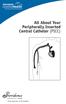 All About Your Peripherally Inserted Central Catheter (PICC) General Information Intravenous (IV) therapy is the delivery of fluid directly into a vein. An intravenous catheter is a hollow tube that is
NURSING PRACTICE & SKILL
 NURSING PRACTICE & SKILL Hand Hygiene: Hand and Arm Drying following Surgical Scrub What is Hand and Arm Drying following Surgical Scrub? Hand hygiene, also known as hand antisepsis, in the healthcare
INFECTION CONTROL POLICY MANUAL
 Page 1 of 7 POLICY MANUAL Key Words: personal protective equipment, PPE, safety equipment, infection control, standard precautions Policy Applies to: All staff employed by Mercy Hospital. Credentialed
Peripherally Inserted Central Catheter (PICC) Patient Instructions
 Patient Care Services 300 Pasteur Drive Stanford, CA 94305 Peripherally Inserted Central Catheter (PICC) Patient Instructions A Peripherally Inserted Central Catheter (PICC) is a soft flexible tube inserted
STERILE PROCESSING MANUAL Policy & Procedure
 STERILE PROCESSING MANUAL Policy & Procedure TITLE: Dress Code and Personal Protective NUMBER: Equipment (PPE) Sterile Processing Department (SPD) Effective Date: March 2014 Page 1 of 6 Applies To: Holders
Surgical Hand Antisepsis, Gowning and Gloving Operating Theatre Policy
 Surgical Hand Antisepsis, Gowning and Gloving Operating Theatre Policy Date agreed by Directorate: Date agreed by CRMG: Date of next review: October 2005.. October 2005.. July 2017.. J Hatton 1 Policy
How it works It's Simple.Simply Slender Body Wraps!
 Slender Body Wraps Our Luxurious Simply Slender Body Wrap system is formulated to cleanse the body of toxins that can collect due to such factors as aging, improper diet, lack of exercise, smoking and
RODENT SURVIVAL SURGERY
 Institutional Animal Care Program Title: RODENT SURVIVAL SURGERY Policy#: IACP 004 Date in Effect: 12/14/07 Rev #: 04 Rev Date: 12/13/13 In Effect Rescinded Date Rescinded: A) PURPOSE In accordance with
PICC Dressing Change
 PICC Dressing Change Gather materials: Non-sterile gloves (one pair) Alcohol pads to remove old dressing (as needed) Sterile dressing change kit:(mask, gloves, 2x2" gauze pads, drape, Steri-Strips, chlorhexidine,
How to safely collect blood samples from persons suspected to be infected with highly infectious blood-borne pathogens (e.g.
 How to safely collect blood samples from persons suspected to be infected with highly infectious blood-borne pathogens (e.g. Ebola) Step 1: Before entering patient room, assemble all equipment (1 st part)
PERIPHERALLY INSERTED CENTRAL CATHETERS (PICC) Fong So Kwan APN, Haematology unit Medical Department, QMH
 PERIPHERALLY INSERTED CENTRAL CATHETERS (PICC) Fong So Kwan APN, Haematology unit Medical Department, QMH 1 What is a PICC catheter? Primary vascular access device since their introduction in the mid-1970s,
Ilioinguinal dissection (removal of lymph nodes in the groin and pelvis)
 Ilioinguinal dissection (removal of lymph nodes in the groin and pelvis) This sheet answers common questions about ilio-inguinal dissection. If you would like further information, or have any particular
PATIENT GUIDE. Understand and care for your peripherally inserted central venous catheter (PICC). MEDICAL
 PATIENT GUIDE Understand and care for your peripherally inserted central venous catheter (PICC). MEDICAL Introduction The following information is presented as a guideline for your reference. The best
Flushing and Dressing a Peripherally Inserted Central Catheter (PICC Line): a Guide for Nurses
 Flushing and Dressing a Peripherally Inserted Central Catheter (PICC Line): a Guide for Nurses Information for Nurses Introduction This information is for community nursing staffs who have been asked to
Peripherally Inserted Central Catheter (PICC)
 Peripherally Inserted Central Catheter (PICC) Disclaimer This is general information developed by The Ottawa Hospital. It is not intended to replace the advice of a qualified healthcare provider. Please
PICC & Midline Catheters Patient Information Guide
 PICC & Midline Catheters Patient Information Guide medcompnet.com 1 table of contents Introduction 4 What is a PICC or Midline Catheter? 4 How is the PICC or Midline Catheter Inserted? 6 Catheter Care
INFECTION CONTROL PRECAUTIONS
 INFECTION CONTROL PRECAUTIONS Outline Standard Precautions Droplet Precautions Contact Precautions Airborne Precautions References STANDARD PRECAUTIONS Use Standard Precautions, or the equivalent, for
AORN Recommended Practices. AORN Practices. RPs Related to Environmental Services. Joan Blanchard, RN, MSS, CNOR, CIC September 10, 2008
 AORN Recommended Practices Joan Blanchard, RN, MSS, CNOR, CIC September 10, 2008 AORN Practices AORN Recommended Practices are AORN s official position on aseptic technique and technical practices. This
Personal Care, Hygiene, and Grooming
 Personal Care, Hygiene, and Grooming A guide to help Direct Support Professionals understand the importance of health maintenance and the professional ethics that apply when providing personal care. Personal
Hazardous Drugs Spill Kit
 Hazardous Drugs Spill Kit About the Joint Venture Baxter Pharmacy Services and CRG Healthcare have come together to produce the Hazardous Drugs Spill Kit Baxter Pharmacy Services Provides aseptically prepared
III-701 Urinary Catheterization/Bladder Irrigation Original Date: 3/1/1977 Last Review Date: 10/28/2004
 III-701 Urinary Catheterization/Bladder Irrigation Original Date: 3/1/1977 Last Review Date: 10/28/2004 Purpose A. Allow for precise measurement of urine output. B. Collect a sterile urine specimen. C.
Objectives At the completion of this module, unlicensed assistive personnel (UAP) should be able to:
 Objectives At the completion of this module, unlicensed assistive personnel (UAP) should be able to: 1. administer medications by subcutaneous injections. 2. document medication administration in the client
NIH Clinical Center Patient Education Materials Giving a subcutaneous injection
 NIH Clinical Center Patient Education Materials What is a subcutaenous injection? A subcutaneous injection is given in the fatty layer of tissue just under the skin. A subcutaneous injection into the fatty
PICCs and Midline Catheters
 Patient Education PICCs and Midline Catheters Patient s guide to PICC (peripherally inserted central catheter) and midline catheters What are PICCs and midline catheters used for? Any medicine given over
Policies & Procedures. I.D. Number: 1073
 Policies & Procedures Title:: CENTRAL VENOUS CATHETERS INSERTION ASSISTING I.D. Number: 1073 Authorization [] Pharmacy Nursing Committee [] MAC Motion #: [x] SHR Nursing Practice Committee Source: Nursing
Introduction A JP Drain is a soft tube and container used to drain fluids that build up under the skin after surgery.
 JP Drain Introduction A JP Drain is a soft tube and container used to drain fluids that build up under the skin after surgery. This reference summary explains what a JP Drain is and discusses how to take
Recommendations for Aseptic Technique and Post- Operative Care for Rodent Surgery
 Recommendations for Aseptic Technique and Post- Operative Care for Rodent Surgery It is the responsibility of the veterinary staff, investigator, laboratory animal technicians, and the facility manager
Clinical Skills Test Checklist
 Clinical Skills Test Checklist During training, you learn many skills that are important in caring for residents. There are 22 skills that are part of the Clinical Skills Test and ONLY in Nevada are there
Chapter 11. Everting skin edges
 Chapter 11 PRIMARY WOUND CLOSURE KEY FIGURE: Everting skin edges In primary wound closure, the skin edges of the wound are sutured together to close the defect. Whenever possible and practical, primary
A PROCEDURAL GUIDE TO MIDLINE CATHETER INSERTION
 A PROCEDURAL GUIDE TO MIDLINE CATHETER INSERTION See Also CPG midline catheters for indications, contraindications and post insertion management What is a midline A midline catheter is an 8-12 cm catheter
41 Assisting with Minor Surgery
 Learning Outcomes 41.1 Define the medical assistant s role in minor surgical procedures. 41-2 CHAPTER 41 Assisting with Minor Surgery 41.2 Describe types of wounds and explain how they heal. 41.3 Describe
call 811 to get advice from a nurse, or have someone drive the patient to a hospital Emergency Department. Patients should NOT drive themselves.
 Taking Care at Home After Surgery This checklist is to help you and your support person know what to do after you go home following your surgery. If you are given instructions verbally or in writing by
Ancillary Staff Training
 Ancillary Staff Training Goals of Infection Prevention Protect the patients Protect the staff Prevent spread of diseases How Does The Virus Spread Between People? Direct contact through broken skin, mouth,
Surgical Art. Formulaic Drawing Method. DRAWING WORKSHOP Learning to sketch for patient notes
 DRAWING WORKSHOP Learning to sketch for patient notes Surgical Art Formulaic Drawing Method Formulaic figure drawing systems involve using abstract rhythms and interlocking shapes to construct the human
CATHETER for Hemodialysis
 CATHETER for Hemodialysis What You Need to Know to Stay Healthy with a Catheter One treatment choice for kidney failure is hemodialysis (HD). HD removes wastes and excess fluid from your blood. Your lifeline
Self- Lymphatic Massage for Arm, Breast or Trunk Lymphedema
 Self- Lymphatic Massage for Arm, Breast or Trunk Lymphedema Patient Education Improving health through education The lymphatic system is part of our circulatory system. It helps balance the fluids of our
Biliary Drain. What is a biliary drain?
 Biliary Drain What is a biliary drain? A biliary drain is a tube to drain bile from your liver. It is put in by a doctor called an Interventional Radiologist. The tube or catheter is placed through your
Hand Hygiene: Why, How & When?
 Hand Hygiene: Why, How & When? WHY? Thousands of people die every day around the world from infections acquired while receiving health care. Hands are the main pathways of germ transmission during health
Pressure Ulcer Prevention in the O.R. Recommendations and Guidance
 March, 2013 Pressure Ulcer Prevention in the O.R. Recommendations and Guidance These recommendations are intended to provide guidance to improve the consistency of pressure ulcer prevention in operating
1-800-862-2731 Administration of Meropenem For Child
 1 Drug Name: _Meropenem 1-800-862-2731 Administration of Meropenem For Child Dosage: milligrams every hours over 5 minutes Key Points: FLUSHING: Meropenem Heparin flush 1. Always wash your hands with an
Hemodialysis Access: What You Need to Know
 Hemodialysis Access: What You Need to Know Hemodialysis Access: What You Need To Know Whether you already get hemodialysis treatment, or you will need to start dialysis soon, this booklet will help you
Environmental Management of Staph and MRSA in Community Settings July 2008
 Page 1 of 7 Environmental Management of Staph and MRSA in Community Settings July 2008 Questions addressed on this page What are Staph and MRSA? How is Staph and MRSA spread? What is the role of the environment
Personal Protective Equipment PPE
 Trainer notes for personal protection equipment (PPE) presentation Personal Protective Equipment PPE A short presentation on the principles of infection control in social care 1 P a g e Different types
MANITOBA PATIENT SERVICE CENTRE STANDARDS
 MANITOBA PATIENT SERVICE CENTRE STANDARDS February 2015 INTRODUCTION These Standards are derived from Z316.7-12 and are approved by the Council of the College of Physicians and Surgeons of Manitoba. These
Male Catheterisation
 1 Prepare your equipment, put what you need on to the trolley, choose catheter appropriate for urethral size and check the volume of water needed to inflate the balloon. All this information is written
Inferior Vena Cava filter and removal
 Inferior Vena Cava filter and removal What is Inferior Vena Cava Filter Placement and Removal? An inferior vena cava filter placement procedure involves an interventional radiologist (a specialist doctor)
Private Water Supplies Sampling Manual. A Field Guide
 Private Water Supplies Sampling Manual A Field Guide Foreword This sampling manual details standard procedures for the collection, storage and transportation of samples at private water supplies in accordance