
Pedestrian and Bicycle Crash Types
|
|
|
- Carol Simpson
- 9 years ago
- Views:
Transcription
1 COURSE ON BICYCLE L E S S O N 4 Pedestrian and Bicycle Crash Types 4.1 Purpose Many professionals involved in pedestrian and bicycle programs have never received training that focuses on crash causation. Everyone from traffic safety specialists to traffic engineers, planners, educators, and law enforcement personnel can benefit from an understanding of how crashes occur and how to avoid them. This lesson provides an understanding of crash characteristics, crash rates, exposure, and a grounding in crash typing. The most significant crash types will be explained and associated with contributing factors and typical errors made. The concepts of corridor and site crash analysis and team problemsolving will be emphasized. Discussion will include special conditions especially nighttime crashes, those involving impaired drivers, pedestrians and bicyclists, and high-speed roadways. 4.2 What Is a Crash? The word crash may be new to some people as a way to describe the event in which a bicyclist or pedestrian greets the ground, a motor vehicle, or any other solid object in a way that can result in bodily harm and/or property damage. Historically, these were called accidents. The term accident implies heavy doses of chance, unknown causes, and the connotation that nothing can be done to prevent them. Crashes are preventable. Bicyclist and pedestrian crashes are not random events. They fall into a pattern of reoccurring crash types and occur because the parties involved make mistakes. The mistakes can be identified and counteracted through a combination of education, skill development, engineering, and enforcement measures so crashes can be substantially reduced. 4.3 The Crash Avoidance Process Whether you are a pedestrian, bicyclist, or motorist, you generally go through a similar sequence of actions leading from searching for and recognizing a potential crash situation to taking steps to avoid it. 4-1

2 COURSE ON BICYCLE The steps in this sequence are described below. If any of these steps are overlooked by either party, a crash may result. Step 1: Search Both driver and bicyclist or pedestrian scan their environment for potential hazards. Step 2: Detect One or both parties (bicyclist, pedestrian, or motor vehicle) sees the other. Step 3: Evaluate The threat of collision is recognized, along with the need for action to avoid it. Step 4: Decide Assess risk and select the actions necessary to avoid a collision. This may involve judging location, closing speed, direction of travel, position in traffic, likely behavior, and other factors. Step 5: Action This step involves the successful performance of the appropriate action(s) to avoid a collision. 4.4 Number of Bicycle and Pedestrian Crashes Approximately 6,500 pedestrians and 900 bicyclists are killed each year as a result of collisions with motor vehicles. As a group, pedestrians and bicyclists comprise more than 14 percent of all highway fatalities each year. Pedestrians account for as much as 40 to 50 percent of traffic fatalities in some large urban areas. The 1994 General Estimates System (GES) data indicate that 90,000 pedestrians and 60,000 bicyclists were injured in this type of crash. Many more injuries are not reported to record-keeping authorities. A study by Stutts, et al. (1990) showed that fewer than twothirds of bicycle-motor vehicle crashes serious enough to require emergency room treatment were reported on State motor vehicle crash files. 4.5 Summary of Bicycle and Pedestrian Crash Characteristics In the 1996 study conducted by the Federal Highway Administration (Pedestrian and Bicycle Crash Types of the Early 1990 s, -RD ), 5,000 pedestrian and 3,000 bicycle crashes in 5 States were studied extensively in order to code crash types, determine the specific factors associated with the crash types, and to identify how countermeasures could be used to reduce the frequency of crashes. The following is a summary of the findings of the study. Pedestrian-Motor Vehicle Crash Sample Summary 1. Compared to their representation in the overall U.S. population, young persons (under 25 years of age) 4-2

3 COURSE ON BICYCLE were overrepresented in pedestrian crashes with motor vehicles, while older adults (ages 25 to 44) and the elderly (age 65+) were underrepresented. Elderly pedestrians in crashes, however, were more than twice as likely to be killed (15 percent versus 6 percent) compared to young persons. 2. Collisions with motor vehicles led to serious and fatal injuries to pedestrians in more than 33 percent of the crashes. 3. Alcohol or drug use was noted in about 15 percent of pedestrian crashes overall, but increased to 31 percent for pedestrians in the 25 to 44 age group. Alcohol/drug crashes were also more frequent on weekends and during the hours of darkness. 4. Pedestrian crashes occurred most frequently during the late afternoon and early evening hours, times when exposure is probably highest and visibility may be a problem. 5. About two-thirds of the crashes were categorized as urban. Fifteen percent of the pedestrian crashes reported occurred on private property, primarily in commercial or other parking lots. The elderly were overrepresented in commercial parking lot crashes, young adults in noncommercial parking lot crashes, and children under age 10 in collisions occurring in driveways, alleys, or yards. 6. Nearly 60 percent of the road-related crashes occurred on two-lane roadways. Serious and fatal injuries to pedestrians were directly proportional to speed limit and number of lanes. 7. Forty-one percent of crashes occurred at roadway intersections, and an additional 8 percent occurred in driveways or alley intersections. Forty-one percent of pedestrian crashes occur at intersections. 8. The pedestrian was judged to be solely at fault in 43 percent of the crashes. Running into the road, failure to yield, alcohol impairment, stepping out from between parked vehicles, and walking or running in the wrong direction (with traffic) were the most frequently cited pedestrian contributing factors. Younger pedestrians were more likely to be at fault. 9. Motor vehicle drivers were judged to be solely at fault in 35 percent of the crashes. Driver hit and run and failure to yield were the most frequently cited driver contributing factors, followed by improper backing, safe movement violations, and exceeding safe speed. Only 3 percent of motor vehicle drivers striking pedestrians were judged to have been impaired by alcohol. 10. More than three-fourths of pedestrian crashes fell into one of the following eight crash-type categories: vehicle turn/merge (9.8 percent), intersection dash (7.2 percent), other intersection (10.1 percent), midblock dart/dash (13.3 percent), other midblock (13.2 percent), not in roadway/ waiting to cross (8.6 percent), walking along roadway (7.9 percent), and backing vehicle (6.9 percent). These and the other seven major crash-type categories discussed in this report varied with respect to the pedestrian, driver, locational/environmental, and roadway factors that characterized them. It is critically important 4-3

4 COURSE ON BICYCLE to 15 percent for bicyclists in the 25 to 44 age group. This may be an emerging problem. Alcohol-drug crashes were more frequent on weekends and during hours of darkness. 5. About two-thirds of the bicyclist crashes occurred during late afternoon and early evening hours. Exposure is likely quite high during these hours, and visibility can be a problem. 6. About two-thirds of the crashes were categorized as urban. About 7 percent occurred on private property. Bicyclists less than 10 years old were somewhat overrepresented in crashes in housing-related parking lots, driveways, alleys, and private roads. A memorial to a bicyclist killed at a busy intersection in Newark, DE. for individual States and communities to develop a better understanding of the particular traffic situations endangering their residents. Bicycle-Motor Vehicle Crash Sample Summary 1. The basic bicycle-motor vehicle crash patterns are similar to those seen in the late 1970 s. Intersections, driveways, and other junctions continue to be locations where about threefourths of the crashes occur. Emerging facilities should be designed with this fact in mind. 2. Compared with their representation in the overall U.S. population, young bicyclists under the age of 15 (and particularly ages 10 to 14) were overrepresented in crashes with motor vehicles, while older adults (ages 25 to 44) and the elderly (age 65+) were under- represented. However, bicyclists older than age 44 were overrepresented with regard to serious and fatal injury. 3. Collisions with motor vehicles led to serious and fatal injuries to bicyclists in just over 18 percent of the crashes. 4. Alcohol or drug use was noted in about 5 percent of bicycle crashes overall, but increased 7. About 60 percent of the road-related crashes occurred on two-lane roadways. Roads with narrower lanes and roads with higher speed limits were associated with more than their share of serious and fatal injuries to bicyclists. 8. Bicyclists were judged to be at fault in about half of these crashes with motor vehicles. Bicyclists need training about how to ride in traffic. Failure to yield, riding against traffic, stop sign violations, and safe movement violations were the most frequently cited bicyclist contributing factors. The likelihood of the bicyclist being responsible for the crash was greatest for the younger bicyclists. When the crash-involved bicyclist was older, the motor vehicle driver was more likely to be at fault. 9. Motor vehicle drivers were judged to be solely at fault in 28 percent of the cases. Failure to yield, hit and run, and failure to see the bicyclists were the most frequently cited driver contributing factors. 10. The bicycle-motor vehicle crashes were divided into the three main categories as such: Parallel-path events Crossing-path events Specific circumstances 36 percent 57 percent 7 percent 11. The most frequent parallel-path crashes were motorist turn/merge into bicyclist s path (12.2 percent), motorist overtaking the bicyclist (

5 COURSE ON BICYCLE percent), and bicyclist turn/merge into motorist s path (7.3 percent). The most frequent crossingpath crashes were motorist failed to yield to bicyclist (21.7 percent), bicyclist failed to yield at an intersection (16.8 percent), and bicyclist failed to yield midblock (11.8 percent). These six individual crash types accounted for almost 80 percent of all bicycle-motor vehicle crashes. Project Summary and Recommendations 1. Much of what is reported in this study seems strongly connected to basic walking, riding, and driving patterns in other words, related to exposure. Future studies of pedestrians and bicyclists and related facilities should be planned with this need in mind. 2. As a measure of accountability, it is recommended that local and State pedestrian-bicycle coordinators continually track crashes in their jurisdictions. A simplified crash typing procedure that coordinators can easily use should be prepared and disseminated. 3. With the current increased interest in both bicycling and walking, crash investigators on the State and local levels should be urged to report completely on any bicyclist and pedestrian crashes, particularly for roadway-related variables. 4. A systemwide approach will be necessary to make safety gains as well as reach the goals of the National Bicycling and Walking Study (Federal Highway Administration, 1994), namely: (1) to double the number of trips made by bicycling and walking, and (2) to reduce by 10 percent the number of bicyclists and pedestrians injured or killed in traffic collisions. Engineering, education, and enforcement approaches are vital to improved safety. There is a continuing need to establish the mindset that bicyclists and pedestrians are worthy and viable users of our transportation system. 4.6 Common Pedestrian and Bicycle Crash Types This portion of the lesson presents information specific to pedestrian and bicycle crashes. It looks at the number, types, and characteristics of these crashes. The information was generated through a study conducted by the Highway Safety Research Center at the University of North Carolina (published by the Federal Highway Administration in June 1996). The study purpose was to update 1970 s era crash data to reflect more recent crash types, with particular attention to roadway and locational factors so that designers can reduce crash frequency through engineering methods and other interventions. See the following pages for examples. Pages 4-6 through 4-9: Eight most common pedestrian crash types. Pages 4-10 through 4-13: Eight most common bicycle crash types. 4.7 Exercise: Design a Countermeasures Program Part 1 Design a program that specifically provides countermeasures aimed at reducing one (or more) common bicycle and/or pedestrian crash types. Countermeasures can include physical changes to the bicycle/ pedestrian environment (engineered and constructed solutions), or education programs aimed at a particular audience that may be susceptible to certain crash types. Be specific about what the program would include, and how it would be implemented throughout a community. Include an explanation of how you would propose to evaluate the effectiveness of your program. Part 2 Using the data provided for the case study location, Piedmont Park in Atlanta, Georgia, developed some conclusions regarding the crash data obtained through the State department of transportation (DOT) for 1995, 1996, and 1997 (see Figures 4.3 to 4.8). Cross-tabulations of crashes by time of day, location, and causation factors are helpful in gaining insight into safety problems and possible countermeasures. Data available for these type evaluations are often limited due to the low percentage of reported pedestrian accidents and bicycle crashes. However, important information can be obtained by a thorough analysis of available data. 4-5


6 COURSE ON BICYCLE Figure 4.1: Eight of the Most Common Pedestrian Crash Types. Source: Pedestrian Crash Types - A 1990 s Informational Guide, Description: The crash occurred at midblock, but does not conform to any of the specified crash types. Description: The pedestrian and vehicle collided while the vehicle was preparing to turn, in the process of turning, or had just completed a turn (or merge). 4-6


7 COURSE ON BICYCLE Figure 4.1: Eight of the Most Common Pedestrian Crash Types (continued). Description: At midblock location, the pedestrian was struck while running and the motorist s view of the pedestrian was not obstructed. Description: The pedestrian was struck when not in the roadway. Areas included parking lots, driveways, private roads, sidewalks, service stations, yards, etc. 4-7

8 COURSE ON BICYCLE Figure 4.1: Eight of the Most Common Pedestrian Crash Types (continued). Description: The pedestrian was struck while walking (or running) along a road without sidewalks. The pedestrian may have been: hitchhiking (15 cases), walking with traffic and struck from behind (257 cases) or from the front (5 cases), walking against traffic and struck from behind (76 cases or from the front (7 cases), walking along a road, but the details are unknown (15 cases). Description: The pedestrian was struck while running through an intersection and/or the motorist s view of the pedestrian was blocked until an instant before impact. 4-8


9 COURSE ON BICYCLE Figure 4.1: Eight of the Most Common Pedestrian Crash Types (continued). Description: The crash occurred at an intersection but does not conform to any of the specified crash types. Description: The pedestrian was struck by a vehicle that was backing. 4-9


10 COURSE ON BICYCLE Figure 4.2: Eight of the Most Common Bicycle Crash Types. Source: Bicycle Crash Types - A 1990 s Informational Guide, Description: The crash occurred at an intersection at which the bicyclist was facing a stop sign or flashing red light. Description: The crash occurred at an intersection which the motorist was facing a stop sign. 4-10


11 COURSE ON BICYCLE Figure 4.2: Eight of the Most Common Bicycle Crash Types (continued). Description: The crash occurred at an intersection, signalized or uncontrolled, at which the bicyclist failed to yield. Description: The motorist was entering the roadway from a driveway or alley. 4-11


12 COURSE ON BICYCLE Figure 4.2: Eight of the Most Common Bicycle Crash Types (continued). Description: The motorist made a left turn while facing the approaching bicyclist. Description: The bicyclist entered the roadway from a residential driveway or alley. 4-12


13 COURSE ON BICYCLE Figure 4.2: Eight of the Most Common Bicycle Crash Types (continued). Description: The bicyclist made a left turn in front of traffic traveling in the same direction. Description: The motorist was making a right turn and the bicyclist was riding in either the same or opposing direction. 4-13

14 COURSE ON BICYCLE For the purpose of providing some general background on the case study location, the following descriptive information is provided: Piedmont Park is a large public park located approximately 3 miles north of the central business district in the midtown area of Atlanta. The park is surrounded on all sides by densely populated residential neighborhoods. Very little parking is available within the park and most park users arrive by foot, roller blades, skateboard, or bicycle. The park has extensive walking, running, and bicycling trails, and these are the primary uses of the park. In addition, there are numerous festivals and special events. Access to the park from surrounding neighborhoods is via surface streets, most of which have narrow (4-foot- to 5-foot-wide) sidewalks. The park is bound on all sides by heavily traveled arterial roadways that commonly experience significant peak-hour congestion. Two transit stations are located within walking distance near the park and frequent pedestrian access to and from the park is linked with the stations. Typical sidewalk and crosswalk treatments are used along surface streets (10 th St. and 14 th St.) to connect with the transit stations. Bicycles are allowed on transit fixed-rail vehicles during all operational periods. Data provided for conducting a case study evaluation of pedestrian and bicycle conditions at Piedmont Park include the following information: Bicycle Crash Locations (Figure 4.3). Pedestrian Accident Locations (Figure 4.4). Site Location Map (Figure 4.5). Tabulation of Pedestrian Accident Data (Figure 4.6). Tabulation of Bicycle Crash Data (Figure 4.7). Usage Data Collected at Major Park Entrances (Figure 4.8). Summary of Major Roadways (Figure 4.9). Part 3 Obtain pedestrian accident and bicycle crash data from your State DOT for a particular roadway or area of interest. You should obtain a minimum of 3 years of data in order to conduct your analysis of factors similar to those discussed in the Piedmont Park case study location. Although local city agencies sometimes maintain crash data, the State DOT is the most reliable source of available data. Most States maintain their crash data in a computerized database system and sorts of the data can be conducted on various field entries to list crashes associated with either pedestrians or bicycles. These types of crashes will only constitute a very small amount of the total crashes occurring along a roadway and it may be useful to receive a full listing of all the crashes associated with your location of interest. DOT s may only maintain data along the more significant roadways and often do not include subdivision/residential streets. Most DOT personnel are very helpful and willing to work to get you the data you need. You should clearly explain your intentions, location of interest, and type of data that you would like to obtain. Submitting a request in writing is typically required so that your data request can be efficiently processed through their system. In addition to the crash data, you may need other information that will allow you to decode the crash data and to physically link the crash to a location on the roadway network. An accident/crash investigation manual is usually available that lists all of the coded entries used in creating aggregated crash tabulations. Also, a roadway features log is typically available to link milepost listings to physical map features such as intersections, bridges, and street names. In the initial phases of conducting an analysis of crashes, it is seldom necessary to access the actual crash reports. It is much more useful to utilize aggregated crash records that are available through the crash data system. Allow ample time for DOT personnel to accommodate your request within their day-to-day workload. Generally, data can be received in 2 to 3 weeks after submitting a request. 4-14

15 COURSE ON BICYCLE 4.8 References Text and graphics for this section were derived from the following sources: Drake and Burden, Pedestrian and Bicyclist Safety and Accommodation Participant Workbook, NHI Course #38061, -HI , Federal Highway Administration, Bicycle Crash Types: A 1990 s Informational Guide, -RD , Federal Highway Administration, Pedestrian and Bicycle Crash Types of the Early 1990 s, Technical Summary, -RD , Federal Highway Administration, Pedestrian Crash Types: A 1990 s Informational Guide, -RD ,

16 COURSE ON BICYCLE Figure 4.3 Bicycle Crash Locations Year No Total 14 Prado Dr. Piedmont Ave. Monroe Dr. B-1995 N NTS Peachtree St. Piedmont Park B-1995 B th Street Park Dr. B-1996 B-1997 B th St. B-1997 B th Street Virginia Ave. B-1995 B-1996 B-1996 B-1996 B-1995 B

17 COURSE ON BICYCLE Figure 4.4 Pedestrian Accident Locations P-1995 Year No Total 21 Prado Dr. Piedmont Ave. Monroe Dr. P-1996 N NTS Peachtree St. Piedmont Park P-1997 P-1996 P-1997 P-1996 P th Street Park Dr. P-1996 P-1996 P th St. P-1997 P-1995 P th Street Virginia Ave. P-1995 P-1997 P-1995 P-1996 P-1995 P-1997 P-1997 P

18 Charles Allen Dr. COURSE ON BICYCLE Figure 4.5 Botanical Garden Ave. Site Location Map Piedmont N Prado Dr. Monroe Dr. Peachtree St. Arts Center Transit Station 5 NTS Piedmont Park 14th Street Midtown Commercial District th St. 4 Park Dr. Virginia Highlands Residential District Transit Station 10th Street 3 Virginia Ave. Mitchell House Midtown Residential District 4-18

19 Figure 4.6: Piedmont Park Vicinity Atlanta, Georgia Tabulation of Pedestrian Accident Data No. Route Roadway Mile Post Time Month Day Year Severity Location Type Light Condition Surface Condition 1 10 th Street : Injury Intersection Pedestrian Dark-Lighted Dry 2 10 th Street : Injury Intersection Pedestrian Daylight Dry 3 10 th Street : Injury (2) Intersection Pedestrian Dark-Lighted Dry 4 10 th Street : Injury Intersection Pedestrian Dark-Lighted Dry th Street : Injury Intersection Pedestrian Daylight Dry 6 14 th Street : Injury Intersection Pedestrian Daylight Dry 7 14 th Street : Injury Intersection Pedestrian Daylight Dry 8 14 th Street : Injury Intersection Pedestrian Daylight Dry 9 Monroe Drive : Injury Roadway Segment Pedestrian Daylight Wet th Street : Injury Intersection Pedestrian Daylight Dry th Street : Injury Intersection Pedestrian Daylight Dry th Street : Injury Intersection Pedestrian Dark-Lighted Dry th Street : Injury Roadway Segment Pedestrian Dark-Lighted Dry th Street : Injury Intersection Pedestrian Daylight Dry COURSE ON BICYCLE th Street : Injury Intersection Pedestrian Daylight Dry 16 Piedmont Avenue : Injury Intersection Pedestrian Dark-Lighted Dry 17 Monroe Drive : Injury Intersection Pedestrian Dark-Lighted Wet th Street : Injury Roadway Segment Pedestrian Dusk Dry th Street : Injury Intersection Pedestrian Daylight Dry th Street : Injury Intersection Pedestrian Dark-Lighted Dry th Street : Injury (2) Intersection Pedestrian Dark-Lighted Dry Crash data provided by Georgia Department of Transportation.

20 4-20 No. Route Roadway Mile Post Piedmont Park Vicinity Atlanta, Georgia Tabulation of Bicycle Crash Data Time Month Day Year Severity Location Type Light Condition 1 Monroe Drive : Injury Intersection Angle Intersecting Daylight Dry 2 10 th Street : Injury Intersection Angle Intersecting Daylight Dry 3 10 th Street : Injury Intersection Angle Intersecting Daylight Dry 4 10 th Street : Injury Intersection Head On Daylight Dry 5 14 th Street : Injury Intersection Angle Intersecting Dark-Lighted Dry 6 Monroe Drive : Injury Intersection Rear End Dark-Lighted Dry 7 10 th Street : PDO Intersection Sideswipe Same Dir Daylight Dry 8 10 th Street : PDO Intersection Angle Intersecting Dark-Lighted Dry 9 10 th Street : PDO Intersection Angle Intersecting Dark-Lighted Dry 10 Monroe Drive : PDO Roadway Segment Angle Intersecting Daylight Dry th Street : Injury Intersection Angle Intersecting Daylight Dry th Street : Injury Intersection Angle Intersecting Daylight Dry th Street : Injury Intersection Angle Intersecting Daylight Dry th Street : Injury Intersection Rear End Daylight Dry PDO = Property Damage Only Crash data provided by Georgia Department of Transportation. Figure 4.7 Surface Condition COURSE ON BICYCLE

21 COURSE ON BICYCLE Figure 4.8 Piedmont Park Vicinity Atlanta, Georgia Human Powered Transportation (HPT) Modes HPT Usage Data Collected at Major Park Entrances No. Entrance Location Time of Day Bicyclists Rollerbladers (2) 1 (4) Piedmont Ave. at 14 th St. 1 (4) Piedmont Ave. at 14 th St. 2 Piedmont Ave. at 12 th St th St. at Charles Allen Dr. 4 Park Ave. at Elmwood Dr. Total for all intersection movements (1) Pedestrians (3) Total HPT Activity 4:25 4:40 pm :00 5:15 pm :40 4:55 pm :20 5:35 pm :40 5:55 pm Notes: 1. Conditions were sunny and clear, temperature approximately 90 degrees F. Count duration was for a total of 15 minutes for each spot count location. 2. Count tabulations include occasional skateboarders. 3. Count tabulations include joggers and people with baby strollers. 4. Piedmont Ave. at 14 th St. was counted twice, to evaluate peaking characteristics. Figure 4.9 Piedmont Park Vicinity Atlanta, Georgia Summary of Major Roadways No. Roadway Mileposts No. of Lanes 1 Piedmont Avenue Section 1 Section to to (one way) 4 Speed Limit 35 mph 35 mph 1997 ADT 11,700 26,400 Total Length (miles) 2 10 th Street 1.56 to mph 20, th Street Section 1 Section to to mph 35 mph 22,400 17,500 4 Monroe Drive 4.85 to mph 20,
22 COURSE ON BICYCLE 4-22
Pedestrian and Bicycle Crash Data Analysis: 2005-2010
 MICHIGAN DEPARTMENT OF TRANSPORTATION Pedestrian and Bicycle Crash Data Analysis: 2005-2010 FINAL REPORT Prepared by: T.Y. Lin International and Western Michigan University 4/3/2012 TABLE OF CONTENTS List
Bicycle Safety Enforcement Action Guidelines
 Introduction Bicycle Safety Enforcement Action Guidelines People ride bicycles for many different reasons: fitness, recreation, or for transportation. Regardless of the reason for riding, bicyclists young
North Carolina. Bicycle Crash Facts 2008-2012. Prepared for
 North Carolina Bicycle Crash Facts 2008-2012 Prepared for The North Carolina Department of Transportation Division of Bicycle and Pedestrian Transportation Prepared by The University of North Carolina
a U.S. Department of Transportation National Highway Traffic Safety Administration Computer Accident Typing for Bicyclist Accidents Coder's Handbook
 a U.S. Department of Transportation National Highway Traffic Safety Administration Computer Accident Typing for Bicyclist Accidents Coder's Handbook INTRODUCTION This Coder's Handbook is part of a package
BICYCLE CRASH DATA ANALYSIS FOR HILLBOROUGH COUNTY
 BICYCLE CRASH DATA ANALYSIS FOR HILLBOROUGH COUNTY SEPTEMBER, 2000 Hillsborough County Metropolitan Planning Organization 601 E. Kennedy Blvd., 18th Floor P.O. Box 1110 Tampa, Florida 33601-1110 (813)
Accident Analysis of Sheridan Road between Isabella Street and South Boulevard
 Accident Analysis of Sheridan Road between Isabella Street and South Boulevard Prepared for TranSystems Corporation for the City of Evanston Submitted by Regina Webster & Associates, Inc. Date: 08/15/2008
Stone Way N Rechannelization: Before and After Study. N 34th Street to N 50th Street
 City of Seattle Department of Transportation Stone Way N Rechannelization: Before and After Study N 34th Street to N 50th Street May, 2010 INTRODUCTION Population density in Seattle is increasing within
TEST ON Driving Safely Among Bicyclists and Pedestrians
 TEST ON Driving Safely Among Bicyclists and Pedestrians Next you will take a 16 question test about driving safely among bicyclists and pedestrians. Please take out a sheet of paper to mark down and score
Pedestrian Crash Facts
 North Carolina Pedestrian Crash Facts 2008-2012 Prepared for The North Carolina Department of Transportation Division of Bicycle and Pedestrian Transportation Prepared by The University of North Carolina
CHAPTER 5-A. Bicycle and Skateboard Ordinance
 CHAPTER 5-A Bicycle and Skateboard Ordinance Article I. Bicycles. 5-A.01. Definitions. 5-A.02. Applicability. 5-A.03 Registration Required. 5-A.04. General Bike Regulations. Article II. Skateboards, Scooters
CHAPTER 11: PEDESTRIAN SIGNS AND SIGNALS
 CHAPTER 11: PEDESTRIAN SIGNS AND SIGNALS Traffic signs and signals should be useful for all pedestrians. It is essential to provide signals that are phased and timed to allow senior citizens, children,
ELMHURST SPEEDWAY A STUDY OF LAWBREAKING IN ELMHURST
 ELMHURST SPEEDWAY A STUDY OF LAWBREAKING IN ELMHURST INTRODUCTION TWENTY-THIRD AVENUE IS AN EAST-WEST FOUR-LANE ARTERIAL ROAD running through East Elmhurst, Queens. With two lanes of traffic in either
CHAPTER 2 TRAFFIC SIGNS AND HIGHWAY MARKINGS
 CHAPTER 2 TRAFFIC SIGNS AND HIGHWAY MARKINGS This chapter summarizes traffic signs, signals and road markings that control the flow of traffic, making streets and highways safer for motorists, bicyclists
Why Do We Bike? And where, how, who, when, and with what
 Why Do We Bike? And where, how, who, when, and with what What will I learn today? Knowledge of laws for bikes in traffic: your rights and responsibilities as a bicyclist and motorist Examples of safe and
FMCSA Webinar Nov.18th to Examine Large Truck Crash Fatalities Involving Pedestrians & Bicyclists. New Technology for Better Fleet Management
 In This Issue: FMCSA Webinar Nov.18th to Examine Large Truck Crash Fatalities Involving Pedestrians & Bicyclists Help Prevent Roadway Accidents involving Pedestrians How to Steer Clear of Accidents with
SAFE Streets for CHICAGO
 Overview Each day, hundreds of thousands of Chicagoans walk or drive in the city. Ensuring their safety is the City s top priority. Over the past several years, Chicago has developed many successful strategies
BICYCLE TRENDS IN CAMBRIDGE
 BICYCLE TRENDS IN CAMBRIDGE Cambridge promotes bicycling as a healthy, environmentally friendly way of getting around as an important part of the City's efforts to improve mobility and protect our environment.
RULES OF THE ROAD BY LWTL Staff Writer
 RULES OF THE ROAD BY LWTL Staff Writer Publisher s Note This is the First of a Three Part Series on Pedestrian and Bicycle Safety. This First Part is made available to all readers. The final two parts
Bike Accident Summary. Table 1 shows the number of bicycle accidents in Fort Collins from January 1, 2000 -June 30, 2009.
 Bike Accident Summary Table shows the number of bicycle accidents in Fort Collins from January, -June, 9. TABLE BICYCLE ACCIDENTS BY YEAR 9 ½ year % vs. prev. yr. avg. Non-Injury Accidents 9 +.% Injury
The partnership has selected three intersections where enforcement, education, and engineering initiatives are being implemented to improve safety:
 Hamilton-Finn Suite 310 Tel. (403) 207-6000 Road Safety 3016 5th Avenue N.E. Fax. (403) 273-3440 Consultants Ltd. Calgary, Alberta dawatt.dawatt.com www.hamiltonfinn.ca January 19, 2005 Mr. Don Szarko,
 Walkable Communities Florida Department of Transportation State Safety Office Pedestrian and Bicycle Program April 1995 www.dot.state.fl.us/safety Twelve Steps for an Effective Program Page 1 Twelve Steps
Bicycle riding is a great way to get into shape
 Bicycle riding is a great way to get into shape and have fun. To remain safe on Illinois roads, it is important to follow the same traffic safety laws that govern vehicle drivers. No amount of bicycle
MISSOURI TRAFFIC SAFETY COMPENDIUM
 2010 MISSOURI TRAFFIC SAFETY COMPENDIUM MISSOURI STATE HIGHWAY PATROL STATISTICAL ANALYSIS CENTER 1510 East Elm Jefferson City, Missouri 65101 (573) 751-9000 CONTENTS PAGE EXECUTIVE SUMMARY INTRODUCTION...1
Bicycle Safety Quiz Answers Parental Responsibilities
 Bicycle riding is a great way to get into shape and enjoy the outdoors. To remain safe on Illinois roads, it is important to follow the same traffic safety laws that govern vehicle drivers. No amount of
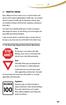
Stop The stop sign, a red octagon with white lettering, means come to a full stop and be sure the way is clear before proceeding.
 Tr a f f i c S i g n s 7 7. TRAFFIC SIGNS Many collisions and near crashes occur as a result of drivers who ignore or fail to respond appropriately to traffic signs. It is essential that the meaning of
School Bus Accident Report Form
 School Bus Accident Report Form Regardless of severity, a School Bus Accident Report Form must be submitted by a school division whenever a school bus is involved in an accident. Please complete the following
Back to School Car Safety. Direct Buy Warranty Staff September 19, 2014
 Back to School Car Safety Direct Buy Warranty Staff September 19, 2014 It s back to school season, and that means kids are picking out new clothes, putting on their backpacks, and hitting the road to get
Deaths/injuries in motor vehicle crashes per million hours spent travelling, July 2008 June 2012 (All ages) Mode of travel
 Cyclists CRASH STATISTICS FOR THE YEAR ENDED 31 DECEMBER 212 Prepared by the Ministry of Transport CRASH FACTSHEET November 213 Cyclists have a number of risk factors that do not affect car drivers. The
SAN DIEGO - A BICYCLE FRIENDLY CITY
 SAN DIEGO - A BICYCLE FRIENDLY CITY MANY OPPORTUNITIES FOR IMPROVEMENT SUMMARY The designated bicycle paths and lanes in the City of San Diego (City) are often substandard because of their location and
Associati. The Annex Residents Association. The Annex Residents Association Cycling Policy Adopted by the Board, January 13, 2011.
 Associati The Annex Residents Association The Annex Residents Association Cycling Policy Adopted by the Board, January 13, 2011 The objective of these recommendations is to establish a set of guiding principles
Florida Class E Knowledge Exam Road Rules Practice Questions www.gdlinstitute.org
 If you purchase the Value Package from GDL Institute, over 100 additional practice questions are included at no additional cost. Use discount code PQ10 and receive 10% off of the package price! 1. If you
A Bicyclist s Guide to Traffic Law in Tucson and Pima County. Traffic Laws, Fines and Phone Numbers
 A Bicyclist s Guide to Traffic Law in Tucson and Pima County Traffic Laws, Fines and Phone Numbers This booklet contains a listing of relevant Arizona State, Pima County and City of Tucson laws as of January,
School Bus Accident Report
 School Bus Accident Report Regardless of severity, the following School Bus Accident Report must be submitted by a school division whenever a school bus is involved in an accident. This report can be submitted
ROAD SIGNS IN JAPAN PARKING SIGNS. No Parking or Stopping Anytime SIZE & WEIGHT LIMIT SIGNS SPEED LIMIT SIGNS
 ROAD SIGNS IN JAPAN Stop Slow & all Do Not Enter & Motorcycles Road Large Sized Trucks & Special Duty Road All Except Two Wheeled Light Except Bicycles Large Passenger No Right Turn No Passing No U-Turn
PEDESTRIAN LAWS OF NORTH CAROLINA
 PEDESTRIAN LAWS OF NORTH CAROLINA Under North Carolina law, pedestrians have the right of way at all intersections and driveways. However, pedestrians must act responsibly, using pedestrian signals where
Evaluation of the Shared-Use Arrow
 Evaluation of the Shared-Use Arrow Table of Contents Page Evaluation of the Shared-Use ARROW Background... 1 ARROW Design... 1 ARROW Placement... 2 Wayne E. Pein William W. Hunter J. Richard Stewart Report
A Guide to Safe Bicycling in Hawai i
 A Guide to Safe Bicycling in Hawai i Sharing the Road: A Guide to Safe Bicycling in Hawai i What Motorists & Bicyclists Should Know Everyone has the right to be safe on Hawai i s roads. Law of the Splintered
ILLINOIS STATUTES REGARDING BICYCLES Updated March 2009
 ILLINOIS STATUTES REGARDING BICYCLES Updated March 2009 ILLINOIS VEHICLE CODE 625 ILCS 5/ "Every person riding a bicycle upon a highway shall be granted all of the rights and shall be subject to all of
Best Practice For Selecting Bus Stop Locations
 Best Practice For Selecting Bus Stop Locations There is no perfect school bus stop, because it is impossible to eliminate all potential hazards, but guidelines and training are still necessary to ensure
the Ministry of Transport is attributed as the source of the material
 Disclaimer All reasonable endeavours are made to ensure the accuracy of the information in this report. However, the information is provided without warranties of any kind including accuracy, completeness,
DOT HS 811 625 August 2012
 TRAFFIC SAFETY FACTS 2010 Data DOT HS 811 625 August 2012 Pedestrians In 2010, 4,280 pedestrians were killed and an estimated 70,000 were injured in traffic crashes in the United States. On average, a
PREVENTABILITY OF MOTOR VEHICLE COLLISIONS
 PREVENTABILITY OF MOTOR VEHICLE COLLISIONS Management and fleet supervisors should establish standards for defensive driving in any type of fleet safety program. The overall performance of the drivers
Northwest Region Division of Transportation Bureau of Indian Affairs
 Northwest Region Division of Transportation Bureau of Indian Affairs Cinco D. Cronemeyer 911 NE 11 th Avenue Portland, OR 97232-4169 (503) 872-2872 [email protected] Strategic Highway Safety Plan
Safety Evidence for Bicycling
 Photo: Boegh (Flickr) Cycling in Cities Research Program School of Population & Public Health The University of British Columbia Faculty of Health Sciences Simon Fraser University Driving near bicyclists
A Bicycle Accident Study Using GIS Mapping and Analysis
 A Bicycle Accident Study Using GIS Mapping and Analysis Petra Staats, Graduate Assistant, Transportation Policy Institute, Rutgers University, New Brunswick, NJ, USA [email protected] Summary Surveys
Crash Report Calendar Years 2003 through 2006 August 2007
 Bloomington/Monroe County Metropolitan Planning Organization Crash Report Calendar Years 2003 through 2006 August 2007 (this page intentionally left blank) Table of Contents Executive Summary... ii Introduction...
WYDOT Quick Facts TRAFFIC SIGNALS
 TRAFFIC SIGNALS WYDOT Quick Facts 2 Advantages of traffic signals WYDOT Quick Facts Traffic signals control vehicle and pedestrian traffic by assigning priorities to various traffic movements to influence
HISTORY OF FATAL ACCIDENTS ON ROADWAYS IN THE CITY OF BERKELEY
 Bike Fixed Parked Truck/ 10/23/10 21:26 10-64700 San Pablo/Gilman 1 v. - died, Driver violated CVC 21950(a), 20001 (failing to yield to pedestrian in a crosswalk and hit and run). 03/10/10 21:04 10-15293
Atlanta, Georgia Road Test
 1. When driving your car Into traffic from a parked position, you should: A. Sound your horn and pull Into the other lane. B. Signal and proceed when safe. C. Signal other traffic and pull directly into
PRAIRIE ROSE SCHOOL DIVISION SECTION E: SUPPORT SERVICES (PART 3: TRANSPORTATION)
 EMJ ACCIDENTS INVOLVING SCHOOL BUSES File EMJ The Bus Driver shall immediately verbally inform the Supervisor of Operations who shall call the police to the scene of all accidents involving the school
FLORIDA BICYCLE LAW ENFORCEMENT GUIDE
 FLORIDA BICYCLE LAW ENFORCEMENT GUIDE A review of Florida s bicycle traffic laws to help with warnings, citations and crash reports July 2007 All citations are to the 2007 Florida Statutes Bicycles are
DOT HS 812 018 April 2014
 TRAFFIC SAFETY FACTS 2012 Data DOT HS 812 018 April 2014 Bicyclists and Other Cyclists In 2012, 726 pedalcyclists were killed and an additional 49,000 were injured in motor vehicle traffic crashes. Pedalcyclist
Model Fleet Safety Program Short
 TM Model Fleet Safety Program Short CORPORATE HEADQUARTERS 518 EAST BROAD STREET COLUMBUS, OHIO 43215 614.464.5000 STATEAUTO.COM TM Disclaimer: The information contained in this publication was obtained
The spectrum of motorcycle research in Maryland
 The spectrum of motorcycle research in Maryland Cynthia Burch MPH, Timothy Kerns MS National Study Center for Trauma & EMS, University of Maryland School of Medicine Abstract Motorcycle riders experience
Traffic Safety Facts 2008 Data
 Traffic Safety Facts 2008 Data Bicyclists and Other Cyclists DOT HS 811 156 Bicyclists and other cyclists include riders of two-wheel nonmotorized vehicles, tricycles, and unicycles powered solely by pedals.
Road Signs Recognition Quiz
 Road Signs Recognition Quiz Place your answer for each of the signs/pavement markings on the answer sheet. Ready to Roll? Here Comes Sign # 1... #1 A No right turn B Right turn only C Warning, no turn
Risk Factors for Bicycle-Motor Vehicle Collisions at Intersections *
 Risk Factors for Bicycle-Motor Vehicle Collisions at Intersections * BY ALAN WACHTEL AND DIANA LEWISTON In 1992, 722 bicyclists were killed in the United States in collisions with motor vehicles 1, and
- FREE! - The Official San Francisco BIKE GUIDE. 1st Edition
 - FREE! - The Official San Francisco BIKE GUIDE 1st Edition SF BIKE LAWS SAN FRANCISCO BICYCLISTS MUST: Yield to People Walking Whether they re in a crosswalk or not, ALWAYS yield to people walking. Stop
Protected Bicycle Lanes in NYC
 Protected Bicycle Lanes in NYC New York City Department of Transportation Polly Trottenberg, Commissioner September 2014 NEW YORK CITY DEPARTMENT OF TRANSPORTATION 1 Overview Since 2007, the New York City
ITARDAInstitute for Traffic Accident
 ITARDAInstitute for Traffic Accident Research and Data Analysis ( 財 ) 交 通 事 故 総 合 分 析 センター ITARDA INFORMATION No. 2011 88APRIL Fatality rate (%) 0 2 4 6 Head-on 0.70% Rear-end 4.7% Rear-end 0.70% Crossing
Advantages and Disadvantages of One Way Streets October 30, 2007
 Advantages and Disadvantages of One Way Streets October 30, 2007 0 P age Background As the revitalization of the Central Waterfront area moves forward, one issue that might need closer analysis is the
STATISTICS OF FATAL AND INJURY ROAD ACCIDENTS IN LITHUANIA,
 Vilnius 215 STATISTICS OF FATAL AND INJURY ROAD ACCIDENTS IN LITHUANIA, 211 214 TABLE OF CONTENTS INTRODUCTION... 9 GENERAL INFORMATION... 1 1. VEHICLE FLEET... 11 1.1. Number of vehicles, 1995 214...
How To Know If A Motorcyclist Is Safe
 Motorcyclists CRASH FACTSHEET November 2013 CRASH STATISTICS FOR THE YEAR ENDED 31 DECEMBER 2012 Prepared by the Ministry of Transport In 2012, 50 motorcyclists 1 died and a further 1,138 were injured
Teaching Your Teen to Drive
 MetLife Auto & Home Teaching Your Teen to Drive Without driving each other crazy! Dear Parent/Guardian, One of the best ways for you to influence your teen s driving habits is to sit in the copilot seat
Tennessee Traffic Laws Relating to Bicycles A HANDBOOK FOR MOTORISTS & BICYCLISTS
 Tennessee Traffic Laws Relating to Bicycles A HANDBOOK FOR MOTORISTS & BICYCLISTS About the Knoxville Regional Bicycle Program The Knoxville Regional Transportation Planning Organization (TPO) coordinates
How To Be Safe
 TRAFFIC SAFETY FACTS 2011 Data DOT HS 811 743 April 2013 Bicyclists and Other Cyclists In 2011, 677 pedalcyclists were killed and an additional 48,000 were injured in motor vehicle traffic crashes. Pedalcyclist
Trends in Transit Bus Accidents and Promising Collision Countermeasures
 Trends in Transit Bus Accidents and Promising Collision Countermeasures Trends in Transit Bus Accidents and Promising Collision Countermeasures C. Y. David Yang, Noblis Abstract This article presents information
These "rules of the road" are based on Texas Transportation Code statutes. Find the complete bicycle code at the bottom of the page
 Texas Bicycle Laws These "rules of the road" are based on Texas Transportation Code statutes. Find the complete bicycle code at the bottom of the page Bicyclists have the rights and duties of other vehicle
REGIONAL TRANSPORTATION SAFETY INFORMATION MANAGEMENT SYSTEM (RTSIMS) Phase II UPWP Project: 600-0180-09 Task Order SA09-1 Goal
 REGIONAL TRANSPORTATION SAFETY INFORMATION MANAGEMENT SYSTEM (RTSIMS) Phase II UPWP Project: 600-0180-09 Task Order SA09-1 Goal The overall goal of the RTSIMS project is to develop an information management
VISION ZERO LOS ANGELES PRESS KIT
 VISION ZERO LOS ANGELES PRESS KIT INTRODUCTION Vision Zero is a road safety policy that promotes smart behaviors and roadway design that anticipates mistakes such that collisions do not result in severe
DOT HS 809 360 October 2001
 U.S. Department of Transportation National Highway Traffic Safety Administration DOT HS 809 360 October 2001 Technical Report This document is available to the public from the National Technical Information
6: LANE POSITIONS, TURNING, & PASSING
 6: LANE POSITIONS, TURNING, & PASSING BASIC LANE POSITIONS Traffic law says that slower vehicles should stay to the right. But where exactly should bicycles ride? Here are some basics. Never Ride Against
PEDESTRIAN AND BICYCLE ACCIDENT DATA. Irene Isaksson-Hellman If Insurance Company P&C Ltd.
 PEDESTRIAN AND BICYCLE ACCIDENT DATA Irene Isaksson-Hellman If Insurance Company P&C Ltd. Vulnerable road users 2 Number Number Official accident statistics 45 35 4 3 35 25 3 25 2 2 15 15 1 1 5 5 5 4 5
Bob Wachtel BOB: Jim Nugent [[email protected]] Monday, November 28, 2011 2:49 PM 'Bob Wachtel' From: Sent: To: Cc:
![Bob Wachtel BOB: Jim Nugent [JNugent@ci.missoula.mt.us] Monday, November 28, 2011 2:49 PM 'Bob Wachtel' From: Sent: To: Cc:](/thumbs/23/2055658.jpg "Bob Wachtel BOB: Jim Nugent [JNugent@ci.missoula.mt.us] Monday, November 28, 2011 2:49 PM 'Bob Wachtel' From: Sent: To: Cc:") Page 1 of 5 Bob Wachtel From: Sent: To: Cc: Subject: Jim Nugent [[email protected]] Monday, November 28, 2011 2:49 PM 'Bob Wachtel' Follow Up Flag: Follow up Flag Status: Red BOB: Phil Smith; Steve
Page 1 of 5 Bob Wachtel From: Sent: To: Cc: Subject: Jim Nugent [[email protected]] Monday, November 28, 2011 2:49 PM 'Bob Wachtel' Follow Up Flag: Follow up Flag Status: Red BOB: Phil Smith; Steve
ENGINEERING SOLUTIONS FOR DESIGNING YOUR SAFE ROUTES
 How to Get Started ENGINEERING SOLUTIONS FOR DESIGNING YOUR SAFE ROUTES Design Elements Selecting appropriate design treatments for school neighborhoods creates environments that address the needs of all
Safety-conscious Drivers Prevent Crashes. Defensive Driving: Managing Visibility, Time and Space. Improve Your Defensive Driving Skills
 Defensive Driving: Managing Visibility, Time and Space Motor vehicle travel is the primary means of travel in the United States. With all the benefits that come along with mobility, there are thousands
Accident configurations and injuries for bicyclists based on the German In-Depth Accident Study. Chiara Orsi
 Accident configurations and injuries for bicyclists based on the German In-Depth Accident Study Chiara Orsi Centre of Study and Research on Road Safety University of Pavia State of the art Vulnerable road
"The Hurt Report" (AKA "Motorcycle Accident Cause Factors and Identification of Countermeasures")
 "The Hurt Report" (AKA "Motorcycle Accident Cause Factors and Identification of Countermeasures") A brief summary of the findings is listed below. To order the full report, contact: National Technical
Analysis Parameters. The Tucson Region (eastern Pima County) What is a Bicycle Crash? Annual Bicycle Crashes. Crashes and Population Growth
 Analysis Parameters Pima Association of Governments Bicycle Crash Analysis thru 8 Overview May 9 Analysis covers all jurisdictions in Pima County Covers calendar years thru 8 Analysis of Arizona Dept.
SCHOOL BUS SAFETY STOP WHAT PARENTS SHOULD KNOW
 SCHOOL BUS SAFETY STOP WHAT PARENTS SHOULD KNOW ILLINOIS STATE BOARD OF EDUCATION Making Illinois Schools Second to None Funded by National Highway Traffic Safety Administration and Illinois Department
SAMPLE VEHICLE FLEET SAFETY & USAGE POLICY
 SAMPLE VEHICLE FLEET SAFETY & USAGE POLICY Policy The purpose of this policy is to ensure the safety of those individuals who drive company vehicles and to provide guidance on the proper use of company
Bicycle Laws in North Carolina and the U.S.
 Bicycle Laws in North Carolina and the U.S. Passing Cyclists in No-Passing Zones Several states, including Colorado, Maine, Mississippi, Ohio, Pennsylvania, Utah and Wisconsin have laws allowing motorists
New Jersey SRTS Travel Plan Guide
 New Jersey SRTS Travel Plan Guide Prepared For: Funded By: Prepared By: New Jersey Department of Transportation Federal Highway Administration Alan M. Voorhees Transportation Center Edward J. Bloustein
Smart Cycling IN SANTA MONICA SANTA MONICA POLICE DEPARTMENT BE SMART. BE VISIBLE. BE ATTENTIVE. HAVE FUN!
 Smart Cycling IN SANTA MONICA BE SMART. BE VISIBLE. BE ATTENTIVE. HAVE FUN! Safety Tips and Rules of the Road for Cyclists SANTA MONICA POLICE DEPARTMENT Rules of the Road Drivers, bicyclists, and pedestrians
Investigation of bicycle accidents involving collisions with the opening door of parking vehicles and demands for a suitable driver assistance system.
 Investigation of bicycle accidents involving collisions with the opening door of parking vehicles and demands for a suitable driver assistance system. M. Jänsch, D. Otte, H. Johannsen Abstract Vulnerable
PEDESTRIAN PLANNING AND DESIGN MARK BRUSSEL
 PEDESTRIAN PLANNING AND DESIGN MARK BRUSSEL CONTENT OF LECTURE a) Walking as a transport mode b) Walking in Sub Sahara Africa c) Policies for pedestrians d) Pedestrian characteristics e) Network planning
Fleet Operations Safety Guide
 Fleet Operations Safety Guide Winning Safety Guide for Fleet Operations Safety Guidelines for Fleet Operations Safety Policy Statement Vehicle Safety Program Driver Selection Process Safety Rules Incentive
OREGON TRAFFIC ACCIDENT AND INSURANCE REPORT
 DMV OREGON TRAFFIC ACCIDENT AND INSURANCE REPORT Tear this sheet off your report, read and carefully follow the directions. ONLY drivers involved in an accident resulting in any of the following MUST file
are the leading cause of teen fatalities, accounting for
 An exclusive offer for a teen driving presentation which is dynamic, interactive, and a must for teens or college students commuting to and from universities. Driving Safety Solutions Inc. P R ES E N TS
How To Know The Laws Of A Bike Ride In California
 The Rules Of The Road For Colorado Cyclists Your Rights and Responsibilities as a Colorado Cyclist Crawford Weiss, LLC Phone (303) 741-0249 www.denversaccidentlawyer.com 2015 The Rules Of The Road For