
RT3170 Issue 9 June 2013
|
|
|
- Ellen Daniel
- 9 years ago
- Views:
Transcription
1 RT3170 Issue 9 June 2013 Tr

2 Where are the dangers here?

3 03 Together, these two trains weigh around 1,000 tonnes and are passing at a combined speed of 150 mph. A gentle breeze creates enough noise to mask the sound of their approach and, because of the track curvature, you only catch sight of them when they are just 300 metres away eight seconds later they are rattling past. Smoke from a nearby scrap yard blows across the track from time to time, restricting visibility even further. If you re standing by the lineside cabinet, there s less than one metre between you and the train. Crossing to the signal is almost impossible. Clearances are even tighter in the tunnel. There s a short length of rail in the undergrowth easy to trip over with a loose drain cover alongside it. The voltage in the overhead equipment is a hundred times greater than your supply at home. Where are the dangers? They re everywhere. All railways have their risks, but none of them have to be killers. This guide is designed to remind you of the dangers and hazards of working in a Railway Environment; it is your route to safe working on or near the line. Please take time to study this guide.

4 04 Personal Track Safety, known as PTS, is a qualification required by people who go on a line go within 3 metres (10 feet) of a line on the railway side of any permanent fence or structure carry out engineering or technical work on a platform within 1.25 metres (4 feet) of its edge. This handbook covers the rules, which must be applied in these situations by Sentinel track safety card holders, Signallers and Crossing Keepers and visitors to the infrastructure who have a Track Visitor Permit. It also contains useful information for other railway workers. The handbook does not cover local instructions lines on which trains are allowed to travel at more than 125 mph.

5 Contents

6 06 Contents 1 Getting to know the infrastructure 1.1 Track layout Terminology Signals Electrified lines Telephones Limited clearances 25 2 Are you fit for work? 2.1 Medical fitness Alcohol and drugs 29 3 The Sentinel scheme 30 4 Going onto the railway 4.1 Controlling access PPE and workwear Using vehicles near the line Your safety the basics Walking alone When a train approaches Crossing the line 44

7 07 5 Walking in a group and working 5.1 The COSS The person in charge The Safe System of Work The briefing 56 6 During the work 6.1 Keep to the safe system Tools and materials Changing the safe system 61 7 Communicating clearly 7.1 A structured approach Make it clear Emergency calls 68 8 Emergency situations 8.1 Danger to trains Stopping a train Protecting the line Incidents on electrified lines 80 9 Reporting your concerns 82

8 Getting to know the 1infrastructure

9 09 You ll need to have some knowledge of the railway infrastructure to apply the rules in this handbook properly and safely. This section gives you the basics. Whether it s a busy multi-track area or a little-used branch line, every section of railway is unique and each has its own dangers. 1.1 Track layout A running line is a line used by trains to go from place to place. Each running line has a name for example the Up Main or Down Goods and a speed limit. Details are given in a document called the Sectional Appendix. The picture below shows a railway with two tracks one for each direction. Trains travel away from the camera on the left-hand track in this case called the Down Main line and towards the camera on the right-hand track the Up Main. Here the speed limit on both is 75 mph. 75 Down Main 75 Up Main

10 10 Sometimes trains can travel in both directions on the same track. This is either a bi-directional line or, if it s the only track, a single line. The pictures below show the Down/Up Huddersfield line. Here the speed limit depends on the type of train either 35 mph or 50 mph but always assume trains will approach at the higher speed Down/Up Huddersfield Down/Up Huddersfield Some busy railways have four or more lines. In the picture below, the two tracks to the left the Up and Down Slow lines have a speed limit of 100 mph. To the right are the Up and Down Fast lines, with trains allowed to travel at 125 mph. Up is towards the principal city or town and Down is away from the principal city or town Up Slow Down Slow Up Fast Down Fast

11 11 If a line has been blocked for some reason, trains can be authorised to travel along another open line in either direction, known as single line working. Points and crossovers are used by trains to go from one line to another. Generally, points are operated from a signal box and have an identifying number displayed on them. In the pictures below, the camera is looking in the direction trains travel. The points on the left are facing they allow trains to leave the line whilst, on the right, they are trailing allowing trains to join. The speed limit usually changes in these junction areas, but not always.

12 12 Near stations the track layout can be complex with many lines, with several sets of points and crossovers with trains entering and leaving the station at the same time from different directions. There are hundreds of sidings on the railway network, as well as depots and yards. These are used to store trains and other railway vehicles when they are not in use. Sidings, depots and yards are not running lines and are not usually shown in the Sectional Appendix.

13 13 Mileposts are positioned alongside the railway usually every quarter of a mile to help identify the location. 1.2 Terminology The picture below shows the terms used to describe parts of the track fastening sleeper fastening running rail ballast running rail running rails are the two rails that a train s wheels run on sleepers support the rails and keep them the correct distance apart fastenings hold the running rails to the sleepers ballast keeps the track in place.

14 14 In this handbook, when distances are given from the nearest line, the measurement is taken from the nearest running rail of that line. This picture shows the terms used to describe parts of the railway cess six-foot ten-foot six-foot cess four-foot four-foot four-foot four-foot the cess is the area alongside the railway the four-foot is the space between the running rails of one line the six-foot is the space between a pair of lines if they re the normal distance apart. Sometimes, if there are three or more lines, a wider space is provided between two of the lines. This is known as the ten-foot, or a wideway. Be aware, these are just terms not measurements.

15 15 On or near the line and lineside The diagram below shows two important terms. You are on or near the line and in danger from trains if you are on a line you are within 3 metres (10 feet) of a line and there is no permanent fence or structure between you and the line you are doing engineering or technical work on a station platform within 1.25 metres (4 feet) of its edge. These areas are shown below. lineside 3 metres 1.25 metres on or near the line You are not on or near the line if you are crossing the line at a level crossing.

16 16 You are on the lineside if you are within the railway boundary but not on or near the line, and you can be seen by the driver of an approaching train. These areas are shown in orange on the diagram on page 15. You are not on the lineside if you are on a station platform. Position of safety A position of safety is a place where it is safe to stand when a train is passing. You are in a position of safety if you are at least 2 metres (6 feet 6 inches) from the nearest line on which a train might approach. However if the speed limit on this line is no more than 100 mph, the distance can be reduced to 1.25 metres (4 feet). position of safety 2 metres 1.25 metres mph mph

17 17 Authorised walking route An authorised walking route provides safe access to or from a place of work. They are often found near depots, stations and signal boxes and vary in construction some are proper walkways, others are just rough paths. Details are given in a document called the Hazard Directory. 1.3 Signals Most running lines have signals to control the trains. Generally, signals are operated from a signal box and have an identifying number displayed on them. Signals are usually attached to posts alongside the track but can also be found on overhead gantries or on the ground. Modern signals tend to use coloured lights, but some lines still have semaphore signals.

18 18 Each colour light signal has an aspect. These are shown below. A red aspect A yellow aspect A double-yellow aspect A green aspect A colour light signal is said to be at danger if it s showing a red aspect. A red semaphore signal is at danger if it s in the horizontal position. Normally trains will stop at a danger signal but, in some situations, they can be authorised to pass them.

19 19 Some signals are automatic or semi-automatic and cannot always be put to danger by the Signaller. These are identified by the signs shown below. SEMI An automatic signal A semi-automatic signal An automatic signal may have a switch on the signal post which can be used to put it to danger, called a signal post replacement switch (SPRS). It is operated by a special key. Be aware, some colour light signals don t have red lights so trains won t stop at them. This is also true of yellow semaphore signals. These are called distant signals.

20 Electrified lines Some trains are powered by electricity from overhead cables or rails alongside the track. The electricity is controlled from an electrical control room. Overhead line equipment (OLE) Overhead line equipment, known as OLE, provides trains with 25,000 volts AC or, where trams or metro trains use the line, up to 750 volts DC. Each structure has a number displayed on it. In the picture below, the live parts have been highlighted in red. You can only go on or near a line with OLE if your Sentinel card includes the qualification PTS AC.

21 21 A pantograph A red bond Always assume that the OLE, and anything in contact with it, is live and extremely dangerous. Make sure you, and anything you re carrying, don t go within 2.75 metres (9 feet) of live OLE or the electrification equipment on a train s roof, such as the pantograph. Each OLE structure has a black cable connecting it to the running rail. This is known as a bond. There are also yellow bonds and red bonds. Red bonds are very dangerous if they become disconnected. Never touch them as there could be a dangerous voltage. Immediately report to the Electrical Control Operator (ECO) any bond that you find disconnected, broken or defective. Include the colour of the bond, and the location of the bond. In some situations, work can take place within 2.75 metres (9 feet) of live OLE, but only if a special Safe System of Work has been approved beforehand.
22 22 Conductor rails A conductor rail, often called a third rail, provides trains with up to 750 volts DC. In the picture below, the live parts have been highlighted in red. On lines used by London Underground trains, there s another conductor rail in the four-foot. This is often called a fourth rail. Again, in this picture, the live rails have been highlighted in red. You can only go on or near a line with conductor rails if your Sentinel card includes the qualification PTS DC (Which will be replaced by PTS DCCR from December 2014). Always assume that conductor rails are live and extremely dangerous. Make sure you, and anything you re carrying, don t touch them or the electrification equipment on a train, such as the collector shoe.
23 23 A collector shoe Work can only take place within 30cm (1 foot) of a live conductor rail if the approved insulated tools, shrouds or troughing, and PPE are used. Take care with liquids they will become live if they come into contact with a conductor rail. Keep clear of flood water. Track circuits and axle counters Track circuits and axle counters are a method of indicating to the Signaller in the signal box, where trains are in the area they control train movements on. You must not place objects (e.g. measuring tapes or chains) across the rails, as it might operate the signaling equipment and change a signal aspect in front of a driver. You must not allow any metal object near signaling equipment or within 300mm of an axle counter head, as this could interfere with its operation. Axle counters
24 Telephones There are many telephones on the railway. Most of them go straight through to the controlling signal box. The most common are lineside phones (usually found near points) and signal post telephones (SPT). These are identified by the signs shown below. A lineside phone A signal post telephone Other signs are also displayed on railway phones. Emergency telephone A phone to the electrical control room General railway phones Level Crossing phone An emergency phone
25 Limited clearances On some parts of the railway, the space between the track and the nearest wall or structure is very narrow. These are areas of limited clearance. The sign shown below means there is no position of safety on this side of the railway for the length of the structure beyond it. A refuge is a place where it is safe for you to stand when a train is passing. They can be built out over an embankment or cut into the wall of a viaduct, cutting or tunnel. Examples of refuges Tunnels can be very dangerous places and people are not allowed to work in most tunnels whilst trains are running. If you are allowed in, make sure you know where the nearest position of safety is usually in a refuge.
26 26 You must also have a hand lamp or head lamp with you if you are entering a tunnel, working during the hours of darkness, or if the visibility is poor. The sign shown below means there are no positions of safety or refuges on this side of the railway, but there are on the other side. This sign speaks for itself the area beyond it is too dangerous for people whilst trains are running. You can only go past it if you are carrying out emergency protection, or if trains have been stopped.
27 Some railway phones are in areas of limited clearance and can only be used in an emergency. They are identified by the signs shown below on the phone cabinet or at a signal. 27
28 Are you fit 2for work?
29 Medical fitness Because of the possible dangers, it is important that everyone working on the railway is medically fit. As a result, you will be required to take periodic medical assessments and eye examinations. It s your responsibility to keep your employer up-to-date about medication you re taking or any condition, which might affect your safety on the track. Make sure you work within any restrictions imposed on you for medical reasons. If you are asked to do something that you are not allowed to do, explain why you cannot. It s important that you re able to see clearly when working on the railway. If you need glasses or contact lenses, make sure you wear them. If you are a contact lens wearer, always have a spare pair of glasses with you. 2.2 Alcohol and drugs You must not come to work after taking illegal drugs, any medication which could affect your safety, or if you have recently had an alcoholic drink. Don t drink alcohol or take illegal drugs whilst on duty, or bring illegal drugs to work with you. Report to your employer any medication you are taking that may affect your safety.
30 The Sentinel 3scheme
31 31 Sentinel is Network Rail s scheme for making sure that the people who work on or near the line are competent and medically fit. Full details about the Sentinel scheme are covered in NR/L2/OHS/050 Sentinel Scheme Rules; your sponsor will brief you on these and how they affect you. Your sponsor The company that pays you is normally your sponsor. You may have more than one though. Without a sponsor your Sentinel card is invalid and you are not allowed to work on or near the line, or attend Sentinel recorded training courses. Each time you have a new sponsor you will need to pass an alcohol or drugs test or provide the proof you have passed one in the previous 12 months provide proof of your identity by use of passport or driving licence provide a copy of your medical certificate provide your Sentinel card, if you have one give details of any medical condition which might affect you while working on the railway give details of any medication you are taking or have taken recently.
32 32 If you have a Sentinel track safety card, you can only go on or near the line if you have your card with you and it is valid. New Sentinel Card Common Symbols found on Sentinel cards Green square means you are newly qualified in PTS Red triangle means you must be accompanied when on the infrastructure Blue circle means you have a colour vision defect; this prevents you holding some competencies (P) The letter (P) before a qualification indicates that it is probationary.
33 33 Your card has to include a photo which accurately shows how you look. If your appearance changes, perhaps because you start wearing glasses, you will need to provide a new photo. In any case, it must be updated after ten years. Every time your qualifications change a new Sentinel card will be provided and you must then destroy your old one or if you have a new style card, your new qualifications will be updated automatically and you can keep your card. If your Sentinel card is lost or stolen tell your sponsor immediately so it can be cancelled and replaced. In certain situations your card can be withdrawn or individual qualifications suspended. This might be because you have failed a drugs and alcohol test or your actions have contributed to an incident. This could also happen if you misuse your card for example, by trying to use it as a credit card or travel pass.
34 34 To be valid the PTS and medical must be in date you must have a sponsor and be working for them. Always comply with Network Rail s and your sponsor s alcohol and drugs policy wear the required Personal Protective Equipment work safely and comply with track safety rules only do things you are competent and, where necessary, qualified to do report any accidents, incidents or safety concerns straight away co-operate with anyone carrying out an investigation, spot-check or audit attend medicals, training and assessments when required tell your sponsor all your working hours. Never work excessive hours or back-to-back shifts try to use your Sentinel card as a credit card or travel pass. If you don t comply with these rules your Sentinel card could be withdrawn. Remember, no card no work.
35 35
36 Going onto 4the railway
37 Controlling access The railway is a dangerous place, designed for trains rather than people. Keep off the railway unless you absolutely have to be there. Even if you have a right to go onto the line, trespassers do not they re a danger to themselves and the railway. So keep access gates closed and locked, even if your work will only take a few minutes. Make sure user-worked crossing gates are shut and barriers lowered. If you find a damaged boundary fence, try to secure it. Report problems with fences, gates or barriers to Operations Control.
38 PPE and workwear Your employer has to give you any PPE required for your work and show you how to use it. Keep it clean, check it for damage and report any defects. PPE can only protect you if you wear it properly so make sure you do. These are the minimum requirements for PPE when you re on or near the line or lineside on an authorised walking route you have to wear at least a class 1 high visibility (HV) minivest the class number is usually printed on the label and depends on the amount of orange material and reflective tape if you have been recently qualified in PTS you will be inexperienced in the rules when you go on or near the line. You ll be required to wear a blue safety helmet until you and your sponsor agree that you are sufficiently experienced. Blue safety helmet for inexperienced staff
39 39 Safety boots A safety helmet Safety vest When on or near the line or lineside you will be required to wear approved safety footwear, a blue or white safety helmet and high visibility (HV) clothing on your upper body in the form vest or a jacket as shown on this page. You will also be required to wear HV trousers or overtrousers as shown. The wearing of these items is the minimum mandatory requirement. Depending on your work or the site rules, you might also have to wear other items such as ear defenders, goggles, gloves or overalls. Workwear is the normal clothing you wear to work. Comply with your employer s policy if it has one. Make sure you wear clothing suitable for the work, location and conditions. Full-length trousers are compulsory to help protect you from lineside vegetation and slips, trips or falls. Full PPE Sunglasses are allowed in bright conditions. But don t use tinted glasses if your job requires you to see colours. And take care with lenses which react to changes in light they don t always react quickly if it suddenly gets dark.
40 Using vehicles near the line Someone qualified as a COSS must be present and have given permission before a road vehicle is allowed to go in the area called on or near the line. Road vehicles can be a serious danger to trains if they are used near the line without proper care. If you re the driver don t allow any part of the vehicle to come within 2 metres (6 feet 6 inches) of any line on which a train might approach switch the hazard warning lights on and, in darkness or poor visibility, use dipped headlights only turn the vehicle at a suitable turning point and keep the back of the vehicle furthest from the line make sure all red lights are off when the vehicle is parked. 4.4 Your safety the basics Be prepared! Don t go on or near the line unless you re absolutely clear about the dangers at your location and how you re going to stay safe. Remember your safety is your responsibility. You need to know the approved access point the speed limit and normal direction of trains on each line if there are any areas where people are not allowed to go whilst trains are running if there are other hazards at the location that might affect your safety.
41 41 This information can be found in the Sectional Appendix and Hazard Directory, or can be obtained from your manager or supervisor. 4.5 Walking alone If there is no safer route, you can walk alone on or near the line to get to and from a place of work. But you must keep at least 20 metres from anyone else who is walking in the same direction, to avoid being distracted. Use an authorised walking route or other proper pathway if there is one. Otherwise walk in the cess or, if necessary, in the four-foot. Wherever possible, face oncoming trains and try to stay in a position of safety. Keep watching and listening for trains at all times look up at least every 5 seconds or so. Never assume that you re safe just because a signal is at danger or a level crossing is open to road traffic. Be aware, trains could approach in the wrong direction if they are operating on a single line, or the line is under possession to allow engineering work to take place.
42 42 At locations listed in the Sectional Appendix, a train operated warning system (TOWS) is provided. Use it if you know how. When the system is switched on, trackside sirens make a noise every few seconds to confirm that it s working properly this is called a safe tone. Approaching trains are detected by the signaling system and a continuous warning is then given. Example of a TOWS switch Example of a TOWS warning siren Don t allow yourself to be distracted. Switch your mobile phone off unless you need it on for safety reasons. If you have to use it, make sure you re in a position of safety and stand still until you have finished using the phone. There is no position of safety in an area of limited clearance so don t enter if a train is coming. These are dangerous places and should be avoided.
43 When a train approaches When a train approaches you must go to the position of safety straight away and be there at least 10 seconds before the train passes. The driver will sound the horn. Raise one arm above your head to show you have heard this warning. If you hear a series of short blasts on the horn, the train could be moving in the wrong direction. Never assume you know which line the train is on, particularly if there are points nearby. Keep watching the train until it has passed you or you are certain that it isn t a danger to you. Before leaving the position of safety, make sure no other trains have approached without you noticing. If a train approaches and for some reason you can t get to a position of safety, lie down but not in the four-foot. Gather loose clothing under you.
44 Crossing the line If you need to cross the line, use a bridge, subway or level crossing if there is one. Otherwise, make sure there are no trains approaching and then go straight across without stepping on the rails or sleepers. Take great care near points they could move and trap your foot. In sidings and engineering worksites, take great care when crossing the line near stationary trains or vehicles. They might move without warning or they could be hiding another train approaching on a line beyond them. Keep well clear and only cross if you re sure no other trains are coming. On lines with conductor rails, find a gap in the conductor rail.
45 45 Otherwise step over both the running rail and conductor rail together never put your foot between them. And, if possible, cross at a place where protective guarding has been provided.
46 Walking in a group and 5working
47 The COSS If you re part of a group which is going to walk or work on or near the line, a COSS (Controller of Site Safety) will be appointed to set up a safe system of work. The purpose of the safe system is to make sure nobody is put in danger by trains or electrification equipment. As well as the work itself, it will cover getting to and from the site and, if necessary, setting up safety equipment and blocking the line. A COSS wears a blue armlet on their left arm, or badge on their upper body, with COSS written in white letters. The COSS will stay with the group until the work is over and everyone is clear of the line. Of course they might be relieved by another COSS, in which case they ll tell you who the new COSS is. 5.2 The person in charge Whilst the COSS deals with the safety of the workgroup, the person in charge makes sure that the work itself is carried out properly, within the relevant rules and to the required standards. It s their job to confirm that a COSS is appointed and a suitable safe system has been set up before allowing work to start this is particularly important if the work might affect the safety of trains. In practice, if the person in charge has a COSS qualification, the two roles might be carried out by the same person.
48 The Safe System of Work The Safe System of Work the COSS will set up may involve working in areas called Safeguarded Site Warden Warning Lookout Warning Fenced Equipment Warning It is permissible to have train movements in a Safeguarded zone within a possession worksite. This applies to engineering trains and On Track Plant travelling no faster than walking pace. If this is to happen you will be briefed by the COSS. This arrangement can also apply to fenced zones and Site Warden warning zones, but only within a possession worksite. 1. Safeguarded Safe System of Work With a safeguarded Safe System of Work, all the lines at your site are blocked. COSS Safe System of Work
49 49 2. Fenced Safe System of Work A temporary fence is put up between the site and nearest open line. There are three types rigid safety barrier, plastic netting or barrier tape. A rigid safety barrier can be positioned no less than 1.25 metres (4 feet) from the nearest open line. COSS Safe System of Work 1.25 metres mph An example of a fenced Safe System of Work using a rigid fenced safety barrier. You will be briefed by the COSS about the fenced zone. Stay on the safe side of the fence. Do not lean on or over the fence and do not lean objects against the fence.
50 50 If the COSS told you at the briefing there is a fence marking the safe working limit, you must stay on the safe side of the fence not lean on or over the fence not lean objects against the fence. A rigid or tensioned barrier can be positioned at no less than 1.25 metres (4 feet) from the nearest open line if a fence of barricade tape or plastic netting is used and trains can travel at no more than 40 mph. If more than 40 mph on a line the distance increases to 2 metres (6 feet 6 inches). COSS Safe System of Work COSS 2 metres 1.25 metres mph 0-40 mph Examples of fenced Safe System of Work (left) using plastic netting on a blocked line and (right) using barricade tape in the cess.
51 51 3. Safe System of Work using Site Warden Warning With a Site Warden Warning area, a space is provided between the site and the nearest open line. The space must be at least 2 metres (6 feet 6 inches) and the site warden is appointed if there are more than two people in the group. Safe System of Work COSS SITE WARDEN 2 metres The Site Warden is provided so if someone strays outside the Site Warden Warning area, towards an open line, they will shout a warning get back! They wear a white armlet on their left arm, or badge on their upper body, with SITE WARDEN written in blue letters. If the group is you and the COSS, the appointment of a Site Warden is not required. The space must still be at least 2 metres (6 feet 6 inches) between the site and the nearest open line.
52 52 Safe System of Work COSS 2 metres Example of COSS and PTS holder working 2 metres from any open line. The space must be at least 3 metres (10 feet) if there are more than two people in the group, and there s no Site Warden. 3 metres COSS 3 metres Example of at least 3 metres between any open line and any member of a group.
53 53 4. Equipment Warning and lookout warning In an Equipment Warning and lookout warning Safe System of Work you will be warned when a train is coming. The COSS will make sure enough prior warning is given for you to reach the position of safety, at least 10 seconds before the train passes. There are four methods of equipment warning, listed in order of preference (a) Automatic track warning system (ATWS) With an ATWS, approaching trains are detected by the signalling system or equipment attached to the running rails. The warning is given by trackside flashing lights and sirens and/or a personal warning device. (b) Train operated warning system (TOWS) With TOWS, approaching trains are detected by the signalling system. The warning is given by trackside sirens. Example of a TOWS switch Example of a TOWS warning siren
54 54 (c) Lookout operated warning system (LOWS) With LOWS, approaching trains are detected by a lookout. The warning is given by trackside flashing lights and sirens and/or a personal warning device. Examples of ATWS and LOWS warning equipment
55 55 (d) Pee Wee With Pee Wee, approaching trains are detected by a lookout. The warning is given by a siren. Lookout warning Lookout warning is using unassisted lookouts, the warning is given by horn, whistle and touch if there is noise or the group are wearing ear protection. A lookout may also use a cut off device on noisy equipment or plant. The COSS will brief you on which method is to be used. A warning given with a horn With a whistle By touch Lookouts wear a white armlet on their left arm, or badge on their upper body, with LOOK OUT written in red letters.
56 The briefing Before you walk to site or start work, the COSS will show you their Sentinel card that will show they are qualified to perform COSS duties check that your Sentinel card, medical, PTS and any other relevant qualifications are in date and tell you the nature and location of the work the approved access point and route to site the limits of the site and how they are defined the lines at the site together with the maximum speed at which trains are allowed to travel and their direction which lines have been blocked and which remain open the best means of contacting the Signaller, the emergency services and, if necessary, the Electrical Control Operator information about site hazards, such as electrification equipment, buried services or poor cess conditions whether you will be working in an area that the line is blocked to trains or if the line remains open to trains.
57 57 For a Safeguarded, Fenced or Site Warden Warning Safe System of Work, the COSS will also tell you the safe limits of work area and how it is defined where relevant, who the site warden(s) is and their method of warning. For equipment and lookout warning working, the COSS will tell you where the position of safety is the method of warning where relevant, who the site and touch lookouts are, and where they are positioned. On electrified lines, you must assume that the OLE or conductor rails are live and dangerous, unless the COSS tells you that the electrification equipment has been isolated and the limits within which it is safe to work whether any nearby electrification equipment is still live and dangerous and where it is whether non-electric trains or on-track plant could still approach on the isolated lines. You will then be asked to confirm your understanding of the safety brief, the COSS will question you on the safe system and then ask you to sign a briefing form. Your Sentinel card number and role on site will also be recorded. If you are unsure about any part of the briefing, ask the COSS to repeat it or explain it further.
58 During 6the work
59 Keep to the safe system The COSS sets up a safe system to make sure you re not put in danger by trains or electrification equipment but it will only work if you follow the COSS s instructions and comply with the track safety rules. If you have any doubts about a safe system, stop work, make sure you re in a position of safety and then tell the COSS. Only do things you re competent and, if necessary, qualified to do. Never do something which you think is unsafe or against the rules, even if you feel under pressure to get the job done. Safe System of Work working Always stay within the limits of the Safe System of Work. If a fence has been put up, don t lean over it or place anything against it. If a site warden has been appointed, don t distract them. If you think you might not hear their warning, tell the COSS. If the site warden shouts a warning, make sure you re still within the Safe System of Work and move back into it if you re not. If you don t move back straight away, the site warden will give a series of short blasts on their whistle or horn.
60 60 Equipment and lookout warning working When a warning is given that a train is approaching, stop work straight away and, if you are not already there, go to the position of safety. If it s given by a lookout, raise one arm above your head to show you have heard their warning. If you don t move straight away, the lookout will give a series of short blasts on their whistle or horn. Never distract a lookout. If you think you might not hear their warning, make sure you re in a position of safety and then tell the COSS. After the train has passed, don t leave the position of safety until the COSS tells you it s safe to do so. 6.2 Tools and materials If tools or materials are to be left on the ground whilst a train is passing, they must be at least 2 metres (6 feet 6 inches) from the line unless there s no chance of them being moved by the train s slipstream.
61 61 Tools and materials can be a hazard to people and trains make sure they don t cause an obstruction. When the work has finished, remove them from the railway or secure them properly so vandals can t use them. Be careful when you re using metal equipment. If it makes a connection between the two running rails it might put a signal to danger. It can also interfere with signaling and level crossing equipment. On electrified lines, you could get an electric shock. 6.3 Changing the safe system Sometimes the COSS will need to change the safe system, perhaps because the site is moving or the weather has changed. If this happens, the COSS will stop the work and make sure you re in a position of safety. Then they ll change the safe system and make sure you understand the new arrangements before allowing work to start again.
62 Communicating 7clearly
63 A structured approach It s vital that all messages about safety are fully understood by both parties this means communicating clearly and accurately. The rules in this section will help make sure you apply them whenever you pass on important information, whether it s by phone, radio or face to face.
64 64 The phonetic alphabet is used to spell out difficult words and names, as well as making sure single letters are heard clearly. For example, the town of Euxton would be spelt out as echo uniform x-ray tango oscar november. The phonetic alphabet A alpha B bravo C charlie D delta E echo F foxtrot G golf H hotel I india J juliet K kilo L lima M mike N november O oscar P papa Q quebec R romeo S sierra T tango U uniform V victor W whisky X x-ray Y yankee Z zulu
65 65 Numbers can also be a problem, so split them up and say them one at a time. For example, 205 would be spoken as two zero five. Zero is the correct way of saying the number 0. There are also several standard phrases which you ll need to use This is an emergency call In an emergency, this is the first thing you must say when your phone or radio call is answered. It tells the other person that they will need to take action straight away to prevent death, injury or damage. Repeat back Correction Repeat all of the message back to me. I have made a mistake and will now correct the word or phrase just said. You ll need to use the following phrases when communicating with radios, which only allow one person at a time to speak Over Out I have completed my message and am expecting a reply. I have completed my message and am not expecting a reply.
66 66 One of the people involved in the conversation will have lead responsibility. This person will help the other to pass on their information clearly and accurately and understand what s required. For example Electrical Control Operator (ECO) Signaller COSS has lead responsibility when talking to anyone anyone except an ECO Lookout/Site Warden and anyone in their group 7.2 Make it clear If you are giving a safety message make sure you are speaking to the right person. Both people must say who they are, their role and where they are speaking from. For example This is Derek Pilling I m a COSS for Network Rail, calling from mike papa one four zero signal. It s important to speak clearly and avoid lots of ums and errs. If you don t understand something, perhaps because the other person has a broad accent, ask them to repeat it. Phone lines and radio links can break up. You can help by speaking slightly slower than you would normally. Don t shout the sound will just distort.
67 67 Make sure the microphone is in front of your mouth but not too close. Try to shield the mouthpiece if it s windy. If you re using a radio, press the transmit button fully before you speak and don t release it until you ve finished. With some phones, you have to push a press to talk button. Before allowing the conversation to end and any action to be taken, the person with lead responsibility must make sure that any errors have been corrected and both people know what s going to happen next. If you are receiving the message repeat it back to confirm you have understood it properly. Ask for the other person s phone or radio call number.
68 Emergency calls When lives are in danger, time is of the essence, pressure is high and accuracy is everything. Here s how a typical emergency call might go. Start by getting the attention of the person on the other end by saying This is an emergency call. Make sure you re speaking to the right person, usually the Signaller or Electrical Control Operator Is that the Signaller? Tell them who you are, what you do and where you are This is Mike Middleton - I m a track chargeman for Network Rail, calling from Shapton East junction. Describe the problem I ve found a member of the public lying in the four-foot of the Down Goods line, 300 yards beyond sierra hotel one two zero signal. They re badly injured and I can t move them. Tell them what action needs to be taken I need you to stop trains on the Down Goods line and arrange for an ambulance to attend.
69 69 Make sure the other person repeats back the information it s vital they fully understand it. The Signaller or ECO will tell you what they ve done, what s going to happen next and what they want you to do. Give them your phone or radio call number so they can contact you. As someone who works for the railway, there are situations where you might have to take action to prevent death, injury or damage. But whatever you do, don t put yourself in danger.
70 Emergency 8situations
71 Danger to trains An emergency call must be made to the Signaller straight away if you see or are told about something which might be a danger to trains. On a moving train, possible problems include a door not closed properly a load which is not secure a fire or hot axle box no lit headlight or tail lamp the driver or guard showing a red flag or red light the driver repeating a series of long blasts on the horn a train s headlights flashing. Other problems include a fault with the track a colour light signal not showing an aspect a fire, flood or obstruction a large animal within the railway boundary. In any of these situations, you might also need to stop the trains and call the emergency services. The Signaller does not need to be told if there s an obstruction that you can remove safely.
72 Stopping a train In an emergency you can stop a train by giving a hand danger signal. Obviously this must be clearly visible to the driver. In daylight, hold out a red flag or raise both arms above your head. In darkness or poor visibility, shine a red light or wave any light vigorously. If possible, try not to give the hand signal in such a way that other approaching trains might stop.
73 Protecting the line If a line becomes unsafe, the driver of any approaching train must be alerted to the danger ahead this is known as protecting the line. If you have one, your first step is to connect a track circuit operating clip between the two running rails. On many lines this will turn the nearest signal on the approach to danger. If there s a conductor rail, attach the first clip to the running rail furthest from the conductor rail first. Where there are 4 rail DC areas you are not able to use a track circuit operating clip. Then walk towards approaching trains for 2 kilometres (1¼ miles) and place three detonators on the line 20 metres (22 yards) apart.
74 74 Track circuit operating clip 2 kilometres 30 metres A detonator is a small yellow disc which is placed on top of the rail. It explodes when a train passes over it to the alert the driver that the line ahead is blocked and to apply the emergency brake. On lines with a conductor rail, place the detonators on the running rail furthest from the conductor rail. Be aware, detonators must be handled carefully. When you ve placed them on the rail, move at least 30 metres (32 yards) away. Make sure nobody else goes near them.
75 75 There are a number of things which you might encounter as you walk the 2 kilometres (1¼ miles). If you see a train approaching, place three detonators on the line straight away and display a hand danger signal. Please be careful not to put yourself in danger and stand at least 30 metres (32 yards) from the detonators. Track circuit operating clip 30 metres 2 kilometres
76 76 If you reach a signal box or railway phone and you ve been unable to report the emergency, place three detonators on the line and contact the Signaller. If the Signaller tells you that the line is now protected by signals, you do not need to continue to 2 kilometres (1¼ miles). If the first signal you reach has a signal post replacement switch and you have a key, turn the signal to danger, place three detonators on the line and call the Signaller. Track circuit operating clip 2 kilometres
77 77 If you reach a tunnel, place three detonators on the line at the tunnel entrance. Then, if the 2 kilometres (1¼ miles) distance is inside the tunnel, walk to the other end and place three more detonators on the line. Track circuit operating clip 2 kilometres 30 metres
78 78 If you reach a junction and trains could approach from more than one direction, place three detonators on the line before the points. Then decide from which direction the next train is most likely to approach. Walk in that direction and place three detonators on the line 2 kilometres (1¼ miles) from the obstruction. After that, go back and place detonators on the other lines. Track circuit operating clip 2 kilometres route A route B 30 metres In this example the person placing the detonators thought the next train was most likely to approach on route A.
79 79 After placing the detonators, display a hand danger signal to any approaching train but make sure you ve got your back to the detonators to avoid the blast. Stand at least 30 metres from the detonators. Remain in position until someone else takes over from you, or the line is protected in some other way. When your protection is no longer needed, remove all the detonators and any track circuit operating clips. Then tell the Signaller. Give the track circuit operating clips to your supervisor they can only be used once. If you used a signal post replacement switch to turn a signal to danger, ask the Signaller for permission before putting it back to automatic.
80 Incidents on electrified lines An emergency call must be made to the Electrical Control Operator (ECO) straight away if you see or are told about something, which requires the electricity to be switched off. Possible problems include a derailment a person in contact with electrification equipment a fire on a train, vehicle or lineside damage to the OLE or conductor rail. Explain why the electricity needs to be switched off. On lines with OLE, give the number of the nearest OLE structure. For conductor rail areas, give the nearest mileage post, nearest hookswitch or track isolating switch number, nearest signal post number, or nearest bridge number. Emergency rescue on lines with OLE Do not approach a casualty whilst the OLE is live if they are in contact with the OLE they are within 2.75 metres (9 feet) of the OLE any part of them is above the OLE.
81 81 You must wait until the ECO has arranged an emergency isolation and assured you that the electricity has been switched off. Even then, there may still be a residual voltage so cover your hands with something dry and non-conductive before touching the person dry clothing for example. If it s not possible to switch the electricity off immediately, you can attempt a rescue but only if the casualty is at least 2.75 metres (9 feet) from any live OLE, or anything in contact with it, and neither of you move within this distance during the rescue. Emergency rescue on lines with conductor rails If someone is in contact with a live conductor rail, they should not be approached until the ECO has assured you that the electricity has been switched off an emergency isolation. If it s not possible to switch the electricity off immediately, you can attempt a rescue but only if you cover your hands with, and stand on, something dry and non-conductive before touching the person. Never use anything metallic or wet.
82 Reporting 9your concerns
83 83 If there s a safety issue, don t keep it to yourself. Take action straight away if you see someone acting in a way which is a danger to themselves or the railway. If you can speak to the person and get them to stop, do so. Otherwise, report them to your supervisor or the Signaller whichever is quickest. There are two ways to report other concerns. Your first step should be to tell your supervisor or sponsor. If this isn t possible, you can contact CIRAS the railway s confidential reporting service Freephone Text (standard text rates apply) Whatever the problem, if safety is at risk, don t ignore it. The industry has a procedure called worksafe this gives you the right to refuse to work until any safety concern you have is properly dealt with. It s there for your protection so, if necessary, don t be afraid to use it.
84 Network Rail Kings Place 90 York Way London N1 9AG National Helpline: Switchboard:
KEYPOINTS PERSONAL TRACK SAFETY (PTS)
 KEYPOINTS PERSONAL TRACK SAFETY (PTS) Issue eight valid from December 2011 Certification required: Current Sentinel Card endorsed with PTS competency Keypoint Cards have been produced for many of the track
Handbook 1. Handbook 1. General duties and track safety for track workers. GE/RT8000/HB1 Rule Book
 GE/RT8000/HB1 Rule Book Uncontrolled When Printed Handbook 1 General duties and track safety for track workers Handbook 1 If you go on electrified lines, you will also need the relevant electrified lines
Handbook 16. Handbook 16. AC electrified lines. GE/RT8000/HB16 Rule Book
 GE/RT8000/HB16 Rule Book Uncontrolled When Printed Handbook 16 AC electrified lines Handbook 16 Issue 3 September 2015 Comes into force 05 December 2015 This handbook is for those personnel who need to
Working Safely on Substations
 A practical guide to Working Safely on Substations W.S. ON SUBSTATIONS.indd 1 6/12/07 12:03:36 A practical guide to Working Safely on Substations National Grid Eakring Technical Training Centre Kirklington
INSTRUCTOR S GUIDE. Stay on the Right Track Highway-Railway Crossing Awareness Training for Newly Licensed Drivers
 INSTRUCTOR S GUIDE Stay on the Right Track Highway-Railway Crossing Awareness Training for Newly Licensed Drivers WHAT WE DO Operation Lifesaver is a nationwide, non-profit public information and education
Risk Assessment for visits by schools and other groups including children.
 Perrygrove Railway Risk Assessment for visits by schools and other groups including children. Page 1 Risk Assessment for visits by schools and other groups including children. Introduction Perrygrove Railway
Module M3. Managing incidents, floods and snow. GE/RT8000/M3 Rule Book. Issue 2. September 2015
 GE/RT8000/M3 Rule Book Module M3 Managing incidents, floods and snow Issue 2 September 2015 Comes into force 5 December 2015 Published by: RSSB The authoritative version of this document is available at
Bicycle Safety Quiz Answers Parental Responsibilities
 Bicycle riding is a great way to get into shape and enjoy the outdoors. To remain safe on Illinois roads, it is important to follow the same traffic safety laws that govern vehicle drivers. No amount of
The Delivery Hub health, safety and environment Raising the bar 2 Traffic management entry and exit
 Safe roads, reliable journeys, informed travellers The Delivery Hub health, safety and environment Raising the bar 2 Traffic management entry and exit Version I - July 2012 An executive agency for the
Curtain Guards Made of PVC and designed to protect the operator from the risk of airborne chips or tool fragments.
 Two General Safety Rule for CNC Machines Never operate a CNC machine without proper training or consulting the specific operator's manual for that particular machine and control type. Never attempt to
6: LANE POSITIONS, TURNING, & PASSING
 6: LANE POSITIONS, TURNING, & PASSING BASIC LANE POSITIONS Traffic law says that slower vehicles should stay to the right. But where exactly should bicycles ride? Here are some basics. Never Ride Against
Traffic Safety Quiz Show. Grade level: 4/5
 Traffic Safety Quiz Show Grade level: 4/5 Introduction: In this activity, students play a game that allows them to demonstrate and develop bicycle and pedestrian safety knowledge. The game is based on
Bicycle riding is a great way to get into shape
 Bicycle riding is a great way to get into shape and have fun. To remain safe on Illinois roads, it is important to follow the same traffic safety laws that govern vehicle drivers. No amount of bicycle
This section deals with mandatory and optional equipment for your vehicle as well as suggestions for safer road use.
 3. EQUIPMENT This section deals with mandatory and optional equipment for your vehicle as well as suggestions for safer road use. 3.1 Lights No person shall drive a vehicle on a highway at nighttime or
Staying alert A guide to passenger security
 Staying alert A guide to passenger security GO Safely GO Transit is one of the safest transit systems in North America. Still, we have to be prepared for unexpected incidents. Your safety and security
Cycle Safety. Some tips on safer cycling. Údarás Um Shábháilteacht Ar Bhóithre Road Safety Authority
 Cycle Safety Some tips on safer cycling Údarás Um Shábháilteacht Ar Bhóithre Road Safety Authority Be safe For further information on safe cycling, please look at the Rules of the Road website at www.rulesoftheroad.ie
15GAL STEEL OIL DRAIN WITH 110V PUMP
 15GAL STEEL OIL DRAIN WITH 110V PUMP OWNER S MANUAL WARNING: Read carefully and understand all ASSEMBLY AND OPERATION INSTRUCTIONS before operating. Failure to follow the safety rules and other basic safety
Bicycle Riding. WHAT ARE the. One Final Note... It is against the law to ride a bicycle under the influence of alcohol and/or drugs. (21200.
 One Final Note... It is against the law to ride a bicycle under the influence of alcohol and/or drugs. (21200.0 VC) Bicycle Riding WHAT ARE the CALIFORNIA HIGHWAY PATROL CHP 909 (12/11) OPI 013 94 75015
VERIFY HARD COPY AGAINST WEB SITE IMMEDIATELY PRIOR TO USE
 Nuclear Safe Work Practice 6.7 Safety Signs/Tapes/Ropes/Chains and Tags 1.0 PURPOSE/SCOPE To provide consistent standards for using safety signs, tapes, ropes and chains (barriers) to communicate existing
Atlanta, Georgia Road Test
 1. When driving your car Into traffic from a parked position, you should: A. Sound your horn and pull Into the other lane. B. Signal and proceed when safe. C. Signal other traffic and pull directly into
C Grade Licence Examination Written and Oral questions Study Master List
 C Grade Licence Examination Written and Oral questions Study Master List Prior to Examination: Candidates are encouraged to either view the live copy of the current Manual or obtain all amendments to the
Tool Box Talk. Forklift Operations
 Tool Box Talk Forklift Operations Treat them with respect 40k for H40, 62k for H70 Mercedes CL, Jaguar Daimler or XKR, Porsche Carrera 4S 40k, same price as H40 treat them the same! 62k, same price as
Waste Services Collection Service
 Waste Services Collection Service SSOW 03 - Safe System of Work: Waste Collection D DATE ISSUED: June 2013 PREVIOUS REVIEWS: November 2002, April 2010, June 2011, October 2015 ISSUED BY: Mick Wallis, Collections
To start using your phone as a navigation device, tap the TomTom button in the Windows Mobile start menu.
 TomTom NAVIGATOR 1. Before you start... Before you start... Setting up To start using your phone as a navigation device, tap the TomTom button in the Windows Mobile start menu. To set up your navigation
CHAPTER 2 TRAFFIC SIGNS AND HIGHWAY MARKINGS
 CHAPTER 2 TRAFFIC SIGNS AND HIGHWAY MARKINGS This chapter summarizes traffic signs, signals and road markings that control the flow of traffic, making streets and highways safer for motorists, bicyclists
The Older And Wiser Driver
 The Older And Wiser Driver AAA Foundation for Traffic Safety Sharpening Your Driving Skills Aging is inevitable, but growing older doesn t have to mean giving up an active life. While aging does impose
DRIVING IN NEW ZEALAND
 DRIVING IN NEW ZEALAND PAGE PAGE PAGE PAGE PAGE 2 ENGLISH 7 13 19 25 ESPAÑOL (SPANISH) PORTUGUÉS (PORTUGUESE) FRANÇAIS (FRENCH) DEUTSCH (GERMAN) PAGE PAGE PAGE PAGE PAGE 36 (TRADITIONAL CHINESE) 41 (JAPANESE)
SAFE CYCLING GUIDE. 7th Edition
 SAFE CYCLING GUIDE 7th Edition BEFORE SETTING OUT A Check tire pressure B Check that the chain does not slip C Check the brakes D Check lights and reflectors: 1 A WELL-MAINTAINED BICYCLE is key 3 4 5 Adjust
SAFE CYCLING GUIDE. 6th Edition
 SAFE CYCLING GUIDE 6th Edition BEFORE SETTING OUT A WELL-MAINTAINED BICYCLE is key A Check tire pressure B Check that the chain does not slip C Check the brakes D Check lights and reflectors: 3 4 1 5 2
SBC90. Abrasive Blast Cabinet Assembly & Operating Instructions
 SBC90 Abrasive Blast Cabinet Assembly & Operating Instructions READ ALL INSTRUCTIONS AND WARNINGS BEFORE USING THIS PRODUCT. SAVE THESE INSTRUCTIONS FOR FUTURE REFERENCE. This manual provides important
Odyssey of the Mind Technology Fair. Simple Electronics
 Simple Electronics 1. Terms volts, amps, ohms, watts, positive, negative, AC, DC 2. Matching voltages a. Series vs. parallel 3. Battery capacity 4. Simple electronic circuit light bulb 5. Chose the right
A Guide to Safe Bicycling in Hawai i
 A Guide to Safe Bicycling in Hawai i Sharing the Road: A Guide to Safe Bicycling in Hawai i What Motorists & Bicyclists Should Know Everyone has the right to be safe on Hawai i s roads. Law of the Splintered
3053 Electrical Safety Training Program Course Outline
 3053 Electrical Safety Training Program Course Outline The following outline summarizes the major points of information presented in the program. The outline can be used to review the program before conducting
YOUR GUIDE TO INTRA-TOWN CYCLING
 YOUR GUIDE TO INTRA-TOWN CYCLING Content 04 Introduction 05 Attire Before you set off 06 Safety Checklist for Bicycle 07 Maintenance 08 Preventing Bicycle Theft What to look out for on the way 10 Signs
STRING TELEPHONES. Education Development Center, Inc. DESIGN IT! ENGINEERING IN AFTER SCHOOL PROGRAMS. KELVIN Stock #651817
 STRING TELEPHONES KELVIN Stock #6587 DESIGN IT! ENGINEERING IN AFTER SCHOOL PROGRAMS Education Development Center, Inc. DESIGN IT! Engineering in After School Programs Table of Contents Overview...3...
All sessions were observed at each of the Academy Venues
 These Academy coaching sessions have been delivered by UEFA A and B Licence coaches from Liverpool, Manchester United, Blackburn Rovers, Bolton and Preston. All sessions were observed at each of the Academy
Mobile Equipment Safety
 Mobile Equipment Safety PLANNING THE JOB Hazard Assessment DO YOU HAVE THE RIGHT EQUIPMENT? ARE THERE HAZARDS TO BE AVOIDED? IS THE GROUND AREA STRONG ENOUGH TO SUPPORT THE EQUIPMENT? ARE THERE ANY UNUSUAL
High Visibility Clothing
 GORT3279 Iss 7 on 07/12/2013 Railway Group Standard Date December 2013 High Visibility Clothing Synopsis This document sets out the minimum specification for high visibility clothing. Copyright in the
Crossrail Vehicle Safety Equipment Supplementary Guidance. Works Information Ref: 26.14.8
 FRESNEL Lens Ref: 26.14.8 1 of 10 Product Description The Fresnel Lens is a visual device for lorry drivers and is not a mirror in the conventional sense. It is a clear thin plastic lens that is press
Electrical Wiring Methods, Components and Equipment for General Use. Approved for Public Release; Further Dissemination Unlimited
 Electrical Wiring Methods, Components and Equipment for General Use Approved for Public Release; Further Dissemination Unlimited At the completion of this unit you shall be able to: 1. Utilize section
Second, advertise the event and make sure students bring a friend, wear dark clothes and bring a mini flashlight.
 First off, you need to order a ton of glow sticks. We ordered 500 bracelet sized ones and 25 6 sticks for the students to wear around their necks. They can all be bought from Amazon.com. (http://www.amazon.com/s/ref=bl_sr_toys-and-games?_encoding=utf8&node=165793011&fieldbrandtextbin=lumistick)
GENERAL GUIDE FOR WORKPLACE TRAFFIC MANAGEMENT
 1 This General Guide provides information on how to manage traffic risks at a workplace. It is supported by specific guidance material on traffic management for shopping centres, construction workplaces,
Best Methods for Safe Hipot Testing
 Best Methods for Safe Hipot Testing When working with electrical safety test equipment, instruments that output potentially dangerous voltages and currents, it is always important to regular review and
3088 Lockout-Tagout Training Program Course Outline
 3088 Lockout-Tagout Training Program Course Outline The following outline summarizes the major points of information presented in the course. The outline can be used to review the course before conducting
Spring Term Year 1. Covering activity badges : Communicator Badge
 Spring Term Year 1 Covering activity badges : Communicator Badge 1. Get someone to give you directions or instructions to do something. Check that you have understood. Then follow the directions or instructions.
CHAPTER 2 GENERAL SAFETY REQUIREMENTS
 Bridge Inspection Handbook 2-1 2.1 INTRODUCTION CHAPTER 2 GENERAL SAFETY REQUIREMENTS Safety is everyone's business. As an employer, MassDOT is obligated to promote job safety and furnish safe tools, equipment,
Get your lights right. What you need to know about fitting and using additional vehicle lighting
 Get your lights right What you need to know about fitting and using additional vehicle lighting NZ Transport Agency Get your lights right 2012 NZ Transport Agency 1 GET YOUR LIGHTS RIGHT CONTENTS WHAT
GENERAL KNOWLEDGE PRACTICE TEST
 GENERAL KNOWLEDGE PRACTICE TEST 1. Driving under the influence of any drug that makes you drive unsafely is: a. Permitted if it is prescribed by a doctor b. Against the law c. Permitted if it is a diet
Workplace Transport Safety Reversing Vehicles Information Sheet What are the dangers associated with reversing vehicles? Why is reversing a problem?
 Workplace Transport Safety Reversing Vehicles Information Sheet This information sheet aims to raise awareness of the dangers caused by reversing vehicles in the workplace. It provides basic information,
Safety and Environmental Information for External Companies Koehler Oberkirch
 and al and at Work 1. Delivery, Notice, Signature After receiving the following information sheets, the team leader from every external company is required to read through them, explain them to their employees,
CAER Construction and Environmental Resource
 CAER Construction and Environmental Resource OLD COLONY HABITAT FOR HUMANITY WORK CREW SAFETY: Construction Safety Policy INTRODUCTION Safety is everybody's concern and is always an important consideration
chapter 3 basic driving skills
 chapter 3 basic driving skills When curving to the left, keep the front wheels close to the right edge of the lane to keep your driver s side rear wheels out of the next lane of traffic. Curve ahead slow
Union County Public Schools. Facilities Department. Electrical. Safe Work Practices
 1 Union County Public Schools Facilities Department Electrical Safe Work Practices 2 Purpose In accordance with OSHA Standards 1910.331-335, safety-related work practices shall be used by Union County
How To Ensure Safety On A Caravan Site
 EAST CAMBRIDGESHIRE DISTRICT COUNCIL A Site Operators Guide to Health and Safety Introduction The Health and Safety at Work Etc. Act 1974 places a duty on all persons having control of a caravan site to
39 th RYDER CUP MARSHAL COMMITTEE TRAINING NOTES
 39 th RYDER CUP MARSHAL COMMITTEE TRAINING NOTES THE ROLE OF THE MARSHALS THE BASICS The basic function of all marshals is to provide a fair and safe environment for the competition. Keeping the gallery
The State Government recognises. areas, and regulates bicycle
 cycling & THE LAW rules introduction for roads The State Government recognises The cycling South Australian as a legitimate Road Traffic form of Act including transport the Australian and an increasingly
VDFP General Aviation Firefighting for Structural Firefighters
 VIRGINIA DEPARTMENT OF FIRE PROGRAMS Aviation Firefighting for Chapter 3 Communications 3-1 Learning Objectives Understand the correct radio procedures for talking to pilots or airport personnel List examples
INDUSTRY WIDE LABOR-MANAGEMENT SAFETY COMMITTEE SAFETY BULLETIN #23
 INDUSTRY WIDE LABOR-MANAGEMENT SAFETY COMMITTEE SAFETY BULLETIN #23 GUIDELINES FOR WORKING WITH PORTABLE POWER DISTRIBUTION SYSTEMS AND OTHER ELECTRICAL EQUIPMENT "ADDENDUM C" WORKING WITH 480 VOLT SYSTEMS
FIREFIGHTER SAFETY. Stay safe during substation fires
 FIREFIGHTER SAFETY Stay safe during substation fires FIREFIGHTERS AND SUBSTATIONS Electrical substations reduce the high voltages used to move electricity over long distances to the lower voltages that
North Dakota State University Slips, Trips, & Falls Program
 North Dakota State University Slips, Trips, & Falls Program I. Introduction The United States Department of Labor and North Dakota Risk Management accounts that slip, trips, and falls constitute the majority
Principles of Soccer
 What criteria can we use to tell how well our team is playing? Analysis of soccer always starts out with the same question, Who has the ball? Principle #1: Possession If our team has possession of the
It s the Last Straw!
 It s the Last Straw! Topic Loop airplanes/measurement Key Question How far will your loop airplane fly? Learning Goals Students will: 1. make measurements of how far a paper loop plane flies and record
Stop The stop sign, a red octagon with white lettering, means come to a full stop and be sure the way is clear before proceeding.
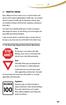 Tr a f f i c S i g n s 7 7. TRAFFIC SIGNS Many collisions and near crashes occur as a result of drivers who ignore or fail to respond appropriately to traffic signs. It is essential that the meaning of
EMPLOYEE FALL PROTECTION
 EMPLOYEE FALL PROTECTION You can fall from any height and be seriously injured or killed. In the construction industry, as well as any other industry, when falls from heights happen, they are usually very
Document Name: Driving Skills. Purpose: To outline necessary driving skills required to maximize driving safety.
 Document Name: Driving Skills Date Created: 8 October 2013 Date Reviewed: 4 February 2014 Date Approved: 29 July 2015 Purpose: To outline necessary driving skills required to maximize driving safety. Overview:
SAFETY SIGNAGE IN TECHNOLOGY CLASSROOMS
 SAFETY SIGNAGE IN TECHNOLOGY CLASSROOMS S T U D E N T An Introductory Guide for Technology Subject Teachers B O O K L E T TEACHER BOOKLET SAFETY SIGNAGE REQUIREMENTS IN TECHNOLOGY CLASSROOMS The Safety,
Working at Height. Procedure
 Procedure *All Forth Valley College Health, Safety and Welfare Procedures are covered under the overarching Health, Safety and Welfare Policy. Status: Date of version: Reviewed by: Author/Contact Person;
Video Camera Installation Guide
 Video Camera Installation Guide The intent of this guide is to provide the information needed to complete or modify a video camera installation to avoid lightning and induced power surge damage. This guide
DRIVING TEST POSSIBLE QUESTIONS & ANSWERS.
 DRIVING TEST POSSIBLE QUESTIONS & ANSWERS. Question 1. What shape and colour is a warning sign? Diamond Shape - Yellow and Black Question 2. When should you not drive? While under the influence of alcohol,
A Guide to Accident Prevention on Motorcycles
 A Guide to Accident Prevention on Motorcycles SEE me now? Always ride with your dipped headlight on DAY AND NIGHT Avoiding the 5 most common motorcycle accidents... 1 Collisions at Junctions... These can
PUSD High Frequency Word List
 PUSD High Frequency Word List For Reading and Spelling Grades K-5 High Frequency or instant words are important because: 1. You can t read a sentence or a paragraph without knowing at least the most common.
General Shop Safety. 3. Wear hearing protection devices when using or when others are using loud equipment in the mechanics laboratory.
 General Shop Safety I. Competencies Given the instruction in this unit each student will be able to pass a written test on general shop safety with a minimum of 100 percent accuracy. II. Instruction Material
INSTALLATION GUIDELINES for SOLAR PHOTOVOLTAIC SYSTEMS 1
 City of Cotati Building Division 201 W. Sierra Ave. Cotati, CA 94931 707 665-3637 Fax 792-4604 INSTALLATION GUIDELINES for SOLAR PHOTOVOLTAIC SYSTEMS 1 Any PV system on a new structures should be included
Excavation Safe Working Practices
 Excavation Safe Working Practices The Construction (Health, Safety and Welfare) Regulations 1996 under Excavations (Regulation 12) states that:- All practicable steps shall be taken where necessary to
Overview. Family & Passenger: Wear Bright Cloth Brighter is better! That's right, the brighter your clothing the better your chances are of being seen
 Overview Family & Passenger: Wear Bright Cloth Brighter is better! That's right, the brighter your clothing the better your chances are of being seen Personal Matters: Cell Phone use While Driving Yes,
Rail Accident Report. Accident to a track worker near Redhill 24 June 2014
 Rail Accident Report Accident to a track worker near 24 June 2014 June 2015 This investigation was carried out in accordance with: the Railway Safety Directive 2004/49/EC; the Railways and Transport Safety
Nokia Bluetooth Headset BH-101. Issue 1
 Nokia Bluetooth Headset BH-101 1 2 3 4 5 6 7 8 9 11 12 10 Issue 1 DECLARATION OF CONFORMITY Hereby, NOKIA CORPORATION declares that this HS-94W product is in compliance with the essential requirements
Script/Notes for PowerPoint Presentation. Medication Use Safety Training for Seniors (MUST for Seniors)
 Script/Notes for PowerPoint Presentation Medication Use Safety Training for Seniors (MUST for Seniors) Instructions: You can use the following script to help you prepare your remarks to your organization
DC Isolation Strapping Guide
 DC Isolation Strapping Guide This guide Flame retardant overalls Electrical gauntlets Safety goggles Dry towel First aid kit Mobile phone Safe System of Work (SSOW) pack Wire brush Short Circuit Bar Short
RAILWAY INVESTIGATION REPORT R08W0219 EMPLOYEE INJURY
 RAILWAY INVESTIGATION REPORT R08W0219 EMPLOYEE INJURY CANADIAN NATIONAL MILE 150.70, SPRAGUE SUBDIVISION SYMINGTON YARD, WINNIPEG, MANITOBA 22 OCTOBER 2008 The Transportation Safety Board of Canada (TSB)
SAFE ELECTRICAL WORK PRACTICES & 2015 NFPA 70E
 SAFE ELECTRICAL WORK PRACTICES & 2015 NFPA 70E This easy-to-use Leader s Guide is provided to assist in conducting a successful presentation. Featured are: INTRODUCTION: A brief description of the program
Road safety matters Guidance for parents of children aged 7 11
 Road safety matters Guidance for parents of children aged 7 11 Contents Why road safety matters... 2 Be Bright, Be Seen... 3 The Green Cross Code... 4 Car seats, boosters and seat belts... 6 Cycle safety...
Englisch. Cycling in Germany. The most important rules
 Englisch Cycling in Germany The most important rules 2 Cycling in Germany 3 Welcome to Germany Cycling is very popular in Germany. To ensure that you remain as safe as possible when cycling, we outline
Nokia Bluetooth Headset BH-102. Issue 1
 Nokia Bluetooth Headset BH-102 1 2 3 4 45 46 7 8 10 119 Issue 1 DECLARATION OF CONFORMITY Hereby, NOKIA CORPORATION declares that this HS-107W product is in compliance with the essential requirements and
Signs, Pavement Markings, and Work Zones. Signs, Pavement Markings, and Work Zones
 Signs, Pavement 3 Signs, Pavement 77 3 Signs, Pavement This chapter includes information on highway signs that are intended to guide and inform you while you are driving. It includes information on the
Five. Free. Trai. The following. used with. their own activities. happy to
 Five Free Customer Service Trai ning Games The following are five free customer service training games that we have used with clients during our customer service courses for more than a decade. We frequently
Florida Class E Knowledge Exam Road Rules Practice Questions www.gdlinstitute.org
 If you purchase the Value Package from GDL Institute, over 100 additional practice questions are included at no additional cost. Use discount code PQ10 and receive 10% off of the package price! 1. If you
Provision of Lineside Signals
 Railway roup Standard Provision of Lineside Signals Synopsis This document defines the mandatory requirements for the provision of lineside signals and the sequences in which signal aspects shall be presented
Jenny from Minnesota tells her story:
 Jenny from Minnesota tells her story: Jenny from Minnesota tells her story: In the spring of 1998, I was in a car accident where I was going too fast on a gravel road and ended up wrapping my car around
Chippewa County Courthouse Security Emergency Procedures. Dial 9 9 1 1 FIRE POLICE AMBULANCE
 Chippewa County Courthouse Security Emergency Procedures Dial 9 9 1 1 FIRE POLICE AMBULANCE Table of Contents Introduction... 2 Explosion... 3 Civil Disorder/Threat to Personal Safety... 4 Chemical Spill...
H ello, I ll be demonstrating
 Magnetic Pulser MP6 How-to Video Transcription H ello, I ll be demonstrating the use of the SOTA Magnetic Pulser. The latest model is shown here, our Model MP6. Before we get started I just want to draw
Guidelines for Traffic Controllers
 Guidelines for Traffic Controllers keeping victorians connected 2 IMPORTANT Before undertaking the tasks of a Traffic Controller on a public road, a person must successfully complete an accredited Traffic
Notes. Material 1. Tools the employee is expected to operate
 OSHA Standard29 CFR 1910.211-.247, Subpart O, Machinery and Machine Guarding, and Subpart P, Hand and Portable-Powered Tools and other Hand- Held Equipment. Hand Tool Safety Preparation 1. Read Applicable
1. Rules for users of powered wheelchairs and powered mobility scooters
 Jersey Highway Code Introduction The Minister for Transport and Technical Services has issued directions for the guidance of road users, the Highway Code. The Highway Code for Jersey is the Official Highway
Discharging of Scrap
 / Health & Safety OPERATION STANDARD Ref.: Aperam Safety ST 006 A1 Issue: 15.05.2012 Vers.: v0 Rev.: AM Safety ST 006 -A1 - V0-10.05.2010 Discharging of Scrap Controlled Elaborated by: Checked by: Approved
Life Saving Rules SAFETY BY CHOICE, NOT BY CHANCE
 Life Saving Rules SAFETY BY CHOICE, NOT BY CHANCE Foreword from Kevin Reinhart The 12 Life Saving Rules are a part of Nexen s continued commitment to create a safe work environment for our employees. The