
Knee Injuries What are the ligaments of the knee?
|
|
|
- Brent Webb
- 9 years ago
- Views:
Transcription
1 As sporting participants or observers, we often hear a variety of terms used to describe sport-related injuries. Terms such as sprains, strains and tears are used to describe our aches and pains following a weekend of play. Following a series of these activities, we may describe these conditions as tendonitis or bursitis. But what do these terms actually mean? Can the terms we commonly hear be used interchangeably? Unfortunately, these terms have specific definitions, and are often misused in describing various injuries. Ankle Sprains By far one of the most common injuries in sports is the inversion ankle sprain. A "sprain" refers to over-stretching or tearing of a ligament. A "strain," on the other hand refers to an overstretching or tearing of a muscle or tendon. A ligament is a connective tissue that connects bone to bone. An inversion ankle sprain occurs when the ankle turns in and too much force is placed on the ligaments holding the ankle bones together. The ligaments on the outside or lateral side of the ankle are small and thin. This fact predisposes the lateral ankle to injury. Sprains usually occur when an athlete comes down on another players foot forcing the ankle to invert. There are three different degrees of ankle injury. A first degree sprain occurs when the ligaments are over-stretched. A second degree sprain occurs when approximately one half of the ligament tears. A third degree sprain occurs when the ligament tears completely. Depending on the type of sprain there will be different levels of swelling, discoloration and pain. Most sprains will heal within 6-10 weeks with proper care. Another possible injury is an ankle fracture. There are two kinds of fractures. First, a bone fracture when a bone in the ankle breaks. Second, an avulsion fracture where the ligament is stronger than the bone and the ligament pulls a small piece of the bone away from the bone. Often the fracture will heal much stronger than an ankle sprain, depending on the type of fracture and the severity. The only way to detect an avulsion fracture is to see a sports medicine physician and get an X-ray. An X-ray is recommended if an athlete sprains an ankle for the first time. If the ligament was not previously sprained there is a greater chance of the ligament pulling a piece of the bone away from the bone and receiving an avulsion fracture. Even if the athlete has previously sprained an ankle and sustains a severe ankle sprain an x-ray can rule out a fracture. The most important issue an athlete faces when an injury has occurred is the physical rehabilitation of the injury. As mentioned previously, once an injury occurs, the chance of a second injury occurring increases greatly especially, when it comes to ankle sprains. The initial treatment of an injury, depending on its severity, should be Rest, Ice, Compression, & Elevation. This treatment can be remembered with the acronym R.I.C.E. This will prevent any further swelling of the area injured and allow for a more speedy recovery. Once the initial swelling and pain have subsided, exercises need to be introduced. Many times the exercises are very specific to the injury so when an injury occurs it is recommended that the services of a Certified Athletic Trainer and/or Physical Therapist be sought. These professionals are highly trained in exercise methodology and will ensure the quickest recovery possible for the athlete. Strengthening the injured area will allow the tissues to heal as close to their original state as possible. Thus helping the athlete return as quickly as possible to the court.

2 Knee Injuries A knee sprain is a small tear in the ligaments or joint capsule that is not severe enough to cause your knee to give way. To help the tear heal, you must protect your knee for a short time by immobilizing it. After the tear heals, your doctor will prescribe stretching and strengthening exercises for the muscles that help hold the knee in place. Knee ligament injuries are particularly common in sports that involve tackling (football) and/or twisting (basketball). Knee sprains are not as common in children because the ligaments are stronger than the epiphyseal plates (growth plates). Therefore, it is more common for children to sustain growth plate injuries or fractures. X-rays will distinguish the growth plate fractures from the ligament injuries. What are the ligaments of the knee? The medial collateral ligament (MCL) prevents the knee from buckling inwards (valgus injury) The lateral collateral ligament (LCL) prevents the knee from buckling outwards (varus injury) The anterior cruciate ligament (ACL) prevents the tibia from sliding forward under the femur The posterior cruciate ligament (PCL) prevents the tibial from sliding backward under the femur If you twist your knee, you can tear a meniscus, which is tissue that acts as a cushion between the bones of the upper and lower leg at the knee. To repair or remove a torn meniscus, you might need arthroscopic surgery. The surgeon inserts a camera and instruments into the knee joint through small skin incisions. With the instruments, the surgeon can see and treat the damaged meniscus. A more severe injury is a complete tear of one or more of the ligaments that support the knee. The anterior cruciate ligament (ACL) is one of the more commonly torn ligaments in the knee. This ligament connects the upper and lower leg bones and helps hold the knee in place. if you damage your ACL, your knee will probably hurt and give way persistently. After an ACL injury, some players can participate in sports again without surgery. But they must do special exercises to strengthen their thigh muscles, and they must wear a brace on their knee. Strong thigh muscles give stability to the knee that the torn ACL cannot. Many researchers are currently investigating the increased incidence of ACL injuries in female athletes. Females are 2-5 times more likely than males to injure their ACL while participating in intercollegiate basketball and soccer. Some researchers believe that the higher incidence in women is caused by the increased used of the quadriceps muscles compared to the hamstrings. Others feel that it is the females' ligamentous laxity and wider pelvis that placed a greater stress on the knee. Finally, there are many studies investigating the role that estrogen/menstrual cycle plays in female ACL injury.

3 Shoulder Injuries The shoulder has the greatest range of motion of any joint in the body. It is our shoulders that allow us to put our hands where they need to be for work, play, and all of our daily activities. To manage this, the shoulder has to have the right balance of strength, flexibility, and stability. Loss of this balance can lead to pain and injury. Maintaining this balance through exercises aimed at stretching and strengthening can help avoid shoulder problems. The Rotator Cuff is used to describe the group of muscles and their tendons in the shoulder that helps control shoulder joint motion. The supraspinatus is at the top (superior) of the shoulder, the subscapularis is anterior (front), and the infraspinatus and teres minor are posterior (behind). These muscles insert or attach to the humeral head by way of their tendons. The tendons fuse together giving rise to the term cuff. Although each muscle acting alone may produce an isolated rotational movement of the shoulder, the role they play together is to help keep the humeral head (ball) centered within the glenoid (socket) as the powerful deltoid and other larger shoulder muscles act to lift the arm overhead. Above the rotator cuff is a bony projection from the scapula (shoulder blade) called the acromion. The acromion forms the ceiling of the shoulder, serves as the point of origin for the deltoid muscle, and joins the clavicle (collarbone) to form the acromioclavicular (a/c) joint. Between the rotator cuff tendons and the acromion is a protective fluid-filled sack called a bursa". With normal humeral elevation there is some contact between the rotator cuff, the bursa, and the acromion. A healthy and strong rotator cuff holds the humeral head down in the socket and minimizes the upward pressure on the acromion. Rotator cuff pathology can be caused by extrinsic (outside) or intrinsic (from within) causes. Extrinsic examples include a traumatic tear in the tendon(s) from a fall or accident. Overuse injuries from repetitive lifting, pushing, pulling, or throwing are also extrinsic in nature. Intrinsic factors include poor blood supply, normal attrition or degeneration with aging, and calcific invasion of the tendon(s). Rotator cuff tendonitis is the term used to describe irritation of the tendon(s) either from excessive pressure on the acromion or less commonly from intrinsic tendon pathology. Irritation of the adjacent bursa is known as subdeltoid or subacromial bursitis. Repetitive overhead activities resulting in irritation of the tendon(s) and bursa from repeated contact with the undersurface of the acromion is called Impingement Syndrome. Rotator cuff dysfunction is typically a continuum of pathology ranging from tendonitis and bursitis to partial tearing, to a complete tear in one or more of the tendons. Although the earlier stages may resolve with conservative care, actual tearing of the tendon can be more problematic. These tears most commonly occur at the tenoperiosteal (tendon to bone) junction. Because this area has a relatively poor blood supply, injury to the tendon here is very unlikely to actually heal. Additionally, the constant resting tension in the muscle-tendon unit, or muscle tone, pulls any detached fibers away from the bone, preventing their reattachment. Finally, joint fluid from within the shoulder may seep into the tear gap preventing the normal healing processes from occurring.

4 Diagnosis Patients with rotator cuff pathology commonly present with an activity related dull ache in their upper lateral (outer) arm and shoulder. Above shoulder level activity is usually most difficult. Many people have little to no discomfort with below shoulder level activities such as golf, bowling, gardening, writing or typing, etc. Conversely, tennis, baseball/softball, basketball, swimming, painting, etc. will be more problematic. Pain in the shoulder may extend down as far as the elbow, but not usually beyond. Neck pain on the same side may develop later as a result of using the scapular elevators excessively to compensate for abnormal glenohumeral motion. These scapular elevators, such as the trapezius originate from the cervical spine and can cause pain in the posterior neck and well as occipital (low) headaches. Patients may also experience snapping or cracking within the shoulder, pain at night, difficulty lying on the shoulder, and difficulty getting dressed. Late findings include weakness and loss of shoulder motion. X-rays will not show the rotator cuff, but they will reveal any evidence of arthritis, spurs within the shoulder, loose bodies, fractures from a related fall, abnormal displacement of the humerus out of the glenoid, and congenital (birth) related problems. Therefore, good quality x-rays are a must in the proper evaluation of the shoulder. Magnetic Resonance Imaging or MRI has allowed visualization of the soft tissues of the body, including the rotator cuff. An MRI can depict tendonitis, partial tearing, and complete tears of the rotator cuff. While an MRI is usually not required to diagnose a torn rotator cuff, it can be very helpful to determine which tendons are torn, how large the tear is, the degree of tendon retraction, the extent of muscle belly atrophy (shrinkage), and any coexisting problems. Many rotator cuff tears do not require surgery. Conservative treatment of rotator cuff disease classically includes rest, activity modification, nonsteroidal anti-inflammatory medications, and physical therapy. Therapy may include heat, cold, ultrasound, electrical stimulation, massage and other modalities, but the hallmark of an effective rotator cuff rehabilitation program is therapeutic exercise. Stretching of particularly the posterior joint capsule can help the tendency of the humeral head to migrate superiorly toward the acromion with forward elevation. Strengthening of the remaining rotator cuff through resistance exercises can again help contain the humeral head within the glenoid and avoid undue pressure up on the acromion. Finally, muscle re-education to normalize the mechanics of shoulder motion can help return the patient to his or her full function. In patients who fail to improve with initial conservative therapy, there may be a role for judicious use of corticosteroid ( cortisone ) injection therapy in the bursa above the tendon. The mechanism of how this technique may be helpful is not completely clear, but it may reduce bursal and tendon irritation and swelling. The cortisone does not just mask the problem, but helps break the cycle of pain, swelling, weakness, and continued impingement. Injection therapy may then help reduce pain and impingement and allow the individual to continue to work on rotator cuff strengthening. Current recommendations are that a maximum of 3 cortisone injections should be used per shoulder. There is some evidence in laboratory research that more than 3 cortisone injections around an otherwise healthy tendon may result in considerable weakening of the tendon and even rupture. Rotator cuff repair is most commonly done by an open surgical procedure, which typically requires a 2 to 4 inch incision at the top of the shoulder. The deltoid muscle is split and the undersurface of the acromion is smoothed. Strong stitches are placed in the torn ends of the rotator cuff tendons, and they are attached back the bone of the humerus through specially created tunnels or commercially available suture anchors. Because the entire shoulder cannot be visualized through the open approach, many surgeons will perform an initial diagnostic arthroscopy of the shoulder at the

5 time of the repair to be sure there are no other coexisting problems within the shoulder which could be addressed at that time. This technique may be done on an inpatient basis, or as an outpatient surgery, if the patient is comfortable enough to go home that same day. Arthroscopic techniques for rotator cuff repair were developed over 10 years ago and have been continually refined. This is an extremely difficult approach for the surgeon to initially learn, but once mastered, can be quite rewarding for both doctor and patient. Unlike the open technique, the incisions used for an arthroscopic repair only the size of a shirt buttonhole. There may be 3 to 4 of these very small incisions, and early indications are, as might be expected, that patients have much less postoperative pain and require less prescription pain medication as a result. As a result, this is usually done as an outpatient procedure. Several studies have shown that the long-term results are as good as the gold standard open approach. Whether done open or arthroscopically, rotator cuff repair is a major operation that requires considerable rehabilitation. Several rehabilitation protocols for rotator cuff repair are available and are based on the size of the tear and repair. The shoulder is typically protected in a sling for 4 weeks, although some gentle passive motion is typically begun almost immediately. It takes 12 weeks for the tendon to begin to heal down to the bone, and that the attachment continues to mature and strengthen for 2 years. Despite the prolonged healing course, patients can very often begin light computer work or writing in 1 to 2 weeks, lift the arm overhead 2 months after surgery, participate in golf, fishing, and other less strenuous activities at 4 months, and return to full sports and work participation at 5 to 6 months.

Shoulder Impingement/Rotator Cuff Tendinitis
 Copyright 2011 American Academy of Orthopaedic Surgeons Shoulder Impingement/Rotator Cuff Tendinitis One of the most common physical complaints is shoulder pain. Your shoulder is made up of several joints
Rotator Cuff Pathophysiology. treatment program that will effectively treat it. The tricky part about the shoulder is that it is a ball and
 Rotator Cuff Pathophysiology Shoulder injuries occur to most people at least once in their life. This highly mobile and versatile joint is one of the most common reasons people visit their health care
.org. Rotator Cuff Tears. Anatomy. Description
 Rotator Cuff Tears Page ( 1 ) A rotator cuff tear is a common cause of pain and disability among adults. In 2008, close to 2 million people in the United States went to their doctors because of a rotator
.org. Shoulder Pain and Common Shoulder Problems. Anatomy. Cause
 Shoulder Pain and Common Shoulder Problems Page ( 1 ) What most people call the shoulder is really several joints that combine with tendons and muscles to allow a wide range of motion in the arm from scratching
SHOULDER PAIN. Procedures: Subacromial, Glenohumeral and Acromioclavicular Injections Nonprocedural Treatments
 SHOULDER PAIN Anatomy Conditions: Muscular Spasm Pinched Nerve Rotator Cuff Tendonitis Procedures: Subacromial, Glenohumeral and Acromioclavicular Injections Nonprocedural Treatments Surgery: Rotator Cuff
J F de Beer, K van Rooyen, D Bhatia. Rotator Cuff Tears
 1 J F de Beer, K van Rooyen, D Bhatia Rotator Cuff Tears Anatomy The shoulder consists of a ball (humeral head) and a socket (glenoid). The muscles around the shoulder act to elevate the arm. The large
Rotator Cuff Tears. Anatomy
 Copyright 2011 American Academy of Orthopaedic Surgeons Rotator Cuff Tears A rotator cuff tear is a common cause of pain and disability among adults. In 2008, close to 2 million people in the United States
Hand and Upper Extremity Injuries in Outdoor Activities. John A. Schneider, M.D.
 Hand and Upper Extremity Injuries in Outdoor Activities John A. Schneider, M.D. Biographical Sketch Dr. Schneider is an orthopedic surgeon that specializes in the treatment of hand and upper extremity
Ms. Ruth Delaney ROTATOR CUFF DISEASE Orthopaedic Surgeon, Shoulder Specialist
 WHAT DOES THE ROTATOR CUFF DO? WHAT DOES THE ROTATOR CUFF DO? WHO GETS ROTATOR CUFF TEARS? HOW DO I CLINICALLY DIAGNOSE A CUFF TEAR? WHO NEEDS AN MRI? DOES EVERY CUFF TEAR NEED TO BE FIXED? WHAT DOES ROTATOR
TOWN CENTER ORTHOPAEDIC ASSOCIATES P.C. Labral Tears
 Labral Tears The shoulder is your body s most flexible joint. It is designed to let the arm move in almost any direction. But this flexibility has a price, making the joint prone to injury. The shoulder
.org. Rotator Cuff Tears: Surgical Treatment Options. When Rotator Cuff Surgery is Recommended. Surgical Repair Options
 Rotator Cuff Tears: Surgical Treatment Options Page ( 1 ) The following article provides in-depth information about surgical treatment for rotator cuff injuries, and is a continuation of the article Rotator
Sports Injury Treatment
 Sports Injury Treatment Participating in a variety of sports is fun and healthy for children and adults. However, it's critical that before you participate in any sport, you are aware of the precautions
1 of 6 1/22/2015 10:06 AM
 1 of 6 1/22/2015 10:06 AM 2 of 6 1/22/2015 10:06 AM This cross-section view of the shoulder socket shows a typical SLAP tear. Injuries to the superior labrum can be caused by acute trauma or by repetitive
Shoulder Arthroscopy
 Copyright 2011 American Academy of Orthopaedic Surgeons Shoulder Arthroscopy Arthroscopy is a procedure that orthopaedic surgeons use to inspect, diagnose, and repair problems inside a joint. The word
What Are Bursitis and Tendinitis?
 Bursitis and tendinitis are both common conditions that cause swelling around muscles and bones. They occur most often in the shoulder, elbow, wrist, hip, knee, or ankle. A bursa is a small, fluid-filled
Shoulder Tendonitis. Brett Sanders, MD Center For Sports Medicine and Orthopaedic 2415 McCallie Ave. Chattanooga, TN (423) 624-2696
 Shoulder Tendonitis Brett Sanders, MD Center For Sports Medicine and Orthopaedic 2415 McCallie Ave. Chattanooga, TN (423) 624-2696 Shoulder tendinitis is a common overuse injury in sports (such as swimming,
THE SHOULDER. Shoulder Pain. Fractures. Instability and Dislocations of the Shoulder
 THE SHOULDER Shoulder Pain 1. Fractures 2. Sports injuries 3. Instability/Dislocations 4. Rotator Cuff Disease and Tears 5. Arthritis Fractures The shoulder is made up of three primary bones, the clavicle,
.org. Posterior Tibial Tendon Dysfunction. Anatomy. Cause. Symptoms
 Posterior Tibial Tendon Dysfunction Page ( 1 ) Posterior tibial tendon dysfunction is one of the most common problems of the foot and ankle. It occurs when the posterior tibial tendon becomes inflamed
Pre - Operative Rehabilitation Program for Anterior Cruciate Ligament Reconstruction
 Pre - Operative Rehabilitation Program for Anterior Cruciate Ligament Reconstruction This protocol is designed to assist you with your preparation for surgery and should be followed under the direction
.org. Achilles Tendinitis. Description. Cause. Achilles tendinitis is a common condition that causes pain along the back of the leg near the heel.
 Achilles Tendinitis Page ( 1 ) Achilles tendinitis is a common condition that causes pain along the back of the leg near the heel. The Achilles tendon is the largest tendon in the body. It connects your
UK HealthCare Sports Medicine Patient Education December 09
 LCL injury Description Lateral collateral knee ligament sprain is a sprain (stretch or tear) of one of the four major ligaments of the knee. The lateral collateral ligament (LCL) is a structure that helps
Shoulder Injuries. Why Bother? QAS Injury Prevalence. Screening Injury 29.2% 12 month cumulative injury prevalence. Dr Simon Locke
 Shoulder Injuries Dr Simon Locke Why Bother? Are shoulder and upper limb injuries common? Some anatomy What, where, what sports? How do they happen? Treatment, advances? QAS Injury Prevalence Screening
A Simplified Approach to Common Shoulder Problems
 A Simplified Approach to Common Shoulder Problems Objectives: Understand the basic categories of common shoulder problems. Understand the common patient symptoms. Understand the basic exam findings. Understand
Elbow Injuries and Disorders
 Elbow Injuries and Disorders Introduction Your elbow joint is made up of bone, cartilage, ligaments and fluid. Muscles and tendons help the elbow joint move. There are many injuries and disorders that
Physical Therapy for Shoulder. Joseph Lorenzetti PT, DPT, MTC Catholic Health Athleticare Kenmore 1495 Military Road Kenmore, NY 14217
 Physical Therapy for Shoulder and Knee Pain Joseph Lorenzetti PT, DPT, MTC Catholic Health Athleticare Kenmore 1495 Military Road Kenmore, NY 14217 Physical Therapy for Shoulder and Knee Pain GOALS: Explain
Rehabilitation Guidelines for Shoulder Arthroscopy
 Rehabilitation Guidelines for Shoulder Arthroscopy Front View Long head of bicep Acromion Figure 1 Shoulder anatomy Supraspinatus Image Copyright 2010 UW Health Sports Medicine Center. Short head of bicep
Rotator Cuff Tears in Football
 Disclosures Rotator Cuff Tears in Football Roger Ostrander, MD Consultant: Mitek Consultant: On-Q Research Support: Arthrex Research Support: Breg Research Support: Arthrosurface 2 Anatomy 4 major muscles:
Arthroscopic Shoulder Procedures. David C. Neuschwander MD. Shoulder Instability. Allegheny Health Network Orthopedic Associates of Pittsburgh
 Arthroscopic Shoulder Procedures David C. Neuschwander MD Allegheny Health Network Orthopedic Associates of Pittsburgh Shoulder Instability Anterior Instability Posterior Instability Glenohumeral Joint
.org. Tennis Elbow (Lateral Epicondylitis) Anatomy. Cause
 Tennis Elbow (Lateral Epicondylitis) Page ( 1 ) Tennis elbow, or lateral epicondylitis, is a painful condition of the elbow caused by overuse. Not surprisingly, playing tennis or other racquet sports can
Rotator Cuff Repair Protocol
 Rotator Cuff Repair Protocol Anatomy and Biomechanics The shoulder is a wonderfully complex joint that is made up of the ball and socket connection between the humerus (ball) and the glenoid portion of
A compressive dressing that you apply around your ankle, and
 Ankle Injuries & Treatment The easiest way to remember this is: R.I.C.E. Each of these letters stands for: Rest. Rest your ankle. Do not place weight on it if it is very tender. Avoid walking long distances.
IMPINGEMENT SYNDROME (Rotator Cuff Tendinitis, Bursitis)
 IMPINGEMENT SYNDROME (Rotator Cuff Tendinitis, Bursitis) Description Impingement syndrome is characterized by pain in the shoulder due to inflammation of the tendons of the rotator cuff or the bursa (subacromial
SHOULDER INSTABILITY. E. Edward Khalfayan, MD
 SHOULDER INSTABILITY E. Edward Khalfayan, MD Instability of the shoulder can occur from a single injury or as the result of repetitive activity such as overhead sports. Dislocations of the shoulder are
Arthritis of the Shoulder
 Arthritis of the Shoulder In 2011, more than 50 million people in the United States reported that they had been diagnosed with some form of arthritis, according to the National Health Interview Survey.
KNEES A Physical Therapist s Perspective American Physical Therapy Association
 Taking Care of Your KNEES A Physical Therapist s Perspective American Physical Therapy Association Taking Care of Your Knees When the mother of the hero Achilles dipped him in the river Styx, she held
Treatment Options for Rotator Cuff Tears A Guide for Adults
 Treatment Options for Rotator Cuff Tears A Guide for Adults Is This Guide for Me? YES, if your doctor has told you that you have a rotator cuff tear, which is an injury to one or more of the muscles and
ROTATOR CUFF TEARS SMALL
 LOURDES MEDICAL ASSOCIATES Sean Mc Millan, DO Director of Orthopaedic Sports Medicine & Arthroscopy 2103 Burlington-Mount Holly Rd Burlington, NJ 08016 (609) 747-9200 (office) (609) 747-1408 (fax) http://orthodoc.aaos.org/drmcmillan
Shoulder MRI for Rotator Cuff Tears. Conor Kleweno,, Harvard Medical School Year III Gillian Lieberman, MD
 Shoulder MRI for Rotator Cuff Tears Conor Kleweno,, Harvard Medical School Year III Goals of Presentation Shoulder anatomy Function of rotator cuff MRI approach to diagnose cuff tear Anatomy on MRI images
A Patient s Guide to Shoulder Pain
 A Patient s Guide to Shoulder Pain Part 2 Evaluating the Patient James T. Mazzara, M.D. Shoulder and Elbow Surgery Sports Medicine Occupational Orthopedics Patient Education Disclaimer This presentation
28% have partial tear of the rotator cuff.
 ROTATOR CUFF TENDON RUPTURE Anatomy: 1. Rotator cuff consists of: Subscapularis anteriorly, Supraspinatus superiorly and Infraspinatus and Teres minor posteriorly. 2 Biceps tendon is present in the rotator
Shoulder Joint Replacement
 Shoulder Joint Replacement Many people know someone with an artificial knee or hip joint. Shoulder replacement is less common, but it is just as successful in relieving joint pain. Shoulder replacement
SLAP Repair Protocol
 SLAP Repair Protocol Anatomy and Biomechanics The shoulder is a wonderfully complex joint that is made up of the ball and socket connection between the humerus (ball) and the glenoid portion of the scapula
Injuries to Upper Limb
 Injuries to Upper Limb 1 The following is a list of common sporting conditions and injuries. The severity of each condition may lead to different treatment protocols and certainly varying levels of intervention.
Bankart Repair using the Smith & Nephew BIORAPTOR 2.9 Suture Anchor
 Shoulder Series Technique Guide *smith&nephew BIORAPTOR 2.9 Suture Anchor Bankart Repair using the Smith & Nephew BIORAPTOR 2.9 Suture Anchor Gary M. Gartsman, M.D. Introduction Arthroscopic studies of
Sports Medicine. Assessing and Diagnosing Shoulder Injuries in Pediatric and Adolescent Patients
 Sports Medicine Assessing and Diagnosing Shoulder Injuries in Pediatric and Adolescent Patients Sports Medicine at Nationwide Children s Hospital Nationwide Children s Hospital Sports Medicine includes
.org. Plantar Fasciitis and Bone Spurs. Anatomy. Cause
 Plantar Fasciitis and Bone Spurs Page ( 1 ) Plantar fasciitis (fashee-eye-tiss) is the most common cause of pain on the bottom of the heel. Approximately 2 million patients are treated for this condition
Shoulder Instability. Fig 1: Intact labrum and biceps tendon
 Shoulder Instability What is it? The shoulder joint is a ball and socket joint, with the humeral head (upper arm bone) as the ball and the glenoid as the socket. The glenoid (socket) is a shallow bone
SHOULDER ACROMIOPLASTY/ SHOULDER DECOMPRESSION
 ORTHOPAEDIC WARD: 01-293 8687 /01-293 6602 BEACON CENTRE FOR ORTHOPAEDICS: 01-2937575 PHYSIOTHERAPY DEPARTMENT: 01-2936692 GUIDELINES FOR PATIENTS HAVING A SHOULDER ACROMIOPLASTY/ SHOULDER DECOMPRESSION
Brian P. McKeon MD Jason D. Rand, PA-C, PT Patient Information Sheet: Anterior Cruciate Ligament
 Brian P. McKeon MD Jason D. Rand, PA-C, PT Patient Information Sheet: Anterior Cruciate Ligament The anterior cruciate ligament or ACL is one of the major ligaments located in the knee joint. This ligament
Treatment Guide Wave Goodbye to Shoulder Pain
 Treatment Guide Wave Goodbye to Shoulder Pain Shoulder pain and injuries are extremely common whether due to exercise, age, overuse injuries or trauma. In fact, they account for nearly 20 percent of visits
Treatment Guide Understanding Elbow Pain. Using this Guide. Choosing Your Care. Table of Contents:
 Treatment Guide Understanding Elbow Pain Elbow pain is extremely common whether due to aging, overuse, trauma or a sports injury. When elbow pain interferes with carrying the groceries, participating in
Rotator Cuff Surgery: Post-Operative Protocol for Mini-Open or Arthroscopic Rotator Cuff Repair
 Rotator Cuff Surgery: Post-Operative Protocol for Mini-Open or Arthroscopic Rotator Cuff Repair Considerations: 1. Mini-Open - shoulder usually assessed arthroscopically and acromioplasty is usually performed.
ILIOTIBIAL BAND SYNDROME
 ILIOTIBIAL BAND SYNDROME Description The iliotibial band is the tendon attachment of hip muscles into the upper leg (tibia) just below the knee to the outer side of the front of the leg. Where the tendon
Treatment Guide Knee Pain
 Treatment Guide Knee Pain Choosing Your Care Approximately 18 million patients visit a doctor or a hospital because of knee pain each year. Fortunately, there are many ways to successfully treat knee pain
THE REVERSE SHOULDER REPLACEMENT
 THE REVERSE SHOULDER REPLACEMENT The Reverse Shoulder Replacement is a newly approved implant that has been used successfully for over ten years in Europe. It was approved by the FDA for use in the U.S.A.
Neck Injuries and Disorders
 Neck Injuries and Disorders Introduction Any part of your neck can be affected by neck problems. These affect the muscles, bones, joints, tendons, ligaments or nerves in the neck. There are many common
.org. Shoulder Joint Replacement. Anatomy
 Shoulder Joint Replacement Page ( 1 ) Although shoulder joint replacement is less common than knee or hip replacement, it is just as successful in relieving joint pain. Shoulder replacement surgery was
Temple Physical Therapy
 Temple Physical Therapy A General Overview of Common Neck Injuries For current information on Temple Physical Therapy related news and for a healthy and safe return to work, sport and recreation Like Us
SLAP repair. An information guide for patients. Delivering the best in care. UHB is a no smoking Trust
 SLAP repair An information guide for patients Delivering the best in care UHB is a no smoking Trust To see all of our current patient information leaflets please visit www.uhb.nhs.uk/patient-information-leaflets.htm
InfoSheet Rotator Cuff Problems
 InfoSheet Rotator Cuff Problems David M. Klein, MD Kennedy - White Orthopaedic Center What is Acromioplasty? Description Acromioplasty is a surgical procedure performed to reshape the acromion in your
CAPPAGH NATIONAL ORTHOPAEDIC HOSPITAL, FINGLAS, DUBLIN 11. The Sisters of Mercy. Rotator Cuff Repair
 1.0 Policy Statement... 2 2.0 Purpose... 2 3.0 Scope... 2 4.0 Health & Safety... 2 5.0 Responsibilities... 2 6.0 Definitions and Abbreviations... 3 7.0 Guideline... 3 7.1 Pre-Operative... 3 7.2 Post-Operative...
When is Hip Arthroscopy recommended?
 HIP ARTHROSCOPY Hip arthroscopy is a minimally invasive surgical procedure that uses a camera inserted through very small incisions to examine and treat problems in the hip joint. The camera displays pictures
Anterior Capsular Repair Rehabilitation Program Methodist Sports Medicine Center, Indianapolis, IN Department of Physical Therapy
 Anterior Capsular Repair Rehabilitation Program Methodist Sports Medicine Center, Indianapolis, IN Department of Physical Therapy Anterior Capsule reconstruction is a surgical procedure utilized for anterior
Rehabilitation Guidelines for Patellar Tendon and Quadriceps Tendon Repair
 UW Health Sports Rehabilitation Rehabilitation Guidelines for Patellar Tendon and Quadriceps Tendon Repair The knee consists of four bones that form three joints. The femur is the large bone in the thigh
Eric M. Kutz, D.O. Arlington Orthopedics Harrisburg, PA
 Eric M. Kutz, D.O. Arlington Orthopedics Harrisburg, PA 2 offices 805 Sir Thomas Court Harrisburg 3 Walnut Street Lemoyne Mechanism of injury Repetitive overhead activities Falls to the ground Falls with
.org. Lisfranc (Midfoot) Injury. Anatomy. Description
 Lisfranc (Midfoot) Injury Page ( 1 ) Lisfranc (midfoot) injuries result if bones in the midfoot are broken or ligaments that support the midfoot are torn. The severity of the injury can vary from simple
Rotator Cuff Injury and Shoulder Tendonitis
 43 Thames Street, St Albans, Christchurch 8013 Phone: (03) 356 1353. Website: philip-bayliss.com Rotator Cuff Injury and Shoulder Tendonitis The rotator cuff is a group of four muscles that helps to lift
CONSTRUCTION WORK and CUMULATIVE TRAUMA DISORDERS
 Connecticut Department of Public Health Environmental and Occupational Health Assessment Program 410 Capitol Avenue MS # 11OSP, PO Box 340308 Hartford, CT 06134-0308 (860) 509-7740 http://www.ct.gov/dph
QUESTION I HAVE BEEN ASKED TO REHAB GRADE II AND III MCL INJURIES DIFFERENTLY BY DIFFERENT SURGEONS IN THE FIRST 6WEEKS FOLLOWING INJURY.
 QUESTION I HAVE BEEN ASKED TO REHAB GRADE II AND III MCL INJURIES DIFFERENTLY BY DIFFERENT SURGEONS IN THE FIRST 6WEEKS FOLLOWING INJURY. SOME ARE HINGE BRACED 0-90 DEGREES AND ASKED TO REHAB INCLUDING
Clients w/ Orthopedic, Injury and Rehabilitation Concerns. Chapter 21
 Clients w/ Orthopedic, Injury and Rehabilitation Concerns Chapter 21 Terminology Macrotrauma A specific, sudden episode of overload injury to a given tissue, resulting in disrupted tissue integrity (Acute)
Physical Therapy Corner: Knee Injuries and the Female Athlete
 Physical Therapy Corner: Knee Injuries and the Female Athlete Knee injuries, especially tears of the anterior cruciate ligament, are becoming more common in female athletes. Interest in women s athletics
Integrated Manual Therapy & Orthopedic Massage For Complicated Knee Conditions
 Integrated Manual Therapy & Orthopedic Massage For Complicated Knee Conditions Assessment Protocols Treatment Protocols Treatment Protocols Corrective Exercises Artwork and slides taken from the book Clinical
Why knees hurt, and what you can do about it.
 Why knees hurt, and what you can do about it. Table of Contents How Knees Work Common Conditions and Treatment Options Surgical Procedures START Start the Journey to Pain-Free Knees START What Sets Us
Dr. Benjamin Hewitt. Shoulder Stabilisation
 Please contactmethroughthegoldcoasthospitaswityouhaveanyproblemsafteryoursurgery. Dr. Benjamin Hewitt Orthopaedic Surgeon Shoulder Stabilisation The shoulder is the most flexible joint in the body, allowing
Overhead Strength Training for the Shoulder: Guidelines for Injury Prevention and Performance Training Success
 Overhead Strength Training for the Shoulder: Guidelines for Injury Prevention and Performance Training Success Robert Panariello MS, PT, ATC, CSCS Strength training is an important component in the overall
JOINT PAIN IN THE ADOLESCENT
 JOINT PAIN IN THE ADOLESCENT HOW SERIOUS CAN THAT BE? ROBERT A. KELLY, M.D. RESURGENS ORTHOPAEDICS JOINT PAIN IN THE ADOLESCENT INJURIES ABOUT JOINTS CAN BE CLASSIFIED AS EITHER: ACUTE/TRAUMATIC OR REPETITIVE/OVERUSE
PLANTAR FASCITIS (Heel Spur Syndrome)
 PLANTAR FASCITIS (Heel Spur Syndrome) R. Amadeus Mason MD Description Plantar fascitis is characterized by stiffness and inflammation of the main fascia (fibrous connective [ligament-like] tissue) on the
Trochanteric Bursitis Self Management for Patients
 Trochanteric Bursitis Self Management for Patients Updated May 2010 What is the Trochanteric Bursa? The trochanteric bursa is a fluid-filled sac that functions as a gliding surface to reduce friction between
Shoulder Impingement Syndrome
 Shoulder Impingement Syndrome Causes The shoulder joint is stabilized and moved mainly by the four tendons of the socalled rotator cuff. These tendons are situated in a narrow bony canal between the ball
Passive Range of Motion Exercises
 Exercise and ALS The physical or occupational therapist will make recommendations for exercise based upon each patient s specific needs and abilities. Strengthening exercises are not generally recommended
Ankle Injury/Sprains in Youth Soccer Players Elite Soccer Community Organization (ESCO) November 14, 2013
 Ankle Injury/Sprains in Youth Soccer Players Elite Soccer Community Organization (ESCO) November 14, 2013 Jeffrey R. Baker, DPM, FACFAS Weil Foot and Ankle Institute Des Plaines, IL Ankle Injury/Sprains
Self Management Program. Ankle Sprains. Improving Care. Improving Business.
 Ankle Sprains Improving Care. Improving Business. What is an ankle sprain? Ligaments attach to the ankle bones and allow for normal movement and help prevent too much motion within the joint. Ankle sprains
.org. Knee Arthroscopy. Description. Preparing for Surgery. Surgery
 Knee Arthroscopy Page ( 1 ) Arthroscopy is a common surgical procedure in which a joint (arthro-) is viewed (-scopy) using a small camera. Arthroscopy gives doctors a clear view of the inside of the knee.
.org. Ankle Fractures (Broken Ankle) Anatomy
 Ankle Fractures (Broken Ankle) Page ( 1 ) A broken ankle is also known as an ankle fracture. This means that one or more of the bones that make up the ankle joint are broken. A fractured ankle can range
Predislocation syndrome
 Predislocation syndrome Sky Ridge Medical Center, Aspen Building Pre-dislocation syndrome, capsulitis, and metatarsalgia are all similar problems usually at the ball of the foot near the second and third
A Patient s Guide to Diffuse Idiopathic Skeletal Hyperostosis (DISH)
 A Patient s Guide to Diffuse Idiopathic Skeletal Hyperostosis (DISH) Introduction Diffuse Idiopathic Skeletal Hyperostosis (DISH) is a phenomenon that more commonly affects older males. It is associated
Get Rid of Elbow Pain
 Get Rid of Elbow Pain Self Regional Healthcare Optimum Life Center 115 Academy Avenue Greenwood, SC 29646 Office: (864) 725-7088 Self Regional Healthcare Physical Therapy Savannah Lakes 207 Holiday Road
o Understand the anatomy of the covered areas. This includes bony, muscular and ligamentous anatomy.
 COURSE TITLE Kin 505 Activities, Injuries Disease in the Larger Society On-Line offering Instructor Dr. John Miller [email protected] Course Description. Sports and exercise are a part of American society
.org. Herniated Disk in the Lower Back. Anatomy. Description
 Herniated Disk in the Lower Back Page ( 1 ) Sometimes called a slipped or ruptured disk, a herniated disk most often occurs in your lower back. It is one of the most common causes of low back pain, as
Injury Prevention for the Back and Neck
 Injury Prevention for the Back and Neck www.csmr.org We have created this brochure to provide you with information regarding: Common Causes of Back and Neck Injuries and Pain Tips for Avoiding Neck and
Overuse injuries. 1. Main types of injuries
 OVERUSE INJURIES Mr. Sansouci is an ardent runner and swimmer. To train for an upcoming 10-km race, he has decided to increase the intensity of his training. Lately, however, his shoulder and Achilles
The Lateral Collateral Ligament Sprain. Ashley DeMarco. Pathology and Evaluation of Orthopedic Injuries I. Professor Rob Baerman
 1 The Lateral Collateral Ligament Sprain Ashley DeMarco Pathology and Evaluation of Orthopedic Injuries I Professor Rob Baerman 2 The Lateral Collateral Ligament Sprain Ashley DeMarco Throughout my research
A Patient s Guide to Guyon s Canal Syndrome
 A Patient s Guide to DISCLAIMER: The information in this booklet is compiled from a variety of sources. It may not be complete or timely. It does not cover all diseases, physical conditions, ailments or
What to Expect from your Hip Arthroscopy Surgery A Guide for Patients
 What to Expect from your Hip Arthroscopy Surgery A Guide for Patients Sources of Information: http://orthoinfo.aaos.org http://dev.aana.org/portals/0/popups/animatedsurgery.htm http://www.isha.net/ http://
Chapter 5. The Shoulder Joint. The Shoulder Joint. Bones. Bones. Bones
 Copyright The McGraw-Hill Companies, Inc. Reprinted by permission. Chapter 5 The Shoulder Joint Structural Kinesiology R.T. Floyd, Ed.D, ATC, CSCS Structural Kinesiology The Shoulder Joint 5-1 The Shoulder
ARTHROSCOPIC (KEY-HOLE) SHOULDER SURGERY
 ARTHROSCOPIC (KEY-HOLE) SHOULDER SURGERY Information Leaflet Your Health. Our Priority. Page 2 of 8 What is arthroscopic ( key-hole ) surgery? Key-hole surgery is the technique of performing surgery though
Knee Microfracture Surgery Patient Information Leaflet
 ORTHOPAEDIC UNIT: 01-293 8687 /01-293 6602 BEACON CENTRE FOR ORTHOPAEDICS: 01-2937575 PHYSIOTHERAPY DEPARTMENT: 01-2936692 Knee Microfracture Surgery Patient Information Leaflet Table of Contents 1. Introduction
Open Discectomy. North American Spine Society Public Education Series
 Open Discectomy North American Spine Society Public Education Series What Is Open Discectomy? Open discectomy is the most common surgical treatment for ruptured or herniated discs of the lumbar spine.
Herniated Cervical Disc
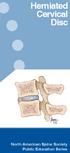 Herniated Cervical Disc North American Spine Society Public Education Series What Is a Herniated Disc? The backbone, or spine, is composed of a series of connected bones called vertebrae. The vertebrae