
IMPINGEMENT SYNDROME (Rotator Cuff Tendinitis, Bursitis)
|
|
|
- Elaine Loraine Lang
- 9 years ago
- Views:
Transcription
1 IMPINGEMENT SYNDROME (Rotator Cuff Tendinitis, Bursitis) Description Impingement syndrome is characterized by pain in the shoulder due to inflammation of the tendons of the rotator cuff or the bursa (subacromial bursa) that sits between the rotator cuff and the roof of the shoulder (acromion). The rotator cuff is a series of four muscles that surround the ball of the shoulder (humeral head). The subacromial bursa sits over the top of the cuff, allowing for the cuff tendons to slide near the roof of the shoulder without undue friction. Normally the humeral head Weightlifting and bodybuilding gets closer to the acromion when the shoulder is moved, Preventive Measures particularly as you reach overhead. When the rotator cuff becomes inflamed because of injury or overuse, or when the bursa becomes inflamed, then both the swollen tendon and swollen bursa may become pinched between the humeral head and the acromion. Impingement syndrome may represent a grade 1 or 2 strain of the tendon. A grade 1 strain is a mild strain. There is a slight pull without obvious tearing (it is microscopic tendon tearing). There is no loss of strength, and the tendon is the correct length. A grade 2 strain is a moderate strain. There is tearing of fibers within the substance of the tendon or where the tendon meets the bone or muscle. The Expected Outcome length of the whole muscle-tendon-bone unit is increased, although there usually is decreased strength. A grade 3 strain is a complete rupture of the tendon. Common Signs and Symptoms Pain around the shoulder, often at the outer portion of the upper arm Pain that is worse with shoulder function, especially when reaching overhead or lifting Occasionally, aching when not using the arm Often, pain that awakens you at night Occasionally, tenderness, swelling, warmth, or redness over the other aspect of the shoulder Loss of strength Limited motion of the shoulder, especially reaching behind (such as to back pocket or to unhook bra) or across your body Crepitation (a crackling sound) when moving the arm Biceps tendon pain and inflammation (in the front of the shoulder); worse when bending the elbow or lifting Causes Strain from sudden increase in amount or intensity of activity Direct blow or injury to the shoulder Aging, degeneration of the tendon with normal use Acromial spur Risk Increases With Contact sports such as football, wrestling, and boxing Throwing sports, such as baseball, tennis, or volleyball Heavy labor Previous injury to rotator cuff, including impingement Poor physical conditioning (strength and flexibility) Inadequate warm-up before practice or play Inadequate protective equipment Increasing age Spurring of the acromion Appropriately warm up and stretch before practice or competition. Allow time for adequate rest and recovery between practices and competition. Maintain appropriate conditioning: Cardiovascular fitness Shoulder flexibility Muscle strength and endurance Use proper technique. This condition is usually curable within 6 weeks if treated appropriately with conservative treatment and resting of the affected area. Healing is usually quicker if injury is caused by a direct blow (versus overuse). Possible Complications Prolonged healing time if not appropriately treated or if not given adequate time to heal Chronically inflamed tendon, causing persistent pain with activity that may progress to constant pain (with or without activity) Shoulder stiffness, frozen shoulder, or loss of motion Rotator cuff tendon tear Recurrence of symptoms, especially if activity is resumed too soon, with overuse, with a direct blow, or when using poor technique General Treatment Considerations Initial treatment consists of medication and ice to relieve the pain, stretching and strengthening exercises, and modification of the activity that initially caused the problem. These all can be carried out at home, although referral to a physical therapist or athletic trainer may be recommended. An injection of cortisone to the area around the tendon (within the bursa) may be recommended. Surgery to remove the chronically scarred bursa and spur from the acromion may be necessary, but this is usually only considered after at least 3 months of conservative treatment. Surgery may be performed arthroscopically or with an open incision. Return to full activity is usually possible in 3 months. 371

2 372 Medication Nonsteroidal anti-inflammatory medications, such as aspirin and ibuprofen (do not take within 7 days before surgery), or other minor pain relievers, such as acetaminophen, are often recommended. Take these as directed by your physician. Contact your physician immediately if any bleeding, stomach upset, or signs of an allergic reaction occur. Pain relievers are usually not prescribed for this condition. If prescribed, use only as directed and only as much as you need. Cortisone injections reduce inflammation, and anesthetics temporarily relieve pain. There is a limit to the number of times cortisone may be given, because it may weaken muscle and tendon tissue. Heat and Cold Cold is used to relieve pain and reduce inflammation for acute and chronic cases. Cold should be applied for 10 to 15 minutes every 2 to 3 hours for inflammation and pain and immediately after any activity that aggravates your symptoms. Use ice packs or an ice massage. Heat may be used before performing stretching and strengthening activities prescribed by your physician, physical therapist, or athletic trainer. Use a heat pack or a warm soak. Notify Our Office If Symptoms get worse or do not improve in 4 to 6 weeks despite treatment New, unexplained symptoms develop (drugs used in treatment may produce side effects) Acromion/clavicle Impingement Bursa Tendon Supraspinatus muscle Arm socket Figure 2 From Shankman GA: Fundamental Orthopaedic Management for the Physical Therapy Assistant. St. Louis, Mosby Year Book, 1997, p Mayo Foundation. Deltoid muscle Humerus (upper arm bone) Figure 1 From Economou SG, Economou TS: Instructions for Surgery Patients. Philadelphia, WB Saunders, 1998, p. 549.)

3 IMPINGEMENT SYNDROME 373 RANGE OF MOTION AND STRETCHING EXERCISES Impingement Syndrome (Rotator Cuff Tendinitis, Bursitis) These are some of the initial exercises you may start your rehabilitation program with until you see your physician, physical therapist, or athletic trainer again or until your symptoms are resolved. Please remember: Flexible tissue is more tolerant of the stresses placed on it during activities. Each stretch should be held for 20 to 30 seconds. A gentle stretching sensation should be felt. SHOULDER Flexion 1. Lie on your back holding a stick in both hands, keeping your hands shoulder-width apart. 2. Raise both hands over your head until you feel a gentle stretch. SHOULDER Flexion 1. Lie on your back. Grasp the bottom of a stick, handle of an umbrella, or blade of a golf club in your hand as shown. 2. Using the stick, raise your arm overhead as shown until you feel a gentle stretch. Lead with the thumb in a thumbs up position. SHOULDER Abduction 1. Lie on your back holding a stick, umbrella handle, or golf club in your hand as shown. The hand should be in the thumbs up position. 2. Using the stick, slowly push your arm away from your side and as far overhead as you can without pain. Push until you feel a gentle stretch.

4 374 SHOULDER Internal Rotation 1. Grasp a stick behind your back with both hands as shown. 2. Slide the stick up your back until you feel a gentle stretch. SHOULDER Internal Rotation 1. Lie on your back with your arm out away from your body about 60 degrees and a rolled-up towel placed under your elbow as shown. 2. Turn/rotate your arm inward toward your body from the shoulder. 3. To assist in this stretch you may use a rope or towel to gently pull the arm farther inward as shown. 4. Make sure to keep your shoulders flat on the floor/bed on which you are lying. SHOULDER Internal Rotation 1. Place your hand behind your back. 2. Drape a towel over your opposite shoulder and grasp it with the hand that is behind your back. 3. Use the towel to gently pull your hand farther up your back until you feel a gentle stretch. 4. Repeat exercise times, times per day. Hold SHOULDER Horizontal Adduction 1. Stand or lie on your back, grasping your elbow as shown in the diagram. 2. Keeping your arm at shoulder height, pull your arm across your chest until you feel a gentle stretch in the back of your shoulder.

5 IMPINGEMENT SYNDROME 375 STRENGTHENING EXERCISES Impingement Syndrome (Rotator Cuff Tendinitis, Bursitis) These are some of the initial exercises you may start your rehabilitation program with until you see your physician, physical therapist, or athletic trainer again or until your symptoms are resolved. Please remember: Strong muscles with good endurance tolerate stress better. Do the exercises as initially prescribed by your physician, physical therapist, or athletic trainer. Progress slowly with each exercise, gradually increasing the number of repetitions and weight used under their guidance. If weight equipment is used during the progression of your strength program, you should avoid activities that involve your hands or elbows going behind your head/body. These types of exercises place undue stress on your shoulders. STRENGTH Shoulder Abduction, Isometric 1. While standing, raise the arm slightly away from the body as shown. 2. Place the other hand on top of your arm and push down. Do not allow your arm to move. Push as hard as you can without having any pain or moving the arm. 3. Hold this position for seconds and then slowly return 4. Repeat exercise times, times per day. SHOULDER Scapular Elevation, Shrugs 1. Stand with your arms at your side in a good erect posture. 2. Subtly shrug your shoulders up and back toward your ears. 3. Hold this position for seconds and then slowly return 4. Repeat exercise times, times per day. 5. You may perform this exercise with a pound weight in each hand. 6. Avoid standing in a slouched position with poor posture by using this technique intermittently throughout the day. STRENGTH Shoulder, External Rotation, Isometric 1. Bend your elbow to 90 degrees as shown, holding your arm slightly in front of your body. 2. Place your opposite hand over your wrist as shown. 3. Try to turn/rotate your arm outward, away from your body, as if it were a gate swinging open. Resist this motion with the opposite hand that is on your wrist. Do not let any motion occur. 4. Hold this position for seconds.

6 STRENGTH Scaption, Thumb Up 1. Hold a weight in your hand with your arm at your side but slightly forward (approximately 30 degrees; see small diagram). This exercise may also be done with rubber band/tubing as shown. 2. Your hand should be in a thumbs-up position. 3. Slowly raise your arm in the thumbs-up position through your pain free range. If this is painful, stop and discuss this with your physician, physical therapist, or athletic trainer. Do not allow your shoulder to shrug up while doing this exercise. SHOULDER Scapular Protraction 1. Stand with your hand against a wall as shown. 2. Keep your elbows straight and push down with your hands, raising the back of your shoulders away from the wall as shown in the drawing. 3. The farther away from the wall you stand, the harder the exercise. STRENGTH Shoulder External Rotation 1. Lie on your side with your arm up and the elbow bent to 90 degrees, or stand with your arms at your side and the elbows bent to 90 degrees as shown. Place a small rubber ball (4 to 6 inches in diameter) or rolled-up towel between your elbow and your side as shown. 2. Hold a pound weight in your hand and turn the arm up toward the ceiling, keeping the elbow bent as shown. If using rubber band/tubing, turn the arm(s) out from your side while keeping the elbows bent. 3. Do this slowly and in control through your pain free range of motion only. If this is painful, stop and discuss this with your physician, physical therapist, or athletic trainer. SHOULDER Scapular Protraction 1. Lie on your back with your arm straight up in the air as shown. Hold a pound weight in your hand. 2. Push your hand up toward the ceiling, keeping your elbow straight and raising your shoulder off the floor. 3. Hold this position for seconds and then slowly return 4. Repeat exercise times, times per day.

7 IMPINGEMENT SYNDROME 377 SHOULDER Scapular Protraction 1. Position yourself on your hands and knees as shown. 2. Keep your elbows straight and push down with your hands, raising the back of your shoulders up as shown in the drawing. 3. Hold this position for seconds and then slowly return 4. Repeat exercise times, times per day. This exercise may be made harder by assuming a push-up position. Before trying this check with your physician, physical therapist, or athletic trainer. SHOULDER Scapular Retraction 1. Anchor rubber band/tubing to a stable, fixed object. 2. Hold one end of the band/tubing in each hand with your arms straight out in front of you. 3. Squeeze/ pinch your shoulder blades together. 4. Keeping your shoulder blades pinched together, pull your arms back as shown. Your hands should be level with your shoulders when you finish. Do not let your elbows go behind your body. 5. Hold this position for seconds and then slowly return 6. Repeat exercise times, times per day. SHOULDER Internal Rotation 1. Anchor the rubber band/tubing to a heavy/solid object as shown. 2. Place a small ball or towel between your elbow and body as shown in the drawing and bend your elbow to 90 degrees. Squeeze the ball gently to the side of your chest with your elbow. 3. Turn/rotate your arm in toward your body (across your chest/stomach). Do not let the ball move/fall away from the side of your chest. STRENGTH Shoulder Extension 1. Anchor/secure rubber band/tubing around a stable object such as a stair post or around the knob of a closed door. 2. Stand holding the rubber band/tubing in front of you with your arms extended as shown. 3. Squeeze/pinch your shoulder blades together and pull your arms down and backward as shown. Do not pull arms past the midline of your body.

8 378 SHOULDER Scapular Retraction and External Rotation 1. If using a weight Lie on your stomach with your arm out to the side and over the edge of the bed as shown. The elbow should be bent to 90 degrees and the upper arm should be supported by the bed. Hold a pound weight in your hand. 2. Turn/rotate your arm up toward the ceiling while keeping the elbow bent. 3. Squeeze/ pinch your shoulder blades together. 1. If using rubber band/tubing Hold one end of the band/tubing in each hand. Your elbows should be bent 90 degrees and at shoulder height. 2. Squeeze/ pinch your shoulder blades together. 3. Keeping your shoulder blades pinched together, turn your arms up as if someone had said Stick em up! Your hands should be in the position shown when you finish. Do not bring your elbows or your hands past the middle of your body. STRENGTH Shoulder, External Rotation/Rowing 1. Anchor/secure rubber band/tubing around a stable object such as a stair post or around the knob of a closed door. 2. Stand holding the rubber band/tubing in front of you with your arms extended as shown. 3. Squeeze/pinch your shoulder blades together and pull your arms back as shown, bending your elbows. Your fists should end at shoulder height and close to your body. SHOULDER Depression 1. Support yourself as shown in an armchair. Your elbows should be straight and your feel flat on the floor. 2. Push your shoulders downward. Do not bend your elbows. 3. Support your weight as needed by using your legs.

9 Notes: (Up to 4400 characters only) Notes and suggestions

ILIOTIBIAL BAND SYNDROME
 ILIOTIBIAL BAND SYNDROME Description The iliotibial band is the tendon attachment of hip muscles into the upper leg (tibia) just below the knee to the outer side of the front of the leg. Where the tendon
PLANTAR FASCITIS (Heel Spur Syndrome)
 PLANTAR FASCITIS (Heel Spur Syndrome) R. Amadeus Mason MD Description Plantar fascitis is characterized by stiffness and inflammation of the main fascia (fibrous connective [ligament-like] tissue) on the
Shoulder Tendonitis. Brett Sanders, MD Center For Sports Medicine and Orthopaedic 2415 McCallie Ave. Chattanooga, TN (423) 624-2696
 Shoulder Tendonitis Brett Sanders, MD Center For Sports Medicine and Orthopaedic 2415 McCallie Ave. Chattanooga, TN (423) 624-2696 Shoulder tendinitis is a common overuse injury in sports (such as swimming,
UK HealthCare Sports Medicine Patient Education December 09
 LCL injury Description Lateral collateral knee ligament sprain is a sprain (stretch or tear) of one of the four major ligaments of the knee. The lateral collateral ligament (LCL) is a structure that helps
.org. Rotator Cuff Tears. Anatomy. Description
 Rotator Cuff Tears Page ( 1 ) A rotator cuff tear is a common cause of pain and disability among adults. In 2008, close to 2 million people in the United States went to their doctors because of a rotator
EXCESSIVE LATERAL PATELLAR COMPRESSION SYNDROME (Chondromalacia Patella)
 EXCESSIVE LATERAL PATELLAR COMPRESSION SYNDROME (Chondromalacia Patella) Description Maintain appropriate conditioning: Excessive lateral patellar compression syndrome is characterized by pain in the knee
Shoulder Instability. Fig 1: Intact labrum and biceps tendon
 Shoulder Instability What is it? The shoulder joint is a ball and socket joint, with the humeral head (upper arm bone) as the ball and the glenoid as the socket. The glenoid (socket) is a shallow bone
SHOULDER REHABILITATION EXERCISE PROGRAM. Phase I
 Franklin Orthopedics 7400 W Rawson Ave, Suite 225 Franklin, WI 53132 414-425-8232 SHOULDER REHABILITATION EXERCISE PROGRAM Phase I PENDULUM EXERCISES: Bending over at the waist and balancing with the good
Rehabilitation Exercises for Shoulder Injuries Pendulum Exercise: Wal Walk: Back Scratcher:
 Rehabilitation Exercises for Shoulder Injuries Begin these exercises when your pain has decreased about 25% from the time when your injury was most painful. Pendulum Exercise: Lean over with your uninjured
What Are Bursitis and Tendinitis?
 Bursitis and tendinitis are both common conditions that cause swelling around muscles and bones. They occur most often in the shoulder, elbow, wrist, hip, knee, or ankle. A bursa is a small, fluid-filled
Shoulder Impingement/Rotator Cuff Tendinitis
 Copyright 2011 American Academy of Orthopaedic Surgeons Shoulder Impingement/Rotator Cuff Tendinitis One of the most common physical complaints is shoulder pain. Your shoulder is made up of several joints
Bankart Repair For Shoulder Instability Rehabilitation Guidelines
 Bankart Repair For Shoulder Instability Rehabilitation Guidelines Phase I: The first week after surgery. Goals:!! 1. Control pain and swelling! 2. Protect the repair! 3. Begin early shoulder motion Activities:
Rehabilitation after shoulder dislocation
 Physiotherapy Department Rehabilitation after shoulder dislocation Information for patients This information leaflet gives you advice on rehabilitation after your shoulder dislocation. It is not a substitute
FROZEN SHOULDER OXFORD SHOULDER & ELBOW CLINIC INFORMATION FOR YOU. Frozen Shoulder FROZEN SHOULDER
 OXFORD SHOULDER & ELBOW CLINIC INFORMATION FOR YOU Frozen Shoulder The aim of this information sheet is to give you some understanding of the problem you may have with your shoulder. It has been divided
SHOULDER ACROMIOPLASTY/ SHOULDER DECOMPRESSION
 ORTHOPAEDIC WARD: 01-293 8687 /01-293 6602 BEACON CENTRE FOR ORTHOPAEDICS: 01-2937575 PHYSIOTHERAPY DEPARTMENT: 01-2936692 GUIDELINES FOR PATIENTS HAVING A SHOULDER ACROMIOPLASTY/ SHOULDER DECOMPRESSION
ROTATOR CUFF HOME EXERCISE PROGRAM
 ROTATOR CUFF HOME EXERCISE PROGRAM Contact us! Vanderbilt Sports Medicine Medical Center East, South Tower, Suite 3200 1215 21st Avenue South Nashville, TN 37232-8828 For more information on this and other
MOON SHOULDER GROUP. Rotator Cuff Home Exercise Program. MOON Shoulder Group
 MOON Shoulder Group For information regarding the MOON Shoulder Group, talk to your doctor or contact: Rosemary Sanders 1215 21 st Avenue South 6100 Medical Center East Vanderbilt University Medical Center
Rotator Cuff Home Exercise Program MOON SHOULDER GROUP
 Rotator Cuff Home Exercise Program MOON SHOULDER GROUP Introduction The MOON Shoulder group is a Multi-center Orthopaedic Outcomes Network. In other words, it is a group of doctors from around the country
Hand and Upper Extremity Injuries in Outdoor Activities. John A. Schneider, M.D.
 Hand and Upper Extremity Injuries in Outdoor Activities John A. Schneider, M.D. Biographical Sketch Dr. Schneider is an orthopedic surgeon that specializes in the treatment of hand and upper extremity
Westmount UCC 751 Victoria Street South, Kitchener, ON N2M 5N4 519-745-2273 Fairway UCC 385 Fairway Road South, Kitchener, ON N2C 2N9 519-748-2327
 K-W URGENT CARE CLINICS INC. Westmount UCC 751 Victoria Street South, Kitchener, ON N2M 5N4 519-745-2273 Fairway UCC 385 Fairway Road South, Kitchener, ON N2C 2N9 519-748-2327 OPEN Mon-Fri 8am-5pm, Sa
Range of Motion Exercises
 Range of Motion Exercises Range of motion (ROM) exercises are done to preserve flexibility and mobility of the joints on which they are performed. These exercises reduce stiffness and will prevent or at
Rotator Cuff and Shoulder Conditioning Program. Purpose of Program
 Prepared for: Prepared by: OrthoInfo Purpose of Program After an injury or surgery, an exercise conditioning program will help you return to daily activities and enjoy a more active, healthy lifestyle.
Rotator Cuff Injury and Shoulder Tendonitis
 43 Thames Street, St Albans, Christchurch 8013 Phone: (03) 356 1353. Website: philip-bayliss.com Rotator Cuff Injury and Shoulder Tendonitis The rotator cuff is a group of four muscles that helps to lift
Elbow Injuries and Disorders
 Elbow Injuries and Disorders Introduction Your elbow joint is made up of bone, cartilage, ligaments and fluid. Muscles and tendons help the elbow joint move. There are many injuries and disorders that
SHOULDER PAIN. Procedures: Subacromial, Glenohumeral and Acromioclavicular Injections Nonprocedural Treatments
 SHOULDER PAIN Anatomy Conditions: Muscular Spasm Pinched Nerve Rotator Cuff Tendonitis Procedures: Subacromial, Glenohumeral and Acromioclavicular Injections Nonprocedural Treatments Surgery: Rotator Cuff
The Super 7 For Tennis Elbow
 Exercises for Tennis elbow Tennis elbow recovery time varies with each person and may take several weeks. Recovery may be faster and more successful when a combination of local injections (e.g. steroids
ROTATOR CUFF TEARS SMALL
 LOURDES MEDICAL ASSOCIATES Sean Mc Millan, DO Director of Orthopaedic Sports Medicine & Arthroscopy 2103 Burlington-Mount Holly Rd Burlington, NJ 08016 (609) 747-9200 (office) (609) 747-1408 (fax) http://orthodoc.aaos.org/drmcmillan
.org. Shoulder Pain and Common Shoulder Problems. Anatomy. Cause
 Shoulder Pain and Common Shoulder Problems Page ( 1 ) What most people call the shoulder is really several joints that combine with tendons and muscles to allow a wide range of motion in the arm from scratching
SLAP Repair Protocol
 SLAP Repair Protocol Anatomy and Biomechanics The shoulder is a wonderfully complex joint that is made up of the ball and socket connection between the humerus (ball) and the glenoid portion of the scapula
Range of Motion. A guide for you after spinal cord injury. Spinal Cord Injury Rehabilitation Program
 Range of Motion A guide for you after spinal cord injury Spinal Cord Injury Rehabilitation Program This booklet has been written by the health care providers who provide care to people who have a spinal
Understanding. Heel Pain
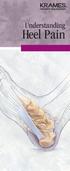 Understanding Heel Pain What Causes Heel Pain? Heel pain is a common problem that occurs when the heel is placed under too much stress. Heel pain is most often caused by walking in ways that irritate tissues
Passive Range of Motion Exercises
 Exercise and ALS The physical or occupational therapist will make recommendations for exercise based upon each patient s specific needs and abilities. Strengthening exercises are not generally recommended
Knee Conditioning Program. Purpose of Program
 Prepared for: Prepared by: OrthoInfo Purpose of Program After an injury or surgery, an exercise conditioning program will help you return to daily activities and enjoy a more active, healthy lifestyle.
Rotator Cuff Repair Protocol
 Rotator Cuff Repair Protocol Anatomy and Biomechanics The shoulder is a wonderfully complex joint that is made up of the ball and socket connection between the humerus (ball) and the glenoid portion of
.org. Achilles Tendinitis. Description. Cause. Achilles tendinitis is a common condition that causes pain along the back of the leg near the heel.
 Achilles Tendinitis Page ( 1 ) Achilles tendinitis is a common condition that causes pain along the back of the leg near the heel. The Achilles tendon is the largest tendon in the body. It connects your
Hip Conditioning Program. Purpose of Program
 Prepared for: Prepared by: OrthoInfo Purpose of Program After an injury or surgery, an exercise conditioning program will help you return to daily activities and enjoy a more active, healthy lifestyle.
Trochanteric Bursitis Self Management for Patients
 Trochanteric Bursitis Self Management for Patients Updated May 2010 What is the Trochanteric Bursa? The trochanteric bursa is a fluid-filled sac that functions as a gliding surface to reduce friction between
Sports Injury Treatment
 Sports Injury Treatment Participating in a variety of sports is fun and healthy for children and adults. However, it's critical that before you participate in any sport, you are aware of the precautions
Axillary Lymph Node Dissection: Instructions/Exercises
 Axillary Lymph Node Dissection: Instructions/Exercises The following activities have been approved by your physician to help you increase the motion and strength of your shoulder and improve your posture
TIPS and EXERCISES for your knee stiffness. and pain
 TIPS and EXERCISES for your knee stiffness and pain KNEE EXERCISES Range of motion exercise 3 Knee bending exercises 3 Knee straightening exercises 5 STRENGTHENING EXERCISES 6 AEROBIC EXERCISE 10 ADDITIONAL
The Examination...2. Pitching Mechanics...4. Core Exercises...5. Scapular Stretches...7. Scapular Exercises...8. Summary...10. Pitch Counts...
 Table of Contents The Examination....2 Pitching Mechanics...4 Core Exercises....5 Scapular Stretches...7 Scapular Exercises...8 Summary...10 Pitch Counts...12 Introduction Here at Vanderbilt Sports Medicine,
J F de Beer, K van Rooyen, D Bhatia. Rotator Cuff Tears
 1 J F de Beer, K van Rooyen, D Bhatia Rotator Cuff Tears Anatomy The shoulder consists of a ball (humeral head) and a socket (glenoid). The muscles around the shoulder act to elevate the arm. The large
Rotator Cuff Pathophysiology. treatment program that will effectively treat it. The tricky part about the shoulder is that it is a ball and
 Rotator Cuff Pathophysiology Shoulder injuries occur to most people at least once in their life. This highly mobile and versatile joint is one of the most common reasons people visit their health care
1 of 6 1/22/2015 10:06 AM
 1 of 6 1/22/2015 10:06 AM 2 of 6 1/22/2015 10:06 AM This cross-section view of the shoulder socket shows a typical SLAP tear. Injuries to the superior labrum can be caused by acute trauma or by repetitive
Rotator Cuff Surgery: Post-Operative Protocol for Mini-Open or Arthroscopic Rotator Cuff Repair
 Rotator Cuff Surgery: Post-Operative Protocol for Mini-Open or Arthroscopic Rotator Cuff Repair Considerations: 1. Mini-Open - shoulder usually assessed arthroscopically and acromioplasty is usually performed.
Rotator Cuff Tears. Anatomy
 Copyright 2011 American Academy of Orthopaedic Surgeons Rotator Cuff Tears A rotator cuff tear is a common cause of pain and disability among adults. In 2008, close to 2 million people in the United States
Throwers Ten Exercise Program
 Throwers Ten Exercise Program The Thrower s Ten Program is designed to exercise the major muscles necessary for throwing. The Program s goal is to be an organized and concise exercise program. In addition,
Rehabilitation After Arthroscopic Bankart Repair And Anterior Stabilization Procedures Phase 0: 0 to 2 weeks after Surgery
 Rehabilitation After Arthroscopic Bankart Repair And Anterior Stabilization Procedures Phase 0: 0 to 2 weeks after Surgery POSTOPERATIVE INSTRUCTIONS Brett Sanders, MD Center For Sports Medicine and Orthopaedic
APPENDIX A. Sets = the completion of one consecutive grouping of repetitions of an exercise.
 Exercise Instruction Sheet Instructions: APPENDIX A Exercises are to be performed 3 times per week. Allow one rest day between each exercise day. You may divide the exercises into groups and perform them
.org. Plantar Fasciitis and Bone Spurs. Anatomy. Cause
 Plantar Fasciitis and Bone Spurs Page ( 1 ) Plantar fasciitis (fashee-eye-tiss) is the most common cause of pain on the bottom of the heel. Approximately 2 million patients are treated for this condition
Take a few minutes for yourself and incorporate some Office Yoga into your daily routine.
 OFFICE YOGA Working in an office or at a computer for prolonged periods of time can put strain on the neck, shoulder and back muscles which in turn can lead to tension and stiffness. This tension can cause
ISOMETRIC EXERCISE HELPS REVERSE JOINT STIFFNESS, BUILDS MUSCLE, AND BOOSTS OVERALL FITNESS.
 ISOMETRIC EXERCISE HELPS REVERSE JOINT STIFFNESS, BUILDS MUSCLE, AND BOOSTS OVERALL FITNESS. By Askari A. Kazmi KazmisBioscienceLabs exercise helps reverse joint stiffness, builds muscle, and boosts overall
Plantar Fasciitis Information Leaflet. Maneesh Bhatia. Consultant Orthopaedic Surgeon
 Plantar Fasciitis Information Leaflet Maneesh Bhatia Consultant Orthopaedic Surgeon What is plantar fasciitis? The plantar fascia is a strong band of tissue that stretches from the heel to the toes. It
Important Muscle Groups
 SCI Arm Workout Just because your therapy may be over doesn t mean that your workouts should be. Use this packet to get an effective workout at home 1 of 2 ways: -theraband or -free weights Also included
Cardiac Rehab Program: Stretching Exercises
 Cardiac Rehab Program: Stretching Exercises Walk around the room, step side to side, ride a bike or walk on a treadmill for at least 5 minutes to warm up before doing these stretches. Stretch warm muscles
Herniated Lumbar Disc
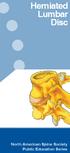 Herniated Lumbar Disc North American Spine Society Public Education Series What Is a Herniated Disc? The spine is made up of a series of connected bones called vertebrae. The disc is a combination of strong
Shoulders (free weights)
 Dumbbell Shoulder Raise Dumbbell Shoulder Raise 1) Lie back onto an incline bench (45 or less) with a DB in each hand. (You may rest each DB on the corresponding thigh.) 2) Start position: Bring the DB
Cervical Fusion Protocol
 REHABILITATION DEPARTMENT Cervical Fusion Protocol The following protocol for physical therapy rehabilitation was designed based on the typical patient seen at the Texas Back Institute for the procedure
A Patient s Guide to Shoulder Pain
 A Patient s Guide to Shoulder Pain Part 2 Evaluating the Patient James T. Mazzara, M.D. Shoulder and Elbow Surgery Sports Medicine Occupational Orthopedics Patient Education Disclaimer This presentation
THROWER S TEN EXERCISE PROGRAM
 THROWER S TEN EXERCISE PROGRAM Diagonal Pattern D2 Extension Involved hand will grip tubing handle overhead and out to the side. Pull tubing down and across your body to the opposite side of leg. During
Self Management Program. Ankle Sprains. Improving Care. Improving Business.
 Ankle Sprains Improving Care. Improving Business. What is an ankle sprain? Ligaments attach to the ankle bones and allow for normal movement and help prevent too much motion within the joint. Ankle sprains
Cervical Exercise: How important is it? What can be done? The Backbone of Spine Treatment. North American Spine Society Public Education Series
 Cervical Exercise: The Backbone of Spine Treatment How important is it? What can be done? North American Spine Society Public Education Series Important: If you have had an accident that started your neck
Above Knee Amputee Exercise Program
 Above Knee Amputee Exercise Program It is important that you take an active role in your rehabilitation. The following exercises must be done every day to prevent any complications. After an above the
HOME-BASED EXERCISE PROGRAMME FOR PEOPLE WITH SPINAL CORD INJURY
 HOME-BASED EXERCISE PROGRAMME FOR PEOPLE WITH SPINAL CORD INJURY By Lisa Hodge, Physiotherapy student at Otago University Summer Studentship 2003/2004 Produced by the Spinal Trust 1 Introduction Spinal
POST OPERATIVE ROTATOR CUFF REPAIR PROTOCOL. Therapist Instructions
 MOON SHOULDER GROUP For information regarding the MOON Shoulder Group, speak to surgeon or contact: Rosemary Sanders 4200 Medical Center East 1215 21st Avenue South Vanderbilt University Medical Center
SHOULDER - TORN ROTATOR CUFF
 175 Cambridge Street, 4 th floor ANATOMY AND FUNCTION SHOULDER - TORN ROTATOR CUFF The shoulder joint is a ball and socket joint that connects the bone of the upper arm (humerus) with the shoulder blade
Arthroscopic Labral Repair (SLAP)
 Arthroscopic Labral Repair (SLAP) Brett Sanders, MD Center For Sports Medicine and Orthopaedic 2415 McCallie Ave. Chattanooga, TN (423) 624-2696 Anatomy The shoulder joint involves three bones: the scapula
.org. Tennis Elbow (Lateral Epicondylitis) Anatomy. Cause
 Tennis Elbow (Lateral Epicondylitis) Page ( 1 ) Tennis elbow, or lateral epicondylitis, is a painful condition of the elbow caused by overuse. Not surprisingly, playing tennis or other racquet sports can
Functional rehab after breast reconstruction surgery
 Functional rehab after breast reconstruction surgery UHN A guide for women who had DIEP, latissimus dorsi with a tissue expander or implant, or two-stage implant based breast reconstruction surgery Read
Schiffert Health Center www.healthcenter.vt.edu. Neck Pain (Cervical Strain) COMMON CAUSES: QUICK TREATMENT : NECK PAIN TREATING NECK PAIN:
 Schiffert Health Center www.healthcenter.vt.edu Patient Information: Neck Pain (Cervical Strain) COMMON CAUSES: Neck pain may be triggered by a specific event, such a sport injury or motor vehicle accident.
Knee Injuries What are the ligaments of the knee?
 As sporting participants or observers, we often hear a variety of terms used to describe sport-related injuries. Terms such as sprains, strains and tears are used to describe our aches and pains following
SHOULDER - TORN ROTATOR CUFF
 ANATOMY AND FUNCTION SHOULDER - TORN ROTATOR CUFF The shoulder joint is a ball and socket joint that connects the bone of the upper arm (humerus) with the shoulder blade (scapula). The capsule is a broad
General Guidelines. Neck Stretch: Side. Neck Stretch: Forward. Shoulder Rolls. Side Stretch
 Stretching Exercises General Guidelines Perform stretching exercises at least 2 3 days per week and preferably more Hold each stretch for 15 20 seconds Relax and breathe normally Stretching is most effective
COMPUTER-RELATED MUSCLE, TENDON, AND JOINT INJURIES
 CHAPTER ELEVEN COMPUTER-RELATED MUSCLE, TENDON, AND JOINT INJURIES To reduce the risk of pain in your neck and shoulders, stay within these recommended ranges of movement: Neck Flexion: 0 o -15 o (bending
Herniated Cervical Disc
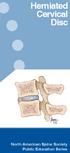 Herniated Cervical Disc North American Spine Society Public Education Series What Is a Herniated Disc? The backbone, or spine, is composed of a series of connected bones called vertebrae. The vertebrae
Clavicle Fracture (Broken Collarbone)
 617-726-7500 www2.massgeneral.org/sports Clavicle Fracture (Broken Collarbone) A broken collarbone is also known as a clavicle fracture. This is a very common fracture that occurs in people of all ages.
Post-Operative Exercise Program
 785 E. Holland Spokane, WA 99218 (877) 464-1829 (509) 466-6393 Fax (509) 466-3072 Knee Joint Replacement Surgery Weeks 1 through 6 The goal of knee replacement surgery is to return you to normal functional
Treatment Guide Wave Goodbye to Shoulder Pain
 Treatment Guide Wave Goodbye to Shoulder Pain Shoulder pain and injuries are extremely common whether due to exercise, age, overuse injuries or trauma. In fact, they account for nearly 20 percent of visits
Shoulder Joint Replacement
 Shoulder Joint Replacement Many people know someone with an artificial knee or hip joint. Shoulder replacement is less common, but it is just as successful in relieving joint pain. Shoulder replacement
Stretching for Young Athletes. Shawn P. Anderson, SPT Duke University Doctor of Physical Therapy
 Stretching for Young Athletes Shawn P. Anderson, SPT Duke University Doctor of Physical Therapy Sports and exercise are usually integral parts of many adolescents life. Whether they play at school or in
For Deep Pressure Massage
 T H E R A C A N E O W N E R S M A N U A L For Deep Pressure Massage Thera Cane is a self massager used to apply pressure to sore muscles. The unique design of the Thera Cane lets you apply deep pressure
Exercises after breast or upper body lymph node surgery
 Exercises after breast or upper body lymph node surgery Surgery may limit the strength and movement of your arm. These exercises are helpful if you have had: breast surgery with or without lymph node removal
Combined SLAP with Arthroscopic Rotator Cuff Repair Large to Massive Tears = or > 3 cm
 Combined SLAP with Arthroscopic Rotator Cuff Repair Large to Massive Tears = or > 3 cm *It is the treating therapist s responsibility along with the referring physician s guidance to determine the actual
Shoulder Arthroscopy
 Copyright 2011 American Academy of Orthopaedic Surgeons Shoulder Arthroscopy Arthroscopy is a procedure that orthopaedic surgeons use to inspect, diagnose, and repair problems inside a joint. The word
1. Cut & plant 6. Hitch Hiker 5-7 cuts on each side 3 x 20-30s. 2. Single-leg jumping 7. Y-position 5-10 reps 2 x 10 reps each arm
 Beach Volleyball program - Level 1 1. Cut & plant 6. Hitch Hiker 5-7 cuts on each side Keep knee over toe 5-7 cuts on each side Squeeze shoulder blades together Lift arms Thumb pointing upwards 2. Single-leg
Orthopaedic and Spine Institute 21 Spurs Lane, Suite 245, San Antonio, TX 78240 www.saspine.com Tel# 210-487-7463
 Phase I Passive Range of Motion Phase (postop week 1-2) Minimize shoulder pain and inflammatory response Achieve gradual restoration of gentle active range of motion Enhance/ensure adequate scapular function
Medial Collateral Ligament Sprain: Exercises
 Medial Collateral Ligament Sprain: Exercises Your Kaiser Permanente Care Instructions Here are some examples of typical rehabilitation exercises for your condition. Start each exercise slowly. Ease off
Treatment Options for Rotator Cuff Tears A Guide for Adults
 Treatment Options for Rotator Cuff Tears A Guide for Adults Is This Guide for Me? YES, if your doctor has told you that you have a rotator cuff tear, which is an injury to one or more of the muscles and
Living Room Bodyweight Workout Week 1 March or jog in place for 1 min to increase heart rate and lubricate joints.
 Warm Up- Living Room Bodyweight Workout Week 1 March or jog in place for 1 min to increase heart rate and lubricate joints. Protocol- All exercises will be done for 2 sets of 10 repetitions. After the
Self-Range of Motion Exercises for Shoulders, Arms, Wrists, Fingers
 Self-Range of Motion Exercises for Shoulders, Arms, Wrists, Fingers These exercises will help keep your muscles strong and mobile, and your joints flexible. Other benefits of these exercises include: C
Rehabilitation. Rehabilitation. Walkers, Crutches, Canes
 Walkers, Crutches, Canes These devices provide support through your arms to limit the amount of weight on your operated hip. Initially, after a total hip replacement you will use a walker to get around.
Adult Advisor: Plantar Fasciitis. Plantar Fasciitis
 Adult Advisor: Plantar Fasciitis Page 1 of 3 Plantar Fasciitis What is plantar fasciitis? Plantar fasciitis is a painful inflammation of the bottom of the foot between the ball of the foot and the heel.
Shoulder Replacement Surgery
 In What Activities May I Participate After I Recover? Shoulder Replacement Surgery After undergoing shoulder replacement surgery, it is important to have realistic expectations about the types of activities
Basic Training Exercise Book
 Basic Training Exercise Book Basic Training Exercise Book Instructions The exercises are designed to challenge the major muscles groups every day, approximately every 2 to 3 hours., for a total of 6 times
UK HealthCare Sports Medicine Patient Education December 09
 Meniscus tear Description The meniscus is a C-shaped cartilage structure in the knee that sits on top of the lower leg bone (tibia). Each knee has two menisci, an inner and outer meniscus. The meniscus
UPPER QUADRANT PAC. Do only those exercises that I have checked off for you to do independently. THINGS TO AVOID
 UPPER QUADRANT PAC Most common pain / disfunction syndromes occur as a result of a combination of poor posture habit and imbalanced muscle groups. The following exercise protocols will address the most
A Patient s Guide to Rib Joint Pain
 A Patient s Guide to Rib Joint Pain Anatomy Where are the rib joints? Your rib cage is made up of twelve pairs of ribs. The ribs attach to the spine in the back, and to the breastbone in the front. The
Biceps Tenodesis Protocol
 Department of Rehabilitation Services Physical Therapy The intent of this protocol is to provide the clinician with a guideline of the postoperative rehabilitation course of a patient that has undergone