
Integrated Pest Management ( IPM) on Mango
|
|
|
- Joy Norman
- 9 years ago
- Views:
Transcription
1 Integrated Pest Management ( IPM) on Mango Introduction Agricultural production in India increased dramatically during the last four decades, leading to an era of food selfsufficiency. The remarkable growth was achieved through the uptake of newer technologies in the form of high yielding crop varieties, chemical fertilizers and pesticides, as well as from the expansion of cropped area. Nevertheless, the growth in agricultural production needs to be sustained to meet the food demand of ever increasing population to supply quality and safe food. Insect pests, diseases and weeds inflict enormous losses to the potential agricultural production. At the same time, there is a rising public concern about the potential adverse effects of chemical pesticides on the human health, environment and biodiversity. These negative externalities, though, cannot be eliminated altogether, their intensity can be minimized through development, dissemination and promotion of alternative technologies such as biopesticides and bioagents as well as good agronomic practices (GAP) rather relying solely on chemical pesticides. Chittoor district has a vast flora and fauna that have the potential for developing into commercial technologies. Plant protection research has generated many technologies using flora and fauna. A few have been standardized for commercial application, and are claimed to provide better pest control and crop economics than the conventional chemical control, when used in conjunction with other pest control measures. The strategy is often referred to as Integrated Pest Management. Nevertheless, the adoption of biopesticides and bioagents remains extremely low owing to a number of factors relating to technology, socio-economic, institutional and policy. Mangoes are prone to insect infestation and disease infection at any stage of their development. Without proper pest management program, quality fruits may not be produced. The current control measures for pests attacking mango still relies on the use of pesticides. Most insecticides and fungicides are applied as calendar spray in an excessive manner resulting to pest resistance, elevation of minor pests to major ones, destruction of natural enemies and contamination of environment. In addition, pesticides are expensive and have caused in increased production inputs. Many of these problems can be minimized though Integrated Pest Management (IPM). This involves these of alternative measures in combination, to minimize pests. The IPM strategies make use of cultural management (pruning, cultivation, sanitation, proper nutrition to enhance vigor and fruit bagging) conservation of beneficial insects (pollinators and bio-con agents) and proper pesticide management. This brochure on IPM for mango production emphasizes prevention of pests through destruction of source and prevention of its spread. The major pests and diseases and their management and control measures are herewith furnished. In brief the calendar of operations to be followed by the farmers as ready reconary. Page 1 of 12

2 Calendar for IPM Target pest Activities Months January Inflorescence midge, Mealy bug, powdery Mildew, frost, Malformation, Stone weevil IPM activities Cleaning the alkathene bands at regular interval. Spray of 0.05% or dimethoate (0.045%) or some safer insecticide at bud burst stage. Removal of weeds and infected young leaves for powdery mildew. Delossoming of emerging floral buds. Cover young plant with thatch and irrigate the orchard. Remove infected leaves / malformed panicle infected by mildew. February Hopper, midge, Powdery mildew, Mealy bug, Blossom blight, Spraying with neem seed kernel extract (5%) or imidacloprid (0.05%) or thiamethoxam (0.05%) or propanophos (0.05%) for hoppers with 0.2%, or tridemorph (0.1%) for mildew. Cleaning of polythene band at regular interval. Sprays of mancozeb (0.2%). Pruning and destruction of inflorescence infested with midge. March Powdery mildew, hopper, Stone weevil Need base spray of insecticide + fungicide + NAA (20 ppm) for control of hopper, mildew and fruit drop at pea stage. Spray fenthion (1 ml/l ) or deltamethrin (1 ml/l ) at the time of egg laying when fruits are of lime size (2.5-4 cm diameter) for stone weevil. April May Hopper, Powdery mildew, Sooty mould, Fruit fly, Leaf cutting weevils, Black Tip, Internal Necrosis, Fruit fly, Third spraying of dinocap / tridemorph (0.1%) after fruit setting (Need base). Removal of powdery mildew infected leaves and malformed panicles. Spray wettable sulphur + monocrotophos + Gum Acacia ( %) or Indian oil formulation (3%) or 2% for sooty mould. To look after the grafted seedlings and if requ ired spraying of carbaryl (0.2%) or Dimethoate (0.05%) for control of leaf cutting weevils. Hanging of methyl engenol bottle traps (Methyle eugenol 0.1% + malathion 0.1% solution) for monitoring of fruit fly. Spray of borax (1%) at 15 days interval. Hanging of methyl eugenol traps (0.1%) + Page 2 of 12


3 The detailed major pests and disease control measures with photographs are as follows: Termite Scientific name: Common names: Alternate hosts: Macrotermes gilvus (Hagen) White ants, termite Several fruit trees Destructive stage: Adults and immature Parts affected: Roots, trunks and branches Termite Termite damage Description: Similar to ants but have soft bodies and are whitish in color. Termites construct earthen tunnels visible near damaged plant parts. The barks may be partly or fully eaten. Termites multiply very fast and are capable of destroying the entire tree. After damaging the roots, termites go up the trunk through earthen tunnels. The workers feed on the bark and underlying tissues. Parts affected are partially or totally destroyed. Prevention/control Paint or brush the trunk with used diesel oil to discourage the movement of termites from soil to the upper parts of the tree. Prune crowded branches to allow light penetration. This will provide unfavorable environment for the multiplication of the insect. Termites have soft bodies and die upon exposure to sunlight. Insecticides can be sprayed to control termites. Be sure to destroy the earthen tunnels before applying insecticides. For termite mounds, make a hole on one side, deep enough to reach the nest and pour kerosene. Mango hopper Page 3 of 12


4 Scientific name: Common names: Parts affected: Idioscopus clypealis (Lethierry Blossom leafhopper, Mango leafhopper Leaves, flowers and young fruits Destructive stage: Nymphs and adults Description: Adults are brown to gray with wedge-shaped body. Head is distinct with protruding eyes on the side. Nymphs are smaller, light brown and have no wings. Nymphs and adults damage the flowers by piercing the tissues and sucking the plant sap which causes withering, drying and falling of individual flowers. Under severe infestation, no fruit develops. The insects excretes fluid called honey dew, an excellent medium for development of the fungus, sooty mold, which interferes with the photosynthetic activity of the leaves. It also disturbs flower fertilization and spoils the appearance of fruits. Under high insect population, the entire canopy is covered with sooty mold with the leaves and flowers turning black. Prevention/control : Since hopper population is expected to be high in summer, early induction of mango trees (September, October and November) will minimize hopper problems in the field. Use light traps during early stages of flower development to attract and kill adults which are ready to lay eggs. To install a light trap, hang the source of light (electric bulb or kerosene operated lamp) on the tree. Place a basin containing a mixture of soap and water (1:10) underneath the light. Hoppers which are attracted to the light are drowned in the solution. One light trap is required per hectare of mango plantation. Prune crowded branches to discourage hoppers from staying in the tree. Pruning allows good light penetration and makes the habitat unfavorable for hopper development. Spray insecticide directed to the nymphal stages rather than the adults, hence, detection of this stage is important. (Please see Annex for suggested control measures) Page 4 of 12


5 Mango fruit fly Scientific name: Bactrocera philippinensis sp. n. And Bactrocera accipitalis (Bezzi) Common names: Mango fruit fly Alternate hosts: Guava, Santol, Sineguelas, Starfruit, Guyabano, Chico, Papaya, Passion fruit, Macopa Parts affected: Fruits Destructive stage: Adults and larvae Fruit fly Fruit fly damage on mango fruit Description: Damage on fruits starts during egg-laying of adult that resembles colorful housefly. Fresh punctures may not be readily recognized until after 3 to 5 days when soft brownish spots appear on the skin and the underlying tissues start to spoil. The larvae cause the major problem since continuous feeding destroys large portions of the flesh. Breakdown of tissues makes the mango fruits unsuitable for consumption. In the field, infested fruits drop to the ground and decay. Under severe infestation, as much as 70 percent of the crop is damaged. Prevention/control : Collect and bury fruit droppings at least half a meter below the ground to prevent the development of the insect. Avoid bruising of fruits during spraying since damaged fruits are susceptible to fruit fly attack. Bag the fruits using newsprint at 55 to 60 days after induction (chicken egg size) to minimize damage from fruit fly. (Please see Annex for suggested control measures) Avoid planting papaya, guava, sineguelas or santol as intercrops for mango since these fruits are preferred hosts of the insect. On the other hand, cashew and calamansi are less preferred. Spray the insecticides at 90 to 105 days after induction since fruits at these stages are attractive for egg laying. Recommended insecticides to prevent fruit fly infestation are Baythroid (1 to 1 ½ tbsp per 16 L water), Karate (3/4 Page 5 of 12


6 to 1 ½ tbsp per 16 L water) and Decis (1 to 5 tbsp per 16 L water). Last spraying should at least be 15 days from harvest. (See annex for recommended control measures) Hanging of methyl eugenol wooden block traps soaked in ethanol, methyl eugenol and malathion (6:4:1) during fruiting period from April to traps/ ha tie them tightly at 3-5 feet above ground level. To control adult flies during severe infestation placing poison bait viz Protein hydrolysate +malathion 50 ml +200 ml molasses in 2 litres of water be sprayed adding an additional 18 liters of water to bait poison. Commencing at pre oviposition period and repeat at 15 days interval. Addition of 10 ml methyl eugenol in place of molasses is also recommended. Mango seedborer Scientific name: Common names: Noorda albizonalis (Hampson) Red-ringed mango caterpillar, Red boring caterpillar, Fruit boring caterpillar, Mango fruit borer and Mango seed borer Parts affected: Fruits and seeds of mango Destructive stage of the pest: larvae Mango seed borer Damaged fruit Description: Unlike the fruit fly which feeds mainly on the flesh, the mango seed borer consumes both the flesh and seed. Damage starts when the newly-hatched larvae enter the fruit by boring holes through the apex or the narrow tip of the fruit. As the larvae develop, they feed on the tissues beneath the skin. The damaged area later collapses causing the apex to burst and the fruits eventually fall to the ground. Page 6 of 12

7 Serious damage is brought about by the destruction of the seed, since a single larva is capable of consuming the entire mango seed in a short period of time. Prevention/control: Pick the fruits showing damage. Otherwise, larvae will transfer and destroy adjacent healthy fruits. Collect and dispose infested fruits on the ground by burying them to prevent the insect from completing its life cycle. Bag the fruits with newsprints a 55 to 60 days after the induction will also minimize damage of the borer. Adults can be controlled by spray application of insecticide in the afternoon. (Please see Annex for suggested control measure) DISEASES Powdery mildew (Oidium mangiferae) Symptoms: Pathogen attacks the inflorescence, leaves, stalk of inflorescence and young fruits with white superficial powdery growth of fungus resulting in its shedding. The sepals are relatively more susceptible than petals. The affected flowers fail to open and may fall prematurely (Fig 28). Dropping of unfertilized infected flowers leads to serious crop loss. Initially young fruits are covered entirely by the mildew. When fruit grows further, epidermis of the infected fruits cracks and corky tissues are formed. Fruits may remain on the tree until they each up to marble size and then they drop prematurely. Mildew on flowers Mildew on fruits / pedicel Mildew on Lower Surface of Leaf Page 7 of 12

8 Infection is noticed on young leaves, when their colour changes from brown to light green. Young leaves are attacked on both the sides but it is more conspicuous on the grower surface. Often these patches coalesce and occupy larger areas turning into purplish brown in colour. The pathogen is restricted to the area of the central and lateral veins of the infected leaf and often twists, curl and get distorted. Reason for severity: High humidity, cludy weather & high wind velocity for 3-4 day. Minimum temperature ( C), maximum C and RH 82-91% are most conducive for disease severity. Third and fourth week of March attains maximum severity in UP plains Lack of timely fungicidal Schedule Close Planting without canopy management. Mode of Spread Spread is dependent on development of mildew pathogen persist on older leaves/ malformed panicles during off season. Disease spread through wind borne spores released between 1100 to 1600 hour, which takes 5-7 hours for infection after germination. Management Prune diseased leaves and malformed panicles harbouring the pathogen to reduce primary inoculum load. Spray wettable sulphur (0.2%) when panicles are 3-4 in size. Spray dinocap (0.1%) days after first spray. Spray tridemorph (0.1%) days after second spray. Spraying at full bloom needs to be avoided. Page 8 of 12

9 2. Anthracnose Causal organism: Colletotrichum gloeosporioides Penz Parts affected: Leaves, flowers and Fruits Description: Considered as the most seriousfungal disease of mango in the Philippines, anthracnose occurs in all mango growing areas. It attacks the different parts of the tree, but major damage occurs at flowering and after harvest. It is serious during the wet seasons and usually occurs as a post harvest disease of mango fruits. The disease is characterized by the appearance of tiny spots on the leaves. These later enlarge to form discrete, rounded or angular spots which come together to form large, irregular shaped-patches with light brown to black spots. However, during advance stage of the disease, the spots give way and produce shot hole appearing in various shapes and sizes. This must be differentiated from the shot holes produced by the cecid fly which are small and circular. Anthracnose is the most devastating disease of mango flowers, especially when induction is done early in season (August to October). The presence of rain and high humidity favors the development of disease, thus, the flowers are easily infected. Common signs of the disease are black streaks on the main stalks and branches of the flower, which later become large, black patches. Under severe infection, entire flowers turn black and fail to develop. Young fruits are also affected and fall prematurely. Symptoms are, however, not visible since the fungus does not have proper condition for development (hard and acidic fruits). After harvest, when fruits start to ripen, the fungus is reactivated and spread over the surface (latent infection) Early symptoms of the disease are black, pin-pricked lesions. Later, the lesions form bigger black spots, until the whole fruit is covered. The disease is most serious during wet seasons and usually occurs as important post-harvest disease of mango fruits. Page 9 of 12

10 Prevention/control for leaves As a fungal disease, the development and spread of anthracnose are facilitated by high relative humidity within the tree canopy. Young leaves are susceptible to the disease. Prune crowded branches to allow light penetration and good air circulation that will create an environment unfavorable for disease development. Remove dead and diseased branches to reduce the source/reservoir of fungal spores. Ring cultivation can lessen humidity underneath the trees, which discourage germination of spores. Prevention/control for flowers Prune after harvest to increase ventilation and reduce humidity inside the canopy. Collect and burn trashes to reduce sources of disease inocula. Some farmers practice shaking of branches after blooming to remove morning dew deposited on the flowers. By doing so, the relative humidity is reduced and male flowers are eliminated, providing enough space for development of hermaphrodite flowers which produce fruits after pollination. Several chemicals such as Benlate (1 to 2 tbsp per 16 L water). Maneb (4 to 6 tbsp per 16 L water), Dithane (4 to 7 ½ tbsp per 16 L water), and Manzate (½ tbsp per 20 L water) have given varying degree of protection for flowers against anthracnose. These are applied singly or in combination in a sequential spray program. It is also suggested to incorporate any of these fungicides in the flower inducers, especially when flower induction is done early in season. (Please also see Annex for other suggested control measures) Page 10 of 12


11 Prevention/control for fruits Apply protectant fungicides such as Daconil (1/2 tbsp per 16 L water), Manzate (1/2 tbsp per 16 L water), Dithane (4 to 7 ½ tbsp per 16 L water), a week after bud break, at fruit set and 20 days before harvest. (Please also see Annex for other suggested control measures) Bagging of fruits at 60 days after flower induction can minimize the problem. Hot water treatment (HWT) by dipping newly harvested fruits in heated water (52 to 55 C) for 10 minutes, followed by hydro-cooling and air drying. 3. Stem end rot Causal organism: Dothiorella dominicana (Dd) Common names: Stem end rot, DSER Parts affected: Fruits Diseased stem Diseased fruit Description: of storage and transit rots of mango. The disease is considered next to anthracnose in importance and is responsible for about 2-6 percent The disease is characterized by appearance of dark discoloration near the fruit stalk (pedicel). Under warm and moist conditions, the infected area extends towards the end of the fruit. Later, the symptom turns from dark brown to purplishblack and the tissues become soft and watery. The disease produces soft rot in contrast to the hard rot produced by anthracnose. Page 11 of 12

12 Prevention/control Remove and burn primary sources of the disease such as dead twigs, barks and other trashes. Since high incidence of stem-end rot occurs on fruits without stalks, harvest the fruits with about 1.0 to 2.0 cm of the stalk attached. The pre-harvest sprays of fungicides recommended for anthracnose can also be used to prevent stem-end rot. Avoid the use of organic materials as liners for mango during packaging Spraying of 0.2% Nimbicidin or Azadirachtin 3000 at initial stage of hopper population. Spray Lambda cyhalothrin 5% 0.5 ml or imidacloprid ml/l or Thiamethaxam (0.05%) or propanophos (0.05%). First spray should be done at early stage of panicle formation if hopper population, is more than 5-10 panicle, second spray at full length stage of panicle and the third spray after fruit setting (at pea size). Chemical spray is to be minimized and should be need based. A rational rotation of insecticide is desirable to counteract the tendency of pest to develop field resistance Page 12 of 12

Strawberry Anthracnose
 Strawberry Anthracnose Bill Turechek and Cathy Heidenreich Introduction - The term anthracnose is a general term used to describe plant diseases. Strawberry anthracnose refers to several diseases of strawberry
RIPPLE Africa Step by Step Fruit Tree planting Guide
 RIPPLE Africa Step by Step Fruit Tree planting Guide NOTES ON FRUIT PRODUCTION Aim and Objective The aim and objective of RIPPLE Africa as an organisation is to make Nkhata Bay District one of the leading
PROJECT PROPOSAL INTEGRATED PEST MANAGEMENT IN MANGO
 PROJECT PROPOSAL On INTEGRATED PEST MANAGEMENT IN MANGO UNDER RKVY FOR THE YEAR 2013-14 Directorate of Horticulture, 39 Odisha, Bhubaneswar PROJECT SUMMARY Name of the project: INTEGRATED PEST MANAGEMENT
Strawberry Leaf Spot
 Strawberry Leaf Spot Cathy Heidenreich and Bill Turechek Introduction - Leaf spot is one of the most common and widespread diseases of strawberry. Mycosphaerella fragariae is also the cause of black seed
Cloud Mountain Farm Center 6906 Goodwin Rd., Everson, WA 98247 (360)966-5859 voice, (360)966-0921 fax, www.cloudmountainfarmcenter.
 Disease and Pest Management in the Home Orchard Fruit trees have been grown in home orchards for centuries. The goal of many gardeners today is to have fresh fruit from their own trees with a minimum of
FOLPAN 50 WP (FOLPET) FUNGICIDE COMMERCIAL
 21-NOV-2008 2008-4133 GROUP M FUNGICIDE FOLPAN 50 WP (FOLPET) FUNGICIDE COMMERCIAL A wettable powder fungicide for the control of a number of fungus diseases on certain fruit, vegetable, ornamental and
INTEGRATED PEST MANAGEMENT IN PADDY
 INTEGRATED PEST MANAGEMENT IN PADDY SMS (Entomology) Krishi Vigyan Kendra, Dhemaji Assam Agricultural University Silapathar INTEGRATED PEST MANAGEMENT (IPM) IN PADDY Among the food grains paddy occupies
Picture Tour: Dry Beans Diseases
 Picture Tour: Dry Beans Diseases Saginaw Valley Research and Extension Center agbioresearch.msu.edu 1 Images of: Blight Root rot White mold Common Mosaic virus Leaf spot Rust Anthracnose BLIGHT Common
12. INSECT PEST AND DISEASE MANAGEMENT
 12. INSECT PEST AND DISEASE MANAGEMENT Conservation farming promotes a diversity of insect life, influences pest populations and also favours many beneficial insects. The beneficial insects which act as
Major Insects of Apple, Peach and Pear Trees in the Home Orchard
 Major Insects of Apple, Peach and Pear Trees in the Home Orchard Henry W. Hogmire West Virginia University Tree Fruit Research and Education Center Kearneysville, WV Apple Pests Plum Curculio Beetle (snout
Irish potatoes are one of America s most
 E-511 11-10 Easy Gardening Joseph Masabni, Assistant Professor and Extension Horticulturist, The Texas A&M University System Irish potatoes are one of America s most popular vegetables the average American
OSU Extension Service Master Gardener Program. Organic Pest Control. Weston Miller OSU Extension Service Community and Urban Horticulture faculty
 Organic Pest Control Weston Miller OSU Extension Service Community and Urban Horticulture faculty Audience Question What does the term organic pest control mean to you? Preview of Presentation Organic
LIME SULPHUR INSECTICIDE MITICIDE FUNGICIDE COMMERCIAL DANGER: CORROSIVE TO EYES READ THE LABEL AND ATTACHED BOOKLET BEFORE USING
 datapak group M fungicide LIME SULPHUR INSECTICIDE MITICIDE FUNGICIDE COMMERCIAL DANGER: CORROSIVE TO EYES READ THE LABEL AND ATTACHED BOOKLET BEFORE USING REGISTRATION NO. 16465 PEST CONTROL PRODUCTS
Tree Integrated Pest Management. Dan Nortman Virginia Cooperative Extension, York County
 Tree Integrated Pest Management Dan Nortman Virginia Cooperative Extension, York County IPM Refresher Definition: The use of a combination of appropriate pest control tactics to reduce pest population
Rose Diseases and Insects in the Bradenton-Sarasota Area
 Rose Diseases and Insects in the Bradenton-Sarasota Area By: Philip Paul, CR The 10 bad actors in our area are the fungi and pests that some days slow down our enjoyment of our rose gardens. This issue
AGFACTS. Strawberry disease control guide MAJOR DISEASES OF STRAWBERRIES
 AGFACTS AGFACTS AGFACTS www.agric.nsw.gov.au Strawberry disease control guide Agfact H3.3.1 third edition, May 2004 Lawrence Ullio, District Horticulturist Elizabeth Macarthur Agricultural Institute Camden
Onion & Leek Planting Guide
 Onion & Leek Planting Guide Important Remove plants from box immediately. Do not put in soil or water before planting. Keep cool and dry until you can plant. Follow the instructions inside for best results.
Chapter 8: Diseases. Rust
 Chapter 8: Diseases Historically, fusarium wilt and rust have been considered major limiting factors in flax production in Western Canada. However, these two diseases have been effectively managed by multigenic
Integrated Pest Management
 Chapter 2 Integrated Pest Management In This Chapter Keywords After learning the information in this chapter, you will be able to: 1. Define Integrated Pest Management (IPM). 2. List and describe the 5
Disease and Insect Management in the Home Orchard
 North Carolina Cooperative Extension Service NC STATE UNIVERSITY Buncombe County Center North Carolina Cooperative Extension 94 Coxe Avenue Asheville, NC 2 NC 8801-3620 (828) 255-5522 FAX (828) 255-5202
Macadamia problem solver & bug identifier
 Macadamia problem solver & bug identifier Reprint information current in 2003 REPRINT INFORMATION PLEASE READ! For updated information please call 13 25 23 or visit the website www.deedi.qld.gov.au This
Hydroseed Care Guide
 Hydroseed Care Guide Please read carefully and sign the invoice in the space provided to show us that you have received the Instructional Care Guide and acknowledge your responsibility to read and implement
Dormant Season. Of Dormant Oil Spray Apple scab, Pear scab, Powdery mildew. pre-pink, pink, calyx, 1st & 2nd cover spray.
 99/2004 CLEAN CROP(R) LIME SULPHUR Lime Sulphur Insecticide Miticide Fungicide COMMERCIAL CAUTION CORROSIVE READ THE LABEL BEFORE USING REGISTRATION NO. 16465 PEST CONTROL PRODUCTS ACT GUARANTEE: Sulphide
Outline. What is IPM Principles of IPM Methods of Pest Management Economic Principles The Place of Pesticides in IPM
 Improving Control Systems in Thailand for Plant and Plants Products Intended for Export to the European Union co-funded by the European Union and Thai Department of Agriculture Preharvest Use of Pesticides
University of Hawaii at Manoa, College of Tropical Agriculture and Human Resources
 University of Hawaii at Manoa, College of Tropical Agriculture and Human Resources J. Sugano, J. Uyeda, S. Fukuda, K. Wang, M. Kawate, C. Tamaru, B. Fox, and T. Radovich College of Tropical Agriculture
Fertilizer, Weed Control, Grubs, and General Application Questions
 Lawn Care FAQ s Fertilizer, Weed Control, Grubs, and General Application Questions Why do we have so many weeds? Dandelions in particular, weeds in general, do not seem concerned about how long lawn has
Care of Mature Backyard Apple Trees
 Education Center and Info Line practical solutions to everyday questions Toll free Info Line 1-877-398-4769 M-F 9 AM - 2 PM Care of Mature Backyard Apple Trees Introduction Backyard apple trees can be
Why Fruit Trees Die D. B. Meador, Extension Specialist (retired) University of Illinois
 Why Fruit Trees Die D. B. Meador, Extension Specialist (retired) University of Illinois Occasionally, fruit trees decline and often die. Diseases affecting the leaves, fruit, and twigs of fruit trees usually
Two Main Precautions Before You Begin Working
 Pruning Mango Trees Roy Beckford, Ag/Natural Resources Agent, UF/IFAS Lee County Two Main Precautions Before You Begin Working 1. Mango peel and sap contain urushiol, the chemical in poison ivy and poison
I. RECOMMENDED PRACTICES BASED ON GOOD AGRICULTURAL PRACTICES (GAP) AND GOOD MANUFACTURING PRACTICES (GMP)
 CAC/RCP 51-2003 Page 1 of 8 CODE OF PRACTICE FOR THE PREVENTION AND REDUCTION OF MYCOTOXIN CONTAMINATION IN CEREALS, INCLUDING ANNEXES ON OCHRATOXIN A, ZEARALENONE, FUMONISINS AND TRICOTHECENES CAC/RCP
A guide for handling for cabbage, carrot, hot pepper, lettuce, sweet potato and tomato. Food and Agriculture Organization of the United Nations
 A guide for handling for cabbage, carrot, hot pepper, lettuce, sweet potato and tomato Food and Agriculture Organization of the United Nations A guide for handling for cabbage 1. HARVESTING Harvesting
runing & Orchard Renewal
 P runing & Orchard Renewal Richard G. St-Pierre, Ph.D. (January 2006) The Basics Of Pruning & Orchard Renewal Pruning is defined as the art and science of cutting away a portion of a plant to improve its
Part 1: Knowing how to identify the problem. Author: Damon Polta, Friendly Aquaponics Farm Manager. For free distribution.
 Diseases, Deficiencies, and Toxicities in Plants Part 1: Knowing how to identify the problem. Author: Damon Polta, Friendly Aquaponics Farm Manager. For free distribution. Diseases Beet Western Yellow
Structural Pest Control Learning Objectives
 Category 7C: Structural Pest Control (Wood-Destroying Pests) Structural Pest Control Learning Objectives After studying this section, you should be able to: Describe the most common wood destroying pest
Chilli - Long Red Cayenne, Long Slim Cayenne, P2391, Serano, Skyline 3, Star 6601, Thai chili, Thai Dragon.
 CAPSICUMS Hot pepper (chilli), sweet pepper and paprika. CLIMATE These crops require warmer conditions than tomatoes, and are more sensitive to cold and frost. The optimum mean temperatures for growth,
Virginia Gardener http://www.hort.vt.edu/envirohort
 The Virginia Gardener http://www.hort.vt.edu/envirohort Name Help Sheets: Things Plants Need There are certain things that every living thing needs in order to live and grow. Just like you, plants need
Pineapples. Ian Hewett Horticultural Marketing Inspectorate United Kingdom. Version - October 2011
 Pineapples Ian Hewett Horticultural Marketing Inspectorate United Kingdom Version - October 2011 1 Definition Of Produce This Standard applies to pineapples of varieties (cultivars) grown from Ananascomosus(L).
IDENTIFICATION & MANAGEMENT OF. Pumpkin Diseases
 IDENTIFICATION & MANAGEMENT OF Pumpkin Diseases 2 Richard Latin and Karen Rane Department of Botany and Plant Pathology Disease Sclerotinia Rot Phytophthora Blight Bacterial Fruit Spot Powdery Mildew Downy
Custard apple information kit
 information kit Reprint information current in 1998 REPRINT INFORMATION PLEASE READ! For updated information please call 13 25 23 or visit the website www.deedi.qld.gov.au This publication has been reprinted
Symptoms Include: Stippled, bronzed or bleached appearance of leaves
 Common Tree Pests & Diseases Of Central Texas Lara Schuman City of Austin Urban Forestry Program Stress and Trees City life can be stressful, and trees feel stress too. Common urban tree issues include:
Growing Balaton - Horticultural Considerations
 Growing Balaton - Horticultural Considerations Amy Iezzoni Dept. of Horticulture Michigan State University Jim Nugent District Horticulturist MSU Extension The fruit industry in Michigan has generations
4th GRADE MINIMUM CONTENTS-NATURAL SCIENCE UNIT 11: PLANTS
 PLANT BITS 4th GRADE MINIMUM CONTENTS-NATURAL SCIENCE UNIT 11: PLANTS There are four main parts to a plant. They are the root, stem, leaf and flower. Each part has an important task to do in the life of
Garden and plant health
 The idea of a healthy garden, rather than simply pest and disease free plants, is at the heart of organic growing. The first part of this section, Keeping the garden healthy, looks at ways of maintaining
Pesticides for use on Mangoes
 Pesticides for use on Mangoes Brian Thistleton, DPIFM and Scott Spencer, Landmark Talk Outline Insecticide issues Types Registration Labels Off label use Withholding periods Problems with insecticides
Culture in field conditions - Challenges A South American point of view Roberto Campos Pura Natura, Argentina
 A South American point of view Roberto Campos Pura Natura, Argentina EUSTAS 6 th Stevia Symposium Leuven, July 3 rd and 4 th I. Area of cultivation II. Environment III. Production of seedlings IV. Planting
FOLPAN 80 WDG FUNGICIDE
 GROUP M FUNGICIDE FOLPAN 80 WDG FUNGICIDE COMMERCIAL A water dispersible granular fungicide for the control of a number of fungus diseases on certain fruit, vegetables, ornamental and other crops. REGISTRATION
Tomato Disease Management in Greenhouses
 Purdue Extension publication BP-197-W University of Kentucky Cooperative Extension publication ID-233 Vegetable Diseases Tomato Disease Management in Greenhouses Photos by the authors Authors Daniel S.
Diagnosing Problems of Roses in the Landscape
 ARIZONA COOP E R AT I V E E TENSION AZ1528 September 2010 Diagnosing Problems of Roses in the Landscape Desert Southwest gardeners are fortunate to have fewer insect and disease problems on roses than
Applied Development of Delaus, a Rice Blast Control Fungicide: Delaus Prince Granule and Its Treatment into Seedling Boxes at the Sowing Stage
 Applied Development of Delaus, a Rice Blast Control Fungicide: Delaus Prince Granule and Its Treatment into Seedling Boxes at the Sowing Stage Sumitomo Chemical Co., Ltd. Agricultural Chemicals Research
BENEFITS OF USING IPM
 Edward J. Bechinski and William H. Bohl Potato growers who use IPM consider all available pest control tools. Alternatives to conventional pesticides are the foundation of every IPM plan. Pesticides play
A REVIEW OF PEST CONTROL IN AVOCADOS
 California Avocado Society 1979 Yearbook 63: 58-65 A REVIEW OF PEST CONTROL IN AVOCADOS C. Don Gustafson Farm Advisor, Cooperative Extension Service, University of California, San Diego County. Introduction
Chemical versus Biological Control of Sugarcane. By Abid Hussain Matiari Sugar Mills Ltd.
 Chemical versus Biological Control of Sugarcane By Abid Hussain Matiari Sugar Mills Ltd. Sugarcane It is an important cash crop, Pakistan is the fifth largest cane producing country. However, its yield
Drosophila suzukii. (Diptera: Drosophilidae) Spotted wing drosophila. A pest from the EPPO Alert List
 Drosophila suzukii (Diptera: Drosophilidae) Spotted wing drosophila A pest from the EPPO Alert List Introduction In 2009 Drosophila suzukii was detected in three European countries (see map below). It
GENERAL WATERING & CARE GUIDE
 GENERAL WATERING & CARE GUIDE Between 30-60 percent of water applied to lawns and gardens is never absorbed by the plants. Water is often wasted because it is applied too quickly and runs off, evaporates
Chemical Control of Spotted Wing Drosophila in Berry Crops
 Berry Resources www.fruit.cornell.edu/berry Chemical Control of Spotted Wing Drosophila in Berry Crops Greg Loeb, Cathy Heidenreich, Laura McDermott, Peter Jentsch, Debbie Breth, and Juliet Carroll, Cornell
WHAT IS WRONG WITH MY LAWN?
 WHAT IS WRONG WITH MY LAWN? Lawn problems can occur in small areas or larger patches and entire lawns can be affected. Sometimes the problems are due to poor growing conditions, improper lawn care practices,
Rootmaster 400 SL. Reg No. L6478 Act No. 36 of 1947
 Rootmaster 400 SL Reg No. L6478 Act No. 36 of 1947 A systemic water soluble liquid fungicide for the control of diseases caused by Oomycetes on various crops, as listed in the directions for use. FRAC:
Cherokee Chief Plena Rubra Fragrant Cloud
 INTRODUCTION The natural range of dogwoods extends from Maine to the Gulf of Mexico. The trees color cities and countrysides white with dazzling displays in the early spring. Although they are most spectacular
Wheat Disease Identification
 Wheat Disease Identification Fusarium root, crown, and foot rots Stripe rust Tan spot Leaf rust Cephalosporium stripe Stagonospora nodorum blotch Contents Diseases affecting heads and grain Black chaff...
Scouting and Thresholds for Blueberry Pests and Diseases
 Scouting and Thresholds for Blueberry Pests and Diseases This field guide is intended to be used as a tool to aid in sampling and decision-making for managing key insect, mite, and disease pests in blueberry
PACKAGE OF PRACTICES FOR MANAGING MEALYBUG ON COTTON
 PACKAGE OF PRACTICES FOR MANAGING MEALYBUG ON COTTON Status of mealybugs on cotton in India The solenopsis mealybug, Phenacoccus solenopsis (Tinsley), and the pink hibiscus mealybug, Maconellicoccus hirsutus
CHAPTER- VIII TERMITE DAMAGES TO VARIOUS PLANT AND AGRICULTURAL CROPS
 CHAPTER- VIII TERMITE DAMAGES TO VARIOUS PLANT AND AGRICULTURAL CROPS 8.1. Introduction In addition to structural wood, the termite also infested woody plants, such as trees, shrubs, and herbs reported
The Alfalfa Weevil in Utah
 Page 1 of 5 The Alfalfa Weevil in Utah Fact Sheet No. 58 January 1989 Edward W. Evans Extension Entomologist Introduction The alfalfa weevil is a major pest throughout Utah. It is a beetle with one generation
Diagnosing Disorders of Trees
 148 Appendix A Diagnosing Disorders of Trees Diagnosing tree problems can be difficult. Symptoms and signs can be subtle or only visible using special techniques, important information can be missing,
NUTRIENT DISORDERS IN TREE FRUITS
 PNW 121E NUTRIENT DISORDERS IN TREE FRUITS A Pacific Northwest Extension Publication Washington Idaho Oregon NUTRIENT DISORDERS IN TREE FRUITS By Nels R. Benson, Soil Scientist and Horticulturist (retired),
A DISCOVERY REGARDING THE DEATH OF ASH TREES IN THE PLYMOUTH AREA
 A DISCOVERY REGARDING THE DEATH OF ASH TREES IN THE PLYMOUTH AREA As you are probably aware, we have seen a significant amount of dying ash trees in the Plymouth, Canton, Northville area. This prompted
INSECT MANAGEMENT (Roberts & McPherson)
 INSECT MANAGEMENT (Roberts & McPherson) A number of insect pests are capable of severely damaging soybeans. However, it is important to realize that soybeans can withstand considerable insect damage at
Insects That Kill Trees. Diane G. Alston Extension Entomologist Utah State University 2004 Professional Tree Care Workshops
 Insects That Kill Trees Diane G. Alston Extension Entomologist Utah State University 2004 Professional Tree Care Workshops Topics Introduction websites, IPM strategies Ips bark beetles Tree borers flatheaded,
BANANA PRODUCTION. ARC-Institute for Tropical and Subtropical Crops. Banana Production - English
 BANANA PRODUCTION ARC-Institute for Tropical and Subtropical Crops Banana Production - English BANANA PRODUCTION Compiled by Directorate Communication National Department of Agriculture and W. Willemse,
Cytospora Canker. A Hard Nut to Crack. My current ongoing projects 1/23/2013. 30% of Cherry trees
 Cytospora Canker: A Hard Nut to Crack Ramesh Pokharel My research and extension program is aimed at > Solving practical fruit production problems > Increased producer profitability > Strengthening the
How to make a Solitary Bee Box
 How to make a Solitary Bee Box **Note: The following instructions include the use of tools that may be dangerous. Ensure there is adult supervision with children. Time: 1 hour People: 1-2+ Materials: Wood
The Basics of Tree Pruning
 The Basics of Tree Pruning By John Ball, Forest Health Specialist and Aaron Kiesz, Urban and Community Forestry Specialist Until the end of the 19 th century, trees were not a common sight in many parts
Management of the Giant Northern Termite
 Agnote Management of the Giant Northern Termite (Mastotermes darwiniensis) B. M. Thistleton, M. J. Neal and E. S. C. Smith, Plant Industries, Darwin No: I58 July 2013 INTRODUCTION Termites are small, secretive
FORMATIVE PRUNING OF BUSH TREES WINTER PRUNING OF ESTABLISHED BUSH TREES AIMS SPUR BEARERS & TIP BEARERS PRUNING OF SPUR BEARERS
 FORMATIVE PRUNING OF BUSH TREES Formative pruning is essential and should be carried out in the dormant season, November- March. Its purpose is to produce a well-balanced tree with a strong branch framework
Integrated Pest Management
 Integrated Pest Management Andrea Veres Junior Technical Officer FAO REU [email protected] Yerevan, Armenia 2013 Why develop IPM? Agriculture was: not sustainable optimized inputs for maximum profit
Oaks represent the major shade trees of Texas and are also important components of
 GARDENING FACT SHEET Harris County Cooperative Extension 3033 Bear Creek Drive, Houston, Texas 77084 281.855.5600 http://harris-tx.tamu.edu/hort Major Oak Diseases and their Control by Jerral D. Johnson
Tree Trimming Tips and Tricks
 Tree Trimming Tips and Tricks Start with Professionals Mistakes can be costly for you and your tree. Professionals who know about trees can help you get started with the right tree in the right place.
1. THE GROWER 2. GREENHOUSE STRUCTURE FEATURED 3. CROPS GROWN. Hung Nguyen: 0408 696 949, [email protected]
 1. THE GROWER Hung Nguyen: 0408 696 949, [email protected] Hung is a new grower in his third year of independent farm management. He completed a Diploma in Horticulture while working on his parent
Promoting Pollination Farming for Native Bees
 Promoting Pollination Farming for Native Bees Overview Pollination, the transfer of pollen grains to fertilize the ovules of flowers to produce seeds and fruits, is essential to agriculture and natural
Introduction to Integrated Pest Management. John C. Wise, Ph.D. Michigan State University MSU Trevor Nichols Research Complex
 Introduction to Integrated Pest Management John C. Wise, Ph.D. Michigan State University MSU Trevor Nichols Research Complex What is Integrated Pest Management? Integrated Pest Management (IPM) New concept;
Orchid Pests and Diseases Diagnosis, Treatment and Prevention by Sue Bottom, [email protected]
 Orchid Pests and Diseases Diagnosis, Treatment and Prevention by Sue Bottom, [email protected] Common Orchid Pests Plant Sap Feeding Insects Scale Mealybugs Aphids Thrips Whiteflies Spider Mites
Life Cycle of a Butterfly
 Name: Date: Life Cycle of a Butterfly Life cycle refers to the stages of development, growth and reproduction that a living thing goes through. The butterfly's life cycle is made up of four stages: egg,
Chapter 1: Integrated Pest Management (IPM)
 Chapter 1: Integrated Pest Management (IPM) Introduction Pests are an inevitable problem faced by nursery growers. For the purposes of this document, the term pest refers to insects, diseases, weeds, slugs,
Coffee Growing Basics: Fertilizer, Disease, Insects. HC Skip Bittenbender Extension Specialist CTAHR/UH
 Coffee Growing Basics: Fertilizer, Disease, Insects HC Skip Bittenbender Extension Specialist CTAHR/UH Problems? Who to call first? Our UH/CTAHR Extension Agents! Virginia Easton Smith, W. Hawaii - 322-4892
GARDEN FACTS. When are apples ripe?
 A3743-E GARDEN FACTS U n i v e r s i t y o f W i s c o n s i n E x t e n s i o n When are apples ripe? Teryl R. Roper DIFFERENT APPLE CULTIVARS RIPEN over a long season. In Wisconsin, apples ripen from
Jeremiah K.S. Dung Hermiston Agricultural Research and Extension Center Oregon State University
 Jeremiah K.S. Dung Hermiston Agricultural Research and Extension Center Oregon State University Species of Pectobacterium and Dickeya Formerly known as soft rot Erwinias P. carotovorum subspecies P. atrosepticum
5.3 Natural Pesticides
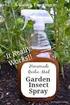 5.3 Natural Pesticides Introduction As explained in chapter 5.1, strengthening the plant is the best protection against pests and disease. Through adapted cultivation methods and with good management of
Pecan Trees for the Home or Backyard Orchard
 Pecan Trees for the Home or Backyard Orchard Lenny Wells, University of Georgia, Extension Horticulture Will Hudson, University of Georgia, Extension Entomology Jason Brock, University of Georgia, Extension
Integrated Pest Management
 Integrated Pest Management Ecology and Human Impact R. Bruce Chapman Insect Science Ltd Pest organisms When do organisms become pests? When an organism s population exceeds a threshold level, and control
Diagnosing Home Citrus Problems
 ARIZONA COOP E R AT I V E E TENSION AZ1492 April 2009 Diagnosing Home Citrus Problems John Begeman, Glenn Wright PROBLEMS OF FRUIT Fruit Drops Prematurely: Natural fruit drop occurs during the spring.
PASTURE AND HAY INSECT MANAGEMENT
 PASTURE AND HAY INSECT MANAGEMENT Jay Crouch, Extension Area Agronomy Agent, Brian Beer, Extension Area Livestock Agent, Robert Bellinger, Ph.D., Extension Entomologist Insect pests of pastures, hay fields
PREVENTING PEST DAMAGE IN HOME LAWNS
 PREVENTING PEST DAMAGE IN HOME LAWNS Quick Tips Summary Use mixed grass seeds rather than a single variety Fertilize with composted organics or slow-acting synthetic products Keep soil at ph 5.8 6.5 Keep
8.4 L FUNGICIDE NET CONTENTS: Contains Iprodione For Control of Diseases in Canola WARNING: SKIN AND EYE IRRITANT
 FUNGICIDE NET CONTENTS: 8.4 L Contains Iprodione For Control of Diseases in Canola AGRICULTURAL GUARANTEE: Iprodione........ 240 g/l Contains 1,2-benzisothiazolin-3-one at 0.014% as a preservative REGISTRATION
Spruce problem diagnosis for yard trees
 Spruce problem diagnosis for yard trees KEY Effect on tree Kills tree Other damage No damage Size of tree Seedling Sapling to pole Pole and larger By Jana Albers and Mike Albers, DNR-Forestry URL = http://files.dnr.state.mn.us/assistance/backyard/treecare/forest_health/whitesprucediagnosis.pdf
Growing Cocoa Beans. Growing Region
 Growing Cocoa Beans All chocolate begins with cocoa beans, the fruit of the cacao tree (also called a cocoa tree). Scientists know that the cacao tree originated somewhere in South or Central America.
Organic Control Methods of Almond Insect Pest
 Big Tree Organic Field Day Turlock, CA, April 2nd, 2009 Organic Control Methods of Almond Insect Pest David Doll Farm Advisor UCCE Merced County Overview Organic Control Methods of Control of common pests
Alfalfa Diseases in Seed Production. Faye Dokken-Bouchard Provincial Specialist, Plant Disease Crops Branch, Saskatchewan Ministry of Agriculture
 Alfalfa Diseases in Seed Production Faye Dokken-Bouchard Provincial Specialist, Plant Disease Crops Branch, Saskatchewan Ministry of Agriculture Introduction Alfalfa seed production is a well-established