
The Alfalfa Weevil in Utah
|
|
|
- Elizabeth Ramsey
- 10 years ago
- Views:
Transcription
1 Page 1 of 5 The Alfalfa Weevil in Utah Fact Sheet No. 58 January 1989 Edward W. Evans Extension Entomologist Introduction The alfalfa weevil is a major pest throughout Utah. It is a beetle with one generation per year. Eggs hatch in the spring, and the grub-like immature weevils (larvae) feed by chewing on the alfalfa foliage. In high numbers, alfalfa weevils can cause severe damage to Utah alfalfa. In any given year, however, the weevils are few enough in number in many fields to cause only minor damage. Alfalfa can often tolerate this damage with little loss in yield or quality. In fact, in low numbers, alfalfa weevils may stimulate a moderate increase in production as their feeding results in greater stem branching. Typically, the weevils cause most damage before the first cutting. They are most likely to be a problem following a warm spring. In cool springs (when the temperature lingers between 40 and 48xF), the alfalfa is able to grow while the weevil is inactive and thus "outgrow" the pest. Under such circumstances, the weevils are still too young at cutting to have inflicted significant damage to the crop. It is difficult to predict very far in advance, however, whether alfalfa weevils will threaten a particular alfalfa field in any given year. Late frosts, for example, may set back alfalfa growth, thus preventing the crop from "outgrowing" the weevil. Therefore, growers need to check their fields regularly as the first crop matures to determine whether weevil control is called for. When necessary, the weevil can be controlled effectively with insecticides, but insecticides should be applied only when weevils threaten economic damage. Insecticides are costly to apply. They can be hazardous to human health and must be used with great care. Application by ground equipment can cause considerable physical damage to the alfalfa crop. Insects develop resistance to insecticides used heavily and frequently. Early season applications of dieldrin and heptachlor (now banned) to control alfalfa weevils, for example, became ineffective in Utah in the early 1960s as the weevils developed resistance. Insecticides that have lost their effectiveness from overuse cannot easily be replaced (and the cost of doing so must often be passed on to the grower in the form of higher prices for new insecticides). Most insecticides kill beneficial pollinating and predatory insects along with the target insect pest, leading to other problems. For example, spraying kills ladybeetles and other aphid enemies along with alfalfa weevils, in some cases leading to an aphid outbreak on the second crop. Insecticides are valuable weapons in minimizing crop losses to insects, but they will remain so only if used wisely and selectively. This bulletin is intended to inform the grower about the alfalfa weevil and to aid the grower in making sensible decisions concerning alfalfa

2 Page 2 of 5 weevil management. How to Recognize the Alfalfa Weevil The adult alfalfa weevil is a brown, oval insect about 3/16" long. The young adult is light brown with a dark stripe extending from its head most of the way down its back. As it ages, the adult gradually loses light-colored scales and becomes dark brown to black. The adult's head is extended forward as a highly distinctive "snout" (at the tip of which are the chewing mouthparts). The weevil larvae are tiny (1/20" long) when they hatch, but reach 3/8" in length when full grown. Larvae have a distinctive white line down the center of their backs (and a white line running along each side of the body). Young larvae are cream-colored while older larvae become bright green (with contrasting dark heads). Photographs of alfalfa weevil adults and larvae are printed in Bulletin 494 of the Utah Agricultural Experiment Station, available from Utah State University (see ADDITIONAL INFORMATION below). Life History in Utah The alfalfa weevil [Hypera postica (Gyllenhal)] is native to the Old World. It was first discovered in the U.S. in 1904 near Salt Lake City and rapidly spread throughout the Intermountain West. Subsequently, two more strains of alfalfa weevil were introduced to the U.S.: the Egyptian alfalfa weevil in Arizona (1939) and then California, and the eastern alfalfa weevil in the East in the 1950s. The strain found first in the U.S. (the western alfalfa weevil) now occurs throughout Utah. A second strain (believed to be the Egyptian alfalfa weevil) occurs in southwestern Utah (especially Washington Co.). The eastern alfalfa weevil has not been identified to occur in Utah. The three weevil strains differ somewhat in the details of their biology, leading to different recommendations for controlling weevils in different parts of the country. The alfalfa weevil has only one generation each year. The adults overwinter, often in leaf litter near field margins. Some adults overwinter in canyons several miles from alfalfa fields. They migrate to the fields in the spring to feed and lay their eggs. They appear in fields and commence feeding soon after the alfalfa breaks dormancy. The economic impact of this early feeding by adults is unknown. Egg-laying in Utah generally begins when the alfalfa is 3-4" high. The female chews a hole in an alfalfa stem, then inserts the tip of her abdomen to lay 10 or so oval, yellow eggs in a cluster in the stem. Eggs can be located in the field by finding the dark puncture spot on the stem that develops around the hole chewed by the female. The eggs hatch in 4-21 days, depending on the temperature (cool weather can delay egg hatch considerably, allowing the alfalfa to grow well ahead of the weevil). The newly hatched larvae emerge through the hole through which they were inserted in the stem as eggs, and climb to the plant terminal. They mature by consuming the alfalfa foliage. They periodically molt (shed their exoskeleton) as they grow, completing four larval stages termed instars before transforming into adults. The young larvae (first and second instars) feed in protected locations within the tightly folded young leaves of expanding terminals. The casual

3 Page 3 of 5 observer will likely not see these young larvae nor detect their damage (scattered pinholes in the leaves). The older larvae (third and fourth instars) feed in exposed locations on open leaves, especially near terminals. The larvae consume progressively more as they increase in size. Each subsequent instar ingests 4-5 times as muchfoliage as the previous instar. Consequently, most of the the total forage loss to weevil larvae occurs during the relatively brief period each spring when most of the larvae are fourth instars and are feeding voraciously. This period usually occurs near the time of first cutting. When it occurs before the first cutting and weevil numbers are high, damage to an alfalfa field may be severe. In cool springs when weevil development is delayed, the alfalfa is often cut (and the weevil larvae killed) before the larvae reach this highly destructive fourth instar. In warmer springs, fields may still sustain only minor damage before cutting as too few weevil larvae are present to cause significant defoliation collectively even as ravenous fourth instars. After completing its larval growth, the alfalfa weevil enters a transition stage, called the pupa or pupal stage, during which its body tissues are rearranged and from which it emerges as an adult. The larva descends the plant to pupate near or on the ground. Before pupating, the larva spins a loosely woven, net-like white cocoon. Inside the cocoon, the larva then produces a brown capsule-like pupal case within which it transforms into an adult. The pupal stage lasts days. New adults appear in early summer (late June in northern Utah). They feed mostly at night for several weeks (cool weather limits night feeding earlier in the season). At high numbers, they can cause considerable damage. However, if the weevils as larvae were not sufficiently numerous earlier in the growing season to warrant control, they are unlikely to cause economic damage as feeding adults. By midsummer the adults begin leaving the fields to seek the sheltered sites in which they will remain until the next spring. Often the second cutting serves to trigger the adults' emigration from the field. They lay few if any eggs before emigrating. Natural Enemies: Introduction and enhancement of weevil enemies is an attractive alternative to chemical control of alfalfa weevils. Since about 1920, a series of parasitic wasps that attack the alfalfa weevil has been introduced to Utah. Only one species, Bathyplectes curculionis (Thomson), has so far become well established. Adults of this small dark wasp (1/8" long) seek out weevil larvae and quickly lay their eggs inside the protesting larvae. Only one parasite, a white grub-like creature, develops in each host. The weevil larva is not paralyzed, but continues to feed at nearly the same rate as unparasitized larvae (thus the wasp does not prevent damage from the weevil larva this year, but rather it reduces damage next year by preventing the weevil from becoming an adult and laying eggs). Upon completion of feeding as a fourth instar, the parasitized larva begins to pupate by spinning its white cocoon. At this point, it succumbs to the parasite, which spins its own cocoon inside the host cocoon. Inside its cocoon, the parasite larva pupates in a brown case (easily distinguished from the host pupal case by a white midband). It may emerge as a winged adult later in the summer to seek out late developing weevil larvae, or it may remain in the pupal case through the winter, emerging the next spring to parasitize the next generation of weevil larvae. This parasitic wasp kills up to 70% of the weevil larvae in a field (had the wasp not been

4 Page 4 of 5 introduced, the alfalfa weevil would be a much greater pest than it is at present in Utah). In addition, a variety of predatory insects, including ladybeetles and damsel bugs, consume weevil larvae, as do several species of spiders and birds. Despite the presence of these natural enemies, conditions are such in Utah (and elsewhere) that alfalfa weevils on occasion must be controlled with insecticides. The key question thus becomes, when to spray? When to Spray When damage from alfalfa weevils can be anticipated to be minor (as it is in many fields in many years in Utah), chemical treatment to control the weevil is not warranted. Growers are advised therefore to check their fields regularly, and spray only if and when alfalfa weevils become sufficiently numerous to require spraying. Two methods are presented here as alternative ways to determine when to spray. 1) Sweep Net Counts of Larvae (A sweep net is required. It can be purchased at little cost from several biological supply companies. The county extension office can provide information on how to order a net.) Once the alfalfa reaches 10" or more in height, sweep the plants with a 15 inch diameter net. Take a full sweep from side to side (180x) through the top of the foliage with the net, and then count the number of alfalfa weevils collected in the net. Move to a new location in the field and take another sweep. Repeat this procedure for a total of ten sweeps taken at scattered locations throughout the field. If more than 20 weevil larvae are collected on average per sweep (200 larvae in ten sweeps), then spraying is advised. If weevil larvae are collected per sweep, the field should be swept again in 3-5 days. If less than 10 weevil larvae are collected per sweep, the field should be swept again in 7 days. Sweeping will give most reliable results if restricted to calm, clear days (or evenings) with no more than a gentle breeze. Do not sweep when the foliage is damp or wet from rain or dew. Sweep vigorously, but not so vigorously that large quantities of alfalfa are torn off by the net. For best success, alfalfa fields need to be checked regularly by sweeping before the first cutting. Typically, only older weevil larvae (third and fourth instars) are collected by sweeping. Young larvae are not easily dislodged by the net from their protected feeding sites inside the folded terminal leaves. If the grower sweeps his fields every few days beginning with 10" alfalfa growth, he may collect few weevil larvae at first (if the larvae are still young) even when many larvae are present. Later, as the weevil larvae reach the third instar and move to more exposed feeding sites, the catch in the sweep net will rise dramatically, and in some instances may indicate the need for spraying. Feeding damage will still be minor at this point (the young larvae consume relatively little plant tissue). The grower has 1-2 weeks (depending on the temperature) to spray or cut and kill the weevils before they become highly destructive as fourth instar larvae. 2) Stem Counts of Larvae Once the alfalfa reaches 10" or more in height, break off 50 stems at ground level and shake them into a bucket to collect and count weevil larvae. Be careful not to knock larvae off the stem before shaking it in the bucket (cup your hand around the terminal to catch larvae should they drop from the plant). The stems should be gathered from scattered locations

5 Page 5 of 5 throughout the field. For example, take ten stems from each of the four corners of the field (30-50 feet in from the field edge) and from the center of the field. Measure the height of the alfalfa at each of these locations. After ten stems have been shaken in the bucket, count the number of weevil larvae collected. Add the five counts of larvae together, and determine the average number of larvae collected per stem. Control is warranted if (1) more than 2 larvae per stem occur on alfalfa 10-14" high, (2) more than 2.5 larvae per stem occur on alfalfa 15-18" high, or (3) more than 3 larvae per stem occur on alfalfa more than 18" high. At lower numbers of larvae per stem, sample again in 3-5 days if more than one larva occurs per stem. Sample again in 7 days if less than one larva occurs per stem. Early Cutting If alfalfa weevils do not reach destructive levels (20 per sweep or 3 per stem) until sometime during the final two weeks before the expected time of first cutting, the grower should consider early cutting as an alternative to spraying. Use of many insecticides requires an interval of at least two weeks between spraying and cutting to minimize residue contamination of hay. Early cutting will kill young weevil larvae (first to third instars), but fourth instar larvae often survive to pupate (pupae present at cutting will also survive). If more than half of the weevils at early cutting are 1/4-3/8" in length (these are mostly fourth instars), the hay should be removed from the field as quickly as possible and the stubble should be sprayed. Additional Information Further information on the identification, biology, and management of alfalfa weevils (and other insects) in Utah alfalfa may be found in: Insects and nematodes associated with alfalfa in Utah. D. W. Davis, editor. Utah Agricultural Experiment Station Bulletin 494 (1976). 59 pp. (with numerous photographs of insects and their damage) (This publication is available at a small cost from the Cooperative Extension Service Publications office, UMC 5015, Utah State University, Logan 84322, telephone (801) ). Utah forage and seed alfalfa pest management guide. T. P. Miller and S. V. Thomson. Cooperative Extension Service, Utah State University (check with the county extension office to receive a copy).

ALFALFA INSECTS: AN OVERVIEW OF CUTWORMS, ALFALFA WEEVIL, AND APHIDS. Steven E. Salisbury 1 ABSTRACT
 ALFALFA INSECTS: AN OVERVIEW OF CUTWORMS, ALFALFA WEEVIL, AND APHIDS Steven E. Salisbury 1 ABSTRACT Insect pests present a significant threat to alfalfa production. There are several alfalfa insect pests
Hop Pest Control. H. E. Morrison. jpf^vrsiolnrru; - «ibntoj."' «- '',orto JUN 6 I-JJ3
 Hop Pest Control H. E. Morrison its of jpf^vrsiolnrru; - «th ' s ibntoj."' «- '',orto JUN 6 I-JJ3 Agricultural Experiment Station Oregon State College Corvallis Circular of Information 589 May 1958 Hop
BENEFITS OF USING IPM
 Edward J. Bechinski and William H. Bohl Potato growers who use IPM consider all available pest control tools. Alternatives to conventional pesticides are the foundation of every IPM plan. Pesticides play
INSECT MANAGEMENT (Roberts & McPherson)
 INSECT MANAGEMENT (Roberts & McPherson) A number of insect pests are capable of severely damaging soybeans. However, it is important to realize that soybeans can withstand considerable insect damage at
Grasshopper and Bean Leaf Beetle
 FS 905 Economic Thresholds in Soybeans Grasshopper and Bean Leaf Beetle Michael A. Catangui, Ph.D. Extension entomologist & assistant professor Plant Science Department South Dakota State University Economic
Integrated Pest Management
 Chapter 2 Integrated Pest Management In This Chapter Keywords After learning the information in this chapter, you will be able to: 1. Define Integrated Pest Management (IPM). 2. List and describe the 5
A DISCOVERY REGARDING THE DEATH OF ASH TREES IN THE PLYMOUTH AREA
 A DISCOVERY REGARDING THE DEATH OF ASH TREES IN THE PLYMOUTH AREA As you are probably aware, we have seen a significant amount of dying ash trees in the Plymouth, Canton, Northville area. This prompted
BIOLOGICAL CONTROL OF INSECT PESTS IN WHEAT
 BIOLOGICAL CONTROL OF INSECT PESTS IN WHEAT Allen Knutson, Extension entomologist; Emory P. Boring, III Extension entomologist; G. J. Michels Jr. Associate professor of Entomology, Texas AgriLife Extension
Insect Pests of Pecan. Will Hudson Extension Entomologist
 Insect Pests of Pecan Will Hudson Extension Entomologist How important is nut drop to production? Pecan trees typically lose 75% of the pecans between nut set and shell hardening even when protected from
Integrated Pest Management
 Integrated Pest Management Science and Language Arts Brief Description: This lesson will focus all of the information the students have learned about pests in the other insect lessons in a decision-making
Cloud Mountain Farm Center 6906 Goodwin Rd., Everson, WA 98247 (360)966-5859 voice, (360)966-0921 fax, www.cloudmountainfarmcenter.
 Disease and Pest Management in the Home Orchard Fruit trees have been grown in home orchards for centuries. The goal of many gardeners today is to have fresh fruit from their own trees with a minimum of
Control of Insect Pests in Eucalypt Plantations
 Control of Insect Pests in Eucalypt Plantations Number 30 Revised February 2007 By Charlma Phillips, Principal Forest Health Scientist Eucalypts are native to Australia and have evolved in association
Chemical versus Biological Control of Sugarcane. By Abid Hussain Matiari Sugar Mills Ltd.
 Chemical versus Biological Control of Sugarcane By Abid Hussain Matiari Sugar Mills Ltd. Sugarcane It is an important cash crop, Pakistan is the fifth largest cane producing country. However, its yield
Integrated Pest Management (IPM)
 Integrated Pest Management (IPM) in crops and pastures Integrated Pest Management (IPM) means using a combination of biological, cultural and chemical control methods to manage pest problems. The term
What is Integrated Pest Management?
 SLIDE 1: This is Steve Johnson, University of Maine Cooperative Extension, bringing you information on Integrated Pest Management. It is possible to receive a Maine Board of Pesticides Control recertification
Organic Control Methods of Almond Insect Pest
 Big Tree Organic Field Day Turlock, CA, April 2nd, 2009 Organic Control Methods of Almond Insect Pest David Doll Farm Advisor UCCE Merced County Overview Organic Control Methods of Control of common pests
Pests of Woody Ornamental Plants An Online Resource for IPM Information
 Title: Pests of Woody Ornamental Plants An Online Resource for IPM Information Project Leaders: Shari Romar, Lead Writer; Gary Couch, Technical Advisor, NYS IPM Program; Jody Gangloff-Kaufmann, Project
PREVALENCE OF INSECT PESTS, PREDATORS, PARASITOIDS AND ITS SURVIVAL IN GENETICALLY ENGINEERED CORN IN PAKISTAN
 PREVALENCE OF INSECT PESTS, PREDATORS, PARASITOIDS AND ITS SURVIVAL IN GENETICALLY ENGINEERED CORN IN PAKISTAN BY DR. HABIB IQBAL JAVED National Agricultural Research Centre Islamabad, Pakistan INTRODUCTION
The Fly. Quality Pest Management. Live Cleaner. Live Healthier. Cluster Fly. The weather is warming up and as if from no where the flies appear.
 The Fly The weather is warming up and as if from no where the flies appear. House Fly Flies will pitch and feed on just about anything including faeces to your lunch! They spread disease and are a generally
PEST MANAGEMENT (CSP Enhancements) January 2006 Enhancement Activity Task Sheet
 Reduced risks to ground and surface water quality Lower costs by limiting chemical applications to only when necessary To learn more about Integrated Pest Management go to the following website: http://extension.usu.edu/files/gardpubs/ipm01.pdf
Wooly Whiteflies (Aleurothrixus floccosus)
 Cooperative Extension Wooly Whiteflies (Aleurothrixus floccosus) The University of Arizona $ College of Agriculture $ Tucson, Arizona 85721 (part of the publication Citrus Arthropod Pest Management in
suscon Green One application. 3 years control against grass grub. Grass grub damaged pasture
 suscon Green One application. 3 years control against grass grub. Grass grub damaged pasture suscon Green is a dust free, controlled release granule that controls Grass Grub in newly established pasture
Managing Armyworms in Pastures and Hayfields
 DIVISION OF AGRICULTURE RESEARCH & EXTENSION University of Arkansas System Agriculture and Natural Resources Managing Armyworms in Pastures and Hayfields FSA7083 Kelly Loftin Introduction (Spodoptera ornithogalli)
Insects That Kill Trees. Diane G. Alston Extension Entomologist Utah State University 2004 Professional Tree Care Workshops
 Insects That Kill Trees Diane G. Alston Extension Entomologist Utah State University 2004 Professional Tree Care Workshops Topics Introduction websites, IPM strategies Ips bark beetles Tree borers flatheaded,
Protecting Backyard Apple Trees from Apple Maggot
 Extension Bulletin 1928 insect answers Protecting Backyard Apple Trees from Apple Maggot Michael R. Bush, Michael Klaus, Arthur Antonelli, and Catherine Daniels Apple Maggot Invades the Pacific Northwest
Major Insects of Apple, Peach and Pear Trees in the Home Orchard
 Major Insects of Apple, Peach and Pear Trees in the Home Orchard Henry W. Hogmire West Virginia University Tree Fruit Research and Education Center Kearneysville, WV Apple Pests Plum Curculio Beetle (snout
INTEGRATED PEST MANAGEMENT
 C 1 H A P TE R INTEGRATED PEST MANAGEMENT LEARNING OBJECTIVES After completely studying this chapter, you should: Be able to define integrated pest management. Understand the importance of an economic
Susan Donaldson, Water Quality Education Specialist Steven J. Seybold, Research Biochemist
 FACT SHEET 98-40 Susan Donaldson, Water Quality Education Specialist Steven J. Seybold, Research Biochemist Introduction Trees in the Lake Tahoe Basin and the Sierra Nevada are turning brown and dying.
Butterfly or Moth? Made for 2nd Graders... Project Bibliography
 Butterfly or Moth? Made for 2nd Graders... Project Bibliography Butterfly or Moth? Today you will learn about a Painted Lady Butterfly and a Robin (Cecropia) Moth. What is a butterfly? Click the butterfly
GARDEN FACTS. When are apples ripe?
 A3743-E GARDEN FACTS U n i v e r s i t y o f W i s c o n s i n E x t e n s i o n When are apples ripe? Teryl R. Roper DIFFERENT APPLE CULTIVARS RIPEN over a long season. In Wisconsin, apples ripen from
FIELD RECOGNITION OF THE LARVAE OF NATIVE COCCINELLIDAE, COMMON TO THE POTATO FIELDS OF AROOSTOOK COUNTY
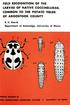 FIELD RECOGNITION OF THE LARVAE OF NATIVE COCCINELLIDAE, COMMON TO THE POTATO FIELDS OF AROOSTOOK COUNTY R. H. Storch Department of Entomolgy, University of Maine TECHNICAL BULLETIN 43 MAINE AGRICULTURAL
Managing Sugarcane/Sorghum Aphid (SA) on Sorghum
 Managing Sugarcane/Sorghum Aphid (SA) on Sorghum Michael Brewer Texas A&M AgriLife Research Corpus Christi http://ccag.tamu.edu/entomology/ http://ccag.tamu.edu/entomology/ Outline I. Identification and
Tree Integrated Pest Management. Dan Nortman Virginia Cooperative Extension, York County
 Tree Integrated Pest Management Dan Nortman Virginia Cooperative Extension, York County IPM Refresher Definition: The use of a combination of appropriate pest control tactics to reduce pest population
Enterprise Guide for Southern Maryland: Growing Broccoli
 1 Fact Sheet 450 Enterprise Guide for Southern Maryland: Growing Broccoli Broccoli is a popular vegetable in both fresh and frozen forms and has become a common vegetable in salad bars. Recently it has
Questions and Answers about the Emerald Ash Borer in Colorado
 Questions and Answers about the Emerald Ash Borer in Colorado What is the emerald ash borer? The emerald ash borer is a type of beetle that develops under the bark of ash trees. Its scientific name is
The Termite Problem in Utah
 BULLETIN OF THE UNIVERSITY OF UTAH Volume 30 December 27, 1939 No. 8 The Termite Problem in Utah B Y DON M. REES and ARDEN R. GAUFIN Department of Biology, University of Utah BIOLOGICAL SERIES, Vol. V,
12. INSECT PEST AND DISEASE MANAGEMENT
 12. INSECT PEST AND DISEASE MANAGEMENT Conservation farming promotes a diversity of insect life, influences pest populations and also favours many beneficial insects. The beneficial insects which act as
BLUE ALFALFA APHID: OLD PEST WITH NEW MANAGEMENT CHALLENGES. Eric Natwick 1 and Martin Lopez 2 ABSTRACT
 BLUE ALFALFA APHID: OLD PEST WITH NEW MANAGEMENT CHALLENGES Eric Natwick 1 and Martin Lopez 2 ABSTRACT During the spring of 1975, Imperial County, CA alfalfa growers reported less than adequate insecticidal
GENERAL WATERING & CARE GUIDE
 GENERAL WATERING & CARE GUIDE Between 30-60 percent of water applied to lawns and gardens is never absorbed by the plants. Water is often wasted because it is applied too quickly and runs off, evaporates
Crucifer Flea Beetle Biology and Integrated Pest Management in Canola
 E-1234 Crucifer Flea Beetle Biology and Integrated Pest Management in Canola Janet J. Knodel, Crop Protection Extension Specialist North Central Research Extension Center Denise L. Olson, Research Entomologist
Life Cycle - Butterflies & Moths
 Life Cycle - Butterflies & Moths butterfly goes through four stages in its life. All animals A change as they grow and mature but butterflies and moths undergo the biggest change of all. Butterfly Pupa
Life Cycle of a Butterfly
 Name: Date: Life Cycle of a Butterfly Life cycle refers to the stages of development, growth and reproduction that a living thing goes through. The butterfly's life cycle is made up of four stages: egg,
Introduction to Integrated Pest Management. John C. Wise, Ph.D. Michigan State University MSU Trevor Nichols Research Complex
 Introduction to Integrated Pest Management John C. Wise, Ph.D. Michigan State University MSU Trevor Nichols Research Complex What is Integrated Pest Management? Integrated Pest Management (IPM) New concept;
Scarab Beetles and White Grubs
 Scarab Beetles and White Grubs O & T Guide [T-#08] Carol A. Sutherland Extension and State Entomologist Cooperative Extension Service College of Agriculture and Home Economics October 2006 Probably the
Black Dotted Brown Moth
 Athens-Clarke County Community Tree Program Black Dotted Brown Moth Athens is experiencing its fourth year of significant infestation by the black dotted brown moth (Cissusa spadix). The caterpillar of
Unit 4 Lesson 1: A Pest by Any Other Name
 Focus Areas: Pest Control: Biological; Environmental Science, Language Arts Focus Skills: critical thinking, conducting research, observing, graphing, interpreting data Objectives To explore human attitudes
INTRODUCTION TO INSECT PEST MONITORING USING PHEROMONE TRAPS
 INTRODUCTION TO INSECT PEST MONITORING USING PHEROMONE TRAPS Dr. Ayanava Majumdar Extension Entomologist, Alabama Cooperative Extension System Why use insect traps? The first step to integrated pest management
How to make a Solitary Bee Box
 How to make a Solitary Bee Box **Note: The following instructions include the use of tools that may be dangerous. Ensure there is adult supervision with children. Time: 1 hour People: 1-2+ Materials: Wood
Class Insecta - The insects
 A Introduction 1. Very species rich 2. Characteristics a. 3 pairs of legs b. 2 pairs of wings (most) except flies (1 pair of wings - Diptera) B. Distribution 1. All habitats except saltwater - replaced
Best Lawns News. Late Spring 2014 Edition Virginia Cooperative Extension Prince William Unit. Featured in This Issue
 Best Lawns News Late Spring 2014 Edition Virginia Cooperative Extension Prince William Unit Featured in This Issue Stilt Grass 2 National Arboretum s Grass Roots Exhibit 4 Grub Control 5 All content was
Black Turpentine Beetle
 Forest Pest Leaflet 12 Black Turpentine Beetle R. H. Smith 1 and R. E. Lee III 2 The black turpentine beetle, Dendroctonus terebrans (Oliv.), has caused extensive losses throughout the pine belt in the
Introduction to the concepts of IPM
 DEPARTMENT OF PRIMARY INDUSTRY AND FISHERIES Principles of Integrated Pest Management Deanna Chin and Brian Thistleton, Entomology, Diagnostic Services What is a pest? Principles of IPM Introduction to
Recommended Resources: The following resources may be useful in teaching
 Unit D: Controlling Pests and Diseases in the Orchard Lesson 1: Managing and Controlling Pests of Fruit and Nut Crops Student Learning Objectives: Instruction in this lesson should result in students achieving
Systemic. Granules. Insect Control. Protects against damaging insects for up to 8 weeks CAUTION. Root Weevils. Birch Leaf Miner.
 Systemic Granules Insect Control Protects against damaging insects for up to 8 weeks Root Weevils Birch Leaf Miner Beetles Internal insect protection won t wash off with rain or water For use outdoors
honey bee By Henry Touray
 honey bee By Henry Touray Introduction For my project I have chosen to research Bees. I chose to find out about the bee because bees have been in the news lately. Lots of hives have died out and scientists
This lesson is part of a larger, comprehensive school garden guide called Minnesota School Gardens: A Guide to Gardening and Plant Science developed
 This lesson is part of a larger, comprehensive school garden guide called Minnesota School Gardens: A Guide to Gardening and Plant Science developed by Minnesota Agriculture in the Classroom in 2013. The
Managing Insect Pests
 13 Managing Insect Pests Kevin Steffey Department of Crop Sciences [email protected] Mike Gray Department of Crop Sciences [email protected] Technically, an insect pest of crops is any species that
Identification and Prevention of Frost or Freeze Damage By Linda Reddick, Kingman Area Master Gardener
 KINGMAN IS GROWING! COLUMN Identification and Prevention of Frost or Freeze Damage By Linda Reddick, Kingman Area Master Gardener Again this year we have been experiencing some very cold weather, with
Integrated Mosquito Management. Rosmarie Kelly Public Health Entomologist Georgia Dept of Public Health
 Integrated Mosquito Management Rosmarie Kelly Public Health Entomologist Georgia Dept of Public Health Topics of discussion: Integrated pest management (IPM) History of pest management Definition of IPM
Second Grade Insects Assessment
 Second Grade Insects Assessment 1a. The stiff shell that covers an insect s body is called an: a. outer shell b. exoskeleton 1b. The stiff shell that covers and insect s body is called an: a. outer shell
Grain Sorghum Insect Control
 Agriculture and Natural Resources FSA2066 Grain Sorghum Insect Control Glenn E. Studebaker Extension Entomologist Gus Lorenz Associate Department Head Extension Entomologist Scott Akin Extension Entomologist
Advanced Intelligence Report Tree & Shrub Insect Control: Protecting Trees from Emerald Ash Borer
 Advanced Intelligence Report Treating For Emerald Ash Borer With Bayer Advanced Tree and Shrub Insect Control Soil Drench Dr. Bruce Stewart, Bayer Advanced Consumer Products Emerald Ash Borer (EAB) is
Pest Management - Holistic Pest Control?
 Pest Management - Holistic Pest Control? 2. Modern control tactics and the birth of IPM The action of parasites, predators, and pathogens in maintaining another organism s density at a lower average than
DEVELOPMENT GUIDELINES OAK TREES CARE AND MAINTENANCE
 DEVELOPMENT GUIDELINES OAK TREES CARE AND MAINTENANCE This guide will offer basic information for the preservation and maintenance of oak trees as a part of an overall landscape use. Unfortunately, oak
Rose Diseases and Insects in the Bradenton-Sarasota Area
 Rose Diseases and Insects in the Bradenton-Sarasota Area By: Philip Paul, CR The 10 bad actors in our area are the fungi and pests that some days slow down our enjoyment of our rose gardens. This issue
PASTURE AND HAY INSECT MANAGEMENT
 PASTURE AND HAY INSECT MANAGEMENT Jay Crouch, Extension Area Agronomy Agent, Brian Beer, Extension Area Livestock Agent, Robert Bellinger, Ph.D., Extension Entomologist Insect pests of pastures, hay fields
Virginia Gardener http://www.hort.vt.edu/envirohort
 The Virginia Gardener http://www.hort.vt.edu/envirohort Name Help Sheets: Things Plants Need There are certain things that every living thing needs in order to live and grow. Just like you, plants need
A REVIEW OF PEST CONTROL IN AVOCADOS
 California Avocado Society 1979 Yearbook 63: 58-65 A REVIEW OF PEST CONTROL IN AVOCADOS C. Don Gustafson Farm Advisor, Cooperative Extension Service, University of California, San Diego County. Introduction
We have put together the following guidance on the different kinds of pests that we treat.
 Pest Control Guidance Document: We have put together the following guidance on the different kinds of pests that we treat. If you need advice or help with pests, please contact us on 01942 404364. Contents
Management of White Pine Weevil in Spruce
 CIS 1133 Management of White Pine Weevil in Spruce INTRODUCTION The white pine weevil, Pissodes strobi, is a native North American insect that poses a serious threat to spruce and pine trees transcontinentally
Christmas Trees Pseudotsuga menziesil (Douglas-fir), Abies grandis (Grand fir), Abies procera
 Christmas Trees Pseudotsuga menziesil (Douglas-fir), Abies grandis (Grand fir), Abies procera (Noble fir) (Pinaceae) Fast Facts: Acres in Washington: 25,000 acres Number of growers: 300 Value of Production
INTEGRATED PEST MANAGEMENT SYSTEM FOR KENNESAW STATE UNIVERSITY
 INTEGRATED PEST MANAGEMENT SYSTEM FOR KENNESAW STATE UNIVERSITY KENNESAW, GEORGIA PREPARED JANUARY 1997 REVISED NOVEMBER 2006 TABLE OF CONTENTS Introduction and Principles of Integrated Pest Management
Control of aphids and mites on Celebrity tomato plants using organic controls
 Control of aphids and mites on Celebrity tomato plants using organic controls Kimberly chofield, Program pecialist-ipm Texas AgriLife Extension ervice, Dallas, TX Vicki Burk, Amy Dessert, Joyce Flachmeier-
Infestations of the spotted
 Archival copy. For current information, see the OSU Extension Catalog: https://catalog.extension.oregonstate.edu/em8991 A New Pest Attacking Healthy Ripening Fruit in Oregon Spotted wing Drosophila: Drosophila
Monarch Butterflies: Beautiful But Poisonous by Kelly Hashway
 by Kelly Hashway If you ve ever seen a monarch butterfly, then you ve probably noticed their bright orange and black colors. It makes them easy to see in the sky. You may think this would put the Monarch
OSU Extension Service Master Gardener Program. Organic Pest Control. Weston Miller OSU Extension Service Community and Urban Horticulture faculty
 Organic Pest Control Weston Miller OSU Extension Service Community and Urban Horticulture faculty Audience Question What does the term organic pest control mean to you? Preview of Presentation Organic
COTTON RESEARCH AND DEVELOPMENT CORPORATION
 '\,. COTTON RESEARCH AND DEVELOPMENT CORPORATION Project title: Assessing the effectiveness of Helicoverpa predators Project Number: UNE13C Research Organisation: University of New England Principal researcher:
Insect Scouting and Diagnosis. Frank A. Hale, Ph.D. Professor Entomology & Plant Pathology
 Insect Scouting and Diagnosis Frank A. Hale, Ph.D. Professor Entomology & Plant Pathology Understanding the Pests to Manage the Pest Life cycle (what life stages are susceptible to control measures?) What
ELEMENTARY-LEVEL SCIENCE TEST
 4THE UNIVERSITY OF THE STATE OF NEW YORK SPRING 2008 GRADE 4 ELEMENTARY-LEVEL SCIENCE TEST WRITTEN TEST Student Name School Name Print your name and the name of your school on the lines above. The test
Why Fruit Trees Die D. B. Meador, Extension Specialist (retired) University of Illinois
 Why Fruit Trees Die D. B. Meador, Extension Specialist (retired) University of Illinois Occasionally, fruit trees decline and often die. Diseases affecting the leaves, fruit, and twigs of fruit trees usually
Raspberry Pollinators and Visitors: Focus on Bees
 Raspberry Pollinators and Visitors: Focus on Bees Introduction Raspberry flowers are visited by many insects and pollinators in Manitoba, including native and managed bees. Bees rely on flowers for nectar
Spruce problem diagnosis for yard trees
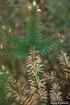 Spruce problem diagnosis for yard trees KEY Effect on tree Kills tree Other damage No damage Size of tree Seedling Sapling to pole Pole and larger By Jana Albers and Mike Albers, DNR-Forestry URL = http://files.dnr.state.mn.us/assistance/backyard/treecare/forest_health/whitesprucediagnosis.pdf
Lawn Insects. Identification, Biology & Principles of Control. Annual White Grub Species. Major Cool-Season Lawn Turfgrass Insect Pests
 Lawn Insects Identification, Biology & Principles of Control Dr. David Shetlar The Ohio State University/OARDC OSU Extension Columbus, OH Major Cool-Season Lawn Turfgrass Insect Pests White Grubs Billbugs
Summer Stress Arrives Early on Cool Season Lawns
 Summer Stress Arrives Early on Cool Season Lawns Figure 1. A fall installed tall fescue sod showing the first signs of summer stress following the arrival of record setting heat in central Virginia in
Tips on Raising Viceroys, Purples, and Admirals. Presented by Todd L. Stout
 Tips on Raising Viceroys, Purples, and Admirals Presented by Red Spotted Purple: Red Spotted Purple: Wild Cherry (Prunus serotina) Red Spotted Purple: Wild Cherry (Prunus serotina) Red Spotted Purple:
Karen J. English Graphic and Web Designer. Please click the thumbnails on the following pages to view larger versions of the images.
 Karen J. English Graphic and Web Designer Please click the thumbnails on the following pages to view larger versions of the images. graphic design: small pieces graphic design: large pieces web design
Integrated Pest Management
 Integrated Pest Management Ecology and Human Impact R. Bruce Chapman Insect Science Ltd Pest organisms When do organisms become pests? When an organism s population exceeds a threshold level, and control
A Visual Guide to Detecting Emerald Ash Borer Damage
 cfs.nrcan.gc.ca A Visual Guide to Detecting Emerald Ash Borer Damage Ontario Ministry of Natural Resources Library and Archives Canada Cataloguing in Publication A visual guide to detecting emerald ash
Determining the effect of stemborers on yields of cereal crops, principally maize and sorghum
 Integrated Systems for the Humid Tropics (Humidtropics) Determining the effect of stemborers on yields of cereal crops, principally maize and sorghum International Centre of Insect Physiology and Ecology
Worksheets. (Caterpillars of Singapore s Butterflies) Worksheet Title Recommended level. Adaptations of the caterpillar defence mechanism
 Worksheets (Caterpillars of Singapore s Butterflies) Worksheet Title Recommended level 1 Life cycle of a butterfly P3 2 Am I an insect? P3 3 4 Adaptations of the caterpillar defence mechanism The butterfly
The Basics of Tree Pruning
 The Basics of Tree Pruning By John Ball, Forest Health Specialist and Aaron Kiesz, Urban and Community Forestry Specialist Until the end of the 19 th century, trees were not a common sight in many parts
This material is based on work supported by the U.S. Department of Agriculture, Extension Service & the U.S. EPA
 Revised April 1992 (reformatted May 2000) A Workbook for Certified Pesticide Applicators To accompany the VHS tape "Pesticides in the Environment" Based on materials developed by: Colorado State University
Global Warming: The Impact on Insects. Impects. Ashish Meloottu
 Global Warming: The Impact on Insects Impects Ashish Meloottu What Does Global Warming Do Again? This is a global increase of roughly two degrees Celsius on the landmasses. Figure: IPCC Climate Change