
1. Introduction Background Data and methods Selection of areas and localities 9
|
|
|
- Melinda Katherine Kelly
- 9 years ago
- Views:
Transcription
1

2

3 1. Introduction 6 2. Background 7 3. Data and methods 8 4. Selection of areas and localities 9 5. Area 12. Klejs Sønderby, Juelsminde peninsula, East Jylland The location of the areayyy Terrain, topography and surface processes Surface geology and profiles Boreholes Sediment and rock characteristics, mineralogy and chemistry Pre-Quaternary deposits Quaternary deposits Tectonics, structures and seismic activity Major tectonic structures Fractures Geological model Earthquake activity Ground stability Groundwater hydrogeology Groundwater characteristics Drinking water areas Groundwater chemistry Climate and climate changes Restrictions and limitations Summary of the area conditions Final Remarks Area 13. Thyrsted Glud, Juelsminde peninsula, East Jylland The location of the area Terrain, topography and surface processes Surface geology and profiles Boreholes Sediment and rock characteristics, mineralogy and chemistry Pre-Quaternary deposits Quaternary deposits Tectonics, structures and seismic activity Major tectonic structures Fractures Geological and structural model Earthquake activity Ground stability G E U S 3

4 6.8 Groundwater hydrogeology Groundwater characteristics Drinking water areas Groundwater chemistry Climate and climate changes Restrictions and limitations Summary of the area conditions Final Remarks Area 14. Lysnet Hills, Haslund Vissing, East Jylland The location of the area Terrain, topography and processes Surface geology and profiles Boreholes Sediment and rock characteristics, mineralogy and chemistry Pre-Quaternary deposits Quaternary deposits Tectonics, structures and seismic activity Major tectonic structures Fractures Geological Model Earthquake activity Ground stability Groundwater hydrogeology Groundwater Characteristics Drinking water areas Groundwater chemistry Climate and climate changes Restrictions and limitations Summary of areas conditions Final remarks Area 15. Støvring Østrup, Randers Fjord, East Jylland The location of the area Terrain, topography and processes Surface geology and profiles Boreholes Sediment and rock characteristics, mineralogy and chemistry Pre-Quaternary deposits Quaternary deposits Tectonics, structures and seismic activity Major tectonic structure Fractures Geological model of the area Earthquake activity Ground stability G E U S 4

5 8.8 Groundwater hydrogeology Groundwater characteristics Drinking water areas Groundwater chemistry Climate and climate changes Restrictions and limitations Summary of the area conditions Final remarks Investigation reports from the project: References/Literature 111 G E U S 5

6 1. Introduction The low and intermediate level radioactive waste from Risø: the nuclear reactor buildings, different types of material from the research periods and waste from hospitals and research institutes have to be stored in a final disposal in Denmark for at least 300 years (Indenrigsog Sundhedsministeriet, 2005, 2007). The task is to locate and recognize sediments or rocks with low permeability which can isolate the radioactive waste from the surrounding deposits, the groundwater resources, the recipients and from human activities. The sediments or rocks shall also act as a protection if the waste disposal leaks radioactive material to the surroundings. This goal can be reached by low water flow possibilities, high sorption capacity for many radionuclides and self-sealing properties. The investigation of geological deposits as potential waste disposals for high radioactive waste from nuclear power plants has earlier focused on deep seated salt deposits and basement rocks. Nevertheless, the Tertiary clays were mapped as well (Atomenergikommissionen, 1976, Dinesen, Michelsen & Lieberkind, 1977). The salt diapirs and the salt deposits are not included in the present study. The task is to find approximately 20 areas where a waste disposal potentially can be located. The 20 areas have to be reduced to 1-3 most potential locations where detailed field investigations of the geological, hydrogeological - hydrochemical and geotechnical conditions will be performed. G E U S 6

7 2. Background In Denmark many different fine grained sediments and crystalline rocks occur from the earth surface down to 300 m depth. Therefore, the possible geological situations include sediments and rocks of different composition and age. These situations are also geographical distributed over large areas of Denmark. These sediments and rocks are shortly described based on existing information in Report no. 2, where five different types are included. 1: Crystalline granites and gneisses of Bornholm (because these rock types are host for waste disposals in many other countries). 2: Sandstones and shales from Bornholm (as these sediments are relatively homogenous although they have fracture permeability). 3: Chalk and limestone (because these sediments may act as low permeable seals, but in most areas act as groundwater reservoirs). 4: Fine-grained Tertiary clay deposits (as these sediments have a low permeability, are widely distributed, and can reach large thicknesses). 5: Fine-grained Quaternary clays from Elsterian, Saalian, Weichselian and Holocene. These sediments are distributed all over Denmark. The geological formations most studied in Europe for disposal of radioactive waste are clay (in Belgium, France, Germany and Switzerland), crystalline rocks (Sweden, Finland and Switzerland) and salt (Germany). All Danish sand and gravel deposits are excluded from the description owing to their potential as groundwater reservoirs, their high permeability, low sorption capacity and no-selfsealing properties for the waste. The sand and gravel deposits often occur below or above the low permeable and fractured deposits and sand layers may be intercalated in them. G E U S 7

8 3. Data and methods A report from 2007 (Indenrigs- og Sundhedsministeriet, 2007) recommends the types of existing data needed for the preliminary selection of disposal sites. The recommendations are based on guidelines from the International Atomic Energy Agency (IAEA, 1994, 1999, 2005). Gravesen et ai. (2010, Report no. 1) briefly describes the existing data collections including databases, maps and models, which have been used during the work of selections of approximately 20 potentially suitable areas. Most of the information is stored in GEUS databases: Borehole data and co-ordinates, groundwater and geochemical information, GIS based maps, geophysics and much more, but information is also collected from other institutions. The methods are described in more details and the description is the directly background for the selection of the sites. G E U S 8

9 4. Selection of areas and localities Selection of potential areas on eastern Jylland has to fulfil the criteria and answer the questions described and put forwards in Gravesen et al., (2010, Report no. 1). The two areas chosen at Juelsminde peninsula, Klejs-Sønderby and Thyrsted-Glud are interesting regarding the Quaternary and Paleogene deposits along the eastern rim of the peninsula. Between Vissing and Haslund, Paleogene deposits are found in the high Lysnet plateau just west of the clay pit area at Ølst and Hinge. North of Randers Fjord, between Østrup and Støvring, thick sequences of very fine-grained Paleogene clays occurs. Therefore, it is relevant to investigate and analyse these different geological situations in relation to potential disposal areas. G E U S 9

10 5. Area 12. Klejs Sønderby, Juelsminde peninsula, East Jylland 5.1 The location of the area The area is situated on the Juelsminde peninsula, eastern Jylland (Fig. 1). It includes the areas Klejs and Sønderby, both located close to the eastern or northern coast of the peninsula (Fig. 2). Figure 1. Location of the area. The Juelsminde peninsula is located on the east coast of Jylland. G E U S 10

11 Figure 2. A detailed map of Area 12. The Area consists of two subareas. One area around Klejs and Klejs and Lottrup Skove and one area between Neder Sønderby and Nørby. G E U S 11

12 5.2 Terrain, topography and surface processes Klejs The Klejs area is located in the central, eastern part of the Juelsminde peninsula. The size of the area is c. 7.4 km 2. The western part of the area is situated very high above sea level. The top of the highest hill in the area, Troldemose Bakke is 110 m above sea level (m.a.s.). The landscape slopes from west toward east and the eastern delimitation of the area is found only c. 5 m.a.s. Superimposed on this highly sloping area is a marked undulation of the terrain with many indented valleys. No lakes are found in the area but the southern part of the area contains several streams that merge into two streams downhill. Some c. 60 % of the area is covered by woods. The remaining part of the area is used for agriculture. The small village Klejs is situated in the western part of the area, and minor villages /clusters of houses are found at Nøttrup, Klejsgård and Klejsskov in the wood. Some smaller roads cross the northern and western part of the area and some other roads/paths are crossing the woods. Owing to dense vegetation of the woods and cultivation of the open landscape, most of the surface processes (soil creep, frost thaw processes, soil development etc.) proceed slowly and undramatic. The most active surface processes are expected to be found along the streams, although there are no signs of severe erosion in form of alluvial fanes or sediment accumulations without vegetation at the foot of the hills. Examples of the terrain are seen in figs. 3 and 4. Sønderby The Sønderby area is located in the north-eastern part of the Juelsminde peninsula. The size of the area is c. 8.5 km 2. The central part of this N-S-oriented area is marked by a an elongated hill with a plateau on the top, situated between c. 25 and 35 meters above sea level (m.a.s.). The plateau slopes gently toward south and toward the western delimitation of the area, c. 5 m.a.s. The slopes toward east and north are even more gently. Most of the southern part of the area is low-lying and includes two relatively wide stream valleys situated c. 3 m.a.s. The northwestern delimitation of the area follows the coastline at Glud Håb. A narrow beach meadow is found here. In contrast to the Klejs area, the hills of this area are much less undulating and without streams. No lakes are present. The predominating part of the area is used for agriculture. The main road between Glud and Neder Sønderby crosses the area. Several minor roads are also crossing the area. The small village Neder Sønderby is located in the south-eastern part of the area. A number of houses are located along the roads, especially along the main road. Woods make up less than 5 % of the area. Owing to the relatively gentle relief and intensive cultivation, the surface processes (soil creep, frost thaw processes, soil development etc.) proceed slowly and undramatic. The most active surface processes are expected to be found in and along the streams in the southern part of the area. G E U S 12

13 Figure 3. The Klejs area seen from the east. Figure 4. The Klejs area towards the south. G E U S 13

14 5.3 Surface geology and profiles The Quaternary sediments in the area of the Juelsminde peninsula mainly consist of glacial clayey till but several valley crossing the till deposits contain Holocene freshwater deposits, perhaps resting on meltwater sand and gravel (Fig. 5). Cliff sections occur along the coastline but the most illustrative section is the Albæk Hoved section just west of Juelsminde, outside the area. Figure 5. Map of the surface geology with boreholes from the Jupiter Database at GEUS. Originally in 1: Legend: Brown: Clayey till Red: Meltwater sand and gravel; Orange: Meltwater clay; Green: Holocene freshwater deposits. (From GEUS s Homepage after Pedersen, 1989). Legend for the Boreholes: See fig Boreholes Several boreholes in the area reach Paleogene clays and glacial clayey tills. Most of the samples from the boreholes are characterised lithological and are related to formal units but only few samples have been dated by microfossils. The locations of the boreholes for the entire Juelsminde peninsula are seen in fig. 6. Subarea Klejs is seen in fig. 7 and Sønderby in fig. 8. G E U S 14

15 Figure 6. Map of the locations of boreholes on the Juelsminde Peninsula from the Jupiter Database at GEUS. Legend: : DGU No., Blue dot: Water supply well, Red dot: Geotechnical borehole, Pink dot: Raw material borehole, Green dot: Other borehole, Light red dot: Abandoned borehole, Black dot: Unknown purpose. Figure 7. Boreholes in the Klejs subarea. Legend: see fig 6. G E U S 15

16 Figure 8. Boreholes in the Sønderby subarea. Legend: see fig. 6. Examples of the boreholes are shown in fig. 9 from Klejs (DGU no ) and fig. 10 from Sønderby (DGU no ). Both boreholes reach the Eocene clays. No geophysical surveys are known from the area. G E U S 16

17 Figure 9. Geological log from the Klejs subarea of the Borehole DGU no The Upper 27 m of the 62 m deep borehole. Legend: ml: Clayey till, L: Eocene clay. G E U S 17

18 Figure 10. Borehole log from the Sønderby subarea DGU no The upper part of the 22 m deep borehole. Legend: ML. Clayey till, SL: Søvind Marl Formation. Eocene, L: Eocene clays. G E U S 18

19 5.5 Sediment and rock characteristics, mineralogy and chemistry Pre-Quaternary deposits The clay deposits in the area can be seen in the Albæk Hoved Cliff just west of Juelsminde where a series of Paleogene deposits occur in a low cliff section pushed up and disturbed by Quaternary glaciers. Some of the formations can be seen in fig. 11, including the following: Late Paleocene red brown plastic clay from the Holmehus Formation, Early Eocene green grey sandy clay with volcanic ash layers from the Ølst Formation, red brown plastic clay from the Røsnæs Clay Formation and Early to Mid Eocene Green plastic clay from the Lillebælt clay Formation. The Late Eocene Søvind Marl Formation was earlier exposed in the cliff. Figure11. Stratigraphical sceme for the Paleogene deposits at Albæk Hoved (From Heilmann-Clausen, 1990). G E U S 19

20 In the cliff section at Dykær just south of Juelsminde city, Oligocene deposits were former exposed. According to the map of the pre-quaternary deposits, the area should consist of Eocene or Oligocene deposits just below the Quaternary (Fig. 12). Figure 12. Map of the pre-quaternary surface: Time units. Original scale: 1: Legend: Red lines: Precambrian intrusions; Grey: Precambrian; Olive: Cambrian- Silurian; Red: Permian; Light red: Triassic; Blue: Jurassic; Yellow: Lower Cretaceous; Green: Upper Cretaceous; Light green: Danian; Brown: Paleocene; Yellow olive: Eocene; Red brown: Oligocene; Light yellow brown: Lower Miocene; Very light yellow brown: Upper Miocene; White: Pliocene (Håkansson & Pedersen, 1992). Examples of some of the different clay types are found in figs. 13, 14 and 15. G E U S 20

21 Figure 13. The Røsnæs Clay Formation at Albæk Hoved. Figure 14. The Ølst Formation at Albæk Hoved. G E U S 21
22 Figure 15. The Lillebælt Clay Formation at Albæk Hoved. Klejs In the Klejs subarea, Oligocene deposits occur above Eocene clays. In the highest parts of the terrain, the Eocene reaches the surface. It has been proposed that the pre-quaternary deposits are a floe in the glacial sediments but it has not been possible to drill through the clays to reach the glacial sediments in an 80 m deep borehole. Perhaps the upper parts are disturbed by glaciers as known from many other parts of Denmark and as indicated by the Albæk Hoved cliff, while the deeper layers are still in-situ. The Late Oligocene deposits consist of brown and black fine-grained to sandy micaceous clays, normally non-calcareous, probably from the Brejninge Member (Formation). The deposits can be at least 17 m thick. The oldest Eocene deposits are the red brown Røsnæs Clay Formation (5 m) followed by the grey green Lillebælt Clay Formation, 75 m thick. Some boreholes reach the Søvind Marl Formation of sticky light olive grey, calcareous clay (approx 10 m thick). Sønderby Towards the south, within the Sønderby subarea, the first Paleogene deposits below the thin Quaternary sediments are Oligocene silty and sandy brown black and black, micaceous, mainly non-calcareous but also weakly calcareous when a content of shells occur. The clay is up to 20 m thick and belongs to the Late Oligocene Brejninge Member. Below the Oligocene sediments follows the Late Eocene Søvind Marl Formation of fine-grained light green grey, and calcareous clay (up to 27 m thick). G E U S 22
23 Towards the north, the Eocene Søvind Marl is reached directly below 4-10 m Quaternary deposits. The marl is strongly calcareous and olive brown, 3-12 m thick. 10 m calcareous, probably Lillebælt clay is found below the Søvind Marl. An example of Oligocene mica clay, probably from the Brejning Formation is seen in fig. 16. Figure 16. Example of the Oligocene brown mica clay Quaternary deposits The map of the Quaternary deposits (Figs. 5 and 17) show the distribution of the different sediments in the area. G E U S 23
24 Figure 17. The map of the Quaternary surface deposits. Original scale: 1: Legend: Brown: Clayey till; Light brown: Sandy till; Red: Meltwater sand and gravel; Orange: Sandur sand and gravel; Purple: Late glacial marine deposits; Light blue: Holocene marine deposits. Green: Holocene freshwater deposits; Yellow: Aeolian sand (From Pedersen, 1989). Klejs The Quaternary deposits of clayey till and meltwater sand and gravel are relatively thin (approx m). Sønderby Silty, sandy clayey tills dominate in the area. The tills are yellow brown to grey brown and calcareous (Fig. 17). Several layers of meltwater sand and gravel up to 4-6 m thick occur below the tills. The Quaternary is approximately between a few meters to 20 m thick. G E U S 24
25 Figure 18. Section in clayey till with sub-vertical fractures (Photo. K.E.S. Klint). 5.6 Tectonics, structures and seismic activity Major tectonic structures No major tectonic structures have been recognized crossing the area but a major hiatus occurs between the Late Eocene and the Late Oligocene indicating movements and erosion in the area. The borehole data are illustrated in fig. 19 where the structural conditions are depicted. A large valley in the pre-quaternary surface is oriented NNW-SSE from Råbæk to As Hoved. The direction is parallel to major fault zones at Horsens Fjord (See also fig. 43). The two subareas mainly occur on high-laying clayey till plateaus which area bordered by meltwater valleys oriented NNE-SSW. G E U S 25
26 a. G E U S 26
27 b. Figure 19. Geological Basic Data Map. a. Legend for the map (After Andersen & Gravesen, 1989), b. Part of Geological Basic Data map 1313 IV Juelsminde. Original Scale 1: (After Pedersen & Stockmarr, 1979a). The Quaternary deposits seem to have been strongly tectonic disturbed by the Weichselian glaciers and several floes of Paleogene clays occur in the glacial sediments. In areas with G E U S 27
28 apparently in-situ occurrence of Paleogene clays, the upper parts of these clays may also be disturbed (Fig. 20). Figure 20. Examples of glaciotectonic disturbances of Quaternary and pre-quaternary deposits from Sørvad, Sydtofte, Møn and Fur (Photos: K.E.S. Klint) Fractures The Quaternary tills are normally cut by vertical, sub-vertical and horizontal fractures down to at least 8 m depth. Many biopores often occur in the upper 2-3 m (Fig. 21). GEUS 28
29 Figure 21. Fracture model in clayey till (From Klint & Gravesen, 1999). The very fine-grained and plastic clays from Eocene and Oligocene contain fractures that may be a problem for ground stability Geological model The geological model consists of four major units. The model comprises both subareas (Fig.22): A. Quaternary deposits, mainly clayey till. Thickness 2 m to 20 m. B. Oligocene Brejning Member (Formation) and perhaps the Vejle Fjord silt and sand. Black and brown mica clay. Thickness up to 20 m. C. Eocene Søvind Marl Formation, up to 27 m thick but normally thinner. D. Lillebælt Clay Formation and Røsnæs Clay Formation, at least 75 m thick. G E U S 29
30 Figure 22. Schematic model of the geological and structural conditions of Area Earthquake activity The seismic activity in east Jylland and the near surrounding sea is very low (Fig. 23). Therefore, it is impossible to relate recent seismic activity to the faults and fractures in the bedrocks. Other signs of recent movements along the faults and fractures have not been proven. G E U S 30
31 Figure 23. Map of epicentres from earthquakes in the Danish and surrounding areas. (From GEUS s Home page). 5.7 Ground stability The area is expected to have good ground stability. Nevertheless, it is always important to remember that constructions on and in plastic clays can give problems. This is caused by fractures in the clays and because of large changes in volume at drying and water filling. Areas with slopes are especially exposed for sliding and flowing of plastic clay material towards lower areas. 5.8 Groundwater hydrogeology Groundwater characteristics The Klejs-Sønderby area (Area 12) is positioned in an area that is characterized by the absence of shallow groundwater bodies and existence of several smaller regional and deep groundwater aquifers (Figs. 24, 25 and 26). The subdivision into groundwater aquifers in water district 60 are thoroughly described by the former Vejle County in the basisanalysis part 1. In the Horsens Fjord catchment management plan (Hovedvandopland 1.9) from the Ministry of Environment, the regional groundwater bodies in the Juelsminde area are located within two sub catchments: Horsens Fjord (DK ) and Nordlige Bælthav (DK and DK ). Finally, there are three small deep groundwater aquifers, situated in a significant distance from each other within the Juelsminde area. These three aquifers are compiled into one administrative deep groundwater body (DK ) (Fig 26). All regional G E U S 31
32 and deep groundwater aquifers are meltwater sand deposits. The overall assessment of the chemical and quantitative status of the regional and deep groundwater aquifers is good (see Section 5.9). Fig. 24. Shallow (or terrain near) groundwater bodies located west of in the Juelsminde area (Area 12), shown in red circle (After Ministry of Environment, 2010). Figure 24. Shallow (or terrain near) groundwater bodies located west of the Juelsminde area (Area 13), shown in red circle (After Ministry of Environment, 2010). G E U S 32
33 Figure 25. Regional groundwater bodies within and west of the Juelsminde area (Area 12). (After the Ministry of Environment, 2010). Figure 26. Deep groundwater bodies within and west of the Juelsminde area (After Ministry of Environment, 2010). G E U S 33
34 5.8.2 Drinking water areas The groundwater has to be protected to ensure that our current and future need for clean drinking water can be met. It is the Environmental Centres (former counties) responsibility to do the planning, based on the two criteria: First, to make sure that the future necessary quantity of clean groundwater can be abstracted. Secondly, the groundwater aquifers must be protected against recent and future pollution. As part of the Danish Government s efforts to protect groundwater, the Environmental Centres have designated areas of major groundwater aquifers, so-called OSD-areas. OSD stands for "Areas of special drinking water interests (Fig. 27). The rest of the country is divided into "Areas with water interests" (OD-areas) where good sources of drinking water are also located and "Areas with limited drinking water interests", where it is difficult or impossible to obtain good groundwater quality because the water is more or less contaminated. Figure 27. Areas of special drinking water interests (OSD): Dark blue and areas of drinking water interest (OD): Light blue. Areas with limited drinking water interests are olive brown ( The drinking water areas in the Juelsminde area are given in fig. 28. The Klejs-Sønderby area is mainly classified as an area with limited or no drinking water interest but also partly on OD level. Groundwater abstraction is distributed as given in fig. 29. G E U S 34
35 Figure 28. Various drinking water areas situated in the Juelsminde area. Dark Blue: Areas of special drinking water interests (OSD); Light blue: Areas of some drinking water interests (OD); Yellow: Areas with limited or none drinking water interests (/kort.arealinfo.dk/). G E U S 35
36 Figure 29. Annual abstraction (in average) from single wells in the period (from Miljøstyrelsen, 2010). 5.9 Groundwater chemistry The overall groundwater quality aiming for drinking water purpose has been assessed by the former Vejle and Århus counties and Environmental Centre Århus for the regional and deep groundwater bodies and reported in the catchment management plan Hovedvandopland 1.9, Horsens Fjord from the Ministry of Environment. The groundwater chemistry full fills the EU criteria to be of good status Climate and climate changes The actual climate and the expected future climate changes and sea level development is described in Gravesen et al. (2010, Rep. No. 2). G E U S 36
37 Klejs It is not expected that climate changes will affect this area seriously during this century, but it is very likely that more and more intense rain may cause erosion along the streams. The expected sea level rise of this century should not affect the Klejs Area. Sønderby It is not expected that climate changes will affect this area seriously during this century, although more and more intense rain will raise the discharge of the streams. The expected sea level rise may cause flooding of the coastal section toward north-west and the stream valleys toward the south Restrictions and limitations There are no raw material digging and interest areas in Area 12. The designated area north of Juelsminde has no restrictions in accordance to the NATURA 2000 regulation. An adjacent NATURA2000 habitat area is located along the south coast towards Vejle Fjord, outside the area (Fig. 30). Figure 30. NATURA2000 habitat areas in the Lillebælt region (/kort.arealinfo.dk/). G E U S 37
38 5.12 Summary of the area conditions Amount of data: Sparse: Some relevant boreholes. No geophysical surveys. Homogeneous conditions and isolation of the waste by low, permeability layers: Perhaps perfect on depth below 20 m but the framework of the fractures below 10 m is unknown. The fracture problem has to be considered in relation to other areas. Stability Good stability on surface and depth but problems can occur on slopes. Seismic activity and tectonic movements No seismic and tectonic movements or problems. Groundwater conditions The groundwater conditions in clay deposits should be positive but the variation in the level of the groundwater table has to be analysed if the disposal has to be established under saturated conditions. The groundwater flow will be towards the sea. Dilution of pollution and retention of pollution No Danish studies have been carried to document dilution capabilities or retention of radionucleides in glacial till sediments. Drinking water interests No OSD areas within the Area 12. Only minor local supplies occur. Groundwater chemistry, non- aggressive components The groundwater contains apparently no aggressive components. Ground surface conditions Processes on the ground surface should not give problems on a disposal. Climate extreme conditions Climate changes and extremes as storms or heavy precipitation will not have influence on a disposal. Other restrictions Apparently no other restrictions will give problems Final Remarks The Quaternary sediments mainly consist of clayey tills although sand and gravel layers occur. The two subareas reach Eocene and Oligocene deposits. It is a problem to describe the structural framework. The Eocene plastic clays are suitable for a disposal of radioactive G E U S 38
39 waste but the Oligocene clays are more coarse-grained with silt and sand inclusions why these sediments have to be analysed in detail. G E U S 39
40 6. Area 13. Thyrsted Glud, Juelsminde peninsula, East Jylland 6.1 The location of the area The area is located in east Jylland, east of Horsens (Fig. 31). The area is situated on the Juelsminde peninsula, between Tyrsted - Sejet and Glud on the northernmost part of the peninsula (Fig. 32). Figure 31 Location of the area. The Juelsminde peninsula is located on the east coast of Jylland. G E U S 40
41 Figure 32. A detailed map of Area 13. The Area is located between Thyrsted/Uth and Glud. 6.2 Terrain, topography and surface processes The Thyrsted Glud area is located in the central northern part of the Juelsminde peninsula. The size of the area is c. 25 km 2. The highest part of this area is found along the southern/south-western delimitation of the area that is located around 50 meters above sea level (m.a.s.). From here, the landscape slopes very gently toward the northern delimitation of G E U S 41
42 the area, which is the coastline of Horsens Fjord. The overall impression of the landscape is one big gently sloping surface. Only the south-eastern and south-western parts of the area are partly undulating. A very small lake is found at Sejet Nørremark and one small stream crosses the area in approx. the central part. The coast seems to be very stable. Some sections of the coast are prograding and no signs of erosion are seen. The predominating part of the area is used for agriculture. Some c. 10 % of the area is covered by woods. The main road between Horsens and Glud crosses the area. Several minor roads are also crossing the area. The small villages Sejet, Brund and Bisholt are located in the area. A number of houses are located along the roads. Owing to the very gentle relief and intensive cultivation, the surface processes (soil creep, frost thaw processes, soil development etc.) proceed slowly and undramatic. The most active surface processes are found at the coast, but the coast is facing the calm waters of Horsens Fjord and is furthermore sheltered by a relatively wide, shallow near shore zone. A smaller part of the area toward south-east is part of an area of National Geological Interest (no. 91). 6.3 Surface geology and profiles The Quaternary sediments in the area mainly consist of glacial clayey till but several valleys crossing the till areas contain Holocene freshwater deposits. These may be resting on meltwater sand and gravel (Fig. 33). Figure 33. Map of the surface geology with boreholes from the Jupiter Database at GEUS. Originally in 1: Legend: Brown: Clayey till Red: Meltwater sand and gravel; Orange: Meltwater clay; Green: Holocene freshwater deposits. (From GEUS s Homepage after Pedersen, 1989). Legend for the boreholes: See fig. 34. G E U S 42
43 6.4 Boreholes Several boreholes in the area reach Paleogene clays and glacial clayey tills. Most of the samples from the boreholes are characterised lithological and are related to formal units but only few samples have been dated by microfossils. The locations of the boreholes in the area are seen in figs. 34, 35 and 36. Figure 34. Map of the locations of boreholes on the Juelsminde Peninsula from the Jupiter database at GEUS. Legend: : DGU No., Blue dot: Water supply well; Red dot: Geotechnical borehole; Pink dot: Raw material borehole; Green dot: Other borehole; Light red dot: Abandoned borehole; Black dot: Unknown purpose. G E U S 43
44 Figure 35. Boreholes in the area near Glud. Legend: see fig. 34. Figure 36. Boreholes in the area Between Sejet and Thyrsted. Legend: see fig. 34. An example of the boreholes (DGU no ) reaching the Oligocene clays is in fig. 37. Few geophysical surveys are known from the area. G E U S 44
45 Figure 37. Borehole log from Thyrsted: DGU no The upper part of the 77.2 m deep borehole. Legend: ML. Clayey till, GL: Oligocen, Miocene mica clay. G E U S 45
46 6.5 Sediment and rock characteristics, mineralogy and chemistry Pre-Quaternary deposits According to the map of the pre-quaternary deposits, the area should consist of Eocene or Oligocene deposits just below the Quaternary (Fig. 38). Figure 38. Map of the pre-quaternary surface: Time units. Original scale: 1: Legend: Red lines: Precambrian intrusions; Grey: Precambrian; Olive: Cambrian- Silurian; Red: Permian; Light red: Triassic; Blue: Jurassic; Yellow: Lower Cretaceous; Green: Upper Cretaceous; Light green: Danian; Brown: Paleocene; Yellow olive: Eocene; Red brown: Oligocene; Light yellow brown: Lower Miocene; Very light yellow brown: Upper Miocene; White: Pliocene (Håkansson & Pedersen, 1992). The topography around the area is a valley-plateau system and the distribution of the pre- Quaternary deposits in the boreholes is depending on this system. G E U S 46
47 At Glud, the Late Oligocene or Early Miocene deposits are first reached topmost on the plateau and consist of silty black and brown black, micaceous, non-calcareous clays mainly from the Brejning Member, in up to m thick layers. Below occurs the Late Eocene Søvind Marl Formation of fine-grained green grey strongly calcareous clay, m thick. Towards the west, from Sejet to Tyrsted, the pre-quaternary deposits occur below few m to 24 m Quaternary clay, silt and sand. The oldest clays belong to the Late Eocene Søvind Marl Formation, strongly calcareous, green grey to light grey yellow. The formation is up to 25 m thick. Above these clays follows Late Oligocene Brejning Clay which consist of brown and black micaceous clay. The clay is fine-grained to silty and lenses of silt and finegrained sand occur. It is mainly non-calcareous but to the bottom of the Member, the clay is calcareous and contains shells and shell fragments. Glauconite in the lowermost layers just above the Søvind Marl gives a green black color. The Oligocene layers are up to m thick Quaternary deposits The map of the Quaternary deposits (Figs. 33 and 39) show the distribution of the different sediments. G E U S 47
48 Figure 39. Map of the Quaternary surface deposits. Original scale: 1: Legend: Brown: Clayey till; Light brown: Sandy till; Red: Meltwater sand and gravel; Orange: sandur sand and gravel; Purple: Late glacial marine deposits; Light blue: Holocene marine deposits; Green: Holocene freshwater deposits; Yellow: Aeolian sand (From Pedersen, 1989). At Glud, up to 10 m thick layers of clayey tills dominate the upper layers. Layers of meltwater sand and gravel, up to 10 m thick, are unevenly distributed. Between Tyrsted and Sejet, the Quaternary deposits consist of olive grey and grey yellow sandy, silty calcareous clayey till and only very few, thin sand layers are found. Thickness: 5-20 m (Fig. 40). G E U S 48
49 Figure 40. Section in clayey till with sub-vertical fractures (photo K.E.S.Klint). 6.6 Tectonics, structures and seismic activity Major tectonic structures No major tectonic structures have been recognized crossing the area but a major hiatus occurs between the Late Eocene and the Late Oligocene indicating movements and erosion in the area. The borehole data are illustrated in figs. 41 and 42 where the structural conditions are depicted. The area consists of high-laying clayey till plateaus bordered by meltwater valleys oriented NNE-SSW. The high laying Oligocene deposits along the northern coast of the Juelsminde peninsula are situated at the northern rim of a graben structure, where the fault lines reach down to at least the Cretaceous. The graben was formed later than the Oligocene (Fig. 43). In the middle part of the graben, more than 200 m of Quaternary sediments are deposited. G E U S 49
50 Figure 41. Part of Geological Basic Data map 1313 IV Juelsminde. Legend to the Map: See fig.19. Original Scale 1: (After Pedersen & Stockmarr, 1979a). G E U S 50
51 Figure 42. Parts of Geological Basic Data maps 1214 II Horsens and 1314 III Odder. Original scale 1: (After Pedersen and Stockmarr, 1979b, 1980.) a. G E U S 51
52 b. Figure 43. Graben structure in Horsens Fjord. a. Seismic section N-S in the fjord area located in fig. 21b as line a-b. b. Bloc diagram of the graben structure based on the seismic investigations and boreholes (From Lykke-Andersen,1995). The Quaternary deposits seem to have been strongly tectonic disturbed by the Weichselian glaciers and several floes of Paleogene clays occur in the glacial sediments. In areas with apparently in-situ occurrence of Paleogene clays, the upper parts of these clays may be disturbed (Fig. 44). G E U S 52
53 Figure 44. Examples of glaciotectonic disturbances of Quaternary and pre-quaternary deposits from Sørvad, Sydtofte, Møn and Fur (Photos: K.E.S. Klint). The Oligocene deposits are the most important sediment in the area as these make up the core of the area and are probably also included in the glacial floes (Fig. 45). GEUS 53
54 Figure 45. Oligocene brown mica clay Fractures The Quaternary tills are normally cut by vertical, sub vertical and horizontal fractures down to at least 8 m depth. Many biopores often occur in the upper 2-3 m (Fig. 46). G E U S 54
55 Figure 46. Fracture model in clayey till (From Klint & Gravesen, 1999). The very fine-grained and plastic clays from Eocene and Oligocene contain fractures which can be a problem for ground stability Geological and structural model The geological model consists of three major units (Fig.47): A. Quaternary deposits, mainly clayey till. Thickness: 2-20 m. B. Oligocene Brejning Member (Formation) and probably the Vejle Fjord silt and sand. Black and brown mica clay. Thickness: at least m. C. Eocene Søvind Marl Formation, up to at least 30 m thick but normally thinner. G E U S 55
56 Figure 47. Schematic model of the geological and structural conditions of Area Earthquake activity The seismic activity in east Jylland and the near surrounding sea is very low (Fig. 48). Therefore, it is impossible to relate recent seismic activity to the faults and fractures in the bedrocks Other signs of recent movements along the faults and fractures have not been proven. G E U S 56
57 Figure 48. Map of epicentres from earthquakes in the Danish and surrounding area. (From GEUS s Home page). 6.7 Ground stability The area is expected to have good ground stability. Nevertheless, it is always important to remember that constructions on and in plastic clays can give problems. This is caused by fractures in the clays and because of large changes in volume at drying and water filling. Areas with slopes are especially exposed for sliding and flowing of plastic clay material towards lower areas. 6.8 Groundwater hydrogeology Groundwater characteristics The Thyrsted - Glud area (Area 13) is positioned in an area characterized by the absence of shallow groundwater bodies and existence of several smaller regional and deep groundwater aquifers (Figs. 49, 50 and 51). The subdivision into groundwater aquifers in water district 60 are thoroughly described by the former Vejle County in the basisanalysis part 1. In the Horsens Fjord catchment management plan (Hovedvandopland 1.9) from the Ministry of Environment, the regional groundwater bodies in the Juelsminde area are located within two sub catchments: Horsens Fjord (DK ) and Nordlige Bælthav (DK and DK ). Finally, there are three small, deep groundwater aquifers, situated at a significant distance from each other within the Juelsminde area. These three aquifers are G E U S 57
58 compiled into one administrative deep groundwater body (DK ) (Fig. 51). All regional and deep groundwater aquifers are meltwater sand deposits. The overall assessment of the chemical and quantitative status of the regional and deep groundwater aquifers is good (see Section 6.9). Figure 49. Shallow (or terrain near) groundwater bodies located west of the Juelsminde area (Area 13), shown in red circle (After Ministry of Environment, 2010). Figure 50. Regional groundwater bodies within and west of the Juelsminde area (Area 13). (After Ministry of Environment, 2010). G E U S 58
59 Figure 51. Deep groundwater bodies within and west of the Juelsminde area (After Ministry of Environment, 2010) Drinking water areas The groundwater has to be protected to ensure that our current and future need for clean drinking water can be met. It is the Environmental Centres (former counties) responsibility to do the planning, based on the two criteria: First, to make sure that the future necessary quantity of clean groundwater can be abstracted. Secondly, the groundwater aquifers must be protected against recent and future pollution. As part of the Danish Government s efforts to protect groundwater, the Environmental Centres have designated areas of major groundwater aquifers, so-called OSD-areas. OSD stands for "Areas of special drinking water interests (Fig. 52). The rest of the country is divided into "Areas with water interests" (OD-areas) where good sources of drinking water are also located and "Areas with limited drinking water interests", where it is difficult or impossible to obtain good groundwater quality because the water is more or less contaminated. G E U S 59
60 Fig.52. Areas of special drinking water interests (OSD): Dark blue and areas of drinking water interest (OD): Light blue. Areas with limited drinking water interests are olive brown. The drinking water areas in the Juelsminde area are given in fig. 53. The designated area is mainly categorised as an area with limited or no drinking water interest or as OD area. Groundwater abstraction is distributed as given in fig. 55. G E U S 60
61 Figure 53. Various drinking water areas situated in the Juelsminde area. Dark Blue: Areas of special drinking water interests (OSD); Light blue: Areas of some drinking water interests (OD); Yellow: Areas with limited or none drinking water interests ( G E U S 61
62 Figure 54. Annual abstraction (in average) from single wells in the period (from Miljøstyrelsen, 2010). 6.9 Groundwater chemistry The overall groundwater quality aiming for drinking water purpose has been assessed by the former Vejle and Århus counties and Environmental Centre Århus for the regional and deep groundwater bodies and reported in the catchment management plan Hovedvandopland 1.9, Horsens Fjord from the Ministry of Environment. The groundwater chemistry fulfils the EU criteria to be of good status Climate and climate changes The actual climate and the expected future climate changes and sea level development is described in Gravesen et al. (2010, Rep. No. 2). It is not expected that climate changes will G E U S 62
63 affect the area during this century. The expected sea level rise may cause flooding of the coastal section but will not necessarily cause erosion Restrictions and limitations There are no raw material digging and interest areas in Area 13. The designated area north of Juelsminde has no restriction in accordance to the NATURA 2000 regulation. An adjacent NATURA2000 habitat area is located along the south coast towards Vejle Fjord (Fig. 55). Figure 55. NATURA2000 habitat areas in the Lillebælt region (After Ministry of Environment, 2010) Summary of the area conditions Amount of data: Sparse: Relatively few boreholes. No geophysical surveys. Homogeneous conditions and isolation of the waste by low, permeability layers: Perhaps perfect on depth below 30 m but the framework of the fractures below 10 m is unknown. The fracture problem has to be considered in relation to other areas. G E U S 63
64 Stability Good stability on surface and depth but problems can occur on slopes. Seismic activity and tectonic movements No seismic and tectonic movements or problems. Groundwater conditions The groundwater conditions in clay deposits should be positive but the variation in the level of the groundwater table has to be analysed if the disposal has to be established under saturated conditions. The groundwater flow will be towards the sea. Dilution of pollution and retention of pollution No Danish studies have been carried to document dilution capabilities or retention of radionucleides in glacial till sediments. Drinking water interests No OSD areas within the Area 13. Only minor local supplies occur. Groundwater chemistry, non- aggressive components The groundwater contains apparently no aggressive components. Ground surface conditions Processes on the ground surface should not give problems on a disposal. Climate extreme conditions Climate changes and extremes as storms or heavy precipitation will not have influence on a disposal. Other restrictions Apparently no other restrictions will give problems Final Remarks The Quaternary sediments mainly consist of clayey tills although sand and gravel layers occur. The area reaches Eocene and Oligocene deposits. It is a problem to describe the structural framework. The Eocene plastic clays are suitable for disposal of radioactive waste but the Oligocene clays are more coarse-grained with silt and sand inclusions why these sediments and have to be analysed in detail. G E U S 64
65 7. Area 14. Lysnet Hills, Haslund Vissing, East Jylland 7.1 The location of the area The area is located between Haslund and Vissing on the Lysnet hill plateau east of Ølst and Hinge and southwest of Randers (Figs. 56 and 57). Figure 56. Location of the area. Area 14 is located in eastern Jylland, south-west of the city of Randers. G E U S 65
66 Figure 57. A detailed map of area The Lysnet Hill area is found east of Ølst and Hinge. 7.2 Terrain, topography and processes The area is located in the central part of eastern Jylland. The size of the area is c km 2. The area is characterized by a great hilly landscape. No more than three large hills fill out the area, two in the northern part of the area and one very big in the southern part. The tops of the hills are situated 77, 91 and 110 meters above the sea level. From the top of the hills, the landscape slopes more or less deeply down to levels around m.a.s. The lowest areas are found in the central and eastern parts of the area. Two streams are found G E U S 66
67 in the area; one toward north-west and one crossing the central part. Southeast of the central stream, some small lakes are located. The predominating part of the area is used for agriculture. Some c. 10 % of the area is covered by woods. Several minor roads cross the area. The small village Vissing is located toward southeast. A number of houses are located along the roads, especially in the northern part of the area that also includes a cluster of windmills. The central and northern part of the area is crossed by some major (NW-SE running) supply cables for electricity. Owing to the relatively gentle relief and intensive cultivation, the surface processes (soil creep, frost thaw processes, soil development etc.) proceed slowly and undramatic. The most active surface processes are found in/along the streams. The southern half of the area is part of an area of National Geological Interest (no. 47). At fig. 58, the high plateau area towards the west is seen. Figure 58. A view towards the hill plateau of the area. 7.3 Surface geology and profiles The geological surface map shows that the area is dominated by approx. 50 % clayey tills and meltwater sand and gravel and 50 % plastic clays (Fig. 59). Clay pits occur just outside the area at Ølst and Hinge but a sand and gravel pit is found at Lysnet. G E U S 67
68 Figure 59. Quaternary surface map from the area with the boreholes from the Jupiter Database at GEUS. Originally scale 1: (GEUS s Homepage, after Pedersen, 1989). Legend: Brown: Clayey till; Red and orange; Meltwater sand and gravel; Green: Holocene freshwater deposits; White: Pre-Quaternary deposits. Legend for boreholes: See fig Boreholes Several boreholes are located in the area but most of them are situated near the boundary of the area. Especially the middle part of the area lacks information. Many samples are lithological described and related to formation but only a few samples have been investigated for microfossils and dated. The area is covered by geophysical surveys as e.g. SkyTem. The larger area with the boreholes can be seen in fig. 60. A more detailed map is shown in fig. 61. A borehole log from DGU no shows the build up of the upper layers in the area (Fig. 62). G E U S 68
69 Figure 60. Map of the locations of boreholes from the Jupiter database at GEUS. Legend: : DGU No., Blue dot: Water supply well; Red dot: Geotechnical borehole; Pink dot: Raw material borehole; Green dot: Other borehole; Light red dot: Abandoned borehole; Black dot: Unknown purpose. Figure 61. Detailed map of the borehole locations in the area. Legend: see fig. 60. G E U S 69
70 Figure 62. Geological borehole log for DGU no Legend: ML: clayey till, L: Paleogene clays. G E U S 70
71 7.5 Sediment and rock characteristics, mineralogy and chemistry Pre-Quaternary deposits The map of the pre-quaternary deposits is seen in fig. 63. Figure 63. Map of the pre-quaternary surface: Time units. Original scale: 1: Legend: Red lines: Precambrian intrusions; Grey: Precambrian; Olive: Cambrian- Silurian; Red: Permian; Light red: Triassic; Blue: Jurassic; Yellow: Lower Cretaceous; Green: Upper Cretaceous; Light green: Danian; Brown: Paleocene; Yellow olive: Eocene; Red brown: Oligocene; Light yellow brown: Lower Miocene; Very light yellow brown: Upper Miocene; White: Pliocene (Håkansson & Pedersen, 1992). The pre-quaternary deposits east of the area are known from the clay pits at Ølst and Hinge Bakker (hills) southwest of Randers where plastic clays have been dug for many years and from an old road cut at Ølst. Some boreholes in the area also contribute to the knowledge of the clays. In the pits, the Paleogene deposits consist of the Holmehus Formation, the Ølst Formation, the Røsnæs Clay Formation, the Lillebælt Clay Formation, the Søvind Marl Formation and the Viborg Formation with a total thickness of approx. 100 m. The deposits have been strongly deformed by glaciers several times during the Elsterian, G E U S 71
72 Saalian and Weichselian. At present, it is especially the 40 m thick green grey noncalcareous Lillebælt Clay Formation that is exploited. The clay fraction is % and smectite minerals dominate. The mapping of the Quaternary deposits has shown that the plastic clay occur very close to the surface in large parts of the area (Fig. 59). From the boreholes within the area (which is a hill plateau up to 130 m.a.s.), only few information can be obtained but boreholes just outside the area can give some information about the following formations: Towards the north, at Værum, two deep boreholes show nearly m very finegrained, plastic dark grey, green and brown clays probably, from the Eocene and Paleocene, above Danian limestone described as hard and flint bearing. Towards the west, the Paleogene deposits occur below 72 m Quaternary sediments. These sediments consist of very fine-grained plastic brown and olive grey non-calcareous clay with horizontal lamination (at least 22 m thick). The clay may belong to the Lillebælt Clay Formation. The clays seems to be eroded by the Quaternary glaciers which deposited tills and meltwater sediments along the margin of the clay area. The Paleogene clays are reached 21 m below surface towards the south and again, the Quaternary glaciers have eroded and deposited in this area. In the middle part of the area only few boreholes give information. The Eocene plastic clays are found near the ground surface at Holtgårde and in some boreholes, the clays occur down to c m below ground surface. At Vissing, the clays occur between 7 and 26 m below ground surface. Just outside the area, at Hinge, a deep borehole reaches clays 18 m below surface and the following 50 m consist of Paleocene and Eocene plastic clays, probably from the Røsnæs Clay Formation, Ølst Formation, Holmehus Formation/ Æbelø Formation, Kerteminde Marl Formation, probably resting on Danian Limestone. In the area just north-west of Hinge, the boreholes show deposits from the Røsnæs Clay Formation: Red brown and grey sticky plastic clay up to 18 m thick and the Ølst Formation: Dark grey and grey green fine-grained to silty clay, faintly laminated, non-calcareous and with volcanic ash layers, 14 m thick. Towards the east, just outside the area, Oligocene fine-grained clays from the Viborg Formation are the top layers. In the northeastern corner of the area, at Haslund Kær, several boreholes for clay exploitation are drilled. In this area, very fine-grained clays from the Lillebælt Clay Formation, Røsnæs Clay Formation and the Ølst Formation are reached below 2-3 m Quaternary tills. The borehole information points to a large clay body disturbed by glaciotectonic. Examples of the clay types from the Albæk Hoved can be seen on figs. 64, 65, and 66. The clay pit at Ølst is seen in fig. 67. G E U S 72
73 Figure 64. The Ølst Formation, Eocene. Clay with green volcanic ash layers below red brown plastic clay from the Røsnæs Clay Formation. Albæk Hoved Klint. Juelsminde. The geophysical SkyTem surveys of the area have mapped the limestone deposits below the up to 80 m thick plastic clays. Figure 65. Green plastic clay, probably the Eocene Lillebælt Clay Formation from Albæk Hoved Klint, Juelsminde. G E U S 73
74 Figure 66. Section from the Albæk Hoved Klint, Juelsminde, Jylland. Red and green plastic clays from the Lillebælt Clay and Røsnæs Clay Formations. Figure 67. The clay pit at Ølst seen from the east. G E U S 74
75 7.5.2 Quaternary deposits The Quaternary deposits in the hill plateau area consist of clayey tills and meltwater sand and gravel (Fig. 59). Along the margin of the hills in the valleys, Quaternary clayey tills, sand and gravel up to 30 m thick are found. The tills are silty and gravelly. The upper 10 m can be oxidized and noncalcareous and olive brown. The underlying till is olive brown and calcareous. Further down, more olive grey and calcareous meltwater sand and clay can occur. The meltwater sand is fine to medium-grained and often gravelly. The upper approx 3-10 m layers can be oxidized and non-calcareous (Fig. 68). On top of the very fine-grained Paleogene clays on the hills, a thin cover of clayey or sandy till occurs. The clayey till is silty, sandy, yellow brown and mainly non-calcareous. The sandy till is yellow, clayey, stony and non-calcareous. The layers are 1-5 m thick and sometimes the Paleogene clays occur at the ground surface (Fig. 59). Clayey till is often rather stony (Fig. 68).. Figure 68. Example of clayey, sandy and stony till deposits. G E U S 75
76 7.6 Tectonics, structures and seismic activity Major tectonic structures In the map of the pre-quaternary deposits (Fig. 63) no structures are marked. Borehole data around in the Ølst and Hinge indicate a fault line north-south between Hinge and Ølst with a slip/sping high in the Danian limestone of m. Fault activities along this fault line can also have disturbed the Paleocene, Eocene and Oligocene deposits. The outcrops in the Ølst and Hinge clay pits show that parts (at least 80 m) of the Paleogene clays have been disturbed by several glacier advances during the Saalian to the Weichselian and only the lower parts of the Ølst Formation and older Paleocene clays seem to be in-situ in the pits. Also younger landslides are occurring in the clays which have moved material towards lower areas. The hill plateau has been interpreted as an erosion remnant from the Saalian and information from the Lysnet pit indicate glaciotectonic disturbances from the S and SE. The Paleogene clays have probably been pushed up, faulted and folded by Saalian glaciers. The hill plateau has been eroded in the margins and valleys are crossing the area and bordering the plateau (Fig. 69). Figure 69. Hill plateau towards the west. G E U S 76
77 7.6.2 Fractures The Quaternary tills are normally cut by vertical, sub-vertical and horizontal fractures down to at least 8 m depth. Many biopores often occur in the upper 2-3 m. The very fine-grained and plastic clays from Eocene and Oligocene contain fractures which can be a problem for ground stability Geological Model The model of the area consists of the following units (Fig. 70): A. Quaternary, mainly clayey till with meltwater sand and gravel intercalations, 0-5 m thick on the hill area but up to 30 m thick in the valleys. B. Oligocene deposits, perhaps found in the area. C. Eocene and Paleocene clays, up to m thick (Holmehus, Ølst, Røsnæs Clay and Lillebælt Clay Formations) D. Danian limestone from m below surface. Figure 70. Schematic geological model of the area. G E U S 77
78 7.6.4 Earthquake activity The seismic activity in east Jylland and the surrounding sea is very low (Fig. 71). Therefore it is impossible to relate recent seismic activity to the faults and fractures in the bedrocks. Other signs of recent movements along the faults and fractures have not been proven. Figure 71. Map of epicentres from earthquakes in the Danish and surrounding areas. (From GEUS s Home page). 7.7 Ground stability The area is expected to have good ground stability. Nevertheless, it is always important to remember that constructions on and in plastic clays can give problems. This is caused by fractures in the clays and because of large changes in volume at drying and water filling. Areas with slopes are especially exposed for sliding and flowing of plastic clay material towards lower areas. G E U S 78
79 7.8 Groundwater hydrogeology Groundwater Characteristics The Lysnet bakker area (Area 14) is positioned in an area characterized by presence of all three categories of groundwater bodies: one shallow (DK ); parts of four regional (DK ; DK ; ; DK ) and one deep groundwater bodies (DK ) (Fig. 72, 73 and 74). Subdivision into groundwater bodies are thoroughly described by the former Århus County in the basisanalysis part 1. All the groundwater bodies belong to the Randers Fjord main catchment and are described in the catchment management plan (Hovedvandopland 1.5 Randers Fjord) of the Ministry of Environment. The shallow and regional groundwater bodies are all consisting of sand materials and the deep groundwater body of limestone deposits. The overall assessment of the chemical and quantitative status of the shallow and of some of the regional bodies is poor. Meanwhile, the other part of the regional and the only deep groundwater bodies are assessed to have a good status (see Section 7.9). Figure 72. Shallow (or terrain near) groundwater body in the Lysnet bakker area (Area 14) located between Randers and Hadsten, shown in red circle (After Ministry of Environment, 2010). G E U S 79
80 Figure 73. Regional groundwater bodies in the Lysnet bakker area (Area 14). (After Ministry of Environment, 2010). Figure 74. Deep groundwater body within the Lysnet bakker area (After Ministry of Environment, 2010). G E U S 80
81 7.8.2 Drinking water areas The groundwater has to be protected to ensure that our current and future need for clean drinking water can be met. It is the Environmental Centres (former counties) responsibility to do the planning, based on the two criteria: First, to make sure that the future necessary quantity of clean groundwater can be abstracted. Secondly, the groundwater aquifers must be protected against recent and future pollution. As part of the Danish Government s efforts to protect groundwater, the Environmental Centres have designated areas of major groundwater aquifers, so-called OSD-areas. OSD stands for "Areas of special drinking water interests (Fig. 75). The rest of the country is divided into "Areas with water interests" (OD-areas) where good sources of drinking water are also located and "Areas with limited drinking water interests", where it is difficult or impossible to obtain good groundwater quality because the water is more or less contaminated. Fig. 75. Areas of special drinking water interests (OSD): Dark blue and areas of drinking water interest (OD): Light blue. Areas with limited drinking water interests are olive brown (/kort.arealinfo.dk/). G E U S 81
82 The drinking water areas in the Lysnet bakker area is given in fig. 76. The majority of the Lysnet bakker area is classified as OD area. The shown area of limited groundwater interests is identical to the Ølst bakker area. Groundwater abstraction is distributed as given in Fig. 77. Værum By, Lerbjerg-Svejdrup and Vissing water works are abstracting groundwater within Area 14. In addition, several private water wells are located in Area 14 for household purposes. Figure 76. Various drinking water areas situated in the Juelsminde area. Dark Blue: Areas of special drinking water interests (OSD); Light blue: Areas of some drinking water interests (OD); Yellow: Areas with limited or none drinking water interests (/kort.arealinfo.dk/). G E U S 82
83 Figure 77. Annual abstraction (in average) from single wells in the period (from Miljøstyrelsen, 2010). 7.9 Groundwater chemistry The overall groundwater quality aiming for drinking water purpose has been assessed by the former Århus County and Environmental Centre Århus for the groundwater bodies and reported in the catchment management plan Hovedvandopland 1.9, Horsens Fjord. The groundwater chemistry fulfils the EU criteria to be of good status in some of the regional and deep groundwater bodies. The shallower regional and the terrain near ground-water bodies have a poor status. Salinization of the groundwater within Area 14 is not a problem at present or considered to be a problem in future due to the far distance to the nearest coast and absence of salt diapirs in Area 14. G E U S 83
84 7.10 Climate and climate changes The actual climate and the expected future climate changes and sea level development is described in Gravesen et al. (2010, Rep. No. 2). It is not expected that climate changes will have any special affection on the landscape in the area during this century. More and more intense rain will increase the discharge of the streams and possibly cause local erosion in the steepest sections of the area Restrictions and limitations The Ølst and HInge pits are the largest excavation areas for plastic clay in Denmark. The county of Århus made a reservation for excavation in the present digging area and extended the area towards the northwest to Haslund Kær. This area is included in the present plan for Region Midtjylland areas of permission, excavation and areas of interests. There are no major restrictions in Area 14 except for two minor areas adjacent to the town Værum that has NATURA2000 habitat status and is protected in accordance to Naturbeskyttelsesloven (law for nature protection) (Chapter 6) (Fig. 78). Figure 78. NATURA2000 habitat areas within the Lysnet bakker area (After Ministry of Environment, 2010). G E U S 84
85 7.12 Summary of areas conditions Amount of data: Sparse: Some boreholes and some important geophysical surveys. Homogeneous conditions and isolation of the waste by low, permeability clay layers: Perhaps perfect on depth below m in the Eocene plastic clay formations. The distribution of the clay and the characters of the deposits have to be investigated. Ground Stability Good stability on surface and depth but the conditions of plastic clays have to be considered, including sliding on slopes. Seismic activity and tectonic movements No seismic and tectonic movements or problems are known in the area. The structural set up has to be investigated. Groundwater conditions The groundwater conditions in the Eocene clays and overlaying tills and meltwater deposits should be positive with slow flow towards the surrounding areas but the variation in the level of the groundwater table has to be analysed if the disposal has to be established under saturated conditions. Dilution of pollution and retention of pollution No Danish studies have been carried to document dilution capabilities or retention of radionucleides in glacial till sediments. Drinking water interests The area is mainly an OD area. Local well supplies in the area are located in low-laying valley areas outside the area. Groundwater chemistry, non- aggressive components The groundwater contains apparently no aggressive components. Ground surface conditions Processes on the ground surface should not give problems on a disposal although surface water run-off can contribute to water in the valleys. Climate extreme conditions Climate changes and extremes as storms and heavy precipitation will probably not have influence on a disposal below ground surface. G E U S 85
86 Other restrictions Apparently no other restrictions should give major problems but the relation to the raw material restriction should be solved Final remarks The Lysnet hill area seems be very comparable with the Ølst - Hinge area. The structural framework should be described in detail with respect to the relation between glaciotectonic clay deposits and in-situ clay deposits. The surface and groundwater run-off and flow in the hill area have to be evaluated in relation to the local water supplies in the valleys. G E U S 86
87 8. Area 15. Støvring Østrup, Randers Fjord, East Jylland. 8.1 The location of the area The area is located in Eastern Jylland (Fig. 79). The area is found north of Randers Fjord, east of Randers city, between the villages Støvring and Østrup including the forest areas of Nørreskov, Sønderskov and Østrup skov (see fig. 80). Figure 79. Location of the area. The area is located north of Randers Fjord, east Jylland. G E U S 87
88 Figure 80. A detailed map of Area 15, located at Støvring and Østrup. 8.2 Terrain, topography and processes The area is located in the eastern part of Jylland, next to the inner part of Randers Fjord. The size of the area is c. 5.4 km 2. The area includes two very different kinds of landscape. The major part, toward west, is a high-lying, undulating moraine landscape. The smaller part, toward east, is a low-lying plane marine foreland. The two segments are separated by an inactive and overgrown cliff. The moraine landscape is situated between c. 10 and 64 m above sea level (m.a.s.). It does not include any lakes but a small stream is found in the area. The stream is running down the cliff to the marine foreland, where it turns toward north. The marine foreland is located between 0 and 5 m.a.s. and the outermost part of this area seems to be reclaimed and protected from flooding (?). G E U S 88
89 The Area 15 is crossed by a few minor roads. The small villages Støvring and Østrup are located in the western and southern part of the area, respectively. A larger farm, Støvringgård is located on the passage between the moraine landscape and the marine foreland and a golf course is found in the northern part of the area. Except from the villages, there are only very few scattered houses in the area, all located on the moraine. Approximately half of the area is used for agriculture and the other half is woods. Owing to the cultivation, the protecting cover from the woods and the protection of the reclaimed area, the surface processes (soil creep, frost thaw processes, soil development etc.) proceed slowly and undramatic. 8.3 Surface geology and profiles The Quaternary mapping of the areas is not yet finished but preliminary maps and the ongoing investigations indicate that clayey till dominates the area but also that the Paleogene clays are situated near the ground surface (Fig. 81). Older clay pits have existed at Dronningborg, Randers. Figure 81. Quaternary surface map from the area with the boreholes from the Jupiter Database at GEUS. Originally scale 1: (GEUS s Homepage, after Pedersen, 1996). Legend: Brown: Clayey till; Red and orange: Meltwater sand and gravel; Green: Holocene freshwater deposits; Light blue: Holocene marine deposits. Legend for the boreholes: See fig. 82. G E U S 89
90 8.4 Boreholes Several boreholes are located in the area but the main part of the boreholes is situated near the boundary of the area. Especially the middle part of the area lacks information. Some samples are lithological described and related to formation and microfossils from the samples have been investigated in three boreholes and the deposits have been dated. The area is not covered by geophysical surveys. The locations of the boreholes are shown in fig. 82. An example of the borehole log from DGU no is in fig. 83. Figure 82. Map of the locations of boreholes from the Jupiter Database at GEUS. Legend: : DGU No., Blue dot: Water supply well; Red dot: Geotechnical borehole; Pink dot: Raw material borehole; Green dot: Other borehole; Light red dot: Abandoned borehole; Black dot: Unknown purpose. G E U S 90
91 Figure 83. Borehole log from DGU no Upper part of the 29 m deep borehole. Legend: Ml. Clayey till, PL: Paleocene clay. G E U S 91
92 8.5 Sediment and rock characteristics, mineralogy and chemistry Pre-Quaternary deposits The pre-quaternary map is found in fig. 84. Figure 84. Map of the pre-quaternary surface: Time units. Original scale: 1: Legend: Red lines: Precambrian intrusions; Grey: Precambrian; Olive: Cambrian- Silurian; Red: Permian; Light red: Triassic; Blue: Jurassic; Yellow: Lower Cretaceous; Green: Upper Cretaceous; Light green: Danian; Brown: Paleocene; Yellow olive: Eocene; Red brown: Oligocene; Light yellow brown: Lower Miocene; Very light yellow brown: Upper Miocene; White: Pliocene (Håkansson & Pedersen, 1992). The Paleocene plastic clays have been investigated in smaller areas east of Randers at Dronningborg, Lem and Støvring with the purpose to find clays of bentonite quality. At the outskirt of Randers, outside Area 15, grey green and greenish black plastic clay from the Holmehus Formation (Fig. 85) seems to hold a fair quality (Fig. 86). G E U S 92
93 Figure 85. Greenish black plastic clay from the Holmehus/Ølst Formation at Dronningborg, Randers. Dronningborg 1530 Mg 2+ lufttør Smektit Counts Kvart 500 Zeoli Degrees 2 theta * 100 Figure 86. Clay mineralogy of the bentonite from Dronningborg showing a clear smectite peak (From Pedersen et al., 2007). G E U S 93
94 West of the area at Dronningborg several clay pits have occurred with fine-grained grey, brown and yellow grey plastic clay with many layers of grey brown, grey and black volcanic ash, probably belonging to the Ølst Formation. Several cemented and silicified layers occurred. The formation was up to 10 m thick and glaciotectonic disturbed probably from the NE. In the Area 15, south-west of Støvring, between Harridsvej and Galgevang, a series of boreholes have demonstrated at least m of very fine-grained green grey plastic clay covered by a few meters of Quaternary sediments. The clays are from the Holmehus Formation, Ølst Formation and Røsnæs Clay Formation (Paleocene-Eocene). The clay mineralogy demonstrates a high content of smectite and some of the layers can be classified as bentonite (Fig. 87) Dronningborg 1530 Mg 2+ lufttør Smektit Counts Kvart 500 Zeoli Degrees 2 theta * 100 Figure 87. Clay mineral analyses from DGU no showing a smectite peak (From Pedersen et al., 2001). At the village Støvring, 20 m of grey micaceous sand and silt deposits from the Miocene or Oligocene are reached below 36 m of Quaternary deposits. Then follows 40 m of finegrained green grey clay from the Oligocene, Eocene or Paleocene. At 93 m depth 20 m of Danian cemented limestone is reached. At Østrup, Oligocene sand is reached at 6-8 m depth (17 m thick). Then follow Oligocene, Eocene and Paleocene fine-grained clays down to 50 m below surface. Danian limestone finished the borehole at 106 m depth. In the wood Sønderskoven, two boreholes show that fine-grained olive grey clays with layers of volcanic ash, mainly calcareous, are reached 59 m below ground surface, covered by clayey tills. Cemented Danian limestone with flint occurs at 83 m. An example of the Eocene plastic clay from the Røsnæs clay Formation is found in fig. 88. G E U S 94
95 Figure 88. Section from the Albæk Hoved Klint, Juelsminde, Jylland. Red and green plastic clay from the Røsnæs Clay Formation Quaternary deposits The Quaternary deposits consist mainly of clayey tills with some intercalations of meltwater sand and gravel (Fig. 81 and 89). The variations are as follows: At Støvring, the Quaternary deposits can be up to 36 m thick, consisting of fine-grained grey and yellow meltwater sand on the top of silty, calcareous olive grey clayey till. Meltwater silt can also occur. Southwest of Støvring, a few meters of yellow brown clayey till rest on Paleogene plastic clays. Sometimes, the plastic clay reaches the ground surface. G E U S 95
96 Figure 89. Map of the Quaternary surface deposits. Original scale: 1: Legend: Brown: Clayey till; Light brown: Sandy till; Red: Meltwater sand and gravel; Orange: Sandur sand and gravel; Purple: Late glacial marine deposits; Light blue: Holocene marine deposits. Green: Holocene freshwater deposits; Yellow: Aeolian sand (From Pedersen, 1989). At Østrup, approx. 7 m meltwater sand rest on Paleogene clays. In Sønderskov, m olive grey, calcareous clayey till with sand intercalations occur upon the Paleogene clays. An example of clayey till with sub-vertical fractures is shown in fig. 90. G E U S 96
97 Figure 90. Sub-vertical factures in clayey tills. 8.6 Tectonics, structures and seismic activity Major tectonic structure The distribution of the Paleocene and Eocene deposits are dependent on the movements in Gassum salt pillow structure as the deposits have been uplifted on the southern slope of the structure (Fig. 91). The pre-quaternary surface is also cut by a series of valleys which have produced several separate areas with clays deposits from Paleocene and Eocene (Fig. 92). G E U S 97
98 Figure 91. Geological map of the Gassum structure north of Randers and area 15. The structure is formed by a deep laying Permian salt pillow which has lifted the younger deposits. Legend: Dark green: Maastrichtian chalk, Green: Danian limestone, Yellow: Early Paleocene limestone and clays. Dark brown: Late Paleocene and Eocene clays, Two brown colours: Oligocene and Miocene deposits. Figure 92. Map of the elevation of the pre-quaternary surface. The map shows a series of valleys cut down into the producing several areas of high laying clay deposits in between the valleys. Legend: blue: Sea level, each colour: 25 m contours. G E U S 98
99 A geological section from Støvring (Fig. 93) shows that the dark green plastic clay reaches down to at least 30 m below surface but is probably more than 50 m thick. The top of the Maastrictian chalk is probably situated 150 m below surface. Inclined clay sheets and floes also reach the ground surface. The section demonstrates the glaciotectonic disturbances in the area which also have been proved in the pits at Dronningborg. N S Sand mm. Plastisk ler Kalk ca. 200 m Figure 93. Geological section from the Støvning area where at least one large sheet of plastic clays has been pushed up by a glacier from the N (From Pedersen et al., 2007). Legend: Green: Plastic Clay, Blue: Limestone. Orange: Sand. An example of the green Paleocene plastic clay is seen in fig. 94. G E U S 99
100 Figure 94. Green plastic from the Paleocene Fractures The Quaternary tills are normally cut by vertical, sub-vertical and horizontal fractures down to at least 8 m depth. Many biopores often occur in the upper 2-3 m. The very fine-grained and plastic clays from Eocene and Oligocene contain fractures which can be a problem for ground stability Geological model of the area The geological model consists of the following units (Fig. 95): A. Quaternary deposits, mainly clayey till with many layers of meltwater sand and gravel, from a few meters up to 36 m thick. B. Oligocene sand, silt and clay (perhaps also Miocene), 20 m? thick. G E U S 100
101 C. Eocene Røsnæs Formation, Ølst Formation and Paleocene clays, approx m thick. D. Danian cemented limestone (kalksandskalk), at least 50 m thick. Figure 95. A Schematic geological model of the area Earthquake activity The seismic activity in Støvring - Ørby area and the near surrounding sea is very low (Fig. 96). Therefore, it is impossible to relate recent seismic activity to the faults and fractures in the bedrocks. Other signs of recent movements along the faults and fractures have not been proven. G E U S 101
102 Figure 96. Map of epicentres from earthquakes in the Danish and surrounding areas. (From GEUS s Home page). 8.7 Ground stability The area is expected to have good ground stability. Nevertheless, it is always important to remember that constructions on and in plastic clays can give problems. This is caused by fractures in the clays and because of large changes in volume at drying and water filling. Areas with slopes are especially exposed for sliding and flowing of plastic clay material towards lower areas. 8.8 Groundwater hydrogeology Groundwater characteristics The Støvring area (Area 15) is positioned in an area characterized by the presence of all three categories of groundwater bodies: one shallow (DK ) with large extent; two smaller regional (DK ; DK ) and one deep groundwater body (DK ) also with a significant horizontal extent (Fig. 97, 98 and 99). Subdivision into groundwater bodies are thoroughly described by the former Århus County in the basisanalysis part 1. All the groundwater bodies belong to the Randers Fjord main catchment and are described in the G E U S 102
103 catchment management plan of the Ministry of the Environment (Hovedvandopland 1.5 Randers Fjord). The shallow and regional groundwater bodies are all consisting of sand materials and the deep groundwater body of limestone deposits. The overall assessment of the chemical and quantitative status of the shallow and of some of the regional bodies is poor. Meanwhile, the other part of the regional and the only deep groundwater bodies are assessed to have a good status (see section 8.9). Figure 97. Shallow (or terrain near) groundwater body in the Støvring area (Area 15) located east of Randers (in red circle). (After Ministry of Environment, 2010). G E U S 103
104 Figure 98. Regional groundwater bodies in the Støvring area (Area 15). (After Ministry of Environment, 2010). Figure 99. Deep groundwater body within the Støvring area (After Ministry of Environment, 2010). G E U S 104
105 The Quaternary and Palaeogene sediments include approximately 100 m of clays without groundwater reservoir characteristics. The groundwater in the clays will move slowly towards the sea Drinking water areas The groundwater has to be protected to ensure that our current and future need for clean drinking water can be met. It is the Environmental Centres (former counties) responsibility to do the planning, based on the two criteria: First, to make sure that the future necessary quantity of clean groundwater can be abstracted. Secondly, the groundwater aquifers must be protected against recent and future pollution. As part of the Danish Government s efforts to protect groundwater, the Environmental Centres have designated areas of major groundwater aquifers, so-called OSD-areas. OSD stands for "Areas of special drinking water interests (Fig. 100). Figure 100. Areas of special drinking water interests (OSD): Dark blue and areas of drinking water interest (OD): Light blue. Areas with limited drinking interests are olive brown (/kort.arealinfo.dk/). The rest of the country is divided into "Areas with water interests" (OD-areas) where good sources of drinking water are also located and "Areas with limited drinking water interests", G E U S 105
106 where it is difficult or impossible to obtain good groundwater quality because the water is more or less contaminated. The drinking water interests in the Støvring area are given in Fig.101. There are predominantly OD areas and areas of limited or no drinking water interest within the Støvring area. However, an OSD area has it s extent immediately west of Area 15. Østrup Skov waterwork ( m 3 in 2009) is located just west of Area 15. Figure 101. Various drinking water areas situated in the Støvring area. Dark Blue: Areas of special drinking water interests (OSD); Light blue: Areas of some drinking water interests (OD); Yellow: Areas with limited or none drinking water interests (/kort.arealinfo.dk/). 8.9 Groundwater chemistry The overall groundwater quality aiming for drinking water purpose has been assessed by the former Århus County and Environmental Centre Århus for all the groundwater bodies and reported in the catchment management plan Hovedvandopland 1.9, Horsens Fjord. The groundwater chemistry fulfils the EU criteria to be of good status in some of the regional and deep groundwater bodies. The shallower regional and the terrain near ground- G E U S 106
107 water bodies have a poor status. Saltwater intrusions should not be a problem although the area is situated close to the Randers Fjord Climate and climate changes The actual climate and the expected future climate changes and sea level development is described in Gravesen et al. (2010, Rep. No. 2). It is not expected that climate changes will affect the high-lying part of the area during this century, but the marine foreland may very likely suffer from flooding problems when the sea level rises Restrictions and limitations An area close to Støvring has been investigated in relation to finding possible plastic clay/bentonite resources. The area is regarded as a raw material interest area. There are no major restrictions in Area 15. However, east of Area 15 a Natura2000 habitat area extents along the Randers Fjord and the shoreline on the landside (Fig. 102). In addition, two very small areas are protected in accordance to Naturbeskyttelsesloven (law for nature protection) (Chapter 6). Figure 102. NATURA2000 habitat areas within the Støvring area (After Ministry of Environment, 2010). G E U S 107
108 8.12 Summary of the area conditions Amount of data Sparse, but in some parts of the area several boreholes are found. No geophysical surveys. Homogeneous conditions and isolation of the waste by low, permeability layers Perhaps perfect at depth of 50 to 100 m but the framework of the fractures is unknown. Probably fracture problems have to be considered in relation to other areas. Stability Good stability on surface and depth but plastic clays can give problems. Seismic activity and tectonic movements No seismic and tectonic movements or problems are expected. The area is probably?? fault bounded towards the north. Groundwater flow conditions The groundwater flow in the area is slow because of the comprehensive clay deposits. The level of the groundwater table has to be analysed if the disposal has to be established under saturated conditions. Dilution of pollution and retention of pollution No Danish studies have been carried to document dilution capabilities or retention of radionucleides in glacial till sediments. Drinking water interests The area is classified partly as an OD area and partly as an area with limited or no drinking water interests. Groundwater chemistry, non- aggressive components The groundwater contains apparently no aggressive components. Ground surface conditions Processes on the ground surface should not give problems on a disposal. Climate extreme conditions Climate changes and extremes as heavy precipitation and storms will not have influence on a disposal. Other restrictions Apparently no other restrictions will give problems. G E U S 108
109 8.13 Final remarks The Paleogene clays together with the clayey tills could host a waste disposal. The structural framework of the Paleogene clays has to be investigated in relation to the Gassum salt pillow and the glaciotectonic structures. G E U S 109
110 9. Investigation reports from the project: Low- and intermediate level radioactive waste from Risø, Denmark. Location studies for potential disposal areas. Published in GEUS Report Series. Report No. 1. Gravesen, P., Nilsson, B., Pedersen, S.A.S. & Binderup, M., 2010: Data, maps, models and methods used for selection of potential areas. GEUS Report no. 2010/122, 47 pages. Report No. 2. Gravesen, P., Nilsson, B., Pedersen, S.A.S. & Binderup, M., 2010: Characterization of low permeable and fractured sediments and rocks in Denmark. GEUS Report no. 2010/123, 78 pages. Report No. 3. Pedersen, S.A.S. & Gravesen, P.., 2010: Geological setting and tectonic framework in Denmark. GEUS Report no. 2010/124, 51 pages. Report No. 4. Gravesen, P., Nilsson, B., Pedersen, S.A.S. & Binderup, M., 2011: Characterization and description of areas. Bornholm. GEUS Report no. 2011/44. Report No. 5. Gravesen, P., Nilsson, B., Pedersen, S.A.S. & Binderup, M., 2011: Characterization and description of areas. Falster and Lolland. GEUS Report no, 2011/45. Report No. 6. Gravesen, P., Nilsson, B., Pedersen, S.A.S. & Binderup, M., 2011: Characterization and description of areas. Sjælland. GEUS Report no. 2011/46. Report No. 7. Gravesen, P., Nilsson, B., Pedersen, S.A.S. & Binderup, M., 2011: Characterization and description of areas. Langeland, Tåsinge and Fyn. GEUS Report no. 2011/47. Report No. 8. Gravesen, P., Nilsson, B., Pedersen, S.A.S. & Binderup, M., 2011: Characterization and description of Areas. Eastern Jylland. GEUS Report no. 2011/ 48. Report No. 9. Gravesen, P., Nilsson, B., Pedersen, S.A.S. & Binderup, M., 2011: Characterization and description of areas. Limfjorden. GEUS Report 2011/49. Report No. 10. Gravesen, P., Nilsson, B., Pedersen, S.A.S. & Binderup, M., 2011: Characterization and description of areas. Nordjylland. GEUS Report 2011/50. Report No. 11. Gravesen, P., Nilsson, B., Pedersen, S.A.S. & Binderup, M., 2011: Dansk og engelsk resume. Danish and English resume. GEUS Report no. 2011/51. G E U S 110
111 10. References/Literature Andersen, L.J. & Gravesen, P., 1989: Cyclogram Maps in the Interpretation of Pumping Tests. Recent Advances in Groundwater Hydrology. American Institute of Hydrology, map. Andersen, L.J., 1958: Nye forekomster af eocæne akselag ved Randers. Meddr dansk geol, Foren. 13, Andersen, S.A., 1937: De vulkanske Askelag i Vejgennemskæringen ved Ølst og deres Udbredelse i Danmark. Danm. Geol. Unders. II Series, No. 59, 50 pages. Atomenergikommissionen, 1976: Affald fra kernekraftværker, Handelsministeriet april-maj 1976, 133 pages. Broholm K, Nilsson B, Sidle RC Arvin E Transport and biodegradation of creosote compounds in clayey till, a field experiment. Journal of Contaminant Hydrology, 41, Bull, N., Kallesøe, R. & Kærgaard, H., 1976: Rapport over Hydrogeologisk kortlægning af et område ved Horsens. Udført for Horsens Vandforsyning. DGU Juni 1976, 58 pages + maps. Bøggild, O.B., 1918: Den vulkanske Aske i Moleret. Danm. Geol. Unders. Ser. II, 33, 84 pages. Bøggild, O.B., 1943: Danmarks Mineraler. Danm. Geol. Unders., II række, Nr. 71, 68 pages. Cartwright, D.J., 2001: Using hydraulic testing to determine vertical transport properties of a fractured clay aquitard. M.Sc. thesis. University College of London. Christensen, L. & Ulleberg, K., 1973: Sedimentology and micropaleontology of the Middle Oligocene sequence at Sofienlund, Denmark. Bull. Geol. Soc. Denmark, vol. 22, Clausen & Huuse, 2002: Mid-Paleocene palaeogeography of the Danish area. Bull. Geol. Soc. Denmark, Vol. 49, Part 2, Dinesen, A., Michelsen, O. & Lieberkind, 1977: A survey of the Paleocene and Eocene deposits of Jylland and Fyn. Geol. Survey of Denmark, Series B, No.1, 15 pages. Duun-Christensen, J.T., 1992: Vandstandsændringer i Danmark.- I : Miljøministeriet, 1992: Drivhuseffekt og klimaændringer hvad kan det betyde for Danmark. Dybkjær, K. & Rasmussen, E.S., 2000: Palynological dating of the Oligocene-Miocene successions in the Lille Bælt area, Denmark. Bull. Geol. Soc. Denm. Vol 47. Ernstsen, V., 1998: Clay minerals of clayey subsoils of Weichselian Age in the Zealand - Funen area, Denmark. Bull. Geol. Soc. Denm. 45, Fenger, Jes, Buch, E. & Jakobsen, P.R., 2001: Monitoring and Impacts of Sea Level Rise at Danish Coasts and Near Shore Infrastructures.- I: Jørgensen, A.M.K., Fenger, J. og Halsnæs, K. (Red.): Climate Change Research, DMI, Fredericia, J., Saturated Hydraulic Conductivity of Clayey Tills and the Role of Fractures. Nordic Hydrology, 21(2), Grambo-Rasmussen, A., 1995: Geologisk kort over Danmark. 1: Kortbladet 1213 Ii Fredericia. Geologisk Basisdatakort. Danm. Geol. Unders. Kortserie Nr 43, 3-8. G E U S 111
112 Gravesen, P. & Pedersen, S.A.S., 2005: De geologiske forhold ved Risø. Redegørelse udarbejdet på basis af eksisterende data. Danmarks og Grønlands Geologiske Undersøgelse Rapport 2005/30, 40 pages. Gravesen, P. & Pedersen, S.A.S., 2009: Vurdering af lerforekomster i Danmark med henblik på anvendelse i cement. Danm. og Grønl. Geol. Unders. Rapport 2009/85, 25 pages. Gravesen, P., Jakobsen, P.R., Kelstrup, N. & Ernstsen, V., 1999: Kortlægning af radon i danske jordarter 1. Indsamlinfg af grunddata. Danm. og Grønl. Geol. Unders. Rapport 1999/81, 37 pages + appendices. Gravesen, P., Jakobsen, P.R., Binderup, M. & Rasmussen, E.S., 2004: Geologisk set - Det sydlige Jylland. En beskrivelse af områder af national geologisk interesse. GEUS, Geografforlaget, Skov- og Naturstyrelsen, 188 pages. Gry, H., 1935: Petrology of the Paleocene Sedimentary Rocks of Denmark. Geol. Surv. of Denmark, II Series, No. 61, 171 pages. Haldorsen, S. & Krüger, J., 1990: Till genesis and hydro geological properties. Nordic Hydrology, 21(2), Harrar, W.G., 2004: Transient infiltration (flux) and fracture transmissivity in clayey till. In: Ernstsen, V (Ed.). Afprøvning af undersøgelsesmetoder med henblik på etablering af et zoneringskoncept for danske lerjorde: Statusrapport. ISBN Harrar, W.G., Murdoch, L.C., Nilsson, B. & Klint, K.E.S. (2007). Field characterization of vertical bromide transport in a fractured glacial till. Hydrology Journal, 15(8), Heilmann-Clausen, C., 1985: Dinoflagellate stratigraphy of the uppermost Danian to Ypresian in the Viborg 1 borehole, central Jylland, Denmark. Danm. Geol. Unders., Serie A, No.7, 69 pages. Heilmann-Clausen, C., 1990: Tertiæret ved Aalbæk Hoved Et fedt profil. Varv nr , Heilmann-Clausen, C., 1995: Palæogene aflejringer over Danskekalken. In: Nielsen, O.B. (red.): Danmarks geologi fra Kridt til i dag. Aarhus Geokompendier Nr. 1. Geologisk Institut, Aarhus Universitet, Heilmann-Clausen, C., Nielsen, O.B. & Gersner, F., 1985: Lithostratigraphy and depositional environments in the Upper Paleocene and Eocene of Denmark. Bull. Geol. Soc. Denmark, vol. 33, Heilmann-Clausen, C. & Surlyk, F., 2006: Kapitel 10. Koralrev og lerhav. Palæogen. Naturen i Danmark. Geologien, Gyldendal, Hermansen, B., Pedersen, S.A.S. & Bjerregaard, C., 1999: Digitalt kort over Danmarks jordarter 1: Danm. og Grønl. Geol. Unders. Rapport 1999/47. CD rom. Houmark-Nielsen, 1987: Pleistocene stratigraphy and glacial history of the central part of Denmark. Bull. Geol. Soc. Denmark, Vol. 36, part 1-2, 187 pages. Hyde, G., Pedersen, K.E. & Pedersen, D., 1993: Bentonit især på Lolland. Varv nr , Håkansson, E. & Pedersen, S.A.S., 1992: Geologisk kort over den danske undergrund. VARV, IAEA, 1994: Siting of Near Surface Disposal Facilities. Safety Guides. Safety series no. 111-G-3.1, 37 pages. IAEA, 1999: Near Surface Disposal of Radioactive Waste. Requirements. IAEA Safety Standards Series No. WS-R-1, 29 pages. G E U S 112
113 IAEA, 2005: Borehole Facilities for the Disposal of Radioactive Waste. IAEA Safety Standards Series, 102 pages. Indenrigs- og Sundhedsministeriet, 2005: Slutdepot for radioaktivt affald i Danmark. Hvorfor? Hvordan? Hvor?. Juni 2005, 18 pages. Indenrigs- og Sundhedsministeriet, 2007: Beslutningsgrundlag for et dansk slutdepot for lav og mellemaktivt affald. Udarbejdet af en arbejdsgruppe under Indenrigs og Sundhedsministeriet, april 2007, 47 pages. Jakobsen P.R. & Klint K.E.S., Fracture distribution and occurence of DNAPL in a clayey lodgement till. Nord. Hydr., 30(4/5), Japsen, P. & Langtofte, C., 1991: Geologisk kort over Danmark. 1: Det danske Basin. Basis kalk og Kalk Gruppen. Danm. Geol. Unders. Kortserie Nr. 29, 2 pages + maps. Jones, E.H., 1999: Hydraulic characterization of a fractured clayey till aquitard, Western Sjælland, Denmark. M.Sc. thesis. University College of London. Jørgensen P.R. & Fredericia, J., Migration of nutrients, pesticides and heavy metals in clayey till, Géotechnique, 42, Jørgensen, P.R., Hoffmann, M., Kistrup, J.P., Bryde, C., Bossi, R & Villholth, K.G., 2002: Preferential flow and pesticide transport in a clay-rich till: Field, laboratory, and modeling analysis WRR, 38(11), Jørgensen, F & Sandersen, P.B.E. (2006). Buried and open tunnel valleys in Denmark erosion beneath multiple ice sheets. Quaternary Science Reviews 25 (2006) Klint, K.E.S., 2001: Fractures in Glacigene Deposits; Origin and Distribution. Ph.D. Thesis. Danm. og Grønl. Geol. Unders. Rapport 2001/129, 40 pages + Appendices. Klint, K.E.S. & Gravesen, P., 1999: Fractures and Biopores in Weichselian Clayey Till Aquitards at Flakkebjerg, Denmark. Nordic Hydrology, Vol. 30, No. 4/5, Klitten, K., 2003: Log-stratigrafi for Selandien Lellinge Grønsand formationen og Kerteminde Mergel formationen. Geologisk Tidsskrift 2003/2, Knudsen, B., 1993: Plastisk ler geotekniske problemer. GeologiskNyt 1/93, Larsen, G., 2002: Geologisk Set Fyn og Øerne. En beskrivelse af områder af national geologisk interesse. Fyns amt, Geografforlaget, Skov- og Naturstyrelsen, 144 pages. Larsen, G. & Dinesen, A., 1959: Vejle Fjord Formationen ved Brejning. Sedimenterne og foraminiferfaunaen (Oligocæn-Miocæn). Danm. Geol. Unders. II series, nr. 82., 114 pages Larsen, G. & Kronborg, C., 1994: Geologisk set. Det mellemste Jylland. En beskrivelse af områder af national geologisk interesse. Geografforlaget, Skov- og Naturstyrelsen, 272 pages. Larsen, G., Liboriussen, J. & Villumsen, A., 1972: Kvartærgeologiske undersøgelser på kortbladet Randers. Dansk Geol. Foren. Årsskrift for 1971, Larsen, G., Baumann, J., Tychsen, J., 1982: Storebælt, geological relations of the Eastern channel. Danish geotechnical Institute, DGI Bulletin No 34, 79 pages. Larsen, G., Jørgensen, F.H. & Priisholm, S., 1977: The stratigraphy, structure and origin of glacial deposits in the Randers area, eastern Jutland. Danm. Geol. Unders. II Series No. 111, 36 pages. Larsen, G., Frederiksen, J., Villumsen, A., Fredericia, J., Gravesen, P., Foged, N., Knudsen, B. & Baumann, J., 1988: Vejledning i Ingeniørgeologisk prøvebeskrivelse. Bulletin Dansk Geoteknisk Forening, nr. 1, 144 pages. G E U S 113
114 Lykke-Andersen, H., 1988: Viborgegnens Geologi. Viborg Leksikon 6, 40 pages. Lykke-Andersen, H., 1995: Om tunneldalens natur. GeologiskNyt 3/95, Madsen, V., 1900: Beskrivelse til geologisk kort over Danmark. 1: Kortbladet Bogense. Danm. Geol. Unders, I Series no. 7, 112 pages + map. Madsen, V., Nordmann, V. & Hartz, N.,1908: Eem zonerne, Studier over Cyprinaleret og andre Eem-aflejringer I Danmark, Nordtyskland of Holland. Danm. Geol. Unders. II Series, No. 17, 302 pages + atlas. McKay, L., Fredericia, J., Lenczewski, M., Morthorst, J. & Klint, K.E.S., Spatial variability of Contaminant Transport in a Fractured Till, Avedøre, Denmark. Nordic Hydrology, Vol. 30, 4/5, Mertz, E.L., 1928: Lillebeltler og London Clay. Danm. Geol. Unders., II Rk., nr. 51, 66 sider. Miljøministeriet (2010a). Forslag til Vandplan Hovedvandopland 1.9 Horsens Fjord. By By- og Landskabsstyrelsen, Miljøministeriet. Hearing version, October Miljøministeriet (2010b). Forslag til Vandplan Hovedvandopland 1.5 Randers Fjord. By By- og Landskabsstyrelsen, Miljøministeriet. Hearing version, October E484F220D81/0/15RandersFjordhoeringokt2010.pdf Miljøstyrelsen (2010a). Teknisk baggrundsnotat til Vandplan 1.5 Randers Fjord. Bilag 3. Miljøstyrelsen (2010b). Teknisk baggrundsnotat til Vandplan 1.9 Horsens Fjord. Bilag BC8B34/0/19Horsensfjordtekbaggrund pdf Milnes, A.G., Stephens, M.B., Wahlgren, C.-H. & Wikström, L., 2008: Geoscience and highlevel nuclear waste disposal: the Nordic scene. Episodes, vol. 31, no. 1, Møller, R.R. & Richard, N.L., 2006: Kerteminde mergels hydrauliske egenskaber i Ringsted kortlægningsområde. Memo carried out by Rambøll A/S. Nielsen, O.B., 1973: Eocæne aflejringer i Ølst-området og deres indpasning i områdets Kvartærgeologi. Dansk Geol. Foren. Årsskrift 1972, Nilsson, B., Sidle, R.C., Klint, K.E., Bøggild, C.E. & Broholm, K., 2001: Mass transport and scale-dependent hydraulic tests in a heterogeneous glacial till - sandy aquifer system. Journal of Hydrology 243, Nordmann, V., 1958: beskrivelse til Geologisk Kort over Danmark, 1: Kortbladet Fredericia. Danm. Geol. Unders. I Series, no..22-a, 125 pages. Olsen, G.V., 1955: Mellem-oligocænet ved Odder. Meddr Dansk Geol. Foren. 12, Pedersen, D.L., 2004: En geologisk og hydrogeologisk undersøgelse af inhomogeniteter i moræneler. Kandidatafhandling, Geologisk Institut, Københavns Universitet. Juni appendix. Pedersen, S.A.S., 1985: Forudsigelse af jordskælv.- Varv nr. 3, 1985, Pedersen, S.A.S., (ed.)1989: Jordartskort over Danmark 1: Four maps: Nordlylland, Midtjylland, Sydjylland og Fyn, Sjælland, øer og Bornholm. Danmarks Geologiske Undersøgelse, Pedersen, S.A.S., Fries, K. & Lindgreen, 2007: Undersøgelser vedrørende forekomsten af bentonit ved Randers, Region Midtjylland. Danm. og Grønl. Geol. Unders. Rapport 2007/72, 31 pages. G E U S 114
115 Pedersen, S.A.S., Fries, K., Lindgren, H., Møller, L.L. & Poulsen, N.E., 2001: Råstiofgeologisk undersøgelse af bentonitforekomsten ved Støvring. Danam. Og Grønl. Geol. Unders, rapoort 2001/119, 32 pages. Pedersen, S.A.S, Sheldon, E., Friis, K., Lindgreen, H., Ditlefsen, C. & Nielsen, A.M., 2010: Undersøgelse efter plastisk ler ved råstofgraveområdet I Ølst, Favrskov Kommune, Region Midtjylland. Danm. og Grønl. Geol. Unders. Rapport 2010/70.27 pages. Pedersen, K. & Stockmarr, J., 1979a: Geologisk Basisdatakort 1313 IV Juelsminde. 1: Vejle Amtskommune. Danm Geol. Unders. Pedersen, K. & Stockmarr, J., 1979b: Geologisk Basisdatakort 1314 III Odder. 1: , Vejle Amtskommune. Danm. Geol. Unders. Pedersen, K. & Stockmarr, J., 1980: Geologisk Basisdatakort 1214 Ii Horsens. 1: Vejle Amtskommune. Danm. Geol. Unders. Rambøll, 2004: Vejle Amt. Retolkning af eksisterende TEM fra Vejle Amt, marts 2004, 7 pages + appendiks. Rasmussen, L.B., 1960: Geology of north-eastern Jylland, Denmark. Guide to excursions, Int. Geol. Congress 1960, 38 pages. Rasmussen, E.S., Dybkjær, K. & Piasecki, S. 2010: Lithostratigraphy of the Upper Oligocene Miocene succession of Denmark. Bull. Geol. Surv. Denm. and Greenl. 22, 92 pages + plates. Region Midtjylland, 2008: Råstofplan 2008 for Region Midtjylland, 36 pages + maps. Region Midtjylland, 2009: Bentonit. Støvring og Dronningborg. Randers Kommune. Råstofkortlægning nr. 1, Regional udvikling, Jord & Råstoffer, 17 pages. Region Syddanmark, 2008: Råstiofplan for Region Syddanmark, 36 pages + maps. Rørdam, K., 1890: Undersøgelse af mesozoiske Lerarter og Kaolin paa Bormholm i geologisk og teknisk Henseende. Danm. Geol. Unders. I Series, no. 1, 109 pages. Sandersen, P.B.E. & Jørgensen, F., 2003: Buried Quaternary valleys in western Denmark occurrence and inferred implications for groundwater resources and vulnerability. Journal of Applied Geophysics 53 (2003) Scharling, P., Rasmussen, E.S., Sonnenborg, T.O., Engesgaard, P., Hinsby, K., 2009: Three-dimensional regional-scale hydrostratigraphic modeling based on sequence stratigraphic methods: a case study of the Miocene succession in Denmark. Hydrogeology Journal, Online First, DOI /s Seifert, D., Sonnenborg, T.O., Scharling, P. & Hinsby, K., 2008: Use of alternative conceptual models to assess the impact of a buried valley on groundwater vulnerability. Hydrogeology Journal, 16, Sheldon, E. & Nøhr-Hansen, H., 2010: Fehmarn Belt Fixed Link Pre-Quaternary Biostratigraphy a mid-term status report for Rambøll/-Arup JV. Geol. Surv. Denm Greenl. Report 2010/27, 32 pages + appendix. Sidle R.C., Nilsson, B., Hansen, M. & Fredericia, J., 1998: Spatially varying hydraulic and solute transport characteristics of a fractured till determined by field tracer tests, Funen, Denmark. Water Resources Research, Vol. 34, No. 10, Skov og Naturstyrelsen, 1989: Noget om ler. Kvalitetsserie 4, Miljøministeriet, 88 pages. Smed, P., 1962: Studier over den fynske øgruppes landskabsformer. Meddr. Dansk Geol. Foren. vol. 15, Sorgenfrei, Th. & Berthelsen, O., 1970: Geologi og vandboring. Danm Geol. Unders. Series III, no. 31, 106 pages. G E U S 115
116 Stockmarr, J., 1976: Hydrogeologisk kortlægning af Juelsminde kommune. Dan, Geol. Unders. Okt. 1976, 40 pages + maps. Stockmarr, 1978: Den prækvartære overflade ved Juelsminde, Danmark. Danm. Geol. Unders. Årbog 1976, map. Sundberg, P., 2000: Hindsgavl profilet, Vejle Fjord Formationen fra Øvre Oligocæn. GeologiskNyt 5/00, page 8. Sundhedstyrelsen, 1987: Radioaktive stoffer i drikkevand. SIS, 23 pages. Tank, R.W., 1963: Clay Mineralogy of some Lower Tertiary (paleogene) sediments from Denmark. Danm. Geol. Unders., IV ser., no. 9, 54 pages. Thomsen, E., 1995: Kalk og kridt i den danske undergrund. In: Nielsen, O.B.(red.): Danmarks geologi fra Kridt til i dag. Aarhus Geokompendier Nr. 1, Geologisk Institut, Aarhus Universitet, Thomsen, E. & Heilmann-Clausen, C., 1985: The Danian-Selandian boundary at Svejstrup with remarks on the biostratigraphy of the boundary in western Denmark. Bull. Geol. Soc. Denm. 33, 3-4, Troldborg, L., Jensen K.H., Engesgaard, P., Refsgaard, J.C., Hinsby, K., 2008: Using Environmental Tracers in Modeling Flow in a Complex Shallow Aquifer System Journal of hydrologic engineering, 13(11), Vejbæk, O. V., 1997: Dybe strukturer i danske sedimentære bassiner.- Dansk Geologisk Forenings Nyheds og informationskrift, hæfte 4, Vejle Amt (2004). Basisanalyse for vandstrikt 60 Vejle. Vandrammedirektivets artikel 5. Watertech, 2006: Århus Amt. SkyTEM kortlægning ved Ølst. Databehandling og Geofysisk tolkning, nov. 2005, 17 pages + appendices. Århus amt, 2002: Råstofindvindingsområde I Ølst Bakker. Vurdering af virkninger på miljøet. Oktober 2002, 118 pages + appendix. Århus Amt (2004). Basisanalyse Del 1. Web rapport. rdonlyres/5b9b7f9b-3bae-4dad-9adf-4866b5a33ee/0/basisanalysedeli2004web.pdf Besides the literature cited above geological maps at GEUS have been used: Maps of the geological surface deposits, geological basis data maps showing the geology in shallow wells, maps of the deep seated geology and structures, maps of the pre-quaternary surface, transmissivity and groundwater potential maps. Also information from GEUS Jupiter database containing data on approx shallow wells has been included. The specific maps and wells will be cited in the report describing the approx. 20 localities. G E U S 116
117 G E U S 117
WEATHERING, EROSION, AND DEPOSITION PRACTICE TEST. Which graph best shows the relative stream velocities across the stream from A to B?
 NAME DATE WEATHERING, EROSION, AND DEPOSITION PRACTICE TEST 1. The diagram below shows a meandering stream. Measurements of stream velocity were taken along straight line AB. Which graph best shows the
WILLOCHRA BASIN GROUNDWATER STATUS REPORT 2009-10
 WILLOCHRA BASIN GROUNDWATER STATUS REPORT 2009-10 SUMMARY 2009-10 The Willochra Basin is situated in the southern Flinders Ranges in the Mid-North of South Australia, approximately 50 km east of Port Augusta
Geologic History Review
 1. The climate that existed in an area during the early Paleozoic Era can best be determined by studying (1) the present climate of the area (2) recorded climate data of the area since 1700 (3) present
How To Map A Lake In The North Of The Holland (Fiji)
 1. Hydrogelogical mapping Jiri Sima Aim of HG map Groundwater and rocks qualitative permeability and quantitative potential of rock units aquifers / aquitards / aquiclides Water points (spatial distribution
Rocks & Minerals. 10. Which rock type is most likely to be monomineralic? 1) rock salt 3) basalt 2) rhyolite 4) conglomerate
 1. Of the Earth's more than 2,000 identified minerals, only a small number are commonly found in rocks. This fact indicates that most 1) minerals weather before they can be identified 2) minerals have
P02 Calibration of Density Driven Flow Model for the Freshwater Lens beneath the North Sea Island Borkum by Geophysical Data
 P02 Calibration of Density Driven Flow Model for the Freshwater Lens beneath the North Sea Island Borkum by Geophysical Data H. Sulzbacher (LIAG), H. Wiederhold* (LIAG), M. Grinat (LIAG), J. Igel (LIAG),
Carbonate Rock Formation
 Limestone, dolomite (or dolostone), and marble are often collectively referred to as carbonate rocks because the main mineral is calcite. The chemical name of calcite is calcium carbonate. Limestone, dolomite,
How Did These Ocean Features and Continental Margins Form?
 298 10.14 INVESTIGATION How Did These Ocean Features and Continental Margins Form? The terrain below contains various features on the seafloor, as well as parts of three continents. Some general observations
Deep Geothermal energy and groundwater in
 Deep Geothermal energy and groundwater in the UK Jon Busby Deep Geothermal energy and groundwater in the UK Outline 1. UK geothermal 2. Deep saline aquifers 3. Engineered geothermal systems 4. Fractured
Weathering, Erosion, and Soils. Weathering and Erosion. Weathering and Erosion
 Weathering, Erosion, and Soils 1 The Grand Canyon, a landscape shaped by weathering and erosion 2 Weathering vs. erosion Types of weathering Physical Chemical Rates of weathering and erosion Climate Rock
Vulnerability Assessment
 Vulnerability Assessment VULNERABILITY As used in this report, vulnerability refers to the sensitivity of groundwater to contamination, and is determined by intrinsic characteristics of the aquifer. It
FROM SEDIMENT INTO SEDIMENTARY ROCK. Objectives. Sediments and Sedimentation
 FROM SEDIMENT INTO SEDIMENTARY ROCK Objectives Identify three types of sediments. Explain where and how chemical and biogenic sediments form. Explain three processes that lead to the lithification of sediments.
Basic Soil Erosion and Types
 Basic Soil Erosion and Types 2015 Wisconsin Lakes Convention Stacy Dehne DATCP Engineer Types of Soil Erosion Rain drop or splash erosion: Erosion preceded by the destruction of the crumb structure due
6. Base your answer to the following question on the graph below, which shows the average monthly temperature of two cities A and B.
 1. Which single factor generally has the greatest effect on the climate of an area on the Earth's surface? 1) the distance from the Equator 2) the extent of vegetative cover 3) the degrees of longitude
1. Michigan Geological History Presentation (Michigan Natural Resources)
 1. Michigan Geological History Presentation (Michigan Natural Resources) The Michigan Geological History Presentation provides an overview of the approximately 3 billion years of Earth Processes that the
1. The diagram below shows a cross section of sedimentary rock layers.
 1. The diagram below shows a cross section of sedimentary rock layers. Which statement about the deposition of the sediments best explains why these layers have the curved shape shown? 1) Sediments were
MEMORANDUM. Further discussion regarding the Community s solid waste facility is described further in this memorandum.
 MEMORANDUM File: Sanikiluaq Improvement of the Existing Wastewater Treatment Facility To: Government of Nunavut Department of Community and Government Services Attention: Mr. Grigor Hope,, Project Officer
Unit 5: Formation of the Earth
 Unit 5: Formation of the Earth Objectives: E5.3B - Explain the process of radioactive decay and explain how radioactive elements are used to date the rocks that contain them. E5.3C - Relate major events
The Geology of the Marginal Way, Ogunquit, Maine
 Geologic Site of the Month February, 2002 The Geology of the Marginal Way, Ogunquit, Maine 43 14 23.88 N, 70 35 18.36 W Text by Arthur M. Hussey II, Bowdoin College and Robert G. Marvinney,, Department
Lars-Göran Gustafsson, DHI Water and Environment, Box 3287, S-350 53 Växjö, Sweden
 Alternative Drainage Schemes for Reduction of Inflow/Infiltration - Prediction and Follow-Up of Effects with the Aid of an Integrated Sewer/Aquifer Model Introduction Lars-Göran Gustafsson, DHI Water and
Deep geological disposal of radioactive waste in Switzerland - overview and outlook
 Deep geological disposal of radioactive waste in Switzerland - overview and outlook Michael Schnellmann (Section Head Geosciences) Annual Convention 2015 Baden 20 th June 2015 Nagra Mandate from the Swiss
WEATHERING, EROSION, and DEPOSITION REVIEW
 WEATHERING, EROSION, and DEPOSITION REVIEW Weathering: The breaking up of rock from large particles to smaller particles. a) This Increases surface area of the rock which speeds the rate of chemical weathering.
How To Prepare A Geotechnical Study For A Trunk Sewer Project In Lincoln, Nebraska
 APPENDIX B Geotechnical Engineering Report GEOTECHNICAL ENGINEERING REPORT Preliminary Geotechnical Study Upper Southeast Salt Creek Sanitary Trunk Sewer Lincoln Wastewater System Lincoln, Nebraska PREPARED
EXPLAINING GROUNDWATER AND WATER WELLS
 EXPLAINING GROUNDWATER AND WATER WELLS This document aims to provide a non-technical description of groundwater: how it occurs, how it moves underground, and the basic principles behind constructing and
Rapid Changes in Earth s Surface
 TEKS investigate rapid changes in Earth s surface such as volcanic eruptions, earthquakes, and landslides Rapid Changes in Earth s Surface Constant Changes Earth s surface is constantly changing. Wind,
NATURAL RESOURCES & NATURAL FEATURES
 A3 NATURAL RESOURCES & NATURAL FEATURES INTRODUCTION This chapter will discuss the topography, geology, soils, and other natural features found in Casco Township. The identification of the natural features
Developing a Safety Case for Ontario Power Generation s L&ILW Deep Geologic Repository
 Developing a Safety Case for Ontario Power Generation s L&ILW Deep Geologic Repository T. Kempe, P. Gierszewski, R. Heystee, M. Jensen and H. Leung Ontario Power Generation, Canada NEA/EC/IAEA Symposium
Igneous rocks formed when hot molten material (magma) cools and hardens (crystallizes).
 Objectives You will learn about how the land of North Dakota was formed. Introduction North Dakota is a wonderful place to live. Have you ever though about how it was formed? To answer that question, you
Engineering Geological Asset Management for Large Dams. Yasuhito SASAKI (1)
 Engineering Geological Asset Management for Large Dams Yasuhito SASAKI (1) (1) Geology Research Team, Public Works Research Institute, Japan E-mail:[email protected] Abstract Comprehensive inspection
Ground Water in the Piedmont and Blue Ridge Provinces of North Carolina
 Ground Water in the Piedmont and Blue Ridge Provinces of North Carolina Prepared by: R.L. Huffman Extension Agricultural Engineering Specialist Published by: North Carolina Cooperative Extension Service
GEOLOGY AND GEOMORPHOLOGY Level. bachelor Semester. winter ECTS 9
 GEOLOGY AND GEOMORPHOLOGY ECTS 9 The subject includes knowledge of the construction of the Earth and the natural processes occurring deeply inside and on the surface of the Earth. It contains characteristics
Creation of Soil Liquefaction Susceptibility Maps for San Luis Obispo & Marin Counties using Geographic Information Systems.
 Creation of Soil Liquefaction Susceptibility Maps for San Luis Obispo & Marin Counties using Geographic Information Systems. Amelia M. Lowman December 2009 Dr. Lynn E. Moody Adviser Earth and Soil Sciences
OPPORTUNITIES IN THE UPSTREAM SECTOR OF MONTENEGRO. Vladan Dubljević Tamara Pavličić
 OPPORTUNITIES IN THE UPSTREAM SECTOR OF MONTENEGRO Vladan Dubljević Tamara Pavličić Discussion Topics Business Environment Legal and fiscal regime Petroleum policy and resource management Fiscal system
GeoEnergy a national shallow geothermal research project
 European Geothermal Congress 2013 Pisa, Italy, 3 7 June 2013 GeoEnergy a national shallow geothermal research project Claus Ditlefsen 1, Thomas Vangkilde-Pedersen 1, Inga Sørensen 2, Henrik Bjørn 2, Anker
SLOPE AND TOPOGRAPHY
 SLOPE AND TOPOGRAPHY What are Slope and Topography? Slope and topography describe the shape and relief of the land. Topography is a measurement of elevation, and slope is the percent change in that elevation
PLAN FOR THE ESTABLISHMENT OF A PERMANENT REPOSITORY FOR DANISH LOW AND INTERMEDIATE
 1.1.1.1 To Ministry of Health Document type Date Translated version of the non-technical summary of the Plan for the establishment of a permanent repository for Danish low and intermediate level radioactive
 Benchmark Identify physical & human characteristics of places, regions in North America. Grade Level Indicator Describe, compare landforms, climates, population, vegetation, economic characteristics of
Chapter 9: Earth s Past
 Chapter 9: Earth s Past Vocabulary 1. Geologic column 2. Era 3. Period 4. Epoch 5. Evolution 6. Precambrian time 7. Paleozoic era 8. Shield 9. Stromatolite 10. Invertebrate 11. Trilobite 12. Index fossil
1. INTRODUCTION 5. 5. Reports, publications and important information 39 5.1 Reports and publications... 39 G E U S 3
 1. INTRODUCTION 5 2. DATA AND DATABASES 7 2.1 Distribution of rocks and sediments, environment and age... 7 2.2 Field investigations... 8 2.3 Field inspections... 10 2.4 Borehole data... 11 2.4.1 Well
CROSSING THE OSLOFJORD - AN EARLY STRATEGIC ANALYSIS - Technical challenges and consideration of Feasible solutions
 CROSSING THE OSLOFJORD - AN EARLY STRATEGIC ANALYSIS - Technical challenges and consideration of Feasible solutions Ove Solheim MSc - Norwegian Public Roads Administration ABSTRACT Feasibility studies
PALEOENVIRONMENTS OF THE LAKE BALATON AREA
 Eötvös Loránd University Department of Geophysics HUNGARY 1117 Budapest Pázmány Péter sétány 1/C Tel: +36-1-3812191 Fax: +36-1-3812192 E-mail: [email protected] PALEOENVIRONMENTS OF THE LAKE BALATON
Use of Fly ash from KKAB, for sealing of landfills
 Use of Fly ash from KKAB, for sealing of landfills Kristina Hargelius M.Sc. Civ. Eng. [email protected] Abstract The paper must include an abstract, which should be no more than and 150 words.
NUMERICAL ANALYSIS OF SEEPAGE THROUGH EMBANKMENT DAMS (CASE STUDY: KOCHARY DAM, GOLPAYEGAN)
 NUMERICAL ANALYSIS OF SEEPAGE THROUGH EMBANKMENT DAMS (CASE STUDY: KOCHARY DAM, GOLPAYEGAN) *Reza Naghmehkhan Dahande 1 and Ahmad Taheri 2 1 Department of Civil Engineering-Water Management, Islamic Azad
Earth Science. River Systems and Landforms GEOGRAPHY 1710. The Hydrologic Cycle. Introduction. Running Water. Chapter 14.
 Earth Science GEOGRAPHY 1710 River Systems and Landforms DAVID R. SALLEE Robert W. Christopherson Charlie Thomsen Chapter 14 Introduction Rivers and streams are dynamic systems that continually adjust
principles of stratigraphy: deposition, succession, continuity and correlation
 Relative Age Dating Comparative Records of Time Nature of the rock record principles of stratigraphy: deposition, succession, continuity and correlation Stratigraphic tools biological succession of life:
4.10 Geological models
 4.10 Geological models 4.10 Geological models A geological model is a spatial representation of the distribution of sediments and rocks in the subsurface. The model is traditionally presented by 2D cross-sections,
Selected aspects of the Danish repository program
 www.oeko.de Selected aspects of the Danish repository program Views from the outside potentially (hopefully) helpful to improve the Danish discussion Gerhard Schmidt Dialogue Meeting Copenhagen, March
Hydrogeology Experiment on Surface-Groundwater Interactions: How Do Our Actions Affect Water Quantity and Quality?
 Name: Period: Hydrogeology Experiment on Surface-Groundwater Interactions: How Do Our Actions Affect Water Quantity and Quality? Purpose/Objective: Students will learn how groundcover influences surface
SEDIMENTARY ROCKS. Sedimentary rocks are formed near or at the surface of the earth.
 SEDIMENTARY ROCKS Sedimentary rocks are formed near or at the surface of the earth. They are derived from preexisting source rocks. They are composed by sediments, this is material that has been weathered,
Groundwater Training Course SOPAC, April 2005. Electromagnetic (EM) Induction method for Groundwater Investigations
 Groundwater Training Course SOPAC, April 2005 Electromagnetic (EM) Induction method for Groundwater Investigations Electromagnetic (EM) Induction Method Basic principle: An AC electric current is applied
EcoInformatics International Inc.
 1 von 10 03.08.2010 14:25 EcoInformatics International Inc. Home Services - solutions Projects Concepts Tools Links Contact EXPLORING BEAVER HABITAT AND DISTRIBUTION WITH GOOGLE EARTH: THE LONGEST BEAVER
4.11 Geologic and Soil Resources
 4.11 Geologic and Soil Resources Geology and soils are evaluated as part of an environmental document because conditions in the project area can influence the type and size of a project s structure, the
Investigation 6: What happens when plates collide?
 Tectonics Investigation 6: Teacher Guide Investigation 6: What happens when plates collide? In this activity, students will use the distribution of earthquakes and volcanoes in a Web GIS to learn about
A GIS BASED GROUNDWATER MANAGEMENT TOOL FOR LONG TERM MINERAL PLANNING
 A GIS BASED GROUNDWATER MANAGEMENT TOOL FOR LONG TERM MINERAL PLANNING Mauro Prado, Hydrogeologist - SRK Consulting, Perth, Australia Richard Connelly, Principal Hydrogeologist - SRK UK Ltd, Cardiff, United
What are the controls for calcium carbonate distribution in marine sediments?
 Lecture 14 Marine Sediments (1) The CCD is: (a) the depth at which no carbonate secreting organisms can live (b) the depth at which seawater is supersaturated with respect to calcite (c) the depth at which
Groundwater Potential of Basement Aquifers in Part of Southwestern Nigeria
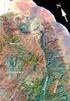 American International Journal of Contemporary Research Vol. 3 No. 3; March 2013 Groundwater Potential of Basement Aquifers in Part of Southwestern Nigeria Yinusa Ayodele Asiwaju-Bello Department of Marine
Mapping Active Faults in the Houston Area using LIDAR Data
 Mapping Active Faults in the Houston Area using LIDAR Data Richard Engelkemeir, University of Houston Dr. Shuhab Khan, University of Houston Dr. Carl Norman, University of Houston LIDAR DEM of Harris County.
QUATERNARY DATING METHODS 1: RELATIVE DATING TECHNIQUES
 QUATERNARY DATING METHODS 1: RELATIVE DATING TECHNIQUES Objectives: In this lab we will examine relative dating methods used to date Quaternary glacial deposits. After this lab you should be able to: 1)
NuGeneration Ltd Site Investigations
 NuGeneration Ltd Site Investigations Introducing the site assessment and radiological characterisation project NuGen has commissioned an engineering consortium - which is a joint venture of IBERDROLA Ingeniería
Earth Science Landforms, Weathering, and Erosion Reading Comprehension. Landforms, Weathering, and Erosion
 Reading Comprehension Name 1 How many people have been to the Rocky Mountains or the Grand Canyon? When people go to visit these natural wonders, they may not realize that it took millions of years for
APPENDIX B CHARACTERIZATION OF SOILS AT TEST SITES
 APPENDIX B HARATERIZATION OF SOILS AT TEST SITES A.1 LAMBTON FAILITY 2015 ANNUAL LANDFILL REPORT BIOMONITORING PROGRAM pendix B haracterization of Soils at Test Sites pendix B HARATERIZATION OF SOILS
Groundwater flow systems theory: an unexpected outcome of
 Groundwater flow systems theory: an unexpected outcome of early cable tool drilling in the Turner Valley oil field K. Udo Weyer WDA Consultants Inc. [email protected] Introduction The Theory of
The International Hydrogeological Map of Europe ( IHME ) at the scale of 1:1.5 Million
 The International Hydrogeological Map of Europe ( IHME ) at the scale of 1:1.5 Million - A coherent hydrogeological map for greater Europe and a model for the Rest of the World Historical Background State
MCLAREN VALE PWA GROUNDWATER LEVEL AND SALINITY STATUS REPORT 2009 10
 MCLAREN VALE PWA GROUNDWATER LEVEL AND SALINITY STATUS REPORT 2009 10 SUMMARY 2009 10 The McLaren Vale PWA is located approximately 35 km south of Adelaide. It is a regional-scale resource for which groundwater
Climate, Vegetation, and Landforms
 Climate, Vegetation, and Landforms Definitions Climate is the average weather of a place over many years Geographers discuss five broad types of climates Moderate, dry, tropical, continental, polar Vegetation:
Treatment and longevity in Norwegian soil treatment units
 Treatment and longevity in Norwegian soil treatment units Nordisk konferens Små avlopp Malmø 8-9 feb 2011 Gro Bioforsk Jord og miljø Avdeling for Miljøteknologi og renseprosesser Outline: Wastewater soil
Georgia Performance Standards Framework for Science Grade 6. Unit Organizer: Water in Earth s Processes. (Approximate Time: 5-6 Weeks)
 The following instructional plan is part of a GaDOE collection of Unit Frameworks, Performance Tasks, examples of Student Work, and Teacher Commentary. Many more GaDOE approved instructional plans are
89.215 - FORENSIC GEOLOGY GEOLOGIC TIME AND GEOLOGIC MAPS
 NAME 89.215 - FORENSIC GEOLOGY GEOLOGIC TIME AND GEOLOGIC MAPS I. Introduction There are two types of geologic time, relative and absolute. In the case of relative time geologic events are arranged in
EGAS. Ministry of Petroleum
 EGAS Ministry of Petroleum EGAS Ministry of Petroleum About The Block Location: Shorouk offshore block is a part of recent relinquished of NEMED concession previously operated by Shell. It is bounded from
Broadband seismic to support hydrocarbon exploration on the UK Continental Shelf
 Broadband seismic to support hydrocarbon exploration on the UK Continental Shelf Gregor Duval 1 1 CGGVeritas Services UK Ltd, Crompton Way, Manor Royal Estate, Crawley, RH10 9QN, UK Variable-depth streamer
The concepts developed in this standard include the following: Oceans cover about 70% of the surface of the Earth.
 Name Date Grade 5 SOL 5.6 Review Oceans Made by SOLpass - www.solpass.org [email protected] Reproduction is permitted for SOLpass subscribers only. The concepts developed in this standard include
London Borough of Waltham Forest LOCAL FLOOD RISK MANAGEMENT STRATEGY. Summary Document
 LOCAL FLOOD RISK MANAGEMENT STRATEGY Summary Document October 2013 Local Flood Risk Management Strategy Summary 1 Introduction 2 Partner responsibilities 3 What do we know about flooding in the borough?
New York Science Journal, 2009, 2(3), ISSN 1554-0200 http://www.sciencepub.net/newyork, [email protected]
 Electrical Method in Engineering and Environmental Studies: A Case Study of Gbagada Area, Lagos State, Nigeria. Oyedele, K.F and Ojo, A.O Dept of physics (Geophysics Programme) University of Lagos, Lagos
Report on Engineering Geological Investigation: Test pit logs in KwaMhlanga for RDP houses development.
 Report on Engineering Geological Investigation: Test pit logs in KwaMhlanga for RDP houses development. 2012 Department of Geology GTX 713 Date Excavated: 18 April 2012 Machine: Bell 315SG Operator: Lesley
LEARNING THE LANDFORMS Grade Level: Third Presented by: Elizabeth Turcott, Endeavor Charter Academy, Springfield, Michigan Length of Unit: 14 lessons
 LEARNING THE LANDFORMS Grade Level: Third Presented by: Elizabeth Turcott, Endeavor Charter Academy, Springfield, Michigan Length of Unit: 14 lessons I. ABSTRACT This unit develops an understanding of
Climate change impacts on city of Gdansk and its vicinity (Vistula Delta, Poland)
 Final International ASTRA Conference Espoo, 10-11 December, 2007 Climate change impacts on city of Gdansk and its vicinity (Vistula Delta, Poland) Dorota Kaulbarsz, Zbigniew Kordalski, Wojciech Jeglinski
2 Wind Erosion and Deposition
 CHAPTER 3 2 Wind Erosion and Deposition SECTION Agents of Erosion and Deposition BEFORE YOU READ After you read this section, you should be able to answer these questions: How can wind erosion shape the
Course Plan Day 1: Introduction and Overview Hydrology & Fluvial Geomorphology Day 2: Fieldwork on the Braid Burn Alan Jones
 Course Plan Day 1: Introduction and Overview Hydrology & Fluvial Geomorphology Alan Jones E:mail: [email protected] Water cycle Globally & Locally River shapes and forms River behaviour Closer look at
Chapter 7. Topography, geology, soils and groundwater. Chapter 7
 Chapter 7 Topography, geology, soils and groundwater Chapter 7 7.0 Topography, geology, soils and groundwater 7.1 Introduction and approach A detailed assessment of the existing topographic, geological,
3D stochastic modelling of litho-facies in The Netherlands
 3D stochastic modelling of litho-facies in The Netherlands Jan L. Gunnink, Jan Stafleu, Freek S. Busschers, Denise Maljers TNO Geological Survey of the Netherlands Contributions of: Armin Menkovic, Tamara
ANNEX 1 Summary of Danish responses to consultation Page 1
 ANNEX 1 Summary of Danish responses to consultation Page 1 ANNEX 1 A - Ministries 1 Danish Ministry of Ecclesiastical Affairs 2 Danish Ministry of Economic Affairs and the Interior B Agencies 1 Danish
SHAFT CONSTRUCTION IN TORONTO USING SLURRY WALLS
 SHAFT CONSTRUCTION IN TORONTO USING SLURRY WALLS Vince Luongo Petrifond Foundation Co., Ltd. PROJECT DESCRIPTION The York Durham Sanitary System (YDSS) Interceptor in the Town of Richmond Hill located
G-126 (Continued) MTA Westside Subway Extension Los Angeles, California. Figure: A-2.22c
 LA METRO PBTUNNEL ZONE S:\131 GEOTECH\GINTW\LIBRARY MACTEC JUNE11.GLB G:\PROJECT_DIRECTORIES\43\\61_METRO_WESTSIDE_EXTENSION\6.2.3.1 GEOTECHNICAL DESIGN\3.2 ALL FIELD NOTES\GINT LOG\NEW TEMPLATE MARCH
Hot tpot tproject A Demonstration of How Groundwater Chemistry is being Used to Discover a Gravel Covered Gold Deposit
 Hot tpot tproject A Demonstration of How Groundwater Chemistry is being Used to Discover a Gravel Covered Gold Deposit April 2, 2009 General Cautionary Statement Warning! The business of Gold Exploration
1. You are about to begin a unit on geology. Can anyone tell me what geology is? The study of the physical earth I.
 PLATE TECTONICS ACTIVITY The purpose of this lab is to introduce the concept of plate tectonics and the formation of mountains. Students will discuss the properties of the earth s crust and plate tectonics.
(1) Discuss the determination of the need for public visitation. Visitor center density within 100 miles.
 Chapter 4 Specifications Designs 3. Visitors Centers 3. Visitors Centers. The Introduction (Chapter 1) for these design data collection guidelines contains additional information concerning: preparing
Using LIDAR to monitor beach changes: Goochs Beach, Kennebunk, Maine
 Geologic Site of the Month February, 2010 Using LIDAR to monitor beach changes: Goochs Beach, Kennebunk, Maine 43 o 20 51.31 N, 70 o 28 54.18 W Text by Peter Slovinsky, Department of Agriculture, Conservation
What is Soil Survey?
 What is Soil Survey? Soil Survey is a systematic examination, description, classification, and mapping of the soils in a given area. Brady and Weil. 1996 Who Produces Soil Survey Cooperative effort between
The Geothermal Information System for Germany
 The Geothermal Information System for Germany www.geotis.de Britta Ganz T. Agemar, J. A. Alten, J. Kuder, K. Kühne, S. Schumacher & R. Schulz CGER Meeting 21 May 2012, Oslo Project Funding Partners Support
The effect of soil erosion on ecosystem services
 The effect of soil erosion on ecosystem services Ádám Kertész Adrienn Tóth Melinda Pálinkás Hungarian Academy of Sciences Research Centre for Astronomy and Earth Sciences Geographical Institute H-1112
Geology and Landscapes 2014 Maps and cross-sections
 Geology and Landscapes 2014 Maps and cross-sections Practicals 2 to 9 will be dedicated to the study of geological maps and the production of geological cross-section. Below is a summary of the different
Trench Rescue by Buddy Martinette
 Trench Rescue by Buddy Martinette SOIL TYPE AND TESTING It is imperative that rescue personnel understand soil types and testing procedures if the want to be competent at trench rescue operations. Determining
Communities, Biomes, and Ecosystems
 Communities, Biomes, and Ecosystems Before You Read Before you read the chapter, respond to these statements. 1. Write an A if you agree with the statement. 2. Write a D if you disagree with the statement.
7) A clastic sedimentary rock composed of rounded to subrounded gravel is called a A) coal. B) shale. C) breccia.
 Please read chapters 10 and 5 CHAPTER 5 Sedimentary Rocks 1) Sedimentary rocks A) form by compaction and cementation of loose sediment. B) are widespread on the continents and ocean floor. C) are common