
Many patients find the display of clasp assemblies aesthetically unacceptable. 9,10
|
|
|
- Lizbeth Fields
- 9 years ago
- Views:
Transcription
1 Aesthetic Clasp Design for Removable Partial Dentures: A Literature Review Aesthetic clasp design for Removable partial dentures: A literature review SADJ June 2005 Vol. 60 no 5 pp Dr SB Khan BChD, PDD, Lecturer, Prosthetic Dentistry, Faculty of Dentistry, University of the Western Cape Private Bag XI, Tygerberg, 7505 Tel: , Fax: [email protected] Prof GAVM Geerts BChD, MChD, Associate Professor, Prosthetic Dentistry, Faculty of Dentistry, University of the Western Cape, Private Bag XI, Tygerberg, 7505, Tel: , Fax: , [email protected] ABSTRACT Removable partial dentures (RPD) are an effective and affordable treatment option for partial edentulism. If the main reason for seeking treatment is the need for improved aesthetics, treatment should be geared towards achieving this goal. This article is the result of a literature study on aesthetic clasp design for the conventional RPD. In this context, the position of the clasp on the tooth, clasp types, clasp material and alternative methods of retention are reviewed. Although published in reputable journals, the authors report that many articles published on this subject are of a descriptive nature and lack scientific evidence. Therefore, clinicians are encouraged to be critical in their interpretation of literature and the application of published information in their clinical practices. INTRODUCTION Numerous treatment options exist to restore the partially edentulous mouth. 1,2 Removable partial dentures (RPD) are an effective and affordable treatment modality to restore function and aesthetics. 3 If the main reason for seeking treatment is the need for improved aesthetics, treatment should be geared towards achieving 1, 2, 4 this goal. Failure to recognize patient expectations can lead to non-compliance and failure of treatment. 2 Aesthetics influence the appearance, dignity and self-esteem of an individual. The understanding of what is aesthetically acceptable or not varies for different groups of people (specialists, general dentists and patients). 4 The dentist has the responsibility to make recommendations to achieve the best aesthetic outcome for a particular patient. RPD design is the responsibility of the clinician. 5 A comprehensive pre-treatment clinical examination provides the clinician with all the data required for the design of a biologically and aesthetically acceptable RPD. Good communication between the dentist and the dental technician ensures that the prescribed design is executed correctly. 4 The use of a dental surveyor to determine the path of insertion, the location and depth of the undercuts and the parallelism of guiding planes are indispensable processes in designing a RPD. 6,7,8 Many patients find the display of clasp assemblies aesthetically unacceptable. 9,10 A PubMed and Silver Platter literature search was conducted covering the period using the key words aesthetic removable partial denture, including additional related articles and links. From these searches a total of 43 publications were selected for this review. 16 of these selected publications were descriptive articles, 9 were clinical case reviews and only 18 were publications reporting research results. It is important to note the large amount of descriptive articles and case reviews published in this field, thus urging the reader to be critical in the interpretation of material that is made available in dental journals. A limited amount of information was retrieved from prosthetic textbooks as well as from Internet searches using the search-engine Google. The purpose of this article is to review literature reporting on the aesthetic merit of the retentive components of the RPD, e.g. clasps, path of insertion and guide planes. CLASPS Clasps are used as direct retainers for the RPD. The flexible clasp tip engages the undercut of the abutment to provide retention. 1,11,12 The components of any clasp assembly must satisfy six biomechanical requirements: retention, stability, support, reciprocation, encirclement and passivity. 1,3 In addition, the clasp assembly must ideally not affect aesthetics adversely. Careful selection of clasp position on the individual tooth, clasp type, clasp material, clasp location in the dentition and the number of clasps are important. Position The position of greatest convexity on the tooth, which is determined by surveying, serves as a guide in the placement of clasps. Clasps can be classified into infrabulge and suprabulge clasps. 6,10 The suprabulge clasp approaches the undercut from an occlusal direction and is more visible. The infrabulge clasp, approaching the undercut from a gingival direction, also referred to as the gingivally approaching clasp, has more potential for being hidden in the distobuccal aspect of a tooth. 13 The infrabulge clasp has been thought to be more retentive than the suprabulge clasp because it possesses an inherent tripping action - although there is no evidence for this in the literature. 10 Shaping enamel surfaces and the use of composites can modify the convexity of a tooth surface and allow placement of clasps into a less visible position. 14 Clasps approaching the undercut from the distal aspect are less visible than mesially approaching clasps. 15 Types of clasps A. Suprabulge clasps 1. Circumferential clasp / C-clasp 1,10,16,17 This commonly used clasp encircles a tooth by more than 180 degrees. It is aesthetically undesirable when used anteriorly as it has an occlusal origin and metal is displayed. The acceptibility may increase slightly, depending on the type of material used. This will be discussed in the section: Choice of material. 2. Modified circumferential clasp According to this case report 18, a gold clasp is cast to resemble a small gold inlay. It is inconspicuous and processing is fairly easy. The noble alloy clasp is retentive and resilient with good yield strength as is concordant with the literature. (Figure 1) www. sadanet.co.za June 2005 Vol. 60 No. 5 SADJ 190

2 Figure 1. A Modified Circumferential/ C-clasp on the canine. The clasp engages a 0.25mm mm undercut. It emerges from the distal aspect. Figure 2. Schematic illustration of the Back-action clasp. The distal part of the back-action clasp bends back to reach the distobuccal undercut. (Drawing based on C.P. Owen s Fundamentals of RPD ). distribution to the abutment. 23 Clasp tips are placed in preparations in the enamel of the proximal surfaces of the abutment teeth. According to testimonials on the internet site of the Equipoise Dental Institute, this clasp has successfully been in use for the last 35 years, but no scientific evidence proves this statement. 24 The only published case study describes an equipoise clasp next to a distal extension in combination with another aesthetic alternative, the intracoronal attachment bordering a toothsupported saddle of a maxillary RPD. 23 The author suggests either alternative when aesthetics is of primary concern. 5. Modified equipoise clasp The sound enamel preparations were deemed destructive and a modification of the equipoise clasp was proposed by De Kock and Thomas. 25 They showed it to be a practical and viable option for improved aesthetics and acceptable retention for Kennedy Class IV situations. (Figure 3a and 3b) Figure 3a. Equipoise Clasp: Occlusal view of the clasps placed on the 13 and the 24 as part of a Kennedy class IV RPD. 3. Back-action clasp Owen reported its use on upper premolars. 19 The clasp arm bends backwards at the buccal bulge of the tooth to reach the distal undercut, increasing its length and making it less obvious. Research compared load distribution on the abutment in distal extension RPDs. Of all clasp designs studied, the back-action clasps with mesial rests were reported to have excellent results with regards to mechanical behaviour. 20 Another studycompared three retentive mechanisms in a unilateral RPD. The framework with the back-action clasp showed the greatest early load resistance dislodgment, and thus retention, among the three designs. 21 (Figure 2) 4. Equipoise clasp Goodman developed and described the equipoise system, 22 the action of which is based on the principles of the backaction clasp. The equipoise clasp was developed claiming to address all the requirements of a successful clasp as well as aesthetics and favorable load 6. Hidden clasp 26 These clasps have been advocated for the Kennedy Class IV situations. The design achieves its aesthetic qualities by engaging the proximal undercuts often naturally present on teeth. Disadvantages would include that of (a) complex designs, (b) permanent deformation after repeated flexure, (c) abutment displacement as no reciprocation is provided, (d) rotation of the clasp if a restricted path of placement is not used with resultant loss of retention, (e) variable retention and, (f) difficulty in cleaning. (Figure 4) 7. Flexible lingual clasp According to a clinical report by Pardo- Mindan and Ruiz-Villandiego, a lingual clasp is indicated when the buccal arm 191 SADJ June 2005 Vol. 60 No. 5 www. sadanet.co.za

3 Figure 4. Saddle-Lock Hidden Clasp (Photograph courtesy of Distinctive Dental Studio Ltd, Illinois, USA). r = retainer that emerges from denture base to engage the undercut on the proximal tooth surfaces; b = bracing arm; p = proximal minor connector with relief space to allow flexure of the retainer. Figure 3b. Labial view of a different RPD with an equipoise clasp on tooth 22, satisfying the aesthetics as the clasp assembly is inconspicuous. Figure 5. Schematic illustration of the Flexible Lingual Clasp. a = clasp engaging the undercut; b = rest prepared within the crown; c = crowned tooth. Figure 6. Palatal/ Lingual I Bar. Schematic illustration of the clasp with an unobtrusive occluso-buccal extension. a = mesial rest, b = palatal/ lingual I-bar, c = proximal plate extending onto buccal surface for reciprocation. is not to be seen. 27 In this case a rigid clasp with increased flexibility and limited length emerges from a mesial minor connector or proximal plate. With this clasp, however, the abutment needs to be crowned. The rest seats are prepared within the crown. Disadvantages include that of cost (due to crowns) and the fact that its use is limited to the mandible only. (Figure 5) 8. Ball-clasp This clasp engages the undercut in the embrasure between two teeth, which is useful when teeth have short clinical crowns or if no natural buccal undercut is present. The clasp also acts as a rest because it passes over the occlusal embrasure. It has very little flexibility and both teeth need to be reciprocated. 19 The clasp may provide adequate retention although no evidence has been reported in the literature. B. Infrabulge clasps 1, 6, 10, 28, Bar-clasp An example would be the I-bar as part of the RPI-system for the distal extension RPD. Less metal is displayed than with an occlusally-approaching clasp. The approach arm must not be visible as it crosses the gingiva. It is not recommended in a patient with a high smile-line and for patients with a prominent canine eminence. Hansen and Iverson describe a modification of the conventional I-bar to be used on the canine. A distofacial ridge is created on the canine (a) by acid-etching and adding composite or (b) within the design of an indirect ceramic restoration. This ridge provides the required retention as well as resistance against www. www. sadanet.co.za sadanet.co.za June June Vol. Vol. 60 No. 60 No. 5 5 SADJ SADJ

4 used with the normal conventional path of insertion, with resultant improved aesthetics. It consists of a wire clasp soldered into a channel that is cast in the major connector. Disadvantages include irreparability once fractured, the major connector being very thick over the wire, increased cost due to extra laboratory procedures, and toxicity because of galvanic corrosion. No scientific evidence on any of the clasp s properties could be found. (Figure 8) Figure 7. Schematic illustration of the RLS-System: the acronym for Rest; L-bar; Stabilizer clasp assembly. a = mesio-occlusal Rest; b = distolingual L- bar direct retainer ; c = distobuccal Stabilizer. 5. Twin-flex improved clasp 34 The authors claim that as this clasp is not soldered onto the framework, toxicity associated with galvanic corrosion is eliminated. They further claim that the major connector is not so thick, clasps are easily adjustable and replaceable and it can be used on all RPD designs. Figure 8. An illustration of the Twin-Flex technique. A 19 gauge wrought wire is positioned in the mesial undercut of the canines adjacent to the edentulous space which should then be secured in place with wax. Additional wax is also placed along the length of wire beneath its height of contour, which will facilitate placement of the wire in the cast channel in the major connector that will house the Twin-Flex clasp. distal displacement using a less conspicuous I-bar Palatal I-bar According to research by Highton et al on the retentive capabilities of labially and palatally placed I-bars, the latter achieves better retentive and aesthetic results than the former. 31 It is usually shorter due to spatial confines and as a result is more rigid, offering more resistance to displacement. (Figure 6) 3. RLS-system 32 This is the acronym for mesio-occlusal rest, distolingual bar and distobuccal stabilizer. It has been advocated for distal extension RPDs when the RPI system cannot be used due to lack of a buccal undercut, or when aesthetics would be severely compromised. The authors claim success in fulfilling the aesthetic requirements of a large number of patients over the past few years, but fail to follow-up with scientific evidence. (Figure 7) 4. Twin-flex clasp or spring-clasp 33 This is a flexible clasp utilizing mesialdistal retention. The one article describing the manufacturing of the clasp reports that it is adjustable and can be Clasp material Cast chromium clasps cover large areas of the tooth and as a result a large area of metal is displayed. 1, 35 Due to their relative rigidity, a well-defined limited-sized undercut should be employed. Wrought wire clasps may be aesthetically more acceptable than cast chromium clasps due to different light reflection from the round surface. 1 They have greater tensile strength than cast clasps. 1, 35, 36 Due to their flexibility they can engage larger undercuts and may therefore be less visible - but gauge size is the determining factor. 37 Gold-alloy clasps were thought to have good flexibility and resiliency and are aesthetically more pleasing, but are expensive. 1, 35, 38 Their flexibility is a factor of the gauge number, although not the only deciding factor, with different alloys displaying different flexibility for the same gauge number. In the case of platinum-gold-palladium clasps, maximum stress decreased 37, 39 with larger gauge numbers. Technopolymer clasps were developed for addressing the aesthetic concerns of 13, 40, 41 RPDs. They are manufactured from thermoplastic acetal resin (polyoxymethalene) material with a highly crystalline structure which ensures greater flexibility, high transverse strength and radiolucency. Aesthetic acceptability constitutes its major advantage as several tooth shades are available for use anteriorly, but long-term studies still need to be conducted. (Figure 9) Disadvantages include: bulkiness, lack of adjustability, need for special equip SADJ SADJ June June Vol. Vol. 60 No. 60 No. 5 5 www. www. sadanet.co.za sadanet.co.za

5 Figure 9. A Circumferential Technopolymer clasp on tooth 21 engaging the mesial undercut. Figure 10a. Diagrammatic representation of seating of the RPD framework, eliminating anterior clasps. [From Jacobson: JPD 1994; 71:271-7]. a = long anterior rest acting as the rotational centre for insertion of RPD. Figure 10b. RPD rotated in position. No anterior clasp. a = minor connector relieved following the curve of insertation. b = Minor connector providing retention ment and increased cost. Research results state that deformation of acetyl resin direct retainers was significantly greater than their metal alloy counterparts. This may adversely affect their clinical performance and lead to the loss off some of their retentive characteristics. 42 REDUCING OR ELIMINATING CLASPS For the construction of RPDs, the Academy of Prosthodontics defined 8 standards, including retention, that are important in preserving oral tissue health. 43 Aesthetic aspects of RPD design were not part of these standards. Frank, Brudvik et al could not relate any of these standards to patient satisfaction. 44 Hence, when patient satisfaction from an aesthetic point of view is critical, one could consider the elimination of a visible clasp. Alternative paths of insertion, e.g. rotational, dual or curved, have been advocated which address aesthetic concerns. 3 These alternative paths allow one part of the framework to be seated first, followed by the remainder with the resultant decrease in clasps, but without compromising the biomechanical principles of the RPD. 3,6,45,46 The rotational path of insertion originated in the 1930s and has 10, 29, been described extensively. It is indicated most often for the replacement of missing anterior teeth as well as posterior tooth-bound spaces and some Kennedy Class II situations. It is contraindicated for Kennedy Class I and II cases with anterior modifications due to the potential torqueing action on abutments. 55,56 Jacobson mentions that the Academy of Prosthodontics states that it is not generally used by dentists and dental technicians due to the lack of understanding of the concept, although in recent years it has gained popularity. 46 Success in cases followed up for 10 years and longer has been demonstrated. 45,46 Rigid direct retainers of the framework are initially seated into the proximal undercuts of the abutment teeth adjacent to the edentulous area and then rotated to seat the posterior clasp assemblies. 3,45 (Figure 10a) The denture cannot be dislodged by a force perpendicular to the plane of occlusion. 10 (Figure 10b) The disadvantage is that the rigid retainer cannot be adjusted 33 and that the rest preparations are extensive. Guide planes are important to secure passive retention for RPDs and decrease the need for visible clasps. 57 Correctly prepared parallel surfaces on abutment teeth provide a definitive path of insertion and removal. 1, 3, 6-8 Ahmad et al state that a good fit of the framework to the guide plane is important, but this fit is made more difficult in the presence of clasps. 57 The length of the guide plane and its continued contact with the proximal plate is critical. 8 A labial undercut can be utilized to establish a compromised path of insertion. This can only be used if a flange is indicated. 1 In this way, the denture flange assists in the retention of a denture as well as providing necessary lip-support. 1, 3, 28, 56 However, the amount of this retention has never been quantified. CONCLUSION Several options, including the use of RPD, are available for the treatment of partial edentulism. Patient expectations need to be established before treatment, as components of the RPD can be visible and may not be acceptable to the patient. In view of the importance of aesthetics, creative clasp design offers the possibility of reducing the visibility of clasp assemblies, rendering them more acceptable to the patient. However, the clinician must be careful in his or her choice of clasp designs as many articles are published based on clinical experience of the authors rather than research. Therefore, readers are encouraged to be critical in their interpretation of the literature and the application of published information in their clinical practices. REFERENCES 1. Beaumont, AJ. An Overview of Esthetics with RPDs. Quintessence Int 2002; 33: Mazurat, NM. Mazurat, RD. Discuss Before Fabricating: Communicating the Realities of Partial Denture Therapy. Part I: Patient Expectations. J Can Dent Assoc 2003; 69: Budtz-Jørgensen, E. Bochet, G. Grundman, M. Borgis, S. Aesthetic Considerations for the Treatment of Partially Edentulous Patients with Removable Dentures. Pract Periodont Aesthet Dent 2000; 12: Kokich, VO. Kiyak, HA. Shapiro, PA. Comparing the Perception of Dentists and Lay People to Altered Dental Esthetics. J Esthet Dent 1999; 11: Owen, CP. Fundamentals of Removable Partial Dentures 2nded. Cape Town: UCT Press 2000; McGivney, GP. Carr, AB. McCracken s Removable Partial Prosthodontics 10thed. St Louis: Mosby Year-Book 2000; Owen, CP. Fundamentals of Removable Partial Denture 2nd ed. Cape Town: UCT Press 2000; Sato, Y. Hosokawa, R. Proximal Plate in Conventional Circumferential Cast Clasp Retention. J Prosthet Dent 2000 Mar; 83(3): Cowan, RD. Gilbert, JA. Elledge, DA. McGlynn, FD. Patient Use of Removable Partial Dentures: two- and four-year Telephone Interviews. J Prosthet Dent 1991 May; 65: Donovan, TE. Derbabian, K. Kaneko, L. Wright, R. Esthetic Considerations in Removable Prosthodontics. J Esthet Restor Dent 2001; 13: McGivney, GP. Carr, B. McCracken s Removable Partial Prosthodontics 10thed. St Louis: Mosby Year-Book 2000; Owen, CP. Fundamentals of Removable Partial Dentures 2nded. Cape Town: UCT Press 2000; Davenport, JC. Basker, RM. Heath, JR. Ralph, JP. Glantz, PO. Retention. Br Dent J 2000; 189: Hebel, KS. Graser, GN. Featherstone, JD. Abrasion of Enamel and Composite Resin by Removable Partial Denture Clasps. J Prosthet Dent 1984; 52: Applegate, OC. Essentials of Removable Partial Denture Prosthesis 3rded. Philadelphia: Saunders 1965; McGivney, GP. Carr, AB. McCracken s Removable Partial Prosthodontics, 10th ed. St Louis: Mosby Year-Book 2000; 113./ The rest of this article's references (17-57) will be published in the online June SADJ, www. sada.co.za www. sadanet.co.za June 2005 Vol. www. sadanet.co.za June 2005 Vol No. No. 5 5 SADJ SADJ

Removable Partial Dentures 101 Back to the Basics. Luther A. Ison, CDT University of Minnesota School of Dentistry
 Removable Partial Dentures 101 Back to the Basics Luther A. Ison, CDT University of Minnesota School of Dentistry Anterior-Posterior Palatal Strap Major connector Lingual Bar Major Connector, Kennedy Class
CHAPTER 10 RESTS AND PREPARATIONS. 4. Serve as a reference point for evaluating the fit of the framework to the teeth.
 CHAPTER 10 RESTS AND DEFINITIONS A REST is any rigid part of an RPD framework which contacts a properly prepared surface of a tooth. A REST PREPARATION or REST SEAT is any portion of a tooth or restoration
CLASSIFICATION OF REMOVABLE PARTIAL DENTURES
 Unless otherwise noted, the content of this course material is licensed under a Creative Commons Attribution - Non-Commercial - Share Alike 3.0 License. Copyright 2008, Dr. Jeff Shotwell. The following
CHAPTER 12 SURVEY LINES. portion of the tooth is undercut to the path of placement of the denture. DEFINITIONS
 CHAPTER 12 portion of the tooth is undercut to the path of placement of the denture. SURVEY LINES DEFINITIONS A SURVEY LINE is a line produced on a cast by a surveyor or scribe marking the greatest prominence
Tooth preparation J. C. Davenport, 1 R. M. Basker, 2 J. R. Heath, 3 J. P. Ralph, 4 P-O. Glantz, 5 and P. Hammond, 6
 12 5 Tooth preparation J. C. Davenport, 1 R. M. Basker, 2 J. R. Heath, 3 J. P. Ralph, 4 P-O. Glantz, 5 and P. Hammond, 6 This final article in the series describes the modification of teeth to improve
In Class IV arch: Fulcrum line passes through two abutments adjacent to single edentulous space.
 It is that part of removable partial denture which assists the direct retainers in preventing displacement of distal extension denture bases by resisting lever action from the opposite side of the fulcrum
Introduction of Removable Partial Denture - Design and Retention
 Introduction of Removable Partial Denture - Design and Retention By : Dr Zaihan Ariffin BDS(Malaya), GDCDent (Adelaide), Doctor of Clinical Dentistry (Adelaide), FRACDS (Australia) Type of denture Full
Attachments And Their Use In Removable Partial Denture Fabrication
 Unless otherwise noted, the content of this course material is licensed under a Creative Commons Attribution - Non-Commercial - Share Alike 3.0 License. Copyright 2008, Dr. Jeff Shotwell. The following
Principles of Partial Denture Design
 Principles of Partial Denture Design 1. Keep the RPD design as simple as possible Simple those design elements which promote function, esthetics, comfort, ease of fabrication, and ease of maintenance,
Implants in your Laboratory: Abutment Design
 1/2 point CDT documented scientific credit. See Page 41. Implants in your Laboratory: Abutment Design By Leon Hermanides, CDT A patient s anatomical limitations have the greatest predictive value for successful
There When You Need Them: 10 Principles of Successful RPD Treatment
 There When You Need Them: 10 Principles of Successful RPD Treatment Jeff Scott, DMD [email protected] 239 2 nd Ave South Suite 100 St. Petersburg, FL 33701 The West Coast District Dental
Acceptability of maxillary major connectors in removable partial dentures
 Acceptability of maxillary major connectors in removable partial dentures Abiodun Olabisi Arigbede *, Oluwole.O Dosumu *, Temitope Ayodeji Esan, ** Patricia A. Akeredolu. *** * Department of Restorative
Treatment planning for the class 0, 1A, 1B dental arches
 Treatment planning for the class 0, 1A, 1B dental arches Dr.. Peter Hermann Dr Reminder: Torquing movement on tooth supported denture : no movement Class 1 movement in one direction (depression) Class
The Lower Free End Saddle (distal extension saddle)
 Giles Perryer 1997 I The Lower Free End Saddle (distal extension saddle) Free end saddle dentures move Excessive movement of the denture can cause pain, tissue damage, and complaints of instability and
Flexible dentures an alternate for rigid dentures? Volume 1 Issue 1
 Flexible dentures an alternate for rigid dentures? Dr. Sunitha N Shamnur 1, Dr. Jagadeesh KN 1, Dr. Kalavathi SD 1, Dr. Kashinath KR 2 1 Senior Lecturer, 2 Professor & Head, Department of Prosthodontics,
IMPRESSION TECHNIQUE AND MATERIALS
 IMPRESSION TECHNIQUE AND MATERIALS DR ZURYATI AB GHANI BDS (WALES), Grad Dip Clin Dent (Adelaide), Doctor in Clinical Dentistry (prosthodontics( prosthodontics), Adelaide, FRACDS (Australia). 24.06.07
Another Implant Option for Missing Teeth with Challenging Symmetry Patrick Gannon, DDS and Luke Kahng, CDT
 Another Implant Option for Missing Teeth with Challenging Symmetry Patrick Gannon, DDS and Luke Kahng, CDT Introduction A 58 year old male had been missing teeth #7=12 for approximately 28 years. During
porcelain fused to metal crown
 Lectur.5 Dr.Adel F.Ibraheem porcelain fused to metal crown the most widely used fixed restoration,it is full metal crown having facial surface (or all surfaces) covered by ceramic material. It consist
ADA Insurance Codes for Laboratory Procedures:
 ADA Insurance Codes for Laboratory Procedures: Inlay/Onlay Restorations D2510 Inlay - metallic - one surface D2520 Inlay - metallic - two surfaces D2530 Inlay - metallic - three or more surfaces D2542
IMPLANT DENTISTRY EXAM BANK
 IMPLANT DENTISTRY EXAM BANK 1. Define osseointegration. (4 points, 1/4 2. What are the critical components of an acceptable clinical trial? (10 points) 3. Compare the masticatory performance of individuals
Full Crown Module: Learner Level 1
 Full Crown Module Restoration / Tooth # Full Gold Crown (FGC) / 30 Extensions: Porcelain Fused to Metal (PFM) / 12 All Ceramic / 8 Learner Level 1 Mastery of Tooth Preparation Estimated Set Up Time: 30
The effects of loading locations and direct retainers on the movements of the abutment tooth and denture base of removable partial dentures
 J Med Dent Sci 2002; 49: 11 18 Original Article The effects of loading locations and direct retainers on the movements of the abutment tooth and denture base of removable partial dentures Wakana Mizuuchi,
Molar Uprighting Dr. Margherita Santoro Division of Orthodontics School of Dental and Oral surgery. Consequences of tooth loss.
 Molar Uprighting Dr. Margherita Santoro Division of Orthodontics School of Dental and Oral surgery Molars The wide occlusal surface is designed for food grinding. The surface needs to be aligned with the
2016 Buy Up Dental Care Plan Procedure List
 * This is in addition to the embedded Preventive Plan (see procedure list at deltadentalco.com/kp_preventive. BASIC SERVICES Minor Restorative Services D2140 Amalgam 1 surface, primary or permanent D2150
CLASSIFICATION OF CARIOUS LESIONS AND TOOTH PREPARATION.
 CLASSIFICATION OF CARIOUS LESIONS AND TOOTH PREPARATION. ١ G.V. BLACK who is known as the father of operative dentistry,he classified carious lesions into groups according to their locations in permanent
Managing a Case of Sensitive Abutment Situations through Use of a Fixed Movable Prosthesis A Clinical Report
 www.jmscr.igmpublication.org Managing a Case of Sensitive Abutment Situations through Use of a Fixed Movable Prosthesis A Clinical Report Authors Khurshid A. Mattoo 1, Shailesh Jain 2 1 Assistant Professor,
Powertome Assisted Atraumatic Tooth Extraction
 Powertome Assisted Atraumatic Tooth Extraction White et al Jason White, DDS 1 2 3 Abstract Background: While traditional dental extraction techniques encourage minimal trauma, luxated elevation and forceps
Page 1 of 10 BDS FINAL PROFESSIONAL EXAMINATION 2007 Prosthodontics (MCQs) Model Paper SECTION I
 Page 1 of 10 COMPLETE DENTURES ANATOMICAL LANDMARKS SECTION I 1. There are many landmarks in the oral cavity which helps in designing complete dentures. One of the important landmarks is fovea palatini.
Ando A., Nakamura Y., Kanbara R., Kumano H., Miyata T., Masuda T., Ohno Y. and Tanaka Y.
 11. The Effect of Abutment Tooth Connection with Extracoronal Attachment using the Three Dimensional Finite Element Method - Part 2. The Construction of Finite Element Model from CT Data - Ando A., Nakamura
Replacement of the upper left central incisor with a Straumann Bone Level Implant and a Straumann Customized Ceramic Abutment
 Replacement of the upper left central incisor with a Straumann Bone Level Implant and a Straumann Customized Ceramic Abutment by Dr. Ronald Jung and Master Dental Technician Xavier Zahno Initial situation
HEALTH SERVICES POLICY & PROCEDURE MANUAL. SUBJECT: Types of Dental Treatments Provided EFFECTIVE DATE: July 2014 SUPERCEDES DATE: January 2014
 PAGE 1 of 5 References Related ACA Standards 4 th Edition Standards for Adult Correctional Institutions 4-4369, 4-4375 PURPOSE To provide guidelines for determining appropriate levels of care and types
Removable Partial Denture Manual. Robert W. Loney, DMD, MS 2011
 Removable Partial Denture Manual Robert W. Loney, DMD, MS 2011 Removable Partial Denture Manual Robert W. Loney, DMD, MS 2011 Table of Contents - i Table of Contents Introduction to Removable Partial Dentures...
More than a fixed rehabilitation.
 More than a fixed rehabilitation. A reason to smile. In combination with: Patient expectations drive dental treatments for fixed edentulous immediate restorations. Patients today have increasingly high
Porcelain Veneers for Children and Teens. By Fred S. Margolis, D.D.S., F.I.C.D., F.A.C.D., F.A.D.I. Abstract
 Porcelain Veneers for Children and Teens By Fred S. Margolis, D.D.S., F.I.C.D., F.A.C.D., F.A.D.I. Abstract This article will discuss the advantages of providing our young patients and their parents an
Composite artistry- speedy mock up
 Case Report: Composite artistry- speedy mock up Dr.Shikha Kanodia*, Dr.Manjit Kaur**, Dr.Girish J. Parmar*** * Asst. Professor, **Post Graduate Part 3, ***Head and Dean, Department of Conservative Dentistry
portion of the tooth such as 3/4 Crown, 7/8Crown.
 Lecture.1 Dr.Adel F.Ibraheem Crown and Bridge: It s a branch of dental science that deals with restoration of damaged teeth with artificial crown replacing the missing natural teeth by a cast prosthesis
Taking the Mystique out of Implant Dentistry. Dr. Michael Weinberg B.Sc., DDS, FICOI
 Taking the Mystique out of Implant Dentistry Dr. Michael Weinberg B.Sc., DDS, FICOI What is Restorative Implant Dentistry? Restorative implant dentistry involves taking a few simple mechanical principles
MAIN LINE DENTAL IMPLANT CENTER
 1257 Lancaster Ave Berwyn, PA 19312 Tel: 610-722-5542 CHIUN-LIN (STEVEN), LIU D.D.S., D.M.D. School of Dental Medicine CURRICULUM VITAE Summer, 2012 Education: 1987-1993 D.D.S. Kaohsiung Medical University
Clinical Effectiveness of Implant-Supported Removable Partial Dentures A Review of the Literature and Retrospective Case Evaluation
 J Oral Maxillofac Surg 67:1941-1946, 2009 Clinical Effectiveness of Implant-Supported Removable Partial Dentures A Review of the Literature and Retrospective Case Evaluation Yoav Grossmann, DMD, MsHA,*
In the Spring of 2010, the American Academy of Cosmetic
 Greetings to the members of the American Academy of Cosmetic Dentistry (AACD). As you know, a sisterhood agreement was concluded between the AACD and the Japan Academy of Esthetic Dentistry (JAED) at a
FABRICATING CUSTOM ABUTMENTS
 FABRICATING CUSTOM ABUTMENTS LUC AND PATRICK RUTTEN How much should a Dental Technician know about the clinical aspects of implantology? The answer is clear: as much as possible. This is the distinction
Ideal treatment of the impaired
 RESEARCH IMPLANTS AS ANCHORAGE IN ORTHODONTICS: ACLINICAL CASE REPORT Dale B. Herrero, DDS KEY WORDS External anchorage Pneumatized Often, in dental reconstruction, orthodontics is required for either
MALAYSIAN DENTAL JOURNAL. The Status Of The Abutment Teeth In Distal Extension Removable Partial Dentures
 MALAYSIAN DENTAL JOURNAL Malaysian Dental Journal (2009) 30(1) 13-19 2009 The Malaysian Dental Association The Status Of The Abutment Teeth In Distal Extension Removable Partial Dentures Mahmood WA, BDS,
Bitewing Radiography B.E. DIXON. B.D.S., M.Sc., D.P.D.S.
 Bitewing Radiography B.E. DIXON B.D.S., M.Sc., D.P.D.S. Main Indications Detection of Dental Caries Monitoring progression of caries Assessment of existing restorations Assessment of Periodontal status
Ridge Reconstruction for Implant Placement
 Volume 1, No. 5 July/August 2009 The Journal of Implant & Advanced Clinical Dentistry Ridge Reconstruction for Implant Placement 2 Hours of CE Credit Oral Implications of Cancer Chemotherapy Immediate
Telescopic Denture A Treatment Modality for Minimizing the Conventional Removable Complete Denture Problems: A Case Report
 Dentistry Section Case Report ID: JCDR/2012/3886:2351 Telescopic Denture A Treatment Modality for Minimizing the Conventional Removable Complete Denture Problems: A Case Report Kunwarjeet Singh, Nidhi
2007 Insurance Benefits Guide. Dental and Dental Plus. Dental and. Dental Plus. www.eip.sc.gov Employee Insurance Program 91
 Dental and www.eip.sc.gov Employee Insurance Program 91 Table of Contents Introduction...93 Your Dental Benefits at a Glance...94 Claim Examples (using Class III procedure claims)...95 How to File a Dental
Implant Bar Overdenture Utilizing Locator Attachments
 Utilizing Locator Attachments Step-by-Step Restorative Protocol Implant Bar Overdentures offer a removable implant solution for edentulous patients desiring a stable and esthetic prosthesis that improves
Removing fixed prostheses using the ATD automatic crown and bridge remover
 Removing fixed prostheses using the ATD automatic crown and bridge remover By Dr. Ian E. Shuman, Baltimore, MD. Information provided by J. Morita USA When removing cemented provisionals and final fixed
How to Achieve Shade Harmony With Different Restorations
 Procera Alumina vs. Feldspathic Porcelain How to Achieve Shade Harmony With Different Restorations Luke S. Kahng, CDT Key Words: Stump shade, Feldspathic Porcelain, Zirconia, Alumina, LSK Treatment Plan
Teeth and Dental Implants: When to save, and when to extract.
 Teeth and Dental Implants: When to save, and when to extract. One of the most difficult decisions a restorative dentist has to make is when to refer a patient for extraction and placement of dental implants.
Don t Let Life Pass You By Because Of Missing Teeth
 Don t Let Life Pass You By Because Of Missing Teeth Ask For Dental Implant Solutions From BIOMET 3i Scan With Your Smartphone! In order to scan QR codes, your mobile device must have a QR code reader installed.
The Mandibular Two-Implant Overdenture First-Choice. Standard of Care for the Edentulous Denture Patient
 The Mandibular Two-Implant Overdenture First-Choice Standard of Care for the Edentulous Denture Patient Joseph R. Carpentieri, DDS Dennis P. Tarnow, DDS ii Preface Preface The prosthetic management of
Restoring the Endodontically Treated Tooth:Post and Core Design and Material 根 管 治 療 後 牙 齒 的 修 復 :Post and Core 的 設 計 與 材 料
 劉 俊 麟 高 雄 醫 學 大 學 牙 醫 學 系 31 屆 美 國 賓 州 大 學 牙 周 病 學 研 究 所 畢 業 美 國 賓 州 大 學 牙 周 - 補 綴 學 研 究 所 畢 業 美 國 賓 州 大 學 臨 床 副 教 授 美 國 賓 州 大 學 人 工 植 牙 課 程 主 任 Restoring the Endodontically Treated Tooth:Post and Core
Restoration of a screw retained single tooth restoration in the upper jaw with Thommen Titanium base abutment.
 Restoration of a screw retained single tooth restoration in the upper jaw with Thommen Titanium base abutment. Dr. med. dent. David McFadden, Dallas County, USA Initial situation (single X-ray) Tooth 16
SCD Case Study. Treatment Considerations for Implant Rehabilitation
 SCD Case Study Treatment Considerations for Implant Rehabilitation Multiple surgical and restorative factors play a role in the treatment planning of implant restorations for the edentulous patient (Ali
Clinical Considerations for Adhesive Bridgework RICHARD IBBETSON
 RESTORATIVE R EDENTISTRY S T O R A T I V E D E N T I S T R Y Clinical Considerations for Adhesive Bridgework RICHARD IBBETSON Abstract: Many dental practitioners do not use adhesive bridges because of
Improving Esthetics with Sequential Treatment Planning and Implant-Retained Dentures
 Improving Esthetics with Sequential Treatment Planning and Implant-Retained Dentures by Timothy F. Kosinski, DDS, MAGD While oral function is the primary concern for most patients, the importance of esthetics
Introduction to Dental Anatomy
 Introduction to Dental Anatomy Vickie P. Overman, RDH, MEd Continuing Education Units: N/A This continuing education course is intended for dental students and dental hygiene students. Maintaining the
Universal Crown and Bridge Preparation
 Universal Crown and Bridge Preparation The All-Ceramic Crown Preparation Technique for Predictable Success According to Dr. Ronald E. Goldstein Expect the Best. Buy Direct. The Universal * Crown and Bridge
Richmond Crown- A Conventional Approach for Restoration of Badly Broken Posterior Teeth
 Richmond Crown- A Conventional Approach for Restoration of Badly Broken Posterior Teeth Abhinav Agarwal 1, Manish Chadha 2, D.R.V.Kumar 3, Prakash Somani 4, Preet Jain 5 Abstract: Restoration of badly
Resorptive Changes of Maxillary and Mandibular Bone Structures in Removable Denture Wearers
 Resorptive Changes of Maxillary and Mandibular Bone Structures in Removable Denture Wearers Dubravka KnezoviÊ-ZlatariÊ Asja»elebiÊ Biserka LaziÊ Department of Prosthodontics School of Dental Medicine University
Implant Assisted Removable Prosthodontics
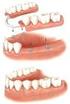 Implant Assisted Removable Prosthodontics M. Nader Sharifi, D.D.S., M.S. Cincinnati Dental Society Cincinnati, OH Friday May 7, 2014 I. Course Synopsis A. Different Types of Overdentures B. Implants with
Relative position of gingival zenith in maxillary anterior teeth- a clinical appraisal
 Original article: Relative position of gingival zenith in maxillary anterior teeth- a clinical appraisal 1Dr Dipti Shah, 2 Dr Kalpesh Vaishnav, 3 Dr Sareen Duseja, 4 Dr Pankti Agrawal 1HOD, Dept of Prosthodontics,
ATLANTIS abutments design guide CAD/CAM patient-specific abutments
 ATLANTIS abutments design guide CAD/CAM patient-specific abutments Contents Introduction 4 This manual helps you to explore all the benefits of ATLANTIS CAD/CAM patient-specific abutments. It gives you
Full Crown Module: Learner Level 3
 Full Crown Module Restoration / Tooth # Full Gold Crown (FGC) / mesially tilted 30 Extensions: Porcelain Fused to Metal (PFM) / lingually 21 All Ceramic / rotated 12 Learner Level 3 Preparation of Malpositioned
4-1-2005. Dental Clinical Criteria and Documentation Requirements
 4-1-2005 Dental Clinical Criteria and Documentation Requirements Table of Contents Dental Clinical Criteria Cast Restorations and Veneer Procedures... Pages 1-3 Crown Repair... Page 3 Endodontic Procedures...
Zirconium Abutments for Improved Esthetics in Anterior Restorations
 Zirconium Abutments for Improved Esthetics in Anterior Restorations by Luke S., C.D.T. Mr. is the founder and owner of Capital Dental Technology Laboratory, Inc., in Naperville, Illinois. The laboratory
DLT 123 CROWN AND BRIDGE
 DLT 123 CROWN AND BRIDGE COURSE DESCRIPTION: Prerequisites: DLT 111 and DLT 114 Corequisites: None This course introduces techniques for fabricating cast gold restorations. Topics include infection control,
Clinical Evaluation of Fixed Partial Dentures with Cast Joined Pontics
 Clinical Research Interdisciplinary Clinical Evaluation of Fixed Partial Dentures with Cast Joined Pontics Dr Dipak Thapa Department of Prosthodontics, Kantipur Dental College Kathmandu, Nepal Correspondence:
Jacket crown. Advantage : Crown and Bridge
 Crown and Bridge Lecture 1 Dr.Nibras AL-Kuraine Jacket crown It is a type of crown that is formed by a tooth colored material. It is mainly used as a single unit in the anterior quadrant of the mouth.
Nobel Clinician - Quick Guide
 1220 E. Birch St. #201 Brea, CA 92821 (800)750-5004 Haupt Dental Lab Inc. Nobel Clinician - Quick Guide Step #1 - Diagnostics Make impressions of both the upper and lower arches using custom trays. Care
Dental Implants and Esthetics
 Dental Implants and Esthetics Charles J. Goodacre, DDS, MSD; Chad J. Anderson, MS, DMD Continuing Education Units: 1 hour Online Course: www.dentalcare.com/en-us/dental-education/continuing-education/ce203/ce203.aspx
CAD/CAM technology supporting successful implant therapy
 CAD/CAM technology supporting successful implant therapy Suheil M. Boutros, DDS, MS, Manuel Fricke, DT Modern implantology opens up new treatment options for individuals with only minimal or no remaining
The Lasermet Removable Partial Denture The Future of Partial Dentures is Here! Frank DeMello, DDS
 Winter 2006-2007 Vol. 5, No. 2 Dental Practice Building Strategies The Lasermet Removable Partial Denture The Future of Partial Dentures is Here! Frank DeMello, DDS Complements for Your Partial Denture
Dentist and Lab Communication: Key to better Restorations.
 Dentist and Lab Communication: Key to better Restorations. 1 Dr. Ajit S. Jankar, 2 Dr. yogesh J.Kale Abstract: Dental professionals must consider the health of surrounding soft tissues, reproduce the size,
Implant Replacement of the Maxillary Central Incisor Utilizing a Modified Ceramic Abutment (Thommen SPI ART) and Ceramic Restoration
 Implant Replacement of the Maxillary Central Incisor Utilizing a Modified Ceramic Abutment (Thommen SPI ART) and Ceramic Restoration ROBERT SCHNEIDER, DDS, MS* ABSTRACT The prosthetic restoration of a
Precision and Semi- Precision Attachments Where? When? Why? George E. Bambara, MS, DMD FACD, FICD
 Precision and Semi- Precision Attachments Where? When? Why? George E. Bambara, MS, DMD FACD, FICD Objectives of the Program Understanding how attachments preserve hard and soft tissue Selection of the
Clinical and Laboratory Procedures for Fixed Margin Implant Abutments
 Clinical and Laboratory Procedures for Fixed Margin Implant Abutments Dr. Carl Drago DDS, MS, American Board of Prosthodontics Director, Dental Research BIOMET 3i, Adjunct Faculty Department of Prosthodontics,
Dr. Little received his doctorate degree in dentistry from UT Health at San Antonio Dental
 Implant Solutions for the Implant Patient: Diagnosis and Treatment Planning for Predictable Results David Little, DDS 6961 U.S. Highway 87 East San Antonio, TX 78263 Phone: (210)648-4411 Fax: (210) 648-6498
Finite element analysis for dental prosthetic design
 Finite element analysis for dental prosthetic design 61 X 3 Finite element analysis for dental prosthetic design Akikazu Shinya, DDS, PhD Department of Crown and Bridge, School of Life Dentistry at Tokyo,
Influence of Biomechanical Factors on Restoration of Devitalized Teeth
 Influence of Biomechanical Factors on Restoration of Devitalized Teeth Adnan atoviê 1 Davor Seifert 1 Renata Poljak-Guberina 1 Boris KvasniËka 2 1 Department of Fixed Prosthodontics School of Dental Medicine
Implant Parts. A Radford Heath Guide http://www.radfordheath.com 1
 Implant Parts A Radford Heath Guide http://www.radfordheath.com 1 Disclaimer The information given in this document has been provided in good faith for basic information purposes only and the information
Retention of maxillary implant overdenture bars of different designs
 Retention of maxillary implant overdenture bars of different designs Brian H. Williams, DDS, a Kent T. Ochiai, DDS, b Satoru Hojo, DDS, PhD, c Russell Nishimura, DDS, d and Angelo A. Caputo, PhD e School
PROSTHETIC PROCEDURE. for HG IMPLANT SYSTEM
 PROSTHETIC PROCEDURE for HG IMPLANT SYSTEM PROSTHETIC PROCEDURE for HG IMPLANT SYSTEM HG Implant System Contents Cement retained restoration Rigid abutment When abutment reduction is unnecessary When abutment
The success or failure of a removable partial denture
 Preparing teeth to receive a removable partial denture Robert W. Rudd, DDS, MS, a lbert. ange, S, DDS, MSD, b Kenneth D. Rudd, DDS, c and Ralph Montalvo d Colorado Springs, Colo. The success or failure
Current Concepts in American Dentistry: Advances in Implantology and Oral Rehabilitation
 2009 New York University College Of Dentistry Linhart Continuing Dental Education Program Presents Current Concepts in American Dentistry: Advances in Implantology and Oral Rehabilitation International
The Most Frequently Asked Questions About Dental Implants... A Consumer s Guide to Understanding Implant Treatment
 Number 3 $1.25 The Most Frequently Asked Questions About Dental Implants... A Consumer s Guide to Understanding Implant Treatment If you are like most people considering dental implants, you probably have
RESTORING STRAUMANN IMPLANTS WITH LOCATOR ABUTMENTS
 RESTORING STRAUMANN IMPLANTS WITH LOCATOR ABUTMENTS Straumann is the industrial partner of the ITI (International Team for Implantology) in the areas of research, development, and education. CONTENTS Product
CUSTOMIZED PROVISIONAL ABUTMENT AND PROVISIONAL RESTORATION FOR AN IMMEDIATELY-PLACED IMPLANT
 CONTINUING EDUCATION 1 4 CUSTOMIZED PROVISIONAL ABUTMENT AND PROVISIONAL RESTORATION FOR AN IMMEDIATELY-PLACED IMPLANT Gerard J. Lemongello, Jr, DMD* LEMONGELLO 19 7 AUGUST The use of immediate implant
WAX-UP AND CERAMIC EXTENSIVE COURSE Dr. Dario Adolfi Dr. Ivan Ronald Huanca
 WAX-UP AND CERAMIC EXTENSIVE COURSE Dr. Dario Adolfi Dr. Ivan Ronald Huanca Duration: 6 meses STEP 1: WAX-UP OF FOUR UPPER POSTERIOR TEETH with Dr. Ivan Ronald Huanca The objective of this course s step
Waxing up. Waxing up. Crown and bridgework. Friedrich Jetter Christian Pilz. Ideas for dental technology
 Waxing up Waxing up Crown and bridgework Friedrich Jetter Christian Pilz Ideas for dental technology Waxing-up units Waxing-up units Waxlectric II The Waxlectric II is an electrically regulated sculpting
THE SINGLE-TOOTH IMPLANT TREATMENT FOR MAXILLARY CENTRAL INCISORS LOSS AFTER TRAUMA: CASE REPORTS
 CLINICAL DENTISTRY AND RESEARCH 2011; 35(1): 47-52 THE SINGLE-TOOTH IMPLANT TREATMENT FOR MAXILLARY CENTRAL INCISORS LOSS AFTER TRAUMA: CASE REPORTS Hakan Tuna, DDS, PhD Assistant Professor, Department
ATLANTIS crown abutment. Patient-specific CAD/CAM abutments for single-tooth, screw-retained restorations
 ATLANTIS crown abutment Patient-specific CAD/CAM abutments for single-tooth, screw-retained restorations Excellent results every time For all major implant systems DENTSPLY Implants now offers the appreciated
A collection of pus. Usually forms because of infection. A tooth or tooth structure which is responsible for the anchorage of a bridge or a denture.
 Abscess A collection of pus. Usually forms because of infection. Abutment A tooth or tooth structure which is responsible for the anchorage of a bridge or a denture. Amalgam A silver filling material.
IMPLANT CONSENT FORM WHAT ARE DENTAL IMPLANTS?
 IMPLANT CONSENT FORM WHAT ARE DENTAL IMPLANTS? Dental implants are a very successful and accepted treatment option to replace lost or missing teeth. A dental implant is essentially an artificial tooth
Word of Mouth. Careers in the Dental Profession. Dental Laboratory Technology. prestige. varie ty. cre ativity. flexibility. security.
 prestige varie ty cre ativity Careers in the Dental Profession Word of Mouth Dental Laboratory Technology flexibility security challenges re s p e ct page 1 prestige Your earning power is unlimited variety