
Women in Saudi Arabia Today
|
|
|
- Barry Atkinson
- 9 years ago
- Views:
Transcription
1 Women in Saudi Arabia Today Mona AlMunajjed

2 WOMEN IN SAUDI ARABIA TODAY

3 Also by Mona AlMunajjed MEANING AND SIGNIFICANCE OF ARABIC NAMES FOR GIRLS IN THE ARAB WORLD

4 Women in Saudi Arabia Today Mona AlMunajjed &

5 M First published in Great Britain 1997 by MACMILLAN PRESS LTD Houndmills, Basingstoke, Hampshire RG21 6XS and London Companies and representatives throughout the world A catalogue record for this book is available from the British Library. ISBN hardcover ISBN paperback & First published in the United States of America 1997 by ST. MARTIN'S PRESS, INC., Scholarly and Reference Division, 175 Fifth Avenue, New York, N.Y ISBN Library of Congress Cataloging-in-Publication Data AlMunajjed, Mona. Women in Saudi Arabia today / Mona AlMunajjed. p. cm. Includes bibliographical references and index. ISBN (cloth) 1. Women Saudi Arabia Jeddah Social conditions. 2. Women- -Saudi Arabia Jeddah Economic conditions. 3. Women Education- -Saudi Arabia Jeddah. 4. Women in development Saudi Arabia- -Jeddah. 5. Jeddah (Saudi Arabia) Social conditions. I. Title. HQ1730. A '09538 <lc CIP Mona AlMunajjed 1997 All rights reserved. No reproduction, copy or transmission of this publication may be made without written permission. No paragraph of this publication may be reproduced, copied or transmitted save with written permission or in accordance with the provisions of the Copyright, Designs and Patents Act 1988, or under the terms of any licence permitting limited copying issued by the Copyright Licensing Agency, 90 Tottenham Court Road, London W1P9HE. Any person who does any unauthorised act in relation to this publication may be liable to criminal prosecution and civil claims for damages Printed and bound in Great Britain by Antony Rowe Ltd, Chippenham, Wiltshire

6 Contents map of oaudi Arabia 1 Introduction: Saudi Arabia, Past and Present 2 The Status of Arab Women under Islamic Law 3 Segregation 4 The Veil 5 Education 6 Work 7 Conclusion Bibliography Index of the Qura'nic Verses Index of the Hadith Al Nabawi (Sayings of the Prophet Muhammad) Index of Subjects Index of Personal Names Index of Places VII V

7 This page intentionally left blank

8 Map of Saudi Arabia ill' $i \ Jeddaht Population 16.9 million 1 Area (sq miles) 850,000 Abha * rt / ^ "^O**^* JistnWye^^MX City Population O Over 1,000,000 * Over 500,000 Over 100,000 A Under 100, mi jdammam libahrain _JJAE i^lfll/ Capital vn

9 This page intentionally left blank

10 1 Introduction: Saudi Arabia, Past and Present Today, Saudi Arabia has become a major source of influence as the world's largest exporter of petroleum and oil products and is one of the richest countries in the world in its reserves of oil. Saudi Arabia is also the custodian of the two holy cities of Meccah and Medinah. It is in these cities that Islam was born at the end of the sixth century AD, developed under the Prophet Muhammad, and where the religion's holy book, the Qur'an, was revealed and written. There are one billion Muslims in the world today, for whom the cities of Meccah and Medinah are holy places. It is to Meccah that hundreds of millions of Muslims turn to pray five times a day, and to where they come if they can, at least once in a lifetime, as pilgrims in obedience to their faith. All this has given Saudi Arabia a clear and leading status in the Islamic world. It has also led to the increase of Saudi Arabian participation in international relations concerned with Arab and Muslim countries. Geographically, Saudi Arabia encompasses around 80 per cent of the Arabian Peninsula. It is bordered to the east by the Arabian Gulf, Bahrain, Qatar and the United Arab Emirates, to the south by the Yemen Republic and Oman, by the Red Sea to the west and by Jordan, Iraq and Kuwait to the north. The country occupies approximately 850,000 square miles. It is a land of highlands, plateaus and deserts. Most of the surface is covered by sand, forming the deserts of Nafud, Dahna and Rub al Khali (the 'Empty Quarter'). Saudi Arabia is divided into four major regions: Najd, Al Hijaz, Asir and Al Ahsa'. Administratively the country is divided into five major provinces. These are the Western Province (Al Hijaz), the Central Province (Najd), the Eastern Province (Al Ahsa', which contains the oil fields), the Southern Province (Asir) and the Northern Province (Tabouk). The major cities are Riyadh (the capital), Jeddah, Meccah, Medinah, Taif and Dammam. 1

11 2 Women in Saudi Arabia Today The first and most important city is the Holy city of Meccah, spiritual capital of all Islam. It was the birthplace of the Prophet Muhammad (570 AD) and is the capital of Al Hijaz. Meccah includes the Ka'aba, built by Abraham and his son Isma'il. The Ka'aba is a stone structure and a site of worship for all Muslims. Medinah, also situated in Al Hijaz, is the other Holy city of Islam. It shelters the tomb of the Prophet Muhammad in the green-domed mosque. Riyadh, situated in the heart of central Najd, is the political and administrative capital city of Saudi Arabia. It was captured in 1902 by King Abdel Aziz, who used it as a base from which to reunify the Najd and most of the Arabian Peninsula. Jeddah, located on the eastern shore of the Red Sea, has been for centuries the main port and commercial centre of Arabia. It was founded by Caliph Uthman ben Affan in 647 AD on the site of a fishing settlement. The original role of this city was that of port for the city of Meccah and a transit point for Eastern trade. Later it became the main importing and distribution centre for Al Hijaz, the western province. Today Jeddah is still the largest port on the Red Sea and it retains its traditional function as the pilgrim's gateway to Meccah. Taif is the summer capital of the Hijaz. Dammam is the second largest cargo port after Jeddah. Located in the eastern region on the Arabian Gulf, it was constructed by ARAMCO (The Arab American Oil Company) following the discovery of oil. The city of Dammam serves as a commercial centre and is the main seaport for the Eastern and Central Provinces. Saudi Arabia has a population of approximately 16.9 million (EIU, 1993/4). The majority of the inhabitants are Arabs of nomadic or semi-nomadic origin who, under the influence of rapid economic development, migrated to the major cities. Many of those who live in Najd or the central region are of pure Arab Bedouin origin and still maintain Bedouin traditions. The people of Al Hijaz in the western region are merchants by tradition and are of mixed racial origin. They are Muslims who came on pilgrimages from various countries (India, Indonesia, Turkey, Tunis, Yemen, Egypt, Syria) and settled in the major cities of Meccah, Medinah and Jeddah.

12 Introduction 3 Saudi Arabia is a monarchy with a council of ministers. The political structure of the country is a unique blend of tribal custom and religious law and is headed by the Al Saud royal family. The country has strong roots in both religious and tribal history dating from the eighteenth century, when the first Ibn Saud (ruler of the town of Dariya in Najd) joined forces with a religious reformer, Muhammad ben Abdel Wahab, to form the political-religious Wahabi movement. THE WAHABI MOVEMENT In order to understand Saudi Arabia today it is necessary to study the Wahabi movement, which marked the start of modern Saudi Arabian history. At the beginning of the eighteenth century Arabia was shut off from the outside world. Except for Meccah and Medinah, which were under Ottoman rule, it had degenerated into a state of ignorance and violence. The term 'Jahiliyya' (ignorance of the true religion) is used to describe this period, which was similar to Pre-Islam and was characterised by the corruption of norms and distortion of religious beliefs. The political situation was that of anarchy. Common legal rules and ties were nonexistent. The Wahabi movement was a revivalistic movement organised by Muhammad ben Abdel Wahab and Muhammad ben Saud to revive what they perceived to be social virtues and to bring about a return to a former era of happiness: the 'Golden Age of Islam'. The Wahabis idealised the past, venerating the ideal picture of early Islam with its simplicity and strict orthodoxy. The period of Wahabiya started when a religious teacher from the Tamim tribe in Najd, Sheikh Muhammad ben Abdel Wahab ( ) (both his father and grandfather were Hanbali judges), began to preach for a return to the stern principles of Islam, stripped of all the innovations developed through the centuries, for example the excessive honouring of the Prophet and his companions. In combating syntheism, Abdel Wahab exalted the doctrine of Tawhid and the movement was better known as the 'Najdi Call' because it sought a religion of unity, as well as a need to purify the community by applying classical law - that is the Law of God - and

13 4 Women in Saudi Arabia Today returning to the ways of the Prophet and the first generations of pious Muslims, known as 'Al Salaf al Salih'. Wahabism also represents adherence to the letter of the Qur'an and the Hadith, which are considered the sole legitimate sources of authority, and adoption of the rigid interpretations of the Hanbali school, one of the most conservative of the four orthodox schools of Islam. Muhammad ben Abdel Wahab's motivation to begin the movement was his extreme devotion to puritanical religion. The success of his movement depended on two important factors: faith and power. Persecuted in his home town of Ainiyya in Najd, Abdel Wahab found refuge with Emir (Prince) Muhammad ben Saud, the ruler of Dariya, who promptly became a convert. This conversion gave to Wahabism a political base upon which to build. An alliance took place between the emir and the sheikh to bring the Arab people back to what these men saw as the true faith of Islam. Their alliance had a double purpose. In order to spread his teachings among the tribes and win converts, Abdel Wahab needed power and men, and these he found with the emir. For his part, Ibn Saud was ambitious. He was a leader and a soldier, and his motive for embracing Abdel Wahab's doctrine was more political than religious. By supporting Abdel Wahab's cause and extending the influence of Wahabiya he was able to establish control over the eastern and western Arabian territories. Both Muhammad ben Abdel Wahab and Muhammad ben Saud succeeded in fulfilling their aims, and the union of ideology and military force led to the birth of a state: Saudi Arabia. Leadership passed on to their descendants: Abdel Wahab's family, known as the Al El Sheikh, assumed the religious leadership of the country while the Al Saud descendants assumed political sovereignty. After the death of Muhammad ben Saud in 1765 AD the political base of the movement weakened. The capturing of Meccah (which was under Ottoman rule) by Abdel Aziz ben Muhammad, the son of Ibn Saud, led the ruling Ottoman sultan to send in Egyptian forces to crush the Wahabi expansion in It is important to note that throughout most of the modern history of the Arabian Peninsula a central political power was absent. The greater part of the country was a waterless desert that

14 Introduction 5 offered limited settlement opportunities to its nomadic population, who had no direct contact with the outside world. Various tribes, who were in a constant state of warfare with each other, provided the basis for the social and political organisation of the peninsula. Power was exerted from the outside as the Ottomans controlled part of the peninsula (mainly Al Hijaz). The Al Saud family's power was subdued by Muhammad Ali of Egypt in 1838, then by an alliance between the Ottomans and other northern tribes in the late nineteenth century. It was only in 1902 that they regained their power, when Abdel Aziz ben Saud returned from exile in Kuwait and captured Riyadh, thereby reestablishing the Al Saud dynasty. He was named by his father as Emir of Najd and Imam of Islam. Abdel Aziz fought against the Shammar tribes in the north and consolidated his power in central Arabia. Throughout his military campaigns Abdel Aziz spread forth the Wahabi religious reform, helped by the Ikhwan, a religious brotherhood of warriors. By 1926 he had captured the cities of Meccah, Medinah and the province of Hijaz. In 1932, after unifying the whole peninsula, Abdel Aziz declared himself King of Saudi Arabia. Although the new kingdom was militarily and politically dominant in the peninsula, it was economically weak. The country's income came in the main from the exportation of goods such as dates, wool, horses and camels, but the most important source of income was the annual tax paid by pilgrims to Meccah. In 1933 King Abdel Aziz granted an oil concession to the California Arabian Oil Company, a forerunner of ARAMCO, the Arabian American Oil Company. In 1938 oil was discovered in large commercial quantities and Saudi Arabia started to develop. The increase in the price of oil during the early 1970s, led to extremely rapid economic and material evolution, with the construction of schools, universities, houses and a very advanced communication system taking place in the 1970s and 1980s. Although tribal and family loyalties remained strong, the advent of oil wealth weakened the influence of tribal authority. Demand for labour in the cities and for government posts led to a considerable number of people residing permanently outside their traditional areas. It also resulted in a massive influx of foreign workers to assist in the development of the country. Economic and indus-

15 6 Women in Saudi Arabia Today trial development continues, guided by the conviction that the long-term prosperity of the kingdom depends on investing oil income into more lasting forms of income-generating activities. WHY A BOOK ON WOMEN IN SAUDI ARABIA? The fact that Saudi women have become one of the most rapidly changing elements of society makes the issue of women in Saudi Arabia one of particular interest. Increasing concern with socioeconomic development and the pressure to integrate women into the process of developmental change have become topics of extreme importance in the kingdom. The issue is subject to continuous debate. Saudi newspapers and magazines are full of articles arguing the pros and cons of a broader role for women in the social and economic life of the country. The literature is characterised by social and ideological schools that either favour or condemn the traditional role of women. Misconceptions about the status of Saudi women have distorted their true social image and depicted them as second-class citizens. It is true that traditional norms and cultural and patriarchal values have shaped the role of women in Saudi Arabia; however this should not be seen as an impediment to Saudi women taking part in the process of national development. The preservation of the traditional Saudi identity constitutes a natural and essential element in the evolution of the social entity of women in Saudi Arabia. Today Saudi women are contributing to and participating actively in the growth of the kingdom. Professional, educated women are eagerly seeking new opportunities in the labour market and are keen to play more responsible roles at the community level. Indeed, education and work outside the home have provided new horizons for Saudi women beyond the traditional confines of marriage and motherhood, and this has had a positive effect on their behaviour, self esteem, aspirations and relations with others. This study attempts to examine and explore the quality of Saudi women's lives - that is, their social and subjective experiences in a traditional society - and to probe into the deeper meaning of their social reality. The Algerian writer Aisha Lemsine argues that 'we can understand the present Arabia only

16 Introduction 1 by questioning and probing the problems of its women' (Lemsine, 1983, p. 31). As a member of this society and sharing Saudi women's ideas, beliefs and personal experiences, I am able to understand the influence of cultural, traditional and patriarchal values on their status. In order to understand, therefore, the changing role of women in Saudi Arabia and the underlying social forces leading to these changes, I sought to understand the perception of gender roles as experienced by Saudi women. To this end I have used personal interviews, newspaper articles, data taken from religious, historical, sociological and anthropological studies (in Arabic, French and English) and my own knowledge of the subject. DEVELOPMENT OF THE STUDY Extensive interviews were conducted with 100 Saudi women in the city of Jeddah. These women share similar ethnic (Arab), religious (Muslim) and national (Saudi Arabian) social characteristics. They come from different geographical areas of Saudi Arabia (Jeddah, Meccah, Medinah, Gizan, Taif, Al Baha, Riyadh, Abha, the Eastern Province), belong to different Arab tribal groups (Al Asmar, Al Shamran, Madi, Al Ashkar) and represent different economic and educational levels. The units of analysis are two groups of women categorised according to level of education and employment: 1. A group of 50 educated women who are either in high school, have finished high school, are enrolled at the University of Jeddah or hold a University degree (BA, MA, or PhD). This group is divided into two subgroups: working and non-working. 2. A group of 50 uneducated women who are either illiterate or have attended elementary or intermediate school but stopped at one level or the other. This group too is divided into working and non-working.

17 You have reached the end of the preview for this book / chapter. You are viewing this book in preview mode, which allows selected pages to be viewed without a current Palgrave Connect subscription. Pages beyond this point are only available to subscribing institutions. If you would like access the full book for your institution please: Contact your librarian directly in order to request access, or; Use our Library Recommendation Form to recommend this book to your library ( or; Use the 'Purchase' button above to buy a copy of the title from or an approved 3rd party. If you believe you should have subscriber access to the full book please check you are accessing Palgrave Connect from within your institution's network, or you may need to login via our Institution / Athens Login page: ( target=/index.html). Please respect intellectual property rights This material is copyright and its use is restricted by our standard site license terms and conditions (see If you plan to copy, distribute or share in any format including, for the avoidance of doubt, posting on websites, you need the express prior permission of Palgrave Macmillan. To request permission please contact [email protected].

http://en.wikipedia.org/wiki/history_of_saudi_arabia (History of Saudi Arabia) http://en.wikipedia.org/wiki/ibn_saud
 Abdullah Khalid Country Project Saudi Arabia History: http://en.wikipedia.org/wiki/history_of_saudi_arabia (History of Saudi Arabia) http://en.wikipedia.org/wiki/ibn_saud As a state, Saudi Arabia has only
Bentley Chapter 13 Study Guide: The Expansive Realm of Islam
 Name Date Period Bentley Chapter 13 Study Guide: The Expansive Realm of Islam Eyewitness: Season of the Mecca Pilgrimage (259-268) 1. What is the dar al-islam? A Prophet and His World (260) 2. Who were
This page intentionally left blank
 Ribbon Culture This page intentionally left blank Ribbon Culture Charity, Compassion, and Public Awareness Sarah E.H. Moore School of Social Policy, Sociology and Social Research, University of Kent, UK
SAUDI FOREIGN POLICY "THE POLICY OF PRINCIPLES"
 SAUDI FOREIGN POLICY "THE POLICY OF PRINCIPLES" The Kingdom s Profile Located in the South West of the Asian Continent, the Kingdom of Saudi Arabia stretches more than two million Square Kilometers which
The Rise and Spread of Islam Study Guide
 The Rise and Spread of Islam Study Guide Terms: Bedouins: Nomadic people of Arabia who eventually became Islamic. Ka aba: Place believed where Abraham had worshipped. When Mohammed prayed there with the
Copyright material from www.palgraveconnect.com - licensed to npg - PalgraveConnect - 2016-07-05
 This page intentionally left blank. Brand Media Strategy This page intentionally left blank. Brand Media Strategy Integrated Communications Planning in the Digital Era Second Edition Antony Young BRAND
Gendering the International Asylum and Refugee Debate
 Gendering the International Asylum and Refugee Debate This page intentionally left blank Gendering the International Asylum and Refugee Debate 2nd edition Jane Freedman Professor of Political Science,
Muhammad Became the Prophet of Islam monotheistic, hajj, The Five Pillars of Islam include all of the following except
 World History Chapter 11 The Muslim World (622 1650) Session 1 Rise of Islam How did Muhammad become the prophet of Islam? What are the teachings of Islam? How did Islam help shape the way of life of its
The History of Human Resource Development
 The History of Human Resource Development The History of Human Resource Development Understanding the Unexplored Philosophies, Theories, a nd Methodologies Matthew W. Gosney and Claretha Hughes THE HISTORY
The Story of Mohammad
 The Story of Mohammad Mohammed, sometimes called Muhammad Abdullah, was the founder of the religion of Islam, and is considered by Muslims to be a messenger and prophet of God. Muslims believe he was the
Ismail Noori Mseer, PhD. Arabic & General Studies College of Arts, Science and Education
 Ismail Noori Mseer, PhD. Assistant Professor Arabic & General Studies College of Arts, Science and Education E-mail: [email protected] Biography: Dr. ISMAIL NOORI MSEER was born in BAGHDAD in 1960. He is
Chapter One: The Egyptian Educational System
 Chapter One: The Egyptian Educational System Egypt has a population of 68 million, which is rapidly growing. Most of it consists of large low-income families in rural areas where the rate of illiteracy
A Region by Any Other Name...
 A Region by Any Other Name.... Janet Hall Bethany Public Schools, Bethany, Oklahoma [email protected] OVERVIEW: It is often true that a place may be categorized as belonging to more than one region,
The Clinical Nurse Specialist: Issues in Practice
 The Clinical Nurse Specialist: Issues in Practice The Clinical Nurse Specialist: Issues in Practice Edited by DEBRA HUMPHRIS MA, RGN, DipN(Londs), RNT M MACMILLAN The Contributors 1994 All rights reserved.
Tolerance of other cultures and a focus on learning help Muslim leaders build an empire that includes parts of Asia, Africa, and Europe.
 SLIDE 1 Chapter 10 The Muslim World, 600-1250 Tolerance of other cultures and a focus on learning help Muslim leaders build an empire that includes parts of Asia, Africa, and Europe. SLIDE 2 Section 1:
Orientation Lecture Series: LEARNING TO LEARN Developing critical thinking skills
 Orientation Lecture Series: LEARNING TO LEARN Developing critical thinking skills Outline of Lecture what is critical thinking? demonstrating critical thinking strategies for critical writing using evidence
History. Programme of study for key stage 3 and attainment target (This is an extract from The National Curriculum 2007)
 History Programme of study for key stage 3 and attainment target (This is an extract from The National Curriculum 2007) Crown copyright 2007 Qualifications and Curriculum Authority 2007 Curriculum aims
OMAN 2014 INTERNATIONAL RELIGIOUS FREEDOM REPORT
 OMAN 2014 INTERNATIONAL RELIGIOUS FREEDOM REPORT Executive Summary The Basic Law prohibits discrimination based on religion and protects the right of individuals to practice religious rites on the condition
The Plight of Christians in the Middle East. Supporting Religious Freedom, Pluralism, and Tolerance During a Time of Turmoil
 AP PHOTO/HUSSEIN MALLA The Plight of Christians in the Middle East Supporting Religious Freedom, Pluralism, and Tolerance During a Time of Turmoil By Brian Katulis, Rudy deleon, and John Craig March 2015
Summer Travel Course Units: 6 Units Dates: Five Weeks from Monday May 27-Friday June 29 (2013)
 Ethnic Studies N180 Summer Session A (Granada, Spain) University of California, Berkeley Muslims in the West: From Islamic Spain (711-1492) and Construction of Otherness (1492-2013) to 911 Professor Hatem
Mansa Musa s Pilgrimage Grade Seven
 Ohio Standards Connection: Geography Benchmark A Identify on a map the location of major physical and human features of each continent. Indicator 2 On a map, identify places related to the historical events
Unit 01 - Study Questions 1. In what ways did geography and climate affect the development of human society? 2. What were the economic and social
 Unit 01 - Study Questions 1. In what ways did geography and climate affect the development of human society? 2. What were the economic and social results of the agricultural revolution? 3. What are the
Nationalistic Movements in SW Asia/Middle East
 Nationalistic Movements in SW Asia/Middle East Dates of Independence for Nations of SW Asia/Middle East Nationalistic issues of Palestinian Arabs remain unresolved Ottoman Empire Falls Ottoman empire begins
Rethinking Peacekeeping, Gender Equality and Collective Security
 Rethinking Peacekeeping, Gender Equality and Collective Security Thinking Gender in Transnational Times Series Editors: Clare Hemmings, Kimberley Hutchings, Hakan Seckinelgin and Sadie Wearing Titles include:
THE MOSQUE IN ISLAM. The whole earth is a Mosque. Muslims at prayer
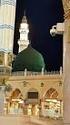 THE MOSQUE IN ISLAM Place of Worship and Remembrance of Allah Mosques are special places of worship for Muslims. Five times every day Muslims meet in the mosque and pray together; standing before God,
Africa Before the Slave Trade
 Africa Before the Slave Trade Overview of African Kingdoms Ghana and Songhai Ghana (Wagadu) is the earliest known empire of the western Sudan, came into the history books around the eighth century but
Marketing in Context
 Marketing in Context This Page Intentionally Left Blank MARKETING IN CONTEXT Setting the Scene Chris Hack ley Chris Hackley 2013 Softcover reprint of the hardcover 1st edition 2013 ISBN 978-1-137-29710-5
Muslims want their own Shari ah Law over British rule
 Most terrorists are Muslims Actually out of a reported 294 terrorist attacks across Europe in 2009, only one was classified as an Islamic terrorist attack (Europol 2010). Although some politicians and
RESPONSE TO THE GOVERNMENT REVIEW OF THE MUSLIM BROTHERHOOD 22 DECEMBER 2015
 RESPONSE TO THE GOVERNMENT REVIEW OF THE MUSLIM BROTHERHOOD 22 DECEMBER 2015 PHOTO: ALLEGED MUSLIM BROTHERHOOD HEADQUARTERS IN LONDON CAMPAIGN AGAINST ANTISEMITISM PO Box 2647, London W1A 3RB Registered
UNDERSTANDING OTHER RELIGIONS Week 3: Islam 1. LEADER PREPARATION
 This includes: 1. Leader Preparation 2. Lesson Guide UNDERSTANDING OTHER RELIGIONS Week 3: Islam 1. LEADER PREPARATION LESSON OVERVIEW When you look at the major world religions, Islam is one of the youngest.
Saudi Universities on the World Map
 Ministry of Higher Education, General Administration for Planning & Statistics, 2011 King Fahd National Library Cataloging in press Saudi Arabia, Ministry of Higher Education Deputyship of the Ministry
Saudi Arabia s Economic Cities. Economic Cities Agency SAGIA
 Saudi Arabia s Economic Cities Economic Cities Agency SAGIA Economic Cities: Pockets of Competitiveness Provide a comprehensive package to investors Economic City Concept Mega initiative New Concept Integrated
Jainism Jainism also began in India; religion teaches ahimsa nonviolence - Jains believe all living things have souls and should not be hurt
 Lesson 3 Buddhism and India s Golden Age MAIN IDEAS Belief System A teacher called the Buddha developed a new religion that focused on helping people to escape suffering. Government The Maurya rulers united
Unit 4 Lesson 8 The Qin and Han Dynasties
 Unit 4 Lesson 8 The Qin and Han Dynasties Directions Read the False statements below. Replace each underlined word with one from the word bank that makes each sentence True. Word Bank Ying Zheng army copper
"The House of Saud" Teacher s Guide
 "The House of Saud" Teacher s Guide ABOUT THE FILM The House of Saud has controlled every aspect of Saudi life and politics since the kingdom was established in 1932. But outside the Desert Kingdom, little
The importance of Prayer life
 The importance of Prayer life Prayer means communication with God. Prayer will lead us into dependence upon God. A person completely declared before God I am nothing and God is supreme. And declare without
Unit 7 The Spread of Religions
 Unit 7 The Spread of Religions Section 1 Unit Materials Questions To Consider Question 1. How did Buddhism, Christianity, and Islam spread across the world, and why are they practiced so far from their
The Islamic World. Mecca Medina Sunnis Shiite. Supplementary Reading Materials
 The Islamic World World History Unit: 4 Lesson: 1 Duration: 4 days Lesson Synopsis: This lesson introduces the students to the beginnings and traditions of Islam. It strives to present an objective study
Young Shakespeare s Young Hamlet
 Young Shakespeare s Young Hamlet History of Text Technologies, developed in conjunction with an interdisciplinary research program at Florida State University, is dedicated to new scholarship and theory
Muslims of Europe Charter
 Muslims of Europe Charter Since early 2000, the Federation of Islamic Organisations in Europe (FIOE) debated the establishment of a charter for the Muslims of Europe, setting out the general principles
Egyptian History 101 By Vickie Chao
 Egyptian History 101 By Vickie Chao 1 A long time ago, before Egypt was a united country, there were two kingdoms -- Upper Egypt and Lower Egypt. Upper Egypt was in the south. It controlled the areas along
Arab Charter on Human rights
 Arab Charter on Human rights Adopted in Cairo on 15 September 1994, translated from Arabic The Governments of the member States of the League of Arab States Preamble Given the Arab nation's belief in human
a new anthropology of islam
 a new anthropology of islam In this powerful, but accessible, new study, draws on a full range of work in social anthropology to present Islam in ways that emphasize its constitutive practices, from praying
The Xenophile Historian
 The Xenophile Historian Map Gallery Map 1: The spread of civilization in thousand-year steps. The purple areas became civilized by 3000 B.C. Civilization spread to the green areas by 2000 B.C., yellow
DBQ: Judaism, Islam and Christianity
 DBQ: Judaism, Islam and Christianity Mr. Jones, Schroon Lake Central School Historical Context Islam and Christianity share a common root in Judaism. Though often on opposing sides in world history and
War, Peace and International Relations in Contemporary Islam:
 The Jerusalem Institute for Israel Studies Established by the Charles H. Revson Foundation War, Peace and International Relations in Contemporary Islam: Muslim Scholars on Peace-Treaty with Israel Yitzhak
TUNISIA. United Nations General Assembly. 6o th Session. Speech by Mr. Abdelwaheb Abdallah, Minister of Foreign Affairs. (New York September 19, 2005)
 TUNISIA United Nations General Assembly 6o th Session Speech by Mr. Abdelwaheb Abdallah, Minister of Foreign Affairs CHECK AGAINST DELIVERY (New York September 19, 2005) PERMANENT MISSION OF TUNISIA TO
2015.16 Seventh Grade, Social Studies, Quarter 1
 2015.16 Seventh Grade, Social Studies, Quarter 1 The Fall and Legacy of Rome and the Early Modern World Civilizations of Africa, China, and the Islamic World: Students analyze the legacy of the Roman Empire
AFRICAN KINGDOMS. Ghana. Around AD 800 the rulers of many farming villages united to create the kingdom of Ghana.
 AFRICAN KINGDOMS In Africa, towns soon became part of an important trade network. Gold and salt were the most important products traded. People needed salt in their diets to prevent dehydration. There
Examples of International terrorist attacks since 9/11
 PAPER ONE INTERNATIONAL TERRORISM: THE THREAT Any discussion of the Government s strategy to reduce the threat from international terrorism to the UK and its citizens must begin with the nature of the
BACHELOR OF HUMAN SCIENCES IN HISTORY AND CIVILIZATION COURSE SYNOPSES
 BACHELOR OF HUMAN SCIENCES IN HISTORY AND CIVILIZATION COURSE SYNOPSES Introduction to History and Civilization Course Code HIST 1000 This course introduces students to basic concepts and approaches in
Note Taking Study Guide THE BYZANTINE EMPIRE
 SECTION 1 Note Taking Study Guide THE BYZANTINE EMPIRE Focus Question: What made the Byzantine empire rich and successful for so long, and why did it finally crumble? As you read this section in your textbook,
Year 2 History: Ancient Egypt Resource Pack
 Year 2 History: Ancient Egypt Resource Pack This pack includes the following lessons: Locating Egypt The River Nile Archeology Hieroglyphics Pharaohs Every effort has been made to seek permission for the
Population and Household Census, Kingdom of Saudi Arabia 2010: Facts and Figures
 International Journal of Humanities and Social Science Vol. 3 No. 16 [Special Issue August 213] Population and Household Census, Kingdom of Saudi Arabia 21: Facts and Figures Asharaf Abdul Salam Center
The Printing Press: A Vehicle for Modernity
 The Printing Press: A Vehicle for Modernity November 3, 2010 Ailsa Lapp COMM345 Assignment #1 Professor: Virginia McKendry Throughout the history of civilization, the invention of printing has been argued
World History: Essential Questions
 World History: Essential Questions Content Standard 1.0: Culture encompasses similarities and differences among people including their beliefs, knowledge, changes, values, and traditions. Students will
Statement by IDB Governor for Arab Republic of Egypt
 Statement by IDB Governor for Arab Republic of Egypt The 39 th Annual Meeting of the IDB Board of Governors Jeddah Kingdom of Saudi Arabia 26-28 Sha baan 1435H (24-26 June 2014) Original Text Arabic Your
Islamic Finance. Global. Economic Crisis. National Council on. U.S.-Arab Relations. Brings Together Experts to Discuss. and. the
 National Council on U.S.-Arab Relations Brings Together Experts to Discuss Mr. Michael McMillen, Partner, Corporate Practice Group, Fulbright & Jaworski LLP Islamic Finance and Global the Economic Crisis
The Role of Women in Ancient Egypt
 Princess with offerings The role, contribution and influence women played in ancient Egyptian society extended well beyond their daily life and into the afterlife, with letters to the dead imploring help
Send all inquiries to: Glencoe/McGraw-Hill 8787 Orion Place Columbus, Ohio 43240-4027 ISBN 0-07-824996-1. Printed in the United States of America
 Copyright by The McGraw-Hill Companies, Inc. All rights reserved. Permission is granted to reproduce the material contained herein on the condition that such material be reproduced only for classroom use;
GCE. Religious Studies. Mark Scheme for June 2011. Advanced GCE Unit G588: Islam. Oxford Cambridge and RSA Examinations
 GCE Religious Studies Advanced GCE Unit G588: Islam Mark Scheme for June 2011 Oxford Cambridge and RSA Examinations OCR (Oxford Cambridge and RSA) is a leading UK awarding body, providing a wide range
WELCOME TO GOD S FAMILY
 WELCOME TO GOD S FAMILY To all who received him, to those who believed in his name, he gave the right to become children of God children born not of natural descent, nor of human decision or a husband
The contribution of the Saudi woman in economic development
 The contribution of the Saudi woman in economic development Haga Elimam Lobna Abdullah Nisreen Al-Banawi Abla Bokhari King Abdulaziz University, Jeddah, Saudi Arabia Keywords Women contribution, Economic
Predicting the Implications on Urban Planning of Women Drivers in Saudi Arabia
 Predicting the Implications on Urban Planning of Women Drivers in Saudi Arabia Alaa AlRadwan Drury University Under the direction of Prof. Carlo Ratti SENSEable City Lab Department of Urban Studies and
The use of mosques in the Gaza Strip for military purposes by Hamas and other terrorist organizations: the case of the Al-Farouq Mosque
 July 13, 2014 The use of mosques in the Gaza Strip for military purposes by Hamas and other terrorist organizations: the case of the Al-Farouq Mosque The Al-Farouq Mosque in the Nuseirat refugee camp after
How did the histories of the Byzantine Empire and Western Europe differ during the era of third-wave civilizations?
 How did the histories of the Byzantine Empire and Western Europe differ during the era of third-wave civilizations? Western Europe. Frankish Kingdoms. Roman Catholic Church. Holy Roman Empire. Eastern
Special Education Programs for Students with Intellectual Disability in Saudi Arabia: Issues and Recommendations
 Special Education Programs for Students with Intellectual Disability in Saudi Arabia: Issues and Recommendations Ghaleb Hamad Alnahdi, Ph.D. Special Education Department, College of Education Salman bin
Summarize how Portugal built a trading empire
 Objectives Summarize how Portugal built a trading empire in. Analyze the rise of Dutch and Spanish dominance in the region. Understand how the decline of Mughal India affected European traders in the region.
CRS Report for Congress
 CRS Report for Congress Received through the CRS Web Order Code RS21745 February 23, 2004 Summary Islam: Sunnis and Shiites Febe Armanios Analyst in Middle East Religions and Cultures Foreign Affairs,
Q&A with Author Jean Sasson: About Saudi Arabia. #1 Q: Was it easy for you to get a job and work in Saudi Arabia?
 Q&A with Author Jean Sasson: About Saudi Arabia #1 Q: Was it easy for you to get a job and work in Saudi Arabia? A: No, it was not easy to get a job in the kingdom, I well remember how difficult it was
Timeline of Egyptian History. Ancient Egypt (Languages: Egyptian written in hieroglyphics and Hieratic script)
 Timeline of Egyptian History 1 Ancient Egypt (Languages: Egyptian written in hieroglyphics and Hieratic script) Timeline of Egyptian History 2 Early Dynastic Period 3100 2686 BCE 1 st & 2 nd Dynasty Narmer
The Disciple Driven Church
 The Disciple Driven Church An Old Expression of Faith in a Fresh New Way Contributors: Dr. Terry & Suzette Goodwin What is Different About the Disciple Driven Church? Question? Is your faith focused more
PURPOSE OF LIFE What Does Islam Say About Life's Purpose?
 1 of 6 4/7/12 2:39 PM Home Page Email Order Tapes Islam Live Broadcast PURPOSE OF LIFE What Does Islam Say About Life's Purpose? Have you ever asked yourself these questions? "What is the purpose of L
Consulate General of the United States of America Dhahran, Saudi Arabia
 Consulate General of the United States of America Dhahran, Saudi Arabia LAWYER S LIST The following lawyers in the Dhahran / Al-Khobar / Dammam area have expressed interest in providing legal services
Mediatized Worlds. Copyright material from - licensed to npg - PalgraveConnect - 2016-09-17
 Mediatized Worlds This page intentionally left blank Mediatized Worlds Culture and Society in a Media Age Edited by Andreas Hepp and Friedrich Krotz University of Bremen, Germany Introduction, selection
Japanese Saudi Business Opportunities Forum ~ Education & Human Resource Development ~ Employment System and Study Abroad Mindset of Japanese Youth
 Japanese Saudi Business Opportunities Forum ~ Education & Human Resource Development ~ Employment System and Study Abroad Mindset of Japanese Youth Mitsuhide SHIRAKI, Ph.D. Prof. Faculty of Political Science
A CHARTER OF EUROPEAN IDENTITY. Foreword
 A CHARTER OF EUROPEAN IDENTITY 28 October 1995 Foreword In a speech to the European Parliament on March 8th, 1994, the poet Václav Havel, President of the Czech Republic, indicated the need for a Charter
Kansas Board of Regents Precollege Curriculum Courses Approved for University Admissions
 Kansas Board of Regents Precollege Curriculum Courses Approved for University Admissions Original Publication April 6, 2011 Revision Dates June 13, 2011 May 23, 2012 Kansas Board of Regents Precollege
Teacher s Guide For. Ancient History: The Greek City-State and Democracy
 Teacher s Guide For Ancient History: The Greek City-State and Democracy For grade 7 - College Programs produced by Centre Communications, Inc. for Ambrose Video Publishing, Inc. Executive Producer William
Studies of Religion I
 2001 HIGHER SCHOOL CERTIFICATE EXAMINATION Studies of Religion I Total marks 0 General Instructions Reading time minutes Working time 1 1 2 hours Write using black or blue pen Write your Centre Number
The Sudanic African Empires: Ghana / Mali / Songhay & The Swahili City States of East Africa
 The Sudanic African Empires: Ghana / Mali / Songhay & The Swahili City States of East Africa AP World History Mr. Blankenship Ghana Mali Songhay Swahili States The Kingdom of Ghana emerged c. 5 th century
Family Law in Saudi Arabia
 University of Birmingham www.b-ham Family Law in Saudi Arabia Pre-sessional course Stage -3-2009 Abdul-wahab Alkhadhari ID:0857629 Patrick Kearney Introduction This essay will investigate Family law in
Ministry Deputyship for Planning and Information
 Ministry Deputyship for Planning and Information 1 THE SAUDI WOMAN IN HIGHER EDUCATION Kingdom of Saudi Arabia Ministry of Higher Education Ministry Deputyship for Planning and Information General Department
Palgrave Macmillan Studies in Banking and Financial Institutions
 Palgrave Macmillan Studies in Banking and Financial Institutions Series Editor: Professor Philip Molyneux The Palgrave Macmillan Studies in Banking and Financial Institutions are international in orientation
Customary and Family Law: a Gender approach in Afghanistan
 Customary and Family Law: a Gender approach in Afghanistan BY XAVIERA MEDINA DE ALBRAND 1 1 Xaviera Medina de Albrand is a communication expert. She has been managing communications campaigns on social
Family Law. http://www.pbookshop.com. Blackstone s Statutes on. Mika Oldham. 23rd edition. edited by. MA, PhD. Fellow of Jesus College, Cambridge
 Blackstone s Statutes on Family Law 0 0 3rd edition edited by Mika Oldham MA, PhD Fellow of Jesus College, Cambridge 3xX 6xX 0 3 6 0 3 6 30 3 6 0 3 6 0 xx Great Clarendon Street, Oxford, OX6DP, United
Second Grade Ancient Greece Assessment
 Second Grade Ancient Greece Assessment 1a. Which letter is labeling the Mediterranean Sea: A or B? A B 1b. Which body of water is labeled with an A? A 1c. Label the Mediterranean Sea. Then, answer the
Pacemaker World Geography and Cultures. correlated to. Florida Sunshine State Standards Social Studies Grades 6-8
 Pacemaker World Geography and Cultures correlated to Florida Sunshine State Standards Social Studies Grades 6-8 Pacemaker World Geography and Cultures Pearson Learning Group correlated to Sunshine State
CHINA OVERVIEW: A BRIEF HISTORY OF CHINESE DYNASTIES. Student Handouts, Inc.
 CHINA OVERVIEW: A BRIEF HISTORY OF CHINESE DYNASTIES Student Handouts, Inc. GEOGRAPHY OF CHINA Larger than the United States Climate varies North Temperate and cold South Subtropical Erosion Floods and
THE MANAGEMENT OF HAJJ OPERATIONS
 AFRICAN TRAINING AND RESEARCH CENTRE IN ADMINISTRATION FOR DEVELOPMENT TANGIER (MOROCCO) THE MANAGEMENT OF HAJJ OPERATIONS Series: Studies and Documents N' 10, Vol. 1 1999 Content No 10 1999 Pages 1 Forward
I. FAIR PLAY WHERE DOES IT COME FROM? WHAT IS IT?
 I. FAIR PLAY WHERE DOES IT COME FROM? WHAT IS IT? Fair play is a term that is employed in various ways. Although mainly associated with sporting vocabulary, it is also applied to different situations where
Fundamentalism and out-group hostility Muslim immigrants and Christian natives in Western Europe. Ruud Koopmans
 published in: WZB Mitteilungen, December 2013 Fundamentalism and out-group hostility Muslim immigrants and Christian natives in Western Europe Ruud Koopmans In the heated controversies over immigration
Quality of High-Tech E-learning in Saudi Universities
 , pp. 319-326 http://dx.doi.org/10.14257/ijunesst.2014.7.6.28 Quality of High-Tech E-learning in Saudi Universities Abdullah Saleh Alshetwi Beihang University, Beijing, 100191 (China) [email protected]
At The Intersection of Isolation and Otherness Ever since Ohio-born Hans
 PROFESSIONAL ANALYSIS At The Intersection of Isolation and Otherness Media framing about Muslims after 9/11 has produced many harmful consequences. The stereotypes and misconceptions that are developed
Click to read caption
 2. Judaism, Christianity, and Islam The world religions that arose in the Middle East Judaism, Christianity, and Islam share some common traits. The most important is monotheism, the belief in a single,
BUILDING ON A STRONG, FIRM FOUNDATION
 A Sermon BUILDING ON A STRONG, FIRM FOUNDATION presented by James Garubanda June 1, 2008 St. Matthew s Episcopal Church, 2136 Carter Avenue, Saint Paul, MN 55108 I greet you all in the name of Jesus Christ.
SSWH3 THE STUDENT WILL EXAMINE THE POLITICAL, PHILOSOPHICAL, AND CULTURAL INTERACTION OF CLASSICAL MEDITERRANEAN SOCIETIES FROM 700 BCE TO 400 CE.
 SSWH3 THE STUDENT WILL EXAMINE THE POLITICAL, PHILOSOPHICAL, AND CULTURAL INTERACTION OF CLASSICAL MEDITERRANEAN SOCIETIES FROM 700 BCE TO 400 CE. A. COMPARE THE ORIGINS AND STRUCTURE OF THE GREEK POLIS,