
Endodontic Mishaps DETECTION OF MISHAPS ENDODONTIC MISHAPS
|
|
|
- Kelley George
- 10 years ago
- Views:
Transcription
1 8 Endodontic Mishaps DETECTION OF MISHAPS Endodontic mishaps or procedural accidents are those unfortunate accidents that happen during treatment, some owing to inattention to detail, others being totally unpredictable. Table 8-1 outlines a list of the most common mishaps. Table 8-1 ENDODONTIC MISHAPS Access related Treating the wrong tooth Missed canals Damage to existing restoration Access cavity perforations Crown fractures Instrument related Ledge formation Cervical canal perforations Midroot perforations Apical perforations Separated instruments and foreign objects Canal blockage Obturation related Over- or underextended root canal fillings Nerve paresthesia Vertical root fractures Miscellaneous Post space perforations Irrigant related mishaps Tissue emphysema Instrument aspiration and ingestion

2 216 PDQ ENDODONTICS How can mishaps be prevented? Learn from experience! Unfortunately, someone, dentist or patient must pay for this learning curve, but we do learn from our mistakes. However, there is one cardinal rule: If a mistake will affect the outcome of the case, the patient must be informed at once, and the mistake must be noted in the record along with a statement that the patient was informed of the mistake. Too many court cases are lost because of this neglect. Also, patients should be informed before treatment (informed consent) of any possible consequences such as the possibility of a porcelain crown fracture. In addition, if correction of the mishap is beyond the dentist s skill or knowledge, the case should be referred to someone better equipped to handle its correction, and the dentist should be liable for the correction fee. Don t argue, don t be stubborn, and don t try to cover it up. Remember Watergate! Admit your mistake and make every effort to have it corrected. ACCESS-RELATED MISHAPS Treatment of the Wrong Tooth Treatment of the wrong tooth can be so easily prevented. One should make sure through inquiry, testing, examining, and radiography that one has confirmed which tooth requires treatment and then mark it with a felt-tip pen (Figure 8-1). Missed Canals Additional canals in the mesial roots of maxillary molars and the distal roots of mandibular molars are the most frequently missed. Second canals in lower incisors, and second canals and bifurcated canals in lower premolars, as well as third canals in upper premolars are also missed. One must be diligent and prepare adequate occlusal access! Always expect there will be an extra canal. Magnification with either telescopic lenses or a surgical microscope is indispensable (Figure 8-2). Damage to an Existing Restoration Porcelain crowns are the most susceptible to chipping and fracture. When one is present, use a water-cooled, smooth diamond point and do not force the stone. Let it cut its own way (Figure 8-3). Also, do

3 Endodontic Mishaps 217 Figure 8-1 Tooth no. 25 has been marked with a felt-tip pen in preparation for rubber dam placement. Marking the tooth prevents the incorrect placement of the dam. Figure 8-2 Radiograph used in search for a second, missed canal. By following the lamina dura of the root (small arrows), the eccentric position of the file (large arrow) suggests the possible presence of a missed canal. However, the file has actually passed through a perforation and is traversing the periodontal ligament. Look for bleeding in the pulp chamber.

4 218 PDQ ENDODONTICS Figure 8-3 Forcing an accelerated tapered bur or diamond severely crazes the lingual enamel. If the crown had been a porcelain jacket, it would have fractured. The instrument should be allowed to cut its own way. not place a rubber dam clamp on the gingiva of any porcelain or porcelain-faced crown. Access Cavity Perforations Often the first sign of an access cavity perforation is blood in the cavity or the patient complaining of a taste of NaOCl. This most frequently happens in the floor of molar preparations when one is searching for a third or fourth canal. The site of the perforation must be found, the floor of the preparation cleansed, the bleeding stopped, and mineral trioxide aggregate (MTA) applied to the perforation (Figure 8-4). Because it takes MTA more than 3 hours to set, it should be covered with a fast-setting cement. The other canal orifices should be protected by placing paper points or an instrument in the canals to prevent blockage. In the event MTA cannot be immediately applied, it is best to stop the bleeding, place calcium hydroxide over the wound, place a good temporary filling, and set an appointment with the patient, the sooner the better. The perforation area will be dry at the next appointment; then MTA can be applied and treatment continued.

5 Endodontic Mishaps 219 Figure 8-4 Peroration repair using mineral trioxide aggregate (MTA). Crown Fractures Remember, preparing an endodontic access cavity in a tooth, particularly a molar or premolar with a large restoration, materially weakens the crown. Infrequently the crown fractures, either during preparation or at a subsequent appointment. One of the frequent causes is failure to relieve the occlusion. If the fracture is chisel shaped and a cusp breaks off down to the periodontal ligament, the tooth can usually be salvaged. If the fracture extends through the pulp chamber and down into the root, however, the case is hopeless and the tooth should be extracted. (See Chapter 9, Management of Endodontic Emergencies.) INSTRUMENTATION-RELATED MISHAPS Overzealous cleaning and shaping have lead to many mishaps, zipping and perforations among them (Figure 8-5). Many of these iatral accidents begin with ledging during canal preparation.

6 220 PDQ ENDODONTICS A B Figure 8-5 Vertical root fracture associated with overzealous canal preparation. A, Postoperative radiograph shows distal canals prepared and filled leaving a thin-walled root (arrow). B, Twelve months later the patient reported with a vertical root fracture Ledge Formation Many ledges are caused from inadequate access. The operator does not retain complete control over the direction of the tip of the instrument and it gouges into the wall of the canal starting a ledge (Figure 8-6A). Newer instruments with noncutting tips have materially

7 Endodontic Mishaps 221 Figure 8-6 Cause and correction of ledge formation in a curved canal. A, A large, straight instrument used in a curved canal cuts a ledge at the curve. B, The ledge may be painstakingly removed with a severely curved stainless steel file rasping against the ledge (arrows) in the presence of NaOCl or a lubricant such as Prolube (Dentsply/Tulsa). To bypass the ledge, the file must be severely curved and hug the inside wall at the curve. reduced this problem. The rounded tip does not cut into the wall but slips by it. Curved roots are another impediment in canal preparation. This is especially true near the apex of maxillary lateral incisors and the palatal root of maxillary first molars. Small, flexible instruments with noncutting tips negotiate these curves, but larger, stiffer instruments start a ledge that can develop into a perforation. If the instrument can no longer be inserted into the canal to full working length, one should suspect that a ledge has been formed. There also is a change in tactile sensation, a feeling that the instrument is no longer engaging the walls. Stop! Take a radiograph with the instrument in place. To correct the ledge, return to a much smaller stainless file and curve the tip so that the file clings to the inner wall, away from the curve. Slip the file by the curve to the full working length, then file back against the ledge to remove the knick in the wall. Repeat the filing with the next size curved file, and so on, until the ledge is removed and larger instruments slip by the ledge area (Figure 8-6B). Be sure to use plenty of lubrication and irrigation to remove the dentin chips that tend to pack at the apex. Do not use ethylenediaminetetraacetic acid (EDTA) for chelation because it tends to intensify the ledge. Precurved stainless instruments and nickel-titanium instruments obviate the start of these problems.

8 222 PDQ ENDODONTICS Perforations Canal perforations may be categorized by their location. Access cavity perforations, such as perforations through the floor into the furcation, have already been discussed. Root perforations can be identified as cervical, midroot, or apical. These are usually caused by three errors: creating a ledge and persisting until a perforation develops, or wearing a hole in the lateral surface of the midroot by overinstrumentation (canal stripping), or using too long an instrument and perforating the apex. Cervical perforations usually occur when too large an instrument is used to widen canal access, frequently a Gates-Glidden or Peeso drill. The first indication is the appearance of blood in the cavity. Again, the bleeding is stopped and MTA is applied to the perforation. Cotton should be placed in the chamber and a good temporary placed to allow time for the MTA to set (> 3 hr). Preparation is continued at a subsequent appointment. Midroot perforations are usually caused by zipping, frequently in the distal wall of a curved mesial root of a mandibular molar (Figure 8-7). Again, blood in the canal indicates that a perforation has occurred. By using paper points in the canal, the location of the perforation can be determined (Figure 8-8A). MTA is the material of choice to close the perforation (Figure 8-8B and C); an appointment is made with the patient for continued treatment. Apical perforations are usually due to overeager instrumentation, just plain drilling out through the apical orifice. Again, this can usually be determined with paper points they appear bloody at the tip (Figure 8-9). If a canal curves at or near the apex, using larger and larger instruments will cause zipping that hollows out this area and leads to perforation. Remember, a curved canal is gradually straightened through cleaning and shaping. A straight line is the shortest distance between two points; therefore, the cleaning and shaping actually shorten the working length! One has to compensate for this change by shortening the working length on the shaft of the instrument. Maybe the difference will only be 0.5 mm. Confirm the new length by radiographing an instrument in place. Apical perforation destroys the resistance form. This means that the tip of the primary gutta-percha point must be blunted and fit to place so that it does not extend beyond the orifice, even when compaction is exerted during obturation. A good method is to deposit

9 Endodontic Mishaps 223 a tiny pack of MTA at the apex (see Figure 8-8B), checking its placement radiographically. The patient returns at a later appointment, after the MTA has set and plugs the apical foramen. At the subsequent appointment, this new plug (resistance form) allows compaction of the gutta-percha. Later, MTA will encourage cementum formation at the apex (see Figure 6-14). A B Figure 8-7 A, Lateral perforation by wearing through the thin distal wall of the mesial root. Note the open margin (arrowhead). B, Schematic cross-section of a curved root depicting the thickness of walls, safety zone, and danger zone.

10 224 PDQ ENDODONTICS A B C Figure 8-8 A, Paper points confirming strip perforation. The area of hemorrhage marked on the paper point indicates the area where the strip occurred. B, MTA repair of a furcation perforation in a dog. The MTA is shown at the top of the image, above the perforation. Complete cementum repair below the perforation lies above normal bone and the periodontal ligament of the two roots. Courtesy of M. Torabinejad. C, Curved needle and straight needle used with the MAP system syringe (Roydent Dental Products) for the placement of MTA in the canals to repair midroot and apical perforations.

11 Endodontic Mishaps 225 Separated Instruments and Foreign Objects Many objects have been reported to break or separate in the root canal amalgam, files and reamers, lentulo spirals, Gates-Glidden drills, and burs. In addition, patient-placed foreign objects, such as nails, pencil lead, toothpicks, tomato seeds, and hat pins, have been reported in root canals. Files and reamers are the most frequent offenders, and since the advent of nickel-titanium rotary instruments, breakage (euphemistically called separation ) has increased. Because these new instruments are so flexible, unrealistic strains are placed upon them, especially in severely curved canals and at higher rotary speeds. The first caveat is prevention. Do not force any endodontic instrument, especially in a twisting or rotary motion. Advancement down the canal by a pecking or watch-winding motion, rather than a forceful advance, is de rigueur. Use of these new rotary instruments requires a learning curve, so one should practice their proper use on extracted teeth before starting in the mouth. Also, instruments should be inspected after their use to determine whether they have been stressed (Figure 8-10). A safe rule of thumb is to use rotary instruments only once. At first this seems costly, but all one has to do is break an instrument once, and the cost in lost time and frustration would pay for dozens of instruments. If a broken instrument can be grasped, it may be removed with Stieglitz forceps. Failing that, using fine ultrasonic instruments to loosen and float out the broken piece has proven very successful. If all retrieval fails, broken instruments have been successfully bypassed and a successful root filling placed around them. If a broken instrument extends out the apex into medullary bone, it should probably be removed surgically and a retrofilling placed (Figure 8-11). Figure 8-9 Location of hemorrhage at the tip of a paper point suggests apical perforation.

12 226 PDQ ENDODONTICS Figure 8-10 Instruments showing stress (arrows) from faulty instrumentation techniques. Instruments with these signs of potential fracture must be discarded. A Figure 8-11 Treatment of a broken instrument past the apex. A, When the canals were re-treated, the broken file could not be removed. Courtesy of D. Peters. (Continued on the next page). Canal blockage can occur during canal enlargement. Files are known to compact debris at the apex; even vital tissue can be compacted against the apical restriction. Suddenly, working length is shorter because the instruments are working against the packed mass at the apex. A radiograph will confirm this suspicion. Correction is made by recapitulation starting with finer instruments used in a

13 Endodontic Mishaps 227 B C Figure 8-11 Continued. Treatment of a broken instrument past the apex.b, Apical resection of the mesial root to remove the file fragment. No retrofill was necessary in this instance. C, Reevaluation at 12 months shows satisfactory healing. Courtesy of D. Peters. quarter-turn motion. Adding a chelating agent such as EDTA is helpful. One must be careful, however, not to produce a ledge or perforation. On the other hand, sterile dentin chips at the apex, formed during preparation, help to block the foramen and prevent overcompaction, and dentin chips have been shown to stimulate cementum formation at the apex.

14 228 PDQ ENDODONTICS OBTURATION-RELATED MISHAPS Over- and Underextended Root Canal Fillings The most preferred location for apical termination of both the canal preparation and the root filling is the dentinocemental junction, often the most restrictive area of the canal. This point is just short of the radiographic apex. Slight extrusion of root canal filling material has been called a puff or button and in some obturation methods is thought to be proof that the canal is now impermeable. Healing against these slight overfills is usually inconsequential. Loss of apical constriction by perforation is often the cause of overextension. There is no barrier against which to compact the root filling, but gross overextension may well deter healing and may even end up in the maxillary sinus or the mandibular canal (Figure 8-12A). Forceful spinning out the apex of sealers or paste-type fillers from a lentulo spiral may leave massive deposits of material that act as a neurotoxic agent against the sinus lining or the mandibular canal contents. Nerve paresthesia is often the result (Figure 8-12B). For massive overfills, removal by surgery followed by a retrofilling is often the only solution (Figure 8-12C). Vertical Root Fractures A sudden crunching sound (often referred to as crepitus ) during obturation is a clear indication that the root has fractured. This may take place during compaction, more often during lateral than vertical compaction. Sometimes vertical fractures, called silent fractures, can happen months or years later. It is suspected that stresses built up during compaction are relieved later, following additional stress from mastication or clenching. This is especially true when overenlargement and thinning of the dentin walls has occurred. Seating of posts, especially tapered posts, is another cause of vertical fractures. Also, when post preparations have removed so much of the root structure that the tooth is materially weakened, the tooth is easily subject to fracture. There is no treatment if the fracture extends down the root. Prevention, then, is the only alternative. Not overpreparing the canals to accompany large filling instruments or posts is of the first order. Then, avoiding excess pressure during compaction of guttapercha fillings or the cementation of posts is necessary.

15 Endodontic Mishaps 229 A B C Figure 8-12 A, Apical perforation of a premolar and the floor of the maxillary sinus. Lentulo spiral paste filling overfilled into the sinus, leading to sinusitis. B, The is a risk in using a paste-type filling material and a lentulo spiral paste filler. Note that part of the instrument is still in the canal (small arrow). More serious is the presence of paraformaldehyde paste in the mandibular canal (open arrow). Nerve paresthesia is the result. C, Gross overfilling of an incisor leads to constant discomfort. The gutta-percha must be removed surgically.

16 230 PDQ ENDODONTICS MISCELLANEOUS MISHAPS Irrigant-Related Mishaps The fear of the toxicity of sodium hypochlorite as an irritant of periradicular tissue has tended to deter its use, and for good reason! Forcibly injecting NaOCl or any other irrigating solution into the apical tissue can be a disastrous (Figure 8-13). The same can be said for hydrogen peroxide (Figure 8-14). The patient may immediately complain of severe pain. Swelling can be violent and alarming. Of course the concentration of the irrigant will be a major factor, for example, 5.25% versus 1.3% NaOCl. Antihistamines, ice packs, intramuscular steroids, even hospitalization and surgical intervention may be needed. Paresthesia, scarring, and muscle weakness may follow. Ending up in court may be the least of one s problems. Prevention, of course, is the only solution! Inadvertent extrusion of irrigants past the apex can be avoided by using passive placement of a modified needle. The needle must not be wedged in the canal. The blunt-nosed, side-orifice ProRinse needle (Dentsply/Tulsa Dental) is the one recommended; it is carried down the canal until it stops, and then is withdrawn 1 mm or so (Figure 8-15). No great force is Figure 8-13 Massive reaction to an injection of full-strength sodium hypochlorite out of the apical foramen. Demerol controlled the pain poorly. Swelling, pain, and discoloration disappeared within 10 days. Courtesy of C.L. Sabala and S.E. Powell.

17 Endodontic Mishaps 231 exerted on the plunger of the syringe. Moreover, if a patient warns the dentist of an allergy to household bleach, substitiute chloramphenicol or Bio Pure MTAD, (Dentsply/Tulsa Dental). Figure 8-14 A and B, Severe tissue emphysema caused by injecting hydrogen peroxide irrigant into the tissues. Courtesy of K.S. Bhat. Figure 8-15 ProRinse needles (Dentsply/Tulsa) that irrigate through a side vent eliminate the possibility of puncturing the apical foramen or the water cannon effect from open-ended needles.

18 232 PDQ ENDODONTICS Tissue Emphysema Tissue emphysema, although relatively uncommon, should not be overlooked. Two actions may cause this to happen: a blast of air to dry a canal, and exhaust air from a high-speed drill directed toward the tissue and not evacuated to the rear of the handpiece during apical surgery. Emphysema from a blast of air down the canal is more likely to happen with youngsters, in whom the canals in anterior teeth are relatively large. The usual sequence of events is rapid swelling, erythema, and crepitus, the latter being pathognomonic of erythema. If the air pocket breaks through into the neck region, there is a sudden swelling of the neck, the voice sounds brassy, and the patient has difficulty breathing. If it breaks through into the mediastinum, a crunching noise is heard on auscultation. Death can follow! Although the problem should not be treated lightly, the majority of reported cases have followed a benign course to total recovery. Prevention is simple: use paper points. Do not blow air directly down an open canal. Use the Venturi effect : blow air across the canal opening to aid drying, and employ a handpiece that exhausts the spent air out the back of the handpiece rather than into the operating field. Instrument Aspiration and Ingestion Accidents of instrument aspiration and ingestion can be prevented so easily! Always use a rubber dam! There is no reason an endodontic instrument should ever be dropped down a patient s throat. Long ago, endodontic instruments had a hole in the handle so one could tie a piece of dental floss to the instrument, supposedly to retrieve it. It is so unnecessary! If one insists on placing rubber dam clamps before the dam is placed, the clamp should probably be fitted with a long string of dental floss to aid in its recovery (Figure 8-16). If instrument aspiration or ingestion is apparent, the patient must be taken immediately to a medical emergency facility for examination, and the dentist must accompany the patient. This examination should include radiography of the thorax and abdomen. It is helpful if the dentist takes a sample file along so the radiologist has a better idea of what to look for. The results may prove to be disastrous! The instrument may lie in the pharynx or the abdomen (Figure 8-17). Surgical intervention is the only solution (Figure 8-18). Be prepared for a session in court.

19 Endodontic Mishaps 233 Figure 8-16 Routine placement of floss around the rubber dam clamp allows retrieval in the event the patient inhales it. Figure 8-17 Swallowed endodontic instrument because a rubber dam was not used. The radiograph was taken 15 minutes after the broach was swallowed. Courtesy of B. Heling and I. Heling.

20 234 PDQ ENDODONTICS Figure 8-18 Appendix removed from a patient after an endodontic file ended up in the appendix. Rubber dam placement would have prevented this accident. Courtesy of L.C. Thomsen and colleagues.

The Obvious and the Obscure:Diagnostic Steps for Crack Confirmation
 Cracking the Cracked Tooth Code In response to your requests... At the end of each issue of ENDODONTICS: Colleagues for Excellence, the American Association of Endodontists (AAE) asks readers to send in
CHAPTER 10 RESTS AND PREPARATIONS. 4. Serve as a reference point for evaluating the fit of the framework to the teeth.
 CHAPTER 10 RESTS AND DEFINITIONS A REST is any rigid part of an RPD framework which contacts a properly prepared surface of a tooth. A REST PREPARATION or REST SEAT is any portion of a tooth or restoration
Universal Endo System Directions for Use. ProTaper
 ProTaper Universal Endo System Directions for Use An instructional DVD is included with your system purchase. Please view this DVD, in addition to reading this booklet, to gain a complete understanding
Root Canal Retreatment: 2. Practical Solutions T.R. PITT FORD AND J.S. RHODES
 E N D O D O N T I CE SN D O D O N T I C S Root Canal Retreatment: 2. Practical Solutions T.R. PITT FORD AND J.S. RHODES Abstract: Root canal retreatment is often the preferred method of treating a tooth
Page 1 of 11 BDS FINAL PROFESSIONAL EXAMINATION 2007 OPERATIVE DENTISTRY (MCQs) Model Paper
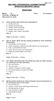 Page 1 of 11 Marks 45 Time 45 minutes Total No. of MCQs 45 One mark for each 01. Hand cutting instruments are composed of: A. Handle and neck. B. Handle and blade only. C. Handle, shank and blade. D. Handle,
4-1-2005. Dental Clinical Criteria and Documentation Requirements
 4-1-2005 Dental Clinical Criteria and Documentation Requirements Table of Contents Dental Clinical Criteria Cast Restorations and Veneer Procedures... Pages 1-3 Crown Repair... Page 3 Endodontic Procedures...
Mani Silk: A new and novel means of predictable canal shaping
 technique_ instrumentation I Mani Silk: A new and novel means of predictable canal shaping Author_Rich Mounce, DDS _Introduction Irrespective of how a root canal is shaped, the goals of canal shaping remain
CRACKED TOOTH SYNDROME
 CRACKED TOOTH SYNDROME Dr Vijay Salvi We all come across apparently healthy teeth eliciting complex and often bizarre symptoms. The patient will give a long history of undiagnosed but severe pain, and
CLASSIFICATION OF CARIOUS LESIONS AND TOOTH PREPARATION.
 CLASSIFICATION OF CARIOUS LESIONS AND TOOTH PREPARATION. ١ G.V. BLACK who is known as the father of operative dentistry,he classified carious lesions into groups according to their locations in permanent
Contents. Cement retained restoration. Screw retained restoration. Overdenture retained restoration. TS Implant System. 70 ComOcta Gold Abutment
 Contents TS Implant System Cement retained restoration Screw retained restoration 06 Cement-retained bridges with the Solid abutment system (non- 72 Screw retained crown with the ComOcta Gold abutment
A. DEVELOPMENT OF THE DENTAL ORGAN (ENAMEL ORGAN):
 A. DEVELOPMENT OF THE DENTAL ORGAN (ENAMEL ORGAN): AS EARLY AS THE SECOND MONTH OF FETAL LIFE, THE DEVELOPMENT OF THE DECIDUOUS TEETH MAY FIRST BECOME EVIDENT. 1. Dental lamina and Bud stage At about six
INTRAOSSEOUS ANESTHESIA
 ENDODONTICS: Colleagues for Excellence Winter 2009 Bonus Material F INTRAOSSEOUS ANESTHESIA Intraosseous Anesthesia With the Stabident and X Tip Systems The intraosseous injection allows placement of a
Restoration of Endodontically Treated Teeth
 Restoration of Endodontically Treated Teeth 10 In the year 1728, Pierre Fauchard in France was extolling the virtues of restoring pulpless teeth with post crowns (Figure 10-1). One hundred twenty years
Taking Out a Tooth. Before You Begin: Ask Questions! CHAPTER11
 159 CHAPTER11 Taking Out a Tooth Not every painful tooth needs to come out. You must decide how serious the problem is, and then decide if you can treat and save the tooth. Some problems such as root canal
Case Report(s): Uncomplicated Crown Fractures
 Case Report(s): Uncomplicated Crown Fractures Tooth fractures can be classified as follows: Uncomplicated crown fracture = fracture limited to the crown of the tooth with dentin exposure but no pulp exposure.
[PAGE HEADLINE] Improve your Health and Change Your Smile with Complete Dental Services in One [CITYNAME] Location
![[PAGE HEADLINE] Improve your Health and Change Your Smile with Complete Dental Services in One [CITYNAME] Location](/thumbs/31/14971568.jpg "[PAGE HEADLINE] Improve your Health and Change Your Smile with Complete Dental Services in One [CITYNAME] Location") Eddie Stephens//Copywriter Sample: Website copy/internal Dental Services Pages [PAGE HEADLINE] Improve your Health and Change Your Smile with Complete Dental Services in One [CITYNAME] Location [LEAD SENTENCE/PARAGRAPH]
Eddie Stephens//Copywriter Sample: Website copy/internal Dental Services Pages [PAGE HEADLINE] Improve your Health and Change Your Smile with Complete Dental Services in One [CITYNAME] Location [LEAD SENTENCE/PARAGRAPH]
Restoring the Endodontically Treated Tooth:Post and Core Design and Material 根 管 治 療 後 牙 齒 的 修 復 :Post and Core 的 設 計 與 材 料
 劉 俊 麟 高 雄 醫 學 大 學 牙 醫 學 系 31 屆 美 國 賓 州 大 學 牙 周 病 學 研 究 所 畢 業 美 國 賓 州 大 學 牙 周 - 補 綴 學 研 究 所 畢 業 美 國 賓 州 大 學 臨 床 副 教 授 美 國 賓 州 大 學 人 工 植 牙 課 程 主 任 Restoring the Endodontically Treated Tooth:Post and Core
SURGICAL EXTRACTIONS: TECHNIQUE AND CAUTIONS By Tony M. Woodward, DVM, AVDC
 SURGICAL EXTRACTIONS: TECHNIQUE AND CAUTIONS By Tony M. Woodward, DVM, AVDC We continue describing the five basic dental services that all general practitioners should be able to provide for their patients.
Non-surgical management of a large periapical lesion using a simple aspiration technique: a case report
 doi:10.1111/j.1365-2591.2010.01719.x CASE REPORT Non-surgical management of a large periapical lesion using a simple aspiration technique: a case report M. Fernandes & I. De Ataide Goa Dental College &
Dentalworkers JOB DESCRIPTIONS Great Team Members make your Office function!
 Dentalworkers JOB DESCRIPTIONS Great Team Members make your Office function! Dental Assistant Registered Dental Assistant with Expanded Function: RDAEF Sterilization Assistant Dental Hygienist General
A collection of pus. Usually forms because of infection. A tooth or tooth structure which is responsible for the anchorage of a bridge or a denture.
 Abscess A collection of pus. Usually forms because of infection. Abutment A tooth or tooth structure which is responsible for the anchorage of a bridge or a denture. Amalgam A silver filling material.
Postendodontic Tooth Restoration - Part I: The Aim and the Plan of. the procedure.
 Postendodontic Tooth Restoration - Part I: The Aim and the Plan of the Procedure Sanja egoviê 1 Nada GaliÊ 1 Ana Davanzo 2 Boæidar PaveliÊ 1 1 Department of Dental Pathology School of Dental Medicine University
Complications Associated with Tooth Extraction
 1 Complications Associated with Tooth Extraction Mark M. Smith, VMD, DACVS, DAVDC Center for Veterinary Dentistry and Oral Surgery 9041 Gaither Road Gaithersburg, MD 20877 Introduction Tooth extraction
DENTAL TRAUMATIC INJURIES
 DENTAL TRAUMATIC INJURIES Nitrous Oxide Not Contraindicated Predisposing Factors > 90% of All Injuries Protrusion of Anterior Teeth Poor Lip Coverage Mouthguards Girls as Well as Boys Off - the - Shelf
Removal of a fractured instrument with a new extractor: clinical cases
 Clinical Removal of a fractured instrument with a new extractor: clinical cases Dominique Martin 1 Introduction The fracture of a root canal instrument during endodontic treatment is a surgical accident
Endodontics. Colleagues for Excellence. Access Opening and Canal Location
 Endodontics Colleagues for Excellence Spring 2010 Access Opening and Canal Location Published for the Dental Professional Community by the American Association of Endodontists Cover artwork: Rusty Jones,
Temple Physical Therapy
 Temple Physical Therapy A General Overview of Common Neck Injuries For current information on Temple Physical Therapy related news and for a healthy and safe return to work, sport and recreation Like Us
MEDICAID DENTAL PROGRAMS CODING, POLICY AND RELATED FEE REVISION INFORMATION
 MEDICAID DENTAL PROGRAMS CODING, POLICY AND RELATED FEE REVISION INFORMATION Effective for dates of service on and after November 1, 2005, the following dental coding, policy and related fee revisions
Universal Crown and Bridge Preparation
 Universal Crown and Bridge Preparation The All-Ceramic Crown Preparation Technique for Predictable Success According to Dr. Ronald E. Goldstein Expect the Best. Buy Direct. The Universal * Crown and Bridge
Understanding Dental Implants
 Understanding Dental Implants Comfort and Confidence Again A new smile It s no fun when you re missing teeth. You may not feel comfortable eating or speaking. You might even avoid smiling in public. Fortunately,
Taking care of your dental Implants ( By Dr. B. Pulec )
 This article is written and presented by Dr. Boris Pulec MDS Dr. Pulec graduated from the University of Toronto and has been practicing privately for over 27 years. He has been a proponent of patient education
Influence of Biomechanical Factors on Restoration of Devitalized Teeth
 Influence of Biomechanical Factors on Restoration of Devitalized Teeth Adnan atoviê 1 Davor Seifert 1 Renata Poljak-Guberina 1 Boris KvasniËka 2 1 Department of Fixed Prosthodontics School of Dental Medicine
Technique Guide. Screw Removal Set. Instruments for removing Synthes screws.
 Technique Guide Screw Removal Set. Instruments for removing Synthes screws. Table of Contents Introduction Screw Removal Set 2 Surgical Technique Preoperative Planning and Preparation 6 Removal of Intact
SURGICAL MANUAL. Step By Step Techniques
 SURGICAL MANUAL Step By Step Techniques TABLE OF CONTENTS PRE-SURGICAL 1 8 MEASUREMENT OF BONE.......................... 2 BONE CLASSIFICATION........................... 3 IMPLANT SIZE SELECTION.........................
What Dental Implants Can Do For You!
 What Dental Implants Can Do For You! Putting Smiles into Motion About Implants 01. What if a Tooth is Lost and the Area is Left Untreated? 02. Do You Want to Restore Confidence in Your Appearance? 03.
EndoActivator from Tulsa Dental
 EndoActivator from Tulsa Dental Irrigation-EndoActivator http://endoactivator.com/video3.html EndoActivator System did not enhance the removal of smear layer as compared with conventional Max-I-Probe irrigation
The Treatment of Traumatic Dental Injuries
 The Recommended Guidelines of the American Association of Endodontists for The Treatment of Traumatic Dental Injuries 2013 American Association of Endodontists Revised 9/13 The Recommended Guidelines of
Dental Radiography collimator Ionising radiation image radiolucent area radiopaque area controlled zone scatter radiation intraoral
 Dental Radiography X-rays for dental radiography are produced by high voltages of electricity within an x-ray head and come out through a metal tube called a collimator. This ensures the x-rays only come
ANGEL DENTAL CARE Implant Consent
 This information is to help you make an informed decision about having implant treatment. You should take as much time as you wish to make the decision in relation to signing the following consent form.
DENTAL FOR EVERYONE SUMMARY OF BENEFITS, LIMITATIONS AND EXCLUSIONS
 DENTAL FOR EVERYONE SUMMARY OF BENEFITS, LIMITATIONS AND EXCLUSIONS DEDUCTIBLE The dental plan features a deductible. This is an amount the Enrollee must pay out-of-pocket before Benefits are paid. The
Dental Benefits (866) 212-2743 A. Choice of Physician and Provider B. Scheduling Appointments C. Referrals to Specialists D. Changing Your Dentist
 Dental Benefits Dental Benefits are provided through Delta Dental of California. Upon enrollment you will receive a dental provider directory that lists Delta Dental dentists participating in the Healthy
LESSON ASSIGNMENT. Topography of the Mouth and Tooth Structure. After completing this lesson, you should be able to:
 LESSON ASSIGNMENT LESSON 3 Topography of the Mouth and Tooth Structure. LESSON ASSIGNMENT Paragraphs 3-1 through 3-9. LESSON OBJECTIVES After completing this lesson, you should be able to: 3-1. Identify
Full Crown Module: Learner Level 1
 Full Crown Module Restoration / Tooth # Full Gold Crown (FGC) / 30 Extensions: Porcelain Fused to Metal (PFM) / 12 All Ceramic / 8 Learner Level 1 Mastery of Tooth Preparation Estimated Set Up Time: 30
Humana Health Plans of Florida. Important:
 Humana Health Plans of Florida Important: Dental discount membership in Florida is determined by viewing the member s ID card and verifying that the Humana Logo and Medicare name is listed with an effective
Molar Uprighting Dr. Margherita Santoro Division of Orthodontics School of Dental and Oral surgery. Consequences of tooth loss.
 Molar Uprighting Dr. Margherita Santoro Division of Orthodontics School of Dental and Oral surgery Molars The wide occlusal surface is designed for food grinding. The surface needs to be aligned with the
INTRODUCTION TO OSTEO-TI IMPLANTS; A NURSES MANUAL
 INTRODUCTION TO OSTEO-TI IMPLANTS; A NURSES MANUAL Osteo-Ti INTRODUCTION This handbook has been designed to give you a basic understanding of dental implants and related surgery procedures. As with all
Lidocaine 2% Gauge of Needle. Local Anesthesia for the Pediatric Patient
 Local Anesthesia for the Pediatric Patient Shan Lal DDS Course Director Lidocaine 2% 1.8 cc per Carpule x 2% = 36mg(lido) per Carpule Max Dosage: 2.2 mg/lb or 4.4mg/kg. Epi 1:100K or 0.018mg/carpule Role
CLASS II AMALGAM. Design Principles
 CLASS II AMALGAM Design Principles CLASS II Class II cavitated caries lesions Class II cavitated caries lesions opaque white haloes identify areas of enamel undermining and decalcification from within
Prosthodontist s Perspective
 Unless otherwise noted, the content of this course material is licensed under a Creative Commons Attribution - Non-Commercial - Share Alike 3.0 License. Copyright 2008, Dr. Jeff Shotwell. The following
Communication Task - Scenario 1 CANDIDATE COPY
 Communication Task - Scenario 1 Your patient is 30 years old, and has presented today complaining of pain from the lower right posterior side. The tooth had been cold sensitive for several weeks, but the
Hand Injuries and Disorders
 Hand Injuries and Disorders Introduction Each of your hands has 27 bones, 15 joints and approximately 20 muscles. There are many common problems that can affect your hands. Hand problems can be caused
Ohio State Dental Board Permissible Duties of Dental Hygienists and Dental Assistants
 Ohio State Dental Board Permissible Duties of Dental Hygienists and Dental Assistants Pursuant to Ohio Administrative Code Section 4715-3-01 (C) which defines the following dental personnel as: Licensed
Anatomic Anomalies. Anomalies. Anomalies. Anomalies. Supernumerary Teeth. Supernumerary Teeth. Steven R. Singer, DDS 212.305.5674 srs2@columbia.
 Anatomic Anomalies Steven R. Singer, DDS 212.305.5674 [email protected] Anomalies! Anomalies are variations in the:! Size! Morphology! Number! Eruption of the teeth Anomalies Anomalies There are two categories:!
Implants in your Laboratory: Abutment Design
 1/2 point CDT documented scientific credit. See Page 41. Implants in your Laboratory: Abutment Design By Leon Hermanides, CDT A patient s anatomical limitations have the greatest predictive value for successful
Fixing Dental Implant Component Failure and Fracture: Retrieving the Fractured Implant Abutment Screw. Charles A. Mastrovich, DDS
 Fixing Dental Implant Component Failure and Fracture: Retrieving the Fractured Implant Abutment Screw Charles A. Mastrovich, DDS [email protected] www.mastrovichdental.com Evaluating component failure
Introduction to Dental Anatomy
 Introduction to Dental Anatomy Vickie P. Overman, RDH, MEd Continuing Education Units: N/A This continuing education course is intended for dental students and dental hygiene students. Maintaining the
Chart 1. Chart 2. How to Use the Following Charts. Be sure to follow the legal requirements to perform dental radiographic procedures.
 These data are presented for informational purposes only and are not intended as a legal opinion regarding dental practice in any state. DANB confers with each state s dental board at least annually regarding
HEALTH SERVICES POLICY & PROCEDURE MANUAL. SUBJECT: Types of Dental Treatments Provided EFFECTIVE DATE: July 2014 SUPERCEDES DATE: January 2014
 PAGE 1 of 5 References Related ACA Standards 4 th Edition Standards for Adult Correctional Institutions 4-4369, 4-4375 PURPOSE To provide guidelines for determining appropriate levels of care and types
DISCOUNT DENTAL PLAN COMPLETE LISTING OF MEMBER COPAYMENTS
 DISCOUNT DENTAL PLAN COMPLETE LISTING OF MEMBER COPAYMENTS 0120 PERIODIC ORAL EXAMINATION - ESTABLISHED PATIENT 20 0140 LIMITED ORAL EVALUATION - PROBLEM FOCUSED 33 0150 COMPREHENSIVE ORAL EVALUATION -
Bone augmentation procedure without wound closure
 THE CREATION OF ATTACHED GINGIVA IMMEDIATELY AFTER EXTRACTION Bone augmentation procedure without wound closure One of the characteristics of wound healing after an extraction is that the alveolar process
Fast and Predictable Tooth Extraction Technique
 Fast and Predictable Tooth Extraction Technique When I first saw the ads for Physics Forceps, I did not believe the claims could be true. At first glance, I didn t see how this strange looking instrument
A New Beginning with Dental Implants. A Guide to Understanding Your Treatment Options
 A New Beginning with Dental Implants A Guide to Understanding Your Treatment Options Why Should I Replace My Missing Teeth? Usually, when you lose a tooth, it is best for your oral health to have it replaced.
Job Ready Assessment Blueprint. Dental Assisting. Test Code: 4026 / Version: 01
 Job Ready Assessment Blueprint Dental Assisting Test Code: 4026 / Version: 01 Measuring What Matters Specific Competencies and Skills Tested in this Assessment: Introduction to the Dental Assisting Profession
TREATMENT REFUSAL FORMS
 TREATMENT REFUSAL FORMS These forms are intended to be used when a patient refuses the treatment. These forms help confirm that the patient is informed and aware of the risks involved with not proceeding
Endo Easy Efficient Sonic Powered Endo Irrigation
 Endo Easy Efficient Sonic Powered Endo Irrigation www.vdw-dental.com Naturally fascinating: gentle, yet powerful In our goal to provide easy and safe products and systems for endodontics which fulfil
The use of ultrasonics (US) or ultrasonic instrumentation was first introduced to
 Ultrasonics in Endodontics: A Review of the Literature Gianluca Plotino, DDS,* Cornelis H. Pameijer, DMD, DSc, PhD, Nicola Maria Grande, DDS,* and Francesco Somma, MD, DDS* Abstract During the past few
Chart 1. Chart 2. How to Use the Following Charts. Be sure to follow the legal requirements to perform dental radiographic procedures.
 These data are presented for informational purposes only and are not intended as a legal opinion regarding dental practice in any state. confers with each state s dental board at least annually regarding
TABLE OF DENTAL PROCEDURES PLEASE READ THE FOLLOWING INFORMATION CAREFULLY FOR YOUR PROCEDURE FREQUENCIES AND PROVISIONS.
 TABLE OF DENTAL PROCEDURES PLEASE READ THE FOLLOWING INFORMATION CAREFULLY FOR YOUR PROCEDURE FREQUENCIES AND PROVISIONS. The attached is a list of dental procedures for which benefits are payable under
Telescopes or loupes have been readily available in
 THE USE OF MAGNIFICATION IN ENDODONTIC THERAPY: THE OPERATING MICROSCOPE Bertrand G. Khayat, DDS, MSD* KHAYAT Clinicians have recognized that the use of magnification can improve the performance of dental
Periapical radiography
 8 Periapical radiography Periapical radiography describes intraoral techniques designed to show individual teeth and the tissues around the apices. Each film usually shows two to four teeth and provides
ARTICLE 20-03 DENTAL ASSISTANTS CHAPTER 20-03-01 DUTIES
 ARTICLE 20-03 DENTAL ASSISTANTS Chapter 20-03-01 Duties CHAPTER 20-03-01 DUTIES Section 20-03-01-01 Duties 20-03-01-01.1 Expanded Duties of Registered Dental Assistants 20-03-01-02 Prohibited Services
Feel the Safety and Control
 e n d o d o n t i c f i l e s L i b e r a t o r N i t i r o t a r y f i l e s Liberator rotary nickel-titanium endodontic files are the result of years of research and development as well as feedback from
Taking the Mystique out of Implant Dentistry. Dr. Michael Weinberg B.Sc., DDS, FICOI
 Taking the Mystique out of Implant Dentistry Dr. Michael Weinberg B.Sc., DDS, FICOI What is Restorative Implant Dentistry? Restorative implant dentistry involves taking a few simple mechanical principles
Adult Forearm Fractures
 Adult Forearm Fractures Your forearm is made up of two bones, the radius and ulna. In most cases of adult forearm fractures, both bones are broken. Fractures of the forearm can occur near the wrist at
Exeter. Surgical Technique. V40 Stem Cement-in-Cement. Orthopaedics
 Exeter Orthopaedics V40 Stem Cement-in-Cement Surgical Technique Exeter V40 Stem Cement-in-Cement Surgical Technique Table of Contents Indications and Contraindications...2 Warnings and Precautions...2
CNA Sample Form: Patient Termination Letters
 The following are patient termination scenarios with examples of termination letters that might be used to effect the patient termination. Keep in mind that circumstances vary from patient to patient and
Indications for Use: Contraindications: Benefits of Ultrasonics: Disadvantages: Some handpieces cannot be sterilized Portability Evacuation needed
 An Integral Part of Periodontal Therapy Indications for Use: Removal of calculus and stains Periodontal debridement Easier access to furcations Prior to oral surgery Removal of orthodontic cement & de
Dental Updates. Excerpted Article e-mail: [email protected]. Why Implant Screws Loosen Part 1. Richard Erickson, MS, DDS
 ¼ ½ ¾ µ mw/cm 2 Volume 17; 2007 Dental Updates "CUTTING EDGE INFORMATION FOR THE DENTAL PROFESSIONAL " 200 SEMINARS AND 30 JOURNALS REVIEWED YEARLY FOR THE LATEST, CUTTING EDGE INFORMATION Excerpted Article
Posterior Cervical Decompression
 Posterior Cervical Decompression Spinal Unit Tel: 01473 702032 or 702097 Issue 2: January 2009 Following your recent MRI scan and consultation with your spinal surgeon, you have been diagnosed with a
Introduction to Charting. Tooth Surfaces: M = mesial D = distal O = Occlusal B = buccal F = facial I = incisal L = lingual
 Tooth Surfaces: M = mesial D = distal O = Occlusal B = buccal F = facial I = incisal L = lingual When combining tooth surfaces, as in defining cavity preparations or restorations, there are some spelling
DENTAL ASSISTING CATEGORIES
 DENTAL ASSISTING CATEGORIES EFFECTIVE JANUARY 1, 2010 Starting January 1, 2010, the dental assisting scope of practice will include new duties and two new specialty permits in orthodontics and dental sedation
X-Plain Subclavian Inserted Central Catheter (SICC Line) Reference Summary
 X-Plain Subclavian Inserted Central Catheter (SICC Line) Reference Summary Introduction A Subclavian Inserted Central Catheter, or subclavian line, is a long thin hollow tube inserted in a vein under the
INFUSE Bone Graft (rhbmp-2/acs)
 1 INFUSE Bone Graft (rhbmp-2/acs) For patients who need more bone to place dental implants Enjoy living with INFUSE Bone Graft. www.medtronic.com Medtronic Spinal and Biologics Business Worldwide Headquarters
Orthopaedic Spine Center. Anterior Cervical Discectomy and Fusion (ACDF) Normal Discs
 Orthopaedic Spine Center Graham Calvert MD James Woodall MD PhD Anterior Cervical Discectomy and Fusion (ACDF) Normal Discs The cervical spine consists of the bony vertebrae, discs, nerves and other structures.
Endodontic treatment with MTA apical plugs: a case report
 325 Journal of Oral Science, Vol. 49, No. 4, 325-329, 2007 Case Report Endodontic treatment with MTA apical plugs: a case report Pari Ghaziani 1), Navid Aghasizadeh 2) and Mahshid Sheikh-Nezami 1) 1) Department
Y O U R S U R G E O N S. choice of. implants F O R Y O U R S U R G E R Y
 Y O U R S U R G E O N S choice of implants F O R Y O U R S U R G E R Y Y O U R S U R G E O N S choice of implants F O R Y O U R S U R G E R Y Your Surgeon Has Chosen the C 2 a-taper Acetabular System The
Injecting Inside the Mouth
 Injecting Inside the Mouth 135 9 CHAPTER It is possible to treat a tooth without pain. You do this with an injection of local anesthetic. You must inject near the nerve, so to give good injections, you
Jacket crown. Advantage : Crown and Bridge
 Crown and Bridge Lecture 1 Dr.Nibras AL-Kuraine Jacket crown It is a type of crown that is formed by a tooth colored material. It is mainly used as a single unit in the anterior quadrant of the mouth.
What is a dental implant?
 What is a dental implant? Today, the preferred method of tooth replacement is a dental implant. They replace missing tooth roots and form a stable foundation for replacement teeth that look, feel and function
Facial Sports Injuries
 Facial Sports Injuries Playing catch, shooting hoops, bicycling on a scenic path or just kicking around a soccer ball have more in common than you may think. On the up side, these activities are good exercise
X-Plain Sinus Surgery Reference Summary
 X-Plain Sinus Surgery Reference Summary Introduction Sinus surgery is a very common and safe operation. Your doctor may recommend that you have sinus surgery. The decision whether or not to have sinus
Longitudinal tooth fractures: findings that contribute to complex endodontic diagnoses
 Endodontic Topics 2009, 16, 82 111 All rights reserved 2009 r John Wiley & Sons A/S ENDODONTIC TOPICS 2009 1601-1538 Longitudinal tooth fractures: findings that contribute to complex endodontic diagnoses
LANAP. (Laser Assisted New Attachment Procedure)
 LANAP (Laser Assisted New Attachment Procedure) Marcus Hannah, DDS 970 N. Kalaheo Avenue, Suite A305 Kailua, HI 96734 Tel: 808.254.5454 Fax: 808.254.5427 Dental Laser ANAP Informed Consent and Authorization
BICON DENTAL IMPLANTS
 BICON DENTAL IMPLANTS The Bicon Dental Implant System, since 1985, has offered discerning dentists the ability to provide secure implant restorations that look, feel, and function like natural teeth. With
Rochester Regional Health. Dental Plan
 Rochester Regional Health Dental Plan TABLE OF CONTENTS EXPLANATION OF TERMS... 2 INTRODUCTION... 4 DENTAL BENEFITS... 5 DEDUCTIBLES AND COINSURANCE... 7 PRE-TREATMENT ESTIMATES... 8 LIMITATIONS... 8
YALE UNIVERSITY SCHOOL OF MEDICINE: SECTION OF OTOLARYNGOLOGY PATIENT INFORMATION FUNCTIONAL ENDOSCOPIC SINUS SURGERY
 YALE UNIVERSITY SCHOOL OF MEDICINE: SECTION OF OTOLARYNGOLOGY PATIENT INFORMATION FUNCTIONAL ENDOSCOPIC SINUS SURGERY What is functional endoscopic sinus surgery (FESS)? Functional endoscopic sinus surgery
Taylor Dental Assisting School Course Description
 Taylor Dental Assisting School Course Description Entry Level Dental Assisting The Entry Level Dental Assisting Course is divided into Twenty Six (26) modules of four hours each. Total time is One Hundred