
PHYSIOTHERAPY SCOPE OF PRACTICE REVIEW 2008
|
|
|
- Austin Arnold
- 9 years ago
- Views:
Transcription
1 ONTARIO CHIROPRACTIC ASSOCIATION ASSOCIATION CHIROPRATIQUE DE L ONTARIO PHYSIOTHERAPY SCOPE OF PRACTICE REVIEW 2008 RESPONSE TO SUBMISSION by ONTARIO PHYSIOTHERAPY ASSOCIATION and COLLEGE OF PHYSIOTHERAPISTS OF ONTARIO from ONTARIO CHIROPRACTIC ASSOCIATION Submitted to HEALTH PROFESSIONS REGULATORY ADVISORY COUNCIL August 15, 2008 Contact: Robert D. Haig, D.C. Executive Director, Ontario Chiropractic Association Tel Fax

2 Executive Summary A. Interprofessional Collaboration and Quality of Care 1. This review arises from a referral to the Health Professions Regulatory Advisory Council (HPRAC) with a focus on strengthening interprofessional collaboration. Since the time of the Health Professions Legislation Review (HPLR) in the 1980s the Ontario Chiropractic Association (OCA) has partnered with the Ontario Physiotherapy Association (OPA) in the leadership of several coalitions of health professionals addressing scope of practice and inter-professional and health system issues. There is much interprofessional collaboration between physiotherapists (PTs) and doctors of chiropractic (DCs) in education, practice, research and development of clinical guidelines (OCA Submission, pg. 1). 2. The OCA supports the analysis of the key issues facing the Ontario government as it seeks to sustain the publicly funded health care system, and the HPRAC principles that any solutions must embrace, as set forth at the beginning of the submission of the OPA and the College of Physiotherapists of Ontario (CPO) (the PT Submission - Executive Summary, pg. 3). Appropriate access to primary care in the face of health human resources shortages is central to all debates, and optimizing the contribution of all health professionals is an integral part of any solution. (OCA Submission pg.2). 3. Accordingly the present review of the physiotherapy scope of practice by HPRAC is timely and, subject to the several reservations expressed in this submission, the OCA supports the amendments to scope of practice, the grant of new controlled acts, and most of the amendments to other legislation as requested in the PT Submission. These amendments will optimize the contribution of PTs and be part of the solution to meeting public expectations for improved access to high quality, safe, primary care services. B. Criteria for Review of Scopes of Practice 1. A core principle of the HPLR and its deliberations was a coordinated and equitable consideration of the roles and scopes of practice of all regulated health professionals. The OCA submits that this is a principle of fundamental importance to maintaining and enhancing interprofessional collaboration, and to the many benefits that this will bring to patients in terms of quality of care. 2. Under the current referral, HPRAC is asked to review the scopes of practice of six professions only. The criteria upon which this decision was made are unclear. The OCA submits that it is important to interprofessional collaboration, and ultimately the effectiveness of the health care system and quality of care, that there are transparent criteria for when the scopes of practice of regulated health professions should be reviewed. ii

3 3. One of the six professions is physiotherapy. Many of the decisions made with respect to the scope of practice of physiotherapy will have an impact upon the role of chiropractic services, interprofessional collaboration between DCs, PTs and other health professionals, and therefore upon patient access to and quality of health care services. This is because of the significant common areas of patients served and treatments offered, separately or in health care teams, as referred to below. The OCA submits that the principles established by the HPLR, which at the time and since have been strongly supported by the government, regulated health professions and other stakeholders, suggest the need for a joint consideration of the roles of both chiropractic and physiotherapy with respect to any significant change of scope of practice of either. Illustrations of this need include: (a) (b) (c) The Workers Safety Insurance Board (WSIB) programs of care for back pain patients, which specify services rather than providers and are commonly delivered by PTs and/or DCs, and the WSIB Regional Evaluation Centre protocols which provide that injured workers who require a medical assessment be assessed by a medical specialist and either a DC or PT. Legislated services provided by DCs and PTs under automobile insurance policies in Ontario. The now established interdisciplinary development of clinical practice guidelines and recommendations for treatment of patients, such as the recent report of the Bone and Joint Decade Task Force on Neck Pain and its Related Disorders (OCA Submission, pg. 1). 4. The impact of decisions leading to new controlled acts and scope of practice for PTs, such as those in the areas of imaging and laboratory tests, would be even more beneficial for patients and the health care system if made on a similar basis for both professions. For these reasons the OCA will provide a comparison between physiotherapy and chiropractic scope of practice and legal status as it responds to the various individual recommendations made in the PT Submission. This may provide the basis for related decisions relative to chiropractic practice. The OCA submits that it would be appropriate for HPRAC to comment in its report to the Minister that there are sound reasons for reviewing the scopes of practice of professions with similar roles in the health care system at the same time, to optimize their interprofessional collaboration and their contributions to patient care and the health care system. For reasons given above the OCA requests that HPRAC cite the example of chiropractic and physiotherapy. C. Response to PT Submission Proposals for Change 1. Scope of Practice. iii

4 The new scope of practice proposed in the PT Submission is appropriate, subject only to comments made about the limits of the newly included right to diagnose, and will optimize PT services and enhance interprofessional collaboration and patient access and care (OCA Submission, pg. 2). For the same health system and patient interest reasons advanced in the PT Submission, there should be a similar revision of the scope of practice of chiropractic. The OCA submits that it would be appropriate for HPRAC to make this suggestion in its report. (OCA, pg. 3). 2. Controlled Acts The OCA agrees that PTs, as they request, should be authorized to perform five additional controlled acts at entry to practice level (communicating a diagnosis, administration of inhalation of oxygen) or postgraduate level (others). However the OCA does express some concerns (OCA pg. 4-8). One concern, applying to all controlled acts where competencies are acquired at the postgraduate level, is that the authorization is given only to those who have completed advanced training. From the perspective of safety and quality of care, patients should have the confidence that postgraduate training has been completed in accordance with established minimum requirements, that an appropriate advanced qualification has been given, and that this has been accepted and entered into the register by the CPO. This would follow the standard and practice adopted in Alberta, which the PT Submission places reliance upon. Lesser forms of regulation, such as rostering and establishing standards of practice, do not provide the necessary level of patient safety and protection with respect to controlled acts which, by definition, carry significant risk of harm. At present PTs in both Alberta and Ontario have the controlled act of spinal manipulation. In Alberta their postgraduate training for this and other controlled acts must be completed, noted and approved by the regulatory body. This is not the case in Ontario. The OCA submits that it should be (OCA pg. 4). i) Communicating a diagnosis. RHPA Section 27(2)1. Communicating to the individual or his or her personal representative a diagnosis identifying a disease or disorder as the cause of symptoms of the individual in circumstances in which it is reasonably foreseeable that the individual or his or her personal representative will rely on the diagnosis. Requested. Communicating a diagnosis identifying a physical dysfunction, disease or disorder as the cause of a person s symptoms. iv

5 Identified level of competence: Entry to practise Comment: The reference to physical dysfunction should be removed, and communication of a diagnosis or disorder should be limited to the neuromuscular, musculoskeletal and cardiovascular systems for reasons given (OCA pg. 4). Comparison with chiropractic: DCs are already authorized to perform this controlled act within their scope of practice in the following terms: Communicating a diagnosis identifying, as the cause of a person s symptoms, i. a disorder arising from the structures or functions of the spine and their effects on the nervous system, or ii. a disorder arising from the structures or functions of the joints of the extremities. (Section 4.1 Chiropractic Act.) A recommended revision is: Communicating a diagnosis identifying a disease or disorder of the neuromusculoskeletal system as a cause of the person s symptoms (OCA pg.5). ii) Treating wounds. RHPA Section 27(2).2. Performing a procedure on tissue below the dermis, below the surface of a mucous membrane, in or below the surface of the cornea, or in or below the surfaces of the teeth, including scaling of teeth. Requested. Treating a wound including by cleansing, soaking, irrigating, probing, debriding, packing or dressing the wound. Identified level of competence: Postgraduate Comment: Appropriate in the terms requested (OCA pg. 5). Comparison with chiropractic: Treating wounds is not part of the current scope of practice of chiropractic. iii) Injection or Inhalation: RHPA definition Section 27(2)(5). Administering a substance by injection or inhalation v

6 Requested. Administering by inhalation: i. oxygen, or ii. A drug or substance that has been ordered by a person who is authorized to do so by the Chiropody Act 1991; the Dentistry Act, 1991; the Medicine Act, 1991; the Nursing Act, 1991; or, the Midwifery Act, Identified level of competence: Oxygen - entry to practise; other - postgraduate Comment: The PT Submission asserts that the evidence is strong that administration of oxygen and other inhaled substances is an entry level competency held by physiotherapists (Appendix A9). However that is inconsistent with Table A1 (Appendix A1) which identifies inhalation of substances other than oxygen as a postgraduate competency only. Appendix B provides evidence relative to oxygen inhalation but no convincing evidence of clinical training and assessment relative to other substances (Appendix B3-4). PTs in other provinces are generally trained in administering oxygen but not other substances (Appendix E). It appears to be incorrect to describe this evidence as strong. Comparison with chiropractic: Although some DCs in some interdisciplinary practice settings have developed skills in the administration of oxygen by inhalation, this is not an established part of chiropractic practice. iv) Putting an instrument/finger beyond the anal verge/labia majora. RHPA definition Section 27(2)6. Putting an instrument, hand or finger: i. beyond the external ear canal; ii. Beyond the point in the nasal passages where they normally narrow; iii. Beyond the larynx; iv. Beyond the opening of the urethra; v. beyond the labia majora; vi. Beyond the anal verge, or vii. Into an artificial opening into the body. Requested. Putting an instrument, hand or finger beyond the labia majora or the anal verge for the purpose of assessment or treatment. Identified level of competence: Postgraduate Comment: This is an area for caution because of the anatomical region involved, and for the reasons given it is submitted that a stronger case needs to be made for extending authorization to treatment via the vagina (OCA pg. 6). Comparison with chiropractic: DCs are authorized to perform this controlled act as follows as an entry to practice competency: Putting a finger beyond the anal verge for the purpose of manipulating the tailbone. (Chiropractic Act Section 4.3) vi

7 v) Ordering MRI and Diagnostic Ultrasound. RHPA definition Section 27(2)7 Applying or ordering the application of a form of energy prescribed by the regulations under this Act. Requested. Ordering, for the purpose of assessing or diagnosing a physical dysfunction, disease or disorder, i. The application of electromagnetism for magnetic resonance imaging; ii. The application of sound waves for diagnostic ultrasound. Identified level of competence: Postgraduate Comment: It is appropriate that this controlled act be authorized to the extent requested given the training and practice described. Comparison with chiropractic: The ordering of MRI, ultrasound and nerve conduction studies within the scope of practice of chiropractic is a clinical competency at the entry to practice level. DCs are not currently authorized to perform this controlled act with respect to these diagnostic services, but should be for the reasons given. This would produce similar benefits for patients and the health care system to those that have come from the right of DCs to order plain film x-rays from independent health facilities since March 2008 (OCA pg. 8-9). 3. Amendments to Other Legislation i) Ordering X-rays. Requested. Amendment to the Healing Arts Radiation Protection Act to allow PTs with appropriate postgraduate training to order diagnostic x-rays for the chest, ribs, spine, pelvis and extremity joints. Identified level of competence: Postgraduate Comment: Assuming that appropriate postgraduate training is in place, and that as in Alberta the ordering of x-rays is limited to those given specialist authorization by the CPO, this expansion of scope of practice will be consistent with the practice of those PTs trained in orthopedics and manipulative therapy and will lead to greater efficiency and patient access in Ontario s health care system. Comparison with chiropractic: DCs are already included as one of the professions authorized to prescribe irradiation under the HARP Act. Their scope of practice also includes the operation of x-ray machines and interpretation of radiographs. These are entry to practise competencies. vii

8 ii) Ordering Laboratory Tests Requested. Ability to order a defined list of laboratory tests. Identified level of competence: Postgraduate Comment: In terms of training and patient need there seems to be no convincing case for the right to order laboratory tests. No other province gives PTs such a right (Appendix E7) and it seems that any patient need can be met under medical directive/delegation as at present. Comparison with chiropractic: Laboratory diagnosis is an entry to practice competency. DCs in Ontario do not currently have the right to order or perform a laboratory diagnosis but there is a strong case for DCs having these rights in the public interest for the reasons given (OCA pg. 9). D. Conclusion Subject only to the few reservations mentioned, the OCA supports the enhanced scope of PT services in Ontario requested in the PT Submission, and the general principle of ongoing optimization of the roles of all regulated health professionals in accordance with their education, clinical skills and ability to better serve patients and the Ontario health care system. There is an equal case for review and optimization of the scope of practice of chiropractic. The professions of physiotherapy and chiropractic have much to offer in improving access to primary care and helping to address other key problems in the Ontario health care system. viii

9 Section 1 Introduction The Ontario Chiropractic Association (OCA) is the voluntary professional association that has represented the chiropractic profession in Ontario since At present it has 2,800 members representing approximately 80% of the doctors of chiropractic (DCs) practising in Ontario. The OCA has represented the profession through the many changes to the health care system and health professions legislation in Ontario since the time of the Health Professions Legislation Review (HPLR) in the 1980s. It is grateful to the Health Professions Regulatory Advisory Council (HPRAC) for this opportunity to respond to the joint submission of the Ontario Physiotherapy Association (OPA) and the College of Physiotherapists of Ontario (CPO) (the PT Submission). In its various submissions to the Ministry of Health and Long Term Care (MOHLTC), HPRAC, Workplace Safety and Insurance Board (WSIB) and other agencies in Ontario, the OCA has worked in collaboration with associations representing other health professions, in particular including the OPA, and other organizations involved in chiropractic education and the regulation of chiropractic practice. These include the Canadian Memorial Chiropractic College in Toronto (CMCC), the College of Chiropractors of Ontario (CCO) and the Canadian Chiropractic Association (CCA). Although there are areas of competition and disagreement from time to time, the OCA and OPA and their leaders have had a good working relationship since the time of the HPLR. Examples of this have included various coalitions of health professionals for which OCA and OPA leaders have held executive positions. These coalitions have dealt with common professional issues such as primary care health reform, amendments to the Regulated Health Professions Act (RHPA) relative to the protection of victims of sexual abuse, and development of programs of care by the WSIB. Increasingly many PTs and DCs work together in a variety of clinical settings in Ontario. Interprofessional education and research are becoming more common, and this trend will increase in the future. It is now established that the best level of evidence-based clinical practice guidelines relative to patients with complaints commonly managed by different health professionals should have panels of experts that include scientists and clinicians from each of the professions involved. One example is clinical guidelines for patients with acute or chronic spinal pain, including neck pain and back pain. Such patients comprise a large part of chiropractic, medical and physiotherapy practice. Accordingly guideline panels and evidence review teams include DCs, PTs and MDs. Examples include Cochrane Collaboration systematic reviews performed in Ontario and internationally, the ongoing collaborative work of the Institute of Work and Health (IWH) in Toronto, the development of WSIB programs of care, and the recent report of the Bone and Joint Decade Task Force on Neck Pain and its Related Disorders. 1,2-1-

10 These interprofessional developments are important for patient quality of care and for sustaining and improving Ontario s publicly funded health care system. As the opening of the PT Submission Executive Summary notes, interprofessional solutions and maximizing the potential of health professionals scopes of practice are of key importance. Health human resources shortages factor across all debates and dialogue and central issues are: General access to primary care Wait times for care The impacts of chronic disease, and The imperative of keeping a healthy public at home Although the chiropractic and physiotherapy professions have their own distinct educational process and range of clinical competencies at both the entry to practice and postgraduate training levels, there are significant areas of common ground. As a result the Health Professions Regulatory Advisory Council (HPRAC) review of physiotherapy scope of practice is of particular relevance to the chiropractic profession. In this submission the OCA broadly supports the enlarged and optimized scope of practice recommended in the PT submission. This will enhance the interprofessional working environment, enhance access to and quality of care, and help to sustain the health care system. The further point is made, however, that similar optimization of the scope of practice of chiropractic will have similar results. For this reason comparisons will be made between the recommendations found in the PT Submission and the current scope of practice of chiropractic, and the OCA respectfully requests that HPRAC recommend in its report to the Minister that it would appear to be in the best interests of the health care system that there now be a similar review of the scope of practice of chiropractic in Ontario. Section 2 Scope of Practice The current physiotherapy scope of practice in Ontario is: The practice of physiotherapy is the assessment of physical function and the treatment, rehabilitation and prevention of physical dysfunction, injury of pain, to develop, maintain, rehabilitate or augment function or to relieve pain. The PT submission proposes the follows: The practice physiotherapy is the assessment of neuromuscular, musculoskeletal and cardiorespiratory systems to: 1. diagnose, treat and prevent disorders or diseases that cause or are associated with physical dysfunction, injury and/or pain; 2. develop, maintain, rehabilitate or augment function; 3. relieve pain; or 4. promote mobility and health - 2 -

11 The PT submission notes that the most significant proposed change is the addition of the word diagnose (page 14) and that this is important in terms of serving patient needs. The OCA agrees that the inclusion of diagnosis in the PT scope of practice is supported by physiotherapy education and practice, and that the ability to perform and communicate a diagnosis is important to optimizing the role of PTs in patient care. It has these additional comments on the scope of practice statement requested: 1. The right to diagnose includes to diagnose... diseases in the neuromuscular, musculoskeletal and cardiorespiratory systems that cause or are associated with physical dysfunction... or pain. Legally that would seem to include muscular dystrophies (neuromuscular), arthropathies and spinal tumours (musculoskeletal) and cardiac diseases and asthma (cardiovascular). There is nothing in the supportive documentation that supports such competencies either at entry to practise or advance practice status. The Clinical Performance Instrument governing entry to practise examination of competencies in Ontario refers to the more limited concept of physical therapy diagnoses (Appendix A5). 2. Other aspects of the proposed scope of practice seem appropriate for PTs current and potential role in the health care system. The addition of the explicit purpose to promote mobility and health does address important public and systemic needs in primary care and the overall system as mentioned (page 15). 3. Alignment with the chiropractic and other scopes of practice is one reason given for explicit mention of specific body systems in the newer scope. The current scope of practice of chiropractic is: The practice of chiropractic is the assessment of conditions related to the spine, nervous system and joints and the diagnosis, prevention and treatment, primarily by adjustment, of, a) dysfunctions or disorders arising from the structures or functions of the spine and the effects of those dysfunctions or disorders on the nervous system; and b) dysfunctions or disorders arising from the structures or functions of the joints. (Section 3 Chiropractic Act). This was a compromise and imperfect scope of practice when it was enacted. The OCA had submitted the term neuromusculoskeletal system as the system addressed in chiropractic practice. On the basis of chiropractic education and competencies, the professional role and duties in primary care of DCs and the best interest of patients in the health care system, the OCA had submitted that the right to diagnose should include diseases as well as disorders and dysfunctions of the NMS system. There is nothing in the scope of practice statement about the purposes of chiropractic care, which was and is consistent with the approach taken in the scope of practice statement for medicine, dentistry, optometry and psychology, the other four professions with chiropractic that were granted the controlled act of communicating a diagnosis when the RHPA was enacted

12 The OCA respectfully requests that when it reports to the Minister with recommendations concerning the change in scope of practice for physiotherapy, HPRAC should comment on the advisability of considering an equivalent change to other relevant scopes of practice, specifically including the scope of practice of chiropractic. Section 3 Controlled Acts The OCA agrees that PTs should be authorized to perform the five additional controlled acts requested at entry to practice level (communicating a diagnosis, administration of inhalation of oxygen) or postgraduate level (others). One concern, applying to all controlled acts where competencies are acquired at the postgraduate level, is that there is adequate patient protection. These are controlled acts which, by definition, involve significant risk of harm. Possible methods of regulation include: 1. A formal specialty or extended class of practice. This would provide the greatest level of patient protection and guarantee of quality of care. 2. Certification with respect to one or more individual controlled acts. PTs seeking the postgraduate competency would complete a course with established minimum educational requirements, receive an appropriate qualification, and this would be accepted and noted on the register by the CPO. It appears that this is the approach adopted in Alberta, upon which the PT submission relies. This form of regulation also provides a sound basis for patient protection and quality of care. 3. Lesser forms of regulation not based on explicit educational and certification requirements, such as rostering and standards of practice. It is submitted that these do not provide adequate patient protection for controlled acts for which competency is developed at the postgraduate level, and that more rigorous regulation is required. a) Communicating a diagnosis. RHPA Section 27(2)1. Communicating to the individual or his or her personal representative a diagnosis identifying a disease or disorder as the cause of symptoms of the individual in circumstances in which it is reasonably foreseeable that the individual or his or her personal representative will rely on the diagnosis. Requested. Communicating a diagnosis identifying a physical dysfunction, disease or disorder as the cause of a person s symptoms. Identified level of competence: Entry to practise 1. The reference to physical dysfunction should be removed since communicating a diagnosis identifying a physical dysfunction in not a controlled act

13 2. For all professions other than medicine authorized to perform this controlled act, there are limitations. For dentistry, for example, the controlled act is: Communicating a conclusion, identifying a disease, disorder or dysfunction of the oral-facial complex as the cause of a person s symptoms. (Section 4.1 Dentistry Act). Therefore for physiotherapy, the controlled act should be authorized with respect to communicating a disease or disorder of the neuromuscular, musculoskeletal or cardiovascular systems. Comparison with chiropractic: DCs are authorized to perform this controlled act in the following terms: Communicating a diagnosis identifying, as the cause of a person s symptoms, i. a disorder arising from the structures or functions of the spine and their effects on the nervous system, or ii. a disorder arising from the structures or functions of the joints of the extremities. (Section 4.1 Chiropractic Act.) Suggested Revision: Communicating a diagnosis identifying a disease or disorder of the neuromusculoskeletal system as the cause of a person s symptoms. The term neuromusculoskeletal (NMS) is established in chiropractic education, accreditation standards, clinical practice guidelines, legislation in other jurisdictions and international policy statements. It has traditionally been used in joint submissions of the CCO, CMCC and OCA, and joint MOHLTC and OCA documents such as the final report of the Chiropractic Services Review. The term is now widely adopted within health care systems. Chapter 7 of the World Health Organization s International Classification of Functioning Disability and Health is titled and relates to Neuromusculoskeletal and Movement Related Functions. b) Treating Wounds. RHPA Section 27(2).2. Performing a procedure on tissue below the dermis, below the surface of a mucous membrane, in or below the surface of the cornea, or in or below the surfaces of the teeth, including scaling of teeth. Requested. Treating a wound including by cleansing, soaking, irrigating, probing, debriding, packing or dressing the wound. Identified level of competence: Post graduate - 5 -

14 Comment: The PT Submission claims that both theoretical and practical skills are taught at entry to practise level (Appendix A6), but the supporting evidence is not strong and only applies to a few students in clinical placements (Appendix B3). Comparison with chiropractic: Treating wounds is not part of the current scope of practice of chiropractic. c) Injection or Inhalation: RHPA definition Section 27(2)(5). Administering a substance by injection or inhalation Requested. Administering by inhalation: i. oxygen, or ii. A drug or substance that has been ordered by a person who is authorized to do so by the Chiropody Act 1991; the Dentistry Act, 1991; the Medicine Act, 1991; the Nursing Act, 1991; or, the Midwifery Act, Identified level of competence: Oxygen - entry to practise; other - postgraduate Comment: The PT Submission asserts that the evidence is strong that administration of oxygen and other inhaled substances is an entry level competency held by physiotherapists and refers to Appendix B in support. PT (PT Submission Appendix A9). However that assertion is inconsistent with Table A.1 (Appendix A1) which identifies inhalation of substances other than oxygen as a postgraduate competency only). Appendix B provides evidence relative to oxygen inhalation but nothing convincing for clinical training and assessment relative to other substances (Appendix B3-4). It appears to be inaccurate to describe this evidence as strong. Comparison with chiropractic: Although some DCs in some interdisciplinary practice settings have developed skills in the administration of oxygen by inhalation, this is not an established part of chiropractic practice. d) Putting an instrument/finger beyond the anal verge/labia majora. RHPA definition Section 27(2)(6). Putting an instrument, hand or finger: i. beyond the external ear canal; ii. Beyond the point in the nasal passages where they normally narrow; iii. Beyond the larynx; iv. Beyond the opening of the urethra; v. beyond the labia majora; vi. Beyond the anal verge, or vii. Into an artificial opening into the body. Requested. Putting an instrument, hand or finger beyond the labia majora or the anal verge for the purpose of assessment or treatment

15 Identified level of competence: postgraduate Comment: The controlled act is sought for manipulation of the coccyx and the treatment of incontinence. The former does not require access to the pelvic musculature and coccyx via the vagina. The OCA submits that the PT Submission does not make a strong case for grant of the controlled act for the treatment of incontinence. The postgraduate education required is apparently not available in Ontario. The status of the three individuals from Quebec, their weekend courses and their ability to certify clinical competence is unclear (Appendix A10). This appears to be an area for caution because of the anatomical region involved and for the reasons given a stronger case needs to be made for extending authorization to treatment via the vagina. Comparison with chiropractic: DCs are authorized to perform this controlled act as follows as an entry to practice competency: Putting a finger beyond the anal verge for the purpose of manipulating the tailbone. (Chiropractic Act Section 4.3) e) Ordering MRI and Diagnostic Ultrasound. RHPA definition Section 27(2)7: Applying or ordering the application of a form of energy prescribed by the regulations under this Act. Forms of energy prescribed pursuant to this provision by regulation (O.Reg 107/96, Section 1) are: Forms of Energy The following forms of energy are prescribed for the purpose of paragraph 7 of subsection 27(2) of the Act: 1. Electricity for, i. aversive conditioning ii. cardiac pacemaker therapy iii. cardioversion iv. defibrillation v. electrocoagulation vi. electroconvulsive shock therapy vii. electromyography viii. fulguration ix. nerve conduction studies, or x. transcutaneous cardiac pacing 2. Electromagnetism for magnetic resonance imaging 3. Soundwaves for, - 7 -

16 i. diagnostic ultrasound, or ii. lithotripsy. Requested. Ordering, for the purpose of assessing or diagnosing a physical dysfunction, disease or disorder, i. The application of electromagnetism for magnetic resonance imaging; ii. The application of sound waves for diagnostic ultrasound. Identified level of competence: Postgraduate Comment: It is appropriate that this controlled act be authorized to the extent requested given the training and practice described. Comparison with chiropractic: Electromagnetism for MRI: The ordering of MRIs within the scope of practice of chiropractic is a clinical competency at the entry to practice level. DCs are not currently authorized to perform this controlled act with respect to MRI but should be for reasons now given. Prior to enactment of O.Reg 107/96, which prescribed electromagnetism for MRI as a controlled form of energy pursuant to Section 20(2)7 of the RHPA, the OCA, the Board of Directors of Chiropractic (BD of C the regulatory body for chiropractic before the CCO) and CMCC all submitted that DCs should remain entitled to order MRI within their scope of practice. They also submitted that the use of MRI should not be within the compass of the regulation because it does not pose any significant risk of harm, which is the test for a controlled act. The PT Submission emphasizes the health system benefits of PTs with relevant postgraduate education and clinical competence being able to order MRIs, which is supported by the fact that they already do so under medical directives. There is at least an equal health systems and patient quality of care case for DCs being granted the same controlled act, and this case can be illustrated by the impact of DCs being authorized to order plain film x-rays from independent health facilities (IHFs) in Ontario since March There are already clear indications that this has improved patient access to imaging through reduced wait times, reduced unnecessary MD visits simply to gain authority for ordering imaging from IHFs, and facilitated diagnosis and, where necessary, early referral for medical care. Soundwaves for Diagnostic Ultrasound: Diagnostic ultrasound is valuable within the scope of practice of chiropractic for the visualizing and differential diagnosis of soft-tissue pathology, most commonly in the extremities, that causes patients to present with musculoskeletal pain but that may require referral for medical care. Such pathology includes neurological and inflammatory conditions - 8 -

17 and tumours. Ultrasound may often be a cost-effective option before proceeding to MRI. Ordering rights for DCs will lead to earlier patient access and improved quality of diagnosis and care. Electricity for Nerve Conduction Studies: These diagnostic studies are valuable in chiropractic practice for various reasons. One example is the differential diagnosis of the source of peripheral neuropathies that are causing numbness or tingling in the upper extremities such studies indicate whether the nerve impingement is in the extremity or the cervical spine. Another example is the differential diagnosis of WAD II and WAD III whiplash-associated disorders. Ordering rights for DCs will lead to earlier patient access and improved quality of diagnosis and care. Ordering X-rays. Requested. Amendment to the Healing Arts Radiation Protection Act to allow PTs with appropriate postgraduate training to order diagnostic x-rays for the chest, ribs, spine, pelvis and extremity joints. Identified level of competence: Postgraduate Comment: Assuming that appropriate postgraduate training is in place, and that as in Alberta the ordering of x-rays is limited to those given specialist authorization by the CPO, this expansion of scope of practice will be consistent with the practice of those PTs trained in orthopedics and manipulative therapy and will lead to greater efficiency and patient access in Ontario s health care system. Comparison with chiropractic: DCs are already included as one of the professions authorized to prescribe irradiation under the HARP Act. Their scope of practice also includes the operation of x-ray machines and interpretation of radiographs. These are entry to practise competencies. Ordering Laboratory Tests Requested. Ability to order a defined list of laboratory tests. Identified level of competence: Postgraduate Comment: In terms of training and patient need there seems to be no convincing case for the right to order laboratory tests. No other province gives PTs such a right (Appendix E7) and it seems that any patient need can be met under medical directive/delegation as at present. Comparison with chiropractic: Laboratory diagnosis is an entry to practice competency. Many jurisdictions authorize DCs to order laboratory tests, which have a significant role in the differential diagnosis of neuromusculoskeletal disorders. Since many DCs practise independently in private clinics there is an - 9 -

18 evident patient need, and the current inability to order laboratory tests in Ontario represents an inappropriate barrier to care. DCs employed laboratory diagnosis in Ontario for many years until a 1972 laboratories regulation restricted this diagnostic approach to MDs and dentists. In many joint submissions the CCO, OCA and CMCC have presented a clear case in the public interest for use of a defined list of laboratory tests approved by the CCO. The Chiropractic Services Review Committee, a joint committee of the MOHLTC and OCA, reported in 1994 that chiropractors should be able to order a limited range of laboratory tests as specified by the College of Chiropractors of Ontario, and that the performance of these tests should be an insured serve under OHIP. 9 The list of laboratory tests approved by the CCO at that time and included in the Chiropractic Services Review Report is attached as Appendix A. This includes tests that may, for example, identify at an early stage that the cause of back pain for a given patient is an inflammatory process or metastatic cancer, requiring timely referral of the patient for medical care, as opposed to a biomechanical problem amenable to chiropractic care. Section 4 - Conclusion Subject only to the few reservations mentioned, the OCA supports the enhanced scope of PT services in Ontario requested in the PT Submission, and the general principle of ongoing optimization of the roles of all regulated health professionals in accordance with their education, clinical skills and ability to better serve patients and the Ontario health care system. There is an equal case for review and optimization of the scope of practice of chiropractic. The professions of physiotherapy and chiropractic have much to offer in improving access to primary care and helping to address other key problems in the Ontario health care system. References: 1. Haldeman, S, Carroll LJ, Cassidy JD and the Scientific Secretariat, Bone and Joint Decade Task Force on Neck Pain and its Associated Disorders, Report of the Task Force, Spine 2008; 33(Suppl 4): S1-S Haldeman, S, Carroll LJ, Cassidy JD and the Scientific Secretariat, Bone and Joint Decade Task Force on Neck Pain and its Associated Disorders, Report of the Task Force, Eur Spine J, 2008; 17(Suppl 1): S1-S

19 APPENDIX A LABORATORY TESTS REQUIRED IN CHIROPRACTIC PRACTICE Urinalysis - Urine Chemistry Routine Pregnancy test (immunological test) Bence-Jones protein Haematology Complete blood count (CBC) Erythrocyte sedimentation rate (E.S.R.) Microbiology Gram Stain Culture and sensitivity Serology/Immunology Anti-Nuclear Antibody (ANA) C-Reactive Protein Rheumatoid Factors Human Leukocyte Antigen (HLA B-27) Chemistry Total bilirubin Glucose Total Serum Protein Protein Electrophoresis Uric Acid Total Calcium and Ionized (free) Calcium Inorganic Phosphorus Potassium Magnesium Creatinine Urea Nitrogen (B.U.N.) Cholesterol (total) and High Density Lipoprotein (HDL) Triglycerides Acid Phosphatases Alkaline Phosphatases Aspartate Aminotransferase (AST) Alanine Aminotransferase (ALT)

Performance of Authorized Activities
 Performance of Authorized Activities College publications contain practice parameters and standards which should be considered by all Ontario physiotherapists/physical therapists in the care of their patients
Physiotherapy Scope of Practice Changes
 Physiotherapy Scope of Practice Changes What changes came into effect on September 1, 2011 as a result of amendments to the? On September 1, 2011 a number of changes to the came into effect. These amendments:
Authorizing Mechanisms Updated 2015
 PRACTICE GUIDELINE Authorizing Mechanisms Updated 2015 Table of Contents Introduction 3 Legislation Governing Nursing Practice 3 Scope of practice and controlled acts 3 Controlled acts authorized to nursing
PROPOSED AMENDMENTS NURSES (REGISTERED) AND NURSE PRACTITIONERS REGULATION. Health Professions Act
 Health Professions Act NURSES (REGISTERED) AND NURSE PRACTITIONERS REGULATION PROPOSED AMENDMENTS TO B.C. REG. 284/2008 abc abc text to be removed text to be added Contents 1 Definitions 2 College name
Legislation and Regulation RHPA: Scope of Practice, Controlled Acts Model
 REFERENCE DOCUMENT Legislation and Regulation RHPA: Scope of Practice, Controlled Acts Model Table of Contents Introduction 3 Scope of Practice Statement 3 Nursing s Scope of Practice Statement 3 Controlled
Guideline on the Controlled Acts and Delegation
 Guideline on the Controlled Acts and Delegation C o l l e g e o f O c c u p a t i o n a l T h e r a p i s t s o f O n t a r i o June 2000 Introduction The College receives numerous practice calls seeking
The Medical Laboratory Licensing Regulations, 1995
 1 The Medical Laboratory Licensing Regulations, 1995 being Chapter M-9.2 Reg 1 (effective March 1, 1996) as amended by Saskatchewan Regulations 23/2004, 87/2007 and 88/2013. NOTE: This consolidation is
PHYSICAL THERAPISTS PROFESSION REGULATION
 Province of Alberta HEALTH PROFESSIONS ACT PHYSICAL THERAPISTS PROFESSION REGULATION Alberta Regulation 64/2011 Extract Published by Alberta Queen s Printer Alberta Queen s Printer 7 th Floor, Park Plaza
International Postprofessional Doctoral of Physical Therapy (DPT) in Musculoskeletal Management Program (non US/Canada) Curriculum
 International Postprofessional Doctoral of Physical Therapy (DPT) in Musculoskeletal Management Program (non US/Canada) Curriculum Effective: July 2015 INTERNATIONAL POSTPROFESSIONAL DOCTORAL OF PHYSICAL
PROPOSED CHANGES TO THE NURSING REGULATIONS
 PROPOSED CHANGES TO THE NURSING REGULATIONS This guidance document provides general information about the proposed regulations that have been posted for the 3 regulated nursing colleges. It is intended
Decisions About Procedures and Authority Revised 2014
 PRACTICE STANDARD Decisions About Procedures and Authority Revised 2014 Table of Contents Introduction 3 Glossary 4 Standard Statements 6 1. Appropriate health care provider 6 2. Authority 7 3. Competence
STANDARD OF PRACTICE S-001. Chiropractic Scope of Practice INTENT. Definitions
 Quality Assurance Committee Approved by Council: February 8, 2011 Note to readers: In the event of any inconsistency between this document and the legislation that affects chiropractic practice, the legislation
LABORATORY and PATHOLOGY SERVICES
 LABORATORY and PATHOLOGY SERVICES Policy Neighborhood Health Plan reimburses participating clinical laboratory and pathology providers for tests medically necessary for the diagnosis, treatment and prevention
Chiropractic Physician Scope and Practice
 Chiropractic Physician Scope and Practice Chiropractic health care is a recognized profession in all jurisdictions of the United States, and in all Canadian provinces. As with most health professions,
Physiotherapy fees and utilization guidelines for auto insurance accident claimants
 No. A-12/97 Property & Casualty ) Auto Physiotherapy fees and utilization guidelines for auto insurance accident claimants To the attention of all insurance companies licensed to transact automobile insurance
How To Help The Government With A Whiplash Injury
 Reducing the number and costs of whiplash claims Chartered Society of Physiotherapy Consultation response To: By email: Scott Tubbritt Ministry of Justice 102 Petty France London SW1H 9AJ [email protected]
Saskatchewan Workers Compensation Act Committee of Review
 Submission to the Saskatchewan Workers Compensation Act Committee of Review Submitted by the 3420A Hill Avenue Regina, SK S4S 0W9 Phone: (306) 585-1411 - Fax: (306) 585-0685 E-mail: [email protected]
First Year. PT7040- Clinical Skills and Examination II
 First Year Summer PT7010 Anatomical Dissection for Physical Therapists This is a dissection-based, radiographic anatomical study of the spine, lower extremity, and upper extremity as related to physical
Paper E-180314-? Appendix 1 Annex A
 Comparison between the GCC s Degree Recognition Criteria (May 2010) and the Councils on Chiropractic Education International - International Chiropractic Accreditation Standards (2009) Introduction The
Working With Unregulated Care Providers Updated 2013
 PRACTICE guideline Working With Unregulated Care Providers Updated 2013 Table of Contents Introduction 3 Expectations for nurses who work with UCPs 3 Controlled acts and exceptions 4 Teaching, Delegating,
CHA SERIES. Key Chiropractic Concepts for the CHA. Ontario Chiropractic Association. Treatment That Stands Up.
 CHA SERIES Key Chiropractic Concepts for the CHA AGENDA Welcome & Introductions About Chiropractic Terminology ABOUT CHIROPRACTIC You will get lots of questions about the profession & chiropractic care
Back & Neck Pain Survival Guide
 Back & Neck Pain Survival Guide www.kleinpeterpt.com Zachary - 225-658-7751 Baton Rouge - 225-768-7676 Kleinpeter Physical Therapy - Spine Care Program Finally! A Proven Assessment & Treatment Program
The CPSO has a number of comments about HPRAC s consultation process:
 Submission to the Honorable David Caplan, Minister of Health and Long-Term Care January 2009 Nurse Practitioners INTRODUCTION The College of Physicians and Surgeons of Ontario (CPSO) welcomes the opportunity
.org. Metastatic Bone Disease. Description
 Metastatic Bone Disease Page ( 1 ) Cancer that begins in an organ, such as the lungs, breast, or prostate, and then spreads to bone is called metastatic bone disease (MBD). More than 1.2 million new cancer
Interprofessional Collaboration among Health Colleges and Professions
 Interprofessional Collaboration among Health Colleges and Professions Submission to the Health Professions Regulatory Advisory Council May 2008 101 Davenport Road Toronto ON M5R 3P1 Canada Telephone: ---------------------------
ALBERTA INSURANCE REFORM LEGISLATION
 ALBERTA INSURANCE REFORM LEGISLATION INSURANCE LITIGATION LEGAL ALERT October, 2004 A Review of Bill 53, the INSURANCE AMENDMENT ACT, 2003 (No. 2), S.A. 2003, c.40 In November of 2003 the Provincial Government
MEDICAL NUTRITION THERAPY (MNT) CLINICAL NUTRITION THERAPY Service Time CPT Code
 MEDICAL NUTRITION THERAPY (MNT) CLINICAL NUTRITION THERAPY Service Time CPT Code Initial Assessment And Intervention This Code Can Be Used Only Once A Year For First Appointment Medical Nutrition Therapy
The Chiropractic Profession s Role in Helping to Meet Vermont's Health Care Reform Goals. Better care Better health Lower costs
 The Chiropractic Profession s Role in Helping to Meet Vermont's Health Care Reform Goals Better care Better health Lower costs Chiropractic Abstract: Chiropractic is now more than a century old, and it
Butler Chiropractic and Wellness "WHAT... "You Should Know and Ask" before going to the Chiropractor"
 Butler Chiropractic and Wellness "WHAT... "You Should Know and Ask" before going to the Chiropractor" 1. What is chiropractic care? There's nothing mysterious about chiropractic. It's a natural method
LOW BACK INJURIES PROGRAM OF CARE PROGRAM OF CARE 4TH EDITION 2014
 LOW BACK INJURIES PROGRAM OF CARE PROGRAM OF CARE 4TH EDITION 2014 GUIDE Acknowledgements Acknowledgements The WSIB would like to acknowledge the significant contributions of the following regulated Health
SUBMISSION TO THE MEDICARE BENEFITS SCHEDULE REVIEW TASKFORCE
 SUBMISSION November 2015 SUBMISSION TO THE MEDICARE BENEFITS SCHEDULE REVIEW TASKFORCE Submission by the Chiropractors Association of Australia Page 1 of 10 About the Chiropractors Association of Australia
Health Professions Act: Standards for Registered Nurses in the Performance of Restricted Activities
 Health Professions Act: Standards for Registered Nurses in the Performance of Restricted Activities October 2005 Approved by the Alberta Association of Registered Nurses (AARN) in October 2005 for use
LABORATORY COMPLIANCE AND MEDICAL NECESSITY
 LABORATORY COMPLIANCE AND MEDICAL NECESSITY Jump to: Medical Necessity Local/National Coverage Determinations Advance Beneficiary Notice (ABN) ABN Form in English ABN Form in Spanish Annual Physician Notification
MINOR INJURY REGULATION
 Province of Alberta INSURANCE ACT MINOR INJURY REGULATION Alberta Regulation 123/2004 With amendments up to and including Alberta Regulation 39/2016 Office Consolidation Published by Alberta Queen s Printer
1st Edition 2015. Quick reference guide for the management of acute whiplash. associated disorders
 1 1st Edition 2015 Quick reference guide for the management of acute whiplash associated disorders 2 Quick reference guide for the management of acute whiplash associated disorders, 2015. This quick reference
Re: Catastrophic Impairment Project Expert Panel Report Public Consultation
 May 11, 2011 Mr. Willie Handler Senior Policy Analyst Auto Insurance Policy Unit Financial Services Commissioner of Ontario 5160 Yonge Street P.O. Box 85 Toronto, Ontario M2N 6L9 Re: Catastrophic Impairment
Diagnosis and Management for Chronic Back Pain: Critical for your Recovery
 Diagnosis and Management for Chronic Back Pain: Critical for your Recovery Dr. Connie D Astolfo, DC, PhD (candidate) In past articles I have stressed that the causes of back pain can be very complex. This
Workplace Safety and Insurance Board (WSIB)
 Workplace Safety and Insurance Board (WSIB) Dr. L. Grbac March 25, 2013 1 ASSESSMENT AND TREATMENT RESOURCES Programs of Care Specialty Clinics Low Back Expert Physician Examiner Assessments Regional Evaluation
Kaiser Permanente 2015 Sample Fee List 1 Members in any deductible plan can use this list to help estimate their charges.
 Kaiser Permanente 2015 Sample Fee List 1 Members in any deductible plan can use this list to help estimate their charges. COLORADO As your partner in health, we want to help you manage your health care
SCOPE OF PRACTICE FOR REGISTERED NURSES IN THE EXTENDED CLASS (NURSE PRACTITIONERS): A JURISDICTIONAL REVIEW
 SCOPE OF PRACTICE FOR REGISTERED NURSES IN THE EXTENDED CLASS (NURSE PRACTITIONERS): A JURISDICTIONAL REVIEW November 2007 TABLE OF CONTENTS PART 1 Introduction. 3 Page PART 2 Canadian Provinces and Territories.
Whiplash and Whiplash- Associated Disorders
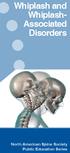 Whiplash and Whiplash- Associated Disorders North American Spine Society Public Education Series What Is Whiplash? The term whiplash might be confusing because it describes both a mechanism of injury and
Nurse Practitioner Frequently Asked Questions
 HEALTH SERVICES Nurse Practitioner Frequently Asked Questions The Frequently Asked Questions (FAQs) have been designed to increase awareness and understanding of the Nurse Practitioner role within the
Case 2:10-md-02179-CJB-SS Document 6427-14 Filed 05/03/12 Page 1 of 5 EXHIBIT 12
 Case 2:10-md-02179-CJB-SS Document 6427-14 Filed 05/03/12 Page 1 of 5 EXHIBIT 12 Case 2:10-md-02179-CJB-SS Document 6427-14 Filed 05/03/12 Page 2 of 5 Components of the PERIODIC MEDICAL CONSULTATION PROGRAM
Kaiser Permanente 2016 Sample Fee List *
 Kaiser Permanente 2016 Sample Fee List * NORTHWEST What s a Sample Fee List? Knowing how much you can expect to pay for care and services can help give you peace of mind. As a deductible plan member, you
Nurse Practitioner Project
 Nurse Practitioner Project (City Council on April 11, 12 and 13, 2000, adopted this Clause, without amendment.) The Community Services Committee recommends the adoption of the following report (March 9,
Temple Physical Therapy
 Temple Physical Therapy A General Overview of Common Neck Injuries For current information on Temple Physical Therapy related news and for a healthy and safe return to work, sport and recreation Like Us
Health Human Resources Toolkit
 Information Management A System We Can Count On Health Human Resources Toolkit April 2007 Health System Intelligence Project Section 1: Knowledge Page 1 Table of Contents Preface......................................iii
Online Course Descriptions (degree seeking):
 Online Course Descriptions (degree seeking): BSC 6001 Foundations of Clinical Orthopaedics This is an online self study course discussing the foundations of orthopaedics and manipulative therapy. The history
LICENSED PRACTICAL NURSES PROFESSION REGULATION
 Province of Alberta HEALTH PROFESSIONS ACT LICENSED PRACTICAL NURSES PROFESSION REGULATION Alberta Regulation 81/2003 Extract Published by Alberta Queen s Printer Alberta Queen s Printer 5 th Floor, Park
Doctor of Physical Therapy Degree Curriculum:
 Doctor of Physical Therapy Degree Curriculum: SUMMER SEMESTER 1 st YEAR (BOTH SESSIONS) DPT 744 Gross Human Anatomy I 2 credits DPT 744L Gross Human Anatomy I Lab 1 credit DPT 745 Gross Human Anatomy II
AN ACT RELATING TO HEALTH INSURANCE; AMENDING A SECTION OF THE NEW MEXICO INSURANCE CODE TO PROVIDE FOR FREEDOM OF CHOICE OF
 AN ACT RELATING TO HEALTH INSURANCE; AMENDING A SECTION OF THE NEW MEXICO INSURANCE CODE TO PROVIDE FOR FREEDOM OF CHOICE OF HOSPITAL AND PRACTITIONER TO INCLUDE LICENSED PROFESSIONAL MENTAL HEALTH COUNSELORS
ONTARIO NURSES ASSOCIATION
 ONTARIO NURSES ASSOCIATION Submission to Consultations on Regulation of Physician Assistants (PAs) under the Regulated Health Professions Act, 1991 Health Professions Regulatory Advisory Council (HPRAC)
Rheumatoid Arthritis www.arthritis.org.nz
 Rheumatoid Arthritis www.arthritis.org.nz Did you know? RA is the second most common form of arthritis Approximately 40,000 New Zealanders have RA RA can occur at any age, but most often appears between
Manual Physical Therapy Certificate Program. Curriculum
 Manual Physical Therapy Certificate Program Curriculum Effective: January 2014 MANUAL PHYSICAL THERAPY CERTIFICATE PROGRAM Program Director: Dr. Robert Boyles The EIM Manual Therapy Certificate Program
The College of Family Physicians of Canada. Position Statement Prescribing Rights for Health Professionals
 The College of Family Physicians of Canada Position Statement Prescribing Rights for Health Professionals Introduction The College of Family Physicians of Canada (CFPC) supports models of practice that
Nurse Practitioners in Canada
 Nurse Practitioners in Canada Prepared for the Health Care Co-operative Federation of Canada Biju Mathai, BSc Policy and Research Intern Canadian Co-operative Association March 20, 2012 Nurse Practitioners
The Royal College of. Chiropractors. Chiropractic Quality Standard. Acute Neck Pain
 The Royal College of Chiropractors Chiropractic Quality Standard Acute Neck Pain About The Royal College of Chiropractors Quality Standards Quality Standards are tools designed to help deliver the best
Acute Care Pediatric Nurse Practitioner Certification Exam. Detailed Content Outline
 Acute Care Pediatric Nurse Practitioner Certification Exam Description of the Specialty This exam is for the pediatric nurse practitioner (PNP) who has graduated from a formal acute care PNP program with
How To Become A Chiropractor
 CCEI The Councils On Chiropractic Education International INTERNATIONAL CHIROPRACTIC ACCREDITATION STANDARDS FOREWORD To master its future, the chiropractic profession must contribute to and thereby influence
Professional Competencies of the Newly Qualified Dental Prosthetist
 Professional Competencies of the Newly Qualified Dental Prosthetist February 2016 Australian Dental Council Level 2, 99 King Street Melbourne Victoria Australia Copyright 2016 This work is copyright 2016.
The Practice of Complementary and Alternative Veterinary Medicine
 POSITION STATEMENT The Practice of Complementary and Alternative Veterinary Medicine Publication Date: November 2015 Legislative References: Veterinarians Act R.S.O. 1990, Chapter V.3 s. 11(1) O. Reg.
OREGON HEALTH CARE CAREERS
 Career School Degree Required Description Art Therapy Marylhurst Masters Art therapists use drawings and other art/media forms to assess, treat, and rehabilitate patients with mental, emotional, physical,
Physical Therapy Self-Referral ( Direct Access )
 Physical Therapy Self-Referral ( Direct Access ) Summary of Statutes and Regulations by State December 2007 The American Association of Orthopaedic Surgeons (AAOS) supports a patient-centered approach
Kaiser Permanente 2016 Sample Fees List 1
 Kaiser Permanente 2016 Sample Fees List 1 SOUTHERN CALIFORNIA Knowing how much you can expect to pay for care and services can give you peace of mind. This Sample Fees List shows you estimated fees for
Chronic Low Back Pain
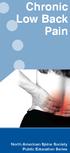 Chronic Low Back Pain North American Spine Society Public Education Series What is Chronic Pain? Low back pain is considered to be chronic if it has been present for longer than three months. Chronic low
PLEASE NOTE. For more information concerning the history of these regulations, please see the Table of Regulations.
 PLEASE NOTE This document, prepared by the Legislative Counsel Office, is an office consolidation of this regulation, current to September 22, 2014. It is intended for information and reference purposes
DEPARTMENT OF PHYSICAL THERAPY VISION International leadership in education and research in Physical Therapy and Rehabilitation Science.
 DEPARTMENT OF PHYSICAL THERAPY VISION International leadership in education and research in Physical Therapy and Rehabilitation Science. DEPARTMENT OF PHYSICAL THERAPY MISSION To educate future and current
Alberta s chiropractors: Spine care experts Patient satisfaction and research synopsis
 www.albertachiro.com 11203 70 Street NW Edmonton, AB T5B 1T1 Telephone: 780.420.0932 Fax: 780.425.6583 Alberta s chiropractors: Spine care experts Patient satisfaction and research synopsis Chiropractic
Dr. Kenneth A. Giraldo, MD, P.A. Patient Controlled Substance Agreement Informed Consent Form
 Dr. Kenneth A. Giraldo, MD, P.A. Patient Controlled Substance Agreement Informed Consent Form The following agreement relates to my use of controlled substance for chronic pain prescribed by Dr. Kenneth
Coding and Payment Guide for Laboratory Services. An essential coding, billing, and payment resource for laboratory and pathology services
 Coding and Payment Guide for Laboratory Services An essential coding, billing, and payment resource for laboratory and pathology services Contents Introduction............................... 1 Coding Systems...............................
Course Descriptions: PHTH 533 Functional Anatomy I (5)
 Course Descriptions: PHTH 501 Clinical Anatomy/Physiology I (5) This course is the first of three focusing on the structure of the human body and its related function. This course is designed to provide
FACULTY OF ALLIED HEALTH SCIENCES
 FACULTY OF ALLIED HEALTH SCIENCES 102 Naresuan University FACULTY OF ALLIED HEALTH SCIENCES has focused on providing strong professional programs, including Medical established as one of the leading institutes
Patient Guide. Sacroiliac Joint Pain
 Patient Guide Sacroiliac Joint Pain Anatomy Where is the Sacroiliac Joint? The sacroiliac joint (SIJ) is located at the bottom end of your spine, where the "tailbone" (sacrum) joins the pelvis (ilium).
NURSE PRACTITIONER STANDARDS FOR PRACTICE
 NURSE PRACTITIONER STANDARDS FOR PRACTICE February 2012 Acknowledgement The Association of Registered Nurses of Prince Edward Island gratefully acknowledges permission granted by the Nurses Association
DIRECT ACCESS TO PHYSICAL THERAPY LAWS SEPTEMBER 2015
 Last Updated: 9/1/15 Contact: [email protected] A SUMMARY OF DIRECT ACCESS LANGUAGE IN STATE PHYSICAL THERAPY PRACTICE ACTS DIRECT ACCESS TO PHYSICAL THERAPY LAWS SEPTEMBER 2015 STATE & Year Obtained AL-
Oh, 14 C O M M U N I T Y M A G A Z I N E S M A Y / J U N E 2 0 0 8
 14 C O M M U N I T Y M A G A Z I N E S M A Y / J U N E 2 0 0 8 Oh, my aching head NEW DOCTOR TEAM ADDRESSES CHRONIC HEADACHE PROBLEMS SEVERE HEADACHES IN THIS COUNTRY ARE A LEADING CAUSE OF DISRUP- TION
Test Request Tip Sheet
 With/Without Contrast CT, MRI Studies should NOT be ordered simultaneously as dual studies (i.e., with and without contrast). Radiation exposure is doubled and both views are rarely necessary. The study
Treatment of Chronic Pain: Our Approach
 Treatment of Chronic Pain: Our Approach Today s webinar was coordinated by the National Association of Community Health Centers, a partner with the SAMHSA-HRSA Center for Integrated Health Solutions SAMHSA
Consultation. Review of the scopes of practice for registration in the profession of medical radiation technology
 Consultation Review of the scopes of practice for registration in the profession of medical radiation technology CONTENTS Page Consultation Information... 3 Context of the Consultation... 4-7 Legislative
Guiding Principles 3. Legal Scope Of Practice 3. Nurses Accountability 4
 PRACTICE GUIDELINE RN and RPN Practice: The Client, the Nurse and the Environment Table of Contents Introduction 3 Guiding Principles 3 Legal Scope Of Practice 3 Nurses Accountability 4 The Three-Factor
Student Fitness to Practise Policy Appendix 1: Programmes Subject to Student Fitness to Practise Policy in 2015/16
 Student Fitness to Practise Policy Appendix 1: Programmes Subject to Student Fitness to Practise Policy in 2015/16 UCD College of Social Sciences and Law Graduate School Board PhD Clinical Psychology Master
Scope of Practice for Nurse Practitioners (NPs)
 Scope of Practice for Nurse Practitioners (NPs) September 2011 Approved by the College and Association of Registered Nurses of Alberta (CARNA) in September 2011. College and Association of Registered Nurses
STATE OF NEBRASKA STATUTES RELATING TO MEDICAL RADIOGRAPHY PRACTICE ACT
 2010 STATE OF NEBRASKA STATUTES RELATING TO MEDICAL RADIOGRAPHY PRACTICE ACT Department of Health and Human Services Division of Public Health Licensure Unit 301 Centennial Mall South, Third Floor PO Box
Schedule of Benefits HARVARD PILGRIM LAHEY HEALTH VALUE HMO MASSACHUSETTS MEMBER COST SHARING
 Schedule of s HARVARD PILGRIM LAHEY HEALTH VALUE HMO MASSACHUSETTS ID: MD0000003378_ X Please Note: In this plan, Members have access to network benefits only from the providers in the Harvard Pilgrim-Lahey
If you have opted out of the student plan, check with your other health plan to see if it covers chiropractic services.
 MacEwan Student Centre, Room 370 2500 University Drive NW Calgary, AB, Canada T2N 1N4 ucalgary.ca/wellnesscentre CHIROPRACTIC SERVICES FAQs How much does it cost? The SU Wellness Centre has very affordable
Determining Donor Eligibility Blood Donor vs. Stem Cell Donor. Wanda Koetz, RN, HPC Clinical Nurse Lead, Memorial Blood Centers ASFA - May 7, 2015
 Determining Donor Eligibility Blood Donor vs. Stem Cell Donor Wanda Koetz, RN, HPC Clinical Nurse Lead, Memorial Blood Centers ASFA - May 7, 2015 Objectives The learner will be able to: Define donor eligibility
Home Phone#: Mobile #: Email Address: Sex: M F Date of Birth (mm/dd/yyyy): / / Name of Emergency Contact: Relationship: Home Phone: ( )
 Patient Information Date: First Name: Address: Surname: City: Postal Code: Home Phone#: Mobile #: Email Address: Sex: M F Date of Birth (mm/dd/yyyy): / / Name of Emergency Contact: Relationship: Home Phone:
Information Pathway. Myeloma tests and investigations. Paraprotein measurement
 Information Pathway Myeloma UK Broughton House 31 Dunedin Street Edinburgh EH7 4JG Tel: + 44 (0) 131 557 3332 Fax: + 44 (0) 131 557 9785 Myeloma Infoline 0800 980 3332 www.myeloma.org.uk Charity No. SC
Resume of Robert J. Barth, Ph.D.
 Robert J. Barth, Ph.D. Fellow, National Academy of Neuropsychology Resume of Robert J. Barth, Ph.D. Overview Dr. Barth has been named a Fellow of the National Academy of Neuropsychology, for having made
Magnetic Resonance Imaging
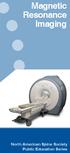 Magnetic Resonance Imaging North American Spine Society Public Education Series What Is Magnetic Resonance Imaging (MRI)? Magnetic resonance imaging (MRI) is a valuable diagnostic study that has been used