
Dietary Considerations with Secondary Endolymphatic Hydrops, Ménière s Disease, and Vestibular Migrane
|
|
|
- Lambert Franklin
- 9 years ago
- Views:
Transcription
1 PO BOX PORTLAND, OR FAX: (503) (800) Dietary Considerations with Secondary Endolymphatic Hydrops, Ménière s Disease, and Vestibular Migrane By the Vestibular Disorders Association Many people with Ménière s disease (also called primary idiopathic endolymphatic hydrops), secondary endolymphatic hydrops, or migraine-associated dizziness find that certain modifications in diet are helpful in managing their disorder. Inner ear fluid balance The fluid-filled hearing and balance structures of the inner ear normally function independently of the body s overall fluid/blood system. The fluid that bathes the sensory cells of the inner ear (known as endolymph) maintains a constant volume and contains specific and stable concentrations of sodium, potassium, chloride, and other electrolytes. With injury or disease, the volume and composition of endolymph may fluctuate with changes in the body s fluid/blood. This fluctuation is thought to cause the symptoms of endolymphatic hydrops or Ménière s disease: pressure or fullness in the ears, tinnitus (ringing in the ears), hearing loss, dizziness, and imbalance. Thus, for people with Ménière s disease or secondary endolymphatic hydrops, maintaining fluid/blood stability is important. Dietary goals Dietary strategies for regulating fluid balances involve modifying the amount and fluctuations of certain substances consumed and reducing or eliminating other substances that can adversely affect the inner ear. These dietary strategies may be incorporated into an individualized nutritional plan developed with the help of a physician or dietitian. General Guidelines 1. Distribute food and fluid intake evenly throughout the day and from day to day. This includes consuming approximately the same amount of food at each meal, not skipping meals, and eating snacks, if needed, at regular intervals. Evenly spacing food and fluid intake helps with inner-ear fluid stability; hypoglycemia (low blood sugar) can trigger migraine attacks. 2. Avoid foods and beverages that have a high salt or sugar content. In general, a diet high in fresh fruits, vegetables, and whole grains and low in canned, frozen, and processed foods helps control salt and sugar intake. Vestibular Disorders Association Page 1 of 7

2 3. Drink adequate amounts of fluid daily. Fluids can include water, milk, and low-sugar fruit juices but not coffee, tea, alcohol, or soft drinks. If possible, extra fluids should be drunk before and during exercise and in hot weather. 4. Avoid foods and beverages with caffeine. 5. Limit or eliminate alcohol consumption. 6. Do not use tobacco. Specific Guidelines Salt and sodium Sodium intake affects body-fluid levels and their regulation. Salt and sodium are not identical; table salt (sodium chloride) is made up of 40% sodium and 60% chlorine. Sodium occurs naturally in all foods and in drinking water. to foods. It s important to be selective about meal ingredients and seasonings and look for hidden sodium. Foods that are naturally low in sodium include fresh fruits and vegetables, unprocessed grains, and most fresh meats, poultry, and fish. Some frozen or canned food items are available without added salt. For those who have been accustomed to using salt, foods may initially taste bland, but introducing herbs and spices can help make them more flavorful and palatable. Many commercially packaged salt substitutes contain mixtures of herbs and spices. However, such products also often include potassium, which can complicate certain medical conditions (particularly those involving the kidneys), and thus should not be used without first consulting a physician. The American Heart Association recommends that healthy adults limit their sodium intake to no more than 2,400 mg (milligrams) per day. People on restricted-sodium diets may be limited to 1,000 2,000 mg of sodium per day, or about one-half to one teaspoon of salt. Each individual s physician will be the best judge of appropriate levels of sodium intake. Strategies for reducing sodium intake at home: Some people find that it is difficult to adapt to a reduced-sodium diet because salt is so often used to add flavor Strategies for reducing sodium intake when dining out: In restaurants, batterfried foods tend to be salty, as do combination dishes such as soups or pasta with sauce. Selecting plain foods from the menu such as grilled or roasted entrees, baked potatoes, and salad dressed with oil and vinegar can reduce salt intake. Most restaurants comply with requests for sauces and dressings to be served on the side or for dishes to be prepared without added salt. (See page 3 for tips on selecting a restaurant.) Looking for hidden sodium: Many kinds of convenience foods, such as Vestibular Disorders Association Page 2 of 7

3 frozen dinners, items from restaurant take-out menus, and foods with MSG (monosodium glutamate) contain large amounts of sodium. Foods that are usually very high in sodium include cured meats such as ham and bacon, processed foods such as canned meats and vegetables, and condiments such as soy sauce, ketchup, mustard, pickles, and olives. Canned and dehydrated soups, cereals, cheeses, salad dressings, sauces, chips, and salted nuts may also be high in sodium. Reading labels for sodium content: It is essential for those on restricted-sodium diets to read labels on packaged food, particularly because some foods with added salt do not taste salty. Foods that list salt as one of the first three ingredients on the label should be avoided. Ingredient lists with the words sodium or soda (which is sodium bicarbonate, or baking soda) or Na (the chemical symbol for sodium) indicate the presence of sodium in food. The FDA (US Food and Drug Administration) has established definitions for sodium and salt content in food labeling. Sodium-free or salt-free: less than 5 mg of sodium per serving Very low sodium: 35 mg or less per serving or 50g of food Low-sodium: 140 mg or less per serving or 50g of food Light in sodium: sodium is reduced by at least 50 percent Reduced/less sodium: at least 25 percent less sodium Lightly salted: 50 percent less sodium than normally added Unsalted, without added salt, Sugar or no salt added: no salt added during processing Meals or snacks with a high sugar content can cause fluctuations in the volume of body fluids, which may increase vestibular symptoms. For the purpose of minimizing such fluctuations, foods with complex sugars (such as those found in legumes, whole grains, potatoes, and vegetables) are better choices than foods with a high concentration of simple sugars (such as table sugar, brown sugar, honey, and corn syrup). Tips for lowering overall sugar consumption include cutting the amount of sugar in recipes in half, substituting fresh fruit for sweetened baked goods, and possibly the use of sugar substitutes. Reading labels for sugar content: On packaged-food labels, ingredients that end in ose are sugars (for example, dextrose, fructose, and sucrose). Corn syrup, honey, molasses, sorbitol, and mannitol are also sugars. If one of the first three ingredients listed on the label is a sugar, the sugar content of that product will be high. Vestibular Disorders Association Page 3 of 7

4 Sugar substitutes: A physician can provide the best advice about whether sugar substitutes are appropriate to use in reducing sugar intake. For use in foods, the FDA has approved four sugar substitutes: saccharin (Sweet N Low), aspartame (Equal), acesulfame-k (Sweet One), and sucralose (Splenda). The chemical composition of some sugar substitutes, however, may include sodium (for example, sodium saccharide); some substitutes, including aspartame and sucralose, are not always suitable for use in cooking or baking. Other dietary substances Caffeine is a stimulant that can make tinnitus louder and increase other symptoms. The diuretic properties of caffeine also cause excessive urinary loss of body fluids. Foods and beverages that often contain caffeine include chocolate, coffee, soft drinks, and tea. Alcohol can directly and adversely affect the inner ear by changing the volume and composition of its fluid. foods containing large amounts of MSG, nitrite/nitrate-preserved foods (such as hot dogs and pepperoni), and yeast. Not all people with migraines are affected by these triggers. Non-dietary substances Some medications contain substances that can increase symptoms of vestibular disorders. For example, aspirin can increase tinnitus, and nonsteroidal antiinflammatory drugs (NSAIDs) such as ibuprofen can interfere with the body s fluid-control mechanism, causing water retention or electrolyte imbalance. Some medications contain caffeine. Antacids may have significant amounts of sodium. If product ingredients are not readable on the package label, a pharmacist can provide information. Nicotine (found in tobacco products and some cease-smoking aids) can increase symptoms, because it decreases the blood supply to the inner ear by constricting blood vessels; it also causes a short-term increase in blood pressure. In addition, nicotine is a migraine trigger. Avoiding migraine triggers may help control migraine-associated dizziness. Migraine triggers include foods that contain the amino acid tyramine. Examples include red wine, chicken liver, smoked meats, sour cream, yogurt, pickled herring, chocolate, bananas, citrus fruits, figs, ripened cheeses (such as cheddar, Stilton, Brie, and Camembert), nuts, and peanut butter. Other migraine triggers include Vestibular Disorders Association Page 4 of 7

5 Crowded, busy social settings such as restaurants may be very difficult to navigate if you have a chronic vestibular disorder. By making some adaptations, you may still be able to meet friends and eat in relative comfort. However, even with the best Dining Out planning, you may become dizzy or disoriented. It will be easier on you and your dining companions if you explain your problem and suggest ways you can be helped before you actually need assistance. Selecting a restaurant Pick a restaurant with small separate rooms. No matter where you go, avoid rush hours. Avoid loud background music. Seek carpeted floors that reduce conversational noise and vibrations caused by waiters moving nearby. Avoid visually distracting shiny, checkered floors and surfaces, as well as ceiling fans and busy wallpaper. If the restaurant has a Web site, download a menu in advance and plan the meal to avoid visual strain and confusion. Seating hints Seat yourself in the corner of a restaurant, avoiding the bustling middle. Sit away from kitchens, cash registers, and bars. Sit in chairs rather than benches to reduce motion caused by others seated next to you. Booths may help block noise and activity. To reduce the amount of head turning required to converse, choose a round table or sit at the head. Lighting Fluorescent lights may cause visual difficulty; sit away from and with your back to the light. Be aware that many restaurants control lights with a central rheostat, which can be visually disorienting. Ask that flickering candles be removed. Vestibular Disorders Association Page 5 of 7

6 Additional resources Some helpful documents available from VEDA: Ménière s Disease What You Need to Know Secondary Endolymphatic Hydrops Migraine-Related Dizziness: An Updated Understanding More information about food content may be found through the American Heart Vestibular Disorders Association Association ( and the US Food and Drug Administration ( Many of the guidelines presented in this article are commonly recommended to people with Ménière s disease, endolymphatic hydrops, or vestibular migraine. A physician or dietitian may incorporate some of these principles into an individualized treatment plan. VEDA s publications are protected under copyright. For more information, see our permissions guide at This document is not intended as a substitute for professional health care. Vestibular Disorders Association Page 6 of 7

7 PO BOX PORTLAND, OR FAX: (503) (800) Did this free publication from VEDA help you? Thanks to VEDA, vestibular disorders are becoming recognized for their impacts on lives and our economy. We see new diagnostic tools and research studies, more accessible treatments, and a growing respect for how life-changing vestibular disorders can be. VEDA provides tools to help people have a better quality of life: educational materials, support networks, professional resources, and elevated public awareness. Your support of VEDA matters. Please help us to continue providing such great help by becoming a member or donor. Members receive an information packet; discounts on purchases; a subscription to VEDA s newsletter, On the Level, containing information on diagnosis, treatment, research, and coping strategies; and the option of communicating directly with others who understand the personal impacts of a vestibular disorder. Professional members also receive the option to list training opportunities on our site, bulk-discounted prices on patient education materials, and a listing on VEDA s provider directory, the only of its kind serving patients seeking help from a vestibular specialist. S SUPPORT VEDA A Membership, 1-year $ 40 Basic $110 Professional Memberships include electronic & online newsletter & free publications. For hard copies, include optional shipping fees. $ 5 Shipping (domestic) $ 15 Shipping (international) $ Please indicate your desired subscription amount here. Optional Contribution I d to support VEDA with a donation (instead of or in addition to membership). $ Please indicate your desired subscription amount here. Check this box if you prefer that your donation remain anonymous. $ $ Total PAYMENT INFORMATION If you prefer, you can make your purchases online at Check or money order in US funds, payable to VEDA (enclosed) Visa MC Card number Exp. date (mo./yr.) Amex Billing address of card (if different from mailing information) MAILING INFORMATION Name Address City State/Province Zip/Postal code Country Telephone Vestibular Disorders Association Page 7 of 7

DIABETES & HEALTHY EATING
 DIABETES & HEALTHY EATING Food gives you the energy you need for healthy living. Your body changes most of the food you eat into a sugar called glucose. (glucose) Insulin helps your cells get the sugar
Eating Right for Kidney Health: Tips for People with Chronic Kidney Disease
 Eating Right for Kidney Health: Tips for People with Chronic Kidney Disease What you eat and drink can help slow down the progression of chronic kidney disease (also known as CKD ) and help prevent complications.
Nutrition and Chronic Kidney Disease
 Nutrition and Chronic Kidney Disease I have been told I have early kidney failure. What does this mean? What can I expect? This means that your kidneys are not doing as good a job as they should to help
Nutrition and Chronic Kidney Disease
 Nutrition and Chronic Kidney Disease National Kidney Foundation s Kidney Disease Outcomes Quality Initiative (NKF-K/DOQI TM ) The National Kidney Foundation is developing guidelines for clinical care to
A Guide to Reducing Dietary Sodium Intake
 Salt and High Blood Pressure A Guide to Reducing Dietary Sodium Intake A Look at the DASH eating plan My Plate Basics Sodium is a mineral element most commonly found in salt (sodium chloride) Sodium occurs
ST 2004-01 Food Definition, Issued May, 2004; Revised June, 2007 and May, 2015
 Business Tax Division Sales & Use Tax P.O. Box 530 Columbus; Ohio 43216-0530 www.tax.ohio.gov ST 2004-01 Food Definition, Issued May, 2004; Revised June, 2007 and May, 2015 The purpose of this information
Healthy Eating for Diabetes
 Healthy Eating for Diabetes What is diabetes and why is it important to manage it? Diabetes occurs when there is too much glucose in the blood. Learning how to manage your diabetes will help you feel better
Balance and Aging By Charlotte Shupert, PhD, with contributions by Fay Horak, PhD, PT Oregon Health & Science University, Portland, Oregon
 PO BOX 13305 PORTLAND, OR 97213 FAX: (503) 229-8064 (800) 837-8428 [email protected] WWW.VESTIBULAR.ORG Balance and Aging By Charlotte Shupert, PhD, with contributions by Fay Horak, PhD, PT Oregon Health
Healthy Eating During Pregnancy
 Healthy Eating During Pregnancy Pregnancy is a time of great change. Your body is changing to allow your baby to grow and develop. Good nutrition will help you meet the extra demands of pregnancy while
Healthy Foods for my School
 yum, yum, yum, yum, yum, yum, yum, yum, yum, yum, yum, yum, yum, yum, yum, yum, yum, yum, yum, yum, yum, Healthy Foods for my School Nutrition Standards for Saskatchewan Schools Schools are an ideal place
Nutrition Recommendations and Interventions for Diabetes
 Nutrition Recommendations and Interventions for Diabetes S U P P L E M E N T Medical nutrition therapy (MNT) is important in preventing diabetes, managing existing diabetes, and preventing, or at least
For those with Diabetes and Chronic Kidney Disease. This pamphlet is intended for people diagnosed with early stage chronic kidney disease.
 Nutrition Tips For those with Diabetes and Chronic Kidney Disease. This pamphlet is intended for people diagnosed with early stage chronic kidney disease. November 2014 1 Happy Living Well With Diabetes
Vestibular Injury. Vestibular Disorders Association www.vestibular.org Page 1 of 5
 PO BOX 13305 PORTLAND, OR 97213 FAX: (503) 229-8064 (800) 837-8428 [email protected] WWW.VESTIBULAR.ORG Vestibular Injury Compensation, De-compensation, and Failure to Compensate By Thomas E. Boismier,
Healthy Eating For Your Kidneys
 Winter 14 Healthy Eating For Your Kidneys (For People Not on Dialysis) BC Provincial Renal Agency If you have kidney disease, you may need to change the food you eat. Changes will depend on your appetite,
NUTRITION AND HEMODIALYSIS
 NUTRITION AND HEMODIALYSIS www.kidney.org National Kidney Foundation's Kidney Disease Outcomes Quality Initiative Did you know that the National Kidney Foundation's Kidney Disease Outcomes Quality Initiative
Low Fat Diet after Cardiac Surgery With or Without Chyle Leak
 Low Fat Diet after Cardiac Surgery With or Without Chyle Leak What is chyle? Chyle (sounds like kyle) is a milky white fluid that contains protein, fat, cholesterol, lymphocytes, and electrolytes. It is
Heart healthy diet: 8 steps to prevent heart disease
 Heart healthy diet: 8 steps to prevent heart disease Changing your eating habits can be tough. Start with these eight strategies to kick start your way toward a heart healthy diet. By Mayo Clinic Staff
Healthy Eating for Diabetes
 Healthy Eating for Diabetes What is diabetes? Diabetes is when your blood sugar (glucose) levels are higher than normal. For some people, this is because the insulin in their body doesn t work as well
My Diabetic Meal Plan during Pregnancy
 My Diabetic Meal Plan during Pregnancy When you have diabetes and are pregnant, you need to eat small meals and snacks throughout the day to help control your blood sugar. This also helps you get in enough
Vestibular Injury: Compensation, Decompensation, and Failure to Compensate
 VESTIBULAR DISORDERS ASSOCIATION PO Box 13305 Portland, OR 97213 fax: (503) 229-8064 toll-free voice-mail: (800) 837-8428 [email protected] http://www.vestibular.org/ VEDA Publication No. F-26 Vestibular
Will the cholesterol in my diet raise my blood cholesterol?
 Healthy eating for your heart What does heart healthy eating mean to me? Heart healthy eating is an important part of a healthy lifestyle. Heart healthy eating, along with regular physical activity and
Save Time and Money at the Grocery Store
 Save Time and Money at the Grocery Store Plan a Grocery List Making a list helps you recall items you need and also saves you time. Organize your list according to the layout of the grocery store. For
Heart Healthy Diet: Tips for Lowering Cholesterol and Fat in Your Diet
 Heart Healthy Diet: Tips for Lowering Cholesterol and Fat in Your Diet Cholesterol Saturated Fats Polyunsaturated and Mono-unsaturated Fats This fat-like substance is needed for good health. However, high
Nutrition Guidelines for Diabetes
 Nutrition Guidelines for Diabetes Eating healthy foods and keeping a healthy body weight are very important parts of a diabetes treatment plan. A healthy diet and weight helps to keep your blood sugar
Travel and Vestibular Disorders
 PO BOX 13305 PORTLAND, OR 97213 FAX: (503) 229-8064 (800) 837-8428 [email protected] WWW.VESTIBULAR.ORG Travel and Vestibular Disorders Helpful Strategies to Consider in Planning a Trip The Vestibular
Following a 2 gram sodium diet What is sodium? Why should I limit the sodium in my diet? Where does sodium come from?
 Following a 2 gram sodium diet Your health care provider has asked you to follow a 2 gram sodium diet. This is a diet that moderately restricts the amount of sodium you eat. About ⅓ of the sodium in our
The Human Balance System
 PO BOX 13305 PORTLAND, OR 97213 FAX: (503) 229-8064 (800) 837-8428 [email protected] WWW.VESTIBULAR.ORG The Human Balance System A Complex Coordination of Central and Peripheral Systems By the Vestibular
Reading Food Labels. Nutritional values The ingredients of the item The percentage of the Recommended Daily Intake (RDI) of particular nutrients
 Eating well involves choosing a variety of foods that are low in saturated and trans fats, low in salt and high in dietary fibre. Food labels carry useful information to help you make choices about the
Restaurant Rehab: Using the Menu to Make Heart Healthy Choices
 Restaurant Rehab: Using the Menu to Make Heart Healthy Choices It can be hard to find heart healthy restaurant foods. Restaurant foods are often high in calories, fat, cholesterol and sodium. For this
Managing your blood pressure
 Managing your blood pressure What is blood pressure? Blood pressure measures the force of blood against your artery walls. This pressure allows your blood to push out to other parts of your body for circulation.
Very Low Sodium (2 Gram) Diet
 Very Low Sodium (2 Gram) Diet What is sodium? Sodium is a mineral that is necessary for good health and is present in all foods. Most people eat more sodium than they need. Sodium is part of salt. Therefore,
SUGAR SMARTS. Introduction. Preparation. Suggested Recipes. Key Concepts
 SUGAR SMARTS Introduction This lesson uses health concerns around diabetes to introduce a discussion of sugar in our diets. Depending on your audience, you may want to talk about diabetes more generally
What impacts blood glucose levels?
 What you eat and how much you eat has an impact on your blood glucose levels. Your blood glucose level reflects how well your diabetes is controlled. There are many aspects to eating for target BG (Blood
Nutrition & Transplantation
 Nutrition & Transplantation www.kidney.org National Kidney Foundation s Kidney Disease Outcomes Quality Initiative Did you know that the National Kidney Foundation s Kidney Disease Outcomes Quality Initiative
Duke Center for Metabolic and Weight Loss Surgery Pre-op Nutrition Questionnaire
 Duke Center for Metabolic and Weight Loss Surgery Pre-op Nutrition Questionnaire Name Date How long have you been considering weight loss surgery? Which procedure are you interested in having? Gastric
D avid Berger, M.D. FAAP Melanie Wardle, ARNP, CPNP. Elimination Diet for Food Allergies and Sensitivities
 D avid Berger, M.D. FAAP Melanie Wardle, ARNP, CPNP 3405 W. Fletcher Avenue 813-960-3415 phone Tampa, FL 33618 www.wholisticfamilycare.com 813-960-3465 fax Elimination Diet for Food Allergies and Sensitivities
Living With Congestive Heart Failure
 Living With Congestive Heart Failure Information for patients and their families Patient information developed by EPICORE Centre, Division of Cardiology, University of Alberta The REACT study: supported
Snacking and Gestational Diabetes
 Snacking and Gestational Diabetes Note to the Health Care Provider: Topics in this handout are discussed in Chapter 6 of the American Dietetic Association Guide to Gestational Diabetes Mellitus (1). When
PART1: Sodium and Hypertension
 PART1: Sodium and Hypertension Jeff Whittle, MD, MPH Staff Physician, Clement J. Zablocki VA Medical Center Professor of Medicine, Medical College of Wisconsin Lifestyle and Blood Pressure LIFESTYLE CHANGE
A GUIDE TO HELP PLAN, PURCHASE & PREPARE YOUR OWN HEALTHY FOOD. FOOD SENSE HEALTHY MEALS ON A BUDGET
 A GUIDE TO HELP PLAN, PURCHASE & PREPARE YOUR OWN HEALTHY FOOD. FOOD SENSE HEALTHY MEALS ON A BUDGET You ll be surprised at how affordable, delicious & convenient your own meals can be! the Great Plate:
100 Gram Fat Diet for 72 hour Fecal Fat Collection
 100 Gram Fat Diet for 72 hour Fecal Fat Collection The fecal fat test will help find out if you have steatorrhea (that is, excess fat in bowel movements due to the body not being able to absorb fat). To
Healthy Menu Planning
 Healthy Menu Planning Please save paper and print the pages of this resource back-to-back! Table of Contents Considerations for Planning Menus... 4 Menu Planning Principles... 4 Menu Cycling...5 Guidelines
But what does my body need? (No...it is not just candy and soda!)
 Chapter 35: Page 349 In the last chapter, you learned how important your immune system is to your survival. This week, you are going to learn how to keep your immune system strong and ready to protect
Eat More, Weigh Less?
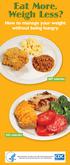 Eat More, Weigh Less? How to manage your weight without being hungry 607 calories 293 calories Department of Health and Human Services Centers for Disease Control and Prevention Can you weigh less without
Healthy Eating and your Diabetes
 Healthy Eating and your Diabetes Patient Information Leaflet Why is Healthy Eating Important? Healthy eating is important to everyone but is even more important if you have diabetes. This is because some
Everything You Need to Know About Sucralose
 S u c r a l o s e Everything You Need to Know About Sucralose With obesity rates among Americans at an all-time high, many people may think they have to give up sweets in order to lose weight. But there
WEIGHT GAINER S NUTRITION GUIDE
 WEIGHT GAINER S NUTRITION GUIDE Gaining weight takes dedication! You must eat these meals everyday to stay on track. Included in this pack are the meal plan, supplement guide, fast food guide, and NCAA
A Beginner s Guide to Carbohydrate Counting
 A Beginner s Guide to Carbohydrate Counting This slide show explains: What foods contain carbohydrates How much of these foods you can eat Where to look up the carb content of foods Pia has a Bachelors
Daily Habits and Urinary Incontinence
 Effects of Daily Habits on the Bladder Many aspects of our daily life influence bladder and bowel function. Sometimes our daily habits may not be in the best interest of the bladder. A number of surprisingly
MUSC Patient Handout Patient and Family Education About Migraine Headaches
 MUSC Patient Handout Patient and Family Education About Migraine Headaches Changing What s Possible in Health Care. As an academic medical center, MUSC offers benefits to the residents of South Carolina
Blood Pressure and Your Health
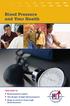 Blood Pressure and Your Health YOUR GUIDE TO: Blood pressure basics The danger of high blood pressure Steps to avoid or lower high blood pressure I started measuring my blood pressure at home after I learned
Making Healthy Food Choices. Section 2: Module 5
 Making Healthy Food Choices Section 2: Module 5 1 Nutrition For Health What is healthy Tips on planning meals Making a shopping list/ Bulk orders Using WIC foods Cook and freeze What foods to choose How
Carbohydrate Counting for Patients with Diabetes. Lauren Dorman, MS RD CDE Registered Dietitian & Certified Diabetes Educator
 Carbohydrate Counting for Patients with Diabetes Lauren Dorman, MS RD CDE Registered Dietitian & Certified Diabetes Educator Program Purpose To increase knowledge of carbohydrate counting skills for nurses
Diet for Kidney Stone Prevention
 Diet for Kidney Stone Prevention National Kidney and Urologic Diseases Information Clearinghouse U.S. Department of Health and Human Services NATIONAL INSTITUTES OF HEALTH How does diet affect the risk
MEAL PLANNING FOR MECHANICAL SOFT DIET
 MEAL PLANNING FOR MECHANICAL SOFT DIET Definition of Terms Calories Protein Blenderized Pureed Units of energy. A nutrient used by your body for growth and repair. The best sources are milk, meats, fish,
Ready, Set, Start Counting!
 Ready, Set, Start Counting! Carbohydrate Counting a Tool to Help Manage Your Blood Glucose When you have diabetes, keeping your blood glucose in a healthy range will help you feel your best today and in
High Blood Pressure and Chronic Kidney Disease. For People With CKD Stages 1 4
 High Blood Pressure and Chronic Kidney Disease For People With CKD Stages 1 4 National Kidney Foundation s Kidney Disease Outcomes Quality Initiative (NKF-KDOQI ) The National Kidney Foundation s Kidney
Guidelines for a Low Sodium Diet
 Guidelines for a Low Sodium Diet Many of us eat about 3500 milligrams (mg) of sodium every day. Almost one-fourth of that comes naturally in our food. The rest is added at the table with the saltshaker
Strokes and High Blood Pressure
 Strokes and High Blood Pressure Quick Review from last Week: What is a Stroke Stroke: blood supply to the brain is severely limited or cut off With no blood to carry oxygen to them, brain cells will die
Kidney Stones and Diet
 Kidney Stones and Diet What are kidney stones? Urine is made up of water and substances such as calcium, oxalate and uric acid. Crystals begin to form first in the kidney when: there are higher than normal
Registered Trade Mark
 2008 High Energy, High Protein, Low Fiber Guidelines Registered Trade Mark High Energy, High Protein, Low Fibre Guidelines Eating well, even though you may not feel hungry, is an important part of taking
February 2006. 23 Best Foods for Athletes
 23 Best Foods for Athletes February 2006 1. Beans Legumes a. Excellent source of fiber (important for keeping blood sugar and cholesterol levels under control). b. High in protein and a good source of
Carbohydrate Counting (Quiz Number: Manatee3032009)
 Page 1 The goal of Carbohydrate Counting is to make clear to you which foods affect your blood glucose and then to spread these foods evenly throughout the day (or to match insulin peaks and durations).
Do children with diabetes need a special diet?
 Do children with diabetes need a special diet? No! The basic nutritional needs of a child or adolescent with diabetes is the same as their peers Healthy eating is important for all children Children with
Carbohydrate Counting for Patients With Diabetes. Review Date 4/08 D-0503
 Carbohydrate Counting for Patients With Diabetes Review Date 4/08 D-0503 Program Objectives At the end of the session you will know how to: Define carbohydrate counting Identify the relationship between
High Cholesterol and Heart Failure
 High Cholesterol and Heart Failure What Is Cholesterol? Cholesterol is a waxy substance that comes from your liver and from the food you eat. Your body needs it to function properly. There are two main
Heart Healthy Diet: Low Fat, Low Cholesterol, Low Sodium Diet
 Heart Healthy Diet: Low Fat, Low Cholesterol, Low Sodium Diet Purpose of the diet Control and / or decrease levels of cholesterol in your blood. Control and / or decrease blood pressure and / or fluid
Selection and Preparation of Foods Management of the Food Budget*
 Selection and Preparation of Foods Management of the Food Budget* Healthy meals on a limited budget! How can you serve healthy meals on a limited budget? It takes some time and planning, but you and your
Snack Foods and Beverages In South Carolina Schools A comparison of state policy with USDA s nutrition standards
 A data table from The Pew Charitable Trusts and the Robert Wood Johnson Foundation Jan 2015 Snack Foods and Beverages In South Carolina Schools A comparison of state policy with USDA s nutrition standards
Maintaining Nutrition as We Age
 SS-207-06 For more information, visit the Ohio Department of Aging web site at: http://www.goldenbuckeye.com and Ohio State University Extension s Aging in Ohio web site at: http://www.hec.ohio-state.edu/famlife/aging
Mediterranean diet: Choose this hearthealthy
 MayoClinic.com reprints This single copy is for your personal, noncommercial use only. For permission to reprint multiple copies or to order presentation-ready copies for distribution, use the reprints
Levy County Wellness Plan
 I. Philosophy and Commitment Levy County Wellness Plan The School Board of Levy County believes that good health fosters student attendance and student achievement. The Board also believes that a healthy
Mealtime Memo. Timesaving Tips for Mealtime
 Mealtime Memo National Food Service Management Institute The University of Mississippi for Child Care No. 6, 2009 Timesaving Tips for Mealtime Family day care home providers have a busy day. It starts
CONNECTICUT STATE BOARD OF EDUCATION Hartford
 III.A. CONNECTICUT STATE BOARD OF EDUCATION Hartford TO BE PROPOSED: April 6, 2015 RESOLVED, That the State Board of Education, pursuant to Section 10-215f of the Connecticut General Statutes, approves
USE BLUE OR BLACK INK ONLY. 1c. ARE YOU THE NEW OWNER OF A PREVIOUSLY REGISTERED FACILITY? Yes O No O
 FDA USE ONLY USE BLUE OR BLACK INK ONLY Date: (MM/DD/YYYY) Section 1 - TYPE OF REGISTRATION 1a. O DOMESTIC REGISTRATION O FOREIGN REGISTRATION 1b. O INITIAL REGISTRATION O UPDATE OF REGISTRATION INFORMATION
USING THE FOOD LABEL TO FIND ITEMS THAT MEET THE EAT SMART IN PARKS GUIDELINES
 USING THE FOOD LABEL TO FIND ITEMS THAT MEET THE EAT SMART IN PARKS GUIDELINES FOOD LABELS Food Nacho chips label Although one serving of chips (1 ounce) meets the calorie guideline, 3 ounces of chips
We want you to have the best results possible while doing our detox. If your goal is weight loss, then eating the right foods and exercising
 Detox Menu Guide We want you to have the best results possible while doing our detox. If your goal is weight loss, then eating the right foods and exercising moderately will help boost your results and
Carbohydrate Counting for Pediatric Patients With Type 1 Diabetes. Review Date 4/08 K-0591
 Carbohydrate Counting for Pediatric Patients With Type 1 Diabetes Review Date 4/08 K-0591 Program Purpose To increase knowledge of carbohydrate counting and insulin management skills for those caring for
Gaining Weight for Athletes
 Gaining Weight for Athletes Prepared by Jenn Van Ness, ATC June 2008 Gain Weight the Healthy Way To gain one pound, you need to eat approximately 500 more calories a day. Approximately one pound of fat
HIGH BLOOD PRESSURE. www.1on1health.com HIGH BLOOD PRESSURE. puts you at risk for heart. attack, stroke, and other. health problems.
 HIGH BLOOD PRESSURE puts you at risk for heart attack, stroke, and other health problems. Work with your doctor to keep your blood pressure under control. This may help you avoid problems later. For treatment
ro INTROduct ioninint
 ro INTROduct ioninint Chapter 6: Menu Planning and Sample Menus For some participants, the food they eat at the CACFP adult day care program will be the tastiest and healthiest food they will have all
Why does my child need to follow a milk and dairy free diet?
 Milk and dairy free diet Why does my child need to follow a milk and dairy free diet? Your child has an allergy to milk and dairy products, and their ingredients. An allergic reaction to milk and dairy
FACT SHEET N 394 UPDATED MAY 2015. Healthy diet
 FACT SHEET N 394 UPDATED MAY 2015 Healthy diet KEY FACTS n A healthy diet helps protect against malnutrition in all its forms, as well as noncommunicable diseases (NCDs), including diabetes, heart disease,
TASTING SUCCESS WITH CUTTING SALT
 TASTING SUCCESS WITH CUTTING SALT Twenty-Five Science-Based Strategies & Culinary Insights DEPARTMENT OF NUTRITION, HARVARD SCHOOL OF PUBLIC HEALTH THE CULINARY INSTITUTE OF AMERICA ABOUT THIS PUBLICATION
Illinois Department of Revenue Regulations TITLE 86: REVENUE CHAPTER I: DEPARTMENT OF REVENUE PART 130 RETAILERS' OCCUPATION TAX
 Illinois Department of Revenue Regulations Title 86 Part 130 Section 130.310 Food, Soft Drinks and Candy TITLE 86: REVENUE CHAPTER I: DEPARTMENT OF REVENUE PART 130 RETAILERS' OCCUPATION TAX Section 130.310
Eating Well with Diabetes. Cassie Vanderwall UW Health Nutrition Registered Dietitian Certified Personal Trainer Certified Diabetes Educator
 Eating Well with Diabetes Cassie Vanderwall UW Health Nutrition Registered Dietitian Certified Personal Trainer Certified Diabetes Educator Outline What is Diabetes? Diabetes Self-Management Eating Well
SOLID FATS AND ADDED SUGARS (SoFAS) Know the Limits
 COOPERATIVE EXTENSION SERVICE UNIVERSITY OF KENTUCKY COLLEGE OF AGRICULTURE, LEXINGTON, KY, 40546 NEP-207B SOLID FATS AND ADDED SUGARS (SoFAS) Know the Limits The U.S. Department of Agriculture s Dietary
Nutritional Guidelines for Roux-en-Y, Sleeve Gastrectomy and Duodenal Switch. Gastric Restrictive Procedures. Phase III Regular Consistency
 Nutritional Guidelines for Roux-en-Y, Sleeve Gastrectomy and Duodenal Switch Gastric Restrictive Procedures Phase III Regular Consistency The University of Chicago Hospitals Center for the Surgical Treatment
Aspartame. Everything You Need to Know About Aspartame
 Aspartame Everything You Need to Know About Aspartame With obesity rates among Americans at an all-time high, many people may think they have to give up sweets in order to lose weight. But, there s good
Healthy Eating for people at risk of diabetes or with prediabetes
 Healthy Eating for people at risk of diabetes or with prediabetes WHAT IS PREDIABETES / AT RISK OF DIABETES Some patients have a blood sugar level which is higher than normal but not high enough to be
A healthy cholesterol. for a happy heart
 A healthy cholesterol for a happy heart cholesterol A healthy cholesterol for a happy heart You probably already know that cholesterol has something to do with heart disease. But like many people, you
Health Maintenance: Controlling Cholesterol
 Sacramento Heart & Vascular Medical Associates February 18, 2012 500 University Ave. Sacramento, CA 95825 Page 1 What is cholesterol? Cholesterol is a fatty substance. It has both good and bad effects
Canada s Food Guide Jeopardy
 Canada s Food Guide Jeopardy Drafted: July 2008 Revised: December 2012 Eating Well with Canada s Food Guide Veg & Fruit Grain Products Milk & Alternatives Meat & Alternatives Physical Activity Miscellaneous
Fundamentals of Diabetes Care Module 3, Lesson 1
 Module 3, Lesson 1 Fundamentals of Diabetes Care Module 3: Healthy Eating Healthy Eating Being Active Monitoring Taking Medication Problem Solving Healthy Coping Reducing Risks Objectives Identify the
Cochlear Hyperacusis and Vestibular Hyperacusis
 PO BOX 13305 PORTLAND, OR 97213 FAX: (503) 229-8064 (800) 837-8428 [email protected] WWW.VESTIBULAR.ORG Cochlear Hyperacusis and Vestibular Hyperacusis By Marsha Johnson, MS, CCC-A, Oregon Tinnitus &