
Pseudo code Tutorial and Exercises Teacher s Version
|
|
|
- Opal Byrd
- 9 years ago
- Views:
Transcription
1 Pseudo code Tutorial and Exercises Teacher s Version Pseudo-code is an informal way to express the design of a computer program or an algorithm in The aim is to get the idea quickly and also easy to read without details. It is like a young child putting sentences together without any grammar. There are several ways of writing pseudo-code; there are no strict rules. But to reduce ambiguity between what you are required to do and what you express let s base the pseudo code on the few defined conventions and carry out the exercises. Pseudo-code Examples Let s see few examples that can be used to write pseudo-code. 1. Sort Repeatedly steps through the list to be sorted, comparing each pair of adjacent items and swapping them if they are in the wrong order. Taking the sorting example; let s sort an array using the Bubble sort technique. This sorting algorithm could be implemented in all programming languages but let s see the C implementation. void ArraySort(int This[], CMPFUN fun_ptr, uint32 ub) { /* bubble sort */ } uint32 indx; uint32 indx2; int temp; int temp2; int flipped; if (ub <= 1) return; indx = 1; do { flipped = 0; for (indx2 = ub - 1; indx2 >= indx; --indx2) { temp = This[indx2]; temp2 = This[indx2-1]; if ((*fun_ptr)(temp2, temp) > 0) { This[indx2-1] = temp; This[indx2] = temp2; flipped = 1; } } } while ((++indx < ub) && flipped); What s your impression? Is it easy to understand at once this C implementation? Bubble sort is mostly used in teaching. However, its performance is slow and in 2.44 the students will discover that there are better algorithms. Page 1 of 16

2 Here is some pseudo code for this algorithm. Set n to number of records to be sorted repeat flag = false; for counter = 1 to n-1 do if key[counter] > key[counter+1] then swap the records; set flag = true; end if end do n = n-1; until flag = false or n=1 What s easier to understand, the implementation in C or pseudo-code? OR the same can be expressed more concisely in words as below repeat set a flag to False for each pair of keys if the keys are in the wrong order then swap the keys set the flag to True end if next pair until flag is not set. OR even as follows Keep swapping items until array is in order This is easier than the programming language but is not so precise. Hence the above pseudo code examples are more useful for implementing purposes. This one-line version may raise questions such as on what basis do I swap the items? Therefore, it is important to be precise too. The main part is that it is important to provide easy to read but precise instructions; this will keep the design simple and unambiguous. Taking a practical example, if I gave you the following instructions: OR (a) Take a left, then take a right, go down the stairs, on your right enter the kitchen, pick a cup and pour some hot water and add some hot chocolate. (b) Please make me a hot chocolate. The above line of instruction depends on the reader, some prefer to (a) if not experienced while others prefer (b) because it nails it to the point. It is pretty concise too. Page 2 of 16

3 Let us take Example 1 and divide the algorithm implementation in stages and conquer. Example 1: Compute Fibonacci numbers till 50. int main( ) { int n, k, f1, f2, f; if ( n < 2 ) return n; else { f1 = f2 = 1; for(k=2;k<n;k++) { f = f1 + f2; f2 = f1; f1 = f; } return f; } C implementation The statements with // are just comments Let us first declare and initialise all the variables. Declare an integer variable called n Declare an integer variable sum Declare an integer variable f1 Declare an integer variable f2 set loopcounter to 2 values set sum to 0 set f1 and f2 to 1 set n to 50 Now the computation and displaying the output // n is the numberlimit // f is the sum // f1 is temporary storage // f2 is temporary storage // assigning the variables declared above to Instead of an equal sign an arrow sign can also be used repeat n times sum = f1 + f2 f2 = f1 f1 = sum print sum end loop Page 3 of 16

4 If all the above sections of pseudo code are put together we will get something looking like the example below Pseudo Code Example Points to note Declare an integer variable called n Declare an integer variable sum Declare an integer variable f1 Declare an integer variable f2 set sum to 0 set f1 and f2 to 1 set n to 50 repeat n times a. sum = f1 + f2 b. f2 = f1 c. f1 = sum d. print sum end loop For example in Pseudo Code Example1 the scope of a loop starts at line 9 and ends at 10 Usually scope terminators such as start and end are used. Say if you want to consider a check if the n is more than 2 then you can have an if endif statement if n < 2 then print n end if This if endif statement would come in before code line 7. Pseudo Code Example 1 is one of the ways that pseudo code can be written. Below is another example where it exempts the declaration of the variable and directly initialises them to a value. It is quite wordy than Pseudo Code Example 1. Pseudo- Code Example 2 Initialise n to fifty Initialise sum to zero Initialise f1 and f2 to zero repeat n times add f1 and f2, store this value in sum assign f1 s current value to f2 assign sum s current value to f1 end loop If this condition is true only then continue initialising the temporary variables and the computation else exit of the function These examples are just suggested ways of writing pseudo-code. There are various approaches that you can use. I have included a number of links in Table 2 each having variations of pseudo-code writing techniques with few examples. No strict rules are defined but just easy to read but precise. Page 4 of 16

5 Let s look at another example 2. Nested Function Now let s have an example of a nested function in other words where a function calls another function. Exercise: Create an array of size 10 and assign random values to each element of the array and print. The random values are generated by another function which we do not implement but it is just invoked to complete our need. Example 3: The implementation is in Java programming language. int arr; // Declaring a variable called arr // which will be later used to create an array arr = new int[10]; // Initialising the array for(int i = 0; i < arr.size(); i++) // Loop { arr[i] = random (); // insert random numbers into the array print arr[i]; } Pseudo Code Example 3 Declare an integer variable arr Declare an integer variable loopcounter Since there is a use of the loopcounter to succeed to the next element in the array the for loop is vital. Set arr to size 10 for loopcounter = 0 to (size of arr)-1 arr[loopcounter] = random() loopcounter = loopcounter + 1 print arr[loopcounter] endfor Points to note There are two function calls random() and size(). size() gets the size of the initialised array and randon() generates numbers randomly. The process could be re-written in a wordier format and quite precise than the above example. See Pseudo Code Example 4 for this. Pseudo Code Example 4 fill the array with random variables Pseudo Code Example 4 is very concise description of the algorithm and most programmers know how to implement it. Page 5 of 16

6 Desk Checking Desk checking is a way of testing your algorithm; it can be also called as code walk through. There are several ways of testing for example by showing it to peers or by implementing it into a programming language and just executing the code step-by-step. But desk checking is faster and it helps one to think like a compiler and a debugger. The Desk Check Guide at the link below has a range of examples with desk checking. ml. This guide creates a table of input, outputs and various variables against the code lines and checks what happens to the variables at each line of code. But this seems to be time consuming especially if the algorithm is complex. Desk checking checks the internal workings of an algorithm. There is power point on the teaching on desk checking. Use this link There is no fixed way of desk checking but taking the Fibonacci example I have suggested a simpler way to do it (simpler than the Desk Check Guide). Let us make n = 6 and the set values are of f1 = f2 = 1. Table 1: Fibonacci desk-check Code line 11 Code line 12 Code line 13 Code line 14 Code line 15 At loopcounter Sum (f1 + f2) f2 f1 Increment loop by Side check: is it overlimit Answer : No, then continue. Hits the limit. STOP Looping. Page 6 of 16

7 Extra Information There are few keywords that are common while writing pseudo-code. Looping and selection Keywords : Do While...EndDo; Do Until...Enddo; Case...EndCase; If...Endif; Call; When; Most authors use scope terminators (Start-end, If-endif, for-endfor, do-endo) for loops and iteration. As verbs, use the words Generate,Compute,Process, etc. Words such as set, reset, increment, compute, calculate, add, sum, multiply,... Displaying : o print, display, input, output, edit, test, etc. with careful indentation tend to foster desirable pseudocode. Expressions Common Operators: =, +, -, *, /, (), <, <=, >, >=, [], %, ^. Sometimes add, sum, subtract, etc. are used instead. But a + b is better and quick to understand. Such are language independent while some are not such as % or mod. Thus, it is better to specifically mention modulo, e.g. a modulo B. It is not necessary to include data declarations in your pseudo code. Page 7 of 16

8 Useful links All these links cover all the AS expectations but one particular link does not cover all of them. Hence, I have listed all these in a table. So for further information you can refer to the following links. These include various sites of pseudo-code writing tutorials/information and desk checking. Table 2: Useful Links with extra information and various examples to practice Link Difference Level of useful 1 Has number of desk checking examples Adequate _resources/desk_check_guide.html 2 Has pseudo code examples Basic _resources/pseudocode_guide.html 3 Shows use of various pseudo-code jargon Too basic s.htm 4 Does not declare the variables first, instead initializes Basic them directly, only examples and also shows use of parameters in pseudo code 5 A simple example but emphasises the importance of Basic specifying in detail 6 Links to several examples of pseudo-code (with various Basic scenarios) writing from Java 7 Pseudo-code conventions and simple examples, calling of Basic sub-procedures 8 Complicated algorithms available that can be used to write pseudo - code Advanced material for interested students (beyond AS) Page 8 of 16

9 We live and learn. There are few exercises below. These exercises are of a mixed range such as achieved, merit and excellence. They aim to cover the advanced concepts from computer science to ensure students gain an understanding of modular algorithmic structure design. These exercises can be taken further and implemented as expected for AS 2.46 Exercise 1: String reverse - Design an algorithm that reverses a string and print it. Sample Answer Algorithm start Declare an array of string type variable called word Declare a loopcounter Store a string in the array word for loopcounter = (length of the word) 1 to 0 loopcounter = loopcounter 1 print arrayword[loopcounter] endfor Algorithm end Achieved Uses indexed data structure- array, includes data type, specifies variables, uses the value in the data structure (prints the string in the reverse order) Merit Excellence Page 9 of 16

10 Exercise 2: Replace every third element in the array with the value 10. Assume that an array filled with values is already provided. (Hint: Use example 3) Sample Answer1 for loopcounter = 2 to size of the array length 1 endfor arr[loopcounter]= 10; loopcounter = loopcounter + 3; A better way of writing for loop. Sample Answer 2 OR Sample Answer 3 Set loopcounter to 0 for the array from 2 to size of the array length -1 by 3 for every third element in the array replace the existing value with 10 endfor replace the existing value with 10 increment loopcounter by 3 ; Achieved Uses indexed data structure- array, includes data type, specifies variables Merit Modifies the content in the indexed data-structure, has boundary cases Excellence endfor ASIDE: You can extend this exercise for example; consider there are duplicated values in the array. To delete duplicated values you will have to first sort the array and then delete them. Moreover, you will have to decrease the size of the array. In addition you can also insert values at various places in the array. Page 10 of 16

11 Achieved Merit Modifies the contents of the indexed data structure Excellence (If Sample Answer 3 is used then this level can be achieved too). It calls a module to conduct the Caesar Cipher. Exercise 3: Caesar Cipher- it is an encryption technique for sending secret messages. Let s take the example of the alphabets. You can have a look and experiment with various words at This Sample Answer for each character c output = ( c+3 ) modulo 26 Alternatives for the output statement can be: Sample Answer 2 Sample Answer 3 output k characters after c in the alphabets OR output code(c) Define code (parameters: c) return c + 3 modulo 26 For some the Sample Answer1 is easier to understand while for others the alternatives spell out all that they need. Note: If Sample Answer 3 is used then it satisfies the excellence expectation. Page 11 of 16

12 Exercise 4: Multiple modules Achieved Merit Excellence Calls modules, well-structured logical decomposed task. Print a line of stars and then for five times print an asterisk, multiple spaces and print an asterisk and then finally print again a line of stars. Sample Answer FullLine repeat five times HollowLine FullLine HollowLine() print * print 3 spaces print * newline FullLine() print 5 asterisks newline ***** * * * * * * * * ***** ASIDE: To fulfil each of the condition of the exercise two separate functions have been defined - FullLine and a HollowLine. These have no parameters. We could have compressed it all in one function as below. print 5 asterisks newline repeat five times print * print 3 spaces print * newline print 5 asterisks newline Which one is elegant, the one above or this one? The example above has modules that constitute a well-structured logical decomposition for the task. There are more similar exercises, but these use parameters. Even though the AS does not expect to let s practice with these. Page 12 of 16

13 Exercise 5: Convert binary to Hexadecimal (relates to AS 2.44) Achieved Merit Excellence Calls modules, well-structured logical decomposed task. Convert an integer (a decimal) number to hexadecimal. Sample Answer Declare a string variable numbin Read in value numbin to a value of binary numbers Call ConvBintoHex(arguments:numbin) and return the hexadecimal numbers print numhex ConvBintoHex (parameters: binarynumber) Divides binary number in groups each containing 4 binary number and computes a value for each group Important to note: The word Call is significantly used when invoking another procedure or module. The function contains a parameter and in the relevant box it shows how to write pseudo-code for functions with parameters. Note the difference when a function with parameters is defined and when it is called. When the function is invoked it uses the notation arguments but the notation used for the function header is parameters. Some websites use: Call function name with parameter name, for example Call ConBintoHex with numbin. Other Sample Answers Declare a string variable numbin Declare a long variable numhex Read in value numbin to a value of binary numbers numhex Call ConvBintoHex(arguments:numbin) OR Call ConvBintoHex(arguments:numbin) and store the result print numhex Page 13 of 16

14 Exercise 6: Tower of Hanoi Achieved Merit Excellence Calls modules, well-structured logical decomposed task. Before starting the exercise a video at this link can be shown to the students. Furthermore, can be shown to the students; this video shows the tower of Hanoi process in a slow motion and with few disks. While writing the pseudo-code for tower of Hanoi for a number of disks there are few considerations. The disks of different sizes are stacked in ascending order of size; from the largest to the bottom to the smallest at the top. Stack the disks from tower one to tower three as shown in the figure below. Only one disk may be moved at a time. No disk may be placed on top of a smaller disk at any time (even in the process of stacking). Let s experiment with three disks. Tower A Tower B Tower C Tower A Tower B Tower C Sample Answer Algorithm start Move from Tower A to Tower C Move from Tower A to Tower B Move from Tower C to Tower B Move from Tower A to Tower C Move from Tower B to Tower A Move from Tower B to Tower C Move from Tower A to Tower C Algorithm end Page 14 of 16

15 The algorithm calls a module named move, this module moves the each disk one at a time. I have included a pseudo code found on a website to handle indefinite number of disks. FUNCTION MoveTower(disk, source, dest, spare): IF disk == 0, THEN: move disk from source to dest ELSE: MoveTower(disk - 1, source, spare, dest) move disk from source to dest MoveTower(disk - 1, spare, dest, source) END IF // Step 1 above // Step 2 above // Step 3 above There is more to this pseudo code that is it calls its function recursively. ( Page 15 of 16

16 Let s see if you can solve this. Say, you ask a friend to go out and buy 1L of milk, and if there are eggs, to buy 10. So what does your friend buy in the end? i It is precise, is it unambiguous? MORAL: There is no one defined way of writing pseudo code but a pseudo-code should possess three elements: clarity, precision and concise. ~~~~~~~~~~~~~~~~~~~~~~~ HAVE FUN ~~~~~~~~~~~~~~~~~~~~~~~ i 10 Litres of milk Page 16 of 16

VB.NET Programming Fundamentals
 Chapter 3 Objectives Programming Fundamentals In this chapter, you will: Learn about the programming language Write a module definition Use variables and data types Compute with Write decision-making statements
Symbol Tables. Introduction
 Symbol Tables Introduction A compiler needs to collect and use information about the names appearing in the source program. This information is entered into a data structure called a symbol table. The
6. Standard Algorithms
 6. Standard Algorithms The algorithms we will examine perform Searching and Sorting. 6.1 Searching Algorithms Two algorithms will be studied. These are: 6.1.1. inear Search The inear Search The Binary
Section IV.1: Recursive Algorithms and Recursion Trees
 Section IV.1: Recursive Algorithms and Recursion Trees Definition IV.1.1: A recursive algorithm is an algorithm that solves a problem by (1) reducing it to an instance of the same problem with smaller
UIL Computer Science for Dummies by Jake Warren and works from Mr. Fleming
 UIL Computer Science for Dummies by Jake Warren and works from Mr. Fleming 1 2 Foreword First of all, this book isn t really for dummies. I wrote it for myself and other kids who are on the team. Everything
Sample Questions Csci 1112 A. Bellaachia
 Sample Questions Csci 1112 A. Bellaachia Important Series : o S( N) 1 2 N N i N(1 N) / 2 i 1 o Sum of squares: N 2 N( N 1)(2N 1) N i for large N i 1 6 o Sum of exponents: N k 1 k N i for large N and k
The Tower of Hanoi. Recursion Solution. Recursive Function. Time Complexity. Recursive Thinking. Why Recursion? n! = n* (n-1)!
 The Tower of Hanoi Recursion Solution recursion recursion recursion Recursive Thinking: ignore everything but the bottom disk. 1 2 Recursive Function Time Complexity Hanoi (n, src, dest, temp): If (n >
Chapter 7: Software Development Stages Test your knowledge - answers
 Chapter 7: Software Development Stages Test your knowledge - answers 1. What is meant by constraints and limitations on program design? Constraints and limitations are based on such items as operational,
Debugging. Common Semantic Errors ESE112. Java Library. It is highly unlikely that you will write code that will work on the first go
 Debugging ESE112 Java Programming: API, Psuedo-Code, Scope It is highly unlikely that you will write code that will work on the first go Bugs or errors Syntax Fixable if you learn to read compiler error
Chapter 2: Algorithm Discovery and Design. Invitation to Computer Science, C++ Version, Third Edition
 Chapter 2: Algorithm Discovery and Design Invitation to Computer Science, C++ Version, Third Edition Objectives In this chapter, you will learn about: Representing algorithms Examples of algorithmic problem
Flowchart Techniques
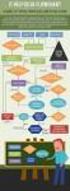 C H A P T E R 1 Flowchart Techniques 1.1 Programming Aids Programmers use different kinds of tools or aids which help them in developing programs faster and better. Such aids are studied in the following
Moving from CS 61A Scheme to CS 61B Java
 Moving from CS 61A Scheme to CS 61B Java Introduction Java is an object-oriented language. This document describes some of the differences between object-oriented programming in Scheme (which we hope you
Curriculum Map. Discipline: Computer Science Course: C++
 Curriculum Map Discipline: Computer Science Course: C++ August/September: How can computer programs make problem solving easier and more efficient? In what order does a computer execute the lines of code
What Is Recursion? Recursion. Binary search example postponed to end of lecture
 Recursion Binary search example postponed to end of lecture What Is Recursion? Recursive call A method call in which the method being called is the same as the one making the call Direct recursion Recursion
PROG0101 Fundamentals of Programming PROG0101 FUNDAMENTALS OF PROGRAMMING. Chapter 3 Algorithms
 PROG0101 FUNDAMENTALS OF PROGRAMMING Chapter 3 1 Introduction to A sequence of instructions. A procedure or formula for solving a problem. It was created mathematician, Mohammed ibn-musa al-khwarizmi.
16. Recursion. COMP 110 Prasun Dewan 1. Developing a Recursive Solution
 16. Recursion COMP 110 Prasun Dewan 1 Loops are one mechanism for making a program execute a statement a variable number of times. Recursion offers an alternative mechanism, considered by many to be more
PART-A Questions. 2. How does an enumerated statement differ from a typedef statement?
 1. Distinguish & and && operators. PART-A Questions 2. How does an enumerated statement differ from a typedef statement? 3. What are the various members of a class? 4. Who can access the protected members
Informatica e Sistemi in Tempo Reale
 Informatica e Sistemi in Tempo Reale Introduction to C programming Giuseppe Lipari http://retis.sssup.it/~lipari Scuola Superiore Sant Anna Pisa October 25, 2010 G. Lipari (Scuola Superiore Sant Anna)
10CS35: Data Structures Using C
 CS35: Data Structures Using C QUESTION BANK REVIEW OF STRUCTURES AND POINTERS, INTRODUCTION TO SPECIAL FEATURES OF C OBJECTIVE: Learn : Usage of structures, unions - a conventional tool for handling a
Figure 1: Graphical example of a mergesort 1.
 CSE 30321 Computer Architecture I Fall 2011 Lab 02: Procedure Calls in MIPS Assembly Programming and Performance Total Points: 100 points due to its complexity, this lab will weight more heavily in your
Module 2 Stacks and Queues: Abstract Data Types
 Module 2 Stacks and Queues: Abstract Data Types A stack is one of the most important and useful non-primitive linear data structure in computer science. It is an ordered collection of items into which
Positional Numbering System
 APPENDIX B Positional Numbering System A positional numbering system uses a set of symbols. The value that each symbol represents, however, depends on its face value and its place value, the value associated
Course: Programming II - Abstract Data Types. The ADT Stack. A stack. The ADT Stack and Recursion Slide Number 1
 Definition Course: Programming II - Abstract Data Types The ADT Stack The ADT Stack is a linear sequence of an arbitrary number of items, together with access procedures. The access procedures permit insertions
Analysis of Binary Search algorithm and Selection Sort algorithm
 Analysis of Binary Search algorithm and Selection Sort algorithm In this section we shall take up two representative problems in computer science, work out the algorithms based on the best strategy to
In this Chapter you ll learn:
 Now go, write it before them in a table, and note it in a book. Isaiah 30:8 To go beyond is as wrong as to fall short. Confucius Begin at the beginning, and go on till you come to the end: then stop. Lewis
1) The postfix expression for the infix expression A+B*(C+D)/F+D*E is ABCD+*F/DE*++
 Answer the following 1) The postfix expression for the infix expression A+B*(C+D)/F+D*E is ABCD+*F/DE*++ 2) Which data structure is needed to convert infix notations to postfix notations? Stack 3) The
A binary search tree or BST is a binary tree that is either empty or in which the data element of each node has a key, and:
 Binary Search Trees 1 The general binary tree shown in the previous chapter is not terribly useful in practice. The chief use of binary trees is for providing rapid access to data (indexing, if you will)
Parsing Technology and its role in Legacy Modernization. A Metaware White Paper
 Parsing Technology and its role in Legacy Modernization A Metaware White Paper 1 INTRODUCTION In the two last decades there has been an explosion of interest in software tools that can automate key tasks
Name: Class: Date: 9. The compiler ignores all comments they are there strictly for the convenience of anyone reading the program.
 Name: Class: Date: Exam #1 - Prep True/False Indicate whether the statement is true or false. 1. Programming is the process of writing a computer program in a language that the computer can respond to
Lecture Notes on Linear Search
 Lecture Notes on Linear Search 15-122: Principles of Imperative Computation Frank Pfenning Lecture 5 January 29, 2013 1 Introduction One of the fundamental and recurring problems in computer science is
KITES TECHNOLOGY COURSE MODULE (C, C++, DS)
 KITES TECHNOLOGY 360 Degree Solution www.kitestechnology.com/academy.php [email protected] [email protected] Contact: - 8961334776 9433759247 9830639522.NET JAVA WEB DESIGN PHP SQL, PL/SQL
JavaScript: Control Statements I
 1 7 JavaScript: Control Statements I 7.1 Introduction 2 The techniques you will learn here are applicable to most high-level languages, including JavaScript 1 7.2 Algorithms 3 Any computable problem can
COMPUTER SCIENCE. Paper 1 (THEORY)
 COMPUTER SCIENCE Paper 1 (THEORY) (Three hours) Maximum Marks: 70 (Candidates are allowed additional 15 minutes for only reading the paper. They must NOT start writing during this time) -----------------------------------------------------------------------------------------------------------------------
AP Computer Science Java Mr. Clausen Program 9A, 9B
 AP Computer Science Java Mr. Clausen Program 9A, 9B PROGRAM 9A I m_sort_of_searching (20 points now, 60 points when all parts are finished) The purpose of this project is to set up a program that will
Software development and programming. Software
 CHAPTER 15 15 Software Software development and programming Syllabus outcomes 5.2.1 Describes and applies problem-solving processes when creating solutions. 5.2.2 Designs, produces and evaluates appropriate
I PUC - Computer Science. Practical s Syllabus. Contents
 I PUC - Computer Science Practical s Syllabus Contents Topics 1 Overview Of a Computer 1.1 Introduction 1.2 Functional Components of a computer (Working of each unit) 1.3 Evolution Of Computers 1.4 Generations
PES Institute of Technology-BSC QUESTION BANK
 PES Institute of Technology-BSC Faculty: Mrs. R.Bharathi CS35: Data Structures Using C QUESTION BANK UNIT I -BASIC CONCEPTS 1. What is an ADT? Briefly explain the categories that classify the functions
Chapter One Introduction to Programming
 Chapter One Introduction to Programming 1-1 Algorithm and Flowchart Algorithm is a step-by-step procedure for calculation. More precisely, algorithm is an effective method expressed as a finite list of
Data Structures and Data Manipulation
 Data Structures and Data Manipulation What the Specification Says: Explain how static data structures may be used to implement dynamic data structures; Describe algorithms for the insertion, retrieval
Conditionals (with solutions)
 Conditionals (with solutions) For exercises 1 to 27, indicate the output that will be produced. Assume the following declarations: final int MAX = 25, LIMIT = 100; int num1 = 12, num2 = 25, num3 = 87;
Chapter 8: Bags and Sets
 Chapter 8: Bags and Sets In the stack and the queue abstractions, the order that elements are placed into the container is important, because the order elements are removed is related to the order in which
Searching Algorithms
 Searching Algorithms The Search Problem Problem Statement: Given a set of data e.g., int [] arr = {10, 2, 7, 9, 7, 4}; and a particular value, e.g., int val = 7; Find the first index of the value in the
Data Structures and Algorithms Written Examination
 Data Structures and Algorithms Written Examination 22 February 2013 FIRST NAME STUDENT NUMBER LAST NAME SIGNATURE Instructions for students: Write First Name, Last Name, Student Number and Signature where
Oct: 50 8 = 6 (r = 2) 6 8 = 0 (r = 6) Writing the remainders in reverse order we get: (50) 10 = (62) 8
 ECE Department Summer LECTURE #5: Number Systems EEL : Digital Logic and Computer Systems Based on lecture notes by Dr. Eric M. Schwartz Decimal Number System: -Our standard number system is base, also
Solving Problems Recursively
 Solving Problems Recursively Recursion is an indispensable tool in a programmer s toolkit Allows many complex problems to be solved simply Elegance and understanding in code often leads to better programs:
Unit 6. Loop statements
 Unit 6 Loop statements Summary Repetition of statements The while statement Input loop Loop schemes The for statement The do statement Nested loops Flow control statements 6.1 Statements in Java Till now
MULTIPLE CHOICE. Choose the one alternative that best completes the statement or answers the question.
 Exam Name MULTIPLE CHOICE. Choose the one alternative that best completes the statement or answers the question. 1) The JDK command to compile a class in the file Test.java is A) java Test.java B) java
Visual Logic Instructions and Assignments
 Visual Logic Instructions and Assignments Visual Logic can be installed from the CD that accompanies our textbook. It is a nifty tool for creating program flowcharts, but that is only half of the story.
1. Define: (a) Variable, (b) Constant, (c) Type, (d) Enumerated Type, (e) Identifier.
 Study Group 1 Variables and Types 1. Define: (a) Variable, (b) Constant, (c) Type, (d) Enumerated Type, (e) Identifier. 2. What does the byte 00100110 represent? 3. What is the purpose of the declarations
Lecture 9. Semantic Analysis Scoping and Symbol Table
 Lecture 9. Semantic Analysis Scoping and Symbol Table Wei Le 2015.10 Outline Semantic analysis Scoping The Role of Symbol Table Implementing a Symbol Table Semantic Analysis Parser builds abstract syntax
Simple sorting algorithms and their complexity. Bubble sort. Complexity of bubble sort. Complexity of bubble sort. Bubble sort of lists
 Simple sorting algorithms and their complexity Bubble sort Selection sort Insertion sort Bubble sort void bubblesort(int arr[]){ int i; int j; int temp; for(i = arr.length-1; i > 0; i--){ for(j = 0; j
Notes on Algorithms, Pseudocode, and Flowcharts
 Notes on Algorithms, Pseudocode, and Flowcharts Introduction Do you like hot sauce? Here is an algorithm for how to make a good one: Volcanic Hot Sauce (from: http://recipeland.com/recipe/v/volcanic-hot-sauce-1125)
Parameter Passing in Pascal
 Parameter Passing in Pascal Mordechai Ben-Ari Department of Science Teaching Weizmann Institute of Science Rehovot 76100 Israel [email protected] Abstract This paper claims that reference parameters
NUMBER SYSTEMS APPENDIX D. You will learn about the following in this appendix:
 APPENDIX D NUMBER SYSTEMS You will learn about the following in this appendix: The four important number systems in computing binary, octal, decimal, and hexadecimal. A number system converter program
CS 241 Data Organization Coding Standards
 CS 241 Data Organization Coding Standards Brooke Chenoweth University of New Mexico Spring 2016 CS-241 Coding Standards All projects and labs must follow the great and hallowed CS-241 coding standards.
NUMBER SYSTEMS. William Stallings
 NUMBER SYSTEMS William Stallings The Decimal System... The Binary System...3 Converting between Binary and Decimal...3 Integers...4 Fractions...5 Hexadecimal Notation...6 This document available at WilliamStallings.com/StudentSupport.html
1. Give the 16 bit signed (twos complement) representation of the following decimal numbers, and convert to hexadecimal:
 Exercises 1 - number representations Questions 1. Give the 16 bit signed (twos complement) representation of the following decimal numbers, and convert to hexadecimal: (a) 3012 (b) - 435 2. For each of
Mobile App Design Project #1 Java Boot Camp: Design Model for Chutes and Ladders Board Game
 Mobile App Design Project #1 Java Boot Camp: Design Model for Chutes and Ladders Board Game Directions: In mobile Applications the Control Model View model works to divide the work within an application.
VISUAL GUIDE to. RX Scripting. for Roulette Xtreme - System Designer 2.0
 VISUAL GUIDE to RX Scripting for Roulette Xtreme - System Designer 2.0 UX Software - 2009 TABLE OF CONTENTS INTRODUCTION... ii What is this book about?... iii How to use this book... iii Time to start...
Section of DBMS Selection & Evaluation Questionnaire
 Section of DBMS Selection & Evaluation Questionnaire Whitemarsh Information Systems Corporation 2008 Althea Lane Bowie, Maryland 20716 Tele: 301-249-1142 Email: [email protected] Web: www.wiscorp.com
Embedded Systems. Review of ANSI C Topics. A Review of ANSI C and Considerations for Embedded C Programming. Basic features of C
 Embedded Systems A Review of ANSI C and Considerations for Embedded C Programming Dr. Jeff Jackson Lecture 2-1 Review of ANSI C Topics Basic features of C C fundamentals Basic data types Expressions Selection
1 Abstract Data Types Information Hiding
 1 1 Abstract Data Types Information Hiding 1.1 Data Types Data types are an integral part of every programming language. ANSI-C has int, double and char to name just a few. Programmers are rarely content
Arrays. number: Motivation. Prof. Stewart Weiss. Software Design Lecture Notes Arrays
 Motivation Suppose that we want a program that can read in a list of numbers and sort that list, or nd the largest value in that list. To be concrete about it, suppose we have 15 numbers to read in from
Stacks. Linear data structures
 Stacks Linear data structures Collection of components that can be arranged as a straight line Data structure grows or shrinks as we add or remove objects ADTs provide an abstract layer for various operations
1. The memory address of the first element of an array is called A. floor address B. foundation addressc. first address D.
 1. The memory address of the first element of an array is called A. floor address B. foundation addressc. first address D. base address 2. The memory address of fifth element of an array can be calculated
csci 210: Data Structures Recursion
 csci 210: Data Structures Recursion Summary Topics recursion overview simple examples Sierpinski gasket Hanoi towers Blob check READING: GT textbook chapter 3.5 Recursion In general, a method of defining
Keywords are identifiers having predefined meanings in C programming language. The list of keywords used in standard C are : unsigned void
 1. Explain C tokens Tokens are basic building blocks of a C program. A token is the smallest element of a C program that is meaningful to the compiler. The C compiler recognizes the following kinds of
Chapter 5 Names, Bindings, Type Checking, and Scopes
 Chapter 5 Names, Bindings, Type Checking, and Scopes Chapter 5 Topics Introduction Names Variables The Concept of Binding Type Checking Strong Typing Scope Scope and Lifetime Referencing Environments Named
CS104: Data Structures and Object-Oriented Design (Fall 2013) October 24, 2013: Priority Queues Scribes: CS 104 Teaching Team
 CS104: Data Structures and Object-Oriented Design (Fall 2013) October 24, 2013: Priority Queues Scribes: CS 104 Teaching Team Lecture Summary In this lecture, we learned about the ADT Priority Queue. A
Algorithms. Margaret M. Fleck. 18 October 2010
 Algorithms Margaret M. Fleck 18 October 2010 These notes cover how to analyze the running time of algorithms (sections 3.1, 3.3, 4.4, and 7.1 of Rosen). 1 Introduction The main reason for studying big-o
We will learn the Python programming language. Why? Because it is easy to learn and many people write programs in Python so we can share.
 LING115 Lecture Note Session #4 Python (1) 1. Introduction As we have seen in previous sessions, we can use Linux shell commands to do simple text processing. We now know, for example, how to count words.
J a v a Quiz (Unit 3, Test 0 Practice)
 Computer Science S-111a: Intensive Introduction to Computer Science Using Java Handout #11 Your Name Teaching Fellow J a v a Quiz (Unit 3, Test 0 Practice) Multiple-choice questions are worth 2 points
Programming Exercises
 s CMPS 5P (Professor Theresa Migler-VonDollen ): Assignment #8 Problem 6 Problem 1 Programming Exercises Modify the recursive Fibonacci program given in the chapter so that it prints tracing information.
B.Sc.(Computer Science) and. B.Sc.(IT) Effective From July 2011
 NEW Detailed Syllabus of B.Sc.(Computer Science) and B.Sc.(IT) Effective From July 2011 SEMESTER SYSTEM Scheme & Syllabus for B.Sc. (CS) Pass and Hons. Course Effective from July 2011 and onwards CLASS
Translating to Java. Translation. Input. Many Level Translations. read, get, input, ask, request. Requirements Design Algorithm Java Machine Language
 Translation Translating to Java Introduction to Computer Programming The job of a programmer is to translate a problem description into a computer language. You need to be able to convert a problem description
ARIZONA CTE CAREER PREPARATION STANDARDS & MEASUREMENT CRITERIA SOFTWARE DEVELOPMENT, 15.1200.40
 SOFTWARE DEVELOPMENT, 15.1200.40 1.0 APPLY PROBLEM-SOLVING AND CRITICAL THINKING SKILLS TO INFORMATION TECHNOLOGY 1.1 Describe methods and considerations for prioritizing and scheduling software development
Lexical analysis FORMAL LANGUAGES AND COMPILERS. Floriano Scioscia. Formal Languages and Compilers A.Y. 2015/2016
 Master s Degree Course in Computer Engineering Formal Languages FORMAL LANGUAGES AND COMPILERS Lexical analysis Floriano Scioscia 1 Introductive terminological distinction Lexical string or lexeme = meaningful
Boolean Expressions, Conditions, Loops, and Enumerations. Precedence Rules (from highest to lowest priority)
 Boolean Expressions, Conditions, Loops, and Enumerations Relational Operators == // true if two values are equivalent!= // true if two values are not equivalent < // true if left value is less than the
2003 HSC Notes from the Marking Centre Software Design and Development
 00 HSC Notes from the Marking Centre Software Design and Development 004 Copyright Board of Studies NSW for and on behalf of the Crown in right of the State of New South Wales. This document contains Material
ALGORITHMS AND FLOWCHARTS. By Miss Reham Tufail
 ALGORITHMS AND FLOWCHARTS By Miss Reham Tufail ALGORITHMS AND FLOWCHARTS A typical programming task can be divided into two phases: Problem solving phase produce an ordered sequence of steps that describe
CS 141: Introduction to (Java) Programming: Exam 1 Jenny Orr Willamette University Fall 2013
 Oct 4, 2013, p 1 Name: CS 141: Introduction to (Java) Programming: Exam 1 Jenny Orr Willamette University Fall 2013 1. (max 18) 4. (max 16) 2. (max 12) 5. (max 12) 3. (max 24) 6. (max 18) Total: (max 100)
General Software Development Standards and Guidelines Version 3.5
 NATIONAL WEATHER SERVICE OFFICE of HYDROLOGIC DEVELOPMENT Science Infusion Software Engineering Process Group (SISEPG) General Software Development Standards and Guidelines 7/30/2007 Revision History Date
Grade 4 - Module 5: Fraction Equivalence, Ordering, and Operations
 Grade 4 - Module 5: Fraction Equivalence, Ordering, and Operations Benchmark (standard or reference point by which something is measured) Common denominator (when two or more fractions have the same denominator)
COWLEY COLLEGE & Area Vocational Technical School
 COWLEY COLLEGE & Area Vocational Technical School COURSE PROCEDURE FOR COBOL PROGRAMMING CIS1866 3 Credit Hours Student Level: This course is open to students on the college level in either Freshman or
A LEVEL H446 COMPUTER SCIENCE. Code Challenges (1 20) August 2015
 A LEVEL H446 COMPUTER SCIENCE Code Challenges (1 20) August 2015 We will inform centres about any changes to the specification. We will also publish changes on our website. The latest version of our specification
Computers. An Introduction to Programming with Python. Programming Languages. Programs and Programming. CCHSG Visit June 2014. Dr.-Ing.
 Computers An Introduction to Programming with Python CCHSG Visit June 2014 Dr.-Ing. Norbert Völker Many computing devices are embedded Can you think of computers/ computing devices you may have in your
OKLAHOMA SUBJECT AREA TESTS (OSAT )
 CERTIFICATION EXAMINATIONS FOR OKLAHOMA EDUCATORS (CEOE ) OKLAHOMA SUBJECT AREA TESTS (OSAT ) FIELD 081: COMPUTER SCIENCE September 2008 Subarea Range of Competencies I. Computer Use in Educational Environments
50 Computer Science MI-SG-FLD050-02
 50 Computer Science MI-SG-FLD050-02 TABLE OF CONTENTS PART 1: General Information About the MTTC Program and Test Preparation OVERVIEW OF THE TESTING PROGRAM... 1-1 Contact Information Test Development
Object Oriented Software Design
 Object Oriented Software Design Introduction to Java - II Giuseppe Lipari http://retis.sssup.it/~lipari Scuola Superiore Sant Anna Pisa September 14, 2011 G. Lipari (Scuola Superiore Sant Anna) Introduction
COMP 110 Prasun Dewan 1
 COMP 110 Prasun Dewan 1 12. Conditionals Real-life algorithms seldom do the same thing each time they are executed. For instance, our plan for studying this chapter may be to read it in the park, if it
Computer Science 281 Binary and Hexadecimal Review
 Computer Science 281 Binary and Hexadecimal Review 1 The Binary Number System Computers store everything, both instructions and data, by using many, many transistors, each of which can be in one of two
Unit 1. 5. Write iterative and recursive C functions to find the greatest common divisor of two integers. [6]
![Unit 1. 5. Write iterative and recursive C functions to find the greatest common divisor of two integers. [6]](/thumbs/40/21353973.jpg "Unit 1. 5. Write iterative and recursive C functions to find the greatest common divisor of two integers. [6]") Unit 1 1. Write the following statements in C : [4] Print the address of a float variable P. Declare and initialize an array to four characters a,b,c,d. 2. Declare a pointer to a function f which accepts
Unit 1 1. Write the following statements in C : [4] Print the address of a float variable P. Declare and initialize an array to four characters a,b,c,d. 2. Declare a pointer to a function f which accepts
QUIZ-II QUIZ-II. Chapter 5: Control Structures II (Repetition) Objectives. Objectives (cont d.) 20/11/2015. EEE 117 Computer Programming Fall-2015 1
 QUIZ-II Write a program that mimics a calculator. The program should take as input two integers and the operation to be performed. It should then output the numbers, the operator, and the result. (For
Data Structures. Topic #12
 Data Structures Topic #12 Today s Agenda Sorting Algorithms insertion sort selection sort exchange sort shell sort radix sort As we learn about each sorting algorithm, we will discuss its efficiency Sorting
Zabin Visram Room CS115 CS126 Searching. Binary Search
 Zabin Visram Room CS115 CS126 Searching Binary Search Binary Search Sequential search is not efficient for large lists as it searches half the list, on average Another search algorithm Binary search Very
Reading 13 : Finite State Automata and Regular Expressions
 CS/Math 24: Introduction to Discrete Mathematics Fall 25 Reading 3 : Finite State Automata and Regular Expressions Instructors: Beck Hasti, Gautam Prakriya In this reading we study a mathematical model
COMPUTER SCIENCE (5651) Test at a Glance
 COMPUTER SCIENCE (5651) Test at a Glance Test Name Computer Science Test Code 5651 Time Number of Questions Test Delivery 3 hours 100 selected-response questions Computer delivered Content Categories Approximate
9 Control Statements. 9.1 Introduction. 9.2 Objectives. 9.3 Statements
 9 Control Statements 9.1 Introduction The normal flow of execution in a high level language is sequential, i.e., each statement is executed in the order of its appearance in the program. However, depending