
Current concepts for minimally invasive mitral valve repair
|
|
|
- Neil Barnett
- 9 years ago
- Views:
Transcription
1 Endorsed by proceedings in Intensive Care Cardiovascular Anesthesia Review article HSR Proc Intensive Care Cardiovasc Anesth. In press. Current concepts for minimally invasive mitral valve repair 1 B. Rylski 1,2, F. Beyersdorf 1 1 Heart Centre Freiburg University, Freiburg, Germany; 2 Division of Cardiovascular Surgery, Hospital of the University of Pennsylvania, Philadelphia, USA HSR Proc Intensive Care Cardiovasc Anesth. In press. ABSTRACT Minimally invasive mitral valve repair is based on several procedural concepts. Recently, three of them have been intensively discussed: aortic occlusion strategy, use of Goretex-Neo-Chordae to repair mitral valve regurgitation and feasibility and efficacy of the minithoracotomy approach in mitral valve treatment of patients after previous cardiac surgery. Twenty years of experience in minimally invasive mitral valve repair have enabled high-volume centers to present valid data and give their recommendations. Transthoracic aortic clamping with ante- and retrograde cardioplegia in the primary setting and hypothermic fibrillation in reoperative setting are currently favoured means of myocardial protection. Neo-chordae concept of mitral valve repair has gained general recognition and has become the technique of choice for many surgeons. The excellent results of minimally invasive mitral valve repair must be considered whenever already available or any new transcatheter techniques are offered. Keywords: mitral valve repair, minimally invasive, aortic clamping, myocardial protection, hypothermic ventricular fibrillation. Presented at the 5 th Expert Forum of the Roland Hetzer International Cardiothoracic and Vascular Surgery Society in Berlin, Germany, April 2013 Introduction The number of surgeries performed using less-invasive techniques has increased dramatically over the last two decades. While the minimally invasive approach has become the standard of care for many surgical procedures in the thoracic, abdominal and pelvic cavities, this shift was initially slower in cardiac surgery, since most heart operations are very complex, requiring not only cardiopulmonary circulation but also Corresponding author: Bartosz Rylski, MD Division of Cardiovascular Surgery, Hospital of the University of Pennsylvania 3400 Spruce Street Philadelphia, PA [email protected] outstanding precision to achieve successful results. Advancements in diagnostic tools, development of specific cardiac endoscopic instruments, the introduction of peripheral cardiopulmonary bypass circuitry systems and novel surgical techniques have enabled cardiac surgeons to start operating on the heart through very small incisions. Among the different areas of cardiac surgery, the minimally invasive approach has gained particular popularity in the field of mitral valve (MV) treatment. After initial reports in late 90s suggesting that the right-sided minithoracotomy approach to MV can be used with relative safety and efficacy, high volume centers have recently presented their excellent results based on their experiences on thousands of patients (1-4). The

2 B. Rylski, Beyersdorf F. 2 minimally invasive approach was shown to provide at least equivalent results to those achieved via sternotomy with both inhospital mortality and stroke rates under 1% in isolated MV disease (5). Providing the option of a small incision with favourable cosmetic effect without the disadvantage of inferior durability or surveillance drives further development of minimally invasive access and changes the treatments paradigms in favour of patient treatment at earlier disease stage before adverse effects of MV disease appear. Minimally-invasive MV repair is based on several procedural concepts, which have undergone significant development since this technique was applied for the first time in animals in the early 90s and several years later in humans (1, 6). This article briefly describes three methods, which have been frequently discussed in the literature recently: (i) internal and external aortic occlusion, (ii) use of Goretex-Neo- Chordae to repair MV regurgitation and (iii) feasibility and efficacy of the minithoracotomy approach in MV treatment of patients after previous cardiac surgery. Aortic occlusion Effective and non-traumatic occlusion of the ascending aorta is a challenging procedure that requires experience, especially in the settings of atherosclerotic changes and fragile aortic walls in older patients. Due to improvements in the diagnostic radiology, we can identify patients at increased risk for aortic cross-clamp complications preoperatively and adjust the treatment strategy accordingly. Iatrogenic aortic rupture or dissection, a potential fatal complication of cross-clamp injury, is a catastrophic disaster, which may lead to death or serious neurologic complications, even in the operating room. Fortunately, these serious complications only occur sporadically during openheart procedures (7, 8). The first endoscopic MV procedures were performed by applying endoluminal aortic clamping with an endoaortic balloon (1, 9). This promising approach, however, was disappointing at first, leading to fatal aortic injury in a significant number of patients (1, 2). However, careful patient selection and numerous modifications to the endoaortic balloon have led to better results, such that it has become a feasible concept of aortic occlusion. Nevertheless, surgeons partially accepted it, since the incidence of aortic dissection due to balloon occlusion still ranges between % (9-11). The unfavourable results of aortic endovascular occlusion have led Chitwood and coworkers to develop a clamp that can be introduced through intercostal spaces and, if carefully applied under video assistance, enables a secure grasp of the aorta (12). Potential problems, which may occur when the ascending aorta is clamped, are injury to the aorta, the main or right pulmonary artery and the left atrial appendage. Furthermore, aortic cross-clamping requires a purse-string suture on the ascending aorta for antegrade cardioplegia delivery and aortic root venting, which can lead to bleeding from this cannulation site. Mohr and colleagues reported, in one of the largest published series of patients undergoing minimally invasive MV surgery, that bleeding was the most common indication for conversion to sternotomy (13). The authors concluded that the Chitwood clamp should be placed very carefully and under ongoing visual examination of the ascending aorta and the left atrial appendage. In case of any difficulties in placing the clamp, early full sternotomy should be considered. Studies comparing both endovascular aortic occlusion and transthoracic cross-clamping are limited. A 12-year experience from the East Carolina University and University of Pennsylvania (479 patients with endovascular aortic occlusion vs. 573 patients with

3 Minimally invasive mitral valve repair transthoracic aortic clamping) revealed that the incidence of aortic dissection and strokes was higher when endoaortic occlusion was applied, even though this difference was not statistically significant (1.5% vs 0.4%, p=0.09; 2.7% vs 1.2%, p=0.08) (14). Similarly, Reichenspurner et al. reported higher incidence of bleeding in patients who underwent aortic endoclamping (6/60 vs 1/60) and recommended the use of the transthoracic clamp for initial surgery and endovascular aortic occlusion for redo endoscopic MV surgery (15). In contrast, Loforte et al. did not find iatrogenic dissection or intraoperative bleeding in a series of 138 patients (93 transthoracic aortic clamping vs. 45 endoaortic balloon occlusion) (16). Further studies are necessary to provide an ultimate recommendation on the strategy of aortic occlusion. Whenever aortic clamping is judged to be unsafe due to adhesions or severe atherosclerosis, hypothermic fibrillation as a means of myocardial protection may be an alternative. This method has received particular attention recently, when minimally invasive MV surgery was expanded to patients with previous sternotomy. Chitwood et al. ( , 167 redo cases) used hypothermic fibrillation in 77% of these patients without serious complications necessitating sternotomy and with no cerebrovascular accidents (17). Similarly good results were presented by the Leipzig group (18). They operated on 181 patients with previous cardiac surgery, avoiding aortic clamping in 77% of their patients with an acceptable postoperative stroke rate of 3.8%. Hypothermic fibrillation seems to be a safe alternative to aortic cross-clamping and endovascular occlusion. Goretex neo-chordae with premeasured loops in MV repair MV repair achieves better results compared with valve replacement therapy (19, 20), and is thus the procedure of choice for almost all types of mitral regurgitation. There is a variety of MV repair techniques available. Leaflet resection achieves excellent results when used to treat prolapse of the posterior leaflet, the most common pathology (4, 21). As far as more complex valve regurgitation is concerned, other techniques must be applied, like chordal shortening transposition, papillary muscle sliding plasty, papillary muscle shortening, commissural plication, remodeling ring annuloplasty or Alfieri edge-to-edge repair (21). These techniques allow surgeons to perform reconstructive surgery in almost all patients with MV regurgitation. Recently, more attention has been paid to the construction of neo-chordae using PTFE sutures (Gore-Tex, W.L. Gore&Associates, Flagstaff, AZ), which was introduced 20 years ago by David et al. (22). This technique provided excellent results, but did not obtain broad clinical acceptance due to difficulties in achieving a reproducible neochordal length. This difficulty was even more pronounced when surgeons tried to apply this technique via a minimally invasive approach. In 2000, Mohr et al. introduced the loop technique to address these limitations, which consisted of a pre-manufactured pledget with 4 single 5-0 Gore-Tex loops (23). The pledget was sutured to the papillary muscle and the ends of the loops were then fixed to the leaflet segments. The length of the loops was chosen according to the distance measured between edge of normal nonprolapsing segment and the tip of the papillary muscle. In treatment of anterior leaflet prolapse, the most common neo-chordae length is 21 mm. Loops used for repair of the posterior leaflet are usually 14 mm in length. Neo-chordae undersizing is more reasonable than oversizing, because in non-beating hearts, the distance between the reference non-prolapsing segment free 3

4 B. Rylski, Beyersdorf F. 4 edge and the papillary muscle may easily be overestimated. Furthermore, the appropriate loops length is strongly influenced by left ventricular size and location of stiches in the papillary muscle. One decade of experience with the loop technique has made possible the analysis of early- and mid-term results on a significant number of patients. Kuntze et al. reported on 522 patients who underwent minithoracotomy and MV repair using premeasured loops, showing excellent results with 99% 30-day survival and 0.6% late cardiac reoperations in a mean follow-up period of 18 months (24). Recently, a prospective randomized trial was performed to compare the neo-chordae technique with leaflet resection for posterior MV prolapse (25). The authors concluded that the loop technique may be superior to leaflet resection because it resulted in a significantly longer line of leaflet coaptation and might therefore be more durable. On follow-up, both techniques showed excellent valve function in the majority of patients. The surgical society is currently awaiting longterm follow-up results, which are expected to confirm the efficacy and durability of the pre-manufactured neo-chordae concept in the MV repair. Minimally invasive MV repair in patients with previous cardiac surgery Operating on MV in patients who have undergone previous cardiac surgery is challenging and associated with an increased rate of perioperative morbidity and mortality. The conventional access through a median sternotomy may lead to mortality of 26% in patients with previous aortic valve replacement (26) and 9%-14% in patients with previous coronary artery bypass grafting (27, 28). Encouraged by their growing experience with minimally invasive techniques, an increasing number of surgeons is opting to apply the minithoracotomy ac- cess to reoperative patients. Their interest is also driven by the fact that while good exposure through a sternotomy is challenging, particularly in patients with prior aortic valve replacement, it is not an issue in right-sided lateral minithoracotomy. Additionally, avoiding extensive dissection, especially in patients with functional coronary artery bypasses, significantly reduces the risk of redo procedures. When the minimally invasive approach was applied for the first time in patients with previous cardiac surgery, efficient myocardial protection was a challenge. There are several strategies that can be safely adopted in the redo setting. One option is endovascular aortic occlusion as described by Casselman et al. (29). Another is to carefully dissect the ascending aorta away from the pulmonary artery and to clamp the aorta transthoracically. Finally, one method that is currently gaining increasing acceptance is hypothermic fibrillation arrest, which circumvents the need for aortic clamping and cardioplegia delivery. This technique is especially valuable in case of patent coronary bypasses, but necessitates a competent aortic valve. The concept of hypothermic fibrillation has become the preferred approach due to its simplicity and reliable myocardial preservation (17, 18). Several centers that have introduced minimally invasive MV surgery have recently reported their results in the reoperative settings. Arcidi et al. presented outcomes of 167 patients with a 30-day mortality of 3% and no conversion to sternotomy or aortic dissection (17). Similarly, excellent results were presented by Seeburger et al. who analysed data of 181 consecutive patients and reported a 6.6% in-hospital mortality and conversion to sternotomy in 3 patients (18). In both centers, the minimally invasive approach has become the preferred method to correct MV regurgitation in patients with prior cardiac surgery.

5 Minimally invasive mitral valve repair Conclusion For two decades, we have bore witness to the ongoing development of minimally invasive MV repair. This technology is based on several concepts, which have proven their superiority over the conventional sternotomy approach. Recently, high-volume centers have published their experiences on minithoracotomy MV repair. They have given their recommendations for aortic occlusion strategy, presented novel valve repair techniques and proved the feasibility of minimal invasive access in reoperative settings. At the moment, transthoracic aortic clamping with ante- and retrograde cardioplegia in the primary setting and hypothermic fibrillation in reoperative setting are favoured myocardial protection techniques. The neo-chordae concept of MV repair has gained general recognition and has become the technique of choice for many surgeons. Increasingly, minimally invasive approach is the preferred means to correct MV regurgitation in patients with prior cardiac surgery. The excellent results of minimally invasive MV repair will have to be considered whenever already available or new transcatheter techniques are offered to a wider group of patients. REFERENCES 1. Mohr FW, Falk V, Diegeler A, et al. Minimally invasive port-access mitral valve surgery. J Thorac Cardiovasc Surg 1998; 115: Mohr FW, Onnasch JF, Falk V, et al. The evolution of minimally invasive valve surgery - 2 year experience. Eur J Cardiothorac Surg 1999; 15: Seeburger J, Borger MA, Falk V, et al. Minimal invasive mitral valve repair for mitral regurgitation: results of 1339 consecutive patients. Eur J Cardiothorac Surg 2008; 34: Stevens LM, Rodriguez E, Lehr EJ, et al. Impact of timing and surgical approach on outcomes after mitral valve regurgitation operations. Ann Thorac Surg 2012; 93: Goldstone AB, Atluri P, Szeto WY, et al. Minimally invasive approach provides at least equivalent results for surgical correction of mitral regurgitation: a propensitymatched comparison. J Thorac Cardiovasc Surg 2013; 145: Pompili MF, Stevens JH, Burdon TA, et al. Port-Access mitral valve replacement in dogs. J Thorac Cardiovasc Surg 1996; 112: Rylski B, Hoffmann I, Beyersdorf F, et al. Iatrogenic acute aortic dissection type A: insight from the German Registry for Acute Aortic Dissection Type A (GERAADA). Eur J Cardiothorac Surg Epub ahead of print. PMID: Leontyev S, Borger MA, Legare JF, et al. Iatrogenic type A aortic dissection during cardiac procedures: early and late outcome in 48 patients. Eur J Cardiothorac Surg 2012;41: Casselman FP, Van Slycke S, Wellens F, et al. Mitral valve surgery can now routinely be performed endoscopically. Circulation 2003; 108: Grossi EA, Galloway AC, LaPietra A, et al. Minimally invasive mitral valve surgery: a 6-year experience with 714 patients. Ann Thorac Surg 2002;74: Onnasch JF, Schneider F, Falk V, et al. Five years of less invasive mitral valve surgery: from experimental to routine approach. Heart Surg Forum. 2002;5: Chitwood WR, Elbeery JR, Moran JF. Minimally invasive mitral valve repair using transthoracic aortic occlusion. Ann Thorac Surg 1997; 63: Vollroth M, Seeburger J, Garbade J, et al. Minimally invasive mitral valve surgery is a very safe procedure with very low rates of conversion to full sternotomy. Eur J Cardiothorac Surg 2012; 42: Modi P, Rodriguez E, Hargrove WC 3rd, et al. Minimally invasive video-assisted mitral valve surgery: a 12-year, 2-center experience in 1178 patients. J Thorac Cardiovasc Surg 2009; 137: Reichenspurner H, Detter C, Deuse T, et al. Video and robotic-assisted minimally invasive mitral valve surgery: a comparison of the Port-Access and transthoracic clamp techniques. Ann Thorac Surg 2005; 79: Loforte A, Luzi G, Montalto A, et al. Video-assisted minimally invasive mitral valve surgery: external aortic clamp versus endoclamp techniques. Innovations (Phila) 2010; 5: Arcidi JM, Rodriguez E, Elbeery JR, et al. Fifteen-year experience with minimally invasive approach for reopera- tions involving the mitral valve. J Thorac Cardiovasc Surg 2012; 143: Seeburger J, Borger MA, Falk V, et al. Minimally invasive mitral valve surgery after previous sternotomy: experience in 181 patients. Ann Thorac Surg 2009; 87: Gramaglia B, Imazio M, Checco L, et al. Mitral valve prolapse. Comparison between valvular repair and replacement in severe mitral regurgitation. J Cardiovasc Surg (Torino) 1999; 40: Vassileva CM, Boley T, Markwell S, Hazelrigg S. Metaanalysis of short-term and long-term survival following repair versus replacement for ischemic mitral regurgitation. Eur J Cardiothorac Surg 2011; 39: Filsoufi F, Carpentier A. Principles of reconstructive surgery in degenerative mitral valve disease. Semin Thorac Cardiovasc Surg 2007; 19: David TE. Replacement of chordae tendineae with expanded polytetra- fluoroethylene sutures. J Card Surg 1989; 4: von Oppell UO, Mohr FW. Chordal replacement for both minimally invasive and conventional mitral valve surgery using premeasured Gore-Tex loops. Ann Thorac Surg 2000; 70: Kuntze T, Borger MA, Falk V, et al. Early and mid-term results of mitral valve repair using premeasured Gore-Tex loops ( loop technique ). Eur J Cardiothorac Surg 2008; 33:

6 B. Rylski, Beyersdorf F Falk V, Seeburger J, Czesla M, et al. How does the use of polytetrafluoroethylene neochordae for posterior mitral valve prolapse (loop technique) compare with leaflet resection? A prospective randomized trial. J Thorac Cardiovasc Surg 2008; 136: Lytle B W, Cosgrove DM, Taylor PC, et al. Reoperations for valve surgery: perioperative mortality and determinants of risk for 1000 patients, Ann Thorac Surg 1986; 42: Izhar U, Daly RC, Dearani JA, et al. Mitral valve replacement or repair after previous coronary artery bypass grafting. Circulation 1999; 100: Jamieson WR, Burr LH, Miyagishima RT, et al. Reoperation for bioprosthetic mitral structural failure: risk assessment. Circulation 2003; 108: Casselman FP, La Meir M, Jeanmart H, et al. Endoscopic mitral and tricuspid valve surgery after previous cardiac surgery. Circulation 2007; 116: Cite this article as: Rylski B, Beyersdorf F. Current concepts for minimally invasive mitral valve repair. HSR Proc Intensive Care Cardiovasc Anesth. 2013; In press. Source of Support: Nil. Disclosures: None declared.

Durability of mitral valve repair for mitral regurgitation due to degenerative mitral valve disease
 Keynote Lecture Series Durability of mitral valve repair for mitral regurgitation due to degenerative mitral valve disease Tirone E. David Division of Cardiovascular Surgery, Peter Munk Cardiac Centre,
Ottavio Alfieri S. Raffaele University Hospital, Milano
 The future of mitral surgery: revolution versus involution Ottavio Alfieri S. Raffaele University Hospital, Milano Future The trouble with the future is that it s so much less knowable than the past. John
Minimally Invasive Mitral Valve Surgery
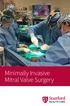 Minimally Invasive Mitral Valve Surgery Stanford Health Care offers leading, superior options in cardiac surgery, including the latest techniques and research for Minimally Invasive Cardiac surgery. Advanced
Mitral Valve Repair versus Replacement for Severe Ischemic Mitral Regurgitation. Michael Acker, MD For the CTSN Investigators AHA November 2013
 Mitral Valve Repair versus Replacement for Severe Ischemic Mitral Regurgitation Michael Acker, MD For the CTSN Investigators AHA November 2013 Acknowledgements Supported by U01 HL088942 Cardiothoracic
Mitral valve repair current Status and the modern Sternotomy
 Mitral valve repair current Status and the modern Sternotomy David L Saint MD, FACS Tallahassee Memorial Hospital Clinical Assistant Professor Florida State University School of Medicine History of Mitral
Mitral Valve Repair. A. Marc Gillinov and Delos M. Cosgrove
 Mitral Valve Repair A. Marc Gillinov and Delos M. Cosgrove Surgical repair of the dysfunctional mitral valve dates back to the early twentieth century when several surgeons developed techniques to try
Current Strategies of Mitral Valve Repair
 Dan Spiegelstein MD, Probal Ghosh MD, Leonid Sternik MD, Salis Tager MD, Amihai Shinfeld MD and Ehud Raanani MD Department of Cardiothoracic Surgery, Sheba Medical Center, Tel Hashomer, Israel Affiliated
Remote access perfusion for minimally invasive cardiac surgery: to clamp or to inflate?
 European Journal of Cardio-Thoracic Surgery Advance Access published February 22, 2013 European Journal of Cardio-Thoracic Surgery (2013) 1 7 doi:10.1093/ejcts/ezt070 ORIGINAL ARTICLE Remote access perfusion
Valve XS. Operation Manual for Minimally Invasive Mitral Valve Repair
 Valve XS Operation Manual for Minimally Invasive Mitral Valve Repair Stephan Jacobs Department of Cardiovascular Surgery, University of Zurich, Switzerland Aesculap Surgical Technologies Valve XS Operation
Surgeons Role in Atrial Fibrillation
 Atrial Fibrillation Surgeons Role in Atrial Fibrillation Steven J Feldhaus, MD, FACS 2015 Cardiac Symposium September 18, 2015 Stages of Atrial Fibrillation Paroxysmal (Intermittent) Persistent (Continuous)
INNOVATIONS IN THE ENVIRONMENT: HOW THE HYBRID OPERATING ROOM CAN INFLUENCE CARDIAC SURGERY
 CLAUDIO GROSSI Cardiac Surgery Ospedale Santa Croce CUNEO (Italy) INNOVATIONS IN THE ENVIRONMENT: HOW THE HYBRID OPERATING ROOM CAN INFLUENCE CARDIAC SURGERY Impossibile visualizzare l'immagine. La memoria
Clinical Practice Assessment Robotic surgery
 Clinical Practice Assessment Robotic surgery Background: Surgery is by nature invasive. Efforts have been made over time to reduce complications and the trauma inherently associated with surgery through
Read It, Code It, See It
 Read It, Code It, See It Richard L. Prager, M.D. University of Michigan Ann Arbor, Michigan Dorothy Latham, R.N. Port Huron Hospital Port Huron, Michigan Nothing to Disclose Disclosure Preoperative diagnosis:
Repair of a regurgitant mitral valve is superior to mitral valve
 EDITORIAL ACD GTS ACD ET CSP TX The double-orifice technique in mitral valve repair: A simple solution for complex problems Ottavio Alfieri, MD Francesco Maisano, MD Michele De Bonis, MD Pier Luigi Stefano,
Transcatheter Mitral Valve-in-Valve and Valve-in-Ring Implantations. Danny Dvir, MD On behalf of VIVID registry investigators
 Transcatheter Mitral Valve-in-Valve and Valve-in-Ring Implantations Danny Dvir, MD On behalf of VIVID registry investigators Introduction Bioprosthetic valves are increasingly implanted in open-heart surgeries.
Managing Mitral Regurgitation: Repair, Replace, or Clip? Michael Howe, MD Traverse Heart & Vascular
 Managing Mitral Regurgitation: Repair, Replace, or Clip? Michael Howe, MD Traverse Heart & Vascular Mitral Regurgitation Anatomy Mechanisms of MR Presentation Evaluation Management Repair Replace Clip
Thoracoabdominal aortic aneurysm
 Thoracoabdominal aortic aneurysm Patient (1) - 69 PMH: 2013 - MVP, aortic root replacement with biological valve (Perimount) and subtotal aortic arch replacement Analysis for oppressive chest complaints
Clinical Commissioning Policy Statement: Percutaneous mitral valve leaflet repair for mitral regurgitation April 2013. Reference: NHSCB/A09/PS/b
 Clinical Commissioning Policy Statement: Percutaneous mitral valve leaflet repair for mitral regurgitation April 2013 Reference: NHS Commissioning Board Clinical Commissioning Policy Statement: Percutaneous
Antiplatelet and anticoagulation treatment of patients undergoing carotid and peripheral artery angioplasty
 Round Table: Antithrombotic therapy beyond ACS Antiplatelet and anticoagulation treatment of patients undergoing carotid and peripheral artery angioplasty M. Matsagkas, MD, PhD, EBSQ-Vasc Associate Professor
Laparoscopic Repair of Incisional Hernia. Maria B. ALBUJA-CRUZ, MD University of Colorado Department of Surgery-Grand Rounds
 Laparoscopic Repair of Incisional Hernia Maria B. ALBUJA-CRUZ, MD University of Colorado Department of Surgery-Grand Rounds Overview Definition Advantages of Laparoscopic Repair Disadvantages of Open Repair
Endoskopische Venenentnahme der V. saphena in der koronaren Bypasschirurgie - Aktuelle Datenlage - Dr. med. Stefanie Reutter
 Endoskopische Venenentnahme der V. saphena in der koronaren Bypasschirurgie - Aktuelle Datenlage - Dr. med. Stefanie Reutter Endoskopische Venenentnahme (EVH) - Einführung 1979 Tevaearai und Kollegen haben
Imaging of Thoracic Endovascular Stent-Grafts
 Imaging of Thoracic Endovascular Stent-Grafts Tariq Hameed, M.D. Department of Radiology and Imaging Sciences, Indiana University School of Medicine, Indianapolis, Indiana Disclosures: No relevant financial
Chapter 10. Mitral Valve Repair and Redo Repair for Mitral Regurgitation in a Heart Transplant Recipient
 Chapter 10 Mitral Valve Repair and Redo Repair for Mitral Regurgitation in a Heart Transplant Recipient Journal of Cardiothoracic Surgery 2012; 7: 100 Wobbe Bouma a Johan Brügemann b Inez J. Wijdh den
Adult Cardiac Surgery ICD9 to ICD10 Crosswalks
 164.1 Malignant neoplasm of heart C38.0 Malignant neoplasm of heart 164.1 Malignant neoplasm of heart C45.2 Mesothelioma of pericardium 198.89 Secondary malignant neoplasm of other specified sites C79.89
To Bridge or Not to Bridge. Periop Anticoagulation Management. Don Weinshenker, MD Ambulatory Care Denver VAMC
 To Bridge or Not to Bridge Periop Anticoagulation Management Don Weinshenker, MD Ambulatory Care Denver VAMC Financial Disclosure Information Nothing to report Periop AC Management Chronically anti-coagulated
Measure #257 (NQF 1519): Statin Therapy at Discharge after Lower Extremity Bypass (LEB) National Quality Strategy Domain: Effective Clinical Care
 Measure #257 (NQF 1519): Statin Therapy at Discharge after Lower Extremity Bypass (LEB) National Quality Strategy Domain: Effective Clinical Care 2016 PQRS OPTIONS FOR INDIVIDUAL MEASURES: REGISTRY ONLY
Steven J. Yakubov, MD FACC For the CoreValve US Clinical Investigators
 Long-Term Outcomes Using a Self- Expanding Bioprosthesis in Patients With Severe Aortic Stenosis Deemed Extreme Risk for Surgery: Two-Year Results From the CoreValve US Pivotal Trial Steven J. Yakubov,
Reporting Transcatheter Aortic Valve Replacement (TAVR) Procedures in 2013
 Reporting Transcatheter Aortic Valve Replacement (TAVR) Procedures in 2013 There are nine new CPT codes effective January 1, 2013, for reporting TAVR procedures. Five of these codes are Category I codes
Endovascular Repair of an Axillary Artery Aneurysm: A Novel Approach
 Endovascular Repair of an Axillary Artery Aneurysm: A Novel Approach Bao- Thuy D. Hoang, MD 1, Jonathan- Hien Vu, MD 2, Jerry Matteo, MD 3 1 Department of Surgery, University of Florida College of Medicine,
Lifecheque Basic Critical Illness Insurance
 Lifecheque Basic Critical Illness Insurance Strong. Reliable. Trustworthy. Forward-thinking. Extra help on the road to recovery Surviving a critical illness can be very challenging financially Few of us
The largest clinical study of Bayer's Xarelto (rivaroxaban) Wednesday, 14 November 2012 07:38
 Bayer HealthCare has announced the initiation of the COMPASS study, the largest clinical study of its oral anticoagulant Xarelto (rivaroxaban) to date, investigating the prevention of major adverse cardiac
INSTEAD at 5-year follow-up shifts the expectations for endovascular treatment
 INSTEAD at 5-year follow-up shifts the expectations for endovascular treatment Christoph A. Nienaber, MD, FACC University Heart Center Rostock Department of Medicine I - Cardiology [email protected]
STS/AATS CODING. NEWSLETTER Recent Information on CPT and ICD-9 CM Codes for Cardiothoracic Surgeons
 N E W S STS/AATS CODING L E T T E R Vol. 13 No. 1, Spring 2004 2004, The Society of Thoracic Surgeons, Chicago, IL 60611 TEE s; Maze; 0,10, XXX Global Periods; Medicare Usage for Assistants-at- Surgery
Real-Time 3-Dimensional Transesophageal Echocardiography in the Evaluation of Post-Operative Mitral Annuloplasty Ring and Prosthetic Valve Dehiscence
 Journal of the American College of Cardiology Vol. 53, No. 17, 2009 2009 by the American College of Cardiology Foundation ISSN 0735-1097/09/$36.00 Published by Elsevier Inc. doi:10.1016/j.jacc.2008.12.059
UNMH Cardiothoracic Surgery Clinical Privileges
 All new applicants must meet the following requirements as approved by the UNMH Board of Trustees effective: 02/20/2015 INSTRUCTIONS Applicant: Check off the "Requested" box for each privilege requested.
Your Guide to Express Critical Illness Insurance Definitions
 Your Guide to Express Critical Illness Insurance Definitions Your Guide to EXPRESS Critical Illness Insurance Definitions This guide to critical illness definitions will help you understand the illnesses
University Hospital University of Mississippi Medical Center
 CTSNet Program Profile Questionnaire PROGRAM DETAILS 1. Names of the a. Program director: Giorgio M. Aru, MD b. Chief(s) of cardiac division: Curt Tribble, MD c. Chief(s) of thoracic division: Pierre de
AORTOENTERIC FISTULA. Mark H. Tseng MD Brooklyn VA Hospital February 11, 2005
 AORTOENTERIC FISTULA Mark H. Tseng MD Brooklyn VA Hospital February 11, 2005 AORTOENTERIC FISTULA diagnosis and management Mark H. Tseng MD Brooklyn VA Hospital February 11, 2005 AORTOENTERIC FISTULA Aortoenteric
The Heart and Vascular Institute at Englewood Hospital and Medical Center
 treatment of abnormal heart rhythms. Most recently, for example, we ve incorporated technology that significantly enhances our mapping systems, providing a high-resolution 3-D model on a graphic interface,
Resection of Lung Cancer Invading the Mediastinum
 Resection of Lung Cancer Invading the Mediastinum Philippe G. Dartevelle MARIE-LANNELONGUE HOSPITAL GUSTAVE ROUSSY INSTITUTE INSTITUTE OF THORACIC ONCOLOGY PARIS SUD UNIVERSITY Mediastinal Invasion Superior
Combined Epicardial and Endocardial Ablation for Treatment of Atrial Fibrillation. Ashkan Babaie MD Providence Portland Medical Center
 Combined Epicardial and Endocardial Ablation for Treatment of Atrial Fibrillation Ashkan Babaie MD Providence Portland Medical Center 1 Disclosures None 2 Cox-Maze III The Godfather Cure rates > 95% in
Nikos Kouris a, *, Ignatios Ikonomidis b, Dimitra Kontogianni a, Peter Smith b, Petros Nihoyannopoulos b
 Eur J Echocardiography (2005) 6, 435e442 Mitral valve repair versus replacement for isolated non-ischemic mitral regurgitation in patients with preoperative left ventricular dysfunction. A long-term follow-up
Contemporary Management of Cardiovascular Disease
 Contemporary Management of Cardiovascular Disease FRIDAY, OCTOBER 30, 2015 Baltimore Hilton Hotel Baltimore, Maryland Register Today! ccfcme.org/gocvddc Contemporary Management of Cardiovascular Disease
UNIVERSITA' DEGLI STUDI DI ROMA TOR VERGATA
 SYSTEMATIC PATHOLOGY I IIIYear Scientific Field DISCIPLINE TUTOR Systematic Pathology I MED/21 MED/10 Thoracic Surgery Respiratory Diseases Tommaso Claudio Mineo Paola Rogliani MED/10 Respiratory Diseases
Academia. Minimally Invasive Mitral Valve Repair/Replacement (MVR) Procedure. Medical Education. Innovating for life.
 Minimally Invasive Mitral Valve Repair/Replacement (MVR) Procedure TECHNIQUES FOR MINIMALLY INVASIVE MITRAL VALVE REPAIR/REPLACEMENT Joseph Lamelas, MD Academia Medical Education Innovating for life. TECHNIQUES
New Cardiothoracic Surgery CPT Codes for 2013
 New Cardiothoracic Surgery CPT Codes for 2013 There were several changes to the cardiothoracic surgery CPT codes for 2013. There are five new codes in the general thoracic surgery section, with one revised
Interactive Cardiovascular and Thoracic Surgery 1 (2002) 30 34. Institutional review
 Interactive Cardiovascular and Thoracic Surgery 1 (2002) 30 34 Institutional review Totally endoscopic coronary artery bypass grafting on the arrested heart is a prerequisite for successful totally endoscopic
Epicardial Echocardiography and Epiaortic Ultrasonography
 Epicardial Echocardiography and Epiaortic Ultrasonography 20 Stanton K. Shernan and Kathryn E. Glas Despite its overwhelming popularity and favorable influence on perioperative clinical decision making
Christopher M. Wright, MD, MBA Pioneer Cardiovascular Consultants Tempe, Arizona
 Christopher M. Wright, MD, MBA Pioneer Cardiovascular Consultants Tempe, Arizona Areas to be covered Historical, current, and future treatments for various cardiovascular disease: Atherosclerosis (Coronary
Clinical Indications and Results Following Chest Wall Resection
 Clinical Indications and Results Following Chest Wall Resection for Recurrent Malignant Pleural Mesothelioma Ali SO, Burt BM, Groth SS, DaSilva MC, Yeap BY, Richards WG, Baldini EH and Sugarbaker DJ. Division
Heart valve repair and replacement
 16 Heart valve repair and replacement 222 Valvular heart disease can be treated in a variety of ways: valve replacement, in which an artificial (prosthetic) heart valve is implanted surgically to replace
Management of Pacing Wires After Cardiac Surgery
 Management of Pacing Wires After Cardiac Surgery David E. Lizotte, Jr. PA C, MPAS, FAPACVS President, Association of Physician Assistants in Cardiovascular Surgery Conflicts: None Indications 2008 Journal
Have a Heart: Cardiology Coding. Agenda
 Have a Heart: Cardiology Coding AAPC Regional Conference October 25-27, 2012 Chicago Presented by: Betty A Hovey, CPC, CPMA, CPC-I, CPC-H, CPCD Director, ICD-10 Development and Training AAPC Agenda Anatomy
Practical class 3 THE HEART
 Practical class 3 THE HEART OBJECTIVES By the time you have completed this assignment and any necessary further reading or study you should be able to:- 1. Describe the fibrous pericardium and serous pericardium,
Objectives. Preoperative Cardiac Risk Stratification for Noncardiac Surgery. History
 Preoperative Cardiac Risk Stratification for Noncardiac Surgery Kimberly Boddicker, MD FACC Essentia Health Heart and Vascular Center 27 th Heart and Vascular Conference May 13, 2011 Objectives Summarize
Mitral Valve Repair: the Multimodal Approach and the Role of Minimally Invasive Procedures
 Cardiovascular Surgery SURGICAL TECHNOLOGY INTERNATIONAL IX Mitral Valve Repair: the Multimodal Approach and the Role of Minimally Invasive Procedures GERALD M. LAWRIE, M.D., F.A.C.S. CLINICAL PROFESSOR
Therapeutic Approach in Patients with Diabetes and Coronary Artery Disease
 Home SVCC Area: English - Español - Português Therapeutic Approach in Patients with Diabetes and Coronary Artery Disease Martial G. Bourassa, MD Research Center, Montreal Heart Institute, Montreal, Quebec,
Listen to your heart: Good Cardiovascular Health for Life
 Listen to your heart: Good Cardiovascular Health for Life Luis R. Castellanos MD, MPH Assistant Clinical Professor of Medicine University of California San Diego School of Medicine Sulpizio Family Cardiovascular
Accelerated hemithoracic radiation followed by extrapleural pneumonectomy for malignant pleural mesothelioma
 Accelerated hemithoracic radiation followed by extrapleural pneumonectomy for malignant pleural mesothelioma Marc de Perrot, Ronald Feld, Natasha B Leighl, Andrew Hope, Thomas K Waddell, Shaf Keshavjee,
First described by Vetter and coworkers and Frater and
 Techniques of Artificial Chordal Replacement for Mitral Valve Repair: Use in Multiple Pathologic Disorders J. Scott Rankin, MD, David D. Alfery, MD, Ricardo Orozco, Robert S. Binford, MD, Calvin A. Burrichter,
CHAPTER 9 DISEASES OF THE CIRCULATORY SYSTEM (I00-I99)
 CHAPTER 9 DISEASES OF THE CIRCULATORY SYSTEM (I00-I99) March 2014 2014 MVP Health Care, Inc. CHAPTER 9 CHAPTER SPECIFIC CATEGORY CODE BLOCKS I00-I02 Acute rheumatic fever I05-I09 Chronic rheumatic heart
Medical Policy Manual. Topic: Transcatheter Mitral Valve Repair Date of Origin: November 2015. Section: Surgery Last Reviewed Date: November 2015
 Medical Policy Manual Topic: Transcatheter Mitral Valve Repair Date of Origin: November 2015 Section: Surgery Last Reviewed Date: November 2015 Policy No: 199 Effective Date: January 1, 2016 IMPORTANT
Posterior mitral annuloplasty for enhancing mitral leaflet coaptation: using a strip designed for placement in the posterior annulus
 Kim et al. Journal of Cardiothoracic Surgery (2015) 10:164 DOI 10.1186/s13019-015-0350-6 RESEARCH ARTICLE Open Access Posterior mitral annuloplasty for enhancing mitral leaflet coaptation: using a strip
Cardiac Services. Adult Cardiac Surgery. Activity Report 2009-10
 Cardiac Services Adult Cardiac Surgery Activity Report 2009-10 Photo by Paul Highnam A J Bryan, DM FRCS Consultant Cardiac Surgeon Prepared by A M Cohen, FRCA Consultant Cardiac Anaesthetist Alan Davies
Contemporary Management of Cardiovascular Disease
 Contemporary Management of Cardiovascular Disease NOVEMBER 20 21, 2015 Hilton Anatole Hotel Register Today! ccfcme.org/gocvdtx Contemporary Management of Cardiovascular Disease Join us on November 20-21
FY2015 Proposed Hospital Inpatient Rule Summary
 FY2015 Proposed Hospital Inpatient Rule Summary Cardiac Rhythm Management (CRM) Electrophysiology (EP) Interventional Cardiology (IC) Peripheral Intervention (PI) On April 30, 2014, the Centers for Medicare
Heart & Vascular Institute of New Jersey. Englewood Hospital and Medical Center
 Northern New Jersey Edition Heart & Vascular Institute of New Jersey Englewood Hospital and Medical Center Unique Approach to the Diagnosis and Treatment of Cardiovascular Disease Earns Top Heart Attack
Note: The left and right sides of the heart must pump exactly the same volume of blood when averaged over a period of time
 page 1 HEART AS A PUMP A. Functional Anatomy of the Heart 1. Two pumps, arranged in series a. right heart: receives blood from the systemic circulation (via the great veins and vena cava) and pumps blood
Surgical repair of a diseased mitral valve has
 Mitral Valve Repair Using the MitraClip: From Concept to Reality Early experience with the MitraClip device suggests that it may be a viable therapeutic option in selected patients with MR. BY SAIBAL KAR,
STONY BROOK UNIVERSITY HOSPITAL VASCULAR CENTER CREDENTIALING POLICY
 STONY BROOK UNIVERSITY HOSPITAL VASCULAR CENTER CREDENTIALING POLICY Per Medical Board decision March 18, 2008: These credentialing standards do NOT apply to peripheral angiography performed in the context
FY2015 Final Hospital Inpatient Rule Summary
 FY2015 Final Hospital Inpatient Rule Summary Interventional Cardiology (IC) Peripheral Interventions (PI) Rhythm Management (RM) On August 4, 2014, the Centers for Medicare & Medicaid Services (CMS) released
CARDIAC & THORACIC SURGERY REFERRAL AND CONSULTATION GUIDE 2011-2012
 CARDIAC & THORACIC SURGERY REFERRAL AND CONSULTATION GUIDE 2011-2012 Dear Colleague, We are pleased to provide you with the Cardiac and Thoracic Surgery Referral and Consultation Guide for the University
Documentation Strategies in an ICD-10 World
 Documentation Strategies in an ICD-10 World Providence Holy Cross Medical Center; Mission Hills, CA September 2, 2015 Andrew H. Dombro, MD Internist/Hospitalist; Denver, CO Regional Medical Director JA
Atherosclerosis of the aorta. Artur Evangelista
 Atherosclerosis of the aorta Artur Evangelista Atherosclerosis of the aorta Diagnosis Classification Prevalence Risk factors Marker of generalized atherosclerosis Risk of embolism Therapy Diagnosis Atherosclerosis
Ultrasound in Vascular Surgery. Torbjørn Dahl
 Ultrasound in Vascular Surgery Torbjørn Dahl 1 The field of vascular surgery Veins dilatation and obstruction (varicose veins and valve dysfunction) Arteries dilatation and narrowing (aneurysms and atherosclerosis)
Minimally Invasive Spine Surgery
 Chapter 1 Minimally Invasive Spine Surgery 1 H.M. Mayer Primum non nocere First do no harm In the long history of surgery it always has been a basic principle to restrict the iatrogenic trauma done to
Denominator Statement: Cardiac surgery patients with no evidence of prior infection.
 Last Updated: Version 4.3b NQF-ENDORSED VOLUNTARY CONSENSUS STANDARDS FOR HOSPITAL CARE Measure Information Form CMS/The Joint Commission: Suspended (Effective immediately beginning with July 1, 2014 discharges)
Diagnostic and Therapeutic Procedures
 Diagnostic and Therapeutic Procedures Diagnostic and therapeutic cardiovascular s are central to the evaluation and management of patients with cardiovascular disease. Consistent with the other sections,
Transcatheter Mitral Valve Repair
 MEDICAL POLICY POLICY RELATED POLICIES POLICY GUIDELINES DESCRIPTION SCOPE BENEFIT APPLICATION RATIONALE REFERENCES CODING APPENDIX HISTORY Transcatheter Mitral Valve Repair Number 2.02.30 Effective Date
CorMatrix ECM Technology
 CorMatrix ECM Technology Rethink the treatment of a damaged heart REMODEL. REGROW. RESTORE. CorMatrix ECM Technology provides a natural bioscaffold matrix that enables the body s own cells to repair and
Preservation and Incorporation of Valuable Endoscopic Innovations (PIVI)
 Preservation and Incorporation of Valuable Endoscopic Innovations (PIVI) The American Society for Gastrointestinal Endoscopy PIVI on Endoscopic Bariatric Procedures (short form) Please see related White
What You Should Know About Cerebral Aneurysms
 What You Should Know About Cerebral Aneurysms From the Cerebrovascular Imaging and Interventions Committee of the American Heart Association Cardiovascular Radiology Council Randall T. Higashida, M.D.,
CURRICULUM VITAE. Tilitha S. Shawgo
 Date of Birth August 14, 1957 CURRICULUM VITAE Tilitha S. Shawgo Citizenship Birthplace U.S.A. Boonville, Mo. Business Address Southern Illinois University School of Medicine Division of Cardiothoracic
Heart Center Packages
 Heart Center Packages For more information and appointments, Please contact The Heart Center of Excellence at the American Hospital Dubai Tel: +971-4-377-6571 Email: [email protected] www.ahdubai.com