
First described by Vetter and coworkers and Frater and
|
|
|
- Silvia Bruce
- 9 years ago
- Views:
Transcription
1 Techniques of Artificial Chordal Replacement for Mitral Valve Repair: Use in Multiple Pathologic Disorders J. Scott Rankin, MD, David D. Alfery, MD, Ricardo Orozco, Robert S. Binford, MD, Calvin A. Burrichter, MD, and Louis A. Brunsting, III, MD First described by Vetter and coworkers and Frater and coworkers, 1,2 Gore-Tex (W.L. Gore & Associates, Inc., Flagstaff, AZ) artificial chordal replacement (ACR) has become increasingly popular for repair of mitral valve prolapse ACR without leaflet resection can repair virtually all prolapse valves, independent of which leaflet is involved. 9 Because leaflet surface area is maintained, the majority of valves have no residual leak. Repair failure/reoperation rate has been very low, 10 and chordal replacement is ideally suited for minimally invasive approaches More recently, ACR has played an important role in extending repair to all etiologies of mitral valve disease, correcting defects in chordal structure in rheumatic valves, 14 and endocarditis. 15,16 In more complex mitral repair, ACR is employed in conjunction with gluteraldehyde-fixed autologous pericardial leaflet augmentation (Adams DH, Rahmanian PB, Chikwe J, et al, video presentation at 2008 Society of Thoracic Surgeons meeting) and full-ring annuloplasty. Using all three methods, virtually all mitral pathologic abnormalities can be repaired, 17 with the benefits of lower operative mortality, no coumadin requirement, excellent durability, improved ventricular function, Centennial Medical Center, Vanderbilt University, Nashville, Tennessee. Generation and publication of figures supported by a grant from Sorin Group. Address reprint requests to J. Scott Rankin, MD, 320 Lynnwood Blvd., Nashville, TN [email protected] fewer valve-related complications, and better late survival, as compared with valve replacement The purpose of this article was to review an established method of ACR as an important component of mitral repair by illustrating techniques refined in clinical practice over the past 10 to 15 years. Videos of procedures in this article are posted at JScottRankinMD.com. General Principles An experienced intraoperative transesophageal echocardiography (TEE) team is essential for mitral repair, and prophylactic amiodarone antiarrhythmic therapy is employed routinely. 9,21 Patients with atrial fibrillation undergo a concomitant Cox maze IV procedure. 22 With open operations, the patient is approached with median sternotomy, bi-caval venous cannulation, standard cardiopulmonary bypass, cold-potassium cardioplegia, and topical hypothermia using the Daily heart jacket. The latter is especially important for extending safe clamp times for more complex repairs. Left atriotomy is performed in the interatrial groove, and the Cosgrove retractor is used for exposure. The valve is inspected, and the prolapsing segment is carefully identified by injecting cold saline across the valve. This is an important step, because multiple areas are sometimes prolapsing, and missing one can result in repair failure /08/$-see front matter 2008 Elsevier Inc. All rights reserved. doi: /j.optechstcvs

2 Artificial chordal replacement for mitral valve repair 75 Operative Technique Mitral Valve Prolapse Figure 1 (A-D) Sequential steps in Gore-Tex ACR. For prolapsing segments of the left half of either leaflet, artificial chords are placed to the anterior papillary muscle, and for the right half, chords are placed to the posterior papillary muscle. Artificial chords should not cross each other, or native chords, because they can heal together and interfere with valve function late postoperatively. (A) Ruptured chord from the posterior papillary muscle to the posterior leaflet. (B) As a first step before ring placement, and while exposure of the submitral apparatus is optimal, a pledgetted mattress suture of 4-0 Prolene is placed in the appropriate papillary muscle, oriented longitudinally, and including the fibrous tip of the muscle. A 2-0 Gore-Tex vascular suture (as opposed to 4-0; see Appendix) is passed through the anchor pledget, left untied, and stuffed into the ventricle for later retrieval. The pledgetted anchor suture prevents disruption of the Gore-Tex chord from the papillary muscle. (C) A full rigid annuloplasty ring (CarboMedics AnnuloFlow) is then sutured to the mitral annulus with horizontal mattress sutures of 2-0 Teflon-coated braided suture, buttressed with supra-annular Teflon felt pledgets. This interrupted pledgetted suture technique has eliminated ring dehiscence as a cause of late failure. After ring placement, the two arms of the Gore-Tex chord are retrieved from the ventricle and woven into the flail leaflet (straddling the prolapsing segment) in three full-thickness bites: (1) fairly close together in the free edge; (2) flaring laterally in the surface of coaptation; and (3) angling back together through the line of coaptation and onto the atrial surface. This loop pattern stabilizes the lateral aspects of the prolapsing segment, and leaving the suture untied through the anchor pledget allows the two arms to adjust to equal lengths and tensions once the heart starts beating. Weaving the suture from the free edge to the atrial surface produces a hockey-stick shape to the leaflet, facilitating the creation of a surface area of coaptation. Again, it is important to take full-thickness bites to prevent subsequent dehiscence from the leaflet, and the Gore-Tex suture is tied over a pericardial pledget if the leaflet is thin. The knot in the 2-0 Gore-Tex suture is formed initially with two half hitches or a slip knot, and an atraumatic clip is placed lightly on the knot to temporarily fix chordal length. Valve competence is tested by injecting cold saline across the leaflets as gentle traction is placed on the chordal knot and while anterior-posterior and right-to-left leaflet symmetry is observed. If a chord seems too short or long, the clip is removed, and the knot is lengthened or tightened 1 cm. The valve is tested again, and the process is repeated until the leaflets are symmetrically seated into the annular plane and the valve is fully competent. (D) The Gore-Tex suture then is tied tightly against the clip using eight more two-hand square knots. This is important, because tying Gore-Tex off the tissue can increase the chances of unraveling of the knot. The clip is removed and the suture is cut. By adjusting the Gore-Tex chords at the end, a symmetrical and large surface area of coaptation can be achieved in every prolapse valve, with complete confidence in excellent physiology, full competence, good leaflet opening, and minimal diastolic gradients.

3 76 J.S. Rankin et al Figure 2 (A) Video frame with posterior leaflet segment prolapsing because of ruptured chord. (B) After ACR and ring placement, the valve is completely competent with cold saline pressurization. (C) TEE appearance of posterior leaflet prolapse. (D) Full competence of the valve after repair. TEE transesophageal echocardiography. With the ACR method, systolic anterior motion (SAM) of the anterior mitral leaflet has not occurred, because pulling both leaflets symmetrically down into the ventricle holds the anterior leaflet out of the outflow tract and prevents SAM. Leaflet tissue is never resected. The anterior and posterior leaflets are shaped differently but have the same surface area.23 Resecting posterior leaflet creates a relatively redundant anterior leaflet, predisposing to SAM. Sliding plasty can compensate by pulling the reconstructed posterior leaflet down into the ventricle. However, the easier solution is not to resect leaflet, especially because maintaining surface area promotes competence. Small leaflet clefts are closed (only if necessary) with figure-of-eight sutures of 5-0 Prolene. Again, ACR without leaflet resection produces no residual leak in 95% of prolapse patients, and mild leak in only 5%.10 In mitral prolapse, virtually 100% of valves can be successfully repaired using ACR, independent of the anatomy and with negligible early or late conversion to replacement.9

4 Artificial chordal replacement for mitral valve repair 77 Generalized Prolapse: Barlow s Valves Figure 3 (A) Diastolic and (B) systolic appearance of a Barlow s valve after ACR repair. Note artificial chords to the left half of both leaflets are placed to the anterior papillary muscle, and the right half to the posterior papillary muscle. It makes little difference what part of the valve is prolapsing. Anterior leaflet prolapse is repaired as easily as posterior prolapse, and in a Barlow s valve with generalized prolapse, employing four independent sets of chords (that can be adjusted individually at the end of the procedure) allows successful repair, even in the most complex anatomies. The authors believe it is important to not have multiple points on the leaflet connected to the papillary muscle with a single Gore-Tex suture. At most, four to five independent chords are required, allowing individual adjustment of chordal length at multiple points on the leaflets and perfect symmetry of repair. Finally, more unusual prolapse pathologic defects such as commissural prolapse or prolapse of multiple different scallops can be repaired easily and reproducibly. Because the repair is not based on myxomatous chords (which can predispose to late chordal rupture 24 ), and because chordal support is actually augmented by the Gore-Tex material, the late failure/reoperation rate has been exceedingly low (2 to 3% over 10 years of follow-up). 10 The subsequent endocarditis rate has been around 1% (a real advantage of repair over replacement), and moderate mitral regurgitation recurrence treated medically has occurred in less than 2%. Together with an operative mortality approaching zero, 17 ACR currently is producing early and late results in mitral valve prolapse equivalent to correction of adult atrial septal defect.

5 78 J.S. Rankin et al Figure 4 Video frames and TEE appearance of a Barlow s valve with generalized prolapse and scalloping, before (A, C) and after (B, D) four-chord ACR. Good anterior-posterior and left-to-right leaflet symmetry was achieved with a fully competent valve. TEE transesophageal echocardiography.

6 Artificial chordal replacement for mitral valve repair 79 Robotic Repair Figure 5 Setup of the DaVinci robotic system for mitral repair with four arms and a working port in the center. ACR is ideally suited for use with minimally invasive approaches. In the past several years, our group has made the transition to employing the DaVinci robot to repair most patients with isolated posterior leaflet prolapse, which comprises approximately half of prolapse cases. Figure 6 (A-D) Ruptured chords to the posterior leaflet before (A), and after (B), robotic repair with corresponding TEEs (C and D). The posterior leaflet is flail at baseline; after ACR repair, the valve is fully competent. Using the robot, chordal insertion with ring annuloplasty but without leaflet resection is a simple procedure. ACR is performed in exactly the same fashion as open repairs, except exposure of the submitral apparatus actually is better, and the patient experiences less incisional pain and morbidity. At present, increasingly difficult repairs are being performed with this technology, involving multiple chords or other aspects of the technique described above, and it is likely that robotic procedures will be used in a larger percentage of patients over time. 13

7 80 J.S. Rankin et al Ischemic MR and Pure Annular Dilation Most patients with postinfarction ischemic MR can be managed with full ring annuloplasty alone. 20,25-27 The important concept is reduction of the anterior-posterior mitral dimension, 28 which is best accomplished with a full rigid or asymmetrical ring. 29 Effective repair in ischemic MR reduces operative mortality and improves late survival as compared with valve replacement. 20,30 Rarely, patients will manifest elongation or rupture of a papillary muscle infarct, producing leaflet prolapse. In these cases, ACR can be used together with ring annuloplasty to repair the prolapse. It is important to note, however, that the chords should be placed to a viable papillary muscle, because the infarct area can expand later and tether the leaflet if the chord is attached to the infarct. Patients with poor ventricular function or leaflet tethering preoperatively are treated with a posterior leaflet pericardial patch (see below) to compensate for the tethering. 31 Of course, patients with pure annular dilation, as encountered most often in females with hypertensive or other types of cardiomyopathies, do very well with ring annuloplasty alone and do not require ACR. 32 Rheumatic Disease and Endocarditis Figure 7 Artificial chords have facilitated repair of rheumatic valves and endocarditis. When combined with gluteraldehyde-fixed autologous pericardium to augment defective leaflets, along with ring annuloplasty to address annular pathologic abnormalities, ACR allows repair of virtually all mitral disorders. In rheumatic disease, repairs previously failed for two reasons. The first is the almost uniform finding of a scarred-retracted posterior leaflet in rheumatic valves. The second is immobility of the anterior leaflet due to submitral chordal thickening and/or calcification. Correction of the first problem is begun by first performing a generous decalcifying commissurotomy, and then the posterior leaflet is incised 2 mm from the annulus throughout most of its length. A gluteraldehyde-fixed autologous pericardial patch is inserted into the posterior leaflet with a 5-0 Prolene running suture, significantly augmenting posterior leaflet surface area (shown above). This procedure was originally described by Frater, 33 and then by Carpentier s group, 34,35 and is much easier than one might anticipate. A similar technique can be used for the anterior leaflet, when necessary. 36 The anterior leaflet/submitral pathologic abnormalities of rheumatic disease are addressed by resecting the primary and secondary chordal attachments of the anterior leaflet to both papillary muscles. 14 Any calcium usually is located in the superficial layers and can be debrided easily. With careful effort, a fairly normal-appearing anterior leaflet emerges, with a good hinge or trap door mechanism. Occasionally, the thickened and fibrotic chordal insertion sites on the underside of the leaflet can limit mobility, and these are excised with sharp dissection. After a highly mobile anterior leaflet is created, it is reattached to the papillary muscles by running a Gore-Tex artificial chord from the left-front corner of the rectangular anterior leaflet to the anterior papillary muscle, and from the right-front corner to the posterior papillary muscle (above).

8 Artificial chordal replacement for mitral valve repair 81 Figure 8 Diastolic (A, C) and systolic (B, D) TEEs of a calcified mitral valve with rheumatic stenosis and insufficiency before (A, B) and after (C, D) repair. Two artificial chords reattached the anterior leaflet to both papillary muscles. The valve opens well with a laminar flow pattern, and incompetence has been eliminated. With this repair, the posterior leaflet usually acts as an immobile buttress for anterior leaflet coaptation, and most of the valve function occurs in the anterior leaflet. Early and intermediate-term results have been excellent, but definitive conclusions as to full applicability await longer follow-up.14 However, it is now quite common to operate on patients with calcified, stenotic, and insufficient rheumatic valves in chronic atrial fibrillation, and to end up with repaired valves functioning normally, with sinus rhythm (after the Cox maze IV procedure), and with the patient receiving only aspirin anticoagulation a truly gratifying outcome. Similar repairs are used for endocarditis, employing pericardial patches and Gore-Tex artificial chords to restore the valve to normal function. Of course, long-term outcomes in endocarditis are limited by possible recurrent drug use, etc. However, ACR is an essential component of mitral repair currently performed for both rheumatic disease and endocarditis. Conclusions Artificial chordal replacement is now a mainstream technique in mitral valve repair. ACR has not only increased the applicability and early/late success rates of repair for prolapse but has opened up other mitral disease etiologies to the routine benefits of repair. Long-term data now are available to document the stability of this approach and to justify its increased application to most mitral pathologic defects. Last year in North America, 70% of isolated mitral valve procedures were repair, and to the benefit of the patient population, this trend continues to be positive.37 Little question exists that the technique of artificial chordal replacement has contributed to this trend, and we may be entering an era in which prosthetic mitral valve replacement becomes rare. Mitral valve surgery, once the high-risk procedure in cardiac surgical practice,38 now is one of the most gratifying, due in part to the emergence of mitral valve repair and artificial chordal replacement. Appendix One of the late repair failures in our series, over 10 years ago, was due to rupture of 4-0 Gore-Tex chords placed to an anterior leaflet 3 years earlier. The valve was re-repaired with 2-0 Gore-Tex suture, passed from the same anchor pledgets to the anterior leaflet, and adjusted to proper length. At that point, we changed to 2-0 Gore-Tex for chordal reconstruction and have not experienced any more chordal ruptures. Moreover, the 2-0 Gore-Tex has functioned well, with no leaflet immobility or other problems observed. The 2-0 GoreTex is a little spongy and requires care in tying tightly, as described above. It has been used routinely for the past 10 years. When the 4-0 Gore-Tex chord failed, the following backof-the-napkin analysis was performed. Pressure, of course, is force per unit area, and the force encountered by chords to a large anterior leaflet would be higher at a given pressure than those to a smaller posterior leaflet. As a worse-case calculation, a 250 mmhg pressure in the left ventricle at 1333 dynes/cm2/mmhg would produce a pressure of 333,306 dynes/cm2. A no. 36 Carpentier ring has an area of 5.85 cm2, and assuming a similar area of the anterior leaflet, the total linear force on the anterior leaflet would be 1,933,166 dynes or 1.97 kg. It is unclear how much of this force would be supported by the annular attachments of the anterior leaflet, but if one assumes very little, the total worse-case force subjected to an artificial chord supporting a large anterior leaflet would approach the yield force of 4-0 Gore-Tex, which is 2.03 kg (Jim Silverman, W.L. Gore & Associates, Inc., Flagstaff, AZ, unpublished data). The yield force of 2-0 Gore-Tex

9 82 J.S. Rankin et al is 3.49 kg (Jim Silverman, W.L. Gore & Associates, Inc., Flagstaff, AZ, unpublished data), and thus, an almost twofold margin of safety exists with the larger suture. References 1. Vetter HO, Burack JH, Factor SM, et al: Replacement of chordae tendineae of the mitral valve using the new expanded PTFE suture in sheep, in Bodnar E, Yacoub M (eds): Biologic Bioprosthetic Valves. New York, NY, Yorke Medical Books, 1986, pp Frater RWM, Vetter HO, Zussa C, et al: Chordal replacement in mitral valve repair. Circulation 82: , 1990 (suppl IV) 3. David TE, Bos J, Rakowski H: Mitral valve repair by replacement of chordae tendineae with polytetrafluoroethylene sutures. J Thorac Cardiovasc Surg 101: , David TE, Omran A, Armstrong S, et al: Long-term results of mitral valve repair for myxomatous disease with and without chordal replacement with expanded polytetrafluoroethylene sutures. J Thorac Cardiovasc Surg 115: , Duebener LF, Wendler O, Nikoloudakis N, et al: Mitral-valve repair without annuloplasty rings: results after repair of anterior leaflet versus posterior-leaflet defects using polytetrafluoroethylene sutures for chordal replacement. Eur J Cardiothorac Surg 17: , Lawrie GM, Earle EA, Earle NR: Feasibility and intermediate term outcome of repair of prolapsing anterior mitral leaflets with artificial chordal replacement in 152 patients. Ann Thorac Surg 81: , Chiappini B, Sanchez A, Noirhomme P, et al: Replacement of chordae tendineae with polytetrafluoroethylene (PTFE) sutures in mitral valve repair: early and long-term results. J Heart Valve Dis 15: , Salvador L, Mirone S, Bianchini R, et al: Twenty-year experience of mitral valve repair with artificial chordae in 608 patients. J Thorac Cardiovasc Surg 2008 (in press) 9. Rankin JS, Orozco RE, Addai TR, et al: Several new considerations in mitral valve repair. J Heart Valve Dis 13: , Rankin JS, Orozco RE, Rodgers TL, et al: Adjustable artificial chordal replacement for repair of mitral valve prolapse. Ann Thorac Surg 81: , von Oppell UO, Mohr FW: Chordal replacement for both minimally invasive and conventional mitral valve surgery using premeasured Gore-Tex loops. Ann Thorac Surg 70: , Nigro JJ, Schwartz DS, Bart RD, et al: Neochordal repair of the posterior mitral leaflet. J Thorac Cardiovasc Surg 127: , Brunsting III LA, Orozco RE, Rankin JS, et al: Robotic artificial chordal replacement for repair of mitral valve prolapse. Innovations (in press) 14. Rankin JS, Sharma MK, Michel JR, et al: A new method of mitral valve repair for rheumatic disease. J Heart Valve Dis (in press) 15. Gammie JS, O Brien SM, Griffith BP, et al: Surgical treatment of mitral valve endocarditis in North America. Ann Thorac Surg 80: , Ruttmann E, Legit C, Poelzl G, et al: Mitral valve repair provides improved outcome over replacement in infective endocarditis. J Thorac Cardiovasc Surg 130: , Rankin JS, Orozco RE, Teague SM, et al: Trends in the surgical treatment of mitral valve disease. Ann Thorac Surg (in press) 18. Cohn LH: Comparative morbidity of mitral valve repair versus replacement for mitral regurgitation with and without coronary artery disease. Ann Thorac Surg 60: , Rankin JS, Hammill BG, O Brien SM, et al: Determinants of operative mortality in valvular heart surgery. J Thorac Cardiovasc Surg 131: , Milano CA, Danishmand MA, Rankin JS, et al: Survival prognosis and surgical management of ischemic mitral regurgitation. Ann Thor Surg (in press) 21. Rankin JS: Amiodarone and cardiac surgery (Letter to the Editor). JTCVS 134:271, Lall SC, Melby SJ, Voeller RK, et al: The effect of ablation technology on surgical outcomes after the Cox-maze procedure: a propensity analysis. J Thorac Cardiovasc Surg 133: , Perloff JK, Roberts WC: The mitral apparatus: functional anatomy of mitral regurgitation. Circulation 46: , Flameng W, Meuris B, Herijgers P, et al: Durability of mitral valve repair in Barlow s disease versus fibroelastic deficiency. J Thorac Cardiovasc Surg 135: , Glower D, Tuttle R, Shaw L, et al: Patient survival characteristics after routine mitral valve repair for ischemic mitral regurgitation. J Thorac Cardiovasc Surg 129: , Gillinov AM, Blackstone EH, Rajeswaran J, et al: Ischemic versus degenerative mitral regurgitation: does etiology affect survival? Ann Thorac Surg 80: , Gazoni LM, Kern JA, Swenson BR, et al: A change in perspective: results for ischemic mitral valve repair are similar to mitral valve repair for degenerative disease. Ann Thorac Surg 84: , Tibayan FA, Rodriguez F, Langer F, et al: Annular remodeling in chronic ischemic mitral regurgitation: ring selection implications. Ann Thorac Surg 76: , Daimon M, Fukuda S, Adams DH, et al: Mitral valve repair with Carpentier-McCarthy-Adams IMR ETlogix annuloplasty ring for ischemic mitral regurgitation: early echocardiographic results from a multi-center study. Circulation 114:I-588-I-593, 2006 (suppl) 30. Rankin JS, Livesey SA, Smith LR, et al: Trends in the surgical treatment of ischemic mitral regurgitation: effects of mitral valve repair on hospital mortality. Semin Thorac Cardiovasc Surg 1: , Langer F, Rodriguez F, Cheng A, et al: Posterior mitral leaflet extension: an adjunctive repair option for ischemic mitral regurgitation? J Thorac Cardiovasc Surg 131: , Glower DD, Bashore TM, Harrison JK, et al: Pure annular dilation as a cause of mitral regurgitation: a clinically distinct entity of female heart disease. J Heart Valve Dis (in press) 33. Frater RWM: Anatomical rules for plastic repair of a diseased valve. Thorax 19: , Chauvaud S, Jebara V, Chachques JC, et al: Valve extension with gluteraldehyde-preserved autologous pericardium. Results in mitral valve repair. J Thorac Cardiovasc Surg 102: , Zegdi R, Khabbaz Z, Chauvaud S, et al: Posterior leaflet extension with an autologous pericardial patch in rheumatic mitral insufficiency. Ann Thorac Surg 84: , Aubert S, Flecher E, Rubin S, et al: Anterior mitral leaflet augmentation with autologous pericardium. Ann Thorac Surg 83: , Gammie JS, Grab JD, Griffith BP, et al: Mitral valve surgery in North America : increased adoption of repair in the new millennium. Ann Thorac Surg (in press) 38. Kouchoukos NT: Problems in mitral valve replacement, in Kirklin JW (ed): Advances in Cardiovascular Surgery. New York, NY, Grune & Stratton, 1973, pp

Mitral valve repair current Status and the modern Sternotomy
 Mitral valve repair current Status and the modern Sternotomy David L Saint MD, FACS Tallahassee Memorial Hospital Clinical Assistant Professor Florida State University School of Medicine History of Mitral
Durability of mitral valve repair for mitral regurgitation due to degenerative mitral valve disease
 Keynote Lecture Series Durability of mitral valve repair for mitral regurgitation due to degenerative mitral valve disease Tirone E. David Division of Cardiovascular Surgery, Peter Munk Cardiac Centre,
Read It, Code It, See It
 Read It, Code It, See It Richard L. Prager, M.D. University of Michigan Ann Arbor, Michigan Dorothy Latham, R.N. Port Huron Hospital Port Huron, Michigan Nothing to Disclose Disclosure Preoperative diagnosis:
Minimally Invasive Mitral Valve Surgery
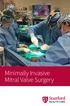 Minimally Invasive Mitral Valve Surgery Stanford Health Care offers leading, superior options in cardiac surgery, including the latest techniques and research for Minimally Invasive Cardiac surgery. Advanced
Mitral Valve Repair. A. Marc Gillinov and Delos M. Cosgrove
 Mitral Valve Repair A. Marc Gillinov and Delos M. Cosgrove Surgical repair of the dysfunctional mitral valve dates back to the early twentieth century when several surgeons developed techniques to try
Managing Mitral Regurgitation: Repair, Replace, or Clip? Michael Howe, MD Traverse Heart & Vascular
 Managing Mitral Regurgitation: Repair, Replace, or Clip? Michael Howe, MD Traverse Heart & Vascular Mitral Regurgitation Anatomy Mechanisms of MR Presentation Evaluation Management Repair Replace Clip
Current concepts for minimally invasive mitral valve repair
 Endorsed by proceedings in Intensive Care Cardiovascular Anesthesia Review article HSR Proc Intensive Care Cardiovasc Anesth. In press. Current concepts for minimally invasive mitral valve repair 1 B.
Mitral Valve Repair versus Replacement for Severe Ischemic Mitral Regurgitation. Michael Acker, MD For the CTSN Investigators AHA November 2013
 Mitral Valve Repair versus Replacement for Severe Ischemic Mitral Regurgitation Michael Acker, MD For the CTSN Investigators AHA November 2013 Acknowledgements Supported by U01 HL088942 Cardiothoracic
Current Strategies of Mitral Valve Repair
 Dan Spiegelstein MD, Probal Ghosh MD, Leonid Sternik MD, Salis Tager MD, Amihai Shinfeld MD and Ehud Raanani MD Department of Cardiothoracic Surgery, Sheba Medical Center, Tel Hashomer, Israel Affiliated
Repair of a regurgitant mitral valve is superior to mitral valve
 EDITORIAL ACD GTS ACD ET CSP TX The double-orifice technique in mitral valve repair: A simple solution for complex problems Ottavio Alfieri, MD Francesco Maisano, MD Michele De Bonis, MD Pier Luigi Stefano,
CorMatrix ECM Technology
 CorMatrix ECM Technology Rethink the treatment of a damaged heart REMODEL. REGROW. RESTORE. CorMatrix ECM Technology provides a natural bioscaffold matrix that enables the body s own cells to repair and
Real-Time 3-Dimensional Transesophageal Echocardiography in the Evaluation of Post-Operative Mitral Annuloplasty Ring and Prosthetic Valve Dehiscence
 Journal of the American College of Cardiology Vol. 53, No. 17, 2009 2009 by the American College of Cardiology Foundation ISSN 0735-1097/09/$36.00 Published by Elsevier Inc. doi:10.1016/j.jacc.2008.12.059
Heart valve repair and replacement
 16 Heart valve repair and replacement 222 Valvular heart disease can be treated in a variety of ways: valve replacement, in which an artificial (prosthetic) heart valve is implanted surgically to replace
Posterior mitral annuloplasty for enhancing mitral leaflet coaptation: using a strip designed for placement in the posterior annulus
 Kim et al. Journal of Cardiothoracic Surgery (2015) 10:164 DOI 10.1186/s13019-015-0350-6 RESEARCH ARTICLE Open Access Posterior mitral annuloplasty for enhancing mitral leaflet coaptation: using a strip
Mitral Valve Repair: the Multimodal Approach and the Role of Minimally Invasive Procedures
 Cardiovascular Surgery SURGICAL TECHNOLOGY INTERNATIONAL IX Mitral Valve Repair: the Multimodal Approach and the Role of Minimally Invasive Procedures GERALD M. LAWRIE, M.D., F.A.C.S. CLINICAL PROFESSOR
Ottavio Alfieri S. Raffaele University Hospital, Milano
 The future of mitral surgery: revolution versus involution Ottavio Alfieri S. Raffaele University Hospital, Milano Future The trouble with the future is that it s so much less knowable than the past. John
Valve XS. Operation Manual for Minimally Invasive Mitral Valve Repair
 Valve XS Operation Manual for Minimally Invasive Mitral Valve Repair Stephan Jacobs Department of Cardiovascular Surgery, University of Zurich, Switzerland Aesculap Surgical Technologies Valve XS Operation
Provided by the American Venous Forum: veinforum.org
 CHAPTER 17 SURGICAL THERAPY FOR DEEP VALVE INCOMPETENCE Original author: Seshadri Raju Abstracted by Gary W. Lemmon Introduction Deep vein valvular incompetence happens when the valves in the veins (tubes
RACE I Rapid Assessment by Cardiac Echo. Intensive Care Training Program Radboud University Medical Centre NIjmegen
 RACE I Rapid Assessment by Cardiac Echo Intensive Care Training Program Radboud University Medical Centre NIjmegen RACE Goal-directed study with specific questions Excludes Doppler ultrasound Perform 50
Adult Cardiac Surgery ICD9 to ICD10 Crosswalks
 164.1 Malignant neoplasm of heart C38.0 Malignant neoplasm of heart 164.1 Malignant neoplasm of heart C45.2 Mesothelioma of pericardium 198.89 Secondary malignant neoplasm of other specified sites C79.89
Clinical Commissioning Policy Statement: Percutaneous mitral valve leaflet repair for mitral regurgitation April 2013. Reference: NHSCB/A09/PS/b
 Clinical Commissioning Policy Statement: Percutaneous mitral valve leaflet repair for mitral regurgitation April 2013 Reference: NHS Commissioning Board Clinical Commissioning Policy Statement: Percutaneous
Chapter 10. Mitral Valve Repair and Redo Repair for Mitral Regurgitation in a Heart Transplant Recipient
 Chapter 10 Mitral Valve Repair and Redo Repair for Mitral Regurgitation in a Heart Transplant Recipient Journal of Cardiothoracic Surgery 2012; 7: 100 Wobbe Bouma a Johan Brügemann b Inez J. Wijdh den
Surgical repair of a diseased mitral valve has
 Mitral Valve Repair Using the MitraClip: From Concept to Reality Early experience with the MitraClip device suggests that it may be a viable therapeutic option in selected patients with MR. BY SAIBAL KAR,
Practical class 3 THE HEART
 Practical class 3 THE HEART OBJECTIVES By the time you have completed this assignment and any necessary further reading or study you should be able to:- 1. Describe the fibrous pericardium and serous pericardium,
Treating AF: The Newest Recommendations. CardioCase presentation. Ethel s Case. Wayne Warnica, MD, FACC, FACP, FRCPC
 Treating AF: The Newest Recommendations Wayne Warnica, MD, FACC, FACP, FRCPC CardioCase presentation Ethel s Case Ethel, 73, presents with rapid heart beating and mild chest discomfort. In the ED, ECG
Cardioband: A New Era of Mitral Valve Repair. Valtech Cardio, Ltd. PCR London Valves. September 22, 2015. Transcript
 Cardioband: A New Era of Mitral Valve Repair Valtech Cardio, Ltd. PCR London Valves September 22, 2015 Transcript C O R P O R A T E P A R T I C I P A N T S Prof. Eberhard Grube, M.D., Ph.D., University
Heart Murmurs. Outline. Basic Pathophysiology
 Heart Murmurs David Leder Outline I. Basic Pathophysiology II. Describing murmurs III. Systolic murmurs IV. Diastolic murmurs V. Continuous murmurs VI. Summary Basic Pathophysiology Murmurs = Math Q =
The first treatment for mitral valve
 Mitral Valve Repair 3.4 indicates that continuing education contact hours are available for this activity. Earn the continuing education contact hours by reading this article and taking the examination
Cardiology Fellowship Manual. Goals & Objectives -Cardiac Imaging- 1 Page
 Cardiology Fellowship Manual Goals & Objectives -Cardiac Imaging- 1 Page 2015-2016 UNIV. OF NEBRASKA CHILDREN S HOSPITAL & MEDICAL CENTER DIVISION OF CARDIOLOGY FELLOWSHIP PROGRAM CARDIAC IMAGING ROTATION
Nikos Kouris a, *, Ignatios Ikonomidis b, Dimitra Kontogianni a, Peter Smith b, Petros Nihoyannopoulos b
 Eur J Echocardiography (2005) 6, 435e442 Mitral valve repair versus replacement for isolated non-ischemic mitral regurgitation in patients with preoperative left ventricular dysfunction. A long-term follow-up
one of the most prevalent cardiac in almost 2.4 percent of the population. 1 Although the incidence of infective
 Case Report Hellenic J Cardiol 2011; 52: 177-181 Successful Surgical Repair of Mitral Valve Prolapse Endocarditis: Case Report and Review of the Current Literature Pavlos N. Stougiannos 1, Dimitrios Z.
5. Management of rheumatic heart disease
 5. Management of rheumatic heart disease The fundamental goal in the long-term management of RHD is to prevent ARF recurrences, and therefore, prevent the progression of RHD, and in many cases allow for
Degenerative mitral valve disease refers to a spectrum
 Etiologic Classification of Degenerative Mitral Valve Disease: Barlow s Disease and Fibroelastic Deficiency Ani C. Anyanwu, MD, and David H. Adams, MD Barlow s disease and fibroelastic deficiency are the
Bankart Repair using the Smith & Nephew BIORAPTOR 2.9 Suture Anchor
 Shoulder Series Technique Guide *smith&nephew BIORAPTOR 2.9 Suture Anchor Bankart Repair using the Smith & Nephew BIORAPTOR 2.9 Suture Anchor Gary M. Gartsman, M.D. Introduction Arthroscopic studies of
Surgeons Role in Atrial Fibrillation
 Atrial Fibrillation Surgeons Role in Atrial Fibrillation Steven J Feldhaus, MD, FACS 2015 Cardiac Symposium September 18, 2015 Stages of Atrial Fibrillation Paroxysmal (Intermittent) Persistent (Continuous)
Dental Work and the Risk of Bacterial Endocarditis
 Variety Children s Heart Centre Dental Work and the Risk of Bacterial Endocarditis Certain heart conditions and structural defects increase the risk of developing endocarditis (a heart valve infection)
Potential Causes of Sudden Cardiac Arrest in Children
 Potential Causes of Sudden Cardiac Arrest in Children Project S.A.V.E. When sudden death occurs in children, adolescents and younger adults, heart abnormalities are likely causes. These conditions are
Tissue Reinforcement with Strattice Reconstructive Tissue Matrix following Correction of Severe Breast Deformity
 Tissue Reinforcement with Strattice Reconstructive Tissue Matrix following Correction of Severe Breast Deformity Robert Cohen, MD, FACS* Paradise Valley, AZ Case summary A 41-year old woman with a history
Cardiac Masses and Tumors
 Cardiac Masses and Tumors Question: What is the diagnosis? A. Aortic valve myxoma B. Papillary fibroelastoma C. Vegetation from Infective endocarditis D. Thrombus in transit E. None of the above Answer:
Diagnostic and Therapeutic Procedures
 Diagnostic and Therapeutic Procedures Diagnostic and therapeutic cardiovascular s are central to the evaluation and management of patients with cardiovascular disease. Consistent with the other sections,
Anatomi & Fysiologi 060301. The cardiovascular system (chapter 20) The circulation system transports; What the heart can do;
 The cardiovascular system consists of; The cardiovascular system (chapter 20) Principles of Anatomy & Physiology 2009 Blood 2 separate pumps (heart) Many blood vessels with varying diameter and elasticity
Development of a surgical simulation toolkit for mitral valve repair surgeries
 University of Iowa Iowa Research Online Theses and Dissertations 2014 Development of a surgical simulation toolkit for mitral valve repair surgeries Piyusha Sanjay Gade University of Iowa Copyright 2014
Transcatheter Mitral Valve-in-Valve and Valve-in-Ring Implantations. Danny Dvir, MD On behalf of VIVID registry investigators
 Transcatheter Mitral Valve-in-Valve and Valve-in-Ring Implantations Danny Dvir, MD On behalf of VIVID registry investigators Introduction Bioprosthetic valves are increasingly implanted in open-heart surgeries.
Integumentary System Individual Exercises
 Integumentary System Individual Exercises 1. A physician performs an incision and drainage of a subcutaneous abscess in his office for a particularly uncooperative established patient. How should this
Academia. Minimally Invasive Mitral Valve Repair/Replacement (MVR) Procedure. Medical Education. Innovating for life.
 Minimally Invasive Mitral Valve Repair/Replacement (MVR) Procedure TECHNIQUES FOR MINIMALLY INVASIVE MITRAL VALVE REPAIR/REPLACEMENT Joseph Lamelas, MD Academia Medical Education Innovating for life. TECHNIQUES
BASIC STANDARDS FOR RESIDENCY TRAINING IN CARDIOLOGY
 BASIC STANDARDS FOR RESIDENCY TRAINING IN CARDIOLOGY American Osteopathic Association and the American College of Osteopathic Internists Specific Requirements For Osteopathic Subspecialty Training In Cardiology
Atrial Fibrillation An update on diagnosis and management
 Dr Arvind Vasudeva Consultant Cardiologist Atrial Fibrillation An update on diagnosis and management Atrial fibrillation (AF) remains the commonest disturbance of cardiac rhythm seen in clinical practice.
Open Ventral Hernia Repair
 Ventral Hernias Open Ventral Hernia Repair UCSF Postgraduate Course in General Surgery Maui, HI March 21, 2011 Hobart W. Harris, MD, MPH Ventral Hernias: National Experience Occur following 11-23% of laparotomies,
Have a Heart: Cardiology Coding. Agenda
 Have a Heart: Cardiology Coding AAPC Regional Conference October 25-27, 2012 Chicago Presented by: Betty A Hovey, CPC, CPMA, CPC-I, CPC-H, CPCD Director, ICD-10 Development and Training AAPC Agenda Anatomy
Management of the Patient with Aortic Stenosis undergoing Non-cardiac Surgery
 Management of the Patient with Aortic Stenosis undergoing Non-cardiac Surgery Srinivasan Rajagopal M.D. Assistant Professor Division of Cardiothoracic Anesthesia Objectives Describe the pathophysiology
Laparoscopic Hernia Repair. Hernia Repair. Laparoscopic Ventral. Several Different Types of Hernia
 Laparoscopic Hernia Repair David B Renton, MD Assistant Professor Department of Surgery The Ohio State University Advantages of Laparoscopic Ventral vs. Open Hernia Repair Lower wound infection rate: 2.6%
Thoracoabdominal aortic aneurysm
 Thoracoabdominal aortic aneurysm Patient (1) - 69 PMH: 2013 - MVP, aortic root replacement with biological valve (Perimount) and subtotal aortic arch replacement Analysis for oppressive chest complaints
Common types of congenital heart defects
 Common types of congenital heart defects Congenital heart defects are abnormalities that develop before birth. They can occur in the heart's chambers, valves or blood vessels. A baby may be born with only
Laparoscopic Repair of Incisional Hernia. Maria B. ALBUJA-CRUZ, MD University of Colorado Department of Surgery-Grand Rounds
 Laparoscopic Repair of Incisional Hernia Maria B. ALBUJA-CRUZ, MD University of Colorado Department of Surgery-Grand Rounds Overview Definition Advantages of Laparoscopic Repair Disadvantages of Open Repair
Anterior Lumbar Interbody Fusion (ALIF). Instrument set supports placement of ALIF spacers using anterior or anterolateral approach.
 Anterior Lumbar Interbody Fusion (ALIF). Instrument set supports placement of ALIF spacers using anterior or anterolateral approach. Technique Guide Instruments and implants approved by the AO Foundation
How To Understand What You Know
 Heart Disorders Glossary ABG (Arterial Blood Gas) Test: A test that measures how much oxygen and carbon dioxide are in the blood. Anemia: A condition in which there are low levels of red blood cells in
Breast Reconstruction Options. Department of Plastic Surgery #290 Santa Clara Homestead Campus
 Breast Reconstruction Options Department of Plastic Surgery #290 Santa Clara Homestead Campus Importance of Breast Reconstruction As successes in treating breast cancer have grown, more women have been
What You Should Know About Cerebral Aneurysms
 What You Should Know About Cerebral Aneurysms From the Cerebrovascular Imaging and Interventions Committee of the American Heart Association Cardiovascular Radiology Council Randall T. Higashida, M.D.,
HISTORY. Questions: 1. What diagnosis is suggested by this history? 2. How do you explain her symptoms during pregnancy?
 HISTORY 33-year-old woman. CHIEF COMPLAINT: months duration. Dyspnea, fatigue and nocturnal wheezing of six PRESENT ILLNESS: At ages 5 and 9, she had migratory arthritis. At age 29, in the third trimester
VATS / MIS. Thoracoscopic Minimally Invasive Instruments
 / Thoracoscopic Minimally Invasive Instruments / Thoracoscopic Minimally Invasive Instruments Thoracoscopic Minimally Invasive Instruments / In a continuing effort to minimize patient trauma, surgical
5. Diagnosis and management of rheumatic heart disease
 5. Diagnosis and management of rheumatic heart disease Introduction Chronic rheumatic valvular heart disease is the long-term result of ARF. It is a disease of poverty and disadvantage. In Australia, the
Endovascular Repair of an Axillary Artery Aneurysm: A Novel Approach
 Endovascular Repair of an Axillary Artery Aneurysm: A Novel Approach Bao- Thuy D. Hoang, MD 1, Jonathan- Hien Vu, MD 2, Jerry Matteo, MD 3 1 Department of Surgery, University of Florida College of Medicine,
The Carpentier-Edwards Perimount Magna mitral valve bioprosthesis: intermediateterm efficacy and durability
 Loor et al. Journal of Cardiothoracic Surgery (2016) 11:20 DOI 10.1186/s13019-016-0412-4 RESEARCH ARTICLE Open Access The Carpentier-Edwards Perimount Magna mitral valve bioprosthesis: intermediateterm
STS/AATS CODING. NEWSLETTER Recent Information on CPT and ICD-9 CM Codes for Cardiothoracic Surgeons
 N E W S STS/AATS CODING L E T T E R Vol. 13 No. 1, Spring 2004 2004, The Society of Thoracic Surgeons, Chicago, IL 60611 TEE s; Maze; 0,10, XXX Global Periods; Medicare Usage for Assistants-at- Surgery
Steven J. Yakubov, MD FACC For the CoreValve US Clinical Investigators
 Long-Term Outcomes Using a Self- Expanding Bioprosthesis in Patients With Severe Aortic Stenosis Deemed Extreme Risk for Surgery: Two-Year Results From the CoreValve US Pivotal Trial Steven J. Yakubov,
UNIVERSITA' DEGLI STUDI DI ROMA TOR VERGATA
 SYSTEMATIC PATHOLOGY I IIIYear Scientific Field DISCIPLINE TUTOR Systematic Pathology I MED/21 MED/10 Thoracic Surgery Respiratory Diseases Tommaso Claudio Mineo Paola Rogliani MED/10 Respiratory Diseases
Type II Pulmonary Hypertension: Pulmonary Hypertension due to Left Heart Disease
 Heart Failure Center Hadassah University Hospital Type II Pulmonary Hypertension: Pulmonary Hypertension due to Left Heart Disease Israel Gotsman MD The Heart Failure Center, Heart Institute Hadassah University
Management of Pacing Wires After Cardiac Surgery
 Management of Pacing Wires After Cardiac Surgery David E. Lizotte, Jr. PA C, MPAS, FAPACVS President, Association of Physician Assistants in Cardiovascular Surgery Conflicts: None Indications 2008 Journal
the revo / mini-revo shoulder fixation system s u r g i c a l t e c h n i q u e
 the revo / mini-revo shoulder fixation system s u r g i c a l t e c h n i q u e REVO The following techniques are described by Stephen J. Snyder, M.D., Van Nuys, CA. Arthroscopic repair of the rotator
Minimally Invasive Spine Surgery
 Chapter 1 Minimally Invasive Spine Surgery 1 H.M. Mayer Primum non nocere First do no harm In the long history of surgery it always has been a basic principle to restrict the iatrogenic trauma done to
Reporting Transcatheter Aortic Valve Replacement (TAVR) Procedures in 2013
 Reporting Transcatheter Aortic Valve Replacement (TAVR) Procedures in 2013 There are nine new CPT codes effective January 1, 2013, for reporting TAVR procedures. Five of these codes are Category I codes
Minimally Invasive Hip Replacement through the Direct Lateral Approach
 Surgical Technique INNOVATIONS IN MINIMALLY INVASIVE JOINT SURGERY Minimally Invasive Hip Replacement through the Direct Lateral Approach *smith&nephew Introduction Prosthetic replacement of the hip joint
HEART HEALTH WEEK 3 SUPPLEMENT. A Beginner s Guide to Cardiovascular Disease HEART FAILURE. Relatively mild, symptoms with intense exercise
 WEEK 3 SUPPLEMENT HEART HEALTH A Beginner s Guide to Cardiovascular Disease HEART FAILURE Heart failure can be defined as the failing (insufficiency) of the heart as a mechanical pump due to either acute
COVERAGE GUIDANCE: ABLATION FOR ATRIAL FIBRILLATION
 COVERAGE GUIDANCE: ABLATION FOR ATRIAL FIBRILLATION Question: How should the EGBS Coverage Guidance regarding ablation for atrial fibrillation be applied to the Prioritized List? Question source: Evidence
Combined Epicardial and Endocardial Ablation for Treatment of Atrial Fibrillation. Ashkan Babaie MD Providence Portland Medical Center
 Combined Epicardial and Endocardial Ablation for Treatment of Atrial Fibrillation Ashkan Babaie MD Providence Portland Medical Center 1 Disclosures None 2 Cox-Maze III The Godfather Cure rates > 95% in
Tucson Eye Care, PC. Informed Consent for Cataract Surgery And/Or Implantation of an Intraocular Lens
 Tucson Eye Care, PC Informed Consent for Cataract Surgery And/Or Implantation of an Intraocular Lens INTRODUCTION This information is provided so that you may make an informed decision about having eye
The P Wave: Indicator of Atrial Enlargement
 Marquette University e-publications@marquette Physician Assistant Studies Faculty Research and Publications Health Sciences, College of 8-12-2010 The P Wave: Indicator of Atrial Enlargement Patrick Loftis
ECG may be indicated for patients with cardiovascular risk factors
 eappendix A. Summary for Preoperative ECG American College of Cardiology/ American Heart Association, 2007 A1 2002 A2 European Society of Cardiology and European Society of Anaesthesiology, 2009 A3 Improvement,
.org. Rotator Cuff Tears: Surgical Treatment Options. When Rotator Cuff Surgery is Recommended. Surgical Repair Options
 Rotator Cuff Tears: Surgical Treatment Options Page ( 1 ) The following article provides in-depth information about surgical treatment for rotator cuff injuries, and is a continuation of the article Rotator
Mitral Valve Insufficiency
 Mitral Valve Insufficiency Francesco Fulvio Faletra, Giovanni Pedrazzini, Elena Pasotti and Natesa G. Pandian 2 Mitral valve insufficiency is characterized by the presence of systolic reflow from the left
Note: The left and right sides of the heart must pump exactly the same volume of blood when averaged over a period of time
 page 1 HEART AS A PUMP A. Functional Anatomy of the Heart 1. Two pumps, arranged in series a. right heart: receives blood from the systemic circulation (via the great veins and vena cava) and pumps blood
How To Treat Heart Valve Disease
 The Valve Clinic at Baptist Health Madisonville The Valve Clinic at Baptist Health Madisonville Welcome to the Baptist Health Madisonville Valve Clinic at the Jack L. Hamman Heart & Vascular Center. We
Dysfunction of aortic valve prostheses
 Dysfunction of aortic valve prostheses Kai Andersen Oslo University Hospital Rikshospitalet, Norway Dysfunction of aortic valve prostheses Kai Andersen Oslo University Hospital Rikshospitalet, Norway No
Updated Cardiac Resynchronization Therapy Guidelines
 The Ohio State University Heart and Vascular Center Updated Cardiac Resynchronization Therapy Guidelines William T. Abraham, MD, FACP, FACC, FAHA, FESC Professor of Medicine, Physiology, and Cell Biology