
TimeZone Watch School Illustrated Glossary of Watch Parts
|
|
|
- Lorraine York
- 9 years ago
- Views:
Transcription
1 TimeZone Watch School Illustrated Glossary of Watch Parts by Walt Odets Copyright A Bid Of Time, Inc., All Rights Reserved Print version courtesy of Robert Biuk-Aghai

2 Notes on this print version This version was prepared using the material of the online Illustrated Glossary of Watch Parts hosted on the TimeZone Watch School website. The formatting and appearance of pages was made to follow the online version as closely as possible. Small deviations, however, were inevitable. This print version also contains numerous corrections of typos and other minor errors of the online version. The online version of the Glossary is heavily cross-referenced with hyper-links from individual parts of text and images to other pages. Given the limitations of a paper version, these hyperlinks could not be reproduced here in their original form. Instead, all links contained on a glossary page are listed in a separate table at the end of the page in this print version, with references to the corresponding pages they refer to. The animation of the escapement, likewise, could not be reproduced here, and instead a sequence of 18 snapshots of the escapement is provided as an alternative. Moreover, the overall structure of nine major sections and numerous detail pages was maintained, and can be identified in the capitalization of headings and cross-references: major sections are shown in all-capitals (such as in THE BALANCE ASSEMBLY ), whereas detail pages are shown with initial capitals only (such as in The Balance Staff ). It is hoped that this print version will be a convenient companion on the work table of the amateur watch maker. Robert Biuk-Aghai Macau, December 2007

3 Contents THE TOP PLATE...1 THE BOTTOM PLATE...3 THE KEYLESS WORKS...5 Winding... 6 Automatic Winding: The ETA Caliber Automatic Winding: Bi-Directional Winding... 8 Automatic Winding: The Jaeger LeCoultre Caliber 889/2 Switching Rocker... 9 Patek Philippe caliber 240-PS THE MOTION WORKS...11 The Cannon Pinion, Hour Wheel, Minute Wheel and Wheel Pinions THE BALANCE ASSEMBLY...14 The Balance Wheel: Amplitude The Balance Cock and Balance Assembly The Balance Wheel in Detail A Smooth Glucydur Balance The Adjustable Mass Balance The Regulator, Curb Pin and Boot The Regulator, Spring Stud, and Anti-Shock Mechanism The Anti-Shock Mechanism The Balance Spring Collet and Overcoil The Balance Staff THE ESCAPEMENT...27 The Escapement: The Banking Pins The Escapement: The Entry Pallet The Escapement: The Exit Pallet The Escapement: The Exit Pallet During Impulse The Escapement: The Exit Pallet During Locking The Escapement: The Pallet Lever Geometry The Escapement: The Pallet Lever The Escapement: The Pallet Lever Safety Pin The Escapement: An Illustrated Explanation of Function i

4 THE MAINSPRING AND BARREL...42 The Click The Click and Related Parts The Mainspring of an Automatic Winding Watch THE WHEEL TRAIN...48 The Center-Seconds Gear Train: The Fontainemelon Caliber The Conical Pivot and Jewel The Cylindrical Pivot and Jewel Wheels and Pinions SCREWS...54 ii

5 THE TOP PLATE The movement as seen from the back of the watch: Stem Crown Wheel Crown Wheel Core Crown Wheel Screws Ratchet Wheel Ratchet Wheel Screw Center Wheel Top Pivot Center Wheel Jewel Click Click Screw Case Screw Balance Cock Balance Cock Screw P. 5, THE KEYLESS WORKS P. 48, THE WHEEL TRAIN P. 48, THE WHEEL TRAIN P. 48, THE WHEEL TRAIN P. 42, THE MAINSPRING AND BARREL P. 42, THE MAINSPRING AND BARREL P. 52, The Cylindrical Pivot and Jewel P. 52, The Cylindrical Pivot and Jewel P. 42, THE MAINSPRING AND BARREL P. 42, THE MAINSPRING AND BARREL P. 54, SCREWS P. 17, The Balance Cock and Balance Assembly P. 14, THE BALANCE ASSEMBLY 1

6 Regulator Index P. 17, The Balance Cock and Balance Assembly Balance Top Cap Jewel P. 24, The Anti-Shock Mechanism Balance Top Shock Assembly P. 24, The Anti-Shock Mechanism Balance Spring Stud P. 17, The Balance Cock and Balance Assembly Stud Screw P. 54, SCREWS Balance Wheel P. 18, The Balance Wheel in Detail Regulator P. 23, The Regulator, Spring Stud, and Anti-Shock Mechanism Lever Bridge Screw P. 54, SCREWS Pallet Lever Bridge P. 22, The Regulator, Curb Pin and Boot Balance Spring P. 18, The Balance Wheel in Detail Pallet Jewel P. 36, The Escapement: The Pallet Lever Pallet Fork Jewel P. 36, The Escapement: The Pallet Lever Wheel Bridge Screw P. 54, SCREWS Escape Wheel Top Jewel P. 53, Wheels and Pinions Center Wheel P. 53, Wheels and Pinions Wheel Bridge P. 48, THE WHEEL TRAIN Fourth Wheel Top Jewel P. 52, The Cylindrical Pivot and Jewel Third Wheel Top Jewel P. 52, The Cylindrical Pivot and Jewel Third Wheel P. 48, THE WHEEL TRAIN Wheel Bridge Screw P. 54, SCREWS Case Screw P. 54, SCREWS Barrel Bridge Screw P. 54, SCREWS Set Lever Screw P. 5, THE KEYLESS WORKS * 1 P. 42, THE MAINSPRING AND BARREL * 2 P. 48, THE WHEEL TRAIN * 3 P. 17, The Balance Cock and Balance Assembly 2

7 THE BOTTOM PLATE The dial side of the movement: Set Lever Screw (BR: Pull-Out Piece Screw) Set Lever (BR: Pull-Out Piece) Clutch Leaver (BR: Return Bar) Setting Bridge (or Cover Plate) Minute Wheel Post Minute Wheel Hour Wheel Fourth Wheel Lower Jewel Escape Wheel Lower Jewel Pallet Stone Inspection Holes Pallet Lever Lower Jewel P. 5, THE KEYLESS WORKS P. 5, THE KEYLESS WORKS P. 5, THE KEYLESS WORKS P. 5, THE KEYLESS WORKS P. 11, THE MOTION WORKS P. 11, THE MOTION WORKS P. 11, THE MOTION WORKS P. 52, The Cylindrical Pivot and Jewel P. 51, The Conical Pivot and Jewel P. 36, The Escapement: The Pallet Lever P. 36, The Escapement: The Pallet Lever 3

8 Balance Wheel Lower Pivot P. 24, The Anti-Shock Mechanism (Anti-Shock Assembly) Dial Foot Hole P. 54, SCREWS Center Wheel Pinion P. 53, Wheels and Pinions Cannon Pinion P. 11, THE MOTION WORKS Mainspring Barrel Lower Pivot P. 42, THE MAINSPRING AND BARREL Intermediate Wheel P. 5, THE KEYLESS WORKS Detent Spring (BR: Check P. 5, THE KEYLESS WORKS Spring) Clutch (BR: Castle Gear) P. 5, THE KEYLESS WORKS Winding Pinion (BR: Crown P. 5, THE KEYLESS WORKS Gear) * 1 P. 5, THE KEYLESS WORKS * 2 P. 11, THE MOTION WORKS 4

9 THE KEYLESS WORKS Winding and hand-setting: Set Lever Screw Winding The Bottom Plate P. 54, SCREWS P. 6, Winding P. 3, THE BOTTOM PLATE 5

10 Winding For information on automatic winding watches see page 7. The positioning of the keyless-works parts for winding is shown in the green numbering. (1) The crown is pushed in, (2) the setting lever swings in, (3) the opposite end of the setting lever swings out allowing (4) the return lever to (5) slide the clutch into engagement with the winding pinion. The red arrows show the power flow from (1) the stem, to (2) and (3) the clutch, to (4) the winding pinion, and then on to the crown gear and mainspring barrel (blue arrow). During hand setting, all parts move in the direction opposite the green arrows. This brings the clutch into contact with the intermediate wheel, which drives the minute wheel, cannon pinion, and hour wheel. The keyless works can be among the most beautiful parts of the mechanical watch. See page 8 for the keyless works of a contemporary Patek Philippe wristwatch caliber. Crown Wheel Crown Gear Mainspring Barrel Minute Wheel Cannon Pinion Hour Wheel P. 48, THE WHEEL TRAIN P. 42, THE MAINSPRING AND BARREL P. 42, THE MAINSPRING AND BARREL P. 11, THE MOTION WORKS P. 11, THE MOTION WORKS P. 11, THE MOTION WORKS 6

11 Automatic Winding: The ETA Caliber 2842 The automatic winding watch converts motion of the wearer's wrist into power that winds the mainspring of the watch. As shown left (in an inverted position), most such watches use a central rotor with a gear (yellow arrow). As the rotor moves around its central pivot, the gear winds the watch. In the second photograph, a typical contemporary automatic winding system is shown with the central rotor removed. This is an ETA caliber Identified parts include (1) the opening for the winding stem. (2) The crown wheel (which transfers power from the winding stem to the ratchet wheel, arbor, and mainspring during hand winding). (3) The ratchet wheel (on top of the barrel and attached to the arbor and mainspring at the center of the barrel). (4) The mainspring barrel itself. (5) The twin click-wheels that receive power from the wheel on the central rotor (above). (6) and (7) the reduction and transfer wheels that transmit power from the twin clickwheels to the ratchet wheel. Because the ratchet wheel must always wind the mainspring in one direction (counterclockwise in the view above), the twin click-wheels convert rotation of the central rotor in either direction into power that will wind the mainspring. See page 8 for a schematic of this winding train and understand how the twin clickwheels work. 7

12 Automatic Winding: Bi-Directional Winding The twin click-wheels are each constructed of two parts, an upper and lower section (as shown in the diagram, left). These upper and lower halves are locked or unlocked (with one-way ratchets), depending on the direction of rotation of the upper section. While both upper sections always rotate, the lower section rotates only on the locked wheel. With the central rotor moving clockwise, only the right click-wheel is locked. With the central rotor moving counterclockwise, only the left click-wheel is locked. This is the difference that allows the mechanism to utilize rotor rotation in both directions. the lower with counterclockwise rotation. The upper illustration shows power flow (yellow arrows) with clockwise rotor rotation, See page 9 for another design of a bi-directional winding system, in the Jaeger LeCoultre caliber 889/2. 8

13 Automatic Winding: The Jaeger LeCoultre Caliber 889/2 Switching Rocker The illustrated Jaeger LeCoultre caliber 889/2 uses a switching rocker to accomplish bi-directional winding. This is an efficient, simple and elegant engineering solution. Power is transferred from the central rotor (5) to the first transfer wheel (1). Wheels (2) and (3) are mounted on a "switch plate" that swings back and forth and brings either (2) or (3) into connection with transfer wheel (4). In clockwise rotation of the central rotor, power is transferred from (5) to (1) to (2) to (4) and then on to the mainspring. In counterclockwise rotation of the central rotor, power is transferred from (5) to (1) to (2) to (3) to (4) and then on to the mainspring. So, the addition or removal of wheel (3) from the gear train allows wheel (4) to always rotate counterclockwise regardless of the direction of the central rotor. The direction of rotation of wheel (1) determines which way the rocker will switch. 9

14 Patek Philippe caliber 240-PS The illustration reveals the beautifully crafted keyless works of the contemporary Patek Philippe caliber 240-PS. It was Antoine Philippe who, in 1841, developed the concept of the keyless works that is still in use today. Before that time, winding and hand-setting were done with a separate key. (1) The cover (or bridge). (2) The setting lever (pull piece). (3) The clutch return lever. (The clutch, winding pinion, and stem are removed in this photograph.) 10

15 THE MOTION WORKS The Hour, Minute and Second Hands: See P. 12 (The Cannon Pinion, Hour Wheel, Minute Wheel and Wheel Pinions) for a profile view. Minute Wheel Center Wheel The Bottom Plate P. 5, THE KEYLESS WORKS P. 48, THE WHEEL TRAIN P. 3, THE BOTTOM PLATE 11

16 The Cannon Pinion, Hour Wheel, Minute Wheel and Wheel Pinions The illustration above shows the motion works of a center-seconds watch. (1) The fourth wheel pinion, which carries the seconds hand. (2) The center wheel pinion, which carries the cannon pinion. (3) The cannon pinion, which carries the minutes hand. (4) The hour wheel, which carries the hour hand. Fourth Wheel Pinion (1) Center Wheel Pinion (2) Cannon Pinion (3) Hour Wheel (4) P. 48, THE WHEEL TRAIN P. 48, THE WHEEL TRAIN P. 11, THE MOTION WORKS P. 11, THE MOTION WORKS The second illustration diagrams the power flow from movement to hands. (A) The movement plate. (B) The center wheel. (C) The fourth wheel. (D) The cannon pinion. 12

17 (E) The hour wheel. (F) The minute wheel. You can follow the power flow with the red numbers, 1 through 8. Movement Plate (A) Center Wheel (B) Fourth Wheel (C) Cannon Pinion (D) Hour Wheel (E) Minute Wheel (F) Fourth Wheel Pinion (8) P. 3, THE BOTTOM PLATE P. 48, THE WHEEL TRAIN P. 48, THE WHEEL TRAIN P. 11, THE MOTION WORKS P. 11, THE MOTION WORKS P. 11, THE MOTION WORKS P. 53, Wheels and Pinions 13

18 THE BALANCE ASSEMBLY The Balance Wheel, Balance Spring and Balance Cock: The back-and-forth oscillations of a balance wheel are described in terms of amplitude. See page 16 to understand amplitude. Impulse and Safety Rollers Regulator Regulator Boot Regulator Curb Pin Balance Spring Spring Stud Balance Wheel Screw Balance Wheel Anti-Shock Unit Regulator Index P. 18, The Balance Wheel in Detail P. 23, The Regulator, Spring Stud, and Anti-Shock Mechanism P. 22, The Regulator, Curb Pin and Boot P. 22, The Regulator, Curb Pin and Boot P. 25, The Balance Spring Collet and Overcoil P. 17, The Balance Cock and Balance Assembly; P. 23, The Regulator, Spring Stud, and Anti-Shock Mechanism P. 54, SCREWS P. 19, A Smooth Glucydur Balance; P. 20, The Adjustable Mass Balance P. 23, The Regulator, Spring Stud, and Anti-Shock Mechanism; P. 24, The Anti-Shock Mechanism P. 23, The Regulator, Spring Stud, and Anti-Shock Mechanism 14

19 Cock Screw Balance Cock P. 54, SCREWS P. 17, The Balance Cock and Balance Assembly; P. 23, The Regulator, Spring Stud, and Anti-Shock Mechanism 15

20 The Balance Wheel: Amplitude Each clockwise or counterclockwise swing of the balance wheel is called a beat. The number of degrees of rotation of the beat is the amplitude of the balance. In most contemporary wristwatches, the amplitude of the balance in a horizontal position (i.e. dial up or dial down) should fall between 275 and 315 degrees. Low amplitude will affect the rate of the watch (speeding it up because the shorter swings complete more quickly). Excessive amplitude may result in the impulse pin on the impulse roller coming completely around and hitting the back of the pallet fork. Amplitude may be measured with an electronic timer, or may be visually estimated. In the illustration the balance is in its centered (rest) position. The clockwise travel of one spoke (bottom) is indicated. Normally, the spoke will travel to between 275 and 315 degrees before reversing its direction, returning to center, and traveling 275 to 315 degrees counterclockwise. Impulse Pin Pallet Fork P. 18, The Balance Wheel in Detail P. 36, The Escapement: The Pallet Lever 16

21 The Balance Cock and Balance Assembly The entire balance cock and balance assembly is illustrated. (1) The balance cock. (2) The anti-shock unit for the upper balance pivot. (3) The regulator to control rate. (4) The balance spring. (5) The balance wheel. (6) The hairspring stud, which is held in the stud holder of the balance cock with the small set screw. (7) The balance staff. Balance Cock (1) Anti-Shock Unit (2) Regulator (3) Balance Spring (4) Balance Wheel (5) Hairspring Stud (6) Balance Staff (7) P. 18, The Balance Wheel in Detail P. 24, The Anti-Shock Mechanism P. 22, The Regulator, Curb Pin and Boot P. 18, The Balance Wheel in Detail P. 19, A Smooth Glucydur Balance P. 23, The Regulator, Spring Stud, and Anti-Shock Mechanism P. 26, The Balance Staff 17
22 The Balance Wheel in Detail The balance illustrated is from a Longines pocket watch. The balance is of an older, split, bimetallic design, which is not often used in contemporary watches. (See page 19 for a more contemporary balance.) The screws around the rim of the balance wheel are used to adjust the poise ("balance") of the balance wheel, and, in split balances with steel balance springs, the temperature compensation. Such a split balance is made of layered steel and brass and is cut at two points near the balance arms. (1) The impulse roller. (2) The safety roller. (3) The lower balance pivot. (4) The impulse jewel (or impulse pin). (5) The balance spring (in this case an overcoil design). (6) The alignment pins used to locate the balance cock accurately on the main plate. Impulse Roller (1) Safety Roller (2) Lower Balance Pivot (3) Impulse Jewel (4) Balance Spring (5) Allignment Pins (6) Balance Wheel Screws P. 17, The Balance Cock and Balance Assembly P. 17, The Balance Cock and Balance Assembly P. 51, The Conical Pivot and Jewel P. 17, The Balance Cock and Balance Assembly P. 25, The Balance Spring Collet and Overcoil P. 23, The Regulator, Spring Stud, and Anti-Shock Mechanism P. 54, SCREWS 18
23 A Smooth Glucydur Balance In most high-grade contemporary wristwatches, the balance wheel is like that illustrated above: a smooth (without rim screws) Glucydur two or three arm balance. The design is screwless because contemporary balance spring alloys provide temperature correction and make screws on the balance unnecessary for this purpose. The screwless design also has greater aerodynamic efficiency and is less likely to snag debris that might cause changes in timing. Glucydur is an alloy of (mostly) berrylium and copper and has excellent hardness and high stability over a range of temperatures. In most watches, the balance wheel is computer poised (and timed to the particular balance spring) and a precise laser cut is made in the underside of the rim (red arrow) to achieve nearly perfect poise. See page 20 for a contemporary "adjustable-mass" Patek Philippe balance. 19
24 The Adjustable Mass Balance The adjustable-mass (or adjustable-inertia) balance wheel offers several advantages over conventional balance wheels with fixed mass. Used in most contemporary Patek Philippe wristwatches and pocket watches, the adjustable-mass balance has also long been used in marine chronometers. Among the advantages of this design are elimination of the need for a conventional regulator ( which can introduce several kinds of errors into positions timing), and precise adjustment of the balance for daily rate without disturbing other adjustments of the watch. The illustrations show a Patek balance wheel, known by the trade name "Gyromax." The Gyromax is constructed of Glucydur. Eight small weights, slipped over posts are set down into the balance wheel rim as illustrated above. The weights may be rotated on their posts in opposing pairs to adjust the rate of the watch, or individually to adjust the poise ("balance") of the wheel. The weights are sometimes also used in positional adjustment of the watch. As shown left, the circular weights contain a slot, which is the "light point" of the weight. If the weight is turned so that the slot is closer to the outside of the balance (away from the center), the mass of the balance is moved towards the center. This speeds up the rate of the watch (opposing pairs of weights moved equally) or decreases the effective mass of the balance at that point (only one weight turned). Conversely, rotating a weight so that the slot is closer to the center decreases rate or increases the effective mass at that point of the rim. 20
25 See page 19 for a non-adjustable contemporary balance. Regulator Glucydur P. 17, The Balance Cock and Balance Assembly P. 19, A Smooth Glucydur Balance 21
26 The Regulator, Curb Pin and Boot The regulator is shown inverted in this photograph, the curb pin on the left, the boot on the right. The balance spring passes through the space between the two (arrow), which determines the "effective" length (as opposed to actually total physical length) of the spring. This affects the rate of the watch. A shorter spring speeds up the watch, a longer one slows it down. 22
27 The Regulator, Spring Stud, and Anti-Shock Mechanism The balance cock assembly of a Nouvelle Lemania caliber 8815 is shown in this photograph. (1) The fine rate-adjustment screw. (2) The regulator with index (or curb) pin and boot. (3) The operative component of the fine adjustment regulator known as a "Triovis" regulator. (4) The anti-shock unit for the upper balance pivot with a characteristic KIF-brand spring. (5) The stud for the outer attachment of the balance spring with the small screw that holds the end of the spring. See page 17 for a schematic view of the regulator and balance cock. Fine rate-adjustment screw (1) Regulator with Index (or Curb) Pin and Boot (2) Triovis Regulator (3) Anti-Shock Unit (4) Balance Spring Stud (5) P. 17, The Balance Cock and Balance Assembly P. 22, The Regulator, Curb Pin and Boot P. 17, The Balance Cock and Balance Assembly P. 24, The Anti-Shock Mechanism P. 17, The Balance Cock and Balance Assembly 23
28 The Anti-Shock Mechanism Anti-shock assemblies are used to protect the upper and lower balance pivots from damage due to external impact on the watch. In some movements, shock assemblies are also used on the escape wheel. A typical anti-shock assembly consists of (1) the block, (2) the jewel housing, (3) the pierced jewel, (4) the cap jewel, and (5) the retaining spring. The tip of the balance pivot extends through the block, jewel housing, pierced jewel, and rides on the under-surface of the cap jewel (as shown by the vertical blue line). The retaining spring holds the cap and pierced jewels and their jewel housing in place in the block. The jewel housing and block have polished surfaces (arrows) that allow the jewel housing (the thus the balance pivot) to displace laterally during horizontal shock. During vertical shock, the retaining spring allows the cap jewel to rise and relieve stress on the pivot. The retaining spring returns the entire assembly to normal position after the shock. The anti-shock assembly utilizes conical pivots on the balance staff (see P. 51, The Conical Pivot and Jewel). See page 23 for a photograph of a KIF-brand anti-shock unit. 24
29 The Balance Spring Collet and Overcoil The collet (green arrow) sits on the balance shaft and attaches the inner end of the balance spring to the balance shaft. In this illustration, the balance spring is an overcoil design, the overcoil indicated in yellow. The blue triangle represents the spring stud on the balance cock. Although the overcoil design (also known as a "Breguet spring") is not often used in contemporary wristwatches because of its susceptibility to shock, it prevents shifting of the center of gravity of the spring during balance rotation and improves positional adjustment of the watch. Balance Spring Collet Balance Shaft Balance Spring Balance Wheel Spring Stud Balance Rotation P. 18, The Balance Wheel in Detail P. 26, The Balance Staff P. 18, The Balance Wheel in Detail P. 18, The Balance Wheel in Detail P. 17, The Balance Cock and Balance Assembly P. 16, The Balance Wheel: Amplitude 25
30 The Balance Staff Arbor for Balance Spring Collet Arbor for Impulse and Safety Rollers Safety Rollers Upper Pivot Balance Arbor Balance Seat Lower Pivot P. 25, The Balance Spring Collet and Overcoil P. 18, The Balance Wheel in Detail P. 38, The Escapement: The Pallet Lever Safety Pin P. 51, The Conical Pivot and Jewel P. 18, The Balance Wheel in Detail P. 18, The Balance Wheel in Detail P. 51, The Conical Pivot and Jewel 26
31 THE ESCAPEMENT Escape Wheel, Pallets and Balance Staff: See Page 39 for an illustrated explanation of the escapement s function. Balance Wheel Staff (1) Impulse Jewel (2) Impulse Roller (3) Safety Roller (4) P. 18, The Balance Wheel in Detail P. 18, The Balance Wheel in Detail P. 18, The Balance Wheel in Detail P. 38, The Escapement: The Pallet Lever Safety 27
32 Balance Pivot (5) Safety Pin (6) Pallet Fork (7) Banking (Curb) Pins (8) Pallet Lever (Anchor) (9) Lever Pivot (10) Entry Pallet (11) Exit Pallet (12) Escape Pinion (13) Escape Wheel (14) Pin P. 51, The Conical Pivot and Jewel P. 38, The Escapement: The Pallet Lever Safety Pin P. 36, The Escapement: The Pallet Lever P. 29, The Escapement: The Banking Pins P. 36, The Escapement: The Pallet Lever P. 36, The Escapement: The Pallet Lever P. 30, The Escapement: The Entry Pallet P. 32, The Escapement: The Exit Pallet P. 53, Wheels and Pinions P. 48, THE WHEEL TRAIN 28
33 The Escapement: The Banking Pins The banking pins or solid bankings limit the maximum travel of the pallet lever and thus assure the proper geometry between the pallets and escape wheel teeth. 29
34 The Escapement: The Entry Pallet The escape wheel rotates clockwise, as seen from above in this view. The entry pallet is the first to meet an escape wheel tooth. As illustrated, the locking face of the pallet locks against the escape wheel tooth and the pressure of the escape wheel "draws" the pallet down against the tooth (this is called locking to the draw, see Page 34, The Escapement: The Exit Pallet During Locking). As the balance impulse jewel comes around, hitting the fork of the escape wheel, the escape tooth is released. The escape wheel tooth rides up the inclined impulse face of the pallet, impelling the pallet away. This is called the impulse (see Page 33, The Escapement: The Exit Pallet During Impulse). The illustration below shows the entry pallet beginning to lock, the exit pallet just following an impulse (and unlocked). 30
35 Escape Wheel Entry Pallet Exit Pallet P. 48, THE WHEEL TRAIN P. 30, The Escapement: The Entry Pallet P. 32, The Escapement: The Exit Pallet 31
36 The Escapement: The Exit Pallet The escape wheel rotates clockwise, as seen from above in this view. The exit pallet is the last of the two pallets to meet an escape wheel tooth. The locking face of the pallet locks against the escape wheel tooth and the pressure of the escape wheel "draws" the pallet down against the tooth (this is called locking to the draw). As the balance impulse jewel comes around, hitting the fork of the escape wheel, the escape tooth is released. As illustrated, the escape wheel tooth rides up the inclined impulse face of the pallet, impelling the pallet away. See page 33 for a photograph of the exit pallet during impulse. See page 34 for a photograph of the exit pallet during locking. 32
37 The Escapement: The Exit Pallet During Impulse As the end of the escape wheel tooth rides along the inclined impulse face of the pallet, the pallet is impelled away (blue arrow) and the pallet lever rocks, forcing the opposite pallet into locking the escape wheel. See page 34 for a photograph of the exit pallet during locking. Exit Pallet Escape Wheel Pallet Lever Exit Pallet During Locking P. 32, The Escapement: The Exit Pallet P. 48, THE WHEEL TRAIN P. 36, The Escapement: The Pallet Lever P. 34, The Escapement: The Exit Pallet During Locking 33
38 The Escapement: The Exit Pallet During Locking The geometry of the pallets, pallet lever, and escape wheel teeth assure that the pressure of the escape wheel tooth will deepen and maintain the lock of the pallet. The escape wheel pressure is referred to as "draw." Draw keeps the pallet lever firmly against its banking pin. Pallet Lever Escape Wheel Banking Pin P. 36, The Escapement: The Pallet Lever P. 48, THE WHEEL TRAIN P. 29, The Escapement: The Banking Pins 34
39 The Escapement: The Pallet Lever Geometry A very precise geometry of the pallet lever (and escape wheel teeth) is required to assure proper locking and impulse of the two pallets on escape wheel teeth. In the 28,800 beats per hour (bph) watch, each pallet executes both operations 14,400 times per hour. The Swiss success with the anchor escapement is attributable to careful attention to this geometry and to precision of manufacture. 35
40 The Escapement: The Pallet Lever The pallet lever, timed by the balance wheel, alternately stops and releases the escape wheel and is thus responsible for actually carrying out the timing function of the balance. As shown at left, the parts of the pallet are (1) the pallet lever, (2) the pallet fork, (3) the entry pallet, (4) the exit pallet, (5) the safety pin, (6) the pallet lever bridge, (7) the banking pins (two), (8) the upper pallet staff jewel, (9) the lower balance jewel. Pallet Lever (1) Pallet Fork (2) Entry Pallet (3) Exit Pallet (4) Safety Pin (5) P. 35, The Escapement: The Pallet Lever Geometry P. 38, The Escapement: The Pallet Lever Safety Pin P. 30, The Escapement: The Entry Pallet P. 32, The Escapement: The Exit Pallet P. 38, The Escapement: The Pallet Lever Safety Pin 36
41 Banking Pins (7) Upper Pallet Staff Jewel (8) Lower Balance Jewel (9) P. 29, The Escapement: The Banking Pins P. 52, The Cylindrical Pivot and Jewel P. 24, The Anti-Shock Mechanism 37
42 The Escapement: The Pallet Lever Safety Pin The safety pin (illustrated in yellow) allows unlocking of the escape wheel only when the balance wheel is centered (and the impulse jewel is inside the pallet fork). When a physical shock to the watch unlocks a pallet from the escape wheel accidentally, the safety pin hits the safety roller (large illustration, red arrow) and prevents movement of the pallet lever. When the pallet is supposed to unlock with the impulse jewel within the lever fork the crescent in the safety roller clears the safety pin and allows movement of the lever (small illustration, red arrow). Pallet Fork Banking Pins P. 36, The Escapement: The Pallet Lever P. 29, The Escapement: The Banking Pins 38
43 The Escapement: An Illustrated Explanation of Function In the below sequence of pictures, the escapement is shown moving through two complete beats: a balance swing 280 degrees counterclockwise (one beat) and 280 degrees clockwise (second beat). This 280 degree rotation is called the amplitude of the balance. In a well-serviced watch, the amplitude should be between approximately 275 and 315 degrees (dial up or down). If a watch is specified as "21,600 beats per hour," the escapement completes 21,600 "half" (one direction) or 10,800 full swings each hour. While the most common frequencies for contemporary wristwatches are 21,600 and 28,800, some swing as slowly as 18,000 and some as fast as 36,000 beats per hour. Any watch swinging more than 18,000 (the traditional frequency) is considered "fast beat." In the illustration, at each of the three critical operations a colored arrow is shown to point to the operation: BLUE ARROW The impulse jewel makes contact with the pallet fork and starts to move the pallet lever off its banking pin. GREEN ARROW The entry pallet releases the escape wheel tooth and the tooth slides up the face of the pallet providing an impulse to the balance wheel. RED ARROW The pallet lever rocks to its opposite banking pin and the exit pallet locks the next tooth on the escape wheel. The same sequence of operations will occur with the opposite-direction swing of the balance and the sequence will then repeat. The following pages show snapshots of the counter-clockwise and clockwise balance swings. Impulse Jewel Pallet Fork Banking Pin Entry Pallet Escape Wheel Exit Pallet P. 18, The Balance Wheel in Detail P. 36, The Escapement: The Pallet Lever P. 29, The Escapement: The Banking Pins P. 30, The Escapement: The Entry Pallet P. 48, THE WHEEL TRAIN P. 32, The Escapement: The Exit Pallet 39
44 Counter-clockwise balance swing: (1) (2) (3) (4) (5) (6) (7) (8) (9) 40
45 Clockwise balance swing: (1) (2) (3) (4) (5) (6) (7) (8) (9) 41
46 THE MAINSPRING AND BARREL The Mainspring, Mainspring Barrel, Barrel Arbor, Ratchet and Crown Wheel: See page 47 to view the mainspring of an automatic winding watch. Crown Wheel Winding Pinion Ratchet Wheel Arbor Barrel Mainspring P. 48, THE WHEEL TRAIN P. 5, THE KEYLESS WORKS P. 44, The Click P. 44, The Click P. 48, THE WHEEL TRAIN P. 47, The Mainspring of an Automatic Winding Watch 42
47 Main Wheel Eye P. 48, THE WHEEL TRAIN P. 44, The Click 43
48 The Click During winding, the mainspring barrel is stationary and the ratchet wheel winds the inner end of the mainspring counter-clockwise around the arbor in the center of the barrel. When the movement is running, the ratchet wheel is stationary and the outer end of the spring rotates the barrel clockwise. The barrel (and integral main wheel) drives the center wheel pinion gear. While the movement itself prevents the mainspring unwinding from the outer (barrel) end, the ratchet prevents unwinding from the inner (arbor) end. The click is thus designed to prevent the ratchet wheel from rotating clockwise while allowing counterclockwise movement (for winding). The click spring maintains tension on the click in the clockwise direction. The very typical two-toothed click design, illustrated, prevents the click from holding the mainspring at absolute full tension. When the crown is released after winding, the click is rocked counter-clockwise (against the click spring) by the large tooth and the small tooth engages and locks the ratchet wheel. This allows the ratchet wheel and arbor to rotate slightly clockwise. This action relieves a bit of tension in the mainspring and prevents excessive tension that might cause the transmission of too much power to the gear train and, thus, knocking of the balance wheel. 44
49 See page 46 for a photograph of a typical barrel click mechanism. Ratchet Wheel Main Wheel Mainspring Barrel P. 42, THE MAINSPRING AND BARREL P. 48, THE WHEEL TRAIN P. 42, THE MAINSPRING AND BARREL 45
50 The Click and Related Parts The click (1), click screw (2), click spring (3), and mainspring barrel arbor (4) of a Fontainemelon caliber 97 are illustrated above. As illustrated below, the end of the click spring acts on a post on the underside of the click (red arrow) to keep the click engaged with the ratchet wheel. Click Screw Ratchet Wheel P. 54, SCREWS P. 48, THE WHEEL TRAIN 46
51 The Mainspring of an Automatic Winding Watch In the automatic winding watch, the mainspring must be designed to prevent over winding (with continuation of automatic winding) when the spring is fully wound. This is usually accomplished in contemporary watches with a slipping bridle on the outer end of the mainspring as illustrated above (1). The bridle (in the barrel, 2) maintains outward pressure on the outermost coil of the mainspring (3). At less than full wind, the bridle pressure causes the outer tip of the spring to catch in a notch in the barrel wall (4) and maintain its position. As the mainspring reaches full wind, the outer end of the spring jumps out of the notch and releases tension by slipping across the smooth section of the barrel wall (5) until it catches in the next notch. To see the complete mechanism in an automatic winding watch, see page 7. 47
52 THE WHEEL TRAIN The power flow through the movement is shown by the blue arrows: the main wheel (integral to the mainspring barrel), center wheel, third wheel, fourth wheel, and escape wheel. Each wheel drives the pinion gear of the following wheel. Many contemporary watches with center seconds use a modified gear train layout to drive the seconds hand in the center of the dial. See page 49 for a photograph of the Fontainemelon caliber 97 center seconds gear train. Ratchet Wheel Click Train Wheel Pivot Crown Wheel Center Wheel Third Wheel Fourth Wheel Escape Wheel Balance Pivot Balance Wheel Pinion Gear P. 42, THE MAINSPRING AND BARREL P. 44, The Click P. 52, The Cylindrical Pivot and Jewel P. 42, THE MAINSPRING AND BARREL P. 53, Wheels and Pinions P. 53, Wheels and Pinions P. 53, Wheels and Pinions P. 53, Wheels and Pinions P. 51, The Conical Pivot and Jewel P. 18, The Balance Wheel in Detail P. 53, Wheels and Pinions 48
53 The Center-Seconds Gear Train: The Fontainemelon Caliber 97 Because the Fontainemelon caliber 97 is a center seconds design and uses a directly driven design, the layout of the wheels varies from the classic wheel train. As illustrated, the center wheel (1) lies at the bottom of the train, in the center of the movement. The center wheel drives the third wheel (2) pinion. The third wheel drives the fourth wheel (3) pinion. And the third wheel drives the escape wheel (4). Center Wheel (1) Third Wheel (2) Fourth Wheel (3) Escape Wheel (4) Crown Wheel (5) Click (6) Ratchet Wheel (7) Anti-Shock Assembly (8) Bridge Screw (9) P. 53, Wheels and Pinions P. 53, Wheels and Pinions P. 53, Wheels and Pinions P. 53, Wheels and Pinions P. 6, Winding P. 44, The Click P. 42, THE MAINSPRING AND BARREL P. 24, The Anti-Shock Mechanism P. 54, SCREWS 49
54 The fourth wheel, as in all watch movements, makes one full rotation each minute. A movement that has a "directly driven" center seconds, has a seconds hand driven directly by the fourth wheel. (Indirect center seconds usually drives the seconds hand off of the third wheel with appropriate reduction to rotate the seconds hand once per minute.) The unusual layout of the FM-97 allows the fourth wheel to remain in the center of the movement. The long pinion of the fourth wheel (below left, red arrow) extends through the hollow pinion of the center wheel (2, below right) and carries the seconds hands. The illustration below right also shows the center wheel itself (1) and the mainspring barrel (3). Fourth Wheel (above left, 1) Center Wheel (above right, 1) Center Wheel Pinion (above right, 2) Mainspring Barrel (above right, 3) P. 53, Wheels and Pinions P. 53, Wheels and Pinions P. 53, Wheels and Pinions P. 42, THE MAINSPRING AND BARREL 50
55 The Conical Pivot and Jewel The conical pivot (1) requires two jewels for a bearing, a cap jewel (5) and pierced jewel (6). Unlike the cylindrical pivot, the conical pivot has no "shoulder" and uses the cap jewel to determine end-shake of the wheel pinion (2). This arrangement provides lower friction than the single-jewel cylindrical pivot arrangement. Generally, friction on the conical pivot occurs only at the tip of the pinion on the lower cap jewel (3) or, in a vertical position of the watch (a horizontal position of the pinion) on the thin edges of the holes in the two pierced jewels (6). The conical pivot is usually used on the balance wheel and, sometimes, on the escape wheel. The balance (and, when provided, escape wheel) anti-shock assembly uses a conical pivot with cap and pierced jewel. Cylindrical Pivot Anti-Shock Assembly P. 52, The Cylindrical Pivot and Jewel P. 24, The Anti-Shock Mechanism 51
56 The Cylindrical Pivot and Jewel The cylindrical pivot (1) has the advantage of simplicity, robustness, and low cost. The friction of the cylindrical pivot is relatively high compared to the two-jewel arrangement used with the conical pivot. This friction results from the relatively thick jewel hole (2) and the pivot shoulder rubbing on the backside of the jewel (3) on the lower pivot (depending on the position of the watch). The cylindrical pivot is used for the mainspring barrel and gear train of the watch. The balance wheel usually uses a conical pivot, as does the escape wheel in many finer watches. Conical Pivot Balance Wheel Escape Wheel P. 51, The Conical Pivot and Jewel P. 18, The Balance Wheel in Detail P. 27, THE ESCAPEMENT 52
57 Wheels and Pinions Pinion Escape Wheel Impulse Surface Locking Surface P. 52, The Cylindrical Pivot and Jewel P. 27, THE ESCAPEMENT P. 32, The Escapement: The Exit Pallet P. 30, The Escapement: The Entry Pallet 53
58 SCREWS The various screws used in the watch: Long Short Barrel Click Ratchet Wheel Set Lever Balance Caps and Chatons Stud P. 48, THE WHEEL TRAIN P. 48, THE WHEEL TRAIN P. 44, The Click P. 42, THE MAINSPRING AND BARREL P. 5, THE KEYLESS WORKS P. 24, The Anti-Shock Mechanism P. 23, The Regulator, Spring Stud, and Anti-Shock 54
59 Balance Wheel Pallet Bridge Balance Assembly Spring Stud Mechanism P. 18, The Balance Wheel in Detail P. 36, The Escapement: The Pallet Lever P. 14, THE BALANCE ASSEMBLY P. 17, The Balance Cock and Balance Assembly 55
Technical Guide TG-19-C-034-E C. Produced by: pelrom Date: 15.01.2009 3 Modifications: See last page CALIBRE 2403
 Technical Guide TG-19-C-034-E C Produced by: pelrom Date: 15.01.2009 3 Modifications: See last page CALIBRE 2403 Version A Version B 111/2 Ø 25,60 mm 1 2 Height on movement Power reserve Number of jewels
Exakta 6x6 No. 602246
 Page 1/7 Repair of Exakta 6x6, 2 1/4, Single Lens Reflex Exakta 6x6 No. 602246 Access to Film ounter & Winding Mechanism For convenience remove the lens. The lens release is on the left side of the camera
Alarms of American Mantel Clocks By David J. LaBounty, CMC FBHI
 Alarms of American Mantel Clocks By David J. LaBounty, CMC FBHI Introduction I can remember one of my greatest fears as an apprentice clockmaker. It would happen while I was working the front counter,
DR90. Baja Motorsports Inc. P.O. Box 61150 Phoenix, AZ 85082 Toll Free: 888-863-2252 PART NUMBERS AND PRICES ARE SUBJECT TO CHANGE 1 of 51
 DR90 Toll Free: 888-863-2252 PART NUMBERS AND PRICES ARE SUBJECT TO CHANGE 1 of 51 CYLINDER & CYLINDER HEAD 1 DR90-001 842645048166 CYLINDER 1 1 2 DR90-002 842645048173 GASKET, CYLINDER 1 1 3 DR90-003
Speed-Mat Rectangle Cutter
 Speed-Mat Rectangle Cutter 1 Honeycomb baseboard. 2 Left hold down. 14 3 Bottom hold down. 4 4 Left / right rule. 8 5 8 5 Left / right rule pointer. 1 6 Top / bottom rule. 7 Top / bottom rule pointer.
1/29/2008 DR70. Baja Motorsports Inc. P.O. Box 61150 Phoenix, AZ 85082 Toll Free: 888-863-2252 PART NUMBERS PRICES ARE SUBJECT TO CHANGE 1 of 43
 DR70 Toll Free: 888-863-2252 PART NUMBERS PRICES ARE SUBJECT TO CHANGE 1 of 43 CYLINDER & CYLINDER HEAD 1 DR70-001 883099044472 CYLINDER 1 1 2 DR70-002 883099044489 GASKET, CYLINDER 1 1 3 DR70-003 883099044496
DR90. Baja Motorsports Inc. P.O. Box 61150 Phoenix, AZ 85082 Toll Free: 888-863-2252 PART NUMBERS AND PRICES ARE SUBJECT TO CHANGE 1 of 51
 DR90 Toll Free: 888-863-2252 PART NUMBERS AND PRICES ARE SUBJECT TO CHANGE 1 of 51 CYLINDER & CYLINDER HEAD Part UPC Number Description Baja Description 1 DR90-001 842645048166 CYLINDER 1 1 2 DR90-002
Rebuild Instructions for 70001 and 70010 Transmission
 Rebuild Instructions for 70001 and 70010 Transmission Brinn, Incorporated 1615 Tech Drive Bay City, MI 48706 Telephone 989.686.8920 Fax 989.686.6520 www.brinninc.com Notice Read all instructions before
1/29/2008 DR50. Baja Motorsports Inc. P.O. Box 61150 Phoenix, AZ 85082 Toll Free: 888-863-2252 PART NUMBERS PRICES ARE SUBJECT TO CHANGE 1 of 45
 DR50 Toll Free: 888-863-2252 PART NUMBERS PRICES ARE SUBJECT TO CHANGE 1 of 45 CYLINDER & CYLINDER HEAD Part UPC Number Description Baja Description 1 DR50-001 842645074424 CYLINDER 1 1 2 DR50-002 842645074431
Automatic Transmission Basics
 Automatic Transmission Basics Lesson Objectives 1. Describe the function of the torque converter. 2. Identify the three major components of the torque converter that contribute to the multiplication of
SIMPLEX UNICAN LOCKS CHANGING THE CODE / COMBINATION 900 Series 1000 Series L1000 Series LP1000 Series EE1000 Series 2000 Series 2015 Series
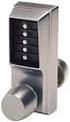 SIMPLEX UNICAN LOCKS CHANGING THE CODE / COMBINATION 900 Series 1000 Series L1000 Series LP1000 Series EE1000 Series 2000 Series 2015 Series 2400/2500 Series 3000 Series 3100 Series Simplex 5000 Series
SECTION G2: CABLE PROCESSOR MODULE MAINTENANCE
 SECTION G2: CABLE PROCESSOR MODULE MAINTENANCE Cable Processor Module overview WARNING! When tipping the Cable Processor Module back, (after removing the toggle arm pin), use extreme caution not to drop
1/29/2008 DR125 / DR150. Baja Motorsports Inc. P.O. Box 61150 Phoenix, AZ 85082 Toll Free: 888-863-2252 PARTS AND PRICES ARE SUBJECT TO CHANGE 1 of 55
 DR125 / DR150 Toll Free: 888-863-2252 PARTS AND PRICES ARE SUBJECT TO CHANGE 1 of 55 CYLINDER HEAD ASSY. 1 125-001 883099006937 CYLINDER HEAD COVER 1 1 2 125-002 883099006944 BOLT M6X28 2 3 3 125-003 883099006951
ROTOR LOADER OWNER S MANUAL
 ROTOR LOADER OWNER S MANUAL ROTOR LOADER OWNER S MANUAL WARNING IMPORTANT SAFETY INSTRUCTIONS AND GUIDELINES. Misuse of paintball equipment may cause serious injury or death. QUICK SET-UP GUIDE BATTERY
Common Mechanical Engineering Terms
 Common Mechanical Engineering Terms Ball and Detent (n) A simple mechanical arrangement used to hold a moving part in a temporarily fixed position relative to another part. The ball slides within a bored
Stitch Formation in Rotary Hook Sewing Machines ABSTRACT
 Stitch Formation in Rotary Hook Sewing Machines Douglas A. Kerr Issue 3 October 28, 2008 ABSTRACT Most modern general-purpose sewing machines form a lockstitch by way of the rotary hook technique. The
Autodesk Fusion 360: Assemblies. Overview
 Overview In this module you will learn how different components can be put together to create an assembly. We will use several tools in Fusion 360 to make sure that these assemblies are constrained appropriately
TABLE OF CONTENTS. I. TROUBLESHOOTING... 2 - Section 1.01: Common Problems/Solutions... 2
 BAL Accu-Slide System I. Table of Contents TABLE OF CONTENTS I. TROUBLESHOOTING... 2 - Section 1.01: Common Problems/Solutions... 2 II. GETTING STARTED... 5 - Section 2.01: Tools You Will Need... 5 - Section
Equipment Manual. for. Operation of Automatic Polishing Plate Control on the PM5 Precision Lapping & Polishing Machine.
 Equipment Manual for Operation of Automatic Polishing Plate Control on the PM5 Precision Lapping & Polishing Machine Ref: BE-01-53-5 PREFACE: PM5 auto-lap/pol MACHINES The PM5 auto-lap/pol features two
Field Application Note
 Field Application Note Reverse Dial Indicator Alignment RDIA Mis-alignment can be the most usual cause for unacceptable operation and high vibration levels. New facilities or new equipment installations
SERVICE PARTS LIST PAGE 1 OF 6 BASE ASSEMBLY SPECIFY CATALOG NO. AND SERIAL NO. WHEN ORDERING PARTS 12" DUAL BEVEL COMPOUND MITER SAW B27A
 PAGE 1 OF 6 BASE ASSEMBLY 00 0 EXAMPLE: Component Parts (Small #) Are Included When Ordering The Assembly (Large #). SPECIFY CATALOG NO. AND NO. WHEN ORDERING PARTS 1 02-80-0050 Thrust Bearing (1) 2 05-80-0510
HP Laser Jet 4200/4240/4250/4300/4350 Swing Plate
 HP Laser Jet 4200/4240/4250/4300/4350 Swing Plate 1 Swing Plate Assembly-RM1-0043 1 Swing Plate Kit-5851-2766 (RM1-0043 plus RM1-1091 gear) CAUTION: Fuser may be hot. Turn off printer, unplug it and allow
SUSP-06, Torsion Bars - Removing, Replacing, and Indexing
 Introduction SUSP-06, Torsion Bars - Removing, Replacing, and Indexing Replacing the torsion bar on a 944 is not all that difficult. However, reindexing the torsion after completion is a pain and can be
http://waterheatertimer.org/troubleshoot-rheem-tankless-water-heater.html
 http://waterheatertimer.org/troubleshoot-rheem-tankless-water-heater.html TECHNICAL SERVICE DEPARTMENT Removal, Cleaning, & Reinstallation of the Burner Assembly For models 74 & GT199 Required tools -
Copyright Mervyn Passmore 2009
 The Sigfried Haller Time Bomb Anniversary Clock 1 This unusual Anniversary clock has been nicknamed The German Time Bomb because it normally ticks away happily for years, but suddenly and without any warning,
INSTALLATION INSTRUCTIONS for Bifold Doors (JII103)
 Thank you for selecting JELD-WEN products. Attached are JELD-WEN s recommended installation instructions for premium composite, hollow and solid core molded Bifold Doors. Bifolds are designed for fast
DiscPlus DX195 and DX225 Air Disc Brakes
 Revised 11-04 Technical Bulletin Revised 1 Technical 11-04 Bulletin DiscPlus DX195 and DX225 Air Disc Brakes Inspection, Installation and Diagnostics Air Disc Brake Inspection Intervals and Procedures
Factory tips on the M-Series Leicas
 Factory tips on the M-Series Leicas The M-series Leica is still the standard of excellence among rangefinder-type 35mm cameras. Yet despite Leica's popularity and length of time in service, there seems
Plastic Injection Molding
 Training Objective After watching this video and reviewing the printed material, the student/trainee will understand the principles and physical operations of the plastic injection molding process. An
Mechanical & Electrical Reasoning Study Guide
 Mechanical & Electrical Reasoning Study Guide About Mechanical Aptitude Tests Who is likely to take a mechanical reasoning test? Mechanical aptitude tests are commonly administered during pre-employment
DR50 Hensim Dirt Runner 49cc Dirt Bike (VIN PREFIX LLCH or LUAH)
 Page 1 of 21 Product Information Baja Web > Product Information > Parts Lists > DIRTBIKE > DR50 Hensim Dirt Runner 49cc Dirt Bike (VIN PREFIX LLCH or LUAH) DR50 Hensim Dirt Runner 49cc Dirt Bike (VIN PREFIX
Operation of the overrun braking system.
 Operation of the overrun braking system. Fig 1 The overrun device can be described as the control device of the overrun brake system. A draw-bar force is produced at the coupling point by reducing the
DR125 and DR150 Hensim Dirt Runner 125cc and 150cc Dirt Bike (VIN PREFIX LLCH or LUAH)
 Parts Lists - DR125 and DR150 Hensim Dirt Runner 125cc and 150cc Dirt Bike (VIN PR... Page 1 of 25 Product Information Baja Web > Product Information > Parts Lists > DIRTBIKE > DR125 and DR150 Hensim Dirt
Overall Indicator: The student: recognizes the effects of forces acting on structures and mechanisms
 Grade 5 Performance Task: Disaster Recovery Content Connections Assessment Criterion Understanding of basic concepts Overall Indicator: The student: recognizes the effects of forces acting on structures
Roll-Up Door Maintenance Guide
 R Roll-Up Door Maintenance Guide Cable Replacement on Two Spring Type Balancer Page 1 Panel Replacement - Removable Roller Cover Type Bottom Panel Page 1 Panel Replacement - Removable Roller Cover Type
TERMINATION EQUIPMENT INSTRUCTION MANUAL TELE-PIERCE P/N 356-246
 TERMINATION EQUIPMENT INSTRUCTION MANUAL TELE-PIERCE P/N 356-246 OPERATION AND SERVICE INSTRUCTIONS AMPHENOL 157 SERIES TELE-PIERCE MULTI-WIRE TERMINATION TOOL 356-246 AMPHENOL TERMINATION SYSTEMS 1830
SE-1200-EI. Operation & Parts Manual
 SE-1200-EI Operation & Parts Manual SE 1200 EI OWNERS MANUAL Table of Contents 1. Installation guide 2. Set-up instructions 3. Operation instructions 4. Cleaning 5. Troubleshooting 6. Parts manual 7. Electrical
Manual for GlobePharma Mini-Press II Rotary Tablet Press
 1 of 13 Preparing the Rotary Press 1. Make sure the rotary press is unplugged. 2. Open the bottom cabinet of the rotary press and take out the grey tool kit, and the beige box of punches and dies. 3. Take
Manual piston sampler...m 11
 SAMPLING Manual piston sampler...m 11 Screw sampler...prec 22...PREC 100 Slide sampler...pr 55 Rotative screw sampler...prv Piston sampler...p 11 Sampler on belt conveyor...pba Rotating cup sampler...pgr
Frequently Asked Whip Mix Articulator Questions
 Frequently Asked Whip Mix Articulator Questions 1. Why should I use a Whip Mix Articulator? Simple! The Whip Mix Articulator System is extremely easy to use. It is not intimidating for dentists who may
2006 HEADSHOK Service Video #1
 LEFTY SPEED DLR DAMPING CARTRIDGE This document explains how to properly remove, disassemble, inspect, reassemble and reinstall the Lefty Speed DLR2 damping cartridge. It is a document to be used in conjunction
SHIFT INTERLOCK SYSTEM SHIFT INTERLOCK SYSTEM
 SHIFT INTERLOCK SYSTEM The shift lock system is designed to ensure the proper operation of the automatic transmission. The driver must depress the brake pedal in order to move the gear selector from Park
SUPERCHIPPER CASTING MAINTENANCE
 INTRODUCTION By design, the Superchipper Rotor is clad in castings which wear during crushing. The castings wear at different rates depending on their location on the rotor, material feed rate, material
METAL-TURNING LATHE Built from Stock Parts
 by Frank Beatty USING STANDARD PARTS and stock materials that are available almost anywhere, you can build this metalworking lathe with only a few tools. Because of simplification of the assembly in order
S&G Model 2937 Group 1 Combination Lock
 Installation and Combination Changing Instructions S&G Model 2937 Group 1 Combination Lock NOTE: READ COMPLETE INSTRUCTIONS BEFORE INSTALLATION These instructions should be followed when installing the
MODEL T10023 ACCESSORY KIT #1 FOR T10010/T10097 WET GRINDER
 MODEL T0023 ACCESSORY KIT # FOR T000/T0097 WET GRINDER INSTRUCTION SHEET Introduction The Model T0023 Accessory Kit # for the Model T000/T0097 Wet Grinder includes fixtures for sharpening small knives,
Cane Creek Double Barrel Instructions
 Cane Creek Double Barrel Instructions Congratulations on your purchase of the Cane Creek Double Barrel (CCDB) rear shock. Developed in partnership with Öhlins Racing, the Double Barrel brings revolutionary
RAPID DIAL TEST INDICATORS
 RAPID DIAL TEST INDICATORS The Verdict Rapid presents the dial face inclined to the workpiece surface ensuring good visual accessibility obviating parallax error. Rapids incorporate a rear swivel spigot
Webinar Series. Committee. Disc Brake Wheels Off Inspection and Reline. Presents
 1 APTA Bus Webinar Technical Series Maintenance Committee Webinar Series Presents Disc Brake Wheels Off Inspection and Reline January 21, 2015 2 Introduction Welcome to today s webinar in which we will
Copyright 2008 OLYMPUS CORPORATION All Rights Reserved. Paper Craft Assembly Manual
 Paper Craft Assembly Manual Before assembly: 1/9 Tips on assembly: Print all the parts (Photo-quality paper is recommended for ink-jet printers and paper of medium thickness (0.20 mm) for laser printers.)
Fulcrum Effort or Applied Force. Fulcrum Load or Resistance. Effort or Applied Force. Load or Resistance. Other First Class Lever Examples.
 First Class Lever Second Class Lever Load or Resistance Fulcrum Effort or Applied Force Fulcrum Load or Resistance Effort or Applied Force Other First Class Lever Examples Action Spring Force Load Applied
Simple Machines. Figure 2: Basic design for a mousetrap vehicle
 Mousetrap Vehicles Figure 1: This sample mousetrap-powered vehicle has a large drive wheel and a small axle. The vehicle will move slowly and travel a long distance for each turn of the wheel. 1 People
The Bonelle Tool and Cutter Grinder
 The Bonelle Tool and Cutter Grinder The grinder was constructed about 1987 and exhibited at the 89th Model Engineering exhibition where it was awarded a bronze medal (see ME Vol164 No 3868 page 273). Subsequently
This is the civilian transfer case with the cooling loop only found in the driven gear half of the front case.
 INTRODUCTION The Transfer case used in the AMG Hummer is a New Venture Gear, model 242. This case has been in use for the H-1/Hummer since the early 1990 s. There have been modifications to the internal
Service Manual Rol-Lift
 R 2000 Service Manual Rol-Lift Series: T and E Developed by Generic Parts Service This manual is intended for basic service and maintenance of the Rol-Lift pallet jack. The pallet jacks you are servicing
SERVICE INSTRUCTIONS REPLACEMENT INSTRUCTIONS FOR 828XXXX, 830XXXX, 833XXXX, 834XXXX, 836XXXX SERIES MODEL 8300 AND SUNCHASER AWNINGS
 REPLACEMENT INSTRUCTIONS FOR 828XXXX, 830XXXX, 833XXXX, 834XXXX, 836XXXX SERIES MODEL 8300 AND SUNCHASER AWNINGS FABRIC ER TUBE TORSION ASSEMBLY USA SERVICE OFFICE Dometic Corporation 509 South Poplar
VEHICLE EQUIPMENT INSTRUCTIONS
 VEHICLE EQUIPMENT INSTRUCTIONS A Table of Contents 1) Ramp and Seats 2) Passenger/Attendant Operation 3) Restraint System City CarShare addenda noted by 1) Ramp and Seats 2 Unfolding Ramp Manual Ramp Operation
BEGINNING TERRAIN PARK SKI INSTRUCTION
 BEGINNING TERRAIN PARK SKI INSTRUCTION By Chuck Roberts PSIA Certified Level III Alpine http://www.robertsski.com [email protected] - 1 - Copyright 2004 Charles C. Roberts, Jr. All rights reserved. Printed
F N A) 330 N 0.31 B) 310 N 0.33 C) 250 N 0.27 D) 290 N 0.30 E) 370 N 0.26
 Physics 23 Exam 2 Spring 2010 Dr. Alward Page 1 1. A 250-N force is directed horizontally as shown to push a 29-kg box up an inclined plane at a constant speed. Determine the magnitude of the normal force,
SE-600-P. Operation & Parts Manual
 SE-600-P Operation & Parts Manual SE 600 PC & PS SERIES OWNERS MANUAL Table of Contents 1. Set-up instructions 2. Bridge-Tramming Procedure 3. Operation instructions 4. Cleaning 5. Troubleshooting 6. Parts
The "DAVID" Steam Engine By Alan Marconett Hobbit Engineering HTTP://WWW.HobbitEngineering.com Alan@HobbitEngineering.
 The "DAVID" Steam Engine By Alan Marconett Hobbit Engineering HTTP://WWW.HobbitEngineering.com [email protected] (c) 2/20/03 The David steam engine is a simple oscillating steam engine, many plans
Belt Tensioning Methods for Small Package Conveyors What s the best solution?
 Belt Tensioning Methods for Small Package Conveyors What s the best solution? Industrial White Paper By: Michael A. Hosch, P.E. Dorner Mfg. Corp. 975 Cottonwood Avenue Hartland, WI 53029 USA Phone: 800
INSTALL INSTRUCTIONS: Blend Door Repair Kit
 Dorman Products A/C Blend Door Repair Tool For 2006 Chevrolet Equinox / Pontiac Torrent 902-600 Installation Instructions Parts Included 1. Plastic Replacement Sleeve 2. Mounting Plate 3. Saw 4. Drill
POD Visor Instructions
 POD Visor Instructions Please read fully before beginning assembly and mounting the Visor Parts List - Visor Left Part (LV), Visor Right Part (RV) Qty 2, Aluminum Crossbars Hardware - Qty 17, 1/4" X 3/4"
SLACK PERFORMANCE KARTS
 SLACK PERFORMANCE KARTS SET UP GUIDE Thank you for purchasing a 2013 Slack Axiom Chassis. Performance Mfg. strives to provide you with the very best chassis and components on the market today. Your satisfaction
BR150 Pmi Baja Reaction 150cc Go Kart (VIN PREFIX L4VM)
 Page 1 of 21 Product Information Baja Web > Product Information > Parts Lists > GOKART > BR150 Pmi Baja Reaction 150cc Go Kart (VIN PREFIX L4VM) BR150 Pmi Baja Reaction 150cc Go Kart (VIN PREFIX L4VM)
AstroSystems Digital Setting Circles for Zhumell, GSO, Apertura and Astro-Tech
 AstroSystems Digital Setting Circles for Zhumell, GSO, Apertura and Astro-Tech Components 1 Sky Commander Digital Setting Circle Computer 2 Encoders 10,000 step 1 Sky Commander Digital Setting Circle Manual
PRODUCT MANUAL - M090
 PRODUCT MANUAL - M090 MODEL 203/266 ELECTRIC CAN OPENER 1 SAFETY CAUTION: SEVERED CAN LIDS HAVE CUTTING EDGES. USE OF A PROTECTIVE GLOVE OR TONGS IS ADVISED WHEN HANDLING LIDS. WARNING To avoid risk of
Contents. Front Derailleurs... 2. Part One - Planning... 2 I. Objectives... 2 II. Materials Needed... 2 III. Setting...2 IV. Evaluation...
 Contents... 2 Part One - Planning... 2 I. Objectives... 2 II. Materials Needed... 2 III. Setting...2 IV. Evaluation... 2 Part Two - Activity Instructions... 3 Steps to Adjusting and Replacing... 3 Disassemble...
Wiper Motor Marinco 2.5. Installation Instructions
 Wiper Motor Marinco 2.5 Installation Instructions Wiper Motor Marinco-2.5 The Marinco 2.5 Wiper Motor Offers the Following Features: Fully sealed base and housing which allows installation in outdoor wet
Tri-Homo Style Operation and Maintenance Instructions
 Tri-Homo Style Operation and Maintenance Instructions One Research Drive Stratford, CT 06615 (203) 375-0063 www.sonicmixing.com 1 Installation and Start-up Do not perform following adjustments without
Operator s Manual EVENTER 20 / 25 Series Lifts
 Operator s Manual EVENTER 20 / 25 Series Lifts May 2013! Before operating this lift, read and understand this Operator s Manual. Become familiar with the potential hazards of this unit. Call SUMNER should
Anniversary Clock Beat Adjustment by Mervyn Passmore
 1 Anniversary Clock Beat Adjustment by Mervyn Passmore Beat Adjustment Keeping it ticking Before making major changes It is very important to make the adjustments to these clocks in the right order. There
000594 Eye-bolt for front chain adjustment, Pre-49 singles, 1949-55 twins, 1958-on CS singles 7.60 6.33
 Part No. AJS & MATCHLESS GEARBOX & CLUTCH - NEW PARTS Price (20% VAT) Price (excl VAT) Tool for adjusting clutch spring nuts (heavier duty than 017254 spanner) 5.00 4.17 017254 Spanner, single end, dynamo
Gear Trains. Introduction:
 Gear Trains Introduction: Sometimes, two or more gears are made to mesh with each other to transmit power from one shaft to another. Such a combination is called gear train or train of toothed wheels.
Rack installation instructions
 Rack installation instructions Review the documentation that comes with the rack cabinet for safety and cabling information. Before you install the server in a rack cabinet, review the following guidelines:
Introduction... 3 Setting the Combination... 4 Securing the DEFCON CL... 5 Locking the DEFCON CL to your Notebook Computer...
 notebook security DEFCON CL cable lock USER GUIDE Visit our Website at www.targus.com Features and specifications subject to change without notice. 2006 Targus Group International, Inc. and Targus, Inc.
Simple Machines. What are simple machines?
 Definitions to know: Simple Machines Work done when an applied force causes an object to move in the direction of the force Energy ability to cause change; can change the speed, direction, shape, or temperature
GEARS AND GEAR SYSTEMS
 This file aims to introducing basic concepts of gears and pulleys. Areas covered include spur gears, compound gears, chain drive, rack/pinion systems and pulley systems. GEARS AND GEAR SYSTEMS Gears can
rarecorvettes.com, [email protected], (831) 475-4442 Pacific Time Zone
 INTRODUCTION TO WHEEL ALIGNMENT A SHORT COURSE ON WHEEL ALIGNMENT, FRONT AND REAR PREPARED FOR THE N.C.R.S. NATIONAL CONVENTION JUNE 29 TO JULY 5, 2012 by: JOE CALCAGNO, RARE CORVETTES rarecorvettes.com,
SE-900-MP ECO -SERIES. Operation & Parts Manual
 SE-900-MP ECO -SERIES Operation & Parts Manual SE 900 MP ECO - SERIES OWNERS MANUAL Table of Contents 1. Installation guide 2. Set-up instructions 3. Operation instructions 4. Cleaning 5. Troubleshooting
INSTRUCTION MANUAL. Specification: collective pitch 3D quadcopter. TYPE: Collective Pitch Electric 3D Quadcopter. Rotor Diameter: 118MM.
 collective pitch 3D quadcopter INSTRUCTION MANUAL Specification: TYPE: Collective Pitch Electric 3D Quadcopter Rotor Diameter: 118MM Length:635 MM Width: 365 MM Weight: 986g w/out battery Flying weight
Master Code 2. Troubleshooting: Installation 7. Troubleshooting: Door Jamming and Door Handing 8. Troubleshooting: Keypad 12
 Programming and Troubleshooting Guide 1 2 3 4 5 6 Master Code 2 Troubleshooting: Installation 7 Troubleshooting: Door Jamming and Door Handing 8 Troubleshooting: Keypad 12 Troubleshooting: Battery 13 Battery
Drive shaft, servicing
 Volkswagen Passat B6 - Drive shaft, servicing Стр. 1 из 41 40-7 Drive shaft, servicing Drive shafts, overview I - Assembly overview: Drive axle with CV joint VL100 40-7, Drive axle with CV joint VL100,
IMPACT SPRINKLER TROUBLESHOOTING GUIDE
 RAIN USE AND OPERATION BIRD IMPACT SPRINKLER TROUBLESHOOTING GUIDE The diagrams below depict typical Rain Bird sprinklers with all available controls. Your particular model may have only some of these
3. Loosen 3 x grub screws in the Dec end cap and unscrew the cap and counterweight shaft. NEQ6 Belt Modification Kit.
 NEQ6 Belt Modification Kit. Thank you for your purchase. Please read these instructions fully before fitting. Your package should contain 2 off 47 & 2 off 12 tooth aluminium pulleys 2 off belts 6mm wide
Aprilia.no. RS 50 96-98 Eng.6M
 01 Carburettor - oil pump 02 Drive shaft 03 Head - piston 04 Primary gear shaft 05 Gearbox driven shaft 06 Selector 07 Clutch 08 Clutch cover 09 Right crankcase 10 Left crankcase 11 Ignition unit RS 50
UNIT II Robots Drive Systems and End Effectors Part-A Questions
 UNIT II Robots Drive Systems and End Effectors Part-A Questions 1. Define End effector. End effector is a device that is attached to the end of the wrist arm to perform specific task. 2. Give some examples
Belt Drives and Chain Drives. Power Train. Power Train
 Belt Drives and Chain Drives Material comes for Mott, 2002 and Kurtz, 1999 Power Train A power train transmits power from an engine or motor to the load. Some of the most common power trains include: Flexible
MANUAL TRANSMISSION CONTENTS ...
 22D-0-1 MANUAL TRANSMISSION CONTENTS GENERAL INFORMATION... 22D-0-3 1. SPECIFICATIONS... 22D-1-1 TRANSMISSION MODEL TABLE GENERAL SPECIFICATIONS SERVICE SPECIFICATIONS TORQUE SPECIFICATIONS............
Figure 2. 1. Place selector lever on SAFE. If rifle is not cocked, selector lever cannot be pointed toward safe.
 UNLOADING Figure 2 1. Place selector lever on SAFE. If rifle is not cocked, selector lever cannot be pointed toward safe. 2. Point rifle in a SAFE DIRECTION!! 3. Remove magazine by pressing magazine catch
Original Assembly Guide
 TCT Multipurpose Single Bevel Sliding Compound Mitre Saw Original Assembly Guide Read instructions before assembling this tool. Table of Contents GB Assembly Guide Read instructions before assembling this
Volkswagen B3 Passat Manual Transmission 02A 34 Manual Transmission - Controls, Assembly (Page GR-34) 02A 5-speed. Gearshift cable/lever installing
 34 Manual Transmission - Controls, Assembly (Page GR-34) 02A 5-speed Gearshift cable/lever installing Gearshift housing repairing Gearshift lever repairing lever/relay lever, installing Gearshift mechanism
2. This is a close up of a typical area where the rocker is rusted out leaving holes under where the rocker moulding would be..
 ROCKER PANELS 55,56,57 CHEVY REPLACEMENT Do not throw away any pieces when you first remove them. There are many supports that are not reproduced and will need to be used again. When disassembling try
Fig 1 Power Transmission system of Tractor
 POWER TRANSMISSION SYSTEM Transmission is a speed reducing mechanism, equipped with several gears (Fig. 1). It may be called a sequence of gears and shafts, through which the engine power is transmitted
Valley fold 1/4 at the left side, again creasing only at the edge, and unfold. Valley fold, connecting the tops of the angle bisectors, and unfold.
 Triceratops by Jerry Harris 1. Begin with a square, white side up, with the vertical diagonal precreased. A square of 10" results in a model of approximately 5.8" long and 1.67" tall at the hip. 2. 3.
DLC:GH B6CJ6A HJEEA:B:CI
 SERIES 2 S E RI E S 2 DLC:GH B6CJ6A HJEEA:B:CI SERIAL NUMBER Z2SUPP_0211Rev B - READ THIS MANUAL DO NOT OPERATE THIS WHEELCHAIR WITHOUT FIRST READING AND UNDERSTANDING THIS TiLITE OWNERS MANUAL SUPPLEMENT.
Replacement Spare Parts for FORD TRACTOR
 (3650) POWER STEERING HYDRAULIC PUMP GEAR SET (9T.) (866) HYDRAULIC PUMP FRONT DRIVE GEAR (10T.) (C5NN 3A710 A/NUT) STRG. GEAR SHAFT MAIN NUT (C5NN 3A710 A/TUBE) STRG. GEAR SHAFT MAIN NUT TUBE (C5NN 3A710
Servo Info and Centering
 Info and Centering A servo is a mechanical motorized device that can be instructed to move the output shaft attached to a servo wheel or arm to a specified position. Inside the servo box is a DC motor
VISM CQB Scope Series
 1 VISM CQB Scope Series Congratulations on the purchase of your new VISM CQB Scope! The CQB Series of Scopes give you many great options so you can choose the scope that best fits your needs. Backed by