
Introduction to Chord Theory & Chord Voicing for the Guitarist Volume Two taught by John Miller
|
|
|
- Pierce Reeves
- 9 years ago
- Views:
Transcription
1 Introduction to Chord Theory & Chord Voicing for the Guitarist Volume Two taught by John Miller

2 INTRO TO CHORD THEORY AND CHORD VOICING FOR THE GUITARIST, VOLUME 2 I. SIXTH CHORDS, TONIC FUNCTION, AND SEVENTH CHORDS If you have completed the exercises and chord diagrams in Intro to Chord Theory and Chord Voicing for Guitarists, Volume 1, you are probably feeling eager to try out some of the new chord voicings you have learned. Before we get into some songs, though, I would like to add one more kind of chord to your chordal vocabulary, the sixth chord. Sixth chords, along with major triads and major seventh chords (or minor triads in a minor key), are said to have tonic function. In classical theory, tonic is synonomous with the I chord, so a chord having tonic function can be used suitably for the I chord in a major key. The suitability of major triads, sixth chords and major seventh chords for different music is largely a stylistic consideration. It would sound odd using an A major seventh chord to back up an Old-Time fiddle tune in the key of A major, but perhaps no stranger than it would sound to back up a Jazz Standard from the Swing Era with a straight major triad. Different musical styles employ different chordal vocabularies with different degrees of harmonic sophistication and chordal color. Learning to play sixth chords will help you function in a stylistically appropriate way in several different styles of music you may be interested in playing, like Swing, Gypsy Jazz, or Western Swing. The structural formula for sixth chords is relatively simple. For a sixth chord, you have a root, major third, perfect fifth and major sixth note. For a minor sixth chord, you have a root, minor third, perfect fifth and major sixth. Note that the structural difference between a sixth chord and a minor sixth chord lies in the third, not the sixth. For both chords the sixth is major, but in the sixth chord the third is major, while in the minor sixth chord the third is minor. The perfect fifth is a non-essential voice and may be jettisoned for greater ease of fingering or for a preferred sound. Let s see how you would voice sixth chords in the D, A, E, C, and F positions. An easy way to conceptualize the voicing of the sixth chord is to imagine a major seventh chord shape in a position, and then simply lower the major seven note one whole step, for there is a whole step between six and seven in the major scale. Once you have figured out the shape for the sixth chord, the minor sixth will be the same shape, except for having a minor rather than major third. See below the diagram of a major seventh chord out of the D position at E, the second fret of the fourth string. Working from that starting point, use the two blank grids to diagram an E sixth out of the D position and an E minor sixth out of the D position. Don t forget to indicate which voices fall on which strings. 2

3 As in Vol. 1, we will spot you the root in the sixth chord grids for the different positions. E, D Position E6, D Position Em6, D Position x x R x x R x x R Now let s figure out how to voice the sixth and minor sixth chords out of the A position. Use the diagram of a C major seventh chord out of the a position to figure out how to voice a C6 and Cm6 out of the A position. C, A Position C6, A Position Cm6, A Position x R x x R x x R x Let s figure the chord shapes for the G6 and Gm6 chords out of the E shape, using the G major seventh chord out of the E shape as a starting point. G, E Position G6, E Position Gm6, E Position R x x R x x R x x 3

4 Let s switch to the C position now, and figure out the D6 and Dm6 shapes, using the D major seventh out of the C position as a starting point. D, C Position D6, C Position Dm6, C Position 3fr. 3fr. 3fr. 5 R 3 7 R x R x R x Finally, using a G major seventh shape out of the F position as your starting point, figure out the shapes for a G6 and Gm6 out of the F position. G, F Position G6, F Position Gm6, F Position 3fr. 3fr. 3fr. x 5 R 3 7 R x R x R One thing you may be wondering about is all those chords with voices above the seventh that you occasionally see in chord charts, ninth chords, eleventh chords or thirteenth chords. It is interesting that a chord s function has been determined by the time it has a seventh, so that voices higher than the seventh, while altering color, do not alter function in essential ways. So for the time being, especially in these early stages, it makes sense to concentrate on becoming familiar with the various types of seventh chords before venturing into chords that utilize voices higher than the seventh. All right, let s play some tunes now! 4

5 II. MOLLY MALONE Here is a chord chart for Molly Malone, an Irish folksong that is the first tune that is played on the DVD. Key of C é C C Am7 Dm7 G7 C Am7 Dm7 G7 B Dm7 G7 C Note that the chart has first and second endings. The first time you play through the form you play the first ending. Go back to the beginning and play through again, skipping the first ending and substituting the second ending. Then, start the form over and play through again. You can keep the repetitions interesting by employing different voicings for the same chords on the subsequent runthroughs. For example, if you used an A position C major triad to begin the song, you could switch to a C position C major triad for the second time through the form. Similarly, you could voice the Am7 chord out of the E position, the A position, the F and D positions. The same sorts of options are available for voicing the Dm7 and G7 chords, too. In addition, you could try voicing the C major triad as a sixth chord, out of the E, C, F and D positions. Some of the positions may end up being impractical, due to being so high up the neck, but there s learning in finding that out. To get you started on trying some different chord voicing options, I ll list here consecutively three different charts for Molly Malone. The first will be in C, as the first chart was, but will have voicing options suggested parenthetically in each measure after each chord is named. The parenthetic suggestion will tell you what position to use in voicing the chord. The second and third charts of Molly Malone will be in different keys, and will enable you to see how the same chord progression plays out in different keys and using different positions. Key of C é C C6 (C) Am7 (A) Dm7 (D) G7 (E) C (A) Am7 (F) Dm7 (A) G7 (D) B Dm7(C) G7(E) C6 (C) 5

6 Key of A é C A6 (E) F m7 (C) Bm7 (E) E7 (C) A6 (E) F m7 (E) Bm7 (A) E7 (E) B Bm7(E) E7(C) A6 (E) Key of F é C F6 (D) Dm7 (A) Gm7 (D) C7 (A) F6 (F) Dm7 (C) Gm7 (E) C7 (C) B Gm7(C) C7(E) F6 (C) III. TRANSPOSITION AND LEARNING THE NECK One of the major advantages you get by learning the closed chordal voicings (ones that don t use open strings) is the ease with which you can use these chordal positions to play in any key, including those that are often not thought of as being guitar-friendly like the flat keys. To take full advantage of these closed position voicings, though, it s a good idea to work on your ability to transpose a progression from one key to another. Suppose you wanted to transpose Molly Malone from C major to E flat major. I think most of us would start the transposition by looking at the first chord change and saying, Okay, I want to figure out the chords for Molly Malone in E flat. So then, I can say Am7 is to C as is to E flat. 6

7 While the logic of this approach to transposition makes sense, it is actually a very slow and laborious way to go about transposing. Far easier is to express the progression in numerical terms, based on what note of the scale each chord was rooted off of in the original key in which it was played. For example, in C, the first key we had Molly Malone in, C would obviously be I. What would A, D and G be? vi, ii, and V, respectively. Once a progression has been expressed in numerical terms, it is very easy to transpose to any other key, simply by plugging the numbers and chord types into the appropriate places in the scale of the key into which you would like to transpose. And since you now know how to construct major scales off of any note, constructing the scales is not a daunting task. The transposition process on the guitar can be sped up even more by learning the neck of the guitar and understanding where the various chords in a progression will be rooted, depending on whether you voice your I chord rooted on the sixth, fifth, or fourth string. Look at the diagrams below. They show where the various chords in a progression will be rooted, depending on whether the I chord is rooted on the sixth, fifth or fourth string: If I is rooted on the sixth string: If I is rooted on the fifth string: If I is rooted on the fourth string: vi iii vi IV I IV vii iii I iii V vii I IV V IV ii I ii vi ii V vi V iii ii vi vii iii Using the diagrams as guides, pick different starting points for playing Molly Malone, rooted on the sixth, fifth and fourth strings, bearing in mind that the I chord can be a major triad or a sixth chord, the vi and ii chords will both be minor seventh chords and the V chord will be a dominant seventh chord. Note also that for our purposes, chords rooted on the sixth string will be played out of the E position, chords rooted on the fifth string will be played out of the C or A positions and chords rooted on the fourth string will be played out of the F or D positions. You don t have to work with these spatial relationships too long before they start feeling more natural and intuitive. 7

8 IV. HOME ON THE RANGE Let s take a look at the cowboy classic, Home on the Range. In the chart below, suggested chord shapes are shown parenthetically in each bar. As shown on the DVD, the song works either with a relaxed Country Waltz feel, or a four-to-the-bar Western Swing strum. Key of D Aå é C D6 (C) D7 (C) G6 (E) Gm6 (E) 1. D6 (C) E7 (C) Em7 (C) A7 (E) B 2. D6 (C) A7 (E) D6 (C) D6 (C) BRIDGE A7 (E) A7 (E) D6 (C) D6 (C) q q q Bm(E) Bm7(E) E7 (C) Em7 (C) A7 (E) Cå D6 (C) D7 (C) G6 (E) Gm6 (E) D6 (C) A7 (E) D6 (C) D6 (C) As you work through the waltz version of Home on the Range, note that in the bar in the bridge that moves from Bm to Bm7, the B minor gets two beats and the Bm7 gets one beat. In the swingy version, the bar is divided evenly, with two beats for each chord. Devote some real attention to the various left-hand economies of motion that are discussed on the DVD, for they will prove helpful not only for playing Home on the Range, but any other song you might care to play that uses the same chordal vocabulary. Play through the three additional versions of Home on the Range that have been charted below, utilizing the parenthetic position suggestions that have been provided. They will help you develop facility playing these chords out of the various positions we went over in volume 1 of this DVD set. 8

9 Key of A Aå é C A 6 (E) A 7 (E) D 6 (C) D m6 (C) 1. A 6 (E) B 7 (E) B m7 (E) E 7 (C) B 2. A 6 (E) E 7 (C) A 6 (E) A 6 (E) BRIDGE E 7 (C) E 7 (C) A 6 (E) A 6 (E) q q q Fm(F) Fm7(F) B 7 (A) B m7 (A) E 7 (C) Cå A 6 (E) A 7 (E) D 6 (C) D m6 (C) A 6 (E) E 7 (C) A 6 (E) A 6 (E) Key of F Aå é C F6 (F) F7 (F) B 6 (A) B m6 (A) 1. F6 (F) G7 (F) Gm7 (F) C7 (A) B 2. F6 (F) C7 (C) F6 (F) F6 (F) BRIDGE C7 (C) C7 (C) F6 (F) F6 (F) q q q Dm(D) Dm7(D) G7 (E) Gm7 (E) C7 (C) Cå F6 (F) F7 (F) B 6 (A) B m6 (A) F6 (F) C7 (C) F6 (F) F6 (F) 9

10 Key of D Aå é C E6 (D) E7 (D) A6 (E) Am6 (E) 1. E6 (D) F 7 (D) F m7 (D) B7 (A) B 2. E6 (D) B7 (A) E6 (D) E6 (D) BRIDGE B7 (A) B7 (A) E6 (D) E6 (D) q q q C m(a) C m7(a) F 7 (E) F m7 (E) B7 (A) Cå E6 (D) E7 (D) A6 (E) Am6 (E) E6 (D) B7 (A) E6 (D) E6 (D) As a final work-out on Home on the Range, express the progression in numerical terms, and try working out versions with the I chord rooted on the sixth, fourth and fourth strings, utilizing the spatial relationships we worked through with the diagrams after the section on Molly Malone. When you find your left hand going to the right places, instinctively, you ll know that you are starting to develop some real familiarity with the neck of your guitar. 10

11 V. AUTUMN LEAVES Joseph Kosma s haunting melody, Autumn Leaves, has become a favorite world-wide since he composed it in the late 1940s. It has a beautiful sort of inevitability that makes it particularly fun to play. Work your way through the first version of the chart, utilizing the parenthetic position suggestions for your chord voicings. Key of E minor Aå C Am7 (E) D7 (C) G (E) C (C) F m7 5 (E) B7 (C) Em (E) Em (E) B Bå F m7 5 (E) B7 (C) Em (E) Em (E) Am7 (E) D7 (C) G (E) C (C) F m7 5 (E) B7 (C) Em7(C) A7(E) Dm7(C) G7(E) C (C) F m7 5(E) B7(C) Em (E) Em (E) By Joseph Kosma and Johnny Mercer 1947, 1950, 1987 Enoch Et Cie, sole selling agent for USA, Marley Music Co., by agreement with Enoch Et Cie Note that this first chart voices every chord out of either the E or the C position. The flow of resolutions between these two shapes is beautiful, and can be accentuated by voicing the C position chords with their fifths in the bass, played on the sixth string. By voicing the chords that way, you end up voicing both the E position chords and the C position chords on the the sixth, fourth, third and second strings, making for a very smooth sound. Make sure to try out the various tips for left hand economy on the DVD, for they can make a huge difference in terms of your ability to flow through the chord progression in musical time. For Autumn Leaves, rather than charting the song in different keys, let s keep the other charts in E minor and simply concentrate on identifying other chord voicing options. Key of E minor Aå C Am7 (D) D7 (A) G (D) C (A) F m7 5 (D) B7 (A) Em (D) Em (D) B Bå F m7 5 (C) B7 (E) Em (A) Em (A) Am7 (D) D7 (A) G (D) C (A) F m7 5 (C) B7 (E) Em7(A) A7(D) Dm7(A) G7(D) C (A) F m7 5(F) B7(A) Em (D) Em (D) 11

12 Key of E minor Aå C Am7 (C) D7 (E) G (C) C (E) F m7 5 (C) B7 (E) Em (A) Em (A) B Bå F m7 5 (C) B7 (E) Em (A) Em (A) Am7 (C) D7 (E) G (C) C (E) F m7 5 (C) B7 (E) Em7(E) A7(C) Dm7(E) G7(C) C (E) F m7 5(C) B7(E) Em (A) Em (A) As you work through these charts, you may notice that the third chart is practically a mirror image of the initial chart in terms of the suggested positions for the various chords. One of the great things about being able to play the same chords so many different places on the instrument is that when playing with other guitarists, you have the knowledge and flexibility to play the progression somewhere different on the instrument than your fellow guitarists are playing it. This makes for a more open, orchestrated sound than you end up with when everyone is utilizing the same chordal voicings right on top of each other. If you want to work through the progression in different keys, rooted on the sixth, fifth and fourth strings, be aware that you should use the location of the vi chord as your frame of reference for the I chord in minor. This is because a major key and its relative minor key, which is the minor key built off of the vi note of its major scale, share the same key signature. So if you think of the key of E minor being rooted off of the vi note of its relative major key, what would that major key be? G major. So then, the chord progression, expressed in numerical terms relative to G major as I, would work out so for the first 8 bars: iim7 V7 I IV viim7 5 III7 vim vim Thinking about the progression in these terms should help you figure out the various spatial relationships and the root movement of the chord progression when I of the relative major key is rooted on the sixth, fifth or fourth string. 12

13 VI. MANHÃ DE CARNAVAL The next song we will work on is Manhã de Carnaval (Morning of Carnival), a beautiful melody by the late Brazilian guitarist, Luiz Bonfa, that was composed for the movie Black Orpheus in the late 1950s. The Carnaval referred to in the title of the song is the Brazilian equivalent of Mardi Gras, a festival with religious and social significance, but also a huge celebration. Bonfa himself performed Manhã de Carnaval as a beguine on the movie soundtrack, but since that time, the song has come to be performed most often as a bossa nova. Quite apart from its qualities as a lovely piece of music, Manhã de Carnaval is an excellent piece to use as a vehicle for studying chord voicing, for it utilizes major, dominant, minor, diminished and minor 7 flat five chords, as well as moving bass lines under a chord that is holding steady in the treble and other compositional devices. Let s look at the progression, with the chordal positions as presented in the initial run-through of the accompaniment version on the DVD. Key of A minor Am7 (A) Bm7 5(A) E7(E) Am7 (A) Bm7 5(A) E7(E) Am7 (A) Dm7(A) G7(E) C (A) C 7(A) Dm7 (A) G7 (E) C (A) F (E) Bm7 5 (A) E7 (E) Am7 (A) Bm7 5(A) E7(E) Am7 (A) Bm7 5(A) E7(E) Am7 (A) Bm7 5(A) E7(E) Em7 5 (A) A7 (E) Dm (D) Dm (D) Dm(D) Dm/C(D) Dm/B(D) E7(E) Am(A) Am/G(A) F (E) Bm7 (A) E7 (E) Am7 (A) Bm7 5(A) E7(E) CODA (out of tempo) Dm7(A) Am7(E) Dm7(A) Am7(A) Dm7(A) Em7(A) A (A) By Luiz Bonfá and Antônio Maria by Edições Euterpe LDTA, Rua Sete de Setwmbro, salas 308/9, Rio de Janiero, Brasil. As you read through the chart of Manhã de Carnaval, you will notice that the piece is very active, chordally, but that there is also a lot of repetition, particularly of the Am7 to Bm7 5 to E7. Note the next-to-last line of the main portion of the form. In the slashed chords, like Dm/C, the sense of the the way of writing the chord is that you should play a D minor triad while striking a C note in the bass. The slashed chords are a helpful convention for stipulating moving bass lines in the course of a piece that might involve playing notes in the bass that are not in the chord being played, or that at least are not the root of the chord being played. 13

14 Before you work your way through the chart of Manhã de Carnaval, you will want to acquaint yourself with a bossa nova picking pattern. One of the most widely used one-bar picking patterns is indicated below: * * q q E eyq h h fingers thumb Note: Chord changes occur at * For this picking pattern, you can assume that when picking chords out of the A and E positions, the index of your right hand will pick the fourth string, your second finger will pick the third string and your third (ring) finger will pick the second string, simultaneously. The thumb of the right hand will strike the fifth string for A position chords and the sixth string for E position chords. For the portion of the song that is played out of the D position, move your index, second and third fingers up so that they are picking the third, second and first strings, respectively, and your thumb will strike the fourth string. The rhythm of the picking pattern could be expressed as One-two-three +, with thumb and fingers picking simultaneously on one, fingers alone plucking on two, the thumb alone picking on three and the fingers plucking on the + of three. Nothing is struck on beat four, but the chord the fingers plucked on the + of the third beat continues to sustain. Note the asterisks above beats one and three. In measures where only one chord is played, the chord will arrive on beat one and be played for the entire measure. In measures with two chords, the first chord will arrive on beat one and the second will arrive simultaneous with the thumb stroke on beat three. I would recommend practicing this pattern while holding a chord like the opening Am7 in place until you feel thoroughly comfortable with the pattern. Once you ve achieved a comfort zone that is to your satisfaction, try the second measure, landing on the Bm7 5 chord on beat one and transitioning to the E7 chord on beat three. After you ve become really conversant with this picking pattern, it will seem like second nature, and will not require a huge amount of ongoing concentration to keep going. Play through the chord chart for Manhã de Carnaval, working to build good habits for efficiency of movement in the left hand. Remember that the various economies of motion you inculcate here will work equally as well in the context of other songs. When you feel as though you can play through the initial chart of Manhã de Carnaval, try chart two for some voicing variations. 14

15 Key of A minor Am7 (E) Bm7 5(E) E7(C) Am7 (E) Bm7 5(E) E7(C) Am7 (E) Dm7(E) G7(C) C (E) C 7(E) Dm7 (E) G7 (C) C (E) F (C) Bm7 5 (E) E7 (C) Am7 (E) Bm7 5(E) E7(C) Am7 (E) Bm7 5(E) E7(C) Am7 (E) Bm7 5(E) E7(C) Em7 5 (C) A7 (E) Dm (A) Dm (A) Dm(A) Dm/C(A) Dm/B(A) E7(C) Am(F) Am/G(F) F (D) Bm7 (E) E7 (C) Am7 (E) Bm7 5(E) E7(C) As you play through chart 2 of Manhã de Carnaval, note that you will have to alter the strings that you are picking in your bossa pattern to accomodate the changes to chord positions that the new chart stipulates (with the exception of the Em7 5 chord, which will voice the flat five as the lowest noteof the chord, on the sixth string). For Manhã de Carnaval, the various C position-based chords sound best played in root position, with the fifth string in the bass. If you find yourself wanting to introduce other voicings into your versions of Manhã de Carnaval, you can experiment with voicing the primary chordal idea, Am7 to Bm7 5 to E7 out of other shapes, such as: Am7 (D) Bm7 5 (F) E7 (A) You understand now how to derive the seventh chords of the different types out of a variety of positions. Mix and match the positions, and see which combinations seem to work well together, which combinations don t lead as well, and so on. At this point, anything that develops your ability to remember, find and finger the different ways of playing the chords is beneficial, and practicing the various voicing options will provide you with the tools and experience you will need to make such choices on the fly in the future. 15

16 VII. ALL THE THINGS YOU ARE For over 60 years now, All The Things You Are, by Jerome Kern, has been one of the favorite tunes of Jazz improvisers and one of the most beloved Jazz Standards. It is unusually complex for a popular song, modulating through several different keys in the course of it s 36-bar form. It is a tribute to Jerome Kern s ear and compositional gift that such a complex tune could end up sounding perfectly natural and lyrical, equally accessible and enjoyable to the unschooled fan of a good tune and to the hard-core musical theoretician. Let s look at a chart of All The Things You Are, with the suggested chordal positions being designed to accompany, rather than express the melody. Voice all of the C position-based seventh chords with their fifth in the bass, on the sixth string. Key of A Aå Fm7 (C) B m7 (E) E 7 (C) A (E) D (C) G7 (E) C (C) C (C) Cm7 (C) Fm7 (C) B 7 (E) E (C) A (E) Am7 5(E) D7(C) G (E) G 7 (E) Bå Am7 (E) D7 (C) G (E) G (E) F m7 (C) B7 (E) E (A) C7 5 (E) Cå Fm7 (C) B m7 (E) E 7 (C) A (E) D (E) D m7 (E) Cm7 (E) B 7 (E) B m7 (E) E 7 (C) A (E) Gm7 5(E) C7(C) By Jerome Kern and Oscar Hammerstein, Jr. 1939, T.B. Harms Co. Copyright renewed c/o The Welk Music Group, Santa Monica, CA Work through the progression, noting and utilizing the various tips for economy of motion in the left hand. When you feel as though you can play through the progression with some fluidity, give the melody version of the chart, below, a try. The melody notes of the song, are expressed, in time, above each measure of the chart. By looking at the suggested position for each chord in the progression and figuring out what voice of each chord the melody is, you can figure out where the melody sits relative to the various chords. Of course, you do have the melody version on the DVD as a reference as well. Good luck! 16

17 Key of A A D A G G G G G C G w h. q q q q q q h q Aå Fm7 (A) B m7 (D) E 7 (A) A (D) F F F F F B F E (E) q q q q q h q w w D (A) G7 (D) C (A) C (A) E A E D D D D D G D w h. q q q q q q h q Cm7 (A) Fm7 (D) B 7 (A) E (D) C C C C C D E D C B D G D q q q q q q; ; ; r q q w Q q q q A (E) Am7 5(E) D7(C) G (E) G 7 (E) D C C E E C B D G B q q h Q q q q w Q q q q Bå Am7 (D) D7 (G) G (D) G (D) B A A C C A G (G ) q q h Q q q q w w F m7 (D) B7 (G) E (A) C7 5 (E) A D A G G G G G C G w h. q q q q q q h q Cå Fm7 (A) B m7 (D) E 7 (A) A (D) F E D E E E E G F w h. q q q q q h. q D (A) D m7 (E) Cm7 (E) B 7 (E) D F A D F G A q q q q h h w B m7 (E) E 7 (F) A (C) Gm7 5(A) C7(E) 17

18 Aå & bb b b 4 Fm w ALL THE THINGS YOU ARE. B m (LEAD SHEET) E A & b b b b D G n C nw w & bb b b Cm w Fm. B n E n & b b b b A Bå & bb b b Am n Am fi D D Œ n n G nw n G w G Œ Œ n n n n F m & b b b b n n B Œ # n E #w C fi w Cå & bb b b Fm w B m. E A & b b b b D w. D m Cm B. & bb b b B m E A w Gm fi C 18

19 VIII. CONCLUSION I hope that this two-dvd set has proven useful to you in terms of understanding chord structure and voicings on the guitar better than you have in the past. The tunes that were selected for study in this set were designed to give you a solid exposure to a variety of seventh chord types. The music that you wish to play may be simpler chordally than the songs we ve been working on or it may be more complex. In either case, developing the skills needed to voice the various chord types up and down the neck in a variety of shapes will stand you in good stead. To get the most out of this information, do all the exercises and play the pieces enough to be able to flow through the progressions at an appropriate target tempo. Best of luck in your continued musical studies, and I hope to return to this topic in greater depth. You can contact me at my website, if you have questions. All best, John M. Miller 19

Jim Hall Chords and Comping Techniques
 Jim Hall Chords and Comping Techniques Jazz guitar comping is an art form in its own right. The comping rhythms, melodies, and voicings of the greatest Jazz guitarists are delightful to listen to, with
Ukulele Music Theory Part 2 Keys & Chord Families By Pete Farrugia BA (Hons), Dip Mus, Dip LCM
 This lesson assumes that you are using a ukulele tuned to the notes G, C, E and A. Ukulele Notes In lesson 1, we introduced the sequence of 12 notes, which repeats up and down the full range of musical
MUSIC OFFICE - SONGWRITING SESSIONS SESSION 1 HARMONY
 MUSIC OFFICE - SONGWRITING SESSIONS SESSION 1 HARMONY Introduction All songwriters will use harmony in some form or another. It is what makes up the harmonic footprint of a song. Chord sequences and melodies
Advanced Techniques for the Walkingbass
 Advanced Techniques for the Walkingbass I have seen guys with 5 string basses who can t get half the sounds that you are getting out of just three. -Buddy Fo of the Invitations If you have read the Beginners
How they invented chord patterns for the guitar. J. Chaurette. Dec., 2012
 How they invented chord patterns for the guitar J. Chaurette Dec., 2012 The guitar has a very long history; it has evolved over the ages to what it is now. It has achieved its final distinct form in 1770,
Chords and More Chords for DGdg Tenor Banjo By Mirek Patek
 Chords and More Chords for DGdg Tenor Banjo By Mirek Patek This tenth article about the fingerstyle tenor banjo in DGdg tuning will be focused on banjo accompaniment, i.e. on playing chords. The goal is
Study Kit No 9. Aura Lee (Love Me Tender)
 Study Kit No 9 Aura Lee (Love Me Tender) Reharmonization Study Kit No. 9 Aura Lee Author: Rosablanca Suen Web: www.learnpianowithrosa.com Email: [email protected] Cover Design: Raymond Suen Copyright
How to Play Chords on your Mountain Dulcimer tuned DAd
 How to Play Chords on your Mountain Dulcimer tuned DAd (or Surviving in a Multi-Instrument Jam) by Missy Strothers If you are like me, sooner or later you ll get into a festival situation where you ll
The DADGAD Chord Primer: How to Build Chords in DADGAD Tuning. Version 2.2. By: Mark Parnis www.markparnis.com [email protected]
 The DADGAD Chord Primer: How to Build Chords in DADGAD Tuning Version 2.2 By: Mark Parnis www.markparnis.com [email protected] DADGAD is essentially a variant on open D tuning, DADF # AD. The subtle
The Basic Jazz Guitar Chord Book
 The Basic Jazz Guitar Chord Book By Dirk Laukens / January 25, 2005 Hello and welcome to the basic jazz guitar chord book, brought to you by www.jazzguitar.be. How are guitar chords built? What makes a
UKULELE CHORD SHAPES. More Strumming, Less Memorizing BRAD BORDESSA
 UKULELE CHORD SHAPES More Strumming, Less Memorizing BRAD BORDESSA TABLE OF CONTENTS GRATITUDES 2 9th 26 13th 26 INTRODUCTION 3 Altered 27 HOW TO USE THIS BOOK 4 Suspended 2 28 The Fingerboard 5 Suspended
How to Read Chord Charts
 How to Read Chord Charts Learning to read chord charts is fun, easy and it will open a new world of songs to you, as you will now be able to decipher the code. As a teacher and studio guitarist, I use
The Chord Book - for 3 string guitar
 The Chord Book - for 3 string guitar Prepared for: 3 string fretted cbg Prepared by: Patrick Curley Forward This short ebook will help you play chords on your 3 string guitar. I m tuned to G, if you re
Guitar Chord Chart for Standard Tuning
 Page 1 Guitar Chord Chart for Standard Tuning This is the base Standard tuning chart for each string: Next, we'll walk through the neck positions for the chords you'll find in your rock songs. Each has
An Introduction to Chords
 1 An Introduction to Chords by David Gilson A chord is the musical sound produced by playing a number of notes at the same time. The sound of the chord is different depending on the key you are playing
Please Read This Page First
 Mandolin and Fiddle Improvisation Using the Chord Tone Scale Copyright 2008 by Pete Martin Please Read This Page First This book is distributed using the shareware system. Try it out, if you like it please
Developing a cohesive walking bass line 2005 Eric Elias
 Developing a cohesive walking bass line 00 Eric Elias Developing a walking bass lines is a subject that many of my students (guitarists and bassists alike) have been interested in. If you are a jazz player,
Guitar Chords: a Beginner's Guide DEMO VERSION by Darrin Koltow
 Guitar Chords: a Beginner's Guide DEMO VERSION by Darrin Koltow Copyright 2002 Darrin Koltow Guitar Chords: a Beginner's Guide - DEMO VERSION Page 2 Table of Contents Other Ebooks...3 Introduction...4
Lesson 21: Substitution Chords Play Piano By Ear Audio Course. Materials For This Lesson
 Hello, and welcome to Lesson 21. In Lesson 19 you learned Drink To Me Only With Thine Eyes, using just four chords. In this lesson we ll be using substitution chords to create a more professional sounding
Slash Chords: Triads with a Wrong Bass Note?
 patrick schenkius Slash Chords: Triads with a Wrong Bass Note? In this article the phenomenon slash chord is being examined by categorizing almost all of them and the way these chords function inside the
Beginners Guide to the Walkingbass
 Beginners uide to the Walkingbass Learning to play a new instrument can open up a whole new world of creativity. It certainly has for me. The 3-string Walkingbass is an easy instrument to learn, yet it
Chapter 2 How To Cheat A Barre Chord
 Chapter 2 How To Cheat A Barre Chord Now that you ve learned a variety of chords in different positions, there are times that we want to eliminate some of the notes. I know, in the previous chapter I explained
evirtuoso-online Lessons
 evirtuoso-online Lessons Chords Lesson 3 Chord Progressions www.evirtuoso.com Chord Progressions are very popular and a strong foundation for many instruments and songs. Any chords combined together in
Sample Pages. This pdf contains sample pages from the ebook The Easy Guide to Jazz Guitar Arpeggios. To get the full ebook, Click Here
 1 Sample Pages This pdf contains sample pages from the ebook The Easy Guide to Jazz Guitar Arpeggios. To get the full ebook, Click Here 2 Contents Introduction....6 What Are Arpeggios?....7 Chapter 1:
Guitar Rubric. Technical Exercises Guitar. Debut. Group A: Scales. Group B: Chords. Group C: Riff
 Guitar Rubric Technical Exercises Guitar Debut In this section the examiner will ask you to play a selection of exercises drawn from each of the three groups shown below. Groups A and B contain examples
How To Determine Chords for Mountain Dulcimer Playing (How The Person Who Wrote the Chord Book Figured It Out)
 How To Determine Chds f Mountain Dulcimer Playing (How The Person Who Wrote the Chd Book Figured It Out) by Roger Huffmaster Did you ever wonder how the person who wrote the mountain dulcimer chd chart
How to Improvise Jazz Melodies Bob Keller Harvey Mudd College January 2007 Revised 4 September 2012
 How to Improvise Jazz Melodies Bob Keller Harvey Mudd College January 2007 Revised 4 September 2012 There are different forms of jazz improvisation. For example, in free improvisation, the player is under
Definitive Piano Improvisation Course
 Definitive Piano Improvisation Course By Yoke Wong 2007 Harmony and Melody Studio Inc Contents Pages Introduction Pentatonic Scale Improvisation 1 Country Western Style Made Easy 4 Left Hand Harmonizing
Foundation Course. Study Kit No 1. Away In A Manger
 Foundation Course Study Kit No 1 Away In A Manger Reharmonization Study Kit No. 1 Away In A Manger Author: Rosablanca Suen Web: www.learnpianowithrosa.com Email: [email protected] Cover Design:
Tutorial 1J: Chords, Keys, and Progressions
 Tutorial 1J: Chords, Keys, and Progressions Welcome! In this tutorial you ll learn how to: Other Level 1 Tutorials 1. Relate chords with keys 1A: Virtual Practice 2. Use basic blues progressions & blues
Jazz Guitar Chord Construction Thelonious Monk Institute of Jazz Online Jazz Handbook
 Jazz Guitar Chord Construction Thelonious Monk Institute of Jazz Online Jazz Handbook welcome to the guitar chapter of the Thelonious Monk Institute of Jazz s Online Jazz Handbook! A guitarist in a jazz
SUBSTITUTING CHORDS. B C D E F# G Row 4 D E F# G A B Row 5
 SUBSTITUTING CHORDS By Karen Daniels Simply put, chord substitution is the use of one chord in place of another chord and using them is one way to give your music interest and a change in sound. Many chord
Guitar Method Beginner: Book 1
 Guitar Method Beginner: Book 1 This book has been a project in the works for over a year, and now my dream of releasing it has finally come true. I would like to thank everyone who has encouraged or helped
Modulation to Any Key
 Modulation to Any Key by James M. Stevens In this exercise, I am demonstrating how to modulate from the key of C to any key. Most pianists are comfortable changing keys that move up a half step, whole
The CAGED Guitar System
 The CAGED Guitar System First of all, let s look at an example below on how to use the CAGED guitar system: 1 The example showed above demonstrates the general idea of how the CAGED system works in a certain
Basic Guitar Chords. By Tomas Michaud
 Basic Guitar Chords By Tomas Michaud 2 Basic Guitar Chords - Lesson 1 Basic Guitar Chords - Lesson 2 Basic Guitar Chords - Lesson 3 Basic Guitar Chords - Lesson 4 Basic Guitar Chords - Lesson 5 More Exercises:
GUITAR THEORY REVOLUTION
 GUITAR THEORY REVOLUTION The Major and Minor Pentatonic Scales Copyright Guitar Theory Revolution 2011 1 Contents Introduction 3 What are the Major and Minor Pentatonic Scales 3 Diagrams for all the Pentatonic
Expanding Your Harmonic Horizons
 2016 American String Teachers National Conference Expanding Your Harmonic Horizons Harmony Clinic for Harpists Presented By Felice Pomeranz Publications used as resources from Felice's Library of Teaching
A MUSICAL APPROACH TO LEARNING THE BANJO NECK
 A MUSICAL APPROACH TO LEARNING THE BANJO NECK Introduction One of the things that has become clear to me, after a number of years of playing banjo, is that if I have any hope of improvising creatively
How To Improvise a Solo A Workshop for Beginners
 1 How To Improvise a Solo A Workshop for Beginners 10:00-10:30 am Arrival, Setup and Performance 10:30 to 12:00 pm Interactive Workshop 12:00 to 12:30 Lunch 12:30 to 2:00 pm Workshop 2:00 tp 3:30 pm Open
Swing & Jump Blues Guitar Matthieu Brandt
 Swing & Jump Blues Guitar Matthieu Brandt Goto www.swingblues.com for more on Swing and Jump Blues Guitar. 1997-2016 No part of this material (book/cd/website) may be reproduced in any way without prior
Suitable for: Beginners with absolutely no previous experience. Beginners who appear particularly shy or nervous.
 Lesson plan 1: CHORD STRUMMING FOR THE BEGINNER Suitable for: Beginners with absolutely no previous experience. Beginners who appear particularly shy or nervous. Prerequisites: None General Objective:
Crash Course in Music Theory for Guitarists by Andy Drudy
 Crash Course in Music Theory for Guitarists by Andy rudy An in-depth knowledge of music theory is essential for any musician. Learning the ropes so-to-speak, will rapidly expand your insight into you own
Beautiful Simple Guitar Chord Progressions
 Beautiful Simple Guitar Chord Progressions The purpose of beautiful simple guitar chord progressions is to present guitar mechanisms as simply as possible. Using mostly three finger chords beautiful guitar
Beginner Guitar Level I
 Welcome to Beginner Guitar Level I E A D G B E * Please fill out the student form * Who is this guy? E A D G B E Logistics, etc.. sign in / out everyday start promptly -> don t be late! breaks / bathrooms
PREPARING TO STUDY JAZZ AT THE NEW ZEALAND SCHOOL OF MUSIC. The Jazz Theory Entrance Test 2010 STUDY GUIDE
 PREPARING TO STUDY JAZZ AT THE NEW ZEALAND SCHOOL OF MUSIC The Jazz Theory Entrance Test 2010 STUDY GUIDE The Jazz Theory Entrance Test Study Guide Every concept that you will study in jazz theory, either
Keyboard Basics. By Starling Jones, Jr. http://www.starlingsounds.com& http://www.smoothchords.com
 Keyboard Basics By Starling Jones, Jr. In starting on the piano I recommend starting on weighted keys. I say this as your fingers will be adjusted to the stiffness of the keys. When you then progress to
Cuban Tres Guitar Chord & Scale Book
 Cuban Tres Guitar Chord & Scale Book Written by: Rudy Furlan Copyright 2004 This E-book will explain how to tune your C Cuban Tres Guitar and show you how to finger chords and play scales. It is designed
Music Theory Unplugged By Dr. David Salisbury Functional Harmony Introduction
 Functional Harmony Introduction One aspect of music theory is the ability to analyse what is taking place in the music in order to be able to more fully understand the music. This helps with performing
Table of Contents. Interlude: Terminology; Drop 2 and Drop 3 Voicing 57 More droppings? An explanation of some common terms.
 1 Table of Contents Introduction: Theory, Triads and Terminology. 3 Understand the building blocks of chords. Learn the often inconsistent jargon associated with playing jazz chords. Section 1: Functional
PIANOWEB.com ( 800 ) 327-4266
 Mission Statement: Jazz Piano Lessons To Teach, in their home, on their own piano/keyboard, anywhere in the world, students how to play jazz piano, through a Non Traditional approach which emphasizes Musical
BASS BLUES LICKS AND PROGRESSIONS BOOK ON DEMAND V1.1, 2004
 BASS BLUES LICKS AND PROGRESSIONS BOOK ON DEMAND V1.1, 2004 Get It All.Net!, 2004, All Rights Reserved http://www.get-it-all.net/ 1 TABLATURE REFERENCE BASS FRETBOARD MAP (Past the 12 th fret the pattern
1. interpret notational symbols for rhythm (26.A.1d) 2. recognize and respond to steady beat with movements, games and by chanting (25.A.
 FIRST GRADE CURRICULUM OBJECTIVES MUSIC I. Rhythm 1. interpret notational symbols for rhythm (26.A.1d) 2. recognize and respond to steady beat with movements, games and by chanting (25.A.1c) 3. respond
BOSSA NOVA FOR GUITAR by Paul Donat
 BOSSA NOVA FOR GUITAR by Paul Donat AN INTRODUCTION TO BOSSA NOVA Bossa Nova is a musical style that originated in Brazil in the late 1950's. It is basically a fusion of samba (a traditional Brazilian
THIS IS NOT A FREE EBOOK.
 $11.95 USD Copyright 2007 by Pantomime Music Publications P.O. Box 31177, Halifax, Nova Scotia, Canada B3K 5Y1 All rights reserved. Printed in Canada. This book is protected by Copyright. Permission must
Terms of Use. By purchasing Jamorama, the Ultimate Guitar Learning Kit, you agree to the following -
 Terms of Use By purchasing Jamorama, the Ultimate Guitar Learning Kit, you agree to the following - You will use Jamorama, Chordinator, Jayde Musica, Guitearit, Advanced Learning Techniques for Guitar,
Your First Ukulele Lesson and Then Some
 2 Your First Ukulele Lesson and Then Some A Complete Beginner s Crash Course to Playing Ukulele by Brett McQueen of the Ukulele Tricks blog This ebook is dedicated to my grandfather who taught and inspired
C Major F Major G Major A Minor
 For this task you will create a 16 bar composition with a Ground Bass Accompaniment. REMINDER A chord is built on the notes 1 3 5 of a scale. e.g. chord of C would have the notes C E G. The first note
Playing By Ear Who Can Play By Ear?... 2 How To Play By Ear... 3 Happy Birthday To You (By Ear)... 4 Match Tones... 5 Add Chords...
 Playing By Ear Who Can Play By Ear?... 2 How To Play By Ear... 3 Happy Birthday To You (By Ear)... 4 Match Tones... 5 Add Chords... 6 Allcanplay TM Piano * MaxLearning.Net 2009 * Playing By Ear * 4/6/2009
Guitar Reference. By: Frank Markovich
 Guitar Reference By: Frank Markovich Guitar Reference Introduction The purpose of this book is to give the student the reference materials for learning how to play the guitar. In this book you will find
Playing Chromatic Music on Mountain Dulcimer in 1-3-5 Tuning
 Playing Chromatic Music on Mountain Dulcimer in 1-3-5 Tuning By Rob Brereton The sentence I dread hearing when I talk to mountain dulcimer players is, There ain t no notes on a dulcimer, you just play
BEGINNER GUITAR - LESSON 1
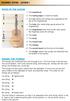 BEGINNER GUITAR - LESSON 1 PARTS OF THE GUITAR 1- The headstock. 2- The tuning pegs or machine heads. 3- The nut (where the strings are supported at the top of the fingerboard). 4- The frets (the metal
Rehearsal Strategies A Night in Tunisia By Reginald Thomas, Professor of Jazz Piano Michigan State University, East Lansing, MI
 Rehearsal Strategies A Night in Tunisia By Reginald Thomas, Professor of Jazz Piano Michigan State University, East Lansing, MI Do you remember the first time you heard this jazz classic, A Night In Tunisia?
This PDF is designed to go right along with the DVD. Print it out and keep it in front of you while working through the lessons.
 Beginner Strumming This PDF is designed to go right along with the DVD. Print it out and keep it in front of you while working through the lessons. Introduction You don t need to know much to get started
LEFT HAND CHORD COMBINING ON THE ACCORDION
 LEFT HAND CHORD COMBINING ON THE ACCORDION The standard Stradella bass system on the accordion only provides four chord types: Major, minor, 7-th and diminished. It's possible to play other chords by using
Intervals Harmony Chords and Scales. Workbook
 Intervals Harmony Chords and Scales Workbook Introduction In writing this book I was able to make many discoveries for myself both in methods of teaching and basic use of music theory. In every discipline
Chords and Voicings Made Simple By: Sungmin Shin January 2012
 Chords and Voicings Made Simple By: Sungmin Shin January 2012 I. Intervals An interval is the space between two notes. intervals of a 2nd, 3rd, 6th, and 7th can be diminished, minor, major, or augmented
Sample of Version 2.0 of Swing & Jump Blues Guitar
 The Charlie Christian Approach Charlie Christian (1916 1942) was one of the first real swing guitar players that had a lasting influence on all other swing and jump guitar players after him. Even more
The Admiral Tuning. 70 Special Tunings
 68 Special Tunings The special tuning section is a collection of miscellaneous tunings, most of which were created and/or popularized in recent years by various singers and/or songwriters. The bulk of
J. JENNINGS PUBLISHING COMPANY 5012 Kahn Street, Carmichael, CA 95608
 I N T R O D U C T I O N This packet contains introductory lessons for Emerson Karaoke Guitar 1. We assume you are a total beginner. The exercises start out very easy and will progress gradually. Have some
Bi- Tonal Quartal Harmony in Theory and Practice 1 Bruce P. Mahin, Professor of Music Radford University
 Bi- Tonal Quartal Harmony in Theory and Practice 1 Bruce P. Mahin, Professor of Music Radford University In a significant departure from previous theories of quartal harmony, Bi- tonal Quartal Harmony
Music Theory for Cajun Accordionists
 1 Music Theory for Cajun Accordionists Right off the bat, I need to make clear that I m no expert; far from it. I ve had to piece together what little I know about music theory from here and there, mostly
6) Minor Seventh & Suspended Chords. 7) Barre Chords on the 6 th String. 8) Barre Chords on the 5 th String. 9) The Secret to Great Strumming
 Table of Contents SESSIONS 1) Starting Off Right Overview 3 Finger Exercise 1 5 Finger Exercise 2 6 Finger Exercise 3 7 Alternating Finger Exercise 8 C & G7 Chord Exercise 9 2) Reading Music & Notes on
CHORD AVAILABILITY. NOTE: I ve used different abbreviations for different chord names. / for add (e.g. C/9 = C add 9, Em7/11 = Em7 add 11)
 CHORD AVAILABILITY Any songwriter, whether they are amateur or professional, is bound to get stuck sometimes in finding that elusive chord to use in their song. What many of them don t realize is the number
MAKING YOUR LINES SOUND MORE LIKE JAZZ!
 MAKING YOUR LINES SOUND MORE LIKE JAZZ! BY ALISDAIR MACRAE BIRCH One of the common questions asked by jazz guitar students is, How do I make my lines sound more like jazz? or Why do my improvised lines
b 9 œ nœ j œ œ œ œ œ J œ j n œ Œ Œ & b b b b b c ÿ œ j œ œ œ Ó œ. & b b b b b œ bœ œ œ œ œ œbœ SANCTICITY
 SANCTICITY ohn Scofield guitar solo from the live CD im Hall & Friends, Live at Town Hall, Volumes 1 & 2 azz Heritage CD 522980L Sancticity, a tune by Coleman Hawkins, is based on the same harmonic progression
Nashville Number System
 presents the Nashville Number System for worship teams 1. WHY THE NASHVILLE NUMBER SYSTEM?... 2 SOME DISCLAIMERS... 2 2. BASICS OF THE NNS... 3 PRACTICE EXAMPLE #1... 4 3. SLASH CHORDS... 5 PRACTICE EXAMPLE
The Secret Weapon for Bar Chords
 Created by BCM The Secret Weapon for Bar Chords This handy device will make it much easier to form bar chords on your guitar. It is an effective tool that will give you immediate results. No more hours
Page 1 of 36. Companion Workbook. 2005 leadworship.com
 Page 1 of 36 Companion Workbook Page 2 of 36 Glossary of Terms: Chord: A combination of 3 or more notes that blend harmoniously when sounded together. Chord Scale: All of the chord combinations that naturally
Music Fundamentals 5: Triads, Chords, Introduction to Roman Numerals. Collection Editor: Terry B. Ewell
 Music Fundamentals 5: Triads, Chords, Introduction to Roman Numerals Collection Editor: Terry B. Ewell Music Fundamentals 5: Triads, Chords, Introduction to Roman Numerals Collection Editor: Terry B.
PERPETUAL MOTION BEBOP EXERCISES
 PERPETUAL MOTION BEBOP EXERCISES Jason Lyon 2007 www.opus28.co.uk/jazzarticles.html Bebop is much more than just one particular style, it is pretty much the grammar of modern jazz, and bebop licks are
Piano Accordion vs. Chromatic Button Accordion
 Piano Accordion vs. Chromatic Button Accordion Which is best, piano accordion (PA), or five row chromatic button accordion (CBA)? This is a question which is often debated in newsgroups. The question should
Learning To Play The Guitar An Absolute Beginner s Guide By Anthony Pell
 Learning To Play The Guitar An Absolute Beginner s Guide By Anthony Pell http://www.learningtoplaytheguitar.net All Rights Reserved. No part of this publication may be reproduced in any form or by any
MUSIC. Syllabus for Primary Schools. Curriculum Department, Floriana Year 3 19
 MUSIC Syllabus for Primary Schools Curriculum Department, Floriana Year 3 19 YEAR 3 Curriculum Department, Floriana Year 3 20 LEARNING OUTCOMES for YEAR 3 Curriculum Department, Floriana Year 3 21 3.1
C Chord. Play these three notes at the same time with your right hand. These three notes make up a C chord.
 This book will get you playing keyboard instantly-whether you read music or not. We put together a band with some of our friends and recorded some really fun music. The Instant Keyboard CD has songs ready
Keyboard FUNdamentals James Lambert & Judy Moonert
 1 I. BASIC MUSIC THEORY A beginning mallet percussionist must memorize the 12 major scales. These scales relate to other harmonic information that the student will need. With each marimba bar one half
www.migu-music.com Michael Gundlach DOWNLOAD PDF FILE WALKING BASS for Piano An easy method for creating Walking Bass Lines on Piano
 www.migu-music.com Michael Gundlach DOWNLOAD PDF FILE WALKING BASS for Piano An easy method for creating Walking Bass Lines on Piano Table of Contents 3 Explanation of the Contents 5 Introduction to the
Time allowed: 1 hour 30 minutes
 SPECIMEN MATERIAL GCSE MUSIC 8271 Specimen 2018 Time allowed: 1 hour 30 minutes General Certificate of Secondary Education Instructions Use black ink or black ball-point pen. You may use pencil for music
Banjo Basics For Standard G Tuning
 Banjo Basics For Standard G uning by D.A. Jacobs his text is distributed free of charge o all Banjo Students D.A.Jacobs 2004 All Rights Reserved Why his ext? When I first decided to learn banjo I had one
Put Your Song to the Tests
 Put Your Song to the Tests By Pat & Pete Luboff We ve been listening to songs in a professional capacity for over 20 years, as songwriting consultants, workshop leaders, contest judges and Taxi screeners.
Ü F F F F F F : F F ÜF H H H H H ÜH H H H HÜH. : H r H H HH H H. H H H H r Ü H CHORDS FROM SCALES
 CHORDS ROM SCALES This tutorial is all about making chords out of scales. irst step is to catch a fish - not any old fish but a musical one. A bass, for instance. Not really. Read on. CHORDS ROM SCALES
Music Theory: Explanation and Basic Principles
 Music Theory: Explanation and Basic Principles Musical Scales Musical scales have developed in all cultures throughout the world to provide a basis for music to be played on instruments or sung by the
SUZUKI Q CHORD. MODEL QC-1 Owners Manual
 SUZUKI Q CHORD MODEL QC- Owners Manual THANK YOU & CONGRATULATIONS Welcome to a new and exciting way to make music, that s creative, mind expanding and fun. Q Cards Every music lover has dreamed of playing
Contents. Introduction. Musical Patterns. 1) The Secrets of Scales. 2) Play With the Patterns. 3) The Secrets of Chords. 4) Play With the Shapes
 Contents Introduction Musical Patterns 1) The Secrets of Scales 2) Play With the Patterns 3) The Secrets of Chords 4) Play With the Shapes 5) Every Semitone Has a Name 6) Build Your 2-Note Chords 7) The
22. Mozart Piano Sonata in B flat, K. 333: movement I
 22. Mozart Piano Sonata in B flat, K. 333: movement I (for Unit 3: Developing Musical Understanding) Background Information and Performance Circumstances Biography Mozart was born in Austria on the 27
FREE CHORD BOOK Introduction
 FREE CHORD BOOK Introduction Hi, I m Andy and welcome to my chord book for beginners! Most chord books are packed full hundreds of chord diagrams, so many in fact it could take literally years to play
Piano Requirements LEVEL 3 & BELOW
 Piano Requirements LEVEL 3 & BELOW Technical Skills: Time limit: 5 minutes Play the following in the keys of F, C, G, D, A, E, B: 1. Five-note Major scales, ascending and descending, hands separate or
Musical Literacy. Clarifying Objectives. Musical Response
 North Carolina s Kindergarten Music Note on Numbering/Strands: ML Musical Literacy, MR Musical Response, CR Contextual Relevancy Musical Literacy K.ML.1 Apply the elements of music and musical techniques
Basic Music Theory. Reading Different Clefs
 1 Basic Music Theory Reading Different Clefs The most commonly used clefs are the treble and bass. The ability to read both of these clefs proficiently is essential for Leaving Cert. Music. Clef reading