
Thinking About Fall Protection
|
|
|
- Dominic Potter
- 9 years ago
- Views:
Transcription
1 Thinking About Fall Protection f a l l p r o t e c t i o n e x p e r t s A C A P I T A L S A F E T Y C O M P A N Y

2 DBI-SALA & Protecta Your Fall Protection EXPERTS For your most CRITICAL safety concern Fall protection is a complicated issue and one of the most important faced by an employer or worksite supervisor. With over 100,000 reported incidents per year, falls from heights almost always result in serious injury. In the construction industry, falls are the number one cause of worker death. Falls result in millions of dollars of losses annually in lost work, insurance premiums and liability claims. The responsibility to prevent a catastrophe begins with the employer. DBI-SALA & Protecta is the world s leading manufacturer solely dedicated to providing solutions in fall protection and industrial rescue systems. We understand our customers needs, and we respond to them by offering the broadest fall protection line in the industry. Providing solutions to fall protection challenges Our years of experience providing fall protection solutions for different industries have shown us that employers and managers must take into consideration four important issues: Cost effectiveness In addition to the cost of equipment, it s important to factor in product durability, the effect of equipment on productivity and the potential cost of an accident. Knowledge If you don t have the knowledge in areas of program design, product selection, training and proper use of equipment, you can t have an effective fall protection program. Motivating compliance Even a well-planned fall protection program will fail if personnel on the job don t use the equipment or don t use it properly. Protecting your productivity You shouldn t have to choose between productivity and safety. With our industry leading specialization, innovation and support, DBI-SALA & Protecta provides the solutions you need for a successful fall protection program. 2

3 As part of the ongoing DBI-SALA & Protecta commitment to improving on-the-job safety, this booklet gives an overview of the fall protection basics that serve as the foundation of an effective fall protection program. TABLE OF CONTENTS FALL PROTECTION BASICS 4 Terminology 4 Fall Prevention 4 Types of Fall Prevention Systems 5 Fall Arrest Systems 6-7 Calculating Fall Clearance 8 Swing Fall Hazard 8 Equipment Inspection and Maintenance 9 8-STEP FALL PROTECTION PLAN 10 Qualified & Competent Persons 10 UNDERSTANDING FALL PROTECTION APPLICATIONS IMPORTANT PRODUCT INFORMATION 14 Harness Sizing Chart 14 Compatibility of Connectors 14 Harness Donning Instructions 15 FALL PROTECTION TRAINING FALL PROTECTION REGULATIONS & STANDARDS HOW TO CONTACT US 20 3

4 Fall Protection Basics Sorting Out the Terminology FALL PROTECTION refers to the overall industry and process of protecting workers at height. FALL PREVENTION refers to the systems and techniques that eliminate the possibility of a fall to a lower level. The most desirable method of fall prevention is to engineer out or modify the work plan to eliminate the hazard. FALL ARREST SYSTEMS protect the worker after a fall from hitting the ground and/or obstructions below the work platform. Passive systems require little or no personal involvement from the worker. Active systems require the worker to actively use the system in order for it to be effective. It is not always practical, cost effective or possible to employ passive systems. In these cases, a Personal Fall Arrest System is required. PERSONAL FALL ARREST SYSTEMS (PFAS) are Active Fall Protection methods that require the participation of the worker. FALL RESTRAINT SYSTEMS use lanyards or some kind of tethering system measured so that workers cannot go beyond the edge where a potential for a fall exists. They are sometimes called Travel Restraint Systems. RESCUE refers to the ability to retrieve or rescue an individual from confined spaces or heights and must always be a component of any fall protection program. Fall Prevention When we talk about Fall Protection, the image that often comes to mind is a worker using a full body harness connected to an anchor point with a lanyard, in other words, a Personal Fall Arrest System (PFAS). PFAS are actually one of the later choices in a comprehensive fall protection program. Your first step should be trying to eliminate the fall hazard altogether. This may be accomplished with a modification to the job description, work process and/or work area to eliminate the need to work at height. The next step is to use fall prevention systems such as guardrails, handrails, ladder cages, warning lines or fall restraint systems. Where all else fails and when working on a flat roof a controlled access zone can be implemented as a form of fall prevention. 4

5 Types of Fall PREVENTION Systems Guardrails and handrails are barriers that prevent personnel from falling to lower levels. Where suitable, they protect the greatest number of employees with little or no training and no special maintenance. Government regulations dictate the requirements for the installation, testing and use of all barrier type systems. Ladder cages are still a common site on most industrial workplaces, although some may consider them a dangerous form of fall protection. Ladder cages are not designed to arrest the fall of a worker or even prevent a fall except in the case of the worker s hands slipping off the rungs. They are intended to restrict the movement of the worker so that when falling backwards off the ladder he or she might regain a grip on it before falling too far away. If the worker falls directly downward (which is typical when their feet slip off the rungs) without regaining a grip, injury can result. Ladder cages are acceptable and required where the worker is at or above 24 for construction (20 for general industry), and there is no other form of fall arrest available. Fall restraint systems are designed and rigged to eliminate the possibility of workers falling to lower levels. Through shortened lanyards and carefully positioned anchor points, workers are prevented from going where the potential for a fall exists. Equipment used in restraint systems is generally less sophisticated than that employed in fall arrest systems since it simply needs to hold the worker back, not support them in a fall. Warning lines are used to cordon off a hazardous area. This method of fall prevention is predominately used while working on flat roofs. Controlled access zones are used as a last resort where other fall protection systems can t be used effectively. If a controlled access zone is used, the site must have a written fall protection plan created by a qualified person and implemented by a competent person, according to OSHA definitions. Note that this option is accepted less and less as fall protection technology advances. 5

6 FALL ARREST SYSTEMS Passive Fall Arrest Systems Safety nets are passive systems that require little or no training. They are used to arrest or catch the fall of workers, materials or equipment from elevated surfaces. They are not common in general industry, but still used widely in construction and bridge maintenance. Safety nets must be installed, inspected and tested by a qualified or competent person, according to OSHA definitions. Personal Fall Arrest Systems Personal Fall Arrest Systems are much more complex than passive systems and require detailed training to ensure the worker is using the system properly.the basics of every personal fall arrest system can be described as the ABCD s of fall arrest. OSHA says [ (b)(1)]: Each employee on a walking/working surface (horizontal and vertical surface) with an unprotected side or edge which is 6 feet (1.8M) or more above a lower level shall be protected from falling by the use of guardrail systems, safety net systems or personal fall arrest systems. THE ABCD s of Fall Arrest A Anchorage Anchorage means a secure point of attachment (structure) for the fall arrest system. The type of anchorage varies with the industry, the job being performed, the type of installation and most importantly the structure available. Anchorage connectors provide a means of attaching the system to the anchorage. DBI-SALA & Protecta offer a wide line of anchorage connectors for all applications. OSHA says [ (d)(15)(i)-(ii)]: Anchorages used for attachment of personal fall arrest equipment shall be independent of any anchorage being used to support or suspend platforms and capable of supporting at least 5,000 lb. (22kN) per employee attached, or shall be designed, installed and used as follows: as part of a complete personal fall arrest system which maintains a safety factor of at least two; under the supervision of a qualified person. 6

7 B Body support Full body harnesses provide a connection point on the worker for the personal fall arrest system. Depending upon the application, they can be used as part of a system to protect the worker from falling and to limit the extent of potential injury in case of a fall. OSHA says [ (d)(16)(iii), (iv), (v)]: Personal Fall Arrest Systems, when stopping a fall, shall limit maximum arresting force on an employee to 1,800 lbs.(8 kn) when used with a body harness; be rigged such that an employee can neither free-fall more than 6-feet (1.8 M), not contact any lower level. C ConnectORS Connectors are devices used to connect the worker s full body harness to the Anchor system. Connectors include lanyards, snap-hooks, carabiners, deceleration devices and specialty systems such as self-retracting lifelines, ladder climbing systems, vertical lifelines and rope grabs as well as horizontal lifeline. OSHA says [ (e)(3)]: Connectors shall be drop forged, pressed or formed steel or made of equivalent materials. [ (e)(5)]: Connecting assemblies shall have a minimum tensile strength of 5,000 lbs. (22 kn). D DESCEnt & Rescue Rescue, the retrieval of a fallen worker or the self-rescue of workers, is a necessary component of any fall protection program. OSHA requires that where a worker is exposed to the risk of a fall, a rescue plan must be in place for the self-rescue or retrieval of that fallen worker. OSHA says [ (d)(20)]: The employer shall provide for prompt rescue of employees in the event of a fall or shall assure that employees are able to rescue themselves. 7
![502(d)(16)(iii), (iv), (v)]: Personal Fall Arrest Systems, when stopping a fall, shall limit maximum arresting force on an employee to 1,800 lbs.](/docs-images/49/18160622/images/page_7.jpg "(8 kn) when used with a body harness; be rigged such that an employee can neither free-fall more than 6-feet (1.8 M), not contact any lower level.")
8 CALCULATING FALL CLEARANCE When setting up and using a personal fall arrest system, fall clearance and swing fall hazards are critical issues. Should a fall occur, there must be sufficient clearance below the user to arrest the fall before the user strikes the ground or any other object. The user of the equipment must determine if the system will arrest the fall within the available clearance. Some factors that affect this determination include anchorage location, type and length of connecting system (lanyard, self-retracting lifelines, rope grab), deceleration distance (the elongation of the decelerating device when deployed -- allow 3.5 ), worker height, movement of harness attachment element (allow a safety factor of 2.5 ft.). For lanyard type connecting systems, see the illustration for estimating fall clearance distances. For SRLs, a minimum of 6 of clearance from the working level to the lower level is recommended. See user instructions supplied with each product for complete details on fall clearances. RD LL DD HH C LANYARD FALL CLEARANCE LL = LANYARD LENGTH DD = ENERGY ABSORBER DECELERATION DISTANCE (3 1/2 FEET TOTAL) HH = HEIGHT OF THE HARNESS DORSAL D-RING FROM THE WORKER S FEET C = CLEARANCE TO OBSTRUCTION DURING FALL ARREST (1 1/2 FET REQUIRED PLUS 1 FOOT FOR D-RING MOVEMENT AND SYSTEM MATERIALS STRETCH = 2 1/2 FEET TOTAL) RD = REQUIRED DISTANCE BELOW WORKING SURFACE TO NEAREST OBSTRUCTION RD = LL + DD + HH + C NEAREST OBSTRUCTION 8 SWING FALL HAZARD Swing falls occur when the anchorage point is not directly above the point where a fall occurs. The force of striking an object while swinging (horizontal speed of the user due to pendulum effect) may cause serious injury. In a swing fall, the total vertical fall distance will be greater than if the user had fallen when directly below the anchorage point. The user must therefore account for an increase in the total free fall distance. SRLs H = Height of the SRL (overhead) Working Distance From Anchorage D = Distance person can move (horizontally) Example: If the worker is 40 feet directly below the SRL, the recommened work zone is 18 feet in any direction. provide greater horizontal and vertical mobility than lanyards, increasing the opportunity for swing falls. See the adjoining chart for recommended horizontal working distances for SRLs. Minimize swing falls by working as close to directly below the anchorage point as possible. See user instructions supplied with each product for complete details on swing fall. 80ft 70ft 60ft 50ft 40ft 30ft 20ft 10ft 0ft 0ft 10ft 20ft 30ft 40ft srl swingfall Swing Fall Hazard Working Level

9 EQUIPMENT INSPECTION & MAINTENANCE Conscientious inspection of all fall protection equipment is essential to ensure product performance and the safety of the user. Inspecting frequency Equipment should be inspected by the user before each use (OSHA , and ANSI Z359.1). Formal inspection should be performed annually by a competent person (ANSI Z359.1). After fall arrest, equipment shall not be used again until inspected and determined by a competent person to be undamaged and suitable for reuse (OSHA , and ANSI Z359.1). Inspections should be recorded in a centralized logbook that includes the serial number, date of purchase, dates of inspection, servicing performed and authorized signatures. Inspection guidelines Hardware Inspect hardware (including snap hooks, D-rings and buckles) for damage. Check for distortion, corrosion, burrs, cracks and worn parts. Inspect mechanical devices for correct assembly and operation. (For example, SRLs should retract and lock up.) Webbing Inspect webbing for frays, cuts or broken fibers. Check for tears, abrasion, mold, burns, heavy soiling or discoloration. Inspect stitching for damage. Inspect impact indicators (if present). Wire rope, synthetic rope Inspect for cuts, kinks, broken wires and fibers, corrosion, chemical contact and severely abraded areas. Inspect impact indicators (if present). Labeling All labels must be present and fully legible. If inspection or operation reveals a defective condition, remove the product from service and destroy it or contact an authorized service center for repair. Maintenance and Storage Most webbing and hardware items can be washed with mild soap and detergent, water and a rag. Excess grease, dirt and grime should be removed. The equipment should be left to drip dry out of direct sunlight. Some hardware, if stiff or sticking, can be lubricated. However, any hardware that comes in contact with webbing should be free from grease or solvent. Additional servicing and maintenance should be performed only by factory authorized service centers. Equipment should be stored in a cool, dry and clean environment that is out of direct sunlight. Protective bags that come with the equipment should be used. Refer to manufacturer s instructions for complete details on inspection, storage and maintenance. 9

10 8 STEP Fall Protection PLAN A Fall Protection plan is essential for any company with personnel who work at heights. A well-designed, written plan is good evidence that an employer is making every effort to comply with mandated regulations. It can help prevent against the economic consequences of an incident including fines, liability and increased insurance costs. Most important, it reduces worker risk and saves lives! OSHA (k) states that the Fall Protection plan must be developed by a qualified person, must be made specific for each site and kept up to date. A copy of the plan must be maintained at the site, and only a qualified person may make changes to the plan. Step 1: Step 2: Step 3: Step 4: Step 5: Step 6: Step 7: Step 8: Perform a hazard analysis to determine areas of risk. Wherever possible, engineer out the hazard. Wherever possible, implement fall prevention systems such as guardrails, handrails, and warning lines. Select appropriate fall arrest equipment for your site and personnel. Use expert analysis to determine and install appropriate anchorages, along with any necessary horizontal and vertical equipment. Determine equipment required to cover all rescue contingencies. Establish a comprehensive training program on all aspects of Fall Protection and Rescue. Include it all in a written Fall Protection Plan. The complete Fall Prevention Plan should include a statement of policy, a description of the fall prevention measures being implemented, delegation of ongoing responsibilities in the areas of inspection, record keeping, maintenance, equipment replacement, incident reporting, enforcement, accident investigation, training and changes to the plan. Qualified and Competent Persons Many fall protection regulations specify the involvement of a qualified or competent person as defined by OSHA regulations 29 CFR (f) and (m): A competent person is someone who is capable of identifying existing and predictable hazards in the surroundings or working conditions which are unsanitary, hazardous or dangerous to employees and who has authorization to take prompt corrective measures to eliminate them. 10 A qualified person is someone who, by possession of a recognized degree, certificate or professional standing, or who by extensive knowledge, training, and experience has successfully demonstrated his/her ability to solve or resolve problems relating to the subject matter, work or the project.

11 UNDERSTANDING FALL PROTECTION APPLICATIONS Fall protection needs vary depending on the type of task being performed and the industry involved. The DBI-SALA & Protecta complete line of fall protection and rescue equipment provides solutions for every type of fall protection need. Safety systems for all applications DBI-SALA & Protecta knows that whatever the job being performed, workers need comfort, mobility and safety! We ve designed safety components to provide flexibility and mobility for all types of fall protection and rescue applications. Fall Arrest Fall Arrest systems are typically used to protect workers when they are six feet or more above the ground. For maximum safety, all of our standard Fall Arrest systems are designed to limit the maximum arresting forces to 900 lbs. or less half of the OSHA requirement of 1800 lbs. Typical fall arrest applications are steel erection, suspended platform activities and elevated maintenance work. Work Positioning Work positioning systems will hold and sustain the worker at a specific work location, limiting any free fall to two feet or less. Rebar tying and concrete wall-form work are typical applications. restraint Restraint systems prevent the worker from reaching an area where a free fall could occur. Leading edge roof work typically calls for a restraint system. suspension A suspension system supports and holds the worker without any possibility of a free fall while the worker is being raised or lowered. Boatswain s chair jobs, such as painting or window washing, are common examples. rescue Rescue systems are designed to raise or lower a worker to safety in an emergency without any possibility of a free fall. Rescue systems are typically used in confined space work or anywhere where a worker may fall or become incapacitated. The following charts will help you with specific product recommendations for common fall protection applications. 11

12 12 PRODUCT RECOMMENDATIONS BY INDUSTRY FALL ARREST To protect workers when they are six feet or more above the ground. INDUSTRY General Construction Plant Maintenance Truck/Railcar Loading/Maintenance Warehousing/Order Picker ANCHORAGE CONNECTOR Glyder or Tie- Off Adaptor Fixed Beam Anchors , Tie-Off Adaptor , D-ring Anchorage Plate Trolley Cab Mount bracket Suspended Platform Tie-Off Adaptor Telecommunications/ Tower Climbing Petro/Chemical Maintenance Offshore Oil Drilling Bridge Construction Bucket Truck/Utility Maintenance Steel Erection Ladder Climbing Roofing Concrete Tie-Off Adaptor Scaffold Choker Tie-Off Adaptor Stainless steel carabiner Glyder Fixed Beam Clamp Tie-Off Adaptor Boom belt Glyder Fixed beam clamp Removable Roof Anchor or Disposable Roof Anchor or Permanent Roof Anchor or Concrete Column Anchor, Concrete D-Ring Anchor, Concrete Leading Edge Anchor, Concrete Anchor Strap BODY HARNESS ExoFit XP ExoFit Delta Protecta AB104A20 ExoFit XP ExoFit Delta Protecta AB17530 ExoFit XP ExoFit Delta Protecta AB17530 ExoFit XP ExoFit Delta Protecta AB17530 ExoFit XP ExoFit Delta Protecta AB17530 ExoFit XP ExoFit Delta Delta Delta Delta Protecta AB17530 Derrick harness Derrick Belt ExoFit XP ExoFit Delta PROTECTA AB104A20 Delta ExoFit XP ExoFit Delta ExoFit XP ExoFit Delta PROTECTA AB17530 Delta Exofit Delta PROTECTA AB104A20 CONNECTOR ShockWave 2 lanyard , Ultra-Lok SRL , AD212AG SRL or Force 2 lanyard (for use with ) ShockWave 2 lanyard, , EZ Stop II lanyard , Protecta lanyard AE57610, Ultra-Lok SRL , Rebel AD111A SRL Ultra-Lok SRL Ultra-Lok Rebel AD111A SRL or Ultra-Lok SRL for use with Rope lifeline with rope grab and lanyard ShockWave2 lanyard Sealed SRL EZ Stop II lanyard Sealed SRL Force2 lanyard (for use with ), ShockWave2 lanyard , Ultra-Lok SRL , Leading Edge SRL ShockWave2 lanyard Rebel CT 211B SRL, Force2 lanyard (for use with ), ShockWave2 lanyard , Ultra-Lok SRL Lad-Saf Sleeve Rope adjuster with 3 ft Shock Absorbing Lanyard , 50 ft lifeline assembly with counter weight Shockwave Lanyard, Ultra-Lok SRL , Ultra-Lok SRL Leading Edge HORIZONTAL LIFELINE Iron Wing BeamSafe Sayfline Sayfline Sayfglida Ariana Multispan Sayfline Sayfglida Ariana Multispan Sayfline Sayfline Cable or Iron Wing Pipe Rack Sayfline Cable Iron Wing Concrete or Iron Wing system or BeamSafe system Iron Wing system or Beamsafe system Sayfline system Sayfline Sayfline The following are trademarks for DBI-SALA & Protecta : ExoFit, Glyder, ExoFit XP, Delta No-Tangle, Shockwave, Shockwave 2, EZ-Stop, EZ-Stop II, Force 2, Rebel, WrapBax, Sayfline. The following are registered trademarks for DBI/SALA and Protecta : DBI-SALA, Protecta, Ultra-Lok, Lad-Safe, Rescumatic, Rollgliss, Sala-lift, Ariana, Sayfglida, Fisk Descender. VERTICAL LIFELINE Rope Grab System Lad-Saf system Rope Grab System Lad-Saf system RESCUE & DESCENT Winch-SRL-tripod combo , Y-lanyard , Delta harness Winch-SRL-tripod combo , Y-lanyard , Delta harness Rescumatic Rollgliss system Lad-Saf system RPD Lad-Saf system Rollgliss Rope Grab System Rope grab system Lad-Saf system RPD Self Rescue Device RPD Rollgliss system

13 PRODUCT RECOMMENDATIONS BY INDUSTRY WORK POSITIONING To hold and sustain workers at a specific work location limiting free fall to two feet or less. INDUSTRY ANCHORAGE CONNECTOR BODY HARNESS CONNECTOR HORIZONTAL LIFELINE VERTICAL LIFELINE RESCUE & DESCENT General Construction Tie-Off Adaptor or D-ring Anchorage Plate ExoFit XP ExoFit Delta PROTECTA AB104A20 WrapBax lanyard , Tie-Back lanyard , Chain Rebar Assembly Sayfline Rope Grab System RPD Plant Maintenance Tie-Off Adaptor or D-ring Anchorage Plate ExoFit XP ExoFit Delta PROTECTA AB17540 WrapBax Tie-back lanyard , Tie-Back lanyard Sayfglida Ariana Multi-span Sayfline Lad-Saf system Rollgliss system Communication Tower Maintenance Scaffold Choker or Tie-Off Adaptor ExoFit XP ExoFit Delta ShockWave2 lanyard and Spreader Hook and Lg. Carabiner Lad-Saf system Rollgliss system or Fisk Descender Concrete Wall Form Work D-ring and Wall-Form Hook Assembly ExoFit XP ExoFit Delta Wall-Form Hook Assembly Rope Grab System RPD RESTRAINT To prevent workers from reaching an area where a free fall could occur. INDUSTRY ANCHORAGE CONNECTOR BODY HARNESS CONNECTOR HORIZONTAL LIFELINE VERTICAL LIFELINE RESCUE & DESCENT Roof Maintenance D-ring Anchorage Plate ExoFit XP ExoFit Delta Adjustable Web Positioning Lanyard Sayfglida system Ariana system Lad-Saf system Rollgliss system SUSPENSION To support and hold workers without any possibility of a free fall while being raised or lowered. INDUSTRY ANCHORAGE CONNECTOR General Construction Tie-Off Adaptor Window Washing D-Ring Anchorage Plate BODY HARNESS ExoFit XP ExoFit Delta with Boatswain chair Delta with Boatswain chair CONNECTOR EZ Stop II lanyard PROTECTA lanyard AE57610 Rope lifeline with rope grab and lanyard HORIZONTAL LIFELINE Sayfglida Ariana system VERTICAL LIFELINE Rope Grab System Rope Grab System RESCUE & DESCENT RPD or Fisk Descender Rollgliss system RESCUE To raise or lower workers to safety in an emergency without any possibility of a free fall. INDUSTRY = Not Applicable ANCHORAGE CONNECTOR Utility Maintenance Tie-Off Adaptor Municipality Work Tie-Off Adaptor BODY HARNESS ExoFit XP ExoFit Delta ExoFit XP ExoFit Delta CONNECTOR Sealed SRL Y-Lanyard Sealed SRL Y-Lanyard HORIZONTAL LIFELINE Fire Rescue Delta Utility/Bucket Truck Rescue Delta VERTICAL LIFELINE Ladder Mast with ladder mounting bracket RESCUE & DESCENT Modular Davit Arm and Portable Base with Sala Lift II winch Winch and tripod system Tripod with Rollgliss Rollgliss Self Rescue or Rescumatic

14 IMPORTANT PRODUCT Information Proper fit is essential for comfort & productivity Whether you wear a harness 4 hours a day or 14 hours a day, it needs to feel good and fit right for optimum comfort, safety and productivity. DBI-SALA & Protecta harnesses are designed to fit any body size or shape. Protecta Harness Sizing Chart 6 8 XXL* 6 6 HEIGHT (Feet/Inches) STANDARD XL SMALL* Weight (lbs.) *Small and XXL sizes are available upon request. COMPATIBILITY OF CONNECTORS Connectors are considered to be compatible with connecting elements when they have been designed to work together in such a way that their sizes and shapes do not cause their gate mechanisms to inadvertently open or roll-out regardless of how they become oriented. If the connecting element is undersized or irregular in shape, it may apply force to the gate of the snap hook or carabiner, forcing it to open and disengage. 1. Force is applied to the snap hook 2. The gate presses against the connecting ring. 3. The gate opens allowing the snap hook to slip off. 14 Always use self-locking snap hooks and carabiners. Ensure that all connections are compatible in size, shape and strength. Ensure that all connectors are fully closed and locked. Contact DBI-SALA & Protecta if you have any questions about compatibility.

15 HArNESS DONNING INSTruCTIONS Step 1 Step 2 Step 3 Getting Started Hold harness by back D-ring which is held in place by a D-ring pad, make certain straps are not twisted. Shoulder Straps Slip harness over arms and onto shoulders. Make certain all straps are not tangled and hang freely. Shoulder straps should be kept vertical, not pulled into center of body. Leg Straps Grab dark blue leg straps and connect to buckles attached to yellow straps on each hip (see photos below for your specific buckle type). Pass excess strap through loop keepers. Leg straps should fit snugly. Step 4 Step 5 Chest Strap Attach chest strap by passing male buckle through female buckle (see buckle type photo below for further details). Strap should be six inches below top of shoulders. Pass excess strap through loop keeper. Adjust harness to fit snugly. Shoulders: To tighten, pull up on free ends of straps as shown, to loosen, push down on parachute adjuster buckle frame. Straps should be adjusted to same length. Chest Strap: To tighten, pull free end of strap, to loosen, push on strap from free end through adjuster buckle and take up slack by pulling on adjuster buckle. To position, slide keeper up or down shoulder strap. Leg Straps: See photos at left for your type of leg adjuster buckle. Back D-ring: Center between shoulder blades, slide D-ring and pad up or down along the webbing to position. A properly donned and adjusted full body harness will effectively distribute impact forces throughout your body and provide appropriate support during suspension and rescue following a fall. 15

16 DBI-Sala Training & CONSULTING When it comes to fall protection, there is no margin for error. Every day, workers risk their lives to ccomplish elevated tasks that are essential to the development and operation of our world. From there were over 3,400 deaths due to falls from heights. DBI-SALA & Protecta recognizes that our commitment to the life-and-death field of fall protection means that every product we produce must meet or exceed the toughest standards. But we also know that even the best equipment must be used correctly. This is why we have established our training division with the same care and attention that is critical in our manufacturing process. DBI-SALA & PROTECTA TRaining Services The key to effective fall protection training is practical, hands-on experience. We offer a full range of fall protection and industrial rescue courses on-site or at one of our state-of-the-art training centers located throughout North America. Courses on-site apply professional training to specific daily work activities. Courses at our institutes provide controlled environments uniquely designed to offer practical experience with scaffolding, fixed ladders, towers, sloped roofs, rebar and climbing walls, elevated catwalks, I-beams and confined spaces. On-Site DEMONSTRATION VEHICLES Workers from all over the world enjoy the experience of our hands-on demonstrations of DBI-SALA & Protecta fall arrest, restraint and rescue equipment. Our Mobile Demonstration Vehicles show drop-tests and force measuring instruments to demonstrate arresting forces workers would experience during a fall. The presentation provides an excellent introduction to fall protection equipment. The demo is available on video in both English and Spanish languages. OSHA says [ ]: (a) Training Program. (1) The employer shall provide a training program for each employee who might be exposed to fall hazards. The program shall enable each employee to recognize the hazards of falling and shall train each employee in the procedures to be followed in order to minimize these hazards. 16

17 DBI-SALA & PROTECTA TRAINING PROGRAMS COURSE DURATION AUDIENCE BENEFIT OPEN ENROLLMENT SITE SPECIFIC Awareness 4 hours Workers who are seldom at height Provides general awareness, interest and support System Specific 4 hours Workers who use a single pre-engineered and pre-installed fall protection system Provides the skills and theory necessary for that single system NO Fundamentals 1 day Workers who use a number of pre-determined systems with established anchorages Establishes an understanding of the systems available on-site and where they are to be used NO Detailed Skills 2 days Workers who are at a Develops a toolbox of variety of locations, often skills and knowledge to skilled trades (maintenance, work safely when there isn t electricians, etc.) using a predetermined system or personal judgment in the anchorage selection, setup and use of fall protection including temporary anchorages Competent Person 5 days (or custom to site requirements) Individuals charged with the development, implementation and /or maintenance of a site fall protection program Creates the necessary skill and knowledge base to meet the requirements for a competent person as defined by OSHA Qualified Person 5 days (or custom to site requirements) Engineers charged with the design and setup of engineered fall protection systems Details the technical requirements to design engineered systems UPON DEMAND Equipment Inspection 4 hours Safety personnel, tool crib operators or anyone who is required to complete formal equipment inspections Provides the skills and knowledge necessary to complete a formal inspection Train the Trainer 4 days Established site trainers Builds the techniques, theory and materials to teach the four hour awareness courses Tower Climbing & Rescue Custom to site requirements Workers who are required to climb and work on towers both for erection and maintenance Skills to properly protect oneself when working on the tower and while performing a rescue on the towers Industrial Rescue Custom to site requirements Site rescue teams and/or peer rescue training Provides the skills to safely retrieve a fallen worker NO 17

18 FALL PROTECTION REGULATIONS & STANDARDS 18 SELECTED OSHA FALL REGULATIONS Fall Protection Requirements for Steel Erection (OSHA Subpart R ) (a) General requirements. (1) Except as provided by paragraph (a) (3) of this section, each employee engaged in a steel erection activity who is on a walking/working surface with an unprotected side or edge more than 15 feet (4.6m) above a lower level shall be protected from fall hazards by guardrail systems, safety net systems, personal fall arrest systems, positioning device systems or fall restraint systems. Safety Standards for Fall Protection in the Construction Industry (OSHA Duty to have fall protection) (a) General. (1) This section sets forth requirements for employers to provide fall protection systems. All fall protection required by this section shall conform to the criteria set forth in of this subpart. (b)(1) Unprotected sides and edges. Each employee on a walking/working surface (horizontal and vertical surface) with an unprotected side or edge which is 6 feet (1.8m) or more above a lower level shall be protected from falling by the use of guardrail systems, safety net systems, or personal fall arrest systems. Editors Note: The requirements stated in (b)(1) are similar for: leading edges, hoist area, holes, formwork and reinforcing steel, ramps, runways and other walkways, excavations, dangerous equipment, overhead bricklaying and related work, roofing work on low-slope roofs, steep roofs, precast concrete erection, residential construction and wall openings. (OSHA Fall protection system criteria and practices) (a) General. (1) Fall protection systems required by this part shall comply with the applicable provisions of this section. (2) Employers shall provide and install all fall protection systems required by this support for an employee, and shall comply with all other pertinent requirements of this subpart before that employee begins the work that necessitates the fall protection. (d) Personal fall arrest systems. Personal fall arrest systems and their use shall comply with the provisions set forth below. Effective January 1, 1998, body belts are not acceptable as part of a personal fall arrest system. Note: The use of a body belt in a positioning device system is acceptable and is regulated under paragraph (e) of this section. (5) Snaphooks shall be sized to be compatible with the member to which they are connected to prevent unintentional disengagement of the snaphook by depression of the snaphook keeper by the connected member, or shall be a locking type snaphook designed and used to prevent disengagement of the snaphook by the contact of the snaphook keeper by the connected member. Effective January 1, 1998, only locking type snaphooks shall be used. (15) Anchorages used for attachment of personal fall arrest equipment shall be independent of any anchorage being used to support or suspend platforms and capable of supporting at least 5,000 pounds (22.2 kn) per employee attached, or shall be designed, installed, and used as follows: (i) as part of a complete personal fall arrest system which maintains a safety factor of at least two; and (ii) under the supervision of a qualified person. (16) Personal fall arrest systems, when stopping a fall, shall: (i) limit maximum arresting force on an employee to 900 pounds (4 kn) when used with a body belt; (ii) limit maximum arresting force on an employee to 1,800 pounds (8 kn) when used with a body harness; (iii) be rigged such that an employee can neither free fall more than 6 feet (1.8m), nor contact any lower level; (iv) bring an employee to a complete stop and limit maximum deceleration distance an employee travels to 3.5 feet (1.07m); and, (v) have sufficient strength to withstand twice the potential impact energy of an employee free falling a distance of 6 feet (1.8m), or the free fall distance permitted by the system, whichever is less. (e) Positioning device system. Positioning device systems and their use shall conform to the following provisions: (1) Positioning devices shall be rigged such that an employee cannot free fall more than 2 feet (.9m). (2) Positioning devices shall be secured to an anchorage capable of supporting at least twice the potential impact load of an employee s fall or 3,000 pounds (13.3 kn), whichever is greater. (OSHA Training requirements) (a) Training Program. (1) The employer shall provide a training program for each employee who might be exposed to fall hazards.the program shall enable each employee to recognize the hazards of falling and shall train each employee in the procedures to be followed in order to minimize these hazards. Fixed Ladders (OSHA ) (d.5) Ladder safety devices may be used on tower, water tank and chimney ladders over 20 feet in unbroken length in place of cage protection. No landing platform is required. All ladder safety devices, such as those that incorporate life belts, friction brakes, and sliding attachments, must meet the design requirements of the ladders they serve. Powered Platforms For Building Maintenance (OSHA ) (j) Personal Fall Protection. Employers must provide personal fall arrest systems meeting the requirements outlined. Requirements include the following: Anchorages to which personal fall arrest equipment is attached shall be capable of supporting at least 5,000 pounds (22.2 kn) per employee attached, or shall be designed, installed and used as part of a complete personal fall arrest system which maintains a safety factor of at least two, under the supervision of a qualified person. Personal fall arrest systems shall, when stopping a fall: 1) limit maximum arresting force on an employee to 900 pounds (4 kn) when used with a body belt; and 2) limit maximum arresting force on an employee to 1,800 pounds (8 kn) when used with a body harness. Personal fall arrest systems shall be rigged such that an employee can neither free fall more than 6 feet (1.8m), nor contact any lower level. Personal fall arrest systems or components subjected to impact loading shall be immediately removed from service and shall not be used again for employee protection unless inspected and determined by a competent person to be undamaged and suitable for reuse. Before using a personal fall arrest system, and after any component or system is changed, employees shall be trained in accordance with the requirements of paragraph (i)(1), in the safe use of the system. Personal fall arrest systems shall be inspected prior to each use for mildew, wear, damage and other deterioration. Defective components shall be removed from service if their strength or function may be adversely affected. Permit-Required Confined Spaces (OSHA ) (a) Scope and application.this section contains requirements for practices and procedures to protect employees in general industry from the hazards of entry into permit-required confined spaces. (k)(3) To facilitate non-entry rescue, retrieval systems or methods shall be used whenever an authorized entrant enters a permit space, unless the retrieval equipment would increase the overall risk of entry or would not contribute to the rescue of the entrant. Retrieval systems shall meet the following requirements: (i) Each authorized entrant shall use a chest or full body harness, with a retrieval line attached at the center of the entrant s back near shoulder level, above the entrant s head, or at another point which the employer can establish presents a profile small enough for the successful removal of the entrant. Wristlets may be used in lieu of the chest or full body harness if the employer can demonstrate that the use of a chest or full body harness is infeasible or creates a greater hazard and that the use of wristlets is the safest and most effective alternative. (ii) The other end of the retrieval line shall be attached to a mechanical device or fixed point outside the permit space in such a manner that rescue can begin as soon as the rescuer becomes aware that rescue is necessary. A mechanical device shall be available to retrieve personnel from vertical type permit spaces more than 5 feet deep.

19 SELECTED ANSI STANDARDS Safety Requirements for Personal Fall Arrest Systems, Subsystems and Components (ANSI Z ) 1.1 Scope - This standard establishes requirements for the performance, design, marking, qualification, instruction, training, inspection, use, maintenance and removal from service of connectors, full body harnesses, lanyards, energy absorbers, anchorage connectors, fall arresters, vertical lifelines, and self retracting lanyards comprising personal fall arrest systems for users within the capacity range of 130 to 310 lbs. (59 to 140 kg.) This standard addresses only personal fall arrest systems (PFAS) incorporating full body harnesses. Whenever the term system is used in the standard it refers to a personal fall arrest system When subjected to tests contained in 4.2, a personal fall arrest system in which a full body harness is used shall produce a maximum arrest force (MAF) of not more than 1,800 pounds (8.0kN) and shall bring the fall to a complete stop with a deceleration distance of not more than 42 inches (1,067 mm). In suspension, after the fall is arrested, the angle at rest which the vertical center line of the test torso makes with the vertical shall not exceed 30 degrees Snaphooks and carabiners shall be self closing and self-locking and shall be capable of being opened only by at least two consecutive deliberate actions The harness shall provide support for the body across the lower chest, over the shoulders and around the thighs when a tensile load is applied to the fall arrest attachment elements. The harness, when properly fitted and used, shall prevent fall-out.the fall arrest attachment shall be located at the back (dorsal) position When energy absorbers are dynamically tested in accordance with , the maximum arrest force shall not exceed 900 lbs. (4 kn) Static Strength - When tested in accordance with , the SRL shall withstand a tensile load of 3,000 pounds (13.3 kn) statically applied directly to the point of SRL line connection to the SRL drum Dynamic Performance - When tested in accordance with , the SRL shall lock and remain locked until released.the arrest distance shall not exceed 54 inches (1,372 mm). Maximum arrest force shall not exceed 1,800 pounds (8 kn) The legibility and attachment of required markings shall endure for the life of the component, subsystem, or system being marked Instructions shall be provided to the user, printed in English, and affixed to the equipment at the time of shipment from the manufacturer. Ladder Safety Devices (ANSI A ) The ladder safety system shall be designed to absorb the impact of a solid object weighing at least 500 pounds in a free fall of 18 inches Design and installation of mountings shall not reduce the strength of the fixed ladder The safety sleeve shall be a type which can be operated entirely by the person using the ladder safety system. It shall permit the person using the ladder safety system to ascend or descend without having to continually manipulate the safety sleeve The maximum length of the connection between the centerline of the carrier and the point of attachment to the full body harness shall not exceed 9 inches. SELECTED CSA FALL PROTECTION STANDARDS Safety Belts and Lanyards (CSA Z ) 1.1 Scope - This standard covers safety belts of tongue buckle type and lanyards. It may be applied to an assembly consisting of a belt with an attached lanyard, or to a belt alone, or to a lanyard alone. 4.1 Belts covered by this standard should be used for travel restriction and work positioning only, and should not be used as body support in a fall arrest system due to the possibility of death or injury from the following causes a) fallout from the belt; b) effects of extended static suspension in a belt; or c) abdominal injuries the attachment hardware shall have a minimum breaking strength of 22kN. Fall Arresters, Vertical Lifelines, and Rails (CSA Z ) 1.1 Scope - This standard provides design and performance requirements for manufactured fall-arresting devices, vertical lifelines, and rigid sections, including mounting components. 3.1 Classifications- Fall arresters shall be classified as follows: Class AD-(automatic-dorsal). Class AS- (automatic- sternal). Class ADP - (automatic - dorsal - panic hardware). Class MDP - (manual - dorsal - panic hardware) Class AD fall arresters shall have an integral connecting linkage of 0.6m or less Class AS fall arresters shall be used with a connecting linkage of 0.2m or less. Full Body Harnesses (CSA Z M90) 1.1 Scope - This standard covers full body harnesses intended for use as body supports in personal fall arrest systems and in other work situations that involve the risk of falling. 3.1 General Classification - Full body harnesses shall be classified as follows: A - Fall Arresting, D - Controlled Descent, E - Confined Entry and Exit (raising and lowering), L -Ladder Climbing (frontal attachment), P - Work Positioning When tested to destruction, the attachment hardware shall have a minimum breaking strength of 22 kn. 7.2 Special Marking - Special marking shall be required to indicate the only attachment point for a fall arresting application. Shock Absorbers for Personal Fall Arrest Systems (CSA Z M92) 1.1 Scope - This standard outlines the requirements for testing the performance and strength for shock absorbers that absorb and dissipate kinetic energy when used as a com-ponent of a personal fall arrest system (FAS). 5.3 Dynamic Drop Test -...a shock absorber shall limit the maximum arrest force to 4.0 kn. 5.4 Final Static Resistance Test -...a shock absorber must be capable of supporting a load of 22 kn for a period of 5 min. Self-Retracting Devices for Personal Fall-Arrest Systems (CSA-Z ) 1.1 Scope - This standard specifies the requirements for all self-retracting devices (SRDs) used as connecting components in personal fall-arrest systems. SRDs are further classified in this Standard according to method of use and effective length. 3.1 Classification - Self-retracting devices (SRDs) shall be classified by type as follows: a) Type 1 (SRL) A Type 1 device shall be classified as a self-retracting lanyard (SRL). A SRL shall have a working length of between 1.5 and 3.0m. b) Type 2 (SRL) A Type 2 device shall be classified as a self-retracting lanyard (SRL). A Type 2 SRL shall generally have a working length of more than 3.0m. c) Type 3 (RSRL) A Type 3 device shall be classified as a self-retracting lanyard with retrieval function (RSRL). A RSRL shall have a working length of more than 3.0m and be fitted with a retrieval device Dynamic Performance - When tested... the Type 1 SRL shall successfully arrest the fall.the arrest distance shall not exceed 1.0m Dynamic Performance - When tested...the Type 2 SRL/Type3 RSRL shall remain locked until released.when released the Type 2 SRL/Type 3RSRL shall exhibit normal operation. The arrest distance measured when the test weight comes to reat shall not exceed 1.4m The maximum arrest force (MAF) measured by the load cell shall not exceed 8kN. Descent Control Devices (CSA-Z ) 1.1 Scope - This standard outlines requirements and classifications for automatic and manual descent control devices intended for use in the workplace.these devices are not used for fall arrest. Appropriate fall protection equipment is also required in the presence of a fall hazard, except in the case of emergency egress. 3.1 Classification by Type - Descent control devices shall be classified by type as follows: a) Type 1E: automatic descent control devices for emergency egresss (may allow multiple usage); b) Type 2E: manual descent control devices with automatic lockoff, for emergency egress; c) Type 2W: manual descent control devices with automatic lockoff, for work positioning; and c) Type 3W: manual descent control devices without automatic lockoff, for work positioning Rate of Descent - Type 1E Devices-...The device shall not allow the test weight to travel faster than 2m/s if the device is intended for use over solid ground. 19

20 DBI-SALA & Protecta Your Fall Protection Experts SPECIALIZATION Many companies are generalists in safety, but DBI-SALA & Protecta is the only company that has always been committed entirely to fall protection and rescue. We are the fall protection resource from the inception of the fall protection program through every aspect of this critical safety component. INNOVATION DBI-SALA & Protecta is known worldwide as a provider of innovative solutions to unique on-the-job fall protection challenges. We have the industry s highest number of engineers, largest patent portfolio, and the greatest number of industry firsts. Combining experience and knowledge, we produce the most technologically advanced safety equipment in the world. We call it creating a higher standard of safety. TRAINING & SUPPORT The DBI-SALA & Protecta training institute in Red Wing, Minnesota, and regional facilities through the country offer state-of-the-art classroom and hands-on training, while our fleet of demo trailers and informational videos bring quality training to the field. Our dedicated customer service professionals, local distributors, technical experts and trainers ensure that you always have the solutions to your problems when and where you need them! USA 3833 SALA Way Red Wing, MN Toll Free: Ph: Fax: [email protected] Canada 260 Export Blvd. Mississauga, Ontario, Canada, L5S 1Y9 Toll Free: Ph: Fax: [email protected] A C A P I T A L S A F E T Y C O M P A N Y Part# Rev. C

Safe Operating Procedure
 Safe Operating Procedure (Revised 5/14) PERSONAL FALL ARREST SYSTEMS Introduction In 2011, falls to a lower level were the second leading cause of occupational fatalities across all industries, claiming
EMPLOYEE FALL PROTECTION
 EMPLOYEE FALL PROTECTION You can fall from any height and be seriously injured or killed. In the construction industry, as well as any other industry, when falls from heights happen, they are usually very
Fall Protection Guidelines
 OCT 2015 1 of 6 Fall Protection Guidelines 1.0 PURPOSE To establish the requirements and procedures to protect employees and other persons conducting work from hazards associated with falling from one
User Instruction Manual Vertical Lifelines and Vertical Lifeline Subsystems
 Instructions for the following series products: User Instruction Manual Vertical Lifelines and Vertical Lifeline Subsystems Vertical Lifelines Vertical Lifeline Subsystems (See back pages for specific
Introduction to Fall Protection
 Introduction to Fall Protection with John Evinger CRSP (204)228-8277 INSERT YOUR LOGO HERE Expected results of the day Today I will provide you with information to make you realize that you don t have
Fall Protection and Fall Prevention. San José State University Environmental Health and Safety Facilities Development & Operations
 Fall Protection and Fall Prevention San José State University Environmental Health and Safety Facilities Development & Operations Learning Objectives To understand the hazards of falls To understand when
Working at Heights and Fall Protection
 Standard Operating Procedures Working at Heights and Fall Protection Last Modified: JAN 2013 1 of 6 Working at Heights and Fall Protection I Purpose Serious accidents can result from falls. All employees
ELEVATED WORK POLICY
 ELEVATED WORK POLICY 1.0 BACKGROUND The purpose of this program is to prevent accidents and injuries to workers from falls and to provide employees with the information for the safe use of fall protection
WORKING AT HEIGHT & ITS WOES
 WORKING AT HEIGHT & ITS WOES Capital Safety EMEA HOW FAR WILL A PERSON FALL IN...? TIME seconds DISTANCE metres 1 4.9 2 19.6 3 44.1 4 78.4 ABSOLUTELY ZERO MARGIN FOR ERROR! 2FT?!? 6FT?!? 50FT?!?! COMMON
Fall Protection Program
 Fall Protection Program Policy: It is the policy of our company to provide fall protection for employees exposed to fall hazards greater than 7 ½ feet. Fall hazards include but, are not limited to; work
D-Ring. Fixed Arm. 1.2 LIMITATIONS: The following application limitations must be recognized and considered before using this product:
 Instructions for the following series products: Parapet Wall Anchor (model number: 8523178) User Instruction Manual for Parapet Wall Anchor This manual is intended to meet the Manufacturer s Instructions
Horizontal Lifeline. SideWalk Rope. User Instructions. 3M Occupational Health and Environmental Safety. Fall Protection Equipment
 3M Occupational Health and Environmental Safety Fall Protection Equipment SideWalk Rope Horizontal Lifeline User Instructions User Instructions for the 3M TM Side Walk 2-Man Rope Horizontal Lifeline System.
Elkhorn Construction, Inc. Safety Manual Title: Fall Protection Policy Effective Date: 03-01-2000
 1. General Requirements (OSHA References: OSHA 29 CFR 1926.503) 1.1 Elkhorn Construction, Inc. employee-owners and subcontractors are required to use fall protection equipment or systems when an assessment
FALL PROTECTION PROGRAM
 FALL PROTECTION PROGRAM DEPARTMENT OF RISK MANAGEMENT AND SAFETY CREATED JUNE 2009 Table of Contents Fall Protection Requirements... 1 General Fall Protection... 1 Controlled Access Zones... 1 Guardrail
Super Slider ADJUSTABLE FROM 3.5-12 Model #HD26229
 Super Slider ADJUSTABLE FROM 3.5-12 Model #HD26229 IMPORTANT!!! ALL PERSONS USING THIS EQUIPMENT MUST READ AND UNDERSTAND ALL INSTRUCTIONS. FAILURE TO DO SO MAY RESULT IN SERIOUS INJURY OR DEATH. USERS
FALL PROTECTION PROGRAM
 FALL PROTECTION PROGRAM Page 2 of 15 Table of Contents Applicability... 3 Overview... 3 Definitions... 3 Responsibilities... 5 Risk Assessment... 6 Risk Management... 7 Roof Access Procedure 10 Rescue
What is Fall protection?
 What is Fall protection? The Occupational Safety and Health Administration s (OSHA s) fall protection standard deals with both human and equipment-related issues. The standard identifies areas or activities
VERTICAL / FIXED BEAM CLAMP I-BEAM ANCHOR ADJUSTABLE FROM 4-14 Model # HD26249
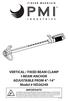 VERTICAL / FIXED BEAM CLAMP I-BEAM ANCHOR ADJUSTABLE FROM 4-14 Model # HD26249 IMPORTANT!!! ALL PERSONS USING THIS EQUIPMENT MUST READ AND UNDERSTAND ALL INSTRUCTIONS. FAILURE TO DO SO MAY RESULT IN SERIOUS
`Fall Protection Guidelines in Construction
 `Fall Protection Guidelines in Construction A Publication Provided by: 1681 Campus Delivery Fort Collins, Colorado 80523 (970) 491-6151 email: [email protected] web: http://www.bernardino.colostate.edu/public/
Fall Hazards 1/3/2014. Introduction
 Fall Hazards Introduction Fall hazards exist at most construction worksites exposing workers to dangerous work environments on a daily basis. A fall hazard is anything that may cause a person to lose his
FALL PROTECTION- Part 2 SELF INSPECTION CHECKLIST
 OPTIONAL INFORMATION Name of School: Date of Inspection: Vocational Program/Course/Room: Signature of Inspector: FALL PROTECTION- Part 2 Instructions: This checklist covers fall protection systems criteria
Fall Protection Equipment
 Fall Protection Equipment Quick Tips #130 Introduction Before you can begin a fall protection program, you must identify the potential fall hazards in your workplace. Any time a worker is at a height of
Sample Fall Protection Program
 Sample Fall Protection Program Revised August 2000 Table of Contents Page Purpose and Scope...3 Goals...3 Definitions...3 Types of Fall Protection Systems...6 Fall Protection Locations...6 Fall Protection
OSHA 1910.66 Remove impacted systems and components. Inspect systems prior to use.
 Q: When do I remove my harness from service? A: ANSI (American National Standards Institute) A10.32-2004 states the service life of fall protection equipment manufactured of synthetic fiber shall be 5
Fall Protection System: A system put in place to protect workers from falling. (i.e. installation of guardrails, fall arrest, fall restraint, etc.
 SWP (6) FALL PROTECTION PROGRAM The following information on Fall Protection has been based around the BC OHS Regulations, standards, policies and guidelines. Prior to starting work outside of BC, the
Fall Protection Safety Program
 Fall Protection Safety Program ENVIRONMENTAL HEALTH & SAFETY pg. 1 Table of Contents A. Introduction... 3 B. Scope... 3 C. Responsibilities... 3 1. Department... 3 2. Environmental Health & Safety (EHS)...
OSHA 29 CFR 1926 Subpart M (1926.500-503) OSHA 29 CFR 1910 Subparts D,F, I (1910.23, 66, 67, and 132
 OSHA 29 CFR 1926 Subpart M (1926.500-503) OSHA 29 CFR 1910 Subparts D,F, I (1910.23, 66, 67, and 132 Importance of Fall Protection Each year, approximately 14 percent of fatal workplace injuries are caused
Department of Environmental Health & Safety. Fall Protection Program
 Department of Environmental Health & Safety Fall Protection Program Issued by: Jeff Campbell Date Effective: March 2010 University Policy Ohio University is dedicated to the protection of its employees
Fall Protection Susan Harwood Grant Training Program 2013 Fall Arrest. OSHA Susan Harwood Training - AGC
 Fall Protection Susan Harwood Grant Training Program 2013 Fall Arrest Learning Objectives Identify the components of a proper personal fall arrest system (PFAS) Understand how to calculate total fall distance
Wire Rope Extender Lanyard
 Reliance Industries, LLC User Instructions for Wire Rope Extender Lanyard Model # 714004 Reliance Industries, LLC PO Box 140008 Denver, CO 80214 Ph. (800) 488-5751 Ph. (303) 424-8650 Fax (303) 424-8670
It should be noted that this revised standard does not address the construction industry, window cleaning belts, and sports-related activities.
 ANSI Z359 OVERVIEW INTRODUCTION ANSI Z359.1 was introduced in 1992 when standards for common fall protection equipment and methods in the workplace did not exist. That year 600 work-related falls resulted
Lanyards. Self Retracting. User Instructions. 3M Occupational Health and Environmental Safety. Fall Protection Equipment
 3M Occupational Health and Environmental Safety Fall Protection Equipment Self Retracting User Instructions Lanyards User Instructions for 3M TM Self Retracting Lanyards Important: Keep these User Instructions
Fall Protection, Title 29 Code of Federal Regulations (CFR) Part 45, Subpart M, Fall Protection, 1926.500, 1926.501, 1926.502, and1926.
 STANDARDS Fall Protection, Title 29 Code of Federal Regulations (CFR) Part 45, Subpart M, Fall Protection, 1926.500, 1926.501, 1926.502, and1926.503 1.0 Purpose This document meets the requirements outlined
2016 Spring Fall Protection Construction Products
 2016 Spring Fall Protection Construction Products Anchorage 3-Man Swiveling Roof Anchor 2103690 Reusable 3-man swiveling roof anchor for sloped wood structures with fasteners. Concrete D-ring Anchor 2104560
SITE SPECIFIC FALL PROTECTION PLAN
 1 THIS PLAN IS SPECIFIC TO: PROJECT & ADDRESS 1.1 THIS PLAN IS SPECIFIC TO THE FOLLOWING AREA(S) ON SITE: Parkade level: Typical level: Other: Between G/L: 1.2 THIS PLAN IS APPLICABLE TO THE FOLLOWING
ELECTRICAL SAFETY & ARC FLASH Handbook
 Electricity Forum Handbooks Electrical Safety and Arc Flash Handbook Series ELECTRICAL SAFETY & ARC FLASH Handbook Volume 10 Reprinted by permission of the publisher, Hurst Communications, from the Electrical
Fall Protection Basics for Construction Activities
 Fall Protection Basics for Construction Activities Washington State has revised fall protection rules, effective April 1, 2013. This booklet provides an overview of the requirements. www.lni.wa.gov/safety
SURVIVING THE FALL: The Proper Use Of Your Personal Fall Arrest System
 SURVIVING THE FALL: The Proper Use Of Your Personal Fall Arrest System This easy-to-use Leader s Guide is provided to assist in conducting a successful presentation. Featured are: INTRODUCTION: A brief
This material was produced under grant number SH-17792-08-60-F-48 Occupational Safety and Health Administration, U.S. Department of Labor.
 Big Four Construction Hazards: Fall Hazards This material was produced under grant number SH-17792-08-60-F-48 Occupational Safety and Health Administration, U.S. Department of Labor. It does not necessarily
Health and Safety Resources Caution to Users
 Health and Safety Resources Caution to Users Many of the resources in this archive were originally prepared by WSN s predecessor organizations for use by industry clients. While much of the information
RESCUE PLAN FALL PROTECTION PROGRAM
 RESCUE PLAN IMPORTANT: This document is intended to provide guidance only for developing site-specific rescue plans for working at heights. GLOBAL LEADER IN FALL PROTECTION RESCUE PLAN This document is
Product Name: Beamer 2000
 Product Name: Beamer 2000 Part #: 00101; 00103 Instruction Manual Do not throw away these instructions! Read and understand these instructions before using equipment! Introduction 1 Applicable Safety Standards
Fall Protection. Solutions for Safety at Heights. Risk Assessment. Hierarchy of fall protection options. Supplementary Administration Controls
 Solutions for Safety at Heights Risk Assessment Consult AS/NZS 1891.4 HIERARCHY OF CONTROLS, these are; IDENTIFY all potential fall hazards. ELIMINATE the need to access the potential hazard area. SUBSTITUTION
PERSONAL FALL PROTECTION. Travel-Restraint Systems. Fall-Arrest Systems
 19 PERSONAL FALL PROTECTION A worker at risk of falling certain distances (see chapter on Guardrails in this manual) must be protected by guardrails or, if guardrails are not practical, by a travelrestraint
WORKING AT HEIGHTS. Introduction. Risk Assessment
 WORKING AT HEIGHTS Introduction This guideline makes reference to the provisions regarding working at heights in the Regulation for Industrial Establishments (Reg. 851) and the Regulation for Construction
Fall Protection and Prevention Training Construction & Safety Professionals
 FALL PREVENTION & PROTECTION Fall Protection and Prevention Training Construction & Safety Professionals INTRODUCTION Falls are the leading cause of work related injuries and fatalities Approximately 3
Operations and Instruction Manual Might Swivel - Part # 310273 Concrete and Steel Anchorage Connector ANSI Z359.1 10,000 lbs / 44kn
 Safety.. Operations and Instruction Manual Might Swivel - Part # 310273 Concrete and Steel Anchorage Connector ANSI Z359.1 10,000 lbs / 44kn Description: Technical: Zinc plated forged heat treated steel,
Sample Fall Protection Program, General Industry
 PLEASE NOTE: This is a sample policy document and is not to be used in its current format. This sample policy should be reviewed and updated to: verify that all of the material included is compliant with
Guide to Fall Protection Regulations
 Guide to Fall Protection Regulations Produced by: Workers Compensation Board of PEI PO Box 757 Charlottetown PE C1A 7L7 902-368-5697 or 1-800-237-5049 website: www.wcb.pe.ca Revised June 2013 Guide to
Frequently Addressed Topics in Fall Protection
 PPEPERSPECTIVES FROM THE INTERNATIONAL SAFETY EQUIPMENT ASSOCIATION Frequently Addressed Topics in Fall Protection ISEA member companies collectively receive thousands of calls from employers, end-users
PERSONAL FALL PROTECTION EQUIPMENT USE AND SELECTION GUIDE
 PERSONAL FALL PROTECTION EQUIPMENT USE AND SELECTION GUIDE FOREWORD A comprehensive fall protection program prevents injuries, saves lives and makes good business sense. In almost every industry, there
fall arrest. Contact your distributor or Guardian about policies regarding replacement of Guardian components involved in a fall.
 Guardian Fall Protection Kent, WA 800-466-6385 www.guardianfall.com GENERAL SYSTEM SELECTION CRITERIA: Selection of fall protection shall be made by a Competent Person. All fall protection equipment shall
A New Era for an Old Standard A Review of Changes to ANSI Z359.1-1992(R1999)
 Capital Safety - USA 3833 SALA Way Red Wing, MN 55066-5005 Ph: 651-388-8282 Fax: 651-388-5065 A New Era for an Old Standard A Review of Changes to ANSI Z359.1-1992(R1999) I. Introduction A new era is in
http://www.osha.gov/doc/outreachtraining/htmlfiles/subpartm.html
 Page 1 of 10 www.osha.gov A-Z Index: A B C D E F G H I J K L M N O P Q R S T U V W X Y Z Search OSHA
Walking and Working Surface Checklist:
 Walking and Working Surfaces Purpose: This information is presented to improve the level of safety in our operations, and to inform you that we will comply with the OSHA Standard 29 CFR 1910.23. Responsibility:
Fall Protection. Office of Risk Management. uottawa.ca. Guide
 Fall Protection Guide Office of Risk Management.ca 1 Contents SCOPE... 1 INTENT... 1 LEGISLATION AND REQUIREMENTS... 1 RESPONSABILITIES... 2 Supervisors... 2 Workers... 2 Facilities... 2 HAZARD CONTROL...
Walking Working Surfaces and Fall Protection Program
 DEPAUL UNIVERSITY Walking Working Surfaces and Fall Protection Program Environmental Health & Safety March 2015 TABLE OF CONTENTS SECTION PAGE NO. 1.0 PURPOSE AND SCOPE 3 2.0 BASICS FOR STAFF, FACULTY,
Operating instructions. 3-in. x 6-ft. Anchor Strap for Skyline Horizontal Lifeline
 Reliance Industrial Products, LLC Operating instructions for 3-in. x 6-ft. Anchor Strap for Skyline Horizontal Lifeline Model # 6095 Reliance Industrial Products PO Box 140008 Denver, CO 80214 Ph. (800)
Instructions for the following series products:
 Instructions for the following series products: Full Body Harnesses (See back pages for specific model numbers.) User Instruction Manual Full Body Harness This manual is intended to meet the Manufacturer
FALL PROTECTION HAZARD SURVEY
 SAMPLE FALL PROTECTION HAZARD SURVEY Job Description COMPANY City, State I N C. S Y S T E M S Table Of Contents 1.0 Introduction 1 2.0 Legislation 2 3.0 Hazard Ranking System 3.1 General 3 3.2 Relative
CHAPTER 10. FALL PROTECTION PROGRAM
 CHAPTER 10. FALL PROTECTION PROGRAM 1000 GENERAL. This chapter establishes policy for developing fall protection programs to protect all Federal Aviation Administration (FAA) personnel working at elevated
Fall protection systems and practices Duty to have fall protection Protection at or above 6' level.
 Duty to have fall protection Protection at or above 6' level. Walking/working surfaces inspected before work begins. Employees can only work on surfaces strong enough to support them. Page 1 Protection
WEEKLY SAFETY MEETING
 Safety Meeting Contents Meeting Notice Leaders Guide Employee Handout Employee Quiz Meeting Sign-In Sheet Employee Puzzle PRIOR TO THE WEEKLY MEETING: - Post the meeting notice by the timeclock - Read
Chapter 3: Fall Protection/ Scaffolding Safety
 Chapter 3: Fall Protection/ Scaffolding Safety Learning Objectives In this chapter you will learn to: recognize the hazards commonly associated with work on or around scaffolds; be aware of common scaffold-related
Figure 1-5000335. Figure 2 - Applications
 User Instruction Manual 5000335 Rope Grab This manual is intended to meet the Manufacturer's Instructions as required by ANSI Z359.1, and should be used as part of an employee training program as required
Fall Protection Guideline
 EVERYONE'S RESPONSIBILITY Fall Protection Guideline July 2008 Fall Protection Guideline Workplace Safety & Health Division 200 401 York Avenue Winnipeg, Manitoba R3C 0P8 July 2008 The Province of Manitoba
Introduction to Fall Protection. The University of Tennessee Office of Environmental Health & Safety
 Introduction to Fall Protection The University of Tennessee Office of Environmental Health & Safety What is Fall Protection? Fall protection is the backup system planned for a worker who could loose his
QUESTIONS AND ANSWERS ON NEW FALL PROTECTION LEGISLATION
 QUESTIONS AND ANSWERS ON NEW FALL PROTECTION LEGISLATION 50.4(1) An owner of a place of employment, an employer and a contractor shall each ensure that each component of a fall-protection system is inspected
Sample Fall Rescue Plan for Bridge Work
 This document is intended to provide guidance for developing fall rescue plans for bridge contractors. The Occupational Safety and Health Administration s (OSHA) regulation 29 CFR 1926.502(d)(20) states:
FALL PROTECTION WORK PLAN
 FALL PROTECTION WORK PLAN INSTRUCTIONS A written fall protection work plan must be implemented by each employer on a job site where a fall hazard of 10 feet or greater exists, in accordance with OSHA Standards.
Personal Protective Equipment FALL PROTECTION
 NORTHWEST TERRITORIES & NUNAVUT CODES OF PRACTICE Personal Protective Equipment FALL PROTECTION HEAD OFFICE Yellowknife Box 8888, 5022 49th Street Centre Square Mall, 5th Floor Yellowknife, NT X1A 2R3
Miller Engineered Solutions Customized Fall Protection Solutions. NEW! Now featuring Rigid Rail Systems
 Miller Engineered Solutions Customized Fall Protection Solutions NEW! Now featuring Rigid Rail Systems Custom systems for fall protection needs Vast network of trained and certified installer partners
WorkSafe Guidance Document FALL PROTECTION IN RESIDENTIAL CONSTRUCTION
 WorkSafe Guidance Document FALL PROTECTION IN RESIDENTIAL CONSTRUCTION WorkSafe Guidance Document Fall Protection in Residential Construction Table of Contents Executive Summary... 1 Introduction... 1
PLEASE NOTE. For more information concerning the history of these regulations, please see the Table of Regulations.
 PLEASE NOTE This document, prepared by the Legislative Counsel Office, is an office consolidation of this regulation, current to June 9, 2012. It is intended for information and reference purposes only.
ADMINISTRATIVE PROCEDURE
 Page 1 of 12 1. Purpose: The purpose of a Program is to establish procedures to protect all employees engaged in outdoor or indoor work activities that expose them to potential falls from elevations. This
Horizontal Cable Systems
 Safety From The Top Down Suspended Access Systems and Fall Protection Overview Horizontal cable systems are generally installed as a permanent fall protection system, typically consisting of two terminating
Understanding the ANSI Z359 Fall Protection Code
 Understanding the ANSI Z359 Fall Protection Code Understanding the ANSI Z359 Fall Protection Code Purpose of Document This document provides a basic understanding of the ANSI Z359 Fall Protection Code
SECTION 21. Fall Protection
 SECTION 21 Fall Protection 21.A General. The requirements of this Section are applicable to all Government and C work forces when their employees are working at heights, exposed to fall hazards and/or
CODE OF PRACTICE FOR FALL PROTECTION/WORK AT HEIGHT
 CODE OF PRACTICE FOR FALL PROTECTION/WORK AT HEIGHT Section: Date of Issue: November 29, 2007 Issued By: Environmental Health &Safety Part: Revision #: -- Revision Date: August 11, 2009 Pages: 63 Revised
COURSE INFORMATION SHEET
 Course ID: HGT - WRKHT COURSE OVERVIEW WORKING AT HEIGHTS Working at Heights is an approved Ontario Ministry of Labour (MOL) program (Approved Training Program ID # WAH56789). This program was designed
CHECKLIST Fall Protection
 Walking/working surfaces can support employees. Employees are protected from falling from elevated surfaces through the use of guardrail systems, safety net systems; personal fall arrest systems, controlled
Washington Industrial Safety & Health Division (WISHA) Fall Protection: Responding to Emergencies: F417-208-000
 R E S P O N D I N G T O E M E R G E N C I E S Fall Protection: Responding to Emergencies: F417-208-000 Washington Industrial Safety & Health Division (WISHA) Materials contained in this publication are
OSHA GUIDANCE DOCUMENT FALL PROTECTION IN RESIDENTIAL CONSTRUCTION
 OSHA GUIDANCE DOCUMENT FALL PROTECTION IN RESIDENTIAL CONSTRUCTION OSHA GUIDANCE DOCUMENT FALL PROTECTION IN RESIDENTIAL CONSTRUCTION Table of Contents Executive Summary... 1 Introduction... 1 Installing
OSHA Subpart M Fall Protection
 OSHA Subpart M Fall Protection 1926.500 Scope, Application and Definitions (b) Definition "Body harness" means straps which may be secured about the employee in a manner that will distribute the fall arrest
OSHA 3146-05R 2015. Fall Protection in Construction
 OSHA 3146-05R 2015 Fall Protection in Construction Occupational Safety and Health Act of 1970 To assure safe and healthful working conditions for working men and women; by authorizing enforcement of the
OREGON OCCUPATIONAL SAFETY AND HEALTH STANDARDS. Oregon Administrative Rules, Chapter 437 DIVISION 3 (29 CFR 1926) CONSTRUCTION CONSTRUCTION
 OREGON OCCUPATIONAL SAFETY AND HEALTH STANDARDS Oregon Administrative Rules, Chapter 437 DIVISION 3 (29 CFR 1926) CONSTRUCTION CONSTRUCTION Subdivision M Fall Protection (Oregon OSHA) Department of Consumer
Temporary Horizontal Lifeline System Manual Standard Duty - E8 Model: HLLA38030 and HLLA38060
 P.O. Box 3026 Sherwood Park Alberta T8H 2T1 Phone: (780) 464-7139 Fax: (780) 464-7652 e-mail: inquiries@ safetydirect.ca Web site: www.safetydirect.ca Temporary Horizontal Lifeline System Manual Standard
RZ Guardrail System Installation Manual
 TM RZ Guardrail System Installation Manual RZ Guardrail System Compliance is based on OSHA standards: (Standards - 29 CFR) 1910.23 (e) and (Standards - 29 CFR) 1926.502 (b) Failure to read, understand
SCOPE This guideline applies to all construction projects on Emory University properties, including renovation projects.
 1762 Clifton Road, Suite 1200 Atlanta, Georgia 30322 (404) 727-5922 FAX: (404) 727-9778 FALL PROTECTION DESIGN AND CONSTRUCTION GUIDELINES PURPOSE The purpose of this guideline is to provide safe design
WALKING-WORKING SURFACES (SLIPS, TRIPS, AND FALLS)
 WALKING-WORKING SURFACES (SLIPS, TRIPS, AND FALLS) Slips, trips, and falls constitute the majority of general industry accidents. They cause 15% of all accidental deaths, and are second only to motor vehicles
FALL PROTECTION PROGRAM
 Department of Environmental Safety DIVISION OF ADMINISTRATIVE AFFAIRS FALL PROTECTION PROGRAM Revised December r 2014 UNIVERSITY OF MARYLAND, COLLEGE PARK, MD 20742-3133 (301) 405-3960 FAX (301) 314-9294
G. D-Ring A connector incorporated into a full body harness as an attachment point for lanyard and energy absorber lifelines.
 D. Buddy System Is intended as an interim measure to provide a safe working environment when removing or opening a manhole, vault or pit covers. Requires a crew of no less than 2 individuals, of which
PERSONAL FALL PROTECTION. Travel-Restraint Systems. Fall-Arrest Systems
 19 PERSONAL FALL PROTECTION A worker at risk of falling certain distances (see chapter on Guardrails in this manual) must be protected by guardrails or, if guardrails are not practical, by a travelrestraint
Walking/Work Surfaces Fall Protection Program
 Reviewed: 10-2006 Walking/Work Surfaces Fall Protection Program It is the responsibility of all supervisors and/or administrators to implement this safety program. Their responsibility includes yearly,