
RNOH Physiotherapy Department Rehabilitation guidelines for patients undergoing spinal surgery
|
|
|
- Norma Powers
- 9 years ago
- Views:
Transcription
1 RNOH Physiotherapy Department Rehabilitation guidelines for patients undergoing spinal surgery Please note that this is advisory information only. Your experiences may differ from those described. All exercises must be demonstrated to a patient by a fully qualified physiotherapist. We cannot be held liable for the outcome of you undertaking any of the exercises shown here independently of direct supervision from the RNOH. As a specialist orthopaedic hospital we recognise that our broad and often complex patient group needs an individualised rehabilitation approach. Our emphasis is on patient-specific rehabilitation, which encourages recognition of those patients who may progress slower than others. These rehabilitation guidelines are therefore milestone driven and designed to provide an equitable rehabilitation service to all our patients. They will also limit unnecessary visits to the outpatient clinic at RNOH by helping the patient and therapist to identify when specialist review is required. Rehabilitation guidelines for patients undergoing Lumbar Disc Replacement (LDR) surgery Indications: Single level lumbar disc degenerative problems with relatively well preserved disc height and facet joints Possible complications of surgery: Vascular complications Infection Nerve damage On-going back pain Dural tear Recurrence Retrograde ejaculation Increased degeneration of facet joints at the same level or adjacent levels Failure of prosthesis by subsidence or migration Osteolysis and aseptic loosening of prosthesis Heterotrophic ossification Expected outcome: Patient reports good relief of back pain Back pain can persist, possible sources are the facet or sacroiliac joints. Improvements can continue for up to 18 months post operatively

2 Pre-operatively Where practical the patient will be seen pre-operatively and with consent, the following assessed: Current functional levels General health Social/work/hobbies Posture Functional R.O.M., e.g. dressing/bending, sitting, sit to stand and stairs if appropriate Gait/Mobility including any walking aids, corsets etc Neurological function and pathodynamics Post-operative expectations, especially long-term self-management and precautions The patient information leaflet will be issued to the patient and exercises taught with warnings. Post-operative management will be explained and log-rolling practised. Post-operatively Always check operation notes and post-operative instructions. Discuss any deviation from routine guidelines with the medical team concerned. NB: If dural tear intra-operatively, patient may complain of intense, severe low pressure headache (i.e. worse on sitting up). In this instance, mobilise as comfort allows, only after period of flat bed rest prescribed by surgeon (usually between 48 hours and 5 days). Some patients might be required to wear a corset for up to 6 weeks post-operatively. This will be documented in the post-operative instructions if required. Initial recovery phase: 0 4 weeks Goals: 1. Patient education of anatomy, spinal biomechanics and correct postures. 2. Patient awareness of post-operative precautions 3. Mobilise independently and safely 4. Independent with basic exercise programme 5. Understand self-management and pacing concept particularly with PADLs and ADLs 6. Patient can return to driving as soon as they are comfortable and deem themselves to be safe to do so 7. Return to function, including work 8. Begin stability exercises Precautions: For the first 4 weeks, whilst the initial post-operative pain settles it is advisable to be careful with some activities. A gradual paced increase in activities is recommended bearing in mind postoperative discomfort, neural sensitivity and the patient s pre-morbid state of physical function.

3 1. Sitting should be gradually built up during activities such as eating or relaxing and should be guided by the development of symptoms. A limit of minutes is suggested for the first few days. Once this is comfortable it can be gradually increased. If a long journey is unavoidable e.g. to get home from hospital, the patient can recline as a passenger and ensure breaks every minutes to mobilise. 2. Avoid prolonged sitting (for more than one hour) for about 4 weeks until neural sensitivity has settled and strength improved. It can then be tried with care, e.g. in the bath. 3. Walking is unrestricted. It should be encouraged to be increased day by day as comfort allows. 4. Extremes of flexion, extension and rotation in sitting or standing should be done with caution for the first 4 weeks and will be guided by the patient s symptoms and pre-morbid level of activity. This means care needs to be taken when getting into and out of the car or bed. 5. Driving can be started as soon as the patient is able to sit comfortably in the driving position for the amount of time they will be driving for, turn to look in the mirror and have 100% reaction times in the case of an emergency stop. As with all activities, driving should be paced and gradually increased. It may also be advisable to inform your insurance company prior to starting to drive. 6. Lifting for the first week should initially be limited to about 1kg (a half full kettle), then gradually increased. 7. Log-rolling should be continued until neural sensitivity has settled and strength improved which should take about 4 weeks. 8. Return to work might need to be graded depending on the patient s occupation. 9. Abdominal exercises should not be included until at least 6 weeks. Treatment: Pain relief: Ensure adequate analgesia; advise of suitable positioning. Patient education: Advice given on sitting relating to patient s function. Reinforce selfmanagement and building up of activities appropriately. Precautions as above Postural awareness: Advice given on the importance of good posture especially in sitting. Exercises: Teach core stability exercises in lying and in functional positions. Teach lying to standing through side-lying, log rolling. Teach basic exercises from patient information leaflet. Mobility: Ensure patient is independent with transfers and mobility, including stairs if appropriate. Pre-operative status will affect outcome goals. If a walking aid is given and was not used pre-morbidly, the surgical team will be informed. On discharge home from hospital Ensure patient has been referred for outpatient physiotherapy. The patient should aim to achieve: 1. Independent and safe mobility, including stairs if appropriate.

4 2. Independent with good understanding of the home exercise programme. 3. Independent in transfers. Milestones to progress to next rehab phase: 1. Adequate pain control 2. Basic core stability 3. Starting to build-up normal activities 4. Normal gait pattern 5. Increasing sitting and walking tolerance Rehabilitation phase 4 20 weeks Goals: 1. Return to non-contact sport/gym at 6 weeks (see restrictions) 2. Optimise normal movement 3. Increase lifting to functional requirements 4. Aerobic fitness 5. Progress stability exercises Restrictions These are designed to allow the prosthesis to embed and any neural sensitivity to fully settle: 1. Avoid heavy lifting of more than 10kg until 12 weeks post-operation or until the surgeon advises 2. Heavy manual work or contact sports should be avoided for at least 3 months and then resumed on agreement with the consultant Treatment: Pain relief: Ensure appropriate analgesia for amount of exercise and activity Patient education: Continue with pacing activities within appropriate restrictions. Ensure patient is exercising an appropriate amount. Proceed cautiously with activities that were previously aggravating. Postural awareness and encourage normal movement patterns. Postural awareness: Reinforce importance of good posture with return to higher levels of activity and sports. Ensure patient understands good practice of changing posture regularly and educate patient on pacing strategies. Exercise: It is important at this stage to build up the spine s stability and training the core muscles to protect the spine. Progress core stability exercises to ensure good control with all movements, include balance and proprioceptive training. Progress functional range of movement, whilst still avoiding sustained flexion and extension at end range. General fitness advice, e.g. swimming start initially with backstroke and add-in other strokes within comfort. Can attend gym and return to sport (see restrictions). Trunk, upper and lower limb conditioning as relevant to patient s goals. Advanced abdominal exercises should not be included until at least 6 weeks. Stretches should be included as long as there is not significant leg pain or neural tension

5 Mobility: Continue to improve the patient s aerobic fitness, the patient should be now at pre-morbid level in terms of pattern, use of walking aid and distance. Manual therapy: Soft tissue and neuropathodynamics treatment as suitable. Joint mobilisations on non-operated levels can be used if appropriate. Milestones to be achieved by 24 weeks Recovery can continue up until 18 months post operation, so patient s expectations must be discussed with them so they are realistic for their individual situation. 1. Achieve realistic goals set together with patient 2. Return to normal activities, including work 3. Minimal leg pain 4. Starting to return to contact sports 5. Continuing with paced exercise programme and good posture Failure to meet milestones: Refer back to surgical team Continue with outpatient physiotherapy whilst still making progress Consider referral to RNOHT for inpatient rehabilitation/active Back Programme (ABP) Failure to progress If a patient is failing to progress, then consider the following: Possible problem Causes Action Leg pain Neural sensitivity Can take up to 4-6 weeks to decrease Ensure adequate analgesia Keep exercises pain free Decrease sitting times slightly Progression of activities too quickly or too slowly If persists, refer back to surgical team Neurological deterioration Possible movement of prosthesis Segmental instability Review pre-operative neurological status Closely monitor and inform surgical team Inflamed wound Possible infection Refer to surgical team or GP Exercises painful Patient not exercising regularly Poor technique Irritable back still Poor patient compliance Alter exercise programme and correct technique Ensure exercises are focussed and relate to function Explain importance of good muscle function and posture to

6 enough or following restrictions Altered neuropathodynamics Back pain Common Increased load on facet joints or sacroiliac joints Spinal motion segment changes. Check not returning to activities too quickly Check technique Headaches Dural tear (1 st 4 weeks ) Postural or altered neuropathodynamics other pathology avoid flare-ups Assess and treat accordingly Ensure adequate analgesia Liaise with medical team (check X-rays at 3 and 6 months) Ensure exercises are appropriate and not increasing too quickly or too slowly Check core stability Not sitting or walking too much. Reassure it can be common If has dural tear during surgery, this can take up to 2 weeks to settle If onset is after 4 weeks postop, assess and treat if appropriate and liaise with referrer

7 Bibliography 1. Balkan C, Richter M, Kafer W, Puhl W, Schmidt R. The impact of total lumbar disc replacement on segemental and total lumbar disc lordosis. Clinical Biomechanics 2005;20(4): Bertagnoli R, Kumar S. Indications for full prosthetic disc arthroplasty: a correlation of clinical outcome against a variety of indications. European Spine Journal 2002;11: Chung S, Chong S, Chung Seok K, Sang Hyun, K. The effect of lumbar total disc replacement on the spinopelvic alignment and range of motion of the lumbar spine. Journal of Spinal Disorders 2006;19(5): Geisler FH. Surgical technique of lumbar artificial disc replacement with the Charite artificial disc. Operative Neurology 2005;56(1): Ghiselli G, Wang SC, Bhatia NN. Adjacnt segment degeneration in the lumbar spine. Journal of Bone and Joint Surgery 2004;86-A: Huang RC, Giradi FP, Cammisa FP, Wright TM. The implications of constraint in lumbar total disc replacement. Journal of Spinal Disorders 2003;16(4): Leahy M, Zigler J, Ohnmeiss D, Rashbaum R, Barton S. Comparison of results of total disc replacement in postdiscectomy patients versus patients with no previous lumbar surgery 2008;33(15): Mayer HM. Total lumbar disc replacement. Journal of Bone and Joint Surgery 2005;87(8): Park C, Kyeong-Sik R, Won-Hee J. Degenerative changes of discs and facet joints in lumbar total disc replacement using ProDisc 11: minimum two year follow up. Spine 2008;33(16): Punt IM, Visser VM, van Rhijn LW, Kurtz SM, Antonis J, Schurink GWH, van Ooil A. European pine Journal 2008;17(1): Rundell S A, Auerbach J D, Balderston R A, Kurtz S M. Total disc replacement positioning affects facet contact forces and vertebral body strains. Spine 2008;33: Siepe CJ, Mayer HM, Heinz-Leisenheimer M, Korge A. Total lumbar disc replacement: different results for different levels. Spine 2007;32(7):

8 13. Siepe CJ, Mayer HM, Wiechert K, Korge A. Clinical results of total lumbar disc replacement with ProDisc 11: three year results for different indications. Spine 2006;31(17): Siepe CJ, Wiechert K, Khattab M F, Korge A, Mayer H M. Total lumbar disc replacement in athletes: clinical results, return to sport and athletic performance. European Spine Journal 2006;16(7): Stieber JR, Donald GD. Early failure of lumbar disc replacement: case report and review of the literature. Journal of Spinal Disorders 2006;19(1):55-60

RNOH Physiotherapy Department (020 8909 5820) Rehabilitation guidelines for patients undergoing spinal surgery
 RNOH Physiotherapy Department (020 8909 5820) Rehabilitation guidelines for patients undergoing spinal surgery As a specialist orthopaedic hospital we recognise that our broad and often complex patient
RNOH Physiotherapy Department (020 8909 5820) Rehabilitation guidelines for patients undergoing spinal surgery
 RNOH Physiotherapy Department (020 8909 5820) Rehabilitation guidelines for patients undergoing spinal surgery As a specialist orthopaedic hospital, we recognise that our broad and often complex patient
RNOHT PHYSIOTHERAPY DEPARTMENT Rehabilitation guidelines for patients undergoing spinal surgery
 RNOHT PHYSIOTHERAPY DEPARTMENT Rehabilitation guidelines for patients undergoing spinal surgery Please note that this is advisory information only. Your experiences may differ from those described. All
Spinal Discectomy & Decompression Surgery
 1.0 Policy Statement... 2 2.0 Purpose... 2 3.0 Scope... 2 4.0 Health & Safety... 2 5.0 Responsibilities... 2 6.0 Definitions and Abbreviations... 3 7.0 Guideline... 3 7.1 Pre-Operative... 3 7.2 Post-Operative...
Rehabilitation guidelines for patients undergoing knee arthroscopy
 Rehabilitation guidelines for patients undergoing knee arthroscopy At the RNOH, our emphasis is patient specific, which encourages recognition of those who may progress slower then others. We also want
Rehabilitation Guidelines for Post-Operative Stiff Shoulder
 Rehabilitation Guidelines for Post-Operative Stiff Shoulder Please note that this is advisory information only. Your experiences may differ from those described. A fully qualified Physiotherapist must
Rehabilitation Guidelines for Post-Operative Shoulder Instability Repair
 Rehabilitation Guidelines for Post-Operative Shoulder Instability Repair Please note that this is advisory information only. Your experiences may differ from those described. A fully qualified Physiotherapist
SPINE SURGERY - LUMBAR DECOMPRESSION
 SPINE SURGERY - LUMBAR DECOMPRESSION Information Leaflet Your Health. Our Priority. Page 2 of 7 Introduction This booklet has been compiled by the physiotherapy department to help you understand lumbar
SPINAL STENOSIS Information for Patients WHAT IS SPINAL STENOSIS?
 SPINAL STENOSIS Information for Patients WHAT IS SPINAL STENOSIS? The spinal canal is best imagined as a bony tube through which nerve fibres pass. The tube is interrupted between each pair of adjacent
.org. Herniated Disk in the Lower Back. Anatomy. Description
 Herniated Disk in the Lower Back Page ( 1 ) Sometimes called a slipped or ruptured disk, a herniated disk most often occurs in your lower back. It is one of the most common causes of low back pain, as
A Patient s Guide to Post-Operative Physiotherapy. Following Anterior Cruciate Ligament Reconstruction of the Knee
 A Patient s Guide to Post-Operative Physiotherapy Following Anterior Cruciate Ligament Reconstruction of the Knee Introduction The anterior cruciate ligament (ACL) is one of the main supporting ligaments
Postoperative Rehabilitation following Lumbar Disc
 Postoperative Rehabilitation following Lumbar Disc Arthroplasty A Clinical Reasoning & Best Evidence Approach Outline Prevalence Indications for lumbar disc arthroplasty Surgical procedures Post-op rehabilitation
This is my information booklet: Introduction
 Hip arthroscopy is a relatively new procedure which allows the surgeon to diagnose and treat hip disorders by providing a clear view of the inside of the hip with very small incisions. This is a more complicated
A review of spinal problems
 Dr Ulrich R Hähnle MD, FCS Orthopaedic Surgeon, Wits Facharzt für Orthopädie, Berlin Phone: +27 11 485 3236 Fax: +27 11 485 2446 Suite 102, Medical Centre, Linksfield Park Clinic P.O. Box 949, Johannesburg
What is the function of the spinal column?
 What is the function of the spinal column? Stability The function of the human spinal column is above all to stabilise the head, the upper body, and walking upright. Primarily responsible for this are
Premier Orthopaedic Pathway. Physiotherapy after dynamic hip screw (DHS)
 Premier Orthopaedic Pathway Physiotherapy after dynamic hip screw (DHS) The surgery After a fractured hip a dynamic hip screw (DHS) is used to hold the bones in place while the fracture heals. It allows
Lumbar Disc Herniation/Bulge Protocol
 Lumbar Disc Herniation/Bulge Protocol Anatomy and Biomechanics The lumbar spine is made up of 5 load transferring bones called vertebrae. They are stacked in a column with an intervertebral disc sandwiched
Spine Surgery - Wallis Ligament Stabilisation
 Spine Surgery - Wallis Ligament Stabilisation An Information Leaflet Physiotherapy Department 0161 419 4060 August 2011 Every Patient Matters TO47 2 Introduction This booklet has been compiled by the physiotherapy
Total knee replacement: The enhanced recovery programme
 INFORMATION FOR PATIENTS Total knee replacement: The enhanced recovery programme Aim This leaflet aims to explain the enhanced recovery programme after total knee replacement surgery, and outline what
Patient Information for Lumbar Spinal Fusion. What is a lumbar spinal fusion? Page 1 of 5
 Patient Information for Lumbar Spinal Fusion What is a lumbar spinal fusion? You have been offered surgery to the lumbar region of your spine, your lower back. The operation is called a lumbar spinal fusion.
Patient Information. Lumbar Spine Segmental Decompression. Royal Devon and Exeter NHS Foundation Trust
 Lumbar Spine Segmental Decompression Royal Devon and Exeter NHS Foundation Trust Patient Information Lumbar Spine Segmental Decompression Reference Number: TO 05 004 004 (version date: June 2015) Introduction
Patient information for cervical spinal fusion.
 Patient information for cervical spinal fusion. Introduction This booklet has been compiled to help you understand spinal cervical fusion surgery and postoperative rehabilitation. Anatomy The cervical
Open Discectomy. North American Spine Society Public Education Series
 Open Discectomy North American Spine Society Public Education Series What Is Open Discectomy? Open discectomy is the most common surgical treatment for ruptured or herniated discs of the lumbar spine.
15 things you might not know about back pain
 15 things you might not know about back pain Mary O Keeffe (University of Limerick), Dr Kieran O Sullivan (University of Limerick), Dr Derek Griffin (Tralee Physiotherapy Clinic) Managing back pain costs
Herniated Disk in the Lower Back
 Nader M. Hebela, MD Fellow of the American Academy of Orthopaedic Surgeons http://orthodoc.aaos.org/hebela Cleveland Clinic Abu Dhabi Cleveland Clinic Abu Dhabi Neurological Institute Al Maryah Island
SHOULDER ACROMIOPLASTY/ SHOULDER DECOMPRESSION
 ORTHOPAEDIC WARD: 01-293 8687 /01-293 6602 BEACON CENTRE FOR ORTHOPAEDICS: 01-2937575 PHYSIOTHERAPY DEPARTMENT: 01-2936692 GUIDELINES FOR PATIENTS HAVING A SHOULDER ACROMIOPLASTY/ SHOULDER DECOMPRESSION
New York State Workers' Comp Board. Mid and Lower Back Treatment Guidelines. Summary From 1st Edition, June 30, 2010. Effective December 1, 2010
 New York State Workers' Comp Board Mid and Lower Back Treatment Guidelines Summary From 1st Edition, June 30, 2010 Effective December 1, 2010 General Principles Treatment should be focused on restoring
LOW BACK PAIN. common of these conditions include: muscle strain ( pulled muscle ), weak core muscles
 LOW BACK PAIN Most episodes of low back pain are caused by relatively harmless conditions. The most common of these conditions include: muscle strain ( pulled muscle ), weak core muscles (abdominal and
Trochanteric Bursitis Self Management for Patients
 Trochanteric Bursitis Self Management for Patients Updated May 2010 What is the Trochanteric Bursa? The trochanteric bursa is a fluid-filled sac that functions as a gliding surface to reduce friction between
Eastern Suburbs Sports Medicine Centre
 Eastern Suburbs Sports Medicine Centre ACCELERATED ANTERIOR CRUCIATE LIGAMENT REHABILITATION PROGRAM Alan Davies Diane Long Mark Kenna (APA Sports Physiotherapists) The following ACL reconstruction rehabilitation
Cervical Spondylosis. Understanding the neck
 Page 1 of 5 Cervical Spondylosis This leaflet is aimed at people who have been told they have cervical spondylosis as a cause of their neck symptoms. Cervical spondylosis is a 'wear and tear' of the vertebrae
Injury Prevention for the Back and Neck
 Injury Prevention for the Back and Neck www.csmr.org We have created this brochure to provide you with information regarding: Common Causes of Back and Neck Injuries and Pain Tips for Avoiding Neck and
Rehabilitation Protocol: Total Hip Arthroplasty (THA)
 Rehabilitation Protocol: Total Hip Arthroplasty (THA) Department of Orthopaedic Surgery Lahey Hospital & Medical Center, Burlington 781-744-8650 Lahey Outpatient Center, Lexington 781-372-7020 Lahey Medical
Surgery for cervical disc prolapse or cervical osteophyte
 Mr Paul S. D Urso MBBS(Hons), PhD, FRACS Neurosurgeon Provider Nº: 081161DY Epworth Centre Suite 6.1 32 Erin Street Richmond 3121 Tel: 03 9421 5844 Fax: 03 9421 4186 AH: 03 9483 4040 email: [email protected]
OUTPATIENT PHYSICAL AND OCCUPATIONAL THERAPY PROTOCOL GUIDELINES
 OUTPATIENT PHYSICAL AND OCCUPATIONAL THERAPY PROTOCOL GUIDELINES General Therapy Guidelines 1. Therapy evaluations must be provided by licensed physical and/or occupational therapists. Therapy evaluations
Back & Neck Pain Survival Guide
 Back & Neck Pain Survival Guide www.kleinpeterpt.com Zachary - 225-658-7751 Baton Rouge - 225-768-7676 Kleinpeter Physical Therapy - Spine Care Program Finally! A Proven Assessment & Treatment Program
Rehabilitation after lumbar discectomy, microdiscectomy and decompressive laminectomy. Information for patients
 Rehabilitation after lumbar discectomy, microdiscectomy and decompressive laminectomy Information for patients You have just had surgery on your lumbar spine. Below are some common questions with answers,
Rehabilitation after shoulder dislocation
 Physiotherapy Department Rehabilitation after shoulder dislocation Information for patients This information leaflet gives you advice on rehabilitation after your shoulder dislocation. It is not a substitute
Rehabilitation Protocol: Total Knee Arthroplasty (TKA)
 Rehabilitation Protocol: Total Knee Arthroplasty (TKA) Department of Orthopaedic Surgery Lahey Hospital & Medical Center, Burlington 781-744-8650 Lahey Outpatient Center, Lexington 781-372-7020 Lahey Medical
Orthopaedic Spine Center. Anterior Cervical Discectomy and Fusion (ACDF) Normal Discs
 Orthopaedic Spine Center Graham Calvert MD James Woodall MD PhD Anterior Cervical Discectomy and Fusion (ACDF) Normal Discs The cervical spine consists of the bony vertebrae, discs, nerves and other structures.
Primary and revision lumbar discectomy. (nerve root decompression)
 Primary and revision lumbar discectomy (nerve root decompression) The aim of this leaflet is to help answer some of the questions you may have about having a lumbar discectomy. It explains the benefits,
Information for the Patient About Surgical
 Information for the Patient About Surgical Decompression and Stabilization of the Spine Aging and the Spine Daily wear and tear, along with disc degeneration due to aging and injury, are common causes
visualized. The correct level is then identified again. With the use of a microscope and
 SURGERY FOR SPINAL STENOSIS Laminectomy A one inch (or longer for extensive stenosis) incision is made in the middle of the back over the effected region of the spine. The muscles over the bone are moved
Low Back Pain Protocols
 Low Back Pain Protocols Introduction: Diagnostic Triage And 1. Patient Group Adults aged 18 years and over with routine low back problems. Patients who have had recent surgery should be referred directly
Knee Arthroscopy Exercise Programme
 Chester Knee Clinic & Cartilage Repair Centre Nuffield Health, The Grosvenor Hospital Chester Wrexham Road Chester CH4 7QP Hospital Telephone: 01244 680 444 CKC Website: www.kneeclinic.info Email: [email protected]
Knee Microfracture Surgery Patient Information Leaflet
 ORTHOPAEDIC UNIT: 01-293 8687 /01-293 6602 BEACON CENTRE FOR ORTHOPAEDICS: 01-2937575 PHYSIOTHERAPY DEPARTMENT: 01-2936692 Knee Microfracture Surgery Patient Information Leaflet Table of Contents 1. Introduction
Copeland Surface Replacement Arthroplasty (Hannan Mullett)
 1.0 Policy Statement... 2 2.0 Purpose... 2 3.0 Scope... 2 4.0 Health & Safety... 2 5.0 Responsibilities... 2 6.0 Definitions and Abbreviations... 3 7.0 Guideline... 3 7.1 Pre-Operative... 3 7.2 Post-Operative...
Cervical Spondylosis (Arthritis of the Neck)
 Copyright 2009 American Academy of Orthopaedic Surgeons Cervical Spondylosis (Arthritis of the Neck) Neck pain is extremely common. It can be caused by many things, and is most often related to getting
National Hospital for Neurology and Neurosurgery. Managing Spasticity. Spasticity Service
 National Hospital for Neurology and Neurosurgery Managing Spasticity Spasticity Service If you would like this document in another language or format, or require the services of an interpreter please contact
Welcome to your LOW BACK PAIN treatment guide
 Welcome to your LOW BACK PAIN treatment guide You are receiving this guide because you have recently experienced low back pain. Back pain is one of the most common musculoskeletal problems treated in medicine
How to treat your injured neck
 How to treat your injured neck Exceptional healthcare, personally delivered Your neck is made up of a number of bones bound together by strong discs and ligaments. It is also protected by strong muscles.
Patient Information. Posterior Cervical Surgery. Here to help. Respond Deliver & Enable
 Here to help Our Health Information Centre (HIC) provides advice and information on a wide range of health-related topics. We also offer: Services for people with disabilities. Information in large print,
.org. Fractures of the Thoracic and Lumbar Spine. Cause. Description
 Fractures of the Thoracic and Lumbar Spine Page ( 1 ) Spinal fractures can vary widely in severity. While some fractures are very serious injuries that require emergency treatment, other fractures can
total hip replacement
 total hip replacement EXCERCISE BOOKLET patient s name: date of surgery: physical therapist: www.jointpain.md Get Up and Go Joint Program Philosophy: With the development of newer and more sophisticated
THE LUMBAR SPINE (BACK)
 THE LUMBAR SPINE (BACK) At a glance Chronic back pain, especially in the area of the lumbar spine (lower back), is a widespread condition. It can be assumed that 75 % of all people have it sometimes or
Shoulder Replacement Surgery
 In What Activities May I Participate After I Recover? Shoulder Replacement Surgery After undergoing shoulder replacement surgery, it is important to have realistic expectations about the types of activities
Herniated Lumbar Disc
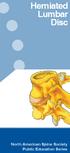 Herniated Lumbar Disc North American Spine Society Public Education Series What Is a Herniated Disc? The spine is made up of a series of connected bones called vertebrae. The disc is a combination of strong
ACL Rehabilitation Pathway. Expediating Safe Return to Optimum Performance. www.sportssurgeryclinic.com
 Specialists in Joint Replacement, Spinal Surgery, Orthopaedics and Sport Injuries ACL Rehabilitation Pathway Expediating Safe Return to Optimum Performance www.sportssurgeryclinic.com Contents Introduction...
Preventing & Treating Low Back Pain
 Preventing & Treating Low Back Pain An Introduction to Low Back Pain Low back pain is the number two reason that Americans see a health care practitioner second only to colds and flu. While most people
Dr Doron Sher MB.BS. MBiomedE, FRACS(Orth)
 Dr Doron Sher MB.BS. MBiomedE, FRACS(Orth) Knee, Shoulder, Elbow Surgery ACL REHABILITATION PROGRAM (With thanks to the Eastern Suburbs Sports Medicine Centre) The time frames in this program are a guide
Posterior Cervical Decompression
 Posterior Cervical Decompression Spinal Unit Tel: 01473 702032 or 702097 Issue 2: January 2009 Following your recent MRI scan and consultation with your spinal surgeon, you have been diagnosed with a
Premier patient information. Whiplash. Whiplash Exercises
 Premier patient information Whiplash Whiplash Exercises Keep moving! It may be painful but you ll get back to normal much quicker. Moving forward (in fact - moving in any direction!) Movement is the key
PHYSIOTHERAPY OF HIP AND KNEE AFTER SURGERY AND INJURY BY RACHEL GEVELL PHYSIOTHERAPIST
 PHYSIOTHERAPY OF HIP AND KNEE AFTER SURGERY AND INJURY BY RACHEL GEVELL PHYSIOTHERAPIST AIMS AND OBJECTIVES To demonstrate the use of physiotherapy assessment and treatment following: Hip Arthroplasty
My Spinal Surgery: Going Home
 My Spinal Surgery: Going Home The Spinal Surgery Team has prepared this insert containing information to help prepare you and your family for going home after your spinal surgery. Please visit the UHN
ADVICE TO PATIENT DUE TO HAVE MICRODISCECTOMY / SPINAL STENOSIS DECOMPRESSION. Under the Care of Mr M Paterson - 11 -
 ADVICE TO PATIENT DUE TO HAVE MICRODISCECTOMY / SPINAL STENOSIS DECOMPRESSION Under the Care of Mr M Paterson Acknowledgement: Drawings by Jean Paterson Perth Australia 2006 Brochure: R. Grubb Amended:
A Patient s Guide to Lateral Ligament Reconstruction of the Ankle
 A Patient s Guide to Lateral Ligament Reconstruction of the Ankle The Foot and Ankle unit at the Royal National Orthopaedic Hospital (RNOH) is a multi-disciplinary team. The team consists of three specialist
 Low Back Pain Mansour Dib MD Physical Medicine and Rehabilitation Pain generators Disc Posterior elements Sacro-iliac joint Education - Spine Positioning Neutral Extension Flexion Disc disease Discogenic
X Stop Spinal Stenosis Decompression
 X Stop Spinal Stenosis Decompression Am I a candidate for X Stop spinal surgery? You may be a candidate for the X Stop spinal surgery if you have primarily leg pain rather than mostly back pain and your
Cast removal what to expect #3 Patient Information Leaflet
 Cast removal what to expect #3 Patient Information Leaflet SM466 Now your cast is off, self help is the key! Follow the advice given to you by your doctor and the staff in the clinic. Your skin will be
A Patient s Guide to Diffuse Idiopathic Skeletal Hyperostosis (DISH)
 A Patient s Guide to Diffuse Idiopathic Skeletal Hyperostosis (DISH) Introduction Diffuse Idiopathic Skeletal Hyperostosis (DISH) is a phenomenon that more commonly affects older males. It is associated
Pelvic Girdle Pain (PGP) Fact Sheet
 Pelvic Girdle Pain (PGP) Fact Sheet Physiotherapy PGP describes pain that is experienced in the front (symphysis pubis joint) and/or back (sacroiliac joints) of your pelvis. This is a common problem, affecting
Total Hip Replacement
 NOTES Total Hip Replacement QUESTIONS DATES PHONE NOS. Compiled by Mr John F Nolan FRCS for The British Hip Society 2009. A patient s information booklet 16 1 Introduction This booklet has been produced
Ankle Stabilisation Procedure
 Ankle Stabilisation Procedure Exceptional healthcare, personally delivered Following your consultation with a member of the Foot and Ankle team you have been diagnosed with an unstable ankle. This leaflet
Managing the long-term consequences of sarcoma surgery and treatment at RNOH
 Managing the long-term consequences of sarcoma surgery and treatment at RNOH Ruth Carr Macmillan Sarcoma Physiotherapist The Royal National Orthopaedic Hospital, London Sarcoma Service Outline Overview
ACL RECONSTRUCTION POST-OPERATIVE REHABILITATION PROGRAMME
 ACL RECONSTRUCTION POST-OPERATIVE REHABILITATION PROGRAMME ABOUT THE OPERATION The aim of your operation is to reconstruct the Anterior Cruciate Ligament (ACL) to restore knee joint stability. A graft,
Wrist Fracture. Please stick addressograph here
 ORTHOPAEDIC UNIT: 01-293 8687 /01-293 6602 UPMC BEACON CENTRE FOR ORTHOPAEDICS: 01-2937575 PHYSIOTHERAPY DEPARTMENT: 01-2936692 GUIDELINES FOR PATIENTS FOLLOWING WRIST FRACTURE Please stick addressograph
PHYSIOTHERAPY REHAB AFTER HIP ARTHROSCOPY
 PHYSIOTHERAPY REHAB AFTER HIP ARTHROSCOPY Information Leaflet Your Health. Our Priority. Page 2 of 6 Introduction This leaflet has been compiled by the Physiotherapy Team to help you understand the hip
Neck Injuries and Disorders
 Neck Injuries and Disorders Introduction Any part of your neck can be affected by neck problems. These affect the muscles, bones, joints, tendons, ligaments or nerves in the neck. There are many common
ACL Reconstruction Rehabilitation Program
 ACL Reconstruction Rehabilitation Program 1. Introduction to Rehabilitation 2. The Keys to Successful Rehabilitation 3. Stage 1 (to the end of week 1) 4. Stage 2 (to the end of week 2) 5. Stage 3 (to the
Diagnosis and Management for Chronic Back Pain: Critical for your Recovery
 Diagnosis and Management for Chronic Back Pain: Critical for your Recovery Dr. Connie D Astolfo, DC, PhD (candidate) In past articles I have stressed that the causes of back pain can be very complex. This
Rehabilitation. Day Programs
 Rehabilitation Day Programs Healthe Care is the hospital division of Healthe. As the largest privately owned network of private hospitals in Australia, we take pride in delivering premium care to our valued
Before Surgery You will likely be asked to see your family physician or an internal medicine doctor for a thorough medical evaluation.
 Anterior Hip Replacement - Before and After Surgery Your Hip Evaluation An orthopaedic surgeon specializes in problems affecting bones and joints. The surgeon will ask you many questions about your hip
CAPPAGH NATIONAL ORTHOPAEDIC HOSPITAL, FINGLAS, DUBLIN 11. The Sisters of Mercy. Elbow Arthroplasty
 1.0 Policy Statement... 2 2.0 Purpose... 2 3.0 Scope... 2 4.0 Health & Safety... 2 5.0 Responsibilities... 2 6.0 Definitions and Abbreviations... 2 7.0 Guideline... 3 7.1 Indications... 3 7.2 Types of
Minimally Invasive Spine Surgery For Your Patients
 Minimally Invasive Spine Surgery For Your Patients Lukas P. Zebala, M.D. Assistant Professor Orthopaedic and Neurological Spine Surgery Department of Orthopaedic Surgery Washington University School of
Our mission is to help you experience the greatest benefits possible. Our physicians and care staff are dedicated to your needs.
 What to Expect Our mission is to help you experience the greatest benefits possible. Our physicians and care staff are dedicated to your needs. You will most likely require 20-30 procedure sessions to
Musculoskeletal System
 CHAPTER 3 Impact of SCI on the Musculoskeletal System Voluntary movement of the body is dependent on a number of systems. These include: The brain initiates the movement and receives feedback to assess
Hip Arthroscopy Post-operative Rehabilitation Protocol
 Hip Arthroscopy Post-operative Rehabilitation Protocol Introduction Since the early 20 th century, when hip arthroscopy was regarded as being almost impossible to undertake, the procedure has developed
Helping you to make a speedy recovery after total hip replacement
 Helping you to make a speedy recovery after total hip replacement Total hip replacement Contents Who this leaflet is for 2 What to expect after the operation 3 Things that will help you recover more quickly
Case Studies Updated 10.24.11
 S O L U T I O N S Case Studies Updated 10.24.11 Hill DT Solutions Cervical Decompression Case Study An 18-year-old male involved in a motor vehicle accident in which his SUV was totaled suffering from
Patient Guide to Lower Back Surgery
 The following is a sampling of products offered by Zimmer Spine for use in Open Lumbar Fusion procedures. Patient Guide to Lower Back Surgery Open Lumbar Fusion Dynesys The Dynesys Dynamic Stabilization
If you or a loved one have suffered because of a negligent error during spinal surgery, you will be going through a difficult time.
 If you or a loved one have suffered because of a negligent error during spinal surgery, you will be going through a difficult time. You may be worried about your future, both in respect of finances and
Clinical guidance for MRI referral
 MRI for cervical radiculopathy Referral by a medical practitioner (excluding a specialist or consultant physician) for a scan of spine for a patient 16 years or older for suspected: cervical radiculopathy
SpineFAQs. Whiplash. What causes this condition?
 SpineFAQs Whiplash Whiplash is defined as a sudden extension of the cervical spine (backward movement of the neck) and flexion (forward movement of the neck). This type of trauma is also referred to as
MANAGING BACK PAIN GETTING YOU BACK INTO ACTION MANAGING BACK PAIN. www.healthcare-rm.com
 H E A L T H R I S K M A N A G E M E N T MANAGING BACK PAIN MANAGING BACK PAIN GETTING YOU BACK INTO ACTION GETTING YOU BACK INTO ACTION www.healthcare-rm.com Who is this for? CONTENTS Introduction about
GUIDELINES FOR ASSESSMENT OF SPINAL STABILITY THE CHRISTIE, GREATER MANCHESTER & CHESHIRE. CP57 Version: V3
 GUIDELINES FOR ASSESSMENT OF SPINAL STABILITY THE CHRISTIE, GREATER MANCHESTER & CHESHIRE Procedure Reference: Document Owner: CP57 Version: V3 Dr V. Misra Accountable Committee: Acute Oncology Group Network
A Patient s Guide to Artificial Cervical Disc Replacement
 A Patient s Guide to Artificial Cervical Disc Replacement Each year, hundreds of thousands of adults are diagnosed with Cervical Disc Degeneration, an upper spine condition that can cause pain and numbness
Total Shoulder Arthroplasty
 Specialists in Joint Replacement, Spinal Surgery, Orthopaedics and Sport Injuries Total Shoulder Arthroplasty Ms. Ruth Delaney Consultant Orthopaedic Surgeon www.sportssurgeryclinic.com Introduction Arthritis
KNEE ARTHROSCOPY POST-OPERATIVE REHABILITATION PROGRAMME
 KNEE ARTHROSCOPY POST-OPERATIVE REHABILITATION PROGRAMME ABOUT THE OPERATION The arthroscope is a fibre-optic telescope that can be inserted into a joint. A camera is attached to the arthroscope and the