
Lærebog i Kranio-Sakral Terapi
|
|
|
- Ronald George
- 9 years ago
- Views:
Transcription
1 Lærebog i Kranio-Sakral Terapi Stanley Rosenberg

2 Udgivet August Stanley Rosenberg, forfatter til denne tekst, har copyright til denne tekst og er hermed fuldt beskyttet af copyrightloven. Du har tilladelse til at downloade og/eller printe teksten til eget privat brug. Du må også gerne downloade og bruge denne tekst til distribution til andre på 2 betingelser: 1) at teksten printes eller kopieres elektronisk i sin helhed uden udeladelser, tilføjelser eller ændringer. 2) at alle kopier af teksten inkluderer denne information om copyright, navn og adresse på forfatteren. Stanley Rosenberg Institute Nygade 22 B, 8600 Silkeborg Denmark Telefon: [email protected]:

3 More babies are having deformed head. KAPITEL 29 More babies are having deformed head because they re lying on their backs. This is a serious problem affecting a large percentage of children, born after In august 2010 there was an interesting report on television in the news on DR, TV-Avisen. It was told that an increasing number of parents are taking their child to the hospital, because they noticed, that the child had a flat back of the head. The Univercity Hospital in Århus confirms the increasing number and explains that a baby must change its position to avoid a flat back of the head. They claims that it s only a cosmetic problem and that it isn t a problem for this group of children. (You can see the clip if you go into this link: dr.dk/nettv/update/?video=%7b3c9b3ee5-02f4-4f97-9c88- f656fed9a51b%7d) But a scientific study tells about the negative effect of having babies lying on their backs. The consequences can be serious. But the must important is that the soft treatment of Cranio- Sacral-Therapy can give good results. The consequences In 1991, The Health Board in Denmark advised parents to make sure that babies slept on their back in order to reduce the risks of crib death. This same suggestion was made at the same time in many other countries as well. At first glance, we can say that it was a success. In Denmark with the number of crib deaths fell from 160 a year to twenty. However, as an unexpected consequence of this practice, many babies developed a deformed head a flat back of the head. The flat back of the head does not get better for many of these children. One consequence of this is that the group of children with a flat back of the head, has a much higher need for special help in school. This was noted over the last few years by some of the hospitals and a few physical therapists in Denmark. There has also been a large, well documented scientific study of the negative effects of having babies lying on their backs. And their conclusion was that it is a serious problem. The survey reported that; Normal head shapes have changed with the transition to supine sleep positioning. Positional plagiocephaly (flat back of the head) has increased 5- to 6-fold with an associated increase in torticollis as well. (Torticollis is a condition caused by tension in the neck where the head turns to one side). Developmental delay in schoolaged children was evaluated by a craniofacial center using a retrospective medical record review in infants who presented with deformational plagiocephaly without obvious signs of developmental delay. Families reported that 39.7% of subjects with persistent plagiocephaly had development and learning problems and received special help in primary school as compared to 7.7% of siblings. (You can read the entire scientific article in full if you sign into Medscape is a service that published peer-reviewed scientific articles. Medscape is a free service.) Sometimes, the back of the head is pushed forward and the back of the head is pushed up as we see in the picture. Until now, there has been no linking of any of these developmental, learning and behavioral problems to the physical structure of the body. Therefore, there are no treatments for these issues within the regular medical community. In Denmark, we wonder why there are so many children needing special education for learning disabilities and behavioral problems. We also wonder about the explosion of the number of children with a diagnosis of autism, ADHD, KAPITEL 29 3

4 and other conditions of the autistic spectrum. Could it be that that there are 5-6 times the number of children with flat backs of the head? These children have 6 times as much learning and developmental problems as with children with normally shaped heads. There are also more and more children on the waiting lists to be treated by a psychologist. There is a huge economic cost for educating children with learning difficulties. The results are not good compared with normal children. The parents worry. What will become of these children when they cannot qualify for good jobs in a country where there are fewer and fewer jobs for unskilled workers? My experiences treating babies with flat back of the head It is possible to reshape the head with special techniques from manual therapy. I work with a form of manual therapy, biomechanical kranio-sacral terapi, which makes it possible to reshape the backs of the head for many of these children. I usually have 3-4 babies a week as part of my general practice. I get more and more parents bringing their children in because of the deformation of the back of their heads. In our school in our course KST III+, we learn how to analyze the shape of the head and then exactly which sutures to work on. Some of us working with biomechanical cranio-sacral therapy have been getting good results from improving the shape of the head of children. We believe that when the cranium has a better shape outside, it can help the flow of blood to and from the brain. The cranial sutures are the joints between the cranial bones. In many cases, improving the shape of the head and freeing up tensions in the alignment of the vertebrae of the neck has resulted in a major improvement in behavior, learning ability and social behavior. Biomechanical Cranio-Sacral Therapy is one of several different forms of Cranio-Sacral. What is unique about biomechanical Cranio-Sacral Therapy is that the therapist focuses on releasing the individual sutures of the cranium. A suture is the meeting place between two bones of the cranium. To be effective in improving the shape of the heads, my experience is that the work to release the sutures is the quickest, most effective way of getting the job done. On the drawing, you can see the bones of the cranium of a baby. You can see that there is apace between the individual bones. There is a tough connective tissue that holds the bones together in relation to each other. We can liken the head of the baby to a water balloon. Inside, it is filled with cerebrospinal fluid. The brain floats in this fluid. The surface of this balloon has some plates of soft bone that can move in relationship to each other. It is easy to deform the shape of the infant s head. In fact, this possibility to deform the shape of the baby s head made it possible for the baby s large head to fold somewhat together so that it could be smaller to make it easier to come through the narrow, twisting birth canal. Many parents notice right after birth, that their baby s head looks strange. Usually, after a few days, these deformities from birth are smoothed out. The water balloon tends to exert equal pressure on all surfaces. The best way to keep this natural, round shape would be if the baby was in different positions, for example lying on its stomach when it was awake and was carried in the arms of a parent or in a sling which is done traditionally in many poor countries. However, if the baby lies on their back too much of the time, the water balloon is in the same shape. The back of the head becomes more flat and the head as a whole takes on a wider shape. After a period of time, what should have been a short term deformity becomes the pattern. The cranium deforms, the connective tissue between the bones stiffens, and the bones grow to their new shape as the cranium develops. What started out as a short term deformation becomes fixed. The bones themselves grow into the shapes of the deformity. On the right is an extreme case. The problem with the children with flat backs of the head is that their deformity is extreme. In the study of Cranio-Sacral Osteopathy, we believe that of the shape of the head is important to the circulation of fluids to bring nourishment to the cells of the brain and the spinal cord and to carry away waste products. The bones of the cranium have an intimate connection to the circulation of blood to and from the brain. The veins (called sinuses) return the blood from the head back to the heart. These veins are embedded in the connective tissue that is connected to the inside surfaces of the bones of the cranium. The jugular veins return 90% of the blood from the brain to the heart. These veins pass through a small opening between KAPITEL 29 4

5 two bones of the cranium: the temporal bones and the occiput. We believe that a misshapen head can reduce the flow of blood in these veins. Also a deformation of the bones of the head can put a pressure on the arteries that supply blood to the brain as well as to a deformation of the cranium can be likened putting a bend in a garden hose cutting down on the flow of water. All of the nerves from the brain exit through holes in the bones. Although some of the holes are in a single bone, most of these passages for the nerves are in openings in a suture, in other words in an opening between two cranial bones. Many of the bones of the cranium have muscle attachments from muscles of the neck. Bone tissue develops where there is space to grow and also where there is muscle tension pulling on the bone and stimulating the thickening of the bone. When we send an astronaut out into space, the calcium goes out of their bones because of a lack of usual earthly physical strain of working against the force of gravity and the muscle tension pulling on the bones. Astronauts returning from space suffer from osteoporosis, bone density loss, in their entire skeletal system. When we use our bodies, our bones and muscles become stronger. I recently looked at a scanning of a friend of mine from a medical examination. He had been a frogman in the Navy in his younger days. As an adult, he worked some of the time as a bricklayer. The bones of his spine and hip were significantly stronger than the average person of his age. The worst that we can do for our skeletal system is to be immobilized, for example to sit. We have more and more become a sitting culture we sit in school, we sit in the car, train or bus, we sit at the dinner table, we sit in front of the television, we sit at a desk in front of a computer. The calcium goes out of our bones from the lack of tension from the muscles. This inactivity is one of the reasons that so many women develop osteoporosis at a relatively early age. To have not only strong bones of the cranium, but also to have the proper bone growth and to have optimal shape of the individual bones, it is important for the baby to be able to move its head as freely as possible and as much as possible. Although I do my best with these babies with flat back of the heads and can make progress with them, it is heart breaking for me to see a young child that is behind in its motor development or does not have the strength to stand on its own legs or to hold its head up, or to coordinate the movements of its eyes and head. Recently, I have also been inspired by Tom Myers. He wrote a book, Anatomy Trains. He presents an interesting interpretation of the way that muscles of the body are organized into lines where one muscle. Two of these lines of muscles go from the tips of the toes all the way to the bones of the cranium. In my sessions, I ask the parents to move the toes and foot of the baby in specific directions. This allows me to free up the connective tissue which had become stuck to the bones of the skull. Moving the feet or legs makes my work with the sutures even more effective. We treat children and babies in our clinics in Silkeborg and in Copenhagen and we are training our anbefalede Cranio- Sacral Therapists in the same form of treatment which combines KST and connective tissue release. So as a therapy form, Cranio-Sacral Therapy is not evidence based, but for the parents who have been to our clinic and tell other parents, it is success-based. Given the amount of money spent by the government on special education and children in the autistic spectrum, it might be interesting to go from the anecdotal report of our success in individual cases to a more complete research study in an evidence based investigation of the positive effects of bio-mechanical Cranio-Sacral Therapy on improving the shape of the head and its positive effects on developmental problems. It could save the society lots of money and save the children from a life that is less than optimal quality and save the parents from the anguish for the future of their child. There has not been the interest or financial resources to test the positive effects of biomechanical Cranio-Sacral Therapy on helping children with flat backs of the head or with learning disabilities. There are many parents who try Cranio-Sacral Therapy and have had good results for their children. In Denmark, Medical doctors are not generally aware of the possibilities in cranio-sacral therapy. It is generally unknown that Cranio-Sacral Therapy has its origins in the American medical tradition of osteopathy. Prevention Since posterior plagiocephaly is caused by there being too much pressure being put on one part of your infant s head, you can often prevent it from occurring by alternating the positions that your stays in. This does not mean that you should stop putting your child to sleep on their backs when they sleep. You can alternate your child s head position from one side to the other for a period of time as he/she sleeps. Spending more time on his stomach (prone position) in tummy time when he is awake and being supervised is also a good idea. Try to avoid letting your infant spend a lot of time in the same position on his back when he is awake. This means not leaving your infant lying on its back in a car seat because this is more convenient for you allowing you to do other things. An infant sling or wrap can be a better alternative. They put less pressure on the back of your child s head and its head to make it easy to look around. In addition to avoiding a flat back of the head, it also helps the baby in its psychomotor development. The first and most KAPITEL 29 5

6 important movement for a baby is to lie on its stomach and to lift its head. Then the next movement is to use its arms to lift its shoulder to make it easy to turn the head to look around. The development of movement is necessary for the development of the intellect. A baby lying on its back cannot easily lift its head and orient its gaze in space. Improvement in the shape of the child s head can occur over a 2-3 month period, especially if the child had biomechanical cranio-sacral therapy. Newborn s physical development in generally At last, there has come some official recognition of the problem linking it to the recommendation of the Health Board that babies lie on the back when sleeping to avoid crib death. I will not say that this recommendation is wrong. It states that the babies should lie on their backs when sleeping. Otherwise they should be in different positions. Unfortunately, many parents have left their baby lying on their back not only when they are sleeping but all the time. The babies have been left to lie on their backs in their cribs or in plastic car seats. All babies thrive on close physical, bodily contact with the parent. They can feel the warmth of the parent s body, their breathing, and follow the surrounding environment. It is common in poor countries for the mother to have the baby in a cloth strapped to her chest or back. In our modern society, we reduce this close contact. We leave the baby to sleep alone in a crib. The baby is often left to sleep in its own bed in its own room. We separate the baby from a physical contact with the parents which is important for its development, not only physically, but also emotionally. If the baby lies on its back for long periods when it is awake, problems develop. Often, lying on their backs results in a deformation of the cranium. Typically, the back of their head is flat. Usually, it slopes diagonally. The most important movements for a baby are to learn to turn its head to look and listen to what is going on nearby. These movements are easiest if the baby can lie on its stomach and lift its head. In primitive cultures, mothers often go with the baby tied in a piece of cloth. The baby not only has close bodily contact with the mother, but they also have their head up and supported. The baby has the maximum mobility of the head with the least physical effort. Lifting their head is also necessary for the baby to develop a strong back, to prepare it to crawl and to prepare it to learn to walk. When the baby is lying on its back there is a tendency for it to lie passively. It does not develop the muscular strength from lifting and turning its head. The baby does not develop the coordination which comes from moving their head and focusing their eyes. There is a tendency for babies, who spend too much time on their back, when they are awake to be weak in their muscles, to have a hard time holding their head up. They often have a hard time focusing their attention. They fall into an introverted state with minimal contact to the world around them. For me, it is frightening to see some of these children with extremely flat backs of the head in my clinic. Some of them lack the basic reflexes and the strength to stand on their own two legs. Our background and knowledge as Cranio-Sacral-Therapists We have some very effective general techniques from our teacher, Alain Gehin from France as well as a series of specific techniques for children, that he has taught throughout the years. We have had additional work on the reshaping the head of babies on courses with Benjamin Shield from California. The latest set of tools comes from an understanding of the muscular-fascial system described by Tom Meyers in his bestselling book, Anatomy Trains. An English chiropractor, John Howath, in his book, Sacral Occipital Technique, presented an astute way of looking at the shape of the head of the baby (or adult) and indicating the specific sutures of the cranium that need to be released depending on the shape of the cranium. In my clinical practice, I use Howath s approach for diagnosis together with specific biomechanical Cranio-Sacral techniques from Alain Gehin to free the individual sutures. Here are a series of drawings of the various forms of deformity of the cranium. Everyone has a deformity to a greater or lesser degree. No one is symmetrical or perfect. Tips to other Cranio-Sakral-Therapist It is not hard to diagnosis or recognize positional plagiocephaly, which is also called posterior or deformational plagiocephaly. It is usually first noticed when an infant is about 2-3 months old. These children will have flattening to one side of the back of their head and they will also have a compensatory bulging of their forehead on the same side. Their ear will also likely be pushed forward on that same side of their head. Keep in mind that it is easier to see all of these changes when looking at a child s head from above. Evaluating Infant Head Shape 1. View the infant s passive position in the supine, prone, and supported sitting positions. Evaluate for the direction that KAPITEL 29 6

7 the head is preferentially turning. Note tilt of head to 1 side. Head tilt may be most evident when observing the infant from the back. Infants < 3 to 4 months corrected gestational age cannot developmentally maintain their head in midline; however, they should be able to move their head from side to side easily. 2. View the infant s head from above. Note the position of the ears and the shape of the forehead. In deformational asymmetric plagiocephaly, the back and front of the head shift forward to 1 side, and the ear position on the same side is shifted in the same direction. Evaluate the degree of occipital flattening. 3. Observe the bald spot on the occiput. If it is symmetrical and centered, a side preference is probably not present. If the bald spot is displaced to either side on the occiput, a side preference is present. 4. Test the infant s active turning range of motion in supine, prone, and supported sitting positions by moving a toy or other visually interesting object from midline to each side. Note the ease of head rotation as well as the degree of turning. 5. Test the infant s passive turning by gently rotating the head from side to side in all positions, evaluating for muscular resistance to turning. The infant may also verbally protest when you turn the head from the position of comfort. 6. Test the infant s SCM tightness by passively tilting the ear to the shoulder on each side and evaluating for muscular resistance to tilting. Again, the infant may verbally protest when you tilt the head away from the tightened SCM. Inspect and palpate the neck for thickening or tightness of the SCM. Inspect the neck folds for skin breakdown or excessive accumulation of material. Persistent SCM muscle tightness or head preference make the neck folds more difficult to clean on the affected side. You can see more about me and our work at KAPITEL 29 7

8 Beskrivelse af Majas forløb hos Stanley Rosenberg. Århus, den Vi har siden februar 2010 gået til behandling hos Stanley Rosenberg med min datter, Maja, der er født med det, der betegnes som en venstresidig torticollis. Allerede ved fødslen havde Maja en klar favoritside og der var stor asymmetri imellem højre og venstre side af hendes kranium. Dette formodes at være forårsaget af en skæv lejring under fostertilstanden og det, at Maja blev taget med sugekop under fødslen, har sandsynligvis yderligere forværret skævheden af hendes kranium. Majas stramme venstre halsmuskel bevirkede at hun de første måneder af sit liv næsten kun kiggede til højre. Dette gav problemer med hendes søvn og trivsel og kun i nogle tilfælde - og med stort besvær - lykkedes det at få hende til at ligge ved højre bryst, da hun her skulle have hovedet drejet mod venstre. Siden Maja var ca. 1 måned gammel har vi gået til behandling med hende hos en kiropraktor og da Maja var ca. 2 måneder gammel, startede vi et forløb hos en fysioterapeut, der kunne vise os nogle øvelser, som vi sammen med Maja skulle udføre dagligt. Øvelserne gik ud på at løsne hendes stramme halsmuskel og på at stimulere hende til også at se til venstre. Begge behandlinger havde helt klart haft en positiv effekt på Maja, men vi syntes alligevel ikke, at Maja var i stand til at slappe helt af, når hun blev lagt ned, og hun skreg meget, når hun blev lagt i en kile, der skulle tvinge hende til at dreje hovedet til venstre. Da det var besværligt at lejre hende, var vi bange for, at hendes kranium med tiden ville blive endnu mere skævt og at det yderligere ville forværre hendes tilstand. Vi vidste også, at man i nogle tilfælde foretog operation i forbindelse med en meget stram halsmuskel og ville gøre alt i forsøg på at få smidiggjort musklen og dermed undgå en operation. Vi startede derfor i behandling hos Stanley Rosenberg, da Maja var ca. 4 måneder gammel. Vi har siden været vidne til at Majas hovedform efter behandlingerne er blevet mere harmonisk. Udover at have haft en meget positiv effekt på formningen af hendes kranium, har behandlingen hos Stanley Rosenberg også haft den effekt, at hendes muskler i højere grad har kunnet være afslappede, og at hun dermed med langt mindre besvær har kunnet dreje hovedet mod venstre. Indtil videre ser Maja ud til at følge en alderssvarende udvikling og efter at hun i højere grad bevæger sig rundt og dermed får brugt sine ryg, nakke og halsmuskler, mærker hun tilsyneladende ikke længere meget til den stramme halsmuskel. Vi går dog stadig til opfølgningsbehandlinger hos Stanley for at sikre os at vi fortsætter med - på bedst mulig vis - at understøtte den positive udvikling, som Maja er i gang med. Vi er meget glade og taknemlige for at at mange af Majas gener har kunnet afhjælpes gennem kranio-sakral terapi. I tillæg hertil, sætter jeg selv stor pris at nogle af de gener jeg selv har haft i ryg, lænd og bækken efter en svær fødsel også har kunnet afhjælpes gennem kranio-sakral behandling hos Stanley Rosenberg. Med venlig hilsen Majas mor. KAPITEL 29 8

Colleen Coulter-O Berry, P.T., M.S., P.C.S., Children s Healthcare of Atlanta Dulcey Lima, C.O., O.T.R./L., Orthomerica Products, Inc.
 Tummy Time ToolsSM Activities to Help You Position, Carry, Hold and Play with Your Baby Colleen Coulter-O Berry, P.T., M.S., P.C.S., Children s Healthcare of Atlanta Dulcey Lima, C.O., O.T.R./L., Orthomerica
INTRODUCTION TO POSITIONING. MODULE 3: Positioning and Carrying
 MODULE 3: Positioning and Carrying Blankets, pillows and towels, sandbags, carpet on the floor, a doll with floppy limbs that can be positioned i.e. not a hard plastic doll, display materials. Icebreaker
The Eight Principles of Movement
 The Eight Principles of Movement At Functional Synergy we follow eight principles of movement to help maintain focus and ease. Based on the natural concepts of anatomy, physiology, and kinesiology, they
Range of Motion. A guide for you after spinal cord injury. Spinal Cord Injury Rehabilitation Program
 Range of Motion A guide for you after spinal cord injury Spinal Cord Injury Rehabilitation Program This booklet has been written by the health care providers who provide care to people who have a spinal
Mike s Top Ten Tips for Reducing Back Pain
 Mike s Top Ten Tips for Reducing Back Pain The following article explains ways of preventing, reducing or eliminating back pain. I have found them to be very useful to myself, my clients and my patients.
X-Plain Neck Exercises Reference Summary
 X-Plain Neck Exercises Reference Summary Introduction Exercising your neck can make it stronger, more flexible and reduce neck pain that is caused by stress and fatigue. This reference summary describes
How To Stretch Your Body
 Exercise Module A New Leaf Choices for Healthy Living University of North Carolina at Chapel Hill 2007 Center for Health Promotion and Disease Prevention Physical Activity Exercises for Keeping Active
Marie Tygesen Dalsgärd Hansen 18 October 2009 General Observations Head/Neck Connections Joint stability Functional improvements include
 Name Marie Tygesen Dalsgärd Hansen ABR Denmark ApS ABR Denmark ApS Starting Date: February 2008 Report Date: 18 October 2009 General Observations Since Marie started with the ABR Program in February 2008,
STRESS. Health & Wellness The Newsletter About Achieving and Maintaining Optimal Well-being UNDERSTANDING AND YOUR BODY. www.neorthopt.
 Health & Wellness The Newsletter About Achieving and Maintaining Optimal Well-being UNDERSTANDING STRESS AND YOUR BODY Life s demands create stress and although some stress may be good, too much can cause
Brachial Plexus Palsy
 Patient and Family Education Brachial Plexus Palsy A Therapy Guide for Your Baby Brachial Plexus Palsy is caused by trauma to the nerves of the arm. This trauma may have caused muscle weakness, lack of
Exercise 1: Knee to Chest. Exercise 2: Pelvic Tilt. Exercise 3: Hip Rolling. Starting Position: Lie on your back on a table or firm surface.
 Exercise 1: Knee to Chest Starting Position: Lie on your back on a table or firm surface. Action: Clasp your hands behind the thigh and pull it towards your chest. Keep the opposite leg flat on the surface
Injury Prevention for the Back and Neck
 Injury Prevention for the Back and Neck www.csmr.org We have created this brochure to provide you with information regarding: Common Causes of Back and Neck Injuries and Pain Tips for Avoiding Neck and
.org. Herniated Disk in the Lower Back. Anatomy. Description
 Herniated Disk in the Lower Back Page ( 1 ) Sometimes called a slipped or ruptured disk, a herniated disk most often occurs in your lower back. It is one of the most common causes of low back pain, as
IMPORTANT! KEEP INSTRUCTIONS FOR FUTURE USE.
 Flip Front2Back Carrier Owners Manual Instructions IMPORTANT! KEEP INSTRUCTIONS FOR FUTURE USE. Read all instructions before assembling and using your carrier. Failure to follow each instruction can result
Rotator Cuff and Shoulder Conditioning Program. Purpose of Program
 Prepared for: Prepared by: OrthoInfo Purpose of Program After an injury or surgery, an exercise conditioning program will help you return to daily activities and enjoy a more active, healthy lifestyle.
Pelvic Girdle Pain (PGP) Fact Sheet
 Pelvic Girdle Pain (PGP) Fact Sheet Physiotherapy PGP describes pain that is experienced in the front (symphysis pubis joint) and/or back (sacroiliac joints) of your pelvis. This is a common problem, affecting
What are Core Muscles?... 2. A Healthy Lumbar Spine...3. What is Low Back Pain?...4. Rehabilitation...6. Stages of Rehabilitation...
 Table of Contents What are Core Muscles?... 2 A Healthy Lumbar Spine...3 What is Low Back Pain?...4 Rehabilitation...6 Stages of Rehabilitation...7 Pain Management....................... 8 Heat/Ice What
Fact sheet Exercises for older adults undergoing rehabilitation
 Fact sheet Exercises for older adults undergoing rehabilitation Flexibility refers to the amount of movement possible around a joint and is necessary for normal activities of daily living such as stretching,
CHAPTER 32 QUIZ. Handout 32-1. Write the letter of the best answer in the space provided.
 Handout 32-1 QUIZ Write the letter of the best answer in the space provided. 1. All of the following are signs and symptoms in patients with spinal injuries except A. paralysis. C. hyperglycemia. B. priapism.
total hip replacement
 total hip replacement EXCERCISE BOOKLET patient s name: date of surgery: physical therapist: www.jointpain.md Get Up and Go Joint Program Philosophy: With the development of newer and more sophisticated
Functional rehab after breast reconstruction surgery
 Functional rehab after breast reconstruction surgery UHN A guide for women who had DIEP, latissimus dorsi with a tissue expander or implant, or two-stage implant based breast reconstruction surgery Read
A Patient s Guide to Diffuse Idiopathic Skeletal Hyperostosis (DISH)
 A Patient s Guide to Diffuse Idiopathic Skeletal Hyperostosis (DISH) Introduction Diffuse Idiopathic Skeletal Hyperostosis (DISH) is a phenomenon that more commonly affects older males. It is associated
ROTATOR CUFF HOME EXERCISE PROGRAM
 ROTATOR CUFF HOME EXERCISE PROGRAM Contact us! Vanderbilt Sports Medicine Medical Center East, South Tower, Suite 3200 1215 21st Avenue South Nashville, TN 37232-8828 For more information on this and other
General Guidelines. Neck Stretch: Side. Neck Stretch: Forward. Shoulder Rolls. Side Stretch
 Stretching Exercises General Guidelines Perform stretching exercises at least 2 3 days per week and preferably more Hold each stretch for 15 20 seconds Relax and breathe normally Stretching is most effective
he American Physical Therapy Association would like to share a secret with you. It can help you do more with less effort breathe easier feel great.
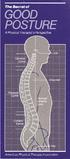 The Secret... T he American Physical Therapy Association would like to share a secret with you. It can help you do more with less effort breathe easier feel great. The secret is about good posture, which
Exercises for Low Back Injury Prevention
 DIVISION OF AGRICULTURE RESEARCH & EXTENSION University of Arkansas System Family and Consumer Sciences Increasing Physical Activity as We Age Exercises for Low Back Injury Prevention FSFCS38 Lisa Washburn,
Spine Conditioning Program Purpose of Program
 Prepared for: Prepared by: OrthoInfo Purpose of Program After an injury or surgery, an exercise conditioning program will help you return to daily activities and enjoy a more active, healthy lifestyle.
THE SKELETAL SYSTEM FUNCTIONS OF THE SKELETAL SYSTEM
 THE SKELETAL SYSTEM The skeleton is the body s bony framework which consists of 206 bones. The bones are made up of water(45%), calcium and phosphorous(35%) and other organic materials(20%). The calcium
HELPFUL HINTS FOR A HEALTHY BACK
 HELPFUL HINTS FOR A HEALTHY BACK 1. Standing and Walking For correct posture, balance your head above your shoulders, eyes straight ahead, everything else falls into place. Try to point toes straight ahead
SPINE SURGERY - LUMBAR DECOMPRESSION
 SPINE SURGERY - LUMBAR DECOMPRESSION Information Leaflet Your Health. Our Priority. Page 2 of 7 Introduction This booklet has been compiled by the physiotherapy department to help you understand lumbar
Chapter 7 Physical Development of the Infant
 Chapter 7 Physical Development of the Infant Mason is 10 months old. Although he is large for his age, his motor skills lag far behind those of other children his age. For example, Mason has trouble sitting
Lower Back Pain An Educational Guide
 Lower Back Pain An Educational Guide A publication from the Center of Pain Medicine and Physiatric Rehabilitation 2002 Medical Parkway Ste 150 1630 Main St Ste 215 Annapolis, MD 21401 Chester, MD 21619
CHAPTER 3: BACK & ABDOMINAL STRETCHES. Standing Quad Stretch Athletic Edge - www.athleticedge.biz - (650) 815-6552
 CHAPTER : BACK & ABDOMINAL STRETCHES Standing Quad Stretch ) Stand and grasp right ankle with same hand, use a wall or chair to Lower maintain Back balance with left hand. Maintain an upright Stretches
Preventing & Treating Low Back Pain
 Preventing & Treating Low Back Pain An Introduction to Low Back Pain Low back pain is the number two reason that Americans see a health care practitioner second only to colds and flu. While most people
Sit stand desks and musculo skeletal health. Katharine Metters
 Sit stand desks and musculo skeletal health Katharine Metters Topics Sitting Standing Movement and activity Work and human change Sitting uses less energy Sitting provides support for the body to reduce
Leg Strengthening Exercises
 Leg Strengthening Exercises This exercise program has been designed for you by your physical therapist. Do only the exercises marked. Do them slowly and smoothly on a firm surface. Never hold your breath
If you or a loved one have suffered because of a negligent error during spinal surgery, you will be going through a difficult time.
 If you or a loved one have suffered because of a negligent error during spinal surgery, you will be going through a difficult time. You may be worried about your future, both in respect of finances and
by Ellen Saltonstall and Dr. Loren Fishman
 10 Yoga Poses for Low Back Pain Prevention by Ellen Saltonstall and Dr. Loren Fishman Introduction This series of poses is designed to prevent future back pain and also to relieve back pain that you may
Injuries from lifting, loading, pulling or pushing can happen to anyone in any industry. It is important to be aware of the risks in your workplace.
 Workplace safety: lifting One of the biggest concerns in the workplace is lifting and loading. When you lift something, the load on your spine increases and your spine can only bear so much before it is
Info. from the nurses of the Medical Service. LOWER BACK PAIN Exercise guide
 Info. from the nurses of the Medical Service LOWER BACK PAIN Exercise guide GS/ME 03/2009 EXERCISE GUIDE One of the core messages for people suffering with lower back pain is to REMAIN ACTIVE. This leaflet
Year 2 Science: The Human Body Resource Pack
 Year 2 Science: The Human Body Resource Pack Body Systems II Body Systems Digestion our bodies break down food and use Skeletal system the skeleton is made up of bones that support our the nutrients to
An Hour a Day to Play. Infant Activities
 An Hour a Day to Play Infant Activities #Good4Growth good4growth.com Fun & Engaging Activities for Kids of All Ages Presented is a list to help kids of all ages through the following: Physical Well Being
Cerebral Palsy. In order to function, the brain needs a continuous supply of oxygen.
 Cerebral Palsy Introduction Cerebral palsy, or CP, can cause serious neurological symptoms in children. Up to 5000 children in the United States are diagnosed with cerebral palsy every year. This reference
UNDERSTANDING STRESS AND YOUR BODY
 UNDERSTANDING STRESS AND YOUR BODY Life s demands create stress and although some stress may be good, too much can cause health problems. Most people equate stress with high blood pressure, a heart attack
.org. Cervical Radiculopathy (Pinched Nerve) Anatomy. Cause
 Cervical Radiculopathy (Pinched Nerve) Page ( 1 ) Cervical radiculopathy, commonly called a pinched nerve occurs when a nerve in the neck is compressed or irritated where it branches away from the spinal
Herniated Disk in the Lower Back
 Nader M. Hebela, MD Fellow of the American Academy of Orthopaedic Surgeons http://orthodoc.aaos.org/hebela Cleveland Clinic Abu Dhabi Cleveland Clinic Abu Dhabi Neurological Institute Al Maryah Island
Rehabilitation. Rehabilitation. Walking after Total Knee Replacement. Continuous Passive Motion Device
 Walking after Total Knee Replacement After your TKR, continue using your walker or crutches until your surgeons tells you it is okay to stop using them. When turning with a walker or crutches DO NOT PIVOT
Knee Conditioning Program. Purpose of Program
 Prepared for: Prepared by: OrthoInfo Purpose of Program After an injury or surgery, an exercise conditioning program will help you return to daily activities and enjoy a more active, healthy lifestyle.
MOON SHOULDER GROUP. Rotator Cuff Home Exercise Program. MOON Shoulder Group
 MOON Shoulder Group For information regarding the MOON Shoulder Group, talk to your doctor or contact: Rosemary Sanders 1215 21 st Avenue South 6100 Medical Center East Vanderbilt University Medical Center
Table of Contents. Summary of Tupler Technique Program... 2. How the Program Works... 3. Checking for Diastasis... 4. Splinting Tips...
 Tips Table of Contents Summary of Tupler Technique Program... 2 How the Program Works... 3 Checking for Diastasis... 4 Splinting Tips... 5-6 Exercise Tips... 7-8 Other Tips... 9 Ongoing Support with the
Baby Hip Health A guide to hip development
 steps We don t take walking for granted steps We don t take walking for granted Baby Hip Health A guide to hip development Where can I find out more information about DDH? You should contact your medical
Screening Examination of the Lower Extremities BUY THIS BOOK! Lower Extremity Screening Exam
 Screening Examination of the Lower Extremities Melvyn Harrington, MD Department of Orthopaedic Surgery & Rehabilitation Loyola University Medical Center BUY THIS BOOK! Essentials of Musculoskeletal Care
Strengthening Exercises - Below Knee Amputation
 Strengthening Exercises - Below Knee Amputation These exercises will help you strengthen your muscles to best use your prosthetic leg. Do these exercises as directed by your therapist or doctor. Do the
MINDING OUR BODIES. Healthy Eating and Physical Activity for Mental Health
 MINDING OUR BODIES Healthy Eating and Physical Activity for Mental Health Facilitators Guide: Background Information (note: tell participants to consult with their doctor before starting to exercise) What
Rotator Cuff Home Exercise Program MOON SHOULDER GROUP
 Rotator Cuff Home Exercise Program MOON SHOULDER GROUP Introduction The MOON Shoulder group is a Multi-center Orthopaedic Outcomes Network. In other words, it is a group of doctors from around the country
.org. Fractures of the Thoracic and Lumbar Spine. Cause. Description
 Fractures of the Thoracic and Lumbar Spine Page ( 1 ) Spinal fractures can vary widely in severity. While some fractures are very serious injuries that require emergency treatment, other fractures can
X-Plain Hip Replacement Surgery - Preventing Post Op Complications Reference Summary
 X-Plain Hip Replacement Surgery - Preventing Post Op Complications Reference Summary Introduction Severe arthritis in the hip can lead to severe pain and inability to walk. To relieve the pain and improve
Cast removal what to expect #3 Patient Information Leaflet
 Cast removal what to expect #3 Patient Information Leaflet SM466 Now your cast is off, self help is the key! Follow the advice given to you by your doctor and the staff in the clinic. Your skin will be
Lumbar Spondylolisthesis or Anterolisthesis Patient Educational Information
 Lumbar Spondylolisthesis or Anterolisthesis Patient Educational Information What is a Spondylolisthesis or Anterolisthesis? Spondylolisthesis is a condition of the spine when one of the vertebra slips
A small roller with a big effect. The mini roller for massaging, strengthening, stretching and warming up
 A small roller with a big effect The mini roller for massaging, strengthening, stretching and warming up Suva Preventative products P. O Box, 6002 Lucerne Enquiries Tel. 041 419 58 51 Orders www.suva.ch/waswo
Ensure that the chair you use is sturdy and stable. Wear comfortable clothes and supportive footwear.
 Page 1 Safety Ensure that the chair you use is sturdy and stable. Wear comfortable clothes and supportive footwear. Prepare a space and have your exercise band and a glass of water (for afterwards) ready
Cardiac Rehab Program: Stretching Exercises
 Cardiac Rehab Program: Stretching Exercises Walk around the room, step side to side, ride a bike or walk on a treadmill for at least 5 minutes to warm up before doing these stretches. Stretch warm muscles
Transferring Safety: Prevent Back Injuries
 Transferring Safety: Prevent Back Injuries OBJECTIVES: At the end of this class you will be able to: 1. Describe the back and what it does. 2. List things that you can do everyday in your home and at work
Secure Them for Life. Child safety seats. From infant seats to seat belts, everything you need to know to ensure your child s safety.
 Secure Them for Life Child safety seats From infant seats to seat belts, everything you need to know to ensure your child s safety. It s the law In a vehicle, children whose sitting height is less than
Lumbar/Core Strength and Stability Exercises
 Athletic Medicine Lumbar/Core Strength and Stability Exercises Introduction Low back pain can be the result of many different things. Pain can be triggered by some combination of overuse, muscle strain,
X-Plain Rheumatoid Arthritis Reference Summary
 X-Plain Rheumatoid Arthritis Reference Summary Introduction Rheumatoid arthritis is a fairly common joint disease that affects up to 2 million Americans. Rheumatoid arthritis is one of the most debilitating
EGOSCUE CLINIC PAIN/POSTURE STRETCHES 1. Standing Arm Circles: Helps Restore Upper Body Strength
 EGOSCUE CLINIC PAIN/POSTURE STRETCHES 1. Standing Arm Circles: Helps Restore Upper Body Strength Two sets of 40 repetitions each. Stand with your feet pointed straight and hip-width apart. Place your fingertips
Otago Exercise Program
 Otago Exercise Program Edited Version Exercise Booklet Created by: Genesee County Coalition Supported by a grant from the Health Foundation for Western and Central New York Otago Exercise Program to Prevent
Do s and Don ts with Low Back Pain
 Do s and Don ts with Low Back Pain Sitting Sit as little as possible and then only for short periods. Place a supportive towel roll at the belt line of the back especially when sitting in a car. When getting
Lumbar Laminectomy and Interspinous Process Fusion
 Lumbar Laminectomy and Interspinous Process Fusion Introduction Low back and leg pain caused by pinched nerves in the back is a common condition that limits your ability to move, walk, and work. This condition
Cerebral Palsy. 1995-2014, The Patient Education Institute, Inc. www.x-plain.com nr200105 Last reviewed: 06/17/2014 1
 Cerebral Palsy Introduction Cerebral palsy, or CP, can cause serious neurological symptoms in children. Thousands of children are diagnosed with cerebral palsy every year. This reference summary explains
Spine Anatomy and Spine General The purpose of the spine is to help us stand and sit straight, move, and provide protection to the spinal cord.
 Spine Anatomy and Spine General The purpose of the spine is to help us stand and sit straight, move, and provide protection to the spinal cord. Normal List Kyphosis The human spine has 7 Cervical vertebra
Strength Training HEALTHY BONES, HEALTHY HEART
 Strength Training HEALTHY BONES, HEALTHY HEART No matter what your age, strength training can improve your bone health and your balance. As we age, our bones lose both tissue and strength. This condition
How To Improve Drainage
 Rehabilitation Home Program Edema Exercises To Improve Drainage You will improve your lymph flow by doing a few exercises each day. These exercises are an important part of your home program. They may
Hip Conditioning Program. Purpose of Program
 Prepared for: Prepared by: OrthoInfo Purpose of Program After an injury or surgery, an exercise conditioning program will help you return to daily activities and enjoy a more active, healthy lifestyle.
Rehabilitation after shoulder dislocation
 Physiotherapy Department Rehabilitation after shoulder dislocation Information for patients This information leaflet gives you advice on rehabilitation after your shoulder dislocation. It is not a substitute
Physiotherapy Database Exercises for people with Spinal Cord Injury
 Physiotherapy Database Exercises for people with Spinal Cord Injury Compiled by the physiotherapists associated with the following Sydney (Australian) spinal units : Last Generated on Mon Mar 29 16:57:20
Activities for the Young Baby
 31 Chapter 5 Activities for the Young Baby (Birth to 6 Months) A new baby does not usually look as though she is doing very much. She spends most of her time eating, sleeping, and resting. But even though
Why Back Safety is Important
 Back Safety Why Back Safety is Important Back injuries are considered by OSHA (the Occupational Safety and Health Administration) as the nation's #1 workplace safety problem. Back Injuries are often: Very
CORRECTIVE CHIROPRACTIC EXERCISES
 CORRECTIVE CHIROPRACTIC EXERCISES J O W E T T & M O U L T O N C h i r o p r a c t o r s introduction This booklet, presented by Jowett and Moulton Chiropractors, is designed to provide you with a general
THE LUMBAR SPINE (BACK)
 THE LUMBAR SPINE (BACK) At a glance Chronic back pain, especially in the area of the lumbar spine (lower back), is a widespread condition. It can be assumed that 75 % of all people have it sometimes or
Shoulders (free weights)
 Dumbbell Shoulder Raise Dumbbell Shoulder Raise 1) Lie back onto an incline bench (45 or less) with a DB in each hand. (You may rest each DB on the corresponding thigh.) 2) Start position: Bring the DB
Herniated Cervical Disc
 Herniated Cervical Disc North American Spine Society Public Education Series What Is a Herniated Disc? The backbone, or spine, is composed of a series of connected bones called vertebrae. The vertebrae
Mini Medical School Lesson
 Mini Medical School Lesson The American Osteopathic Association s (AOA) Mini Medical School Lesson is designed to help educators teach children about health and fitness. This lesson is aimed towards elementary
How to Do Self Lymphatic Massage on your Upper Body
 How to Do Self Lymphatic Massage on your Upper Body UHN For patients who were treated for breast cancer on one side of their body. For example: Lumpectomy Mastectomy Lymph node removal from an underarm
back stabilization and core strengthening
 back stabilization and core strengthening EXERCISE OOKLET back stabilization and core strengthening TLE OF CONTENTS Introduction 1 Hook-lying Stabilization Progression Neutral position 2 Hook-lying with
CHAPTER 7: PHYSICAL ACTIVITY IN INFANCY
 CHAPTER 7: PHYSICAL ACTIVITY IN INFANCY Physical activity, defined as any bodily movement produced by skeletal muscles resulting in energy expenditure, is an important part of overall health and maintenance
Cervical Exercise: How important is it? What can be done? The Backbone of Spine Treatment. North American Spine Society Public Education Series
 Cervical Exercise: The Backbone of Spine Treatment How important is it? What can be done? North American Spine Society Public Education Series Important: If you have had an accident that started your neck
The Examination...2. Pitching Mechanics...4. Core Exercises...5. Scapular Stretches...7. Scapular Exercises...8. Summary...10. Pitch Counts...
 Table of Contents The Examination....2 Pitching Mechanics...4 Core Exercises....5 Scapular Stretches...7 Scapular Exercises...8 Summary...10 Pitch Counts...12 Introduction Here at Vanderbilt Sports Medicine,
Exercises for older people
 Exercise for older people Exercises for older people Sitting Getting started If you ve not done much physical activity for a while, you may want to get the all-clear from a GP before starting. For the
Skeletal System. Axial Skeleton: Vertebral Column and Ribs
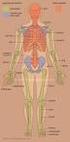 Skeletal System Axial Skeleton: Vertebral Column and Ribs Functions Regions Cervical Thoracic Lumbar Sacral Primary & secondary curvatures There are three major functions of the vertebral column. First,
Avoid The Dreaded Back Injury by Proper Lifting Techniques
 Avoid The Dreaded Back Injury by Proper Lifting Techniques If you ve ever strained your back while lifting something, you ll know the importance of lifting safely. Agenda Introduction About the Back The
INSTRUCTIONAL MATERIALS: REFERENCES: a. PAEC School Safety Manual b. Any locally produced Back Injury pamphlet TRAINING AIDS:
 LESSON TOPIC: AVERAGE TIME: BACK INJURY PREVENTION 30 Minutes INSTRUCTIONAL MATERIALS: REFERENCES: a. PAEC School Safety Manual b. Any locally produced Back Injury pamphlet TRAINING AIDS: a. Handout #1
CHAPTER 9 BODY ORGANIZATION
 CHAPTER 9 BODY ORGANIZATION Objectives Identify the meaning of 10 or more terms relating to the organization of the body Describe the properties of life Describe the function for the structures of the
A Parent s Guide to Car Seats
 Keep Kids Safe A Parent s Guide to Car Seats Choosing and using the right car seat. ! FOR SAFETY S SAKE This booklet tells you how to install and use car seats in your own car, van, truck or SUV. Please
A Stretch-Break Program for Your Workplace! www.healthyworkplaceweek.ca
 www.healthyworkplaceweek.ca A Stretch-Break Program for Your Workplace! Why is stretching at work important? Sitting at a desk or computer; or standing at your work station for extended periods of time
Divisions of the Skeletal System
 OpenStax-CNX module: m46344 1 Divisions of the Skeletal System OpenStax College This work is produced by OpenStax-CNX and licensed under the Creative Commons Attribution License 3.0 By the end of this