
RUSSELLS HALL HOSPITAL EMERGENCY DEPARTMENT
|
|
|
- Allison Briggs
- 9 years ago
- Views:
Transcription
1 RUSSELLS HALL HOSPITAL EMERGENCY DEPARTMENT CLINICAL GUIDELINE BURN INJURY This guideline describes the management of burn injuries in the Emergency Department (ED) at Russells Hall Hospital. A detailed description of burn pathophysiology and further management are beyond the scope of the guideline but further information can be found in the ABC of Burns series, available as downloads from

2 Contents (click to go to page) Major Burn Acute Management Flowchart Airway and breathing Circulation and fluid management Disability and exposure Assessment of burn area Assessment of burn type and depth Burns dressings Referral to Regional Burns Centre Further reading Appendices 1. Lund and Browder chart 2. Non-accidental injury - 2 -

3 Major Burn Acute Management Flowchart Assess ABCDE Remember cervical spine control Assess for other injuries deal with problems which require more urgent treatment first Obtain adequate IV access FBC,U&E,glucose,G&S,clotting,CK ANALGESIA - titrate IV morphine as necessary (intranasal diamorphine useful in children) Start IV fluids Measure core temp. and maintain >36 C BSA=Burn Surface Area TBSA=Total Body Surface Area Assess BSA, type and depth of burn *Special Areas Face Hand Perineum or genitals Feet Flexures (particularly neck or axilla) Burn over joint which may affect mobility or function IF ANY OF THE FOLLOWING: Child with any burn greater than 2% TBSA Adult with any burn greater than 3% TBSA Full thickness burn Inhalational injury Special areas* Chemical / electrical burns High pressure steam injury Hydrofluoric acid burn Potentially complex burn** **Complex Burn 2 to ionising radiation Suspicion of NAI Coexisting diseases Pregnancy Extremes of age Circumferential dermal or full thickness burns Associated major trauma Cold injuries YES NO Apply suitable dressing (clingfilm if for transfer) Manage fluid requirements and consider tetanus prophylaxis ed dial Ensure analgesia adequate Discuss with Regional Burns Centre at UHB or BCH Apply suitable dressing Consider tetanus prophylaxis Arrange TTO analgesia Arrange 24hr review in ED clinic - 3 -

4 Airway and Breathing Always remember to protect the cervical spine until clinically cleared. Loss of airway patency in a burns patient can occur suddenly and without warning, particularly in children. Airway management may be complex due to oedema or associated facial and neck injuries. It is therefore essential to consider the condition of the airway for any burns patient, even if apparently minor. Consult a senior anaesthetist at an early stage if there are any doubts or concerns. The history is very important and should take into account the type of burn and exposure to hot gases or liquids, flame or smoke. Get a verbal history as early as possible as the patient will not be able to help once they are intubated. Prolonged exposure or exposure in an enclosed space are red flags for a likely inhalational injury. Physical signs that may indicate an inhalational burn injury include: Burns to face, neck or upper torso Singed nasal hair Carbonaceous sputum or soot particles in oropharynx Change in voice with hoarseness or harsh cough Dyspnoea, stridor Erythema or swelling of oropharynx on direct visualisation The last three indicate the need for urgent senior anaesthetic assessment and prompt intubation. Delay will lead inevitably to progressive airway oedema and greater difficulty in airway management. If intubation is required use an uncut ETT to allow for facial oedema. All patients with an inhalational injury or other major burns must receive high-flow oxygen via a Hudson mask with reservoir bag. Regular monitoring of respiratory rate, blood pressure, ECG and SaO 2 must be initiated. In addition, CXR, ABG analysis and COHb level are mandatory in any patient with an inhalational injury or major burn. The presence of an elevated lactate, cardiac arrhythmias, reduced GCS and reduced arterial-venous oxygen saturation difference may indicate cyanide poisoning. Escharotomy may be necessary in patients with circumferential chest burns. Discuss with the surgical team on-call and Regional Burns Centre (RBC). Also look for evidence of other chest injuries e.g. flail chest, pneumothorax

5 Circulation and Fluid Management Look for clinical evidence of a circulatory deficit. This may be indicated by: Tachycardia Tachypnoea Reduced level of consciousness Prolonged central capillary refill time Cool peripheries Circumferential limb burns may cause distal vascular compromise. The absence of peripheral pulses or a cool, pale limb warrant urgent discussion with the surgical team on-call and the Regional Burns Centre. Fluid losses from burn injury must be replaced to maintain homoeostasis. Burns covering more than 15% of TBSA in adults and more than 10% in children necessitate formal fluid resuscitation. Large-bore IV access should be through unburnt skin where possible. BM should always be checked at the time of obtaining access. Take blood for FBC, U&E, glucose, clotting profile, G&S and CK. The most commonly used resuscitation formula is the Parkland formula which calculates the amount of fluid required in the first 24 hours. Colloids have no advantage over crystalloids in maintaining circulatory volume; in Britain Hartmann's solution is most commonly used. Children require maintenance fluid in addition to this. The starting point for fluid resuscitation is the time of injury, not the time of admission. Any fluid already given should be deducted from the calculated requirement. Parkland formula for burns resuscitation Total fluid requirement in 24 hours = 4ml x BSA(%) x body weight (kg) 50% given in first 8 hours 50% given in next 16 hours Patients with burns requiring fluid resuscitation should be catheterised and urine output measured hourly. This will guide fluid administration and desirable end points are: Urine output: ml/kg/hour in adults Urine output: ml/kg/hour in children (2-4 ml/kg/hr in infants) Remember to check urinary βhcg in women of childbearing age. Children receive maintenance fluid (0.45% saline + 5% dextrose) in addition, at a rate of: 4ml/kg/hr for first 10kg of body weight plus 2ml/kg/hr for second 10kg of body weight plus 1ml/kg/hr for each kg over 20kg of body weight - 5 -

6 Disability and Exposure Always check and document GCS and pupil size. Look carefully for signs of head injury. With an obtunded patient, always bear in mind poisoning e.g. CO, cyanide or the effect of other drugs such as alcohol or illicit substances. Core temperature should be measured and maintained above 36 C. Assessment of Burn Surface Area (BSA) The extent of a burn is usually expressed as the proportion of the body surface area which is involved in an injury, the burn surface area (BSA). In extensive burns, the whole of the patient (including the back) must be examined. Remember that burns patients, especially children, may get cold quickly so patients should be covered and warmed as necessary. When calculating burn area, do not include erythema. During assessment, the environment should be kept warm, and small segments of skin exposed sequentially to reduce heat loss. Clinical assessment of burn surface area is often inaccurate but there are several systems in use to improve the accuracy of measurement. Wallace's Rule of Nines is quick to use and can be used to estimate the area of medium to large burns in adults but is less suitable for children. Arm 9% Head 9% Neck 1% Leg 18% Posterior trunk 18% Anterior trunk 18% The Lund and Browder chart is more accurate, and can be used in children as it takes into account the person's age, and the different proportions of the head and legs in growing children. For small or scattered burns, or for assessing the amount of unburnt skin in very extensive burns, the person's palmar surface (including fingers) can be used as a guide. It is equivalent to around 0.8% of the person's total body surface area

7 Assessment of Burn Type and Depth Classification of depth of burns Depth of burn Layers of skin affected Examination findings Superficial epidermal Partial thickness superficial dermal Partial thickness deep dermal Full thickness The epidermis is affected, but the dermis is intact The epidermis and upper layers of dermis are involved The epidermis, upper and deeper layers of dermis are involved The burn extends through all the layers of skin to subcutaneous tissues Skin is red and painful, but not blistered. The skin is pale pink and painful with blistering. The skin appears dry or moist, blotchy and red, and may be painful or painless. There may be blisters. The skin is dry and white, brown, or black in colour, with no blisters. It may be described as leathery or waxy. It is painless. Always consider the cause of the burn (e.g. flame, scald or contact with a hot object). Ask whether the burn is painful and examine the skin for colour change and the presence of blisters (N.B. leave blisters intact unless large enough to interfere with dressings). Absence of sensation indicates a deep burn. The cause of the burn may help to give an indication of its depth: Flash burns are usually superficial epidermal Scalds are usually superficial or superficial dermal Flame burns are usually deep dermal or full thickness Contact burns are likely to be deep dermal or full thickness Chemical and electrical injuries are often full thickness Knowing burn depth helps determine therapy and predicts healing time and potential for complications such as infection or excessive scarring. Refer for specialist assessment if the burn wound depth is uncertain (even experienced burn surgeons usually determine burn depth clinically with 60% 75% accuracy). Remember to consider NAI in any child who presents with a burn

8 Burns Dressings For larger burns and if a burn requires referral to the RBC then clingfilm is a suitable dressing as it is transparent, effectively sterile and does not adhere to the wound. For other burns, cover the burn with a non-adherent dressing. Mepitel is a non-adherent dressing suitable for the initial covering of minor burns and scalds. Apply a non-fibrous secondary absorbent dressing such as a dressing pad, and secure well with a lightweight conforming bandage or a tubular gauze bandage. Fingers should be dressed individually and the hand elevated. Paraffin gauze dressings such as Jelonet are relatively inexpensive and frequently used to dress burns, however they may stick to the wound making dressing changes painful. If used, apply sufficient paraffin gauze, and change the dressing frequently (daily) to prevent it drying out. Polyfax ointment may be used for the initial cover of minor facial burns but otherwise do not apply antimicrobial creams such as silver sulfadiazine (Flamazine) to burns. Do not use antimicrobial-impregnated dressings. Avoid using other creams or ointments. Referral to Regional Burns Centre The National Network for Burn Care and Midlands Burn Care Network have established referral guidelines to the Regional Burns Centres at University Hospital Birmingham and Birmingham Children s Hospital. These are complex (and can be viewed on the MBCN website) but a summary of referral criteria can be found on the Burns Management Flowchart on page 3. It may be difficult to decide whether a particular patient requires referral; if you are not sure then discuss the case with a senior ED doctor or directly with the Regional Burns Centre. Complex burns should not be brought back to the ED clinic. If a burn fails to heal after two weeks or if scarring is unsatisfactory refer to the Regional Burns Centre. Transfer of burns patients should only be undertaken by ambulance crews with the experience necessary to manage ongoing fluid resuscitation, analgesia, thermal regulation and monitoring. Patients should be transferred with all necessary documentation which should include: Copy of electronic notes Completed Lund and Browder chart indicating areas and depths of burn Details of fluid requirements, administration and urine output Any available test results e.g. bloods, CXR, ECG, ABG Details of any other injuries noted during assessment in ED

9 Further Reading 1) Midlands Burn Care Network: 2) National Network for Burn Care: 3) ABC of Burns Peter Dziewulski and Shehan Hettiaratchy 4) 5) NHS Clinical Knowledge Summaries: Originator: Mr N. Stockdale, Consultant in Emergency Medicine, DGOH Date: August 2012 Review date: August

10 Appendix 1: Lund and Browder Chart

11 Appendix 2: Non-accidental Injury Remember to consider non-accidental injury in children (or vulnerable adults) who present with burns. The following features indicate possible NAI: Unrelated adult Unexplained delay in presentation Inconsistent history Multiple presentations Prior abuse or high risk environment Immersion type burn pattern Cigarette burns Scalds to genitalia or buttocks Mirror image injury Other signs of abuse

California Correctional Health Care Services
 RN Protocol: I. POLICY A. Function: To facilitate and guide the Registered Nurse (RN) in the assessment and treatment of patients presenting with burns. B. Circumstances under which the RN may perform
Management of Burns. The burns patient has the same priorities as all other trauma patients.
 Management of Burns The burns patient has the same priorities as all other trauma patients. Assess: - Airway - Breathing: beware of inhalation and rapid airway compromise - Circulation: fluid replacement
Objectives. Burn Assessment and Management. Questions Regarding the Case Study. Case Study. Patient Assessment. Patient Assessment
 Objectives Burn Assessment and Management Discuss the mechanisms and complications of a thermal burn, electrical burn and an inhalation burn Explain the factors to consider when determining the severity
2002 burns responsible for 322,000 deaths world wide. aboriginal community in NA Most burns occur in the urban environment
 Burn Injuries: The Problem 2002 burns responsible for 322,000 deaths world wide 4 th as cause of unintentional child injury death in the USA 3 rd leading cause of unintentional death in aboriginal community
FUNCTIONS OF THE SKIN
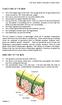 FUNCTIONS OF THE SKIN Skin is the largest organ of the body. The average adult has 18 square feet of skin which account for 16% of the total body weight. Skin acts as a physical barrier for you to the
Specialised Services. National Network for Burn Care (NNBC) National Burn Care Referral Guidance
 Specialised Services National Network for Burn Care (NNBC) National Burn Care Referral Guidance 1. Introduction This guidance describes the most clinically appropriate level of Specialised Burn Service
How To Treat A Heart Attack
 13 Resuscitation and preparation for anaesthesia and surgery Key Points 13.1 MANAGEMENT OF EMERGENCIES AND CARDIOPULMONARY RESUSCITATION ESSENTIAL HEALTH TECHNOLOGIES The emergency measures that are familiar
Clinical Practice Guidelines Escharotomy for Burn Patients NSW Statewide Burn Injury Service
 Clinical Practice Guidelines Escharotomy for Burn Patients NSW Statewide Burn Injury Service Date: August 2011 Version: Release Status: Release Date: Author: Owner: 1.0 Final Aug 2011 Anne Darton Agency
The Prince of Wales Hospital Acute Burns Unit Protocol
 The Prince of Wales Hospital Acute Burns Unit Protocol Prof. Tor-wo Chiu MA, BM BCh, FRCS Dr. Shun-yuen Ying MBChB, FRCS, FHKAM(Surgery) Dr. Stephanie CK Lam MBChB, MRCS Prof. Andrew Burd MD, FRCS, FHKAM(Surgery)
How To Manage A Catastrophic Injury
 Report #14 CATASTROPHIC INJURIES: Paralysis, Amputation, Burns Overview: A catastrophic injury or illness usually occurs suddenly and without warning. Injuries may be considered catastrophic when they
Electrical Burns 新 光 急 診 張 志 華
 Electrical Burns 新 光 急 診 張 志 華 Electrical Burns Definition Cellular damage due to electrical current High vs. low tension injuries 1,000 Volts dividing line Electrical Burns - Pathophysiology Joule Effect:
17_Burn and Inhalation Injury
 1 2 The objectives for this presentation include: Identify the different types of burn injury including mechanism of injury and the varying degrees of burn depth. Describe the assessment priorities of
ICD-10-CM Official Guidelines for Coding and Reporting
 2013 Narrative changes appear in bold text Items underlined have been moved within the guidelines since the 2012 version Italics are used to indicate revisions to heading changes The Centers for Medicare
THERAPEUTIC USE OF HEAT AND COLD
 THERAPEUTIC USE OF HEAT AND COLD INTRODUCTION Heat and cold are simple and very effective therapeutic tools. They can be used locally or over the whole body, and the proper application of heat and cold
Chapter 39. Learning Objectives 9/11/2012. Burns
 1 Chapter 39 Burns 2 Learning Objectives Describe the incidence, patterns, and sources of burn injury. Describe the pathophysiology of local and systemic responses to burn injury. Classify burn injury
Clinical Performance Director of Nursing Allison Bussey
 PGD 0314 Patient Group Direction Administration of Adrenaline (Epinephrine) 1:1000 (1mg/ml) Injection By Registered Nurses employed by South Staffordshire & Shropshire Healthcare Foundation NHS Trust This
Prehospital management of burns
 Continuing Education Prehospital management of burns By Kenneth Navarro, LP Illustration photo by Christopher J. Chomel Introduction Burns affect approximately one million Americans each year (LaBorde
Objectives. Fractures 2013-11-19. Identifying and interpreting fractures, burns and head injuries suspicious for abuse. Fractures Red Flags
 Identifying and interpreting fractures, burns and head injuries suspicious for abuse Hosanna Au, MD, FRCPC Paul Kadar, MD, FRCPC Sarah B. Schwartz, MD, MEd, FRCPC Objectives At the end of this session,
Enables MDA Medical Teams to categorize victims in mass casualty scenarios, in order to be able to triage and treat casualties
 MDA Disposable ALS + BLS Medical Ambulance Equipment Prices shown in CDN. Funds Items Description Picture Mass Casualty ID tag 1000 units = $350 Enables MDA Medical Teams to categorize victims in mass
Injury Law Center OTHER INJURIES
 Injury Law Center Note: This information is provided to give you a basic understanding of the injury. It is not intended as medical advice. You should consult a qualified medical provider. OTHER INJURIES
ENT Emergencies. Injuries of the Neck. Registrar Dept Trauma and emergency Medicine Tygerberg Hospital
 ENT Emergencies Injuries of the Neck Registrar Dept Trauma and emergency Medicine Tygerberg Hospital Neck Injuries Blunt and Penetrating Trauma Blunt Injuries Blunt trauma direct/indirect Trauma to larynx
Orthopaedic Spine Center. Anterior Cervical Discectomy and Fusion (ACDF) Normal Discs
 Orthopaedic Spine Center Graham Calvert MD James Woodall MD PhD Anterior Cervical Discectomy and Fusion (ACDF) Normal Discs The cervical spine consists of the bony vertebrae, discs, nerves and other structures.
COALINGA STATE HOSPITAL. Effective Date: August 31, 2006
 COALINGA STATE HOSPITAL NURSING POLICY AND PROCEDURE MANUAL SECTION Emergency Procedures POLICY NUMBER: 715 Effective Date: August 31, 2006 SUBJECT: EMERGENCY CARE OF HEMORRHAGE 1. PURPOSE: The management
National Registry of Emergency Medical Technicians Emergency Medical Technician Psychomotor Examination BLEEDING CONTROL/SHOCK MANAGEMENT
 BLEEDING CONTROL/SHOCK MANAGEMENT Candidate: Examiner: Date: Signature: Possible Applies direct pressure to the wound 1 NOTE: The examiner must now inform the candidate that the wound continues to bleed.
Obstetrical Emergencies
 Date: July 18, 2014 Page 1 of 5 Obstetrical Emergencies Purpose: To provide the process for the assessment and management of the patient with an obstetrical related emergency. Pre-Medical Control 1. Follow
Lothian Diabetes Handbook MANAGEMENT OF DIABETIC KETOACIDOSIS
 MANAGEMENT OF DIABETIC KETOACIDOSIS 90 MANAGEMENT OF DIABETIC KETOACIDOSIS Diagnosis elevated plasma and/or urinary ketones metabolic acidosis (raised H + /low serum bicarbonate) Remember that hyperglycaemia,
Paediatric fluids 13/06/05
 Dr Catharine Wilson Consultant Paediatric Anaesthetist Sheffield Children s Hospital. UK Paediatric fluids 13/06/05 Self assessment: Complete these questions before reading the tutorial. Discuss the answers
STANDARD OPERATING PROCEDURE #201 RODENT SURGERY
 STANDARD OPERATING PROCEDURE #201 RODENT SURGERY 1. PURPOSE The intent of this Standard Operating Procedure (SOP) is to describe procedures for survival rodent surgery. 2. RESPONSIBILITY Principal investigators
National Registry of Emergency Medical Technicians Emergency Medical Responder Psychomotor Examination BVM VENTILATION OF AN APNEIC ADULT PATIENT
 BVM VENTILATION OF AN APNEIC ADULT PATIENT Candidate: Examiner: Date: Signature: Possible Points Checks responsiveness NOTE: After checking responsiveness and breathing for at least 5 but no 1 Checks breathing
EMERGENCY MEDICAL RESPONDER (EMR) PRACTICAL SKILLS EXAMINATION REPORT State Form 54407 (R / 5-13)
 EMERGENCY MEDICAL RESPONDER (EMR) PRACTICAL SKILLS EXAMINATION REPT State Form 54407 (R / 5-3) INDIANA DEPARTMENT OF HOMELAND SECURITY EMERGENCY MEDICAL SERVICES CERTIFICATION 302 West Washington Street,
Chapter 34. Neglected hand Escharotomy
 Chapter 34 HAND BURNS KEY FIGURES: Neglected hand Escharotomy Severe hand burns are especially problematic injuries because of their propensity for causing long-term disability. Proper treatment of the
ACCIDENT/INCIDENT INVESTIGATION RIDDOR
 1.0 INTRODUCTION ACCIDENT/INCIDENT INVESTIGATION RIDDOR In the event of an employee, contractor, visitor or member of the public suffering an injury from a work related incident, certain procedures must
CLINICAL SKILLS: THE 'DR ABCDE' ASSESSMENT
 CLINICAL SKILLS: THE 'DR ABCDE' ASSESSMENT The 'DR ABCDE' approach to assessing an acutely unwell patient should be at the front of every junior doctor's mind whenever they get bleeped or asked to see
State of New Hampshire Department of Safety Division of Fire Standards and Training & Emergency Medical Services
 State of New Hampshire Department of Safety Division of Fire Standards and Training & Emergency Medical Services September 2013 PATIENT ASSESSMENT / MANAGEMENT - TRAUMA Time allowed: 10 minutes SCENARIO
Management of airway burns and inhalation injury PAEDIATRIC
 Management of airway burns and inhalation injury PAEDIATRIC A multidisciplinary team should provide the management of the child with inhalation injury. Childhood inhalation injury mandates transfer to
RGN JOY LAUDE WATFORD GENERAL HOSPITAL, ENGLAND
 RGN JOY LAUDE WATFORD GENERAL HOSPITAL, ENGLAND Monitor patient on the ward to detect trends in vital signs and to manage accordingly To recognise deteriorating trends and request relevant medical/out
National Registry of Emergency Medical Technicians Emergency Medical Responder Psychomotor Examination PATIENT ASSESSMENT/MANAGEMENT TRAUMA
 PATIENT ASSESSMENT/MANAGEMENT TRAUMA Scenario # Note: Areas denoted by ** may be integrated within sequence of Primary Survey/Resuscitation SCENE SIZE-UP Determines the mechanism of injury/nature of illness
Types of electrical injuries
 Types of electrical injuries Electrical injury is a term for all injuries caused by contact with electrical energy. Electrical contact can cause a wide variety of injuries involving most organ systems.
BEST PRACTICE GUIDELINES: EFFECTIVE SKIN AND WOUND MANAGEMENT OF NON-COMPLEX BURNS
 I N TERN ATION A L B EST 3 FOREWORD Supported by an educational grant from B Braun This document is a practical guide to the management of burn injuries for healthcare professionals everywhere who are
404 Section 5 Shock and Resuscitation. Scene Size-up. Primary Assessment. History Taking
 404 Section 5 and Resuscitation Scene Size-up Scene Safety Mechanism of Injury (MOI)/ Nature of Illness (NOI) Ensure scene safety and address hazards. Standard precautions should include a minimum of gloves
Acute heart failure may be de novo or it may be a decompensation of chronic heart failure.
 Management of Acute Left Ventricular Failure Acute left ventricular failure presents as pulmonary oedema due to increased pressure in the pulmonary capillaries. It is important to realise though that left
Basic ATLS. The Primary Survey. Jason Smith MD DMI FRCS(Gen.Surg) Consultant Surgeon
 Basic ATLS The Primary Survey Jason Smith MD DMI FRCS(Gen.Surg) Consultant Surgeon Trauma - expression comprising a spectrum of severity of mechanical violation of tissues, from a little scratch to a multiply
Facial Sports Injuries
 Facial Sports Injuries Playing catch, shooting hoops, bicycling on a scenic path or just kicking around a soccer ball have more in common than you may think. On the up side, these activities are good exercise
Patient Information and Consent for Medical/Laser/Intense Pulsed Light Treatment. VASClinic PROCEDURES
 This consent form includes general descriptions of various dermatological treatments, including possible benefits and risks that may occur as a result of these treatments. Your doctor or nurse will describe
BLS TREATMENT GUIDELINES - CARDIAC
 BLS TREATMENT GUIDELINES - CARDIAC CARDIOPULMONARY ARREST - NON-TRAUMATIC (SJ-B101) effective 07/01/99 Defibrillation CPR Apply S-AED and assess rhythm as trained. Defib as indicated Simultaneous OXYGEN:
Heat Production and Loss. Environmental Emergencies. Heat Regulation. Body Temperature Ranges. Focused Assessment: Your Patient: Heat Production
 Heat Production and Loss Environmental Emergencies Messing with Mother Nature Heat Production Basal Metabolism processes in the body that generate heat through nominal functions Activity, fever, metabolic
Graduated compression hosiery (stockings)
 What is compression hosiery? Compression hosiery are elasticated stockings which give support to your legs. In graduated compression hosiery, the pressure given by the stockings is greater at the ankle
X-Plain Varicose Veins Reference Summary
 X-Plain Varicose Veins Reference Summary Introduction Varicose veins are very common, in both women and men. Varicose veins can be painful and unattractive. Vein doctors use non-invasive ultrasound imaging
Caring for the Client with Burns
 7 CHAPTER SEVEN Caring for the Client with Burns Terms you ll need to understand: Allograft Autograft Biosynthetic graft Burn shock Consensus formula Contracture Debridement Donor site Emergent phase of
First Responder (FR) and Emergency Medical Responder (EMR) Progress Log
 First Responder (FR) and Emergency Medical Responder (EMR) Progress Log Note: Those competencies that are for EMR only are denoted by boldface type. For further details on the National Occupational Competencies
Summary of EWS Policy for NHSP Staff
 Summary of EWS Policy for NHSP Staff For full version see CMFT Intranet Contact Sister Donna Egan outreach coordinator bleep 8742 Tel: 0161 276 8742 Introduction The close monitoring of patients physiological
Pesticide Harmful Effects And Emergency Response
 Pesticide Harmful Effects And Emergency Response Most pesticides are designed to harm or kill pests. Because some pests have systems similar to the human system, some pesticides also can harm or kill humans.
ORAL ANTICOAGULANTS RIVAROXABAN (XARELTO) FOR PULMONARY EMBOLISM (PE)
 ORAL ANTICOAGULANTS RIVAROXABAN (XARELTO) FOR PULMONARY EMBOLISM (PE) Information Leaflet Your Health. Our Priority. Page 2 of 6 What Are Anticoagulants And What Do They Do? This information leaflet has
What are spider veins? What is the best treatment for spider veins?
 Laser Spider/Leg Vein Q & A What are spider veins? Millions of women and men are bothered by unsightly spider veins on their faces and legs. Spider veins or telangiectasias are those small red, blue and
Emergency treatment of anaphylactic reactions
 Emergency treatment of anaphylactic reactions Emergency treatment of anaphylactic reactions Objectives - to understand: What is anaphylaxis? Who gets anaphylaxis? What causes anaphylaxis? How to recognise
Heat Stress/Flag Condition Training
 Heat Stress/Flag Condition Training Heat stress Heat stress is the buildup of heat to the point where the body s thermostat has difficulty maintaining normal internal body temperature. When the body is
VARICOSE VEINS. Information Leaflet. Your Health. Our Priority. VTE Ambulatory Clinic Stepping Hill Hospital
 VARICOSE VEINS Information Leaflet Your Health. Our Priority. Page 2 of 7 Varicose Veins There are no accurate figures for the number of people with varicose veins. Some studies suggest that 3 in 100 people
Southern Stone County Fire Protection District Emergency Medical Protocols
 TITLE Pediatric Medical Assessment PM 2.4 Confirm scene safety Appropriate body substance isolation procedures Number of patients Nature of illness Evaluate the need for assistance B.L.S ABC s & LOC Focused
Meth Lab Explosion: Considerations for Pre-Hospital Care and Transport. Rodney Logan, RN, BSN, CMTE Program Manager, Memorial MedFlight
 Meth Lab Explosion: Considerations for Pre-Hospital Care and Transport Rodney Logan, RN, BSN, CMTE Program Manager, Memorial MedFlight Labs Labs Labs Meth Labs OBJECTIVES MethAmphetamine Prevalence Cooking
3/24/2014. Waubonsee Community College Safety Day 2014. Why do we need a First Aid Program?
 Waubonsee Community College Safety Day 2014 Why do we need a First Aid Program? 4,383 workers were killed on the job in 2012 Total recordable non fatal cases: 2,976,400 in 2012 Cases involving days away
GWAS Competency Mapping Levels of Medical Support Within GWAS
 GWAS Competency Mapping Levels of Medical Support Within GWAS Great Western Ambulance Service NHS Trust is pleased to be able to work with a range of doctors in delivering effective pre-hospital care.
Pressure Ulcers Assessing and Staging. Anne Pirzadeh RN CWOCN University of Colorado Hospital June 2010
 Pressure Ulcers Assessing and Staging Anne Pirzadeh RN CWOCN University of Colorado Hospital June 2010 Never Events: Pressure Ulcers Pressure Ulcer Codes: MD documentation of pressure ulcers determines
EYE, EAR, NOSE, and THROAT INJURIES
 T6 EYE, EAR, NOSE, and THROAT INJURIES Management of injuries of the eyes, ears, nose, and throat focuses on airway management and initial stabilization of the injury. Bilateral comparisons can assist
Patient Information and Daily Programme for Patients Having Whipple s Surgery (Pancreatico duodenectomy)
 Patient Information and Daily Programme for Patients Having Whipple s Surgery (Pancreatico duodenectomy) Date of admission Date of surgery Expected Length of Stay in hospital We will aim to discharge you
Nursing college, Second stage Microbiology Dr.Nada Khazal K. Hendi L14: Hospital acquired infection, nosocomial infection
 L14: Hospital acquired infection, nosocomial infection Definition A hospital acquired infection, also called a nosocomial infection, is an infection that first appears between 48 hours and four days after
Glossary of Terms: www.phoenix society.org toll free 1-800-888-2876
 Glossary of Terms: Ace Bandage Wrap Elastic bandage used to wrap burned areas. It gives even pressure and support, thereby decreasing scar size, and improving circulation. Adaptic A type of gauze with
CLINICAL REVIEW. Emergency and early management of burns and scalds. Stuart Enoch, 1 Amit Roshan, 2 Mamta Shah 3
 For the full versions of these articles see bmj.com CLINICAL REVIEW Emergency and early management of burns and scalds Stuart Enoch, 1 Amit Roshan, 2 Mamta Shah 3 1 University Hospital of South Manchester,
WET, COUGHING AND COLD NEAR RIVER BANK STUNG BY BEE CAUSING ANAPHYLACTIC SHOCK TO WRIST
 GRIT IN EYE BROKEN LEG BONE WET, COUGHING AND COLD NEAR RIVER BANK STUNG BY BEE CAUSING ANAPHYLACTIC SHOCK HEART ATTACK SUFFERING FROM SHOCK CHOKING SEVERE BLEEDING TO WRIST HYPOTHERMIA ANGINA Localised
Canine Tactical Combat Casualty Care
 Canine Tactical Combat Casualty Care The following C-TCC guidelines are based on human C-TCCC guidelines and the limited data available on combat injuries and field treatment of working dogs. These guideline
ORAL ANTICOAGULANTS - RIVAROXABAN (XARELTO) FOR DEEP VEIN THROMBOSIS (DVT)
 ORAL ANTICOAGULANTS - RIVAROXABAN (XARELTO) FOR DEEP VEIN THROMBOSIS (DVT) Information Leaflet Your Health. Our Priority. Page 2 of 6 What Are Anticoagulants And What Do They Do? This information leaflet
Patient Assessment/Management Trauma
 Patient Assessment/Management Trauma Date: / / Test Site Location: Station #: Takes or verbalizes standard precautions (BSI) if appropriate based on patient scenario SCENE SIZE-UP Determines the scene
Local anaesthesia for your eye operation
 Local anaesthesia for your eye operation A short guide for patients and families. This is for anyone expecting to have an eye operation with a local anaesthetic. It does not give detailed information about
Hyperosmolar Non-Ketotic Diabetic State (HONK)
 Hyperosmolar Non-Ketotic Diabetic State (HONK) University Hospitals of Leicester NHS Trust Guidelines for Management of Acute Medical Emergencies Management is largely the same as for diabetic ketoacidosis
Dehydration and Fluid Therapy Guide
 Dehydration and Fluid Therapy Guide Background: Dehydration occurs when the loss of body fluids (mainly water) exceeds the amount taken in. Fluid loss can be caused by numerous factors such as: fever,
Understand nurse aide skills needed to promote skin integrity.
 Unit B Resident Care Skills Essential Standard NA5.00 Understand nurse aide s role in providing residents hygiene, grooming, and skin care. Indicator Understand nurse aide skills needed to promote skin
Guidelines for the Operation of Burn Centers
 C h a p t e r 1 4 Guidelines for the Operation of Burn Centers............................................................. Each year in the United States, burn injuries result in more than 500,000 hospital
Provided by the American Venous Forum: veinforum.org
 CHAPTER 1 NORMAL VENOUS CIRCULATION Original author: Frank Padberg Abstracted by Teresa L.Carman Introduction The circulatory system is responsible for circulating (moving) blood throughout the body. The
Chapter 11. Everting skin edges
 Chapter 11 PRIMARY WOUND CLOSURE KEY FIGURE: Everting skin edges In primary wound closure, the skin edges of the wound are sutured together to close the defect. Whenever possible and practical, primary
A separate consent form for the use of breast implants in conjunction with mastopexy is necessary.
 INFORMED CONSENT BREAST LIFT (MASTOPEXY) INSTRUCTIONS This is an informed consent document that has been prepared to help your plastic surgeon inform you about mastopexy surgery, its risks, and alternative
There are different types of lasers that according the wavelength of their beams have different indications; the most common ones used on skin are:
 What is Laser Surgery? Laser (Light Amplification by Stimulated Emission of Radiation) surgery uses a very hot, focused beam of light to remove or cauterise a skin lesion and control bleeding without affecting
Varicose veins - 1 -
 Varicose veins - 1 - Varicose Veins About 3 in 10 adults develop varicose veins at some time in their life. Most people with varicose veins do not have an underlying disease and they usually occur for
All About Your Peripherally Inserted Central Catheter (PICC)
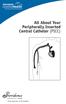 All About Your Peripherally Inserted Central Catheter (PICC) General Information Intravenous (IV) therapy is the delivery of fluid directly into a vein. An intravenous catheter is a hollow tube that is
Anaphylaxis: Treatment in the Community
 : Treatment in the Community is likely if a patient who, within minutes of exposure to a trigger (allergen), develops a sudden illness with rapidly progressing skin changes and life-threatening airway
How does Diabetes Effect the Feet
 How does Diabetes Effect the Feet What Skin Changes May Occur? Diabetes can cause changes in the skin of your foot. At times your foot may become very dry. The skin may peel and crack. The problem is that
Suturing Policy for Nurses in Emergency Departments
 This is an official Northern Trust policy and should not be edited in any way Suturing Policy for Nurses in Emergency Departments Reference Number: NHSCT/12/545 Target audience: Registered Nurses Sources
call 811 to get advice from a nurse, or have someone drive the patient to a hospital Emergency Department. Patients should NOT drive themselves.
 Taking Care at Home After Surgery This checklist is to help you and your support person know what to do after you go home following your surgery. If you are given instructions verbally or in writing by
FISD ATHLETIC DEPARTMENT COLD WEATHER GUIDELINES
 FISD ATHLETIC DEPARTMENT COLD WEATHER GUIDELINES Cold exposure can be uncomfortable, impair performance and even become life threatening. Conditions created by cold exposure include frostbite and hypothermia.