
Silicone Surface-Active Agents. By Donna Perry Dow Corning Corporation
|
|
|
- Dennis Wells
- 9 years ago
- Views:
Transcription
1 Silicone Surface-Active Agents By Donna Perry Dow Corning Corporation

2 Dow Corning Silicone Solutions As the pioneer of silicon-based technology, Dow Corning has been improving customers products and profitability for more than 60 years. With a full range of product and application solutions, reliable supply, world-class manufacturing, and global reach, Dow Corning can meet virtually any silicone-related need through our total solution offering and technology leadership. For more information, call Dow Corning ( provides performance-enhancing solutions to serve the diverse needs of more than 25,000 customers worldwide. A global leader in technology and innovation, offering more than 7,000 products and services, Dow Corning is equally owned by The Dow Chemical Company and Corning Incorporated. More than half of Dow Corning sales are outside the United States.

3 Silicone Surface-Active Agents by Donna Perry Dow Corning Corporation Introduction Surface-active agents are chemicals that reduce the surface energy of a material to which they are added by absorption at the air/liquid interface. The increasing popularity of waterborne coatings presents a continuing challenge for formulators. There is the need to formulate more environmentally acceptable products to comply with government regulations on VOCs, to reduce flammability and to generally reduce the hazard profile of coating systems. In comparison with solvent-borne systems, waterborne coatings exhibit a much higher surface tension. This results from water having a surface tension of 72.4 mn/m. As a result, waterborne coatings exhibit poor substrate wetting capabilities when compared to solventbased equivalents. The high surface tension of water is due to its polarity and the cohesive hydrogen bonding between the water molecules. Additives or surface-active agents, such as silicone polyethers, are used to modify the surface properties of waterborne coatings to achieve the desired flow, levelling and wetting performance. Silicone polyethers have traditionally been used in the coating area for surface modification, but along with these types of materials, Dow Corning has introduced novel functionalities to broaden applications and improve surfactant performance. This paper covers the traditional performance attributes of the silicone polyether additive class, while also introducing novel carbinol functional materials and their differences. Surface Tension Effects in Waterborne Coatings Surface tension can be considered in various ways, but perhaps best as a result of the forces of attraction existing between the molecules of a liquid. It is measured by the force per unit length acting in the surface at right angles to an element of any line drawn in the surface (mn/m). Wetting is the effect of displacing one fluid from the substrate surface by another liquid. In general, the liquid must have the same or a lower surface tension than the substrate; otherwise, no wetting will be achieved. This will produce a positive spreading coefficient and lead to a good coating. This can be best expressed in equation (1). By addition of the correct additive, the surface tension of the coating can be modified to improve substrate wetting. The additive acts by lowering the surface tension of the coating, enabling it to wet-out over the substrate. Levelling is the process of eliminating the surface irregularities of a continuous liquid film under the influence of the liquid s surface tension. Levelling is an important step in obtaining a smooth and uniform film. Concentration and surface Spreading wetting: S (Spreading coeff.) tension gradients in coatings are the main causes of poor levelling, which develop as the coating dries, due to variations in drying rates. Addition of the appropriate additive will modify the surface tension. For instance, a silicone additive will migrate to the liquid/air interface, giving an even surface tension across the film during the drying process, thus reducing surface tension gradients. Wetting and levelling are therefore totally different processes. Though the surface tension of the coating plays an important role in both processes, the effects of surface tension on spreading is opposite to that observed in levelling. Substrate wetting can be subdivided into two distinct categories: spreading wetting and adhesion wetting. Spreading wetting is necessary for even coverage of applied films, in particular, for the low-surface-energy substrates of many plastics. Adhesion wetting is defined in equation (2). It is important, for example, in printing processes in which it is undesirable for the applied ink to spread across a surface and then merge with other colors. = - G Spreading / A = γ Substrate - γ Substrate/Liquid - γ Liquid = γ Liquid (cos θ - 1) (1) When γ Substrate/Liquid > 0, spreading will occur spontaneously. Adhesion wetting: W A(Work of adhesion) = - G Adhesion / A = γ Substrate + γ Liquid - γ Substrate/Liquid = γ Liquid (cos θ +1) (2) (γ (gamma) = Surface tension) (θ (theta) = Contact angle)

4 Silicones as Surface-Active Agents Of the various surface-active chemistries currently available, this paper will mainly concentrate on a class of materials called silicone polyethers and the introduction of novel carbinol materials based on similar structures. This family of copolymers is used to provide multifunctional benefits in waterborne systems. The main uses of silicone polyethers in inks and coatings include de-foaming, de-aerating, improved substrate wetting and levelling, and enhanced slip properties 1,2. The three most common molecular structures for silicone surfactants are rake-type copolymers, ABA copolymers and trisiloxane surfactants. These are illustrated in Figures 1, 2 and 3 Figure 1: Molecular structure of a rake-type silicone surfactant. ( Si O ( Si O ) x -( Si O ) y Si ( (CH 2 (OCH 2 CH 2 ) n OR Figure 2: Molecular structure of an ABA-type siloxane surfactant. Figure 3: Molecular structure of a trisiloxane surfactant. ( Si O Si O - Si ( (CH 2 RO (CH 2 CH 2 O) n (CH 2 Si O ( Si O ) x Si (CH 2 (OCH 2 CH 2 ) n OR (OCH 2 CH 2 ) n OR respectively, and the performance of these structures will be described in two types of coatings. Silicones are highly surface active due to their low surface tension caused by the large number of methyl groups and due to the small intermolecular attractions between the siloxane hydrophobes. The siloxane backbone of the molecule is highly flexible, which allows for maximum orientation of the attached groups at interfaces. Silicone polyethers are non-ionic and have both a hydrophilic part (lowmolecular-weight polymer of ethylene oxide or propylene oxide or both) and a hydrophobic part (the methylated siloxane moiety). The new carbinolfunctional materials also incorporate a hydrophilic species on them and function under the same principles in which the traditional silicone polyethers do. The polyether groups are either ethylene oxide or propylene oxide, and are attached to a side chain of the siloxane backbone through a hydrosilylation or condensation process. They can form a rake-like, comb structure, or linear structure. Silicone polyethers are stable up to F ( C). There is a great degree of flexibility in designing these types of polymers. A very wide variety of co-polymers is possible when the two chemistries are combined. They can be varied by molecular weight, molecular structure (pendant/linear) and the composition of the polyether chain (EO/PO), and the ratio of siloxane to polyether. The molecular weight influences the rate of migration to the interface. The increased molecular weight of a polymer typically leads to an increased viscosity, but may also give greater substantivity to surfaces and improved shine level. Other variables include absence or presence of functionality or end groups on the polyether fragments. Depending on the ratio of ethylene oxide to propylene oxide, these molecules can be water soluble, dispersible or insoluble; obviously, for efficient wetting, these surfactants need to have good solubility in solution. As surfactants, they have the ability to produce and stabilize foam depending on their structure. Conversely, if their solubility parameters are low, they behave as antifoaming agents. The different structures affect how the molecules can pack at an interface. With pendant types in aqueous media, the silicone backbone aligns itself with the interface, leaving the polyalkylene oxide groups projecting into the water. Linear types form a very flattened W alignment where the central silicone

5 portion of the molecule aligns with the interface and the terminal groups are in the aqueous phase. The amounts to be added vary between 0.01% and 0.5% of the total formulation. This paper will now discuss the behavior of silicone polyethers, along with comparisons to silicones with novel carbinol functionalities in water, together with some studies in coating formulations. The results are compared with other additives that are currently used in coatings. Silicone Polyethers as Wetting Agents In this study, the three different siloxane surfactants described above were evaluated in aqueous solution, in a water-based printing ink, and in a waterbased polyester coating, in comparison with fluorosurfactants and acetylenic glycols, which are also used as wetting agents. To achieve good wetting and a positive spreading coefficient, the surface tension of the coating must be lower than the critical surface tension of the substrate. Water has a typical surface tension of 72 mn/m and, as can be seen from Table I, all the surfactants tested reduced the surface tension of the system, and, as a result, the aqueous medium wetted more efficiently. For the silicone surfactants, the best results were achieved with product A, a low-molecular-weight material. Trisiloxane A gave a very low figure that was improved by the fluorosurfactant. The critical micelle concentration (CMC) is the required level of product to initiate the formation of micelles in the bulk of a liquid. Up to this point, the surfactant added to the water migrated to the liquid/air interface to form a film that reduced the surface tension. The low CMC for A showed its high packing efficiency at the interface, in the much lower level required in comparison to the other products. Table I: Equilibrium surface tension with a Krüss K10T tensiometer and a platinum Wilhelmy plate, additive concentrations 0.1%. Surfactant Equilibrium Surface Tension (nm/m) CMC (%) Trisiloxane A ABA Siloxane B Rake Siloxane C Fluorosurfactant Ethoxylated Acetylenic Diol In this context, it is important to understand the difference between equilibrium and dynamic surface tension. For an equilibrium surface tension measurement, a platinum plate is immersed in a test solution and then slowly withdrawn. The force required to remove the plate from the solution is a measure of the surface tension of that liquid. Dynamic surface tension can be measured by an instrument that bubbles air through the test liquid at an increasing rate, during which the maximum pressure that is required to form a bubble is measured. As the bubble rate increases from 1 bubble per second to 10, the time to create the new interface (liquid/air) decreases. This is effectively measuring how quickly the surfactant lowers the surface tension. M.M The dynamic method is more representative of the coating application, for example, spraying. Under these circumstances, it is important to know how quickly a surfactant can migrate to newly formed interfaces. An ideal surface-active agent would provide excellent surface tension reduction under both equilibrium and dynamic conditions. Figure 4 shows dynamic surface tension results for the above materials at 0.1% in water. Trisiloxane A gives better performance than the other silicone polyethers, but does not give the very low values achieved by either the fluorosurfactants or ethoxylated acetylenic glycols. However, it must be remembered that dynamic surface tension represents only one aspect of the total phenomenon. Figure 4: Dynamic surface tension, maximum bubble pressure (Krüss BP1), 0.1% in water. "UBBLE &REQUENCY (ERTZ #!DDITIVE "!DDITIVE!!DDITIVE & 3URFACTANT %THOXYLATED!CETYLENIC $IOL

6 In practice, not only the conditions at the air/liquid interface are of interest but also the conditions at the liquid/substrate interface. In general, the smaller the contact angle produced by a system, the better the substrate wetting. The equipment used to measure the contact angle, theta (θ), was a VCA 2000 instrument that automatically dispensed a minute droplet of the liquid to be measured and then photographed the droplet after a set period, or could be programmed to take a number of photographs and measure corresponding contact angles after regular time intervals. This technique enabled the monitoring of droplets spreading on non-porous surfaces. When θ is greater than 90 degrees, as in Figure 5, then beading or non-wetting is occurring, as is shown by water on a plastic surface such as high-density polyethylene. If θ is less than 90 Figure 5: Contact angle measurement. degrees, as shown in Figure 5, then wetting is occurring; the smaller the angle, the better the wetting process. Spontaneous wetting occurs when θ=0, the droplet immediately spreading to Figure 6. Contact angle measurement with a VCA 2000 video contact angle equipment, additive concentration at 0.1% in water. #ONTACT!NGLE 3URFACE %NERGY OF 3UBSTRATE M.M form a very thin continuous film on the substrate with effectively no contact angle capable of being determined. Figure 6 shows the behavior of the same surfactants on a range of low-energy substrates such as polyethylene and polypropylene. For wetting, it has been shown that the most efficient silicone polyether is trisiloxane A, which has three Si atoms with pendant ethylene oxide. The low molecular weight and size give greater mobility in solution and allow for very efficient packing at interfaces. For critical low-energy substrates, only the trisiloxane surfactant A allows perfect (spontaneous) wetting and excellent spreading. #ONTROL "!DDITIVE #!DDITIVE %THOXYLATED!CETYLENIC $IOL!!DDITIVE & 3URFACTANT Extending this performance behavior now into practical life applications, the effects of these surfactants in a waterbased flexographic ink formulation are shown in Figure 7. The addition of siloxane surfactant A shows excellent substrate wetting performance on plastic foil, followed by the fluorosurfactant. The siloxane surfactants B and C, which have a different structure and a higher molecular weight, do not improve the wetting behavior. It can be seen that the acetylenic glycol has only a small impact on the wetting behavior. Any surfactant molecule has the potential to generate foam that is undesirable in many applications. Figure 8 shows the density measurements after a high shear stir test, which give an indication of air entrapment in the ink. The siloxane Figure 7: Flexographic printing ink, additive concentration 0.5%, wetting/appearance performance after application on plastic foil (surface energy 34 mn/m) by draw down 12 micron, rated on a scale from 1 5. ANCE7ETTING PPEAR! #ONTROL 4RISILOXANE!!"! " 2AKE #!CETYLENIC & 3URFACTANT 'LYCOL 2ATING FROM EXCELLENT Figure 8: Flexographic printing ink, additive concentration 0.5%, density measurement after dissolver stirring test (5 minutes at 2800 rpm) as a measure of rate of foam development. $ENSITY IN GCM #ONTROL 2AKE!"! " 4RISILOXANE!!CETYLENIC & 3URFACTANT 'LYCOL $ENSITY WITHOUT STIRRING GCM

7 surfactant C (rake) acts only as a lowto-moderate foam enhancer compared to the fluorosurfactant. What is also interesting is that siloxane surfactant B, the silicone product with the highest molecular weight, is performing as a de-aerator. Silicones as Slip Additives Slip represents the lubrication of a dry coating surface. Given that the function of a coating is often to protect the underlying surface from damage while maintaining a satisfactory appearance, it is clear that the coating itself must be capable of resisting mechanical damage. This is where slip is important. It is often referred to as mar resistance, rather than abrasion resistance. In the latter, the bulk mechanical properties of the film are important, in addition to the surface lubricity. Slip additives must reduce friction at the coating surface. A thin layer of a material with low inter-molecular forces is capable of achieving this. The slip additive should be sufficiently compatible with the coating before application to avoid separation. After application, it should not cause fisheyes or other defects associated with nonwetting of the additive by the coating. However, there has to be some degree of incompatibility to drive the additive to the surface of the coating film during drying. Silicone polyethers are important as slip agents due to their structure. The ratio of the EO/PO segments has to be carefully controlled to achieve the required compatibility balance. Too low a polyether content may lead to the de-wetting defects already mentioned. On the other hand, high polyether content can render the copolymer too soluble, with no driving force to get it to the coating surface during drying. Figure 9: Effect of molecular weight on slip performance of silicone-polyether copolymers in water-reducible polyester stoving paint (A: low molecular weight; B: high molecular weight). 3LIP!NGLE Table II: Contact angle data. Sample #ONTROL 4RISILOXANE! 2AKE " As previously described for wetting, the architecture of the copolymer has a profound effect on its behavior as a slip additive. Optimized structures have been identified by designed experimentation to give the desired combination of compatibility and slip performance. Compatibility is particularly important in clear coatings, where gloss reduction or haze is not acceptable. Figure 9 shows slip angle results for silicone-polyether copolymers A and B in water-reducible stoving paint. The main difference between the copolymers is overall molecular weight. Both products contain pendant polyether groups. It can be seen that trisiloxane A has almost no impact on slip. This is believed to be due to the very short nature of its silicone chains. A minimum amount of dimethylsiloxy units is required to give noticeable changes in slip. This requirement is met in rake structure B, which shows an improved slip. Water Contact Angle Acrylic Binder 43 Binder with 1% ABA 34 Binder with 1% Novel ABA <15 Binder with 1% Novel Resin <15 Novel Carbinol Function Silicones in Comparison to Traditional SPEs in Architectural Coatings The purpose of looking at new functionalities was to determine if we could improve hydrophilicity beyond what we were seeing in the traditional silicone polyethers that would lend themselves to more easy-clean surface development. In this study, two novel carbinol functionality materials were compared to a traditional silicone polyether of similar degree of polymerization (Dp) and its performance toward dirt release in an architectural binder. Each sample was doped into an acrylic-based binder by weight of resin, and surface appearance and properties were characterized. With the incorporation of the novel carbinol functionality, the data shows an increase in the hydrophilicity of the coating as compared to the traditional SPE (Table II). This yields what was seen as an

8 Table III: Dirt-release characteristics through simple spray method. Sample Dirt Release Properties Binder 0 Binder with 1% ABA + Binder with 1% Novel ABA ++ Binder with 1% Novel Resin ++ though with the addition of the traditional ABA materials there was a slight improvement over the baseline but not as great as the unaged samples. The novel ABA materials still showed significant improvement, while the resinous materials showed excellent dirt-release characteristics (Table V). Table IV: Dirt pickup and pencil hardness. Pencil Formulation Dirt Pickup Hardness Binder 0 3B Binder with 1% ABA - 4/5B Binder with 1% Novel ABA Binder with 1% Novel Resin - - 4/5B 4B Table V: Dirt release characteristics after outdoor aging. Sample SG 30 Neat - SG 30 with 1% ABA 0 SG 30 with 1% Novel ABA + Dirt Release Properties after 1008 Hours Weathering SG 30 with 1% Novel Resin ++ increase in the dirt-release ability of the coating through simple water spraying. This increase in hydrophilicity was seen in both the ABA-structured materials as well as resinous-based siloxanes. After a simple draw down and cure time, the coatings were dusted with a layer of dirt and sprayed with water to note the dirt-releasing properties. With the addition of the ABA silicone polyether structure, there was an enhancement of the dirt-release properties, but this enhancement was even greater in those samples incorporating the new carbinol functionality (Table III). One thing to be noted is that the addition of the silicone surfactants, either with the new carbinol material or the traditional polyethers, does cause a slight softening of the coating itself, which actually correlates into an initial dirt pickup that is slightly enhanced over the neat acrylic binder (Table IV). Durability of this hydrophilicity is a known deficiency, given the current additives function by migrating to the surface and can often wash away over an extended time with exposure to the environment. After subjecting the coatings to external weathering exposure for 1008 hours, the dirt-release perfor mance decreased. The neat SG 30 sample no longer released dirt as easily, Figure 10: Mar resistance as a function of gloss. 'LOSS )NITIAL "ASE 2UBS 4 RISILO XANE 4 RISILO XANE WITH.OVEL Novel Carbinol Functional Silicones in Comparison with Traditional SPEs in Overprint Varnish Applications A baseline formulation for a generalpurpose overprint varnish was obtained by Johnson Polymers. The formulation was run with and without the Aerosol OT-75, noting no differences in the wet-out performance, and was omitted for all the runs with the addition of the additives. The appearance and wet-out of the OPV were not affected by the incorporation of the siloxane additive, either standard or with the novel functionality. Samples were coated onto Lentea charts and run for 250 cycles on a Sutherland rub tester with gloss being documented prior and after rubs to determine each formulation s resistance to mar. The initial point to be noted was an increase in the initial gloss with siloxane incorporation, excluding the standard ABA and the BYK material benchmarked against. Enhancement was higher in those containing the novel functionality. There was also better mar resistance overall with all these samples, versus the baseline material.!"! &ORMULATION!"! WITH.OVEL 2ESIN WITH.OVEL #OMPETITOR 3AMPLE

9 Figure 11: Coefficient of friction data on OPV samples. #O& "ASE 4RISILOXANE 4RISILOXANE WITH.OVEL &ORMULATION 3TATIC #O& Coefficient of friction data (CoF) indicates that the mar resistance improvements were not due to increasing the slip of the surface. By industry standards, the slip change that was documented is within error. This indicates a possibility for applications such as floor varnish where mar resistance needs to be increased with no effect on the CoF or slipperiness of the surface. The CoF data demonstrates that the additive is not residing on the surface but possibly allowing the PE wax to better orientate at the surface and yield higher mar resistance. In looking at the surface tension data of the materials used in this study there is actually very little difference that would!"!!"! WITH.OVEL +INETIC #O& 2ESIN WITH.OVEL #OMPETITOR 3AMPLE indicate this is the reason why the material performs this way. Work continues to optimize the structures and find application in which they can be utilized. Conclusions Silicone-based surfactants offer many benefits in waterborne coatings. By the addition of the correct silicone surfac tant, the coating surface tension can be Table VI: Surface energy of standard and modified siloxanes. Surface Energy at 1% (Dynes/cm) Trisiloxane 20.1 Trisiloxane with Novel 21.2 ABA 24.6 ABA with Novel 23.8 Resin not soluble Resin with Novel 26.4 modified to improve substrate wetting. In particular, the trisiloxane structure gives the best equilibrium surface tension reduction and excellent wetting to plastic surfaces and other low-energy substrates. This material has the greatest capacity for lowering the liquid/solid interfacial tension. The higher-molecular weight siloxane surfactants, with rake and linear structures, give moderate wetting. However, materials of these types can be used to provide other benefits, for instance mar resistance, slip and de-aeration. The incorporation of a resinous material with functionality can also yield a higher substantivity in a coating that is likely desired when a coating is being exposed to long-term weathering effects. The addition of novel functionalities in place of the linear polyethers also can enhance the proper ties of the silicone polyether materials; research is being done to fine-tune these functionalities to the most appropriate applications.

10 References 1 Schlachter, I., and Feldmann-Krane, Georg, Silicone Surfactants, Surfactants Sci. Ser., 1998, 74, p Scholz, W., Verkroniek, 10, 13, 1995.

11

12 How to Contact Us Dow Corning has sales offices, manufacturing sites, and science and technology laboratories around the globe. Telephone numbers of locations near you are available on the World Wide Web at or by calling one of our primary locations listed below. Your Global Connection Americas Europe Asia LIMITED WARRANTY INFORMATION PLEASE READ CAREFULLY The information contained herein is offered in good faith and is believed to be accurate. However, because conditions and methods of use of our products are beyond our control, this information should not be used in substitution for customer s tests to ensure that Dow Corning s products are safe, effective, and fully satisfactory for the intended end use. Suggestions of use shall not be taken as inducements to infringe any patent. Dow Corning s sole warranty is that the product will meet the Dow Corning sales specifications in effect at the time of shipment. Your exclusive remedy for breach of such warranty is limited to refund of purchase price or replacement of any product shown to be other than as warranted. DOW CORNING SPECIFICALLY DISCLAIMS ANY OTHER EXPRESS OR IMPLIED WARRANTY OF FITNESS FOR A PARTICULAR PURPOSE OR MERCHANTABILITY. DOW CORNING DISCLAIMS LIABILITY FOR ANY INCIDENTAL OR CONSEQUEN TIAL DAMAGES. Dow Corning is a registered trademark of Dow Corning Corporation. We help you invent the future is a trademark of Dow Corning Corporation Dow Corning Corporation. All rights reserved. Printed in USA AGP7561 Form No

Slip and Flow Additives Radiation-Curing Additives. TEGO Glide TEGO Flow TEGO Rad
 Slip and Flow Additives Radiation-Curing Additives TEGO Glide TEGO Flow TEGO Rad The customer's wish: the perfect finish Diverse demands are made on paints and varnishes. On the one hand, the requirement
SILICONE SOFTENERS FOR STAIN REPELLENT AND STAIN RELEASE FABRIC FINISHING. Fernando Vazquez Dow Corning Corporation Greensboro, N.C.
 SILICONE SOFTENERS FOR STAIN REPELLENT AND STAIN RELEASE FABRIC FINISHING Fernando Vazquez Dow Corning Corporation Greensboro, N.C. ABSTRACT During the last few years the use of fluorochemicals to provide
BRILLIANT TONER SERIES TONERS FOR PRINTING INKS BSTS SERIES
 BRILLIANT TONER SERIES TONERS FOR PRINTING INKS BSTS SERIES Brilliant fluorescent soluble toners are high-strength, transparent colorants. They are suitable for flexographic and gravure printing inks used
family of products is really Reichhold s answer to the growing need to meet more stringent regulations and performance requirements.
 Alkyd performance. Water cleanup. Beckosol AQ is a new platform of low VOC alkyd latex resins made from renewable resources. We take conventional alkyd chemistry and emulsify it in water to deliver a unique
How To Measure Surface Tension
 The dynamics of surface tension Resolving measurement problems in wetting of complex coatings. Victor P. Janule. Unexpected application problems can occur with coatings because their surface tension may
Surfȳnol Surfactants: Superior Substrate Wetting Agents in Water-Based Printing Inks
 Surfȳnol Surfactants: Superior Substrate Wetting Agents in Water-Based Printing Inks Introduction The performance benefits of Surfȳnol surfactants have been evaluated in water-based inks to assess their
ROVACE HP-2931 High Performance Vinyl Acetate/Acrylic Copolymer Emulsion
 ROVACE HP-2931 High Performance Vinyl Acetate/Acrylic Copolymer Emulsion Description ROVACE HP-2931, vinyl acetate acrylic copolymer emulsion, is designed for use in formulation high performance adhesives
This presentation is courtesy of
 This presentation is courtesy of Advances in Flexible Packaging Adhesives CPP Expo Presentation September, 2005 Nancy Smith Agenda Basic types/ functions of adhesives used in flexible packaging Laminating
ACRYSOL RM-7 Rheology Modifier For Waterborne Architectural and Industrial Coatings
 ACRYSOL RM-7 Rheology Modifier For Waterborne Architectural and Industrial Coatings Description ACRYSOL RM-7 rheology modifier is a remarkably versatile hydrophobically modified alkali-soluble emulsion
Technical Data Sheet February 2014
 Scotch-Weld Technical Data Sheet February 2014 Product Description s are high performance, two-part acrylic adhesives that offer excellent shear, peel, and impact performance. These toughened products
SILASTIC 9161 RTV Silicone Elastomer
 Product Information SILASTIC 9161 RTV Silicone Elastomer FEATURES Room temperature cure Usable at temperatures from -50 C to +250 C Excellent dielectric properties Highly resistant to moisture, oxidation
The Ultimate in Weathersealing Versatility. Dow Corning 123 Silicone Seal
 The Ultimate in Weathersealing Versatility Dow Corning 123 Silicone Seal Effective and attractive EIFS restoration When urethane sealants fail on EIFS-clad buildings, leaks and interior damage typically
ISANE Isoparaffin Products
 ISANE Isoparaffin Products High Product Purity The Isane range is a unique range of products that is characterized by a high purity level, low odor, low surface tension, and relative chemical inertness.
Plastics and Polymer Business. Properties enhancement for Plastics
 News Letter Vol. 18, issue October-December, 2012 Hyperdispersants and Coupling Agents for Thermoplastics and Thermosets Solplus, Ircolplus and Solsperse hyperdispersants and coupling agents have been
polymer additive General Overview
 DuPont Fluoroguard polymer additive General Overview DuPont Fluoroguard is a range of colorless, odorless, and chemically inert polymer additives based on fluorinated synthetic oil. Fluoroguard is designed
Technical Bulletin The Use of SURFONAMINE Dispersant Intermediates. Amines as Pigment Modifiers and
 Technical Bulletin The Use of SURFONAMINE Dispersant Intermediates Amines as Pigment Modifiers and In an ink or coating formulation the pigment must be dispersed and stabilised to achieve good colour strength,
1. Introduction 2. Surface Tension
 1. Introduction Most coating systems need good leveling and flow in order to have a nice appearance. A flat smooth surface, will also give better glossy appearance and is very eye catching. Controlling
Radiation Curable Components and Their use in Hard, Scratch Resistant Coating Applications
 Radiation Curable Components and Their use in Hard, Scratch Resistant Coating Applications William Schaeffer Steven Tyson Indu Vappala Robert Kensicki Sartomer USA, LLC 502 Thomas Jones Way Exton, PA 19343
RHOPLEX SG-10M 100% Acrylic Emulsion For Interior/Exterior Semigloss Latex Paints
 RHOPLEX SG-10M 100% Acrylic Emulsion For Interior/Exterior Semigloss Latex Paints Description RHOPLEX SG-10M emulsion is a versatile 100% acrylic copolymer that was designed for use in high-quality interior/exterior
Industrial Attachment Tapes X-Series. Value, Performance. & Quality. Simply X.
 3M Industrial Attachment Tapes X- Value, Performance & Quality Simply X. 3M has made it easy to select a high-quality tape for my attachment and assembly needs. Simply X. Your application. OUR TAPE. We
Raven and Conductex Products for Specialty Applications
 Raven and Conductex Products for Specialty Applications e e FUNDAMENTAL PROPERTIES OF CARBON BLACK A carbon black s application performance is determined by its fundamental properties and the level of
Defoamers: Applications in Water-Based Printing Inks
 Surfȳnol Defoamers: Applications in Water-Based Printing Inks Introduction Formulators of water-based inks know that foam is a costly problem that causes difficulties throughout ink-making and printing
The Anatomy of a Label
 The Anatomy of a Label Three key elements make up a label: face stock, release liner, and adhesive. Face Stock: Face stock is the material of the label that carries the imprint. The print can be applied
Crystal Clear Sealant
 Crystal Clear Sealant Technical Data February, 2012 Product Description 3M Crystal Clear Sealant is a one component thermoplastic elastomer which forms permanent elastic bonds when used in surface sealing
SIGMAFAST 210. PRODUCT DATA SHEET December 12, 2014 (Revision of April 1, 2013) DESCRIPTION
 DESCRIPTION Two-component, high-build zinc phosphate polyurethane primer/finish PRINCIPAL CHARACTERISTICS Specially designed for in-shop application Fast-curing Easy application by airless spray Unlimited
RHOPLEX AC-264 Emulsion Polymer 100% Acrylic Binder for Exterior Flat, Satin and Semigloss Architectural Coatings
 RHOPLEX AC-264 Emulsion Polymer 100% Acrylic Binder for Exterior Flat, Satin and Semigloss Architectural Coatings Rhoplex AC-264 emulsion polymer is a unique high solids, 100%-acrylic emulsion vehicle
Silicone products for tissues
 Creating tomorrow s solutions Silicone products for tissues The paper used in tissues must meet tough demands. It must be odorless or have a fresh fragrance. It must be fluffy, soft and gentle on the skin,
Decorative Matt Emulsion Paint
 Hydrous Kaolins for Decorative Matt Emulsion Paint Hydrous Kaolin Highly recommended for decorative matt emulsions PERFORMANCE MINERALS Hydrous Kaolin Increases opacity by improving TiO 2 spacing. Hydrous
Anquawhite 100 Curing Agent
 Anquawhite 100 Curing Agent Anquawhite 100 curing agent is a novel waterborne curing agent dispersion designed for use in ambient or heat cure two part epoxy systems. Anquawhite 100 curing agent can be
Scotch-Weld TM. Acrylic Adhesives. DP8405NS Green. Product Data Sheet. Date: March 2014 Supersedes: August 2013
 Scotch-Weld TM Product Data Sheet Acrylic Adhesives Date: Supersedes: August 2013 Product Description 3M TM Scotch-Weld Acrylic Adhesives are high performance, twopart acrylic adhesives that offer good
Document Library TS Data Sheet 46012 46013 46014
 Document Library TS Data Sheet 46012 46013 46014 Rev:2 Effective: 01/11/2002 3M Marine High Strength Repair Filler Data Sheet Status: Active 3M Part No.(s) 46012 46013 46014 3M Part Descriptor(s) Pint
Scotch-Weld. Low-Odor Acrylic Adhesives DP810 DP810 NS. Technical Data June, 2004
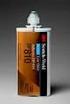 3 Scotch-Weld TM Technical Data June, 2004 Product Description 3M Scotch-Weld Low-Odor Acrylic Adhesive DP810 and DP810 NS are twopart, 1:1 mix ratio, toughened structural adhesives with less odor than
Electron Beam Technology for Pressure Sensitive Adhesive Applications
 Electron Beam Technology for Pressure Sensitive Adhesive Applications Introduction Stephen C. Lapin, Ph.D. PCT Engineered Systems LLC Davenport, IA, USA Initial reports on the use of ultraviolet (UV) and
Defoamers. Dispersions & Pigments division Formulation Additives
 Defoamers Dispersions & Pigments division Formulation Additives 1 Content Introduction Theory & physical principle Chemistry: water- and solvent-borne systems Selection of products: industrial paints (solvent-borne
15. Silicones in the Plastics Industry G. Shearer, Multibase, a Dow Corning Company, Copley OH (USA)
 15. Silicones in the Plastics Industry G. Shearer, Multibase, a Dow Corning Company, Copley OH (USA) Silicones are used in the plastics industry as additives for improving the processing and surface properties
AEROSIL and SIPERNAT Efficient booster for defoamer in paints and coatings. Technical Information 1381
 AEROSIL and SIPERNAT Efficient booster for defoamer in paints and coatings Technical Information 1381 1 Summary 2 General Hydrophobic silica products are well known as efficient booster for defoamer formulations
and LUMINOUS CHEMICAL VAPOR DEPOSITION INTERFACE ENGINEERING HirotsuguYasuda University of Missouri-Columbia Columbia, Missouri, U.S.A.
 LUMINOUS CHEMICAL VAPOR DEPOSITION and INTERFACE ENGINEERING HirotsuguYasuda University of Missouri-Columbia Columbia, Missouri, U.S.A. MARCEL MARCEL DEKKER. NEW YORK DEKKER Contents Preface iii Part I.
SIGMACOVER 300. PRODUCT DATA SHEET December 12, 2014 (Revision of November 1, 2013) DESCRIPTION
 DESCRIPTION Two-component, high-build, polyamine adduct-cured, coal tar epoxy coating PRINCIPAL CHARACTERISTICS Outstanding (sea)water resistance (outside hull and ballast tanks) Outstanding water- and
MARTIN TESTING LABORATORIES (MTL) PAINTS AND COATINGS TESTING CAPABILITIES
 Liquid Coating Properties Composition VOC Content, ASTM D2369 Water Content, ASTM D4017 Physical Properties Calculating Physical Constants of Coatings, ASTM D5201 Density, ASTM D1475 Flash Point, ASTM
3M Products for Solar Energy. Designed for efficiency. Built to last.
 3M Products for Solar Energy Designed for efficiency. Built to last. 2 3M Products for Solar Energy From factory to field, 3M is with you. Every step of the way. Making solar power more efficient. More
Your ideas. Our technologies.
 Your ideas. Our technologies. For more than a decade, 3M has been a trusted supplier of advanced materials for the solar industry. Our broad range of products and technologies is designed to enhance performance,
Basic Principles in Microfluidics
 Basic Principles in Microfluidics 1 Newton s Second Law for Fluidics Newton s 2 nd Law (F= ma) : Time rate of change of momentum of a system equal to net force acting on system!f = dp dt Sum of forces
Industrial Adhesives and Tapes Division 3M Center Building 225-3S-06 St. Paul, MN 55144-1000 1-800-362-3550 www.3m.com/vhb
 Limited Product Warranty: 3M warrants for 24 months from the date of manufacture, 3M VHB tapes will be free of defects in material and manufacture. 3M MAKES NO OTHER WARRANTIES, EXPRESS OR IMPLIED, INCLUDING
APPLICATION BULLETIN
 APPLICATION BULLETIN Compatibility Between Poly bd R45HTLO and Polyether or Polyester Polyols Introduction Poly bd resin polyols are liquid, hydroxyterminated homopolymers of butadiene. Through the use
Tiangang TM BW-10LD (622)
 Tiangang TM BW-10LD Oligomeric Hindered Amine Light Stabilizer (HALS) Poly-(N-β-hydroxyethyl-2,2,6,6-tetramethyl-4-hydroxy-piperidyl-succinate) CAS number 65447-77-0 BW-10LD BW-10LD is a highly effective
Additives for Water Based Adhesives
 Additives for Water Based Adhesives Contents 3 About us 4 The advantages of TEGO Antifoam 5 Selecting the right TEGO Antifoam to deliver the best performance in your formulation 6 Delivering performance:
3 Destructible Vinyl Label Material 7613T / 7930T
 3 Destructible Vinyl Label Material Technical Data September, 2010 Product Description 3M Destructible Vinyl Label Materials 7613T and 7930T are consistent, smooth, topcoated films designed to exhibit
Adhesive Bonding of Natural Stone
 Adhesive Bonding of Natural Stone Section I: Basics of Stone Adhesion Adhesive Theory There are many theories concerning the forces that are at work in forming an adhesive bond between two (2) different
Determination of Viscosity Using A Brookfield Viscometer for Conditioning Polymers
 LUBRIZOL TEST PROCEDURE TP-N01004 Edition: December 2, 2013 Previous Editions: August 10, 2000 / November 1, 2011 Determination of Viscosity Using A Brookfield Scope A material's flow property is an important
MONOETHYLENE GLYCOL (MEG) (Monoethylene Glycol / MEG)
 MONOETHYLENE GLYCOL (MEG) (Monoethylene Glycol / MEG) Monoethylene glycol (MEG) in its pure form, it is an odorless, colorless, syrupy liquid with a sweet taste. Ethylene Glycol: HOCH 2CH 2OH CAS Registry
CARBOWAX Polyethylene Glycols Innovation, Performance, Flexibility and Quality from the Global Leader in PEGs
 CARBOWAX Polyethylene Glycols Innovation, Performance, Fleibility and Quality from the Global Leader in PEGs CARBOWAX PEGs and MPEGs Improving Formulations and Processes for More than 70 Years Polyethylene
PARALOID KM-1 Acrylic Impact Modifier
 Technical Data Sheet PARALOID KM-1 Acrylic Impact Modifier For Weatherable Vinyl Building Applications Regional Product Availability Description Europe PARALOID KM-1 Acrylic Impact Modifier belongs to
GUR PE-UHMW. Micropowder GUR Micropowders as Additives. Micropowder GUR Micropowders as Additives
 GUR PE-UHMW Micropowder GUR Micropowders as Additives GUR is the trademark of Ultra-High Molecular Weight Polyethylene (PE-UHMW) products produced by Celanese. GUR Micropowders product line has an average
It is an important tool to assess factors that affect the bioavailability of a drug from a solid preparartion.
 Quality control of tablets Dissolution It is an important tool to assess factors that affect the bioavailability of a drug from a solid preparartion. To ensure that the preparation comply with product
Peroxide or Platinum? Cure System Considerations for Silicone Tubing Applications
 Peroxide or Platinum? Cure System Considerations for Silicone Tubing Applications Regina M. Malczewski, Ph. D., Donald A. Jahn, and William J. Schoenherr Dow Corning Healthcare Introduction Silicone tubing
Silicones in Shower Gels: How to Achieve After-Feel from a Rinse-Off Product
 Silicones in Shower Gels: How to Achieve After-Feel from a Rinse-Off Product Isabelle Van Reeth, Virginie Caprasse, Dow Corning SA Belgium Introduction Silicones have been used in personal care applications
EMULSION PREVENTERS FOR COMPLETION AND STIMULATION FLUIDS
 EMULSIN PREVENTERS FR CMPLETIN AND STIMULATIN FLUIDS Thiago Vinícius Alonso Research and Development Engineer - Dow Brasil S/A ABSTRACT Alkoxylated polymers are widely used as demulsifiers agents for crude
Fluid Mechanics: Static s Kinematics Dynamics Fluid
 Fluid Mechanics: Fluid mechanics may be defined as that branch of engineering science that deals with the behavior of fluid under the condition of rest and motion Fluid mechanics may be divided into three
Adhesive resins product guide
 Better, cleaner chemistry Adhesive resins product guide Asia Pacific Resins and resin dispersions for hot melt, pressure-sensitive and non-pressure-sensitive adhesives Snowtack tackifier dispersions Capitalizing
Taking Quality and Performance to the Next Level
 Polyurethanes Asia Pacific Taking Quality and Performance to the Next Level Sustainable Solutions for Coatings, Adhesives, Sealants and Elastomers Supplying a multitude of products for measurable results
PRODUCT DATA SHEET Sika Cable System
 PRODUCT DATA SHEET Corrosion protection for bridge cables of steel and galvanized steel PRODUCT DESCRIPTION The Sika Cable System consists of coating materials as well as a sealing respectively injection
Dow Consumer & Industrial Solutions TRITON CG-425 Alkyl Polyglucoside Surfactant
 Dow Consumer & Industrial Solutions TRITON CG-425 Alkyl Polyglucoside Surfactant TRITON CG-425 offers good wetting and detergency properties, exhibits low streaking and filming, and produces stable foam.
ELASTOCEM. Technical features. Applications. Two-component flexible, waterproofing and protective cementitious grout.
 Two-component flexible, waterproofing and protective cementitious grout. 1504-2 PI-MC-IR Technical features Two-component grout, based on cements, selected aggregates, special additives and synthetic polymers
Challenges and. Opportunities of. Digital Printing. Andreas Koch Managing Director Digital Division
 Challenges and Opportunities of Digital Printing Andreas Koch Managing Director Digital Division Contents Why digital printing? The Marabu way Ink technologies Case study 2 Why digital printing? You can
Arkema at the European Coatings Show 2009
 Arkema at the European Coatings Show 2009 On the occasion of the European Coatings Show 2009, Arkema exhibits its latest innovations for the coating and painting industry: Arkema expands its CRP (Controlled
Introduction: Consumables - Part of the Identification System
 Consumables - The Basics A presentation from: Introduction: Consumables - Part of the Identification System You have spent many hours researching, selecting, and getting approval for your new data collection
GPS Safety Summary. Substance Name: ETHOXYLATED TRIMETHYLOLPROPANE TRIACRYLATE
 GPS Safety Summary Substance Name: ETHOXYLATED TRIMETHYLOLPROPANE TRIACRYLATE 1. General Statement SR 454 is a trifunctional low viscosity acrylate monomer for use in ultra violet and electron beam curing
3M Thermally Conductive Epoxy Adhesive TC-2810
 Technical Data August 2014 3M Thermally Conductive Epoxy Adhesive TC-2810 Product Description 3M Thermally Conductive Epoxy Adhesive TC-2810 is a thermally conductive 2-part epoxy using boron nitride (BN)
Introduction to Lubricants and Additives for Polymer Compounds
 Introduction to Lubricants and Additives for Polymer Compounds Presented by Michael S. Fulmer ctober 24, 2000 Discussion of additives that act as: Lubricants Adhesives Surfactants Which function to: Improve
Gloss, reactivity and adhesion
 UV Coatings , reactivity and adhesion Terra UV coatings provide finishing on the highest level, protect the printed product perfectly and enable a smooth further processing. UV coatings cure under ultraviolet
3M Thermal Bonding Film AF42
 Technical Data August 2015 3M Thermal Bonding Film AF42 Product Description 3M Thermal Bonding Film AF42 is an epoxy, thermoset film adhesive developed for structural bonding of metal, glass and other
Adhesive Transfer Tapes with Adhesive 200MP 467MP 468MP 467MPF 468MPF 7952MP 7955MP 7962MP 7965MP 9172MP 9185MP 9667MP 9668MP
 Adhesive Transfer Tapes with Adhesive 200MP 467MP 468MP 467MPF 468MPF 7952MP 7955MP 7962MP 7965MP 9172MP 9185MP 9667MP 9668MP Technical Data March, 2014 Product Description 3M High Performance Acrylic
3 Scotch-Seal TM. Polyurethane Sealant 540 Polyurethane Adhesive Sealant 560. Technical Data July, 2008
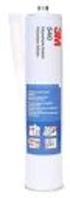 3 Scotch-Seal TM Technical Data July, 2008 Product Description 3M Scotch-Seal and 3M Scotch-Seal Polyurethane Adhesive Sealant 560 are one component, moisture curing products which form permanent elastic
The Investigation of Adhesion of Resins Used as Tissue Creping Adhesives for Yankee Dryer Surface Coating ABSTRACT
 J. Agr. Sci. Tech. (2013) Vol. 15: 793-799 The Investigation of Adhesion of Resins Used as Tissue Creping Adhesives for Yankee Dryer Surface Coating F. Rezaei-Arjomand 1, A. A. Enayati 1, A. H. Lohrasebi
CORROSION ENGINEERING RESIN-BASED POLYMER CONCRETES AND GROUTS
 AN ERGONARMOR COMPANY TECHNICAL INFORMATION SPECIFICATION FOR INSTALLATION 07/11 SUPERSEDES 04/00 PAGE 1 OF 6 CORROSION ENGINEERING RESIN-BASED POLYMER CONCRETES AND GROUTS 1. SCOPE 1.1 This specification
Sealed Air Corporation. Intermediate Bulk Containers For Aseptic and Non Aseptic Products
 Sealed Air Corporation Intermediate Bulk Containers For Aseptic and Non Aseptic Products Melbourne, Australia Primary Manufacturing Pouch Making Injection molding for fitments Film extrusion Clean Room
Automotive Base Oil Presentation
 Automotive Base Oil Presentation What is a Base Oil? The refined petroleum mineral or synthetic material that is produced by a refinery to a required set of specifications. A lubricant s quality can depend
3 Thermal Transfer Polyester Label Materials 7816 7816FL 7875
 3 Thermal Transfer Polyester Label Materials Technical Data July, 2010 Product Description 3M Thermal Transfer Polyester Label Materials 7816, 7816FL and 7875 are durable polyester label stocks that offer
Surface Tension. the surface tension of a liquid is the energy required to increase the surface area a given amount
 Tro, Chemistry: A Molecular Approach 1 Surface Tension surface tension is a property of liquids that results from the tendency of liquids to minimize their surface area in order to minimize their surface
Capa Polyols. For excellent properties in crosslinked coatings. European Coating SHOW 2013 Nürnberg Pär Jörgensen Specialist
 Capa Polyols For excellent properties in crosslinked coatings European Coating SHOW 2013 Nürnberg Pär Jörgensen Specialist Outline Introduction of Perstorp Introduction of Caprolactones (Capa ) Use of
IS800 Series. Technical Data Sheet IS802, IS803, IS808, IS800.09. Description. Key Features and Benefits. Typical Physical Properties
 1810.html Technical Data Sheet IS800 Series IS802, IS803, IS808, IS800.09 Description IS802, IS803, IS808 and IS800.09 one-component, ready-to-use silicone adhesive sealants have a paste-like consistency
3 Thermal Transfer Acrylate Label Material 3921
 3 Thermal Transfer Acrylate Label Material Technical Data April, 2008 Product Description 3M Thermal Transfer Acrylate Label Material consists of a non-topcoated acrylate facestock designed for thermal
1.1.2 Polypropylene The polypropylene must be a white opaque film, 1 2 mil thick. Biaxial orientation is preferred.
 Library of Congress Preservation Directorate Specification Number 700 704 09 Specifications for Pressure Sensitive Adhesive Labels For Application to Single Paper Sheets and Text Pages of Bound Books For
ACUSOL 805S HASE Rheology Modifier and Stabilizer for High Surfactant Containing Detergent or Cleaner Formulations
 ACUSOL 805S HASE Rheology Modifier and Stabilizer for High Surfactant Containing Detergent or Cleaner Formulations Description ACUSOL 805S rheology modifier is a synthetic hydrophobically-modified acrylic
ShellSol D60. Shell Chemicals. Data Sheet. Lemont, IL Cotton Valley, LA. Product Name
 Shell Chemicals Data Sheet Product Name ShellSol D60 This product is manufactured at more than one production site. The sales specifications of these products are the same, some typical data however may
Black epoxy paste adhesive system
 Advanced Materials Araldite 2031 Structural Adhesives Araldite 2031 Black epoxy paste adhesive system Key properties Thixotropic non slumping Toughened adhesive, resilient bond Suitable for metal and composite
Skin Care and Color Cosmetic Selection Tool
 Skin Care and Color Cosmetic Selection Tool Skin Care and Color Cosmetic Selection Tool Velvesil* 125 Cyclopentasiloxane (and) Silicone crosspolymer gel Sensory enhancer, line blurring gel C30-45 Alkyl
AMBERLITE IRP64 Pharmaceutical Grade Cation Exchange Resin (Polacrilex Resin)
 AMBERLITE IRP64 Pharmaceutical Grade Cation Exchange Resin (Polacrilex Resin) Description AMBERLITE IRP64 [1] resin is an insoluble, weakly acidic, hydrogen form, cation exchange resin supplied as a dry,
Solving scratch problems and achieving low friction demands in TPE compounds
 Solving scratch problems and achieving low friction demands in TPE compounds I. Alonso* Thermoplastic elastomers are present in many industrial and consumer applications nowadays (automotive, electrical
RECOATING AND RENEWING SPF ROOFING SYSTEMS
 RECOATING AND RENEWING SPF ROOFING SYSTEMS Procedures, Regional Differences and type of coating systems Bruce Schenke Premium Spray Products REASONS TO RECOAT/RENEW Add a new coating layer to renew the
3 Laser Toner Printable Polyester Label Material 7840TL
 3 Laser Toner Printable Polyester Label Material page 1 of 5 Technical Data February 15, 1999 Supersedes July 1, 1997 Construction (Calipers are nominal values.) Facestock Adhesive Liner 2.3 mil (58 micron)
Polymers for Better Living. BIO World Congress on Industrial Biotechnology June 17, 2013
 Polymers for Better Living BIO World Congress on Industrial Biotechnology June 17, 2013 Polymers for Better Living Itaconix Corporation is the world leader in polymers from itaconic acid We produce polymers
Additional Information. Paint Application
 Additional Information Paint Prepared by: International Paint Ltd. www.international-pc.com The information in this guideline is not intended to be exhaustive; any person using the product for any purpose
PET (Polyethylene Terephthalate, Resin Identification Code #1) PET Bottles (Carbonated Beverage, Water, and Custom Bottles)
 PET (Polyethylene Terephthalate, Resin Identification Code #1) Highlights Non-PET package parts labels, closures, attachments should float in water Confirm adhesives used with pressure sensitive labels
Ch 2 Properties of Fluids - II. Ideal Fluids. Real Fluids. Viscosity (1) Viscosity (3) Viscosity (2)
 Ch 2 Properties of Fluids - II Ideal Fluids 1 Prepared for CEE 3500 CEE Fluid Mechanics by Gilberto E. Urroz, August 2005 2 Ideal fluid: a fluid with no friction Also referred to as an inviscid (zero viscosity)
APR Design for Recyclability Guidelines Section Excerpt
 APR Design for Recyclability Guidelines Section Excerpt Please note: This is only one section excerpted from the Guidelines. The text of the entire document can be found elsewhere on the APR Website. PET
Silane Coupling Agents
 Silane Coupling Agents Table of Contents Introduction 2-4 Characteristics 5 Amino Functional Silane Coupling Agents 6 Epoxy Functional Silane Coupling Agents 6 Vinyl Functional Silane Coupling Agents 7
3M Electrically Conductive Adhesive Transfer Tape 9703
 Technical Data April 2011 M Electrically Conductive Adhesive Transfer Tape 970 Product Description M Electrically Conductive Adhesive Transfer Tape 970 is a pressure sensitive adhesive (PSA) transfer tape
Dispersion of Synthetic Fibers in Wet-Lay Nonwovens
 Dispersion of Synthetic Fibers in Wet-Lay Nonwovens This article was written by James M. Keith, retired Director of Technical Services for MiniFIBERS, and published in the Tappi Journal, Vol. 77, No. 6,
MICROPOSIT LOL 1000 AND 2000 LIFTOFF LAYERS For Microlithography Applications
 Technical Data Sheet MICROPOSIT LOL 1000 AND 2000 LIFTOFF LAYERS For Microlithography Applications Regional Product Availability Description Advantages North America Europe, Middle East and Africa Latin