
A GUIDE FOR NEW KEEPERS PIGS
|
|
|
- Logan Perkins
- 9 years ago
- Views:
Transcription
1 A GUIDE FOR NEW KEEPERS PIGS Version 2.0 April 2007

2 NEW PIG KEEPERS GUIDE Whether you keep one pet pig or a commercial herd of pigs you need to be registered with Defra. In the event of a disease outbreak, the precise location of all livestock is essential for effective measures to control and eradicate highly contagious viruses. You place both your own and other livestock in the area at risk if you do not register your holding or report notifiable diseases (Please see Annex 2 for a list of notifiable diseases). If you ever have any questions regarding any of these issues then please do not hesitate to contact the Defra Livestock Identification Helpline on or your nearest Animal Health Office (AHO) For contact details see Annex 1. BEFORE MOVING A PIG TO YOUR HOLDING: You need a County Parish Holding number (CPH) for the land where the pigs will be kept The CPH is a 9 digit number The first 2 digits relate to the county your pigs are kept in, the next 3 digits relate to the parish and the last 4 digits are a unique number to the keeper. For example, 12/345/6789 To apply for a CPH you need to contact The Rural Payments Agency (RPA) on After your initial call someone from the RPA will call you back with your CPH number YOU CAN NOW MOVE THE PIG/S TO YOUR HOLDING Pig movements will usually take place under a General Licence, which sets out the conditions for movement. You may obtain a copy from the Defra website (see Annex 1) or from your AHO. Pig movements must be accompanied by the movement document You will need an Individual Movement Licence to move pigs from a market. This will be issued at the market by a local authority trading standards officer and will also serve as the PRIMO movement document. In the event of a disease outbreak the AML2 provides traceability because Defra knows where the pigs are and where they have been The person you are buying the pigs from will be responsible for the providing the AML2 They are known as the departing address The departing address completes sections A and C then keeps the yellow copy for their records The person transporting the pigs then completes section B with their details and keeps the blue copy The AML2 travels with the pigs On arrival at your holding you must complete section D with your details

3 You retain the pink copy of the AML2 for at least 6 months You must send the white copy to your Local Authority s Trading Standards Animal Health department within 3 days of the pigs arriving For future movements, please contact your local AHO or local Authority Trading Standards for a tablet of AML2 forms 20 DAY STANDSTILL Once the pigs arrive on your holding, your holding will be under a standstill The standstill rules are there to protect against the rapid spread of any new outbreak of disease the standstill acts as an incubation period and slows down the spread of disease Pigs trigger a 20 day standstill on other pigs when they move onto a holding Pigs trigger a 6 day standstill on any cattle, sheep or goats on that holding Cattle, sheep and goats moving onto a holding will impose a 6 day standstill on any pig on that holding For more information on livestock movements your local AHO and Local Authority Trading Standards can advise you or visit the the defra Livestock Movement website see annex 1 REGISTER YOUR PIGS Once the pigs are on your holding you need to register them with Defra This time you need to contact your local AHO You will be asked your CPH number as a reference Once you inform them you are keeping pigs, they may be able to register them for you over the phone but be prepared to put this in writing. If your correspondence address is different from the herd location, inform your AHO and confirm they have the correct details When your pigs are registered, a herd mark will be automatically created. You may be told this over the phone Herdmarks for pigs are 1 or 2 letters followed by 4 digits For example, A1234 or AB1234 The Defra herdmark provides a quick and effective means of identifying premises from which pigs have moved. It is unique, kept on a single database and available to inspectors for rapid tracing The AHO will send you a registration document which will contain your personal details, CPH and herdmark If you ever have any questions regarding any of these issues then please do not hesitate to contact your local AHO or the Defra helpline

4 RECORDS You need to keep a holding movement record. This should be in the following format: The Pigs (Records, Identification and Movement) 2007 Name and address of the person keeping the record Date of movement The Identification number or temporary mark Number of pigs Holding from which moved Holding to which moved 01/05/07 Slapmark on both shoulders AB My Holding Full address CPH Mr New Holding Full address CPH You need to record each movement of a pig on or off the holding within 36 hours of the movement Once a year you need to record the maximum number of pigs normally present on the holding These records can be in written or electronic form You need to keep these records for 6 years after you stop keeping pigs Your records must be available for inspection by the Local Authority. They may make an on farm visit or may request your records to be sent in for inspection IDENTIFICATION You can identify your pig by an eartag, tattoo or double slapmark. All equipment can be purchased from agricultural suppliers (for list of suppliers see Annex 1) Eartag An eartag must be stamped or printed not hand written It contains the letters UK followed by your herdmark For example, UK AB1234 Tags used for slaughter must be metal or plastic but must be able to withstand carcase processing Tags used for movements between holdings can be plastic

5 Tattoo A tattoo of your herdmark on the ear For example, AB1234 UK not needed Slapmark A permanent ink mark of the herdmark which is applied on each front shoulder area of the pig Legible for the life of the pig and throughout the processing of its carcase For example, AB1234 UK not needed Temporary Mark Paintmark on the pig for example, a red line, black cross or blue circle Must last until the pig reaches its destination Combined with the movement document, the temporary mark identifies the holding from which the pig moved Identification of Pigs under 12 months old Move between holdings with a temporary paintmark Move to slaughter with an eartag, tattoo or double slapmarks Move to any type of market with an eartag, tattoo or double slapmarks Identification of Pigs over 12 months old Move between holdings, to any type of market and to slaughter with an eartag, tattoo or double slapmarks bearing your Defra herdmark. Your defra hermark must be applied to a pig before it moves off of your holding Below are photos of an eartagged pig and a slapmarked pig.

6

7 PET PIG WALKING LICENCES Licences can be issued to take pet pigs for walks For a licence you need to contact your local AHO see Annex 1 Your route will need to be approved If the Veterinary Officer at the AHO believes there is a risk with your route it will not be approved Routes may not be approved due to proximity to: a livestock market, high health status pig farms or fast food outlets, etc If it is approved, you are issued with a licence that needs to be renewed annually FEED ADVICE Following the outbreak of Foot and Mouth disease in 2001, the first case of which was found to be at a farm where unprocessed waste food was being fed to pigs, the Government carried out a review of the practice of swill feeding. The outbreak and subsequent review led to legislation banning the feeding of catering waste to any farmed animals or any other ruminant animal, pig or poultry. This is now reflected in EU-wide legislation. It is illegal to feed any pig any catering waste (including used cooking oil) from restaurants, kitchens (both household and central), and other catering facilities even if those establishments cater solely for vegetarians. Current legislation also imposes strict controls banning the feeding of other materials of animal origin or products containing them to farmed animals. There are however a small number of exceptions to this, and the following materials may be fed to pigs: Liquid milk or colostrum may be fed to pigs kept on the same holding as that on which the milk or colostrum originated; Former foodstuffs other than catering waste food from kitchens etc (see above) containing rennet, melted fat, milk or eggs but where these materials are not the main ingredient; Fishmeal, (animal derived) di-or tri-calcium phosphate, or blood products if suitably processed (see TSE Regulations internet link below); and Milk, milk products and white water when suitably treated. Please note that anyone obtaining waste milk, milk products or white water to feed to their pigs would need to register with Defra for this purpose, although, in the case of milk products, this would only be necessary it they contained more than 80% milk. Details on how to register are available from either the Defra helpline ( ) or the internet (

8 It is permissible to source certain types of former foodstuffs (see above), as well as fruit and vegetables, from non-catering premises for feeding to pigs, but this must only be done from those premises that either do not handle materials banned from being fed to pigs, or that have (HACCP) procedures in place to ensure complete separation from prohibited materials, and these procedures have been agreed with the local authority.. If you are uncertain about what can and cannot be fed to your pigs please contact your local Animal Health Divisional Office for further advice. A list of these offices is available on the internet ( If in doubt don t feed it. No matter how tempting it may be to feed catering waste food or other types of banned material to your pigs, this is illegal, and the above controls were introduced for a reason. Contaminated waste food can spread viruses and bacteria, and when infected with a disease like Foot and Mouth pigs can quickly infect other animals. Following these requirements will help keep your animals healthy and will reduce the risk of future outbreaks of disease. Further information on the above controls is available on the internet at:

9 ANNEX 1 USEFUL CONTACTS AND WEBSITE LINKS Defra Livestock Identification Helpline (open Mon-Fri 9:00 to 17:00) Rural Payments Agency Defra Website Defra Pig Identification and movement pages Animal Health Offices - Defra Disease surveillance and control pages Defra Animal By-products pages - Slapmark & Eartag Suppliers National Pig Association (NPA) Agriculture House Stonleigh Park Warwickshire CV8 2L2 British Pig Association (BPA) Trumpington Mews 40b High Street Trumpington Cambridge CB2 2LS British Pig Executive (BPEX) PO Box 44 Winterhill House Snowdon Drive

10 Milton Keynes MK6 1AX The Pig Veterinary Society

11 NOTIFIABLE DISEASES ANNEX 2 A notifiable disease is a disease named in Section 88 of the Animal Health Act 1981 or an Order made under that Act. In practice, if you suspect signs of any of the notifiable diseases listed below, you must immediately notify the Defra Divisional Veterinary Manager at your local Animal Health Divisional Office. Notifiable Diseases in Pigs: African Swine Fever This has never occurred in this country ASF is similar to Classical Swine Fever (see below), but it is caused by a different virus. The ASF virus can be given to pigs by ticks and biting flies, as well as directly from infected pigs and pig meat. There are acute and chronic forms of ASF. In the acute disease, pigs firstly go off their food and are extremely dull with a high temperature (40-42 degrees C). They can then have diarrhoea, vomiting, coughing and a purple blotching of the skin. They might have a swaying gait, abort their litters and have a discharge from the eyes and nose. Classical Swine Fever Last occurred in this country in 2000 CSF also has acute and chronic forms and is spread to pigs by infected pigs, pig meat, or dirty vehicles, boots, etc. In the mild and chronic forms of the disease, the signs are less obvious there may be a short-lived lack of appetitie and fever and perhaps abortion. However, in the acute form, pigs are very dull and off their food with a high fever (40 41 degrees C). They may cough and initially show constipation then later, diarrhoea. There may be a discharge from the eyes and nose and the skin can be reddened and blotchy. Sows may abort or give birth to a weak litter. Some new born piglets have tremors. Aujeszky s Disease Occurred last 1989 in this country Aujeszky`s disease is also caused by a virus. Affected pigs have a variety of signs including sneezing, coughing, laboured breathing and fever. They may show nervous signs, too, such as trembling, circling and a swaying gait. Sows might abort or give birth to still born or mummified litters. Deaths are highest in younger pigs. Foot and Mouth Disease Occurred last 2001 in this country. The chief symptom in pigs is sudden lameness. Pigs prefer to lie down and when made to move squeal loudly and hobble painfully, though lameness

12 may not be so obvious where the pigs are on deep bedding or soft ground. The blisters form on the upper edge of the hoof, where the skin and horn meet, and on the heels and in the cleft. They may extend right round the hoof head, with the result that the horn becomes detached. At a later stage new horn starts to grow and the old hoof is carried down and finally shed. The process resembles the loss of a fingernail following some blow or other injury. Mouth symptoms are not usually visible, but blisters may develop on the snout or on the tongue and along the udder Swine Vesicular Disease Occurred last 1982 in GB The symptoms are clinically indistinguishable from foot-and-mouth disease but SVD only affects pigs. There is a fever of up to 41 degrees Centigrade, then vesicles (blisters) develop on the coronary band, typically at the junction with the heel. The disease usually appears suddenly but does not spread with the same rapidity as foot-and-mouth disease. Mortality is low but in acute cases there can be some loss of production. Lameness develops due to the eruption of vesicles at the top of the hooves and between the toes. Vesicles may also develop on the snout, tongue and lips. The surface under the vesicles is red and this gradually changes colour as healing develops. The entire hoof may be shed. In less severe cases the healed lesion may grow down the hoof and this is seen by a black transverse mark. Recovery is usually complete within two to three weeks. Teschen Disease (Porcine enterovirus encephalomyelitis) This has never occurred in this country. Initially, infected pigs have a fever, loss of appetite, are dull and slightly uncoordinated. As the disease progresses there is irritability, stiffness, muscular tremors or rigidity, and convulsions. There may also be grinding of the teeth, smacking of the lips and squealing as if in pain. The voice may change or be lost entirely. The course of the disease is usually acute and death, generally preceded by paralysis, normally occurs within three to four days of the appearance of symptoms. Mildly affected animals may recover. All age groups of pigs are susceptible to this disease. Vesicular Stomatitis This is a very rare disease of pigs which has never occurred in this country, but can also affect cattle, horses and people. This disease, like SVD and FMD, causes blisters, but a different virus is involved. Areas of skin become blanched, followed by the formation of vesicles on the snout of pigs, on the lips, tongue, hard and soft palate and the coronary band. Lesions may also occur in other areas of the skin, especially

13 where there is abrasion of tissue. The vesicles yield a serous fluid as they burst, usually 6 to 24 hours after formation. The hoof may become detached if vesicles have gathered there. Mortality rates are moderate to low. Anthrax This disease occurs rarely in pigs, but it can be given to people, too. It is caused by a bacteria and infected pigs can have fluid filled swellings around the neck or have a bloody diarrhoea. Spores of the bacteria can live for some time in slurry and contaminated housing.

ADVICE FOR OWNERS OF PET PIGS AND MICRO PIGS
 ADVICE FOR OWNERS OF PET PIGS AND MICRO PIGS General guidance for keeping your pig ADVICE AND GUIDANCE Keeping pigs or micro pigs animals specially bred to be smaller in adulthood than most other pig species
ADVICE FOR OWNERS OF PET PIGS AND MICRO PIGS
 ADVICE FOR OWNERS OF PET PIGS AND MICRO PIGS Guidance on the legal obligations of pig keepers ADVICE AND GUIDANCE This leaflet is designed for people who keep, or are considering keeping, pigs or micro
ANIMAL HEALTH ACT 1981 THE DISEASE CONTROL (ENGLAND) ORDER 2003 (AS AMENDED) GENERAL LICENCE FOR THE MOVEMENT OF PIGS PART I
 ANIMAL HEALTH ACT 1981 THE DISEASE CONTROL (ENGLAND) ORDER 2003 (AS AMENDED) GENERAL LICENCE FOR THE MOVEMENT OF PIGS PART I In accordance with Article 12 of the Disease Control (England) Order 2003, (the
Notifiable Diseases. A Guide for Official Veterinarians
 Notifiable Diseases A Guide for Official Veterinarians Learning Objectives To understand the mechanisms in place for dealing with notifiable disease To improve awareness of which diseases are notifiable
Classical Swine Fever and Look-a-like Diseases of Pigs. Pat Blanchard
 Classical Swine Fever and Look-a-like Diseases of Pigs Pat Blanchard California Animal Health and Food Safety Laboratory, Tulare branch [email protected] Classical Swine Fever CSF is a viral disease
Animal health requirements for the exported pig meat, etc. to Japan from Spain are as follows.
 Animal health requirements for meat and viscera derived from pigs and sausages, ham and bacon made from the said meat and viscera as raw materials to be exported to Japan from Spain Animal health requirements
SKIN CONDITIONS IN PIGS
 DEPARTMENT: AGRICULTURE SKIN CONDITIONS IN PIGS Jenny Turton 2001 Compiled by Directorate Communication, Department of Agriculture in cooperation with the ARC-Onderstepoort Veterinary Institute Printed
Anhang 1.3 Animal health requirements for pig meat etc. to be exported to Japan from Austria
 Anhang 1.3 Animal health requirements for pig meat etc. to be exported to Japan from Austria 1 This document defines animal health requirements for pig meat etc. and its products to be exported to Japan
Livestock Notifiable Disease Factsheets Warble Fly
 Livestock Notifiable Disease Factsheets Warble Fly If you suspect signs of any notifiable disease, you must immediately notify a Defra Divisional Veterinary Manager. Introduction The warble fly is an insect,
Swine Health. Beth Ferry MSU Extension Pork Educator
 Swine Health Beth Ferry MSU Extension Pork Educator What Affects Pig Health? Resources Environment Nutrition Management Animal Care What is your job? Good Observation Key to managing health, production
The Danish veterinary preparedness for avian influenza and Newcastle disease
 The Danish veterinary preparedness for avian influenza and Newcastle disease Sten Mortensen, Veterinary R&D manager, Animal Health Division, Deputy head 19-04-2016 Livestock statistics, Denmark 2015 Species
West Nile Virus and Workers
 West Nile Virus and Workers What is West Nile virus (WNv)? The West Nile Virus (WNv) is a mosquito-borne virus that can cause swelling and inflammation of the brain and spinal cord in horses, birds, and
Facts About Brucellosis
 Facts About Brucellosis 1. What is brucellosis? It is a contagious, costly disease of ruminant (E.g. cattle, bison and cervids) animals that also affects humans. Although brucellosis can attack other animals,
Protecting your baby against meningitis and septicaemia
 Protecting your baby against meningitis and septicaemia caused by meningococcal B bacteria MenB vaccine now available! Information about the MenB vaccine and recommended paracetamol use mmunisation The
Medicine Record Book
 Medicine Record Book Medicine Administration and Purchase Record Book (and Beef/Lamb Stock Health Plan) Name:.. Address:........ Assurance Number:. CONTENTS Foreword Animal Health Plan (Beef& Lamb only)
Proposed amendment to Part XV of the Health of Animals Regulations. July 2012. Presentation during comment period
 Proposed amendment to Part XV of the Health of Animals Regulations July 2012 Presentation during comment period 2011 Her Majesty the Queen in Right of Canada (Canadian Food Inspection Agency), all rights
DEVISING IMPORT HEALTH MEASURES FOR ANIMAL COMMODITIES
 DEVISING IMPORT HEALTH MEASURES FOR ANIMAL COMMODITIES This paper provides guidance to OIE Members on the use of the animal health information in the OIE World Animal Health Information Database (WAHID)
Guidelines for Hand Foot and Mouth Disease HFMD
 Guidelines for Hand Foot and Mouth Disease HFMD Hand, foot, and mouth disease, or HFMD, is a contagious illness caused by different viruses. Infants and children younger than 5 years are more likely to
Requirements for Operators of Abattoirs, Rendering Plants and Dead Stock Collection Centres
 Canadian Food Inspection Agency Agence canadienne d inspection des aliments Requirements for Operators of Abattoirs, Rendering Plants and Dead Stock Collection Centres Livestock Identification and Traceability
SWINE QUIZ BOWL QUESTIONS
 SWINE QUIZ BOWL QUESTIONS Swine 1 Questions 1. Name this black bodied pig that has six white points, including their nose, tail and feet. They have erect ears and dished snouts. a. Berkshire 2. Name this
The economic and social impact of the Institute for Animal Health s work on Bluetongue disease (BTV-8)
 The economic and social impact of the Institute for Animal Health s work on Bluetongue disease (BTV-8) Donald Webb DTZ One Edinburgh Quay 133 Fountainbridge Edinburgh EH3 9QG Tel: 0131 222 4500 March 2008
The Disease is a commonly diagnosed infectious disease that affects all equidae worldwide. Caused by the bacterium Streptococcus equi (S.equi), this d
 ADVICE ON The Disease is a commonly diagnosed infectious disease that affects all equidae worldwide. Caused by the bacterium Streptococcus equi (S.equi), this disease is highly contagious and is spread
Influenza and Pandemic Flu Guidelines
 Influenza and Pandemic Flu Guidelines Introduction Pandemic flu is a form of influenza that spreads rapidly to affect most countries and regions around the world. Unlike the 'ordinary' flu that occurs
Personal Injury TYPES OF HOLIDAY ILLNESSES. www.simpsonmillar.co.uk Telephone 0844 858 3200
 TYPES OF HOLIDAY ILLNESSES Whilst on holiday many different contractable illnesses exist, the list below contains the most common. This list is by no means exhaustive and if you have suffered from an illness
Health and welfare of Finnish pigs. Mari Heinonen Professor in swine medicine Department of Production Animal Medicine University of Helsinki
 Health and welfare of Finnish pigs Mari Heinonen Professor in swine medicine Department of Production Animal Medicine University of Helsinki FINLAND 60-70 latitude 338 000 sq.km 69 % forest 10 % water
READ THIS LEAFLET VERY CAREFULLY, AND KEEP IT IN A SAFE PLACE. FLU IS SPREADING IN IRELAND, AND THIS INFORMATION IS IMPORTANT FOR YOU AND YOUR FAMILY.
 READ THIS LEAFLET VERY CAREFULLY, AND KEEP IT IN A SAFE PLACE. FLU IS SPREADING IN IRELAND, AND THIS INFORMATION IS IMPORTANT FOR YOU AND YOUR FAMILY. Information and medical advice for the public on Pandemic
Electronic identification (EID) in sheep Your technical guide
 Electronic identification (EID) in sheep Your technical guide Who this leaflet is for and what it tells you This leaflet has been produced for sheep farmers in England to explain why some sheep need to
Diuretics: You may get diuretic medicine to help decrease swelling in your brain. This may help your brain get better blood flow.
 Hemorrhagic Stroke GENERAL INFORMATION: What is a hemorrhagic stroke? A hemorrhagic stroke happens when a blood vessel in the brain bursts. This may happen if the blood vessel wall is weak, or sometimes
Faculteit Diergeneeskunde. Prof. dr. G. Opsomer Faculty of Veterinary Medicine Ghent University.
 Faculteit Diergeneeskunde Integrated veterinary herd health management as the basis for sustainable animal production (dairy herd health as an example) Prof. dr. G. Opsomer Faculty of Veterinary Medicine
THE BACKYARD PIG DPIPWE s guide for hobby farmers
 Biosecurity fact sheet Current as at December 2010 THE BACKYARD PIG DPIPWE s guide for hobby farmers Before you get your pig Check whether your local council has any restrictions on having a pig on your
1. About dairy cows. Breed of dairy cows
 1. About dairy cows Breed of dairy cows Holstein Holstein is a typical dairy cow, and 99% of dairy cows in Japan are Holsteins. They are originally from the Netherlands and Holstein region of Germany.
Adapted from a presentation by Sharon Canclini, R.N., MS, FCN Harris College of Nursing and Health Sciences Texas Christian University
 Adapted from a presentation by Sharon Canclini, R.N., MS, FCN Harris College of Nursing and Health Sciences Texas Christian University What is a Pandemic? A pandemic is basically a global epidemic an epidemic
Plan early - get your vaccinations in time for full protection. To prepare for your trip, schedule an appointment: (910) 347-2154, option #2.
 The Onslow County Health Department Travel Clinic offers a complete line of immunizations and prescriptions to protect you while traveling abroad. The most appropriate immunizations and travel medications
What Is. Norovirus? Learning how to control the spread of norovirus. Web Sites
 Web Sites Centers for Disease Control and Prevention (CDC) http://www.cdc.gov/norovirus/index.html Your Local Health Department http://www.azdhs.gov/diro/lhliaison/countymap.htm What Is Ocument dn Norovirus?
IMPORT HEALTH STANDARD FOR PIG MEAT AND PIG MEAT PRODUCTS FOR HUMAN CONSUMPTION FROM CANADA AND/OR THE UNITED STATES OF AMERICA
 IMPT HEALTH STANDARD F PIG MEAT AND PIG MEAT PRODUCTS F HUMAN CONSUMPTION FROM CANADA AND/ THE UNITED STATES OF AMERICA Issued pursuant to Section 22 of the Biosecurity Act 1993 Dated: 18 March 2011 Certification
Animal Sciences. Footrot in Sheep and Goats
 Purdue Extension Animal Sciences AS-596-W Footrot in Sheep and Goats Lynn Pezzanite, Animal Sciences Student Dr. Mike Neary, Small Ruminant Extension Specialist, Purdue University Terry Hutchens, Extension
REFERENCE LABORATORY TESTING
 Diagnostic Services Price List Tel: +44 (0) 1483 232441 Fax: +44 (0) 1483 232621 Reference Laboratories [email protected] October 2014 1 REFERENCE LABORATORY TESTING The Pirbright Institute
Biosecurity Plan Australian Lot Feeding Industry
 Biosecurity Plan Australian Lot Feeding Industry INTRODUCTION 2 BIOSECURITY PLAN 3 Stock Purchases 3 On Arrival 3 Stock Monitoring 4 Manure & Effluent Management 4 Dead Stock Management 4 Stockfeed 5 Vehicle
Figure 1: Use a stethoscope to check heart, lungs and rumen for abnormalities.
 The Basic Clinical Exam: Key to Early Identification of Sick Animals Ralph Bruno, DVM, MS; Ellen Jordan, PhD; Juan Hernandez-Rivera, PhD; and Kevin Lager, MS Texas AgriLife Extension Service Finding and
MAPPING CHAPTER 6 INTRODUCTION CONTENTS
 CHAPTER 6 MAPPING INTRODUCTION Maps are essential tools in the effective implementation of FMD control measures. They are used to define control zones, to plan surveillance and slaughter/removal activities,
Pneumonia. Pneumonia is an infection that makes the tiny air sacs in your lungs inflamed (swollen and sore). They then fill with liquid.
 Pneumonia Pneumonia is an infection that makes the tiny air sacs in your lungs inflamed (swollen and sore). They then fill with liquid. People with mild (not so bad) pneumonia can usually be treated at
BVA. British Trout Association
 CODE OF PRACTICE ON THE RESPONSIBLE USE OF ANIMAL MEDICINES ON THE FARM THIS CODE IS SUPPORTED BY THE FOLLOWING ORGANISATIONS: BVA British Trout Association LAST UPDATED: SEPTEMBER 2008 TABLE OF CONTENTS
The Family Library. Understanding Diabetes
 The Family Library Understanding Diabetes What is Diabetes? Diabetes is caused when the body has a problem in making or using insulin. Insulin is a hormone secreted by the pancreas and is needed for the
St. Louis Eye Care Specialists, LLC Andrew N. Blatt, MD
 St. Louis Eye Care Specialists, LLC Andrew N. Blatt, MD 675 Old Ballas Rd. Suite 220 St. Louis, MO 63141 Phone:314-997-EYES Fax: 314-997-3911 Toll Free: 866-869-3937 STRABISMUS SURGERY (Post-Op Strabismus
How To Treat Anaphylactic Virus
 Equine Herpesvirus Infections (EHV) There are five herpesviruses that are found in the horse environment and which are associated with a variety of equine disease syndromes. They are called Equine herpesviruses
RSV infection. Information about RSV and how you can reduce the risk of your infant developing a severe infection.
 RSV infection Information about RSV and how you can reduce the risk of your infant developing a severe infection. What is RSV? RSV is one of the most common respiratory viruses and is spread easily. By
GOING HOME AFTER YOUR TAVR PROCEDURE
 GOING HOME AFTER YOUR TAVR PROCEDURE HENRY FORD HOSPITAL CENTER FOR STRUCTURAL HEART DISEASE GOING HOME After your TAVR procedure, you will need help when you go home. It is hard to predict how much help
2 P age. Babies from Birth to Age 2
 Contents Babies from Birth to Age 2... 2 Vaccines give parents the power... 2 Vaccines are recommended throughout our lives... 3 Talk to your doctor... 3 Vaccines are very safe... 3 Whooping Cough (Pertussis)...
Diagnostic Testing and Strategies for BVDV
 Diagnostic Testing and Strategies for BVDV Dan Grooms Dept. of Large Animal Clinical Sciences College of Veterinary Medicine Introduction Clinical diseases in cattle resulting from infection with bovine
GrapeGate v1.0 [email protected]
 As you begin the process of alkalizing and granting the body more energy for cleansing itself (and also for regeneration), many symptoms and seemingly adverse reactions can occur throughout this process
BIOSECURITY PROCEDURES IN POULTRY PRODUCTION
 1 Annex VII CHAPTER 6.4. BIOSECURITY PROCEDURES IN POULTRY PRODUCTION Article 6.4.1. Introduction This chapter provides recommended biosecurity procedures in poultry production and is not specifically
MINISTRY OF AGRICULTURE, LIVESTOCK AND FOOD SUPPLY. NORMATIVE INSTRUCTION NUMBER 44 OF OCTOBER 2 nd, 2007
 MINISTRY OF AGRICULTURE, LIVESTOCK AND FOOD SUPPLY NORMATIVE INSTRUCTION NUMBER 44 OF OCTOBER 2 nd, 2007 (Published in the Official Gazette Number 191 - Section 1, page 2 to 10, Wednesday, October 3 rd,
Antioch College Policy on Food Allergies
 Antioch College Policy on Food Allergies Purpose: It is the purpose of this document to inform students and staff the procedures used by the College to identify and provide services for students with allergies
FREQUENTLY ASKED QUESTIONS SWINE FLU
 FREQUENTLY ASKED QUESTIONS SWINE FLU Updated 5/6/09 ER FAQ What is swine flu? Swine flu is common disease of pigs and is caused by the same category of influenza virus (influenza A) that causes flu in
http://www.who.int/csr/disease/avian_influenza/phase/en 4 http://new.paho.org/hq/index.php?option=com_content&task=view&id=1283&itemid=569
 Food and Agriculture Organization of the United Nations International Food Safety Authorities Network (INFOSAN) (Update) 30 April 2009 INFOSAN Information Note No. 2/2009 Human-animal interface aspects
BE SURE. BE SAFE. VACCINATE.
 DON T GET OR GIVE THE FLU THIS YEAR THANK YOU Vaccination is the only protection. www.immunisation.ie BE SURE. BE SAFE. VACCINATE. FLU VACCINE 2013-2014 Healthcare workers prevent the spread of flu and
1/27/2015. Module 12: Animal Disease Traceability. Supplemental Training. Supplemental Training. Supplemental Training
 Supplemental Training Module 12: Animal Disease Traceability National Veterinary Accreditation Program (NVAP) 1. Print clearly on the sign-in sheets. 2. It is critical that we have your current email address
Facts About Chickenpox and Shingles for Adults
 Facts About Chickenpox and Shingles for Adults What is chickenpox? Chickenpox, also known as varicella, is a very contagious disease caused by the varicella-zoster virus. It is spread easily through the
Lameness in Cattle: Rules of Thumb David C. Van Metre, DVM, DACVIM College of Veterinary Medicine and Biomedical Sciences Colorado State University
 Lameness in Cattle: Rules of Thumb David C. Van Metre, DVM, DACVIM College of Veterinary Medicine and Biomedical Sciences Colorado State University Introduction Lameness remains a major cause of disease
RELEVANT HACCP CHARTS: Preparation, Service
 HOUSE RULES PERSONAL HYGIENE 4.8 RELEVANT HACCP CHARTS: Preparation, Service PERSONAL HYGIENE HOUSE RULES Why is personal hygiene important? People working in your business can contaminate food or spread
& WHEN SHOULD I WORRY?
 WHEN SHOULD I WORRY? - Your guide to Coughs, Colds, Earache & Sore Throats Information For:- Who is this booklet for? Having an ill child can be a very scary experience for parents. If you understand more
Quality Measures for Long-stay Residents Percent of residents whose need for help with daily activities has increased.
 Quality Measures for Long-stay Residents Percent of residents whose need for help with daily activities has increased. This graph shows the percent of residents whose need for help doing basic daily tasks
Instruction in accordance with 43 Para. 1 of the German Infection Protection Act (IfSG)
 Instruction in accordance with 43 Para. 1 of the German Infection Protection Act (IfSG) Who requires instruction? Before starting work in the food industry, the following persons require instruction and
Chlamydial Abortions in Sheep and Goats
 Chlamydial Abortions in Sheep and Goats History Reported for the first time in 1959 in Germany, then diagnosis of the disease occurred in Bulgaria, Spain, USA, France, India, Japan, United Kingdom, Chad,
For more information on biosecurity and PED: pork.org or contact a veterinarian.
 NATIONAL nppc.org COUNCIL ^P^^k aasv.org * * A i ^ pork.org checkoff. Swine Health Guide Background: PEDV is caused by a virus (Coronavirus) that is related to transmissible gastroenteritis (TGE) virus.
Biosecurity - keep health high and diseases out. Rikke Skrubel and Kirsten Pihl SPF, Health control and Diagnostics - Veterinarians
 Biosecurity - keep health high and diseases out Rikke Skrubel and Kirsten Pihl SPF, Health control and Diagnostics - Veterinarians Disposition PED and ASF - serious diseases a threat to DK Export Delivery
Hepatitis B and Meningococcal Vaccination Programs for Grade 7 Students
 Hepatitis B and Meningococcal Vaccination Programs for Grade 7 Students The Ministry of Health and Long-Term Care provides Hepatitis B vaccine and Menactra vaccine free to all grade 7 students in Ontario.
Travel Vaccines. Olive Health & Travel Clinic. http://www.olivehealthandtravel.co.uk Phone 020 8550 2276
 Travel Vaccines Olive Health & Travel Clinic http://www.olivehealthandtravel.co.uk Phone 020 8550 2276 Diphtheria, Tetanus and Polio (DTP) The DTP is a class of combination vaccines against three infectious
Guidance on the Transport of Casualty Farm Animals
 Guidance on the Transport of Casualty Farm Animals PB1381 2000. Crown Copyright - This document is subject to Crown copyright protection and has been reproduced under licence from the controller of HMSO.
Hygiene and Infection. Control advice in the home
 Introduction The Infection Control Department Mid-Western Regional Hospital, Ennis, wrote this booklet with Clare Primary Community and Continuing Care and C-Diff Patients and Families Group. This booklet
DRYSTOCK BIOSECURITY GUIDELINES SEVEN INTERVENTION POINTS FOR ON-FARM BIOSECURITY
 JUNE 2013 DRYSTOCK BIOSECURITY GUIDELINES SEVEN INTERVENTION POINTS FOR ON-FARM BIOSECURITY PREPARED BY BEEF + LAMB NEW ZEALAND AND DEER INDUSTRY NEW ZEALAND DRYSTOCK BIOSECURITY GUIDELINES SEVEN INTERVENTION
MRSA. Living with. Acknowledgements. (Methicillin-Resistant Staphylococcus aureus)
 How can I keep myself healthy? Hand washing and use of an alcohol-based hand sanitizer are the primary way to prevent acquiring or transmitting bacteria. If you get a cut or scrape, wash it well with soap
Welfare of Animals During Transport. Advice for transporters of horses, ponies and other domestic equines
 Welfare of Animals During Transport Advice for transporters of horses, ponies and other domestic equines Further copies of this leaflet, and others in the series, are available free of charge from: Defra
Procedure Information Guide
 Procedure Information Guide Total hip replacement Brought to you in association with EIDO and endorsed by the The Royal College of Surgeons of England Discovery has made every effort to ensure that the
The Hepatitis B virus (HBV)
 The Hepatitis B virus (HBV) There are 400 million people in the world who live with chronic hepatitis B, including France. Most people don t even know they are infected. But there are several important
Chemotherapy Side Effects Worksheet
 Page 1 of 6 Chemotherapy Side Effects Worksheet Medicines or drugs that destroy cancer cells are called cancer chemotherapy. It is sometimes the first choice for treating many cancers. Chemotherapy differs
Fainting - Syncope. This reference summary explains fainting. It discusses the causes and treatment options for the condition.
 Fainting - Syncope Introduction Fainting, also known as syncope, is a temporary loss of consciousness. It is caused by a drop in blood flow to the brain. You may feel dizzy, lightheaded or nauseous before
Let s see if I can convince you
 Chapter 33: Page 328 How many times have you been sick in the past year? Once, twice, three times? What if I told you there are ways to keep from getting sick so many times? Would you do it? Let s see
HOW TO CARE FOR A PATIENT WITH DIABETES
 HOW TO CARE FOR A PATIENT WITH DIABETES INTRODUCTION Diabetes is one of the most common diseases in the United States, and diabetes is a disease that affects the way the body handles blood sugar. Approximately
Questions & Answers on Rabies
 BUCKS COUNTY DEPARTMENT OF HEALTH Neshaminy Manor Center, Health Building 1282 Almshouse Road Doylestown, PA 18901 215-345-3318 Questions & Answers on Rabies Q: What is rabies? A: Rabies is a deadly disease
FEDERATIVE REPUBLIC OF BRAZIL Ministry of Agriculture, Livestock and Food Supply Secretariat of Animal and Plant Health and Inspection
 FEDERATIVE REPUBLIC OF BRAZIL Ministry of Agriculture, Livestock and Food Supply Secretariat of Animal and Plant Health and Inspection Eradication of a FMD outbreak in Mato Grosso do Sul, Brazil Animal
Swine Influenza Special Edition Newsletter
 Swine Influenza Newsletter surrounding swine flu, so that you ll have the right facts to make smart decisions for yourself and your family. While the World Health Organization (WHO) and the Centers for
Key Facts about Influenza (Flu) & Flu Vaccine
 Key Facts about Influenza (Flu) & Flu Vaccine mouths or noses of people who are nearby. Less often, a person might also get flu by touching a surface or object that has flu virus on it and then touching
How To Care For A Sick Person
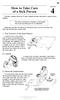 39 How to Take Care of a Sick Person Sickness weakens the body. To gain strength and get well quickly, special care is needed. Medicines are often not necessary. But good care is always important. The
MEDICATION GUIDE POMALYST (POM-uh-list) (pomalidomide) capsules. What is the most important information I should know about POMALYST?
 MEDICATION GUIDE POMALYST (POM-uh-list) (pomalidomide) capsules What is the most important information I should know about POMALYST? Before you begin taking POMALYST, you must read and agree to all of
EMERGENCY TREATMENT OF ANAPHYLAXIS EPINEPHRINE AUTO-INJECTOR
 I. GENERAL GUIDELINES EMERGENCY TREATMENT OF ANAPHYLAXIS EPINEPHRINE AUTO-INJECTOR A. PURPOSE To counteract a severe allergic reaction (anaphylaxis) to a foreign substance as prescribed by the licensed
Mississippi Livestock Quality Assurance Program for Youth Producers
 Mississippi Livestock Quality Assurance Program for Youth Producers Livestock quality assurance programs are producer-driven and involve all sectors of the industry, from producers to consumers. These
Additional details >>> HERE <<<
 Additional details >>> HERE http://dbvir.com/ringworm12/pdx/comw23/ Tags:
Objectives. Fractures 2013-11-19. Identifying and interpreting fractures, burns and head injuries suspicious for abuse. Fractures Red Flags
 Identifying and interpreting fractures, burns and head injuries suspicious for abuse Hosanna Au, MD, FRCPC Paul Kadar, MD, FRCPC Sarah B. Schwartz, MD, MEd, FRCPC Objectives At the end of this session,
Ear Infections Chickenpox chickenpox
 Ear Chickenpox Infections chickenpox Chickenpox Chickenpox is a common, very contagious viral infection that over 90% of people get during childhood unless they have been immunised. After an infection,