
AUTONOMOUS LASER RANGING RESULTS FROM MOUNT STROMLO
|
|
|
- Frank Owens
- 9 years ago
- Views:
Transcription
1 AUTONOMOUS LASER RANGING RESULTS FROM MOUNT STROMLO by John Luck 1, Christopher Moore 2 and Ben Greene 2 1. AUSLIG, Canberra ACT, Australia 2. Electro Optic Systems Pty Limited (EOS), Queanbeyan NSW, Australia Page 1

2 1 Introduction This paper describes the performance and implementation of the Mt Stromlo SLR station operating in autonomous tracking mode, i.e. when the station is effectively unmanned. The current station and its performance is the culmination of many years of SLR work and experience in Australia. The milestones leading to the current situation are presented in the following table. Nov 1997: Contract signed between Auslig and EOS. Building foundations laid. Oct 1998: Stromlo operations commenced. Nov 1998: Orroral ceased operation. Jul 1999: First successful fully unmanned tracking. Mar 2000: Routine weekend unmanned tracking and processing. Jul 2000: Routine unmanned data transmission to EDC. Jul 2000: 24h tracking record of 32 unmanned passes (out of 40). Oct 2000: Trials of unmanned 7-day operations, 24 h /day. Planned: Routine unmanned 24h/7 days operations in Auto Tracking Performance The results during autonomous ranging at Mt Stromlo are comparable in every way with those achieved during manned operations. Currently the station operates unattended for approximately 80 hours per week, compared to 88 hours with an operator in attendance. 2.1 Productivity In terms of productivity, either in terms of passes acquired, or the number of normal points generated, Mt Stromlo has consistently been one of the best SLR stations in the world. The station routinely acquires 30 or more passes per (clear) 24 hours when operating in either manual or autonomous modes. Pass productivity in autonomous mode has been typically 81% compared to 89% in manual mode, with weather conditions not being a significant factor. Tracking in autonomous mode of LEO satellites such as CHAMP and WESTPAC, and high satellites such as GPS has been satisfactory. 2.2 Precision One performance criteria used in the contract between AUSLIG and EOS is the percentage of passes whose normal point precision resulting from the weekly orbital analyses of Lageos 1 and Lageos 2 is no worse than 2mm. The results from Center for Space Research (CSR) reports, shown in Figure 1, indicate that the differences between Lageos 2 results obtained from autonomous and manned operations are not really significant. The more significant differences for Lageos 1 results are attributed to discrepancies in the orbit analyses rather than to station performance. This interpretation is supported by the outcomes shown in Figure 2 for the four analysis centers - CSR (University of Texas), Page 2

3 Percentage of Passes with NP Precision <= 2mm STROMLO, 9 Aug - 21 Oct 2000 (from CSR Weekly Reports) % Passes with NP Prec <= 2mm CSR, Manual CSR, Auto LAGEOS-1 LAGEOS-2 L1 + L2 Figure 1:Precision of Manual vs Autonomous Operations DUT (Delft), MCC (Moscow) and SHAO (Shanghai) that vary widely. A discussion on the consistently poorer results for Lageos 1 is outside the scope of this paper. 3 Implementation of Automation at Mt Stromlo The implementation of automation at Mt Stromlo has involved the development and Percentage of Passes with NP Precision <= 2mm STROMLO, Aug - Oct 2000, Man+Auto (Various Analysis Centres) 80.0 % Passes with NP Prec <= 2mm LAGEOS-1 LAGEOS-2 L1 + L2 CSR DUT MCC SHAO Figure 2: Comparison of Results from Analysis Centres Page 3

4 evolution of many aspects of the SLR ranging system. The idea that the automation processes must be built on top of solid and reliable physical infrastructure, hardware subsystems and operational software applications is key to a successful implementation. This idea is represent in the system architecture diagram in Figure 3. Figure 3 also illustrates the four major automation processes, Auto Task Control Auto Tracking Auto Data Processing Automated Comms Software Applications Hardware/Physical Infrastructure Figure 3: System architecture Automated task management Auto tracking Automatic data processing, and Automated communications. that overlay the system foundations and provide a framework for the implementation and description of an automated SLR station. These processes are equally important if automation is to be successful implemented. To rephrase a common aphorism, an automated system really is as strong or as capable as its weakest component. The secret is of course not to have any weak components. Figure 3 also shows that the system must have an input and output. The output is of course the data products that are sent to the global data centres and the input is the planning and scheduling of tasks that is required for station operation. 4 Automatic Tasking The approach taken to automated task management at Mt Stromlo, has been to develop pre-planned, static schedules that the system will follow come what may. It is a relatively Page 4

5 straightforward approach, but from experience with tracking satellites over the last couple of years and the level of productivity that the station has achieved, it is an approach that works reasonably effective. 4.1 Mission Planning System Operating schedules are prepared using the Mission Planning System (MPS) application. The MPS has been described before (Greene et al, 1998), but it is useful to include Figure Figure 4: Mission Planning System 4 to graphically illustrate the types of tasks that the unmanned station will perform under control of an automatic schedule. Figure 4 illustrates a 7 day schedule generated for actual use at Mt Stromlo. It shows the a typical variety of SLR tracking tasks that are created for whole and segmented satellite passes, and where the priority, timing and duration of tracking tasks are planned and applied. While higher priority low earth orbit satellites interrupt higher orbit passes, it is relatively unusual for LEO passes to overlap completely with other LEO passes hence loss of data due to priority conflicts is not a significant issue. 4.2 Calibration and Data Processing Tasks As well as SLR tasks, we can add any number of other tasks to the schedule. The dialog shown in Figure 4 allows a planner to select a task from a menu of possible tasks and to define its start and end times. Selected tasks are inserted in the schedule as illustrated by the coloured stripes on the display. Page 5

6 For Mt Stromlo, such tasks usually include ranging to our primary calibration pier, or to our auxiliary piers when we require a Minico. They include tasks to perform data processing, to generate alerts file, to prepare data for publication and to archive files. 4.3 Automatic Task Management If the automatic schedule is being run, when the time comes to start each scheduled task in turn, the system automatically checks the status of the hardware establishes the required hardware configuration checks safety interlocks generates any data required for that task logs events and errors manages all of the low-level functions required to complete the task, and stores any output data. 5 Autonomous Tracking To automatically track a satellite requires that a system be capable of performing a wide variety of functions or tasks in a coherent and cooperative way. The following represents just some of the tasks undertaken by the Mt Stromlo system while ranging during a satellite pass. Aircraft detection Skyline identification Sun avoidance Collision band management Beam crossing avoidance Return rate calculations Control of telescope offsets (biasing) Control of ranging window widths and offsets Satellite acquisition and tracking optimization. Some of these functions are best performed by the dedicated hardware, electronic and embedded software sub-systems, while some are better performed by more complex purpose built software applications. In the Mt Stromlo system, functions such as control of laser firing in defined regions of the sky, aircraft detection, beam crossing avoidance, sun avoidance and protection, and minimization of collision zones are managed automatically at all times by dedicated low level facilities. Management of telescope and ranging window controls during target search, acquisition and tracking optimisation is provided by auto tracking software applications. 5.1 Collision Band A collision band refers to the condition in which the range to a target would cause timing measurement of an outgoing laser pulse to coincide with a returning pulse from a previous event. Such collision zones are unavoidable, but the Mt Stromlo system continuously Page 6

7 monitors this condition and minimizes its effect by automatically modifying the fire rate slightly. 5.2 Beam Crossing Beam crossing avoidance is perhaps a less familiar facility. The station on Mt Stromlo has the benefit of being close to a number of astronomical observatories belonging to the Australian National University. Being a good neighbour, the station has the responsibility for disabling laser transmission when the beam would otherwise intersect the observatories line-of-sights. Using a combination of software functions and internet communications between our station and the observatory s telescope control systems, the station automatically inhibits laser firing whenever a beam crossing is imminent. 5.3 Return Rate Measurement One vital data item that is necessary for automatic tracking to function is a reasonably good measure of actual return rate in real-time. In the Mt Stromlo system this is obtained by a real time histogram analysis that takes into account signals that are trending. It is also important that such a measure of return rate is also subjected to an appropriate level of smoothing. Figure 5: Displays showing auto tracking in progress Page 7

8 5.4 Automated Acquisition and Tracking Accomplishment of actual automatic, i.e. unaided, satellite acquisition and tracking in the Mt Stromlo system is controlled by purpose built Auto Tracking Scripts that takes as input, the current measurement of return rate, and outputs commands that control the telescope along-track and across-track offset and the ranging timing window width and position Auto Tracking Language To implement such a script, a specially developed Auto Tracking Language (ATL) was developed which is interpreted by the underlying system management software applications and which provides a powerful syntax. This ATL has been described in more detail in Greene et al (1998).Auto Tracking Scripts Development of the auto track script approach was based on the following advantages. Scripts could evolve without requiring software rebuilds whenever a change was required. Development of the scripts could be handed off to people other than the software engineers. Unique scripts could be developed that were optimised for each satellite or class of satellite. It would be easy to add new scripts whenever new satellites are added to the ranging schedule. Scripts could be quickly modified to reflect the quality of available predictions, as has happened with the advent of daily IRVs. The scripts that have been developed to date use spiral search patterns for acquisition, using parameters optimised for different satellites. Such a search pattern is illustrated in the bias controller dialog in Figure 5. This figure shows the Mt Stromlo system control display while automatically tracking during a Lageos 1 pass. Once a satellite is acquired, the script continues to control the telescope in a way that attempts to optimise the return rate and which also responds to logic that tries to infer and account for intermittent loss due to, say, cloud. If the satellite is really lost, after a time the script returns to a spiral re-acquisition pattern. The auto track pass illustrated in Figure 5 shows that two spiral patterns occurring before satellite acquisition and fine control during acquisition. There was loss of signal at times due to patches of cloud, and change of range window at one point after a significant period of signal loss. 6 Auto Processing The implementation of auto processing was a challenge. This was developed in parallel with the collection of many months of ranging data, sufficient to incorporate the extremely wide variety of data distributions that auto-processing would have to deal with. A number of data processing techniques were implemented and tried, but it became obvious that successful auto-processing was going to depend on finding the right combination of processing techniques that would remove noise points without significantly losing any signal. Page 8

9 1. Flatten signal Optimise time bias maximize signal spike 2. Remove Noise Poisson Filter Find local trend and accept best bins from tilted histogram Polynomial Filter Use polynomials of increasing order and reject outside a band Amplitude Filter Reject data with amplitude less than a threshold 3. Generate Residuals All data Fit polynomial of increasing order until best sigma Normal point bins Fit low order polynomial Figure 6: Main auto processing steps While this approach required a significant amount of trial and error, the experience enabled the strengths and weaknesses of each method to be identified. The combination of techniques that has been adopted at Mt Stromlo has proved to be very robust and accurate as evidenced by the station s productivity and data quality results. Figure 6 illustrates the main steps performed by the auto processor. 6.1 Signal Flattening Once all range data for a complete pass is accumulated, pre-processing the data to generate residuals with a minimal trend is performed. In other words, to flattening as far as possible any signal that may be in the data set. This pre-processing step reduces ambiguity between signal and noise and is essential for subsequent noise removal processing. The most successful technique found for flattening the signal is based on recursive optimisation of a time bias applied to prediction data. 6.2 Noise Removal It was found that the successive application of two filtering techniques was very effective in removing noise without significantly losing real signal data. First, a Poisson filter, based on an existing technique (Ricklefs and Shelus, 1992), is applied. This technique scans data within short time intervals using tilted histogram analysis to identify locally trended signals and remove noise based on Poisson p.d.f. criteria. This technique is excellent at extracting real signal data, but it often will include spurious noise points that cannot be distinguished from a real signal, especially when analysing measurements with a large amount of noise. Page 9

10 The solution is to then apply a Polynomial filter. On the basis that the output of the previous step is primarily signal, fitting of a polynomial to the results will not be heavily biased by remaining noise. Data outside a band around the fitted curve can therefore be eliminated as being noise. This technique works well provided the filtering is started with a zero order polynomial and then higher order polynomials are applied iteratively. Finally, an Amplitude filter can be selectively applied to remove data with an amplitude less than a threshold value obtained from the calibrated characteristics of the compensated SPAD detector. 6.3 Residual Generation Once noise has been effectively removed, subsequent polynomials of increasing order are fitted to the remaining data is performed until variance is minimized. Residuals and thence normal points are determined using the Herstmonceux, (1984) protocol. It should be noted that routine ranging to calibration targets and subsequent data analyses and calculation of system delays are also performed automatically. These processes are relatively straightforward, except to say that during normal operations, we ensure that a calibration target range task is performed immediately prior to an automatic processing task and when the processing is performed, calibration target data are always processed first. These rules simplify the generation of pre- and post cal data that will be used in subsequent processing of satellite ranging data. Having generated normal point data, the next aspect of automation is the process of transferring the results to global data centres. 6.4 Communication Infrastructure Successful automated communications depend very much on the reliability of the communication infrastructure. This infrastructure must cover all aspects of the communications pathway and include the local physical infrastructure, the provision of internet services and the performance of remote servers. The local physical infra-structure, including the station s local area network, modem devices and local phone lines must be reliable and fault tolerant. Fortunately these factors are largely under the control of the SLR station, and the experience at Mt Stromlo has been that once a few initial problems were resolved, problems of any significance have been rare. Damaged phone lines would has caused approximately 1 day of lost communications in 3 years. With the expansion of the internet and proliferation of internet services providers (ISPs), this factor is largely under the control of the SLR station although the quantity and quality of ISPs could hinder the development of automation in some regions of the world. It is fortunate that the location of Mt Stromlo near Canberra means that the quality of its internet service is high and lost communication due to the ISP or international connections has been extremely rare, perhaps 1 day per year. As far as the performance of the remote servers is concerned, there have been a number of occasions when communications were lost due to problems at the data centres - possibly as much as one week per year as far as the station at Mt Stromlo is concerned. However, the SLR community is progressing work to improve reliability of communications to the data centres. 6.5 Use of File Transfer Protocol Automated communications at Mt Stromlo is based on the use of File Transfer Protocol (FTP) client/server processes, rather than say, . Page 10

11 This approach was adopted since the use of FTP allowed the (local) station control of the timing and frequency of data transfers, ensuring that transferred data was consistent and transmissions could be synchronized with local processes by the use of automated FTP scripts. It was felt that this also allowed for the development of one technique that could then be used for all data transfers, regardless of remote server. A very capable third party FTP client application has been adopted that includes a powerful FTP scripting language integrated with automatic scheduling functions. Figure 7 Figure 7: Sample FTP Script illustrates the use of this application for script development. This has allowed us to develop quite robust scripts for managing FTP communications including; connecting to remote servers, managing responses to non-availability of servers or to communication loss/interruption, controlling file selection and upload or download processes, and initiating local processes associated with data transfers. All file transfers are managed using these FTP scripts, including the downloading of various prediction files, the uploading of normal point data and status files, and connecting to the local astronomical observatory for telescope status information. 6.6 Data Preparation and Validation Automation requires that received data undergoes appropriate validation before it is can be used by the operational system When an automated FTP script downloads prediction data, Page 11

12 it also initiates processes that perform quite involved data consistency checking, file storage and preparation of prediction files for use by the SLR system. Similarly, the automatic communication system ensures that data being sent is correctly prepared and acceptable for publication. This system is synchronised with the process that collects, formats and aggregates processed range data into files ready for transmission. The processing of range data and preparation for transmission is under the control of the automated task schedule. 7 Future Development It is clear that station automation must continue to be developed, to increase functionality and reliability, and to reduce reliance on human intervention. In the following sections, a brief description is given of some of the planned developments at Mt Stromlo that have the potential to improve the station s automated operations. 7.1 Cloud Monitor One of the most significant items for improving the performance of station automation will be the ability to detect and monitor cloud cover. Such a device is currently being tested. A reliable measure of cloud cover will allow the station to operate more selectively and not waste expensive resources by ranging into overcast cloud when unattended. If the auto-tracking system knows explicitly that tracking has been affected by cloud, then it may be able to make better decisions on how to respond, and perhaps lead to improved productivity in patchy cloud conditions. At least, a measure of cloud cover in real time will allow us to log weather based data that will allow us to automatically produce performance statistics that can more accurately factor in the effects of weather, and which will support the automatic generation of performance reports. 7.2 High Energy Laser Research and development of laser ranging technologies are continuing, including a highenergy laser system that may be used in an automated system to quickly acquire high orbit satellites and perhaps other satellites in marginal weather conditions. 7.3 Advanced T/R Box In association with the development of a high energy laser system is the development of an advanced T/R box which is being designed to integrate both a high precision SLR laser system and the high energy laser, and which will be able to support multiple wavelength operations. This design of this T/R box should also enable us to successfully implement real-time symmetric calibrations. 7.4 Continuing Software Development Finally, continuing development of the software systems should see applications in at least three key areas of development. The first may come from a spin-off from some other work EOS is currently doing which should allow us to develop a more capable scheduling system, perhaps one that will allow more dynamic scheduling which may take into account current system performance and conditions. EOS is also in the process of introducing a new generation of software architecture to make it much more flexible in terms of interfacing with hardware and platform Page 12

13 independence, and at the same time continuing to improve the reliability of software applications and the sub-systems to which they interface. Reliability is one of the most important factors achieving sustained automatic operations. 8 Conclusion In conclusion, the work so far completed in developing automated processes and results that Mt Stromlo SLR station as achieved allows a great deal of confidence in saying that a fully automated SLR station is now a reality 9 References Reference 1 Greene, B., J. Cotter, C. Moore, A. Loeff, I. Fras, P. Burns, H. Kunimori, T. Gotoh. Keystone (KSP) Class Autonomous Satellite Laser Ranging (SLR) Systems. Proceedings of the 11 th International Workshop on Laser Ranging Instrumentation, Deggendorf, Germany, Reference 2 Ricklefs. R. and P. Shelus, Poisson Filtering of Laser Ranging Data. Proceedings of the 8 th International Workshop on Laser Ranging Instrumentation, Annapolis, Maryland, USA, Reference 3 Herstmonceux, 1984."On the generation of normal points and the exchange of SLR data", Resolution 3, Proceedings of the 5 th International Workshop on Laser Ranging Instrumentation, Page 13

GETTING STARTED WITH LABVIEW POINT-BY-POINT VIS
 USER GUIDE GETTING STARTED WITH LABVIEW POINT-BY-POINT VIS Contents Using the LabVIEW Point-By-Point VI Libraries... 2 Initializing Point-By-Point VIs... 3 Frequently Asked Questions... 5 What Are the
Application Note. Network Optimization with Exinda Optimizer
 Application Note Network Optimization with Exinda Optimizer Network traffic optimization reduces the reliance of business upon costly capacity bandwidth upgrades. Optimization is delivered either by prioritization
Radiological Assessment Display and Control System
 Features Fast, real-time data acquisition and control Highly reliable communication with remote terminal units Collecting, converting, integrating and analyzing data from all monitors Detecting, annunciating
Laser Ranging to Nano-Satellites
 13-0222 Laser Ranging to Nano-Satellites G. Kirchner (1), Ludwig Grunwaldt (2), Reinhard Neubert (2), Franz Koidl (1), Merlin Barschke (3), Zizung Yoon (3), Hauke Fiedler (4), Christine Hollenstein (5)
The accurate calibration of all detectors is crucial for the subsequent data
 Chapter 4 Calibration The accurate calibration of all detectors is crucial for the subsequent data analysis. The stability of the gain and offset for energy and time calibration of all detectors involved
Evaluating the Accuracy of Maxim Real-Time Clocks (RTCs)
 REAL-TIME CLOCKS Application Note 632: Aug 01, 2001 Evaluating the Accuracy of Maxim Real-Time Clocks (RTCs) This app note describes methods for measuring the accuracy of the Maxim Real-Time Clocks (RTCs)
PNG : A new CTD profiling float
 PNG : A new CTD profiling float IRIDIUM - some results Christian GAC and Sylvie LE BRAS Ifremer - TMSI-TSI-ME Iridium Features 66+ satellites in low earth orbit Designed for voice communications Real-time:
Information Server Documentation SIMATIC. Information Server V8.0 Update 1 Information Server Documentation. Introduction 1. Web application basics 2
 Introduction 1 Web application basics 2 SIMATIC Information Server V8.0 Update 1 System Manual Office add-ins basics 3 Time specifications 4 Report templates 5 Working with the Web application 6 Working
A Look at the New Converged Data Center
 Organizations around the world are choosing to move from traditional physical data centers to virtual infrastructure, affecting every layer in the data center stack. This change will not only yield a scalable
Machine Tool Inspection & Analyzer solutions
 Machine Tool Inspection & Analyzer solutions Introduction IBS Precision Engineering machine tool inspection series offers a range of products to provide peace of mind and control to machine operators by
Line Monitoring and Control in Subsea Networks
 Line Monitoring and Control in Subsea Networks This paper discusses how submerged equipment is monitored and contrasts different methods of doing this. It also considers what features are required by the
SECTION 16926 CONTROL SOFTWARE
 SECTION 16926 CONTROL SOFTWARE PART 1 GENERAL 1.01 SUMMARY: A. Contractor shall furnish a complete control software package for the Red River Wastewater Treatment Plant and the Northeast Wastewater Treatment
DDX 7000 & 8003. Digital Partial Discharge Detectors FEATURES APPLICATIONS
 DDX 7000 & 8003 Digital Partial Discharge Detectors The HAEFELY HIPOTRONICS DDX Digital Partial Discharge Detector offers the high accuracy and flexibility of digital technology, plus the real-time display
BLAST MONITORING Solutions
 BLAST MONITORING Solutions INTEGRATED BLAST MONITORING SOLUTIONS Our Blast Monitoring System has been used to measure blasting activity from mine sites for more than ten years, with more than 100 sites
Hyperspectral Satellite Imaging Planning a Mission
 Hyperspectral Satellite Imaging Planning a Mission Victor Gardner University of Maryland 2007 AIAA Region 1 Mid-Atlantic Student Conference National Institute of Aerospace, Langley, VA Outline Objective
MetaMorph Software Basic Analysis Guide The use of measurements and journals
 MetaMorph Software Basic Analysis Guide The use of measurements and journals Version 1.0.2 1 Section I: How Measure Functions Operate... 3 1. Selected images... 3 2. Thresholding... 3 3. Regions of interest...
LDCDP 11999.GdW. L force Controls. Ä.GdWä. Software Manual. Industrial PC. WindowsR CE Thin Client. Operating system
 L force Controls Ä.GdWä LDCDP 11999.GdW Software Manual Industrial PC WindowsR CE Thin Client Operating system l Please read these instructions before you start working! Follow the enclosed safety instructions.
Computer Time Synchronization
 Michael Lombardi Time and Frequency Division National Institute of Standards and Technology Computer Time Synchronization The personal computer revolution that began in the 1970's created a huge new group
OPERATIONS CAPITAL. The Operations Capital program for the test years is divided into two categories:
 Filed: September 0, 00 EB-00-0 Tab Schedule Page of OPERATIONS CAPITAL.0 INTRODUCTION Operations Capital funds enhancements and replacements to the facilities required to operate the Hydro One Transmission
Utility Communications FOXMAN-UN Network Management System for ABB Communication Equipment
 Utility Communications FOXMAN-UN Network Management System for ABB Communication Equipment A reliable & flexible communication network lies at the heart of successful electrical grid operations. A comprehensive
Rotorcraft Health Management System (RHMS)
 AIAC-11 Eleventh Australian International Aerospace Congress Rotorcraft Health Management System (RHMS) Robab Safa-Bakhsh 1, Dmitry Cherkassky 2 1 The Boeing Company, Phantom Works Philadelphia Center
Risk based monitoring using integrated clinical development platform
 Risk based monitoring using integrated clinical development platform Authors Sita Rama Swamy Peddiboyina Dr. Shailesh Vijay Joshi 1 Abstract Post FDA s final guidance on Risk Based Monitoring, Industry
ESA s Data Management System for the Russian Segment of the International Space Station
 iss data management system ESA s Data Management System for the Russian Segment of the International Space Station J. Graf, C. Reimers & A. Errington ESA Directorate of Manned Spaceflight and Microgravity,
Alignment Laser System.
 - O T 6 0 0 0 Alignment Laser System. The OT-6000. Multi -Target,Two Dimensional Alignment. Introducing the most powerful way to measure alignment at distances up to 300 feet. The OT-6000 Alignment Laser
An Innovative Concept to Manage GPS Reference Stations Network and RTK Data Distribution Globally
 An Innovative Concept to Manage GPS Reference Stations Network and RTK Data Distribution Vincent LUI, Hong Kong SAR, China Key words: GPS reference station network, Internet, Spider, data management, integrity
)454 6. SERIES V: DATA COMMUNICATION OVER THE TELEPHONE NETWORK Interfaces and voiceband modems. ITU-T Recommendation V.25
 INTERNATIONAL TELECOMMUNICATION UNION )454 6 TELECOMMUNICATION STANDARDIZATION SECTOR OF ITU (10/96) SERIES V: DATA COMMUNICATION OVER THE TELEPHONE NETWORK Interfaces and voiceband modems!utomatic ANSWERING
SiteRemote 4 Cloud. Remote Monitoring. SaaS - Kiosk Remote Monitoring & Management Software
 SiteRemote 4 Cloud Remote Monitoring SaaS - Kiosk Remote Monitoring & Management Software SiteRemote is a software solution used for remotely monitoring and maintaining client terminals running a Provisio
Preparing Log-ic 360 USB Loggers for Use
 Preparing Log-ic 360 USB Loggers for Use Preparing Log-ic 360 USB Loggers for Use Step 1) Install the latest version of the Log-ic Software. Step 2) Connect the Desktop Reader or plug in a USB logger.
Proton tracking for medical imaging and dosimetry
 Proton tracking for medical imaging and dosimetry J.Taylor, P.Allport, G.Casse For the PRaVDA Consortium 1 Background and motivation - What is the PRaVDA experiment? - Why are we using Monte Carlo? GEANT4
Automated Data Acquisition & Analysis. Revolutionize Validation Testing & Launch With Confidence
 Automated Data Acquisition & Analysis Revolutionize Validation Testing & Launch With Confidence Stop waiting for this... Pass Fail CONTROLTEC is leveraging 21st century technologies to enable customers
Supervision software for Intrusion detection, Fire detection and CCTV systems
 Supervision software for Intrusion detection, Fire detection and CCTV systems elmospa.com Global security solutions Globalpro GLOBALPRO is the new supervision software that allows to obtain a powerful
WA Manager Alarming System Management Software Windows 98, NT, XP, 2000 User Guide
 WA Manager Alarming System Management Software Windows 98, NT, XP, 2000 User Guide Version 2.1, 4/2010 Disclaimer While every effort has been made to ensure that the information in this guide is accurate
ONLINE EXERCISE SYSTEM A Web-Based Tool for Administration and Automatic Correction of Exercises
 ONLINE EXERCISE SYSTEM A Web-Based Tool for Administration and Automatic Correction of Exercises Daniel Baudisch, Manuel Gesell and Klaus Schneider Embedded Systems Group, University of Kaiserslautern,
White Paper. The Ten Features Your Web Application Monitoring Software Must Have. Executive Summary
 White Paper The Ten Features Your Web Application Monitoring Software Must Have Executive Summary It s hard to find an important business application that doesn t have a web-based version available and
Basic Securities Reconciliation for the Buy Side
 Basic Securities Reconciliation for the Buy Side INTRODUCTION This paper focuses on the operational control requirements of a buy-side securities trading firm with particular reference to post trade reconciliation.
How To Manage The Sas Metadata Server With Ibm Director Multiplatform
 Manage SAS Metadata Server Availability with IBM Technology A SAS White Paper Table of Contents The SAS and IBM Relationship... 1 Introduction...1 Fault Tolerance of the SAS Metadata Server... 1 Monitoring
Time Calibrator. 2013 Fountain Computer Products
 Time Calibrator Time Calibrator All rights reserved. No parts of this work may be reproduced in any form or by any means - graphic, electronic, or mechanical, including photocopying, recording, taping,
Experiment 5. Lasers and laser mode structure
 Northeastern University, PHYS5318 Spring 2014, 1 1. Introduction Experiment 5. Lasers and laser mode structure The laser is a very important optical tool that has found widespread use in science and industry,
Automated Process for Generating Digitised Maps through GPS Data Compression
 Automated Process for Generating Digitised Maps through GPS Data Compression Stewart Worrall and Eduardo Nebot University of Sydney, Australia {s.worrall, e.nebot}@acfr.usyd.edu.au Abstract This paper
DDX 7000 & 8003. Digital Partial Discharge Detectors FEATURES APPLICATIONS
 DDX 7000 & 8003 Digital Partial Discharge Detectors The HAEFELY HIPOTRONICS DDX Digital Partial Discharge Detector offers the high accuracy and flexibility of digital technology, plus the real-time display
Optimizing and Securing an Industrial DCS with VMware
 Optimizing and Securing an Industrial DCS with VMware Global Process Automation deploys a new DCS using VMware to create a secure and robust operating environment for operators and engineers. by Doug Clarkin
Boston Traffic Management Center Activity Report for FY 2013 Real-time Traffic Signal Adjustments
 Boston Traffic Management Center Activity Report for FY 2013 Real-time Traffic Signal Adjustments The mission of the Traffic Management Center (TMC) within the Boston Transportation Department is to monitor,
Server Load Prediction
 Server Load Prediction Suthee Chaidaroon ([email protected]) Joon Yeong Kim ([email protected]) Jonghan Seo ([email protected]) Abstract Estimating server load average is one of the methods that
Remote Calibration of a GPS Timing Receiver to UTC(NIST) via the Internet*
 Remote Calibration of a GPS Timing Receiver to UTC(NIST) via the Internet* Michael A. Lombardi and Andrew N. Novick National Institute of Standards and Technology Boulder, Colorado [email protected]
Aeroqual Connect and Cloud
 Aeroqual Connect and Cloud Page 1 Contents 1. Introduction to Aeroqual Connect and Cloud... 3 1.2. Aeroqual Connect... 3 1.3. Aeroqual Cloud... 3 2. How to Connect... 4 2.1. Aeroqual Connect... 4 2.1.1.
Roulette Wheel Testing. Report on Stage 3.1 of NWML/GBGB Project Proposal
 NOTICE: Following large wins from professional roulette teams, the UK Weights and Measures Lab (government lab) conducted a study to determine if particular "wheel conditions" made roulette spins predictable.
102 26-m Antenna Subnet Telecommunications Interfaces
 DSMS Telecommunications Link Design Handbook 26-m Antenna Subnet Telecommunications Interfaces Effective November 30, 2000 Document Owner: Approved by: Released by: [Signature on file in TMOD Library]
Impedance 50 (75 connectors via adapters)
 VECTOR NETWORK ANALYZER PLANAR TR1300/1 DATA SHEET Frequency range: 300 khz to 1.3 GHz Measured parameters: S11, S21 Dynamic range of transmission measurement magnitude: 130 db Measurement time per point:
Understanding Task Scheduler FIGURE 33.14. Task Scheduler. The error reporting screen.
 1383 FIGURE.14 The error reporting screen. curring tasks into a central location, administrators gain insight into system functionality and control over their Windows Server 2008 R2 infrastructure through
FSI Machine Vision Training Programs
 FSI Machine Vision Training Programs Table of Contents Introduction to Machine Vision (Course # MVC-101) Machine Vision and NeuroCheck overview (Seminar # MVC-102) Machine Vision, EyeVision and EyeSpector
inc.jet Software Solutions Design, Control and Monitor
 inc.jet Software Solutions Design, Control and Monitor inc.jet Software Solutions: Simple design, impressive results. From design to print. A full understanding of the print industry, its applications
Making Spectrum Measurements with Rohde & Schwarz Network Analyzers
 Making Spectrum Measurements with Rohde & Schwarz Network Analyzers Application Note Products: R&S ZVA R&S ZVB R&S ZVT R&S ZNB This application note describes how to configure a Rohde & Schwarz Network
DDL Systems, Inc. ACO MONITOR : Managing your IBM i (or AS/400) using wireless devices. Technical White Paper. April 2014
 DDL Systems, Inc. ACO MONITOR : Managing your IBM i (or AS/400) using wireless devices Technical White Paper April 2014 DDL Systems, Inc. PO Box 1262 Valparaiso, IN 46384 Phone: 866 559-0800 Introduction
THE CURRENT EVOLUTIONS OF THE DORIS SYSTEM
 THE CURRENT EVOLUTIONS OF THE DORIS SYSTEM TAVERNIER, G.; GRANIER, J.P.; JAYLES, C.; SENGENES, P. (CNES) ROZO, F. (COFRAMI) presented by P. VINCENT (CNES) Table of Contents System and Missions Satellites:
The Concept(s) of Mosaic Image Processing. by Fabian Neyer
 The Concept(s) of Mosaic Image Processing by Fabian Neyer NEAIC 2012 April 27, 2012 Suffern, NY My Background 2003, ST8, AP130 2005, EOS 300D, Borg101 2 2006, mod. EOS20D, Borg101 2010/11, STL11k, Borg101
Computer Time Synchronization
 Michael Lombardi Time and Frequency Division NIST email: [email protected] Computer Time Synchronization The personal computer revolution that began in the 1970's created a huge new group of time
Agilent 8510-13 Measuring Noninsertable Devices
 Agilent 8510-13 Measuring Noninsertable Devices Product Note A new technique for measuring components using the 8510C Network Analyzer Introduction The majority of devices used in real-world microwave
Your Go! to intelligent operational management
 Your Go! to intelligent operational management FareGo Data CS The heart of our system architecture FareGo Data CS is the centre for data acquisition and administration for your fare collection system.
MPC 4. Machinery Protection Card Type MPC 4 FEATURES. Continuous on-line Machinery Protection Card
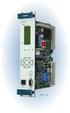 Machinery Protection Card Type FEATURES Continuous on-line Machinery Protection Card Real-time measurement and monitoring using state-of-the-art DSP techniques Fully VME-compatible slave interface Fully
DANGER indicates that death or severe personal injury will result if proper precautions are not taken.
 Multi-User Systems 1 ArchiveServer 2 SIMATIC HMI WinCC V7.0 SP1 File Server 3 WinCC ServiceMode 4 Redundant Systems 5 System Manual Print of the Online Help 11/2008 Legal information Warning notice system
GE Security. FHSD Monitor / Web Server user manual
 GE Security FHSD Monitor / Web Server user manual version 1-0 / november 2004 http://www.geindustrial.com/ge-interlogix/emea 2004 GE Interlogix B.V.. All rights reserved. GE Interlogix B.V. grants the
Water Distribution System Wireless Monitoring Solutions
 Water Distribution System Wireless Monitoring Solutions Pump Station Aquifer Level Tank Level Reservoir Level Rainfall Mag Meter Flow Hydrant Pressure Water Quality Water Meter Flow Pressure Reducing Valve
GE Consumer & Industrial Power Protection. Digital Energy LP Series UPS. Uninterruptible Power Supply 3-30 kva. GE imagination at work
 GE Consumer & Industrial Power Protection Digital Energy LP Series UPS Uninterruptible Power Supply 3-30 kva GE imagination at work For more than a century, GE has led the way with innovative technologies
COOKBOOK. for. Aristarchos Transient Spectrometer (ATS)
 NATIONAL OBSERVATORY OF ATHENS Institute for Astronomy, Astrophysics, Space Applications and Remote Sensing HELMOS OBSERVATORY COOKBOOK for Aristarchos Transient Spectrometer (ATS) P. Boumis, J. Meaburn,
Solar Tracking Controller
 Solar Tracking Controller User Guide The solar tracking controller is an autonomous unit which, once configured, requires minimal interaction. The final tracking precision is largely dependent upon the
Woods Hole Group, Inc. Oceanography and Measurement Systems Division INTEGRATED REAL-TIME MONITORING SYSTEM
 Woods Hole Group, Inc. INTEGRATED REAL-TIME MONITORING SYSTEM Woods Hole Group, Inc. (WHG) has developed the Integrated Real-time Monitoring System (IRMS) as a general-purpose data acquisition and telemetry
This document is intended as a quick reference guide for processing meteor data using UFO Analyzer.
 2013 UKMON TABLE OF CONTENTS INTRODUCTION...3 INSTALLING UFO ANALYSER...3 CREATING A PROFILE...4 Add source directory (see Annex A):...4 Set location and ID information...5 Define the camera setup...5
Collided Vehicle Position Detection using GPS & Reporting System through GSM
 Collided Vehicle Position Detection using GPS & Reporting System through GSM M.M.Raghaveendra 1, N.Sahitya 2, N.Nikhila 3, S.Sravani 4 1 Asst.Professor ECE Department, 2 Student, 3 Student, 4 Student,
Sea Mammal Research Unit. GPS Phone Tags. www.smru.st-and.ac.uk. Introduction. University of St Andrews. e-mail: [email protected].
 GPS Phone Tags A major advance in marine mammal telemetry, featuring: GPS quality locations Detailed individual dive and haulout data Efficient and cheap data relay via mobile phone GSM Introduction The
RESULTS FROM A SIMPLE INFRARED CLOUD DETECTOR
 RESULTS FROM A SIMPLE INFRARED CLOUD DETECTOR A. Maghrabi 1 and R. Clay 2 1 Institute of Astronomical and Geophysical Research, King Abdulaziz City For Science and Technology, P.O. Box 6086 Riyadh 11442,
VEHICLE TRACKING SYSTEM USING GPS. 1 Student, ME (IT) Pursuing, SCOE, Vadgaon, Pune. 2 Asst. Professor, SCOE, Vadgaon, Pune
 VEHICLE TRACKING SYSTEM USING GPS Pooja P. Dehankar 1, 1 Student, ME (IT) Pursuing, SCOE, Vadgaon, Pune Prof. S. P. Potdar 2 2 Asst. Professor, SCOE, Vadgaon, Pune Abstract- Global Positioning System is
NNMi120 Network Node Manager i Software 9.x Essentials
 NNMi120 Network Node Manager i Software 9.x Essentials Instructor-Led Training For versions 9.0 9.2 OVERVIEW This course is designed for those Network and/or System administrators tasked with the installation,
PIONEER RESEARCH & DEVELOPMENT GROUP
 SURVEY ON RAID Aishwarya Airen 1, Aarsh Pandit 2, Anshul Sogani 3 1,2,3 A.I.T.R, Indore. Abstract RAID stands for Redundant Array of Independent Disk that is a concept which provides an efficient way for
AUTOMATION OF THE DATA MANAGEMENT PROCESS WITHIN THE FIELD OPERATIONAL TEST EUROFOT
 AUTOMATION OF THE DATA MANAGEMENT PROCESS WITHIN THE FIELD OPERATIONAL TEST EUROFOT Dipl.-Ing. Mohamed Benmimoun Institut für Kraftfahrzeuge, RWTH Aachen University (IKA) [email protected]
General GPS Antenna Information APPLICATION NOTE
 General GPS Antenna Information APPLICATION NOTE General GPS Antenna Information Global Positioning System and Precise Time & Frequency The Global Positioning System (GPS) is a worldwide radio-navigation
Vehicle Tracking System,
 Vehicle Tracking System, The Complete Solution What is GPS? Product Review. Complete system. Contact Us. What is GPS? GPS, which stands for Global Positioning System, is the only system today able to show
EC 350 Simplifies Billing Data Integration in PowerSpring Software
 White Paper EC 350 Simplifies Billing Data Integration in PowerSpring Software Executive Summary In the current energy environment, gas-metering data must be collected more frequently and in smaller increments
Performance analysis and comparison of virtualization protocols, RDP and PCoIP
 Performance analysis and comparison of virtualization protocols, RDP and PCoIP Jiri Kouril, Petra Lambertova Department of Telecommunications Brno University of Technology Ustav telekomunikaci, Purkynova
Robot Perception Continued
 Robot Perception Continued 1 Visual Perception Visual Odometry Reconstruction Recognition CS 685 11 Range Sensing strategies Active range sensors Ultrasound Laser range sensor Slides adopted from Siegwart
Traffic Monitoring in a Switched Environment
 Traffic Monitoring in a Switched Environment InMon Corp. 1404 Irving St., San Francisco, CA 94122 www.inmon.com 1. SUMMARY This document provides a brief overview of some of the issues involved in monitoring
SSO Transmission Grating Spectrograph (TGS) User s Guide
 SSO Transmission Grating Spectrograph (TGS) User s Guide The Rigel TGS User s Guide available online explains how a transmission grating spectrograph (TGS) works and how efficient they are. Please refer
Roulette Wheel Testing. Report on Stages 3.2 and 3.3 of NWML/GBGB Project Proposal
 ANNEX B Roulette Wheel Testing Report on Stages 3.2 and 3.3 of NWML/GBGB Project Proposal 1. Introduction This is a report on the findings of stages 3.2 and 3.3 of the project proposal submitted by NWML
ilic ilic Intelligent Lighting Control for Outdoor Applications INTELLIGENT LUMINAIRE IN- FORMATION CENTRE
 ilic Intelligent Lighting Control for Outdoor Applications ilic INTELLIGENT LUMINAIRE IN- FORMATION CENTRE www.vossloh-schwabe.com ilic Intelligent Lighting Information Center Software V1.001 Ref. No.
IT Service Management
 IT Service Management Service Continuity Methods (Disaster Recovery Planning) White Paper Prepared by: Rick Leopoldi May 25, 2002 Copyright 2001. All rights reserved. Duplication of this document or extraction
DeNoiser Plug-In. for USER S MANUAL
 DeNoiser Plug-In for USER S MANUAL 2001 Algorithmix All rights reserved Algorithmix DeNoiser User s Manual MT Version 1.1 7/2001 De-NOISER MANUAL CONTENTS INTRODUCTION TO NOISE REMOVAL...2 Encode/Decode
MERLIN. The Quick Start Guide to professional project management. 2013 ProjectWizards GmbH, Melle, Germany. All rights reserved.
 MERLIN The Quick Start Guide to professional project management 2013 ProjectWizards GmbH, Melle, Germany. All rights reserved. INTRODUCTION Welcome to the quick start guide to Merlin! Thank you for choosing
DiskBoss. File & Disk Manager. Version 2.0. Dec 2011. Flexense Ltd. www.flexense.com [email protected]. File Integrity Monitor
 DiskBoss File & Disk Manager File Integrity Monitor Version 2.0 Dec 2011 www.flexense.com [email protected] 1 Product Overview DiskBoss is an automated, rule-based file and disk manager allowing one to
A survey on Spectrum Management in Cognitive Radio Networks
 A survey on Spectrum Management in Cognitive Radio Networks Ian F. Akyildiz, Won-Yeol Lee, Mehmet C. Vuran, Shantidev Mohanty Georgia Institute of Technology Communications Magazine, vol 46, April 2008,
Monitoring & Control of Small-scale Renewable Energy Sources
 Small Scale Renewable Energy Sources and Energy Saving: 6-17 th July 2009 Monitoring & Control of Small-scale Renewable Energy Sources Dr G A Taylor Brunel Institute of Power Systems Brunel University,
Getting Started with Endurance FTvirtual Server
 Getting Started with Endurance FTvirtual Server Marathon Technologies Corporation Fault and Disaster Tolerant Solutions for Windows Environments Release 6.1.1 June 2005 NOTICE Marathon Technologies Corporation
Chapter 3: Data Mining Driven Learning Apprentice System for Medical Billing Compliance
 Chapter 3: Data Mining Driven Learning Apprentice System for Medical Billing Compliance 3.1 Introduction This research has been conducted at back office of a medical billing company situated in a custom
ILX Lightwave Corporation www.ilxlightwave.com
 # 14 Optimizing TEC Current Optimizing TEC Drive Current This Application Note discusses methods for optimizing the TEC drive current for optimum operation in heating and cooling applications. BACKGROUND