
Grape vine pests and their management
|
|
|
- Lawrence McKenzie
- 9 years ago
- Views:
Transcription
1 Grape vine pests and their management June 2014 Primefact 511 second edition Greg Dunn Leader Viticulture Wagga Wagga Bev Zurbo Biosecurity Officer Wagga Wagga Introduction Grapes are grown in several climatic zones in New South Wales (NSW). The main areas producing wine and table grapes are the Murrumbidgee irrigation area, the Hunter Valley, the central rangelands of Mudgee, Orange and Cowra and the area encompassing Wagga Wagga, Young and Gundagai. Table grapes are also grown in Sydney s south-west and grapes for dried fruit are grown in the lower Murray irrigation area. Mites Mites are in the order Acari within the class Arachnida, and are therefore closely related to spiders. Mites are not insects: they can be distinguished from insects as they possess two distinct body segments, no antennae and usually four pairs of legs. The easiest way to distinguish between different mite pests of grapevines is by the damage that they cause. However, for accurate identifications of mite specimens, microscopic magnification of at least 40x is necessary. Recent Australian research examining the molecular biology of grapeleaf bud and blister mites suggests that they are separate species rather than different strains of the same species. For the purposes of this Primefact the scientific name Colomerus vitis is still applied to both bud and blister mites. Mite diagnostic services are offered by NSW Department of Primary Industries (DPI). For more information contact your local NSW DPI office. Grapeleaf bud mite (Colomerus vitis) Grapeleaf bud mite is 0.2 mm long, creamy white in colour, wormlike and possesses two pairs of legs near the head. Adult females lay eggs during spring inside the swelling bud and these eggs hatch after five to 25 days. Immature bud mites feed under the bud scale and develop into mature adults in about 20 days. Up to 12 generations are thought to occur in a year, with later generations in autumn feeding deeper in the developing bud, damaging cells which would have become leaves and bunches in the next season. Bud mites over-winter as adults under the outer scales of buds. During budburst, mites move from the budding shoot to new developing buds. Within a month of budburst most mites have moved into developing buds. Feeding by bud mite can lead to malformed leaves, aborted or damaged bunches, tip death and even bud death. Recent research has shown that symptoms similar to restricted spring growth can be caused by bud mite. Monitoring prior to budburst in vineyards that have a history of damage may be useful in gauging mite presence or absence. Dormant winter buds can be examined for characteristic tissue bubbling damage around the outer scales. Over-wintering bud mites may be seen by viewing dissected basal buds under a stereo microscope. Grapeleaf blister mite (Colomerus vitis) Grapeleaf blister mite is 0.2 mm long, white or creamy and worm-like with two pairs of legs at the anterior end of the body. Blister mite and bud mite, although morphologically similar, can be easily distinguished by the damage they cause. Blister mites feed on the under-surface of leaves and cause very obvious blisters on the upper surface of leaves and white or brown hairy growths within the raised blisters on the lower surface of leaves.

2 Blister mite over-winters inside buds, but after budburst they move onto leaves to feed and complete their lifecycle within the hairy blister. Damage can be unsightly but does not usually have economic consequences. Figure 1 Grapeleaf blister mite damage (Photo: A Loch) Grapeleaf rust mite (Calepitrimerus vitis) Grapeleaf rust mite is 0.2 mm long, cream to pink in colour, wormlike and possesses two pairs of legs near the head. Rust mites are in the same family (Eriophyidae) as bud and blister mites but are much more active. Rust mites over-winter under the bark of cordons or the trunk near the crown. Smaller numbers can be found under the outer scales of dormant buds. Lower nodes of canes tend to have the most heavily infested buds. At mid to late chardonnay woolly bud (when less than 10% of buds are at the first green tip stage), the mites start to migrate to the swelling buds and produce the first generation. Two weeks after bud burst most of the mites have migrated to the developing shoots and leaves. During the growing season, rust mites can disperse by active movement across overlapping parts of the canopy. Between three and 12 generations a year are likely. Mites start to migrate to their winter shelters from early February to mid March. This early migration could explain why post-harvest wettable sulphur sprays have been found to be ineffective in reducing over-wintering rust mite numbers. There is increasing awareness of the damage that rust mites can cause. Early season rust mite damage can be confused with bud mite or cold injury, as the leaf distortion or crinkling symptoms and poor shoot growth can be similar. The damage is most obvious from bud burst to when five to eight leaves have emerged. The damage then becomes much less visible as the shoots recover and grow out. Severe early spring damage can still be detected in mature leaves through the growing season. Symptoms resembling those of restricted spring growth have also been recently attributed to feeding by rust mite. The most visible and easily recognisable symptoms of rust mite occur from January to March. The leaves start to darken and take on a bronzed appearance because of the presence of rust mites feeding on, and damaging, the surface cells of the leaf. Bunch mite (Brevipalpus californicus and Brevipalpus lewisi) Bunch mite adults are 0.3 mm long, flat, shieldshaped and reddish-brown in colour. Eggs are oval, bright red and deposited throughout the vine. The six-legged larvae, which are lighter coloured than the adults, subsequently moult to eight-legged nymphs, which moult into adults. In spring, bunch mites feed on developing canes, and later on the under-surfaces of leaves. Early season damage is characterised by small dark spots or scars around the base of canes. They then move to the bunch stalks, berry pedicels and berries. Damage to the bunch stalks and pedicels can partly starve the berries, preventing sugar accumulation. The adults spend the winter under the outer bud scales and under the rough bark at the base of the canes. Two-spotted mite (Tetranychus urticae) Two-spotted mite is 0.5 mm long and just visible to the naked eye. They are pale coloured and have two distinct dark spots on their body. Development of two-spotted mite can be as little as a week and many generations can be completed in a season. Development is similar to bunch mite with sixlegged larvae moulting into eight-legged nymphs before the eight-legged adult stage. These mites are sap suckers and cause chlorosis or yellowing of leaves. Severe infestations can lead to leaves dying. Associated with feeding is the characteristic webbing they spin on the underside of leaves. Outbreaks of two-spotted mite have occurred in the Lower Hunter Valley and can almost always be linked to applications of insecticides toxic to their natural enemies. The best strategy for control is to avoid the use of insecticides as much as possible. 2 NSW Department of Primary Industries, July 2014

3 Mite control Although the broad management principles for the control of rust, bud and blister mites are similar, recommended control strategies differ for each species. Several predatory insects and spiders feed on mites but the most efficient natural predators of mite pests are predatory mites. Two species, Euseius victoriensis ( Victoria ) and Typhlodromus doreenae ( Doreen ), are particularly important in several Australian viticultural regions for maintaining low pest mite populations. Should chemical control be necessary to control severe infestations of pest mites, a registered chemical must be used and applied at an appropriate time to provide good control. Predatory mites are susceptible to several insecticides and fungicides, so chemicals that are friendly to predatory mites should be selected to ensure high numbers of predatory mites in the vineyard. Control of bud mite is best conducted after budburst when mites are exposed on bud scales and leaf axils. Blister mite rarely requires control but, if necessary, control should be initiated at the woolly bud stage. Rust mite is most effectively treated by spraying very high volumes of wettable sulphur and oil to runoff at the time of chardonnay woolly bud stage and when temperatures reach at least 15 C. For control of all mite pests, use a registered chemical according to instructions on the label. Insects Lightbrown apple moth (Epiphyas postvittana) Lightbrown apple moth (LBAM) is a native Australian leafroller moth, which is a serious pest of several horticultural crops. The species is found throughout Australia but does not survive well at high temperatures and is therefore a more serious problem in cooler areas with mild summers. Male moths are smaller than female moths and have a dark band on the hind part of the forewings. Eggs are laid in masses of 20 to 50 eggs, usually on upper surfaces of leaves or on shoots. Eggs are blue-green when newly laid but turn green-yellow close to hatching. The larvae or caterpillars are yellow when young but become green as they mature. Caterpillars roll shoots and leaves together with silken web, and feed on leaves and bunches. Pupation occurs on the vine at the feeding site either within webbed leaves and shoots or bunches. The pupa or chrysalis is brown and approximately 1 cm long. LBAM undergoes three to four generations each year depending on the prevailing climatic conditions. In all areas, a winter generation occurs on several species of broad-leaved weeds. Large caterpillars of this generation can occasionally move onto vines at budburst and destroy new buds. The spring and summer generations are more damaging because direct feeding damage to bunches can occur. The spring generation begins when moths emerge in late winter and early spring, and can take up to two months to complete. Caterpillars emerging from eggs laid in spring feed predominantly on leaves but can cause extensive damage to flowers and setting berries if large populations are present. There are one to two generations during summer depending on temperature, with caterpillars feeding on leaves but also entering closing bunches. Damage to developing and ripening bunches by LBAM can also increase the incidence of Botrytis bunch rot infections, especially in cooler and wetter areas. A number of control strategies are available for LBAM management. Cultural control practices of removing potential LBAM host plants such as broad-leaved weeds and planting non-host plants like grasses should reduce the size of LBAM populations, especially during winter. Several natural enemies such as lacewings, spiders and predatory shield bugs contribute to overall biological control of LBAM. Perhaps the best available natural enemy of LBAM is Trichogramma, a genus of very small wasps that parasitise and develop in LBAM eggs, thus killing the eggs. These wasps are commercially available from several companies. Figure 2 Adult lightbrown apple moth Figure 3 Newly laid egg mass of lightbrown apple moth 3 NSW Department of Primary Industries, July 2014

4 Figure 4 Lightbrown apple moth caterpillar (Photos: A Loch) Figure 5 Botrytis bunch rot in chardonnay grapes following lightbrown apple moth feeding. Note hatched moth pupal case in centre of photo. (Photo: A Loch) Recently a number of vineyards throughout Australia have reported successful control of LBAM through mating disruption by using slowrelease dispensers containing a synthetic pheromone chemically identical to the natural pheromone produced by female moths to attract male moths. When these dispensers are placed throughout the vineyard, mating is disrupted, as males cannot locate females because their natural pheromones are swamped by the synthetic pheromones. Without mating, females cannot lay viable eggs and thus the lifecycle can be broken. If chemical control is required, an insecticide registered for LBAM must be used. There are several new insecticides available that are softer and specifically target caterpillar pests and have a negligible or minimal effect on non-target species. Spraying is most effective after eggs have hatched, but before caterpillars reach 3 to 5 mm and build feeding shelters. Caterpillars within rolled leaves and bunches are difficult to control because spray coverage in these concealed places is poor. Biological insecticides containing the bacterium Bacillus thuringiensis (Bt) specifically kill only caterpillars and not their natural enemies. Bt insecticides must be consumed by caterpillars to work. Grapevine moth (Phalaenoides glycinae) Grapevine moth is native to Australia and feeds on several native plants as well as grapevine leaves. The adult is an attractive black moth with white and yellow markings, a wingspan of about 6 cm, and tufts of orange hair on the tip of the abdomen and around the legs. Moths are dayflying, gregarious and feed on nectar and pollen. Moths emerge from over-wintering pupae in early spring and lay eggs on stems and leaves. Eggs are round, sculptured and green to brown in colour depending on the stage of development. The larval or caterpillar stage goes through six larval instars or moults. The caterpillar is mainly black and white with red markings, covered in scattered white hairs, and can reach 5 cm in length. Pupation occurs in a silken cell in the ground or in fissures in the vine wood or strainer posts. The pupa is the over-wintering stage. There are two to three annual generations with larvae first appearing on vines in October, and the second generation of moths appears in December. In areas with warm to hot summers, a third generation may occur between late summer and autumn. Figure 6 Adult grapevine moth Figure 7 Grapevine moth caterpillar 4 NSW Department of Primary Industries, July 2014

5 Figure 8 A grapevine moth killed by parasitic wasps Figure 9 Predatory shield bug, Cermatulus nasalis, feeding on a grapevine moth caterpillar (Photo: A Loch) Grapevine moth is usually a minor pest, with little economic impact. However, if caterpillar numbers reach high levels, severe vine defoliation may result, which can affect berry development and carbohydrate storage. Caterpillars feed on leaves but may begin feeding in bunches if foliage is depleted. Parasitoids such as tachinid flies and wasps, predatory shield bugs and birds provide some control against the pest. Several insecticides are registered for grapevine moth. Grapevine hawk moth (Hippotion celerio) and Vine hawk moth (Theretra oldenlandiae) Hawk moth caterpillars are voracious feeders of grapevine leaves but are only occasional pests in Australian vineyards. Mature caterpillars grow to a similar size as the grapevine moth but can be distinguished from the latter by their fleshy spine on the upper rear end of the body, and the characteristic coloured eye spots along the body. Pupation occurs on or just under the soil surface. Adult moths are night flying, have wingspans of about 7 cm, are largely grey or brown coloured, and are good fliers that can often be caught near lights. If insecticidal control is required use a registered chemical. Vine borer moth (Echiomima sp.) Vine borer moth (Echiomima sp.) is a native moth that feeds on native plants and also attacks horticultural crops including grape vines. Vine borer moths have become a pest issue in the Riverina and have been recorded in the Riverland, Hunter Valley and Queensland. The life cycle of the vine borer takes a year to complete. Adult moths are approximately mm long, creamy white to light brown in colour, possess a thick tuft of white hair under the head, and often have a distinct black dot on each forewing. Moths are active at night during November and December. Eggs are white, cylindrical shaped and very small and in bark crevices around the dormant buds on spurs near the cordon. Larvae feed on the surface of the bark or dormant buds before tunnelling into the heartwood. Most feeding occurs on the outer sapwood and bark around the spur and cordon, which effectively girdles the spur or cordon. Larvae feed beneath a protective blanket of Larval frass, which is webbed together with silk, and makes spotting this pest during pruning an easy task. Larvae grow to about 25 mm long and as they grow feeding and levels of damage increase. A field research trial conducted on Merlot in the Riverina showed that damage caused by vine borer led to significant reductions of 43% for yield, 26% for bunch numbers per shoot, 46% for shoot length, and 58% for cane dry weights per vine spur (A.D. Loch, unpublished data). Feeding damage around vine spurs and dormant buds can even lead to death of buds or entire spurs. Continued feeding damage by vine borer moth over several seasons could potentially lead to loss of vigour, crop losses through loss of fruiting spurs, and dieback. Vine borer moth has been found feeding on a range of red and white wine grape varieties in the Riverina but the pest shows a clear preference for the varieties Merlot, Ruby Cabernet and Pinot Noir. Mealybug (Pseudococcus sp.) Three species of mealybug are commonly found in Australian vineyards: longtailed mealybug (Pseudococcus longispinus), citrophilus mealybug (Pseudococcus calceolariae) and obscure mealybug (Pseudococcus affinis). Longtailed mealybug is the most serious pest and is prevalent in many Australian grape-growing regions. 5 NSW Department of Primary Industries, July 2014

6 Mealybugs are soft-bodied sucking insects covered in white filamentous wax. Adult females grow to about 5 mm in length and are wingless whereas males are much smaller and winged. Mealybugs over-winter as nymphs under the rough bark of older canes, in the crown of the vine and sometimes in the cracks in trellis posts. In spring they move on to new growth and quickly reach adult maturity. Female mealybugs can lay enormous numbers of eggs, which quickly hatch into crawlers. In early summer, mealybugs are present mainly along leaf veins and do not usually enter bunches until January. Up to three to four generations may occur each year depending on climatic conditions. Mealybugs prefer mild, humid conditions and high rates of mortality can occur during hot, dry conditions. Feeding by mealybugs does not usually cause economic damage. Excretion of sticky honeydew by mealybugs leads to sooty mould development on leaves and bunches if large populations arise. Sooty mould covering leaves can reduce photosynthesis and mould on grapes can make the fruit unsaleable or lead to rotting. Longtailed mealybug has a number of natural enemies including predatory ladybird beetles and lacewings, and parasitic wasps. The native ladybird species Cryptolaemus montrouzieri preferentially feeds on mealybugs and is commercially available from several Australian outlets that sell biological control agents. Figure 10 Longtailed mealybugs registered chemical if insecticidal control is required. Figure 11 Longtailed mealybug damage to grapes Figure 12 Adult Cryptoleamus montrouzieri ladybird feeding on longtailed mealybug Grapevine scale (Parthenolecanium persicae) Grapevine scale is a small oval shaped sucking bug up to 6 mm long that lives beneath a protective dark brown wax cover. The insect feeds mainly on the stems or canes and if large populations occur, vine growth and grape production can be reduced. The major problem with grapevine scale is that scale excretes honeydew, which falls onto grapevine leaves and bunches leading to sooty mould development and photosynthesis reduction with subsequent growth and productivity reduction. Figure 13 Grapevine scale tended by ants Ants may feed on honeydew and encourage development of mealybug colonies by interfering with natural enemies. If large numbers of ants are present, sticky trap coatings applied to the trunk will exclude ants from vines, or insecticides may be used to reduce ant numbers. Sprays are rarely required on wine grapes; spray only where there is a history of economic loss and where damage or mealybug numbers are high. Use a 6 NSW Department of Primary Industries, July 2014

7 Figure 14 Sooty mould associated with grapevine scale feeding (Photos: A Loch) grapevines, grape material and machinery between different zones. Figure 15 Phylloxera crawlers feeding on grape vine root Grapevine scale has one annual generation. Immature scales over-winter on the previous season s wood and begin maturing in spring. During late spring and summer, mature scales deposit hundreds of eggs under their bodies and then die. Crawlers hatch and move to the leaves to feed but later move back to the canes to feed, where they remain during winter. Careful pruning of canes can provide excellent control by removing most of the over-wintering scale population. Several parasitic wasps and predators such as ladybirds and lacewings provide some control of grapevine scale. Ants that feed on the honeydew can hamper these natural enemies so ant control may be necessary on some vineyards to enhance levels of biological control. Insecticides work best after pruning in winter or early spring when populations are immature and low in number. Successful insecticidal control in summer can be difficult because of spray coverage problems in dense canopies. Use a registered chemical if insecticidal control is required. Grape phylloxera (Daktulosphaira vitifolii) Grape phylloxera is a small aphid-like insect that is only just visible to the naked eye. In Australia the species largely occurs on the grapevine roots although leaf-galling populations sometimes arise. Root feeding leads to vine debilitation and usually death on European Vitis vinifera vines. Rootstocks provide varying degrees of tolerance to the pest. In New South Wales phylloxera is currently distributed only in the counties of Camden and Cumberland near Sydney and in the Albury- Corowa area. Several viticultural regions in Victoria including Rutherglen, Nagambie and King Valley are affected by the pest. Different phylloxera zones have been established within New South Wales that limit the movement of Wood-boring insect pests Fig longicorn borer (Acalolepta vastator) Figure 16 Fig longicorn borer larva and associated damage to grapevine trunk (Photo: A Loch) The fig longicorn borer has become a major pest of grapevines in a small area of the Lower Hunter. The adult beetle is about 3 cm long and has antennae longer than the body. Adult emergence is protracted over the months between spring and autumn. Females lay eggs in fissures or cracks in the grapevine bark or near the base of canes. Larvae hatch and bore into the vine wood and can tunnel throughout the trunk and into roots. Larvae are cream coloured with a brown head and grow to 4 cm in length. Pupation occurs in the tunnel and the adult emerges from the trunk by chewing a hole. Larval excrement and sawdust are often visible in tunnels and around the vine trunk indicating an infestation. Fig longicorn borer can cause extensive damage to the vine trunk, which can lead to dieback and significant crop losses. Borers are difficult to 7 NSW Department of Primary Industries, July 2014

8 control because the boring stage is usually not accessible to insecticides. Careful pruning and removal of prunings may remove many of the larvae. Retraining of vines may be necessary following pruning of vines with serious infestations. If insecticidal control is warranted use a registered insecticide. Elephant weevil (Orthorhinus cylindrirostris) and vine weevil (Orthorhinus klugi) Elephant weevil and vine weevil are native species that breed in many native trees, especially eucalypts. The adult elephant weevil may vary in length from 8 to 20 mm, and the vine weevil is about 7 mm long. The weevil body is densely covered with scales that may vary from grey to black. The larva or grub is soft, fleshy, creamy yellow and legless, and reaches a length of nearly 20 mm. The pupa is soft and white, with light brown wing buds. Most beetles emerge during September and October, and lay eggs in holes drilled at the base of the vine with the proboscis. The larvae tunnel for about 10 months, the pupal stage lasts for two to three weeks, and the adults emerge a year after the eggs were laid. If chemical control is required use a registered insecticide. Common auger beetle (Xylopsocus gibbicollis) Common auger beetle causes damage principally in the Hunter Valley. The adult is 5 mm long and brown to black. Eggs are laid in the bark and the hatching larva bores into the wood. The hole size of the common auger beetle is only 1 2 mm diameter, which makes it easy to distinguish from the 8 10 mm holes of the fig longicorn borer. Fruit-tree borer (Maroga melanostigma) This native moth borer attacks a wide range of ornamental and commercial trees. Moths lay eggs preferentially in wound sites in bark and wood. Larvae feed on the bark surface after hatching, before tunneling into wood. Larvae can also ring-bark limbs and trunks, with heavy infestations leading to death of parts of vines. Insect pests during grapevine establishment The major insect pests of grape vines during grape vine establishment include African black beetle (Heteronychus arator), apple weevil (Otiorhynchus cribricollis) and garden weevil (Phlyctinus callosus). These species ringbark young vines, which can cause cane weakness and sometimes vine death. Garden weevil is also a major pest of established grapevines in southern parts of Australia but is not a problem in NSW. Monitoring for these pests is best done at night when the majority of feeding occurs. Chemical control is best performed prior to planting especially on sites with a history of such pests. Chemical control after planting can be more difficult and not as successful. Cutworms (Agrotis spp.) and budworms (Helicoverpa spp.) are caterpillar pests that can also damage newly planted vines by feeding on leaves at night. Registered insecticides for these pests should be applied at night for effective control. Nematodes A number of nematode species attack grapevine roots. They include root knot (Meloidogyne sp.), citrus (Tylenchulus semipenetrans), root lesion (Pratylenchus sp.), ring (Criconemella sp.), spiral (Helicotylenchus sp.), pin (Paratylenchus sp.), dagger (Xiphinema sp.), stunt (Tylenchorhynchus sp.) and stubby root (Paratrichodorus sp.) nematodes. They all live in soil and feed on root cells as external or internal parasites. Root knot, citrus and root lesion nematodes are very common and can be economically important in Australian vineyards. The dagger nematode transmits grapevine fan leaf virus, but is reported only in a small region of north-eastern Victoria. The economic importance of other nematodes is not known in viticulture. Nematodes feed on root cells and disturb the uptake and movement of nutrients and water from the soil into the plant. The main symptoms of nematode damage are stunted growth, poor vigour and yellow leaves. These symptoms can be confused with nutrient deficiencies or moisture stress. A visual inspection of the roots and a soil nematode count from a laboratory will confirm whether nematodes are the problem. Plant parasitic nematodes commonly feed on cortical cells and cause dark patches or death of the root surface. The root lesion nematodes make cavities and tunnels by destroying the cells. Thin and dense fibrous roots are the characteristic symptoms of stubby root nematodes. The root knot (endoparasite) and citrus (semi-endoparasite) nematodes feed on deeper cells. Cells infected with root knot nematode swell into characteristic galls or knots in the roots whereas citrus-nematode-infected cells become thickened and discoloured. 8 NSW Department of Primary Industries, July 2014

9 Host preferences differ between plant parasitic nematodes. Root knot and root lesion nematodes can infect and reproduce in roots of many crops, fruit trees, ornamentals and weeds. The citrus nematode can infect grapevines, olive, citrus and pear. Many nematode species can survive for up to two years in soil without any host plants. and to check currency of the information with the appropriate officer of the Department of Primary Industries or the user s independent adviser. Published by the NSW Department of Primary Industries. PUB14/113 When establishing a new vineyard obtain a soil count of nematode numbers and species before you select vines, particularly if the site has been used previously for horticultural crops. Nematode tolerant rootstocks can provide some protection from nematodes and other management benefits. Use nematode-free planting material that has been treated with hotwater to eliminate any possible introduction of nematodes from nursery to vineyards. For established vineyards, biofumigation may provide effective control by planting Brassicas in the cover crop. Brassica species suppress nematodes through the release of a chemical known as isothiocyanate as they break down in the soil. The mustard cultivar Nemfix is one of the members of this group that is commercially available. The best reduction of nematodes is achieved if the mustard is grown close to the vine row, slashed and covered with soil under the vine rows. If chemical control is required use a registered chemical. Birds Several species of birds can cause severe damage to ripening grapes. Scaring devices and the use of netting provide some control. A chemical repellent is also available. Acknowledgments This Primefact incorporates information from the first edition of H7.AE.1 Pests of grapes, 1986, (S. Goodwin) and First Edition 511 Grapevine pests and their Management.2007 (A. Loch). Photographs and additional information supplied by Andrew Loch ABARES Canberra. For updates go to State of New South Wales through the Department of Trade and Investment, Regional Infrastructure and Services You may copy, distribute and otherwise freely deal with this publication for any purpose, provided that you attribute the NSW Department of Primary Industries as the owner. Disclaimer: The information contained in this publication is based on knowledge and understanding at the time of writing (July 2014). However, because of advances in knowledge, users are reminded of the need to ensure that information upon which they rely is up to date 9 NSW Department of Primary Industries, July 2014

Organic Control Methods of Almond Insect Pest
 Big Tree Organic Field Day Turlock, CA, April 2nd, 2009 Organic Control Methods of Almond Insect Pest David Doll Farm Advisor UCCE Merced County Overview Organic Control Methods of Control of common pests
Major Insects of Apple, Peach and Pear Trees in the Home Orchard
 Major Insects of Apple, Peach and Pear Trees in the Home Orchard Henry W. Hogmire West Virginia University Tree Fruit Research and Education Center Kearneysville, WV Apple Pests Plum Curculio Beetle (snout
Tree Integrated Pest Management. Dan Nortman Virginia Cooperative Extension, York County
 Tree Integrated Pest Management Dan Nortman Virginia Cooperative Extension, York County IPM Refresher Definition: The use of a combination of appropriate pest control tactics to reduce pest population
Macadamia problem solver & bug identifier
 Macadamia problem solver & bug identifier Reprint information current in 2003 REPRINT INFORMATION PLEASE READ! For updated information please call 13 25 23 or visit the website www.deedi.qld.gov.au This
The Alfalfa Weevil in Utah
 Page 1 of 5 The Alfalfa Weevil in Utah Fact Sheet No. 58 January 1989 Edward W. Evans Extension Entomologist Introduction The alfalfa weevil is a major pest throughout Utah. It is a beetle with one generation
Pests of Woody Ornamental Plants An Online Resource for IPM Information
 Title: Pests of Woody Ornamental Plants An Online Resource for IPM Information Project Leaders: Shari Romar, Lead Writer; Gary Couch, Technical Advisor, NYS IPM Program; Jody Gangloff-Kaufmann, Project
Control of Insect Pests in Eucalypt Plantations
 Control of Insect Pests in Eucalypt Plantations Number 30 Revised February 2007 By Charlma Phillips, Principal Forest Health Scientist Eucalypts are native to Australia and have evolved in association
Symptoms Include: Stippled, bronzed or bleached appearance of leaves
 Common Tree Pests & Diseases Of Central Texas Lara Schuman City of Austin Urban Forestry Program Stress and Trees City life can be stressful, and trees feel stress too. Common urban tree issues include:
Cloud Mountain Farm Center 6906 Goodwin Rd., Everson, WA 98247 (360)966-5859 voice, (360)966-0921 fax, www.cloudmountainfarmcenter.
 Disease and Pest Management in the Home Orchard Fruit trees have been grown in home orchards for centuries. The goal of many gardeners today is to have fresh fruit from their own trees with a minimum of
Hop Pest Control. H. E. Morrison. jpf^vrsiolnrru; - «ibntoj."' «- '',orto JUN 6 I-JJ3
 Hop Pest Control H. E. Morrison its of jpf^vrsiolnrru; - «th ' s ibntoj."' «- '',orto JUN 6 I-JJ3 Agricultural Experiment Station Oregon State College Corvallis Circular of Information 589 May 1958 Hop
A DISCOVERY REGARDING THE DEATH OF ASH TREES IN THE PLYMOUTH AREA
 A DISCOVERY REGARDING THE DEATH OF ASH TREES IN THE PLYMOUTH AREA As you are probably aware, we have seen a significant amount of dying ash trees in the Plymouth, Canton, Northville area. This prompted
Life Cycle of a Butterfly
 Name: Date: Life Cycle of a Butterfly Life cycle refers to the stages of development, growth and reproduction that a living thing goes through. The butterfly's life cycle is made up of four stages: egg,
Custard apple information kit
 information kit Reprint information current in 1998 REPRINT INFORMATION PLEASE READ! For updated information please call 13 25 23 or visit the website www.deedi.qld.gov.au This publication has been reprinted
Chemical versus Biological Control of Sugarcane. By Abid Hussain Matiari Sugar Mills Ltd.
 Chemical versus Biological Control of Sugarcane By Abid Hussain Matiari Sugar Mills Ltd. Sugarcane It is an important cash crop, Pakistan is the fifth largest cane producing country. However, its yield
Black Dotted Brown Moth
 Athens-Clarke County Community Tree Program Black Dotted Brown Moth Athens is experiencing its fourth year of significant infestation by the black dotted brown moth (Cissusa spadix). The caterpillar of
Wooly Whiteflies (Aleurothrixus floccosus)
 Cooperative Extension Wooly Whiteflies (Aleurothrixus floccosus) The University of Arizona $ College of Agriculture $ Tucson, Arizona 85721 (part of the publication Citrus Arthropod Pest Management in
Introduction to the concepts of IPM
 DEPARTMENT OF PRIMARY INDUSTRY AND FISHERIES Principles of Integrated Pest Management Deanna Chin and Brian Thistleton, Entomology, Diagnostic Services What is a pest? Principles of IPM Introduction to
Life Cycle - Butterflies & Moths
 Life Cycle - Butterflies & Moths butterfly goes through four stages in its life. All animals A change as they grow and mature but butterflies and moths undergo the biggest change of all. Butterfly Pupa
A REVIEW OF PEST CONTROL IN AVOCADOS
 California Avocado Society 1979 Yearbook 63: 58-65 A REVIEW OF PEST CONTROL IN AVOCADOS C. Don Gustafson Farm Advisor, Cooperative Extension Service, University of California, San Diego County. Introduction
The Basics of Tree Pruning
 The Basics of Tree Pruning By John Ball, Forest Health Specialist and Aaron Kiesz, Urban and Community Forestry Specialist Until the end of the 19 th century, trees were not a common sight in many parts
Why Fruit Trees Die D. B. Meador, Extension Specialist (retired) University of Illinois
 Why Fruit Trees Die D. B. Meador, Extension Specialist (retired) University of Illinois Occasionally, fruit trees decline and often die. Diseases affecting the leaves, fruit, and twigs of fruit trees usually
A Visual Guide to Detecting Emerald Ash Borer Damage
 cfs.nrcan.gc.ca A Visual Guide to Detecting Emerald Ash Borer Damage Ontario Ministry of Natural Resources Library and Archives Canada Cataloguing in Publication A visual guide to detecting emerald ash
Insect Pests of Pecan. Will Hudson Extension Entomologist
 Insect Pests of Pecan Will Hudson Extension Entomologist How important is nut drop to production? Pecan trees typically lose 75% of the pecans between nut set and shell hardening even when protected from
Integrated Pest Management (IPM)
 Integrated Pest Management (IPM) in crops and pastures Integrated Pest Management (IPM) means using a combination of biological, cultural and chemical control methods to manage pest problems. The term
Pests of Deciduous Trees and Shrubs
 Pests of Deciduous Trees and Shrubs 1 Introduction Managing common insects, weeds, plant diseases and certain animal pests found in the backyard can be a challenge. However, there are a number of ways
Insect identification sheet
 information leaflet Insect identification sheet To enable you to identify the insect you have in your home, we have provided some identification sheets. These depict the most common pest species that you
Insects That Kill Trees. Diane G. Alston Extension Entomologist Utah State University 2004 Professional Tree Care Workshops
 Insects That Kill Trees Diane G. Alston Extension Entomologist Utah State University 2004 Professional Tree Care Workshops Topics Introduction websites, IPM strategies Ips bark beetles Tree borers flatheaded,
Advanced Intelligence Report Tree & Shrub Insect Control: Protecting Trees from Emerald Ash Borer
 Advanced Intelligence Report Treating For Emerald Ash Borer With Bayer Advanced Tree and Shrub Insect Control Soil Drench Dr. Bruce Stewart, Bayer Advanced Consumer Products Emerald Ash Borer (EAB) is
runing & Orchard Renewal
 P runing & Orchard Renewal Richard G. St-Pierre, Ph.D. (January 2006) The Basics Of Pruning & Orchard Renewal Pruning is defined as the art and science of cutting away a portion of a plant to improve its
The Fly. Quality Pest Management. Live Cleaner. Live Healthier. Cluster Fly. The weather is warming up and as if from no where the flies appear.
 The Fly The weather is warming up and as if from no where the flies appear. House Fly Flies will pitch and feed on just about anything including faeces to your lunch! They spread disease and are a generally
University of Hawaii at Manoa, College of Tropical Agriculture and Human Resources
 University of Hawaii at Manoa, College of Tropical Agriculture and Human Resources J. Sugano, J. Uyeda, S. Fukuda, K. Wang, M. Kawate, C. Tamaru, B. Fox, and T. Radovich College of Tropical Agriculture
12. INSECT PEST AND DISEASE MANAGEMENT
 12. INSECT PEST AND DISEASE MANAGEMENT Conservation farming promotes a diversity of insect life, influences pest populations and also favours many beneficial insects. The beneficial insects which act as
Diagnosing Problems of Roses in the Landscape
 ARIZONA COOP E R AT I V E E TENSION AZ1528 September 2010 Diagnosing Problems of Roses in the Landscape Desert Southwest gardeners are fortunate to have fewer insect and disease problems on roses than
Diagnosing Disorders of Trees
 148 Appendix A Diagnosing Disorders of Trees Diagnosing tree problems can be difficult. Symptoms and signs can be subtle or only visible using special techniques, important information can be missing,
Dieback, Twig blight or Canker (Colletotrichum gloeosporioides- asexual stage, Glomerella cingulata.)
 Camellia Camellia spp. Propagation Camellias are usually propagated by cuttings of new growth taken just as the stem is changing from green to brown. Wound the stem, use 3000-8000 ppm IBA-talc and grow
Fertilizer, Weed Control, Grubs, and General Application Questions
 Lawn Care FAQ s Fertilizer, Weed Control, Grubs, and General Application Questions Why do we have so many weeds? Dandelions in particular, weeds in general, do not seem concerned about how long lawn has
A Quick Start Guide to Establishing a Vineyard in Oregon Patty Skinkis, Ph.D.
 A Quick Start Guide to Establishing a Vineyard in Oregon Patty Skinkis, Ph.D. When thinking of starting a vineyard, many questions come to mind: Would my land be suitable for growing grapes? What types
Guide to the identification of Wood-boring insects
 Guide to the identification of Wood-boring insects Safeguard Chemicals Ltd., Redkiln Close, Horsham, West Sussex, United Kingdom. RH13 5QL. Tel: 01403 210204 www.safeguardchem.com Introduction This guide
Management of the Giant Northern Termite
 Agnote Management of the Giant Northern Termite (Mastotermes darwiniensis) B. M. Thistleton, M. J. Neal and E. S. C. Smith, Plant Industries, Darwin No: I58 July 2013 INTRODUCTION Termites are small, secretive
Scouting and Thresholds for Blueberry Pests and Diseases
 Scouting and Thresholds for Blueberry Pests and Diseases This field guide is intended to be used as a tool to aid in sampling and decision-making for managing key insect, mite, and disease pests in blueberry
Report to Lake Shastina Property Owners Association on Dead and Dying Trees Around Zen Mountain
 Report to Lake Shastina Property Owners Association on Dead and Dying Trees Around Zen Mountain by John Kessler, CA Registered Professional Forester #2494 Issue of Concern Residents of Lake Shastina have
INSECT MANAGEMENT (Roberts & McPherson)
 INSECT MANAGEMENT (Roberts & McPherson) A number of insect pests are capable of severely damaging soybeans. However, it is important to realize that soybeans can withstand considerable insect damage at
Integrated Pest Management
 Chapter 2 Integrated Pest Management In This Chapter Keywords After learning the information in this chapter, you will be able to: 1. Define Integrated Pest Management (IPM). 2. List and describe the 5
suscon Green One application. 3 years control against grass grub. Grass grub damaged pasture
 suscon Green One application. 3 years control against grass grub. Grass grub damaged pasture suscon Green is a dust free, controlled release granule that controls Grass Grub in newly established pasture
SECTION 1 : INTRODUCTORY. Chapter 1 Introduction. Pest status and economic damage
 SECTION 1 : INTRODUCTORY Chapter 1 Introduction Cotton production systems The cotton pest situation Cotton bollworm (Helicoverpa armigera) Pest status and economic damage COTTON BOLLWORM CONTROL species,
Susan Donaldson, Water Quality Education Specialist Steven J. Seybold, Research Biochemist
 FACT SHEET 98-40 Susan Donaldson, Water Quality Education Specialist Steven J. Seybold, Research Biochemist Introduction Trees in the Lake Tahoe Basin and the Sierra Nevada are turning brown and dying.
Enterprise Guide for Southern Maryland: Growing Broccoli
 1 Fact Sheet 450 Enterprise Guide for Southern Maryland: Growing Broccoli Broccoli is a popular vegetable in both fresh and frozen forms and has become a common vegetable in salad bars. Recently it has
Whiteflies in Southwest Florida
 Whiteflies in Southwest Florida 02/22/2013 Agenda What is a whitefly? What damage do whiteflies cause? How can whiteflies be treated? What is the future for whitefly problems? What is a whitefly? Small,
GRAPE COLD INJURY Causes, Prevention, Assessment, and Compensation. Nevada Grape Growers
 GRAPE COLD INJURY Causes, Prevention, Assessment, and Compensation Nevada Grape Growers Washington Precipitation Washington AVA S Understanding Vine Cold Injury Mechanics of cold injury Avoiding cold injury
Growing lemons in Australia- a production manual - Readers Note
 Growing lemons in Australia- a production manual - Readers Note This document is part of a larger publication. The remaining parts and full version of the publication can be found at: http://www.dpi.nsw.gov.au/agriculture/horticulture/citrus/lemon-manual
Integrated Pest Management
 Integrated Pest Management Science and Language Arts Brief Description: This lesson will focus all of the information the students have learned about pests in the other insect lessons in a decision-making
Insect Scouting and Diagnosis. Frank A. Hale, Ph.D. Professor Entomology & Plant Pathology
 Insect Scouting and Diagnosis Frank A. Hale, Ph.D. Professor Entomology & Plant Pathology Understanding the Pests to Manage the Pest Life cycle (what life stages are susceptible to control measures?) What
Christmas Trees Pseudotsuga menziesil (Douglas-fir), Abies grandis (Grand fir), Abies procera
 Christmas Trees Pseudotsuga menziesil (Douglas-fir), Abies grandis (Grand fir), Abies procera (Noble fir) (Pinaceae) Fast Facts: Acres in Washington: 25,000 acres Number of growers: 300 Value of Production
CITRUS PROBLEM DIAGNOSIS
 Citrus trees are well suited for Southern California. They don t mind alkaline soil too much and they like the climate. The major problems of backyard citrus at this time are Citrus Leafminer, various
SPECIES DESCRIPTION Picture
 SPECIES DESCRIPTION Picture German Cockroach Cockroach egg case & nymphs 12-15mm (Adult Stage)Mid to dark brown body. Lighter area with 2 dark bars behind head. Wings. Very long antennae. Young are smaller
Worksheets. (Caterpillars of Singapore s Butterflies) Worksheet Title Recommended level. Adaptations of the caterpillar defence mechanism
 Worksheets (Caterpillars of Singapore s Butterflies) Worksheet Title Recommended level 1 Life cycle of a butterfly P3 2 Am I an insect? P3 3 4 Adaptations of the caterpillar defence mechanism The butterfly
Arthropod Pests of Sugarcane: New Threats to Major Production Areas of North America
 Arthropod Pests of Sugarcane: New Threats to Major Production Areas of North America Gregg Nuessly University of Florida Everglades Research and Education Center Belle Glade, Florida USA Sugarcane production
What is a pest? How Insects Become Pests. How do insects become pests? Problems with Pesticides. What is most commonly used to control insect pests?
 What is a pest? How Insects Become Pests How do insects become pests? Introduction outside of native range Becomes disease vector Plant or animal (inclu. human) disease vector Host shift in native insect
Rose Diseases and Insects in the Bradenton-Sarasota Area
 Rose Diseases and Insects in the Bradenton-Sarasota Area By: Philip Paul, CR The 10 bad actors in our area are the fungi and pests that some days slow down our enjoyment of our rose gardens. This issue
Questions and Answers about the Emerald Ash Borer in Colorado
 Questions and Answers about the Emerald Ash Borer in Colorado What is the emerald ash borer? The emerald ash borer is a type of beetle that develops under the bark of ash trees. Its scientific name is
Integrated pest management in ornamentals information kit
 Integrated pest management in ornamentals information kit Reprint information current in 2000 REPRINT INFORMATION PLEASE READ! For updated information please call 13 25 23 or visit the website www.deedi.qld.gov.au
Crape Myrtle Bark Scale: A New Exotic Pest
 EHT-049 3/14 Crape Myrtle Bark Scale: A New Exotic Pest A relatively new exotic scale pest of crape myrtle (Lagerstroemia) is threatening the use and appearance (Fig. 1) of crape myrtles in urban landscapes
Diagnosing Home Citrus Problems
 ARIZONA COOP E R AT I V E E TENSION AZ1492 April 2009 Diagnosing Home Citrus Problems John Begeman, Glenn Wright PROBLEMS OF FRUIT Fruit Drops Prematurely: Natural fruit drop occurs during the spring.
TREE NOTES. CALIFORNIA DEPARTMENT OF FORESTRY AND FIRE PROTECTION Arnold Schwarzenegger Governor State of California. Dale T.
 TREE NOTES CALIFORNIA DEPARTMENT OF FORESTRY AND FIRE PROTECTION Arnold Schwarzenegger Governor State of California Dale T. Geldert Director NUMBER: 30 February 2005 Mike Chrisman Secretary for Resources
Leafminers Serpentine Leafminer, Pea Leafminer, and Vegetable Leafminer (Liriomyza trifolii, Liriomyza huidobrensis, Liriomyza sativae)
 ARTHROPOD PESTS 49 Several biological or chemical management tools are available. Control larvae 3 5 days after cuttings are potted; control adults before propagating plants. Leafminers Serpentine Leafminer,
Integrated Pest Management
 Integrated Pest Management Ecology and Human Impact R. Bruce Chapman Insect Science Ltd Pest organisms When do organisms become pests? When an organism s population exceeds a threshold level, and control
Management of Citrus. Beth Grafton-Cardwell. stationed at the Kearney Ag Center Director: Lindcove Research and Extension Center
 Integrated Pest Management of Citrus Beth Grafton-Cardwell 60% Extension & 40% Research Entomologist: UC Riverside, stationed at the Kearney Ag Center Director: Lindcove Research and Extension Center California
Karen J. English Graphic and Web Designer. Please click the thumbnails on the following pages to view larger versions of the images.
 Karen J. English Graphic and Web Designer Please click the thumbnails on the following pages to view larger versions of the images. graphic design: small pieces graphic design: large pieces web design
INTEGRATED PEST MANAGEMENT
 C 1 H A P TE R INTEGRATED PEST MANAGEMENT LEARNING OBJECTIVES After completely studying this chapter, you should: Be able to define integrated pest management. Understand the importance of an economic
Spruce problem diagnosis for yard trees
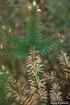 Spruce problem diagnosis for yard trees KEY Effect on tree Kills tree Other damage No damage Size of tree Seedling Sapling to pole Pole and larger By Jana Albers and Mike Albers, DNR-Forestry URL = http://files.dnr.state.mn.us/assistance/backyard/treecare/forest_health/whitesprucediagnosis.pdf
Pruning Mature Trees. Reasons for Pruning
 Pruning Mature Trees Pruning is the most common tree maintenance procedure. Although forest trees grow quite well with only nature's pruning, landscape trees require a higher level of care to maintain
PROBLEM DIAGNOSIS FOR AVOCADO
 Avocado trees are well suited for Southern California. They don t mind alkaline soil too much and they like the climate. They are, in general, tolerant of the heavy pruning that may be needed to keep the
Managing Sugarcane/Sorghum Aphid (SA) on Sorghum
 Managing Sugarcane/Sorghum Aphid (SA) on Sorghum Michael Brewer Texas A&M AgriLife Research Corpus Christi http://ccag.tamu.edu/entomology/ http://ccag.tamu.edu/entomology/ Outline I. Identification and
Infestations of the spotted
 Archival copy. For current information, see the OSU Extension Catalog: https://catalog.extension.oregonstate.edu/em8991 A New Pest Attacking Healthy Ripening Fruit in Oregon Spotted wing Drosophila: Drosophila
Introduction to Integrated Pest Management. John C. Wise, Ph.D. Michigan State University MSU Trevor Nichols Research Complex
 Introduction to Integrated Pest Management John C. Wise, Ph.D. Michigan State University MSU Trevor Nichols Research Complex What is Integrated Pest Management? Integrated Pest Management (IPM) New concept;
Horticulture Information Leaflet 8202
 Department of Horticultural Science Horticulture Information Leaflet 8202 Revised 1/95 -- Author Reviewed 4/98 BUNCH GRAPES IN THE HOME GARDEN E. B. Poling, Extension Horticultural Specialist Distributed
Worksheets. (Caterpillars of Singapore s Butterflies) Worksheet Title Recommended level. Adaptations of the caterpillar defence mechanism
 Worksheets (Caterpillars of Singapore s Butterflies) Worksheet Title Recommended level 1 Life cycle of a butterfly P3 2 Am I an insect? P3 3 4 Adaptations of the caterpillar defence mechanism The butterfly
Unit 4 Lesson 1: A Pest by Any Other Name
 Focus Areas: Pest Control: Biological; Environmental Science, Language Arts Focus Skills: critical thinking, conducting research, observing, graphing, interpreting data Objectives To explore human attitudes
What you need to know about the management of. the Emerald Ash. Borer (EAB) Guidelines for hiring tree care services to manage urban trees
 What you need to know about the management of the Emerald Ash Borer (EAB) Guidelines for hiring tree care services to manage urban trees What is an Emerald Ash Borer? This booklet has been designed for
Zinfandel. clusters. Synonyms None
 Zinfandel Synonyms None Source Zinfandel is only grown under this name in California. As a result, historians have long debated the appearance of this variety in the state. Some believe Zinfandel was first
Carpet Beetles In Homes Phil Pellitteri/UW Insect Diagnostic Lab
 Carpet Beetles In Homes Phil Pellitteri/UW Insect Diagnostic Lab One can expect to find a few carpet beetles in any home. Larvae can feed on animal hair, dead insect, wool, horn, silk, plant seeds, feathers,
honey bee By Henry Touray
 honey bee By Henry Touray Introduction For my project I have chosen to research Bees. I chose to find out about the bee because bees have been in the news lately. Lots of hives have died out and scientists
Scarab Beetles and White Grubs
 Scarab Beetles and White Grubs O & T Guide [T-#08] Carol A. Sutherland Extension and State Entomologist Cooperative Extension Service College of Agriculture and Home Economics October 2006 Probably the
ALFALFA INSECTS: AN OVERVIEW OF CUTWORMS, ALFALFA WEEVIL, AND APHIDS. Steven E. Salisbury 1 ABSTRACT
 ALFALFA INSECTS: AN OVERVIEW OF CUTWORMS, ALFALFA WEEVIL, AND APHIDS Steven E. Salisbury 1 ABSTRACT Insect pests present a significant threat to alfalfa production. There are several alfalfa insect pests
Pest Check. Subterranean Termite Swarming Season. Kimberly Schofield Program Specialist- IPM [email protected]
 Kimberly Schofield Program Specialist- IPM [email protected] Pest Check Subterranean Termite Swarming Season For one subterranean termite genus, Reticultermes, the months of February through May means
Cytospora Canker. A Hard Nut to Crack. My current ongoing projects 1/23/2013. 30% of Cherry trees
 Cytospora Canker: A Hard Nut to Crack Ramesh Pokharel My research and extension program is aimed at > Solving practical fruit production problems > Increased producer profitability > Strengthening the
Care of Mature Backyard Apple Trees
 Education Center and Info Line practical solutions to everyday questions Toll free Info Line 1-877-398-4769 M-F 9 AM - 2 PM Care of Mature Backyard Apple Trees Introduction Backyard apple trees can be
Apricot Tree Prunus armeniaca
 Apricot Tree Prunus armeniaca Up to 25-30 tall x 15-20 wide or partial shade 10 degrees F. General: The Apricot Tree is a subspecies of the peach and dates back 3,000 years to northeastern China. Apricots
PICTORIAL DIAGNOSTIC GUIDE Compiled by Gaye Hammond, Past President, Houston Rose Society [email protected], 281/458-6116
 The following photographs in Section 1 identify symptoms in roses which have common causes and can sometimes be caused by Rose Rosette Disease (a/k/a Rose Rosette Virus). Just because you see a symptom
CITRUS PRUNING. control, fruit production and size control
 CITRUS PRUNING Pruning techniques for tree health pest Pruning techniques for tree health, pest control, fruit production and size control Tree Shapes Citrus trees are generally pruned to a central leader
We have put together the following guidance on the different kinds of pests that we treat.
 Pest Control Guidance Document: We have put together the following guidance on the different kinds of pests that we treat. If you need advice or help with pests, please contact us on 01942 404364. Contents
Phenology. Phenology and Growth of Grapevines. Vine Performance
 Phenology and Growth of Grapevines Ker 2007 1 Soil Depth Texture Water and nutrient supply Climate Radiation Temperature Humidity Windspeed Rainfall Evaporation Cultural decisions Vine density Scion and
Cycles of life. You will be visiting the museum to see some baby animals and their parents. Here are some of their stories.
 Cycles of life Some animals die of old age, some die of disease, some are killed and eaten by other animals. But the world does not run out of animals because more are being born or hatched all the time.
DEVELOPMENT GUIDELINES OAK TREES CARE AND MAINTENANCE
 DEVELOPMENT GUIDELINES OAK TREES CARE AND MAINTENANCE This guide will offer basic information for the preservation and maintenance of oak trees as a part of an overall landscape use. Unfortunately, oak
Insect Management in the Home Vegetable Garden
 Insect Management in the Home Vegetable Garden Insects are part of any garden. Beneficial insects pollinate plants, destroy pests, or improve the soil by scavenging and burrowing. Some insects cause problems
Pineapples. Ian Hewett Horticultural Marketing Inspectorate United Kingdom. Version - October 2011
 Pineapples Ian Hewett Horticultural Marketing Inspectorate United Kingdom Version - October 2011 1 Definition Of Produce This Standard applies to pineapples of varieties (cultivars) grown from Ananascomosus(L).