
ARMY WORKING CAPITAL FUND FISCAL YEAR (FY) 2015 BUDGET ESTIMATES
|
|
|
- Walter Morris
- 9 years ago
- Views:
Transcription
1 ARMY WORKING CAPITAL FUND FISCAL YEAR (FY) 2015 BUDGET ESTIMATES SUBMITTED TO CONGRESS MARCH 2014

2 This Page Intentionally Left Blank

3 Errata Sheet Department of the Army Army Working Capital Fund Minimum Capital Investment for Certain Depots and Arsenals Page 60 Chart IO 8 Minimum Capital Investment should be corrected to the following: $ Millions FY 2013 FY 2014 FY 2015 Investment Target Investment Actual/Request Over / (Under) (68.7) (69.1) (113.2) Investment Percentage 4.7% 4.6% 3.6% Exhibit Fund 6 PAGE LINE CORRECTION Letterkenny Army Depot (LEAD) 68 FY 2015 MILCON Change $0.0M to $16.0M 68 FY 2015 Total Appropriated Funding Change $0.0M to $16.0M 68 FY 2015 Actual/ Budgeted Investment Change $11.5M to $27.5M 68 FY 2015 Investment Over / (Under) Required Change ($28.4M) to ($12.4M) Amount Total Army 71 FY 2015 MILCON Change $0.0M to $16.0M 71 FY 2015 Total Appropriated Funding Change $0.0M to $16.0M 71 FY 2015 Actual/ Budgeted Investment Change $155.4M to $171.4M 71 FY 2015 Investment Over / (Under) Required Change ($129.2M) to ($113.2M) Amount 71 FY 2015 Investment Percentage Change 3.3% to 3.6%

4 This Page Intentionally Left Blank

5 Table of Contents ARMY OVERVIEW Background 1 AWCF Activity Groups 5 Budget Highlights 6 Fund Balance with Treasury 10 Capital Budget 14 SUPPLY MANAGEMENT OPERATING BUDGET Introduction 15 Budget Highlights 21 Appropriations 30 Exhibits 31 INDUSTRIAL OPERATIONS OPERATING BUDGET Introduction 43 Budget Highlights 54 Appropriations 59 Minimum Capital Investment for Certain Depots and Arsenals 60 Exhibits 61 CAPITAL BUDGET EXHIBITS Introduction 75 Supply Management Exhibits 77 Industrial Operations Exhibits 80 Army Force Providers supply rapidly deployable life support to the Army. The estimated cost of this report for the Department of Defense (DOD) is approximately $25,200 for Fiscal Year This includes $800 in expenses and $24,400 in DOD labor. All photographs in this document were obtained from official U.S. Department of Defense web sites.

6 Army Civilian Corps Creed I am an Army civilian a member of the Army team. I am dedicated to our Army, our Soldiers and civilians. I will always support the mission. I provide stability and continuity during war and peace. I support and defend the Constitution of the United States and consider it an honor to serve our nation and our Army. I live the Army values of loyalty, duty, respect, selfless service, honor, integrity, and personal courage.

7 Army Working Capital Fund (AWCF) Army Overview Background Working capital funds were established by Congress to more effectively control and account for the cost of programs and work performed in the Department of Defense. Under the provisions of Title 10 United States Code, 2208, the Secretary of Defense may establish working capital funds to finance inventories of supplies and industrial-type activities that provide common services such as repair, manufacturing, or remanufacturing. Unlike profit-oriented commercial businesses, the revolving fund s goal is to break even by returning any monetary gains to appropriated fund customers through lower rates or collecting any monetary losses from customers through higher rates. Revolving fund prices are generally stabilized or fixed during the year of execution to protect customers from unforeseen fluctuations that would impact their ability to execute the programs approved by Congress. PATRIOT Reflecting Radar Set in the process of repair at Letterkenny Army Depot. The basic tenet of the revolving fund structure is to create a customer-provider relationship between military operating units and support organizations. This relationship is designed to make managers of the Army Working Capital Fund (AWCF) and decision-makers at all levels more aware of costs for goods and services. The Army s revolving fund activities evolved from two separate types of funds. The first type, known as the Stock Fund, procured spare parts in volume to either sell to customers or hold in inventory. The second type, known as the Industrial Fund, provided industrial services to customers, such as depot maintenance, munitions and weapon systems component manufacturing, and ammunition storage. Both types of revolving funds were financed primarily by reimbursements from customer appropriated accounts. Figure 1 on the next page shows the interaction between customers appropriated funds, AWCF business operations, and cash. Customer 1

8 Army Working Capital Fund (AWCF) appropriated funding is synchronized with AWCF workload forecasts during budget development. During the year of execution, appropriated fund customers submit funded orders (1) to AWCF providers requesting services (repair, overhaul, or manufacturing) or supplies (spare or repair parts). This obligates appropriated funds. In step 2, AWCF Supply Management purchases inventory for resale to customers. Also in step 2, Industrial Operations orders materiel and hires labor, supporting the projected workload (CASH OUT). In step 3, the customer receives the completed product or service and a bill (4) for payment. The customer pays the AWCF (5) for the materiel or services (CASH IN). Proper pricing of inventory and services, and accurately forecasting workload allows a balance between CASH OUT and CASH IN. Variance between these actions results in either a gain or loss of AWCF cash. Gains are returned to customers through lower future prices while losses are recouped through higher future prices. Figure 1 2

9 Introduction Army Working Capital Fund (AWCF) The FY 2015 AWCF budget request supports the Army s vision to sustain and maintain a scalable and tailored force, recapitalize combat equipment, and reset assets to equip a robust, ready, regionally-engaged and responsive force structure. The AWCF directly supports the materiel readiness of operating units. The revolving fund structure encourages cost-effectiveness, flexibility, and adaptability to meet changing workload requirements in the year of execution. It also supports full cost visibility and full cost recovery while protecting appropriated fund customer accounts from year of execution price changes. The AWCF consists of the Supply Management and Industrial Operations activity groups, with operations spanning across seventeen cities and local areas within fourteen states. The exact locations are shown in each business activity's portion of the budget. The AWCF activities disbursed approximately $9.6 billion in FY 2013 to maintain the readiness and sustainability of military equipment. Performance Measures Key financial measures are net operating result, accumulated operating result, and unit cost. The net operating result (NOR) represents the difference between revenue and expenses within a fiscal year. Accumulated operating result (AOR) represents the summation of all operating gains or losses since activity group inception along with any prior period adjustments. Prices and rates are set at a level that brings the accumulated gains and losses to zero over the budget cycle. The unit cost is a metric primarily used in the Supply Management activity group to relate operating costs to each dollar of sales. It is measured by dividing gross operating cost (the sum of total obligations, depreciation expense, and credit) by gross sales. Adjusting the unit cost determines how much obligation authority may be distributed based on gross sales. A Mine Resistant Ambush Protected (MRAP) Buffalo vehicle. In addition to financial measures (NOR, AOR, and unit cost), operational measures assess how well the financial inputs reflected in the AWCF budget support Army strategic goals and operational readiness. Operational measures include productive yield (an indicator of whether direct labor employees can 3

10 MMPV Panther, assembled at Letterkenny Army Depot. Army Working Capital Fund (AWCF) support projected workload) and stock availability (a measure of the ability of AWCF inventory to fill a customer s requisition). These are identified within each activity group's narrative. Logistics Modernization Program The Army's Logistics Modernization Program (LMP) provides a modernized logistics and finance solution that allows the U.S. Army Materiel Command (AMC) to provide world-class logistics readiness to Soldiers. LMP delivers a fully integrated suite of software and business processes, providing streamlined data on maintenance, repair and overhaul, finance, acquisition, spare parts, and materiel. It is the Army's core logistics information technology (IT) initiative, replacing two logistics systems: the inventory management Commodity Command Standard System; and the depot and arsenal operations Standard Depot System. Additionally, LMP meets the Army's IT logistics vision of transformation from legacy applications to a modernized logistics enterprise solution across AMC. LMP manages approximately four million transactions daily and is integrated with more than 70 DOD systems including interfaces with Army's other enterprise resource planning systems: Army Enterprise Systems Integration Program; Global Combat Support System-Army; and General Fund Enterprise Business Systems. LMP is currently used by more than 21,000 users at more than 50 Army and DOD locations. Starting in first quarter FY 2015, all non-army managed materiel (NAMM) inventory will migrate to LMP. Enhancements and system changes continue to be applied to LMP to ensure compliance with statutory and regulatory requirements. 4

11 Activity Groups Supply Management Army Working Capital Fund (AWCF) The Supply Management activity group buys and manages spare and repair parts for sale to its customers, primarily Army operating units. This activity group supports and builds readiness for today s and tomorrow s challenges. The Army s equipment and operational readiness, and the strength to win the Nation s wars, are directly linked to the availability of materiel. The activity group is managed by the Life Cycle Management Commands of the Army Materiel Command. Supply Management administers spare parts inventory for Army managed items, non-army managed materiel (NAMM) and war reserve secondary items. Supply Management consists of four major commodity groups: aviation and missile; communications-electronics; tank-automotive and armament; and NAMM. Pre-positioned war reserve materiel is retained in protected inventory and released to support deploying combat units. The war reserve stocks contain materiel from all commodity groups. As new equipment is added to the Army's operational and training forces, new spare parts are also scheduled for inclusion in the Supply Management inventory. Industrial Operations The Industrial Operations activity group provides the Army an organic industrial capability to: conduct depot level maintenance, repair and upgrade; produce munitions and large caliber weapons; and store, maintain, and demilitarize materiel for all branches of DOD. Industrial Operations is comprised of thirteen government owned and operated installation activities, each with unique core competencies. These include five hardiron maintenance depots, three arsenals, two munitions production facilities, and three storage sites. Although comprised of diverse organic industrial capabilities, the preponderance of workload and associated estimates in the Industrial Operations budget submission relate to depot level maintenance, repair, and upgrade. The complex operational environment continues to place tremendous demands on equipment, resulting in higher usage rates than in Soldiers fire 155mm Paladin howitzers at a training area. routine peacetime operations. The Industrial Operations activities play an integral role in resetting equipment as it retrogrades from combat operations. 5

12 Army Working Capital Fund (AWCF) The Army s equipment Reset program is defined as a set of actions restoring equipment to a level of combat capability commensurate with a unit s future mission. The Reset program ensures Army equipment employed in the war is replaced or restored for future missions. There are three components of Reset: replacement 1, recapitalization 2, and repair. 3 The Industrial Operations activity group is involved with both the recapitalization and repair efforts. The budget incorporates depot workload assumptions associated with the Reset program (Overseas Contingency Operations funding) and peacetime training operations. Budget Highlights Overview The FY 2015 AWCF budget request supports the Army s plans to maintain and strengthen its war fighting readiness. The budget supports ongoing global efforts, as well as home-based training requirements. The AWCF has experienced record levels of sales and revenue due to wartime operations; however, this submission reflects reduced OPTEMPO. The budget assumes an overall reduced troop strength and a lower OPTEMPO level for Overseas Contingency Operations (OCO), resulting in lower demands and sales forecasts in FY The sufficiency and predictability of resources is critical for accurately forecasting and executing workload. OPTEMPO assumptions assist in the development of the budget request, but as changes to these assumptions materialize, the projections for the AWCF can change significantly. To offset this risk, both activity groups will be able to adapt to changing workload forecasts, constraining or expanding costs as necessary. The Supply Management budget request includes variability target to support spares replacement for any surge in customer demands above projected levels. The Industrial Operations activity group budget request includes a mix of permanent, temporary, and term-appointment employees, in addition to contract labor, to better respond to unanticipated increases or decreases in new orders. 1 The purchase of new equipment to replace battle losses, worn-out or obsolete equipment, and critical equipment deployed and left in theater, but needed for homeland defense, homeland security, and other critical missions. 2 A rebuild effort that extends the equipment s useful life by returning it to a near zero-mile/zerohour condition with either the original performance specifications or with upgraded performance specifications. 3 A repair or overhaul effort that returns the equipment s condition to the Army standard. It includes the Special Technical Inspection and Repair (STIR) program for aircraft. 6

13 Personnel Army Working Capital Fund (AWCF) The AWCF civilian personnel posture reflects an overall decrease through FY Changes to personnel levels are discussed within the narrative of each activity group. Civilian and military end strength and civilian full time equivalents are shown in Table 1, below. Table 1 Personnel FY 2013 FY 2014 FY 2015 Supply Management Civilian End Strength 1,988 2,035 1,840 Full Time Equivalents 1,854 2,035 1,840 Military End Strength Industrial Operations Civilian End Strength 20,881 21,566 20,748 Full Time Equivalents 22,400 21,800 20,745 Military End Strength Total Civilian End Strength 22,869 23,601 22,588 Full Time Equivalents 24,254 23,835 22,585 Military End Strength

14 Revenue and Expenses Army Working Capital Fund (AWCF) Revenue is an indicator of the combined volume of work completed by the AWCF activity groups. Expenses identify the cost of goods and services produced or sold. Both revenue and expenses are expected to decline in the budget year based on workload. Major expense drivers include cost of goods sold for Supply Management and the cost of labor and materiel consumed in Industrial Operations. Table 2 and Chart 1 below show revenue and expenses for Supply Management and Industrial Operations. Table 2 - Revenue and Expenses ($ Millions) FY 2013 FY 2014 FY 2015 Revenue Supply Management Gross Sales 6, , ,643.1 Less Credit , ,500.0 Net Supply Management 5, , ,143.1 Industrial Operations 5, , ,661.4 Total Revenue 10, , ,804.5 Expenses Supply Management 5, , ,568.3 Industrial Operations 5, , ,810.0 Total Expenses 11, , ,378.3 Note: Total revenue above does not include appropriated funds for war reserve secondary items as shown on the Supply Management exhibit Fund 14, Revenue and Costs. Numbers may not add due to rounding. Chart 1 - Revenue and Expenses 12,000 $ Millions 9,000 6,000 3,000 0 FY 2013 FY 2014 FY 2015 Revenue 10, , ,804.5 Expenses 11, , ,

15 Army Working Capital Fund (AWCF) Net and Accumulated Operating Results Financial performance is measured by comparing actual results to goals. The goal of the AWCF is to break even over time. Army considers several factors when determining the accumulated operating result (AOR) amount to return in the rates. Returning a large positive AOR balance in one year may cause the rates to drop significantly in that year and increase significantly in the following year. In addition, the Army reviews the cash balance and the projected balance for the budget year to determine if sufficient cash exists to return the gain to the customers. The Industrial Operations activity received approval to defer the return of $248.4 million of AOR for future rate stabilization as workload decreases. The Supply Management activity is using projected excess cash to minimize rate increases to our customers in FY The Supply Management activity will not recover $515.9 million of FY 2015 AOR. Table 3 below shows the net and accumulated operating results for both Supply Management and Industrial Operations. Details can be found under the NOR and AOR section for each business area. Table 3 - Operating Results ($ Millions) FY 2013 FY 2014 FY 2015 Supply Management Net Operating Result (177.6) (425.2) (425.3) Non-Recoverable AOR Accumulated Operating Result 0.0 (153.2) (90.6) Industrial Operations Net Operating Result (349.5) (49.9) (102.3) Deferred AOR (248.4) Accumulated Operating Result Notes: FY14 AOR includes $68.6M prior period adjustment for Federal Employee Compensation Act (FECA) future funded liability. Numbers may not add due to rounding. Customer Rates Each activity group has a unique rate structure. The Supply Management activity group adds a cost recovery rate (CRR) to the price of inventory items sold to recoup operating costs. Typical cost categories within the CRR include civilian pay, distribution depot costs, transportation costs, other Defense bills associated with supply operations, and costs of replacing inventory losses. The Industrial Operations activity group sets customer rates on a direct labor hour basis. The hourly composite rate recovers all costs, both direct and overhead. Activity group rates are stabilized so that the customer s buying power is protected from price swings during the year of execution. Table 4 on the following page shows 9

16 Army Working Capital Fund (AWCF) the Supply Management composite cost recovery rates and the Industrial Operations composite direct labor hour rates. Table 4 - Customer Rates FY 2013 FY 2014 FY 2015 Supply Management 12.8% 16.2% 16.4% Industrial Operations $ $ $ Customer Rate Change The Supply Management customer rate change is expressed as the change in overhead costs weighted by sales revenue. Table 5 shows the customer rate change for both business areas. Table 5 - Price Change to Customer FY 2013 FY 2014 FY 2015 Supply Management (1.1%) (2.8%) 1.3% Industrial Operations 5.0% 4.0% 3.1% Fund Balance with Treasury The Defense Working Capital Fund (DWCF) Fund Balance with Treasury, account symbol 97X4930, is subdivided at the Treasury into five sub-numbered Treasury accounts. The Army s account is 97X The current balance of funds with Treasury is equal to the amount at the beginning of the fiscal year plus the cumulative fiscal-year-to-date amounts of collections, appropriations, and transfers-in minus the cumulative fiscal-year-to-date amounts of disbursements, withdrawals, and transfers-out. The AWCF is required to maintain a positive cash balance to prevent an Antideficiency Act violation under Title 31, United States Code, 1517(a), Prohibited obligations and expenditures. Unlike appropriated funds, the AWCF cash balance is not equal to outstanding obligations. Cash on hand at Treasury must be sufficient to pay bills when due and should remain sufficient to support operational requirements plus six months of capital investment program disbursements. The operational requirement may include any positive accumulative operating result returned to customers, cash equal to undisbursed direct appropriations, and a commodity/market adjustment. In preparation for daily cash visibility at the Department of Treasury, the AWCF collected weekday cash transactions from the Logistics Modernization Program (LMP) starting in February This study identified a pattern of multiple disbursement cycles before a collection cycle. The operational cash requirement also includes a factor to ensure 10

17 Army Working Capital Fund (AWCF) sufficient cash is available for these cycles. Starting 1 October 2013, Supply Management changed its pricing methodology for non-deployed units to standard price and credit. This change anticipates the full deployment of the Global Combat Support System-Army (GCSS-Army) logistics system, which will continue through FY GCSS-Army program updates in FY 2015 will automate the Army s timely one-for-one policy, ensuring excess credit is not granted. Prior to the system updates, there remains a potential for Army units to receive excess credit. For FY 2014 and FY 2015, the operational cash requirement includes a factor to retain additional cash to mitigate the risk. The Army has included these adjustments, as well as a further adjustment that allows cash retention for large balances in undelivered orders (spare parts due-in from vendors) associated with high OPTEMPO that will be delivered after the budget year. Comparing the projected undelivered orders with pre-war undelivered orders provides a factor to increase the balance requirement. The cash balance is primarily affected by cash generated from operations but the balance is also impacted by appropriations, transfers, and withdrawals. Maintaining a proper cash balance is dependent on setting rates to recover full costs, including prior year losses, and accurately projecting workload. Cash from Operations The day-to-day operations of the fund consume and replenish cash. The FY 2015 cash plan includes all expected collections and disbursements from the operations of both the Supply Management and Industrial Operations activity groups, including appropriations and transfers. Chart 2 below displays collections and disbursements from operations and does not include appropriations and transfers. The projected change in collections from FY 2014 to FY 2015 is due to lower Supply Management sales to operating forces in Southwest Asia. Chart 2 - Cash from Operations 18,000 16,000 14,000 12,000 $ Millions 10,000 8,000 6,000 4,000 2,000 0 FY 2004 FY 2005 FY 2006 FY 2007 FY 2008 FY 2009 FY 2010 FY 2011 FY 2012 FY 2013 FY 2014 FY 2015 Collections 12,249 14,200 14,053 14,629 16,360 16,189 16,084 13,743 12,897 9,426 8,275 7,456 Disbursements 11,619 14,009 14,261 14,190 15,942 16,933 15,395 13,005 12,478 9,617 8,749 7,668 11

18 Army Working Capital Fund (AWCF) Cash Transfers From FY 2004 through FY 2012, approximately $6.9 billion transferred from the AWCF. The details and amounts of these transfers can be found in the FY 2014 Budget Estimates published April 2013 (page 12, Table 6). The amounts transferred were used to assist other Army programs and were excess to AWCF requirements at the time of transfer. Through FY 2015 and the near future, no transferred cash must be returned; however, as future budgets are developed, some of this transferred cash may require reimbursement to support payments to commercial vendors when undelivered orders are received. The Army has helped mitigate the effect of these cash transfers by not allowing credit for carcasses returned by operating units in Afghanistan and by holding the Supply Management unit cost below 1.0 for an extended period. Base Realignment and Closure 2005 directed transfer of consumable item management to Defense Logistics Agency (DLA). DLA is reimbursing Army for consumable item on order and delivered after the transfer date. The AWCF received a cash transfer of $154.0 million from DLA in FY 2013 and expects to receive final cash transfer of $118.0 million in FY Chart 3 displays the potential risk to the AWCF cash balance through FY 2015 should sales rapidly decrease and inventory deliveries continue. Chart 3 - Risk to Cash 10,000 8,000 $ Millions 6,000 4,000 2,000 0 FY 2006 FY 2007 FY 2008 FY 2009 FY 2010 FY 2011 FY 2012 FY 2013 FY 2014 FY 2015 Dues In 7,545 7,781 9,602 8,171 6,051 5,847 4,122 3,546 3,457 3,187 Cash & Backorders 2,533 3,797 4,336 2,960 3,692 4,074 2,861 2,411 2,041 1,649 Risk to Cash 5,012 3,984 5,266 5,211 2,359 1,773 1,261 1,135 1,416 1,538 Note: FY 2014 and FY 2015 are projected. 12

19 Appropriations Army Working Capital Fund (AWCF) The AWCF has received or requested direct appropriations to purchase secondary items for Army Prepositioned Stocks (APS). War reserve secondary items support combat weapon systems prepositioned in the five APS locations. No Overseas Contingency Operations funds are requested for FY Table 6 below shows the appropriations received or requested by AWCF. During FY 2014, the Industrial Operations activity received Direct Appropriations of $150.0 million for Industrial Mobilization Capacity (IMC). The purpose of IMC funds are to compensate industrial activities for fixed overhead costs associated with holding facilities and equipment in a reserve status to support mobilization and wartime contingency requirements. IMC funds are designed to keep those costs out of prices charged to customers. Table 6 - Appropriations ($ Millions) FY 2013 FY 2014 FY 2015 War Reserve Secondary Items Base Funding Overseas Contingency Operations Industrial Mobilization Capacity Total Appropriated Funds End of Year Cash Balance Table 7 on the next page shows total collections, disbursements, appropriations, transfers, and ending cash balances. The FY 2015 budget includes a cash plan based on projected operational and capital disbursements, collections, direct appropriations, and transfers-in from DLA. Upper and lower operational cash requirements have been identified to measure the sufficiency of cash. The FY 2015 cash balance is projected to be within the upper and lower operational requirements. Although no advance billings are included in the budget submission, the Supply Management rate includes a negative cash surcharge of $300 million in FY

20 Army Working Capital Fund (AWCF) Table 7 - Cash Balance ($ Millions) FY 2013 FY 2014 FY 2015 Disbursements 9, , ,667.6 Collections 9, , ,455.6 Net Outlays from Operations Direct Appropriations Transfers In Transfers Out Total Net Outlays (65.4) Ending Cash Balance 1, , ,065.9 Upper Operational Requirement 1, , ,193.4 Lower Operational Requirement 1, , Note: Positive net outlays decrease cash. Numbers may not add due to rounding. Capital Budget The AWCF activities develop and maintain operational capabilities by acquiring or replacing production equipment, executing minor construction projects, and developing software. New equipment is acquired to replace obsolete and unserviceable equipment, modernize production and maintenance processes, and eliminate environmental hazards. The cost of capital projects is recouped through depreciation expenses included in customer rates. Unlike the operating budget which contains the annual operating costs of each activity, the capital budget justifies the purchase of assets that equal or exceed a unit cost of $250,000 and have a useful life of two or more years. A more in-depth discussion and detailed exhibits are provided in the Capital Budget section. Table 8 summarizes the AWCF capital investment program request. Table 8 - Capital Budget ($ Millions) FY 2013 FY 2014 FY 2015 Supply Management Industrial Operations Total Capital Budget Total Cash Outlays Note: FY 2013 total of $ M includes the following: FY 2012 LMP carryover ($37.047M); FY 2010 Non-ADP Equipment reprogramming ($0.040M) 14

21 Supply Management Introduction T finance continuing operations. This enterprise uses contract authority to procure and repair spare parts. As suppliers deliver equipment components, the Army Working Capital Fund (AWCF) expends cash and places spare parts in inventory to await customer demands. Filled customer demands result in the collection of sales revenue, which replenishes cash. The bulk Army Working Capital Fund (AWCF) he Supply Management activity group operates in a business-like environment by relying on sales revenue rather than appropriations to Mission: Provide the Army with inventory management of spare and repair parts in support of equipment sustainment, operational readiness, and combat capability. of demands originate from Operation and Maintenance, Army customers, primarily Army operating forces, who request spare parts to maintain combat equipment readiness. The Supply Management enterprise synchronizes rates and budget assumptions with Army appropriated funding requests in support of Soldier and weapon systems readiness. The Army prices spare parts based on the most recent acquisition cost from a commercial vendor or the most recent repair cost from a contract or organic source of repair. The price of each item includes a surcharge, known as the cost recovery rate (CRR), to recover the cost of AWCF operations. The CRR is set to: Recover the activity s overhead costs such as payroll, supplies, contracts, storage, transportation, and depreciation Maintain a sufficient cash corpus to cover operating disbursements and six months of capital disbursements Break even over time The core financial measures for Supply Management are the net operating result (NOR) and accumulated operating result (AOR). The NOR measures the activity s gain or loss within a single fiscal year and is used to monitor how closely the activity performs compared to its budget. The AOR measures the activity s accumulated gains and losses since the fund s inception. Rates are set during budget development to break even by bringing the AOR to zero over a budget cycle. This method returns accumulated gains through reduced rates and recovers accumulated losses through increased rates. Another core financial measure, the unit cost relates operating costs to each dollar of sales. The unit 15
22 Army Working Capital Fund (AWCF) cost can be set at, above, or below 1.0 depending on projected sales volume. This metric is discussed in detail in the Unit Cost section. Efficiencies and Business Process Improvements Cost efficiency is an inherent attribute of the Army Working Capital Fund. The revolving fund construct promotes total cost visibility, full cost recovery, and fosters a business-like, competitive atmosphere. In the same way that commercial businesses focus on their bottom line profit, Supply Management activities focus on their net operating result and other indicators to gauge the efficiency of their operations. Supply Management customers have benefited from initiatives conducted in FY 2013 such as quarterly Senior Executive led reviews of inventory, and a continued emphasis on controlling overhead costs (logistics operations (LOGOPS)). FY 2015 LOGOPS includes a reduction of 195 authorized civilian personnel spaces across all Life Cycle Management Commands in anticipation of lower projected demand and reduced inventory. FY 2015 rates remain at competitive levels due to lower overhead costs and a projected negative cash surcharge. Army Materiel Command (AMC) manages inventory through the Sales and Operation Planning (S&OP) process. This process is based on senior management direction and review of 24 months of supply chain and financial planning. The S&OP decisions and action plans in support of strategic goals are executed through the Army's supply action module, Material Requirements Planning (MRP) in the Logistics Modernization Program (LMP). In FY 2013, Supply Management completed a Lean Six Sigma (LSS) project, which improves the alignment of inventory and execution reporting in LMP. Inventory Management The Army calculates inventory requirements monthly based on projected demands and inventory levels. The quarterly stratification of inventory report (STRAT) is a point-in-time logistical view of inventory requirements and assets. The STRAT aligns inventory to fourteen requirements levels that are consolidated into four inventory segments: approved acquisition objective (AAO); economic retention stock; contingency retention stock; and potential reutilization stock. The AAO segment includes all inventory, both serviceable and unserviceable, and war reserve stocks needed for up to three years of demand from all customers. Inventory for essential items not meeting demand stockage criteria and inventory for end-of-item-life procurements is also included in the AAO. The economic retention segment includes inventory that is beyond 16
23 Army Working Capital Fund (AWCF) the AAO level, and is determined by a mathematical model to be more economical to retain vice dispose. The contingency retention segment includes inventory that Army item managers retain for weapon system programs, foreign military sales, and diminishing manufacturing sources. On-hand assets not stratifying to the approved acquisition objective, economic retention stock, or contingency retention stock segments are stratified to potential reutilization stock for disposal review and validation by item managers. The stratification of inventory report (STRAT) values all Army-managed items (AMI) inventory at full standard price regardless of repair condition. It does not reflect non-army managed materiel (NAMM) inventory included on exhibit SM 4, Inventory Status. The SM 4 reflects the financial value of inventory using the accounting principle of moving average cost for AMI and latest acquisition cost for NAMM. Chart SM 1 Total Inventory displays the segmentation of AMI inventory from the September STRAT for each fiscal year. Chart SM 1 Total Inventory 25,000 20,000 15,000 $ Millions 10,000 5,000 0 FY 2007 FY 2008 FY 2009 FY 2010 FY 2011 FY 2012 FY 2013 Total Inventory 22,180 21,535 21,821 20,717 20,645 20,470 19,692 Potential Reutilization 1,320 1,431 2,131 1,641 1,706 2,072 2,425 Contingency Retention 2,340 1,537 1,265 1, Economic Retention 1,560 1,881 1,565 1,541 1,340 1,300 1,618 Approved Acquisition Objective 16,960 16,686 16,860 16,364 16,877 16,359 15,279 Army continuously takes proactive measures ensuring that forecasted inventory will meet future demands. Army reviews and validates its requirement levels versus inventory levels maintaining its focus on buying and repairing items needed by its customers, and not retaining excess inventory. 17
24 Army Working Capital Fund (AWCF) Functional Description Supply Management activity group buys and manages an operating inventory of Army-Managed and non-army managed spare and repair parts for sale to customers. It also maintains a protected inventory of spares in Army Prepositioned Stocks (APS). AWCF operating inventory is stored and maintained primarily at three types of locations: Tactical at more than 200 battalion supply support activities (SSA) under the control of Sustainment Brigade Commanders. These Soldier-manned SSA provide spares supporting the immediate needs of combat and combat support battalions and companies. The quantity of inventory items is limited to an amount capable of transport by unit organic vehicles or aircraft. Installation at more than 150 Army installation SSA under the control of the installation Director of Logistics. These activities provide a means to retrograde unneeded materiel from tactical SSA to meet other Army requirements. They also stock back-up inventory to meet tactical units' requirements that exceed storage capacity. When deployed to a contingency theater of operations, tactical activities receive back-up support from a theater distribution center established by the deployed force command to centrally receive, redistribute, and retrograde spares as required. National at Defense Logistics Agency distribution depots and Army maintenance depots. This inventory provides a source of rapid replenishment to lower level stockage locations and for the immediate needs of the Army s maintenance depots. AWCF protected inventory is contained in the APS located in the United States, Europe, South Korea, Kuwait, and stored aboard ships afloat off Guam and Diego Garcia. Prepositioned war reserve materiel is retained in protected inventory and released to outfit combat and combat support units deploying to perform combat, peacekeeping, or other contingency operations. 18
25 Army Working Capital Fund (AWCF) Activity Group Composition Figure SM 1 below displays the locations of Headquarters, Army Materiel Command (AMC), each Life Cycle Management Command (LCMC), and the Army Sustainment Command (ASC). Each LCMC acquires and manages consumable supplies and spare parts for distinct categories of weapon systems. ASC acquires and maintains the Army Prepositioned Stocks, which contain materiel from each LCMC. Figure SM 1 - Supply Management locations U.S. Army Sustainment Command Rock Island, IL TACOM LCMC Warren, MI TACOM LCMC Natick, MA CECOM LCMC Aberdeen Proving Ground, MD AMCOM LCMC Huntsville, AL Army Materiel Command Headquarters, Huntsville, AL The AMC mission is complex and ranges from developing sophisticated weapon systems, to advanced research, to maintaining and distributing spare parts. AMC s mission is best summarized by three core competencies: acquisition excellence, logistics power projection, and technology generation and application. To develop, buy, and maintain state-of-the-art materiel for Army, AMC works closely with industry, colleges and universities, the other Services, and other government agencies. The Tank-automotive and Armaments (TACOM) LCMC primary mission is to develop, acquire, field, and sustain Soldier and ground systems through the integration of effective and timely acquisition, logistics, and cutting-edge technology. The TACOM LCMC item managers support a diverse set of product lines through their life cycles, ranging from tracked combat and wheeled tactical vehicles, armaments, and watercraft, to Soldier-specific gear and biological/chemical equipment. Major weapon systems supported include the M1 Abrams Tank, M2 Bradley Fighting Vehicle, Mine Resistant Ambush Protected (MRAP) Vehicle, HMMWV, and Stryker Armored Vehicle. TACOM LCMC is also responsible for 19
26 Army Working Capital Fund (AWCF) providing clothing and heraldry products to Soldiers, units, and veterans. Included in TACOM LCMC is a small retail business of high demand non-army managed materiel (NAMM). With an authorized level of 675 civilian personnel in FY 2015, TACOM LCMC Headquarters activities are located at Detroit Arsenal in Warren, Michigan and U.S. Army Soldier Systems Center in Natick, Massachusetts. The Aviation and Missile (AMCOM) LCMC mission is to develop, acquire, field, and sustain aviation, missile, and unmanned vehicle systems, and to ensure system readiness with seamless transition to combat operations. Major weapon systems supported include the AH-64 Apache, UH-60 Black Hawk, CH-47 Chinook, OH-58 Kiowa Warrior, Multiple Launch Rocket System, and Patriot missile. With an authorized level of 490 civilian personnel in FY 2015, AMCOM LCMC Headquarters is located at Redstone Arsenal in Huntsville, Alabama. AMCOM has operational control of all aviation logistic management functions at Fort Rucker, Alabama, home of the Army Aviation Center. Soldiers hooked-up a M777A2 howitzer to a CH-47 Chinook helicopter for airlift. The Communications-Electronics (CECOM) LCMC mission is to develop, acquire, field, and sustain Command, Control, Communications, Computers, and Intelligence, Surveillance, and Reconnaissance capabilities for the Army. With an authorized level of 656 personnel in FY 2015, CECOM LCMC Headquarters is located at Aberdeen Proving Ground, Maryland. The Army Sustainment Command (ASC) mission is to synchronize distribution and sustainment of materiel to and from the field. Army Prepositioned Stocks are acquired and maintained as a part of this mission. These stocks include combat equipment and supplies and humanitarian mission stocks at worldwide land and sea-based positions. ASC is located at Rock Island Arsenal, Illinois. 20
27 Army Working Capital Fund (AWCF) Budget Highlights Assumptions The budget represents a business plan that supports Soldier and weapon systems readiness for both peacetime training and wartime operating requirements. FY 2015 estimates assume reduced troop strength and lower OPTEMPO level for Overseas Contingency Operations (OCO). This results in lower levels of supply demands and sales. If OPTEMPO levels during the year of execution exceed budget estimates, variability target is included in the budget to ensure supply contract authority is available to remain ready and responsive to changing operational requirements. Variability target is further discussed in the Operating Contract Authority section. Soldiers conducted a joint platoon exercise at the Yakima Training Center, Washington. Personnel The manpower end strength reflects actual execution in FY 2013 and authorized levels in FY 2014 and FY FY 2015 includes the reduction of 195 authorized spaces across all Life Cycle Management Commands in anticipation of lower projected demand and reduced inventory. Manpower levels include secondary item managers, logistics management specialists, and general and administrative support positions. Military end strength in FY 2015 is three. Chart SM 2 - Civilian Personnel 2,500 2,000 1,500 1, FY 2013 FY 2014 FY 2015 End Strength 1,988 2,035 1,840 FTE 1,854 2,035 1,840 21
28 Army Working Capital Fund (AWCF) Sales Sales and credit reflect reduced Overseas Contingency Operations 7,500 (OCO) activity and reduced customer funding. Sales reflect income from operations and do not include direct 5,000 appropriations for war reserve materiel and inventory augmentation. In anticipation of the full deployment 2,500 of the Global Support System-Army (GCSS-Army), the Army s logistics enterprise resource planning system, 0 FY 2013 FY 2014 FY 2015 the Army is returning to a standard Gross Sales 6, , ,643.1 price and credit pricing methodology Credit , ,500.0 for non-deployed units. FY 2014 and FY 2015 gross sales and credit include the standard price methodology. GCSS-Army supports the one-for-one return policy to ensure returns are processed in a timely manner. To minimize administrative impact on deployed forces, these units will remain on exchange price until redeployment. Sales are displayed on several exhibits: Fund 14, Revenue and Costs, Fund 11, Source of New Orders and Revenue, and SM 1, Supply Management Summary (sales net of credit). Expenses Chart SM 3 - Gross Sales $ Millions Expenses consist of materiel and operational costs. Total expenses Chart SM 4 Expenses 6,000 are projected to decrease in FY 2015 due to lower sales projections, which result in lower 4,000 cost of goods sold. Operational costs (LOGOPS) can be variable or fixed. Variable operational costs for 2,000 transportation and storage are expected to decrease in conjunction 0 with lower sales projections and FY 2013 FY 2014 FY 2015 reduced inventory levels. LOGOPS for salary, contracts, and materials Total Expenses 5, , ,568.3 and supplies remain relatively fixed. In addition, FY 2015 expenses reflect lower fixed operational costs resulting from reduced manpower authorizations. Expenses are displayed on exhibit Fund 14, Revenue and Costs. $ Millions 22
29 Army Working Capital Fund (AWCF) Operating Contract Authority (Hardware) The budget requests operating contract authority for the acquisition and repair of replenishment spare parts. In FY 2015, contract authority requirements are projected to decrease in anticipation of reduced customer demands due to lower OPTEMPO. Variability target is the projected amount of additional cost authority beyond identified requirements reflected on exhibit SM 1. This amount allows for rapid response to variances in costs or changes in customer demands during the execution year. Operating contract authority is displayed on exhibits SM 1, Supply Management Summary and SM 3b, Operating Requirements by Weapon System. Chart SM 5 - Contract Authority 6,000 4,000 $ Millions 2,000 0 FY 2013 FY 2014 FY 2015 Variability Target 1, Contract Authority 3, , ,175.9 Inventory Inventory values shown in chart SM 6, include operational inventory, carcasses awaiting repair, inventory required beyond the budget year, economic and contingency retention stock, and secondary items included in war reserve. Spares inventory levels are sufficient to ensure high stock availability for war efforts. Supply Management continues its effort to decrease inventory by reducing inactive inventory, disposing of dormant stock, and reducing replenishment below sales. Financial values of inventory include non-army managed materiel (NAMM) at latest acquisition cost and Army-managed items at moving average cost (MAC). In FY 2015, NAMM inventory migrates to LMP resulting in all inventory valued at MAC. In FY 2013, total inventory in the financial reports are understated $938 million due to an abnormal accounting value for NAMM inventory. The budget includes an adjustment for this abnormality. Supply Management will continue working to reduce 23
30 Army Working Capital Fund (AWCF) on-order and on-hand excess inventory. Inventory is displayed on exhibit SM 4, Inventory Status. Chart SM 6 - Inventory 25,000 20,000 $ Millions 15,000 10,000 5,000 0 FY 2013 FY 2014 FY 2015 Inventory 20, , ,138.4 Operating Results The net operating result (NOR) represents the difference between revenue and expenses within a fiscal year. The accumulated operating result (AOR) represents the summation of all operating gains and losses since activity group inception along with any prior period adjustments. AWCF operates on a breakeven basis during the budget cycle. To prevent a significant rate increase to our customers, Supply Management is using projected excess cash to minimize rate increases in FY The Supply Management activity will not recover $515.9 million of FY 2015 AOR. In the next budget cycle, Supply Management will evaluate its AOR projections, cash position, and impact on FY 2016 rates to determine the amount of AOR to recover. NOR and AOR are displayed on exhibit Fund 14, Revenue and Costs. Table SM 1 - Operating Results ($ Millions) FY 2013 FY 2014 FY 2015 Net Operating Result (177.6) (425.2) (425.3) Prior Year AOR 24.4 (153.2) (90.6) Non-Recoverable AOR (515.9) Accumulated Operating Result (153.2) (90.6)
31 Army Working Capital Fund (AWCF) Cost Recovery Rate The Supply Management cost recovery rate (CRR) is set to recover full costs and adjust for AOR. Typical costs recovered include civilian pay, distribution depot costs, transportation costs, other Defense bills associated with supply operations, and costs of replacing inventory washouts. CRR calculation in FY 2015 reflects a DOD standardized rate-setting methodology. This new method changes the basis of overhead allocation from materiel costs to sales revenue. The FY 2015 CRR includes a negative cash surcharge of $300 million due to projected excess cash. DOD standardized rate-setting methodology also changed the price change to customer calculation. The price change to customer is now expressed as the change in overhead costs weighted by sales revenue and is not weighted by the change in sales volume. Table SM 2 Cost Recovery Rate and Price Change FY 2013 FY 2014 FY 2015 Cost Recovery Rate (Previous Method) 12.8% Cost Recovery Rate (Standardized Method) 16.2% 16.4% Price Change to Customer (Previous Method) (1.1%) Price Change to Customer (Standardized Method) (2.8%) 1.3% Unit Cost The unit cost is a metric relating operating costs to each dollar of sales. Unit cost is calculated by dividing gross operating costs (the sum of total obligations and credit) plus depreciation by gross sales. As recommended in Government Accountability Office (GAO) report , Army continues to evaluate and adjust the unit cost as necessary to support contingency operations. A unit cost equal to 1.0 means there is a one-for-one replacement of inventory sold. A unit cost below 1.0 means that the enterprise is reducing inventory by selling and not replenishing. A unit cost above 1.0 means that Supply Management is growing inventory levels by buying above the current sales level. The unit cost returns to 1.0 in FY 2015 after AMC completes its inventory reduction goal to maintain a steady inventory level. Chart SM 7 shows unit cost for FY 2013 through FY
32 Army Working Capital Fund (AWCF) Chart SM 7 - Unit Cost Ratio FY 2013 FY 2014 FY 2015 Unit Cost Unit cost = Obligations + Credit + Depreciation expense Gross sales Collections, Disbursements, and Outlays Collections are projected based on Chart SM 8 - Cash Management sales and changes in accounts receivable. Disbursements are 6,000 projected based on monthly operating expenses, changes in 4,000 accounts payable, and Capital Investment Program obligations. Under the internal work performed 2,000 process in the Logistics Modernization Program (LMP), there are no collections or 0 disbursements between the Supply Management and Industrial Operations activity groups as LMP treats both entities as one company. This business process results in a decreased net outlay for Supply Management activity, and is balanced by an increased net outlay for Industrial Operations activity. $ Millions FY 2013 FY 2014 FY 2015 Collections 5, , ,771.3 Disbursements 4, , ,460.5 Net Outlays (653.6) (143.9) (310.8) 26
33 Army Working Capital Fund (AWCF) Performance Measurement Stock Availability Supplying and maintaining Army s equipment remain key components of readiness. The stock availability goal, a primary performance measure relating to supply system ability to fill requisitions, is to fill 85 percent of customer demands immediately. Stock availability is administered through adequate funding of hardware, proper management of the supply chain, and reliable oversight of materiel stockage requirements. Chart SM 9 displays stock availability at the end of each quarter in FY 2013 as at or above the 85 percent goal. Chart SM 9 Stock Availability (SA) 100.0% 75.0% Percent 50.0% 25.0% 0.0% 1st Qtr 2nd Qtr 3rd Qtr 4th Qtr SA 85.0% 88.2% 90.1% 87.4% Non-Mission Capable Rate, Supply The non-mission capable rate, supply (NMCRS) value represents the percent of time a weapon system is not mission capable due to lack of critical spare parts. The AWCF goal is to maintain NMCRS at or below five percent. Chart SM 10 shows composite NMCRS rates achieved at the end of each quarter in FY NMCRS by weapon system is displayed on exhibit SM 3b, Operating Requirements by Weapon System. 27
34 Army Working Capital Fund (AWCF) Chart SM 10 - Non-Mission Capable Rate, Supply 4.0% 3.0% Percent 2.0% 1.0% 0.0% 1st Qtr 2nd Qtr 3rd Qtr 4th Qtr NMCS 3.1% 3.2% 3.3% 3.3% Customer Backorders Backorders are expected to decrease through FY 2015 with reductions due to both materiel deliveries and reduced demands from Overseas Contingency Operations customers. Customer backorders for the end of each fiscal year are displayed on exhibit Fund 11, Source of New Orders and Revenue. Chart SM 11 Customer Backorders 1, $ Millions FY 2013 FY 2014 FY 2015 Backorders 1,
35 Army Working Capital Fund (AWCF) Supply Management Workload Table SM 3 below displays Supply Management workload drivers. The decreases in requisitions received and issues completed are based on deployed force activity assumptions. A standardized method to report workload drivers was developed after the deployment of Logistics Modernization Program to the Life Cycle Management Commands and is reflected in the budget. Table SM 3 - Supply Management Workload Supply Management Workload FY 2013 FY 2014 FY 2015 Types of Items Managed 113, , ,630 Requisitions Received 690, , ,511 Issues Completed 529, , ,622 Procurement Receipts 83,339 72,571 68,408 Contracts Awarded 10,999 11,528 10,305 Undelivered Orders Undelivered orders represent goods and services ordered, but not yet received by AWCF. A sufficient cash balance is required to pay suppliers upon receipt of these orders. As shown in the chart below, undelivered orders are projected to decrease through FY 2015 due to continued materiel deliveries and decreased new materiel obligations based on lower deployed force assumptions. Chart SM 12 - Undelivered Orders 4,500 $ Millions 3,000 1,500 0 FY 2013 FY 2014 FY 2015 Undelivered Orders 4, , ,
36 Appropriations Army Working Capital Fund (AWCF) War reserve equipment positioned without secondary items would significantly jeopardize Army s ability to complete its combat missions successfully. The secondary items purchased for war reserves support important combat weapon systems such as M2 Bradley Fighting Vehicle, artillery howitzers, rocket launchers, HMMWVs and Mine Resistant Ambush Protected Vehicles (MRAP). FY 2014 Overseas Contingency Operations (OCO) funding completes the resetting of Army Prepositioned Stock locations depleted supporting combat operations in Southwest Asia. Appropriations are displayed on exhibit Fund 14, Revenue and Costs. War reserve inventory is displayed on exhibits SM 4, Inventory Status and SM 6, War Reserve Materiel. Table SM 4 - Appropriations ($ Millions) FY 2013 FY 2014 FY 2015 War Reserve Secondary Items Base Funding Overseas Contingency Operations Total Appropriated Funds War reserve secondary items improve Army's ability to meet global missions by sustaining the deployed combat force until CONUS-based re-supply commences. 30
37 Army Working Capital Fund Supply Management Revenue and Costs ($ in Millions) FY 2013 FY 2014 FY 2015 Revenue AMI Sales 5, , ,736.8 NAMM Sales 1, , AMC MOB Sales Total Gross Sales 6, , ,643.1 Credit and Allowances , ,500.0 Net Sales 5, , ,143.1 Other Income War Reserve-Secondary Items Total Income 5, , ,156.8 Costs Cost of Materiel Sold from Inventory AMI 3, , ,753.7 NAMM AMC MOB Total Cost of Materiel Sold from Inventory 4, , ,478.6 Inventory Losses/Obsolescence Salaries and Wages Total Military Personnel Compensation & Benefits Civilian Personnel Compensation & Benefits Travel & Transportation of Personnel Materiel & Supplies (For Internal Operations) Equipment Other Purchases from Revolving Funds Transportation of Things Depreciation - Capital Printing and Reproduction Advisory and Assistance Services Rent, Communication, Utilities & Misc. Charges Other Purchased Services Total Costs 5, , ,568.3 Operating Result (74.9) (355.3) (411.5) Other Changes Affecting NOR: Less Direct Funding (102.6) (69.9) (13.7) Net Operating Result (177.6) (425.2) (425.3) Prior Year AOR 24.4 (153.2) (90.6) Non-Recoverable AOR Accumulated Operating Result (153.2) (90.6) (0.0) EXHIBIT FUND 14 REVENUE AND COSTS 31
38 Army Working Capital Fund Supply Management Source of New Orders and Revenue ($ in Millions) FY 2013 FY 2014 FY New Orders a. Orders from DOD Components: Department of Army Operation & Maintenance, Army 3, , ,386.9 Operation & Maintenance, ARNG Operation & Maintenance, AR Subtotal, O&M: 3, , ,933.3 Industrial Operations Business Procurement Appropriations RDT&E All Other Army Subtotal, Department of the Army: Department of Navy Department of Air Force US Marine Corps Other Department of Defense Subtotal, Other DoD Services: b. Total DOD 4, , ,125.6 c. Other Orders: FMS Other Federal Agencies All Other Subtotal, Other Federal Agencies: Total New Orders 4, , , Carry-In Orders (Back Orders From Prior Years) 1, , Total Gross Orders 6, , , a. Adjustment Less Carry out 1, Gross Sales 6, , , Less Credit and Allowances , , Net Sales 5, , ,143.1 Narrative: FY 2013 carryout includes an adjustment for standard price and credit valuation. Note: Numbers may not add due to rounding. 32 EXHIBIT FUND 11 SOURCE OF NEW ORDERS AND REVENUE
39 Army Working Capital Fund Supply Management Supply Management Summary ($ in Millions) Net Customer Orders Net Sales Contract Authority Direct Appn Total Authority Non-Army Managed Materiel (NAMM) FY , , FY , , FY Army Managed Items (AMI) Aviation FY , , , ,551.9 FY , , , ,569.2 FY , , , ,421.4 Communications-Electronics FY FY FY Missiles FY FY FY Tank-automotive & Armaments FY , , FY , FY Total AMI FY , , , ,690.2 FY , , , ,704.0 FY , , , ,516.6 AMC Mobilization FY FY FY Total Hardware FY , , , ,600.9 FY , , , ,517.0 FY , , , ,189.7 EXHIBIT SM 1 SUPPLY MANAGEMENT SUMMARY 33
40 Army Working Capital Fund Supply Management Supply Management Summary ($ in Millions) Net Customer Net Contract Orders Sales Authority Direct Appn Total Authority Cost of Operations (LOGOPS) FY FY FY Variability Target FY FY , ,200.0 FY Enterprise Software Initiative FY FY FY Total Authority FY , , , ,472.9 FY , , , ,681.4 FY , , , ,018.4 Capital Contract Authority FY FY FY Total Authority FY , , , ,531.0 FY , , , ,762.9 FY , , , ,067.0 Budget Authority Direct Appropriation-War Reserve (Base) FY FY FY Direct Appropriation-APS (OCO) FY FY FY Total Budget Authority FY FY FY EXHIBIT SM 1 SUPPLY MANAGEMENT SUMMARY
41 Army Working Capital Fund Supply Management Operating Requirements by Weapon System ($ in Millions) FY 2013 FY 2014 FY 2015 Obligations NMCRS 1 Obligations NMCRS 1 Obligations NMCRS 1 AH-64, Apache % % % CH-47D, Chinook % % % UH-60, Black Hawk % % % OH-58D, Kiowa Warrior % % % Other Aviation % % % MLRS % % % Patriot % % % Other Missile % % % Firefinder % % % Night Vision Goggles % % % SINCGARS % % % Other Communication-Electronics % % % FMTV % % % HEMTT % % % HMMWV % % % M109A6, Paladin % % % M198, Towed Howitzer % % % M1A1, Abrams Tank % % % M1A2, Abrams Tank (SEP) % % % M2/M3, Bradley Fighting Vehicle % % % Stryker % % % Other Tank-Automotive % % % Subtotal 2, , ,516.6 NAMI AMC-MOB TOTAL 3, , , / NMCRS - Non Mission Capable Rate, Supply represents the percent of time a weapon system is not mission capable due to lack of critical spare parts. The AWCF goal for NMCRS is at or below 5%. FY 2013 is actual data. FY 2014 and FY 2015 are the Army's goal for total weapon system readiness. Total weapon system readiness goals are 90% for ground and 75% for aircraft. EXHIBIT SM 3b OPERATING REQUIREMENTS BY WEAPON SYSTEM 35
42 Army Working Capital Fund Supply Management Inventory Status ($ in Millions) FY 2013 TOTAL MOBILIZATION DEMAND BASED NON-DEMAND BASED 1. INVENTORY BOP 22, , , , BOP INVENTORY ADJUSTMENTS A. RECLASSIFICATION (MEMO) (102.3) B. PRICE CHANGE AMOUNT (MEMO) C. ADJ. INVENTORY BOP (1+2A+2B) 22, , , , PURCHASES 3, , GROSS SALES 5, , INVENTORY ADJUSTMENTS A. CAPITALIZATION (+ OR -) 49.7 (200.0) B. RETURNS FROM CUSTOMERS (+) C. RETURNS FROM CUSTOMERS WITHOUT CREDIT (+) 3, , ,354.3 D. RETURNS TO SUPPLIERS (-) (121.8) (121.8) E. TRANSFERS TO DRMS (-) (2,967.9) (55.2) (444.5) (2,468.3) F. ISSUES/RECEIPT W/O ADJ (+ OR -) (138.5) (148.1) 9.7 G. OTHER (878.9) 36.7 (1,052.9) H. TOTAL ADJUSTMENTS (5A THRU 5G) (218.0) INVENTORY EOP (2c h) 20, , , , INVENTORY EOP 20, , , ,413.4 A. ECONOMIC RETENTION (MEMO) 1,617.7 B. CONTINGENCY RETENTION (MEMO) C. POTENTIAL DOD REUTILIZATION (MEMO) 2, ON ORDER COST 4, , NARRATIVE: The FY 2015 budget includes a blend of Inventory valued at Moving Average Cost (MAC) and Latest Acquisition Cost (LAC). The blend of inventory valuation is due to the conversion to LMP. Column "Non-Demand Based" includes inventory that stratifies beyond the budget year, economic and contingency retention stock, and inventory excess to the approved acquisition objective. FY 2013 inventory includes a logistical value for Non-Army Managed Materiel (NAMM) inventory because the financial value includes an abnormal balance. The abnormal balance will be corrected upon NAMM conversion to LMP in FY EXHIBIT SM 4 INVENTORY STATUS
43 Army Working Capital Fund Supply Management Inventory Status ($ in Millions) FY 2014 TOTAL MOBILIZATION DEMAND BASED NON-DEMAND BASED 1. INVENTORY BOP 20, , , , BOP INVENTORY ADJUSTMENTS A. RECLASSIFICATION (MEMO) 1.0 (3.1) (173.2) B. PRICE CHANGE AMOUNT (MEMO) C. ADJ. INVENTORY BOP (1+2A+2B) 20, , , , PURCHASES 2, , GROSS SALES 5, , INVENTORY ADJUSTMENTS A. CAPITALIZATION (+ OR -) B. RETURNS FROM CUSTOMERS (+) 1, , C. RETURNS FROM CUSTOMERS WITHOUT CREDIT (+) 4, , ,771.6 D. RETURNS TO SUPPLIERS (-) (122.6) (3.0) 0.0 (119.6) E. TRANSFERS TO DRMO (-) (3,933.7) (21.1) (915.9) (2,996.7) F. ISSUES/RECEIPT W/O ADJ (+ OR -) (157.8) 0.0 (157.8) G. OTHER (1,191.5) (8.8) (1,559.3) H. TOTAL ADJUSTMENTS (5A THRU 5G) (32.9) INVENTORY EOP (2c h) 18, , , , INVENTORY EOP 18, , , ,260.1 A. ECONOMIC RETENTION (MEMO) 1,594.6 B. CONTINGENCY RETENTION (MEMO) C. POTENTIAL DOD REUTILIZATION (MEMO) 2, ON ORDER COST 3, , NARRATIVE: The FY 2015 budget includes a blend of Inventory valued at Moving Average Cost (MAC) and Latest Acquisition Cost (LAC). The blend of inventory valuation is due to the conversion to LMP. Column "Non-Demand Based" includes inventory that stratifies beyond the budget year, economic and contingency retention stock, and inventory excess to the approved acquisition objective. Inventory is anticipated to decrease in FY 2014 as a result of LMP's new Sales & Operations Planning module. This module provides greater management controls and visibility of secondary item inventory for better decision making. EXHIBIT SM 4 INVENTORY STATUS 37
44 Army Working Capital Fund Supply Management Inventory Status ($ in Millions) FY 2015 TOTAL MOBILIZATION DEMAND BASED NON-DEMAND BASED 1. INVENTORY BOP 18, , , , BOP INVENTORY ADJUSTMENTS A. RECLASSIFICATION (MEMO) B. PRICE CHANGE AMOUNT (MEMO) C. ADJ. INVENTORY BOP (1+2A+2B) 18, , , , PURCHASES 2, , GROSS SALES 4, , INVENTORY ADJUSTMENTS A. CAPITALIZATION (+ OR -) (7.6) (8.6) B. RETURNS FROM CUSTOMERS (+) 1, , C. RETURNS FROM CUSTOMERS WITHOUT CREDIT (+) 3, , ,548.4 D. RETURNS TO SUPPLIERS (-) (113.8) (3.0) 0.0 (110.8) E. TRANSFERS TO DRMO (-) (3,017.8) (20.6) (173.9) (2,823.2) F. ISSUES/RECEIPT W/O ADJ (+ OR -) (98.0) 0.0 (98.0) G. OTHER (1,996.3) (61.8) (1,197.6) (736.9) H. TOTAL ADJUSTMENTS (5A THRU 5G) (85.4) 1,299.0 (878.2) 6. INVENTORY EOP (2c h) 17, , , , INVENTORY EOP 17, , , ,382.0 A. ECONOMIC RETENTION (MEMO) 1,314.0 B. CONTINGENCY RETENTION (MEMO) C. POTENTIAL DOD REUTILIZATION (MEMO) 1, ON ORDER COST 3, , NARRATIVE: The FY 2015 budget includes a blend of Inventory valued at Moving Average Cost (MAC) and Latest Acquisition Cost (LAC). The blend of inventory valuation is due to the conversion to LMP. Column "Non-Demand Based" includes inventory that stratifies beyond the budget year, economic and contingency retention stock, and inventory excess to the approved acquisition objective. 38 EXHIBIT SM 4 INVENTORY STATUS
45 Army Working Capital Fund Supply Management War Reserve Materiel ($ in Millions) FY 2013 Total WRM Protected WRM Other 1. Inventory Beginning of Period (BOP) 2, , Price Change Reclassification Inventory Changes a. Receipts (1) Purchases (2) Returns from customers b. Issues (55.2) (35.2) (20.0) (1) Sales (2) Returns to Suppliers (3) Disposals (55.2) (35.2) (20.0) c. Adjustments (163.3) (163.3) 0.0 (1) Capitalizations (200.0) (200.0) 0.0 (2) Gains and losses (3) Other Inventory End of Period (EOP) 2, , Stockpile Costs a. Storage b. Manage c. Maintenance/Other Total Costs WRM Budget Request a. Additional WRM b. Replenishment/Repair WRM 2.0 c. Stock Rotation/Obsolescence d. Assemble/Disassemble e. Other Total Request NARRATIVE: War Reserve inventory is aligned with the Logistics War Reserve reports for each LCMC. EXHIBIT SM 6 WAR RESERVE MATERIEL 39
46 Army Working Capital Fund Supply Management War Reserve Materiel ($ in Millions) FY 2014 Total WRM Protected WRM Other 1. Inventory Beginning of Period (BOP) 2, , Price Change Reclassification (3.1) (3.1) Inventory Changes a. Receipts (1) Purchases (2) Returns from customers b. Issues (24.1) (4.1) (20.0) (1) Sales (2) Returns to Suppliers (3.0) (3.0) 0.0 (3) Disposals (21.1) (1.1) (20.0) c. Adjustments (8.8) (8.8) 0.0 (1) Capitalizations (2) Gains and losses (3) Other (8.8) (8.8) Inventory End of Period (EOP) 2, , Stockpile Costs a. Storage b. Manage c. Maintenance/Other Total Costs WRM Budget Request a. Additional WRM 69.9 b. Replenishment/Repair WRM 2.0 c. Stock Rotation/Obsolescence d. Assemble/Disassemble e. Other Total Request 71.9 NARRATIVE: War Reserve inventory is aligned with the Logistics War Reserve reports for each LCMC. War Reserve inventory will continue to grow through FY 2014 due to the high level of base and OCO appropriations received in previous fiscal years. 40 EXHIBIT SM 6 WAR RESERVE MATERIEL
47 Army Working Capital Fund Supply Management War Reserve Materiel ($ in Millions) FY 2015 Total WRM Protected WRM Other 1. Inventory Beginning of Period (BOP) 2, , Price Change Reclassification (1.0) 4. Inventory Changes a. Receipts (1) Purchases (2) Returns from customers b. Issues (23.6) (5.1) (18.5) (1) Sales (2) Returns to Suppliers (3.0) (3.0) 0.0 (3) Disposals (20.6) (2.1) (18.5) c. Adjustments (61.8) (61.8) 0.0 (1) Capitalizations (2) Gains and losses (3) Other (61.8) (61.8) Inventory End of Period (EOP) 2, , Stockpile Costs a. Storage b. Manage c. Maintenance/Other Total Costs WRM Budget Request a. Additional WRM 13.7 b. Replenishment/Repair WRM 2.0 c. Stock Rotation/Obsolescence d. Assemble/Disassemble e. Other Total Request 15.7 NARRATIVE: War Reserve inventory is aligned with the Logistics War Reserve reports for each LCMC. EXHIBIT SM 6 WAR RESERVE MATERIEL 41
48 42 This Page Intentionally Left Blank
49 Industrial Operations Introduction Army Working Capital Fund (AWCF) T he Industrial Operations activity group is comprised of thirteen government-owned and operated installation activities, each with unique core competencies. Industrial Operations promotes business-like behavior by relying on revenue instead of direct appropriations to finance continuing operations. Customers purchase services from Industrial Operations activities. These services include, but are not limited to, repairing and upgrading equipment, producing weapons and munitions, and storing and demilitarizing materiel. The goal for the Industrial Operations activity is to generate enough revenue to recover the full cost of operations while breaking even over the long term. The core financial measures for Industrial Operations are the net operating result (NOR) and accumulated operating result (AOR). The NOR measures the activity s gain or loss within a single fiscal year and is used to monitor how closely the activity performs compared to its budget. The Mission: Provide an organic industrial capability to conduct depot level repair and upgrade Produce munitions and large caliber weapons Store, maintain, and demilitarize materiel for the Department of Defense AOR measures the activity s accumulated gains and losses since the fund s inception. Rates are set during budget development to break even by bringing the AOR to zero over a budget cycle. This method returns accumulated gains through reduced rates and recovers accumulated losses through increased rates. The rates are set to: Recover the activity s costs such as payroll, supplies, contracts, equipment, inventory, depreciation, and maintenance Maintain a sufficient cash corpus to cover operating disbursements and six months of capital disbursements Break even over time The Industrial Operations activity relies heavily on customers funded by direct appropriations to support its operations. The activity synchronizes rates and budget assumptions with the appropriated funding levels of its customers. Reductions to customer appropriated funding requests impact the business by adversely affecting workloading decisions and projected staffing levels and may also affect equipment readiness of supported customers. 43
50 SCL Efficiencies and Business Process Improvements Cost efficiency is an inherent attribute of the AWCF. The revolving fund construct promotes total cost visibility, full cost recovery, and fosters a business-like, competitive atmosphere. In the same way that commercial businesses focus on their bottom line profit, Industrial Operations activities focus on their Net Operating Result and other indicators to gauge the efficiency of their operations. To increase efficiency and maintain their competitive edge, Industrial Operations activities have been fully engaged in cost-cutting and business process improvement Army Working Capital Fund (AWCF) The Buffalo is a wheeled Mine Resistant Ambush Protected (MRAP) armored vehicle used to safely dispose of mines. initiatives for many years. Industrial Operations customers ultimately garner the benefit of these efficiencies through reduced turn-around times, lower prices, and increased throughput. Examples of these initiatives include: Lean Six Sigma (LSS): LSS is a philosophy used in manufacturing to streamline and reduce variations in the production process. In FY 2012 and FY 2013, financial benefits from LSS initiatives averaged $16 million per year and a potential $27 million in total benefits for FY 2014 and FY 2015 is estimated. These benefits come in the form of hard savings from budgeted programs, cost avoidances, and increased capacity (e.g. throughput). The Industrial Operations activity either re-invests the financial benefits or passes them on to its customers in future budgets through lower rates. AMC currently has 24 Certified Master Black Belts which equates to over one-third of the Army s cadre and ensures AMC s program is self sufficient. International Organization for Standardization (ISO): ISO is a worldwide federation of national standards bodies that independently audit and certify companies and organizations for conformance with established standards. The Industrial Operations activities currently hold ISO certifications for Quality Management Systems, International Aerospace Quality Systems, Environmental Management Systems, and Occupational Safety and Health Administration Systems. 44
51 Army Working Capital Fund (AWCF) Adaptable Workforce Structure: Industrial Operations activities employ an adaptable workforce structure to maintain flexibility in response to shifting workload requirements. Activities adjust the size of their workforce through the judicious use of contractor, term, temporary personnel, and overtime to accommodate surges in workload. Safety Improvements: Improving safety is a high priority throughout the Army Materiel Command (AMC); it improves morale and productivity and reduces costs. The AMC Commanding General sets, publishes, and tracks progress toward safety goals each year. Tobyhanna Army Depot (TYAD), Corpus Christi Army Depot (CCAD), McAlester Army Ammunition Plant, and Crane Army Ammunition Activity are recognized as Star 4 sites in the Occupational Safety and Health Administration s Voluntary Protection Program (VPP). VPP participants must maintain an effective safety and health management system that meets rigorous performancebased criteria. Energy and Water Savings Programs: AMC has instituted a command wide policy to identify performance standards to reduce consumption of energy and water resources, achieve energy security and comply with DOD goals and objectives. Savings are being realized through the use of advanced metering programs, energy management and control systems and implementation of energy conservation measures. Longer term energy savings are expected from renewable energy sources. The following highlights the major projects completed recently and projects planned for the near future at IO activities. Energy Conservation o CCAD: In FY 2013, invested $0.8 million to replace existing fluorescent lighting with high-intensity discharge lamps, resulting in more efficient use and reduced costs. o ANAD: Replaced inefficient and outdated steam heaters with natural gas infrared heaters which provide an annual savings of $0.2 million. o RRAD: In FY 2013, completed a compressed air optimization project and a boiler plant optimization project which will provide annual savings of $0.1 million and $0.6 million, respectively. o TYAD: In FY 2013, installed variable frequency drive monitoring systems on six paint booths, in order to reduce air emissions and increase energy efficiency. 4 The Star Program is designed for exemplary worksites with comprehensive, successful safety and health management systems. Companies in the Star Program have achieved injury and illness rates at or below the national average of their respective industries. 45
52 Army Working Capital Fund (AWCF) Renewable Energy o TYAD: In FY 2013, TYAD installed an 82 kilowatt solar carport resulting in reduced energy expenses and additional cover for installation assets. o SIAD: In FY 2014, SIAD is scheduled to install solar day-lighting in 27 warehouses which will result in an annual savings of $0.2 million per year. o RRAD: In FY 2014, RRAD constructed a $2.3 million biomass boiler resulting in an annual savings of $0.5 million per year. Efforts are also planned to assist the Assistant Secretary of the Army for Installations, Energy and Environment Energy Initiatives Task Force in meeting a renewable energy goal of 1,000 megawatts (MW) of electricity production. AMC s contributions include a 10 MW direct use of geothermal energy and 80 MW of solar production at Sierra Army Depot. New military construction projects and facilities renovations are also applying sustainable design and development principles during the contract phase at all installations. Functional Description The AWCF Industrial Operations activity group includes five depots, three arsenals, two munitions production facilities, and three storage sites. This activity group performs the following mission functions: Provides depot level maintenance, repair, and modernization of weapon systems and component parts Manufactures, renovates, and demilitarizes materiel Produces munitions and large caliber weapons Performs a full range of ammunition maintenance services for DOD and U.S. allies Performs ammunition receipt, storage, and issue functions In addition to the mission functions, ten of the thirteen activities provide installation base support for both internal operations and tenant activities. Corpus Christi Army Depot and Crane Army Ammunition Activity are tenants on Navy installations. Rock Island Arsenal Joint Manufacturing and Technology Center receives installation base Assault Breacher Vehicle test firing an explosive line charge. 46
53 support from the Army Installation Management Command. Army Working Capital Fund (AWCF) Industrial Operations activities collaborate with the private sector through formal public-private partnership agreements to perform work or utilize facilities and equipment. Under authority granted by Title 10, United States Code, 2474, these partnerships create opportunities for both the public and private sectors by capitalizing on each other s strengths and efficiencies. The benefits to the Army and its customers include: leveraging capacity; sustaining core maintenance capabilities; sharing of overhead costs; and enhancing technical expertise in the workforce. The benefits to private industry include access to specialized facilities, equipment and processes, and stimulating local economies. Current public-private partnership agreements are held with companies such as The Boeing Company, General Dynamics Land Systems, Sikorsky Aircraft Corporation, and Honeywell International. The five hard-iron maintenance depots (Anniston, Corpus Christi, Letterkenny, Red River, and Tobyhanna) and Pine Bluff Arsenal, Rock Island Arsenal Joint Manufacturing and Technology Center (RIA-JMTC), Sierra Army Depot, and Tooele Army Depot are designated as Centers of Industrial and Technical Excellence (CITE) for the performance of core 5 maintenance workload in support of DOD and foreign allies. The CITE designation provides authority under Title 10, United States Code, 2474 to partner with and lease facilities to industry on programs relating to core maintenance and technical expertise. The Shingo Prize, administered by the Jon M. Huntsman School of Business at Utah State University, is the premier award for operational excellence world-wide. Since FY 2006, the Army Materiel Command has received 29 Shingo Prizes for various programs at its depots and arsenals, including eight at Red River Army Depot, eight at Tobyhanna Army Depot, seven at Letterkenny Army Depot, three at the RIA-JMTC, two at Assault Breacher Vehicle was designed to Anniston Army Depot and one at clear pathways for troops and other vehicles. Corpus Christi Army Depot. This award recognizes industry leaders who promote world-class business and manufacturing processes that enable on-time delivery and customer satisfaction. 5 Title 10, United States Code, Core Logistics Capabilities - Government-owned and Government-operated equipment and facilities required to ensure a ready and controlled source of technical competence and resources necessary to ensure effective and timely response to a mobilization, national defense contingency situations, and other emergency requirements. 47
54 Army Working Capital Fund (AWCF) On-site examiners conduct Shingo Prize evaluations and score the following areas: Cost improvement Partnering practices with suppliers and customers Quality and results Innovation and development Environmental practices Vision and strategy Leadership & Empowerment Continuous improvement Activity Group Composition Figure IO 1 - Industrial Operations Activity Group Composition Tooele Conventional Ammunition, Equipment Rock Island Howitzers, Gun Mounts Crane Conventional Munitions Demilitarization Watervliet Tank/Artillery Cannons, Guided Munitions Casings Tobyhanna Communications-Electronics Avionics Missile Guidance & Control Sierra Operational Project Stocks Letterkenny DoD Tactical Missiles Fire Control Bluegrass Conventional Ammunition Conventional Ammunition Chemical Defense Equipment McAlester Conventional Munitions Demilitarization Red River Bradley and MLRS Tactical/Combat Wheeled Vehicles Conventional Ammunition Corpus Christi Rotary Wing Aircraft Pine Bluff White/Red Phosphorus Chemical/Bio Defensive Equipment, Demilitarization Anniston Combat Vehicles Artillery Small Arms Conventional Ammunition Color Key: Maintenance Depot Arsenal Storage Depot Munitions Production 48
55 Army Working Capital Fund (AWCF) Army Materiel Command is located in Huntsville, Alabama and serves as the management command for the Industrial Operations activity group. Installations or activities in this group fall under the direct command and control of the Life Cycle Management Commands each aligned in accordance with the nature of its mission. The following are descriptions of the Industrial Operations activities and their major core mission functions. Anniston Army Depot (ANAD) Location: Anniston, Alabama 2013 Workforce: 2,844 Description: A vital part of the community since opening in 1941, the depot s annual economic impact is estimated to be $1.5 billion and indirectly supports over 25,000 jobs in the Anniston area. It is the only Army depot capable of performing maintenance on both heavy and light-tracked combat vehicles, and their components. The depot is the designated Center of Industrial and Technical Excellence for the M1 Abrams Tank and is the primary depot for the repair of the Armored Vehicle Launched Bridge, and the M728 and M88 combat vehicles. Anniston Army Depot also has responsibility for the overhaul of the M113 Family of Vehicles, Stryker, M9 Armored Combat Earthmover, small arms, and towed and self-propelled artillery. The depot is actively engaged in the Reset of equipment returning from operations in Southwest Asia, performing maintenance on individual and crewserved weapons, land combat missiles, and small arms. Anniston Army Depot also provides installation support to attached organizations and assigned operating facilities. Blue Grass Army Depot (BGAD) Location: Richmond, Kentucky 2013 Workforce: 792 Description: BGAD is an ammunition depot with the mission to receive, store, issue, renovate, modify, maintain, and demilitarize conventional munitions for all DOD services. BGAD stores and manages all Army Special Operations Forces ammunition. The depot is DOD s primary center for receipt, storage, issue, testing, and minor repair of Individual Protection Chemical Defense Equipment. Additionally, BGAD maintains an Industrial Services capability providing receipt, storage, cutting, and fabrication of raw materials and metal parts for high visibility programs such as the Mine Resistant Ambush Protected family of vehicles. Anniston Munitions Center, located at Anniston Army Depot, is under the command and control of BGAD and serves as a multifunctional production facility, primary missile storage and maintenance depot, and as a storage and demilitarization depot for other conventional ammunition items. BGAD also provides installation support to attached organizations and assigned operating facilities. 49
56 Army Working Capital Fund (AWCF) Crane Army Ammunition Activity (CAAA) Location: Crane, Indiana 2013 Workforce: 890 Description: CAAA serves as a primary ammunition storage and distribution site within the DOD for the U.S. Central and Northern regions. CAAA s mission is to produce and renovate conventional ammunition and ammunition-related components. This includes manufacturing, engineering, and product assurance in support of production. Other functions are storing, shipping, demilitarizing, and disposing of conventional ammunition and related items. CAAA s diverse manufacturing capabilities allow for the production of detonators weighing only 20 grams to 40,000 pound cast shock test charges. CAAA has extensive renovation and maintenance capabilities for conventional munitions and is the recognized center of excellence for the production of pyrotechnic devices including signal smoke, illuminating and infrared flares, and distress signals. Letterkenny Munitions Center (LEMC), located at Letterkenny Army Depot, is under the command and control of CAAA. LEMC stores, maintains, distributes, and demilitarizes conventional ammunition. Corpus Christi Army Depot (CCAD) Location: Corpus Christi, Texas 2013 Workforce: 3,861 Description: The CCAD mission is to overhaul, repair, modify, retrofit, test and modernize helicopters and associated components for government agencies and U.S. allies. CCAD serves as the depot training base for active duty Army, National Guard, Reserve, and foreign military personnel. CCAD provides worldwide on-site maintenance services, aircraft crash analysis, lubricating oil analysis, and chemical, metallurgical, and training support services to customers. Designated as the Center of Industrial and Technical Excellence for rotary-wing aircraft, CCAD supports the AH-64 Apache, UH-60 Black Hawk, CH-47 Chinook, OH-58 Kiowa Warrior, and HH-60 Pave Hawk helicopters. CCAD is also actively engaged in the Reset of equipment returning from operations in Southwest Asia. Letterkenny Army Depot (LEAD) Location: Chambersburg, Pennsylvania 2013 Workforce: 1,575 Description: LEAD performs maintenance, modification, storage, and demilitarization operations on tactical missiles and ammunition. It has unique tactical missile repair capabilities supporting a variety of DOD missile systems including the Patriot and its ground support and radar equipment. LEAD is the designated Center of Industrial and Technical 50
57 Army Working Capital Fund (AWCF) Excellence for air defense and tactical missile ground support equipment. In addition, it supports repair and maintenance on a multitude of generators and accommodates surge levels of repair and recapitalization for the High Mobility Multipurpose Wheeled Vehicle family. LEAD also provides installation support to attached organizations and assigned operating facilities. McAlester Army Ammunition Plant (MCAAP) Location: McAlester, Oklahoma 2013 Workforce: 1,197 Description: MCAAP is located on 45,000 acres in southeastern Oklahoma. It has six ammunition production, maintenance, and renovation complexes and is a major ammunition storage site for all branches of the Armed Forces. In addition, the plant has nearly 2,300 storage magazines and six million square feet of covered explosive storage space. MCAAP produces and renovates conventional ammunition, bombs, warheads, rockets, missiles, and ammunition-related components; performs engineering and product assurance in support of production; and receives, stores, ships, demilitarizes, and disposes of conventional and missile ammunition and related items. The Red River Munitions Center (RRMC), located at Red River Army Depot, is under the command and control of MCAAP. RRMC stores, maintains, and distributes conventional ammunition. MCAAP also provides installation support to attached organizations and assigned operating facilities. Pine Bluff Arsenal (PBA) Location: Pine Bluff, Arkansas 2013 Workforce: 762 Description: With a local economic impact exceeding $160 million annually, PBA produces, renovates, and stores more than 60 different conventional ammunition products ranging in caliber from 40 mm to 175 mm. Specialties include production of munitions containing payloads for smoke, non-lethal, riot control, incendiary, illumination, and infrared uses. Designated the Center of Industrial and Technical Excellence for Chemical and Biological Defense Equipment, PBA is a leader in the field of protective mask fabrication, repair, and re-certification, and represents the Army s sole facility for the repair and rebuild of a series of masks and breathing apparatus. It provides maintenance, upgrade, storage, and mission support for various mobile and powered Soldier support systems. PBA has strengthened business initiatives by forming public-private partnerships with the Clara Barton Center for Domestic Preparedness, and with the Department of Homeland Security. The arsenal also provides installation support to attached organizations and assigned operating facilities. 51
58 Army Working Capital Fund (AWCF) Red River Army Depot (RRAD) Location: Texarkana, Texas 2013 Workforce: 2,329 Description: RRAD s mission is to conduct ground combat, and tactical systems sustainment maintenance operations, and related support services worldwide for the Army, other DOD components, and allied nations. Systems supported include the Bradley Fighting Vehicle System (BFVS), Multiple Launch Rocket System (MLRS), Small Emplacement Excavator (SEE), five-ton dump truck, Heavy Expanded Mobility Tactical Truck, 25 ton crane, track and road wheels, HMMWV, M800 and M900 series trucks, and various configurations of trailers. In addition, it has been named as the depot source of repair for the Mine Resistant Ambush Protected vehicle. RRAD is designated as the Center of Industrial and Technical Excellence for tactical wheeled vehicles, BFVS, MLRS chassis, SEE, and rubber products necessary for depot maintenance missions. RRAD continuously engages in business process improvements to maximize both production capacity and flexibility to assume new programs. The depot has accommodated surge levels for repair and recapitalization of light and heavy tracked vehicles, road wheels and track, electronic systems, missile systems, towed and self-propelled artillery, tactical wheeled vehicles, and support equipment. RRAD also provides installation support to attached organizations and assigned operating facilities. Rock Island Arsenal Joint Manufacturing and Technology Center (RIA-JMTC) Location: Rock Island Arsenal, Illinois 2013 Workforce: 1,215 Description: RIA-JMTC manufactures weapons, weapon components, and mobile maintenance systems. RIA-JMTC is currently producing the M119A2 Howitzer, Forward Repair System, Shop Equipment Contact Maintenance, as well as manufacturing artillery, gun mounts, recoil mechanisms, small arms, aircraft weapon subsystems, and weapons simulators. In addition, it produces a host of spare and repair parts and demilitarizes containers. RIA-JMTC is the only multi-purpose and vertically integrated metal manufacturer in DOD and is a designated Center for Industrial and Technical Excellence for mobile maintenance systems and addon-armor design, development, and prototype fabrication. The center possesses the unique technical expertise and equipment to manufacture high quality and sustainable products. RIA-JMTC strives to remain on the cutting edge of technological developments and has recently added titanium casting and composite armor production to its long list of metal manufacturing capabilities. 52
59 Army Working Capital Fund (AWCF) Sierra Army Depot (SIAD) Location: Herlong, California 2013 Workforce: 1,188 Description: SIAD provides a complete range of logistics support, as the Center of Industrial and Technical Excellence for Reverse Osmosis Water Purification Units as well as operational project stocks, including receipt, storage, repair, shipping, maintenance, containerization, and fabrication of assets. SIAD supports critical systems such as Deployable Medical Systems, Petroleum and Water Systems, strategic configured loads and Force Provider. SIAD is the redistribution point for containers of secondary items returning from Southwest Asia. It also provides installation support to attached organizations and assigned operating facilities. Tooele Army Depot (TEAD) Location: Tooele, Utah 2013 Workforce: 468 Description: Designated as the Center of Industrial and Technical Excellence for Ammunition Peculiar Equipment (APE), TEAD is the life cycle engineering depot for the design, development, manufacturing and fielding of munitions systems and APE throughout the world. The depot receives, stores, issues, renovates, modifies, maintains, and destroys conventional munitions for all of DOD. TEAD provides America s joint fighting forces with munitions and APE in support of military missions before, during, and after any contingency. It also provides installation support to attached organizations and assigned operating facilities. Tobyhanna Army Depot (TYAD) Location: Tobyhanna, Pennsylvania 2013 Workforce: 3,191 Description: TYAD is a full-service repair, overhaul, and fabrication facility for communications-electronics systems, equipment, and select missile guidance systems, and it provides for the maintenance, issue, and disposal of assigned commodities for DOD and other customers. It is designated as the Center of Industrial and Technical Excellence for Command, Control, Communications, Computers, Intelligence, Surveillance and Reconnaissance, electronics, avionics, and missile guidance and control. TYAD is the Air Force Technology Repair Center for radio and satellite communication equipment, computers, air traffic control, surveillance, and range threat systems. The depot is also actively engaged in the Reset of equipment returning from operations in Iraq and Afghanistan. It provides installation support to attached organizations and assigned operating facilities. 53
60 Army Working Capital Fund (AWCF) Watervliet Arsenal (WVA) Location: Watervliet, New York 2013 Workforce: 569 Description: WVA produces armaments, mortars, recoilless rifles, howitzers and is recognized as the premier cannon-maker for the Army. This includes all life cycle support elements from research and development through prototype, manufacturing, testing support, legacy system support, and technical expertise. The guns manufactured at WVA provide the firepower for the Army s main battlefield tank, the M1A1 Abrams. WVA also provides installation support to attached organizations and assigned operating facilities. Budget Highlights Assumptions This submission represents a business plan that supports equipment readiness requirements and assumes a lower OPTEMPO for the Nation s continued efforts in Overseas Contingency Operations. The budget reflects workload assumptions developed in coordination with our customers that support both baseline and Reset requirements. However, as unit rotations and weapon system delivery schedules shift, annual projections can change significantly. To offset these risks, the Industrial Operations activity remains poised to increase or decrease output in order to accommodate customers changing demands and incorporates historical trend analysis when developing future workload requirements. Personnel Civilian end-strength represents the number of personnel employed at the end of each fiscal year. Full time equivalents represent the manpower level of effort necessary to accomplish the projected workload on an annual basis. The Industrial Operations labor pool includes a mix of permanent, temporary, and term-appointed employees, in Chart IO 1 - Civilian Personnel (excludes contractors) 25,000 20,000 15,000 10,000 5,000 0 FY 2013 FY 2014 FY 2015 End Strength 20,881 21,566 20,748 FTE 22,400 21,800 20,745 54
61 Chart IO 2 - Direct Labor Hours Thousands 35,000 30,000 25,000 20,000 15,000 10,000 5,000 0 FY 2013 FY 2014 FY 2015 Total DLH 24,492 24,444 22,152 Contractor DLH 3,723 2,543 1,783 Civilian DLH - Overtime 2,056 1,952 1,395 Civilian DLH - Regular 18,713 19,950 18,974 Dollars Army Working Capital Fund (AWCF) addition to contract labor, which allow for workforce flexibility to accommodate changing requirements. Maintaining a trained and ready workforce is critical to this labor intensive business area. Industrial Operations activities engage in various intern and apprentice programs to help meet this requirement. Due to the specialized nature of the work and skill level requirements, training may require two to three years before an employee is able to perform specific tasks without supervision. In addition to civilian personnel, 23 military personnel are assigned to IO activities in FY Direct Labor Hour (DLH) Total direct labor hours represent the number of hours required to complete the Industrial Operations direct mission workload. FY 2015 DLHs decrease compared to previous years but production remains relatively high to complete work carried over from prior fiscal years. IO activities remain prepared to increase overtime and contractor DLHs in the event workload estimates increase. Direct Labor Hour Rate The composite Chart IO 3 - Direct Labor Hour Rate $ revenue rate is an aggregate hourly $ rate established in the $ budget cycle and used to price rate-stabilized $ workload. It is comprised of direct $50.00 labor and material $0.00 FY 2013 FY 2014 FY 2015 costs, overhead costs Composite Revenue Rate per DLH (mission indirect and Unit Cost per DLH Revenue Rate Change 5.0% 4.0% 3.1% non-mission indirect costs) and accumulated operating result adjustments that are designed to return 55
62 Chart IO 4 - Revenue and Expenses Army Working Capital Fund (AWCF) gains or recover losses. In contrast to rate-stabilized workload, cost reimbursable workload represents workload that is prototype in nature or has very little repair history. It is not included in the stabilized rate calculation until sufficient repair information has been established. The composite revenue rate calculation is complex and influenced by several factors: 1) commodity mix of the workload planned (labor intensive, material intensive or both); 2) the amount of gains to be returned or losses to be recovered over the budget years; 3) the amount of stabilized direct labor hours available to return gains or recover losses; and 4) the number of total direct labor hours available to distribute overhead cost (stabilized and nonstabilized workload). A change to the composite revenue rate directly affects the total revenue and new order values for the budget year. The FY 2015 composite revenue rate is $ and is set to return $102.3 million of prior year accumulated operating result (AOR). Unlike the composite revenue rate, which is adjusted for AOR and applied to only new rate stabilized workload, the unit cost per direct labor hour represents total costs of work performed on both prior year and current year orders. The unit cost does not include adjustments for AOR. The return of operating gains to customers causes the revenue rate to be lower than unit cost. Revenue and Expenses The Industrial Operations revenue amount represents earnings from work performed on customer equipment. Total expenses cover full costs, including material, labor, storage, and other direct or indirect costs associated with the products or services being provided. Revenue and expense projections in FY2015 decrease as total workload declines. FY 2014 and $ Millions 6,000 5,000 4,000 3,000 2,000 1,000 0 FY 2013 FY 2014 FY 2015 Total Revenue 5, , ,661.4 Total Expenses 5, , ,810.0 FY 2015 revenue reflects the return of operational gains back to customers. Revenue and expenses are displayed in more detail on Exhibit Fund 14, Revenue and Costs. Operating Result The Net Operating Result (NOR) represents the difference between revenue and expenses within a fiscal year. The AOR represents the summation of all operating gains or losses since activity group inception along with any prior period adjustments. AOR at the end of FY 2013 was $681.5 million. The 56
63 Army Working Capital Fund (AWCF) Industrial Operations business received approval from DOD Comptroller to defer the return of $248.4 million of AOR pending resolution of potential prior year accounting issues related to inventory valuation. The Recoverable Net Operating Result, Deferred Accumulated Operating Result (AOR), and AOR are displayed in the table below and on Exhibit Fund 14, Revenue and Costs. Table IO 1 - Operating Results ($ Millions) FY 2013 FY 2014 FY 2015 Recoverable Net Operating Result (349.5) (49.9) (102.3) Deferred AOR (248.4) Accumulated Operating Result New Orders Chart IO 5 - New Orders Industrial Operations 8,000 activities develop workload 7,000 projections based on close 6,000 coordination with 5,000 customers and their 4,000 delivery schedule 3,000 requirements. This budget includes workload 2,000 assumptions associated 1,000 with base program 0 FY 2013 FY 2014 FY 2015 requirements and Total IO New Orders 5, , ,983.5 anticipated Reset workload IO Reset New Orders 1, IO Other New Orders from Overseas 4, , ,192.5 Contingency Operations Note: Numbers may not add due to rounding. (OCO). 6 The Reset program ensures Army equipment is restored to a level of combat capability commensurate with a unit s future mission. The projected workload decreases significantly in FY 2014 and FY 2015, in line with customer projections and budgeted depot maintenance requirements. Exhibit Fund 11, Source of New Orders and Revenue, displays total new order estimates by fund category. Carryover $ Millions Carryover, or unfilled orders, represents the dollar value of work that has been ordered and funded by customers but not completed by the industrial activities at the end of each fiscal year. Carryover leads to better planning, better decision making, and cost efficiencies. It provides lead time to assemble necessary workforce skill 6 Because the Administration has not yet made final decisions about an enduring presence in Afghanistan after calendar year 2014, the Budget includes a placeholder for DOD 2015 OCO funding. This number is a placeholder and appears solely for the purposes of estimating reimbursable rates and cash balances in DOD working capital fund activities. 57
64 Army Working Capital Fund (AWCF) sets, to establish supply chains and to coordinate workload routing. Carryover also prevents production line stoppages and ensures the activities have funded work to provide a smooth transition between fiscal years. Although the Army will reduce carryover by $1,308.6 million in FY 2014 and $677.7 million in FY 2015, it expects to be over the carryover ceiling in each fiscal year. Carryover is displayed on Exhibit Fund 11, Source of New Orders and Revenue, and Exhibit Fund 11a, Carryover Reconciliation. Chart IO 6 - New Orders and Carryover 6,000 5,000 4,000 $ Millions 3,000 2,000 1,000 0 FY 2013 FY 2014 FY 2015 New Orders 5, , ,983.5 Allowable Carryover 4, , ,673.7 Calculated Actual Carryover 4, , ,859.7 Note: Carryover amounts displayed account for carryover exclusions. Performance Measurements Performance measurements and goals for the Industrial Operations activity group include Recoverable Net Operating Result (NOR) and Productive Yield. FY 2013 actual results and projections for FY 2014 and FY 2015 are shown in the table below. Table IO 2 - Performance Measurements Measurements/Goals FY 2013 FY 2014 FY 2015 Recoverable Net Operating Result (349.5) (49.9) (102.3) Productive Yield (Goal 1,615) 1,465 1,604 1,605 The customer rates in the budget return prior year gains, as reflected by the negative NOR, and also preserves $248.4 million of Accumulated Operating Result (AOR) for resolution of potential prior year accounting issues. 58
65 Chart IO 7 - Cash Management Army Working Capital Fund (AWCF) Productive Yield represents the average number of regular direct labor hours for each full time equivalent position involved in production and is an indicator of whether direct labor employees can support projected workload. The goal is 1,615 productive labor hours per employee; however, this does not reflect the additional training requirements implemented since the start of Operation Iraqi Freedom and Operation Enduring Freedom. The productive yield for FY 2013 was lower than planned due largely to sequestration and personnel policies implemented during the furlough. Projections for FY 2014 and FY 2015 are within expected parameters. Appropriations During FY 2014, the IO activity received Direct Appropriations of $150.0 million for Industrial Mobilization Capacity (IMC). The purpose of IMC funds are to compensate industrial activities for fixed overhead costs associated with holding facilities and equipment in a reserve status to support mobilization and wartime contingency requirements. IMC funds are designed to keep those costs out of prices charged to customers. Collections, Disbursements, and Outlays Collections are calculated based on projected revenue and changes in accounts receivable. Disbursements are projected based on monthly operating expenses, changes in accounts payable, and Capital Investment Program obligations. Net outlays reflect the return of accumulated operating result to customers and $ Millions 6,000 5,000 4,000 3,000 2,000 1,000 0 FY 2013 FY 2014 FY 2015 Collections 4, , ,684.4 Disbursements 4, , ,207.1 Net Outlays the treatment of internal work performed under the Logistics Modernization Program (LMP). Under the internal work performed process there are no collections or disbursements between the Industrial Operations and Supply Management activity groups as LMP treats both entities as one company. This business process results in an increased net outlay for the Industrial Operations activity, which is balanced by a decreased net outlay for the Supply Management activity. 59
66 Army Working Capital Fund (AWCF) Minimum Capital Investment for Certain Depots and Arsenals The National Defense Authorization Acts for FY 2007, FY 2009, and FY 2012 require the five Army maintenance depots (Anniston, Red River, Letterkenny, Tobyhanna, and Corpus Christi), the three arsenals (Rock Island, Pine Bluff, and Watervliet) and Tooele Army Depot to invest the equivalent of at least six percent of funded workload in capital programs. Chart IO 8 Minimum Capital Investment $ Millions FY 2013 FY 2014 FY 2015 Investment Percentage 4.7% 4.6% 3.3% Investment Target Investment Actual/Request Over / (Under) (68.7) (69.1) (129.2) The chart displays the total investment target and total investment amount planned. Since the minimum capital investment became law, the Army has invested an average of seven percent of revenue on IO production capabilities and infrastructure. IO activities review future production and infrastructure requirements and project return on investment when developing capital budgets. With the expected decrease in workload, investments tied to high revenue producing years is becoming challenging and may no longer be prudent as the force reduces. While the Army does not expect to meet the six percent threshold in the budget years, investing where requirements exist will continue. Exhibit Fund 6, Depot Maintenance 6% Capital Investment provides investment details by category for each activity. Table IO 3 Historical Minimum Capital Investment ($ Millions) FY 2007 FY 2008 FY 2009 FY 2010 FY 2011 FY 2012 FY 2013 TOTAL 3 Year Average Revenue 3, , , , , , , ,470.2 Required Investment ,899.6 Actual Investment ,328.1 Investment Percentage 6.0% 9.0% 9.7% 7.4% 5.6% 6.5% 4.7% 7.0% Note: The minimum capital investment requirement was 4% in FY 2007, 5% in FY 2008, and 6% starting in FY
67 Army Working Capital Fund Industrial Operations Revenue and Costs ($ in Millions) FY 2013 FY 2014 FY 2015 Revenue Gross Sales: 5, , ,661.2 Operations 4, , ,488.6 Surcharges Depreciation excluding Major Construction Other Income (DWCF IMC) Other Income (Misc Gains/losses) 9.9 (6.8) 0.2 Total Income: 5, , ,661.4 Costs Salaries and Wages: 1, , ,718.7 Military Personnel Compensation & Benefits Civilian Personnel Compensation & Benefits 1, , ,715.5 Travel & Transportation of Personnel Materials & Supplies (For Internal Operations) 1, , ,814.1 Equipment Other Purchases from Revolving Funds Transportation of Things Depreciation - Capital Printing and Reproduction Advisory and Assistance Services Rent, Communication, Utilities, & Misc. Charges Other Purchased Services Total Costs: 5, , ,810.0 Operating Result (410.6) (97.4) (148.5) Other Changes Affecting NOR: Non-Recoverable Expenses (Unfunded Depreciation) Recoverable Net Operating Result (349.5) (49.9) (102.3) Other Changes Affecting AOR a. AOR Beginning of Year (Unadjusted) b. +/- Prior Year Adjustments * 68.6 c. Equals AOR BOY (Adjusted) d. +/- Net Operating Result (349.5) (49.9) (102.3) e. Deferred AOR (248.4) f. Equals Recoverable AOR EOP * Prior period adjustment is for Federal Employee Compensation Act (FECA) future funded liability EXHIBIT FUND 14 REVENUE AND COSTS 61
68 Army Working Capital Fund Industrial Operations Source of New Orders and Revenue ($ in Millions) 1. New Orders FY 2013 FY 2014 FY 2015 a. Orders from DoD Components: Department of Army Operations & Maintenance, Army 2, , ,799.3 Operations & Maintenance, ARNG Operations & Maintenance, AR Subtotal, O&M: 2, , ,870.8 Aircraft Procurement Missile Procurement Weapons & Tracked Combat Vehicles Procurement of Ammunition Other Procurement Subtotal, Procurement: RDTE BRAC Family Housing Military Construction Chem Agents & Munitions Dest, Army Other Subtotal, Other Army: Subtotal, Department of Army: 3, , ,356.9 Department of Air Force O&M Department of Air Force Investment Department of Navy O&M Department of Navy Investment US Marines O&M US Marines Investment Other Department of Defense Subtotal, Other DoD Services: EXHIBIT FUND 11 SOURCE OF NEW ORDERS AND REVENUE
69 Army Working Capital Fund Industrial Operations Source of New Orders and Revenue ($ in Millions) FY 2013 FY 2014 FY 2015 b. DWCF: Industrial Operations, Army Supply Management, Army 1, Supply Management, Air Force Supply Management, Navy Supply Management, Marine Corps DECA DFAS DISA DLA TRANSCOM Subtotal, DWCF: 1, , ,148.6 c. Total DoD 5, , ,782.2 d. Other Orders: Other Federal Agencies Foreign Military Sales Nonappropriated Non-Federal Agencies Subtotal, Other Orders: Total New Orders: 5, , , Carry-in Orders 4, , , Total Gross Orders 10, , , Revenue (-) 5, , , End of Year Work-inProcess (-) FMS, BRAC, Other Federal, and Non-Federal orders Crash Damage th Qtr Other Service Wkld Funded Carry-over 4, , , Allowable Carry-over 4, , , Over/(Under) Allowable Carry-over EXHIBIT FUND 11 SOURCE OF NEW ORDERS AND REVENUE 63
70 Army Working Capital Fund Industrial Operations Carryover Reconciliation ($ in Millions) FY 2013 FY 2014 FY Net Carry-In 4, , , Revenue 5, , , New Orders 5, , , Exclusions: FMS BRAC Other Federal Depts & Agencies Non-Federal and Others Crash Damage th Qtr Other Service Wkld Orders for Carryover Calculation 4, , , nd Yr Orders for Carryover Calculation 1, Weighted Composite Outlay Rate 24.2% 35.3% 34.7% 2nd Yr Weighted Composite Outlay Rate 57.2% 51.6% 48.3% 7. Carryover Rate 75.8% 64.7% 65.3% 2nd Yr Carryover Rate 42.8% 48.4% 51.7% 8. Allowable Carryover (1st Year Outlay Rate) 3, , ,469.2 Prior Year 2nd Yr Outlay Rate Total Allowable Carryover 4, , , Balance of Customer Orders at Year End 5, , , Exclusions: FMS BRAC Other Federal Depts & Agencies Non-Federal and Others Crash Damage th Qtr Other Service Wkld Calculated Actual Carryover 4, , , EXHIBIT FUND 11a CARRYOVER RECONCILIATION
71 Army Working Capital Fund Industrial Operations Changes in the Cost of Operations ($ in Millions) Costs FY 2013 Actual 5,481.9 FY 2014 Estimate in President's Budget 6,278.8 Pricing Adjustments 45.6 FY 2014 Pay Raise (2.5) -Civilian Personnel (2.5) -Military Personnel 0.0 Materials and Supplies 51.7 Other (3.6) Productivity Initiatives and Other Efficiencies Lean Program 3.3 Value Engineering Program 1.0 Reinvestment of Lean savings (-) (4.3) Program Changes (855.8) Labor (23.5) Travel (13.8) Material (800.6) Equipment 3.0 Transportation (0.6) Depreciation 9.0 Advisory and Assistance Services (6.6) Other Purchased Services (26.5) Other 3.8 FY 2014 Current Estimate 5,468.6 Pricing Adjustments 71.1 FY 2015 Pay Raise Civilian Personnel Military Personnel 0.0 Materials and Supplies 30.0 Other 22.8 Productivity Initiatives and Other Efficiencies Lean Program 2.9 Value Engineering Program 1.0 Reinvestment of Lean savings (-) (3.8) Program Changes (729.7) Labor (157.7) Travel (3.1) Material (408.3) Equipment (14.8) Transportation (0.7) Depreciation (0.1) Advisory and Assistance Services 0.8 Other Purchased Services (132.2) Other (13.4) FY 2015 Budget Estimate 4,810.0 EXHIBIT FUND 2 CHANGES IN THE COST OF OPERATIONS 65
72 Army Working Capital Fund Industrial Operations Material Inventory Data ($ in Millions) FY 2013 Total Mobilization Operating Other Material Inventory BOP 1, , Purchases A. Purchases to Support Customer Orders (+) 1, , B. Purchase of long lead items in advance of customer orders (+) C. Other Purchases (list) (+) D. Total Purchases 1, , Material Inventory Adjustments A. Material Used in Maintenance (and billed/charged to customer orders) (-) 1, , B. Disposals, theft, losses due to damages (-) C. Other reductions (list) (-) D. IO to SMA Transfer E. Total inventory adjustments 1, , Material Inventory EOP 1, , FY 2014 Total Mobilization Operating Other Material Inventory BOP 1, , Purchases A. Purchases to Support Customer Orders (+) 1, , B. Purchase of long lead items in advance of customer orders (+) C. Other Purchases (list) (+) D. Total Purchases 1, , Material Inventory Adjustments A. Material Used in Maintenance (and billed/charged to customer orders) (-) 1, , B. Disposals, theft, losses due to damages (-) C. Other reductions (list) (-) D. Total inventory adjustments 1, , Material Inventory EOP 1, , FY 2015 Total Mobilization Operating Other Material Inventory BOP 1, , Purchases A. Purchases to Support Customer Orders (+) 1, , B. Purchase of long lead items in advance of customer orders (+) C. Other Purchases (list) (+) D. Total Purchases 1, , Material Inventory Adjustments A. Material Used in Maintenance (and billed/charged to customer orders) (-) 1, , B. Disposals, theft, losses due to damages (-) C. Other reductions (list) (-) D. Total inventory adjustments 1, , Material Inventory EOP 1, , EXHIBIT FUND 16 MATERIAL INVENTORY DATA
73 Army Working Capital Fund Industrial Operations Depot Maintenance 6% Capital Investment Plan ($ in Millions) FY 2013 FY 2014 FY 2015 Anniston Army Depot Average Revenue for Investment WCF Capital Investment Program Facilities/Work Environment Equipment Processes Capital Investment Program Operating Funds Investments Facilities/Work Environment Equipment Processes Total Operating Funds Appropriated Funding MILCON Procurement Operations & Maintenance Total Appropriated Funding Actual/ Budgeted Investment Required Investment Investment Over / (Under) Required Amount (11.9) (17.7) (22.7) Corpus Christi Army Depot Average Revenue for Investment 1, , ,324.9 WCF Capital Investment Program Facilities/Work Environment Equipment Processes Total WCF CIP Operating Funds Investments Facilities/Work Environment Equipment Processes Total Operating Funds Appropriated Funding MILCON Procurement Operations & Maintenance Total Appropriated Funding Actual/ Budgeted Investment Required Investment Investment Over / (Under) Required Amount 3.7 (21.9) (19.0) EXHIBIT FUND 6 DEPOT MAINTENANCE 6% CAPITAL INVESTMENT PLAN 67
74 Army Working Capital Fund Industrial Operations Depot Maintenance 6% Capital Investment Plan ($ in Millions) FY 2013 FY 2014 FY 2015 Letterkenny Army Depot Average Revenue for Investment WCF Capital Investment Program Facilities/Work Environment Equipment Processes Total WCF CIP Operating Funds Investments Facilities/Work Environment Equipment Processes Total Operating Funds Appropriated Funding MILCON Procurement Operations & Maintenance Total Appropriated Funding Actual/ Budgeted Investment Required Investment Investment Over / (Under) Required Amount (18.5) (19.7) (28.4) Red River Army Depot Average Revenue for Investment WCF Capital Investment Program Facilities/Work Environment Equipment Processes Total WCF CIP Operating Funds Investments Facilities/Work Environment Equipment Processes Total Operating Funds Appropriated Funding MILCON Procurement Operations & Maintenance Total Appropriated Funding Actual/ Budgeted Investment Required Investment Investment Over / (Under) Required Amount (16.3) 4.4 (31.1) 68 EXHIBIT FUND 6 DEPOT MAINTENANCE 6% CAPITAL INVESTMENT PLAN
75 Army Working Capital Fund Industrial Operations Depot Maintenance 6% Capital Investment Plan ($ in Millions) FY 2013 FY 2014 FY 2015 Tobyhanna Army Depot Average Revenue for Investment WCF Capital Investment Program Facilities/Work Environment Equipment Processes Total WCF CIP Operating Funds Investments Facilities/Work Environment Equipment Processes Total Operating Funds Appropriated Funding MILCON Procurement Operations & Maintenance Total Appropriated Funding Actual/ Budgeted Investment Required Investment Investment Over / (Under) Required Amount (18.1) (20.3) (18.1) Pine Bluff Arsenal Average Revenue for Investment WCF Capital Investment Program Facilities/Work Environment Equipment Processes Total WCF CIP Operating Funds Investments Facilities/Work Environment Equipment Processes Total Operating Funds Appropriated Funding MILCON Procurement Operations & Maintenance Total Appropriated Funding Actual/ Budgeted Investment Required Investment Investment Over / (Under) Required Amount (2.7) (1.0) (3.6) EXHIBIT FUND 6 DEPOT MAINTENANCE 6% CAPITAL INVESTMENT PLAN 69
76 Army Working Capital Fund Industrial Operations Depot Maintenance 6% Capital Investment Plan ($ in Millions) FY 2013 FY 2014 FY 2015 Rock Island Arsenal Joint Manufacturing & Technology Center Average Revenue for Investment WCF Capital Investment Program Facilities/Work Environment Equipment Processes Total WCF CIP Operating Funds Investments Facilities/Work Environment Equipment Processes Total Operating Funds Appropriated Funding MILCON Procurement Operations & Maintenance Total Appropriated Funding Actual/ Budgeted Investment Required Investment Investment Over / (Under) Required Amount (5.4) (7.0) (4.9) Watervliet Arsenal Average Revenue for Investment WCF Capital Investment Program Facilities/Work Environment Equipment Processes Total WCF CIP Operating Funds Investments Facilities/Work Environment Equipment Processes Total Operating Funds Appropriated Funding MILCON Procurement Operations & Maintenance Total Appropriated Funding Actual/ Budgeted Investment Required Investment Investment Over / (Under) Required Amount (0.4) (0.2) (0.6) 70 EXHIBIT FUND 6 DEPOT MAINTENANCE 6% CAPITAL INVESTMENT PLAN
77 Army Working Capital Fund Industrial Operations Depot Maintenance 6% Capital Investment Plan ($ in Millions) FY 2013 FY 2014 FY 2015 Tooele Army Depot Average Revenue for Investment WCF Capital Investment Program Facilities/Work Environment Equipment Processes Total WCF CIP Operating Funds Investments Facilities/Work Environment Equipment Processes Total Operating Funds Appropriated Funding MILCON Procurement Operations & Maintenance Total Appropriated Funding Actual/ Budgeted Investment Required Investment Investment Over / (Under) Required Amount (0.8) Total Army Average Revenue for Investment 5, , ,744.5 WCF Capital Investment Program Facilities/Work Environment Equipment Processes Total WCF CIP Operating Funds Investments Facilities/Work Environment Equipment Processes Total Operating Funds Appropriated Funding MILCON Procurement Operations & Maintenance Total Appropriated Funding Actual/ Budgeted Investment Required Investment Investment Over / (Under) Required Amount (68.7) (69.1) (129.2) Investment Percentage 4.7% 4.6% 3.3% EXHIBIT FUND 6 DEPOT MAINTENANCE 6% CAPITAL INVESTMENT PLAN 71
78 Army Working Capital Fund Industrial Operations Fuel Data FY 2013 FUEL PROCUREMENT COST PER EXTENDED BARRELS BARREL PRICE PRODUCT (millions) ($) ($ millions) Jet Fuel Widecut $ Jet Fuel Com'l Grade $ JP $ AVGAS $ GASOHOL $ DIESEL $ MOGAS Unleaded $ MOGAS Leaded $ JP $ Distillate Heating $ Residual Heating $78.54 Burner Fuel $ Propane (MLP) $ Diesel Heating Fuel $ Natural Gas (CNG) $ Other (list) (0.000) $98.28 (0.0) TOTAL $2, FY 2014 FUEL PROCUREMENT COST PER EXTENDED BARRELS BARREL PRICE PRODUCT (millions) ($) ($ millions) Jet Fuel Widecut $ Jet Fuel Com'l Grade $ JP $ AVGAS $ GASOHOL $ DIESEL $ MOGAS Unleaded $ MOGAS Leaded $ JP $ Distillate Heating $ Residual Heating $76.02 Burner Fuel $ Propane (MLP) $ Diesel Heating Fuel $ Natural Gas (CNG) $ Other (list) $ TOTAL $2, EXHIBIT FUND 15 FUEL DATA
79 Army Working Capital Fund Industrial Operations Fuel Data FY 2015 FUEL PROCUREMENT COST PER EXTENDED BARRELS BARREL PRICE PRODUCT (millions) ($) ($ millions) Jet Fuel Widecut $ Jet Fuel Com'l Grade $ JP $ AVGAS $ GASOHOL $ DIESEL $ MOGAS Unleaded $ MOGAS Leaded $ JP $ Distillate Heating $ Residual Heating $98.28 Burner Fuel $ Propane (MLP) $ Diesel Heating Fuel $ Natural Gas (CNG) $ Other (list) $ TOTAL $2, EXHIBIT FUND 15 FUEL DATA 73
80 74 This Page Intentionally Left Blank
81 Capital Budget Introduction Army Working Capital Fund (AWCF) T he primary goal of the Capital Investment Program (CIP) within the AWCF is to establish a capability for reinvestment in the infrastructure of business areas to improve product and service quality and timeliness, reduce costs, and foster state-of-the-art business operations. The CIP provides the framework for planning, coordinating, and controlling AWCF resources and expenditures to obtain capital assets. Included in the capital budget are the following types of assets: automated data processing equipment (ADPE); non-adpe equipment; automated data processing software, whether internally or externally developed; and minor construction. The capital budget justifies the purchase of assets with a unit cost that is greater than or equal to $250,000 and have a useful life of two or more years. Headquarters, Army Materiel Command conducts a thorough vetting process to ensure capital projects deliver a positive return on investment and comply with strategic plans for each industrial facility. Capital projects within the Industrial Operations enterprise focus primarily on replacing and upgrading equipment, while the Supply Management enterprise focuses solely on software development in support of the Logistics Modernization Program. Capital budget obligation authority is displayed on the following exhibits: Fund 9a, Capital Investment Summary; Fund 9b, Capital Purchase Justification; and Fund 9c, Capital Budget Execution. The table below shows the Supply Management capital budget and associated cash outlays. Table CIP 1 Supply Management Capital Budget ($ Millions) FY 2013 FY 2014 FY 2015 Software Capital Cash Outlays
82 Army Working Capital Fund (AWCF) The table below shows categories and respective values of the Industrial Operations capital budget and the projected capital cash outlays. Table CIP 2 Industrial Operations Capital Budget ($ Millions) FY 2013 FY 2014 FY 2015 Equipment ADPE & Telecommunications Software Minor Construction Total Capital Cash Outlays
83 Army Working Capital Fund Supply Management Capital Purchase Justification ($ in Millions) FY 2013 FY 2014 FY 2015 Line No. Description Quantity Total Cost Quantity Total Cost Quantity Total Cost SOFTWARE DEVELOPMENT Externally Developed Logistics Modernization Program (LMP) Increment Logistics Modernization Program (LMP) Increment SOFTWARE TOTAL ACTIVITY TOTAL Total Capital Outlays Total Depreciation Expense EXHIBIT FUND 9a CAPITAL INVESTMENT SUMMARY 77
84 Army Working Capital Fund Supply Management Capital Purchase Justification ($ in Millions) Line No Item Description Activity Identification Total Cost Logistics Modernization Program (LMP) Supply Management FY 2013 FY 2014 FY 2015 Logistics Modernization Program Increment Logistics Modernization Program Increment Total Narrative Justification INCREMENT 1: Software Development LMP continues to require enhancements to maintain superior supply chain functionality, supporting National Level Logistics. LMP was fully fielded in October 2010 and is currently used by approximately 21,000 users at more than 50 Army locations worldwide, but is not yet integrated into overarching Army transformation efforts or extended into shop floor control activities. LMP is an enabler for the Army to achieve its commitment to having fully auditable AWCF financial statements. The LMP continues to enhance the Enterprise Resource Planning (ERP) solution to achieve and meet compliance requirements. Replacing See Beyond with Netweaver will enhance the interface capability within the LMP to provide interfacing with our partners seamlessly. Failure to fund LMP would prohibit AMC functional requirements from improving operations and put continuing financial compliance at risk. LMP will not be in compliance with Secretary of Defense directive. LMP may not be able to meet the all Federal, DOD, and Army milestones being developed in the Army Standard Line of Accounting implementation plan. In FY 2005, a Business Case Analysis was completed for the LMP and an updated Economic Analysis was completed and validated by the Office of the Deputy Assistant Secretary of the Army Cost and Economics June It is available upon request. Under the Office of the Secretary of Defense for Acquisition, Technology, and Logistics Acquisition Decision Memorandum effective 28 Dec 2011, LMP Increment 1 is in sustainment. Sustainment tasks include technical upgrades, minor enhancements, compliance, auditability, and transition of services to new service providers. AWCF rules are followed to identify the appropriate color of money for these tasks. INCREMENT 2: LMP supports national logistics mission areas such as item management, depot maintenance, reset, recap, ammunition management, and serves as the Army Working Capital Fund (AWCF) general ledger. Under the Business Capabilities Lifecycle acquisition framework, LMP Increment 2 will be delivered in three waves, supported by an Initial Operational Test & Evaluation. Development activities in FY 2014 include Trader Partner Testing (TPT) a limited fielding release into production for the ERP integration with major Army and Defense Logistics Agency trading parteners. In FY 2015, Increment 2 will support the delivery for the Army's critical requirements pertaining to shop floor automation, specific strategic business transformation goals of the Army (e.g., equipment master), and specific directives of DOD (e.g., item unique identification (IUD)). It is essential that Increment 1 be expanded to address industrial base execution, ammunition management, Non Army managed items (NAMI) modernization, Army Prepositioned Stock (APS) modernization National Maintenance Program (NMP), and ERP integration to fully enable end to end supply chain visibility and achieve integration of AMC mission operations. These releases will cover 17 locations and an additional 14,000 users along with all of the supporting Business Capability lifecycle documentatin to support Milestone B, and Milestone C. This would delay functionality for AMC and extend the need for over 30 legacy systems to be maintained. In addition, the contract with Computer Sciences Corporation will expire in FY Economic Analysis underway 78 EXHIBIT FUND 9b CAPITAL PURCHASE JUSTIFICATION
85 Army Working Capital Fund Supply Management Capital Purchase Justification ($ in Millions) Initial Major Category Request Current Approved Amount Proj Cost Change Explanation FY13 Software Development Logistics Modernization Program (LMP) Increment (25.369) PB14 did not have split between INC1 and INC2 Logistics Modernization Program (LMP) Increment FY13 Total (1.131) FY14 Software Development Logistics Modernization Program (LMP) Increment (31.386) PB14 did not have split between INC1 and INC2 Logistics Modernization Program (LMP) Increment FY14 Total Incr. cost of financial compliance and FY15 Software Development Logistics Modernization Program (LMP) Increment Logistics Modernization Program (LMP) Increment FY15 Total EXHIBIT FUND 9c CAPITAL BUDGET EXECUTION 79
86 Army Working Capital Fund Industrial Operations Capital Investment Summary ($ in Millions) FY 2013 FY 2014 FY 2015 Line No. Description Quantity Total Cost Quantity Total Cost Quantity Total Cost NON- ADPE EQUIPMENT Vehicles Machinery ADPE & Telecommunications Equipment Other Support Equipment Miscellaneous ADPE SOFTWARE DEVELOPMENT Externally Developed Logistics Modernization Program Total Logistics Modernization Program (LMP) Increment Logistics Modernization Program (LMP) Increment Automated Storage & Retrieval MINOR CONSTRUCTION CAPABILITIES Replacement New Construction TOTAL OBLIGATIONS * Total Capital Outlays Total Depreciation Expense * FY 2013 total of $ M includes the following: FY 2012 LMP carryover ($37.047M); FY 2010 Non-ADP Equipment reprogramming ($0.040M) 80 EXHIBIT FUND 9a CAPITAL INVESTMENT SUMMARY
87 Army Working Capital Fund Industrial Operations Capital Purchase Justification ($ in Millions) Line No Item Description Activity Identification Total Cost Various Capital Equipment Industrial Operations FY 2013 FY 2014 FY 2015 Vehicles Machinery Total Narrative Justification Equipment This exhibit represents equipment purchases costing more than $250K, which will improve the installations' efficiency through replacement, modification or addition of production and maintenance capability and compliance with new mission requirements. Equipment supports organic maintenance, overhaul, rebuild, reclamation, conversion, renovation, modification and repair programs. Acquisition of this equipment improves productivity; increases capacity that cannot be met with current equipment; replaces unsafe, inoperable or unusable assets; and includes requirements for environmentally hazardous waste reduction or regulatory agency mandated requirements. This new equipment increases reliability and productivity, thus enabling the installation to be more efficient. If not acquired, the impact would be reduced mission capability, cause failure to meet present and future workload requirements, increase man-hour expenditures, cause inability to meet production schedules, lead to excessive downtime, increase maintenance costs, and decrease accuracy and dependability. Economic Analyses have been performed on individual projects when required and are available upon request. EXHIBIT FUND 9b CAPITAL PURCHASE JUSTIFICATION 81
88 Army Working Capital Fund Industrial Operations Capital Purchase Justification ($ in Millions) Automated Data Processing Equipment (ADPE) and Telecommunications Line No Item Description Activity Identification Total Cost Miscellaneous ADPE <$1M Industrial Operations FY 2013 FY 2014 FY 2015 Miscellaneous ADPE <$1M Total Narrative Justification These miscellaneous information management projects replace old/obsolete and unreliable equipment with state-of-the-art equipment. Replacement of obsolete equipment will improve processing speeds, increase productivity and reduce maintenance costs. Projects allow sites to conform to Army standards and improve communications with other Army sites. New technology will improve security and lessen the threat of access by unauthorized sources. Systems and equipment will continue to be unreliable, downtime will increase and administrative costs will rise. Users will be unable to communicate with higher headquarters, other installations, and customers via electronic means. Data will be at risk for release to unauthorized users. Economic Analyses have been performed on individual projects when required and are available upon request. 82 EXHIBIT FUND 9b CAPITAL PURCHASE JUSTIFICATION
89 Army Working Capital fund Industrial Operations Capital Purchase Justification ($ in Millions) Software Development - Externally Developed Line No Item Description Activity Identification Total Cost Logistics Modernization Program (LMP) Industrial Operations FY 2013 FY 2014 FY 2015 Logistics Modernization Program Increment 1 Logistics Modernization Program Increment Total Narrative Justification INCREMENT 1: LMP continues to require enhancements to maintain superior supply chain functionality, supporting National Level Logistics. LMP was fully fielded in October 2010 and is currently used by approximately 21,000 users at more than 50 Army locations worldwide, but is not yet integrated into overarching Army transformation efforts or extended into shop floor control activities. LMP is an enabler for the Army to achieve its commitment to having fully auditable AWCF financial statements. The LMP continues to enhance the Enterprise Resource Planning (ERP) solution to achieve and meet compliance requirements. Replacing See Beyond with Netweaver will enhance the interface capability within the LMP to provide interfacing with our partners seamlessly Failure to fund LMP would prohibit AMC functional requirements from improving operations and put continuing financial compliance at risk. LMP will not be in compliance with Secretary of Defense directive. LMP may not be able to meet the all Federal, DOD, and Army milestones being developed in the Army Standard Line of Accounting implementation plan. In FY 2005, a Business Case Analysis was completed for LMP and an updated Economic Analysis was completed and validated by the Office of the Deputy Assistant Secretary of the Army-Cost and Economics June It is available upon request. Under the Office of the Secretary of Defense for Acquisition, Technology, and Logistics Acquisition Decision Memorandum effective 28 Dec 2011, LMP Increment 1 is in sustainment. Sustainment tasks include technical upgrades, minor enhancements, compliance, auditability, and transition of services to new service providers. AWCF rules are followed to identify the appropriate color of money for these tasks. INCREMENT 2: LMP supports national logistics mission areas such as item management, depot maintenance, reset, recap, ammunition management, and serves as the Army Working Capital Fund (AWCF) general ledger. Under the Business Capabilities Lifecycle acquisition framework, LMP Increment 2 will be delivered in three waves, supported by an Initial Operational Test & Evaluation. Development activities in FY 2014 include Trader Partner Testing (TPT) a limited fielding release into production for the ERP integration with major Army and Defense Logistics Agency trading parteners. In FY 2015, Increment 2 will support the delivery for the Army's critical requirements pertaining to shop floor automation, specific strategic business transformation goals of the Army (e.g., equipment master), and specific directives of DOD (e.g., item unique identification (IUD)). It is essential that Increment 1 be expanded to address industrial base execution, ammunition management, Non-Army managed items (NAMI) modernization, Army Prepositioned Stock (APS) modernization National Maintenance Program (NMP), and ERP integration to fully enable end-to-end supply chain visibility and achieve integration of AMC mission operations. These releases will cover 17 locations and an additional 14,000 users along with all of the supporting Business Capability lifecycle documentatin to support Milestone B, and Milestone C. This would delay functionality for AMC and extend the need for over 30 legacy systems to be maintained. In addition, the contract with Computer Sciences Corporation will expire in FY Economic Analysis is underway. Full Deployment Capability Date: September 2016 EXHIBIT FUND 9b CAPITAL PURCHASE JUSTIFICATION 83
90 Army Working Capital fund Industrial Operations Capital Purchase Justification ($ in Millions) Line No Item Description Activity Identification Total Cost Automated Storage & Retrieval Industrial Operations FY 2013 FY 2014 FY 2015 Automated Storage & Retrieval Total Narrative Justification Current system provides automated storage and retrieval capabilities for raw materials, product components, machine fixtures, and machinery replacement parts. It is comprised of five high rise automated storage and retrieval machines and 15,468 storage bins. The total system, physical structure and software, was acquired in 1984 at a cost of $5,325,000. The physical infrastructure of the storage system has been well maintained and is physically and mechanically sound. Its value as part of and in relation to the acquisition cost has not diminished. The software that support this system, however, has never been modernized and is at risk of becoming technically obsolete and unsupported by any software house. Upgrading the software system with a modernized software solution will ensure maximum up-time, assurance that the software can be supported by a commercial or government resources and installed on government computers and networks, and provide maximum compliance with emerging technical standards for security and information security risk management. In addition, a modernized software solution will result in improved user interaction and enhanced reporting capabilities. Failure to obtain lifecycle replacement of the software for this near obsolete system will cause Rock Island Arsenal (RIA) to experience an increasing degradation in production and services in the manufacturing materials storage area, ultimately resulting in a complete loss of capabilities. RIA would be forced to revert to manual storage and retrieval methods for project stock and materials located in the manufacturing complex. Security of inventory will be degraded with potential losses. Location and inventory records will revert to a more manually work intensive method, causing inventory and location discrepancies. Additional manpower to support manual and/or less automated operations will also be required. Additional material handling equipment would also be required. An economic analysis has been performed and is available upon request. 84 EXHIBIT FUND 9b CAPITAL PURCHASE JUSTIFICATION
91 Army Working Capital Fund Industrial Operations Capital Purchase Justification ($ in Millions) Line No Item Description Activity Identification Total Cost Various Minor Construction <$750K Industrial Operations FY 2013 FY 2014 FY 2015 Replacement New Construction Total Narrative Justification Minor Construction Various minor construction projects costing <$750K, will improve the efficiency of the Industrial Operations through new, modernized additions to renovate existing facilities. The construction projects are additions or modifications to meet mission needs and improve the quality of life (safety/environmental concerns). The projects will increase productivity and allow for quality of life improvements. Specifically, the efficiency of the mission work will improve with better plant layout, better electrical distribution, and improved lighting, heating, ventilation and air conditioning. The projects specific to quality of life improvements will improve worker morale and eliminate potential health and safety concerns. If not approved, facility conditions will continue to decline, worker morale will decline, the work environment will erode, and worker safety and health will continue to be a major concern. Economic Analyses have been performed on individual projects when required and are available upon request. EXHIBIT FUND 9b CAPITAL PURCHASE JUSTIFICATION 85
92 Army Working Capital Fund Industrial Operations Capital Budget Execution ($ in Millions) Initial Major Category Request Current Approved Amount Proj Cost Change Explanation FY13 Non-ADPE (58.042) Various projects cancelled due to impact of budget uncertainty. $40K reprogramming to FY ADPE and Telecom (4.396) Various projects cancelled due to impact of budget uncertainty. Software Development FY 2013 LMP total includes $37.047M of FY 2012 LMP approved carryover. Minor Construction (25.632) Various projects cancelled due to impact of budget uncertainty. Total FY (56.726) FY14 Non-ADPE (10.129) Various projects cancelled due to impact of budget uncertainty. ADPE and Telecom Software Development Minor Construction Increased cost of financial compliance and audit readiness (3.438) Various projects cancelled due to impact of budget uncertainty. Total FY (6.891) FY15 Non-ADPE ADPE and Telecom Software Development Minor Construction Total FY EXHIBIT FUND 9c CAPITAL BUDGET EXECUTION
93 The Army Values Loyalty Duty Respect Selfless Service Honor Integrity Personal Courage
94 Soldier s Creed I am an American Soldier. I am a Warrior and a member of a team. I serve the people of the United States and live the Army Values. I will always place the mission first. I will never accept defeat. I will never quit. I will never leave a fallen comrade. I am disciplined, physically and mentally tough, trained and proficient in my warrior tasks and drills. I always maintain my arms, my equipment and myself. I am an expert and I am a professional. I stand ready to deploy, engage, and destroy the enemies of the United States of America in close combat. I am a guardian of freedom and the American way of life. I am an American Soldier.
ARMY WORKING CAPITAL FUND FISCAL YEAR 2016 BUDGET ESTIMATES
 ARMY WORKING CAPITAL FUND FISCAL YEAR 2016 BUDGET ESTIMATES SUBMITTED TO CONGRESS FEBRUARY 2015 This Page Intentionally Left Blank Table of Contents ARMY OVERVIEW Background 1 AWCF Activity Groups 5 Budget
ARMY WORKING CAPITAL FUND FISCAL YEAR (FY) 2014 BUDGET ESTIMATES
 ARMY WORKING CAPITAL FUND FISCAL YEAR (FY) 2014 BUDGET ESTIMATES SUBMITTED TO CONGRESS APRIL 2013 This Page Intentionally Left Blank Table of Contents ARMY OVERVIEW Background 1 AWCF Activity Groups 5
AIR FORCE WORKING CAPITAL FUND. Actions Needed to Manage Cash Balances to Required Levels
 United States Government Accountability Office Report to the Subcommittee on Readiness and Management Support, Committee on Armed Services, U.S. Senate July 2014 AIR FORCE WORKING CAPITAL FUND Actions
GAO DEFENSE INVENTORY. Defense Logistics Agency Needs to Expand on Efforts to More Effectively Manage Spare Parts. Report to Congressional Requesters
 GAO United States Government Accountability Office Report to Congressional Requesters May 2010 DEFENSE INVENTORY Defense Logistics Agency Needs to Expand on Efforts to More Effectively Manage Spare Parts
GAO AIR FORCE WORKING CAPITAL FUND. Budgeting and Management of Carryover Work and Funding Could Be Improved
 GAO United States Government Accountability Office Report to the Subcommittee on Readiness and Management Support, Committee on Armed Services, U.S. Senate July 2011 AIR FORCE WORKING CAPITAL FUND Budgeting
DEFENSE LOGISTICS. Army Should Track Financial Benefits Realized from its Logistics Modernization Program. Report to Congressional Requesters
 United States Government Accountability Office Report to Congressional Requesters November 2013 DEFENSE LOGISTICS Army Should Track Financial Benefits Realized from its Logistics Modernization Program
Army Supply Chain: Delivering the Future to the Warfighter
 Army Supply Chain: Delivering the Future to the Warfighter Logistics Supporting Activity Life Cycle Logistics Tools Workshop 8 March 2010 Army Transformation Demands SC Transformation Seven years of conflict
Working Capital Fund. "Transforming to Meet the Nation's Needs"
 Working Capital Fund "Transforming to Meet the Nation's Needs" United States Army Annual Financial Statement Fiscal Year 2001 Working Capital Fund Overview 27 Organization..................................
Financial Management Issues for PBL
 Financial Management Issues for PBL WHAT ARE WORKING CAPITAL FUNDS? The concept of working capital management originated with the old Yankee peddler, who would load up his wagon with goods and then go
Appendix D Logistics Support Element MISSION ORGANIZATION
 Logistics Support Element Effective force projection logistics require a seamless logistics system operating across the strategic, operational, and tactical levels. Elements from CONUS and the theater
DoD Base Realignment and Closure
 DoD Base Realignment and Closure BRAC Rounds (BRAC 1988, 1991, 1993, 1995 & 2005) Executive Summary Fiscal Year (FY) 2015 Budget Estimates Program Year 2015 Justification Data Submitted to Congress March
UNCLASSIFIED. UNCLASSIFIED Office of Secretary Of Defense Page 1 of 9 R-1 Line #139
 Exhibit R-2, RDT&E Budget Item Justification: PB 2015 Office of Secretary Of Defense Date: March 2014 0400: Research, Development, Test & Evaluation, Defense-Wide / BA 6: RDT&E Management Support COST
GAO DEFENSE WORKING CAPITAL FUNDS. DOD Faces Continued Challenges in Eliminating Advance Billing
 GAO United States General Accounting Office Testimony Before the Subcommittee on Military Readiness, Committee on National Security, House of Representatives For Release on Delivery Expected at 2 p.m.
Defense Acquisition Review Journal
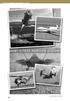 Defense Acquisition Review Journal 18 Image designed by Jim Elmore Joint Attack Munition Systems (JAMS) JOINT ATTACK MUNITION SYSTEMS (JAMS) PROJECT OFFICE IMPROVING SUPPORT TO THE WARFIGHTER Barry Beavers
DoD Financial Management Regulation Volume 2B, Chapter 9 +June 2004 CHAPTER 9 DEFENSE WORKING CAPITAL FUNDS ACTIVITY GROUP ANALYSIS Table of Contents
 DoD Financial Management Regulation Volume 2B, Chapter 9 +June 2004 CHAPTER 9 DEFENSE WORKING CAPITAL FUNDS ACTIVITY GROUP ANALYSIS Table of Contents 0901 GENERAL...1 090101 Purpose...1 090102 Background...1
Maintenance Operations. April 2014
 ATP 4-33 Maintenance Operations April 2014 DISTRIBUTION RESTRICTION: Approved for public release; distribution is unlimited. Headquarters, Department of the Army This publication is available at Army Knowledge
ARMY DEPOT MAINTENANCE ENTERPRISE
 ARMY DEPOT MAINTENANCE ENTERPRISE STRATEGIC PLAN 2008-2025 April 2008 HQDA G-4 DALO-MNN ARMY DEPOT MAINTENANCE ENTERPRISE STRATEGIC PLAN EXECUTIVE SUMMARY The critical role depot level maintenance plays
NAVY WORKING CAPITAL FUND. Budgeting for Carryover at Fleet Readiness Centers Could Be Improved
 United States Government Accountability Office Report to Congressional Requesters June 2015 NAVY WORKING CAPITAL FUND Budgeting for Carryover at Fleet Readiness Centers Could Be Improved GAO-15-462 June
Department of Defense INSTRUCTION
 Department of Defense INSTRUCTION NUMBER 4140.25 June 25, 2015 USD(AT&L) SUBJECT: DoD Management Policy for Energy Commodities and Related Services References: See Enclosure 1 1. PURPOSE. This instruction:
DEFENSE LOGISTICS. Actions Needed to Improve Department-Wide Management of Conventional Ammunition Inventory
 United States Government Accountability Office Report to the Chairman, Committee on Homeland Security and Governmental Affairs, U.S. Senate March 2014 DEFENSE LOGISTICS Actions Needed to Improve Department-Wide
U.S. Army TACOM Life Cycle Management Command Defense Logistics Agency Warren
 Doing Business with U.S. Army TACOM Life Cycle Management Command (TACOM LCMC) & Defense Logistics Agency Warren DLA-WRN John Madden TACOM LCMC Office of Small Business Programs Scott Rybicki DLA Warren
UNITED STATES ARMY MATERIEL COMMAND
 UNITED STATES ARMY MATERIEL COMMAND Academia Day March 2015- Huntsville, Alabama Creating A Passion for Federal Service THE UNITED STATES ARMY IS A FORTUNE 100 COMPANY (RANKED WITH BEST BUY AND DISNEY)
GAO FEDERAL PROPERTY DISPOSAL. Information on DOD s Surplus Property Program
 GAO United States General Accounting Office Testimony Before the Subcommittee on Government Management, Information, and Technology, Committee on Government Reform and Oversight, House of Representatives
CHAPTER 57 WORK IN PROCESS AND CONSTRUCTION IN PROCESS
 CHAPTER 57 WORK IN PROCESS AND CONSTRUCTION IN PROCESS A. WORK IN PROCESS 1. Contents of Work In Process. Defense Working Capital Fund (DWCF) activities, primarily those involved in depot maintenance or
Supply Inventory Management
 December 6, 2002 Supply Inventory Management Accountability and Control of Materiel at the Naval Air Depot, North Island (D-2003-033) Department of Defense Office of the Inspector General Quality Integrity
Improvement Needed for Inventory Management Practices on the T700 Technical, Engineering, and Logistical Services and Supplies Contract
 Inspector General U.S. Department of Defense Report No. DODIG-2015-050 DECEMBER 10, 2014 Improvement Needed for Inventory Management Practices on the T700 Technical, Engineering, and Logistical Services
Air Force Working Capital Fund
 Headquarters U.S. Air Force I n t e g r i t y - S e r v i c e - E x c e l l e n c e Air Force Working Capital Fund 22 April 2009 1 Overview Working Capital Fund (WCF) Operations Air Force WCF Changes Maintenance
U.S. Army Materiel Command
 U.S. Army Materiel Command AMC Office of Small Business Programs Nancy D. Small Director, OSBP Sustaining the Strength of the Nation! Biography Ms. Nancy D. Small HQ US Army Materiel Command Director,
DoD Financial Management Regulation Volume 3, Chapter 19 December 1996 CHAPTER 19 WORKING CAPITAL FUNDS
 DoD Financial Management Regulation Volume 3, Chapter 19 December 1996 CHAPTER 19 WORKING CAPITAL FUNDS 1901 GENERAL This chapter provides the policies and procedures to guide budget execution for working
DOD MANUFACTURING ARSENALS. Actions Needed to Identify and Sustain Critical Capabilities
 United States Government Accountability Office Report to Congressional Addressees November 2015 DOD MANUFACTURING ARSENALS Actions Needed to Identify and Sustain Critical Capabilities GAO-16-86 November
DEFENSE LOGISTICS AGENCY AMERICA S COMBAT LOGISTICS SUPPORT AGENCY
 DEFENSE LOGISTICS AGENCY AMERICA S COMBAT LOGISTICS SUPPORT AGENCY WARFIGHTER FOCUSED, GLOBALLY RESPONSIVE SUPPLY CHAIN LEADERSHIP Doing Business with DLA The Society of Military Engineers Fort Belvoir,
News January 27, 2016 Contact: Lucy Ryan Tel: 703 876 3631 [email protected]
 2941 Fairview Park Drive Suite 100 Falls Church, VA 22042-4513 www.generaldynamics.com News January 27, 2016 Contact: Lucy Ryan Tel: 703 876 3631 [email protected] General Dynamics Reports Fourth-Quarter,
DEPARTMENT OF DEFENSE AGENCY-WIDE FINANCIAL STATEMENTS OTHER ACCOMPANYING INFORMATION
 DEPARTMENT OF DEFENSE AGENCY-WIDE FINANCIAL STATEMENTS OTHER ACCOMPANYING INFORMATION 7-1 (This page intentionally left blank) 7-2 Department of Defense Appropriations, Funds, and Accounts Department of
DLA Corporate Intern Program
 DLA Corporate Intern Program The Program is a 2-year corporate training program designed to train entry-level personnel for subsequent advancement to the journey-level in professional, administrative,
SUPPLY CHAIN SERVICES
 EB-0-0 Exhibit F Schedule Page of SUPPLY CHAIN SERVICES INTRODUCTION Supply Chain supports THESL asset management plans by ensuring that all required goods and services are available when needed. Strong
GAO. DEFENSE INFRASTRUCTURE Funding Risks in Services 1999 Central Training Programs
 GAO United States General Accounting Office Report to the Chairman, Committee on the Budget, House of Representatives February 1999 DEFENSE INFRASTRUCTURE Funding Risks in Services 1999 Central Training
STATEMENT BY MAJOR GENERAL JUDD H. LYONS ACTING DIRECTOR, ARMY NATIONAL GUARD BEFORE THE U.S. HOUSE OF REPRESENTATIVES APPROPRIATIONS COMMITTEE
 STATEMENT BY MAJOR GENERAL JUDD H. LYONS ACTING DIRECTOR, ARMY NATIONAL GUARD BEFORE THE U.S. HOUSE OF REPRESENTATIVES APPROPRIATIONS COMMITTEE SUBCOMMITTEE ON DEFENSE FIRST SESSION, 114 TH CONGRESS ON
a GAO-06-530 GAO DEFENSE WORKING CAPITAL FUND Military Services Did Not Calculate and Report Carryover Amounts Correctly
 GAO United States Government Accountability Office Report to the Chairman, Subcommittee on Defense, Committee on Appropriations, House of Representatives June 2006 DEFENSE WORKING CAPITAL FUND Military
Flexible, Life-Cycle Support for Unique Mission Requirements
 Flexible, Life-Cycle Support for Unique Mission Requirements We Meet the Need Anytime, Anywhere, Any Mission The customers we serve are diverse and so are their requirements. Transformational logistics
Statement of. Vice Admiral William A. Brown, United States Navy. Deputy Commander, United States Transportation Command
 Statement of Vice Admiral William A. Brown, United States Navy Deputy Commander, United States Transportation Command Before the House Armed Services Committee Subcommittee on Seapower and Projection Forces
Management Discussion and Analysis of Financial Position and Operating Results
 Management Discussion and Analysis of Financial Position and Operating Results The purpose of this analysis is to provide the reader with an overview of how the financial position of Héroux-Devtek Inc.
OPNAVINST 4440.26A N4 5 Jun 2012. Subj: OPERATING MATERIALS AND SUPPLIES AND GOVERNMENT FURNISHED MATERIAL MANAGEMENT
 DEPARTMENT OF THE NAVY OFFICE OF THE CHIEF OF NAVAL OPERATIONS 2000 NAVY PENTAGON WASHINGTON, DC 20350-2000 OPNAVINST 4440.26A N4 OPNAV INSTRUCTION 4440.26A From: Chief of Naval Operations Subj: OPERATING
ABBREVIATIONS AND ACRONYMS
 ABBREVIATIONS AND ACRONYMS ABF Asset Balance File ADP Automated Data Processing AFMIS Army Food Management Information AMC Army Materiel Command AMDF Army Master Data File AN/ASN-86 Inertial Navigation
Department of Defense MANUAL. DoD Integrated Materiel Management (IMM) for Consumable Items: Reporting, Auditing, and Financial Management
 Department of Defense MANUAL NUMBER 4140.26-M, Volume 5 September 24, 2010 USD(AT&L) SUBJECT: DoD Integrated Materiel Management (IMM) for Consumable Items: Reporting, Auditing, and Financial Management
Defense Contract Management Agency Operation Enduring Freedom/Operation New Dawn Operation and Maintenance, Defense-Wide
 I. Description of Operations Financed: The DCMA maintains a presence in theater to support the Army s Logistics Civil Augmentation Program (LOGCAP) and Air Force Contract Augmentation Program (AFCAP),
Military Transactions
 8 Military Transactions In this section: Coverage and definitions Estimation methods overview U.S. receipts Transfers under U.S. military agency sales contracts U.S. payments Direct defense expenditures
CIMIP Phase II. Development Update. Pre-Decisional Working Paper
 CIMIP Phase II Development Update Comprehensive Inventory Management Improvement Supporting warfighter materiel readiness with prudent investment and management of resources. Before CIMIP CIMIP Phase I
Management of Items in the Defense Logistics Agency s Long-Term Storage Needs Improvement
 Inspector General U.S. Department of Defense Report No. DODIG-2016-036 DECEMBER 22, 2015 Management of Items in the Defense Logistics Agency s Long-Term Storage Needs Improvement INTEGRITY EFFICIENCY ACCOUNTABILITY
Simulation and Training Solutions
 Simulation and Training Solutions Strong Learning Experiences Available Nowhere Else Advancing Operational Readiness with Leading-Edge Simulation and Training The rapid evolution of military missions,
UNCLASSIFIED. FY 2016 Base FY 2016 OCO
 Exhibit R-2, RDT&E Budget Item Justification: PB 2016 Army : February 2015 2040: Research, Development, Test & Evaluation, Army / BA 7: Operational Systems Development COST ($ in Millions) Years FY 2014
U.S. Army Munitions Reporting System
 Army Regulation 700 19 Logistics U.S. Army Munitions Reporting System Headquarters Department of the Army Washington, DC 7 February 2008 UNCLASSIFIED SUMMARY of CHANGE AR 700 19 U.S. Army Munitions Reporting
DoD Financial Management Regulation Volume 2B, Chapter 9. CHAPTER 9 DEFENSE WORKING CAPITAL FUNDS ACTIVITY GROUP ANALYSIS Table of Contents
 DoD Financial Management Regulation Volume 2B, Chapter 9 CHAPTER 9 DEFENSE WORKING CAPITAL FUNDS ACTIVITY GROUP ANALYSIS Table of Contents 0901 GENERAL... 1 090101 Purpose... 1 090102 Background... 1 090103
GAO MILITARY AIRLIFT. DOD Should Take Steps to Strengthen Management of the Civil Reserve Air Fleet Program. Report to Congressional Committees
 GAO United States Government Accountability Office Report to Congressional Committees September 2009 MILITARY AIRLIFT DOD Should Take Steps to Strengthen Management of the Civil Reserve Air Fleet Program
California Department of Corrections and Rehabilitation Enterprise Information Services. Business Information System Project
 California Department of Corrections and Rehabilitation Enterprise Information Services Business Information System Project Initiation: January 2001 Completion: December 2012 2013 NASCIO Recognition Award
FUNDING FOR DEFENSE, HOMELAND SECURITY AND COMBATING TERRORISM SINCE 9-11: WHERE HAS ALL THE MONEY GONE?
 FUNDING FOR DEFENSE, HOMELAND SECURITY AND COMBATING TERRORISM SINCE 9-11: WHERE HAS ALL THE MONEY GONE? By Steven M. Kosiak The tragic events of September 11, 2001 have had a significant impact on federal
GAO INVENTORY MANAGEMENT. Greater Use of Best Practices Could Reduce DOD s Logistics Costs
 GAO For Release on Delivery Expected at 12:00 p.m., EDT Thursday, July 24, 1997 United States General Accounting Office Testimony Before the Subcommittee on National Security, International Affairs, and
National Contract Management Association SMALL BUSINESS IS BIG BUSINESS
 National Contract Management Association SMALL BUSINESS IS BIG BUSINESS Nancy D. Small Office Of Small Business Programs Headquarters, U.S. Army Materiel Command (AMC) 17 April 2014 Sustaining the Strength
Defense Logistics Agency Effectively Managed Continental U.S. Mission-Critical Batteries
 Report No. DoDIG-2014-032 I nspec tor Ge ne ral U.S. Department of Defense JA N UA RY 2 7, 2 0 1 4 Defense Logistics Agency Effectively Managed Continental U.S. Mission-Critical Batteries I N T E G R I
AFMAN 23-110, CD BASIC USAF SUPPLY MANUAL 1 April 2009 Incorporating Through Interim Change 11, 1 APRIL 2012
 AFMAN 23-110, CD BASIC USAF SUPPLY MANUAL 1 April 2009 Incorporating Through Interim Change 11, 1 APRIL 2012 FOREWORD (Summary of Changes) Summary of Changes (AF/A4LM) NEW Inventory Control Matrix AFILSEPL
VOLUME 4, CHAPTER 20: JOB ORDER COST ACCOUNTING SUMMARY OF MAJOR CHANGES. All changes are denoted by blue font.
 VOLUME 4, CHAPTER 20: JOB ORDER COST ACCOUNTING SUMMARY OF MAJOR CHANGES All changes are denoted by blue font. Substantive revisions are denoted by a * preceding the section, paragraph, table, or figure
Statement. Mr. Paul A. Brinkley Deputy Under Secretary of Defense for Business Transformation. Before
 Statement of Mr. Paul A. Brinkley Deputy Under Secretary of Defense for Business Transformation Before THE UNITED STATES SENATE ARMED SERVICES COMMITTEE (SUBCOMMITTEE ON READINESS AND MANAGEMENT SUPPORT)
WHITE PAPER. Reducing Inventories and Cost of Operations While Improving Customer Support
 WHITE PAPER Reducing Inventories and Cost of Operations While Improving Customer Support Applied Industrial Technologies Corporate Headquarters 1 Applied Plaza «Cleveland, OH 44115 216-426-4000 www.applied.com
United States Army Aviation & Missile Command Security Assistance Management Directorate IDEF
 United States Army Aviation & Missile Command Security Assistance Management Directorate May 2015 //FOUO Jeffrey K. Young Director, SAMD 1 U.S. Army Premier all Volunteer Force Soldiers Exhibiting Character,
Resources projected in the previous development plan and the reality
 NATIONAL DEFENCE DEVELOPMENT PLAN 2013-2022 Resources projected in the previous development plan and the reality 1. The previous 10-year development plan approved in 2009 (Military Defence Development
Defense Contract Management Agency (DCMA)
 Fiscal Year 2011 Budget Estimates Defense Contract Management Agency (DCMA) February 2010 DCMA 87 DEFENSE CONTRACT MANAGEMENT AGENCY (This page intentionally left blank.) DCMA 88 DEFENSE CONTRACT MANAGEMENT
CECOM Campaign Plan FY2013 2015 THE CRITICAL LINK
 CECOM Campaign Plan FY2013 2015 THE CRITICAL LINK Contents Overview Purpose Commander s Intent Vision Mission What We Do Where We Are Future Operating Environment & Impact on CECOM Army, AMC and CECOM
Logistics Courses. DLA Customer Assistance Logistics. Seminar length: 2 days Seminar number: MMSUP000005 Continuing Education Units: 1.
 DLA Customer Assistance Logistics Seminar length: 2 days Seminar number: MMSUP000005 Continuing Education Units: 1.6 Logistics Courses This seminar provides the participants with a broad overview of the
Department of Defense INSTRUCTION. SUBJECT: Depot Maintenance Core Capabilities Determination Process
 Department of Defense INSTRUCTION NUMBER 4151.20 January 5, 2007 USD(AT&L) SUBJECT: Depot Maintenance Core Capabilities Determination Process References: (a) DoD Directive 4151.18, Maintenance of Military
BlackBerry Reports Software and Services Growth of 106 Percent for Q4 and 113 Percent for Fiscal 2016
 April 1, FOR IMMEDIATE RELEASE BlackBerry Reports Software and Services Growth of 106 Percent for Q4 and 113 Percent for Fiscal Company reports positive free cash flow for eighth consecutive quarter and
DEPARTMENT OF THE NAVY FISCAL YEAR (FY) 2017 BUDGET ESTIMATES
 DEPARTMENT OF THE NAVY FISCAL YEAR (FY) 2017 BUDGET ESTIMATES JUSTIFICATION OF ESTIMATES FEBRUARY 2016 Operation & Maintenance, Marine Corps Reserve (OMMCR) The estimated cost for this report for the Department
OPNAVINST 3000.15A USFF/CNO N3/N5 10 Nov 2014
 DEPARTMENT OF THE NAVY OFFICE OF THE CHIEF OF NAVAL OPERATIONS 2000 NAVY PENTAGON WASHINGTON, DC 20350-2000 OPNAVINST 3000.15A USFF/CNO N3/N5 OPNAV INSTRUCTION 3000.15A From: Chief of Naval Operations
Costs of Major U.S. Wars
 Stephen Daggett Specialist in Defense Policy and Budgets June 29, 2010 Congressional Research Service CRS Report for Congress Prepared for Members and Committees of Congress 7-5700 www.crs.gov RS22926
Department of Human Resources
 Workforce Services Workforce Policy and Planning Department Management/ Human Resource Information Systems Employee Relations Employment Compensation and Workforce Analysis Employee Benefits Organizational
Factory to Foxhole: Improving the Army s Supply Chain
 Factory to Foxhole: Improving the Army s Supply Chain Mark Y.D. Wang RAND Corporation Santa Monica, CA On the surface, the end-to-end supply chain that procures and moves repair parts to support U.S. Army
Fiscal Year 2015 Integrated Financial Plan. 2015 Operating Plan 2015 Capital Plan 2015 Financing Plan
 Fiscal Year Integrated Financial Operating Capital Financing EXECUTIVE SUMMARY Despite the ongoing efforts A Deep Financial Hole (as of September 30, ) of the Postal Service to Liabilities exceed assets
BlackBerry Reports Strong Software Revenue and Positive Cash Flow for the Fiscal 2016 First Quarter
 FOR IMMEDIATE RELEASE June 23, BlackBerry Reports Strong Software Revenue and Positive Cash Flow for the Fiscal 2016 First Quarter Waterloo, ON BlackBerry Limited (NASDAQ: BBRY; TSX: BB), a global leader
GAO. Inventory System Checklist Systems Reviewed Under the Federal Financial Management Improvement Act of 1996. Financial Management Series
 GAO United States General Accounting Office Financial Management Series May 1998 Inventory System Checklist Systems Reviewed Under the Federal Financial Management Improvement Act of 1996 GAO/AIMD-98-21.2.4
Estimated Impacts of Sequestration-Level Funding
 Estimated Impacts of Sequestration-Level Funding UNITED STATES DEPARTMENT OF DEFENSE FISCAL YEAR 2015 BUDGET REQUEST APRIL 2014 The estimated cost of this report or study for the Department of Defense
Position Classification Flysheet for Logistics Management Series, GS-0346
 Position Classification Flysheet for Logistics Management Series, GS-0346 Table of Contents SERIES DEFINITION... 2 SERIES COVERAGE... 2 EXCLUSIONS... 4 DISTINGUISHING BETWEEN LOGISTICS MANAGEMENT AND OTHER
101000 Fund Balance With Treasury Debit 109000 Fund Balance With Treasury Under a Continuing Resolution Debit
 Account Number Title Normal Balance 100000 ASSETS 101000 Fund Balance With Treasury 109000 Fund Balance With Treasury Under a Continuing Resolution CASH 110100 General Fund Operating Cash 110300 Restricted
Fiscal Year 2015 Integrated Financial Plan
 Fiscal Year Integrated Financial Operating Capital Financing Integrated Financial EXECUTIVE SUMMARY Unaudited - A Deep Financial Hole (as of September 30, 2014) Liabilities exceed assets by approximately
JOINT STATEMENT COMMISSION ON WARTIME CONTRACTING
 JOINT STATEMENT COMMISSION ON WARTIME CONTRACTING TOTAL FORCE POLICY, THE QDR, AND OTHER DEFENSE OPERATIONAL PLANNING: WHY DOES PLANNING FOR CONTRACTORS CONTINUE TO LAG? JULY 12, 2010 Chairman Thibault,
Network Systems Integration
 Network Systems Integration Strong Networks for Mission-Critical Services Turnkey Solutions for Today s Large-Scale Networks Government and business enterprises turn to General Dynamics Information Technology
WEAPONS ACQUISITION REFORM
 GAO United States Government Accountability Office Report to the Committee on Armed Services, U.S. Senate September 2011 WEAPONS ACQUISITION REFORM Actions Needed to Address Systems Engineering and Developmental
Acquisition. Army Claims Service Military Interdepartmental Purchase Requests (D-2002-109) June 19, 2002
 June 19, 2002 Acquisition Army Claims Service Military Interdepartmental Purchase Requests (D-2002-109) Department of Defense Office of the Inspector General Quality Integrity Accountability Additional
Department of Defense Fiscal Year (FY) 2016 President's Budget Submission
 Department of Defense Fiscal Year (FY) 2016 President's Budget Submission February 2015 Defense Contract Management Agency Defense Wide Justification Book Volume 5 of 5 Research,, Test & Evaluation, Defense-Wide
Ministry of Defence. Managing the defence inventory. Methodology
 Ministry of Defence Managing the defence inventory Methodology JUNE 2012 2 Managing the defence inventory Methodology 1 This document accompanies Ministry of Defence: Managing the defence inventory, a