
Research on Chinese financial invoice recognition technology
|
|
|
- Ashley Williamson
- 9 years ago
- Views:
Transcription
1 Pattern Recognition Letters 24 (2003) Research on Chinese financial invoice recognition technology Delie Ming a,b, *, Jian Liu b, Jinwen Tian b a State Key Laboratory for Novel Software Technology, Nanjing University, Nanjing, , PRChina b Key Laboratory for Image Processing and Intelligent Control of the Education Department, Institute for Pattern Recognition and Artificial Intelligence, HUST, Wuhan, , PRChina Received 11 January 2002;received in revised form 5 June 2002 Abstract This paper designs and implements a financial invoice recognition system based on the features of the Chinese financial invoice. By using the linear whole block moving method in each vertical segment, a new fast algorithm is put forth to detect and rectify the slant image. To distinguish the different form types (the foundation necessary for locating the form fields, filtering the form lines, etc.), several representative form features are discussed and an invoice-type features library is built by using a semi-automatic machine study method. On the basis of the recognized invoice type, real invoice form is re-oriented against the corresponding blank form according to the invoice-type feature, solving the problem of adhesion of characters and form lines, as well as the problem of characters segmentation and recognition. Based on the financial Chinese invoice image feature, a mutual rectification mechanism founded on the recognition results of financial Chinese characters and Arabic numerals is put forward to raise the recognition rate. Finally, the experimental results and conclusions are presented. Ó 2002 Elsevier Science B.V. All rights reserved. Keywords: Financial invoice recognition;characters segmentation;optical character recognition;mutual rectification mechanism; Slant-image rectification 1. Introduction Invoices, as one of the main information carriers, exist in many aspects of our daily lives. Banks, revenue bureaus, finance and accounting departments use all kinds of invoices as a medium for * Corresponding author. Tel.: / addresses: [email protected], mingdelie@ 263.net (D. Ming). fund circulation and account settlement. Although these departments have long used computers to process data, billing data are still inputted manually from a keyboard. With the development of the social economy, the number of invoices will grow dramatically. The slow manual data input method has become a bottleneck of high-speed data process (Bunke, 1982;Fletcher and Katsuri, 1987). Besides high-speed inputting, the requirement of accurate data entry is essential. Not a single numeral error is acceptable. Any error must be /03/$ - see front matter Ó 2002 Elsevier Science B.V. All rights reserved. PII: S (02)

2 490 D. Ming et al. / Pattern Recognition Letters 24 (2003) immediately corrected, or the account cannot be settled. In recent years, with the development of optical character recognition (OCR) technology, the techniques of handwritten Chinese characters and Arabic numerals recognition have made great progress. Ming et al. (2000a,b) reported that the accurate rate of single handwritten financial Chinese characters reached 99%, and the rate of single unconstrained handwritten numerals was above 97%. Single character recognition speed is higher than 100 characters per second on a Pentium II PC. Because Chinese characters and Arabic numerals are filled in columns on invoices, it is essential to have automatic inspection after recognition. With the fast development of OCR technology and document analysis and segmentation technology, invoice processing has come to be an important branch of image processing and pattern recognition. This paper proposes an integrated set of solution blue print on Chinese financial invoice recognition, which can automatically input financial Chinese characters and Arabic numerals from invoices into the computer. (Fig. 1 shows the flow chart of the bill recognition system). The dot matrix image of an invoice is scanned into the computer. After preprocessing, the whole image is adjusted to horizontal by reversing according to the calculated inclination angle, and the noise in the image is also removed. Then based on the invoice feature extraction, the invoice-type recognition is done. If the invoice is an unknown type, the feature data of the invoice is extracted and stored into a form type feature library. Otherwise, under the guidance of the form type feature, the handwritten financial character fields and numeral fields are separated from the background of the invoice. Individual characters are then separated and recognized. However, the invoice recognition process does not end here. Before inputting the recognition result into computer database, a mutual rectification mechanism based on the one-to-one correspondence relationship between financial Chinese characters and Arabic numerals, is applied to the recognition results to raise the recognition rate. 2. Preprocessing A financial invoice usually has items such as bill name, special icon, and form columns. This paper discusses the kind of invoice that can be processed as binary value. The preprocessing includes three parts Smooth processing As soon as the form image is scanned into the computer, a trembling processing is carried out in the directions of up, down, left, and right (see Fig. 2). First, we generate four new image matrices by shifting the original image matrix two pixels in upward, downward, leftward, and rightward direction respectively. Then, the intersection of five image matrices is worked out as the resulting image matrix. This process can get rid of disturbance effectively and make the image fringe smoother. Compared with traditional median filter, the trembling process can get the same result in comparatively less time Image inclination angle testing Fig. 1. Flow chart of bill recognition system. Image slant in the financial invoice recognition system can be divided into two types. One is the

3 D. Ming et al. / Pattern Recognition Letters 24 (2003) Fig. 3. Line slope calculation model. whole image slant that is caused by the scanning process and the invoiceõs printed quality and the other is local handwritten characterõs slant caused by the personal handwriting quality. We will discuss the two types of slant in the following part The whole image s inclination angle testing Based on the features of the text image in character recognition system, a new algorithm is put forth to detect and rectify the slant image. By using the linear whole block moving method in each vertical segment, this algorithm effectively overcomes the unfavorable fuzzy influence brought by the geometrical rectification, and greatly enhances the executive speed of slant rectification. During the rectification process, this algorithm keeps the forms topology structure unchanged by adding points in the rotating processing thereby facilitating the succeeding location process for each interested form field. The following is the algorithm for calculating the inclination angle of the image. (A) Scan the image row by row, search for the horizontal line segments using Eq. (1),! "! # X n X j x i > an or ¼ j and ðj P mþ Fig. 2. Trembling processing sketch map. ð1þ where x i (¼ 0; 1) stands for the image information of B&W Images, N is the width of the image, and the values of n (n 6 N), a (0 < a 6 1) and m (0 < m 6 N) are obtained by studying bills of the same type. x i (B) Determine succession of the adhesive line segments. If they are in succession, join all contiguous segments into one segment and mark it. (C) Line slope calculation. As shown in Fig. 3, the rectangle stands for a line i. If the width of the rectangle is w i, height is h i (w i h i ), slope is k i, area is s i, and the number of rows and columns occupied by line i are h and w respectively, then area s can be presented as s ¼ wh ¼ s i þ S Dabc þ S Defg þ S Dcde þ S Dghb ¼ s i þ 2 S Dabc þ 2 S Dcde s i þðh i k i Þh i þðw i k i Þw i s i þ k i ðh 2 i þ w 2 i Þ From Eq. (2), k i can be obtained easily as ð2þ k i ¼ðwh s i Þ=ðh 2 i þ w 2 i Þ ð3þ (D) Image inclination slope. The image inclination slope is obtained from Eq. (4),, k ¼ Xn X n w i k i w i ð4þ where n is the number of horizontal lines of the whole image Local handwritten characters inclination angle testing The following is the algorithm for calculating the inclination angle of local handwritten characters. Detailed algorithm implementation can also be found in (Ming et al., 2000a,b). (A) Tracing the blank rectangle bar. First, segment the image matrix vertically. The width of each segment depends on the form image quality. To get the accurate inclination angle of the image, the width of each segment must not be set too wide. In our system, we set the width of each segment to 20 pixels (300 DPI).

4 492 D. Ming et al. / Pattern Recognition Letters 24 (2003) Second, from top to bottom, scanning the image row by row in each vertical segment, searching for the blank rectangle bar (the blank rectangle bar consecutive background area in each vertical segment). Third, filter some irrespective blank rectangle bars. Because not all of the blank rectangle bars searched out in the last step contribute to the calculation of the inclination angle of the image, we must remove the blank rectangle bar that may affect the following calculation and increase the unnecessary quantum of calculation. Fig. 4 shows the blank rectangle bar tracing result in a form field. (B) Calculating the average image inclination fall. To illustrate this step, inspect the procedure of calculating the average image inclination fall between M 1 and M 2 which are adjacent vertical segments ðm 2 ¼ M 1 þ 1Þ. Ifn 1 and n 2 are bar number of M 1 and M 2 respectively, using the little one as the radix (assuming n 1 < n 2 ), to each blank bar in M 1, searching for the corresponding adjacent blank bar in M 2. The rule of correspondence lies in the following two points. First, the heights of the two blank bars are similar. Second, the two blank bars are adjacent and interlaced vertically. After matching each bar between M 1 and M 2, the fall Dh 12 between the two segments can be calculated out by formula (5) Dh 12 ¼ Xn ðx i y i Þ=n; n 6 minðn 1 ; n 2 Þ ð5þ In formula (5), x i and y i are the central lines of a pair of matched bar between two adjacent segments, n is the sum of matched bar pairs between M 1 and M 2. Fig. 4. The blank rectangle bar tracing result. The whole image inclination fall is presented in formula (6). In it, n is the number of vertical segments, Dh i;ðiþ1þ is the fall between adjacent vertical segments i and i þ 1 S ¼ Xn 1 Dh i;ðiþ1þ ð6þ S is used to reflect the total fall between two ends of the image in horizontal direction. We set a threshold value in our program to evaluate the degree of incline (see formula (6)). If the absolute value of S falls below the threshold, it means that the incline degree of the image is within accepted tolerance. If the absolute value of S is bigger than the threshold, it means that slope adjustment must be done. In this situation, further judgment about the direction of incline can be performed. If the value of S is positive, it is clockwise inclined. If the value of S is negative, it is counter-clockwise inclined. The threshold is an experiential value. In our system, we set the threshold value to 15 (pixels) for images of 300 DPI resolution 8 < S > threshold clockwise inclining threshold 6 S 6 threshold no inclining : S < threshold counter-clockwise inclining 2.3. Image slope adjustment The image slope adjustment is actually a coordinate rotate transformation. Assume that ðx; yþ is the source coordinates of point P, and ðx 0 ; y 0 Þ is the object coordinates, then the image slope adjustment of random slant angle of h is processed by using formula (7) x 0 ¼ x cos h y sin h y 0 ð7þ ¼ y cos h þ x sin h In the image the positive direction of y-axis is downwards, so the positive direction of h is clockwise. We have developed a fast rotate algorithm for images with slope less than 5. The invoice imageõs topology structure is kept unchanged by adding points in the rotating process. Now we assume the invoice image inclines clockwise, and the fall between the two side of

5 D. Ming et al. / Pattern Recognition Letters 24 (2003) Fig. 5. The linear whole block moving algorithm. the image is S. We cut the image to S segments vertically. The width of each segment is Image Width=S. From left to right, we lift each segment up K pixels (K ¼ 1; 2;...; S). In order to keep the formõs topology structure unchanged, we add points in the lifting processing. After rectifying the image vertically, we must do the same horizontally with the top-to-bottom fall S 1 (¼ Image Height S=Image Width). Fig. 5 is the sketch map of the linear whole block moving algorithm. 3. Form type feature extraction and recognition Green and Krishnamoorthy (1995) mentioned that, in order to put the system into practical use, it must have the ability to distinguish different bill types, locating the form fields, filtering the form lines, etc. To achieve this target, a form feature library is established to record the features of any new type of form entered into the system. In the process of the construction of the form feature library, correct form feature extraction is the key. In the process of form feature extraction, an invoice form study mechanism is set up to let the computer remember all types of form type features. The form study serves three functions. First, it can recognize the invoice image inputted according to type features. Second, it can locate the filled fields of an invoice form at a high-speed extracting the useful information from the filled fields. And third, it can reconstruct the invoice form with high quality Extracting primary features of bill image interactively A well-printed blank invoice is used as the study sampler. After scanning into computer, the invoice will go through smooth and slope adjustment preprocessing. The invoiceõs name field and special icon field are specified interactively. The computer establishes the original point of image, and marks the name field, special icon field and the coordinate positions of the out frame of the form. The computer automatically searches for the horizontal and vertical lines from the form image. After the computer finishes the study process, the study results are displayed and will be confirmed manually item by item Identifying fixed field features The fixed field features are the printed sections of an invoice form. The sections are designed for the invoice managers to get the needed information. They usually include the form name, special icon, form columns, description of the contents in each column, verification rules and etc. Other commonly used features include numbers of vertical and horizontal lines, the space between adjacent form lines, the size and location of special icon field, the number of columns and other original printed information on the invoice images. Besides the features mentioned above, a new type of form feature is put forward to reflect the planar distribution of form texture which is made up of form lines, special icons, form titles and other originally printed form information. In practical use, this new feature has been proven to be stable and correct, and most importantly, can be easily extracted. The purpose of identifying the fixed field features is to describe a blank invoice form (an unused form) exactly by using a suitable data structure, and to create blank form information file. The form type features library will be stored in a file as the basis for quantitative analysis in the following process for each item in the invoice. We have designed two record files to store the information of the fixed features. File record1 is a file of fixed size, while record2 is a file of variable size. The size of record2 is stored in bytes of record1. The file format of record1 is shown in Table 1. The size of the name field and the special icon field are expressed by the top-left corner coordinate and bottom-right corner coordinate of its

6 494 D. Ming et al. / Pattern Recognition Letters 24 (2003) Table 1 Blank form identification information Byte number Content 1 2 Scan precision (DPI/mm) 3 10 Name field Special icon field Number of vertical lines Number of horizontal lines Number of columns Length of record2 file frame. If there is no special icon field, the corresponding column of Table 1 is filled by zero. Record2 is created according to the following algorithm: (A) Record the coordinates of every vertical or horizontal lineõs top left corner and bottom right corner in turn. For the horizontal line, Dx is its length and Dy is its width. For the vertical line, Dy is its length and Dx is its width. Finally store the number of vertical lines and horizontal lines in bytes and bytes of record1. (B) Using columns traversal algorithm to code the columns one by one. Record the coordinates of every columnõs top left and bottom right corners. (C) Search for every column and query the number of characters in every column. Store the number in the column attribute table. Record the coordinates of the top left and bottom right corners of circumventing rectangle of every character. (D) Extract the distance between the edge of the name field and the special icon field and the circumventing rectangles of these fields. This distance will be used in the invoice-type recognition. Fig. 6 is a sample blank form, which is created after machine study. This is also a typical invoice form used in Chinese financial systems. 4. Locating real form against blank form Real form is an invoice form with data filled in according to the bill identifier column. The differential form is the remainder of a real form after the blank form section has been filtered out. The differential form will be recognized by computer (Karima et al., 1985;Mori and Sakura, 1984; Pavlidis, 1986) Real form type recognition Load the type features of all invoice form types into the computer, matching them with the newly imported real form by their name field, special icon field and circumventing frame size. The matching weight coefficient is higher for the special icon field feature. Use the form type with minimum distance as the result for the type of invoice to be recognized Re-orienting real form against blank form The real form is interpolated according to the recognized form type and its type features. In the Fig. 6. A sample blank form.

7 D. Ming et al. / Pattern Recognition Letters 24 (2003) Fig. 7. An example of the real form relevant to the type shown in Fig. 6. interpolation process, be attentive to eliminating the cumulative errors and adding points to the relevant portion to ensure that the form lines and the topology structure of characters to be recognized are unchanged. After the real form is reoriented against the blank form, the invoice name field and special icon field are eliminated first. The width of the blank formõs horizontal lines and vertical lines should be expanded to cover the corresponding lines of the real form, so the corresponding background field in the real form can be fully filtered out. Finally all characters in the identified column are eliminated. When eliminating the formõs horizontal and vertical lines, take special care of the adhesion between character and form line segment (Pizano, 1990;Shih and Katsuri, 1988). If a horizontal (or vertical) line crosses the strokes of the characters, they can be corrected easily by combining the up and down strokes if they are cut by a horizontal line, or by combining the left and right strokes if they are cut by a vertical line. The processing will become more difficult if the form lines are tangential to character strokes. In this case we should examine how much the lineõs skeleton deviate from horizontal (or vertical) lineõs center, and then combine the tangential stroke segments by adding points accordingly. After the above processing, we can obtain a differential form that is only constructed by user filled parts. Fig. 7 is an example of the real form Fig. 8. A differential form that is obtained by eliminating the blank form information from the re-oriented real form. relevant to the type that is shown in Fig. 6. Fig. 8 is a differential form that is obtained by eliminating the blank form information from the re-oriented real form. 5. Characters segmentation and recognition In Section 4, our aim is to accurately locate each form field to extract an intact character string in each field. Based on the recognized form type, the real form whose fields are filled with information character strings are re-oriented against the corresponding blank form. This will contribute to solving the problem of adhesion of characters and form lines, and the form lines and other intrinsic form information can also be easily filtered. The following step segments the character string extracted from each form field and

8 496 D. Ming et al. / Pattern Recognition Letters 24 (2003) Fig. 9. The one-to-one corresponding relationship between financial Chinese characters and Arabic numeral in financial Chinese invoices. passes each individual character to the OCR engine. Because the method of single Chinese character and numeral recognition has been discussed by Lou and Hu (1998) and Hu and Yang (1996), it would not be described here in detail. It is remarkable, however, because several methods, such as background features, the distribution of outlineõs convex and concave, local field features, and left right profile, were used in the numeral recognition. Thus, we were able to remark the reliability of the recognition result. There may be adhesion between neighboring handwritten financial Chinese characters. On the other hand, some financial Chinese characters are constructed by left and right parts (e.g. Chinese equivalent of the Arabic numeral ten ), or even by left, middle and right parts (e.g. Chinese equivalent of the Arabic numeral eight ). In these cases, to correctly segment every financial Chinese character becomes critical in order to enhance the accurate recognition rate of the system. In this system, two measurements are adopted to ensure there is no segmentation error. (A) According to the length of the Arabic numeral string, search for the relevant unit words within financial Chinese characters. Use the minimum distance principle to separate these unit words. (B) When recognizing single financial Chinese character, raise the weighted coefficient of distance of every financial Chinese characterõs left and right strokes. Take the minimum value of total distance of the whole character string as a standard, then determine the final recognition result. After the financial characters and Arabic numerals are recognized separately, we can determine the final recognition result (the sum of a typical invoice image) according to the following two factors: (A) The reliability of every financial Chinese character and the relevant Arabic numeral. The reliability measurement of each financial Chinese character and the relevant Arabic numeral as presented by the recognition algorithm. (B) The corresponding relationship between Chinese character and Arabic numeral presentation of the sum of the bill image. The corresponding relationship between financial Chinese characters and Arabic numeral in commonly used financial Chinese invoices is shown in Fig. 9. Based on the financial Chinese invoice image feature, a mutual rectification mechanism based on the recognition results of financial Chinese characters and Arabic numerals is put forward to raise the recognition rate. Because there is a one-to-one corresponding relationship between financial Chinese characters and Arabic numeral in financial Chinese invoices, it is possible to raise the accuracy rate for Arabic numerals by reducing its search area using the recognition result of corresponding financial Chinese characters. This method is the same with financial Chinese characters. Fig. 10 is an example of the real form relevant to the bill that is shown in Fig. 7. After the process of the mutual rectification mechanism, the final recognition result is inputted Fig. 10. One-to-one corresponding relationship sample in real financial bills.

9 D. Ming et al. / Pattern Recognition Letters 24 (2003) Table 2 Experimental test results Recognition resultsõ accuracy rate invoice type Accuracy rate of single financial handwritten Chinese character (%) Accuracy rate of single financial handwritten Arabic numeral (%) Accuracy rate of the ultimate invoiceõs par value before rectification (%) Type Type Type Type Type Type Type Type Type Type Accuracy rate of the ultimate invoiceõs par value after rectification (%) into computer database and used in all kinds of statistical operations. 6. Experimental results and conclusions In detailed technical approach, the system has been programmed and implemented according to the aforesaid proposal. To testify the validity of our method, we implemented and tested the system with more than 1000 pieces of forms of more than ten different types selected randomly from different departments, and gained a satisfying result. We implement the system on a PII 400 MHz PC, and scanned the invoice form into the computer with the resolution of 300 DPI. The average time for recognizing one invoice form is about s. Table 2 shows the experimental results. The test results shows that after adopting the supervised studying method to acquire the form type features library, the image of the blank form can be eliminated from a real form effectively. The accuracy rate of single financial Chinese character and Arabic numeral recognition keeps steady. After the mutual rectification process between the recognition result of financial Chinese characters and Arabic numerals, we can raise the invoiceõs recognition accuracy rate significantly. The adhesion of form line and characters make character segmentation difficult, becoming a major factor in decreasing the recognition rate. However, further improvement is still needed. References Bunke, H., Automatic interpretation of text and graphics in circuit diagrams. Pattern Recogn. Theory Appl., Fletcher, L.A., Katsuri, R., Segmentation of binary images into text strings and graphics. SPIE Appl. Artif. Intell. 786, Green, E., Krishnamoorthy, M., Model-based analysis of printed tables. In: International Conference on Document Analysis and Recognition, 1, pp Hu, J., Yang, X., Handwritten Chinese character recognition system. J. Software (10), Karima, M., Sadahl, K.S., McNeil, T.O., From paper drawings to computer aided design. IEEE Comput. Graphics Appl., Lou, X., Hu, J., The segmentation and recognition of unconstrained handwritten numerals. In: The Latest Development of Computer Intelligent Interface and Intelligent Applications, 1, pp Ming, D., Liu, J., Hu, J., 2000a. An improved algorithm for handwritten Chinese text segmentation. J. Huazhong Univ. Sci. Technol. 28 (2), Ming, D., Liu, J., Hu, J., 2000b. The slanting image detecting and rectifying technology in OCR system. J. Huazhong Univ. Sci. Technol. 28 (5), Mori, S., Sakura, T., Line filtering and its application to stroke segmentation of hand-printed Chinese characters. In: Proceedings of the 7th International Conference on Pattern Recognition, pp Pavlidis, T., A vectorizer and feature extractor for document recognition. Comput. Vision Graphics Image Process. (35), Pizano, A., A line recognition algorithm for business form processing. Technical Report SRC901101, Ricoh Corporation Software Research Center, Santa Clara, CA, November Shih, C.C., Katsuri, R., Generation of a line description file for graphics recognition. SPIE Appl. Artif. Intell. 937,

ECE 533 Project Report Ashish Dhawan Aditi R. Ganesan
 Handwritten Signature Verification ECE 533 Project Report by Ashish Dhawan Aditi R. Ganesan Contents 1. Abstract 3. 2. Introduction 4. 3. Approach 6. 4. Pre-processing 8. 5. Feature Extraction 9. 6. Verification
The Role of Size Normalization on the Recognition Rate of Handwritten Numerals
 The Role of Size Normalization on the Recognition Rate of Handwritten Numerals Chun Lei He, Ping Zhang, Jianxiong Dong, Ching Y. Suen, Tien D. Bui Centre for Pattern Recognition and Machine Intelligence,
Recognition Method for Handwritten Digits Based on Improved Chain Code Histogram Feature
 3rd International Conference on Multimedia Technology ICMT 2013) Recognition Method for Handwritten Digits Based on Improved Chain Code Histogram Feature Qian You, Xichang Wang, Huaying Zhang, Zhen Sun
Face detection is a process of localizing and extracting the face region from the
 Chapter 4 FACE NORMALIZATION 4.1 INTRODUCTION Face detection is a process of localizing and extracting the face region from the background. The detected face varies in rotation, brightness, size, etc.
GeoGebra. 10 lessons. Gerrit Stols
 GeoGebra in 10 lessons Gerrit Stols Acknowledgements GeoGebra is dynamic mathematics open source (free) software for learning and teaching mathematics in schools. It was developed by Markus Hohenwarter
Online Farsi Handwritten Character Recognition Using Hidden Markov Model
 Online Farsi Handwritten Character Recognition Using Hidden Markov Model Vahid Ghods*, Mohammad Karim Sohrabi Department of Electrical and Computer Engineering, Semnan Branch, Islamic Azad University,
Automatic Extraction of Signatures from Bank Cheques and other Documents
 Automatic Extraction of Signatures from Bank Cheques and other Documents Vamsi Krishna Madasu *, Mohd. Hafizuddin Mohd. Yusof, M. Hanmandlu ß, Kurt Kubik * *Intelligent Real-Time Imaging and Sensing group,
Visual Structure Analysis of Flow Charts in Patent Images
 Visual Structure Analysis of Flow Charts in Patent Images Roland Mörzinger, René Schuster, András Horti, and Georg Thallinger JOANNEUM RESEARCH Forschungsgesellschaft mbh DIGITAL - Institute for Information
Solving Simultaneous Equations and Matrices
 Solving Simultaneous Equations and Matrices The following represents a systematic investigation for the steps used to solve two simultaneous linear equations in two unknowns. The motivation for considering
Chapter 2 The Research on Fault Diagnosis of Building Electrical System Based on RBF Neural Network
 Chapter 2 The Research on Fault Diagnosis of Building Electrical System Based on RBF Neural Network Qian Wu, Yahui Wang, Long Zhang and Li Shen Abstract Building electrical system fault diagnosis is the
Open Access A Facial Expression Recognition Algorithm Based on Local Binary Pattern and Empirical Mode Decomposition
 Send Orders for Reprints to [email protected] The Open Electrical & Electronic Engineering Journal, 2014, 8, 599-604 599 Open Access A Facial Expression Recognition Algorithm Based on Local Binary
A Method of Caption Detection in News Video
 3rd International Conference on Multimedia Technology(ICMT 3) A Method of Caption Detection in News Video He HUANG, Ping SHI Abstract. News video is one of the most important media for people to get information.
 Tracking Moving Objects In Video Sequences Yiwei Wang, Robert E. Van Dyck, and John F. Doherty Department of Electrical Engineering The Pennsylvania State University University Park, PA16802 Abstract{Object
Hybrid Lossless Compression Method For Binary Images
 M.F. TALU AND İ. TÜRKOĞLU/ IU-JEEE Vol. 11(2), (2011), 1399-1405 Hybrid Lossless Compression Method For Binary Images M. Fatih TALU, İbrahim TÜRKOĞLU Inonu University, Dept. of Computer Engineering, Engineering
Signature verification using Kolmogorov-Smirnov. statistic
 Signature verification using Kolmogorov-Smirnov statistic Harish Srinivasan, Sargur N.Srihari and Matthew J Beal University at Buffalo, the State University of New York, Buffalo USA {srihari,hs32}@cedar.buffalo.edu,[email protected]
Keywords image processing, signature verification, false acceptance rate, false rejection rate, forgeries, feature vectors, support vector machines.
 International Journal of Computer Application and Engineering Technology Volume 3-Issue2, Apr 2014.Pp. 188-192 www.ijcaet.net OFFLINE SIGNATURE VERIFICATION SYSTEM -A REVIEW Pooja Department of Computer
Super-resolution method based on edge feature for high resolution imaging
 Science Journal of Circuits, Systems and Signal Processing 2014; 3(6-1): 24-29 Published online December 26, 2014 (http://www.sciencepublishinggroup.com/j/cssp) doi: 10.11648/j.cssp.s.2014030601.14 ISSN:
Analecta Vol. 8, No. 2 ISSN 2064-7964
 EXPERIMENTAL APPLICATIONS OF ARTIFICIAL NEURAL NETWORKS IN ENGINEERING PROCESSING SYSTEM S. Dadvandipour Institute of Information Engineering, University of Miskolc, Egyetemváros, 3515, Miskolc, Hungary,
How To Fix Out Of Focus And Blur Images With A Dynamic Template Matching Algorithm
 IJSTE - International Journal of Science Technology & Engineering Volume 1 Issue 10 April 2015 ISSN (online): 2349-784X Image Estimation Algorithm for Out of Focus and Blur Images to Retrieve the Barcode
Binary Image Scanning Algorithm for Cane Segmentation
 Binary Image Scanning Algorithm for Cane Segmentation Ricardo D. C. Marin Department of Computer Science University Of Canterbury Canterbury, Christchurch [email protected] Tom
Reflection and Refraction
 Equipment Reflection and Refraction Acrylic block set, plane-concave-convex universal mirror, cork board, cork board stand, pins, flashlight, protractor, ruler, mirror worksheet, rectangular block worksheet,
Understand the Sketcher workbench of CATIA V5.
 Chapter 1 Drawing Sketches in Learning Objectives the Sketcher Workbench-I After completing this chapter you will be able to: Understand the Sketcher workbench of CATIA V5. Start a new file in the Part
Automatic Calibration of an In-vehicle Gaze Tracking System Using Driver s Typical Gaze Behavior
 Automatic Calibration of an In-vehicle Gaze Tracking System Using Driver s Typical Gaze Behavior Kenji Yamashiro, Daisuke Deguchi, Tomokazu Takahashi,2, Ichiro Ide, Hiroshi Murase, Kazunori Higuchi 3,
Relating Vanishing Points to Catadioptric Camera Calibration
 Relating Vanishing Points to Catadioptric Camera Calibration Wenting Duan* a, Hui Zhang b, Nigel M. Allinson a a Laboratory of Vision Engineering, University of Lincoln, Brayford Pool, Lincoln, U.K. LN6
Thresholding technique with adaptive window selection for uneven lighting image
 Pattern Recognition Letters 26 (2005) 801 808 wwwelseviercom/locate/patrec Thresholding technique with adaptive window selection for uneven lighting image Qingming Huang a, *, Wen Gao a, Wenjian Cai b
3D Scanner using Line Laser. 1. Introduction. 2. Theory
 . Introduction 3D Scanner using Line Laser Di Lu Electrical, Computer, and Systems Engineering Rensselaer Polytechnic Institute The goal of 3D reconstruction is to recover the 3D properties of a geometric
A Reliability Point and Kalman Filter-based Vehicle Tracking Technique
 A Reliability Point and Kalman Filter-based Vehicle Tracing Technique Soo Siang Teoh and Thomas Bräunl Abstract This paper introduces a technique for tracing the movement of vehicles in consecutive video
Determining the Resolution of Scanned Document Images
 Presented at IS&T/SPIE EI 99, Conference 3651, Document Recognition and Retrieval VI Jan 26-28, 1999, San Jose, CA. Determining the Resolution of Scanned Document Images Dan S. Bloomberg Xerox Palo Alto
13.4 THE CROSS PRODUCT
 710 Chapter Thirteen A FUNDAMENTAL TOOL: VECTORS 62. Use the following steps and the results of Problems 59 60 to show (without trigonometry) that the geometric and algebraic definitions of the dot product
ADVANCES IN AUTOMATIC OPTICAL INSPECTION: GRAY SCALE CORRELATION vs. VECTORAL IMAGING
 ADVANCES IN AUTOMATIC OPTICAL INSPECTION: GRAY SCALE CORRELATION vs. VECTORAL IMAGING Vectoral Imaging, SPC & Closed Loop Communication: The Zero Defect SMD Assembly Line Mark J. Norris Vision Inspection
Poker Vision: Playing Cards and Chips Identification based on Image Processing
 Poker Vision: Playing Cards and Chips Identification based on Image Processing Paulo Martins 1, Luís Paulo Reis 2, and Luís Teófilo 2 1 DEEC Electrical Engineering Department 2 LIACC Artificial Intelligence
Medical Image Segmentation of PACS System Image Post-processing *
 Medical Image Segmentation of PACS System Image Post-processing * Lv Jie, Xiong Chun-rong, and Xie Miao Department of Professional Technical Institute, Yulin Normal University, Yulin Guangxi 537000, China
Vision based Vehicle Tracking using a high angle camera
 Vision based Vehicle Tracking using a high angle camera Raúl Ignacio Ramos García Dule Shu [email protected] [email protected] Abstract A vehicle tracking and grouping algorithm is presented in this work
5.3 The Cross Product in R 3
 53 The Cross Product in R 3 Definition 531 Let u = [u 1, u 2, u 3 ] and v = [v 1, v 2, v 3 ] Then the vector given by [u 2 v 3 u 3 v 2, u 3 v 1 u 1 v 3, u 1 v 2 u 2 v 1 ] is called the cross product (or
Document Image Retrieval using Signatures as Queries
 Document Image Retrieval using Signatures as Queries Sargur N. Srihari, Shravya Shetty, Siyuan Chen, Harish Srinivasan, Chen Huang CEDAR, University at Buffalo(SUNY) Amherst, New York 14228 Gady Agam and
A PHOTOGRAMMETRIC APPRAOCH FOR AUTOMATIC TRAFFIC ASSESSMENT USING CONVENTIONAL CCTV CAMERA
 A PHOTOGRAMMETRIC APPRAOCH FOR AUTOMATIC TRAFFIC ASSESSMENT USING CONVENTIONAL CCTV CAMERA N. Zarrinpanjeh a, F. Dadrassjavan b, H. Fattahi c * a Islamic Azad University of Qazvin - [email protected]
Parallel Data Selection Based on Neurodynamic Optimization in the Era of Big Data
 Parallel Data Selection Based on Neurodynamic Optimization in the Era of Big Data Jun Wang Department of Mechanical and Automation Engineering The Chinese University of Hong Kong Shatin, New Territories,
An Energy-Based Vehicle Tracking System using Principal Component Analysis and Unsupervised ART Network
 Proceedings of the 8th WSEAS Int. Conf. on ARTIFICIAL INTELLIGENCE, KNOWLEDGE ENGINEERING & DATA BASES (AIKED '9) ISSN: 179-519 435 ISBN: 978-96-474-51-2 An Energy-Based Vehicle Tracking System using Principal
FUZZY CLUSTERING ANALYSIS OF DATA MINING: APPLICATION TO AN ACCIDENT MINING SYSTEM
 International Journal of Innovative Computing, Information and Control ICIC International c 0 ISSN 34-48 Volume 8, Number 8, August 0 pp. 4 FUZZY CLUSTERING ANALYSIS OF DATA MINING: APPLICATION TO AN ACCIDENT
Signature Region of Interest using Auto cropping
 ISSN (Online): 1694-0784 ISSN (Print): 1694-0814 1 Signature Region of Interest using Auto cropping Bassam Al-Mahadeen 1, Mokhled S. AlTarawneh 2 and Islam H. AlTarawneh 2 1 Math. And Computer Department,
3.2 Sources, Sinks, Saddles, and Spirals
 3.2. Sources, Sinks, Saddles, and Spirals 6 3.2 Sources, Sinks, Saddles, and Spirals The pictures in this section show solutions to Ay 00 C By 0 C Cy D 0. These are linear equations with constant coefficients
INTRODUCTION TO RENDERING TECHNIQUES
 INTRODUCTION TO RENDERING TECHNIQUES 22 Mar. 212 Yanir Kleiman What is 3D Graphics? Why 3D? Draw one frame at a time Model only once X 24 frames per second Color / texture only once 15, frames for a feature
Arrangements And Duality
 Arrangements And Duality 3.1 Introduction 3 Point configurations are tbe most basic structure we study in computational geometry. But what about configurations of more complicated shapes? For example,
Static Environment Recognition Using Omni-camera from a Moving Vehicle
 Static Environment Recognition Using Omni-camera from a Moving Vehicle Teruko Yata, Chuck Thorpe Frank Dellaert The Robotics Institute Carnegie Mellon University Pittsburgh, PA 15213 USA College of Computing
Interactive Voting System. www.ivsystem.nl. IVS-Basic IVS-Professional 4.4
 Interactive Voting System www.ivsystem.nl IVS-Basic IVS-Professional 4.4 Manual IVS-Basic 4.4 IVS-Professional 4.4 1213 Interactive Voting System The Interactive Voting System (IVS ) is an interactive
Wii Remote Calibration Using the Sensor Bar
 Wii Remote Calibration Using the Sensor Bar Alparslan Yildiz Abdullah Akay Yusuf Sinan Akgul GIT Vision Lab - http://vision.gyte.edu.tr Gebze Institute of Technology Kocaeli, Turkey {yildiz, akay, akgul}@bilmuh.gyte.edu.tr
MAT188H1S Lec0101 Burbulla
 Winter 206 Linear Transformations A linear transformation T : R m R n is a function that takes vectors in R m to vectors in R n such that and T (u + v) T (u) + T (v) T (k v) k T (v), for all vectors u
Galaxy Morphological Classification
 Galaxy Morphological Classification Jordan Duprey and James Kolano Abstract To solve the issue of galaxy morphological classification according to a classification scheme modelled off of the Hubble Sequence,
The application of image division method on automatic optical inspection of PCBA
 1 1 1 1 0 The application of image division method on automatic optical inspection of PCBA Min-Chie Chiu Department of Automatic Control Engineering Chungchou Institute of Technology, Lane, Sec. 3, Shanchiao
HANDS-FREE PC CONTROL CONTROLLING OF MOUSE CURSOR USING EYE MOVEMENT
 International Journal of Scientific and Research Publications, Volume 2, Issue 4, April 2012 1 HANDS-FREE PC CONTROL CONTROLLING OF MOUSE CURSOR USING EYE MOVEMENT Akhil Gupta, Akash Rathi, Dr. Y. Radhika
ELFRING FONTS INC. MICR FONTS FOR WINDOWS
 ELFRING FONTS INC. MICR FONTS FOR WINDOWS This package contains ten MICR fonts (also known as E-13B) used to print the magnetic encoding lines on checks, and eight Secure Fonts for use in printing check
Detection and Restoration of Vertical Non-linear Scratches in Digitized Film Sequences
 Detection and Restoration of Vertical Non-linear Scratches in Digitized Film Sequences Byoung-moon You 1, Kyung-tack Jung 2, Sang-kook Kim 2, and Doo-sung Hwang 3 1 L&Y Vision Technologies, Inc., Daejeon,
Modelling, Extraction and Description of Intrinsic Cues of High Resolution Satellite Images: Independent Component Analysis based approaches
 Modelling, Extraction and Description of Intrinsic Cues of High Resolution Satellite Images: Independent Component Analysis based approaches PhD Thesis by Payam Birjandi Director: Prof. Mihai Datcu Problematic
Palmprint Recognition. By Sree Rama Murthy kora Praveen Verma Yashwant Kashyap
 Palmprint Recognition By Sree Rama Murthy kora Praveen Verma Yashwant Kashyap Palm print Palm Patterns are utilized in many applications: 1. To correlate palm patterns with medical disorders, e.g. genetic
Common Core Unit Summary Grades 6 to 8
 Common Core Unit Summary Grades 6 to 8 Grade 8: Unit 1: Congruence and Similarity- 8G1-8G5 rotations reflections and translations,( RRT=congruence) understand congruence of 2 d figures after RRT Dilations
Two novel characteristics in palmprint verification: datum point invariance and line feature matching
 Pattern Recognition 32 (1999) 691 702 Two novel characteristics in palmprint verification: datum point invariance and line feature matching Dapeng Zhang*, Wei Shu Department of Computing, Hong Kong Polytechnic
Correcting the Lateral Response Artifact in Radiochromic Film Images from Flatbed Scanners
 Correcting the Lateral Response Artifact in Radiochromic Film Images from Flatbed Scanners Background The lateral response artifact (LRA) in radiochromic film images from flatbed scanners was first pointed
2 Signature-Based Retrieval of Scanned Documents Using Conditional Random Fields
 2 Signature-Based Retrieval of Scanned Documents Using Conditional Random Fields Harish Srinivasan and Sargur Srihari Summary. In searching a large repository of scanned documents, a task of interest is
http://school-maths.com Gerrit Stols
 For more info and downloads go to: http://school-maths.com Gerrit Stols Acknowledgements GeoGebra is dynamic mathematics open source (free) software for learning and teaching mathematics in schools. It
Storm Drainage Systems 11.9-1
 Storm Drainage Systems 11.9-1 11.9 Gutter Flow Calculations 11.9.1 Introduction Gutter flow calculations are necessary in order to relate the quantity of flow (Q) in the curbed channel to the spread of
Review of Fundamental Mathematics
 Review of Fundamental Mathematics As explained in the Preface and in Chapter 1 of your textbook, managerial economics applies microeconomic theory to business decision making. The decision-making tools
Elfring Fonts, Inc. PCL MICR Fonts
 Elfring Fonts, Inc. PCL MICR Fonts This package contains five MICR fonts (also known as E-13B), to print magnetic encoding on checks, and six Secure Number fonts, to print check amounts. These fonts come
Applications of improved grey prediction model for power demand forecasting
 Energy Conversion and Management 44 (2003) 2241 2249 www.elsevier.com/locate/enconman Applications of improved grey prediction model for power demand forecasting Che-Chiang Hsu a, *, Chia-Yon Chen b a
The aerodynamic center
 The aerodynamic center In this chapter, we re going to focus on the aerodynamic center, and its effect on the moment coefficient C m. 1 Force and moment coefficients 1.1 Aerodynamic forces Let s investigate
Algebra 2 Chapter 1 Vocabulary. identity - A statement that equates two equivalent expressions.
 Chapter 1 Vocabulary identity - A statement that equates two equivalent expressions. verbal model- A word equation that represents a real-life problem. algebraic expression - An expression with variables.
Signature Segmentation from Machine Printed Documents using Conditional Random Field
 2011 International Conference on Document Analysis and Recognition Signature Segmentation from Machine Printed Documents using Conditional Random Field Ranju Mandal Computer Vision and Pattern Recognition
11.1. Objectives. Component Form of a Vector. Component Form of a Vector. Component Form of a Vector. Vectors and the Geometry of Space
 11 Vectors and the Geometry of Space 11.1 Vectors in the Plane Copyright Cengage Learning. All rights reserved. Copyright Cengage Learning. All rights reserved. 2 Objectives! Write the component form of
A Simple Feature Extraction Technique of a Pattern By Hopfield Network
 A Simple Feature Extraction Technique of a Pattern By Hopfield Network A.Nag!, S. Biswas *, D. Sarkar *, P.P. Sarkar *, B. Gupta **! Academy of Technology, Hoogly - 722 *USIC, University of Kalyani, Kalyani
How To Filter Spam Image From A Picture By Color Or Color
 Image Content-Based Email Spam Image Filtering Jianyi Wang and Kazuki Katagishi Abstract With the population of Internet around the world, email has become one of the main methods of communication among
A Lightweight and Effective Music Score Recognition on Mobile Phone
 J Inf Process Syst, http://dx.doi.org/.3745/jips ISSN 1976-913X (Print) ISSN 92-5X (Electronic) A Lightweight and Effective Music Score Recognition on Mobile Phone Tam Nguyen* and Gueesang Lee** Abstract
Largest Fixed-Aspect, Axis-Aligned Rectangle
 Largest Fixed-Aspect, Axis-Aligned Rectangle David Eberly Geometric Tools, LLC http://www.geometrictools.com/ Copyright c 1998-2016. All Rights Reserved. Created: February 21, 2004 Last Modified: February
MA 323 Geometric Modelling Course Notes: Day 02 Model Construction Problem
 MA 323 Geometric Modelling Course Notes: Day 02 Model Construction Problem David L. Finn November 30th, 2004 In the next few days, we will introduce some of the basic problems in geometric modelling, and
Lesson 3 - Processing a Multi-Layer Yield History. Exercise 3-4
 Lesson 3 - Processing a Multi-Layer Yield History Exercise 3-4 Objective: Develop yield-based management zones. 1. File-Open Project_3-3.map. 2. Double click the Average Yield surface component in the
Efficient on-line Signature Verification System
 International Journal of Engineering & Technology IJET-IJENS Vol:10 No:04 42 Efficient on-line Signature Verification System Dr. S.A Daramola 1 and Prof. T.S Ibiyemi 2 1 Department of Electrical and Information
Cabri Geometry Application User Guide
 Cabri Geometry Application User Guide Preview of Geometry... 2 Learning the Basics... 3 Managing File Operations... 12 Setting Application Preferences... 14 Selecting and Moving Objects... 17 Deleting
Information Server Documentation SIMATIC. Information Server V8.0 Update 1 Information Server Documentation. Introduction 1. Web application basics 2
 Introduction 1 Web application basics 2 SIMATIC Information Server V8.0 Update 1 System Manual Office add-ins basics 3 Time specifications 4 Report templates 5 Working with the Web application 6 Working
Separating Color and Identifying Repeat Pattern Through the Automatic Computerized Analysis System for Printed Fabrics *
 JOURNAL OF INFORMATION SCIENCE AND ENGINEERING 24, 453-467 (2008) Separating Color and Identifying Repeat Pattern Through the Automatic Computerized Analysis System for Printed Fabrics * Intelligence Control
PageX: An Integrated Document Processing and Management Software for Digital Libraries
 PageX: An Integrated Document Processing and Management Software for Digital Libraries Hanchuan Peng, Zheru Chi, Wanchi Siu, and David Dagan Feng Department of Electronic & Information Engineering The
MassArt Studio Foundation: Visual Language Digital Media Cookbook, Fall 2013
 INPUT OUTPUT 08 / IMAGE QUALITY & VIEWING In this section we will cover common image file formats you are likely to come across and examine image quality in terms of resolution and bit depth. We will cover
Getting to know your TI-83
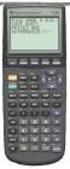 Calculator Activity Intro Getting to know your TI-83 Press ON to begin using calculator.to stop, press 2 nd ON. To darken the screen, press 2 nd alternately. To lighten the screen, press nd 2 alternately.
Building an Advanced Invariant Real-Time Human Tracking System
 UDC 004.41 Building an Advanced Invariant Real-Time Human Tracking System Fayez Idris 1, Mazen Abu_Zaher 2, Rashad J. Rasras 3, and Ibrahiem M. M. El Emary 4 1 School of Informatics and Computing, German-Jordanian
Teacher Page. 1. Reflect a figure with vertices across the x-axis. Find the coordinates of the new image.
 Teacher Page Geometr / Da # 10 oordinate Geometr (5 min.) 9-.G.3.1 9-.G.3.2 9-.G.3.3 9-.G.3. Use rigid motions (compositions of reflections, translations and rotations) to determine whether two geometric
Diagrams and Graphs of Statistical Data
 Diagrams and Graphs of Statistical Data One of the most effective and interesting alternative way in which a statistical data may be presented is through diagrams and graphs. There are several ways in
Low-resolution Character Recognition by Video-based Super-resolution
 2009 10th International Conference on Document Analysis and Recognition Low-resolution Character Recognition by Video-based Super-resolution Ataru Ohkura 1, Daisuke Deguchi 1, Tomokazu Takahashi 2, Ichiro
Topological Data Analysis Applications to Computer Vision
 Topological Data Analysis Applications to Computer Vision Vitaliy Kurlin, http://kurlin.org Microsoft Research Cambridge and Durham University, UK Topological Data Analysis quantifies topological structures
SECTION 2-1: OVERVIEW SECTION 2-2: FREQUENCY DISTRIBUTIONS
 SECTION 2-1: OVERVIEW Chapter 2 Describing, Exploring and Comparing Data 19 In this chapter, we will use the capabilities of Excel to help us look more carefully at sets of data. We can do this by re-organizing
SIGNATURE VERIFICATION
 SIGNATURE VERIFICATION Dr. H.B.Kekre, Dr. Dhirendra Mishra, Ms. Shilpa Buddhadev, Ms. Bhagyashree Mall, Mr. Gaurav Jangid, Ms. Nikita Lakhotia Computer engineering Department, MPSTME, NMIMS University
Quantitative Displays for Combining Time-Series and Part-to-Whole Relationships
 Quantitative Displays for Combining Time-Series and Part-to-Whole Relationships Stephen Few, Perceptual Edge Visual Business Intelligence Newsletter January, February, and March 211 Graphical displays
Speed Performance Improvement of Vehicle Blob Tracking System
 Speed Performance Improvement of Vehicle Blob Tracking System Sung Chun Lee and Ram Nevatia University of Southern California, Los Angeles, CA 90089, USA [email protected], [email protected] Abstract. A speed
Active Learning SVM for Blogs recommendation
 Active Learning SVM for Blogs recommendation Xin Guan Computer Science, George Mason University Ⅰ.Introduction In the DH Now website, they try to review a big amount of blogs and articles and find the
Form Design Guidelines Part of the Best-Practices Handbook. Form Design Guidelines
 Part of the Best-Practices Handbook Form Design Guidelines I T C O N S U L T I N G Managing projects, supporting implementations and roll-outs onsite combined with expert knowledge. C U S T O M D E V E
Segmentation and Automatic Descreening of Scanned Documents
 Segmentation and Automatic Descreening of Scanned Documents Alejandro Jaimes a, Frederick Mintzer b, A. Ravishankar Rao b and Gerhard Thompson b a Columbia University b IBM T.J. Watson Research Center
Structural Axial, Shear and Bending Moments
 Structural Axial, Shear and Bending Moments Positive Internal Forces Acting Recall from mechanics of materials that the internal forces P (generic axial), V (shear) and M (moment) represent resultants