
Practitioner Guidelines for Handout #6: Drug and Alcohol Use
|
|
|
- Tamsyn Bates
- 9 years ago
- Views:
Transcription
1 Chapter VI Practitioner Guidelines for Handout #6: Drug and Alcohol Use Introduction This module gives people information about the effects of alcohol and substances on mental illness, and how reducing or stopping using substances can help them achieve their recovery goals. The module encourages discussion of both the positive effects of using substances as well as the negative effects, in order to promote informed decision-making about whether an individual wants to continue to use or not. People who want to stop using substances are helped to develop a 3-step plan for achieving this goal. For people with co-occurring substance use and mental illness, it is recommended that this module be completed after Module One, Recovery Strategies. This module may help facilitators get a better understanding of the stage of change a client is in regarding their use of substances and their desire to manage their mental health symptoms. Understanding where a client is motivationally around these 2 issues can be very important when it comes to setting and working towards recovery goals in IMR. Some people with co-occurring disorders may be comfortable talking about their substance use but may in pre-contemplation around any mental health issue, and will deny any problem in that area. Or vice versa. Some people who have co-occurring disorders may be comfortable talking about their mental illness, but uncomfortable talking about substance use. In this module, the information should be presented in a non-judgmental way, to help people feel comfortable exploring how their substance use may affect problems in their life that they recognize they are experiencing, such as anxiety, worry, nervousness or physical health problems. Practitioners have the option to change the order of the IMR modules in order to meet the needs of persons receiving treatment. When implementing IMR for persons with COD, this could result in moving up Module 6 (Drug and Alcohol Use) following Module 1 (Recovery Strategies). This will depend on whether IMR is delivered in individual or group format and whether the client (or a majority of

2 group members) is actively using substances. You will find more details in the Introduction to the Practitioners Guidelines for Enhanced IMR for COD to help guide your decision about when to change the order of providing Module 6. Note: For the practitioner s convenience, information and strategies that relate to COD are placed in italics. In addition, there is an additional category called Substance Use Strategies that provides specific strategies for COD within this particular module. Goals: Explore how increased use of substances can lead to an increase of other problems such as anxiety, depression, anger, sleep problems, mood instability, hallucinations, etc. Provide an opportunity for people to talk openly about their experiences using substances, including both positive and negative experiences. Help people weigh the advantages and disadvantages of using alcohol and drugs. Help people who choose to stop using substances develop a plan for achieving this goal. This plan includes 1- identifying at least one important reason why the person wants to stop, 2- making a plan about how to deal with substance use situations, and 3- developing other ways for the person to get his or her needs met. Number and pacing of sessions Drug and Alcohol Use can be covered effectively in 1-6 sessions, depending on the person s use of substances and desire to change. For people who have never used substances, or who have not used them for a long time (e.g., several years), 1 session is recommended. This session can focus on a discussion of the different types of substances, and a brief review of the stress-vulnerability model, highlighting the effects of substances on mental illness, in order to reinforce the person s choice not to use substances. For people who have used substances, but are not using currently or recently stopped (in the past 6 months), 2 sessions are recommended, although some persons may benefit from more sessions. The first session should address different types of substances and common reasons for using, focusing on the person s own experiences. The second session should address the stressvulnerability model and problems related to using substances, and understanding

3 (and supporting) the person s decision to stop using. If the individual reports problems with continuing not to use substances (such as having urges to use, difficulties dealing with high-risk situations, etc.), additional sessions may be helpful, with the focus on helping the person deal with these difficulties through developing a personal plan for continuing to not use substances. For people who currently use substances, 3-6 sessions are recommended. The first three sessions can be paced approximately as follows: the first session focuses on different substance types and reasons for using, the second session focuses on the stress-vulnerability model and problems associated with using, and the third session focuses on making a decision about whether to continue using substances or not. For people who do not choose to stop using substances, no more sessions on this topic are provided. For people who choose to stop using, 2-3 more sessions are needed to complete a plan for stopping. The following recommendations may be helpful for determining the number of sessions for people with co-occurring disorders (for additional recommendations see the document Clinical Recommendations for Enhanced IMR for COD in the introduction to these Practitioner Guidelines): For people who have used substances in the past but are not currently using (for example, they stopped using over a year ago), who recognize how substances interact with mental health issues, and who are in action or maintenance for both their substance use and mental health concerns, 2 sessions are recommended. The first session would review the different substances and reasons for using, as well as a brief review of the Stress-Vulnerability Model of Mental Illness and how substances can affect a mental illness. A second session would delve more thoroughly into the Stress-Vulnerability Model looking at a person s particular vulnerabilities or problems especially related to substance use, and the supports and strengths available to maintain or develop a goal of abstinence. Additional sessions to modify or adapt a sobriety plan can be added if needed or requested by the client. For people who have recently stopped (within the last 6 months) their use of substances, and may still be having some difficulty with urges to use, 3-6 sessions are recommended. These people may be in persuasion or early active treatment. The facilitator with the help of the materials in the module, and motivational interviewing strategies, will need to determine the person s stage of treatment. The first session would review the different substances, the second would cover the Stress-Vulnerability Module, and the remaining sessions would focus on strategies to stay sober, strategies to manage high-risk situations, and completing a sobriety plan. (This may also be a place to discuss whether the person is willing to make a change and/or engage in treatment with respect to their mental health issues).

4 For people who are currently using substances, all 6 sessions are recommended. People who are in engagement or persuasion regarding their substance use and who by the end of session 3 do not wish to discuss their substance use issues further, you may decide to stop there and go on to another module. You can revisit the module if the person becomes more interested in addressing their substance use. Note: As noted earlier, you can find more information about when to complete this module (i.e., after Module 1: Recovery Strategies or after Module 2: Practical Facts, or after Module 5: Using Medications Effectively) in the document Clinical Recommendations for Enhanced IMR for COD in the introduction to these Practitioner Guidelines. For additional information about stages of change and stages of treatment as it relates to this module, see the heading Additional Resources just prior to the clinical vignette. Structure of Sessions 1. Informal socializing 2. Review previous session 3. Discuss home assignments from previous session 4. Follow up on goals or set new goals 5. Set agenda for current session 6. Teach new material (or review materials from a previous session if necessary). Possible topic starter: Drinking and using drugs are quite common in our society. Although using these types of substances can make people feel good, they can also cause problems and make it more difficult to manage a mental illness. This module gives information about how drug and alcohol use affects mental illness and other parts of life, and offers strategies for reducing these effects. 7. Summarize progress made in current session 8. Agree on homework to be completed before the next session. Strategies to be used in sessions Motivational strategies Educational strategies Cognitive-behavioral strategies Motivational strategies Similar to the Using Medication Effectively module, it is important to avoid lecturing or preaching about alcohol or drugs. It is more effective to have an open mind and to help people reach their own conclusions about what is best for them.

5 Because society looks at people with substance use problems as causing their own difficulties, many people feel ashamed of their difficulties, and this can interfere with talking about them. Empathizing with the person, and avoiding being judgmental, are the best strategies for creating an open and accepting environment in which substance use and its effects can be discussed. The following suggestions may be helpful: Many people are unwilling to consider the negative effects of using substances before the positive effects have been acknowledged. Therefore, give ample time at the beginning of the module for the person to discuss some of the reasons he or she enjoys using substances (or has enjoyed in the past). The most common reasons people use substances include: socializing with others, dealing with symptoms and mood problems, because it feels good, because it gives the person something to do and to look forward to. The more you can get people to talk about what using substances does for them, the more you will understand the role that substances play in the person s life, and how the person will need to develop new ways of getting his or her needs met. Helping people weigh the advantages and disadvantages of using substances, and exploring how sobriety can help people pursue their personal recovery goals, is the most important way of motivating people to stop using substances. Avoid directly confronting people with substance use problems about the consequences of their substance use; minimizing the effects of substances is common. Instead, ask questions to encourage the person to explore possible negative effects of using substances. For people who use substances, but do not appear to have experienced significant problems yet, you can use the stress-vulnerability model to help them explore whether they might be able to prevent problems that might develop in the future by deciding not to use substances. People with substance use problems sometimes feel discouraged because they have tried unsuccessfully in the past to control their use. Empathize with the person s difficulties, and encourage him or her by explaining that recovery from substance use problems (or addiction ) often takes time, but every time the person tries, progress is made and he or she is one step closer to achieving his or her goals. People who have fully weighed the pros and cons of using and not using, and who are still unsure of their decision, can still benefit from developing a

6 personal sobriety plan. After the plan has been developed, the practitioner and person can review whether the person wants to try the plan, now that he or she knows what it will be involved in stopping his or her use of substances. For people who clearly indicate that they do not want to stop using substances after weighing the pros and cons, accept their decision and do not push it (and do not complete a sobriety plan). There may be opportunities later to discuss again the effects of using substances, and the person may change his or her mind and endorse sobriety. Abstinence is clearly preferred to trying to cut down on substance use. However, if the person wants to try to cut down, this is better than nothing and should not be discouraged. Some people find it hard to cut down, but the experience of trying leads them to conclude that stopping altogether is a more practical solution. Cutting down can help reduce some of the harm related to substance use. For people who are motivated to stop using substances, exploring self-help groups such as Dual Recovery and Alcoholics Anonymous can be useful, and may provide additional social support and acceptance for endorsing a sober lifestyle. However, people should not be pressured to attend these groups. Attending some self-help group meetings with the person may facilitate his or her involvement in a group People with co-occurring disorders may be at different treatment stages concerning their mental health problems and their substance use problems. For example, people with co-occurring disorders may be in active treatment around their substance use, but in engagement around their mental health problems. Or vice versa, people may be in active treatment around their mental health problems, but engagement around their substance use. Be sensitive to these variations, and use motivational strategies accordingly. For example, you can use empathy to try to understand how the person views the symptoms of their mental illness or their substance use disorder, and then explore the pros and cons of treating the symptoms. Avoid confrontation about either mental health symptoms or substance abuse symptoms. Educational strategies Educational strategies for this module focus on increasing people s knowledge of the effects of drug and alcohol use, including the reasons he or she uses and the effects of use on the person s mental illness and life. The most important new information people can learn in this module is that the stress-vulnerability model explains that people with a mental illness are more sensitive to the effects of substances than people with no mental illness (or supersensitive ). For these individuals, the effects of using substances include

7 both worsening symptoms and relapses, and other effects, such as social problems. This means that people with a mental illness often experience problems using even small amounts of substances, such as a few drinks. Understanding the effects of using substances on mental illness, including direct effects on worsening symptoms and indirect effects on weakening the effectiveness of medications, can help people see that not using substances is an important key to managing one s mental illness. The following educational strategies were discussed in detail in the practitioner s guidelines for Module 1: Review the contents of the handout; summarizing the main points of taking turns reading aloud. Pause at the end of each topic to check for understanding and learn more about the person s point of view. Allow plenty of time for interaction. Pause to allow the person to complete worksheets. Break down the content into manageable pieces. These educational strategies may also be helpful in Module 6: As was noted in the introduction, substance users may down play or discount all together, problems with mental illness. Or vice versa: persons may down play their problems with substance use. For both groups of people, learning about the super-sensitivity model is still very important. People who use substances can be helped to see why they may get into trouble with smaller amounts of substances than other people. These problems can be social, financial, or emotional. They can be helped to see the link between their substance use and their other problems such as anxiety, depression, hallucinations and other mental illness symptoms. The key point is that mental illness and substance abuse are two co-occurring illnesses, and unless both are treated together, at the same time, they will continue to cause relapse in one another. Cognitive-behavioral strategies There are many opportunities for using cognitive-behavioral strategies to help people explore the effects of substances on their lives and practice skills for developing a sober lifestyle. Whenever possible, practice skills for dealing with

8 substance abuse situations and for getting personal needs met in ways other than using substances. This should be done in the session and outside the session (as part of a home assignment). When exploring the advantages and disadvantages of using substances, there may be opportunities to use cognitive restructuring to encourage people to re-evaluate certain positive beliefs they have about using substances. When exploring such beliefs, it is important to avoid directly confronting or contradicting the person, but rather to ask questions intended to explore with the person his or her beliefs. For example, commonly perceived advantages of using substances include spending time with friends, feeling high, and dealing with symptoms such as depression. However, upon further examination, some people may find that their friends are actually opportunistic people who don t really care about the person, the high they describe is not as good or predictable as hoped and the person is actually chasing memories of feeling high from the past, or that using substances actually isn t as helpful in dealing with problematic symptoms. Re-examination of such beliefs can increase motivation to work on sobriety. Avoid arguing with the person if the advantages of using substances are strongly held. A range of high risk situations typically confront people when they are trying to stop using substances, and planning on how to deal with these situations is critical to developing a successful sobriety plan. When possible, planning on how to avoid such situations can reduce vulnerability to relapse. However, complete avoidance is often not possible, and additional plans (and skills) will guard against the possibility of a relapse, as described below. For people with co-occurring disorders it will be important to note how highrisk situations, triggers and early warning signs are key factors in both substance use and mental illness. Sometimes there will be commonalities, and some of the high-risk situations, triggers and early warning signs are the same for both disorders and sometimes they are different. Social situations involving offers or pressure to use substances can best be dealt with through improved assertiveness skills, which can be role-played in session. The key elements of effective assertiveness skills for dealing with offers to use substances include speaking in a firm, loud voice tone, explaining that the person does not want to use substances, avoiding making excuses for not using (which tends to invite debate), repeating the refusal if needed, and leaving the situation if the person persists. When the person offering substances is a friend, the person can suggest an alternative activity. When someone tries to pressure the person to use, the person can level by explaining that he or she has decided to stop using substances, and to please stop offering them to him or her.

9 Having money in one s pocket (such as when one has received a paycheck or disability check) can be a high-risk situation for some people. The person can establish and role play an alternative behavior to use the next time he or she has money (such as going immediately to the bank), or could arrange for someone (such as family member or representative payee) to manage his or her money to avoid having direct access to it. Having cravings to use substances (such as images or feelings of what it would be like to use) can be a high-risk situation. Cravings may be difficult to suppress, but they need not be given into either. Some strategies that can be practiced for dealing with cravings include: o Distraction (doing something else that focuses one s attention), mindfulness/acceptance (allowing the thoughts and feelings to occur, while recognizing they will pass and need not influence one s behavior). o Use of coping self-statements (such as the person telling him/herself he/she can manage the cravings, he or she is strong, and/or reminding oneself of the importance of sobriety for achieving one s recovery goal(s)). o Use of counter-imagery (such as imagining past negative consequences of substance use, such as relapses, victimization, or health or legal problems). o Stress management techniques (such as relaxation exercises). See below for strategies for dealing with high risk situations involving symptoms. People sometimes use substances to cope with symptoms such as hallucinations, depression, anxiety, and sleep problems. This is especially common in persons with co-occurring disorders. Helping people develop more effective coping strategies for these symptoms can reduce their susceptibility to using substances. As summarized in Module 9, a wide range of coping strategies can be discussed, planned, and practiced for dealing with these symptoms. For example: o Depression can be coped with by scheduling pleasant events, challenging negative thinking styles, using affirmative selfstatements, and exercise. o Anxiety can be coped with by relaxation strategies, challenging beliefs about pervasive threats, and gradually exposing oneself to feared but safe situations.

10 o Hallucinations can be dealt with by strategies such as distraction (such as listening to music, attending to a task), positive self-talk, acceptance (such as not fighting voices), or relaxation. o Sleep problems can be managed through strategies such as improved sleep hygiene (such as not drinking caffeine in the afternoon, going to bed at the same time every night, not napping, developing a pleasant bedtime routine). o Skills training can be used to help people practice the skills needed to connect with new individuals (such as people who do not use substances) and to get closer to people, as outlined in Module 4. o Helping people develop rewarding leisure and recreational activities is an important goal for many people, to replace the role of using substances in the person s life. Different activities can be brainstormed in session, and plans made (and role played when feasible). Often new activities need to be practiced a number of times before they become fully enjoyable. When selecting activities, consider the positive aspects of using substances for the person, and whether some activities can be identified that evoke some of the same feelings (such as feeling relaxed or excited). o Making concrete plans to work or return to school, and rehearsing them when possible in session, can help people develop new meaning and sense of purpose in their lives. o Self-help groups such as Alcoholics Anonymous and Dual Recovery Anonymous (for people with co-occurring disorders) provide invaluable support to many people recovering from addiction. However, many people benefit from being prepared to participate in such groups by role-playing what it s like to be in a group. This is best accomplished by doing a role-play including several people. The practitioner can play the role of the self-help facilitator. People can be prepared to participate in the role-play of a self-help group by describing the usual format of the self-help group, and reviewing some of the core philosophy (such as emphasis on abstinence, spiritual/religious orientation) before conducting the role-play. Use role plays as often as possible in this module, to help people practice how they might deal with triggers, early warning signs, high risk situations, and cravings. The more often people practice new coping strategies in the sessions, the more likely they will use them in their day-to-day lives.

11 Substance Use Strategies As noted in the introduction to the Practitioners Guidelines for COD-Enhanced IMR, there are 8 principles of COD Treatment. It is helpful for practitioners to keep all of the principles in mind when they deliver each module. It is also important to note that some modules offer more opportunities than others to apply specific principles. In addition, the principles are applied in different ways, depending on the client s stage of treatment. Here is a review of the COD principles: 1. Integration of mental health and substance use services including mental health and substance abuse treatment and relapse prevention planning. 2. Access to comprehensive assessment of mental health and substance use. 3. Comprehensive variety of services offered to clients such as family therapy, medications, supported employment, use of self-help services such as Dual Recovery. Providing a full array of services. 4. An assertive approach to treatment (i.e., not waiting for client to request treatment but using engagement strategies such as assertive outreach). 5. Using a harm reduction approach. 6. Motivation-based treatment and stage wise interventions. 7. Long-term perspective of treatment or time-unlimited services. 8. Providing multiple psychotherapeutic modalities. Here are a few examples of opportunities for practitioners to use the COD principles in Module 6, Drug and Alcohol Use. Principle 1: Throughout this module, practitioners can give examples of how addressing substance use problems can help people manage mental illness, and vice versa, that is, how managing mental illness can help people address substance use problems. Principle 4: In this module, practitioners are encouraged to address substance use and provide basic information to all clients in IMR whether or not they identify themselves as having a problem with substance use. That being said, the number of sessions and intensity of the module are varied depending on the client s level of substance use and their interest in making a change. Principle 5: In this module, clients with COD are encouraged to abstain from substances. However, if they are not willing to have a goal of abstinence, the practitioner works with them to reduce the harm from their substance use. This may or may not involve a reduction in the amount of substances the clients use. Principle 6: Throughout this module, practitioners are encouraged to assess the person s stage of treatment regarding substance use and adjust the materials

12 accordingly. For example, if clients do not want to make a sobriety plan, they are not pressured to do so. Principle 7: This module takes a step-by-step, gentle, non-judgmental approach to discussing substance use and encouraging abstinence. The practitioner does not expect instant changes from clients completing this module. There are other ample opportunities in the course of IMR to re-visit this module and/or the principles from this module. Homework It is important that the practitioner collaborates with people to develop home assignments that are consistent with their decisions about substance use. For example, if a person does not think he or she has a problem with substance use and does not wish to reduce or stop using, it would be fruitless, and likely counterproductive, to encourage an assignment of saying no to people who ask him or her to use substances. The following list of possible assignments may be useful: When you are watching television or watching a movie, what kind of experiences do they show people having when they drink or do drugs? This includes examples found in advertisements for alcohol. Describe a situation when you (or someone you know) had an increase in symptoms related to drinking or using drugs. Make a list of the members of your family who have had alcohol or drug problems at some point in their lives. Make a list of friends of yours who have had alcohol or drug problems at some point in their lives. Complete the Pros and Cons of Using Substances worksheet if you did not complete it during the session. Complete the Pros and Cons of a Sober Lifestyle worksheet if you did not complete it during the session. If you have decided to develop a sober lifestyle, practice one of the ways you have decided to deal with high risk situations. If you have decided to develop a sober lifestyle, try out one of the new ways you have identified for getting your needs met. Try attending a Dual Recovery Anonymous (or Alcoholics Anonymous) group.

13 Give a copy of this handout to a family member or friend and discuss it with him or her afterwards. Use the sobriety plan in this module to develop an integrated relapse prevention plan that includes both substance use and mental health problems. (A model of an integrated relapse prevention plan is provided in Module 7, Reducing Relapses). Share your Sobriety Plan with a friend or family member Practice drink/drug refusal skills. For example, practice telling a friend that you don t want to use substances and explain how it has a bad effect on how you feel. If you feel comfortable, include information about how substances affect the symptoms of your mental illness. Tips for common problems People may say that they do not have a problem with substance use even when they do. It is best to avoid confrontation and to use some of the strategies listed above in the section entitled Motivational Strategies in order to help people feel comfortable learning and discussing information from this module. In an open, non-judgmental atmosphere, people often gradually begin to be interested in examining their use of drugs and alcohol. Many people who do not think they have a substance abuse problem are comfortable talking about the effects of substances and the pros and cons of using substances, as long as they are not pressured to make a decision to cut down or stop using. They are often willing to talk about how other people have experienced problems related to substance use. They may also be willing to brainstorm alternative activities and coping strategies for occasional situations when they don t want to use substances, even if they don t want to systematically cut down or stop using. Some people want to change their substance use, but have had negative experiences in their previous attempts to do so. Provide support and encouragement, and suggest that this is a fresh start. Let them know that substance abuse is a complex problem, and that it often takes people more than one attempt to successfully change their behavior. Encourage a step-bystep approach and giving oneself credit for taking toward a sober lifestyle. Some people may say they have a substance use problem but do not have a mental illness. Motivational strategies can be helpful in addressing this situation. It is important to use an open non-judgmental approach. The language the person uses to describe how they feel is critical. The person might say they feel anxious or nervous. Or maybe they usually feel down or

14 sad. The person may not consider this an illness but they are willing to say they sometimes have problems with it. This is an opportunity to start when working with them around a co-occurring disorder, but it is extremely important to take a gentle, non-judgmental approach to substance use and its consequences and to use the client s language when discussing both. Special Issues for Group IMR If you are conducting a group whose members have similar experiences using substances and similar receptivity to stopping or cutting down their use, it is relatively straightforward to tailor the group (# and topics of sessions). For a group of participants with mixed experiences and receptivity, pick and choose the topics in this module to best address the concerns of the majority of group members. Keep in mind that the module is designed to be informative and nonjudgmental. Plus, most people find that the subject of substance use is interesting and will find something of value in all the topics provided in the module either because they have personally experienced a problem with substance use or because they know someone who has. Because group members are familiar with each other s personal recovery goals, they can help each other identify how substance use might interfere with the achievement of goals. For example, if a group member s goal is to have a job, another group member might note that from personal experience, using substances has gotten in their way in the past when they were trying to get or keep a job. Group members can also help each other find resources for support if they are interested. For example, if someone in the group wants to attend a meeting of Dual Recovery or Alcoholics Anonymous that has a Saturday afternoon meeting, another group member might know of such a meeting and may even offer to go with him or her. Additional Resources Mueser, et al., Integrated Treatment for Dual Disorders: A Guide to Effective Practice (2003). NY: Guilford Press. o Chapter 1, Basics pages Team Solutions Workbook #7, Making Choices: Substances and You The following materials provide additional strategies that may be helpful to clients with co-occurring disorders who are thinking about cutting down or quitting. o Session 8, Choosing new ways to have fun. o Session 9, Staying away from substances. o Session 10, Having meaningful roles in life. o Session 11, Getting support to stay sober. o Session 12, Coping with uncomfortable feelings. o Session 13, Finding healthier coping skills. o Session 14, Finding sober friends.

15 o Session 15, Improving friendship skills. o Session 16, Managing high-risk situations. Type in click on learn more for team solutions, and scroll down to download the following in Workbook 7: Making Choices: Substances and You and download sessions Co-occurrences: Newsletter of the Minnesota Co-Occurring State Incentive Grant Project May-June 2008, Volume 1, Issue 11. Information on stages of change and stages of treatment. The following newsletter discusses the stages of change, stages of treatment, and treatment interventions associated with the stages of treatment: o Type In or go to: C_CONVERSION&dDocName=dhs16_138281&RevisionSelectionMet hod=latestreleased o Click on the link for Co-occurrences: Newsletter of the Minnesota Co- Occurring State Incentive Grant Project May-June 2008, Volume 1, Issue 11 Free Screening Tools for substance use disorder assessment from Behavioral Health Evolution: o Modified Mini Screen o Mental Health Screening Form III o CAGE Adapted To Include Drugs o Simple Screening Instrument for Alcohol and Other Drugs COD-Clinical Vignette Lynette followed up with George on his recently set goals from the Recovery Strategies module using his goal-tracking sheet and his alcohol use. His first step was to make a plan to present to the office manager about playing the guitar in the commons area along with tracking how many bottles he drank each week. During the Drug and Alcohol Use module, George struggled with completing a step towards his short-term goals. He reported feeling overwhelmed and not sure if he the kind of person who could do a presentation. He and Lynette problem-solved what kinds of things were getting in his way of taking a step towards his goal and he reported that it just seemed too big. He decided to make a list of all of the reasons it would be helpful for him to play his guitar in the commons area. He also reported that he forgot to write down how many bottles that he drank over a week so he decided to take home a notecard reminder that he could post on his refrigerator and mark off when he finished a bottle. During this module, George continued to report drinking daily and not cutting down on the frequency or amount of alcohol he uses.

16 Because George was drinking alcohol regularly and had expressed some desire to change his drinking, he and his rehabilitation specialist Lynette agreed to move up the drug and alcohol use module. After completing three sessions and assessing his current drug and alcohol use using the Dartmouth Assessment of Lifestyle Instrument (DALI) and the CAGE-AID assessments, George realized he was drinking about 40 drinks a day that equaled about a fifth of vodka. Lynette reviewed common reasons for taking drugs and alcohol where George described coping with symptoms of depression, boredom and loneliness as common problems that relate to his alcohol use. They also reviewed the problems that drugs and alcohol cause where George identified that often the alcohol makes him feel more depressed and causes him to isolate at home. George explored the pros and cons of deciding to stop using alcohol. Lynette asked him to list the advantages to continue using alcohol. George listed mellows me out, gives me something to do, makes it easier to write and play music, and helps me forget about being lonely. When asked about the disadvantages of using substances George identified spending more time at home by himself when he is using alcohol, feeling a decrease in his motivation after using alcohol, spending more money than he wants to on alcohol so he doesn t have money for important things such as going for coffee with his neighbor, and knowing that his sister will not visit him when he is drinking. Lynette and George then reviewed the advantages and disadvantages of a sober lifestyle. He reported that the advantages of becoming sober would be a better relationship with his sister, more money, and possibly having more energy and being able to feel less depressed, while the disadvantages were that he had tried being sober before and it didn t work, he wouldn t have anything to help him relax, and it might interfere with playing his music. George stated that although he was interested in changing his alcohol use he was not ready to do anything right now. He agreed to think about cutting down and for his home assignment to try a Dual Recovery group in his area that would have members who are coping with both mental health and substance use. George thought this might be helpful to see how other people have coped with similar problems. Review Questions At the end of this module, practitioners can use either open-ended questions or multiple-choice questions to assess knowledge of the main points. Open-ended questions 1. What are some of the reasons that people enjoy using substances? 2. What are some problems that are often associated with using substances?

17 3. How does substance use affect psychiatric symptoms? 4. What are some examples of how psychiatric symptoms can affect substance use? 5. What are some examples of common high risk substance use situations? 6. What suggestions would you give to someone who asked you for advice about how he or she could stop using substances? 7. What are some examples of how substance use can interfere with achieving ones personal goals? Multiple Choice and True/False Questions 1. Substance use can contribute to relapses of psychiatric symptoms. True or False 2. A common positive effect of drinking alcohol is feeling a. alert b. relaxed c. jittery 3. Of the following problems, circle the one that is NOT commonly associated with substance use a. conflict with family or friends b. legal issues c. having too much money 4. People who have a psychiatric illness a. Are often supersensitive to the effects of alcohol and street drugs b. Can improve the effectiveness of their medications by using alcohol and street drugs c. Rarely drink or use street drugs 5. A common example of a high risk situation for people with substance abuse problems is: a. Attending a religious service b. Registering to vote c. Going to a party where there will be alcohol or drugs 6. Substance use does NOT affect symptoms of mental illness. True or False.

18 Personal Sobriety Plan Congratulations! You ve taken the first and most important step toward being free of problems related to alcohol and drug use. Complete this plan by following the steps outlined. Don t worry about making the plan perfect you can change it as you go along based on how well it is working for you. Share your plan with people who are close to you so they can support you in your sober lifestyle. STEP 1. List one to three ways that your life will be better by stopping using substances. Consider how sobriety may help you achieve your personal recovery goals. STEP 2. List at least one person who will support your sobriety (by talking with you, helping you solve problems, encouraging your efforts, etc.). STEP 3. Identify one to three high-risk situations that can lead to unintended use of alcohol or drugs. Consider situations in which you have used substances in the past, such as people offering you substances, being pressured to use, feeling bad, having nothing to do, and cravings STEP 4. Make a plan for how to deal with those high-risk situations. For each high-risk situation, identify one or two ways of dealing with it. Situation 1:

19 Plan for dealing with it: Situation 2: Plan for dealing with it: Situation 3: Plan for dealing with it: STEP 5. Find new ways of getting your needs met. Consider the ways using substances have met your needs in the past, such as hanging out with friends, feeling relaxed or high, dealing with symptoms, or having something to do. What needs did they meet? For each need you identify, think of at least one new strategy for getting that need met. Need 1:

20 New strategy for meeting this need: Need 2: New strategy for meeting this need: Need 3: New strategy for meeting this need:

For the Support Person
 For the Support Welcome to this self-care guide and thank you for agreeing to act as a Support. Your involvement is an important part of the support for the person in recovery. You may be a relative, mental
MODULE 13 CASE MANAGEMENT
 MODULE 13 CASE MANAGEMENT Module 13: Case Management Table Of Contents TABLE OF CONTENTS... II MODULE 13: CASE MANAGEMENT...... 1 BACKGROUND.. 1 Emergency needs... 2 Case management needs 2 INTRODUCTION...
Integrated Dual Diagnosis Treatment Stagewise Treatment Interventions and Activities
 Integrated Dual Diagnosis Treatment Stagewise Treatment Interventions and Activities Dartmouth Dual Diagnosis Treatment Scale Evidenced Based Interventions Stage-Wise Activities for Case Managers Activities
MODULE 3: FUNCTIONAL ANALYSIS AND TREATMENT PLANNING
 MODULE 3: FUNCTIONAL ANALYSIS AND TREATMENT PLANNING Module 3: Functional Analysis and Treatment Planning Table Of Contents TABLE OF CONTENTS II MODULE 3: FUNCTIONAL ANALYSIS AND TREATMENT PLANNING 1 BACKGROUND......
Substance Abuse. Client Handbook Series January 2015
 Substance Abuse Client Handbook Series January 2015 Developed by Carleton University, Criminal Justice Decision Making Laboratory & Ontario Ministry of Community Safety and Correctional Services Ralph
TEN WAYS TO SUPPORT YOUR MALE LOVED ONE IN RECOVERY
 TEN WAYS TO SUPPORT YOUR MALE LOVED ONE IN RECOVERY TABLE OF CONTENTS 3 5 9 12 18 21 26 28 31 33 37 INTRODUCTION UNDERSTAND ADDICTION LEARN ABOUT TREATMENT UNDERSTAND RECOVERY RECOGNIZE TRIGGERS UNDERSTAND
MODULE 10: SOBRIETY SAMPLING
 MODULE 10: SOBRIETY SAMPLING Module 10: Sobriety Sampling Table Of Contents TABLE OF CONTENTS... II MODULE 10: SOBRIETY SAMPLING..... 1 BACKGROUND.... 1 INTRODUCE THE TOPIC... 1 DISCUSS THE RATIONALE...
Practitioner Guides and Handouts
 Practitioner Guides and Handouts Illness Management and Recovery U.S. DEPARTMENT OF HEALTH AND HUMAN SERVICES Substance Abuse and Mental Health Services Administration Center for Mental Health Services
Overview of Presentation ILLNESS MANAGEMENT AND RECOVERY: Helping Clients Build Skills. Susan Gingerich
 ILLNESS MANAGEMENT AND RECOVERY: Helping Clients Build Skills Susan Gingerich Overview of Presentation The powerful advantages of providing Illness Management and Recovery (IMR) to clients Details of the
Minnesota Co-occurring Mental Health & Substance Disorders Competencies:
 Minnesota Co-occurring Mental Health & Substance Disorders Competencies: This document was developed by the Minnesota Department of Human Services over the course of a series of public input meetings held
Returning to Work is a Lot of Work
 Returning to Work is a Lot of Work Back in Motion Rehab Inc. January 2014 Returning to Work is a Lot of Work! There are a lot of reasons people have to take time off work. Sometimes people experience injuries
What is your addiction? Please describe it:
 Addiction can be thought of as repeating a behavior over and over even though it is causing problems for you in different areas of your life (negative consequences). When someone has an addiction, such
information for families Schizophrenia & Substance Use
 information for families Schizophrenia & Substance Use Schizophrenia and Substance Use Index 2 3 5 6 7 8 9 10 Why do people with schizophrenia use drugs and alcohol? What is the impact of using substances
It s helpful to watch the video Who is Slick on the slickrecovery.com website before completing this form.
 Recovery Worksheet The Voice of Addiction Worksheet How has my drug or alcohol use hurt key areas in my life? It s helpful to watch the video Who is on the slickrecovery.com website before completing this
to Send-Off Your Loved One to Rehab
 G O O Y B D to Send-Off Your How Loved One to Rehab O O D B Y E Table of Contents G O O D B Goodbye is Saying Not Easy If a loved one is abusing drugs or alcohol, helping them enter a rehab program is
information for service providers Schizophrenia & Substance Use
 information for service providers Schizophrenia & Substance Use Schizophrenia and Substance Use Index 2 2 3 5 6 7 8 9 How prevalent are substance use disorders among people with schizophrenia? How prevalent
MODULE 4: URGES. Module 4.1: Recognizing Triggers and Urges Boston Center for Treatment Development and Training
 MODULE 4: URGES Module 4.1: Recognizing Triggers and Urges Table Of Contents TABLE OF CONTENTS... II MODULE 4.1: RECOGNIZING TRIGGERS AND URGES 1 CHECK-IN.... 1 SET THE AGENDA...... 1 DISCUSS THE CLIENT
OVERVIEW OF COGNITIVE BEHAVIORAL THERAPY. 1 Overview of Cognitive Behavioral Therapy
 OVERVIEW OF COGNITIVE BEHAVIORAL THERAPY 1 Overview of Cognitive Behavioral Therapy TABLE OF CONTENTS Introduction 3 What is Cognitive-Behavioral Therapy? 4 CBT is an Effective Therapy 7 Addictions Treated
Treatment for Co occurring Disorders
 Wisconsin Public Psychiatry Network Teleconference (WPPNT) This teleconference is brought to you by the Wisconsin Department of Health Services (DHS) Bureau of Prevention, Treatment, and Recovery and the
GDC Session #3 The Process of Recovery: Part II
 GDC Session #3 The Process of Recovery: Part II Objectives of Session 1. Identify emotional and physical symptoms of withdrawal from cocaine and other substances. 2. Identify stages of recovery from cocaine
FOCUS ON INTEGRATED TREATMENT COURSE OBJECTIVES
 FOCUS ON INTEGRATED TREATMENT COURSE OBJECTIVES INDEX FIT The Complete Program Pages 2-6 FIT Complete Clinician Collection Pages 7-11 FIT Screening & Assessment Page 12 FIT Motivational Interviewing Page
Recovery for Family Members
 Recovery for Family Members The first, and most important, thing to remember is that people with substance use disorders can get well and so can their families. You've survived together through major crises.
Treating Co-Occurring Disorders. Stevie Hansen, B.A., LCDC, NCACI Chief, Addiction Services
 Treating Co-Occurring Disorders Stevie Hansen, B.A., LCDC, NCACI Chief, Addiction Services Implementing SAMHSA Evidence-Based Practice Toolkits Integrated Dual Diagnosis Treatment (IDDT) Target group:
Alcohol Addiction Treatment & Self-Help
 Alcohol Addiction Treatment & Self-Help How to Stop Drinking and Start Recovery Overcoming an addiction to alcohol can be a long and bumpy road. At times, it may even feel impossible. But it s not. If
Positive Coping with Rheumatoid Arthritis a skills workshop
 Positive Coping with Rheumatoid Arthritis a skills workshop About this workshop Created by: Dan Bilsker PhD Centre for Applied Research in Mental Health & Addiction Faculty of Health Sciences, Simon Fraser
100 Tips for Building a Strong Recovery
 45/13 Soi Pha Phum Tambon Bang Phra Amphoe Si Racha Chon Buri 20110 Thailand 100 Tips for Building a Strong Recovery Email: [email protected] - Telephone: 0066 895 291297 Giving up alcohol
How to cut down on your drinking 1
 How to cut down on your drinking 1 If you are drinking too much, you can improve your life and health by cutting down. How do you know if you drink too much? Read these questions and answer yes or no :
AN OVERVIEW OF TREATMENT MODELS
 AN OVERVIEW OF TREATMENT MODELS The 12-step Programs: Self-led groups that focus on the individual s achievement of sobriety. These groups are independent, self-supported, and are not aligned with any
Co-Occurring Substance Use and Mental Health Disorders. Joy Chudzynski, PsyD UCLA Integrated Substance Abuse Programs
 Co-Occurring Substance Use and Mental Health Disorders Joy Chudzynski, PsyD UCLA Integrated Substance Abuse Programs Introduction Overview of the evolving field of Co-Occurring Disorders Addiction and
TABLE OF CONTENT. How to Take the First Step Is Inpatient Rehab the Right Choice? Get the Help Needed Today
 TABLE OF CONTENT 3 The Need for Inpatient Rehab 3 Success with Inpatient Treatment 4 Numbers Rarely Lie 4 An Overview of Inpatient Substance Abuse Treatment 7 Participating in the Program 9 Get the Most
Overcoming Drug Addiction
 Overcoming Drug Addiction Drug or Substance Abuse Treatment, Recovery, and Help When you re struggling with drug addiction, sobriety can seem like an impossible goal. But recovery is never out of reach,
Overcoming Drug Addiction
 Overcoming Drug Addiction Drug Abuse Treatment, Recovery, and Help It takes courage and strength to face up to drug addiction. When you re bogged down in drug abuse and drug addiction, sobriety can seem
How. HOLiSTIC REHAB. Benefits You
 How HOLiSTIC REHAB Benefits You Table of Content Holistic Rehab Centers are More Popular than Ever The Need for Drug & Alcohol Rehabilitation Programs Alcohol Abuse and Addiction These Issues Need Treatment
Questions to Ask Treatment Programs
 Questions to Ask Treatment Programs Are you looking for a drug and alcohol treatment program for your teen or young adult? This list of questions can help guide your conversation with treatment program
RECOVERY ALTERNATIVES
 RECOVERY ALTERNATIVES Contact us at: 1-800-805-0499 http://www.recoveryalternatives.com INTERVENTION PREPARATION WORKSHEET To help guide you through the process of preparing for the intervention, a series
USVH Disease of the Week #1: Posttraumatic Stress Disorder (PTSD)
 USVH Disease of the Week #1: Posttraumatic Stress Disorder (PTSD) Effects of Traumatic Experiences A National Center for PTSD Fact Sheet By: Eve B. Carlson, Ph.D. and Josef Ruzek, Ph.D. When people find
How To Treat An Addiction With Cognitive Behavioral Therapy
 Cognitive Behavioral Therapy Part 1 An Overview Cognitive Behavioral Therapy (CBT) is a general classification of psycho therapy, based on social learning theory, which emphasizes how our thinking interacts
Taking Care of Your Health
 Taking Care of Your Health Taking good care of your health helps keep you in good shape both physically and mentally. In addition to getting regular physical and dental check-ups there are a number of
Matching Stages of Change and Treatment to Treatment Goal, Intervention and Technique 1/04 1
 Matching Stages of Change and Treatment to Treatment Goal, Intervention and Technique STAGE OF CHANGE/ Pre-contemplation Pre-engagement /engagement I don t see how my substance use warrants concern. Establish
SUBSTANCE ABUSE & DEPRESSION: WHAT YOU SHOULD KNOW
 SUBSTANCE ABUSE & DEPRESSION: WHAT YOU SHOULD KNOW TABLE OF CONTENTS What is Depression? 4 Symptoms of Depression 6 Substance Abuse as a Coping Mechanism 8 Which Occurs First? 10 Substance Abuse and the
IAC patient Workbook 1
 IAC patient Workbook 1 VERSION 2.0 FEBRUARY 2007 INDIVIDUAL ADDICTION COUNSELING (IAC) HANDOUT #1 A. Overview of Individual Addiction Counseling (IAC) Individual Addiction Counseling (IAC) focuses on your
10/20/2014. Timothy Bautch, MA, LPC, CSAC, ICS Connections Counseling Madison, WI [email protected]
 Timothy Bautch, MA, LPC, CSAC, ICS Connections Counseling Madison, WI [email protected] Dual Diagnosis/Co-occurring Disorders Although this term is not always precise and distinctive,
Specific Phobias. Anxiety Disorders Association of America
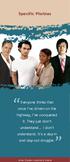 Specific Phobias Everyone thinks that once I ve driven on the highway, I ve conquered it. They just don t understand... I don t understand. It s a day-in and day-out struggle. What is a phobia? We all
Consider Reasons To Cut Down or Quit Drinking
 Consider Reasons To Cut Down or Quit Drinking The purpose of this step is to think about the best reasons for you to cut down or quit your drinking. The reasons vary for different people. The list identifies
Comprehensive Addiction Treatment
 Comprehensive Addiction Treatment A cognitive-behavioral approach to treating substance use disorders Brief Treatment Eric G. Devine Deborah J. Brief George E. Horton Joseph S. LoCastro Comprehensive Addiction
Northside West Clinic
 Northside West Clinic Contents Overview Treatments Inpatient Services Day Programs The Clinic What are the Costs? How to Get Started The Northside Group of Clinics How to Find Us Overview At some point
Schizoaffective Disorder
 FACT SHEET 10 What Is? Schizoaffective disorder is a psychiatric disorder that affects about 0.5 percent of the population (one person in every two hundred). Similar to schizophrenia, this disorder is
Chapter 7. Screening and Assessment
 Chapter 7 Screening and Assessment Screening And Assessment Starting the dialogue and begin relationship Each are sizing each other up Information gathering Listening to their story Asking the questions
MANAGING DEPRESSIVE SYMPTOMS IN SUBSTANCE ABUSE CLIENTS DURING EARLY RECOVERY
 MANAGING DEPRESSIVE SYMPTOMS IN SUBSTANCE ABUSE CLIENTS DURING EARLY RECOVERY Presented by: William L. Mock, Ph.D., LISW,LICDC, SAP Professional Training Associates Inc North Ridgeville, Ohio 1 (216) 299-9506
Look after your mental health
 Look after your mental health It s important to take care of yourself and get the most from life. This booklet suggests 10 practical ways to look after your mental health. What is mental health? Hi, how
Co-Occurring Disorders: A Basic Overview
 Co-Occurring Disorders: A Basic Overview What is meant by Co-Occurring Disorders (COD)? Co-Occurring Disorders (COD) refers to two diagnosable problems that are inter-related and occur simultaneously in
Mindfulness for Addiction Recovery Test
 Mindfulness for Addiction Recovery Test Following your reading of the course material found in the workbook. Please read the following statements and indicate the correct answer. A score of 14 correct
Community Support Services Training Supervisor Series-Session 6. Learning Objectives. What are Evidence-Based Practices?
 Community Support Services Training Supervisor Series-Session 6 Zakia Clay, MSW, LCSW [email protected] Ann Reilly, MA, LSW, CPRP [email protected] Anthony Zazzarino, MA, LPC, CPRP [email protected]
Time Management & Stress Reduction
 Time Management & Stress Reduction What is stress? Stress is your body s reaction to the things which you perceive as pressures. Stress occurs when you feel that you cannot cope with those pressures. Our
Alcohol detoxification
 Alcohol detoxification A guide to alcohol detoxification for service users and families. Stockton Treatment Alcohol and Recovery Service Alcohol dependence If you are dependent on alcohol then you will
Assertive Communication
 Using assertive communication is an important part of recovery from drugs and alcohol. Being assertive can help you express your opinions and feelings, make requests of others and respond to requests of
Military and Substance Abuse Dr. Amy Menna & Gift From Within
 1 Military and Substance Abuse Dr. Amy Menna & Gift From Within This article is meant to assist soldiers and those who support them to identify the differences between substance abuse and addiction. In
FAMILY THERAPY CAN HELP FOR PEOPLE IN RECOVERY FROM MENTAL ILLNESS OR ADDICTION
 FAMILY THERAPY CAN HELP FOR PEOPLE IN RECOVERY FROM MENTAL ILLNESS OR ADDICTION U.S. DEPARTMENT OF HEALTH AND HUMAN SERVICES Substance Abuse and Mental Health Services Administration Center for Substance
WHY CAN POST-TRAUMATIC STRESS DISORDER LEAD TO SUBSTANCE ADDICTION? 3 WAYS TO MANAGE YOUR POST-TRAUMATIC STRESS DISORDER WITHOUT RELYING ON DRUGS
 Take Charge of Substance Abuse Related to Your Post-Traumatic Stress Disorder Prepared by: Coping with Post-Traumatic Stress Disorder (PTSD) can be overwhelming at times and it is so easy to become dependent
Who We Serve Adults with severe and persistent mental illnesses such as schizophrenia, bipolar disorder and major depression.
 We Serve Adults with severe and persistent mental illnesses such as schizophrenia, bipolar disorder and major depression. We Do Provide a comprehensive individually tailored group treatment program in
Martha Brewer, MS, LPC,LADC. Substance Abuse and Treatment
 Martha Brewer, MS, LPC,LADC Substance Abuse and Treatment What is a substance use disorder? Long-term and chronic illness Can affect anyone: rich or poor, male or female, employed or unemployed, young
Training Frontline Staff
 Training Frontline Staff Illness Management and Recovery U.S. DEPARTMENT OF HEALTH AND HUMAN SERVICES Substance Abuse and Mental Health Services Administration Center for Mental Health Services www.samhsa.gov
FACT SHEET 4. Bipolar Disorder. What Is Bipolar Disorder?
 FACT SHEET 4 What Is? Bipolar disorder, also known as manic depression, affects about 1 percent of the general population. Bipolar disorder is a psychiatric disorder that causes extreme mood swings that
Part 3 focuses on ways families can help keep teens from using or abusing alcohol and tobacco.
 W Part 3: Alcohol and Tobacco Rules Are Family Matters elcome to Part 3 of FAMILY MATTERS Alcohol and Tobacco Rules Are Family Matters. FAMILY MATTERS is a program to help families prevent young teens
PARTNERING WITH YOUR DOCTOR:
 PARTNERING WITH YOUR DOCTOR: A Guide for Persons with Memory Problems and Their Care Partners Alzheimer s Association Table of Contents PARTNERING WITH YOUR DOCTOR: When is Memory Loss a Problem? 2 What
THE INTEGRATED DUAL DIAGNOSIS TREATMENT PROGRAM OF VENTURA COUNTY BEHAVIORAL HEALTH. Presented by Linda Gertson, Ph.D. Behavioral Health Manager
 THE INTEGRATED DUAL DIAGNOSIS TREATMENT PROGRAM OF VENTURA COUNTY BEHAVIORAL HEALTH Presented by Linda Gertson, Ph.D. Behavioral Health Manager The California Institute of Mental Health (CIMH) was awarded
Personal Information This Wellness Recovery Action Plan belongs to: Name Address City State Zip Telephone E-Mail Special instructions
 My WRAP Plan 1995-2005 Mary Ellen Copeland, MS, MA All Rights Reserved P.O. Box 301, West Dummerston, VT 05357 www.mentalhealthrecovery.com Copeland Center for Wellness & Recovery P.O. Box 6464, Chandler,
Objective: Identify effects of stress on everyday issues and strategies to reduce or control stress.
 Lesson Plan: Dealing with Stress Objective: Identify effects of stress on everyday issues and strategies to reduce or control stress. Time: 45-60 minutes Structure: On-line homework before class (Stress
Using Motivational Interviewing Techniques in SMART Recovery. Roadblocks to Listening
 Using Motivational Interviewing Techniques in SMART Recovery By Jim (GJBXVI) Braastad According to research dating back to the 1960 s, people tend to believe what they hear themselves say. However, in
CEIC Training Resource Guide
 CEIC Training Resource Guide DDCAT/DDCMHT Program Structure Module 1 Introduction Module 2 Implementing COD Treatment Module 24 Philosophy and Perspectives of Recovery Module 29 Integrating Medical, Psychiatric
HIV/AIDS: Influence of Alcohol & Other Drugs Grade 7, Lesson #22
 HIV/AIDS: Influence of Alcohol & Other Drugs Grade 7, Lesson #22 Time Needed One class period Student Learning Objectives To be able to 1. Describe the physical and emotional effects of alcohol and other
cannabis TOO MUCH TOO OFTEN?
 cannabis TOO MUCH TOO OFTEN? Okay, so cannabis gets you high. It helps you to relax and unwind and can make you feel good... ...but are you in control of your cannabis use? Or is it controlling you? You
Wesley Mental Health. Drug and Alcohol Addiction Program. Wesley Hospital Ashfield. Journey together
 Wesley Mental Health Drug and Alcohol Addiction Program Wesley Hospital Ashfield Journey together Mission Continuing the work of Jesus Christ in Word and deed Wesley Mission is an organisation with a long
Borderline personality disorder
 Understanding NICE guidance Information for people who use NHS services Borderline personality disorder NICE clinical guidelines advise the NHS on caring for people with specific conditions or diseases
9/25/2015. Parallels between Treatment Models 2. Parallels between Treatment Models. Integrated Dual Disorder Treatment and Co-occurring Disorders
 Integrated Dual Disorder Treatment and Co-occurring Disorders RANDI TOLLIVER, PHD HEARTLAND HEALTH OUTREACH, INC. ILLINOIS ASSOCIATION OF PROBLEM-SOLVING COURTS OCTOBER 8, 2015 SPRINGFIELD, IL Parallels
Problem Gambling. Over the last decade, legalized gambling in Canada has grown - rapidly! So has problem gambling!
 Problem Gambling Introduction Over the last decade, legalized gambling in Canada has grown - rapidly! So has problem gambling! Should people with mood disorders be especially concerned? Probably yes! There
I m concerned about someone who has an addiction 1. I m concerned about someone who has an addiction. What can I do?
 I m concerned about someone who has an addiction 1 I m concerned about someone who has an addiction. What can I do? 300 S. Adams, Green Bay, WI 54301 920-448-4300 www.adrcofbrowncounty.org January 2014
Is someone you know being abused? Do you know the warning signs?
 Is someone you know being abused? Do you know the warning signs? Help, Hope & Healing Are you concerned that someone is being abused, but don t know what to do? You may suspect abuse is happening to a
Addiction takes a toll not only on the
 FAMILY PROGRAM Addiction takes a toll not only on the individual, but on the family, as well. When using, addicts are selfish and selfcentered; their wants and needs are placed ahead of the ones they love.
Postnatal Depression. A guide for mothers, family and friends
 Postnatal Depression A guide for mothers, family and friends What is it? What is it? After giving birth, most mothers experience some degree of mood swings. There are three main kinds of postnatal mood
YOUNG PEOPLE & ALCOHOL
 YOUNG PEOPLE & ALCOHOL Essential Information for Social Workers A BASW Pocket Guide Supported by: Bedford and Luton Purpose of the guide This guide seeks to support Social Workers in their practice with
Treatment Planning OFFICE OF BEHAVIORAL HEALTH
 Treatment Planning OFFICE OF BEHAVIORAL HEALTH WEBPLA-0025-15 December 2015 Disclaimer Information in this presentation should not be relied upon for the diagnosing and/or treating of a mental health condition.
Managing Fear after an Accident. Patient Information Booklet. Talis Consulting Limited
 Managing Fear after an Accident Patient Information Booklet Talis Consulting Limited Why can Fear be a Problem Following an Accident? There are many reasons why you may experience fear following an accident:
How To Know What You Use For Treatment Of Substance Abuse
 National Survey of Substance Abuse Treatment Services The N-SSATS Report October 14, 010 Clinical or Therapeutic Approaches Used by Substance Abuse Treatment Facilities In Brief In 009, the majority of
Presently, there are no means of preventing bipolar disorder. However, there are ways of preventing future episodes: 1
 What is bipolar disorder? There are two main types of bipolar illness: bipolar I and bipolar II. In bipolar I, the symptoms include at least one lifetime episode of mania a period of unusually elevated
Intake Consultation and Assessment Before Detox. What Happens During Drug Detox?
 What Happens During Drug Detox? Many addicts and alcoholics believe they can quit using substances on their own. But after a few painful and confidence-crushing failed attempts, the need for an inpatient
TABLE OF CONTENTS 2 10 QUESTIONS TO ASK
 TABLE OF CONTENTS Do You Offer Treatment Programs for People Who Have a Dual-Diagnosis Disorder? What Role Will My Family Play in the Rehabilitative Process? Do You Have Medical Personnel Available to
County of San Diego Health and Human Services Agency (HHSA) Mental Health Services Policies and Procedures MHS General Administration
 MHS FINAL Subject: Referenc Specialty for Clients with Co-occurring CCR Title 9; Co-occurring Psychiatric and Substance Abuse Disorders Consensus Document No: 01-02-205 Formerly: 01-06-117 Page: 1 of 7
THE INTEGRATED DUAL DIAGNOSIS TREATMENT PROGRAM OF VENTURA COUNTY BEHAVIORAL HEALTH. Presented by Linda Gertson, Ph.D. Behavioral Health Manager
 THE INTEGRATED DUAL DIAGNOSIS TREATMENT PROGRAM OF VENTURA COUNTY BEHAVIORAL HEALTH Presented by Linda Gertson, Ph.D. Behavioral Health Manager The California Institute of Mental Health (CIMH) was awarded
CHILDREN, FAMILIES & ALCOHOL USE
 CHILDREN, FAMILIES & ALCOHOL USE Essential Information for Social Workers A BASW Pocket Guide Supported by: Bedford and Luton Purpose of the guide This guide aims to support Social Workers in their practice
Evidence Based Approaches to Addiction and Mental Illness Treatment for Adults
 Evidence Based Practice Continuum Guidelines The Division of Behavioral Health strongly encourages behavioral health providers in Alaska to implement evidence based practices and effective program models.
Leader s s Guide. Motivating Clients for Treatment and Addressing Resistance
 Leader s s Guide Motivating Clients for Treatment and Addressing Resistance Treatnet Training Volume B, Module 2: Updated 15 February 2008 Module 2 training goals: 1. Increase knowledge of motivational
Session Seven - Problem-Solving Skills for Families
 105 Session Seven - Problem-Solving Skills for Families Materials Needed: Handout L: Problem-Solving Skills As the popular bumper sticker says, Stuff happens. Problems are an inevitable part of life, and