
Admission, Transfer, and Discharge of a Patient
|
|
|
- Dayna Carter
- 9 years ago
- Views:
Transcription
1 Admission, Transfer, and Discharge of a Patient Course Health Science Unit XI Occupationally Specific Knowledge and Skills Essential Question How do health care skills help to promote health and prevent disease? TEKS (c) 1B, 1D, 5A, 5B, 8E, 8I Prior Student Learning Basic communication skills. Estimated time hours Rationale There are many things to consider when admitting or discharging a patient in a health care facility. Objectives Upon completion of this lesson, the student will be able to: Recognize and demonstrate established procedures for admitting transferring and discharging a patient at a healthcare facility Assess the importance of observing the patient's general physical condition, appearance, and behavior Communicate what information must be documented concerning the admission, transfer, or discharge of a patient Engage Introduce the lesson by reading the information regarding patient, James Willmark, found at the end of the lesson. Explain that students will be learning the established procedures and rationale for them demonstrated in that scenario. Key Points I. Helping Patients Adjust to the Healthcare Facility A. Every patient admitted to a healthcare facility is nervous, even if it is not a first admission. 1. The strange surroundings 2. the busy nursing staff 3. the sight of other patients may add to the patient's feelings of helplessness. 4. If this is a first admission, the patient will not know what to expect. B. Admission to a healthcare facility 1. temporary - patients are hospitalized for surgery or treatment of an acute illness 2. permanent - patients are no longer able to take care of themselves. 3. Whether temporary or permanent, admission to a healthcare facility causes many changes in their lifestyle. a. Confusion and disorientation often occur when patients are first admitted because they have left friends, family, and everything familiar behind. b. They may feel they no longer have control over their lives. c. They may be physically powerless and almost completely dependent on strangers for everyday care.

2 II. Preparing the Patient's Room A. Before a patient is admitted, make sure the room is ready for his/her arrival 1. Check necessary equipment a. admission checklist b. pen or pencil c. gown or pajamas (if the patient is to be put to bed) d. portable scale e. thermometer f. sphygmomanometer g. stethoscope h. envelope for the patient's valuables 2. Make sure there is adequate light and proper ventilation 3. Open the bed for patients by fan-folding the covers back, and attach the signal cord within easy reach. 4. Ensure patient supplies and equipment are present. a. Washbasin b. emesis basin c. soap d. towels e. lotion f. bedpan and cover g. urinal for male patients. h. other equipment may be brought to the unit to meet the needs of a particular patient. For example, one patient may need an overbed trapeze, or an intravenous pole. 5. Make a final survey of the room to be sure it is clean, neat and orderly. III. Greeting the Patient A. Admission procedures depend on the policy of the healthcare facility B. In some healthcare facilities, the patient is taken directly to the room, where the actual admission process begins. C. Most larger facilities, however, start the admission process in the admitting office. 1. a preliminary interview of the patient is done to obtain the necessary medical and financial information. 2. It is important for the family to remain with the patient for this interview. 3. If an ID bracelet is used, it may be placed on the patient's wrist at this time. D. The patient's first impression of the facility will depend on how he/she is greeted. 1. Greet each patient in a friendly, cheerful manner. 2. Introduce yourself, and take the patient to their room. 3. If the patient has a friend or relative with him/her, invite them to

3 accompany you to the room. 4. Introduce the patient to other patients in the room. IV. The Admission Procedure A. Help the patient become familiar with the new surroundings. 1. Explain the facility's policy on visitors, the procedure for mail, and the use of the television and telephone. 2. Demonstrate how to use a. intercom and signal cord system b. remote-control television c. automatic bed controls 3. Tell the patient when meals are served 4. answer any questions he/she has about daily routine. B. Storage Space 1. Show the patient where supplies and equipment are located in the bedside stand. 2. Have the patient put personal articles and other small belongings in the drawer of the bedside stand where they can be reached easily. 3. Depending on the procedure used in the healthcare facility, the patient may be allowed to keep his/her clothes and suitcase in the room, or the family may be asked to take them home and return them when the patient is discharged. 4. In a healthcare facility, the patient's clothing and other belongings will be marked with the patient's name and room number. a. Make a list of the clothing, have the patient or a member of the family sign the list, and give it to the nursing supervisor to include in the patient's chart. b. If the patient has brought valuables, suggest that a relative take them home. (1) valuables should be placed in an envelope properly labeled with the patient's name, room, date, and a complete description of the articles included. (2) The list of valuables should also be given to the nursing supervisor to record in the patient's chart. (3) The envelope will be kept in a safe until the patient is ready to go home. C. Screen or curtain off the bed or close the door to a private room. 1. Ask the patient to put on a hospital gown, or a gown or pajamas brought from home. 2. Assist the patient as needed. 3. If the patient wants a family member to be present, invite the person in. D. Assess the patient's general physical condition, appearance, and

4 behavior as the admission process is continued. 1. Observe the patient for unusual conditions a. cuts or bruises b. loss of function c. signs of weakness d. any prosthesis e. other physical complaints the patient may have. E. Record vital signs F. Ask about previous hospitalizations, allergies, or diseases other than the one for which the patient is being admitted. G. Record all information and observations on the admissions checklist. H. Records taken during admission should be thorough with as much pertinent information about the patient as possible. I. In acute care hospitals, the patient must provide a urine specimen. 1. Assist the patient to the bathroom, or offer the bedpan or urinal as needed. 2. Pour the urine specimen from the bedpan or urinal to the specimen bottle, and replace the cap. 3. Label the specimen with the patient's name, doctor's name, and room number, and send it to the laboratory along with the requisition for the admission urine test. 4. Always wash your hands after handling urine specimens. J. Make the patient comfortable. 1. If the patient is ambulatory, he/she may wish to sit up and visit with family members. 2. In an acute care hospital, the patient is put to bed. a. Raise the side rails if the nursing supervisor orders it side rails may be needed if the patient cannot or should not get out of bed unassisted, or if the patient's bed is not in the lowest position. b. Give the patient water if it is allowed. c. Make sure the patient can reach the signal cord and anything else he/she might need while you are not in the room. d. Remove the screen or curtains surrounding the patient, or open the door so others will know you are finished. e. Tell family members they may return to the patient's room. 3. If the patient is unconscious or unable to answer the admission questions a. have a family member help you with the information needed on the admission checklist. b. Get as much information as you can about the patient. K. Always be courteous and helpful to the patient and the patient's family. 1. Don't rush the patient through the admission process.

5 2. Allow the patient time to get acquainted with you and the healthcare setting. 3. Create an atmosphere of warmth and understanding for the patient and the patient's family. V. Record the Admission Data A. Complete the admission checklist B. fill in the date and time of admission C. method of admission - the way the patient came into the room 1. wheelchair 2. ambulatory 3. stretcher D. observations or unusual conditions noted E. chief complaint of the patient F. Be brief but complete, and write legibly VI. Transferring the Patient A. A patient may be transferred from one room to another within the healthcare facility for several reasons. 1. Sometimes the transfer is made at the patient's request a. a different type of room (such as a private room) b. a transfer for personal reasons, such as to find a more compatible roommate 2. medical staff may request it. a. The physician may request the patient be transferred from one level of nursing care to another because of a change in the patient's condition that might require more or less specialized care. (1) the patient may be moved into intensive care when his/her condition becomes more critical (2) transferred onto a regular medical floor when his/her condition improves. b. Sometimes the nursing staff will transfer a patient closer to the nursing station where the patient's condition can be supervised more closely. c. The patient may also be transferred if the room location or equipment in the room is needed for a more critically ill patient. B. If the patient did not ask to be transferred, he/she may be upset, especially if the patient does not understand the reason for the transfer. C. Responsibilities 1. make sure all the patient's belongings are transferred with him/her a. Collect the belongings and any equipment that will be moved b. Check with the nursing supervisor before moving any equipment to another floor

6 VII. c. Check drawers, closets, tables, windowsills, the bathroom, and the bed covers for articles that might be forgotten 2. The nurse will collect the patient's chart and medicines. 3. The ward clerk will make the necessary changes in the patient's records, billing charges, and other forms. 4. You or the nurse will post the transfer on the patient's chart. a. include the time b. room numbers transferred from and to c. the reason for the transfer d. The patient's attitude toward the move should also be charted. D. Moving the Patient 1. Before moving the patient, make sure the new room or floor is ready to receive the patient. 2. If the patient is moved in the bed, personal belongings can be placed on the bed. 3. The patient should be in a comfortable position with the side rails raised. 4. If the patient is moved by stretcher or wheelchair, move the patient first. Then move the patient's belongings on a cart. E. To prevent falls, never leave the patient alone in the hallway when you are transferring him/her to another floor. F. When the patient arrives at the new room 1. introduce the patient to the personnel who will be caring for them and their new roommates 2. Orient the patient to the new room 3. Assist the patient into the bed or a comfortable chair, attach the signal cord within easy reach, and make sure the patient is comfortable before leaving. G. After transferring the patient in the new unit 1. return any wheelchair or stretcher used to transport the patient to the proper place 2. clean the patient s room 3. Report to the nursing supervisor when the room is ready for another patient. Planning for the Patient's Discharge A. There are many things to consider when planning for the patient's discharge. 1. If the illness has not been long, complicated, or severe, no special preparation is made other than general health instructions and information concerning the actual discharge (such as the time and date the patient will be discharged). 2. For other patients, the discharge process is more complicated. 3. The patient's attitude towards discharge and continued progress toward recovery must be considered. B. If being discharged to home, the patient may need reassurance

7 that recovery will continue at home. 1. The patient may be concerned about being able to manage for himself/herself. 2. These worries may keep the patient from looking forward to leaving the healthcare facility. 3. The patient may wonder what kinds of treatment, if any, will be needed at home and how it will be done. 4. Provisions for special nursing care, such as provided by visiting nurses, may be needed for the patient who is unable to manage his/her own hygiene and personal care. 5. An important consideration may be whether help will be required for meals, grocery shopping, etc., for a patient living alone and how long such help will be needed. C. Planning for the patient's discharge involves the entire healthcare team. 1. The patient, the family, the medical and nursing staff, and other personnel working in the facility (such as the social worker and dietician) work together to coordinate the patient's discharge. 2. The doctor plans the discharge with the patient and leaves a written order on the patient's chart. 3. The nurse a. The nurse makes sure the discharge order has been written by the doctor. b. The nurse will then make the necessary arrangements with other departments to prepare for the patient's discharge. c. The nurse will also make sure the patient has been given instructions by the doctor for home care and understands the instructions. (1) taking medications (2) exercise programs (3) physical therapy (4) changing dressings (5) giving injections (6) respiratory treatments that will be continued at home. d. If possible, the nurse will give the patient a written copy of the instructions, such as a copy of the diet or an appointment card for a return visit to the doctor 4. The family must be notified of the patient's discharge time so they can make arrangements for transportation. D. Patient care does not end when the patient is discharged. 1. The patient may receive visits from a home health agency to supervise the care and treatment. 2. The patient's home care should make use of existing community resources so the patient and the family will not have to undertake the financial and emotional burden of

8 extensive home nursing care alone. E. The patient who is not yet ready to care for himself/herself at home may be discharged from a hospital to an extended care facility. F. When the patient's condition indicates the need for long-term nursing care, he/she may be discharged directly to a residential facility. VIII. The Procedure for Discharge A. Always check with the nursing supervisor to be sure the patient has officially been discharged by the doctor. 1. Sometimes the doctor will discharge the patient on the day the order is written. 2. Other times the patient will know several days before. B. On the day the patient is to be discharged 1. check when the patient will be leaving 2. Set up a schedule for the patient's care so that the patient does not become too tired. 3. Allow for a rest period between the bath and packing 4. Make sure the patient is ready when family members arrive 5. As you help the patient with her/his care, make sure the instructions are understood about home care and follow-up visits. 6. Have the nurse answer any questions the patient has. C. Ask a family member to check with the business office - this person will be given a release paper stating financial matters for the patient have been taken care of and the patient is ready for discharge. D. Help the patient into a wheelchair, and wheel him/her to the entrance of the healthcare facility nearest the car. 1. Ask the family to drive up to the entrance. 2. To avoid injuries, do not leave the patient unattended until the family members have arrived with their car, and help the patient into the car. 3. Make sure all the patient's belongings are put in the car. 4. Say goodbye and wish the patient well. 5. Return the wheelchair to its proper place. 6. Your final responsibility is the terminal cleaning of the patient's unit. IX. Chart the Patient s Discharge A. The following information should be charted 1. the date and time the patient was discharged 2. the way the patient left the healthcare facility 3. any special instructions, diet, or medications the patient is to continue after discharge. 4. A notation should also be made on the chart that the patient's personal belongings were sent with the patient.

9 Activity I. Complete Admission Checklist II. Role Play Admission, Transfer and Discharge Situations Assessment Admission, Transfer, Discharge Test Materials Admission, Transfer, Discharge Test KEY Admission Checklist Accommodations for Learning Differences For reinforcement, the student will complete Admission, Transfer and Discharge. For enrichment, the student will shadow a patient as they ago through the process of being admitted, transferred or discharged. National and State Education Standards HLC Technical Skills Healthcare workers will apply technical skills required for all career specialties. They will demonstrate skills and knowledge as appropriate. TEKS (c)(1)(b) communicate using medical terminology; (c)(1)(d) interpret complex technical material related to the health science industry (c)(5)(a) describe document formats; (c)(5)(b) compile and record data according to regulatory agency policy (c)(8)(e) perform admission, discharge, and transfer functions in a simulated setting; (c)(8)(i) perform skills specific to a health science professional such as medical assistant, dental assistant, emergency medical technician-basic, phlebotomy technician, and pharmacy technician. Texas College and Career Readiness Standards English Language Arts II. B. Understand new vocabulary and concepts and use them accurately in reading writing and speaking. III. B. Develop effective speaking styles for both group and one on one situations. IV. A. Apply listening skills as an individual and as a member of a group in a variety of settings.

10 Admission, Transfer, and Discharge of the Patient Fill Out an Admission Checklist Directions: Using the information below, fill in the admission checklist. The patient is James Willmark, a 70-year-old, who injured his leg yesterday. This is not his first hospitalization. He was admitted to Room 116 at 4:30 p.m. on Friday, January 12, The unit and equipment were ready to receive the patient. The identification bracelet was checked, and the bed tag was prepared. The patient did not need help to get undressed. He is now in bed with the side rails down. The patient is allergic to chocolate and aspirin. You take the following vital signs: T-98.8, R-20, P-88, Wt. 175 lbs., Ht. 5-11, BP-130/90. The patient gave information about height and weight. An admission urine specimen was not yet collected. The patient wears dentures and a contact lens in his right eye as a result of cataract surgery. He has a watch and $20.00 he gave to you. He arrived by stretcher, complained of severe pain in his right leg, and told you he took two pain pills before he left home. He brought two more pain pills with him, which have been given to nursing supervisor, Tony Smale. You notice that he has large bruises and several small cuts on his right leg, and the foot and leg are badly swollen. He is not hard of hearing and has no artificial limb or brace. The signal cord is attached to the bed. The patient was given a water pitcher on arrival in his room.

11 GOOD HEALTH HOSPITAL ADMISSION CHECKLIST Patient's name Room number Time of admission a.m./p.m. Date of admission Unit ready to receive patient? Yes No Equipment ready? Yes No Admitted by stretcher wheelchair walking Check identification bracelet? Yes No Bed tag in place? Yes No Did the patient need help to get undressed? Yes No Is the patient in bed at this time? Yes No Time Side rails up? Yes No Bruises, marks, rashes, or broken skin noted? Yes No If yes, describe Weight Height Scale used? Yes No Temperature Pulse Respiration Blood Pressure Admission urine specimen collected? Yes No Sent to lab? Yes No Unusual behavior noted? Yes No Unusual appearance noted? Yes No If yes, describe Allergies Reason for admission Complaints Dentures? Yes No Partial? Yes No Full? Yes No Denture cup? Yes No Vision problems? Yes No Does the patient wear glasses? Yes No Valuables: Money? Yes No Describe Jewelry? Yes No Describe Is patient hard of hearing? Yes No Hearing aid? Yes No Artificial limb? Yes No Brace? Yes No Is the signal cord attached to the bed? Yes No Have drugs brought into the hospital by the patient been given to the nursing supervisor? Yes No Name of the nurse drugs were given to Was the patient told not to eat or drink anything until the doctor's visit? Yes No Admitted by

12 Admission, Transfer, and Discharge of the Patient Directions: Answer the following questions. 1. How would you help a patient, who is being hospitalized for the first time, feel comfortable and at ease? 2. How would you handle a patient who insisted on wearing a watch during the hospitalization? 3. What might you say to a patient who did not want to be transferred to another unit? Directions: Write about the procedure followed when transferring a patient from one floor of the healthcare facility to another. Discuss what part other staff members play, what you would do before transferring the patient, and what you would do following the transfer of the patient Directions: Describe the duties and responsibilities of each of the following individuals when discharging a patient from the healthcare facility. 1. the physician 2. the nursing supervisor 3. the nursing assistant 4. the patient's family

13 Admission, Transfer, and Discharge of the Patient Role-play Situations Directions: Choose one of the following situations to role-play in class. Roles are necessary to play the patients' parts and the part of the health care worker. 1. Admit Mr. Lahrman, a 55-year-old, who has never been a patient before. He lives alone and has no relatives that live nearby. He is scheduled for surgery tomorrow. 2. Teresa Franco is a Medicare patient who is admitted to a residential facility following a lengthy illness. She is afraid she will never return to her home. 3. Mark Parklyn is a patient who has been admitted for recurrent chest pain. He is blind but is used to caring for his own needs. 4. Miss Trahan is a patient in a four-bed ward. Her condition has become more serious recently. Since there are no empty beds near the nurse's station, Miss Trahan is to be moved to 3 West. 5. Mr. Yueh is a recently diagnosed diabetic who will be discharged this morning. He will be on a diabetic diet and take medication at home. The nursing supervisor is making arrangements for a home health agency to provide care for Mr. Yueh.

14 Admission, Transfer, and Discharge of the Patient TEST 1. Complete the following statements, using the words listed below, by writing your answer in the blank. admission discharged prosthesis ambulatory function unit assessment inventory chief complaint legible a. If something is, it can be easily read. b. The patient who is able to walk is said to be. c. An is a detailed list. d. When a patient is ready to leave the healthcare facility, he/she will be. e. An artificial body part is called a. f. The portion of the room that contains the patient's furniture is the. g. The is the reason the patient is being admitted to the healthcare facility. h. The procedures followed when a person enters the healthcare facility and becomes a patient are called the. i. The movement of a body part is called its. j. is the evaluation of a patient's needs, preferences, and abilities based on medical history and physical examination. 2. Place a check by the equipment needed for admitting a patient to the medical facility. a. thermometer f. pen or pencil b. makeup g. watch with second hand c. sphygmomanometer h. patient's chart d. radio i. admission checklist e. stethoscope j. television 3. Answer the following statements about what you should do when admitting a patient by writing True or False before each statement. a. Prepare the unit for the patient by making sure that necessary equipment and furniture is in place. b. Screen the unit.

15 c. Assist the patient in getting into the bed. d. Take the temperature, pulse, respiration, and blood pressure only if you think the patient needs it. e. Assist the patient to dress only if the patient is a child. 4. List three reasons why a patient might be transferred. 5. When a patient is transferred, what items should be sent with him/her? 6. When transferring the patient a. is responsible for collecting the patient's medications. b. is responsible for gathering the patient's belongings. c. is responsible for making the necessary changes in the billing records and patient forms. 7. Place a check before each sentence that indicates a correct procedure for discharging the patient. a. Make sure the patient wants to go home before he/she is discharged. b. Tell the patient what you plan to do. c. Assist the patient to dress if necessary. d. Accept presents from the patient. e. Collect the patient's personal belongings from the closet and bedside stand. f. Get the patient's valuables from the safe. g. Accept a tip from the patient for providing good nursing care. h. Get a wheelchair for the patient. i. Assist the patient into the car. 8. Who discharges a patient? 9. Who arranges for the patient's transportation home? 10. List four things that should be charted after a patient is discharged.

16 Admission, Transfer, and Discharge TEST KEY 1. a. legible f. unit b. ambulatory g. chief complaint c. inventory h. admission d. discharged i. function e. prosthesis j. assessment 2. a, c, e, f, g, h, i 3. a. True d. False b. True e. False c. True 4. A patient may be transferred from one room to another within the healthcare facility for several reasons. Sometimes the transfer is made at the patient's request; other times the medical staff may request it. The patient may have requested a different type of room (such as a private room) on admission, and such room may have just become available. The patient may also request a transfer for personal reasons, such as to find a more compatible roommate. The physician may request the patient be transferred from one level of nursing care to another because of a change in the patient's condition that might require more or less specialized care. For example, the patient may be moved into intensive care when his/her condition becomes more critical, or transferred onto a regular medical floor when his/her condition improves. Sometimes the nursing staff will transfer a patient closer to the nursing station where the patient's condition can be supervised more closely. The patient may also be transferred if the room location or equipment in the room is needed for a more critically ill patient. 5. The patient s medications, medical record, and personal belongings will be transferred to the new unit with the patient. 6. a. nurse b. nursing assistant c. ward clerk 7. b, c, e, f, h, i 8. The physician 9. The family or friends of the patient 10. a. date and time of discharge b. the way the patient left the facility c. prescribed diet d. list of medicines the patient will take

Verbal Communication II
 Verbal Communication II Course Health Science Unit II Communication Essential Question How does the communication process affect health care delivery? TEKS 130.204 (c) 2A, 2B, 3B, 3C Prior Student Learning
Patient Guide. A Winnipeg Health Region Hospital
 Emergency Department Patient Guide Information FOR PATIENTS & Their FAMILIES in SEVEN OAKS GENERAL HOSPITAL s EMERGENCY DEPARTMENT A Winnipeg Health Region Hospital If You Have a Concern about Your Care,
Spine and Orthopedic Surgery Unit Hamilton General Hospital. Information for patients and their families
 Spine and Orthopedic Surgery Unit Hamilton General Hospital Information for patients and their families Curing - Caring - Comforting 905-527-4322, ext. 46650 Table of contents Page About 6 West... 1 Health
Your Guide to Outpatient Surgery
 Your Guide to Outpatient Surgery An entire team of professionals will be involved in preparing you for your surgery. Welcome Memorial s mission is to provide you, the patient, with the highest quality
Cataract Information for Patients
 Cataract Information for Patients http://www.gov.pe.ca/health and click on Wait Times tab Page 1 What is a Cataract? A cataract is a clouding of the eye s naturally clear lens. When the lens becomes cloudy,
Nursing Record Documentation
 Nursing Record Documentation 1 Medical records are legal records that must be done in a very careful legal way. They must also be used in a legal way: tell us and all the other members of the health care
Emergency Room (ER) Visits: A Family Caregiver s Guide
 Family Caregiver Guide Emergency Room (ER) Visits: A Family Caregiver s Guide Your family member may someday have a medical emergency and need to go to a hospital Emergency Room (ER), which is also called
Gallbladder Surgery with an Incision (Cholecystectomy)
 Gallbladder Surgery with an Incision (Cholecystectomy) It is normal to have questions about your surgery. This handout gives you information about what will happen to you before, during and after your
Brain Injury: Stages of Recovery
 Brain Injury: Stages of Recovery Recovery after brain injury is a process that occurs in stages. Some people move quickly through the stages, while others make slow, but steady gains. The Rancho Los Amigos'
Welcome to BC Children s Hospital Emergency Department
 Welcome to BC Children s Hospital Emergency Department Developed by the health care professionals of the Emergency Department with assistance from the Department of Learning and Development. All rights
X-Plain Preparing For Surgery Reference Summary
 X-Plain Preparing For Surgery Reference Summary Introduction More than 25 million surgical procedures are performed each year in the US. This reference summary will help you prepare for surgery. By understanding
A Preop Nurse will attempt to call you to review your medical history and instructions.
 Pre-Operative Instructions A Preop Nurse will attempt to call you to review your medical history and instructions. What to bring to SDS: Identification and insurance information Arrival time: In order
How To Plan For A Hospital Discharge
 Family Caregiver Guide Rehab-to-Home Discharge Guide In Rehab: Planning for Discharge The best time to start planning for discharge is just after your family member is admitted. While it may seem too soon
Hospital-to-Home Discharge Guide
 Family Caregiver Guide Hospital-to-Home Discharge Guide In the Hospital: Planning for Discharge The best time to start planning for discharge is just after your family member is admitted. While it may
Heart Failure Clinical Pathway
 Patient & Family Guide 2016 Heart Failure Clinical Pathway www.nshealth.ca Heart Failure Clinical Pathway Your hospital stay will follow a written care plan called a Clinical Pathway. The pathway is a
Medical Record Documentation and Legal Aspects Appropriate to Nursing Assistants
 Medical Record Documentation and Legal Aspects Appropriate to Nursing Assistants Medical records are legal records that must be done in a very careful legal way. They must also be used in a legal way.
Discharge Information Information for patients This leaflet is intended to help you, your carer, relatives and friends understand and prepare for
 Discharge Information Information for patients This leaflet is intended to help you, your carer, relatives and friends understand and prepare for your discharge or transfer from hospital. Healthcare professionals
Going Home after Rehab: A Family Caregiver s Guide
 Family Caregiver Guide Going Home after Rehab: A Family Caregiver s Guide Discharge from a rehabilitation (rehab) facility to home can be hard for all involved. Your family member may still need a lot
Medical Rehabilitation. Rehabilitation Unit
 Medical Rehabilitation Rehabilitation Unit Medical Rehabilitation The purpose of this handout is to give you information about University Hospital s Rehabilitation Unit (2 North or 2N). It will explain:
Patient and Family Information Guide for Rehab Inpatient Unit
 Rehab Nusing Station: 701.780.2390 Patient Care Navigator: Patient Room #: Patient and Family Information Guide for Rehab Inpatient Unit Patient s Room Phone #: Altru HEALTH SYSTEM 6152-0021 NOV 14 Improving
Medical Expertise Personal Attention Compassionate Care
 Medical Expertise Personal Attention Compassionate Care You ve come to the right place. 900 North Michigan Surgical Center consistently meets the needs of area specialists by providing state of the art
Laparoscopic cholecystectomy. Golden Jubilee National Hospital NHS National Waiting Times Centre. Patient information guide
 Golden Jubilee National Hospital NHS National Waiting Times Centre Laparoscopic cholecystectomy Patient information guide Agamemnon Street Clydebank, G81 4DY (: 0141 951 5000 www.nhsgoldenjubilee.co.uk
You will be having surgery to remove a tumour(s) from your liver.
 Liver surgery You will be having surgery to remove a tumour(s) from your liver. This handout will help you learn about the surgery, how to prepare for surgery and your care after surgery. Surgery can be
HOSPITAL TO HOME. Plan for a Smooth Transition
 HOSPITAL TO HOME Plan for a Smooth Transition R et urning home from a hospital stay can result in unexpected challenges for many seniors. Finding themselves back at home after a hospital stay, many older
Inpatient Rehabilitation Patient Handbook
 Inpatient Rehabilitation Patient Handbook Welcome to the Acute Inpatient Rehabilitation Program! The Acute Inpatient Rehabilitation Program welcomes you and your family. We look forward to the opportunity
Endovascular Abdominal Aortic Aneurysm Repair Surgery
 Endovascular Abdominal Aortic Aneurysm Repair Surgery You are scheduled for an admission to Cooper University Hospital for Endovascular Abdominal Aortic Aneurysm surgery (EVAR). Please read this handout,
Wallingford Public Schools - HIGH SCHOOL COURSE OUTLINE
 Wallingford Public Schools - HIGH SCHOOL COURSE OUTLINE Course Title: Certified Nursing Assistant Course Number: A 8013 Department: Career and Technical Education Grade(s): 11-12 Level(s): Academic Credit:
Patient Advocate Checklist For:
 Today s Date Patient Advocate Checklist For: Name of Patient An advocate is not a Health Care Proxy and can not make decisions for the patient. The advocate should know who the Health Care Proxy is and
MASSACHUSETTS. Downloaded January 2011
 MASSACHUSETTS Downloaded January 2011 150.006: OTHER PROFESSIONAL SERVICES AND DIAGNOSTIC SERVICES (C) Podiatric. (1) All patients and residents shall have proper foot care and foot wear. (2) When the
Mental Health Acute Inpatient Service Users Survey Questionnaire
 Mental Health Acute Inpatient Service Users Survey Questionnaire What is the survey about? This survey is about your recent stay in hospital for your mental health. Who should complete the questionnaire?
CAREGIVER GUIDE. A doctor. He or she authorizes (approves) the rehab discharge.
 Guide for Discharge to Home From Inpatient Rehab Who Is on the Discharge Team? Many people help plan a rehab discharge, and they are often referred to as a team. The team members include: A doctor. He
Choosing a Nursing Home: What to Look For, What to Ask.
 Choosing a Nursing Home: What to Look For, What to Ask. When considering moving Mom into a nursing home, you should determine Mom s specific needs and your specific family situation as well as what aspects
Your admission for day surgery
 Royal Berkshire NHS Foundation Trust London Road Reading Berkshire RG1 5AN 0118 322 5111 (switchboard) West Berkshire Community Hospital London Road, Benham Hill Thatcham Berkshire RG18 3AS 01635 273300
THE ROYAL HOSPITAL DONNYBROOK. General Rehabilitation Unit Information Leaflet
 THE ROYAL HOSPITAL DONNYBROOK General Rehabilitation Unit Information Leaflet Patient s Name: Admission Date: Information pack given by (Sign): Table of Contents 1.0 Welcome... 3 2.0 About the General
GOING HOME AFTER YOUR TAVR PROCEDURE
 GOING HOME AFTER YOUR TAVR PROCEDURE HENRY FORD HOSPITAL CENTER FOR STRUCTURAL HEART DISEASE GOING HOME After your TAVR procedure, you will need help when you go home. It is hard to predict how much help
Career Options for Direct Service Workers in Maine
 Career Options for Direct Service Workers in Maine Maine s Career Options in the field of Direct Service Work (Specialized Content) Homemaker Homemakers assist individuals with household or personal care
Inpatient Rehabilitation Guidebook
 Inpatient Rehabilitation Guidebook Welcome to Alta Bates Summit Medical Center s Regional Rehabilitation Program Our experienced and caring team will provide you with outstanding care as you begin your
ANESTHESIA. Anesthesia for Ambulatory Surgery
 ANESTHESIA & YOU Anesthesia for Ambulatory Surgery T oday the majority of patients who undergo surgery or diagnostic tests do not need to stay overnight in the hospital. In most cases, you will be well
Self Care: How to Maintain Patients Dignity
 Self Care: How to Maintain Patients Dignity 98 Lesson 12: Self Care Vocabulary list Reference Notes at ease idiom. comfortable, relaxed. bowel n. the intestine. catheter n. a tube passed through the body
Admission to Inpatient Rehabilitation (Rehab) Services
 Family Caregiver Guide Admission to Inpatient Rehabilitation (Rehab) Services What Is Rehab? Your family member may have been referred to rehab after being in a hospital due to acute (current) illness,
For patients of Crittenton Hospital Medical Center Surgery Guide
 For patients of Crittenton Hospital Medical Center Surgery Guide Dear Patient, Thank you for choosing Crittenton Hospital Medical Center for your upcoming procedure. We value your confi dence and will
ST. LUKE S ACUTE REHABILITATION CENTER PATIENT/FAMILY GUIDELINES
 ST. LUKE S ACUTE REHABILITATION CENTER PATIENT/FAMILY GUIDELINES St. Luke s Hospital Acute Rehabilitation Center considers you the patient, and your family or caregiver to be very important partners of
Help for completing attendance allowance and disability allowance forms
 Help for completing attendance allowance and disability allowance forms Advice and guidance on applying for these benefits HOUSING AND COMMUNITY LIVING www.luton.gov.uk Luton Borough Council aims to help
State Education Nurse's Assistant Training Program Clinical Skills Performance Record Evaluation Checklist
 Unit: HOE Core/Overview of Human Body 1. Reads non digital thermometer in degrees Fahrenheit/Centigrade 2. Measures BP within 6 mm/hg. of instructor's reading 3. Writes three sets of vital signs a. BP
CONSUMER INFORMATION GUIDE: ASSISTED LIVING RESIDENCE
 CONSUMER INFORMATION GUIDE: ASSISTED LIVING RESIDENCE 1 TABLE OF CONTENTS Introduction 3 What is an Assisted Living Residence? 3 Who Operates ALRs? 4 Paying for an ALR 4 Types of ALRs and Resident Qualifications
National Stroke Association s Guide to Choosing Stroke Rehabilitation Services
 National Stroke Association s Guide to Choosing Stroke Rehabilitation Services Rehabilitation, often referred to as rehab, is an important part of stroke recovery. Through rehab, you: Re-learn basic skills
PATIENT HANDBOOK AND JOURNAL DAY OF SURGERY
 PATIENT HANDBOOK AND JOURNAL DAY OF SURGERY PREPARING YOUR SKIN BEFORE SURGERY PRE-OP HIBICLENS BATHING INSTRUCTIONS: General Information: Because the skin is not sterile, it is important to make sure
Lesson 2: Health Professions
 Glossary 1. Bachelor s Degree: a 4-year degree from a college or university 2. Certification: some jobs require you to complete a training program or pass an exam to show that you have the knowledge to
Patient s Handbook. Provincial Rehabilitation Unit ONE ISLAND HEALTH SYSTEM ONE ISLAND FUTURE 11HPE41-30364
 Patient s Handbook Provincial Rehabilitation Unit ONE ISLAND FUTURE ONE ISLAND HEALTH SYSTEM 11HPE41-30364 REHABILITATION EQUIPMENT USED ON UNIT 7 During a patient s stay on Unit 7, various pieces of
Certified Nursing Assistant Essential curriculum- Maryland Board of Nursing
 Certified Nursing Assistant Essential curriculum- Maryland Board of Nursing Module I Orientation/Introduction A. Identify general information pertaining to the nursing assistant course B. List requirements
Eye instructions. Golden Jubilee National Hospital NHS National Waiting Times Centre. Pre operative patient information guide
 Golden Jubilee National Hospital NHS National Waiting Times Centre Eye instructions Pre operative patient information guide Agamemnon Street Clydebank, G81 4DY (: 0141 951 5000 www.nhsgoldenjubilee.co.uk
Guidelines for Surgical Patients
 Guidelines for Surgical Patients Guidelines for Surgical Patients We are pleased that you and your physician have selected us to provide your surgical care. Everyone associated with the hospital is dedicated
Stapedectomy / Stapedotomy / Surgery for Otosclerosis
 Patient information Stapedectomy / Stapedotomy / Surgery for Otosclerosis Ear, Nose and Throat Directorate PIF 230 V6 Your Consultant / Doctor has advised you to have a Stapedectomy / Stapedotomy / Surgery
Welcome to the acute medical unit. A patient guide
 Welcome to the acute medical unit A patient guide Contact us AMU 1 (green) 023 8120 6496 AMU 2 (purple) 023 8120 5127 AMU 3 (pink) 023 8120 8609 Please note, confidential information cannot be communicated
Easing the Transition: Moving Your Relative to a Nursing Home
 Easing the Transition: Moving Your Relative to a Nursing Home Alzheimer s Association, New York City Chapter 360 Lexington Avenue, 4th Floor New York, NY 10017 24-hour Helpline 1-800-272-3900 www.alz.org/nyc
 Charting Reporting and Recording Dr. Karima Elshamy Faculty of Nursing Mansoura University Egypt Learning Objectives: Define the following terminology chart, charting, patient record Discuss the purpose
PRINTED: 07/09/2013 FORM APPROVED CENTERS FOR MEDICARE & MEDICAID SERVICES OMB NO. 0938-0391 (X2) MULTIPLE CONSTRUCTION A.
 CENTERS FOR MEDICARE & MEDICA SERVICES OMB NO. 0938-0391 (X1) PROVER/SUPPLIER/CLIA ENTIFICATION NUMBER: (X3) SURVEY NAME OF PROVER OR SUPPLIER (X4) FINAL OBSERVATIONS LICENSURE VIOLATIONS: 300.610)a) 300.1210)a)
Nursing Home Checklist
 Nursing Home Checklist Name of nursing home: Date of visit: Address: City, State and Zip: Telephone number: Email: Contact person: Note: Not all of the following are facility requirements, but markers
Preventing Patient Falls
 Preventing Patient Falls Patient Falls are the #1 cause of ALL sentinel events. All patients at Doctors Community Hospital are assessed for fall risk and, as appropriate, the Fall Risk Protocol is implemented.
Before and After Your Cardioversion
 2013 Before and After Your Cardioversion Before and After Your Cardioversion Preparing for your cardioversion Your doctor has recommended cardioversion to treat your heart rhythm problem. This booklet
Provincial Rehabilitation Unit. Patient Handbook
 Provincial Rehabilitation Unit Patient Handbook ONE ISLAND FUTURE ONE ISLAND HEALTH SYSTEM Welcome to Unit 7, the Provincial Rehabilitation Unit. This specialized 20 bed unit is staffed by an interdisciplinary
In-Patient Radioactive Iodine ( 131 I) Treatment
 In-Patient Radioactive Iodine ( 131 I) Treatment Information for patients and families Princess Margaret Read this booklet to learn: what radioactive iodine treatment is what to expect instructions to
Rehabilitation Center
 WELCOME TO OUR PATIENTS AND FAMILIES Rehabilitation Center NEIGHBORS HELPING NEIGHBORS IN THE COMMUNITY Location: REHABILITATION CENTER AT EL CAMINO HOSPITAL LOS GATOS 355 Dardanelli Lane (off Knowles
Appendix A. Licensed Assisted Housing Program Standard Contract
 Appendix A Licensed Assisted Housing Program Standard Contract This contract is entered into between (hereinafter the Provider ) and you,. This contract describes your financial obligations, as well as
CAHPS Survey for ACOs Participating in Medicare Initiatives 2014 Medicare Provider Satisfaction Survey
 CAHPS Survey for ACOs Participating in Medicare Initiatives 2014 Medicare Provider Satisfaction Survey Survey Instructions This survey asks about you and the health care you received in the last six months.
Facilitating A Learning Environment
 Facilitating A Learning Environment Expectations of Students, Faculty, and Staff Nurses In Acute and Residential settings In order to promote a supportive, effective learning environment, we have developed
NURSING ASSISTANT/NURSE AIDE Knowledge Competency Examination PRACTICE TEST. 2 Hours
 - 1 - NURSING ASSISTANT/NURSE AIDE Knowledge Competency Examination PRACTICE TEST 2 Hours Directions: This test contains 50 questions. Each question has four suggested answers, (A), (B), (C), and (D).
CERTIFIED NURSING ASSISTANT Job Summary and Performance Criteria (See full job description for physical demands)
 CERTIFIED NURSING ASSISTANT Job Summary and Performance Criteria (See full job description for physical demands) Department Assigned: Nursing Supervisor Title: Registered Nurse/Licensed Practical Nurse
Electronic Health Record
 Electronic Health Record Course Health Science Unit II Communication Essential Question What is an electronic health record? TEKS 130.204 (c) 4A, 4B, 5A, 5B Prior Student Learning Basic understanding of
Rehabilitation Unit 4C
 If you have any questions please do not hesitate to ask any team member for assistance Your Room Phone Number is: Rehabilitation Unit 4C Rehab 4C Trillium - Mississauga 100 Queensway West Mississauga,
My eye surgery support plan
 My eye surgery support plan Introduction Version 1 June 2013 Introduction People with learning disabilities are 10 times more likely to have sight problems but less likely to have eye surgery. Eye surgery
If you have any health or pregnancy related concerns contact Health Link (1-866-408-5465)
 1. When should I come in? If you think you are in labour If you think your water has broken If baby movements have stopped or you feel less than 6 fetal movements in 2 hours. If you have constant abdominal
Registered Nurse: Alternative Careers. A guide for newcomers to British Columbia
 Registered Nurse: Alternative Careers In BC, registered nurses provide direct nursing care to patients, deliver health education programs and provide consultative nursing services. They work in a variety
CORONARY ARTERY BYPASS GRAFT & HEART VALVE SURGERY
 CORONARY ARTERY BYPASS GRAFT & HEART VALVE SURGERY www.cpmc.org/learning i learning about your health What to Expect During Your Hospital Stay 1 Our Team: Our cardiac surgery specialty team includes nurses,
MANOR HILLS, INC. ASSISTED LIVING RESIDENCE WITH SNALR 4192-B BOLIVAR ROAD WELLSVILLE, NY 14895 ADMISSION AGREEMENT
 MANOR HILLS, INC. ASSISTED LIVING RESIDENCE WITH SNALR 4192-B BOLIVAR ROAD WELLSVILLE, NY 14895 ADMISSION AGREEMENT BETWEEN: The operator of Manor Hills Inc., Assisted Living Residence and RESIDENT: RESPONSIBLE
Client Information For Maternity
 Client Information For Maternity Community & Family Health Lions Gate Hospital Perinatal & Paediatric Services 231 East 15th Street North Vancouver BC V7L 2L7 Tel: 604-988-3131 How do I register for admission?
Hamilton Eye Institute Surgery Center
 Hamilton Eye Institute Surgery Center www.hamiltoneyesurgery.com Welcome! Today's medical advances have made it possible for patients in good health to have non-emergency surgery and return home the same
Chapter 7: Inpatient & Outpatient Hospital Care
 7 Inpatient & Outpatient Hospital Care ACUTE INPATIENT ADMISSIONS All elective and emergent admissions require prior authorization and/or notification for all Health Choice Generations Members admissions.
Skilled Nursing Facility (SNF) Checklist
 Skilled Nursing Facility (SNF) Checklist This checklist can help you look at and compare the skilled nursing facilities (SNFs) that you visit. Look at the checklist before you go on your visit or tour.
Job Ready Assessment Blueprint. Nursing Assisting. Test Code: 4058 / Version: 01
 Job Ready Assessment Blueprint Nursing Assisting Test Code: 4058 / Version: 01 Measuring What Matters Specific Competencies and Skills Tested in this Assessment: Basic Nursing Assisting Skills Measure
Welcome to the Maternity Unit at. Site
 Welcome to the Maternity Unit at Halton Healthcare Services Oakville Site Before you have your baby Please take some time eto read having gthe Having your Baby at Halton Healthcare booklet. You should
Inpatient Rehabilitation
 Inpatient Rehabilitation Patient Handbook 2601 Electric Avenue, Port Huron, MI 48060 810-985-1500 mymercy.us SJMPH 12-12 300 My Rehabilitation Team Physician Nurse Case Manager Physical Therapist Occupational
Electroconvulsive Therapy (ECT)
 Electroconvulsive Therapy (ECT) What is ECT? Electroconvulsive therapy (ECT) is a physical therapy in which a patient under general anesthetic will have an electrical current passed through his or her
Electrical Cardioversion
 Electrical Cardioversion This handout will help you get ready for and recover from your electrical cardioversion at the Royal Jubilee Hospital. What is an electrical cardioversion? Electrical cardioversion
TRANSFERRING TO A NURSING FACILITY FOR KAISER MEMBERS
 SAN DIEGO CONTINUING CARE SERVICES DEPARTMENT TRANSFERRING TO A NURSING FACILITY FOR KAISER MEMBERS You are going to a skilled nursing facility for further care. This booklet gives you information about
How To Care For A Disabled Person
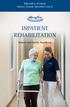 Henry Ford Macomb Hospitals Inpatient Rehabilitation Patient and Family Handbook Welcome At Henry Ford Macomb Hospitals, our goal is to help you become as independent as possible while achieving your
Living Our Values. VALUES: Teamwork, Integrity, Diversity, Excellence, Safety. The sick never inconvenience the well. ~ Eugene Stead, MD
 Living Our Values Caring for Our Patients, Their Loved Ones and Each Other VALUES: Teamwork, Integrity, Diversity, Excellence, Safety Duke University Health System Patient Experience Oversight Team 2012
Welcome to 5 South Geriatric Psychiatry
 Welcome to 5 South Geriatric Psychiatry Toronto Rehab For patients, families and caregivers Welcome to 5 South, the Geriatric Psychiatry Program at Toronto Rehab. This booklet will give you more information
When Short-Term Rehab Turns into a Long-Term Stay
 When Short-Term Rehab Turns into a Long-Term Stay Even if your family member moves to a longstay unit, he or she may be able to return home later -- if there is more progress, the home is prepared, and
NEW PATIENT CLINICAL INFORMATION FORM. Booth Gardner Parkinson s Care & Movement Disorders Center Evergreen Neuroscience Institute
 NEW PATIENT CLINICAL INFORMATION FORM Booth Gardner Parkinson s Care & Movement Disorders Center Evergreen Neuroscience Institute Date: Name: Referring Doctor: How did you hear about us? NWPF Your Physician:
Acute Care Pediatrics Unit
 Acute Care Pediatrics Unit 3F Peds/5 West Mattel Children s Hospital UCLA 757 Westwood Plaza Los Angeles, CA 90095-7403 3F Peds Main Phone: (310) 267-7320 5W Peds Main Phone: (310) 267-7530 Welcome Welcome
Comprehensive Nursing Home Checklist *
 Comprehensive Nursing Home Checklist * Nursing Home: Address: Phone Number: Website Address: Date of Visit: the Basics NOTES Is the nursing home Medicare-certified? How many beds are Medicare-certified?
How to care for your eye after surgery
 Ambulatory Care & Local Networks How to care for your eye after surgery Information for patients attending appointments at King s College Hospital only This leaflet explains what to expect after your eye
Interviewing a Social Work Candidate Questions and Suggested Responses
 Interviewing a Social Work Candidate Questions and Suggested Responses Selecting the best candidate for any position is important - time spent prior to hire may save time wasted on an improper hire. Asking
St Helens and Knowsley Teaching Hospitals NHS Trust. Useful Information for Outpatients
 St Helens and Knowsley Teaching Hospitals NHS Trust Useful Information for Outpatients Before you come into hospital Appointment reminder service Cancellations What to bring When you arrive Waiting times
CAHPS PQRS SURVEY 0938-1222
 CAHPS PQRS SURVEY According to the Paperwork Reduction Act of 1995, no persons are required to respond to a collection of information unless it displays a valid OMB control number. The valid OMB control
Health Science Career Field Allied Health and Nursing Pathway (JM)
 Health Science Career Field Allied Health and Nursing Pathway (JM) ODE Courses Possible Sinclair Courses CTAG Courses for approved programs Health Science and Technology 1 st course in the Career Field
Cardiac Catheter Lab Information for patients having a Coronary Angiogram
 Cardiac Catheter Lab Information for patients having a Coronary Angiogram Page 1 of 5 What is a Coronary Angiogram? This is a test that uses dye and special x-rays to show the inside of your coronary arteries.