
National Environment Protection (Ambient Air Quality) Measure
|
|
|
- Oliver Patterson
- 9 years ago
- Views:
Transcription
1 National Environment Protection (Ambient Air Quality) as amended made under section 20 of the National Environment Protection Council Act 1994 (Cwlth), National Environment Protection Council (New South Wales) Act 1995 (NSW), National Environment Protection Council (Victoria) Act 1995 (Vic), National Environment Protection Council (Queensland) Act 1994 (Qld), National Environment Protection Council (Western Australia) Act 1996 (WA), National Environment Protection Council (South Australia) Act 1995 (SA), National Environment Protection Council (Tasmania) Act 1995 (Tas), National Environment Protection Council Act 1994 (ACT) and the National Environment Protection Council (Northern Territory) Act 1994 (NT) This compilation was prepared on 7 July 2003 taking into account amendments up to Variation 2003 Prepared by the Office of Legislative Drafting, Attorney-General's Department, Canberra

2 Contents Page Contents Introductory Note 3 Part Preliminary Citation [see Note 1J Definitions Application Part 2 National environment protection goal Purpose of Part Desired environmental outcome National environment protection goal Part 3 National environment protection standards 7 8 Purpose of Part National environment protection standards 7 7 Part 4 National environment protection protocol Purpose of Part Monitoring plans Methods of measuring and assessing concentration of pollutants Accreditation of performance monitoring Location of performance monitoring stations Number of performance monitoring stations Trend stations Monitoring methods Evaluation of performance against standards and goal Reporting Schedule 1 Pollutants 11 Schedule 2 Standards and Goal 12 Schedule 3 Australian Standards Methods for Pollutant Monitoring 14 Schedule Protocol for Monitoring PM,. Location of monitoring for PM,. Number of performance monitoring stations for PM,. Monitoring methods for PM,. Evaluation of monitoring for PM,. Reporting Schedule 5 PM,. Equivalence Program 18 Notes 19 2.

3 Preliminary Part 1 Clause 2 Introductory Note Section 14 of the National Environment Protection Council Act 1994 and the equivalent provision of the corresponding Act of each participating State and Territory provides for the making of measures by the National Environment Protection Council and the matters to which they may relate. This relates to ambient air quality (section 14 (I) (a)). The is to be implemented by the laws and other arrangements participating jurisdictions consider necessary: see section 7 of the Commonwealth Act and the equivalent provision of the corresponding Act of each participating State and Territory. Part 1 Preliminary 1 Citation [see Note 11 This may be cited as the National Environment Protection (Ambient Air Quality). Note This commences on gazettal: see National Environment Protection Council Act s 21 and Acts Interpretation Act 1901, s 48 as applied by s 46A. 2 Definitions (I) This clause defines particular words and expressions used in this. (2) The words and expressions indicated by an asterisk are defined in the Commonwealth Act and are included for information only to assist readers of the. Minor changes from the definitions in the Commonwealth Act are indicated by square brackets ([ D. (3) In this : Advisory Reporting Standard means a health-based standard to assess the results of monitoring for particles as PM 2.5 These standards do not have a timeframe for compliance associated with them. * Agreement means the agreement made on 1 May 1992 between the Commonwealth, the States, the Australian Capital Territory, the Northern Territory and the Australian Local Government Association, a copy of which is set out in the Schedule [to the Commonwealth Act]. ambient air means the external air environment, it does not include the air environment inside buildings or structures. Commonwealth Act means the National Environment Protection Council Act 1994 of the Commonwealth. Continuous direct mass measurement technique means a method for continuously monitoring suspended particulate matter changes of particles 3

4 Part 1 Preliminary Section 2 in ambient air, providing near real time measurement of mean particle concentration. Council means the National Environment Protection Council established by section 8 of the Commonwealth Act and the equivalent provision of the corresponding Act of each participating State and Territory. Fire management means all activities associated with the management of fire prone land, including the use of fire to meet land management goals and objectives. Manual gravimetric method means a manual method for sampling particles by drawing air through a filter and determining the mass by weighing the filters. monitoring station means a faci I ity for measuring the concentration of one or more pollutants in the ambient air in a region or sub-region. 'national environment protection goal means a goal: (a) that relates to desired environmental outcomes; and (b) that guides the formulation of strategies for the management of human activities that may affect the environment. 'national environment protection protocol means a protocol that relates to the process to be followed in measuring environmental characteristics to determine: (a) whether a particular standard or goal is being met or achieved; or (b) the extent of the difference between the measured characteristic of the environment and a particular standard or a particular goal. national environment protection standard means a standard that consists of quantifiable characteristics of the environment against which environmental quality can be assessed. 'participating jurisdiction means the Commonwealth, a participating State or a participating Territory. 'participating State means a State: (a) that is a party to the Agreement: and (b) in which an Act that corresponds to [the Commonwealth] Act is in force in accordance with the Agreement. 'participating Territory means a Territory: (a) that is a party to the Agreement; and (b) in which an Act that corresponds to [the Commonwealth] Act is in force in accordance with the Agreement. particles as PMlO means particulate matter with an equivalent aerodynamic diameter of 10 micrometres or less. Particles as PM2.S means particulate matter with an equivalent aerodynamic diameter of 2.5 micrometres or less. performance monitoring station means a monitoring station used to measure achievement against the goal. pollutant means a pollutant mentioned in Schedule 1. ppm means parts per million by volume. 4

5 1 Preliminary Part 1 Clause 3 principal means the National Environment Protection (Ambient Air Quality). Reference method means the monitoring method used for collection of data that can be compared to the Advisory Reporting Standards. region means an area within a boundary surrounding population centres as determined by the relevant participating jurisdiction. sub-region means a populated area within a region whose air quality differs from other areas in the region due to the topography, meteorology and sources of pollutants. TEOM means tapered element oscillating microbalance. f.lg/m 3 means microgram per cubic metre referenced to a temperature of o degrees Celsius and an absolute pressure of kilopascals. 3 Application Participating jurisdictions must: (a) for carbon monoxide, nitrogen dioxide, photochemical oxidants (as ozone), sulfur dioxide, lead and particles as PMlO establish monitoring procedures and commence assessment and reporting in accordance with the Protocol in this, within 3 years after its commencement; (b) for particles as PM2.5 undertake monitoring and reporting in accordance with Schedule 4 and Schedule 5 in this. 5

6 Part 2 National environment protection goal Section 4 Part 2 National environment protection goal 4 Purpose of Part The purpose of this Part is to set out a goal: (a) that relates to the desired environmental outcomes; and (b) that guides the formulation of strategies for the management of human activities that may affect the environment. 5 Desired environmental outcome The desired environmental outcome of this is ambient air quality that allows for the adequate protection of human health and well-being. 6 National environment protection goal The National Environment Protection Goal of this is: (a) for carbon monoxide, nitrogen dioxide, photochemical oxidants (as ozone), sulfur dioxide, lead and particles as PM IO to achieve the National Environment Protection Standards as assessed in accordance with the monitoring protocol (Part 4) within ten years from commencement to the extent specified in Schedule 2 column 5; and (b) for particles as PM 2.5 to gather sufficient data to facilitate a review of the Advisory Reporting Standards as part of the review of this scheduled to commence in

7 National environment protection standards Part3 Clause 8 Part 3 National environment protection standards 7 Purpose of Part The purpose of this Part is to set standards that consist of quantifiable characteristics of the air against which ambient air quality can be assessed. 8 National environment protection standards (I) The national environment protection standards of this are the standards set out in Schedule 2. (2) For: (a) (b) each pollutant mentioned in table I of Schedule 2, the standard for an averaging period mentioned in the Schedule is the concentration in column 4 of table I of Schedule 2; particles as PM 25, the Advisory Reporting Standard for an averaging period mentioned in the Schedule is the concentration in column 3 of table 2 of Schedule 2.. 7

8 Part 4 National environment protection protocol Section 9 Part 4 National environment protection protocol 9 Purpose of Part The purpose of this Part is to set out the processes to be followed In measuring the concentration of pollutants in the air to determine: (a) whether the standards of this are being met; or (b) the extent of the difference between the measured concentration of pollutants in the air and the standards. 10 Monitoring plans (1) Each participating jurisdiction must ensure that a monitoring plan consistent with this Part is prepared setting out how the jurisdiction proposes to monitor air quality for the purposes of this. (2) Each monitoring plan must be submitted to Council. 11 Methods of measuring and assessing concentration of pollutants For the purpose of evaluating performance against the standards the concentration of pollutants in the air: (a) is to be measured at performance monitoring stations; or Note Because the concentrations of different pollutants vary across a region, it would not be necessary or appropriate to co-locate the measuring instrumentation for all pollutants at each perfonnance monitoring station. (b) is to be assessed by other means that provide information equivalent to measurements which would otherwise occur at a performance monitoring station. Note These methods could include, for example, the use of emission inventories, windfield and dispersion modelling, and comparisons with other regions. 12 Accreditation of performance monitoring (I) Subject to subclause (2) the operator of a performance monitoring station must be accredited by the National Association of Testing Authorities. (2) The operator may apply an equivalent system for ensuring adequate monitoring, quality assurance, and validation procedures. 13 Location of performance monitoring stations (I) To the extent practicable, performance monitoring stations should be sited in accordance with the requirements for Australian Standard AS (Ambient Air-Guide for Siting of Sampling Units). Any variations from AS must be notified to Council for use in assessing reports. 8

9 National environment protection protocol Part 4 Clause 16 (2) Performance monitoring station(s) must be located in a manner such that they contribute to obtaining a representative measure of the air quality likely to be experienced by the general population in the region or subregion. (3) A performance monitoring station should be operated in the same location for at least 5 years unless the integrity of the measurements is affected by unforeseen circumstances. 14 Number of performance monitoring stations (I) Subject to subclauses (2) and (3) below, the number of performance monitoring stations for a region with a population of 25,000 people or more must be the next whole number above the number calculated in accordance with the formula: 1.5P where P is the population of the region (in millions). (2) Additional performance monitoring stations may be needed where pollutant levels are influenced by local characteristics such as topography, weather or emission sources. (3) Fewer performance monitoring stations may be needed where it can be demonstrated that pollutant levels are reasonably expected to be consistently lower than the standards mentioned in this. 15 Trend stations (I) A number of performance monitoring stations in each participating State and participating Territory must be nominated as trend stations. (2) The number of performance monitoring stations to be nominated as trend stations must be sufficient to monitor and assess long term changes In ambient air quality in different parts of the jurisdiction. (3) A trend station must be operated in the same location for one or more decades. 16 Monitoring methods (I) Subject to subclauses (2) and (3) the Australian Standard Methods set out in Schedule 3 should be used for monitoring pollutants in the air. (2) Where an Australian Standard Method has not yet been developed for a monitoring method, appropriate internationally recognised methods or standards may be used that provide equivalent information for assessment purposes. (3) Other monitoring methods may be used if: (a) calibration and validation studies show: (i) the accuracy and precision of the other method; and 9

10 Part 4 National environment protection protocol Section 17 (ii) the method can be compared with the relevant Australian Standard Method; and (b) the equipment used is calibrated to the standard required by the equipment manufacturer; and (c) the equipment provides equivalent information for assessment purposes. 17 Evaluation of performance against standards and goal (I) Each participating jurisdiction must evaluate its annual performance as set out in this clause. (2) For each performance monitoring station in the jurisdiction or assessment in accordance with subclause I I (b) there must be: (a) a determination of the exposed population in the region or sub-region represented by the station; and (b) an evaluation of performance against the standards and goal of this as: (i) meeting; or (ii) not meeting; or (iii) not demonstrated. (3) Jurisdictions may provide an evaluation of a region as a whole against the standards using appropriate methodologies that provide equivalent information for assessment purposes. (4) Performance must be evaluated as ' not demonstrated' if there has been no monitoring or no assessment by an approved alternative method as provided in clause (II). 18 Reporting (I) Each participating jurisdiction must submit a report on its compliance with the in an approved form to Council by the 30 June next following each reporting year. (2) In this clause reporting year means a year ending on 31 December. The report must include: (a) the evaluations and assessments mentioned in clause 17; and (b) an analysis of the extent to which the standards of this are, or are not, met in the jurisdiction; and (c) a statement of the progress made towards achieving the goal. (3) The description of the circumstances which led to exceedences, including the influence of natural events and fire management, must be reported to the extent that such information can be determined. (4) A report for a pollutant must include the percentage of data available in the reporting period. 10

11 Poliutants Schedule 1 Schedule 1 Pollutants Carbon monoxide Nitrogen dioxide Photochemical Oxidants (as Ozone) Sulfur dioxide Lead Particles 11

12 Schedule 2 Standards and Goal Schedule 2 Standards and Goal Table 1: Standards and Goal for Pollutants other than Particles as PM2.5 Column 1 Column 2 Column 3 Column 4 Column 5 Item Pollutant Averaging Maximum Goal within 10 years period concentration Maximum allowable exceedences I Carbon monoxide 8 hours 9.0 ppm I day a year 2 Nitrogen dioxide I hour 0.12 ppm I day a year I year 0.03 ppm none 3 Photochemical I hour 0.10 ppm I day a year oxidants (as ozone) 4 hours 0.08 ppm I day a year 4 Sulfur dioxide I hour 0.20 ppm I day a year I day 0.08 ppm I day a year I year 0.02 ppm none 5 Lead I year 0.50 ~g/m3 none 6 Particles as PM 10 I day 50 ~g!m3 5 days a year Table 2: Advisory Reporting Standards and Goal for Particles as PM 2.5 Column 1 Column 2 Column 3 Column 4 Pollutant Averaging Maximum Goal Period Concentration Goal is to gather sufficient data nationally to Particles as PM" I day 25 ~ g!m 3 facilitate a review of the Advisory Reporting Standards as part of the review of this I year 8 ~g!m 3 scheduled to commence in 2005 For the purposes of this the following definitions shall apply: (I) Lead sampling must be carried out for a period of 24 hours at least every sixth day. (2) ment of lead must be carried out on Total Suspended Particles (TSP) or its equivalent. (3) In Column 3, the averaging periods are defined as follows: I hour clock hour average 4 hour rolling 4 hour average based on I hour averages 8 hour rolling 8 hour average based on I hour averages I day calendar day average I year calendar year average 12

13 Standards and Goal Schedule 2 (4) In Column 5, the time periods are defined as follows: day calendar day during which the associated standard is exceeded year calendar year. (5) All averaging periods of 8 hours or less must be referenced by the end time of the averaging period. This determines the calendar day to which the averaging periods are assigned. (6) For the purposes of calculating and reporting 4 and 8 hour averages, the first rolling average in a calendar day ends at 1.00 am, and includes hours from the previous calendar day. (7) The concentrations in Column 4, are the arithmetic mean concentrations. National Environment Protection (Ambient Air Qualify) 13

14 Schedule 3 Australian Standards Methods for Pollutant Monitoring Schedule 3 Australian Standards Methods for Pollutant Monitoring Pollutant Method title Method number Carbon monoxide Determination of Carbon Monoxide-Direct AS Reading Instrumental Method Nitrogen dioxide Determination of Oxides of Nitrogen- AS Chemiluminescence Method Photochemical oxidants Determination of Ozone-Direct Reading AS (as ozone) Instrumental Method Sulfur dioxide Determination of Sulfur Dioxide-Direct Reading AS Instrumental Method Lead Determination of Particulate Lead-High Volume AS Sampler Gravimetric Co llection-flame Atomic Absorption Spectrometric Method Determination of Total Suspended Particulates (TSP) - High Volume Sampler Gravimetric Method AS Particles as PM IO Determination of Suspended Particulate Matter- AS PM" High Volume Sampler with Size Selective Inlet-Gravimetric Method Determination of Suspended Particulate Matter- PM IO Dichotomous Sampler-Gravimetric Method AS

15 Protocol for Monitoring PM 2.5 Schedule 4 Schedule 4 Protocol for Monitoring PM 2.5 Note Clauses II to 18 of the are not to be applied to PM,s. This Schedule sets out all applicable requirements for PM,.5. 1 Location of monitoring for PM2.5 ment and assessment of the concentration of PM2.5 in the air is to be undertaken at existing or planned performance monitoring stations specified for particles as PM lo under this as selected by participating jurisdictions. 2 Number of performance monitoring stations for PM2.5 (I) Each participating jurisdiction will establish at least one monitoring location for PM25 and commence monitoring in accordance with the Table below. Dates for Commencement of PM2.5 Monitoring in Participating Jurisdictions Jurisdiction Commencement Date New South Wales I January 2004 Victoria I January 2004 Queensland I January 2004 Western Australia I January 2004 South Australia I January 2004 Tasmania I July 2004* Australian Capital Territory 1 July 2004* Northern Territory 1 July 2004* '" These jurisdictions must commence monitoring on I July 2004 if resources are available and, if not, as soon as resources become available to ensure sufficient data are collected to infonn the review ofthis scheduled to commence in (2) Jurisdictions are encouraged to introduce monitoring for PM 2.5 at as many performance monitoring stations for PM]o as practicable. The extent of such monitoring may vary depending on the requirements and resources of the jurisdiction. 3 Monitoring methods for PM2.5 (1) The reference methods for monitoring particles as PM2.5 are reference, Class I and Class 2 equivalent manual gravimetric methods designated in the USEPA Federal Reference Method (USEPA reference method; US Code of Federal Regulations Title 40 Part 50 Appendix L Reference Method for the Determination of Fine Particulate Matter as PM 25 in the Atmosphere). 15

16 Schedule 4 Protocol for Monitoring PM'.5 (2) Continuous direct mass methods using a tapered element oscillating microbalance may also be used in addition to the reference method, however the values obtained by using these methods cannot be used for comparison with the Advisory Reporting Standards until the outcomes of the PM 2.5 Equivalence Program (Schedule 5) have been formally included in the Principal. (3) To enable the development of equivalent methods for monitoring PM2.5 as part of the review of this scheduled to commence in 2005, collocation of continuous direct mass monitors and reference samplers must be undertaken at a limited number of sites in accordance with Schedule 5. (4) Participating jurisdictions must reach agreement on the collocation of samplers to ensure that, nationally, a minimum of nine locations house collocated samplers and annual reporting to Council must include information on the collocation of samplers. 4 Evaluation of monitoring for PM 2.5 (1) Each participating jurisdiction must evaluate its monitoring results for PM2.5 in accordance with this clause. (2) For each PM2.5 performance monitoring station in the jurisdiction there must be: (a) a determination of the exposed population in the region or sub-region monitored by the station; and (b) a report on whether the PM2.5 Advisory Reporting Standards of this, as measured by the reference method, have been met. 5 Reporting (I) Each participating jurisdiction must submit a report on PM2.5 monitoring and data assessment in accordance with this clause to Council by the 30 June next following each reporting year. (2) In this clause reporting year means a year ending on 31 December. (3) The first report to Council will be for the 2003 reporting year for data currently being collected by jurisdictions. (4) The report must include: (a) an evaluation and assessment of all PM2.5 data collected by the reference method; (b) the evaluations and assessments outlined in clause 4 of this Schedule; (c) the number of times the monitored values (by the reference method) are greater than the Advisory Reporting Standards of this ; (d) all other PM2.5 data collected by other acceptable methods as outlined in this Schedule; and (e) the maximum 24-hour concentration of PM2.5 in each jurisdiction collected by any method specified in Schedule 4 of this Variation. 16

17 Protocol for Monitoring PM,s Schedule 4 (5) A description of the circumstances that led to monitored values (by the reference method) being greater than the Advisory Reporting Standards including the influence of natural events and fire management, must be reported to the extent that such information can be determined. (6) The report must include the percentage of data available in the reporting period. 17

18 Schedule 5 Equivalence Program2.5 Schedule 5 PM 2.5 Equivalence Program (1) Jurisdictions must undertake monitoring with collocated instruments for the purpose of determining equivalent methods for monitoring PM2.S in accordance with the Table in this Schedule and the requirements specified in the Technical Paper on Monitoring and Reporting for Particles as PM2.S. (2) At locations where reference method samplers are to be used. there is no requirement for equivalence studies to be undertaken, except where such locations have been designated as collocation sites. (3) If alternative PM2.5 monitoring methods are used, equivalence between the reference method and the alternative method must be demonstrated by collocation of samplers over a three-year period. (4) For jurisdictions undertaking equivalence monitoring, there must be at least one collocation site with a reference sampler run on a daily basis (preferred) or on a l-in-3 day operation (minimum requirement). (5) Data availability must exceed 75% and it is recommended that higher data recovery be achieved during seasons with expected elevated particle loadings. (6) To ensure national consistency with regard to the collection of PM2.S data, monitoring must be done in accordance with procedures specified in the Technical Paper on Monitoring and Reporting for Particles as PM2.S. Sites Proposed for the Equivalence Program Jurisdiction New South Wales Victoria Queensland Western Australia South Australia Tasmania Sampling Site Frequency Sampling Alternative (reference Period Method sampler) Earlwood I in 3 days 3 years PM,.,TEOM Richmond I in 3 days 3 years Alphington I in 3 days 3 years PM" TEOM Mooroolbark I in 3 days 3 years Springwood I in 3 days 3 years PM 25 TEOM Rocklea I in 3 days 3 years Duncraig 1 in 3 days 3 years PM,.5 TEOM Netley I in 3 days 3 years PM 2.,TEOM Launceston I in 3 days 3 years PM 2,TEOM Commencement Date 1 January 2004 I January 2004 I January 2004 I January 2004 I January 2004 I July

19 Notes to the Table of Instruments Notes to the National Environment Protection (Ambient Air Quality) Note 1 The (in force under section 20 of the National Environment Protection Council Act 1994 (Cwlth), National Environment Protection Council (New South Wales) Act 1995 (NSW), National Environment Protection Council (Victoria) Act 1995 (Vic), National Environment Protection Council (Queensland) Act 1994 (Qld), National Environment Protection Council (Western Australia) Act 1996 (W A), National Environment Protection Council (South Australia) Act 1995 (SA), National Environment Protection Council (Tasmania) Act 1995 (Tas), National Environment Protection Council Act 1994 (ACT) and the National Environment Protection Council (Northern Territory) Act 1994 (NT» as shown in this compilation is amended as indicated in the Tables below, Table of Instruments Title Date of notification in Gazette Date of commencement Application, saving or transitional provisions National Environment Protection (Ambient Air Quality) National Environment Protection (Ambient Air Quality) Variation, July 1998 (see 8 July 1998 c. 1 and Gazette 1998, No. GN27) 2 June2003 (see 2 June 2003 c. 1 and Gazette 2003, No. S 190) 19

20 Notes to the Table of Amendments Table of Amendments ad. = added or inserted am. = amended rep. = repealed rs. = repealed and substituted Provision affected How affected C. 2 C. 3. C. 6 am. Variation 2003 am. Variation 2003 am. Variation 2003 C. B am. Variation 2003 Schedule 2 Schedule 4.. SChedule 5.. am. Variation 2003 ad. Variation 2003 ad. Variation

Disability Discrimination Regulations 1996
 Disability Discrimination Regulations 1996 Statutory Rules 1996 No. 27 as amended made under the Disability Discrimination Act 1992 This compilation was prepared on 10 September 2009 taking into account
MAC-ENC-PRO-057 AIR QUALITY MONITORING PROGRAM
 MAC-ENC-PRO-057 AIR QUALITY MONITORING Document Owner Donna McLaughlin, Environment Superintendent Document Approver Rob Hayes, Manager Environment Revision History Version No. Date Published Details 1.2
Commonwealth of Puerto Rico/ Office of the Governor Puerto Rico Environmental Quality Board. Puerto Rico Air Monitoring Network Plan
 Commonwealth of Puerto Rico/ Office of the Governor Puerto Rico Environmental Quality Board Puerto Rico Air Network Plan Puerto Rico Air Network Plan 2014 Table of Contents LIST OF FIGURES... 4 ACRONYMS
Gosnells Dust Study. Ambient Air Quality Monitoring. Final Report. Delivering sustainable solutions in a more competitive world
 Gosnells Dust Study Ambient Air Quality Monitoring Final Report For Department for Planning and Infrastructure Government of Western Australia July 2006 0042183 www.erm.com Delivering sustainable solutions
COMMINSURE HOME INSURANCE PREMIUM, EXCESS AND DISCOUNT GUIDE.
 COMMINSURE HOME INSURANCE PREMIUM, EXCESS AND DISCOUNT GUIDE. This document provides you with information to help you understand how your total premium has been calculated, discounts that are available
TransCity Legacy Way Air Monitoring Network
 Accredited for compliance with ISO/IEC 17025. Accreditation No. 14184. TransCity Legacy Way Air Monitoring Network Ambient Air Quality Monitoring Validated Report 1 st June 2015 30 th June 2015 Report
Construction induction training - changes to regulations
 Construction induction training - changes to regulations General information for industry The Occupational Safety and Health Regulations (1996) have changed to reflect the national approach to construction
2) Relevance for environmental policy... 2. 4) Data sources and reporting... 5 5) References at the international level... 6
 A- 2: Ambient air quality in urban areas 1) General description... 2 1.1) Brief definition... 2 1.2) Units of measurement... 2 1.3) Context...2 2) Relevance for environmental policy... 2 2.1) Purpose...
Asbestos removal and licensing
 Applicant Guide Asbestos removal and licensing Includes: Asbestos removal and asbestos assessor licence and notifications of asbestos removal work, asbestos fibres and emergency demolition of structures
NSW Air Quality Monitoring Network: Quality Assurance Procedures
 NSW Air Quality Monitoring Network: Quality Assurance Procedures Copyright State of NSW and Office of Environment and Heritage With the exception of photographs, the State of NSW and Office of Environment
ASBESTOS REMOVAL LICENCE ASBESTOS NOTIFICATIONS
 GUIDE FOR APPLICANTS ASBESTOS REMOVAL LICENCE ASBESTOS NOTIFICATIONS TABLE OF CONTENTS INTRODUCTION... 2 WHY YOU NEED A LICENCE... 2 WHY YOU NEED TO NOTIFY... 2 LICENCE TYPES... 2 SCOPE... 2 WHO MAY APPLY
TR 07-03 SUPPLEMENTARY REQUIREMENTS FOR THE ACCREDITATION OF CONTINUOUS AMBIENT AIR QUALITY MONITORING STATIONS
 SUPPLEMENTARY REQUIREMENTS FOR THE ACCREDITATION OF CONTINUOUS AMBIENT AIR QUALITY MONITORING STATIONS Approved By: Chief Executive Officer: Ron Josias Senior Manager: Christinah Leballo Reviewed By: Testing
Asbestos licensing and notification guide for applicants
 Asbestos licensing and notification guide for applicants Use this guide if you are: applying for an asbestos removal work licence applying for an asbestos assessor licence notifying of asbestos removal
Vocational Education and Training (Commonwealth Powers) Bill 2012
 Vocational Education and Training (Commonwealth Powers) Bill 2012 Explanatory Notes Short title The Short title of the Bill is the Vocational Education and Training (Commonwealth Powers) Bill 2012. Policy
Guide for applicants for asbestos removal and asbestos assessor licences and notifications
 Guide for applicants for asbestos removal and asbestos assessor licences and notifications of asbestos removal work, asbestos fibres and emergency demolition of structures containing asbestos March 2013
NATIONAL PARTNERSHIP AGREEMENT ON E-HEALTH
 NATIONAL PARTNERSHIP AGREEMENT ON E-HEALTH Council of Australian Governments An agreement between the Commonwealth of Australia and the States and Territories, being: The State of New South Wales The State
Private Health Insurance (Lifetime Health Cover) Rules 2007
 Private Health Insurance (Lifetime Health Cover) Rules 2007 made under item 2 of the table in section 333-20 of the Private Health Insurance Act 2007. Compilation start date: 4 November 2010 Includes amendments
5C R I M I N A L J U S T I C E R E S O U R C E S
 5C R I M I N A L J U S T I C E R E S O U R C E S Justice expenditure According to the Report on Government Services (1998), the total government expenditure on justice in 1996/97 was approximately $5.4
Lead health monitoring report
 FORM 86 V13.3.12 Lead health monitoring report The person conducting the business or undertaking (PCBU) must: ensure that a registered medical practitioner with experience in health monitoring carries
Queensland Workplace Health & Safety Board - Key Statistical Indicators
 Workplace Health & Safety Queensland Queensland Workplace Health & Safety Board - Key Statistical Indicators Quarterly Update 1/2013-14 WHS Board Key Statistical Indicators November 2013 Page 1 of 19 CONTENTS
Good Practice Guide for Air Quality Monitoring and Data Management 2009
 Good Practice Guide for Air Quality Monitoring and Data Management 2009 This report may be cited as: Ministry for the Environment. 2009. Good Practice Guide for Air Quality Monitoring and Data Management
Ambient Air Monitoring Work plan For National Core (NCore) Monitoring Station
 Ambient Air Monitoring Work plan For National Core (NCore) Monitoring Station CBSA Louisville-Jefferson County KY-IN MSA Louisville Metro Air Pollution Control District 850 Barret Avenue Louisville, KY
Cost of investment management factors
 Cost of investment management factors Corey Plover Cumpston Sarjeant CONSULTING ACTUARIES 1. Background 1.1 The tables contained in this publication may be used to approximate the uplift required to meet
Health expenditure Australia 2011 12: analysis by sector
 Health expenditure Australia 2011 12: analysis by sector HEALTH AND WELFARE EXPENDITURE SERIES No. 51 HEALTH AND WELFARE EXPENDITURE SERIES Number 51 Health expenditure Australia 2011 12: analysis by sector
Policy Statement on. Associations. Eligibility to apply for a Scheme under Professional Standards Legislation May 2014
 Policy Statement on on Code Business of Conduct Entity Associations Eligibility to apply for a Scheme under Professional Standards Legislation May 2014 Table of Contents Professional Standards Council
2014 Residential Electricity Price Trends
 FINAL REPORT 2014 Residential Electricity Price Trends To COAG Energy Council 5 December 2014 Reference: EPR0040 2014 Residential Price Trends Inquiries Australian Energy Market Commission PO Box A2449
NATIONAL PARTNERSHIP AGREEMENT ON ENERGY EFFICIENCY
 NATIONAL PARTNERSHIP AGREEMENT ON ENERGY EFFICIENCY Council of Australian Governments An agreement between the Commonwealth of Australia and the States and Territories, being: The State of New South Wales
Accessing Buildings to Install Telecommunications Facilities
 Australia s regulator for broadcasting, the internet, radiocommunications and telecommunications www.acma.gov.au Accessing Buildings to Install Telecommunications Facilities The Australian Communications
Council of Ambulance Authorities
 Council of Ambulance Authorities National Patient Satisfaction Survey 2015 Prepared for: Mojca Bizjak-Mikic Manager, Data & Research The Council of Ambulance Authorities Prepared by: Dr Svetlana Bogomolova
Mesothelioma in Australia: Incidence (1982 to 2013) and Mortality (1997 to 2012)
 Mesothelioma in Australia: Incidence (1982 to 213) and Mortality (1997 to 212) 215 Disclaimer The information provided in this document can only assist you in the most general way. This document does not
Essential Standards for Registration
 Essential Standards for Registration State and Territory Registering Bodies Australian Capital Territory New South Wales Northern Territory Queensland South Australia Tasmania Victoria Western Australia
NATIONAL PARTNERSHIP AGREEMENT ON EARLY CHILDHOOD EDUCATION
 NATIONAL PARTNERSHIP AGREEMENT ON EARLY CHILDHOOD EDUCATION Council of Australian Governments An agreement between the Commonwealth of Australia and the States and Territories, being: the State of New
Ambient Air Monitoring at Deployment Locations in the Middle East
 Ambient Air Monitoring at Deployment Locations in the Middle East Presented by: John E. Kolivosky, P.E. 01 May 2015 DISCLAIMERS The views expressed in this presentation are those of the author and do not
Site Identification No.: 197809AAO Application No.: 15030051
 Project Summary for a Construction Permit Application from Midwest Generation for a Natural Gas Conversion Project for the Joliet Electric Generating Station Joliet, Illinois Site Identification No.: 197809AAO
Private Health Insurance (Benefit Requirements) Rules 2011
 Private Health Insurance (Benefit Requirements) Rules 2011 As amended Made under item 3A of the table in section 333-20 of the Private Health Insurance Act 2007. This compilation was prepared on 21 June
NATIONAL PARTNERSHIP AGREEMENT ON TAFE FEE WAIVERS FOR CHILDCARE QUALIFICATIONS
 NATIONAL PARTNERSHIP AGREEMENT ON TAFE FEE WAIVERS FOR CHILDCARE QUALIFICATIONS Council of Australian Governments An agreement between the Commonwealth of Australia and the States and Territories, being:
NATIONAL PARTNERSHIP AGREEMENT ON TRANSITIONING RESPONSIBILITIES FOR AGED CARE AND DISABILITY SERVICES
 National Partnership Agreement on Transitioning Responsibilities for Aged Care and Disability Services NATIONAL PARTNERSHIP AGREEMENT ON TRANSITIONING RESPONSIBILITIES FOR AGED CARE AND DISABILITY SERVICES
Report into the Rural, Regional and Remote Areas Lawyers Survey. Prepared by the Law Council of Australia and the Law Institute of Victoria
 Report into the Rural, Regional and Remote Areas Lawyers Survey Prepared by the Law Council of Australia and the Law Institute of Victoria July 2009 Acknowledgements The Law Council is grateful for the
Emissions estimate from forest fires: methodology, software and European case studies
 Emissions estimate from forest fires: methodology, software and European case studies Carlo Trozzi, Rita Vaccaro, Enzo Piscitello Techne srl, Via Nicola Zabaglia, 3 I00153 Roma, Italy [email protected]
FOREIGN LAWYERS AND THE PRACTISE OF FOREIGN LAW IN AUSTRALIA
 FOREIGN LAWYERS AND THE PRACTISE OF FOREIGN LAW IN AUSTRALIA AN INFORMATION PAPER LAW COUNCIL OF AUSTRALIA Disclaimer This information paper has been prepared by the Law Council of Australia with the aim
NOVEL STRATEGIES FOR ASSESSMENT OF AMBIENT AIR QUALITY USING GIS AND ONLINE POLLUTION MONITORING TOOLS I. Jaykumar 2, V. Hima Bindu 2, P.
 NOVEL STRATEGIES FOR ASSESSMENT OF AMBIENT AIR QUALITY USING GIS AND ONLINE POLLUTION MONITORING TOOLS I. Jaykumar 2, V. Hima Bindu 2, P.V Mukunda Rao 2, G. Sagareshwar 2 K.V. Ramani 3, & Y. Anjaneyulu
Feedback on the Inquiry into Serious Injury. Presented to the Road Safety Committee of the Parliament of Victoria. 08 May 2013
 Feedback on the Inquiry into Serious Injury Presented to the Road Safety Committee of the Parliament of Victoria 08 May 2013 About the APA The Australian Physiotherapy Association (APA) is the peak body
WorkCover claims. Report 18: 2014 15
 Report 18: 2014 15 Queensland Audit Office Location Level 14, 53 Albert Street, Brisbane Qld 4000 PO Box 15396, City East Qld 4002 Telephone (07) 3149 6000 Email Online [email protected] www.qao.qld.gov.au
O 3 PM 10. Appendix 5. Ambient Air Monitoring Programs Around Australia. National Environment Protection (Ambient Air Quality) Measure
 SOCO National Environment Protection (Ambient Air Quality) Measure Report of the Risk Assessment Taskforce 2 Appendix 5 Pb NO 2 Ambient Air Monitoring Programs Around Australia PM 10 O 3 CONTENTS 1. Introduction...
heavy motor Product Profile
 heavy motor Product Profile Heavy Motor Product Profile Lumley Insurance Heavy Motor provides insurance protection via market leading wordings, risk management and claims service, delivering holistic risk
(Adopted May 6, 1977)(Amended June 2, 1978) (Amended April 4, 1980)(Amended July 9, 1982) (Amended September 8, 1995)(Amended June 13, 1997)
 (Adopted May 6, 1977)(Amended June 2, 1978) (Amended April 4, 1980)(Amended July 9, 1982) (Amended September 8, 1995)(Amended June 13, 1997) RULE 701. AIR POLLUTION EMERGENCY CONTINGENCY ACTIONS (a) Applicability
Oil and Gas Air Quality Regulations and Permitting
 Oil and Gas Air Quality Regulations and Permitting Adam Berig Olsson Associates Colorado Springs Oil and Gas Committee Presentation February 2012 Who Regulates Air Quality? United States Environmental
Defence Housing Australia
 Defence Housing Australia Australian Government Competitive Neutrality Complaints Office Investigation No. 13 COMMONWEALTH OF AUSTRALIA 2008 ISBN 978 1 74037 251 0 This work is subject to copyright. Apart
A Guide for Local Authorities Purchasing Air Quality Monitoring Equipment
 REPORT A Guide for Local Authorities Purchasing Air Quality Monitoring Equipment A report produced for the Department for Environment, Food and Rural Affairs, the Scottish Executive, the Welsh Assembly
Australia & New Zealand. Return to Work Monitor 2011/12. Heads of Workers Compensation Authorities
 Australia & New Zealand Return to Work Monitor 2011/12 Prepared for Heads of Workers Compensation Authorities July 2012 SUITE 3, 101-103 QUEENS PDE PO BOX 441, CLIFTON HILL, VICTORIA 3068 PHONE +613 9482
REGULATION IMPACT STATEMENT IMPLEMENTATION FOR ELECTRICITY METERS
 REGULATION IMPACT STATEMENT IMPLEMENTATION FOR ELECTRICITY METERS AUGUST 2012 Contents 1. INTRODUCTION... 1 1.1 The National Measurement Institute (NMI)... 1 1.2 Definitions... 1 1.2.1 Electricity Meter...
NATIONAL PARTNERSHIP AGREEMENT ON THE NATIONAL QUALITY AGENDA FOR EARLY CHILDHOOD EDUCATION AND CARE
 NATIONAL PARTNERSHIP AGREEMENT ON THE NATIONAL QUALITY AGENDA FOR EARLY CHILDHOOD EDUCATION AND CARE Council of Australian Governments An agreement between the Commonwealth of Australia and the States
AMBIENT AIR QUALITY MONITORING SYSTEM. Air Quality Monitoring... Easier. Faster. Better. www.chemtrols.com
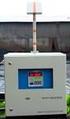 AMBIENT AIR QUALITY MONITORING SYSTEM Air Quality Monitoring... Easier. Faster. Better. www.chemtrols.com AMBIENT AIR QUALITY MONITORING FROM CHEMTROLS Chemtrols is a leading solution provider in the field
Teacher Performance and Development in Australia
 AITSL is funded by the Australian Government Teacher Performance and Development in Australia A mapping and analysis of current practice March 2012 Graham Marshall, Peter Cole and Vic Zbar Contents Background...
COMMONWEALTH CONSTRUCTION INDUCTION TRAINING CARDS. Guidance material
 COMMONWEALTH CONSTRUCTION INDUCTION TRAINING CARDS Guidance material CONTENTS INTRODUCTION 3 WHAT IS GENERAL CONSTRUCTION INDUCTION TRAINING? 3 WHO CAN PROVIDE GENERAL CONSTRUCTION INDUCTION TRAINING?
Master Builders Australia NATIONAL ASBESTOS MANAGEMENT CONTROL AND REMOVAL POLICY
 Master Builders Australia NATIONAL ASBESTOS MANAGEMENT CONTROL AND REMOVAL POLICY 2015 Master Builders Australia Limited 2015. Master Builders Australia Limited ABN 68 137 130 182 Level 1, 16 Bentham Street
PUBLIC SECTOR AUDITING: A COMPARATIVE ANALYSIS OF THE ENABLING LEGISLATION OF THE AUDITORS-GENERAL OF AUSTRALIA #
 1 PUBLIC SECTOR AUDITING: A COMPARATIVE ANALYSIS OF THE ENABLING LEGISLATION OF THE AUDITORS-GENERAL OF AUSTRALIA # By Mr. Michael De Martinis* School of Accounting and Finance Victoria University of Technology
Notice of Child Abuse, Family Violence or Risk of Family Violence
 FAMILY COURT OF AUSTRALIA Notice of Child Abuse, Family Violence or Risk of Family Violence www.familycourt.gov.au This form is to be used: (a) when allegations of child abuse or risk of child abuse are
Aboriginal and Torres Strait Islander Health Workers / Practitioners in focus
 Aboriginal and Torres Strait Islander Health Workers / Practitioners in focus i Contents Introduction... 1 What is an Aboriginal and Torres Strait Islander Health Worker?... 2 How are Aboriginal and Torres
The Year of Living Dangerously
 The Year of Living Dangerously January 2011 Suncorp Life Accident Series Disclaimer Suncorp Life s Year of Living Dangerously report examines data prepared, published and publicly available from the Australian
COMPLIANCE FRAMEWORK AND REPORTING GUIDELINES
 COMPLIANCE FRAMEWORK AND REPORTING GUIDELINES DRAFT FOR CONSULTATION June 2015 38 Cavenagh Street DARWIN NT 0800 Postal Address GPO Box 915 DARWIN NT 0801 Email: [email protected] Website:
Assistance in the private sector. 11 Rent assistance in the private market...28. 12 Home ownership assistance...31
 Assistance in the private sector 11 Rent assistance in the private market...28 12 Home ownership assistance...31 27 11. Rent assistance in the private market Rent assistance to tenants in the private rental
Report on the National Quality Framework & Regulatory Burden
 Report on the National Quality Framework & Regulatory Burden 2013 Report on the National Quality Framework and Regulatory Burden Overview The National Quality Framework (NQF) was introduced to improve
ISSUES PAPER LEGAL REPRESENTATION AND JURISDICTIONAL LIMIT IN SMALL CLAIMS
 DEPARTMENT OF THE ATTORNEY-GENERAL AND JUSTICE ISSUES PAPER LEGAL REPRESENTATION AND JURISDICTIONAL LIMIT IN SMALL CLAIMS June 2013 Legal Policy Division Department of the Attorney-General and Justice
Statistical appendix. A.1 Introduction
 A Statistical appendix A.1 Introduction This appendix contains contextual information to assist the interpretation of the performance indicators presented in the Report. The following four key factors
WHISTLEBLOWERS LEGISLATION
 Northern Territory Law Reform Committee Report on WHISTLEBLOWERS LEGISLATION Report No. 26 December 2002 2. Recommendations 1. The Committee recommends that, if the Legislative Assembly of the Northern
AUSTRALIAN PUBLIC LIBRARIES STATISTICAL REPORT 2011-2012
 AUSTRALIAN PUBLIC LIBRARIES STATISTICAL REPORT 2011-2012 Compiled by Regional Access and Public Libraries, State Library of Queensland July 2013 Foreword The National Library and the State and Territory
The Australian Government. Department of Health and Ageing. Medicare Benefits Schedule Allied Health Services
 The Australian Government Department of Health and Ageing Medicare Benefits Schedule Allied Health Services 1 November 2007 PART 3 PSYCHOLOGICAL THERAPY SERVICES FOR PATIENTS WITH AN ASSESSED MENTAL DISORDER
Past and projected future components of electricity supply to the ACT, and resultant emissions intensity of electricity supplied
 Past and projected future components of electricity supply to the ACT, and resultant emissions intensity of electricity supplied transport community industrial & mining carbon & energy Prepared for: ACT
Registration standard: Endorsement as a nurse practitioner
 Registration standard: Endorsement as a nurse practitioner Consultation report February 2016 Nursing and Midwifery Board of Australia G.P.O. Box 9958 Melbourne VIC 3001 www.nursingmidwiferyboard.gov.au
Australian Catholic Schools 2012
 Australian Catholic Schools 2012 Foreword Australian Catholic Schools 2012 is the tenth annual report on enrolment trends in Catholic schools from the NCEC Data Committee. As with previous editions, this
Notice of Child Abuse, Family Violence, or Risk of Family Violence
 family court of australia Notice of Child Abuse, Family Violence, or Risk of Family Violence Form 4 www.familycourt.gov.au Use this form in all proceedings for an order under Part VII commenced before,
Small business guide to trade practices compliance programs. April 2006
 Small business guide to trade practices compliance programs April 2006 Commonwealth of Australia 2006 ISBN 1 920702 93 8 This work is copyright. Apart from any use permitted under the Copyright Act 1968
National Environment Protection (Ambient Air Quality) Measure. Appendix 6
 SOCO National Environment Protection (Ambient Air Quality) Measure Report of the Risk Assessment Taskforce 2 Appendix 6 Pb NO 2 Possible use of Health Risk Assessment in the Review of NEPM Pollutants Specified
The Regulatory Role of Chemical Mechanisms and Future Needs
 The Regulatory Role of Chemical Mechanisms and Future Needs Ajith Kaduwela Planning and Technical Support Division Air Resources Board California Environmental Protection Agency Department of Land, Air