
KEY STATISTICS REQUIRED UNDER THE CARICOM CSME
|
|
|
- Louise Logan
- 9 years ago
- Views:
Transcription
1 ECCB/IMF International Conference on Statistics LIMITED Basseterre, St. Kitts and Nevis LC/CAR/L September September 2007 ORIGINAL: ENGLISH KEY STATISTICS REQUIRED UNDER THE CARICOM CSME This document has been reproduced without formal editing.

2 Table of contents I. INTRODUCTION, BACKGROUND AND OBJECTIVES... 1 II. MONITORING THE ACHIEVEMENT OF THE OBJECTIVES OF THE CSME... 1 III. KEY STATISTICS REQUIRED UNDER THE CSME... 2 A. Economic statistics... 2 B. Social, demographic and environmental statistics and indicators... 4 IV. CONCLUSION... 6 Annex Annex

3 I. INTRODUCTION, BACKGROUND AND OBJECTIVES The Caribbean Community (CARICOM) Single Market and Economy (CSME) seeks to foster regional growth and development among its member States. Even though the key objective of the CSME is the development of the member States, it is not a political union, as such, but represents a deepening of the integration process. This will be achieved through the creation of an integrated market for goods and services and the free flow of capital and individuals across traditional borders. The essential philosophical underpinning in the CSME is the creation of a single economic space which in reality means the removal of all barriers that prevent the combining of the physical, natural and human resources of the existing CARICOM states. Since the CSME will comprise one single economic space, natural and physical boundaries will be broken down, goods, services and individuals will be able to move freely within the space which will in effect be one large agglomerated country for all economic, social and environmental activities. It is noted that under this regime the harmonization and coordination of all processes will be crucial to the successful functioning of the CSME. The following are the primary specific objectives of the CSME: a) Full employment. b) Improved standards of living. c) Economic development convergence. d) Enhanced international competitiveness. e) Increased production and productivity. f) Trade and economic expansion. g) Increased economic leverage and effectiveness in the international arena. h) Coordination of foreign economic policies and relations with third States or group of States. i) Enhancement of functional cooperation. II. MONITORING THE ACHIEVEMENT OF THE OBJECTIVES OF THE CSME In order to ensure the achievement of the objectives of the CSME, the regular and timely production by all member States of a broad scope of statistics and indicators will be crucial. These statistics and indicators will provide the essential tools to assist in monitoring and evaluating the achievement of the key objectives of the CSME. The good news is that even though some of these statistics and indicators will be new to the subregion, considerable progress has already been made and continues to be made in the production of most of these key statistics in several member States. Recognition must be made of the fact, however, that a few member States are still lagging far behind the others and efforts must be accelerated to address this. The approach in this paper is to consider each crucial area of statistics individually, and present and discuss some details highlighting in general where the subregion is with respect to

4 2 the regular and timely production of the respective area of statistics. The paper concludes with a discussion of some of the major challenges facing statistical development and progress in the subregion. III. KEY STATISTICS REQUIRED UNDER THE CSME A. Economic statistics In the area of economic statistics, the four pillars that conventionally support rigorous economic analysis: the national accounts, balance of payments (BOP), monetary statistics and Government Finance Statistics (GFS) will continue to be even more crucial under the CSME. Complementing these will be the need for a comprehensive set of timely external trade statistics (visible and invisible), prices and production statistics (more comprehensively for the agricultural sector), and labour force statistics. 1. The national accounts statistics The national accounts comprise a set of very comprehensive statistics on the real productive sector of the economy. Currently, most member States produce basic Gross Domestic Product (GDP) estimates and other main aggregates such as gross value added by the major economic sectors. However, a major constraint for several countries is the preparation of the GDP by the expenditure method. This is of high importance since other key aggregates depend on it. Two other major challenges in this area are the need to harmonize the national accounts statistics in accordance with the System of National Accounts (SNA) Over the past few years there have been several activities aimed at supporting member States to align their accounts with the SNA 1993, but only a few States have been able to take full advantage of these opportunities. One major setback here is the lack of basic data coupled with the perennial shortage of adequate human resources. Lack of data is also seriously affecting the generation of quarterly GDP estimates which remains a challenge for the subregion. Only one or two of the 15 member States currently produce quarterly GDP estimates and as the economies of the subregion improve, quarterly estimates will become more important. 2. The Balance of Payments (BOP) statistics In the subregion, the BOP statistics which provide a systematic summary of economic transactions between an economy and the rest of the world are often the responsibility of the central banks. The BOP rely heavily on the statistics on external trade in goods, which are often compiled by the national statistics offices. Over the years, most member States have developed a good trade data capture, compilation and reporting system for their trade in goods, but the same cannot be said for the more challenging area of statistics on trade in services, which is also a key component of the BOP. With respect to statistics on trade in services, it can be argued that the sub-area of tourism statistics may be the main area that any tangible progress has been made over the years, even though much work to improve the statistics in other service areas is ongoing. Work through Tourism Satellite Accounting (TSA) for a few member States has also been very

5 3 active in recent years as efforts increase to analyze the tourism sector as a separate entity because of its significance to the subregion. Considerable progress has therefore been made in the compilation of the BOP statistics. However, better statistics on trade in services can add considerable value to this branch of statistics. 3. Monetary statistics The monetary statistics also form part of the purview of the central banks in the subregion. Among other uses the key statistics coming from this source help to monitor the money supply which in turn can be very useful in monitoring and controlling inflation. Monetary statistics are perhaps the easiest to compile and are therefore usually very complete, timely and accurate. These statistics will continue to be very important for the CSME. 4. The Government Finance Statistics (GFS) The GFS are derived from the government s annual budget of income and expenditure. Most of the major aggregates relating to the transactions of government that are needed for financial and economic analysis can usually be obtained shortly after the close of the government s financial year. Timeliness and accuracy in the production of these statistics have been greatly enhanced during the past decade, when several member States adopted new computerized software systems to process the government s accounts. Undoubtedly, the GFS will continue to be very useful under the CSME. 5. External trade statistics External trade (in goods) statistics provide key inputs into several of the above sets of statistics and are crucial to economic analysis. Ever since the advent of CARICOM itself, the need for a comprehensive set of statistics on trade in goods was recognized. Of all the various areas of statistics, external trade statistics have therefore attracted most support in all the CARICOM member States. Currently, all countries produce a very comprehensive set of trade in goods statistics, but a few are still grappling with the problem of timeliness. Another shortcoming of the trade statistics is that even though the detailed transactions at the commodity level by country of origin and destination are available, some of the major trade indicators like the indices of export and import prices are not readily available. Since the national statistical offices are the guardians of the external trade statistics, and these provide the main inputs for the trade indicators, this agency should be given the responsibility to produce these indicators. As is the case for other statistics, with the advent of the CSME there will be pressures for wider accessibility of the trade statistics. Currently all requests are done manually by the staff of the CARICOM Secretariat. However, it is noted that recently the Inter-American Development Bank (IDB) approved a project to assist the CARICOM Secretariat in making the trade data more accessible directly by users. This will eliminate a large proportion of the manual tasks.

6 4 6. Agriculture statistics Agricultural statistics will become even more important than they currently are as the subregion continues to diversify in the agricultural sector and as the sector regains prominence. Many countries are realizing that whereas the conventional stock of natural resources, such as fuel, copper, gold, etc., are quickly diminishing, mother earth will always be a viable source of basic foods. As a consequence, more interest is being redirected to increase investment in the agricultural sector as the diversification programmes in this sector continue. But investment will also have to be made in familiar agricultural crops such as sugar cane production, bearing in mind the potential gains from the manufacture of ethanol. The conduct of agricultural censuses and surveys will therefore be revived in order to provide the necessary production statistics needed to maximize the development of the agricultural sector. In addition, the regular compilation of recurrent data on prices of agricultural commodities will have to be institutionalized in order to meet the market demands. 7. Labour force statistics A comprehensive set of labour force statistics will continue to be of crucial importance to the CSME as it achieves the objective of creating employment and enhancing the living conditions of the people of the subregion. Currently several member States are producing a broad scope of labour statistics from their regular labour force surveys. These will continue but will have to be expanded. For example, only a few countries are now producing statistics on labour costs even though these are key to the potential investor. Countries will also have to increase the frequency of the surveys to a quarterly basis since more rapid movements in the economy will require more frequent and updated analyses. A further need in this area will be for up-to-date labour market statistics generated through the establishment of labour market information systems. 8. Other statistics in this area Two other areas of statistics that should be flagged as important under the CSME are statistics on the national debt and on Information and Communications Technology (ICT). A very thorough job with the debt statistics continues to be done by the central banks of the subregion but much more attention needs to be paid to the collection, compilation, and dissemination of ICT statistics in order to achieve the goal of narrowing the digital divide. Even though in the upcoming census of population and housing some countries will include questions relating to ICT, this will not be sufficient. A more dynamic system of data collection, compilation and dissemination will have to be designed. B. Social, demographic and environmental statistics and indicators 1. Social and demographic statistics The CARICOM Secretariat has identified core sets of social, demographic and environmental indicators. The minimum tables showing these indicators are included in this paper as annexes 1 and 2. These indicators were determined by a select group of directors of

7 5 statistics of the region and endorsed by the larger forum of the Standing Committee of Caribbean Statisticians (SCCS) of the Secretariat. The first list comprises some 81 social and demographic indicators. Most of the 48 Millennium Development Goal (MDG) indicators are included here. The second list comprises the priority set of environment indicators which amount to 55. The results have shown that the capacity of member States to collect, compile and analyze social and demographic data on a recurrent basis through the use of administrative records, surveys and censuses needs to be significantly enhanced if they are to produce these indicators on a recurring basis. Currently, the administrative sources for some of these data are very faulty and, as a consequence, are not reliable agents for demographic data. The vital registration systems of the countries of the subregion, for example, continue to be plagued with problems of non and late reporting of vital events and the lack of automation of their systems. However, most countries do have reasonably good systems for the production of education and health statistics on an annual basis. This therefore leaves most of the other social and demographic data to be collected through surveys and censuses. Both means of data collection are very expensive and this is often the reason why countries of the subregion cannot use these sources regularly. All countries do conduct population censuses every decade, however, and for a few this may be the main source of data. 2. Environmental statistics The compilation of the environmental indicators present even more challenges since, thus far, only a few countries in the subregion have established environmental statistics capabilities. Hence, even more work needs to be focused in this sector. As a consequence, it is reported that even though various CARICOM member States agree to compile and share these indicators with the Secretariat on a continuous basis, several countries are reporting these very late or not at all. When the list of indicators was being compiled, it was recognized that due to the fact that the data producing agencies varied so much there should be close coordination and maximum cooperation among these agencies and with the national statistics office. The extent to which this cooperation has been enhanced is questionable. This certainly does not help the process of compiling and reporting of the indicators. In addition, human resource constraints may also be another major reason why some member States cannot respond to this challenge. 3. Migration statistics This is an area of statistics that is currently lacking in member States of the subregion. These statistics will be necessary to monitor the achievement of the objectives of the CSME to promote the free movement of people. For various policy reasons, authorities will need to know the extent of the movement of peoples and various socio-economic and demographic characteristics of those who move. Currently, only a limited amount of migration statistics is collected in the decennial censuses of population and housing. Even though this does provide a good snapshot of the immigration phenomenon at one point in time, only broad trends in the

8 6 sister phenomenon of emigration can be derived from these sources. A potential source of reasonably good migration statistics especially for the island States of the subregion is the administrative systems that will be set up to record the movements of people in and out of the various States. These systems will be computerized and since most movements will take place at the international airports of the island States, the problem of undocumented migration might not really affect the total count. Unfortunately, the same will not be true for countries like Belize, Guyana and Suriname with virtually open borders. However, migration statistics will be so important that a method must be found by countries to properly account for the movements of people in the economic space. 4. Gender statistics The CSME will also demand the production of a broader scope of gender statistics. Currently in this area of statistics, the authorities of most member States are attending to the need for their statistics to be produced by sex. However, of growing importance is the need for a broader scope of gender statistics particularly in the areas of domestic violence and time use and unpaid work for women who spend most of their time working in domestic duties. This is extremely important since the availability of statistics will enhance gender mainstreaming which is a primary goal for all member States of the subregion. IV. CONCLUSION In this paper an attempt is made to highlight some of the key statistics that will form the essential tools to assist in monitoring the achievement of the goals of the CSME. There is no doubt that there are and will be other key areas. To do a more thorough job on a topic like this would require more time during which a Users survey of key stakeholders could be carried out and analyzed for a more comprehensive report. A few users were consulted verbally but this was certainly too limited. Finally, a paper like this should not conclude without summarizing some of the more general and non-technical challenges. One of the most important challenges facing the subregion is the need to formulate and promote more evidenced-based policies. This would translate to the need for more timely and accurate statistics of a broader scope and the obvious need therefore, for statistical strengthening by the national governments. A second challenge is to identify appropriate incentives to attract and retain dedicated persons in the statistics profession. Thirdly, there is an urgent need to promote the sharing of experiences and best practices among member States. Finally, there is also urgent need for more collaboration and cooperation among agencies that are working in the field of statistics in the subregion.

9 7 Annex 1 PRIORITY LIST OF INDICATORS FOR THE CARICOM PROGRAMME ON STRENGTHENING CAPACITY IN THE COMPILATION OF SOCIAL/GENDER AND ENVIRONMENT STATISTICS AND INDICATORS IN THE CARICOM SUBREGION I. POPULATION 1. Total Population 2. Population by age group (0-4, 5-9, 10-14, 75-79, 80+) II. FAMILIES AND HOUSEHOLDS 1. Population by marital status and age group 2. Population by union status 3. Total Fertility Rate (births per woman) 4. Contraceptive use by union status, age group, rural/urban, type 5. Household by size and head of household III. WORK 1. Labour force participation rate by age group 2. Unemployment rate by age group 3. Employed population by employment status 4. Employed population by occupation 5. Employed population by industry 6. Employed population by urban/rural 7. Employed population by martial status 8. Employed population by hours worked per week 9. Population not in the labour force by activity and age 10. Employed population by educational attainment 11. Share of women in wage employment in the non-agricultural sector IV. ECONOMY 1. GDP growth rate 2. GDP per capita 3. Average monthly earnings by occupation (groups) 4. Income earners in households by sex of head of household

10 8 V. EDUCATION 1. Literacy rate and 25+ years 2. Population 10 years and over by level of education 3. School enrolment in primary level 4. School enrolment in secondary level 5. School enrolment in tertiary level 6. Progression, repetition and drop-out rates at primary/secondary level 7. Drop-out rates by reason at primary/secondary 8. Tertiary level enrolment by field of study 9. Enrolment in vocational training 10. Teachers in primary/secondary/third level of school 11. Net enrolment ratio in primary education 12. Proportion of children starting grade 1 who reach grade Ratio of girls to boys in primary, secondary and tertiary education 14. Ratio of literate females to males of year olds VI. HEALTH 1. Life expectancy at birth 2. Life expectancy at 5 years of age 3. Infant mortality rate 4. Under-five mortality rate 5. Maternal mortality ratio 6. Births attended by trained personnel by type of occupation 7. Population with disabilities by type of disability 8. Mortality rates by cause of death and age 9. Access to safe water 10. Access to sanitation 11. Hospitals/clinics per 1,000 persons 12. Physicians per 1,000 persons 13. Knowledge of HIV/AIDS by age and education 14. Persons treated for HIV/AIDS by level of education and age 15. Number of newly confirmed cases by risk group exposure category and age group 16. Health personnel trained in HIV/AIDS care and management by profession 17. Mortality from HIV/AIDS by age, occupation, rural/urban 18. HIV/AIDS mortality as a percentage of total mortality 19. Cumulative total of HIV/AIDS by age group 20. Crude birth rate (per 1,000 persons) 21. Crude death rate (per 1,000 persons) 22. Proportion of 1 year old children immunized against MMR, DPT, OPV & TB 23. HIV prevalence among year old pregnant women 24. Contraceptive prevalence rate 25. Number of children orphaned by HIV/AIDS

11 9 VII. CRIME 1. Crime rates by type of crime 2. Victims of violence by sex of offender and sex of the victim 3. Crime by urban/rural 4. Injury by urban/rural 5. Reported cases of domestic violence 6. Victims of violence by type of crime and age 7. Offenders by type of crime and age 8. Convictions by type of crime and age 9. Employed in judicial professions (lawyers, judges, police, prison personnel etc.) VIII. DECISION MAKING 1. Members of parliament 2. Persons in high managerial positions in public and private sector including selected public order and safety occupations 3. Population voting in parliamentary elections 4. Selected Senior-Level Positions in the Government Service 5. Persons employed as Legislators, Senior Officials and Managers 6. Persons employed by status in employment Employers and Own Account Workers IX. POVERTY 1. Proportion of population below $1 per day (PPP-values) 2. Poverty gap ratio [incidence x depth of poverty] 3. Share of poorest quintile in national consumption 4. Prevalence of underweight children (under five years of age) 5. Proportion of population below minimum level of dietary energy consumption (indigent)

12 10 Annex 2 PRIORITY LIST OF CORE INDICATORS FOR THE CARICOM PROGRAMME ENVIRONMENT COMPONENT I. POPULATION AND HOUSEHOLDS 1. Annual population growth rate 2. Population size urban / rural (Note: There is no need to collect data on the above two indicators of population) 3. Distribution of households by type of dwelling 4. Distribution of households by type of tenure 5. Distribution of households by type of materials of outer walls 6. Distribution of households by type of roof (Note: Proportion of households with access to secure tenure - MDG) II. TOURISM 1. Tourist intensity / growth 2. No. of tourist nights 3. Tourist penetration ratio a.. No. of cruise passenger arrivals b. No. of cruise ships arrivals 4. No. of rooms, beds and employees 5. Room occupancy rate 6. Estimates of visitor expenditure 7. No. of hotels by size 8. No. of hotels occupied by land area III. ENVIRONMENTAL HEALTH 1. Number of reported cases and incidence of environmentally related diseases (gastroenteritis, typhoid, malaria, dengue, cholera, accidental pesticide poisoning, respiratory diseases) 2. Distribution of households by main source of drinking water (Note: Proportion of population with sustainable access to an improved water source, urban / rural - MDG ) 3. Distribution of households by type of toilet facilities (Note: Proportion of urban population with access to improved sanitation -MDG)

13 11 IV. NATURAL DISASTER 1. Frequency and type 2. Economic loss 3. Human loss V. ENERGY 1. Consumption of energy and renewable energy (import/export) (Note: Energy use (kilogram oil equivalent) per US$1 gross domestic product (PPP) - MDG) 2. Distribution of households by fuel used for type of cooking (Note: Proportion of population using solid fuels - MDG) 3. Distribution of households by type of lighting VI. LAND USE 1. Total area 2. Land use 3. Land use change VII. AGRICULTURE 1. Use of fertilizer by type (N,P,K), weight 2. Use of pesticides by type (weight) (Note: total arable area and total area under Slash/Burn will be covered under Land Use section) VIII. WASTE 1. Disposal of waste a. Landfill b. Incineration c. Composting d. Re-cycling 2. Generation of waste by type and source / sector (household, industrial) 3. Toxic / Hazardous material (imported / exported)

14 12 IX. FRESH WATER 1. Quantity of water available 2. Water abstraction, water supply and water use a. water abstraction b. water supply c. Water use 3. Domestic consumption of water per capita 4. Water quality of rivers and lakes (concentration) X. AIR / CLIMATE 1. Emissions of pollutants by stationary and mobile sources a. CO 2 b. NO x c. SO 2 d. CH 4 e. Volatile Organic Compounds (VOCs) f. Pb (Note: Carbon dioxide (CO 2 ) emissions (per capita) - MDG ) 2. Consumption of ozone depleting substances CFC - MDG) XI. COASTAL ZONES 1. Total marine area (territorial sea area) 2. Protected marine area a. Protected marine area as % of total territorial sea area 3. Fish landings (weight) 4. Maximum sustainable yield for fisheries (weight/time) 5. Population growth in coastal areas XII. BIODIVERSITY 1. Ratio of area protected (as defined in IUCN classification) to maintain biological diversity to surface area - MDG (Note: in order to measure the indicator, it is required to collect data on total protected area (i.e. terrestrial and marine) and total surface area which includes terrestrial area plus any territorial sea area.) 2. Total land area 3. Protected land area a. Protected land area as % of total land area

15 13 XIII. FOREST 1. Total forest area (deforestation and reforestation can be generated) 2. Protected forest area 3. Protected forest area as % of total forest area 4. Forest area as % to land area (excludes inland waters; rivers, lakes etc.) (Note: Proportion of land area covered by forest - MDG) XIV. MINERALS 1. Production of gold, Aluminum or Bauxite, Sand & Gravel, Limestone, Crude oil Source: CARICOM Secretariat

Goal 1: Eradicate extreme poverty and hunger. 1. Proportion of population below $1 (PPP) per day a
 Annex II Revised Millennium Development Goal monitoring framework, including new targets and indicators, as recommended by the Inter-Agency and Expert Group on Millennium Development Goal Indicators At
Indicators of Sustainable Development Principles and Practices
 Indicators of Sustainable Development Principles and Practices Division for Sustainable Development United Nations Department of Economic and Social Affairs Policy demand for SD indicators (UNCED) Chapter
Development of Social Statistics in Indonesia: a brief note
 Development of Social Statistics in Indonesia: a brief note Wynandin Imawan [email protected] BPS Statistics Indonesia 29 September 2011 1 Legal Setting Institutional: Statistics Law No 16 1997; BPS Statistics
Population, Health, and Human Well-Being-- Nigeria
 Population, Health, and Human Well-Being-- EarthTrends Country Profiles Demographic and Health Indicators Total Population (in thousands of people) 195 29,79 176,775 2,519,495 22 12,47 683,782 6,211,82
Population, Health, and Human Well-Being-- Kuwait
 Population, Health, and Human Well-Being-- EarthTrends Country Profiles Demographic and Health Indicators Total Population (in thousands of people) 195 152 111,647 2,519,495 22 2,23 423,296 6,211,82 225
Annex 8: SDG Indicator Mapping
 Annex 8 SDG Indicator Mapping 1. Annex 8 responds to Executive Board decision below, regarding the refinement of indicators and targets of the Strategic Plan Integrated Results and Resources Framework
Population, Health, and Human Well-Being-- Benin
 Population, Health, and Human Well-Being-- Benin Demographic and Health Indicators Benin Sub- Saharan Africa World Total Population (in thousands of people) 1950 2,046 176,775 2,519,495 2002 6,629 683,782
INDICATOR REGION WORLD
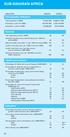 SUB-SAHARAN AFRICA INDICATOR REGION WORLD Demographic indicators Total population (2005) 713,457,000 6,449,371,000 Population under 18 (2005) 361,301,000 2,183,143,000 Population under 5 (2005) 119,555,000
Indicators of Sustainable Development: Guidelines and Methodologies
 E c o n o m i c & Indicators of Sustainable Development: Guidelines and Methodologies October 2007 Third Edition S o c i a l A f f a i r s United Nations Indicators of Sustainable Development: Guidelines
Aalborg Universitet. Responding to the Millennium Development Goals Enemark, Stig. Published in: Shaping the change. Publication date: 2006
 Aalborg Universitet Enemark, Stig Published in: Shaping the change Publication date: 2006 Document Version Publisher's PDF, also known as Version of record Link to publication from Aalborg University Citation
MDG INDONESIA: STATUS AND THE WAY FORWARD
 MDG INDONESIA: STATUS AND THE WAY FORWARD Endah Murniningtyas-National Development Planning Agency Widyono University of Indonesia Presented at the UN-DESA UN-ESCAP MDG Workshop Bangkok, 20-22 August 2008
Includ acc to all tabl and graphs in Excel TM
 100 INDICATORS FOR THE WORLD'S LEADING ECONOMIES Includ acc to all tabl and graphs in Excel TM OECD Factbook 2006 Economic, Environmental and Social Statistics Population and migration Macroeconomic trends
2.1 Net enrolment ratio in primary education
 2.1 Net enrolment ratio in primary education GOAL AND TARGET ADDRESSED Goal 2: Achieve universal primary education Target 2.A: Ensure that, by 2015, children everywhere, boys and girls alike, will be able
Evolution of informal employment in the Dominican Republic
 NOTES O N FORMALIZATION Evolution of informal employment in the Dominican Republic According to official estimates, between 2005 and 2010, informal employment fell from 58,6% to 47,9% as a proportion of
Ellen Hey Professor of Public International Law, Erasmus School of Law, Erasmus University Rotterdam
 THE PRINCIPLE OF COMMON BUT DIFFERENTIATED RESPONSIBILITIES Ellen Hey Professor of Public International Law, Erasmus School of Law, Erasmus University Rotterdam Short summary This lecture discusses the
Economic and Social Council
 United Nations E/ICEF/2013/P/L.16 Economic and Social Council Distr.: Limited 1 July 2013 Original: English For action United Nations Children s Fund Executive Board Second regular session 2013 3-6 September
HOUSING AND LAND RIGHTS NETWORK H a b i t a t I n t e r n a t i o n a l C o a l i t i o n
 HOUSING AND LAND RIGHTS NETWORK H a b i t a t I n t e r n a t i o n a l C o a l i t i o n National Habitat III Parallel-reporting Tool Evaluation of Habitat II Implementation Following the commitments
INDICATOR REGION WORLD
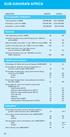 SUB-SAHARAN AFRICA INDICATOR REGION WORLD Demographic indicators Total population (2006) 748,886,000 6,577,236,000 Population under 18 (2006) 376,047,000 2,212,024,000 Population under 5 (2006) 125,254,000
Targets in the proposed SDGs framework
 Targets in the proposed SDGs framework Goal 3. Ensure healthy lives and promote well-being for all at all ages 3.2 By 2030, end preventable deaths of newborns and children under 5 years of age 3.6 By 2020,
Islamic Republic of Afghanistan Ministry of Public Health. Contents. Health Financing Policy 2012 2020
 Islamic Republic of Afghanistan Ministry of Public Health Contents Health Financing Policy 2012 2020 Table of Content 1. Introduction 1 1.1 Brief County Profile 1 1.2 Health Status Data 1 1.3 Sources
E c o n o m i c. S o c i a l A f f a i r s THE IMPACT OF AIDS. United Nations
 E c o n o m i c & THE IMPACT OF AIDS S o c i a l A f f a i r s United Nations ST/ESA/SER.A/229 Department of Economic and Social Affairs Population Division THE IMPACT OF AIDS United Nations New York,
CORRELATIONAL ANALYSIS BETWEEN TEENAGE PREGNANCY AND MATERNAL MORTALITY IN MALAWI
 CORRELATIONAL ANALYSIS BETWEEN TEENAGE PREGNANCY AND MATERNAL MORTALITY IN MALAWI Abiba Longwe-Ngwira and Nissily Mushani African Institute for Development Policy (AFIDEP) P.O. Box 31024, Lilongwe 3 Malawi
Trinidad and Tobago Strategic Actions for Children and GOTT-UNICEF Work Plan 2013-2014 1
 Trinidad and Tobago Strategic Actions for Children and GOTT-UNICEF Work Plan 2013-2014 1 The Trinidad and Tobago Strategic Actions for Children and the Government of Trinidad and Tobago-UNICEF Work Plan
Convention on the Elimination of All Forms of Discrimination against Women
 United Nations CEDAW/C/ETH/Q/6-7 Convention on the Elimination of All Forms of Discrimination against Women Distr.: General 4 November 2010 Original: English Committee on the Elimination of Discrimination
SIERRA LEONE UPDATES FROM THE INSTANBUL PRIORITY AREAS OF ACTION
 SIERRA LEONE UPDATES FROM THE INSTANBUL PRIORITY AREAS OF ACTION 1 OUTLINE OF PRESENTATION Recent Developments Istanbul Priority Areas of Action Poverty Levels Agenda for Prosperity Challenges Conclusion
Gender Country Profile
 Gender Country Profile Maldives By Erin MacDonald and Rosanne Wong Edited by Dania Sheldon Contents General... 1 Health... 2 Education... 2 Economic Activity... 3 Decision-Making... 3 Human Rights... 3
Proposal for a RECOMMENDATION OF THE EUROPEAN COMMISSION
 EUROPEAN COMMISSION Brussels, XXX [ ] (2013) XXX draft Proposal for a RECOMMENDATION OF THE EUROPEAN COMMISSION Providing minimum principles for the exploration and production of hydrocarbons (especially
G20 EMPLOYMENT WORKING GROUP COUNTRY SELF-REPORTING TEMPLATE ON IMPLEMENTATION OF G20 EMPLOYMENT PLANS
 G20 EMPLOYMENT WORKING GROUP COUNTRY SELF-REPORTING TEMPLATE ON IMPLEMENTATION OF G20 EMPLOYMENT PLANS Contents 1. Key economic and labour market indicators 2. Key policy indicators 3. Checklist of commitments
STATE UNIVERSITY OF NEW YORK COLLEGE OF TECHNOLOGY CANTON, NEW YORK COURSE OUTLINE ESCI 101 - INTRODUCTION TO ENVIRONMENTAL SCIENCE
 STATE UNIVERSITY OF NEW YORK COLLEGE OF TECHNOLOGY CANTON, NEW YORK COURSE OUTLINE ESCI 101 - INTRODUCTION TO ENVIRONMENTAL SCIENCE Prepared By: Rajiv Narula, Ph.D. SCHOOL OF SCIENCE, HEALTH, AND CRIMINAL
ACCOUNTING FOR ASIA S NATURAL CAPITAL
 ACCOUNTING FOR S NATURAL CAPITAL DRIVING THE TRANSITION TO A RESOURCE-EFFICIENT GREEN ECONOMY Asia s rapid economic growth during recent decades has been accompanied by serious depletion of the region
Statement by Dr. Sugiri Syarief, MPA
 Check against delivery_ Commission on Population and Development 45th Session Economic and Social Council Statement by Dr. Sugiri Syarief, MPA Chairperson of the National Population and Family Planning
East African Community Facts. and Figures - 2012
 EAST AFRICAN COMMUNITY SECRETARIAT East African Community Facts and Figures - 2012 ARUSHA, TANZANIA EAC Secretariat, AICC Building, 5 TH Floor Kilimanjaro Wing P.O. BOX 1096, Arusha, Tanzania. Tel: +255
PRESENTATION 2 MAJOR ENVIRONMENTAL PROBLEMS
 UNEP GLOBAL JUDGES PROGRAMME APPLICATION OF ENVIRONMENTAL LAW BY NATIONAL COURTS AND TRIBUNALS PRESENTATION 2 MAJOR ENVIRONMENTAL PROBLEMS OUTLINE OF PRESENTATION A) Major environmental issues B) Responses
RESOURCE EFFICIENCY SCOREBOARD DATA CENTRE ON NATURAL RESOURCES
 RESOURCE EFFICIENCY SCOREBOARD DATA CENTRE ON NATURAL RESOURCES NETGREEN thematic policy workshop 'Maximizing resource efficiency throughout the EU economy' 11 March 2015, CEPS, Brussels Evi Ford-Alexandraki
INDEX OF TABLES. II 8 Import Components of Final Uses, 1958 63... 26. III 1 The Balance of Payments, by Main Category, 1958 63 28
 INDEX OF TABLES PART ONE THE DEVELOPMENT OF THE ECONOMY CHAPTER I. MAIN ECONOMIC DEVELOPMENTS IN 1963 Table I 1 Indicators of Economic Development. 4 CHAPTER II. RESOURCES, USES, AND INCOMES II 1 Resources
The Smartest Targets For The WORLD 2016-2030
 The Smartest Targets For The WORLD 2016-2030 The World s Best Targets Right now, 193 governments negotiating Targets for 2016-2030 Most people don t know Development aid 2016-30: $2.5 trillion The World
IDEAS Energy Innovation Contest 2012 Winners
 IDEAS Energy Innovation Contest 2012 Winners Echos Consulting, Jamaica The Family Garden, Jamaica Caribbean ESCO Ltd., Jamaica N.V. VSH Foods, Suriname N.V. Guguplex Technologies, SAC, Suriname B2D, Haiti
Climate and Environment Advisers Competency Framework
 Climate and Environment Advisers Competency Framework Climate Change and Environment issues are fundamentally linked. Climate change causes and exacerbates the loss of biodiversity. The loss of biodiversity
2014-2017. UNICEF/NYHQ2012-1868/Noorani
 UNICEF STRATEGIC PLAN 2014-2017 UNICEF/NYHQ2012-1868/Noorani UNICEF s Strategic Plan 2014-2017 is a road map for the realization of the rights of every child. The equity strategy, emphasizing the most
Nigeria: Population and Demographic trends
 Nigeria: Population and Demographic trends Bolatito Ogunbiyi Atlas Fellow, Population Action International Nigeria Beyond the Headlines: Population Health, Natural Resources, and Governance The Woodrow
FEED THE FUTURE LEARNING AGENDA
 FEED THE FUTURE LEARNING AGENDA OBJECTIVE OF THE LEARNING AGENDA USAID s Bureau of Food Security will develop Feed the Future s (FTF) Learning Agenda, which includes key evaluation questions related to
Ireland and the EU 1973-2003 Economic and Social Change
 Ireland and the EU 1973-2003 Economic and Social Change Table 1 Population, 1971-2002 viii Table 2 Population of the provinces ix Table 3 Births, deaths and life expectancy ix Table 4 Numbers in education
DEPARTMENT OF FORESTRY DRAFT REVISED NATIONAL FOREST POLICY OF MALAWI
 DEPARTMENT OF FORESTRY DRAFT REVISED NATIONAL FOREST POLICY OF MALAWI July, 2013 1. Foreword 2. Preface 3. Introduction 4. Policy linkages 5. Broad Policy Direction 6. Policy Priority Areas Provides the
Intervention on behalf of Denmark, Norway and Ireland on the occasion of the Open Working Group on Sustainable Development Goals meeting on
 Intervention on behalf of Denmark, Norway and Ireland on the occasion of the Open Working Group on Sustainable Development Goals meeting on Sustainable Consumption and Production, including Chemicals and
How To Help The World Coffee Sector
 ICC 105 19 Rev. 1 16 October 2012 Original: English E International Coffee Council 109 th Session 24 28 September 2012 London, United Kingdom Strategic action plan for the International Coffee Organization
Physical flow accounts: principles and general concepts
 Physical flow accounts: principles and general concepts Julian Chow United Nations Statistics Division 1 st Sub-Regional Course on SEEA 23-27 September 2013 Malaysia SEEA Conceptual Framework Outside territory
GUIDE. MENA Gender Equality Profile Status of Girls and Women in the Middle East and North Africa
 GUIDE MENA Gender Equality Profile Status of Girls and Women in the Middle East and North Africa 1 IntroductIon The objective of the Middle East and North Africa (MENA) Gender Equality Profiles is to
The LP Gas Rural Energy Challenge Michael Kelly, Director, Market Development, World LP Gas Association (WLPGA)
 CSD-16 Partnerships Fair May 2008 The LP Gas Rural Energy Challenge Michael Kelly, Director, Market Development, World LP Gas Association (WLPGA) Introduction Access to affordable, reliable energy services
Presented by Prosper P. D. Asima Assistant Director of Immigra7on/PPMEU
 Data, Migration Profiles and How to Evaluate Migration s Impact on Development the case of Ghana 7 th -8 th May 2012, Millennium UN Plaza Hotel, New York Presented by Prosper P. D. Asima Assistant Director
DRAFT. 1. The statistical indicators to measure the impact of the mining industry on the economy:
 DRAFT 1. The statistical indicators to measure the impact of the mining industry on the economy: = Must have indicators (high priority) by green or ** asterisks = Good to have indicators (medium priority)
MINISTERIAL MEETING OF THE BLUE WEEK 2015
 5 JUNE 2015 MINISTERIAL MEETING OF THE BLUE WEEK 2015 We, Ministers responsible for Ocean/ Fisheries/ Maritime Affairs, having met in Lisbon on June the 5 th, 2015, at the invitation of the Minister of
Banjul Declaration on the Strategies for Accelerating the Implementation of the Dakar and Beijing Platforms for Action
 Distr.: GENERAL UNITED NATIONS ECONOMIC COMMISSION FOR AFRICA E/ECA/ARCW/8/11 15 December 2009 Original: ENGLISH Eighth Africa Regional Conference on Women (Beijing + 15) 19 20 November 2009 Banjul, The
SUMMARY TABLE OF FINDINGS Sudan Household Health Survey (SHHS) and Millennium Development Goals (MDG) indicators, Sudan, 2006
 SUMMARY TABLE OF FINDINGS Sudan Household Health Survey (SHHS) and Millennium Development Goals (MDG) indicators, Sudan, 2006 Topic CHILD MORTALITY Child mortality SHHS indicator number MDG indicator number
Measuring Women Status And Gender Statistics in Cambodia Through the Surveys and Census
 Global Forum on Gender Statistics 27 29 March 2012, Dead Sea, Jordan Measuring Women Status And Gender Statistics in Cambodia Through the Surveys and Census By Mrs. Hang Lina, Deputy Director General National
NATIONAL ACCOUNTS VS BIG DATA
 NATIONAL ACCOUNTS VS BIG DATA Enrico Giovannini, University of Rome Tor Vergata Department of Economics and Finance [email protected] Big Data (Wikipedia) Big data is a blanket term for any
CSCAP MEMORANDUM No. 15 The Security Implications of Climate Change
 CSCAP MEMORANDUM No. 15 The Security Implications of Climate Change A Memorandum from the Council for Security Cooperation in the Asia Pacific (CSCAP) June 2010 CSCAP Memorandum No. 15 The Security Implications
SECTOR ASSESMENT (SUMMARY): EDUCATION 1
 Country Partnership Strategy: Viet Nam, 2012 2015 SECTOR ASSESMENT (SUMMARY): EDUCATION 1 Sector Road Map 1. Sector Performance, Problems, and Opportunities 1. Country context. In Viet Nam, education is
Draft Resolution on Science, technology and innovation for development
 Draft Resolution on Science, technology and innovation for development The Economic and Social Council, Recognizing the role of the Commission on Science and Technology for Development as the United Nations
Workers health: global plan of action
 Workers health: global plan of action Sixtieth World Health Assembly 2 SIXTIETH WORLD HEALTH ASSEMBLY SIXTIETH WORLD HEALTH ASSEMBLY WHA60.26 Agenda item 12.13 23 May 2007 Workers health: global plan of
Global Urbanization: Trends, Patterns, Determinants, and Impacts. Abdullah Baqui, DrPH, MPH, MBBS Johns Hopkins University
 This work is licensed under a Creative Commons Attribution-NonCommercial-ShareAlike License. Your use of this material constitutes acceptance of that license and the conditions of use of materials on this
MEKELLE. ፼፼፼፼ ፼፼፼፼ ፼፼፼፼፼ ፼፼፼፼ Bright Africa Youth Association
 MEKELLE ፼፼፼፼ ፼፼፼፼ ፼፼፼፼፼ ፼፼፼፼ Bright Africa Youth Association 251-03-44-405787 Email:[email protected], [email protected] Mobile: 251-914-730055, 1765 [email protected] 251-914-733239 [email protected]
Driving Sustainable Development: the role of Science, Technology and Innovation
 G-SCIENCE ACADEMIES STATEMENTS 2013 Driving Sustainable Development: the role of Science, Technology and Innovation 1. Introduction The framework of Millennium Development Goals has led to several in-depth
REPUBLIC OF MAURITIUS MILLENNIUM DEVELOPMENT GOALS REPORT 2015
 REPUBLIC OF MAURITIUS MILLENNIUM DEVELOPMENT GOALS REPORT 2015 TABLE OF CONTENTS ii List of Tables iv List of Charts iv List of Boxes v Acronyms viii Foreword 1 Executive Summary 5 Background Information
ST.KITTS AND NEVIS STATISTICS DEPARTMENT
 CARIBBEAN COMMUNITY SECRETARIAT THIRTY FIRST MEETING OF THE STANDING COMMITTEE OF CARIBBEAN STATISTICIANS RESTRICTED SCCS/2006/31/18 Port of Spain, Trinidad and Tobago 6-8 November 2006 8 November 2006
Ref.: SCBD/MPO/AF/CR/84948 31 August 2015 N O T I F I C A T I O N. Preparation for the United Nations Sustainable Development Summit 2015
 Ref.: SCBD/MPO/AF/CR/84948 31 August 2015 Dear Madam/Sir, N O T I F I C A T I O N Preparation for the United Nations Sustainable Development Summit 2015 I am pleased to inform you that the President of
CARICOM ICT STATISTICS AND INDICATORS
 CARICOM ICT STATISTICS AND INDICATORS 2000 2012 STATISTICS SUB-PROGRAMME CARIBBEAN COMMUNITY (CARICOM) SECRETARIAT April 2014 i CARICOM ICT STATISTICS AND INDICATORS Copyright 2014, Caribbean Community
Revealing the costs of air pollution from industrial facilities in Europe a summary for policymakers
 Revealing the costs of air pollution from industrial facilities in Europe a summary for policymakers A new European Environment Agency (EEA report, Revealing the costs of air pollution from industrial
FOCUSING RESOURCES ON EFFECTIVE SCHOOL HEALTH:
 FOCUSING RESOURCES ON EFFECTIVE SCHOOL HEALTH: a FRESH Start to Enhancing the Quality and Equity of Education. World Education Forum 2000, Final Report To achieve our goal of Education For All, we the
Birmingham City University / Students Union Aspects and Impacts Register. Waste. Impacts description
 Birmingham City University / Students Union and Impacts Register Waste Production of non - hazardous waste Production of hazardous waste Storage of non - hazardous waste Potential for waste to be disposed
COMMITTEE ON THE RIGHTS OF THE CHILD. Twenty- Second Session CONSIDERATION OF REPORTS SUBMITTED BY STATES PARTIES UNDER ARTICLE 44 OF THE CONVENTION
 UNITED NATIONS CRC Convention on the Rights of the Child Distr. GENERAL CRC/C/15/Add.111 10 November 1999 Original: ENGLISH COMMITTEE ON THE RIGHTS OF THE CHILD Twenty- Second Session CONSIDERATION OF
Since achieving independence from Great Britain in 1963, Kenya has worked to improve its healthcare system.
 Medical Management Plan Kenya OVERVIEW Company Mission Our mission is to encourage young people to volunteer for worthwhile work in developing countries. We expect that doing this kind of voluntary work
CALL FOR PAPERS JOHANNESBURG SOUTH AFRICA, NOV. 30 DEC 4, 2015 DEMOGRAPHIC DIVIDEND IN AFRICA: PROSPECTS, OPPORTUNITIES AND CHALLENGES
 CALL FOR PAPERS 7 th African Population Conference JOHANNESBURG SOUTH AFRICA, NOV. 30 DEC 4, 2015 DEMOGRAPHIC DIVIDEND IN AFRICA: PROSPECTS, OPPORTUNITIES AND CHALLENGES Hosted by the Government of South
ESTIMATION OF QUARTERLY ACCOUNTS IN INDIA
 ESTIMATION OF QUARTERLY ACCOUNTS IN INDIA Ramesh Kolli 1 Additional Director General Ministry of Statistics and Programme Implementation, India I INTRODUCTION 1. The Central Statistical Organisation (CSO)
Equality between women and men
 Equality between women and men Gender equality means an equal visibility, empowerment, responsibility and participation of women and men in all spheres of public and private life. It also means an equal
National Accounting Systems, Agricultural Statistics for Policy Analysis
 National Accounting Systems, Agricultural Statistics for Policy Analysis Workshop on Measuring Sustainable Agriculture, Food Security and Poverty Alleviation for enhancing Accountability in the Post 2015
Draft Resolution on Science, technology and innovation for development
 1 Draft Resolution on Science, technology and innovation for development The Economic and Social Council, Recognizing the role of the Commission on Science and Technology for Development as the United
Proposed post-2015 education goals: Emphasizing equity, measurability and finance
 Education for All Global Monitoring Report Proposed post-2015 education goals: Emphasizing equity, measurability and finance INITIAL DRAFT FOR DISCUSSION March 2013 The six Education for All goals have
HEALTH TRANSITION AND ECONOMIC GROWTH IN SRI LANKA LESSONS OF THE PAST AND EMERGING ISSUES
 HEALTH TRANSITION AND ECONOMIC GROWTH IN SRI LANKA LESSONS OF THE PAST AND EMERGING ISSUES Dr. Godfrey Gunatilleke, Sri Lanka How the Presentation is Organized An Overview of the Health Transition in Sri
SUSTAINABLE TOURISM ON SMALL ISLANDS with special reference to Malta
 SUSTAINABLE TOURISM ON SMALL ISLANDS with special reference to Malta prepared by Lino Briguglio (University of Malta) ORGANISATION OF THIS PRESENTATION This presentation is divided in six sections: 1.
The People s Report Card: A Note On Methodology
 The People s Report Card: A Note On Methodology www.socialprogressimperative.org THE CONCEPT We need to help people understand what the Global Goals mean in a way that is relevant for their own lives.
PART 1 - ARMENIA: ECONOMIC GROWTH, POVERTY, AND LABOR MARKET DEVELOPMENT IN 2004-2007
 - ARMENIA: ECONOMIC GROWTH, POVERTY, AND LABOR MARKET DEVELOPMENT IN 2004-2007 CHAPTER 1: DEMOGRAPHICS AND MIGRATION The continuous decline in Armenia s population during the 1990s was first reversed in
Water in the SDG s - in a European context. Continued challenges, tasks, responsibilities and opportunities
 Water in the SDG s - in a European context Continued challenges, tasks, responsibilities and opportunities Dept. of Climate adaptation, Water sector and Ground water The SDG process following Rio +20 Danish
QUOTAS IN PRACTICE: THE CHALLENGE OF IMPLEMENTATION AND ENFORCEMENT IN RWANDA
 QUOTAS IN PRACTICE: THE CHALLENGE OF IMPLEMENTATION AND ENFORCEMENT IN RWANDA Honourable Judith Kanakuze, Member of Parliament, Chamber of Deputies, Kigali, Rwanda A paper presented at the International
INTENDED NATIONALLY DETERMINED CONTRIBUTIONS (INDCs)
 UNITED REPUBLIC OF TANZANIA INTENDED NATIONALLY DETERMINED CONTRIBUTIONS (INDCs) 1. Introduction The United Republic of Tanzania, which comprises of Tanzania Mainland and Zanzibar, brings forth her Intended
UNCSD Thematic Seminar on Waste Management. January 12, 2010
 UNCSD Thematic Seminar on Waste Management January 12, 2010 WASTE MANAGEMENT IN THE CARIBBEAN This presentation will look at the Strengths, Weaknesses, Opportunities and Threats related to waste management
Tourism and BoP Statistics in Austria
 Juergen Weiss Austria Baku, Azerbaijan 7-9 November 2012 and BoP in Austria Capacity Building, WS II, Baku 2012 www.statistik.at We provide information About me Jürgen Weiß Education Profession MA in Economics
Summary. Developing with Jobs
 Do not publish or DiStribute before 00:01 Gmt on tuesday 27 may 2014 Summary Developing with Jobs World of Work Report 2014 Developing with jobs Executive Summary INTERNATIONAL LABOUR ORGANIZATION RESEARCH
The Role of TVET Providers in Training for Employees: New Zealand paper
 APEC Forum on Human Resources Development, Chiba November 2008 The Role of TVET Providers in Training for Employees: New Zealand paper Executive Summary New Zealand needs to raise labour productivity if
Development and social justice: Education, training and health in Sudan Samia Satti Osman Mohamed Nour
 Working Paper Series #2013-013 Development and social justice: Education, training and health in Sudan Samia Satti Osman Mohamed Nour Maastricht Economic and social Research institute on Innovation and
Bolivia (Plurinational State of)
 Human Development Report 2015 Work for human development Briefing note for countries on the 2015 Human Development Report Bolivia (Plurinational Introduction The 2015 Human Development Report (HDR) Work
HAVING REGARD to Article 5 b) of the Convention on the Organisation for Economic Cooperation and Development of 14 December 1960;
 THE COUNCIL, HAVING REGARD to Article 5 b) of the Convention on the Organisation for Economic Cooperation and Development of 14 December 1960; HAVING REGARD to the 1976 Recommendation of the Council on
Ouagadougou Action Plan to Combat Trafficking In Human Beings, Especially Women and Children
 Ouagadougou Action Plan to Combat Trafficking In Human Beings, Especially Women and Children Introduction This booklet contains the Ouagadougou Action Plan to Combat Trafficking in Human Beings, Especially
Universal Health Coverage: Concepts and Principles. David B Evans, Director Health Systems Financing
 Universal Health Coverage: Concepts and Principles David B Evans, Director Health Systems Financing Outline Universal Coverage: definitions and the state of the world Health financing systems for Universal