
Technical Information. Hydrostatic Spindles. Hydrostatik by Hyprostatik. Innovative Spindle Concepts
|
|
|
- Hubert Lambert
- 10 years ago
- Views:
Transcription
1 Technical Information Hydrostatic Spindles Hydrostatik by Hyprostatik Innovative Spindle Concepts

2 2

3 Table of contents 1. Advantages and disadvantages of hydrostatic spindles Advantages of hydrostatic spindles Consequences of using spindles with hydrostatic bearings 4 2. Advantages of hydrostatic spindles with the Hyprostatik system (with PM-flow controller) 2.1 Higher function security by several times compared to capillary tube systems Minimal gap size in the radial bearing with load on the spindle Reduction of the minimal gap size in the bearing under load through oil heating Considerably higher load when using PM-flow controllers Almost unlimited load capacity by using PM-flow controllers Energy dissipation loss reduced several times and/or highly increased speeds Heating based on friction at high speeds, cooling the oil 6 3. Hydrostatic spindles Motor spindles of conventional design Hydrostatic, directly actuated grinding spindle Braking the grinding spindles in the event of power loss 8 4. Physical requirements when designing hydrostatic spindles Optimization possibilities for minimal energy dissipation Optimization for minimal energy dissipation and best possible vibration reduction 8 5. Bearing models Sealing Ventilation of the spindle bearings Requirements to supply the hydrostatic spindles Air removal Filtering of the hydrostatic fluid Cooling the oil Oil supply in the event of a power failure Pressure pumps Hydro units Examples of Hydrostatic Spindles Listed Motor Spindle for Grinding Belt Spindle for Grinding Motor Workhead Spindle Workhead Spindle for Direct Actuation Cam Grinding Spindle Disk Spindle for Two-Sided Grinding Lathe Motor Spindle Lathe Main Spindle HSK Milling Spindle Centre Spindles for Lathes Special hydro units for spindles 17 3

4 1. Advantages and disadvantages of hydrostatic spindles 1.1 Advantages of hydrostatic spindles: free of wear; excellent damping; high runout quality, not affected by wear; minimal bearing heating with corresponding highquality cooling of the oil outside of the bearing by conducting the heat from the spindle with the oil; minimal introduction of heat into the machine through the bearing, where thermally-caused displacements are minimal; supervision of the spindle by control of the pocket pressures. These advantages are achieved primarily also through hydrostatic spindles using capillaries. With our HYPROSTATIK system using our patented PM-flow controllers (progressive flow controllers), the following benefits are achieved compared to solutions with capillaries: multiple greater stiffness of the hydrostatic bearing; multiple reduced friction- and total loss energy through the use of the lowest viscous oils possible and water or emulsions; higher, up to doubled load capability through potential extension use of the pump pressure; practically cold, very temperature-stable spindle, based on the reduced friction. With a high-quality cooling of the oil outside of the spindle friction heat carry-off from the bearing with the oil; no introduction of heat to the machine through the spindle where thermally-caused dislocations can be prevented; higher damping values by several times in the lower and middle frequency range through computer optimization with sophisticated calculation programs; unrestricted (continuous) loading capacity even at the highest speeds; speed-independent bearing properties due to minimal oil heating. 1.2 Consequences of using spindles with hydrostatic bearings: Considerably higher procurement costs with fastrunning spindles through an additional required hydro unit with an oil re-cooling system; difficult optimal configuration; 2. Advantages of hydrostatic spindles with the Hyprostatik system (with PM-flow controller) 2.1 Higher function security by several times compared to capillary tube systems. When using capillaries to control the oil flow to supply hydrostatic pockets, the flow of oil through the capillaries is proportional to the differential pressure over these capillaries. The oil stream drops with constant pump pressure with a drop in pressure in the hydrostatic pocket. Here, compared to supply of the pockets with a constant oil stream when changing a load, a greater change in the gap height is required in order to achieve the required change in pocket pressure to receive the load. However, when you use our PM-flow controllers, a higher oil flow is fed to the hydrostatic pockets when pocket Minimal gap size in the radial bearing with load on the spindle. Due to the bent shape of the circular hydrostatic gap of radial bearings, the gap for the dislocation of the spindles in the bearing bore hole only directly under the load is minimized according to the spindle displacement. With an only for spindles with capillaries or comparable control systems but not with PM-flow controllers, at higher speeds, total risk of destruction even at average speeds. pressure increase. Here a smaller change of the gap height is required for same change of pocket pressure than with a constant stream of oil and much smaller compared to use of capillaries. With adaption of our PM-flow controller, theoretically a virtually unlimited stiffness can be achieved. By using our PM-flow controller instead of capillaries, a higher stiffness is achieved by several times and as a result, a dislocation is several times less than with capillaries. Realistically, it is possible to increase the stiffness by the approximately the factor of four. increasing angle to the load direction, the gap height reduction becomes smaller according to the cosine function. When a load is placed on a four-pocket radial bearing in the direction of the pocket land between two 4

5 hydrostatic pockets, the gap between these pockets remains unchanged at the angle 90º to the load direction through spindle displacement. Compared to hydrostatic pockets on even surfaces, with this bent shape of the hydrostatic gap a considerably higher displacement is required to achieve a comparable increase in the flow resistance. When supplying the pockets with hydrostatic radial bearings via capillaries, large displacements of the spindle are required due to the bent gap shape and the decreasing oil flow described in section 2. A load cannot be received several times due to the pump pressure and pocket surfaces because the spindle get contact before a sufficient increase of the flow resistance of the hydrostatic gap on the bearing bushing. This problem is compounded by the heating of oil during spindle rotation. When the loaded hydrostatic pockets are supplied via PMflow controllers, a considerably lower displacement occurs by increased oil flow. Thus, the effect of the comma-shaped hydrostatic gap is reduced. With the PM-flow controller, it is always possible as a result, to achieve a great increase in pressure in the pockets under load, with a sufficient minimal distance between the spindle and the bearing bush Reduction of the minimal gap size in the bearing under load through oil heating. The friction is, reverse, proportional to the gap size and increases with the square of the spindle speed. For hydrostatic pockets supplied via capillaries, as explained above, when under load the gap height of the pockets under load is greatly reduced, while the friction in these pockets greatly increases. The greatly increased friction warms the reduced volume of oil flowing through these pockets, while the oil temperature in the gaps of the pockets under load greatly increases and the viscosity is decreased considerably. The reduced oil viscosity must be compensated for by a greater displacement of the spindle when the load is unchanged. With increasing speed, i.e. declining viscosity of the oil in the pockets under load, the spindle displacement becomes greater and greater. With a sufficiently large load and spindle speed, the spindle displacement finally becomes so great that the result is contact between the spindle and bearing bore hole and the bearing becomes damaged or destroyed. This relationship, which was often not recognized in the past, is responsible for the failure of many hydrostatic spindles. If the hydrostatic pockets are supplied by a PM-flow controller, an increased volume of oil is fed into the pocket under load. The displacement of the spindles and thereby the friction increases under load considerably less than with pockets supplied by capillaries. Thus, the oil quantity which is also increased also heats up due to the friction of the reduced gap sizes of the hydrostatic pockets under load. When properly proportioned, the PM-flow controller can make the increase of the oil volume in the pockets under load equal to or greater than the increase in the friction in these pockets. The oil temperature in the pocket under load is not increased in relation to the bearing not under load even with high loads and the oil viscosity is not reduced, at times it is even increased. Thus, the risk of destruction does not occur when using our PM-flow controller as is known to occur with capillaries. 2.2 Considerably higher load when using PM-flow controllers. The PM-flow controller requires a lower differential pressure of maximum 10% of the pump pressure. Without a reserve, a maximum pocket pressure of 90% of the pump pressure is possible. Here the oil flow through the pockets under load is very great - e.g. double that as a bearing not under load, but a sufficiently large gap size results despite the high pocket pressure. For conventional configurations with our PM-flow controller, the pocket pressure in the pockets free of load as less than 10% of the pump pressure. Thus, with the PM-flow controller without reserve, 80% of the pump pressure can be used as a differential pressure between the pockets. Thus, a higher load is possible. If the bearing is under load up to a pocket pressure of 90% with capillaries, for conventional configurations, the oil flow into the pockets under load is reduced to 20% (!) of the oil stream for bearings free of load. Here the spindle would already contact the bearing bushing in general. With capillaries, therefore only an extreme pocket pressure of approx. 75% of the pump pressure is possible. 5

6 At conventional configurations, the pocket pressure drops in the unloaded pockets to only 35% of the pump pressure. Thus, when using capillaries, only a differential pressure between the pockets of approx. 40% of the pump pressure can be used. When a radial bearing is under load, by using our PM flowcontroller instead of capillaries, the increase of loadability is doubled with an unchanged pump pressure by approx. 100%! At high speeds, with hydrostatic bearings controlled by capillaries, the load can also be reduced based on the relationship shown in chapter 2.1.2, the load of the bearing can also be reduced so that, at high speeds, the load via bearings which are supplied by PM-flow controllers can be three times greater than those with capillaries. 2.3 Almost unlimited load capacity by using PM-flow controllers. As explained in section , the HYPROSTATIK hydrostatic spindle system can be loaded at least to the permissible maximum speed virtually without restrictions with the prescribed maximum load. For bearings supplied by capillaries, on the other hand, a considerable reduction of the maximum load is required. This also applies to spindles on roller bearing. 2.4 Energy dissipation loss reduced several times and/or highly increased speeds. A security criteria for a hydrostatic bearing is certainly the minimum size of the hydrostatic gap under maximum load. Comparable bearings will show same minimal gap sizes at a maximum load. Because in pockets under maximum load with supply via capillaries is greatly reduced but with supply via PM-flow controllers a greatly increased oil flow is supplied, it is generally possible to use a lower viscous oil with PM-flow controllers like with capillaries. There can be a reduction of friction power or a higher spindle speed is possible than with capillaries based on the PM-flow controller. A reduction of the friction to one third (!) or a higher maximum speed of the spindle by approx. 70% by using the PM-flow regulators are realistic. 2.5 Heating based on friction at high speeds, cooling the oil. Due to the reduced friction with PM-flow controllers - see section there is considerably reduced oil warming with comparable spindles then when supply is via capillaries. Because considerably lower pump pressure suffices than when using capillaries with a comparable load capacity with PM-flow regulators - see section 2.2. on this issue - the heating of oil is considerably lower with our PM-flow controller is considerably lower than with capillaries due to the capillaries. Particularly low oil heating is achieved if the spindles are designed with an increased oil flow. In particular at high speeds, a higher total loss power (= friction + pump capacity loss) must be expected than would be minimally possible with an optimal design. Another possibility to reduce the temperature change of the bearing parts due to the speed has to do with heating insulation of the spindles and the bearing parts. If, forexample, the bearing area on the spindle is ceramiccoated areas in the bearing which come in contact with oil escaping from bearings, have a plastic coating or are heat insulated through inserted plastic parts, heating of the bearing parts can be considerably reduced. The friction heat resulting in the oil is then almost completely transported out of the spindle. A prerequisite for minimal heating of the spindle is cooling of the oil to a temperature a few degrees under room temperature if at all possible. Furthermore, minimal heating of the oil should be attempted with a run of the spindle. Typical heating, each with a maximum speed, is between 6 and 12 º. The difference with this oil heating at different speeds is even smaller. With the aforementioned measures, the deviation in the temperature of the bearing parts can be limited from room temperature to approx. 3 to 1 ºC. Thus, an extremely cool bearing it is possible to achieve a minimal heat cycle and an extremely small amount is introduced to the machine. 6

7 3. Hydrostatic spindles 3.1 Motor spindles of conventional design. For motor spindles of a conventional design, the drive motor is arranged between both radial bearings. The result is that a relatively short motor spindle and no additional bearings are required as a bearing for the motor roller. The disadvantages of this concept are also extremely high: The considerable heat volume can only be carried out with a cooling system under certain conditions for highperformance motors in the motor rotor. This heat also migrates into the spindle and also results in thermallydictated position changes of the tool even if the motor stator has cooled as much as possible. The temperature increase in the spindle can be 60 to 100 ºC. In addition, this introduction of heat to the spindle results in various thermally-dictated changes of the bearing diameter of the spindles and the bearing boring. This is also a problem for roller bearings but completely unacceptable with the very stiff HYPROSTATIK System hydrostatic spindles. Due to the overall length of the motor, the distance of the radial bearing centres most generally be selected to be considerably greater than what is optimal and due to the prescribed bore diameter of the motor rotor, the spindle generally must be designed to fit thinly between both radial bearings, it is also relatively flexible, as a result of which the stiffness of the spindle is relatively small on the processing side and the dynamic stiffness is greatly reduced. The electromagnetic radial and axial vibrations are directed without restriction to the spindle bearing, which impedes the running quality of the spindles. This has a particularly negative effect on the hydrostatic bearing because the highest run quality is expected from this bearing and it is also achieved without the effect of the aforementioned motor forces. The motor data such as power, speed, dynamic properties etc. and also the motor supplier can only vary under some conditions. Another motor mostly requires another spindle. In the spindle with hydrostatic base, have not two but four sealing points (each bearing must be sealed by both sides). 3.2 Hydrostatic, directly actuated grinding spindle. In order to avoid the aforementioned disadvantages, The motor rotor is floating, i.e. attached at the end of HYPROSTATIK has developed the following alternative the spindle without a third radial bearing. A very heatresistant concept: plastic insulation is built in between the motor rotor and the spindle, which extensively prevents the transfer Instead of a motor spindle, a directly actuated spindle is used. The motor is arranged behind the spindle. In order to avoid the transfer of the motor hear to the spindle, a heat insulation wall is inserted between the motor and spindle. With this concept, virtually all of the disadvantages mentioned in section 3.1 are avoided. In some circumstances, higher motor temperatures, i.e. higher motor power can be permitted. A relatively short construction is also achieved with this concept using the following measures: of heat from the motor rotor to the spindle. A relatively short motor can be realized with this concept even with high output if motors with a larger diameter are possible. Under some circumstances, additional devices such as clamping devices can be placed in the motor rotor boring. The disadvantage of this solution is that the electromagnetic vibrations of the motor have an unrestricted effect on the spindle and thereby negatively impact the concentricity. One benefit is that no third bearing is required and the transfer of force of the clamp cylinders to the spindle is not a problem. The motor rotor and the spindle are two different parts. Two alternatives are possible in terms of coupling the motor rotor with the spindle: Alternatively, the motor rotor is arranged on bearings on the back of the end plate using service-free angular ball bearings. Rolling bearings with ceramic bearings are provided for high speeds. The front bearing of the motor rotor 7

8 is not required for this concept. The motor rotor is supported above a plastic bushing (for heat insulation) without a clearance at the end of the spindle. The turning torque is transferred via a clearance-free claw coupling (for heat insulation with plastic intermediate elements) directly from the motor rotor. The electro-magnetic vibrations of the motor are primarily transferred to the back bearing of the spindle only to a small degree. A disadvantage is the need for the third bearing, the larger structural length, additional efforts for an axially coupling capable of bearing between the motor shaft and the spindle to transfer the tension forces and the higher costs. Through an alternative bearing concept with two conical or spherical bearings, not only a thermally advantageous bearing can be achieved according to the concept above, but also the distance of the "effective bearing centres" with a set housing length can be considerably increased. With these concepts, not only the disadvantages described under item 3.1 are avoided, but also the following benefits are achieved: Without an effect on the spindle, drive motors with various outputs, speeds and by different manufacturers can be added on, if the interface for the spindle is taken into account. With the corresponding design of the interface, in some cases the motor can be replaced without disassembling the bearing or in some cases the spindle can be replaced and the motor remains in the machine. 3.3 Braking the grinding spindles in the event of power loss. In the event of a power loss, the pump pressure to maintain the spindle must be maintained as long as possible until the spindle stops. In order to limit the effort by the hydro unit, the spindle must be braked to a stop as soon as possible. Alternatively, this can be achieved using additional brakes or by brakes using the possibilities of the drive motor. Here we prefer the following solution: For modern tool machines, the spindle drive is generally controlled via a frequency transformer. With the lowviscous oils required for the high speed for spindles, specially constructed pressure limit valves are problematic from the perspective of dynamics. That is why we use very low-pulsation internal gear pumps and adjust the pump pressure using a pressure sensor in the pump pressure line and a frequency transformer by adjusting the speed of the pump motor. With a comparably small accumulator, the control circuit becomes sufficiently sluggish so that the pump pressure is kept constant in sufficiently narrow limits. A pressure limit valve with an opening pressure considerably above the prescribed pump pressure is only used as a safety valve, i.e. it is only active for faults or when starting. Through a suitable coupling of the frequency transformer in the intermediate circuit, the drive motor of the spindle can be used as a generator in the event of power loss as it supplies the energy to the pump motor drive. A suitable electrical control concept proven many times is offered by several companys. A small hydro-accumulator is sufficient here. Alternatively, the oil supply can also be maintained by an accumulator or an IPS (independent power source). 4. Physical requirements when designing hydrostatic spindles 4.1 Optimization possibilities for minimal energy dissipation. As is correctly indicated in the literature, minimal energy dissipation is achieved when the gap size and the oil viscosity are equal to zero. Then both the pump output as well as the friction and therefore also the total energy dissipation is equal to zero. Now we know, however, that both of these prerequisites cannot be maintained. Minimal heat dissipation is, however, achieved is the smallest possible oil viscosity and smallest gap size are chosen. If the gap size is fixed, then minimal total energy dissipation from the pump and friction result with the oil viscosity (to be selected), with which the pump energy dissipation and the friction must be equal. If the oil viscosity is fixed, the minimal energy loss is determined with the gap size (to be selected), with which the friction will be three times the pump loss energy. For a very fast-running spindle, the optimal configuration according to the criteria mentioned above will generally 8

9 not be possible because then the oil would be too heated and due to this fact, different thermally -dictated disadvantages could not be avoided. In such cases, the heating of the oil would be limited through an increased oil throughput with unchanged friction, the oil would be guided from the spindle housing in the quickest way and the parts which are oil-moistened would be heat-insulated to the best extent possible. 4.2 Optimization for minimal energy dissipation and best possible vibration reduction. Minimal friction at fixed gap size requires a small value for the product from the perspective of oil viscosity and gap width of pockets (approx. x h). High damping values at average and high exciter frequencies, on the other hand, require a high value for the product from the perspective of oil viscosity, multiplied by the third potency of the gap width ( x b 3 ). Both requirements can only be fulfilled, if, with a given size of the product ( x b), the oil viscosity ( ) is kept as low as possible and the gap width b is selected to be as large as possible. The smallest possible friction and best possible damping are only achieved with the lowest viscous oils and, as a result, the widest possible gaps. The radial flexibility of the spindles at the machining point results in part from the spindle bending and partially due to the flexibility of the radial bearings. With a fixed spindle construction and fixed stiffness of the radial bearing, the result is an optimal bearing distance with which the stiffness at the processing point reaches a maximum. The spindle deflection from the material resilience of the spindle material is virtually non-damped, the damping of a hydrostatic spindle results almost exclusively from the excellent damping of the hydrostatic bearing. Therefore, when designing a bearing, an effort should be made to keep the stiffness of the spindle as high as possible but the stiffness of the bearing is only to be made as great as required because the vibration absorption power increases with a decreasing stiffness of the hydrostatic bearing. Here, under some circumstances, the highest spindle stiffness is not achieved, however with a somewhat reduced spindle stiffness a considerably better damping results. 5. Bearing models Our spindles are adapted to each individual case at least initially. However, at least similar spindles will surely be available for the same type of applications. With nonspatially limited spindles, the following design concept is used: On the central spindle housing, the bearing flange is arranged on both sides with both radial bearings. The patented add-on PM-flow controllers, which have proven effective in our hydrostatic lead screws in thousands of applications, are attached on the grinded surfaces of the square flange external form. Oil distribution grooves have been incorporated into the place face on the bearing flanges, which is pressed into the spindle housing. The axial bearings are arranged on one of the two bearing flanges. 5.1 Sealing. To seal the spindle against penetrating soiling and foreign fluids as well as prevent the escape of hydrostatic fluid, particularly at high speeds, sealing air-supported labyrinth seals are used. The centrifugal force in the axial sealing gaps supports the sealing effect of the sealing air in these seals. It is strongly recommended for these seals to feed the oil back below in a sufficiently large runback line and not overhead to the hydro unit. Alternatively, particularly at low speeds, the various known contacting seals or, under extreme conditions and high speeds, air-statically lifting axial face seals can be used. The air-static seals have the advantage of being wear-free and can still be absolutely sealed with a shut-off air pressure supply (and stopped spindle!). Even short-term operation of these axial face seals without a supply of compressed air can, however, result in their total failure. 9

10 5.2 Ventilation of the spindle bearings. In order to achieve the minimum dissipated energy, the spindle may not run oil-immersed particularly at lower RPMs. To achieve this, it is not sufficient to provide a ventilation bore hole at the highest point of the spindle housing: it is expected that the spindle housing would not be ventilated, rather oil would escape through this bore hole. In order to ventilate the spindle housing reliability, a relatively small volume of air must be fed to the spindle housing with increased pressure. This ventilation already occurs with the air barrier-supported labyrinth seal and the airstatic axial face seal through these components. Excess air escapes with the hydrostatic oil into the tank of the hydro unit and must be removed there. The construction concept described above has since been implemented in many models of spindles and has been proven to be effective. 6. Requirements to supply the hydrostatic spindles The function hydro-unit to supply the hydrostatic spindles has the function of collecting oil returning from the spindle, to separate any air admixtures, to filter the oil and to cool it and then to feed the oil using a pressure pump with a prescribed pressure of the spindle. Based on the generally low viscous oils and emulsions or desalinated water, all components of the hydro units must be useful for the media used in each case. 6.1 Air removal. As explained in section 5.2, the housing of the spindle must be ventilated by a continuous stream of air. The amount of air fed to the interior of the spindle housing flows with the fluid into the hydro unit and must be removed there. In our hydro units, this occurs using a diagonal fine-meshed sieve. 6.2 Filtering of the hydrostatic fluid. Our hydro units are equipped with a circulation pump to feed the oil flow by a heat exchanger in the standard version. Normally this circulation pump is combined with the pressure pump so that only a drive motor is required for both pumps. In order to achieve a high service life of the main pump, the main filter is placed in the feed cycle of the circulating pump so that only filtered oil is fed to the pressure pump. To protect the PM-flow controller best from soiling, a second filter is placed after the pressure pump which is supposed to catch rubbed-off parts from the pump and separations from the hoses from the hydro unit to the spindle. This filter is optimally arranged at the spindle. If this is not possible, the filter can be arranged on the hydro unit, but then the hoses to the spindle should be selected in such a way that separations from the interior hose are precluded. 6.3 Cooling the oil. The oil is either cooled via an oil fluid heat exchanger using an externally supplied "cooling fluid" or using a separate cooling unit. Cooling with an inexpensive oil heat exchanger is only possible with comparably slow-turning spindles with a low friction. In order to keep the temperature of the hydrostatic oil as constant as possible, the temperature of this fluid should fluctuate as little as possible when using the external cooling fluid. If a cooling unit is used for cooling, it should work continuously. Cooling is controlled using a coolant dosage valve. Two-point-controlled cooling units are only suitable under certain conditions. 10

11 With the oil re-cooling systems with cold compressors, which we supply, the oil is generally cooled with a tolerance of ± 0.5 ºC to a settable value (approx. -2 to -4 ºC) under a guide temperature (alternatively air, machine stand or cooling lubricant temperature. 6.4 Oil supply in the event of a power failure. Particularly very fast-running hydrostatic spindles must work with low-viscous oils and also relatively narrow gaps in order to achieve the best possible characteristics. Emergency running properties can generally not be achieved through sufficient hydrodynamic load. Therefore, care must be taken so that the oil supply is always guaranteed as long as the spindle is turning. This also applies to a loss of power! There are three alternative possibilities to achieve this goal: Using pressure accumulators in the pressure line. This is the most cost-effective solution for smaller delivery quantities from the accumulator, i.e. very short braking times of the spindle and small feed streams to supply the spindle bearing. The disadvantage is that the hydraulic pressure decreases as the accumulator becomes emptier. In order to keep this loss of pressure within limits, the accumulator volume can only be used at approx. 20%, maximum 25% for filling oil. If, for example, a bearing with a required oil flow of 10 l/min with a power loss for example six seconds is supplied with oil via an accumulator, an accumulator with a capacity of approx. 6 litres is required. The accumulator may only be serviced by a specialist. The function of the accumulator is particularly endangered by gas loss. If this is precluded, the gas pressure must be monitored. By actuating the hydraulic pump motor using the spindle motor used as a generator only in the event of power loss. Here the intermediate circuit of the frequency transformer of the spindle motors is coupled with the frequency transformer for the pump motor in such a way that the spindle motor only powers the pump motor in the event of a loss of power to a lower residual RPM - see section 3.3 on this. The remaining, short braking time is bridged by a small hydraulic accumulator. Using an IPS (independent power supply, e.g. battery). Here the energy to power the pump motor is obtained from an electrical accumulator. Very long subsequent run times can be achieved with this method 6.5 Pressure pumps. Suitable pumps for the required generally very low-viscous oils are available both with constant as well as adjustable feed volume. 7. Hydro units A hydro unit with an integrated cooling unit is shown on page 17. We offer hydro-units, adapted to the requirements of the spindle bearings with an integrated cooling unit, with plate heat exchanger and circulation pump or only with circulation pump to feed the cooling oil through an external heat exchanger. 11

12 8. Examples of Hydrostatic Spindles Listed. 8.1 Motor Spindle for Grinding 8.2 Belt Spindle for Grinding Speed RPM Pump pressure 63 bar Oil type VG 2 Oil flow max. 10 l/min max. grinding force axial/radial 2000 N Stiffness on grinding disk > 320 N/µm Motor power 50 kw Frictional energy at max. speed 1,2 kw Distance of axis to housing front edge 105 mm prepared for automatic tool balancer Speed RPM Pump pressure 50 bar Oil type VG 4 Oil flow max. 7,6 l/min max. grinding force axial/radial 2000/4000 N Stiffness on grinding disk > 400 N/µm Frictional energy at max. RPM 0,8 kw Distance of axis to housing front edge 100 mm prepared for automatic tool balancer INFO: Technical data, geometry, connection dimensions, motor and shaft converter can be of course adapted to your needs. Other standard types and sizes are available. We look forward to hearing from you. Special properties of hydrostatic spindles of the HYPROSTATIK System: wear-free and therefore properties independent of use extremely high axial and radial run-out quality highly static and dynamic radial and axial stiffness extremely high damping minimal friction and pump power and high load capacity with patented PM-flow controller and optimal configuration using comprehensive calculation programs minimal temperature expansion from low C through good oil cooling and heat insulation between motor and spindle bearing excellent balancing quality The aforementioned properties guarantee: best workpiece surfaces, high tool life and high removal rate lowest possible form tolerances and best radial and axial run-out quality excellent suitability also for borazon grinding disks high thermal stability virtually independent of speed high level of availability due to wear-resistance and minimal service costs and idle times with crash-free operation Available as a motor spindle with asynchronous or synchronous motor, for direct or belt actuation, prepared to receive a balancing system. 12

13 8.3 Motor Workhead Spindle 8.4 Workhead Spindle for Direct Actuation Speed RPM Pump pressure 50 bar Oil type VG 2 Oil flow max. 6 l/min max. grinding force axial/radial 500 N Stiffness on the workpiece approx. 80 N/µm Motor output 6,3 kw Frictional energy at max. RPM 0,6 kw Distance of axis to housing front edge 65 mm Concentricity and run-out < 0,15 µm Spindle lead-through 26 mm Axis height 65 mm Speed RPM Pump pressure 50 bar Oil type VG 10 Oil flow max. 2,6 l/min max. grinding force axial/radial 3000 N max. workpiece weight 2000 kg Stiffness on grinding disk > 2000 N/µm Frictional energy at max. RPM 0,14 kw Concentricity and run-out < 0,30 µm for magnetic disks Ø 1600 mm Special properties of hydrostatic spindles of the HYPROSTATIK System: wear-free and therefore properties independent of use extremely high axial and radial run-out quality highly static and dynamic radial and axial stiffness extremely high damping minimal friction and pump power and high load capacity with patented PM-flow controller and optimal configuration using comprehensive calculation programs minimal temperature expansion from low C through good oil cooling and heat insulation between motor and spindle bearing excellent balancing quality The aforementioned properties guarantee: best workpiece surfaces, high tool life and high removal rate lowest possible form tolerances and best radial and axial run-out quality high thermal stability virtually independent of speed high level of availability due to wear-resistance and minimal service costs and idle times with crash-free operation Available as a motor spindle with asynchronous or synchronous motor, for direct or belt actuation, with customer-specific lead-through bore holes and.c-axis operation. INFO: Technical data, geometry, connection dimensions, motor and shaft converter can be of course adapted to your needs. Other standard types and sizes are available. We look forward to hearing from you. 13

14 8.5 Cam Grinding Spindle 8.6 Disk Spindle for Two-Sided Grinding Speed /35000 RPM Pump pressure 63 bar Oil type VG 2 Oil flow max. 10 l/min max. cutting force axial/radial 750/500 N Radial stiffness on grinding disk 120/60 N/µm Grinding capacity 9/6 kw Frictional energy at max. RPM 0,9/0,6 kw Distance of axis to housing front edge 24/16 mm for CBN disks approx. Ø 70 / Ø 50 Speed RPM Pump pressure 40 bar Oil type VG 4 Oil flow max. 7,2 l/min max. grinding force axial/radial 500 N max. torque on bearing 60 Nm Bearing stiffness axial/radial 600/400 N/µm Frictional energy at max. RPM ca. 0,4 kw axial and radial run-out measured < 0,2 µm Bore Ø 90 mm INFO: Technical data, geometry, connection dimensions, motor and shaft converter can be of course adapted to your needs. Other standard types and sizes are available. We look forward to hearing from you. Special properties of hydrostatic spindles of the HYPROSTATIK System: wear-free and therefore properties independent of use extremely high axial and radial run-out quality highly static and dynamic radial and axial stiffness extremely high damping minimal friction and pump power and high load capacity with patented PM-flow controller and optimal configuration using comprehensive calculation programs minimal temperature expansion from low C through good oil cooling excellent balancing quality The aforementioned properties guarantee: suitability also for high roughing loads and for hard machining and milling lowest possible form tolerances and best radial and axial run-out quality high thermal stability virtually independent of speed high level of available due to wear-resistance and minimal service costs and idle times with crash-free operation Available for belt actuation. Customer-specific solutions possible. 14

15 8.7 Lathe Motor Spindle 8.8 Lathe Main Spindle Spindle nose A5 according to DIN Speed RPM Pump pressure 80 bar Oil type VG 2 Oil flow with rotating oil supply 21 l/min max. cutting force axial/radial 6,3 kn Bearing stiffness > 1000 N/µm Nominal output (S1) 20 kw Nominal torque (S1) 125 Nm Frictional energy at max. RPM max. 3,6 kw Spindle Ø 42 mm with clamp hydraulic, indexing for C-axis operation Spindle nose A8 according to DIN Speed RPM Pump pressure 63 bar Oil type VG 2 Oil flow bis 12 l/min max. bearing force axial/radial 10 kn Bearing stiffness > 1000 N/µm Frictional energy at max. RPM 1,3 kw Concentricity and run-out < 0,3 µm Axis height 165 mm Spindle boring Ø 80 mm Special properties of hydrostatic spindles of the HYPROSTATIK System: wear-free and therefore properties independent of use extremely high axial and radial run-out quality highly static and dynamic radial and axial stiffness extremely high damping minimal friction and pump power and high load capacity with patented PM-flow controller and optimal configuration using comprehensive calculation programs minimal temperature expansion from low C through good oil cooling and heat insulation between the motor and the spindle bearing excellent balancing quality The aforementioned properties guarantee: suitability also for high roughing loads and for hard machining and milling best workpiece surfaces, high tool life and high removal rate lowest possible form tolerances and best radial and axial run-out quality high thermal stability virtually independent of speed high level of available due to wear-resistance and minimal service costs and idle times with crash-free operation Available as a motor spindle with asynchronous or synchronous motor for gearwheel or belt actuation, with customer-specific lead-through bore holes and with indexing, motor spindle with integrated clamping system and rotary transmission lead-through and for C-axis actuation. INFO: Technical data, geometry, connection dimensions, motor and shaft converter can be of course adapted to your needs. Other standard types and sizes are available. We look forward to hearing from you. 15

16 8.9 HSK Milling Spindle 8.10 Centre Spindle for Lathes automatic tool clamping HSK40E Speed RPM Pump pressure 80 bar Fluid emulsion or desalinated water: max. flow 10 l/min max. cutting force axial/radial 500 N Bearing stiffness 200/160 N/µm Motor power (S1) 15 kw Torque at max. RPM (S1) 3,5 Nm Torque at 500 RPM 4 Nm Frictional energy at max. RPM approx. 4 kw Workpiece receptacle with internal collet chuck Speed RPM Pump pressure 80 bar Oil flow 30 l/min max. bearing force axial/radial 10/10 kn max. bearing torque 500 Nm Bearing stiffness approx N/µm Frictional energy at max. RPM approx. 3,5 kw Workpiece diameter Ø 115 mm Drive Belt or gearwheel INFO: Technical data, geometry, connection dimensions, motor and shaft converter can be of course adapted to your needs. Other standard types and sizes are available. We look forward to hearing from you. Special properties of hydrostatic spindles of the HYPROSTATIK System: wear-free and therefore properties independent of use extremely high axial and radial run-out quality highly static and dynamic radial and axial stiffness extremely high damping minimal friction and pump power and high load capacity with patented PM-flow controller and optimal configuration using comprehensive calculation programs minimal temperature expansion from low C through good oil cooling and heat insulation between the motor and the spindle bearing excellent balancing quality The aforementioned properties guarantee: suitability also for high roughing loads and for hard machining and milling best workpiece surfaces, high tool life and high removal rate lowest possible form tolerances and best radial and axial run-out quality high thermal stability virtually independent of speed high level of available due to wear-resistance and minimal service costs and idle times with crash-free operation HSK spindle available as a motor spindle with asynchronous or synchronous motor. With integrated clamping system and rotary transmission lead-through and with cleaning air when idle or coolant supply. Centre spindle available for gearwheel or belt actuation, with customer-specific ead-through bore holes and integrated clamping system. 16

17 8.11 Special hydro units for spindles Tank volume litres Pump pressure bar Oil types Water or low-viscous oils Fluid flow to 8-25 l/min with integrated cooling unit 3,0 or 5,0 kw or cooling with plate heat exchanger with monitoring devices, adapted to the requirements of the spindles, quiet with minimal space requirements. 17

18 Let s talk about improvements and technical innovations by through the use of hydrostatics. The team of Hyprostatik Schönfeld GmbH 18

19 19

20 HYPROSTATIK Schönfeld GmbH Felix-Hollenberg-Str. 3 D Göppingen phone: +49 (0) 71 61/ fax: [email protected]

Highly flexible couplings
 Construction and operation 8.03.00 Instructions for installation 8.03.00 Types of stress 8.04.00 Diagrams for static deformation of the coupling ring 8.05.00 Coupling size 8.07.00 Examples of combinations
DUGARD. Machine Tools Since 1939. Dugard 700L Series Heavy Duty CNC Lathes. www.dugard.com
 DUGARD Machine Tools Since 1939 Dugard 700L Series Heavy Duty CNC Lathes www.dugard.com Dugard 700L Heavy Duty CNC Lathe 2000, 3000 or 4000mm bed length Designed for easy and convenient operation The concave
CNC Vertical Machining Center Alpha-Center HD Heavy cast iron design, precise guideways, high-performance gear designed for heavy machining
 CNC Vertical Machining Center Alpha-Center HD Heavy cast iron design, precise guideways, high-performance gear designed for heavy machining Optional spindle package: 31 kw maximum power 870 Nm max. torque
Driven Toolholders for SAUTER Turrets
 Driven Toolholders for SAUTER Turrets Manufacturer of Precision Tools since 1974 INNOVATION PRECISION INDIVIDUALITY QUALITY SERVICE Table of Contents Type Page Driven Toolholders DIN 5482 - Disc-type Turrets
Competence gives security. A competitive edge in rotary axes through experience, simulation, calculation, testing
 Competence gives security A competitive edge in rotary axes through experience, simulation, calculation, testing Bearings for rotary axes Competence gives security Figure 1: Axial/radial bearing YRTSM
FIXED DISPLACEMENT HYDRAULIC VANE PUMPS BQ SERIES
 BQ FIXED DISPLACEMENT HYDRAULIC VANE PUMPS BQ SERIES Versatility, power, compactness and low running costs are the main characteristics of B&C vane pumps. All the components subject to wear are contained
Tool Holder Catalog INDEX ABC VDI 25 LL3602.30051-10.04.2014. 0414/Rö
 Tool Holder Catalog INDEX ABC VDI 25 LL3602.30051-10.04.2014 0414/Rö Disclaimer The illustrations in this documents may deviate from the delivered product. We reserve the right to make changes due to errors
Torque motors. direct drive technology
 Torque motors direct drive technology Why Direct Drive Motors? Fast and effective Direct-drive technology in mechanical engineering is defined as the use of actuators which transfer their power directly
FIXED DISPLACEMENT HYDRAULIC VANE PUMPS BQ SERIES
 BQ FIXED DISPLACEMENT HYDRAULIC VANE PUMPS BQ SERIES Versatility, power, compactness and low running costs are the main characteristics of B&C vane pumps. All the components subject to wear are contained
FIXED DISPLACEMENT HYDRAULIC VANE PUMPS BQ SERIES
 BQ FIXED DISPLACEMENT HYDRAULIC VANE PUMPS BQ SERIES Versatility, power, compactness and low running costs are the main characteristics of B&C vane pumps. All the components subject to wear are contained
Siemens AG 2009. Spindle solutions. Spindle motors and motor spindles for every requirement. Brochure October 2009. Motors. Answers for industry.
 Spindle solutions Spindle motors and motor spindles for every requirement Brochure October 2009 Motors Answers for industry. The right spindle solution for any task The function, performance and accuracy
Linear modules Lifting units Rotary modules Grip modules Inductive proximity switches Plug connectors
 20000 Linear modules Lifting units Rotary modules Grip modules Inductive proximity switches Plug connectors 23000 22000 21000 20000 09000 08000 07000 06000 05000 04000 03000 02000 01000 823 Notes 824 Technical
Whirling Machine. New Dimension of Whirling Technology. Thread Whirling Machines. Big Workpiece Diameter. High Pitch Thread
 LEISTRITZ PRODUKTIONSTECHNIK GMBH Thread Whirling Machines Whirling Machine New Dimension of Whirling Technology Big Workpiece Diameter High Pitch Thread Customer Satisfaction remains the Highest Priority
High Precision Bearings for Combined Loads
 High Precision Bearings for Combined Loads Axial/radial bearings Axial angular contact ball bearings Axial/radial bearings with angular measuring system added competence for your success With their forward-looking
Specifications for Volkswagen Industrial Engine
 Volkswagen 1 industrial engine Specifications for Volkswagen Industrial Engine AFD 1.9 ltr. TDI diesel engine EURO 2 Volkswagen AG, Wolfsburg Volkswagen AG reserves the right to introduce amendments or
Design and Modeling of Fluid Power Systems ME 597/ABE 591 Lecture 5
 Systems ME 597/ABE 591 Lecture 5 Dr. Monika Ivantysynova MAHA Professor Fluid Power Systems MAHA Fluid Power Research Center Purdue University Displacement Machines Study different design principles and
Product catalogue, pipe and sewer cleaning systems
 Product catalogue, pipe and sewer cleaning systems Nozzles Rotorjet trolley Hose reels Cleaning devices www.hammelmann.com Contents (Navigation via Bookmarks) Rotorjet trolley Rotary joints, spray pipes
MINEX -S. Magnetic coupling. You will find continuously updated data in our online catalogue at www.ktr.com
 MINEX - 171 Table of contents NEW MINEX - 171 Coupling description 173 Technical description 174 s A 22/4 to B 60/8 with containment shroud made of stainless steel 175 s A 75/10 to F 250/38 with containment
When looking at machine tools, the details of the installed drive technology usually
 Multiple Solutions: Different Drive Concepts for Machine Tools When looking at machine tools, the details of the installed drive technology usually remain concealed. There are, in principle, various possibilities
8.1 HPC for improved efficiency on standard machine tools by using new fluid-driven spindles
 8.1 HPC for improved efficiency on standard machine tools by using new fluid-driven spindles A. Schubert 1, O. Harpaz 2, B. Books 2, U. Eckert 1, R. Wertheim 1 1 Fraunhofer IWU, Reichenhainer Str. 88,
Radial piston pumps type R and RG
 Radial piston pumps type R and RG Operating pressure p max = 700 bar Delivery flow Q max = 91.2 lpm (at 1450 rpm) Geometric displacement V g max = 64.2 cm 3 /rev. 1. General Motor pumps and hydraulic power
Advantages and application of PCD and CBn tools
 PCD and CBN tools Advantages and application of PCD and CBn tools Powerful and economical Tools with PCD and CBN cutting edges are the ideal solution for difficult-to machine, highly abrasive materials.
DUGARD. Machine Tools Since 1939. Dugard 400 Slant Bed High Precision CNC Lathe. www.dugard.com
 DUGARD Machine Tools Since 1939 Dugard 400 Slant Bed High Precision CNC Lathe www.dugard.com Superb Performance, Maximum Stability, Maximum Reliability Precision, Power and Capacity Make the Dugard 400
Tool Holder Catalog TRAUB TNX 65/42 VDI 30 HSK 40 142856-21.02.2014. 0214/Rö
 Tool Holder Catalog TRAUB TNX 65/42 VDI 30 HSK 40 142856-21.02.2014 0214/Rö Disclaimer The illustrations in this documents may deviate from the delivered product. We reserve the right to make changes due
CNC Portal Milling Machine FZ 32. High Performance Milling Technology
 CNC Portal Milling Machine FZ 32 High Performance Milling Technology FZ 32 HSC Portal Milling Machine with Overhead Gantry with upper moving portal high axial accelerations and perfect surface finishes
3-Component Measuring System
 Force 3-omponent Measuring System for utting Force Measurement During Turning Modular system for measurement of cutting forces when turning outside and inside diameters on turret lathes. Machine adapters
ECO 80 PRODUCT DESCRIPTION FEATURES. Power output S1 100% Adjustable air nozzle. Liquid cooling. Minimalmengenschmierung MMS retrofit
 A PRODUCT DESCRIPTION Power output S6 40% Power output S1 100% Rotation speed Diameter Spindlehousing Spindle interface 3.0 kw 2.5 kw to 40.000 rpm 80 mm Stainless steel HSK - E25 FEATURES Adjustable air
L I V E T O O L F O R O K U M A
 L I V E T O O L F O R O K U M A The Way to Success [Heimatec headquarters-germany] Heimatec is an international manufacturing company headquartered in Renchen, Germany. Heimatec s 40,000 square foot facility,
Precise heavy-duty cutting
 PR 130 / PR 150 / PR 160 / PR 180 / PR 200 / PR 260 Precise heavy-duty cutting P-SERIES K-SERIES T-SERIES MILLFORCE 02 / Fields of application 03 / Machine concept 04 / Machine technology 05 / Options
Cerobear Spindle Bearings for Machine Tool Applications
 Cerobear Spindle Bearings for Machine Tool Applications Cerobear Spindle Bearings About CEROBEAR Committed to the abbreviation CEramic in ROlling BEARings, CEROBEAR GmbH is the renowned world leader in
TOOL CLAMPING SYSTEMS
 TOOL CLAMPING SYSTEMS 2015/2016 We work for customers who have a weakness for our strengths. Companies intent on making a difference are obliged to develop constantly as well as deploy their strengths
due to uncertainty. This, in turn, has a direct impact on equipment availability and maintenance costs. Unfortunately, due to misconceptions and
 due to uncertainty. This, in turn, has a direct impact on equipment availability and maintenance costs. Unfortunately, due to misconceptions and pressure from plant operators to get "back on line", it
Reaction Torque Sensor
 Force 1 1 N m up to 1 000 1 000 N m Type 9329A 9389A These easy to install piezoelectric reaction torque sensors are particularly suitable for measuring rapidly changing torques at non-rotating shafts.
For New Technology Network. Steel Manufacturing Machinery Product Guide Book
 For New Technology Network R Steel Manufacturing Machinery Product Guide Book Ecological / Economical proposals from NTN NTN products exhibit benefits at various locations. Steel manufacturing equipment
ŠKODA MACHINE TOOL HORIZONTAL MILLING AND BORING MACHINES ŠKODA HCW
 ŠKODA MACHINE TOOL HORIZONTAL MILLING AND BORING MACHINES ŠKODA HCW KODA HCW TRADITION AND EXPERIENCE The ŠKODA machine tools of different types and design have been present in the world market since the
STAR Linear Bushings and Shafts Supplement RE 83 117/2001-08. Linear Motion and Assembly Technologies
 STAR Linear Bushings and Shafts Supplement RE 83 117/2001-08 Linear Motion and Assembly Technologies STAR Linear Motion Technology Ball Rail Systems Standard Ball Rail Systems Ball Rail Systems with Aluminum
QPM3 Low pressure pump for circulation of oil in hydraulic and lubricating systems
 The Professional Choice in Fluid Management QPM3 Low pressure pump for circulation of oil in hydraulic and lubricating systems The Olaer Group is a global player specialising in innovative, efficient system
\ srl High Technology Gear Reducers and Cardan Shafts CERTIFIED QUALITY SYSTEM: UNI ISO EN 9001:2008 ICIM 2779/2; IQNET N. IT-28236 UNIVERSAL SHAFT
 UNIVERSAL SHAFT CAT CERTIFICATION CARDAN SHAFTS - COUPLINGS Alongside with the production of special gearboxes, our company has developed the production of Universal shafts, with the same high quality
CNC HARDWARE & TOOLING BASICS
 Computer Aided Manufacturing (CAM) CNC HARDWARE & TOOLING BASICS Assoc. Prof. Dr. Tamer S. Mahmoud 1. Parts of CNC Machine Tools Any CNC machine tool essentially consists of the following parts: Part Program,
T-Series Precision Linear Actuators Installation and Service Manual DW110353GB-1018 - EDITION 5. www.thomsonlinear.com
 T-Series Precision Linear Actuators Installation and Service Manual DW110353GB-1018 - EDITION 5 www.thomsonlinear.com Version History Edition Number Edition Date Reason for Revision 1 2004 First edition
INDUSTRIAL DIRECT DRIVEN PISTON COMPRESSORS CL - CH - CK
 INDUSTRIAL DIRECT DRIVEN PISTON COMPRESSORS CL - CH - CK CL - CH - CK Direct driven solution for industry Proven technology, solid construction The CL - CH - CK units are directly driven air-cooled, single
MACHINE TOOL DRIVES. Learning Objectives:
 MACHINE TOOL DRIVES Learning Objectives: Broadly Classification of transmission of rotary motion Stepped Speed Drives in Machine Tools Belting Pick-Off Gears Gear boxes AP &GP for steeping speeds of gears
Steering unit. Table of contents. Features RE 11872/05.06. Type LAGL. Frame sizes 500 to 1000 Component series 1X Maximum flow 80 l/min
 Steering unit RE 11872/05.06 /10 Type LAGL Frame sizes 500 to 1000 Component series 1X Maximum flow 80 l/min H7375 Table of contents Contents Page Features 1 Ordering code 2 Function, section 3 Device
DiwiTherm, Resistance Thermometers Model TR75, with digital Display Battery or Solar Powered
 Electrical Temperature Measurement DiwiTherm, Resistance Thermometers Model TR75, with digital Display Battery or Solar Powered WIKA Data Sheet TE 60.75 Applications Machinery, plant and tank construction
SC-32 CNC LATHE OPERATION MANUAL
 SC-32 OPERATION MANUAL NCT Ipari Elektronikai Kft. 1 / 29 Dátum: 2013.09.27. CONTENTS 1. ACCURACY RECORD... 2 2. SAFETY PRECAUTIONS... 2 2.1. Safety Rules... 2 2.2. Warning label attaching positions...
System Expertise for Machine Tools
 System Expertise for Machine Tools LTi gives you a competitive edge Increased productivity and the ability to gain a vital competitive edge are among the key benefits of LTi drive and control solutions
Comparison of Bearings --- For the Bearing Choosing of High-speed Spindle Design. Xiaofan Xie. Dept. of Mechanical Engineering, University of Utah
 Comparison of Bearings --- For the Bearing Choosing of High-speed Spindle Design Xiaofan Xie Dept. of Mechanical Engineering, University of Utah ABSTRACT: Bearing is the most important part of my project
MIKRON HPM 1150U HPM 1350U
 MIKRON HPM 1150U HPM 1350U High performance milling versus high speed milling - the one cannot replace the other! While with high speed milling the objective is to create as much surface on the workpiece
Self-aligning ball bearings
 Self-aligning ball bearings Designs... 470 Basic design... 470 Sealed bearings... 470 Bearings with an extended inner ring... 472 Bearings on sleeves... 473 Self-aligning ball bearing kits... 474 Appropriate
HIGH PRESSURE TECHNOLOGY HYDRAULICS PNEUMATICS TESTING EQUIPMENT
 HIGH PRESSURE TECHNOLOGY HYDRAULICS PNEUMATICS TESTING EQUIPMENT MAXIMATOR GmbH 2 MAXIMATOR has an extensive know-how concerning concept, development, construction and manufacturing of test benches and
Hydraulic Control Solutions
 Hydraulic Control Solutions Vexve s Hydrox hydraulic control solutions are suitable for even the most challenging installation sites and conditions. Specifically designed for district heating and district
Rotary actuators Rotary wing drives Series RAK. Brochure
 Brochure 2 Rotary wing drives, angle of rotation: 30-270 Rotary wing drive, double-acting axis geometry: single 4 Rotary wing drives, angle of rotation: 90-270 Rotary wing drive, double-acting axis geometry:
LIDKÖPING High Volume SGP 320 External Grinder / SSB 320 Internal Grinder
 LIDKÖPING High Volume SGP 320 External Grinder / SSB 320 Internal Grinder TM Fast, precise and profitable About us KMT Precision Grinding develops, markets, manufactures, and installs high precision grinding
Sense it! Connect it! Bus it! Solve it! EncoderS
 Sense it! Connect it! Bus it! Solve it! EncoderS Incremental encoders Incremental encoders use electrical pulses to measure rotation speed or position. The dual-channel incremental encoders of the Ri series,
Unit 24: Applications of Pneumatics and Hydraulics
 Unit 24: Applications of Pneumatics and Hydraulics Unit code: J/601/1496 QCF level: 4 Credit value: 15 OUTCOME 2 TUTORIAL 3 HYDRAULIC AND PNEUMATIC MOTORS The material needed for outcome 2 is very extensive
Differential-Hall-Effect based Sensors Series A5S
 Speed and Frequency Seite 1 von 6 Differential-Hall-Effect based Sensors Series A5S Outstanding Characteristics Speed range covering most demands: from close to zero up to 25,000 pulses/second (response
Series TMM Axial Piston Motor. Technical Information
 Series TMM Axial Piston Motor Technical Information General Description GENERAL DESCRIPTION These motors are designed primarily to be combined with other products in closed circuit systems to transfer
Technical Data. 7. Bearing Fits. 7.1 Interference. 7.2 Calculation of interference F B LLLLLLLLL( A-54
 Technical Data 7. Bearing Fits 7.1 Interference For rolling s the rings are fixed on the or in the housing so that slip or movement does not occur between the mated surface during operation or under. This
Profile rail guides LLR
 Profile rail guides LLR Content The SKF brand now stands for more than ever before, and means more to you as a valued customer. While SKF maintains its leadership as the hallmark of quality bearings throughout
Leading-edge technology for machine tools
 Leading-edge technology for machine tools We combine five specialists in one Improving productivity and successfully distinguishing themselves from the competition are key objectives for machine tool
Machine tool optimization
 Machine tool optimization SKF solutions for super-precision, productivity and sustainability The Power of Knowledge Engineering Run faster, longer, Machine tools: whether you are designing them or using
PREDICTION OF MACHINE TOOL SPINDLE S DYNAMICS BASED ON A THERMO-MECHANICAL MODEL
 PREDICTION OF MACHINE TOOL SPINDLE S DYNAMICS BASED ON A THERMO-MECHANICAL MODEL P. Kolar, T. Holkup Research Center for Manufacturing Technology, Faculty of Mechanical Engineering, CTU in Prague, Czech
SCP 012-130 ISO. Other advantages: SCP 012-130 ISO is a series of piston pumps with a fixed displacement for mobile and stationary hydraulics.
 SCP 012-130 ISO is a series of piston pumps with a fixed displacement for mobile and stationary hydraulics. SCP 012-130 ISO covers the entire displacement range 12-130 cmᶟ rev. at a maximum pressure of
IP40 or IP64 (EN 60529) Protection class housing. IP50 (IP65 optional) (EN 60529) Minimum length of mountig
 Through hollow shaft Ø 5 bis 4 mm Outside diameter only 76 mm Easy installation by means of clamping ring front or rear Operating temperature up to 00 C Applications: motors, printing machines, lifts NUMBER
Newland Machine Tool Group Inc.
 Newland Machine Tool Group Inc. HEAVY MACHINE TOOLS OVERVIEW Horizontal Boring Mills KB Series T-type HBM with 130 or 165 mm extendable spindle (W-axis), column movable in the spindle direction (Z-axis),
SITEMA PowerStroke. Technical Information TI-P11. 1 Function. 2 Applications. Mould Closing Devices series FSK. Contents
 English translation of German original Technical Information TI-P11 SITEMA PowerStroke Mould Closing Devices series FS drive system for powerful forces on a short stroke hydraulic actuation closing force
FAG Hydraulic nuts. Technical Product Information
 FAG Hydraulic nuts Technical Product Information Contents Application 2 Design 2 Design variants 3 Pressure generators, connectors 4 Dimension tables for FAG hydraulic nuts (metric) 6 Dimension tables
[ means: Save time, money and space! MAXXMILL 500. Vertical milling center for 5-side machining
 [ E[M]CONOMY] means: Save time, money and space! MAXXMILL 500 Vertical milling center for 5-side machining MAXXMILL 500 MAXXMILL 500 is the ideal vertical milling center for the for the 5-axis operation
GoTo Europe Focused Delivery Program. Product Overview Hydraulics
 GoTo Europe Focused Delivery Program Product Overview Hydraulics 2 GoTo Europe The products I need when I need them In today s global competition every day counts. Fast response times have become an important
Hydraulically actuated clutches and spring-applied brakes clutch/brake combined units
 왎 Hydraulically actuated clutches and spring-applied brakes clutch/brake combined units Or tlinghaus Plates. Clutches. Brakes. Systems. Hydraulically actuated clutches and spring-applied brakes clutch/brake
CNC Portal Milling Machine FZ 50. CNC Power Milling Technology
 CNC Portal Milling Machine FZ 5 CNC Power Milling Technology FZ 5 Portal Milling Machine for Heavy Cutting The newly developed portal milling machine FZ 5 is based on a flexible machine design which can
Pipe Cutting and Beveling Clamshells
 Pipe Cutting and Beveling Clamshells Who We Are One Company, Total Support, Complete Solutions For more than a century, Hydratight has provided world-class bolted joint solutions and continues to set international
Pump Skid Fabrication for Magnetic Coupling. Rick Soltis Chief Mechanic City of Bedford
 Pump Skid Fabrication for Magnetic Coupling Rick Soltis Chief Mechanic City of Bedford Contents Magnetic Couplings What They Are, How They Work, Where They re Used Fabrication and Manufacturing of Pump
Operating instructions
 Operating instructions Torque transducer type AE with replaceable strain gauge measuring element Model TQ 505 Operating instructions no. 1079 Torque Transducer TQ 505 Page 1 / 16 1. Contents 1. List of
MEMBRANE VACUUM MINI PUMPS
 MEMBRANE VACUUM MINI PUMPS The mini pumps described in this page are membrane-type. They can be used both as vacuum pumps and compressors. In the latter version they can supply compressed air 100% oil-free
The simulation of machine tools can be divided into two stages. In the first stage the mechanical behavior of a machine tool is simulated with FEM
 1 The simulation of machine tools can be divided into two stages. In the first stage the mechanical behavior of a machine tool is simulated with FEM tools. The approach to this simulation is different
DUGARD. Machine Tools Since 1939. Dugard ECO Series Driven Tool, Slant Bed CNC Lathes. www.dugard.com
 DUGARD Machine Tools Since 1939 ECO Series Driven Tool, Slant Bed CNC Lathes www.dugard.com ECO Series - CNC Lathes Amazing speed, power, precision and durability all at an affordable price Rigid and Trustworthy
FRAUNHOFER INSTITUTE FOR MACHINE TOOLS AND FORMING TECHNOLOGY IWU HYBRID MACHINING PROCESSES IN CUTTING TECHNOLOGY
 FRAUNHOFER INSTITUTE FOR MACHINE TOOLS AND FORMING TECHNOLOGY IWU HYBRID MACHINING PROCESSES IN CUTTING TECHNOLOGY VIBRATION-SUPERIMPOSED MACHINING Hybrid Machining Processes Principle Process Variants
Hydraulic control unit series 0086-372-01
 Technical Product Information No. 1290 EN Hydraulic control unit series 0086-372-01 Contents Page About this Technical Product Information (TPI) 2 The ORTLINGHAUS numbering system 2 About the product 3
MODELLING AND COMPUTATIONAL ANALYSIS
 DAAAM INTERNATIONAL SCIENTIFIC BOOK 2011 pp. 205-214 CHAPTER 17 MODELLING AND COMPUTATIONAL ANALYSIS OF SPINDLES IN COMSOL SYSTEM WOLNY, R. Abstract: This paper presents the opportunities of COMSOL multiphysics
Choosing Between Electromechanical and Fluid Power Linear Actuators in Industrial Systems Design
 Choosing Between Electromechanical and Fluid Power Linear Actuators in Industrial Systems Design James Marek, Business Unit Director, Thomson Systems Thomson Industries, Inc. 540-633-3549 www.thomsonlinear.com
Delta Power Company 4484 Boeing Drive - Rockford, IL 61109
 INDEX Description Page Delta Power Rotary Flow Divider, Positive Displacement (Application Data) 36 P Series, Equal Flow Two Sections 39 P Series, Equal Flow Multi-Sections 40 PM Series, Equal Flow Multi-Sections
STEERING SYSTEM - POWER
 STEERING SYSTEM - POWER 1990 Nissan 240SX 1990 STEERING Nissan - Power Rack & Pinion Axxess, Maxima, Pulsar NX, Sentra, Stanza, 240SX, 300ZX DESCRIPTION The power steering system consists of a rack and
Engine Components and Systems. Series Development and Manufacturing of Innovative Systems and Components for the Automotive Industry
 Series Development and Manufacturing of Innovative Systems and Components for the Automotive Industry Engine Components and Systems Version: nwv_0507_1 The innovative, global development partner an Content
Series 6000 Torque measured metal bellow coupling
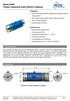 Properties Free of float metal bellow coupling with integrated torque measurement Non-contact measurement system, high robustness High torsional stiffness Limited torque of inertia Performance Measurement
Eurovacuum EV Series. Single Stage Oil Sealed Rotary Vane Pump
 Eurovacuum EV Series Single Stage Oil Sealed Rotary Vane Pump Eurovacuum EV Series Single Stage Oil Sealed Rotary Vane Pumps Eurovacuum Company is offering its various products to meet industrial vacuum
Mounting Instructions. Torque Transducer. A0329 3.2 en
 Mounting Instructions Torque Transducer T5 T5 Contents 3 Page Safety instructions.............................................. 4 1 Measuring characteristics..................................... 7 2 Mounting.....................................................
Hydrostatic closed loop Bosch Rexroth. Fuel tank 180 l 180 l
 R6480 RTH5.26S MACHINE MODEL ENGINE TRANSMISSION AXLES AND BRAKES PERFORMANCE WEIGHTS TANKS CAPACITIES HYDRAULIC CIRCUIT DIMENSIONS CONFORMTY TO STANDARDS Rotating telescopic forklift Maximum lifting capacity
Adjustment Data MAZDA - 626-2.0 Comprex D - RF-CX
 Adjustment Data MAZDA - 626-2.0 Comprex D - RF-CX Engine (general) Engine code RF Capacity 1998 (cc) Idle speed 725 ± 25 Valve clearance Valve clearance Cold Inlet 0.25 (mm) Exhaust 0.35 (mm) Compression
Specials. www.ika-apparatuur.nl. designed. 3rd edition 2015 English. for scientists 1
 Specials www.ika-apparatuur.nl 3rd edition 2015 English designed for scientists 1 IKA Specials Quarterly Campaign III Three is a charm With over 100 years of experience, IKA continues to strive for delivering
7.3 Fit selection. Inner ring: Rotating. Outer ring: Stationary. Inner ring: Stationary. Outer ring: Rotating. Inner ring: Stationary
 7. Bearing Fits 7. Fitting For rolling s, inner and outer rings are fixed on the or in the housing so that relative movement does not occur between fitting surfaces during operation or under. This relative
Unit 24: Applications of Pneumatics and Hydraulics
 Unit 24: Applications of Pneumatics and Hydraulics Unit code: J/601/1496 QCF level: 4 Credit value: 15 OUTCOME 2 TUTORIAL 2 HYDRAULIC AND PNEUMATIC CYLINDERS The material needed for outcome 2 is very extensive
Measuring thermal drift of machine tools
 Measuring thermal drift of machine tools dr.ir. G.H.J. Florussen 19 th November 2015, Precisiebeurs, Veldhoven IBS Precision Engineering bv, Esp 201, 5633 AD Eindhoven Tel : + 31 (0)40 290 1270, Fax +
Fixed displacement vane pumps
 Fixed displacement vane pumps RE 1335/1.5 Replaces: 11.2 1/22 Types PVV and PVQ Nominal sizes 18 to 193 Series 1X Maximum operating pressure 21 bar Maximum displacement 18 to 193 cm 3 Doppelpumpe_d_ Double
Pos. Qty. Article Descripiton Price /
 Offer 1 1 Vertical CNC-machining centre Mill 800 40 tools Partly refurbished pre-owned machine Delivered 2003 Weight approx. 7000 kg Machine-No. 220-52 Column moving machining centre with fixed table NC
"AC2EC" - Replacement made easy New EC motor design Compact and efficient
 "AC2EC" - Replacement made easy New EC motor design Compact and efficient The efficiency of the fans used is a central issue in ventilation and airconditioning technology. This is encouraged not only by
ZKL Bearings for Railway Rolling Stock
 2 ZKL Bearings for Railway Rolling Stock ZKL Bearings for Railway Rolling Stock Railway industry is a very prospective sector worldwide and therefore ZKL pays particular attention to bearings for railway
Machine tools. Milling- and boring machines
 Milling- and boring machines Milling- and boring machines Our family owned company develops and manufactures customized machines and designs machine tools based on work piece requirements successfully
Hidetsugu KURODA 1, Fumiaki ARIMA 2, Kensuke BABA 3 And Yutaka INOUE 4 SUMMARY
 PRINCIPLES AND CHARACTERISTICS OF VISCOUS DAMPING DEVICES (GYRO-DAMPER), THE DAMPING FORCES WHICH ARE HIGHLY AMPLIFIED BY CONVERTING THE AXIAL MOVEMENT TO ROTARY ONE 0588 Hidetsugu KURODA 1, Fumiaki ARIMA,
Mobile field balancing reduces vibrations in energy and power plants. Published in VGB PowerTech 07/2012
 Mobile field balancing reduces vibrations in energy and power plants Published in VGB PowerTech 07/2012 Dr. Edwin Becker PRÜFTECHNIK Condition Monitoring PRÜFTECHNIK Condition Monitoring GmbH 85737 Ismaning