
Core Competencies: HIV/AIDS: HIV Basics HIV/AIDS JEOPARDY* Overview. To change category names: Instructions. 2. Introduce session.
|
|
|
- Jack Chase
- 10 years ago
- Views:
Transcription
1 Core Competencies: HIV/AIDS: HIV Basics HIV/AIDS JEOPARDY* ABOUT THIS ACTIVITY Time: 60 minutes Objectives: By the end of this session, participants will be able to: Reviewed their knowledge of HIV/AIDS information and peer education. Training Method: Game In This Activity You Will Tell the group they re going to get to play a Jeopardy game to review all the information we ve covered, and go over the rules (5 minutes) Ask team members Jeopardy questions and play the game (55 minutes) Materials: Jeopardy Powerpoint- can be downloaded by clicking here or pasting the link into your browserhttp://hdwg.org/peer_center/ sites/hdwg.org.peer_center/files/ Jeopardy_2.ppt Instructions and 1 page answer key for staff (3 copies) Stopwatch or timer 2 slips of paper for Final Jeopardy wager and answer Prizes for all participants Computer for PowerPoint LCD Projector for PowerPoint Screen Overview Several peer training programs have used a version of the TV game show Jeopardy to review HIV/AIDS information, peer skills, or simply to have fun identifying facts about HIV. Below we provide sample question categories, questions and answers. You can mix and match the categories depending on your objectives for the game and the cultural background of your peer participants. Instructions for using your own Categories/Questions To change category names: Go to Normal View within PowerPoint. Go to slide 3 which has the Jeopardy board. Click on the name of the category and type in the new category name. To change questions and answers: Go to Normal View within PowerPoint Go to the slide you want to replace. Click on the text and enter new text. NOTE: Be careful not to delete any slides as this will alter the sequence of the slides and disrupt the game by not linking to the appropriate questions from the game board. Instructions 1. The following staff is needed: a facilitator who asks the questions, a judge who decides if the question is answered correctly or not, and a computer operator who brings up the answer on the screen if correct, and moves back and forth between the individual questions and the game board. One of these individuals also needs to keep score (the judge or computer operator unless your software package does the scoring for you). 2. Introduce session. (continued next page) * This module is part of the online toolkit Building Blocks to Peer Success. For more information, visit Building Blocks to Peer Success 1

2 ABOUT THIS ACTIVITY(CONT.) Preparation: Click here or copy and paste the link below into your browser to download the Jeopardy Powerpoint- hdwg.org/peer_center/sites/hdwg.org. peer_center/files/jeopardy_1.ppt In order to run the PowerPoint application, click on Enable Macros when the application prompts you to do so. Review the categories and questions. If these topics are covered in your training, you can use the game as is. If you are not covering all of these topics you can develop your own categories or questions based on the training you will provide. Enter any new categories, questions and answers into the jeopardy software (see below for detailed instructions). Practice operating the software a few times to move smoothly between questions, responses and the main board. Set up computer and projector. 1 The software can also be downloaded off the internet. You can find many different options by googling jeopardy software or going to games/jeopardy/, a site that has many different options. Two specific sites are ewhitgames.com/mcjeopardy/download.php and both of which offer free downloads. 3. Divide into 2 teams. 4. Explain rules of Jeopardy Each team needs to pick a name for their team and 1 spokesperson who is the only one who can give answers to the questions. Give 30 seconds for the team to answer the question. If they answer correctly, they get the points and it is the 2nd team s turn to pick a category. If they do not have an answer or the answer is incorrect, they lose points and the next team gets the question and has 10 seconds to answer the question. 2nd team has the option to pass on the question and they do not win or lose points. If second team answers correctly, then they get the points. If they answer incorrectly they lose points. For the daily double question, the team which answers the question correctly gets twice the number of points available for that question. After all the questions have been answered both teams get to decide how much of their point they want to wager for final jeopardy on a piece of paper without letting the other team know the amount. Both teams get 60 seconds to answer the question and they must write the answer on a piece of paper. Points are added or removed based on answer. Team with the most points at the end after final jeopardy, wins. But the winning team must have at least 1 point to win. Note that in the TV Jeopardy game, the answer has to be stated as a question. In this game, you can just give the answer if you prefer, you do not need to make it into a question. 5. Start the game. 6. Use incorrect or difficult questions as an opportunity to review HIV information. 7. Distribute prizes to the winning team and to the losing team for their effort. Building Blocks to Peer Success 2

3 Question Categories and Answer Key Category: HIV/STD 101 Question $100: What do HIV and AIDS stand for? Answer: Human Immunodeficiency Virus and Acquired Immune Deficiency Syndrome Question $200: If a person with HIV has diarrhea, they should: a. Stop eating until the diarrhea ends b. Drink a lot of water c. Drink a lot of coffee or caffeinated tea. Answer: b. Drink a lot of water Question $300: What does STI stand for? Answer: Sexually Transmitted Infection Question $400: List 4 body fluids that can transmit HIV and 3 that do not transmit HIV Answer: Transmit HIV: Blood, semen, vaginal fluid, breast milk. Do not transmit HIV: Sweat, tears, saliva, urine Question $500 (or Daily Double): Name 4 opportunistic infections that HIV+ people can get: Answer: Bacterial Diarrhea, Candidiasis (thrush), Cytomegalovirus (CMV), Herpes simplex viruses, Histoplasmosis, Kaposi s Sarcoma (KS), Lymphoma, Malaria, Mycobacterium avium complex (MAC or MAI), Oral Hairy Leukoplakia (OHL), neumocystis pneumonia (PCP), Syphilis, Toxoplasmosis, Tuberculosis (TB) Category: Treatment 101 Question $100: What can happen if you skip your HIV medications frequently? Answer: Any of the following: Resistance, viral load can increase, decrease in T cells, running out of treatment options Question $200: What are the fighter cells/soldiers of the immune system? HINT: They are also the primary target of HIV Answer: CD4+ Cells, (T-cells) Question $300: What do HIV medications do to the HIV life cycle? Answer: Interrupt or slowdown the HIV life cycle and reduce the level of HIV in the blood (reduce the viral load) Question $400: An undetectable viral load = less than copies of HIV/ml? Answer: Less than 50 copies/ml. Note: undetectable does not mean the person is cured or has no virus. (Note to Judge: Accept any answer of 50 copies or less because some tests are even more sensitive than this). Question $500: Name 4 classes of HIV Medications Entry Inhibitors Nucleoside Reverse Transcriptase Inhibitors (Nukes, NARTs) or Nucleoside Analogs Non-nucleoside Reverse Transcriptase Inhibitors (Nonnukes) or Non-nucleoside Analogs Protease Inhibitors Fusion Inhibitors Integrase Inhibitors Category: Peer Advocacy Question $100: Name three roles of a peer Provide support (emotional or practical) Educate about disclosure, safer sex, and healthy living Provide resources and information Provide referrals to services Advocate Model self care strategies Provide adherence strategies (Note to Judge: Accept all valid answers). Question $200: Which of these is an open-ended question? a. Do you take your medications every day? b. Do you think you should discuss your medications with your doctor? Building Blocks to Peer Success 3

4 c. How do you feel about telling your partner about your HIV? d. Have you told your partner about your HIV? Answer: C, open-ended questions start with What, How, Why or Tell me about Question $300: What is the name of the stage of change that describes a return to previous behavior? Answer: Relapse/recycle Question $400: Which activity is not appropriate for peers? a. Advocating for a client b. Letting a client know which medications to stop taking if they are getting headaches c. Providing education about how to have safer sex d. Letting a client know that you can not give them money Answer: B Question $500: What are four different communication skills? Asking open-ended questions Affirming Active listening Non-verbal skills Verbal skills Expressing thoughts and feelings Communicating without making the other feel wrong Paraphrasing/Mirroring /Paraverbal communication Reflecting Summarizing (Note to Judge: Use discretion with additional answers). Category: Prevention/Transmission Question $100: What is the name of the time period between a person s infection with HIV and the appearance of detectable HIV anti-bodies? Answer: Window Period Question $200: You can reduce the risk of HIV transmission by: a. Reducing number of sexual partners b. Using latex condoms every time you engage in sex c. Avoid sharing needles, works, or rigs d. All of the above Answer: D. All of the above Question $300: What is the name of the HIV test that can detect antibodies to HIV in less than 30 minutes? Answer: Rapid Test/OraQuick Question $400: What should you clean your needles, works or rigs with in order to keep from transmitting HIV, hepatitis B or hepatitis C? a. Oil and vinegar b. Soap and water c. Boiling water d. Salt and vinegar e. None of the above Answer: e. None of the above Using new needles before using drugs is the best way to prevent HIV, hepatitis B or hepatitis C transmission. But if people are going to share or re-use needles, cleaning them with bleach and water, and repeating the cleaning process at least three times, will reduce the risk of transmission. Question $500: If someone is allergic to latex, his or her partner should do which of the following things: a. use an animal membrane condom b. don t use a condom c. use a polyurethane condom d. none of the above Answer: C Use a polyurethan condom Category: More Treatment Question $100: What is the term used for closely following a prescribed treatment regimen? Answer: Adherence Building Blocks to Peer Success 4

5 Question $200: Which of the following is true about HIV-2 a. same transmission routes as HIV-1 b. immune deficiency appears to occur more slowly c. differs from HIV-1 geographically d. was first discovered in 1986 e. all of the above Answer: E. all of the above Question $300 (or Daily Double): Name at least two components of the human immune system Answer: White blood cells, Thymus, Spleen, Lymph, Bone marrow, Antibodies Question $400: What is the type of antiretroviral testing that detects presence of mutations associated with ART drug resistance? Answer: Genotype Question $500: Taking _? % of your ART medication is considered to be good adherence Answer: 95% Category: Challenge Questions Question $100: What lab test is used to detect HIV proteins in the blood to confirm a positive HIV antibody test? Answer: HIV Western Blot Question $200: What does HAART stand for and what is it? Answer: Highly Active Antiretroviral Therapy. A combination of HIV medicines from different classes that are taken together to keep HIV viral load down. Question $300: What would you call the infection of an already HIV-infected person with another strain of HIV? Answer: Reinfection / Superinfection Question $400: Put these activities in order of risk for transmitting HIV (highest to lowest): (1) Vaginal sex with out condoms, (2) Anal sex without lubrication, and (3) Vaginal sex with a condom Answer: 2, 1, 3 Question $500: Name 3 ways mother to child transmission can occur (without treatment)? Answer: in utero, through birth, in breast milk (Note: must give all three) Category: Final Jeopardy Question: What is the term for taking antiretrovirals (ARVs) medications as soon as possible after exposure to HIV, so that exposure will not result in HIV. Answer: Post Exposure Prophylaxis Building Blocks to Peer Success 5

FAQs HIV & AIDS. What is HIV? A virus that reduces the effectiveness of your immune system, meaning you are less protected against disease.
 HIV & AIDS What is HIV? A virus that reduces the effectiveness of your immune system, meaning you are less protected against disease. What does HIV stand for? Human Immunodeficiency Virus Where did HIV
HIV/AIDS Care: The Diagnosis Code Series 2. Prepared By: Stacey L. Murphy, MPA, RHIA, CPC AHIMA Approved ICD-10-CM/ICD-10-CM Trainer
 HIV/AIDS Care: The Diagnosis Code Series 2 Prepared By: Stacey L. Murphy, MPA, RHIA, CPC AHIMA Approved ICD-10-CM/ICD-10-CM Trainer Learning Outcomes Identify and explain the difference between ICD-9-CM
BASIC INFORMATION ABOUT HIV, HEPATITIS B and C, and TUBERCULOSIS Adapted from the CDC
 BASIC INFORMATION ABOUT HIV, HEPATITIS B and C, and TUBERCULOSIS Adapted from the CDC HIV What are HIV and AIDS? HIV stands for Human Immunodeficiency Virus. This is the virus that causes AIDS. HIV is
Basic Presentation HIV/AIDS. For Use by Students, Teachers and the Public Seeking Basic Information About HIV/AIDS
 Basic Presentation HIV/AIDS For Use by Students, Teachers and the Public Seeking Basic Information About HIV/AIDS Objectives- Define and understand the difference between HIV Infection and AIDS Describe
HIV/AIDS. HIV- Human Immunodeficiency Virus. AIDS immume system severely damaged
 HIV/AIDS HIV- Human Immunodeficiency Virus Person is infected with virus. May have no s/s (but may transmit virus) More common to have brief flu-like illness 2-6 wks after becoming infected (swollen lymph
What is HIV? What is AIDS? The HIV pandemic HIV transmission Window period Stages of HIV infection
 Module 1 Overview of HIV Infection Purpose Pre-requisite Modules Learning Objectives To provide you with the basic terms and concepts related to HIV infection. None At the end of this module, you will
Patient Information Sheet
 Healthcare Worker exposure to a patient s blood What is a healthcare worker exposure? Patient Information Sheet Occasionally, health care workers come into contact with the blood or body fluids of their
IV. Counseling Cue Cards. ICAP International Center for AIDS Care and Treatment Mailman School of Public Health Columbia University
 IV. Counseling Cue Cards ICAP International Center for AIDS Care and Treatment Mailman School of Public Health Columbia University How to Use These Counseling Cue Cards ABOUT THE CUE CARDS This set of
HIV/AIDS: General Information & Testing in the Emergency Department
 What Is HIV? HIV/AIDS: General Information & Testing in the Emergency Department HIV is the common name for the Human Immunodeficiency Virus. HIV is a retrovirus. This means it can enter the body s own
The State Hospital HIV / AIDS
 The State Hospital HIV / AIDS The red ribbon is the international symbol of HIV & AIDS awareness. What is HIV? HIV stands for Human Immunodeficiency Virus: H is for Human - This virus infects human beings.
Chapter 21. What Are HIV and AIDS?
 Section 1 HIV and AIDS Today What Are HIV and AIDS? Human immunodeficiency virus (HIV) is the virus that primarily affects cells of the immune system and that causes AIDS. Acquired immune deficiency syndrome
Module 7: The Role of the Nurse
 Module 7: The Role of the Nurse Module Objectives To describe the dynamic role of the nurse in the holistic care of a patient receiving ARV treatment To equip nurses with a sense of importance and belief
Chapter 36. Media Directory. Characteristics of Viruses. Primitive Structure of Viruses. Therapy for Viral Infections. Drugs for Viral Infections
 Chapter 36 Media Directory Drugs for Viral Infections Slide 23 Slide 27 Slide 29 Zidovudine Animation Saquinavir Mesylate Animation Acyclovir Animation Upper Saddle River, New Jersey 07458 All rights reserved.
Bloodborne Pathogens (HIV, HBV, and HCV) Exposure Management
 Bloodborne Pathogens Exposure Policy and Procedures Employees of the State of South Dakota Department of Health Bloodborne Pathogens (HIV, HBV, and HCV) Exposure Management PEP Hotline 1-888-448-4911 DOH
Condoms, PrEP, and the use of ART to prevent the sexual transmission of HIV: Overview of the science and recommendations for service providers
 Condoms, PrEP, and the use of ART to prevent the sexual transmission of HIV: Overview of the science and recommendations for service providers James Wilton Coordinator, Biomedical Science of HIV Prevention
Tuberculosis and HIV/AIDS Co-Infection: Epidemiology and Public Health Challenges
 Tuberculosis and HIV/AIDS Co-Infection: Epidemiology and Public Health Challenges John B. Kaneene, DVM, MPH, PhD University Distinguished Professor of Epidemiology Director, Center for Comparative Epidemiology
Exposure. What Healthcare Personnel Need to Know
 Information from the Centers for Disease Control and Prevention National Center for Infectious Diseases Divison of Healthcare Quality Promotion and Division of Viral Hepatitis For additional brochures
HEPATITIS C. The Facts. Get Tested. Get Cured! Health
 HEPATITIS C The Facts Get Tested. Get Cured! Health EVEN IF YOU FEEL HEALTHY, HEPATITIS C MAY BE DAMAGING YOUR LIVER. Your liver keeps you healthy in many ways, such as by removing toxins from your blood
In Tanzania, ARVs were introduced free-of-charge by the government in 2004 and, by July 2008, almost 170,000 people were receiving the drugs.
 ANTIRETROVIRAL TREATMENT What is ART and ARV? ART is a short form for Antiretroviral Therapy (or Treatment). Antiretroviral therapy is a treatment consisting of a combination of drugs which work against
Pediatric HIV - The World At It's Best
 VIH/SIDA en Pediatría: Epidemiología Mundial, Transmisión Perinatal, Manejo Integral. Juan Carlos Salazar, M.D. Universidad de Connecticut, EE.UU. End-1998 global estimates Children (
HIV/AIDS. Information booklet
 HIV/AIDS Information booklet Content Introduction 1 What is HIV/AIDS 2 How is HIV spread? 4 Symptoms of HIV infection 7 Testing for HIV 8 Preventing the spread of HIV 10 Sexually Transmitted Infections
Why it is Important to Talk with Young People about HIV and AIDS 2. Facts about HIV and AIDS 3. How to Get Started 7
 Table of Contents Why it is Important to Talk with Young People about HIV and AIDS 2 Facts about HIV and AIDS 3 How to Get Started 7 What to Say to Your Children About HIV and AIDS 8 Talking with Young
Prevention of transmission of HIV and other bloodborne viruses in healthcare and post exposure prophylaxis. John Ferguson, UPNG 2012
 Prevention of transmission of HIV and other bloodborne viruses in healthcare and post exposure prophylaxis John Ferguson, UPNG 2012 Outline Epidemiology Making the diagnosis / contact tracing Antiretroviral
The Basics of Drug Resistance:
 CONTACT: Lisa Rossi +1-412-641-8940 +1-412- 916-3315 (mobile) [email protected] The Basics of Drug Resistance: QUESTIONS AND ANSWERS HIV Drug Resistance and ARV-Based Prevention 1. What is drug resistance?
COMMUNICABLE DISEASE
 Public Health Activities & Services Inventory Technical Notes COMMUNICABLE DISEASE CLINICAL SERVICES, SURVEILLANCE AND CONTROL In 2014, decision was made to adopt number of national public health activities
The Stigma of HIV and AIDS. A Brief History of HIV/AIDS. A Brief History of HIV/AIDS. Opportunistic Infections and Modes of Transmission
 Nurse Caring Concepts 1A The Stigma of HIV and AIDS Opportunistic Infections and Modes of Transmission Week 17 12-8 -03 1926-1945 HIV may have spread from monkeys to humans (may have first jumped from
Didactic Series. Updated Post-Exposure Prophylaxis (PEP) Guidelines. Daniel Lee, MD UCSD Medical Center, Owen Clinic January 9, 2014
 Didactic Series Updated Post-Exposure Prophylaxis (PEP) Guidelines Daniel Lee, MD UCSD Medical Center, Owen Clinic January 9, 2014 ACCREDITATION STATEMENT: University of California, San Diego School of
Bloodborne Pathogens (BBPs) Louisiana Delta Community College
 Bloodborne Pathogens (BBPs) Louisiana Delta Community College 1 Bloodborne Pathogens Rules & Regulations Office of Risk Management (ORM) requires development of a bloodborne pathogens plan low risk employees
POSTEXPOSURE PROPHYLAXIS
 POSTEXPOSURE PROPHYLAXIS Bloodborne viruses Hepatitis B Hepatitis C HIV Hepatitis B Risk of seroconversion HBeAg negative 2% HBeAg positive 20-40% If seroconvert most recover completely and develop immunity
Frequently Asked Questions (FAQs)
 Frequently Asked Questions (FAQs) Research Rationale 1. What does PrEP stand for? There is scientific evidence that antiretroviral (anti-hiv) medications may be able to play an important role in reducing
DO YOU WORK AROUND BLOOD OR BODY FLUIDS? Cal/OSHA s New Rules
 DO YOU WORK AROUND BLOOD OR BODY FLUIDS? Cal/OSHA s New Rules Labor Occupational Health Program University of California, Berkeley 1994 ACKNOWLEDGMENTS This booklet is a publication of the Labor Occupational
This brochure explains how alcohol:
 When you are HIV positive, you have to work hard to stay healthy. Drinking less alcohol or not drinking at all can help you fight HIV disease and improve your health. Quitting drinking or cutting down
Information about hepatitis C for patients and carers
 Information about hepatitis C for patients and carers What is hepatitis C? Hepatitis C is an illness caused by a virus which can be passed through blood from one person to another. It mainly affects the
HIV. Looking after your sexual health
 HIV Looking after your sexual health 2 HIV HIV stands for Human Immunodeficiency Virus. Once someone is infected with HIV the virus will remain in their body for the rest of their life. There is currently
Treatment Information Service 1 800 HIV 0440 HIV/AIDS. HIV and Its Treatment What You Should Know. 2nd edition
 HIV/AIDS Treatment Information Service 1 800 HIV 0440 HIV and Its Treatment What You Should Know 2nd edition HIV/AIDS TREATMENT INFORMATION SERVICE 2nd Edition HIV and Its Treatment: What You Should Know
Diseases that can be spread during sex
 Diseases that can be spread during sex Did you know... over 65 million people in the United States have a chronic, incurable sexually transmitted disease (STD)? and that every year another 19 million persons
Hepatitis C. Screening, Diagnosis and Linkage to Care
 Hepatitis C Screening, Diagnosis and Linkage to Care Diagnosis If your hepatitis C antibody test is reactive, a second test will be needed to diagnose and determine if you are currently infected. Screening
Borderless Diseases By Sunny Thai
 Borderless Diseases By Sunny Thai Millennium Development Goal #6 6. Combat HIV/AIDS, malaria and other borderless diseases. A. Halt and begin reversing spread of HIV by 2015. B. Achieve universal access
HIV/AIDS 101 Teens and Young Adults. Chara McGill
 HIV/AIDS 101 Teens and Young Adults Chara McGill 1 Disclosure AS MANDATED BY ACCME SPEAKERS ARE ASKED TO DISCLOSE ANY REAL OR APPARENT CONFLICT RELATED TO THE CONTENT OF THEIR PRESENTATION TODAYS SPEAKER
Viral load testing. medical monitoring: viral load testing: 1
 medical monitoring: viral load testing: 1 medical monitoring: viral load testing Viral load testing medical monitoring: viral load testing: 2 Slide 1 Viral load The viral load test measures HIV in the
The Body s Defenses CHAPTER 24
 CHAPTER 24 The Body s Defenses PowerPoint Lectures for Essential Biology, Third Edition Neil Campbell, Jane Reece, and Eric Simon Essential Biology with Physiology, Second Edition Neil Campbell, Jane Reece,
CMV: Your questions answered
 The basics about the virus CMV: Your questions answered What is CMV? CMV, or Cytomegalovirus, is a common virus that can infect people of all ages. Once CMV is in a person s body, it stays there for life.
HIV/AIDS: Basic Facts Grade 7, Lesson #21
 HIV/AIDS: Basic Facts Grade 7, Lesson #21 Time Needed One 50-minute class period Student Learning Objectives To be able to 1. Describe how the human immunodeficiency virus (HIV) affects the immune system.
www.hepinfo.ie Are you Hep C aware? awareness information support prevention To find out more visit
 Are you Hep C aware? awareness information support prevention To find out more visit www.hepinfo.ie What is Hepatitis C? Hepatitis C is a viral infection that affects the liver, causing it to become inflamed
Yes, I know I have genital herpes:
 Counseling Messages for Herpes Simplex Type II (HSV-II) Genital herpes Always take the time to attend to the participant s feelings and emotional state; for some people, this is the most devastating news
AIDS Knowledge Test. Instructions
 AIDS Knowledge Test Instructions This survey has True/False questions. For example: Pittsburgh's hockey team is the Bruins. We want you to do two things: First, answer the question. In this example, you
HIV -The Facts BLT 043
 Human Im munodeficiency Virus HIV -The Facts NHS Dumfries & Galloway would like to acknowledge NHS Greater Glasgow for the use of information contained in this leaflet. This leaflet is also available on
Bloodborne Pathogens. Scott Anderson CCEMTP. Materials used with permission from the Oklahoma State University
 Bloodborne Pathogens Scott Anderson CCEMTP Materials used with permission from the Oklahoma State University What is a Bloodborne Pathogen? Microorganisms that are carried in the blood that can cause disease
Up to $402,000. Insight HIV. Drug Class. 1.2 million people in the United States were living with HIV at the end of 2011 (most recent data).
 HIV Background, new developments, key strategies Drug Class Insight INTRODUCTION Human Immunodeficiency Virus (HIV) is the virus that can lead to Acquired Immunodeficiency Syndrome, or AIDS. No safe and
Blood borne Pathogens
 Blood borne Pathogens What Are Blood borne Pathogens? Blood borne pathogens are microorganisms such as viruses or bacteria that are carried in blood and can cause disease in people. Types of Blood borne
12/2/2015 HEPATITIS B AND HEPATITIS C BLOOD EXPOSURE OBJECTIVES VIRAL HEPATITIS
 HEPATITIS B AND HEPATITIS C BLOOD EXPOSURE DISEASE 101 ONLINE CONFERENCE SARAH WENINGER, MPH VIRAL HEPATITIS.STD.HIV PREVENTION COORDINATOR DECEMBER 3, 2015 OBJECTIVES Describe the populations that should
Quick Guide. For Clinicians. Based on TIP 37 Substance Abuse Treatment For Persons With HIV/AIDS
 Quick Guide For Clinicians Based on TIP 37 Substance Abuse Treatment For Persons With HIV/AIDS Contents Why a Quick Guide?................ 2 What Is a TIP?.................... 3 Introduction......................
NON-OCCUPATIONAL POST EXPOSURE PROPHYLAXIS (npep)
 NON-OCCUPATIONAL POST EXPOSURE PROPHYLAXIS (npep) Guidance from the Michigan Department of Health and Human Services Division of Health, Wellness & Disease Control Revised June 2015 The Michigan Department
Appendix E-- The CDC s Current and Proposed Classification System for HIV Infection
 Appendix E-- The CDC s Current and Proposed Classification System for HIV Infection The Centers for Disease Control (CDC) has developed a classification system for human immunodeficiency virus (HIV) infection
Tuberculosis and You A Guide to Tuberculosis Treatment and Services
 Tuberculosis and You A Guide to Tuberculosis Treatment and Services Tuberculosis (TB) is a serious disease that can damage the lungs or other parts of the body like the brain, kidneys or spine. There are
Belgian development agency
 Belgian development agency AIDS WHAT YOU SHOULD KNOW KEY PRINCIPLES Respect Respect yourself and others. Testing Do not wait until tomorrow. Adherence Adhere to treatment and enjoy a long and happy life.
Condoms for the prevention of HIV and STI transmission
 FACTSHEET Condoms for the prevention of HIV and STI transmission Summary Condoms are physical barriers that can reduce the risk of a sexual exposure to HIV and sexually transmitted infections (STIs). They
Routine HIV Monitoring
 Routine HIV Monitoring Guideline of the HIV/AIDS Division at San Francisco General Hospital Statement of Guideline: Patients will be routinely evaluated and monitored for HIV parameters, antiretroviral
The challenge of herpes
 The challenge of herpes Herpes is a common and personally challenging disease Herpes is very common. One out of four adults has genital herpes. When people first hear that they are infected, many become
Newly Diagnosed: HEPATITIS C. American Liver Foundation Support Guide
 Newly Diagnosed: HEPATITIS C American Liver Foundation Support Guide T he American Liver Foundation's mission is to facilitate, advocate, and promote education, support, and research for the prevention,
Appendix 3 Exposure Incident Report Form
 Appendix 3 Exposure Incident Report Form January, 2015 Page 1 of 6 Please see the following pages for the Exposure Incident Report Form. Guidelines for the Management of Exposure to Blood and Body Fluids
PLUS MAY EQUAL. Flu-Like Symptoms SORE THROAT, SWOLLEN GLANDS, FEVER, JOINT AND MUSCLE ACHES
 What is acute HIV infection? Acute HIV infection is the very early stage of infection with HIV (human immunodeficiency virus), the virus that causes AIDS. This is also called primary HIV infection. Acute
100 Questions and answers about HiV/aids. Questions Answers. about HIV/AIDS. New York State Department of Health
 100 Questions and answers about HiV/aids 1 Questions Answers about HIV/AIDS New York State Department of Health 2 new York state department of HealtH 100 Questions and answers about HiV/aids 3 Contents
Accent on Health Obgyn, PC HERPES Frequently Asked Questions
 1. What is herpes? 2. How common is herpes? 3. Is there a cure for herpes? 4. What is oral herpes (cold sores)? 5. How is oral herpes spread? 6. What is genital herpes? 7. How is genital herpes spread?
ACCESS TO AFFORDABLE TREATMENT FOR HIV/AIDS: THE ISSUES
 ACCESS TO AFFORDABLE TREATMENT FOR HIV/AIDS: THE ISSUES AIDS Law Unit Legal Assistance Centre July, 2002 INTRODUCTION Although there is currently no cure for HIV/Aids, treatment has, however, been developed
Immune System Memory Game
 Immune System Memory Game Recommended Age: 12 years old Time: 45 minutes Everyday our bodies come in contact with millions of tiny organisms and particles that could potentially make us sick. Despite this,
HIV or AIDS. What is HIV? 2 HIV & AIDS
 HIV & AIDS 2 HIV & AIDS HIV is transmitted via body fluids. HIV or AIDS The human immunodeficiency virus (HIV) is the cause of one of the most destructive human pandemics in recorded history. Since it
You. guide to tuberculosis treatment and services
 Adapted from TB and You: A Guide to Tuberculosis Treatment and Services with permission from Division of Public Health TB Control Program State of North Carolina Department of Health and Human Services
Post-Exposure Prophylaxis
 Post-Exposure Prophylaxis Health Worker Safety Training Module 4: Post-Exposure Prophylaxis Health Worker Safety Training Module 2 Topics What is PEP? Infectious body fluids Types of exposures requiring
HIV/AIDS Tool Kit. B. HIV/AIDS Questionnaire for Health Care Providers and Staff
 8 HIV/AIDS Tool Kit B. HIV/AIDS Questionnaire for Health Care Providers and Staff FOR STAFF USE ONLY: SURVEY ID # HIV/AIDS KAP Questionnaire for Health Care Providers and Staff Introduction The goal of
Title: Post Exposure Prophylaxis Page 1 of 8 Policy No: 1 CLN 010 Effective Date 04/15/11
 Title: Post Exposure Prophylaxis Page 1 of 8 OBJECTIVE To standardize medical care following a Blood or Bodily Fluid Exposure (BBFE). SCOPE All Exposed Individuals (as defined below) who present for post-exposure
Pre-exposure prophylaxis (PrEP)
 FACTSHEET Pre-exposure prophylaxis (PrEP) Summary Pre-exposure prophylaxis, or PrEP, is a way for an HIV-negative person who is at risk of HIV infection to reduce their risk of becoming infected with HIV.
Medication Guide TRUVADA (tru-vah-dah) (emtricitabine and tenofovir disoproxil fumarate) tablets Read this Medication Guide before you start taking
 Medication Guide TRUVADA (tru-vah-dah) (emtricitabine and tenofovir disoproxil fumarate) tablets Read this Medication Guide before you start taking TRUVADA and each time you get a refill. There may be
Body Fluid Exposure:
 Focus on CME at the University of Manitoba Focus on CME at the University of Manitoba Body Fluid Exposure: What To Do? John Sokal, MD, CFPC Presented at Bug Day 2003, Health Sciences Centre, Winnipeg (October
Antiretroviral therapy for HIV infection in infants and children: Towards universal access
 Antiretroviral therapy for HIV infection in infants and children: Towards universal access Executive summary of recommendations Preliminary version for program planning 2010 Executive summary Tremendous
CYTOTOXIC PRECAUTIONS A GUIDE FOR PATIENTS & FAMILIES
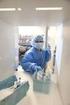 Perth and Smiths Falls District Hospital Attention: Manager, Quality 60 Cornelia Street, West Smiths Falls, Ontario K7A 2H9 CYTOTOXIC PRECAUTIONS A GUIDE FOR PATIENTS & FAMILIES This guide has been prepared
POST-EXPOSURE PROPHYLAXIS IN THE HEALTH CARE SETTING
 MARCH 2014 A Quick Guide to POST-EXPOSURE PROPHYLAXIS IN THE HEALTH CARE SETTING HIV PROVIDER REFERENCE SERIES A PUBLICATION OF THE MOUNTAIN PLAINS AIDS EDUCATION AND TRAINING CENTER MountainPlains AIDS
Cytotoxic Precautions at Home A Guide for Cancer Patients and Families
 Cytotoxic Precautions at Home A Guide for Cancer Patients and Families Your cancer treatment... 1 What are cytotoxic precautions?... 1 What body fluids are cytotoxic?... 1 How do I handle my body wastes?...
HOSPITAL OF THE UNIVERSITY OF PENNSYLVANIA CONSENT TO PARTICIPATE IN A RESEARCH STUDY AND RESEARCH SUBJECT HIPAA AUTHORIZATION
 CONSENT TO PARTICIPATE IN A RESEARCH STUDY AND RESEARCH SUBJECT HIPAA AUTHORIZATION Protocol Title: A5322, Version 2.0, 01/28/15 Long-term Follow-up of Older HIV-infected Adults in the ACTG: Addressing
MANAGING HERPES. Living and loving with hsv. American Social Health association. by Charles Ebel & Anna Wald, M.D., M.P.H.
 MANAGING HERPES Living and loving with hsv by Charles Ebel & Anna Wald, M.D., M.P.H. American Social Health association RESEARCH TRIANGLE PARK, NORTH CAROLINA contents contents Preface xi Acknowledgments
1) Siderophores are bacterial proteins that compete with animal A) Antibodies. B) Red blood cells. C) Transferrin. D) White blood cells. E) Receptors.
 Prof. Lester s BIOL 210 Practice Exam 4 (There is no answer key. Please do not email or ask me for answers.) Chapters 15, 16, 17, 19, HIV/AIDS, TB, Quorum Sensing 1) Siderophores are bacterial proteins
CONNECTICUT DEPARTMENT OF PUBLIC HEALTH HEALTH CARE AND SUPPORT SERVICES HIV MEDICATION ADHERENCE PROGRAM PROTOCOL
 CONNECTICUT DEPARTMENT OF PUBLIC HEALTH HEALTH CARE AND SUPPORT SERVICES HIV MEDICATION ADHERENCE PROGRAM PROTOCOL Revised July 2013 HIV MEDICATION ADHERENCE PROGRAM PROGRAM OVERVIEW People living with
Ancillary Staff Training
 Ancillary Staff Training Goals of Infection Prevention Protect the patients Protect the staff Prevent spread of diseases How Does The Virus Spread Between People? Direct contact through broken skin, mouth,
HIV/AIDS PAPER OUTLINE. 0.Introduction. -Definitions. 1. AIDS as a stigma. -Factors to the AIDS stigma. 2. Transmission to HIV
 HIV/AIDS PAPER OUTLINE 0.Introduction -Definitions 1. AIDS as a stigma -Factors to the AIDS stigma 2. Transmission to HIV - The most common ways that people get HIV 3. Where you can not get AIDS 4. Conclusion