
Presented By: Dr. Nadira Husein
|
|
|
- Hector Brooks
- 10 years ago
- Views:
Transcription
1 Presented By: Dr. Nadira Husein
2 I have no conflict of interest
3 Disclosures I have received honoraria/educational grants from the following: Novo Nordisk, Eli Lilly, sanofi-aventis, Novartis, Astra Zeneca, GSK, Bristol Myers Squibb, Merck
4 Objectives Review the role of oral agents as well as insulin analogues in the management of diabetes 2008 CDA Guidelines Treatment of diabetes in the elderly
5 Targets for Glycemic Control Recommended Targets A1C (%) FPG (mmol/l) 2-hour postprandial (mmol/l) Type 1 and type 2 diabetes ( if A1C targets not being met) Canadian Diabetes Association Clinical Practice Guidelines. Can J Diabetes 2008;32(Suppl 1):S30.
6 Achieve Target A1C within 6 12 Months Clinical assessment and Lifestyle intervention (nutrition and activity) A1C < 9% A1C 9% If not at target, add metformin Acarbose DPP-4 inhibitor Insulin Secretagogue TZD Weight loss agent -Initiate Insulin or metformin with another agent from a different class immediately without waiting for effect from lifestyle changes -Symptomatic hyperglycemia, with metabolic decompensation: Initiate insulin ±metformin Timely adjustments/additions should be made to attain target A1C within 6 12 months. Adapted from: Canadian Diabetes Association Clinical Practice Guidelines. Can J Diabetes 2008;32(Suppl 1):S56.
7 If not at target Add an agent best suited to the individual based on the advantages/disadvantages listed bleow and the information contained in Table T 1 (agents listed in alphabetical order) Class A1C Hypoglycemia Other advantages Other disadvantages Alpha-glucosidase inhibitor Rare Improved postprandial control weight neutral GI side effects Incretin agent: DPP-4 inhibitor to Rare Improved postprandial control weight neutral New agent (unknown long-term safety) Insulin Yes No dose ceiling Many types, flexible regimes Weight gain Insulin secretagogue: Meglitinide Sulfonylureas to Yes* Yes Improved postprandial control Newer sulfonylureas (gliclazide, glimepiride) are associated with less hypoglycemia than glyburide Requires TID to QID dosing Weight gain *less hypoglycemia in the context of missed meals TZD Rare Durable monotherapy Requires 6-12 weeks for maximal effect Edema, rare CHF, rare fractures in females Weight loss agent None Weight loss GI side effects (orlistat) Increased heart rate/bp (subutramine)
8
9 Antiobesity agents Drug Expected decrease in A1C with monotherapy Hypoglycemia Other therapeutic considerations orlistat sibutramine None None Promote weight loss Glycemic benefit may be limited to those who actually lose weight Orlistat can cause diarrhea and other GI side effects Sibutramine can increase heart rate and BP = <1.0% decrease in A1C = % decrease in A1C = >2.0% decrease in A1C
10
11 Aggressive Therapy to Reach Target Early combination therapy: If targets are not achieved within 2 to 3 months of lifestyle management, pharmacotherapy should be initiated In patients with marked hyperglycemia (A1C 9.0%) agents should be initiated concomitantly with lifestyle management, and consideration should be given to combination therapy or initiating insulin Timely adjustments to and/or additions of antihyperglycemic agents should be made to attain target A1C within 6-12 months. Canadian Diabetes Association Clinical Practice Guidelines. Can J Diabetes 2008;32(Suppl 1):S53.
12 Insulin and Oral Antihyperglycemic Agents Combining insulin and the following oral agents* is effective in Type 2 diabetes: Biguanide (metformin) Alpha-glucosidase inhibitor (acarbose) Insulin secretagogues (meglitinide, sulfonylurea) Weight loss agent (orlistat, sibutramine) * TZDs are not currently indicated in combination with insulin in Canada. * Januvia has not been studied in combination with insulin. Canadian Diabetes Association Clinical Practice Guidelines. Can J Diabetes 2008;32(Suppl 1):S56 Januvia Prescribing Information 2006
13 Type 2 Diabetes Insulin Options Basal Insulin Options Glargine (Lantus ) once daily at any time of the day NPH (Novolin ge NPH or Humulin-N ) at bedtime and/or a.m. Detemir (Levemir ) once or twice daily
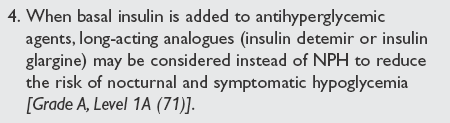
14 Type 2 Diabetes Insulin Options Pharmacologic Management of T2DM Canadian Diabetes Association Clinical Practice Guidelines. Can J Diabetes 2008;32(Suppl 1):S57.
15 Action Profiles of Basal Insulins Plasma Insulin Levels NPH hours Detemir ~ 6 23 hours (dose-dependent) Glargine ~ hours Hours Note: Action curves are approximations for illustrative purposes. Actual patient response will vary. Adapted from Insulin Therapy for the 21 st Century. American Diabetes Association; information from insulin glargine, insulin detemir, and NPH product monographs
16 Pharmacodynamic Profile of Insulin Glargine in Subjects with Type 1 Diabetes Glucose Utilization Rate (mg/kg/min) Time since insulin injection (hours) 30 Insulin Glargine NPH insulin = 24 hours, end of observation period Lepore M, et al. Diabetes 2000;49: Lantus Product Monograph 2007
17 Insulin detemir NPH 0.2 U/kg 0.4 U/kg 0.3 IU/kg Duration of action (hr) GIR max (mg/kg/min) Insulin detemir dose (U/kg) Glucose Utilization Rate (mg/kg/min) 0 NPH, 0.3 (IU/kg) Time since insulin injection (hours) Plank J, et al. Diabetes Care 2005;28: Levemir Product Monograph 2005
18 Insulin Activity Profile in Type 1 Diabetes 120 s.c. insulin 0.35 U/Kg N = Activity (%) Mean ± SD Glargine Detemir Time (hours) Porcellati F, et al. Diabetes Care 2007;30:
19 Insulin glargine vs. NPH in treat-to-target trial:hba 1c and Hypoglycaemia 18 HbA 1c (%) NPH + OAD Insulin glargine + OAD Events per patient per year % risk reduction p < % risk reduction p < Weeks Riddle. Diabetes Care. 2003; 26: Overall Nocturnal Hypoglycaemia
20 Variability of NPH Large inter- and intra- individual variations Cloudy - needs to be mixed properly (~20 times) Without re-suspension 5-214% variability A: Before (after 24 h sedimentation) B: After seven cycles C: After 20 cycles. Jehle PM. The Lancet 1999;354:
21 Diabetes in the geriatric Population: concepts Targets are the same-but safety first Lean elderly patients with new onset diabetes: think insulin deficiency Long acting basal with orals through the day Premixes : for safety and less dosing errors SU should be used with caution due to risk of hypoglycemia which increases with age QID is also an option
22 Lantus vs. Detemir Type 2 Diabetes OADs in combination with insulin detemir once daily or twice daily* OADs unchanged *detemir twice daily if pre-dinner >7mmol with FPG <7mmol or if nocturnal hypos prevents achievement of FPG <6 mm OADs in combination with insulin glargine once daily T2 DM (583) insulin naïve, A1c %, BMI < 40kg.m2 failed on 1 or 2 OHAs Basal -insulin Rx initiated as once daily (evening) dose 12 U Rosenstock J., et al. Diabetologia. January ; ahead of print
23 Glycemic Control: QD/BID Detemir Once-daily Glargine Detemir Twice-daily N A1c (SE) 7.12 (0.11)% 7.06% (0.085)% 7.06% (0.10)% FPG 7.27 (0.31) mmol/l 6.89 (0.24) 6.73 (0.25) mmol/l Ave. Insulin Dose.52 units/kg.44 units/kg 1.0 units/kg Refers to completed 52 weeks of treatment on once- or twice-daily insulin Rosenstock J., et al. Diabetologia. January ; ahead of print

24 Lantus Cartridges (for Autopen 24) Lantus Vials 10 ml (100U/mL) 5 x 3 ml (100 U/mL) Lantus SoloSTAR (pre-filled pens) 5 x 3 ml (100 U/mL)
25 Premixed 30% aspart/70% NPH Plasma Insulin (pm) it should be the reverse mixture 70% aspart/30% NPH at each meal Isoglycemic clamp study HYPER risk HYPO HYPER HYPER risk HYPO hrs Inadequate prandial insulin : Postprandial Hyperglycemia Excess inter-prandial supply: Increased risk of Hypoglycemia Luzio et al, 2004
26 Initiation of Insulin
27 What about targets in the elderly? CDA guidelines Think about co-morbid illnesses: ie strokes, MI, CHF, mobility issue Set targets based on patient s history Maybe 5-10 mmol/l Prevent significant hypo or hyperglycemia: SAFETY FIRST
28 Achieving Target Levels with Basal Insulin A1C target 7% Fix the fasting glucose first (FFF) Start with one initial injection (basal) for better patient acceptance; add mealtime insulin later if required As beta cells fail over time, basal insulin plus oral agent may no longer keep glucose levels optimal Mealtime insulin may be started at all meals, or possibly just at larger meals such as dinner Canadian Diabetes Association Clinical Practice Guidelines. Can J Diabetes 2008;32(Suppl 1):S1 152.
29 Example: Insulin Initiation and Titration If on oral agents, continue oral agents and add: Once-daily dose of basal insulin NPH Detemir Glargine Recommended starting dose: 10 U/day Increase insulin dose by 1 U/day until FPG target is achieved ( mmol/l) Gerstein HC, et al. Diabet Med 2006;23(7): Canadian Diabetes Association Clinical Practice Guidelines.. Can J Diabetes 2008;32(Suppl 1): Appendix 3.
30 Follow the algorithm and The self-titration schedule is more likely to safely achieve near-physiological levels than a conventional therapeutic policy in which physicians defer adding insulin by increasing or adding oral agents. One unit at a time: The INSIGHT titration schedule Patient-managed Increase by 1 unit DAILY until FPG is mmol/l Repeat Gerstein HC, et al. Diabet Med 2006;23(7): Canadian Diabetes Association Clinical Practice Guidelines.. Can J Diabetes 2008;32(Suppl 1): Appendix 3..
31 Switching from NPH to Long-Acting Insulin Insulin Detemir Switched unit for unit and given once or twice daily Insulin Glargine Patients on NPH once daily: Switched unit for unit once daily at bedtime Patients on NPH twice daily: Approximately 80% of NPH dose once daily at any time of day Levemir (insulin detemir [rdna origin] injection) prescribing information. Novo Nordisk, Inc Lantus (insulin glargine) [rdna origin] injection) prescribing information. Sanofi-aventis, 2006.
32 Self-Titration of Insulin Insulin Dosage Instructions (Example) Your target fasting blood sugar level is between mmol/l You will inject units of insulin each day You will continue to increase by 1 unit every day until your blood sugar level is between mmol/l before breakfast Do not increase your insulin when your fasting blood sugar is mmol/l Canadian Diabetes Association Clinical Practice Guidelines. Can J Diabetes 2008;32(Suppl 1): S198
33
34 APIDRA (insulin glulisine) A novel rapid-acting insulin analogue
35 How about MDI? In the elderly we can still use intensive therapy Therapy should be individualized As long as the patient can do it, QID is an option We teach patients to adjust their insulin on their own This leads to autonomy and flexibility
36 An ideal insulin replacement therapy should mimic physiological insulin secretion The basal bolus insulin regimen 45 Breakfast Lunch Dinner Physiological insulin Ideal basal insulin Ideal prandial insulin Insulin (mu/l) :00 12:00 18:00 24:00 Time Figure adapted from Kruszynska YT, et al. Diabetologia 1987;30: :00
37 If stop oral agents use insulin: General concepts SSS- sliding scales suck Use wt based insulin 4X per day No short acting insulin at hs as this increases the hypoglycemic risks
38 Example of a supplementary scale We give insulin to prevent highs and lows We don t give insulin only when high or low Example: 15 units of a rapid analogue with meals and 15 units of a long acting basal analogue at bedtime Then we add a subtract based on the glucose at the meal NO RAPID INSULIN AT BEDTIME
39
40 Apidra: a novel rapid acting inulin analogue Only insulin available without zinc Maintains PK/PD across all BMI Better glycemic control than RHI (especially when given just before meals) and less hypoglycemia More patients achieved target A1c with glulisine vs. lispro in the paediatric population Tendancy to fewer catheter occlusions and less unexplained hyperglycemia compared to aspart Better glycemic control compared to pre-mix in type 2 DM Improved glycemic control when added to basal insulin BEST PARTNER FOR LANTUS!
41
42
43 How should we manage patient s blood sugars while in hospital?

44
45 Necessary information Feeding status? Vomiting? Control pre-hospitalization? Renal function? Liver function?
46 NEJM 2006;355;1903
47 Whento stop oral agents Renal impairment (< 30 ml/min) Liver impairment Heart failure Not working to control the glucose! Not eating (sulfonylurea)
48 Typical orders Rapid acting insulin with MEALS ONLY units per dose And bedtime insulin long acting analogue units Adjust insulin based on the action of the insulin and glucose response We add/subtract as needed
49 Supplemental scale good! Supplements ROUTINE insulin EXTRA bolus insulin ac meals ONLY CORRECTS hyperglycemia Can use supplemental needs to reassess standing doses
50 Pre-mix insulin Twice to three times per day Analogues (NovoMix 30 or Humalog mix 25 or 50) ar safer than 30/70 Taken immediately with meal or after meals May not be perfect control
51 Summary In the elderly we have the same targets but be aware of co-morbid illnesses QID insulin offers autonomy and flexibility with lifestyle and diet Consider long acting analogues with the orals as less nocturnal hypoglycemia than NPH Premix insulin can be given 2 or3 times per day Safety is of utmost concern
52
53

54

55
56
57
58
59

60
61
62
INSULIN TREATMENT FOR TYPE 2 DIABETES MANAGEMENT
 INSULIN TREATMENT FOR TYPE 2 DIABETES MANAGEMENT APIRADEE SRIWIJITKAMOL DIVISION OF ENDOCRINOLOGY AND METABOLISM DEPARTMENT OF MEDICINE FACULTY OF MEDICINE SIRIRAJ HOSPITOL QUESTION 1 1. ท านเคยเป นแพทย
Therapy Insulin Practical guide to Health Care Providers Quick Reference F Diabetes Mellitus in Type 2
 Ministry of Health, Malaysia 2010 First published March 2011 Perkhidmatan Diabetes dan Endokrinologi Kementerian Kesihatan Malaysia Practical guide to Insulin Therapy in Type 2 Diabetes Mellitus Quick
Initiation and Adjustment of Insulin Regimens for Type 2 Diabetes
 PL Detail-Document #300128 This Detail-Document accompanies the related article published in PHARMACIST S LETTER / PRESCRIBER S LETTER January 2014 Initiation and Adjustment of Insulin Regimens for Type
Intensifying Insulin Therapy
 Intensifying Insulin Therapy Rick Hess, PharmD, CDE, BC-ADM Associate Professor Gatton College of Pharmacy, Department of Pharmacy Practice East Tennessee State University Johnson City, Tennessee Learning
INSULIN INTENSIFICATION: Taking Care to the Next Level
 INSULIN INTENSIFICATION: Taking Care to the Next Level By J. Robin Conway M.D., Diabetes Clinic, Smiths Falls, ON www.diabetesclinic.ca Type 2 Diabetes is an increasing problem in our society, due largely
The basal plus strategy. Denis Raccah, MD, PhD Professor of Medicine University Hospital Sainte Marguerite Marseille FRANCE
 The basal plus strategy Denis Raccah, MD, PhD Professor of Medicine University Hospital Sainte Marguerite Marseille FRANCE ADA/EASD guidelines recommend use of basal insulin as early as the second step
Prior Authorization Guideline
 Prior Authorization Guideline Guideline: PC - Apidra, Levemir Therapeutic Class: Hormones and Synthetic Substitutes Therapeutic Sub-Class: Antidiabetic Agents Client: CA, CO, NV, OK, OR, WA and AZ Approval
CLASS OBJECTIVES. Describe the history of insulin discovery List types of insulin Define indications and dosages Review case studies
 Insulins CLASS OBJECTIVES Describe the history of insulin discovery List types of insulin Define indications and dosages Review case studies INVENTION OF INSULIN 1921 The first stills used to make insulin
Intensive Insulin Therapy in Diabetes Management
 Intensive Insulin Therapy in Diabetes Management Lillian F. Lien, MD Medical Director, Duke Inpatient Diabetes Management Assistant Professor of Medicine Division of Endocrinology, Metabolism, & Nutrition
Diabetes and the Elimination of Sliding Scale Insulin. Date: April 30 th 2013. Presenter: Derek Sanders, D.Ph.
 Diabetes and the Elimination of Sliding Scale Insulin Date: April 30 th 2013 Presenter: Derek Sanders, D.Ph. Background Information Epidemiology and Risk Factors Diabetes Its Definition and Its Impact
Diabetes: When To Treat With Insulin and Treatment Goals
 Diabetes: When To Treat With Insulin and Treatment Goals Lanita. S. White, Pharm.D. Director, UAMS 12 th Street Health and Wellness Center Assistant Professor of Pharmacy Practice, UAMS College of Pharmacy
Take a moment Confer with your neighbour And try to solve the following word picture puzzle slides.
 Take a moment Confer with your neighbour And try to solve the following word picture puzzle slides. Example: = Head Over Heels Take a moment Confer with your neighbour And try to solve the following word
DM Management in Elderly- What are the glucose targets?
 DM Management in Elderly- What are the glucose targets? AFSHAN ZAHEDI, BASC, MD, FRCP(C) ENDOCRINOLOGY WOMEN S COLLEGE HOSPITAL ASSISTANT PROFESSOR OF MEDICINE UNIVERSITY OF TORONTO NOVEMBER 2, 2011 Disclosures
Starting Insulin. Disclosures. Starting Insulin. Ronnie Aronson MD, FRCPC, FACE Executive Director, LMC Endocrinology Centres
 Starting Insulin Ronnie Aronson MD, FRCPC, FACE Executive Director, LMC Endocrinology Centres Disclosures Scientific Consultant Abbott, AstraZeneca, GSK, Merck, Sanofi-Aventis, Janssen- Ortho, Servier
Insulin: Breaking Barriers Enhancing Therapies. Jerry Meece, RPh, FACA, CDE [email protected]
 Insulin: Breaking Barriers Enhancing Therapies Jerry Meece, RPh, FACA, CDE [email protected] Questions To Address Who are candidates for insulin? When do we start insulin? How do the different types of
A Simplified Approach to Initiating Insulin. 4. Not meeting glycemic goals with oral hypoglycemic agents or
 A Simplified Approach to Initiating Insulin When to Start Insulin: 1. Fasting plasma glucose (FPG) levels >250 mg/dl or 2. Glycated hemoglobin (A1C) >10% or 3. Random plasma glucose consistently >300 mg/dl
Diabetes Medications: Insulin Therapy
 Diabetes Medications: Insulin Therapy Courtesy Univ Texas San Antonio Eric L. Johnson, M.D. Department of Family and Community Medicine Diabetes and Insulin Type 1 Diabetes Autoimmune destruction of beta
Treatment Approaches to Diabetes
 Treatment Approaches to Diabetes Dr. Sarah Swofford, MD, MSPH & Marilee Bomar, GCNS, CDE Quick Overview Lifestyle Oral meds Injectables not insulin Insulin Summary 1 Lifestyle & DM Getting to the point
Insulin Therapy. Endocrinologist. H. Delshad M.D. Research Institute For Endocrine Sciences
 Insulin Therapy H. Delshad M.D Endocrinologist Research Institute For Endocrine Sciences Primary Objectives of Effective Management A1C % 9 8 Diagnosis SBP mm Hg LDL mg/dl 7 145 130 140 100 Reduction of
Managing Patients Newly Diagnosed with Diabetes. Sud Dharmalingam MD, FRCPC Staff Endocrinologist William Osler Health System Brampton, ON
 Managing Patients Newly Diagnosed with Diabetes Sud Dharmalingam MD, FRCPC Staff Endocrinologist William Osler Health System Brampton, ON 1 Conflict Disclosure Information Conflict Disclosure Information
Workshop A Tara Kadis
 Workshop A Tara Kadis Considerations/barriers in decision making about insulin verses GLP-1 use in people with type 2 diabetes Which Insulin regimes should we consider? Diabetes is a progressive multi-system
A new insulin order form should be completed for subsequent changes to type of insulin and/or frequency of administration
 of nurse A new insulin order form should be completed for subsequent changes to type of insulin and/or frequency of administration 1. Check times for point of care meter blood glucose testing. Pre-Breakfast
TYPE 2 DIABETES SEQUENTIAL INSULIN STRATEGIES
 TYPE 2 DIABETES SEQUENTIAL INSULIN STRATEGIES Non-insulin regimes Basal insulin only (usually with oral agents) Number of injections 1 Regimen complexity Low Basal insulin +1 meal-time rapidacting insulin
Insulin Therapy In Type 2 DM. Sources of support. Agenda. Michael Fischer, M.D., M.S. The underuse of insulin Insulin definition and types
 Insulin Therapy In Type 2 DM Michael Fischer, M.D., M.S. Sources of support NaRCAD is supported by a grant from the Agency for Healthcare Research and Quality My current research projects are funded by
Insulin switch & Algorithms Rotorua GP CME June 2011. Kingsley Nirmalaraj FRACP Endocrinologist BOPDHB
 Insulin switch & Algorithms Rotorua GP CME June 2011 Kingsley Nirmalaraj FRACP Endocrinologist BOPDHB Goal of workshop Insulin switching make the necessary move Ensure participants are confident with Recognising
Algorithms for Glycemic Management of Type 2 Diabetes
 KENTUCKY DIABETES NETWORK, INC. Algorithms for Glycemic Management of Type 2 Diabetes The Diabetes Care Algorithms for Type 2 Diabetes included within this document are taken from the American Association
Approximate Cost Reference List i for Antihyperglycemic Agents
 Alpha Glucosidase Inhibitor Acarbose (Glucobay ) Biguanides Metformin (Glucophage, generic) Metformin ER (Glumetza ) Approximate Cost Reference List i for Antihyperglycemic Agents Incretin Agents - DPP-4
Management of Diabetes in the Elderly. Sylvia Shamanna Internal Medicine (R1)
 Management of Diabetes in the Elderly Sylvia Shamanna Internal Medicine (R1) Case 74 year old female with frontal temporal lobe dementia admitted for prolonged delirium and frequent falls (usually in the
INSULINThere are. T y p e 1 T y p e 2. many different insulins for
 T y p e 1 T y p e 2 INSULINThere are many different insulins for Characteristics The three characteristics of insulin are: Onset. The length of time before insulin reaches the bloodstream and begins lowering
Insulin Initiation and Intensification
 Insulin Initiation and Intensification ANDREW S. RHINEHART, MD, FACP, CDE MEDICAL DIRECTOR AND DIABETOLOGIST JOHNSTON MEMORIAL DIABETES CARE CENTER Objectives Understand the pharmacodynamics and pharmacokinetics
INPATIENT DIABETES MANAGEMENT Robert J. Rushakoff, MD Professor of Medicine Director, Inpatient Diabetes University of California, San Francisco
 INPATIENT DIABETES MANAGEMENT Robert J. Rushakoff, MD Professor of Medicine Director, Inpatient Diabetes University of California, San Francisco CLINICAL RECOGNITION Background: Appropriate inpatient glycemic
Most patients with T2DM will eventually require insulin therapy. ADA Glycemic Control Targets. What are some of the obstacles?
 ADA Glycemic Control Targets A1C < 7% Preprandial plasma glucose 70-130 mg/dl Postprandial plasma glucose (PPG)
Treatment of Type 2 Diabetes
 Improving Patient Care through Evidence Treatment of Type 2 Diabetes This information is based on a comprehensive review of the evidence for best practices in the treatment of type 2 diabetes and is sponsored
Insulin/Diabetes Calculations
 Insulin/Diabetes Calculations Dr. Aipoalani St Lukes Endocrinology Goals Describe various calculations for insulin dosing Understand importance of the total daily dose (TDD) of insulin Be able to calculate
Diabetes Management Tube Feeding/Parenteral Nutrition Order Set (Adult)
 Review Due Date: 2016 May PATIENT CARE ORDERS Weight (kg) Known Adverse Reactions or Intolerances DRUG No Yes (list) FOOD No Yes (list) LATEX No Yes ***See Suggestions for Management (on reverse)*** ***If
Guideline for Insulin Therapeutic Review in patients with Type 2 Diabetes
 Diabetes Sans Frontières Guideline for Insulin Therapeutic Review in patients with Type 2 Diabetes 1. Introduction This guideline has been developed in order to support practices to undertake insulin therapeutic
Starting patients on the V-Go Disposable Insulin Delivery Device
 Starting patients on the V-Go Disposable Insulin Delivery Device A simple guide for your practice For adult patients with Type 2 diabetes on basal insulin who need to take the next step Identify appropriate
Type 2 Diabetes - Pros and Cons of Insulin Administration
 Do we need alternative routes of insulin administration (inhaled insulin) in Type 2 diabetes? Cons: Suad Efendic Karolinska Institutet, Sweden The Diabetes Management Situation Today Diabetes is a growing
IMPROVED METABOLIC CONTROL WITH A FAVORABLE WEIGHT PROFILE IN PATIENTS WITH TYPE 2 DIABETES TREATED WITH INSULIN GLARGINE (LANTUS ) IN CLINICAL
 464 IMPROVED METABOLIC CONTROL WITH A FAVORABLE WEIGHT PROFILE IN PATIENTS WITH TYPE 2 DIABETES TREATED WITH INSULIN GLARGINE (LANTUS ) IN CLINICAL PRACTICE STEPHAN A SCHREIBER AND ANIKA RUßMAN ABSTRACT
INSULIN ALGORITHM FOR TYPE 2 DIABETES MELLITUS IN CHILDREN 1 AND ADULTS
 Publication # 45-11647 Targets*
Initiating & titrating insulin & switching in General Practice Workshop 1
 Initiating & titrating insulin & switching in General Practice Workshop 1 Workshop goal To make participants comfortable in the timely initiation and titration of insulin Progression of Type 2 Diabetes
Glycaemic Control in Adults with Type 1 Diabetes
 Glycaemic Control in Adults with Type 1 Diabetes Aim(s) and objective(s) This document aims to provide guidance on good clinical practice in managing glycaemic control in adult patients with Type 1 Diabetes
Insulin T Y P E 1 T Y P E 2
 T Y P E 1 T Y P E 2 INSULIN There are many different insulins for many different situations and lifestyles. This section should help you and your doctor decide which insulin or insulins are best for you.
INSULIN AND INCRETIN THERAPIES: WHAT COMBINATIONS ARE RIGHT FOR YOUR PATIENT?
 INSULIN AND INCRETIN THERAPIES: WHAT COMBINATIONS ARE RIGHT FOR YOUR PATIENT? MARTHA M. BRINSKO, MSN, ANP-BC CHARLOTTE COMMUNITY HEALTH CLINIC CHARLOTTE, NC Diagnosed and undiagnosed diabetes in the United
The first injection of insulin was given on
 EFFECTIVE USE OF INSULIN THERAPY IN TYPE 2 DIABETES * Bernard Zinman, MDCM ABSTRACT Type 2 diabetes is a progressive disease; an individual s ability to secrete insulin in increasing amounts to overcome
Mary Bruskewitz APN, MS, RN, BC-ADM Clinical Nurse Specialist Diabetes
 Mary Bruskewitz APN, MS, RN, BC-ADM Clinical Nurse Specialist Diabetes Objectives Pathophysiology of Diabetes Acute & Chronic Complications Managing acute emergencies Case examples 11/24/2014 UWHealth
When and how to start insulin: strategies for success in type 2 diabetes
 1 When and how to start insulin: strategies for success in type diabetes Treatment of type diabetes in 199: with each step treatment gets more complex Bruce H.R. Wolffenbuttel, MD PhD Professor of Endocrinology
Diabetes Mellitus 1. Chapter 43. Diabetes Mellitus, Self-Assessment Questions
 Diabetes Mellitus 1 Chapter 43. Diabetes Mellitus, Self-Assessment Questions 1. A 46-year-old man presents for his annual physical. He states that he has been going to the bathroom more frequently than
DIABETES - INSULIN INITIATION - BACKGROUND INFORMATION (1)
 DIABETES - INSULIN INITIATION - BACKGROUND INFORMATION (1) KEY PRINCIPLES Many patients with Type 2 diabetes will require insulin therapy. In the UKPDS over 50% of patients by 6 years required additional
Antihyperglycemic Agents Comparison Chart
 Parameter Metformin Sulfonylureas Meglitinides Glitazones (TZD s) Mechanism of Action Efficacy (A1c Reduction) Hepatic glucose output Peripheral glucose uptake by enhancing insulin action insulin secretion
Insulin Algorithm for Type 2 Diabetes Mellitus in Children and Adults
 Insulin Algorithm for Type 2 Diabetes Mellitus in Children and Adults Stock # 45-11647 Revised 10/28/10 Glycemic Goals 1,2 Individualize goal based on patient risk factors A1c 6%
Insulin: A Practice Update. Department of Nursing Staff Development Elizabeth Borgelt, MS, RN
 Insulin: A Practice Update Department of Nursing Staff Development Elizabeth Borgelt, MS, RN Learning Outcome The learner will be able to identify the different types of insulins available, their actions,
Add: 2 nd generation sulfonylurea or glinide or Add DPP-4 inhibitor Start or intensify insulin therapy if HbA1c goals not achieved with the above
 Guidelines for Type Diabetes - Diagnosis Fasting Plasma Glucose (confirm results if borderline) HbAIC Normal FPG < 00 < 5.5 Impaired Fasting Glucose (IFG) 00 to < 5.7%-.5% Diabetes Mellitus (or random
Insulin use in Type 2 Diabetes. Dr Rick Cutfield. Why? When? How?
 Insulin use in Type 2 Diabetes Dr Rick Cutfield Why? When? How? 1 Conflict of Interest I have been on advisory boards or had speaker fees from the following pharmaceutical companies: - Eli Lilly - Novo
Insulin pen start checklist
 Insulin pen start checklist Topic Instruction Date & Initials 1. Cognitive Assessment 2. Insulin Delivery loading appropriate mixing priming shot dialing up dose delivery of insulin 3. Insulin type/action
Present and Future of Insulin Therapy: Research Rationale for New Insulins
 Present and Future of Insulin Therapy: Research Rationale for New Insulins Current insulin analogues represent an important advance over human insulins, but clinically important limitations of these agents
Chapter 8 Insulin: Types and Activit y
 Chapter 8 Insulin: Types and Activit y H. Peter Chase, MD Satish Garg, MD INSULIN Before insulin was discovered in 1921, there was little help for people who had type 1 diabetes. Since then, millions of
There seem to be inconsistencies regarding diabetic management in
 Society of Ambulatory Anesthesia (SAMBA) Consensus Statement on Perioperative Blood Glucose Management in Diabetic Patients Undergoing Ambulatory Surgery Review of the consensus statement and additional
SUBJECT: DIABETES MEDICATION MANAGEMENT PROTOCOLS
 SUBJECT: DIABETES MEDICATION MANAGEMENT PROTOCOLS PURPOSE To establish a process that will enable Certified Diabetes Educators (CDE) and/or staff with Board Certification in Advanced Diabetes Management
FYI: (Acceptable range for blood glucose usually 70-110 mg/dl. know your institutions policy.)
 How Insulin Works: Each type of insulin has an onset, a peak, and a duration time. Onset is the length of time before insulin reaches the bloodstream and begins lowering blood Peak is the time during which
10/30/2012. Anita King, DNP, RN, FNP, CDE, FAADE Clinical Associate Professor University of South Alabama Mobile, Alabama
 Faculty Medications for Diabetes Satellite Conference and Live Webcast Wednesday, November 7, 2012 2:00 4:00 p.m. Central Time Anita King, DNP, RN, FNP, CDE, FAADE Clinical Associate Professor University
(30251) Insulin SQ Prandial Carbohydrate
 Diagnosis Patient MUST BE educated using carbohydrate counting for prial insulin coverage before hospitalization to be eligible for this order set Nursing Metered Glucose (Single Select Section) Metered
Insulin onset, peak and duration of action
 Insulin onset, peak and duration of action Insulin was first discovered in the early 190 s. Before then, diabetes could not be treated. Insulin was then taken from cow and pig pancreases, but nearly all
Abdulaziz Al-Subaie. Anfal Al-Shalwi
 Abdulaziz Al-Subaie Anfal Al-Shalwi Introduction what is diabetes mellitus? A chronic metabolic disorder characterized by high blood glucose level caused by insulin deficiency and sometimes accompanied
Quick Reference Guide
 2013 Clinical Practice Guidelines Quick Reference Guide (Updated March 2016) 416569-16 guidelines.diabetes.ca diabetes.ca 1-800-BANTING (226-8464) Copyright 2016 Canadian Diabetes Association SCREENING
ADJUSTING INSULIN DOSES CONFLICTS OF INTEREST
 ADJUSTING INSULIN DOSES CONFLICTS OF INTEREST Vahid Mahabadi, MD Research grants from Sanofi and Amylin Pharmaceutical Companies Mayer B. Davidson, MD Advisory Board Sanofi Pharmaceutical Company Chief
Prior Authorization Guideline
 Prior Authorization Guideline Guideline: PC (CO) - Insulin Delivery Systems Therapeutic Class: Hormones and Synthetic Substitutes Therapeutic Sub-Class: Insulin Delivery Systems Client: CO Approval Date:
Glycemic Control Initiative: Insulin Order Set Changes Hypoglycemia Nursing Protocol
 Glycemic Control Initiative: Insulin Order Set Changes Hypoglycemia Nursing Protocol Ruth LaCasse Kalish, RPh Department of Pharmacy Objectives Review the current practice at UConn Health with sliding
In-hospital management of diabetes
 Dr. Tom Elliott MBBS, FRCPC Medical Direct 4102 2775 Laurel St. phone: 604.675.2491 Vancouver, BC fax: 604.875.5931 V5Z 1M9 Canada email: [email protected] In-hospital management of diabetes General Management
Insulin or GLP1 How to make this choice in Practice. Tara Kadis Lead Nurse - Diabetes & Endocrinology Mid Yorkshire Hospitals NHS Trust
 Insulin or GLP1 How to make this choice in Practice Tara Kadis Lead Nurse - Diabetes & Endocrinology Mid Yorkshire Hospitals NHS Trust Workshop Over View Considerations/barriers to treatments in type 2
Type 2 Diabetes Adult Outpatient Insulin Guidelines Sutter Medical Foundation. February 2011.
 Type 2 Diabetes Adult Outpatient Insulin Guidelines. GENERAL RECOMMENDATIONS Start insulin if A1C and glucose levels are above goal despite optimal use of other diabetes medications. (Consider insulin
P A T I E N T I N F O R M A T I O N. Apidra
 P A T I E N T I N F O R M A T I O N Apidra We have written this leaflet for those of you with diabetes who have been prescribed Apidra by your doctor. The primary goal of all diabetes treatment is to achieve
Harmony Clinical Trial Medical Media Factsheet
 Overview Harmony is the global Phase III clinical trial program for Tanzeum (albiglutide), a product developed by GSK for the treatment of type 2 diabetes. The comprehensive program comprised eight individual
How To Initiate Insulin
 Initiation and Titration of Insulin Analogs in the Patient with Type 2 Diabetes Supported by an educational grant from Novo Nordisk Inc. This program is supported by an educational grant from Novo Nordisk
BASAL BOLUS INSULIN FOR MEDICAL- SURGICAL INPATIENTS
 BASAL BOLUS INSULIN FOR MEDICAL- SURGICAL INPATIENTS C O N T A C T D I A B E T E S S E R V I C E S F O R M O R E I N F O R M A T I O N 8 4 7-9 1 7-6 9 0 7 THIS SLIDE PRESENTATION WAS PREPARED BY SUE DROGOS,
User guide Basal-bolus Insulin Dosing Chart: Adult
 Contacts and further information Local contact Clinical pharmacy or visiting pharmacy Diabetes education service Director of Medical Services Visiting or local endocrinologist or diabetes physician For
Against All Odds: Improving Insulin Use in T2DM Through Individualized Clinical Decision Making
 SESSION 3 10:30am 12pm Against All Odds: Improving Insulin Use in T2DM Through Individualized Clinical Decision Making SPEAKERS Frank Lavernia, MD George Dailey III, MD Carol Wysham, MD Presenter Disclosure
How to Switch Between Insulin Products
 Detail-Document #251005 This Detail-Document accompanies the related article published in PHARMACIST S LETTER / PRESCRIBER S LETTER October 2009 ~ Volume 25 ~ Number 251005 How to Switch Between Insulin
Antidiabetic Drugs. Mosby items and derived items 2011, 2007, 2004 by Mosby, Inc., an affiliate of Elsevier Inc.
 Antidiabetic Drugs Mosby items and derived items 2011, 2007, 2004 by Mosby, Inc., an affiliate of Elsevier Inc. Diabetes Mellitus Two types Type 1 Type 2 Type 1 Diabetes Mellitus Lack of insulin production
Anti-Diabetic Agents. Chapter. Charles Ruchalski, PharmD, BCPS. Drug Class: Biguanides. Introduction. Metformin
 Chapter Anti-Diabetic Agents 2 Charles Ruchalski, PharmD, BCPS Drug Class: Biguanides The biguanide metformin is the drug of choice as initial therapy for a newly diagnosed patient with type 2 diabetes
Insulin Administration: What You Don t Know May Hurt Your Patient
 Insulin Administration: What You Don t Know May Hurt Your Patient Jaime A. Davidson, MD, FACP, MACE Clinical Professor of Internal Medicine UT Southwestern Medical Center Dallas, Texas Jaime A. Davidson,
DIABETES MEDICATION INSULIN
 Section Three DIABETES MEDICATION INSULIN This section will tell you: About insulin. How to care and store your insulin. When to take your insulin. Different ways of taking insulin. WHAT IS INSULIN? Insulin
DIABETES CARE PROGRAM OF NOVA SCOTIA INSULIN DOSE ADJUSTMENT POLICIES & GUIDELINES MANUAL, 2012
 DIABETES CARE PROGRAM OF NOVA SCOTIA INSULIN DOSE ADJUSTMENT POLICIES & GUIDELINES MANUAL, 2012 Published by: Diabetes Care Program of Nova Scotia 1276 South Park Street, Bethune Building, Room 548 Halifax,
Intensifying Insulin In Type 2 Diabetes
 Intensifying Insulin In Type 2 Diabetes Eric L. Johnson, M.D. Associate Professor Department of Family and Community Medicine University of North Dakota School of Medicine and Health Sciences Assistant
Fundamentals of Diabetes Care Module 5, Lesson 1
 Module 5, Lesson 1 Fundamentals of Diabetes Care Module 5: Taking Medications Healthy Eating Being Active Monitoring Taking Medication Problem Solving Healthy Coping Reducing Risks Foundations For Control
10 to 30 minutes ½ to 3 hours 3 to 5 hours. 30 60 minutes 1 to 5 hours 8 hours. 1 to 4 hours
 Insulin Action There are several types of insulin. They are classified by how long they act: very fast, fast, slow and very slow acting. Each type of insulin has a certain time period in which it works.
Kaiser Sunnyside Medical Center Inpatient Pharmacy Manual
 Page: 1 of 10 PURPOSE To provide a standard procedure for optimizing care of the inpatient with hyperglycemia and/or diabetes. Substantially provide safe and effective glucose control for all adult inpatients.
Diabetes Fundamentals
 Diabetes Fundamentals Prevalence of Diabetes in the U.S. Undiagnosed 10.7% of all people 20+ 23.1% of all people 60+ (12.2 million) Slide provided by Roche Diagnostics Sources: ADA, WHO statistics Prevalence
SHORT CLINICAL GUIDELINE SCOPE
 NATIONAL INSTITUTE FOR HEALTH AND CLINICAL EXCELLENCE SHORT CLINICAL GUIDELINE SCOPE 1 Guideline title Type 2 diabetes: newer agents for blood glucose control in type 2 diabetes 1.1 Short title Type 2
Antidiabetic Agents. Chapter. Biguanides
 ajt/shutterstock, Inc. Chapter 2 Antidiabetic Agents Charles Ruchalski, PharmD, BCPS Biguanides Introduction For newly diagnosed patients with type 2 diabetes, the biguanide metformin is the drug of choice