
Guideline for Insulin Therapeutic Review in patients with Type 2 Diabetes
|
|
|
- Oswald Malone
- 10 years ago
- Views:
Transcription
1 Diabetes Sans Frontières Guideline for Insulin Therapeutic Review in patients with Type 2 Diabetes 1. Introduction This guideline has been developed in order to support practices to undertake insulin therapeutic reviews as part of the annual review, opportunistically, or as part of the Enhanced Management of Diabetes (EMD) service. The drivers for this process are firstly clinical, to improve care for our diabetic patients; and secondly economic since there are considerable variations in the cost of insulin therapy. The aim is to provide simple, straightforward information about different insulins available. It is not a replacement for detailed information about insulin initiation or continuing care of patients on insulin therapy. The guideline describes various clinical scenarios which demonstrate how patients uncontrolled on their present insulin regimes, may be considered for alternative human insulin regimes. The guideline is for Type 2 diabetics only. Support for implementation of this guideline will be available from the West Berkshire Stakeholder Network ( Diabetes Sans Frontières ), CCG leads and Community DSNs. DSF guideline for insulin review, October 2012 (final) 1

2 2. Clinical care and economics Analogue insulins (eg. Lantus (glargine), Levemir (detemir), NovoMix 30, NovoRapid, Humalog, Apidra) are more expensive than the older human insulins (eg. Insulatard, Insuman, Humulin) in some cases more than double the cost (see Appendix for price comparisons). However, in Type 2 diabetes there is no evidence they improve control and NICE recommends the use of human insulins first-line. Many Type 2 diabetics currently using analogue insulins can safely be switched to human insulins without difficulty and with no prejudice to their care. This will result in considerable cost savings. (ref: Newer insulins in type 2 diabetes Edwin AM Gale, BMJ 2012; (Published 11 September 2012) 3. Commonly used Insulins (See Appendix for complete list including price comparison) Analogue insulins Once daily basal insulins Insulin Glargine (Lantus, Sanofi) Insulin Detemir (Levemir, Novo Nordisk) Twice daily Biphasic insulin mixtures NovoMix 30 (Novo Nordisk) Humalog Mix 25 or 50 (Lilly) Rapid acting insulins Novorapid (Novo Nordisk) Humalog (Lilly) Apidra (Sanofi) DSF preferred human insulins Intermediate acting Isophane (NPH) insulins (once or twice daily) Insuman Basal (Sanofi) Humulin I (Lilly) Insulatard (Novo) Biphasic insulins (mixtures) Insuman Comb 15, 25, 50 (Sanofi) Humulin M3 (Lilly) DSF guideline for insulin review, October 2012 (final) 2

3 4. Patient Selection In general, patients for review will be uncontrolled on present regime, ie. HbA1c >58mmol/mol (7.5%). In certain circumstances a higher HbA1c may be acceptable eg. elderly housebound where a once-daily insulin injection is all that is feasible. 5. Preliminary considerations Is metformin dose maximised? If not, and it is tolerated, increase to 1g twice daily after food. If possible, we should aim to get every Type 2 diabetic onto metformin. If standard metformin is not tolerated, then try using slow-release metformin (metformin mr, Glucophage SR) taken once daily after the evening meal, up to 2g. Continue SU if initiating insulin, at least to begin with. How, where and when do they inject? Some diabetics always inject into the same place in which case there will be fibrosis which reduces absorption. Encourage rotation of sites. Ask about timing in relation to eating and exercise. What size needles do they use? 4 or 5mm length are preferred since they are less painful and absorption will be steadier since they will not penetrate muscle. Lifestyle factors: diet and exercise Consider GLP-1 analogues (Exenatide, Liraglutide) if the BMI is >35 (beyond the scope of this review) 6. Analogue to human insulin conversion guidance for uncontrolled patients with type 2 diabetes Analogue insulin regime Basal analogue insulin (eg. once daily Glargine or Levemir) Twice daily analogue mixture (eg. NovoMix 30, Humalog mix) Basal-bolus regime Suggested human insulin replacement regime Possibilities: a) Twice daily isophane (Insuman Basal Insulatard, Humulin I,), or mixture (Insuman 15/25/50, Humulin M3) where twice-daily dosing is feasible. Divide the original dose into equal parts to inject twice daily, then titrate up as necessary. Control may be better with mixtures than isophane. b) Some elderly housebound patients should probably remain on once-daily analogues, especially if given by DN, even if control is not so good. Once daily isophane can be considered. Twice daily mixture or isophane, SAME DOSE initially but then titrate up Usually these patients can be conveniently switched to a twicedaily mixture to improve control, or onto twice daily isophane with the same total dose. Basal bolus is rarely necessary in Type 2 patients. DSF guideline for insulin review, October 2012 (final) 3

4 7. Injection devices In order to keep costs as low as possible, consider changing injection devices from prefilled, disposable pens to cartridges loaded into permanent, re-usable pens. Most human insulin cartridges are significantly cheaper than the prefilled pens. In addition, there is less wastage and the permanent pens are better made, easier to use and last for years. However, for some patients disposable pens are preferable since they are easier to use. The ClikSTAR, NovoPen and Humapen Luxura reusable pens are quite similar and easy to use. The Autopen is a more complicated device and is not recommended unless the patient is already familiar with it and is competent in its use. 7.1 Reusable insulin pens Injection device ClikSTAR (Sanofi) NovoPen (Novo) Humapen Luxura (Lilly) (Autopen 24) (Autopen Classic) Products which fit Sanofi cartridges (Insuman, Lantus, Apidra) NovoNordisk cartridges (Insulatard, NovoMix, NovoRapid, Levemir) Lilly cartridges (Humulin, Humalog) Sanofi cartridges (Insuman, Lantus, Apidra) Lilly cartridges (Humulin, Humalog) 7.2 Disposable insulin pens Injection device SoloStar (Sanofi) FlexPen (Novo) KwikPen (Lilly) InnoLet (Novo)* Products for which available Sanofi insulins (Insuman, Lantus, Apidra) NovoNordisk insulins (NovoMix, NovoRapid, Levemir) Lilly insulins (Humulin, Humalog) NovoNordisk insulins (Insulatard, Levemir) *The InnoLet is a disposable insulin pen made by Novo, available loaded with Insulatard or Levemir. It is a large, easy-to-use device and particularly suitable for elderly patients who have difficulty seeing or manipulating the smaller pens, or for others with poor sight or arthritis affecting the hands. DSF guideline for insulin review, October 2012 (final) 4

5 8. Other considerations Dietary considerations possibly contributing to poor glycaemic control In all overweight patients consider weight reduction and reducing carbohydrate portion size to improve glycaemic control (make use of carbohydrate portion size book as part of EMD service), enquire about alcohol intake, consider referral to Barometer or Weight No Longer. Bariatric Surgery Consider referring patients for an opinion regarding bariatric surgery particularly if on very high insulin doses and if BMI >45. NICE recommends bariatric surgery as treatment of choice for obese patients with BMI >50 9. New insulin starts DSF recommends the use of human insulins for initiation of therapy in type 2 diabetics. 10. Isophane or Mixture? Many patients will do well with isophane and this would probably be the insulin to start with. Consider switching to a mixture if control is not satisfactory with Isophane; but the patient will need to understand that s/he will need to eat minutes after injecting or there will be a risk of hypo. DSF guideline for insulin review, October 2012 (final) 5

6 APPENDIX A: Price comparison of analogue and human insulins Biphasic analogue insulins (mixtures) Manufacturer Brand name Cost per 5x3ml Lilly Humalog Mix25 (cartridges) Lilly Humalog Mix25 Kwikpen (disposable pens) Novo Nordisk NovoMix 30 Penfill cartridge Novo Nordisk NovoMix 30 FlexPen (disposable pens) Once daily basal analogues Sanofi Lantus ClikSTAR (cartridge) (glargine) Sanofi Lantus SoloSTAR (disposable pens) Novo Nordisk Levemir cartridge (detemir) Novo Nordisk Levemir FlexPen (detemir) Rapid acting analogues Novo Nordisk NovoRapid cartridge Novo Nordisk NovoRapid FlexPen Lilly Humalog cartridge Lilly Humalog KwikPen Sanofi Apidra cartridge Sanofi Apidra SoloStar Isophane insulins (once or twice daily) Lilly Humulin I cartridge Lilly Humulin I KwikPen (disposable pens) Novo Nordisk Insulatard Penfill cartridge Novo Nordisk Insulatard InnoLet disposable injection device Sanofi Insuman Basal ClikSTAR (cartridge) Sanofi Insuman Basal SoloSTAR (disposable pen) Biphasic human insulins (mixtures) Lilly Humulin M3 (cartridge) Lilly Humulin M3 KwikPen (disposable pen) Sanofi Insuman Comb 15/25/50 ClikSTAR (cartridge) Sanofi Insuman Comb 15/25/50 SoloSTAR (prefilled pen) DSF guideline for insulin review, October 2012 (final) 6

7 DSF guideline for insulin review, October 2012 (final) 7

8 APPENDIX B. Case Scenarios (For illustrative purposes only) Scenario one 78 years old, BMI 28, HbA1c 8.8% (73mmol/mol)). Uncontrolled on basal analogue insulin, Levemir 40U once daily. Patient either underinsulinised with existing basal regime or needs conversion to a BD regime to cover post prandial glucose excursions Consider dividing the total analogue insulin daily dose in two and changing to isophane insulin (eg. Humulin I, Insulatard, Insuman Basal 20 units twice daily) or an insulin mixture (eg.humulin M3 or Insuman Comb 25, 20 units twice daily) and titrating the dose to achieve acceptable control. Both isophane and human mixtures should be given 30 minutes before main meals. Scenario two 74 years old, BMI 23, HbA1c 8.4% (68 mmol/mol). Uncontrolled on basal insulin Glargine 24 units/day. As he is low weight, likely to be insulin sensitive and therefore may be considered at risk of hypo. It may be necessary to simply titrate the existing basal analogue regime. If unable to control, consider converting to BD human mixture (eg Humulin M3/Insuman Comb 25 twice daily, starting at 12units twice daily 30 minutes before food and titrating up). Basal-bolus regime may be considered inappropriate. Scenario three 54 years, BMI 28, HbA1c 9.2% (77mmol/mol). Uncontrolled on NovoMix 30, 40 units twice daily) Consider direct conversion to a human BD mixture eg Humulin M3,40 units twice daily and titrate up. DSF guideline for insulin review, October 2012 (final) 8

9 Scenario four 48 years old, High BMI 37, HbA1c 10.3% (89mmol/mol). Uncontrolled on basal bolus regime: Glargine 60 units daily and NovoRapid 20 units TDS (total dose 120 units/day) Despite a large dose of insulin, control is poor and an expensive and complex basal bolus regime is not justified - it does not work! Consider reducing insulin dose as this patient might be over-insulinised but resistant to the effects of insulin, hence poor control. Try halving insulin dose and monitor for any deterioration in blood glucose.. May benefit from weight loss as a result of insulin dose reduction. May be preferable to improve control via helping patient to reduce carbohydrate portion size. In addition to insulin dose reduction and dietary management, you could substitute a human twice daily insulin regime instead of continuing with the basal bolus. For this either isophane or a mixture would be suitable. So, as a first step reduce the basal bolus to half: 30 units of Glargine + 10 units tds of Novorapid; then, assuming no change in control, substitute 30 units bd of human isophane or a mixture. This patient may also be suitable for a GLP-1 initiation. This could be purely a GLP-1, or a combination of GLP-1 and insulin (unlicensed use) DSF guideline for insulin review, October 2012 (final) 9

Glycaemic Control in Adults with Type 1 Diabetes
 Glycaemic Control in Adults with Type 1 Diabetes Aim(s) and objective(s) This document aims to provide guidance on good clinical practice in managing glycaemic control in adult patients with Type 1 Diabetes
Workshop A Tara Kadis
 Workshop A Tara Kadis Considerations/barriers in decision making about insulin verses GLP-1 use in people with type 2 diabetes Which Insulin regimes should we consider? Diabetes is a progressive multi-system
DIABETES - INSULIN INITIATION - BACKGROUND INFORMATION (1)
 DIABETES - INSULIN INITIATION - BACKGROUND INFORMATION (1) KEY PRINCIPLES Many patients with Type 2 diabetes will require insulin therapy. In the UKPDS over 50% of patients by 6 years required additional
TYPE 2 DIABETES CRITERIA FOR REFERRAL TO LEVEL 2 OOHS
 TYPE 2 DIABETES CRITERIA FOR REFERRAL TO LEVEL 2 OOHS The aim of the Diabetes level 2 service is to provide a high quality service for safe initiation and optimization of injectable therapy within GP networks.
Prior Authorization Guideline
 Prior Authorization Guideline Guideline: PC (CO) - Insulin Delivery Systems Therapeutic Class: Hormones and Synthetic Substitutes Therapeutic Sub-Class: Insulin Delivery Systems Client: CO Approval Date:
INSULIN INITIATION IN TYPE 2 DIABETES IN PRIMARY CARE
 INSULIN INITIATION IN TYPE 2 DIABETES IN PRIMARY CARE We welcome feedback on this policy and the way it operates. We are interested to know of any possible or actual adverse impact that this policy/procedure
Insulin. and diabetes. What is insulin? Who needs to inject insulin? Why must it be injected? What if I have to go on to insulin?
 Insulin What is insulin? and diabetes Insulin is a hormone made by special cells, called beta cells, in the pancreas. When we eat, insulin is released into the blood stream where it helps to move glucose
insulin & diabetes What is insulin? Why must it be injected? What if I have to go on to insulin? Are there different types of insulin?
 Talking diabetes No.24 insulin & diabetes Insulin injections are required when the body produces little or no insulin, as with type 1 diabetes. They are also required for some people with type 2 diabetes
insulin & diabetes Talking diabetes No.24 Revised 2012
 Talking diabetes No.24 Revised 2012 insulin & diabetes Insulin injections are required when the body produces little or no insulin, as with type 1 diabetes. They are also required for some people with
Lead Clinician(S) (DATE) Approved by Diabetes Directorate on: Approved by Medicines Safety Group on: This guideline should not be used after end of:
 Guideline for members of the diabetes team and dietetic department for advising on insulin dose adjustment and teaching the skills of insulin dose adjustment to adults with type 1 or type 2 diabetes mellitus
Therapy Insulin Practical guide to Health Care Providers Quick Reference F Diabetes Mellitus in Type 2
 Ministry of Health, Malaysia 2010 First published March 2011 Perkhidmatan Diabetes dan Endokrinologi Kementerian Kesihatan Malaysia Practical guide to Insulin Therapy in Type 2 Diabetes Mellitus Quick
Information for Patients
 Information for Patients Guidance for Diabetic Persons having bowel preparation for a flexible sigmoidoscopy or a colonoscopy or a combined gastroscopy and colonoscopy This guidance is provided to assist
insulin & diabetes What is insulin? Why must it be injected? What if I have to go on to insulin? Are there different types of insulin?
 Talking diabetes No.24 insulin & diabetes Insulin injections are required when the body produces little or no insulin, as with type 1 diabetes. They are also required for some people with type 2 diabetes
Leicestershire Diabetes Guidelines: Insulin Therapy
 Endorsed by Leicestershire Medicines Strategy Group Leicestershire Diabetes Guidelines: Insulin Therapy These guidelines are designed for use by those trained and competent in insulin initiation and management
Safe use of insulin e- learning module
 Safe use of insulin e- learning module Page 1 Introduction Insulin is a hormone produced by the beta cells in the pancreas, it is released when blood glucose levels are raised for example after a meal.
Educational Objectives. Type 2 Diabetes: a progressive condition. Insulin Delivery Devices. Insulin we may wait too long
 Educational Objectives Insulin Delivery Devices James Bennett RPh, FACA, CDE Director of Clinical Services at James Bennett Apothecary Corinth Mississippi After viewing this program, participants should
INSULINThere are. T y p e 1 T y p e 2. many different insulins for
 T y p e 1 T y p e 2 INSULINThere are many different insulins for Characteristics The three characteristics of insulin are: Onset. The length of time before insulin reaches the bloodstream and begins lowering
Insulin onset, peak and duration of action
 Insulin onset, peak and duration of action Insulin was first discovered in the early 190 s. Before then, diabetes could not be treated. Insulin was then taken from cow and pig pancreases, but nearly all
TYPE 2 DIABETES SEQUENTIAL INSULIN STRATEGIES
 TYPE 2 DIABETES SEQUENTIAL INSULIN STRATEGIES Non-insulin regimes Basal insulin only (usually with oral agents) Number of injections 1 Regimen complexity Low Basal insulin +1 meal-time rapidacting insulin
SHORT CLINICAL GUIDELINE SCOPE
 NATIONAL INSTITUTE FOR HEALTH AND CLINICAL EXCELLENCE SHORT CLINICAL GUIDELINE SCOPE 1 Guideline title Type 2 diabetes: newer agents for blood glucose control in type 2 diabetes 1.1 Short title Type 2
Changing to Basal Bolus Insulin Regimen
 Changing to Basal Bolus Insulin Regimen What is a basal bolus insulin regimen? Basal insulin (Lantus) is injected once per day and ensures there is insulin in the body at all times. Bolus insulin (NovoRapid/Humalog)
INSULIN INTENSIFICATION: Taking Care to the Next Level
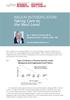 INSULIN INTENSIFICATION: Taking Care to the Next Level By J. Robin Conway M.D., Diabetes Clinic, Smiths Falls, ON www.diabetesclinic.ca Type 2 Diabetes is an increasing problem in our society, due largely
Insulin or GLP1 How to make this choice in Practice. Tara Kadis Lead Nurse - Diabetes & Endocrinology Mid Yorkshire Hospitals NHS Trust
 Insulin or GLP1 How to make this choice in Practice Tara Kadis Lead Nurse - Diabetes & Endocrinology Mid Yorkshire Hospitals NHS Trust Workshop Over View Considerations/barriers to treatments in type 2
Insulin use in Type 2 Diabetes. Dr Rick Cutfield. Why? When? How?
 Insulin use in Type 2 Diabetes Dr Rick Cutfield Why? When? How? 1 Conflict of Interest I have been on advisory boards or had speaker fees from the following pharmaceutical companies: - Eli Lilly - Novo
Diabetes and the Elimination of Sliding Scale Insulin. Date: April 30 th 2013. Presenter: Derek Sanders, D.Ph.
 Diabetes and the Elimination of Sliding Scale Insulin Date: April 30 th 2013 Presenter: Derek Sanders, D.Ph. Background Information Epidemiology and Risk Factors Diabetes Its Definition and Its Impact
Insulin T Y P E 1 T Y P E 2
 T Y P E 1 T Y P E 2 INSULIN There are many different insulins for many different situations and lifestyles. This section should help you and your doctor decide which insulin or insulins are best for you.
Onset Peak Duration Comments
 Rapid- Acting 5-15 minutes 0.5-3 hours 3-5 hours Meal should be available before administering, ideally taking within 10 minutes of eating). Good in refrigerator (36-46 F) until expiration date. Protect
Initiation and Adjustment of Insulin Regimens for Type 2 Diabetes
 PL Detail-Document #300128 This Detail-Document accompanies the related article published in PHARMACIST S LETTER / PRESCRIBER S LETTER January 2014 Initiation and Adjustment of Insulin Regimens for Type
Guidelines for Insulin Initiation and Adjustment in Primary Care in Patients with Type 2 Diabetes: for the Guidance of Diabetes Specialist Nurses
 Guidelines for Insulin Initiation and Adjustment in Primary Care in Patients with Type 2 Diabetes: for the Guidance of Diabetes Specialist Nurses NHS Greater Glasgow & Clyde Managed Clinical Network for
Insulin switch & Algorithms Rotorua GP CME June 2011. Kingsley Nirmalaraj FRACP Endocrinologist BOPDHB
 Insulin switch & Algorithms Rotorua GP CME June 2011 Kingsley Nirmalaraj FRACP Endocrinologist BOPDHB Goal of workshop Insulin switching make the necessary move Ensure participants are confident with Recognising
CLASS OBJECTIVES. Describe the history of insulin discovery List types of insulin Define indications and dosages Review case studies
 Insulins CLASS OBJECTIVES Describe the history of insulin discovery List types of insulin Define indications and dosages Review case studies INVENTION OF INSULIN 1921 The first stills used to make insulin
Insulin pen start checklist
 Insulin pen start checklist Topic Instruction Date & Initials 1. Cognitive Assessment 2. Insulin Delivery loading appropriate mixing priming shot dialing up dose delivery of insulin 3. Insulin type/action
Scottish Medicines Consortium
 Scottish Medicines Consortium insulin glulisine for subcutaneous injection 100 units/ml (Apidra ) No. (298/06) Sanofi Aventis 4 August 2006 The Scottish Medicines Consortium (SMC) has completed its assessment
Prior Authorization Guideline
 Prior Authorization Guideline Guideline: PC - Apidra, Levemir Therapeutic Class: Hormones and Synthetic Substitutes Therapeutic Sub-Class: Antidiabetic Agents Client: CA, CO, NV, OK, OR, WA and AZ Approval
education Insulin delivery devices Paper Current insulin preparations Discovery of insulin and key developments in preparations
 Paper 2009 Royal College of Physicians of Edinburgh Insulin delivery devices 1 AJ Graveling, 2 EA McIntyre 1 Specialty Registrar; 2 Consultant, Department of Diabetes & Endocrinology, Monklands Hospital,
Approximate Cost Reference List i for Antihyperglycemic Agents
 Alpha Glucosidase Inhibitor Acarbose (Glucobay ) Biguanides Metformin (Glucophage, generic) Metformin ER (Glumetza ) Approximate Cost Reference List i for Antihyperglycemic Agents Incretin Agents - DPP-4
Insulin Initiation and Intensification
 Insulin Initiation and Intensification ANDREW S. RHINEHART, MD, FACP, CDE MEDICAL DIRECTOR AND DIABETOLOGIST JOHNSTON MEMORIAL DIABETES CARE CENTER Objectives Understand the pharmacodynamics and pharmacokinetics
An estimated 280 Australians develop diabetes every day. It is Australia s fastest-growing chronic disease.
 Diabetes and insulin Summary Even with the help of your doctor and diabetes nurse educator, it may take a while to find the right insulin dose to reduce your blood glucose to your target levels. Insulin
A Simplified Approach to Initiating Insulin. 4. Not meeting glycemic goals with oral hypoglycemic agents or
 A Simplified Approach to Initiating Insulin When to Start Insulin: 1. Fasting plasma glucose (FPG) levels >250 mg/dl or 2. Glycated hemoglobin (A1C) >10% or 3. Random plasma glucose consistently >300 mg/dl
DIABETES MEDICATION INSULIN
 Section Three DIABETES MEDICATION INSULIN This section will tell you: About insulin. How to care and store your insulin. When to take your insulin. Different ways of taking insulin. WHAT IS INSULIN? Insulin
Type 2 Diabetes: When to Initiate And Intensify Insulin Therapy. Julie Bate on behalf of: Dr John Wilson Endocrinologist Capital and Coast DHB
 Type 2 Diabetes: When to Initiate And Intensify Insulin Therapy Julie Bate on behalf of: Dr John Wilson Endocrinologist Capital and Coast DHB Declarations I have received travel funding and speaker fees
When and how to start insulin: strategies for success in type 2 diabetes
 1 When and how to start insulin: strategies for success in type diabetes Treatment of type diabetes in 199: with each step treatment gets more complex Bruce H.R. Wolffenbuttel, MD PhD Professor of Endocrinology
INTRODUCTION TO INSULIN
 INTRODUCTION TO INSULIN This section will give you some practical advice about using insulin. Your diabetes team will answer any particular questions that you may have e.g. dose of insulin. TYPES OF INSULIN
Starting injectable treatment in adults with Type 2 diabetes
 Starting injectable treatment in adults with Type 2 diabetes RCN guidance for nurses This publication is supported by the pharmaceutical industry Acknowledgements Original contributors to starting insulin
Types of insulin and How to Use Them
 Diabetes and Insulin Pumps Amy S. Pullen Pharm.D ISHP Spring Meeting April 2012 Objectives Describe the different types of insulin used in diabetes Identify the types of insulin that are compatible with
Who is suitable for CSII, Why and How to Access Pump Therapy Mary Bilous and Sue Winship Diabetes Specialist Nurses James Cook University Hospital
 Who is suitable for CSII, Why and How to Access Pump Therapy Mary Bilous and Sue Winship Diabetes Specialist Nurses James Cook University Hospital What is CSII? Insulin pump therapy or Continuous Subcutaneous
Insulin and Diabetes
 Insulin What is Insulin? Insulin is a hormone produced by special cells in the pancreas These cells that are produced are called beta cells Insulin allows the glucose from food we eat to enter the cells
Presented By: Dr. Nadira Husein
 Presented By: Dr. Nadira Husein I have no conflict of interest Disclosures I have received honoraria/educational grants from the following: Novo Nordisk, Eli Lilly, sanofi-aventis, Novartis, Astra Zeneca,
Insulin Pens & Improving Patient Adherence
 Insulin Pens & Improving Patient Adherence Bonnie Pepon, RN, BSN, CDE Certified Diabetes Educator Conemaugh Diabetes Institute Kip Benko, MD FACEP Asst Clinical Professor University of Pittsburgh School
Diabetes in Primary Care course MCQ Answers 2016
 Diabetes in Primary Care course MCQ Answers 2016 Diagnosis of Diabetes HbA1C should not be used as a diagnostic tool in the following situations: (answer each TRUE or FALSE) 1. Gestational Diabetes TRUE
isophane human insulin (prb) A Guide to Starting Humulin I
 isophane human insulin (prb) A Guide to Starting Humulin I This leaflet is intended only for those individuals who have been prescribed Humulin I. It is intended to be used in addition to the Patient Information
Diabetes: When To Treat With Insulin and Treatment Goals
 Diabetes: When To Treat With Insulin and Treatment Goals Lanita. S. White, Pharm.D. Director, UAMS 12 th Street Health and Wellness Center Assistant Professor of Pharmacy Practice, UAMS College of Pharmacy
How to Switch Between Insulin Products
 Detail-Document #251005 This Detail-Document accompanies the related article published in PHARMACIST S LETTER / PRESCRIBER S LETTER October 2009 ~ Volume 25 ~ Number 251005 How to Switch Between Insulin
Insulin Dependent Diabetes Trust
 Insulin Dependent Diabetes Trust Looking After Your Insulin Updated September 2013 Registered Company Number 3148360 Registered Charity No 1058284 It is over 85 years since the discovery of insulin and
Injectable Insulin During Pregnancy
 Injectable Insulin During Pregnancy What is insulin? Insulin is a hormone made by the pancreas. The pancreas is a small organ that lies behind and below the stomach. Insulin allows the food you eat to
Are insulin analogs worth their cost in type 2 diabetes?
 Keystone, Colorado 2012 Are insulin analogs worth their cost in type 2 diabetes? Dr. Amanda Adler Consultant Physician, Institute of Metabolic Sciences Addenbrooke s Hospital, Cambridge Chair, Technology
Intensifying Insulin In Type 2 Diabetes
 Intensifying Insulin In Type 2 Diabetes Eric L. Johnson, M.D. Associate Professor Department of Family and Community Medicine University of North Dakota School of Medicine and Health Sciences Assistant
Intensive Insulin Therapy in Diabetes Management
 Intensive Insulin Therapy in Diabetes Management Lillian F. Lien, MD Medical Director, Duke Inpatient Diabetes Management Assistant Professor of Medicine Division of Endocrinology, Metabolism, & Nutrition
Diabetes Medications: Insulin Therapy
 Diabetes Medications: Insulin Therapy Courtesy Univ Texas San Antonio Eric L. Johnson, M.D. Department of Family and Community Medicine Diabetes and Insulin Type 1 Diabetes Autoimmune destruction of beta
Clinical Guideline Diabetes management during surgery (adults)
 Clinical Guideline Diabetes management during surgery (adults) Standard 8 of the National Service Framework for Diabetes states that all children, young people and adults with diabetes admitted to hospital,
human insulin (prb) 30% soluble insulin 70% isophane insulin A Guide to Starting Humulin M3
 human insulin (prb) 30% soluble insulin 70% isophane insulin A Guide to Starting Humulin M3 This booklet is intended only for those who have been Prescribed Humulin M3. It is intended to be used in addition
Insulin: Breaking Barriers Enhancing Therapies. Jerry Meece, RPh, FACA, CDE [email protected]
 Insulin: Breaking Barriers Enhancing Therapies Jerry Meece, RPh, FACA, CDE [email protected] Questions To Address Who are candidates for insulin? When do we start insulin? How do the different types of
How to adjust your insulin if taken two or three times daily. To change the insulin dose, you will need to know:
 What to do if your results are too high or too low The target range for your blood glucose results is from to 8 mmol/l - aim to have four out of every five blood glucose results in this range. If three
Insulin Pens. Basic facts. What is insulin? What are the different types of insulin?
 UW MEDICINE PATIENT EDUCATION Insulin Pens Basic facts This handout explains what insulin is, the different types of insulin, how to store it, how to give an injection with an insulin pen, and other important
INSULIN AND INCRETIN THERAPIES: WHAT COMBINATIONS ARE RIGHT FOR YOUR PATIENT?
 INSULIN AND INCRETIN THERAPIES: WHAT COMBINATIONS ARE RIGHT FOR YOUR PATIENT? MARTHA M. BRINSKO, MSN, ANP-BC CHARLOTTE COMMUNITY HEALTH CLINIC CHARLOTTE, NC Diagnosed and undiagnosed diabetes in the United
Mary Bruskewitz APN, MS, RN, BC-ADM Clinical Nurse Specialist Diabetes
 Mary Bruskewitz APN, MS, RN, BC-ADM Clinical Nurse Specialist Diabetes Objectives Pathophysiology of Diabetes Acute & Chronic Complications Managing acute emergencies Case examples 11/24/2014 UWHealth
INSULIN TREATMENT FOR TYPE 2 DIABETES MANAGEMENT
 INSULIN TREATMENT FOR TYPE 2 DIABETES MANAGEMENT APIRADEE SRIWIJITKAMOL DIVISION OF ENDOCRINOLOGY AND METABOLISM DEPARTMENT OF MEDICINE FACULTY OF MEDICINE SIRIRAJ HOSPITOL QUESTION 1 1. ท านเคยเป นแพทย
Guidelines for Education and Training
 Aim These protocols aim to provide the necessary guidance to enable insulin to be initiated safely and effectively Objectives 1. To provide the suggested procedure for the initiation of insulin for people
Guide for Storage of Insulin
 Guide for Storage of Insulin Every effort is made to assure the accuracy of the attached information. This information is not intended to be used as a tool to prescribe medication or provide other clinical
Insulin Therapy. Endocrinologist. H. Delshad M.D. Research Institute For Endocrine Sciences
 Insulin Therapy H. Delshad M.D Endocrinologist Research Institute For Endocrine Sciences Primary Objectives of Effective Management A1C % 9 8 Diagnosis SBP mm Hg LDL mg/dl 7 145 130 140 100 Reduction of
10 to 30 minutes ½ to 3 hours 3 to 5 hours. 30 60 minutes 1 to 5 hours 8 hours. 1 to 4 hours
 Insulin Action There are several types of insulin. They are classified by how long they act: very fast, fast, slow and very slow acting. Each type of insulin has a certain time period in which it works.
User guide Basal-bolus Insulin Dosing Chart: Adult
 Contacts and further information Local contact Clinical pharmacy or visiting pharmacy Diabetes education service Director of Medical Services Visiting or local endocrinologist or diabetes physician For
Insulin Safety. The safe use of insulin and you. Patient Information Booklet
 Insulin Safety The safe use of insulin and you The Right insulin The Right dose The Right way The Right time Hypoglycaemia Diabetes Patient Information Booklet Adapted from the National Patient Safety
UW MEDICINE PATIENT EDUCATION. Using Insulin. Basic facts about insulin and self-injection. What is insulin? How does diabetes affect the body?
 UW MEDICINE PATIENT EDUCATION Using Insulin Basic facts about insulin and self-injection This handout explains what insulin is, the different types of insulin, how to store it, how to give an injection
P A T I E N T I N F O R M A T I O N. Apidra
 P A T I E N T I N F O R M A T I O N Apidra We have written this leaflet for those of you with diabetes who have been prescribed Apidra by your doctor. The primary goal of all diabetes treatment is to achieve
Diabetes Management Tube Feeding/Parenteral Nutrition Order Set (Adult)
 Review Due Date: 2016 May PATIENT CARE ORDERS Weight (kg) Known Adverse Reactions or Intolerances DRUG No Yes (list) FOOD No Yes (list) LATEX No Yes ***See Suggestions for Management (on reverse)*** ***If
A Guide to Starting. Humalog Mix25
 A Guide to Starting Humalog Mix25 This booklet is intended only for those individuals who have been prescribed Humalog Mix 25. It is intended to be used in addition to the Patient Information Leaflet (PIL)
Type 2 Diabetes - Pros and Cons of Insulin Administration
 Do we need alternative routes of insulin administration (inhaled insulin) in Type 2 diabetes? Cons: Suad Efendic Karolinska Institutet, Sweden The Diabetes Management Situation Today Diabetes is a growing
An introduction to carbohydrate counting
 An introduction to carbohydrate counting Delivering the best in care UHB is a no smoking Trust To see all of our current patient information leaflets please visit www.uhb.nhs.uk/patient-information-leaflets.htm
Chapter 8 Insulin: Types and Activit y
 Chapter 8 Insulin: Types and Activit y H. Peter Chase, MD Satish Garg, MD INSULIN Before insulin was discovered in 1921, there was little help for people who had type 1 diabetes. Since then, millions of
Insulin myths and facts
 london medicines evaluation network Insulin myths and facts Statement 1 Insulin is the last resort for patients with Type 2 diabetes After initial metformin and sulfonylurea therapy, NICE and SIGN suggest
A list of all medications you are taking also include any vitamins, supplements, over-the-counter medicines, or herbal products
 This is your customized insulin discussion guide to bring to your next doctor s visit. WHAT TO BRING TO YOUR NEXT CHECK UP A record of your recent blood sugar readings A list of all medications you are
Shared Care Agreement Insulin Degludec (Tresiba )
 Licensed Indication Shared Care Agreement Insulin Degludec (Tresiba ) Insulin Degludec is licensed for the treatment of diabetes mellitus in adults. Countess of Chester prescribing guidelines Restricting
Why is Insulin so Important?
 Insulin Therapy Why is Insulin so Important? If the glucose stays in your blood it doesn t do your cells (body) any good The glucose has to get inside the cells for the body to use it What Does Insulin
Premixed Insulin for Type 2 Diabetes. a gu i d e f o r a d u lt s
 Premixed Insulin for Type 2 Diabetes a gu i d e f o r a d u lt s March 2009 What This Guide Covers / 2 Type 2 Diabetes / 3 Learning About Blood Sugar / 4 Learning About Insulin / 5 Comparing Medicines
Insulin. Regimens Characteristics / categorization Pharmacokinetics / pharmacodynamics Adverse effects Compatibility Costs
 Insulin Regimens Characteristics / categorization Pharmacokinetics / pharmacodynamics Adverse effects Compatibility Costs Insulins Rapid-acting Inhaled Short-acting Basal/ Intermediate Basal Pre-mixed
Insulin Administration: What You Don t Know May Hurt Your Patient
 Insulin Administration: What You Don t Know May Hurt Your Patient Jaime A. Davidson, MD, FACP, MACE Clinical Professor of Internal Medicine UT Southwestern Medical Center Dallas, Texas Jaime A. Davidson,
Type 2 Diabetes. Aims and Objectives. What did you consider? Case Study One: Miss S. Which to choose?!?! Modes of Action
 Aims and Objectives This session will outline the increasing complexities of diabetes care, and the factors that differentiate the combinations of therapy, allowing individualisation of diabetes treatment.
Cochrane Quality and Productivity topics
 Long-acting insulin analogues versus NPH insulin (human isophane insulin) for type 2 diabetes mellitus NICE has developed the Cochrane Quality and Productivity (QP) topics to help the NHS identify practices
Insulin Lispro Solution Insulin Aspart Solution Insulin Glulisine Brand, Maker Humalog 19 Eli Lilly NovoLog, 20 Novo Nordisk b Apidra, 21,30 Aventis
 Rapid-acting Detail-Document #220910!This Detail-Document accompanies the related article published in! PHARMACIST S LETTER / PRESCRIBER S LETTER September 2006 ~ Volume 22 ~ Number 220910 Comparison of
Diabetes Information
 Diabetes Information Your diabetes team includes: Consultant Paediatric Endocrinologist Paediatric Diabetes Clinical Nurse Specialists Senior Clinical Nutritionists/Dietitians Senior Clinical Psychologist