
Development of a Detailed Human Spine Model with Haptic Interface
|
|
|
- Cornelia Robertson
- 10 years ago
- Views:
Transcription
1 Development of a Detailed Human Spine Model with Haptic Interface 9 Kim Tho Huynh 1, Ian Gibson 1,3 and Zhan Gao 2 1 National University of Singapore, 2 Nantong University, 3 Centre for Rapid and Sustainable Product Development, Leiria, 1 Singapore 2 China 3 Portugal 1. Introduction The human spine is an important structure, providing strength and support as well as permitting the body to bend, stretch, rotate and lean. It is also a vulnerable part of our skeleton open to disease and injuries like whiplash, low back pain, scoliosis etc. Whiplash is a frequent consequence of rear-end automobile accidents and has been a significant public health problem for many years with injury to one or more ligaments, intervertebral discs, facet joints or muscles of the neck. Low back pain is a very common disease and strongly associated with degeneration of intervertebral discs (Luoma et al., 2000) seen in people with sedentary jobs spending hours sitting in relatively fixed positions, with the lower back forced away from its natural lordotic curvature. This causes health risks of the lumbar spine, especially for the three lower vertebrae L3-L5. 80% of people in the United States will have lower back pain at some point in their life (Vallfors, 1985). Scoliosis is a less common but more complicated spinal disorder, being a congenital 3D deformity of the spine and trunk affecting 1.5-3% of the population. In severe cases, surgical correction is required to stabilize the scoliosis curvature. Studies into the treatment of these spinal diseases have played an important role in modern medicine. Many biomechanical models have been proposed to study dynamic behavior and biomechanics of the human spine, to develop new implants and new surgical strategies for treating these spinal diseases. 2. Related works Biomechanic models can be divided into four categories: physical, in-vitro, in-vivo and computer models. Computer models have been extensively used because they can provide information that cannot be easily obtained by other models, such as internal stresses or strains. They can also be used for multiple experiments with uniform consistency, lowering experimental cost, and simulating different situations easily and quickly. Multi-body and finite element models, or a combination of the two are the most popular simulation tools that can contribute significantly to our insight of the biomechanics of the spine.

2 166 Haptics Rendering and Applications Finite element models (FEMs) are helpful to understand underlying mechanisms of injury and dysfunction, leading to improved prevention, diagnosis and treatment of clinical spinal problems. FEMs often provide estimates of parameters that in-vivo or in-vitro experimental studies either cannot or are difficult to obtain accurately. FEMs are divided into two categories: dynamic study and static study models. Models for static study generally are more detailed in representing spinal geometries (Greaves et al., 2008; Kumaresan et al., 1999; Natarajan et al., 2007; Teo & Ng, 2001; Yoganandan et al., 1996). They can predict internal stresses, strains and other biomechanical properties under complex loading conditions, but they generally only consist of one or two motion segments and do not provide effective insight for the whole column. Dynamic study models generally include a series of vertebrae connected by ligaments and disks modeled as springs (Maurel et al., 1997; Ng & Teo, 2005; Pankoke et al., 1998; Schmidt et al., 2008; Seidel et al., 2001; Zander et al., 2002). They predict locally the kinematic and dynamic responses of a certain part of the spine under load. FEMs have also been widely used to study scoliosis biomechanics (Aubin, 2002; Gignac et al., 2000; Lafage et al., 2004; Schlenk et al., 2003). Understanding of the biomechanics of spine deformation helps surgeons formulate treatment strategies for surgery and design and develop new medical devices. Being complex, FEMs of scoliotic spines are usually restricted to 2D models or simplified 3D elastic beam element models. Although preliminary results achieved are promising, extensive validation is necessary before using the models clinically. Multi-body models have advantages like less complexity, less demand on computational power, and relatively simpler validation requirements. They possess potential to simulate both kinematics and kinetics of the spine effectively. Rigid bodies are interconnected by various joints. Multi-body models can also include many anatomical details while being computationally efficient. The head and vertebrae are modeled as rigid bodies and soft tissues are usually modeled as massless spring-damper elements. Such models are capable of producing biofidelic responses and can be broken down into two categories: car collisions and whole-body vibration investigations. In the former, displacements of the head with respect to the torso, accelerations, intervertebral motions, and neck forces/moments can provide good predictions for whiplash injury (Esat & Acar, 2007; Garcia & Ravani, 2003; Jager et al., 1996; Jun, 2006; Linder, 2000; Stemper et al., 2004; Van Der Horst, 2002). In the latter, multi-body models are helpful for determining the forces acting on the intervertebral discs and endplates of lumbar vertebrae (Fritz, 1998; Luo & Goldsmith, 1991; Seidel & Griffin, 2001; Verver et al., 2003; Yoshimura et al., 2005). In both cases, multi-body models focus either on the cervical or the lumbar spine. Since spine segments are partially modeled in detail, it is impossible to investigate the kinematics of the thoracic spine region. In other words, global biodynamic response of the whole spine has not been studied thoroughly. Although finite element and multi-body models are powerful tools used to study intrinsic properties of injury mechanisms, other techniques have been developed to obtain deeper understanding of biomechanical properties of medical diseases. One such technique is computer haptics. The word haptics was introduced in the early 20 th century to describe the research field that addresses human touch-based perception and manipulation. In the early 1990s, the synergy of psychology, biology, robotics and computer graphics made computer haptics possible. Much like computer graphics is concerned with rendering visual images, computer haptics is the art and science of synthesizing computer generated forces to the user for perception of virtual objects through the sense of touch. Simulation with the addition of haptics may offer better realism compared to only a visual interface. In recent

3 Development of a Detailed Human Spine Model with Haptic Interface 167 years, haptics has been widely applied in numerous VR environments to increase the levels of realism. Especially, haptics has been investigated at length for medical education and surgical simulations, like surgical planning and laparoscopic surgical training (Basdogan et al., 1998; Forest et al., 2004; Gorman et al., 2000; Seitz et al., 2004; Williams et al., 2004). Haptics has been widely utilized in medical fields, but little has been applied to spinal diseases. Integrating haptics into spine models means surgeons can investigate biodynamic responses of whole human spine which either have not been investigated enough in the literature or are limited to partial spine segments. Understanding biodynamic behaviour of the whole human spine is beneficial to wheelchair design applications for the disabled. When applying forces to a certain vertebra of the spine under fixed constraints on sacrum and selected vertebrae, users such as surgeons or clinicians can feel force feedback from the spine as well as examine its locomotion. These results are useful for designing suitable and comfortable wheelchairs for the disabled with specific abnormal spinal configurations. In addition, by simulating in a haptically integrated graphic environment, orthopaedic surgeons can gain insight into the planning of surgery to correct severe scoliosis. Different rod and brace designs can be experimented with using this virtual environment. Furthermore, the surgeons may be able to understand the change in force distribution following spine fusion procedures, which can also assist in post-operative physiotherapy. The objective of this chapter is to present the development of a detailed human spine model with a haptic interface, which can be useful for investigating various medical applications. 3. Overview of human spine structure The spinal column (Figure 1) extends from the skull to pelvis and is made up of 33 individual vertebrae that are stacked on top of each other. The spinal column can be divided into 5 regions: 7 cervical (C1-C7), twelve thoracic (T1 T12), and five lumbar vertebrae (L1 L5) in the lower back, five bones (joined together in adults) to form the bony sacrum, and 3-5 bones fused together to form the coccyx or tailbone. Intervertebral discs (Figure 2) are soft tissue structures situated between each of the 24 cervical, thoracic, and lumbar vertebrae of the spine. Their functions are to separate consecutive vertebral bodies. Once the vertebrae are separated, angular motions in the sagittal (forward, backward bending) and coronal planes (sideway bending) can occur. Facet joints are paired joints which are found in the posterior of the spinal column (Figure 3). The surfaces of each joint are covered by cartilage which helps to smooth the movement between two vertebrae. Certain motions are facilitated by these joints, such as: bending forward, bending backward and twisting. In addition, people can feel pain if the joints are damaged because of the connected nerves. Some experts believe that these joints are the most common reasons for spinal discomfort and pain. The neural elements (Figure 4) consist of the spinal cord and nerve roots. The spinal cord runs from the base of the brain down through the cervical and thoracic spine. The spinal cord is surrounded by spinal fluid and by several layers of protective structures, including the dura mater, the strongest, outermost layer. At each vertebral level of the spine, there is a pair of nerve roots. These nerves go to supply particular parts of the body.

4 168 Haptics Rendering and Applications Fig. 1. Spinal column Fig. 2. Intervertebral discs Fig. 3. Facet joints of the spine

5 Development of a Detailed Human Spine Model with Haptic Interface 169 Fig. 4. Nerve roots and spinal cords Fig. 5. Various ligaments of the spine Ligaments enable the spine to function in an upright position, and the trunk to assume a variety of positions. There are various ligaments attached to the spine, with the most important being the anterior longitudinal and the posterior longitudinal ligaments (Figure 4), which run from the skull to the base of the spine (the sacrum). In addition there are also many muscles attached to the spine, which further help to keep it stable. The majority of the muscles are attached to the posterior elements of the spine. 4. Finite element modeling of the spine In context of most researchers mainly focusing on modelling partially the spinal regions, the construction of a finite element model of the human spine can be useful for clinicians to investigate clinical problems by predicting its biomechanical behaviour. A beam finite element (FE) spine model for haptic interaction is built based on a solid FE spine model, which is created in offline finite element analysis (FEA) software. The mechanical properties of the beam FE spine model are tuned so that its deformation behavior is very similar to that of the offline solid spine model. Furthermore, the online beam FE spine model is greatly simplified as compared to the offline solid FEA model and hence more appropriate for realtime simulations. Haptic feedback is provided in the real-time simulation of the beam FE

6 170 Haptics Rendering and Applications spine model, in order to enhance the human-computer interaction. Based on the results of spine deformation obtained from the haptic online FE simulator, the offline FEA spine model again is used to reproduce the same deformation and hence to provide more detailed deformation and vertebrae s stress/strain information, which the haptic beam FE model is not capable to provide. Figure 6 shows the architecture of the system. Fig. 6. Architecture of the modelling system Effective haptic interaction requires a high updating rate of around 1kHz and only a simple FE spine model can be used without significant latency. FE solvers for haptic interfaces are often restricted to linear or simple non-linear solutions. Most research on FE simulation of the spine uses tetrahedral or brick element types in order to obtain thorough representations of spinal deformation. However, a haptic interface s requirement for high updating rate makes it difficult to use solid elements in the haptic virtual environment, because these often result in huge numbers of elements and nodes. Therefore, a beam element was chosen for this real-time haptic simulator. The beam element type provides very limited information concerning stress and strain of vertebrae or inter-vertebral discs, which is potentially important for representing realistic behaviour. In order to provide stress/strain information of spinal deformation, commercial FEA software (in this case ABAQUS) is employed using a tetrahedral element and computed offline. The complete simulation is achieved in two steps. Firstly, simulation in the online haptic simulator obtains quick, intuitive but relatively rough

7 Development of a Detailed Human Spine Model with Haptic Interface 171 results. The displacement and deformation of the spine from the haptic simulator is then input to the offline FEA application for further detailed analysis. This offline computation is carried out when there is no direct haptic interaction and sufficient computational time. Initially, two types of FE models, beam element and tetrahedral element models, were created based on 3D models of scanned vertebrae. Material properties of FE models should be validated before simulation. In the haptic simulator, a user can push or pull any vertebra in any arbitrary direction to observe the resulting deformation of the whole spine. After the user is satisfied with the deformation of spine model in haptic simulator, the displacements of some focused vertebrae are input to the offline commercial FEA application for more detailed simulation and the results of stress and strain information can be obtained. 4.1 Geometric modeling of vertebrae In order to create a geometric model, a healthy spine is preferable to a specific diseased one. For our system, a resin spine prototype (Budget Vertebral Column CH-59X Life Size 29 Tall), which is cast from a Chinese-Singaporean cadaver, was digitized to create the geometric model of the spine (Figure 7(a)). A common method used to build computer models of the spine is by stacking computed tomography (CT) images sequentially to develop and discretize the 3D solid model. However, with this method, the computer model does not properly represent the surface geometry of the highly irregular vertebra, especially its posterior part. For this reason we used laser scanning of the individual surfaces of the model vertebrae to generate the initial point-cloud data set as can be seen in Figure 7(b). Spline (NURBS) surface models were then constructed based on the polygonal meshes generated from the scan data (Figure 7(c) and (d)). These NURBS models can then be used as templates for CAD model generation. Customized models can be obtained by modifying these templates according to dimensional specifications taken from individual patients (Mastmeyer et al., 2006). Once the geometric models of vertebrae have been prepared, FE models can be constructed according to these geometric models. Fig. 7. Process of geometric modeling 4.2 Finite element modeling for haptic rendering A major concern is the high updating rate that is required for haptic rendering. Low rates can result in instability or vibration when using the haptic device. The FE model for haptic

8 172 Haptics Rendering and Applications interaction is simplified and optimized so that the number of elements and nodes is kept as small as possible. In the haptic interface, spines are represented by beam elements. A similar strategy of simulating spines with beam elements can be found in (Lafage et al., 2004). Figure 8 shows the construction of a rigid beam element FE model of a vertebra. Points A and B are the center points of the upper and lower endplates of the vertebral body. Points C and D are the left and rightmost points of the transverse processes. Point E is the rearmost point of the spinal process. Vertebrae are represented using these rigid beams. Point A and B are then connected to intervertebral discs. Point C, D and E are to be connected to specific ligaments. Figure 9(a) and (b) show side and front views of a section of the assemblage of the spine finite element model and explanation is expressed in Figure 9(c). Fig. 8. Structure of beam element model of a vertebra Fig. 9. Composition of finite elements of the spine Our vertebrae are considered rigid and only the intervertebral discs (IVDs) and ligaments are deformable. The beam element of IVDs is of cylinder type. The flexural moments of inertia (I y, I z ) of beam elements for IVDs are calculated from the intervertebral discs geometries. An analogy with the beam theory allows Young s modulus to be expressed as a

9 Development of a Detailed Human Spine Model with Haptic Interface 173 function of the disc stiffness in bending (K f ), obtained from in-vitro experiments (Lafage et al., 2004). Similarly, the torsion moment of inertia was expressed as a function of the disc stiffness in torsion (K t ), obtained from in-vitro experiments (Lafage et al., 2004). Ligaments were modeled using tension-only truss elements. Two ligaments for connecting transverse processes and one ligament for connecting the spinous process were created. The sacrum is also included as a quasi-rigid body composed of a set of stiff beams. The material properties of ligaments and disks can be found by reference to (Lafage et al., 2004). 4.3 Finite element models for offline FEA The purpose of the offline FEA is to gain information on the stress/strain relationships of vertebrae and IVDs. The FE model should be sufficiently delicate and precise in order to achieve this. Normal vertebral body models have a cancellous core covered by a cortical shell of approximately 1.5mm thickness. The thickness of most IVDs is around 10mm. The nucleus pulposus of the IVD is modeled as an incompressible material comprising 40% of the total disc volume. The models of the nucleus, the annulus and the vertebral bodies are assembled with tie constraints between the interacting surfaces. Besides vertebral bodies and IVDs, ligaments play an important role in spinal biomechanics and stability. The seven intervertebral ligaments were incorporated and modeled with truss elements. The ribcage is currently not included in this FE model. Since two FE models are employed in this system, their deformation under the same boundary conditions should be coherent. Therefore, the mechanical properties of spine FE models must be carefully tuned in order to ensure deformations from both models match. A similar approach of material property adjustment can be found in (Lafage et al., 2004). Since the offline FEA is considered as more accurate than the online FE simulator, its results can serve as a standard, meaning the mechanical properties of the beam element model should be adjusted according to the behaviour of a solid FE spine model. The iterative process of mechanical personalization is engaged in the commercial FEA package. Firstly, the offline element spine model is applied with a force of 40N on the T1 vertebra. The force direction is from the rear to the front. The displacement of each vertebra is recorded and serves as the template. Then, the same load and boundary conditions are applied to the online beam element spine model. Differences between the beam element model and the template solid element model are quantified. Mechanical characteristics of soft tissues of the beam element spine are then tuned manually and locally until the difference between the two simulations tend to less than 5 degrees for the vertebral orientation and 10mm for the vertebral bodyline. The mechanical properties to be tuned here include: the stiffness of ligaments; the Poisson's ratio, the shear stiffness and the torsional stiffness of intervertebral discs. 4.4 The reproduction of haptic simulation result in the offline FEA simulator Although the haptic real-time simulation of the beam FE spine model helps us to understand better the kinematics of the whole thoracolumbar spine, it provides very limited information concerning stress and strain of vertebrae. If a full picture of the deformation behavior of the spine is required, it is important to study and obtain the information of stress/strain of vertebrae. Therefore, offline simulations following the haptic simulation are necessary to carry out and provide this useful information. Our system allows the user to pick interesting moments of particular spine shape during haptic simulation and reproduce

10 174 Haptics Rendering and Applications the similar deformation of spine in the offline FEA simulator for greater detail. By this means, the user can obtain desired spine deformations conveniently in the haptic simulator and then observe every detail of stress/strain of vertebrae in the offline FEA simulator. A straightforward way to reproduce the same deformation in the offline FEA simulator is to record the position and orientation of each vertebra along the spine and then apply the positional constraints to every vertebra of the offline spine model. However, this greatly increases the risk of finite element computation error because of too many constraints involved. In practice, we found this method almost always makes the FEA solver fail to converge. Another plausible way is to record the force vector and the vertebrae under the load in the haptic simulator and reproduce the same load condition in the offline FEA simulator. However, the deformation of spine is not solely determined by the load due to the high non-linearity of the spine. Plus, during surgery, the forces are often not directly applied to a vertebra; instead, surgeons often manipulate instruments, which are linked to one or multiple vertebrae. Therefore, this method is not feasible. Our solution is firstly to record the position and orientation of vertebrae which are directly under the external forces or are constrained during the haptic simulation, then apply the position and orientation constraints only to these vertebrae in the offline FEA simulator. The position and orientation of a vertebra can be represented with the positions of point A ~ E of the vertebrae s beam elements model (shown in Figure 8). The procedure of reproducing the deformed spine in the offline FEA simulator is as follows: a. Locate the vertebrae under external forces in the haptic real-time simulation. b. Build the transformation matrix by comparing the original position and the current position of point A ~ E of the vertebrae. c. Transform the vertebrae and set the constraints in the offline FEA simulator. d. Simulate the deformation. 5. Human spine modeling in LifeMOD 5.1 Introduction to LifeMOD simulation software Recently, many software applications have been developed for impact simulation, ergonomics, comfort study, biomechanical analysis and surgical planning. Such software enables users to perform human body modeling and interaction with the environment where the human motion and muscle forces can be simulated. These tools are very useful for simulating the human-machine behavior simultaneously. LifeMOD from Biomechanics Research Group is a leading simulation tool that has been designed for this purpose. The LifeMOD Biomechanics Modeler is a plug-in module to the ADAMS (Automatic Dynamic Analysis of Mechanical Systems) physics engine, produced by MSC Software Corporation to perform multi-body analysis. It provides a default multi-body model of the skeletal system that can be modified by changing anthropometric sizes such as gender, age, height, weight etc. The created human body may be combined with any type of physical environment or system for full dynamic interaction. The results of the simulation are the human motion, internal forces exerted by soft tissues (muscles, ligaments, joints) and contact forces at the desired location of the human body. Full information on the LifeMOD Biomechanics Modeler can be found online (LifeMOD).

11 Development of a Detailed Human Spine Model with Haptic Interface 175 In following subsections, the developing process of a detailed musculo-skeletal spine model is presented thoroughly. This process includes five main stages such as generating a default human body model, discretizing the default spine segments, implementing ligamentous soft tissues, implementing lumbar back muscles and adding intra-abdominal pressure. 5.2 Generating a default human body model The usual procedure of generating a human model is to create a set of body segments followed by redefining the fidelity of the individual segments. The body segments of a complete standard skeletal model are first generated by LifeMOD depending on the user's anthropometric input. The model used in this study was a median model with a height of 1.78 m and a weight of 70 kg created from the internal GeBod anthropometric database. By default, LifeMOD generates 19 body segments represented by ellipsoids. Then, some kinematic joints and muscles are generated for the human model. Figure 10 shows the base model in this study. Fig. 10. Default human body model 5.3 Discretizing the default spine segments To achieve a more detailed spine model, the improvement of the default spine model mentioned above is required and can be done in the three following steps: refining the spine segments, reassigning muscle attachments and creating the spinal joints. From the base human model, the segments may be broken down into individual bones for greater model fidelity. Every bone in the human body is included in the generated skeletal model as a shell model. To discretize the spine region, the standard ellipsoidal segments representing the cervical (C1-C7), thoracic (T1-T12) and lumbar (L1-L5) vertebral groups are firstly removed. Based on input such as center of mass location and orientation of each vertebra, the individual vertebra segment is then created. Figure 11 shows all ellipsoidal segments of 24 vertebrae in the cervical, thoracic and lumbar regions after discretizing. The muscles are attached to the respective bones based on geometric landmarks on the bone graphics. With the new vertebra segments created, the muscle attachments to the original segment must be reassigned to be more specific to the newly created vertebra segments. The physical attachment locations will remain the same. Figure 12(a) and (b) shows the anterior

12 176 Haptics Rendering and Applications and posterior view of several muscles in neck/trunk regions. Table 1 lists attachment locations of these muscles. Fig. 11. Front and side view of the complete discretized spine Fig. 12. Neck and trunk muscle set: (a) Anterior view; (b) Posterior view Index Muscle Attach proximal Attach distal 1 Rectus abdominis Sternum Pelvis 2 Obliquus externus Ribs Pelvis 3 Scalenus medius C5 Ribs 4 Scalenus anterior C5 Ribs 5 Sternocleidomastiodeus Head Scapula 6 Erector spinae 2 L2 Pelvis 7 Erector spinae 3 T7 L2 8 Erector spinae 1 T7 Pelvis 9 Scalenus posterior C5 Ribs 10 Splenius cervicis Head C7 11 Splenius capitis Head T1 Table 1. Attachment locations of neck and trunk muscle set

13 Development of a Detailed Human Spine Model with Haptic Interface 177 It is necessary to create individual non-standard joints representing intervertebral discs between newly created vertebrae. The spinal joints are modeled as torsional spring forces and the passive 3 DOFs jointed action can be defined with user-specified stiffness, damping, angular limits and limiting stiffness values. These joints are used in an inverse dynamics analysis to record the joint angulations while the model is being simulated. The properties of the joints can be found in the literature (Moroney et al., 1988; Panjabi et al., 1976; Schultz et al., 1979; Schultz & Ashton-Miller, 1991). 5.4 Creating the ligamentous soft tissues To stabilize the spine model, interspinous, flaval, anterior longitudinal, posterior longitudinal and capsule ligaments are created. Figure 13 displays various types of ligaments attached to vertebrae in the cervical spine region Fig. 13. Various types of ligaments in the cervical spine 5.5 Implementing lumbar muscles Multifidus muscle: The multifidus muscle is divided into 19 fascicles on each side according to descriptions by the group of Bogduk (Bogduk et al., 1992a; Macintosh & Bogduk, 1986). The multifidus can be modeled as three layers with the deepest layer having the shortest fibres and spanning one vertebra. The second layer spans over two vertebrae, while the third layer goes all the way from L1 and L2 to posterior superior iliac spine (Zee et al., 2007). The rather short span of the multifidus fascicles makes it possible to model them as line elements without via-points (Figure 14(a)). Erector spinae muscle: According to (Macintosh & Bogduk, 1987; 1991), there are four divisions of the erector spinae: longissimus thoracis pars lumborum, iliocostalis lumborum pars lumborum, longissimus thoracis pars thoracis and iliocostalis lumborum pars thoracis. The fascicles of the longissimus thoracis and iliocostalis lumborum pars lumborum originate from the transverse processes of the lumbar vertebrae and insert on the iliac crest close to the posterior superior iliac spine (Zee et al., 2007). The fascicles of the longissimus thoracis pars thoracis originate from the costae 1-12 close to the vertebrae and insert on the spinous process of L1 down to S4 and on the sacrum. The fascicles of the iliocostalis lumborum pars thoracis originate from the costae 5 12 and insert on the iliac crest. Since muscles of the two pars thoracis are automatically generated by LifeMOD, only muscles of the two pars lumborum need to be added to the model as shown in Figure 14(b).

14 178 Haptics Rendering and Applications Psoas major muscle: The psoas major muscle is divided into 11 fascicles according to different literature sources (Andersson et al., 1995; Bogduk et al., 1992b; Penning, 2000). The fascicles originate in a systematic way from the lumbar vertebral bodies and T12 and insert into the lesser trochanter minor of the femur with a via-point on the pelvis (iliopubic eminence) (Figure 14(c)). Bogduk found that the psoas major had no substantial role as a flexor or extensor of the lumbar spine, but rather that the psoas major exerted large compression and shear loading on the lumbar joints (Bogduk et al., 1992b). This implies that the moment arm for the flexion/extension direction is small and hence the via-points for the path were chosen in such a way that the muscle path ran close to the centre of rotation in the sagittal plane. Fig. 14. (a) multifidus muscle (b) erector spinae pars lumborum muscle (c) psoas major muscle (d) quadratus lumborum muscle Quadratus lumborum muscle: For modelling the quadratus lumborum, the description given by Stokes and Gardner-Morse was followed (Stokes & Gardner-Morse, 1999). They proposed to represent this muscle by five fascicles. The muscle originates from costa 12 and the anterior side of the spinous processes of the lumbar vertebrae and has in the model a common insertion on the iliac crest (Figure 14(d)).

15 Development of a Detailed Human Spine Model with Haptic Interface 179 Abdominal muscles: Two abdominal muscles are included in the model: obliquus externus and obliquus internus. Modelling of these muscles requires the definition of an artificial segment with a zero mass and inertia (Zee et al., 2007). This artificial segment mimics the function of the rectus sheath on which the abdominal muscles can attach (Figure 15(a)). The obliquus externus and internus are divided into 6 fascicles each (Stokes & Gardner-Morse, 1999). Two of the modeled fascicles of the obliquus externus run from the costae to the iliac crest on the pelvis, while the other four originate on the costae and insert into the artificial rectus sheath as can be seen in Figure 15(a). Three of the modelled fascicles of the obliquus internus run from the costae to the iliac crest, while the other three originate from the iliac crest and insert into the artificial rectus sheath (Figure 15(b)). Fig. 15. (a) external oblique muscle (b) internal oblique muscle (c) detailed spine model in skeleton mode (d) detailed spine model in ellipsoid mode 5.6 Adding intra-abdominal pressure Since LifeMOD and ADAMS provide tools that only generate concentrated or distributed forces, it is not possible to implement directly intra-abdominal pressure into the spine model. To overcome this difficulty, a new approach to intra-abdominal pressure modeling is proposed. Initially, an equivalent spring structure able to mimic all mechanical properties of intra-abdominal pressure such as tension/compression, anterior/posterior shear, lateral

16 180 Haptics Rendering and Applications shear, flexion/extension, lateral bending and torsion is created (Figure 16). After that, the translational and torsional stiffnesses of the spring structure are determined. Finally, since adding this spring structure into the spine model is quite troublesome, a bushing element that can specify all stiffness properties of the structure is used instead (Figure 17). Fig. 16. The spring structure used in the spine model Fig. 17. An equivalent bushing element replacing the spring structure 5.7 Validation of the detailed spine model To validate the detailed spine model presented above, two approaches are used and presented as follows: With the same extension moment generated in upright position, axial and shear forces in the L5-S1 disc calculated in the model are compared to those obtained from Zee s model (2007) and experimental data (McGill & Norman, 1987). While a subject holds a crate of beer weighing 19.8 kg, the axial force of the L4-L5 disc is computed and compared with in-vivo intradiscal pressure measurements (Wilke et al., 2001). In the first approach, a gradually increasing horizontal force was applied onto the vertebra T7 of the spine model from posterior to anterior in the sagittal plane. From this force, axial

17 Development of a Detailed Human Spine Model with Haptic Interface 181 and shear forces as well as the moment about the L5-S1 disc were calculated. Zee s model estimated an axial force of 4520 N and shear force of 639 N in the L5-S1 disc at a maximum extension moment of 238 Nm. Meanwhile, to obtain the same extension moment, the external force that needs to be applied in the present model is 1260 N. Corresponding with this force, axial and shear forces obtained in the model were 4582 N and 625 N, respectively. This is in accordance with the results presented by McGill et al. (1987) who found axial forces in the range of N and shear forces up to 650 N. In the second approach, a comparison was made with in-vivo intradiscal pressure measurements of the L4 L5 disc as reported by Wilke et al. (2001). They measured a pressure of 1.8 MPa in the L4 L5 disc while the subject (body mass: 70 kg; body height: 1.74 m) was holding a full crate of beer (19.8 kg) 60 cm away from the chest. The disc area was 18 cm 2 and based on this the axial force was calculated to be 3240 N. The same situation was simulated using the spine model in this research. The estimated axial force was N. This is a good match considering the fact that no attempt was made to scale the model to the subject in this study. Body mass and body height of the subject in this study are quite similar to the body mass and height used in the model. 6. Haptic interface for spine modelling 6.1 Haptic rendering Haptic rendering is the process of applying forces to give the operators a sense of touch and interaction with physical objects. Typically, a haptic rendering algorithm consists of two parts: collision detection and collision response. Figure 18 illustrates in detail the procedure of haptic rendering. Note the update rate of haptic rendering has to be maintained at around 1000 Hz for stable and smooth haptic interaction. Otherwise, virtual surfces feel softer. Even worse, the haptic device vibrates. To observe the locomotion and study dynamic properties of the spine model quickly, conveniently and more realisticly, haptic technique can be integrated into a spine simulation system. In this study, for two types of spine models developed using finite element method as well as multi-body method in LifeMOD software, the haptic rendering process has two main stages: the rigid stage and the compliant stage. Without pressing the stylus button of the PHANToM device, the users can touch and explore the whole spine model since it is considered to be rigid throughout. After the users locate a specific vertebra where he/she wishes to apply force, they can then press the PHANToM stylus button and push or drag the vertebra in any direction to make the whole spine model deform. Once the stylus button is pressed, the system switches from rigid stage to compliant stage. The haptic rendering algorithms in these two stages will be clearly presented in the following sections. Figure 19 shows the complete haptic simulation process in the system. 6.2 Haptic rendering method for the rigid stage of the spine models In real-time haptic simulation, users can only interact with the spine model by manipulating a rigid virtual object considered as a probe on the computer screen. At present, a simple probe such as a sphere is used in this study. In the rigid stage, a common haptic rendering method is used for the aforementioned types of spine models. Since this interaction carries out at a high update rate of 1 khz, the chosen haptic rendering method needs to be

18 182 Haptics Rendering and Applications reasonable and effectively computational. As presented above, the haptic rendering method includes two phases: collision detection and collision response. For the collision detection, the simple algorithm proposed by James Arvo (1990) is utilized to check intersection between the probe and the spine model through axis-aligned bounding boxes (AABBs). Figure 20 illustrates all AABBs of a vertebra intersecting with the spherical probe. For collision response, the algorithm developed by Gao and Gibson (2006) is used to determine force feedback. An important prerequisite in this step is that intersecting points with the spherical probe have to be specified. Figure 21 shows intersecting points during colliding process between the probe and a vertebra. Fig. 18. Procedure of haptic rendering

19 Development of a Detailed Human Spine Model with Haptic Interface 183 Fig. 19. Complete haptic simulation process in the system Fig. 20. Collision between the probe and a vertebra of the spine model

20 184 Haptics Rendering and Applications Fig. 21. Intersecting points betweenthe probe and the vertebra After these intersecting points are found, the final step in this phase is to calculate the reaction forces generated from the vertebrae of the spine model. Computing the reaction forces of the vertebrae is concerned with finding force magnitudes which the probe applied to the intersecting points on the contact surface areas of the vertebrae and force directions at those points. The magnitudes and directions of reaction forces can be computed by the equations as follows: F n i 0 k* s d* s S i MaxSec i (1) S MaxSec where k is spring constant, s is the displacement of intersected point, d is the damping factor, is the velocity of the intersected point, is the maximum sectional area of the probe. F n N i i 0 where n is the number of surface sampling points inside probe, N i as the normal vector of surface sampling point and s i as the depth. n * s i (2) 6.3 Haptic rendering method for the compliant stage of the spine models After the users locate a specific vertebra where he/she wishes to apply force, they can then press the PHANToM stylus button and push or drag the vertebra in any direction to make the whole spine model deform. Once the stylus button is pressed, the system switches to another haptic rendering algorithm that uses the stretched-spring model. A virtual spring is set up connecting the vertebra and the haptic cursor. The spring has two hook points: one is on the vertebra and the other is the haptic cursor. Both of the hook points displace during spine deformation. The force magnitude is determined by the length of the virtual spring and stiffness while the force direction depends on the vector of the virtual spring.

21 Development of a Detailed Human Spine Model with Haptic Interface Finite element spine model In this stage, the haptic interface has two components: haptic rendering and an FE solver. The function of the haptic rendering component is to provide haptic feedback to the user when the user virtually deforms the spine model. The FE solver evaluates the deformation of the FE spine model according to the user s force input. To solve the FE deformation problem, an explicit Newmark integration method is employed. The theory of elasticity consists of a set of differential equations that describe the state of stress, strain and displacement of each point within an elastic deformable body. A relationship between the deformation of the object and the exerted forces can be established by synthesizing those equations. The equation governing the resulting deformation from external forces is: Mu Du R( u) F (3) 3n 3n where u is the 3n-dimensional nodal displacement vector; and are the velocity and acceleration vectors respectively; F is the external force vector; M is the mass matrix; D is the damping matrix; R(u) represents the internal force vectors due to deformation; n is the number of nodes in the FE model. If deformation is assumed to be small, a linear elastic model can be used to approximate linear strain: u x (4) x xy u v y x (5) where x, y and z are the independent variables of the Cartesian frame, and u, v and w are the corresponding displacement variables at the given point. Because the internal force vector is linear with respect to the nodal displacement vector, this leads to a constant stiffness matrix, which can be pre-computed. However, this solution does not consider geometric non-linearity and is only fit therefore for linear and small deformation situations. The linear strain model introduces distortions for large global deformations. In the model the deformation of the spine is rather large and therefore the linear strain approximation is not suitable. We model the deformation using the Green strain as follows: u 1 u v w x x 2 x x x xy u v u u v v w w y x x y x y x y (6) (7)
22 186 Haptics Rendering and Applications The other 4 terms of the strain are defined similarly. The algorithm equations are: t u n 1 u n u n u n 1 (8) 2 un 2 un 1 un un t t 2 (9) Mu F R( u ) Du (10) n 1 n 1 n 1 n 1 Zhuang s mass concentration method is employed to approximate the distributed mass in real-time (Zhuang & Canny, 2000). To avoid inverting a large sparse matrix at each time step, Zhuang s method approximates the force matrix M with a diagonal matrix. Diagonalization results in approximating the mass continuum as concentrated masses at each nodal point of the finite element model. This simplifies the nonlinear system of equations used to form a set of independent algebraic equations that can be solved with relatively high updating rate. A prototype system has been implemented. Although the FE model of the spine is a simplified beam model, the updating rate of FEM evaluation is still far below the 1000 Hz required for effective vibration-free haptic rendering. The FE model has 472 elements and 473 nodes and the time step of the explicit integration is 0.02 second. The updating rate is approximately 200 Hz using a PC graphic workstation. To avoid vibration due to the updating rate discrepancy, a force interpolation method (Zhuang & Canny, 2000) was adopted to smoothen the force feedback. Haptic feedback between two simulated states is linearly interpolated at a suitably high frequency. However, at time t n, we do not have the information of t n+1. Zhuang s solution uses an intentional delay of an FEM deformation time step, up to 1/100s. User experimentation found that such a small lag in time is within the tolerance of human perception for virtual interaction with soft objects Multi-body spine model Different from the finite element spine model whose locomotion is directly calculated in the haptic simulation, the multi-body spine model in the compliant stage utilize the preinterpolated displacement-force functions of all vertebrae to conveniently compute the movement of the spine. Based on the magnitude of the haptic external forces applied by the users, dynamic properties of all vertebrae can be easily calculated via these functions and the locomotion of the whole spine model can be rapidly observed. The purpose of interpolating displacement-force functions of all vertebrae is to facilitate computational process of dynamic properties of the spine model during haptic simulation. To do that, some constraints are imposed on the spine model. The pelvis is fixed in 3D space. Then, constant forces are applied on each specific vertebra in the thoracic region in each axisaligned direction during simulation. The force magnitude is gradually increased with an equal increment in subsequent simulations. Corresponding to each value of force, dynamic characteristics of all vertebrae (e.g. translation, rotation) can be automatically obtained using the plots in LifeMOD as a reference. The dynamic properties are recorded after the spine model is stabilized. Based on these recorded dynamic properties, displacement-force
23 Development of a Detailed Human Spine Model with Haptic Interface 187 relationships can be interpolated using the least-squares method and expressed in terms of polynomial functions. Figure 22 illustrates the graph of a dynamic property of vertebra T1 under forward forces in sagittal plane of the spine model. In these figures, each series of markers presents each dynamic property of one vertebra obtained in the simulations and the continuous line closely fit to that series is the corresponding interpolated line. 0 Translation of vertebra T1 under Forward External Force y(mm) y e 8F z 1.425e Fz e Fz F z (N) Fig. 22. Relative translation y of T1 versus forward force 7. Applications 7.1 Haptic simulation of the finite element spine model Initially, without pressing the stylus button, the user can touch and explore the spine model since it is considered to be rigid throughout. Then, the user can control the probe to apply external forces in any arbitrary direction onto any vertebra by pressing the stylus button to observe the locomotion and study dynamic properties of the spine model. Figure 23 shows the haptic real-time simulation of the finite element spine model under lateral bending. During this real-time simulation, the displacement, rotation and deformation of the spine can be recorded and then input to the offline FEA application for further detailed stress/strain and deformation behaviour analysis of IVDs as well as vertebrae. 7.2 Studying stress/strain of the finite element spine model in a prone position As presented above, all dynamic properties of the spine model recorded during the haptic simulation can be provided as input of offline FEA simulator for further detailed analysis. In
24 188 Haptics Rendering and Applications this section, an example of spine manipulation is demonstrated. A human body is prone on a horizontal table and a downward force is pushed on T12 vertebra. Therefore, the spine is also in prone position. All 6 DOFs of the pelvis are constrained and 2 DOFs of the T1 on the horizontal plane are constrained in order to simulate the situation where the prone posture torso is constrained by a horizontal plane underneath the torso. In the haptic simulator, downward pressing forces are applied to the T12 vertebra by the user through the PHANToM device. Figure 24(a) shows the beam element spine model at initial status without any deformation. (a) (b) (c) (d) (e) (f) (g) (h) Fig. 23. The haptic real-time simulation of finite element spine model The direction of down ward pressing force (a) Fig. 24. Spine manipulation in the haptic real-time simulator (b)
25 Development of a Detailed Human Spine Model with Haptic Interface 189 Figure 24(b) shows the spine model under deformation. The deformation is then recorded and the displacement of the focused vertebra, T12 in this case, is obtained and input into the offline FEA solver. Figure 25 shows the result from the ABAQUS offline FEA solution. Only T9 to the pelvis is shown because this region is the most interesting region if a pressing load is applied on T12. The offline FEM model consisted of cortical bones, cancellous bones, bony end plates and the intervertebral discs. The disc s annulus was represented as a composite of collagenous fiber embedded in a matrix of base substance. The nucleus was modelled as an incompressible inviscid fluid. Because intervertebral discs often experience large deformation and strains under compressive loading, the materials of the FEM spine model were non-linear. Figure 25(a) shows the tetrahedral FE model without deformation. Figure 25 (b) and (c) show the von Mises stress distribution after deformation. (a) (b) (c) Fig. 25. Offline FEA simulation 7.3 Investigating dynamic properties of the spine model under external haptic forces Since the finite element spine model for the haptic simulation is represented with beam element which is in fact highly simplified, it is difficult to describe precisely the dynamic properties of the real spine. Compared to this finite element spine model, the detailed musculo-skeletal multi-body spine model developed in LifeMOD can provide better information of biodynamic behaviour of the spine. Since LifeMOD software takes account of other components (such as head, ribcage, muscles, ligaments so on), the locomotion of the spine model will become much more realistic. Furthermore, by simulating the spine model in a haptically integrated graphic environment, the users (such as surgeons, trainers) can quickly and conveniently observe the locomotion as well as gain insight into the dynamic behaviour of the spine.
26 190 Haptics Rendering and Applications The long-term goal of this study is to develop a haptically integrated simulation platform for investigating post-operative personal spine models constructed from LifeMOD. The first step in this study is to develop a haptic interface for a detailed normal spine model whose dynamic properties are obtained from LifeMOD. Figure 26 illustrates the analysis of some dynamic properties of the spine when applying force on vertebra T1 in x-axis direction. The next step in the study is to develop a post-operative detailed spine model. The operation conducted on the spine model can be spinal fusion or spinal arthroplasty. By using this haptically integrated graphic interface, assessing biomechanical behavior between natural spines and spinal arthroplasty or spinal fusion becomes more convenient. This will help orthepaedic surgeons understand the change in force distribution following spine fusion procedures, which can also assist in post-operative physiotherapy. In addition, the surgeons can gain useful insight from this system in the planning of surgery to correct severe scoliosis. Different designs of rods and braces can for example be experimented with using this virtual environment. It is also considered that this system may assist physiotherapists and other practitioners when designing cushioning and supports for wheelchair-bound and other clients suffering from asymmetric spinal disorders. Fig. 26. Analyzing translational properties of the spine model under lateral force on T1
27 Development of a Detailed Human Spine Model with Haptic Interface Conclusion In general, we have presented the process of modelling human spine. Initially, a beam FE spine model for haptic interaction is built based on a solid FE spine model, which is created in offline finite element analysis software. Although there are some limitations on not fully taking into account soft tissues, this beam FE model is able to simulate global dynamic behaviour of the whole spine, Subsequently, an entirely detailed musculo-skeletal mutibody spine model using LifeMOD Biomechanics Modeler is completely developed to solve the limitations aforementioned and reliably validated by comparing simulation results with experimental data and in-vivo measurements. Moreover, to enhance more realistic interaction between users (such as trainers, clinicians, surgeons) and the spine model during real-time simulation, haptic technique is integrated into a graphic interface. Based on this, exploration of the spine model becomes much more realistic since the users can manipulate the haptic cursor to directly touch, grasp and even apply external forces in any arbitrary direction onto any vertebra to observe the deformation of the spine. In such a simulation interface, users can quickly and more conveniently study the locomotion and dynamic behaviour of the spine model. 9. References Andersson E., Oddsson L., Grundstrom H. et al. (1995). The Role of the Psoas and Iliacus Muscles for Stability and Movement of the Lumbar Spine, Pelvis and Hip. Scandinavian Journal of Medicine and Science in Sports, Vol. 5, No. 1, pp Arvo J. (1990). A Simple Method for Box-Sphere Intersection Testing. Graphics Gems, pp Aubin C.E. (2002). Scoliosis Study Using Finite Element Models. Studies in Health Technology and Informatics, Vol. 91, pp Basdogan C., Ho C.H., Srinivasan M.A. et al. (1998). Force Interaction in Laparoscopic Simulations: Haptic Rendering of Soft Tissues. Stud. Health Technol. Inform., Vol. 50, pp Bogduk N., Macintosh J.E. & Pearcy M.J. (1992a). A Universal Model of the Lumbar Back Muscles in the Upright Position. Spine, Vol. 17, No. 8, pp Bogduk N., Pearcy M.J. & Hadfield G. (1992b). Anatomy and Biomechanics of Psoas Major. Clinical Biomechanics, Vol. 7, No. 2, pp Esat V. & Acar M. (2007). A Multi-Body Model of the Whole Human Spine for Whiplash Investigations. Forest C., Delingette H. & Ayache N. (2004). Surface Contact and Reaction Force Models for Laparoscopic Simulation. In International Symposium on Medical Simulation, Vol. 3078, pp Fritz M. (1998). Three-Dimensional Biomechanical Model for Simulating the Response of the Human Body to Vibration Stress. Journal of Medical & Biological Engineering & Computing, Vol. 36, No. 6, pp Gao Z. & Gibson I. (2006). Haptic Sculpting of Multi-Resolution B-Spline Surfaces with Shaped Tools. Computer Aided Design, Vol. 38, No. 6, pp Garcia T. & Ravani B. (2003). A Biomechanical Evaluation of Whiplash Using a Multi-Body Dynamic Model. Journal of Biomechanical Engineering, Vol. 125, No. 2, pp
28 192 Haptics Rendering and Applications Gignac D., Aubin C.E., Dansereau J. et al. (2000). Optimization Method for 3d Bracing Correction of Scoliosis Using a Finite Element Model. European Spine Journal, Vol. 9, No. 3, pp Gorman P., Krummel T., Webster R. et al. (2000). A Prototype Haptic Lumbar Puncture Simulator. Studies in Health Technology and Informatics, Vol. 70. Greaves C.Y., Gadala M.S. & Oxland T.R. (2008). A Three-Dimensional Finite Element Model of the Cervical Spine with Spinal Cord: An Investigation of Three Injury Mechanisms. Annals of Biomedical Engineering, Vol. 36, No. 3, pp Jager M., Sauren A., Thunnissen J.G.M. et al. (1996). A Global and Detailed Mathematical Model for Head-Neck Dynamics. SAE Tech. Pap. Ser. Jun Y. (2006). A Computational Model of the Human Head and Cervical Spine for Dynamic Impact Simulation. Kumaresan S., Yoganandan N. & Pintar F.A. (1999). Finite Element Analysis of the Cervical Spine: A Material Property Sensitivity Study. Clinical Biomechanics, Vol. 14, No. 1, pp Lafage V., Dubousset J., Lavaste F. et al. (2004). 3d Finite Element Simulation of Cotrel- Dubousset Correction. Computer Aided Surgery, Vol. 9, No. 1-2, pp Lifemod Biomechanics Modeler [cited; Available from: Linder A. (2000). A New Mathematical Neck Model for a Low-Velocity Rear-End Impact Dummy: Evaluation of Components Influencing Head Kinematics. Accident Analysis and Prevention, Vol. 32, No. 2, pp Luo Z.P. & Goldsmith W. (1991). Reaction of a Human Head-Neck-Torso System to Shock. Journal of Biomechanics, Vol. 24, No. 7, pp Luoma K., Riihimaki H., Luukkonen R. et al. (2000). Low Back Pain in Relation to Lumbar Disc Degeneration. Spine, Vol. 25, No. 4, pp Macintosh J.E. & Bogduk N. (1986). The Morphology of the Human Lumbar Multifidus. Clinical Biomechanics, Vol. 1, No. 4, pp Macintosh J.E. & Bogduk N. (1987) Volvo Award in Basic Science: The Morphology of the Lumbar Erector Spinae. Spine, Vol. 12, No. 7, pp Macintosh J.E. & Bogduk N. (1991). The Attachments of the Lumbar Erector Spinae. Spine, Vol. 16, No. 7, pp Mastmeyer A., Engelke K., Fuchs C. et al. (2006). A Hierarchical 3d Segmentation Method and the Definition of Vertebral Body Coordinate Systems for Qct of the Lumbar Spine. Medical Image Analysis, Vol. 10, No. 4, pp Maurel N., Lavaste F. & Skalli W. (1997). A Three-Dimensional Parameterized Finite Element Model of the Lower Cervical Spine: Study of the Influence of the Posterior Articular Facets. Journal of Biomechanics, Vol. 30, No. 9, pp McGill S.M. & Norman R.W. (1987). Effects of an Anatomically Detailed Erector Spinae Model on L4/L5 Disc Compression and Shear. Journal of Biomechanics, Vol. 20, No. 6, pp Moroney S.P., Schultz A.B., Miller J.A.A. et al. (1988). Load-Displacement Properties of Lower Cervical Spine Motion Segment. Journal of Biomechanics, Vol. 21, pp Natarajan R.N., Williams J.R., Lavender S.A. et al. (2007). Poro-Elastic Finite Element Model to Predict the Failure Progression in a Lumbar Disc Due to Cyclic Loading. Computers & Structures, Vol. 85, No , pp
29 Development of a Detailed Human Spine Model with Haptic Interface 193 Ng H.W. & Teo E.C. (2005). Development and Validation of a C0-C7 Fe Complex for Biomechanical Study. Journal of Biomechanics, Vol. 127, No. 5, pp Panjabi M.M., Brand R.A. & White A.A. (1976). Mechanical Properties of the Human Thoracic Spine as Shown by Three-Dimensional Load-Displacement Curves. Journal of Bone and Joint Surgery, Vol. 58, No. 5, pp Pankoke S., Buck B. & Woelfel H.P. (1998). Dynamic Fe Model of Sitting Man Adjustable to Body Height, Body Mass and Posture Used for Calculating Internal Forces in the Lumbar Vertebral Disks. Journal of Sound and Vibration, Vol. 215, No. 4, pp Penning L. (2000). Psoas Muscle and Lumbar Spine Stability: A Concept Uniting Existing Controversies. Critical Review and Hypothesis. European Spine Journal, Vol. 9, No. 6, pp Schlenk R.P., Kowalski R.J. & Benzel E.C. (2003). Biomechanics of Spinal Deformity. Neurosurg Focus, Vol. 14, No. 1, pp Schmidt H., Heuer F., Claes L. et al. (2008). The Relation between the Instantaneous Center of Rotation and Facet Joint Forces a Finite Element Analysis. Clinical Biomechanics, Vol. 23, No. 3, pp Schultz A.B., Warwick D.N., Berkson M.H. et al. (1979). Mechanical Properties of Human Lumbar Spine Motion Segments-Part 1: Responses in Flexion, Extension, Lateral Bending and Torsion. Journal of Biomechanical Engineering, Vol. 101, pp Schultz A.B. & Ashton-Miller J.A., Biomechanics of the Human Spine, in Basic Orthopaedic Biomechanics, V.C. Mow and W.C. Hayes, Editors. 1991, Raven Press: New York. p Seidel H. & Griffin M.J. (2001). Modelling the Response of the Spine System to Whole-Body Vibration and Repeated Shock. Clinical Biomechanics, Vol. 16, No. 1, pp Seidel H., Hinz B. & Bluthner R. (2001). Application of Finite Element Models to Predict Forces Acting on the Lumbar Spine During Whole-Body Vibration. Clinical Biomechanics, Vol. 16, No. 1, pp. S57-S63. Seitz H., Tille C., Irsen S. et al. (2004). Rapid Prototyping Models for Surgical Planning with Hard and Soft Tissue Representation. International Congress Series, Vol. 1268, pp Stemper B.D., Yoganandan N. & Pintar F.A. (2004). Validation of a Head-Neck Computer Model for Whiplash Simulation. Medical and Biological Engineering and Computing, Vol. 42, No. 3, pp Stokes I.A. & Gardner-Morse M. (1999). Quantitative Anatomy of the Lumbar Musculature. Journal of Biomechanics, Vol. 32, No. 3, pp Teo E.C. & Ng H.W. (2001). First Cervical Vertebra (Atlas) Fracture Mechanism Studies Using Finite Element Method. Journal of Biomechanics, Vol. 34, No. 1, pp Vallfors B. (1985). Acute, Subacute and Chronic Low Back Pain: Clinical Symptoms, Absenteeism and Working Environment. Scandinavian Journal of Rehabilitation Medicine. Supplement, Vol. 11, pp Van Der Horst M.J. (2002). Human Head Neck Response in Frontal, Lateral and Rear End Impact Loading: Modeling and Validation. Verver M.M., Hoof J.V., Oomens C.W.J. et al. (2003). Estimation of Spinal Loading in Vertical Vibrations by Numerical Simulation. Clinical Biomechanics, Vol. 18, No. 9, pp
30 194 Haptics Rendering and Applications Wilke H.J., Neef P., Hinz B. et al. (2001). Intradiscal Pressure Together with Anthropometric Data a Data Set for the Validation of Models. Clinical Biomechanics, Vol. 16, No. 1, pp. S111-S126. Williams R.L., Srivastava M., Howell J.N. et al. (2004). The Virtual Haptic Back for Palpatory Training. Proceedings of the 6th international conference on multimodal interfaces. Yoganandan N., Kumaresan S., Voo L. et al. (1996). Finite Element Modeling of the C4-C6 Cervical Spine Unit. Medical Engineering Physics, Vol. 18, No. 7, pp Yoshimura T., Nakai K. & Tamaoki G. (2005). Multi-Body Dynamics Modelling of Seated Human Body under Exposure to Whole-Body Vibration, Vol. 43, No. 3, pp Zander T., Rohlmann A., Klockner C. et al. (2002). Comparison of the Mechanical Behavior of the Lumbar Spine Following Mono-and Bisegmental Stabilization. Clinical Biomechanics, Vol. 17, No. 6, pp Zee M.D., Hansen L., Wong C. et al. (2007). A Generic Detailed Rigid-Body Lumbar Spine Model. Journal of Biomechanics, Vol. 40, No. 6, pp Zhuang Y. & Canny J. (2000). Haptic Interaction with Global Deformations. ICRA '00. IEEE International Conference on Robotics and Automation.
31 Haptics Rendering and Applications Edited by Dr. Abdulmotaleb El Saddik ISBN Hard cover, 246 pages Publisher InTech Published online 27, January, 2012 Published in print edition January, 2012 There has been significant progress in haptic technologies but the incorporation of haptics into virtual environments is still in its infancy. A wide range of the new society's human activities including communication, education, art, entertainment, commerce and science would forever change if we learned how to capture, manipulate and reproduce haptic sensory stimuli that are nearly indistinguishable from reality. For the field to move forward, many commercial and technological barriers need to be overcome. By rendering how objects feel through haptic technology, we communicate information that might reflect a desire to speak a physicallybased language that has never been explored before. Due to constant improvement in haptics technology and increasing levels of research into and development of haptics-related algorithms, protocols and devices, there is a belief that haptics technology has a promising future. How to reference In order to correctly reference this scholarly work, feel free to copy and paste the following: Kim Tho Huynh, Ian Gibson and Zhan Gao (2012). Development of a Detailed Human Spine Model with Haptic Interface, Haptics Rendering and Applications, Dr. Abdulmotaleb El Saddik (Ed.), ISBN: , InTech, Available from: InTech Europe University Campus STeP Ri Slavka Krautzeka 83/A Rijeka, Croatia Phone: +385 (51) Fax: +385 (51) InTech China Unit 405, Office Block, Hotel Equatorial Shanghai No.65, Yan An Road (West), Shanghai, , China Phone: Fax:
MATERIALS AND METHODS
 REDISTRIBUTION OF LOAD OF INJURED LOWER CERVICAL SPINE UNDER AXIAL COMPRESSION USING FEM E. C. Teo 1 and H. W. Ng 1 1 School of Mechanical and Production Engineering, Nanyang Technological University,
Study on Structural Behaviour of Human Vertebral Column Using Staad.Pro
 Study on Structural Behaviour of Human Vertebral Column Using Staad.Pro Healtheephan alexis. S Post graduate student, Government College of Technology, Coimbatore 641 013 [email protected] ABSTRACT
Thoracic Spine Anatomy
 A Patient s Guide to Thoracic Spine Anatomy 228 West Main, Suite C Missoula, MT 59802 Phone: [email protected] DISCLAIMER: The information in this booklet is compiled from a variety of sources.
Lumbar Spine Anatomy. eorthopod.com 228 West Main St., Suite D Missoula, MT 59802-4345 Phone: 406-721-3072 Fax: 406-721-2619 info@eorthopod.
 A Patient s Guide to Lumbar Spine Anatomy 228 West Main St., Suite D Missoula, MT 59802-4345 Phone: 406-721-3072 Fax: 406-721-2619 [email protected] DISCLAIMER: The information in this booklet is compiled
Anatomy and Terminology of the Spine. Bones of the Spine (Vertebrae)
 Anatomy and Terminology of the Spine The spine, also called the spinal column, vertebral column or backbone, consists of bones, intervertebral discs, ligaments, and joints. In addition, the spine serves
Patient Information. Lateral Lumbar Interbody Fusion Surgery (LLIF).
 Patient Information. Lateral Lumbar Interbody Fusion Surgery (LLIF). Understanding your spine Disc Between each pair of vertebrae there is a disc that acts as a cushion to protect the vertebra, allows
Patient Information. Anterior Cervical Discectomy and Fusion Surgery (ACDF).
 Patient Information. Anterior Cervical Discectomy and Fusion Surgery (ACDF). Understanding your spine Disc Between each pair of vertebrae there is a disc that acts as a cushion to protect the vertebra,
Human Anatomy & Physiology
 PowerPoint Lecture Slides prepared by Barbara Heard, Atlantic Cape Community College Ninth Edition Human Anatomy & Physiology C H A P T E R 7 The Skeleton: Part B Annie Leibovitz/Contact Press Images Vertebral
SPINAL FUSION. North American Spine Society Public Education Series
 SPINAL FUSION North American Spine Society Public Education Series WHAT IS SPINAL FUSION? The spine is made up of a series of bones called vertebrae ; between each vertebra are strong connective tissues
Stability of the spine modelled as an arch
 Loughborough University Institutional Repository Stability of the spine modelled as an arch This item was submitted to Loughborough University's Institutional Repository by the/an author. Citation: XIAO,
Computer Aided Engineering (CAE) Techniques Applied To Hip Implant
 International Journal Of Computational Engineering Research (ijceronline.com) Vol. 3 Issue. 3 Computer Aided Engineering (CAE) Techniques Applied To Hip Implant 1, M. S. Abo_Elkhair, 2, M. E. Abo-Elnor,
.org. Fractures of the Thoracic and Lumbar Spine. Cause. Description
 Fractures of the Thoracic and Lumbar Spine Page ( 1 ) Spinal fractures can vary widely in severity. While some fractures are very serious injuries that require emergency treatment, other fractures can
Biomechanical Analysis of the Deadlift (aka Spinal Mechanics for Lifters) Tony Leyland
 Biomechanical Analysis of the Deadlift (aka Spinal Mechanics for Lifters) Tony Leyland Mechanical terminology The three directions in which forces are applied to human tissues are compression, tension,
If you or a loved one have suffered because of a negligent error during spinal surgery, you will be going through a difficult time.
 If you or a loved one have suffered because of a negligent error during spinal surgery, you will be going through a difficult time. You may be worried about your future, both in respect of finances and
Biomechanics of Lifting and Lower Back Pain S.N. Robinovitch
 Biomechanics of Lifting and Lower Back Pain S.N. Robinovitch Outline Epidemiology of lower back pain Strength of spinal segments Lifting models: muscle and intervertebral joint forces (compression and
PHYSIOLOGY AND MAINTENANCE Vol. IV - Lumbar Muscle Function and Dysfunction in Low Back Pain - Markku Kankaanpää
 LUMBAR MUSCLE FUNCTION AND DYSFUNCTION IN LOW BACK PAIN Markku Department of Physical Medicine and Rehabilitation, Kuopio University Hospital, and Department of Physiology, University of Kuopio, Finland
Chapter 12 The Trunk and Spinal Column
 Chapter 12 The Trunk and Spinal Column Manual of Structural Kinesiology R.T. Floyd, EdD, ATC, CSCS Vertebral Abdominal 24 31 most column complex some intricate & complex articulating vertebrae do pairs
A MULTI-BODY MODEL OF THE WHOLE HUMAN SPINE FOR WHIPLASH INVESTIGATIONS
 A MULTI-BODY MODEL OF THE WHOLE HUMAN SPINE FOR WHIPLASH INVESTIGATIONS Volkan Esat Memis Acar Loughborough University United Kingdom Paper Number 7-437 ABSTRACT This paper presents whiplash simulations
Experimental determination of cervical spine mechanical properties
 Acta of Bioengineering and Biomechanics Vol. 10, No. 4, 2008 Experimental determination of cervical spine mechanical properties MAREK GZIK*, WOJCIECH WOLAŃSKI, DAGMARA TEJSZERSKA Division of General Mechanics
Spinal Anatomy. * MedX research contends that the lumbar region really starts at T-11, based upon the attributes of the vertebra.
 Spinal Anatomy Overview Neck and back pain, especially pain in the lower back, is one of the most common health problems in adults. Fortunately, most back and neck pain is temporary, resulting from short-term
Spine Anatomy and Spine General The purpose of the spine is to help us stand and sit straight, move, and provide protection to the spinal cord.
 Spine Anatomy and Spine General The purpose of the spine is to help us stand and sit straight, move, and provide protection to the spinal cord. Normal List Kyphosis The human spine has 7 Cervical vertebra
SPINE ANATOMY AND PROCEDURES. Tulsa Spine & Specialty Hospital 6901 S. Olympia Avenue Tulsa, Oklahoma 74132
 SPINE ANATOMY AND PROCEDURES Tulsa Spine & Specialty Hospital 6901 S. Olympia Avenue Tulsa, Oklahoma 74132 SPINE ANATOMY The spine consists of 33 bones called vertebrae. The top 7 are cervical, or neck
Finite Element Method (ENGC 6321) Syllabus. Second Semester 2013-2014
 Finite Element Method Finite Element Method (ENGC 6321) Syllabus Second Semester 2013-2014 Objectives Understand the basic theory of the FEM Know the behaviour and usage of each type of elements covered
Mechanics of the Human Spine Lifting and Spinal Compression
 Mechanics of the Human Spine Lifting and Spinal Compression Hamill and Knutzen: Chapter 7 Nordin and Frankel: Ch. 10 by Margareta Lindh Hall: Ch. 9 (more muscle anatomy detail than required) Low Back Pain
ANTERIOR CERVICAL DISCECTOMY AND FUSION. Basic Anatomical Landmarks: Anterior Cervical Spine
 Anterior In the human anatomy, referring to the front surface of the body or position of one structure relative to another Cervical Relating to the neck, in the spine relating to the first seven vertebrae
MD 2016. Back Muscles & Movements Applied Anatomy. A/Prof Chris Briggs Anatomy & Neuroscience
 MD 2016 Back Muscles & Movements Applied Anatomy A/Prof Chris Briggs Anatomy & Neuroscience WARNING This material has been provided to you pursuant to section 49 of the Copyright Act 1968 (the Act) for
Supporting the Spine When Seated
 L Supporting the Spine When Seated The science and research behind the Mirra chair By Studio 7.5: Burkhard Schmitz, Claudia Plikat, Roland Zwick, Carola Zwick, Nicolai Neubert; Bill Dowell; and Gretchen
The elements used in commercial codes can be classified in two basic categories:
 CHAPTER 3 Truss Element 3.1 Introduction The single most important concept in understanding FEA, is the basic understanding of various finite elements that we employ in an analysis. Elements are used for
Professor Alan Hedge, Cornell University, August 2013
 Lifting and Back Stress DEA3250/6510 Professor Alan Hedge Low Back Pain Low back pain occurs in 80% of adults at some point in their lives Low back pain is second only to upper respiratory infections as
Finite Element Formulation for Plates - Handout 3 -
 Finite Element Formulation for Plates - Handout 3 - Dr Fehmi Cirak (fc286@) Completed Version Definitions A plate is a three dimensional solid body with one of the plate dimensions much smaller than the
THE LUMBAR SPINE (BACK)
 THE LUMBAR SPINE (BACK) At a glance Chronic back pain, especially in the area of the lumbar spine (lower back), is a widespread condition. It can be assumed that 75 % of all people have it sometimes or
Divisions of the Skeletal System
 OpenStax-CNX module: m46344 1 Divisions of the Skeletal System OpenStax College This work is produced by OpenStax-CNX and licensed under the Creative Commons Attribution License 3.0 By the end of this
Options for Cervical Disc Degeneration A Guide to the M6-C. clinical study
 Options for Cervical Disc Degeneration A Guide to the M6-C clinical study Each year, hundreds of thousands of adults are diagnosed with Cervical Disc Degeneration, an upper spine condition that can cause
A Patient s Guide to Artificial Cervical Disc Replacement
 A Patient s Guide to Artificial Cervical Disc Replacement Each year, hundreds of thousands of adults are diagnosed with Cervical Disc Degeneration, an upper spine condition that can cause pain and numbness
Abaqus Technology Brief. Automobile Roof Crush Analysis with Abaqus
 Abaqus Technology Brief Automobile Roof Crush Analysis with Abaqus TB-06-RCA-1 Revised: April 2007. Summary The National Highway Traffic Safety Administration (NHTSA) mandates the use of certain test procedures
A Patient s Guide to Diffuse Idiopathic Skeletal Hyperostosis (DISH)
 A Patient s Guide to Diffuse Idiopathic Skeletal Hyperostosis (DISH) Introduction Diffuse Idiopathic Skeletal Hyperostosis (DISH) is a phenomenon that more commonly affects older males. It is associated
Skeletal System. Axial Skeleton: Vertebral Column and Ribs
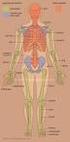 Skeletal System Axial Skeleton: Vertebral Column and Ribs Functions Regions Cervical Thoracic Lumbar Sacral Primary & secondary curvatures There are three major functions of the vertebral column. First,
Biomechanics of the Lumbar Spine
 Biomechanics of the Lumbar Spine Biomechanics of the Spine 6 degrees of freedom Extension & Flexion Translation Rotation Compression & Distraction The disc/annulus/all/pll complex is the major restraint
This week. CENG 732 Computer Animation. Challenges in Human Modeling. Basic Arm Model
 CENG 732 Computer Animation Spring 2006-2007 Week 8 Modeling and Animating Articulated Figures: Modeling the Arm, Walking, Facial Animation This week Modeling the arm Different joint structures Walking
American Osteopathic Academy of Sports Medicine James McCrossin MS ATC, CSCS Philadelphia Flyers April 23 rd, 2015
 American Osteopathic Academy of Sports Medicine James McCrossin MS ATC, CSCS Philadelphia Flyers April 23 rd, 2015 Coming together is a beginning; keeping together is progress; working together is success.
EFFECTS ON NUMBER OF CABLES FOR MODAL ANALYSIS OF CABLE-STAYED BRIDGES
 EFFECTS ON NUMBER OF CABLES FOR MODAL ANALYSIS OF CABLE-STAYED BRIDGES Yang-Cheng Wang Associate Professor & Chairman Department of Civil Engineering Chinese Military Academy Feng-Shan 83000,Taiwan Republic
Basic techniques of pulmonary physical therapy (I) 100/04/24
 Basic techniques of pulmonary physical therapy (I) 100/04/24 Evaluation of breathing function Chart review History Chest X ray Blood test Observation/palpation Chest mobility Shape of chest wall Accessory
Avoid The Dreaded Back Injury by Proper Lifting Techniques
 Avoid The Dreaded Back Injury by Proper Lifting Techniques If you ve ever strained your back while lifting something, you ll know the importance of lifting safely. Agenda Introduction About the Back The
Determining the Posture, Shape and Mobility of the Spine
 Determining the Posture, Shape and Mobility of the Spine The World of Biomechanics Assessment of the Mobility Function Using a special Triple Cervical marker set comprising miniature ultrasound transmitters,
Anatomy of the Spine. Figure 1. (left) The spine has three natural curves that form an S-shape; strong muscles keep our spine in alignment.
 1 2 Anatomy of the Spine Overview The spine is made of 33 individual bony vertebrae stacked one on top of the other. This spinal column provides the main support for your body, allowing you to stand upright,
Temple Physical Therapy
 Temple Physical Therapy A General Overview of Common Neck Injuries For current information on Temple Physical Therapy related news and for a healthy and safe return to work, sport and recreation Like Us
Options for Cervical Disc Degeneration A Guide to the Fusion Arm of the M6 -C Artificial Disc Study
 Options for Cervical Disc Degeneration A Guide to the Fusion Arm of the M6 -C Artificial Disc Study Each year, hundreds of thousands of adults are diagnosed with Cervical Disc Degeneration, an upper spine
A multi-body head and neck model for low speed rear impact analysis
 12th IFToMM World Congress, Besançon (France), June18-21, 27 A multi-body head and neck model for low speed rear impact analysis S. Himmetoglu *, M. Acar, A.J. Taylor, K. Bouazza-Marouf Mechanical and
Tower Cross Arm Numerical Analysis
 Chapter 7 Tower Cross Arm Numerical Analysis In this section the structural analysis of the test tower cross arm is done in Prokon and compared to a full finite element analysis using Ansys. This is done
Side Impact Causes Multiplanar Cervical Spine Injuries
 Side Impact Causes Multiplanar Cervical Spine Injuries 1 The Journal of Trauma, Injury, infection and Critical Care Volume 63(6), December 2007, pp 1296-1307 Maak, Travis G. MD; Ivancic, Paul C. PhD; Tominaga,
Solved with COMSOL Multiphysics 4.3
 Vibrating String Introduction In the following example you compute the natural frequencies of a pre-tensioned string using the 2D Truss interface. This is an example of stress stiffening ; in fact the
Vertebral anatomy study guide. Human Structure Summer 2015. Prepared by Daniel Schmitt, Angel Zeininger, and Karyne Rabey.
 Vertebral anatomy study guide. Human Structure Summer 2015 Prepared by Daniel Schmitt, Angel Zeininger, and Karyne Rabey. 1. Plan of Action: In this guide you will learn to identify these structures: Cervical
Understanding back pain 1 The anatomy & physiology of back pain
 Understanding back pain 1 The anatomy & physiology of back pain Dr James Tang, MBA, BDS, LDS RCS General Dental Practitioner, Level 3 Personal Trainer (REP registration no R1045463), Sports Nutritionist
Movement in the human body occurs at joint
 Biomechanics of The Spine Richard A. Banton, DPT, OCS, CMPT, ATC Movement in the human body occurs at joint surfaces; movement occurs with bones; movement of muscles moves the bones; coordinated movements
Lumbar Spinal Stenosis
 Copyright 2009 American Academy of Orthopaedic Surgeons Lumbar Spinal Stenosis Almost everyone will experience low back pain at some point in their lives. A common cause of low back pain is lumbar spinal
How to Get and Keep a Healthy Back. Amy Eisenson, B.S. Exercise Physiologist
 How to Get and Keep a Healthy Back Amy Eisenson, B.S. Exercise Physiologist Lesson Objectives Statistics of Back Pain Anatomy of the Spine Causes of Back Pain Four Work Factors Core Muscles Connection
SPINAL STENOSIS Information for Patients WHAT IS SPINAL STENOSIS?
 SPINAL STENOSIS Information for Patients WHAT IS SPINAL STENOSIS? The spinal canal is best imagined as a bony tube through which nerve fibres pass. The tube is interrupted between each pair of adjacent
Shell Elements in ABAQUS/Explicit
 ABAQUS/Explicit: Advanced Topics Appendix 2 Shell Elements in ABAQUS/Explicit ABAQUS/Explicit: Advanced Topics A2.2 Overview ABAQUS/Explicit: Advanced Topics ABAQUS/Explicit: Advanced Topics A2.4 Triangular
Structural behavior of human lumbar spinal motion segments
 ARTICLE IN PRESS Journal of Biomechanics 37 (2004) 205 212 Structural behavior of human lumbar spinal motion segments Mack G. Gardner-Morse*, Ian A.F. Stokes Department of Orthopaedics and Rehabilitation,
Each year, hundreds of thousands of adults are diagnosed with Cervical Disc Degeneration, The Cervical Spine. What is the Cervical Spine?
 Each year, hundreds of thousands of adults are diagnosed with Cervical Disc Degeneration, an upper spine condition that can cause pain and numbness in the neck, shoulders, arms, and even hands. This patient
8.2 Elastic Strain Energy
 Section 8. 8. Elastic Strain Energy The strain energy stored in an elastic material upon deformation is calculated below for a number of different geometries and loading conditions. These expressions for
Pregnant Woman Model to Understand Injury Mechanisms in Case of Frontal Impact
 Pregnant Woman Model to Understand Injury Mechanisms in Case of Frontal Impact *Laboratoire de Biomécanique Appliquée (www.inrets.fr) Faculté de Médecine nord Bd Dramard 13916 Marseille, France email:
Finite Element Formulation for Beams - Handout 2 -
 Finite Element Formulation for Beams - Handout 2 - Dr Fehmi Cirak (fc286@) Completed Version Review of Euler-Bernoulli Beam Physical beam model midline Beam domain in three-dimensions Midline, also called
Spine Biomechanics, Intervertebral Disc &LBP
 Spine Biomechanics, Intervertebral Disc &LBP Spine Cervical Spine Seven vertebrae C 1-71 More flexible Supports the head Wide range of motion Rotation to left and right Flexion Up and down Peripheral
Lectures of Human Anatomy
 Lectures of Human Anatomy Vertebral Column-I By DR. ABDEL-MONEM AWAD HEGAZY M.B. with honor 1983, Dipl."Gynecology and Obstetrics "1989, Master "Anatomy and Embryology" 1994, M.D. "Anatomy and Embryology"
by Ellen Saltonstall and Dr. Loren Fishman
 10 Yoga Poses for Low Back Pain Prevention by Ellen Saltonstall and Dr. Loren Fishman Introduction This series of poses is designed to prevent future back pain and also to relieve back pain that you may
Neck Injuries and Disorders
 Neck Injuries and Disorders Introduction Any part of your neck can be affected by neck problems. These affect the muscles, bones, joints, tendons, ligaments or nerves in the neck. There are many common
Orthopaedic Spine Center. Anterior Cervical Discectomy and Fusion (ACDF) Normal Discs
 Orthopaedic Spine Center Graham Calvert MD James Woodall MD PhD Anterior Cervical Discectomy and Fusion (ACDF) Normal Discs The cervical spine consists of the bony vertebrae, discs, nerves and other structures.
An Overview of the Finite Element Analysis
 CHAPTER 1 An Overview of the Finite Element Analysis 1.1 Introduction Finite element analysis (FEA) involves solution of engineering problems using computers. Engineering structures that have complex geometry
MASTER DEGREE PROJECT
 MASTER DEGREE PROJECT Finite Element Analysis of a Washing Machine Cylinder Thesis in Applied Mechanics one year Master Degree Program Performed : Spring term, 2010 Level Author Supervisor s Examiner :
The Functions of the Skeletal System
 OpenStax-CNX module: m46341 1 The Functions of the Skeletal System OpenStax College This work is produced by OpenStax-CNX and licensed under the Creative Commons Attribution License 3.0 By the end of this
The Basics of FEA Procedure
 CHAPTER 2 The Basics of FEA Procedure 2.1 Introduction This chapter discusses the spring element, especially for the purpose of introducing various concepts involved in use of the FEA technique. A spring
SPINE SURGERY - LUMBAR DECOMPRESSION
 SPINE SURGERY - LUMBAR DECOMPRESSION Information Leaflet Your Health. Our Priority. Page 2 of 7 Introduction This booklet has been compiled by the physiotherapy department to help you understand lumbar
BODY BODY PEDICLE PEDICLE TRANSVERSE TRANSVERSE PROCESS PROCESS
 Learning Objective Radiology Anatomy of the Spine and Upper Extremity Identify anatomic structures of the spine and upper extremities on standard radiographic and cross-sectional images Timothy J. Mosher,
Does the pain radiating down your legs, buttocks or lower back prevent you from walking long distances?
 Does the pain radiating down your legs, buttocks or lower back prevent you from walking long distances? Do you experience weakness, tingling, numbness, stiffness, or cramping in your legs, buttocks or
Sit stand desks and musculo skeletal health. Katharine Metters
 Sit stand desks and musculo skeletal health Katharine Metters Topics Sitting Standing Movement and activity Work and human change Sitting uses less energy Sitting provides support for the body to reduce
Muscles of the Spinal Column. Chapter 12
 Muscles of the Spinal Column Chapter 12 Cervical Muscles Splenius Splenius (capitis and cervicis) Origin: Cervicis spinous process of T3-T6 Capitis - lower half of ligmentum nuchea & spinous process of
Contact your Doctor or Nurse for more information.
 A spinal cord injury is damage to your spinal cord that affects your movement, feeling, or the way your organs work. The injury can happen by cutting, stretching, or swelling of the spinal cord. Injury
Proposing a 2D Dynamical Model for Investigating the parameters Affecting Whiplash Injuries
 Proposing a 2D Dynamical Model for Investigating the parameters Affecting Whiplash Injuries Seyed Mohammad Rajaai i, and Mohammad H Farahani ii ABSTRACT: This paper proposes a 2D dynamical model for evaluating
Information for the Patient About Surgical
 Information for the Patient About Surgical Decompression and Stabilization of the Spine Aging and the Spine Daily wear and tear, along with disc degeneration due to aging and injury, are common causes
Course in. Nonlinear FEM
 Course in Introduction Outline Lecture 1 Introduction Lecture 2 Geometric nonlinearity Lecture 3 Material nonlinearity Lecture 4 Material nonlinearity continued Lecture 5 Geometric nonlinearity revisited
SPINE. Postural Malalignments 4/9/2015. Cervical Spine Evaluation. Thoracic Spine Evaluation. Observations. Assess position of head and neck
 SPINE Observations Body type Postural alignments and asymmetries should be observed from all views Assess height differences between anatomical landmarks Figure 25-9 Figure 25-10 Figure 25-11 & 12 Postural
X-Plain Neck Exercises Reference Summary
 X-Plain Neck Exercises Reference Summary Introduction Exercising your neck can make it stronger, more flexible and reduce neck pain that is caused by stress and fatigue. This reference summary describes
Development of Simulation Tools Software
 Development of Simulation Tools Software Vincent Luboz Department of Biosurgery and Surgical Technology Imperial College London BSc VR Surgical Simulation Software Slide 1 Contents Virtual Reality VR Surgical
Degenerative Spine Solutions
 Degenerative Spine Solutions The Backbone for Your Surgical Needs Aesculap Spine Backbone for Your Degenerative Spine Needs Comprehensive operative solutions, unique product technology and world-class
Whiplash and Whiplash- Associated Disorders
 Whiplash and Whiplash- Associated Disorders North American Spine Society Public Education Series What Is Whiplash? The term whiplash might be confusing because it describes both a mechanism of injury and
SOFA an Open Source Framework for Medical Simulation
 SOFA an Open Source Framework for Medical Simulation J. ALLARD a P.-J. BENSOUSSAN b S. COTIN a H. DELINGETTE b C. DURIEZ b F. FAURE b L. GRISONI b and F. POYER b a CIMIT Sim Group - Harvard Medical School
Equivalent Spring Stiffness
 Module 7 : Free Undamped Vibration of Single Degree of Freedom Systems; Determination of Natural Frequency ; Equivalent Inertia and Stiffness; Energy Method; Phase Plane Representation. Lecture 13 : Equivalent
Structure and Function of the Hip
 Structure and Function of the Hip Objectives Identify the bones and bony landmarks of the hip and pelvis Identify and describe the supporting structures of the hip joint Describe the kinematics of the
Tutorial for Assignment #2 Gantry Crane Analysis By ANSYS (Mechanical APDL) V.13.0
 Tutorial for Assignment #2 Gantry Crane Analysis By ANSYS (Mechanical APDL) V.13.0 1 Problem Description Design a gantry crane meeting the geometry presented in Figure 1 on page #325 of the course textbook
LOW BACK PAIN. common of these conditions include: muscle strain ( pulled muscle ), weak core muscles
 LOW BACK PAIN Most episodes of low back pain are caused by relatively harmless conditions. The most common of these conditions include: muscle strain ( pulled muscle ), weak core muscles (abdominal and
QUT Digital Repository: http://eprints.qut.edu.au/
 QUT Digital Repository: http://eprints.qut.edu.au/ Little, J. Paige and Pearcy, Mark J. and Adam, Clayton J. (2007) Coupled rotations in the lumbar spine are these a consequence of passive spinal anatomy?.
SKELETON AND JOINTS G.C.S.E. PHYSICAL EDUCATION. Unit 1. Factors Affecting Participation and Performance. G.C.S.E. P.E. Teacher:.
 G.C.S.E. PHYSICAL EDUCATION Unit 1 Factors Affecting Participation and Performance SKELETON AND JOINTS Name: G.C.S.E. P.E. Teacher:. By the end of this booklet you should be able to: Understand what the
Instability concept. Symposium- Cervical Spine. Barcelona, February 2014
 Instability concept Guillem Saló Bru, MD, Phd AOSpine Principles Symposium- Cervical Spine Orthopaedic Depatment. Spine Unit. Hospital del Mar. Barcelona. Associated Professor UAB Barcelona, February 2014
Nonlinear analysis and form-finding in GSA Training Course
 Nonlinear analysis and form-finding in GSA Training Course Non-linear analysis and form-finding in GSA 1 of 47 Oasys Ltd Non-linear analysis and form-finding in GSA 2 of 47 Using the GSA GsRelax Solver