
Recent activities of solar astronomers in Korea
|
|
|
- Kristian Tate
- 10 years ago
- Views:
Transcription
1 First Asia-Pacific Solar Physics Meeting ASI Conference Series, 2011, Vol. 2, pp Edited by Arnab Rai Choudhuri & Dipankar Banerjee Recent activities of solar astronomers in Korea K.-S. Cho 1, J. Chae 2, Y. J. Moon 3 and G. S. Choe 3 1 Korea Astronomy and Space Science Institute, Daejeon , Republic of Korea 2 Department of Physics and Astronomy, Seoul National University, Seoul , Republic of Korea 3 School of Space Research, Kyung Hee University, Yongin , Republic of Korea Abstract. At present, about twenty PhDs are carrying out education, research, and observation in the field of solar astronomy in Korea. The history and recent activities of the Korean solar community are briefly reviewed in this paper. We expect that the current efforts of Korean solar astronomers contribute to the promotion of cooperative solar research in the Asian-Pacific countries. Keywords : Sun: general history and philosophy of astronomy 1. Introduction Modern solar physics in Korea was initiated by Prof. Hong Sik Yun as he joined the Department of Astronomy at Seoul National University in He carried out solar research on umbral chromospheric models until the early 1980s and supervised several Korean solar astronomers who are leading the Korean solar physics society in these days. In 2003, upon retirement, he wrote a review paper on the growth of solar physics in Korea and expected that the future of solar astronomy in Korea is bright and promising (Yun 2003). His expectation has come from the outstanding achievement of research paper publications of the Korean solar physicists in major journals. In this paper, we mainly describe recent activities of solar physics in Korea after the first growth phase that was reviewed by him. At present, two universities, Seoul National University (SNU) and Kyung Hee University (KHU) offer graduate programs for solar physics. Korea Astronomy and Space Science Institute (KASI) is the only national institute for solar astronomy. Over [email protected]

2 384 K.-S. Cho et al. Figure 1. Representative solar observational systems and data in Korea. (a) Solar Flare Telescope (SOFT), (b) Korean Solar Radio Burst Locator (KSRBL), (c) e-callisto, (d) Hα flare observed by SOFT on 15 Feb. 2011, (e) Solar radio burst observed on 24 Feb by KSRBL, and (f) type II radio burst observed on 31 Dec by e-callisto. thirty graduate students are pursuing their domestic PhD studies and around twenty PhDs are studying in diverse fields of solar astronomy. 2. Instruments Most of solar observation systems in Korea have been operated by KASI. Fig. 1 shows the representative ground observation systems in Korea such as Solar Flare Telescope (SOFT, Park et al. 1997), Korean Solar Radio Burst Locator (KSRBL, Dou et al. 2007), and e-callisto (Bong et al. 2009). SOFT is the first research-oriented solar observing facility in Korea that was installed at the top of the Bohyun Mountain in The SOFT was originally designed for the observations of solar active regions as a 4-channel instrument including white light and Hα observing systems, a vector magnetogram (VMG) and a longitudinal magnetogram (LMG). In 2006, an Hα full-disk monitoring system for the observations of the chromosphere was added to the SOFT. KASI has two solar radio observation systems. One is the Korean Solar Radio Burst Locator (KSRBL), a single dish radio spectrograph with broadband frequency range (0.5 18GHz). The KSRBL was developed in collaboration with New Jersey Institute of Technology (NJIT) and was installed at KASI in August, It has a unique capability to locate the position of a burst within 2 arcmin and record the spectra of solar microwave bursts with high time (1 sec) and frequency resolution (1MHz). In lower frequency range, there is the e-callisto (Earth-wide, Compact

3 Recent activities of solar astronomers in Korea 385 Astronomical Low-frequency, Low-cost Instrument for Spectroscopy in Transportable Observatories), which is a global network of frequency-agile radio spectrometers that was constructed in a collaboration between ETHZ of Switzerland and KASI as a part of IHY 2007 (International Heliophysical Year) activity. The e-callisto is monitoring the solar radio bursts in frequency range between 45MHz and 870MHz and is usually used for studying type II solar radio bursts. The e-callisto and KSRBL will be used for studying solar eruptions and monitoring solar radio bursts which can disturb many kinds of high-tech radio instruments such as cellular phone, GPS, and radar. The SNU group has made efforts in solar instrumentation as well. The first experience was to operate a fast CCD camera on the old telescopes at Big Bear Solar Observatory to observe filaments. The next one is the development of Fast Imaging Solar Spectrograph (FISS, Ahn et al. 2008). It is an Echelle spectrograph that can do fast imaging based on the slit scan, and that can record two spectral bands simultaneously. The basic idea and optical design originated from J. Chae, and the development was carried out by the collaboration between the SNU solar group and the KASI solar group. The instrument is installed in the Coude room of the 1.6 meter off-axis New Solar Telescope (NST) at Big Bear Solar Observatory, and is currently the major observing facility of the SNU solar group. Solar observing facilities of KHU are partly located on the housetop of the College of Applied Science Building and partly in Kyung Hee Astronomical Observatory. These comprise a 6 refractor with diverse filters and cameras, a spectrograph developed internally for the sole purpose of solar observation, and a space weather monitoring and demonstration facility. 3. Research activities 3.1 Korea Astronomy and Space Science Institute History KASI has done sunspot observations since 1987 using the Sunspot Telescope (Sim et al. 1990). However, there was no solar astronomer at that time. Dr. YoungDeuk Park joined the KASI in 1990 and led the solar group. His first achievement was the construction of the SOFT on Bohyun mountain. SOFT was the first research-oriented solar instrument. After installing the SOFT, Dr. Young-Jae Moon (now at KHU) was employed as a research scientist and worked from 1995 to In 2002, Dr. Kyung-Suk Cho joined the KASI after the group was chosen as Solar Activity Research Laboratory by the Ministry of Science and Technology (MOST). After that the KASI initiated a project in 2004 which comprises the development of Korean Solar Radio Burst Locator (KSRBL) and participation in the construction of 1.6 m New

4 386 K.-S. Cho et al. Solar Telescope (NST) with NJIT. For this project, Drs. Yeon-Han Kim and Su-Chan Bong were added as faculty members. The group started a new project in the year 2007 to establish a Korean Space Weather Prediction Center (KSWPC). Scope of the project includes extension of ground observation system, construction of space weather database and networking, development of prediction models, and space weather studies. Currently, Drs. Sung-Hong Park, Soyoung Park, and Pankaj Kumar are working with the staff as post-doctoral researchers, and there are seven PhD candidates working for solar physics in KASI Current Research and Prospect Their research includes studies of CME and type II radio burst shock kinematics (Cho et al., 2008), magnetic reconnection of flare-associated CMEs (Bong et al., 2006), small-scale X-ray/EUV jets (Kim et al., 2005), vector magnetic fields in the photosphere, and Hα spectral properties of quiescent filaments. To improve capability of space weather forecast, they have studied geo-effective CMEs since the CME is one of the most important events that can trigger a geomagnetic storm. Their main goal is to forecast geomagnetic storms (Dst < -50nT) based on initially observed CME parameters at the Sun. This forecast is very meaningful because it allows us to make an earlier warning, two or three days in advance. For this, they examined geoeffectiveness of CMEs and developed an empirical geomagnetic storm prediction model based on solar information (Kim et al., 2008). Recently Dr. Kyung- Suk Cho, one faculty member of the group, investigated an empirical relationship between CME initial speed and solar wind dynamic pressure and proposed an empirical model based on CME initial speed for prediction of solar wind dynamic pressure change triggered by high speed CMEs (Cho et al. 2010). These activities of KASI may help a satellite operator to make preparations for an upcoming space weather disturbance caused by solar eruption, such as attitude and angular momentum control. In 2010, KASI turned its main scientific focus to space observations. As a part of the activity, KASI made an agreement with NASA and started initial setup of the data system to store, use, and disseminate the Solar Dynamics Observatory (SDO) data. The SDO data center has four subsystems. The first is data transfer system (DTS) to transfer SDO data from Stanford University to KASI. It will be connected through 10 Gbps GLORIAD network. The second is data archiving system (DAS) to archive and manage SDO/AIA (650 TB/year) and SDO/HMI data files (180 TB/year), which was designed in consideration of a compatibility and scalability of the system so that we can extend its capacity and performance at any time by adding more storage and clustered gateway, respectively. The third is cluster system (CS) to compute data for researches and applications. The last one is data service system (DSS) to provide SDO data to users. The users can access SDO data through DSS system via FTP, HTTP, and etc. In 2011, we are going to construct DTS and initial small part of DAS and then we

5 Recent activities of solar astronomers in Korea 387 will gradually extend its archiving capacity by It is hoped to provide free and unfettered access for scientists from 2012 after developing of various applications for data query and analysis. 3.2 Kyung Hee University History Solar physics studies at Kyung Hee University (hereafter KHU) earnestly began in 1988 when Prof. Kap-Sung Kim assumed professorship at the Department of Astronomy and Space Science (hereafter DASS), which was established in Prof. K.-S. Kim had earned his PhD degree from Kyoto University, Japan, with a thesis on sodium lines in solar prominences. At KHU, he continued to work on non- LTE radiative transfer calculations in the solar atmosphere, and later also worked on solar wind models. As a lonely solar astronomer in the Department for some ten years, he strived hard to establish solar observing facilities in KHU and bring up students to be major solar astronomers in the future Korean solar physics community. Among his students were Dr. Kyung-Suk Cho and Dr. Yeon-Han Kim, who are now at KASI. In 2002, Prof. Minhwan Jang, whose research field had been extragalactic astronomy till then, entered the solar physics community, when his proposal of the Lyman alpha Solar Telescope (LIST) onboard the Korea Science and Technology Satellite- 2 was granted by the Korean government. In 2006, the Department added another faculty member Prof. Gwangson Choe, who had worked on theories and numerical computations of solar activities at the Princeton Plasma Physics Laboratory. One year after, Prof. Yong-Jae Moon, who had acquired reputation in solar observations and space weather at KASI, joined the DASS faculty. In 2008, the already grown solar physics group and the space physics group of the Department joined forces to land a big grant of the Korean government, the World Class University Program (WCU). Within this program, the School of Space Research (hereafter SSR) was established in KHU in 2009 and two world-renowned solar physicists were invited to join its new faculty. They were Prof. Sami K. Solanki of Max Planck Institute for Solar System Research, Germany and Prof. Robert P. Lin of the Space Science Laboratory in University of California Berkeley. In the same year, Prof. Tetsuya Magara, who is famous for solar numerical simulations, also joined the DASS-SSR faculty. Now the solar physics-related groups of the DASS and SSR have seven tenured and tenure-track professors, three research scientists (Dr. Junho Shin, Dr. V. Pandey and Dr. Jin-Yi Lee), and about 15 graduate students. At present, the Department of Astronomy and Space Science is responsible for undergraduate programs and administrative relations while the School of Space Research is in charge of graduate programs and research.

6 388 K.-S. Cho et al Facilities and Current Research Prof. Kap-Sung Kim, who is the president of the Korean Astronomical Society and Dean of College of Applied Science in KHU, is engaged in non-lte line transfer calculations in collaboration with Prof. Ichimoto of Kyoto University, working part time on multi-fluid solar wind models. Prof. Gwangson Choe, the current Department chairman of DASS/KHU, is working on energetics of multiple flux systems in relation to coronal mass ejections, incremental growth of magnetic flux systems, ballooning instability in the solar atmosphere, and interaction of emerging flux ropes and overlying fields (Choe 2009). Prof. Minhwan Jang, the former director of Kyung Hee Observatory, is investigating coronal magnetic field measurement by observed plasmoid dynamics (Jang et al. 2009), morphological evolution of coronal holes in relation to solar wind dynamics, geometry of observed features in coronal mass ejections, characteristics of EIT and Moreton waves. Prof. Yong-Jae Moon and his students are studying solar activity and space weather prediction with the following scientific subjects : (1) solar eruptions (Kim et al. 2007, 2008) and solar EUV spectroscopy (Lee et al. 2011), (2) solar proton events (Park et al. 2010), (3) automatic solar data analysis and flare prediction, (4) flux rope and cone models for CMEs, and (5) the prediction of geomagnetic storms (Ji et al. 2010) and geoeffective CME parameters (Choi et al. 2009, Moon et al. 2009). Prof. Tetsuya Magara is leading the solar dynamics laboratory. An important goal of this research group is to understand the nature of the Sun by clarifying the dynamic behaviour of solar magnetic field, which provides the origin of activity affecting the solar-terrestrial environment. Toward this end, they use the theoretical modeling based on numerical simulations and data analysis of space and ground-based observations (Magara & Tsuneta 2008; Magara 2009; Magara 2010; Magara 2011a, b). They also collaborate closely with a space weather group at NiCT (National Institute of Information and Communications Technology) in Japan to develop a realistic space weather model. 3.3 Seoul National University History In 2003, Prof. Jongchul Chae succeeded Prof. Hong Sik Yun by taking up a professor position in the Astronomy Program, Department of Physics and Astronomy in this university. He is currently the only day-time astronomer among twelve professors in the Astronomy Program, five of whom are in the field of cosmology and extragalactic

7 Recent activities of solar astronomers in Korea 389 astronomy, three in our Galaxy (stars and interstellar medium), two in astrophysical theory, and one in the solar system. From 2008 to 2011, under the supervision of J. Chae, five (Hyewon Jeong, Kwangsu Ahn, Eun Kyung Lim, Ryun-Young Kwon, Soyoung Park) got their doctorates in Seoul National University, and one (Hyung- Min Park) in Chungnam National University. H. Jeong and R.-Y. Kwon are working as post-doctoral researchers at Goddard Space Flight Center of NASA, USA, and K. Ahn and E. K. Lim are post-doctoral researchers at Big Bear Solar Observatory. S. Park and H.-M. Park are post-doctoral researchers at KASI and SNU, respectively. The solar astronomy group in SNU now consists of one professor (J. Chae), one postdoctoral researcher (H. Park), two PhD candidates (Donguk Song and Heesu Yang), and two MS candidates (Gyuhyun Cho and Miryo Han) Current research The SNU solar astronomy group has kept several international connections/ collaborations. The first is with Japanese colleagues in the solar physics division of NAOJ. As mentioned by Yun (2003), the development of solar physics in Korea was greatly aided by Japanese colleagues. J. Chae also got much help from Professors Takashi Sakurai, Kiyoshi Ichimoto, and Yoshinori Suematsu when he was a graduate student. After Chae began to lead the SNU solar astronomy group, the group has kept close collaborations with Japanese colleagues as represented by T. Sakurai focusing on the analysis of data that came out of the Hinode mission. Recently, the group is also collaborating with the group led by Professor Saku Tsuneta in the development of the sounding rocket experiment called Chromospheric Lyman-Alpha SpectroPolarimeter (CLASP). The next connection is with Big Bear Solar Observatory. This connection is a consequence of J. Chae s experience as a post-doctoral researcher in the observatory under the supervision of Professors Philip Goode and Haimin Wang. After Chae came back to Korea, Big Bear Solar Observatory has become the main provider of ground-based observations for his group. The observatory also provided a natural link to Chinese colleagues who visited there, including Hongqi Zhang, Jingxiu Wang, Mingde Ding and Haiseng Ji. Connection to other Chinese colleagues such as Chen Fang came from their early connections to and collaborations with Professor Yun. Finally, the SNU solar group has worked with Yuri Litvinenko at University of Waikato, New Zealand. Since they have many common research interests like prominences/filaments and cancelling magnetic features, and Litvinenko is good at MHD theory while the SNU group is good at observations and data analysis, the collaboration has been mutually beneficial and quite productive. The SNU solar group has focussed on understanding the nature of magnetohydrodynamic phenomena in the solar atmosphere. The major topics include 1) the structure, formation and eruption of prominences/filaments (Chae et al. 2005, 2008; Lim & Chae 2009), 2) small-scale events of magnetic reconnection in the photosphere and chromosphere as represented by canceling magnetic features (Park et al. 2009; Chae

8 390 K.-S. Cho et al. et al. 2010), 3) helical structures and measurements of magnetic helicity (Chae 2001; Jeong & Chae 2007; Lim et al. 2007), and 4) coronal loops (Chae & Moon 2005; Kwon & Chae 2008). The basic approach is to carry out ground-based observations, and analyze the data in combination with the space-borne observations. A number of papers on these topics were published by the group in major journals, some of which are cited above. 4. Concluding remarks KASI has been developing and operating solar instruments, and universities are carrying out education and bringing up human resources in Korea solar astronomy society. They are pursuing international collaborates for cutting-edge science in solar physics and extending their research scope to the world. In this situation, the collaboration among solar astronomers in the Asian and Pacific regions started by the APSPM 2011 could give impetus to extend current activities of Korean solar astronomers. In this respect, we expect that Korean experience through the construction of SDO Asian data center, development of FISS, and education in the WCU program will contribute to Asia-Pacific solar physics community. Acknowledgments KSC thanks Dr. Sung-Hong Park for preparing figures, and Drs. Su-Chan Bong and Yeon-Han Kim for reading and improving the manuscript. References Ahn K., et al., 2008, JKAS, 41, 39 Bong S.-C., et al., 2006, ApJL, 636, L169 Bong S.-C., et al., 2009, JKAS, 42, 1 Chae, J. 2001, ApJ, 560, L95 Chae, J., Goode, P. R., Ahn, K., et al., 2010, ApJ, 713, L6 Chae, J., Moon, Y.-J. 2005, ApJ, 629, 1110 Chae, J., Moon, Y.-J., Park, Y. D., 2005, ApJ, 636, 574 Chae, J. et al., 2008, ApJ, 689, L73 Cho K.-S., et al., 2008, A&A, 491, 873 Cho K.-S., et al., 2010, JGR, 115, A10111 Choe G.S., 2009, JKPS, 54, 267 Choi Y., et al., 2009, Solar Phys., 254, 311 Dou Y., et al., 2009, PASP, 121, 152 Jang M., et al., 2009, JKAS, 42, 175 Jeong H., Chae J. 2007, ApJ, 671, 1022 Ji E., et al., 2010, JGR, 115, A10232

9 Recent activities of solar astronomers in Korea 391 Kim Y.-H., et al., 2005, ApJ, 635, 1291 Kim S., et al. 2007, PASJ, 59, S831 Kim R.-S., et al., 2008, ApJ, 677, 1378 Kim S., et al., 2008, ApJ, 683, 510 Kwon R. Y., Chae J. 2008, ApJ, 677, L141 Lee K.-S., et al., 2011, ApJ, 736, 15 Lim E.-K., Chae J., 2009, ApJ, 692, 104 Lim E.-K., Jeong H., Chae J., Moon Y.-J. 2007, ApJ, 656, 1167 Magara T., 2009, ApJ, 702, 386 Magara T., 2010, ApJ, 715, L40 Magara T., 2011a, ApJ, 731, 122 Magara T., 2011b, PASJ, 63, 417 Magara T. Tsuneta S., 2008, PASJ, 60, 1181 Moon Y.-J., et al., 2009, JKAS, 42, 27 Park S., Chae J., Litvinenko Y. E. 2009, ApJ, 704, L71 Park J., et al., 2010, JGR, 115, A10105 Park Y., et al., 1997, PKAS, 12, 35 Sim K., et al., 1990, PKAS, 5, 26 Yun H. S., 2003, JKAS, 36, S155

Solar Ast ro p h y s ics
 Peter V. Foukal Solar Ast ro p h y s ics Second, Revised Edition WI LEY- VCH WILEY-VCH Verlag Co. KCaA Contents Preface 1 1.1 1.2 1.3 1.4 1.5 1.6 1.7 1.8 1.9 2 2.1 2.1.1 2.1.2 2.2 2.2.1 2.2.2 2.2.3 2.3
Activities of the Japanese Space Weather Forecast Center at Communications Research Laboratory
 J. RADIAT. RES., 43: SUPPL., S53 S57 (2002) Activities of the Japanese Space Weather Forecast Center at Communications Research Laboratory SHINICHI WATARI 1 * and FUMIHIKO TOMITA 1 Space weather / ISES/SEP
Space Weather Research and Forecasting in CRL, Japan
 Space Weather Research and Forecasting in CRL, Japan Maki Akioka Hiraiso Solar Observatory Communications Research Laboratory Contact [email protected] 1 Contents of Presentation 1.Space Weather Observation
Undergraduate Studies Department of Astronomy
 WIYN 3.5-meter Telescope at Kitt Peak near Tucson, AZ Undergraduate Studies Department of Astronomy January 2014 Astronomy at Indiana University General Information The Astronomy Department at Indiana
Space Weather: An Introduction C. L. Waters. Centre for Space Physics University of Newcastle, Australia
 Space Weather: An Introduction C. L. Waters Centre for Space Physics University of Newcastle, Australia 1 Outline Space weather: Conditions on the Sun and in the solar wind, magnetosphere, ionosphere and
Space Weather: Forecasting & Impacts on Critical Infrastructure
 Space Weather: Forecasting & Impacts on Critical Infrastructure Dr. Genene Fisher Senior Advisor for Space Weather National Weather Service AMS Washington Forum 12 April 2012 Outline Solar Activity Update
Solar Storms and Northern lights - how to predict Space Weather and the Aurora
 Solar Storms and Northern lights - how to predict Space Weather and the Aurora Pål Brekke Norwegian Space Centre/UNIS Pål Brekke torsdag 12. mars 15 Fleet of satellites watching the Sun Stereo SDO SOHO
FROM RESEARCH TO OPERATIONS EUROPEAN AND INTERNATIONAL SPACE WEATHER PROJECTS
 Volker Bothmer University of Göttingen Institute for Astrophysics Germany 24 th October 2011 IV EU-Russian Open Days Russian Institute for Science and Culture, Vienna, Brahmsplatz 8 Topic: Solar-Terrestrial
8.1 Radio Emission from Solar System objects
 8.1 Radio Emission from Solar System objects 8.1.1 Moon and Terrestrial planets At visible wavelengths all the emission seen from these objects is due to light reflected from the sun. However at radio
Space Weather Prediction Research and Services for China Manned Space Mission
 Space Weather Prediction Research and Services for China Manned Space Mission Siqing Liu National Space Science Center, CAS Center for Space Science and Applied Research, CAS Outline I. General information
Association of Universities for Research in Astronomy
 Association of Universities for Research in Astronomy Site Review Application of the University of Virginia For AURA Membership AURA s policy regarding new Member Institutions is based on a determination
Careers in Astronomy and Astrophysics. Dr. Bradley Peterson, Chair Department of Astronomy
 Careers in Astronomy and Astrophysics Dr. Bradley Peterson, Chair Department of Astronomy Do I Need an Advanced Degree to Get a Job in Astronomy? If you want to do original research, yes, you do. Our undergraduate
CSSAR Space Science Cooperation
 CSSAR Space Science Cooperation WANG Shuzhi Center for Space Science and Applied Research Chinese Academy of Science(CSSAR) Table of Contents Brief History of CSSAR International Cooperation CAS Strategic
Satellite Measurements of Solar Spectral Irradiance
 Satellite Measurements of Solar Spectral Irradiance LASP University of Colorado [email protected] March 2006 1 Talk Outline Motivation for Solar Spectral Irradiance solar energy input climate
Solar Irradiance Variability Observed During Solar Cycle 23
 Solar Irradiance Variability Observed During Solar Cycle 23 Introduction Solar Cycle Results for Climate Change Solar Cycle Results for Space Weather Tom Woods LASP / University
Observing the Sun from space: Highlights from Yohkoh, SOHO, TRACE, RHESSI. H.S. Hudson Space Sciences Lab University of California, Berkeley
 Observing the Sun from space: Highlights from Yohkoh, SOHO, TRACE, RHESSI H.S. Hudson Space Sciences Lab University of California, Berkeley SUMMARY OF LECTURE I. Overview of the Sun 2. Observational technique
Interface Region Imaging Spectrograph (IRIS):
 National Aeronautics and Space Administration Press Kit/June 2013 Interface Region Imaging Spectrograph (IRIS): Understanding how the sun powers its million-degree atmosphere Media Contacts Steve Cole
Counting Sunspots. Parent Prompts: Are there years with lots of sunspots? Are there years with very few sunspots?
 Counting are magnetic storms on the Sun these dark areas are a little cooler than the rest of the Sun s atmosphere. They can be easily seen when the Sun s image is projected onto a white surface, using
Ionospheric Research with the LOFAR Telescope
 Ionospheric Research with the LOFAR Telescope Leszek P. Błaszkiewicz Faculty of Mathematics and Computer Science, UWM Olsztyn LOFAR - The LOw Frequency ARray The LOFAR interferometer consist of a large
Online Solar Databases at NGDC RSTN Solar Radio Databases
 Abstract for LWS (Living with a Star) Science Workshop Connecting our Dynamic Sun to the Heliosphere and Geospace, Boulder, Colorado March 23-26, 2004 Online Solar Databases at NGDC RSTN Solar Radio Databases
A Fractionated Space Weather Base at L 5 using CubeSats & Solar Sails
 A Fractionated Space Weather Base at L 5 using CubeSats & Solar Sails Paulett C. Liewer, Andrew T. Klesh, Martin W. Lo, Neil Murphy, Robert L. Staehle, Vassilis Angelopoulos, Jet Propulsion Laboratory,
COMESEP Project : Space Weather Impact Forecasting
 COMESEP Project : Space Weather Impact Forecasting Crosby, N.B. 1, Veronig, A. 2, Robbrecht, E. 3, Vrsnak, B. 4, Vennerstrom, S. 5, Malandraki, O. 6, Dalla, S. 7, Rodriguez, L. 3, Srivastava, N. 8, Hesse,
INTRODUCTION TO SOLAR WEATHER & HF PROPAGATION. Lewis Thompson W5IFQ September 27, 2011
 INTRODUCTION TO SOLAR WEATHER & HF PROPAGATION Lewis Thompson W5IFQ September 27, 2011 PRESENTATION Ionospheric propagation NVIS Long-Range Frequency Selection (Critical Frequency & MUF) Propagation modeling
The Solar Science Data Center and LOFAR
 The Solar Science Data Center and LOFAR F. Breitling, G. Mann, C. Vocks 2009-01-27 1. Introduction Solar astronomy is a multi-disciplinary field where knowledge and data of various experiments has to be
How To Understand Space Weather
 GOES Data and Products in the Space Weather Prediction Center and National Geophysical Data Center Mary Shouldis Satellite Data Product Development Team Lead NGDC/University of Colorado/CIRES Putting Science
Solar Energetic Particles: A Relay Race to Earth By Andrea Karelitz
 Karelitz 1 Solar Energetic Particles: A Relay Race to Earth By Andrea Karelitz Things move fast. If you re feeling daring, take a trip to Brazil and speed down the fastest water slide in the world at 65
Einstein Rings: Nature s Gravitational Lenses
 National Aeronautics and Space Administration Einstein Rings: Nature s Gravitational Lenses Leonidas Moustakas and Adam Bolton Taken from: Hubble 2006 Science Year in Review The full contents of this book
Solar Activity and Earth's Climate
 Rasmus E. Benestad Solar Activity and Earth's Climate Second Edition Published in association with Springer Praxis ids Publishing Publisl PRAXI Chichester, UK Contents Preface to the second edition Preface
Chapter 6 Telescopes: Portals of Discovery. How does your eye form an image? Refraction. Example: Refraction at Sunset.
 Chapter 6 Telescopes: Portals of Discovery 6.1 Eyes and Cameras: Everyday Light Sensors Our goals for learning:! How does your eye form an image?! How do we record images? How does your eye form an image?
A long time ago, people looked
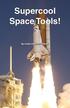 Supercool Space Tools! By Linda Hermans-Killam A long time ago, people looked into the dark night sky and wondered about the stars, meteors, comets and planets they saw. The only tools they had to study
Real-time space weather forecasts based on neural networks
 Real-time space weather forecasts based on neural networks Henrik Lundstedt and Peter Wintoft Swedish Institute of Space Physics, Lund, Sweden Yurdanur Tulunay and Ersin Tulunay Middle East Technical University,
EMİNE CEREN KALAFATOĞLU EYİGÜLER
 EMİNE CEREN KALAFATOĞLU EYİGÜLER SPACE ENVIRONMENT UZB411E 2015-2016 FALL ROOM: 322 / THIRD FLOOR UPPER ATMOSPHERE AND SPACE WEATHER LAB OFFICE HOURS: EVERY TUESDAY AND WEDNESDAY BETWEEN 15-17 FOR OTHER
Developing Safety Management Systems for Track Workers Using Smart Phone GPS
 , pp.137-148 http://dx.doi.org/10.14257/ijca.2013.6.5.13 Developing Safety Management Systems for Track Workers Using Smart Phone GPS Jin-Hee Ku 1 and Duk-Kyu Park 2 1 Dept of Liberal Education and 2 Dept
WELCOME to Aurorae In the Solar System. J.E. Klemaszewski
 WELCOME to Aurorae In the Solar System Aurorae in the Solar System Sponsoring Projects Galileo Europa Mission Jupiter System Data Analysis Program ACRIMSAT Supporting Projects Ulysses Project Outer Planets
U.S. DEPARTMENT OF COMMERCE
 Space Weather Space Weather Storms from the Sun Storms from the Sun U.S. DEPARTMENT OF COMMERCE National Oceanic and Atmospheric Administration National Weather Service U.S. Department of Commerce National
Graduate Programs in Physics and Astronomy
 Graduate Programs in Physics and Astronomy Western s award winning faculty members, cutting edge research and interdisciplinary environment give you the tools to engage your imagination. The University
2-1-5 Space Radiation Effect on Satellites
 2-1-5 Space Radiation Effect on Satellites Solar activity and space environment is considered as fundamental and important factors for space system design and operation. Space and solar radiation is widely
NASA s Future Missions in X-ray Astronomy
 NASA s Future Missions in X-ray Astronomy Nicholas E. White NASA s Goddard Space Flight Center Laboratory for High Energy Astrophysics Greenbelt, MD 20771 USA [email protected] Abstract The
Coronal Heating Problem
 Mani Chandra Arnab Dhabal Raziman T V PHY690C Course Project Indian Institute of Technology Kanpur Outline 1 2 3 Source of the energy Mechanism of energy dissipation Proposed mechanisms Regions of the
2012 International Symposium on Historical Astronomy
 2012 International Symposium on Historical Astronomy Organization Institute Place SohNam Institute For History of Astronomy ( 召 南 天 文 學 史 硏 究 所 ) Korea Astronomy and Space Science Institute ( 韓 國 天 文 硏
Science Standard 4 Earth in Space Grade Level Expectations
 Science Standard 4 Earth in Space Grade Level Expectations Science Standard 4 Earth in Space Our Solar System is a collection of gravitationally interacting bodies that include Earth and the Moon. Universal
University of Chicago, Ph.D. in Economics (Committee: Robert E. Lucas Jr. (Main), Lars P. Hansen, Boyan Jovanovic)
 Education Hwagyun (Hagen) Kim [email protected] 4218 TAMU (360 Wehner Building), College Station, TX 77843-4218 (Tel:) 1-979-862-3267; (Fax:) 1-979-845-3884 (webpage:) http://people.tamu.edu/ hagenkim/
UNIVERSITY OF HAWAI I AT MĀNOA ASTRONOMY & ASTROPHYSICS. The University of Hawai i is an equal opportunity/affirmative action institution.
 UNIVERSITY OF HAWAI I AT MĀNOA ASTRONOMY & The University of Hawai i is an equal opportunity/affirmative action institution. A M E SSAG E F R O M THE PROGRAM U N D E R G R A D U AT E P R O G R A M S I
Astronomical applications of the over-the-horizon radar NOSTRADAMUS
 Astronomical applications of the over-the-horizon radar NOSTRADAMUS J-F. Degurse 1,2, J-Ph. Molinié 1, V. Rannou 1,S. Marcos 2 1 ONERA, Département Electromagnétisme et Radar 2 L2S Supéléc, CNRS UMR 8506,
Solar System Observations contains two components: Planetary Astronomy and Near Earth Object Observations.
 C.6 SOLAR SYSTEM OBSERVATIONS 1. Scope of Program Solar System Observations supports both ground-based astronomical observations and suborbital investigations of our Solar System involving sounding rockets
Heating diagnostics with MHD waves
 Heating diagnostics with MHD waves R. Erdélyi & Y. Taroyan [email protected] SP 2 RC, Department of Applied Mathematics, The University of Sheffield (UK) The solar corona 1860s coronium discovered
EASA Safety Information Bulletin
 EASA Safety Information Bulletin SIB No.: 2012-09 Issued: 23 May 2012 Subject: Effects of Space Weather on Aviation Ref. Publication: 1. EU OPS 1.390 Cosmic Radiation; 2. SIB 2012-10 Single Event Effects
Swarthmore College Newsletter
 93 Fog, clouds, and light pollution limit the effectiveness of even the biggest optical telescopes on Earth. Astronomers who study ultraviolet or X-ray emission of stars have been more limited because
A short history of telescopes and astronomy: Galileo to the TMT
 A short history of telescopes and astronomy: Galileo to the TMT Telescopes in the last 400 years Galileo 1608 Hans Lippershey applied for a patent for seeing things far away as if they were nearby 1609
Doctoral Nursing Education in South Korea
 Doctoral Nursing Education in South Korea Hyeoun-Ae Park, RN, PhD, FAAN*, Ok Soo Kim, RN, PhD**, Myung Kyung Lee, RN, PhD*** Introduction History of nursing education in Korea goes back to 1903 when Bogu
A Taxonomy for Space Curricula
 A Taxonomy for Space Curricula Arthur W. Draut, Ph.D. College of Aviation Embry-Riddle Aeronautical University Abstract Many universities have added courses and curricula related to satellites and space.
A User s Guide to ALMA Scheduling Blocks (Cycle 3)
 Doc 3.19, ver. 1 September, 2015 A User s Guide to ALMA Scheduling Blocks (Cycle 3) ALMA, an international astronomy facility, is a partnership of ESO (representing its member states), NSF (USA) and NINS
Programme Specification Mphys (Hons) Physics with Astronomy
 Programme Specification Mphys (Hons) Physics with Astronomy 1 Awarding Institution 2 Teaching Institution 3 Programme Accredited by 4 Final Award 5 Programme title 6 UCAS Code 7 QAA Subject Benchmark 8
The Extreme Solar Storms of October to November 2003
 S.P. Plunkett S.P. Plunkett Space Science Division The Extreme Solar Storms of October to November 2003 AN OVERVIEW OF SOLAR ACTIVITY AND SPACE WEATHER In recent decades, humans have come to rely on space
SPACE WEATHER INTERPRETING THE WIND. Petra Vanlommel & Luciano Rodriguez
 SPACE WEATHER INTERPRETING THE WIND Petra Vanlommel & Luciano Rodriguez THE SUN LOSES ENERGY Radiation Mass Particles THE SUN LOSES ENERGY PHYSICAL REPHRASING Total Solar Irradiance Solar Wind Fast Particles
5. The Nature of Light. Does Light Travel Infinitely Fast? EMR Travels At Finite Speed. EMR: Electric & Magnetic Waves
 5. The Nature of Light Light travels in vacuum at 3.0. 10 8 m/s Light is one form of electromagnetic radiation Continuous radiation: Based on temperature Wien s Law & the Stefan-Boltzmann Law Light has
Space Weather Measurements. Mary Kicza Assistant Administrator NOAA Satellite & Info. Service (NESDIS) Space Weather Enterprise Forum
 Continuity of Critical Space Weather Measurements Mary Kicza Assistant Administrator NOAA Satellite & Info. Service (NESDIS) Space Weather Enterprise Forum May 19, 2009 NOAA Space Weather Requirements
Dept. of Physical Education
 Dept. of Physical Education The department is pursuing true popularization of sports by clarifying the scientific methods and contents of sports as a social phenomenon, and also seeking an establishment
GREGORY A. PORUMBESCU
 GREGORY A. PORUMBESCU EDUCATION Ph.D. Seoul National University Graduate School of Public Administration, 2013 Major Field: Public Administration B.A. University of Florida, 2006 with Honors Major: Political
ASKAP Science Data Archive: Users and Requirements CSIRO ASTRONOMY AND SPACE SCIENCE (CASS)
 ASKAP Science Data Archive: Users and Requirements CSIRO ASTRONOMY AND SPACE SCIENCE (CASS) Jessica Chapman, Data Workshop March 2013 ASKAP Science Data Archive Talk outline Data flow in brief Some radio
Rest optical spectroscopy of FeLoBALs and LoBALs at intermediate redshift
 Rest optical spectroscopy of FeLoBALs and LoBALs at intermediate redshift Kentaro Aoki Subaru Telescope, National Astronomical Observatory of Japan E-mail: [email protected] NLS1s and low-ionization
SPACE WEATHER SUPPORT FOR COMMUNICATIONS. Overview
 SPACE WEATHER SUPPORT FOR COMMUNICATIONS Overview Ionospheric variability (space weather) significantly impacts ground and space-based communications. In essence, the electrically charged particles of
Chapter 15.3 Galaxy Evolution
 Chapter 15.3 Galaxy Evolution Elliptical Galaxies Spiral Galaxies Irregular Galaxies Are there any connections between the three types of galaxies? How do galaxies form? How do galaxies evolve? P.S. You
CALLISTO - A New Concept for Solar Radio Spectrometers
 CALLISTO - A New Concept for Solar Radio Spectrometers Arnold O. Benz, Christian Monstein and Hansueli Meyer Institute of Astronomy, ETH Zürich, CH-8092 Zurich, Switzerland Received:... ; accepted :...
A Study on Power Generation Analysis of Floating PV System Considering Environmental Impact
 , pp.75-84 http://dx.doi.org/10.14257/ijseia.2014.8.1.07 A Study on Power Generation Analysis of Floating PV System Considering Environmental Impact Young-Kwan Choi * K-water(Korea Water Resources Corporation),
HESPE High Energy Solar Physics Data in Europe. michele piana dipar8mento di matema8ca, università di genova cnr spin, genova
 HESPE High Energy Solar Physics Data in Europe michele piana dipar8mento di matema8ca, università di genova cnr spin, genova HESPE s ra8onale to formulate and implement computa8onal methods for hard X-
Curriculum Vitae: Tuija Inkeri Pulkkinen Aalto University tel: +358-50-591 6013
 Curriculum Vitae: Tuija Inkeri Pulkkinen Aalto University tel: +358-50-591 6013 POBox 17800, 00076 AALTO, Finland e-mail: [email protected] Updated May 16, 2015 Research interests Sun-Earth connection
Undergraduate Degree Programs in the Department of Physics and Astronomy
 UNIVERSITY OF PITTSBURGH DIETRICH SCHOOL OF ARTS AND SCIENCES DEPARTMENT OF PHYSICS AND ASTRONOMY Undergraduate Degree Programs in the Department of Physics and Astronomy Updated 8/17/2015 This document
4-1-3 Space Weather Forecast Using Real-time Data
 4-1-3 Space Weather Forecast Using Real-time Data In recent years, advances in telecommunications technology have made it possible to collect space-based and ground-based observation data needed for space
Development of the Extreme Ultraviolet Spectrometer: EXCEED
 Development of the Extreme Ultraviolet Spectrometer: EXCEED Go Murakami*, Kazuo Yoshioka, Atsushi Yamazaki, Tomoki Kimura Institute of Space and Astronautical Science, Japan Aerospace Exploration Agency
Analysis of Immunity by RF Wireless Communication Signals
 64 PIERS Proceedings, Guangzhou, China, August 25 28, 2014 Analysis of Immunity by RF Wireless Communication Signals Hongsik Keum 1, Jungyu Yang 2, and Heung-Gyoon Ryu 3 1 EletroMagneticwave Technology
Kinetic physics of the solar wind
 "What science do we need to do in the next six years to prepare for Solar Orbiter and Solar Probe Plus?" Kinetic physics of the solar wind Eckart Marsch Max-Planck-Institut für Sonnensystemforschung Complementary
Strategy to maximize Mobile Advertising Effect in Smart Environment: Focused on DuCoffe model and TAM
 Strategy to maximize Mobile Advertising Effect in Smart Environment: Focused on DuCoffe model and TAM Yong Beom Kim¹, Yongik Yoon², Yongwon Kim³ and Bong Gyou Lee 4 * 1 Korea Polytechnic University, 2