
Gall midges (Cecidomyiidae, Diptera) of Mallorca (Balearic Islands, Spain)
|
|
|
- Brandon Lucas
- 10 years ago
- Views:
Transcription
1 Gall midges (Cecidomyiidae, Diptera) of Mallorca (Balearic Islands, Spain) MARCELA SKUHRAVÁ 1 and VÁCLAV SKUHRAVY 2 1. Czech Zoological Society, Vinicna 7, CZ Praha 2, Czech Republic. 2. Institute of Entomology, Academy of Sciences, Branisovska 31, CZ Ceske Budejovice, Czech Republic. Recibido: Aceptado: ISSN: ABSTRACT In the course of investigations at 7 localities in Mallorca in 1997, 28 gall midge species were found. Together with 8 species found by earlier researchers, the present gall midge fauna is comprised of 33 species, of which 25 are new records for Mallorca and 13 new records for Spain. At individual localities 4 to 13 species were found, with the average 9.5 species per locality. The highest number (13 species) was found at Manacor and Bunyola. Most of these gall midges belong to phytophagous species, except three predacious species of the genus Arthrocnodax, larvae of which prey on mites in their galls. Gall midges are associated with 25 host plant species. The gall midge fauna is composed of 82% Mediterranean and sub- Mediterranean, 15% European and 3% Euro-Siberian species. The group of Mediterranean species in Mallorca is the highest among the gall midge faunas of Mediterranean islands. An annotated list of gall midge species and a list of host plant species attacked by gall midges is given. Key words: Cecidomyiidae, faunistics, zoogeography, distribution, Spain, Balearic Islands, Mallorca. RESUMEN Mosquitos de las agallas (Cecidomyiidae, Diptera) de Mallorca (Islas Baleares, España) En el curso de nuestras investigaciones en 7 localidades de Mallorca en 1997, se encontraron 28 especies de mosquitos de las agallas. Junto con las 8 especies encontradas en investigaciones anteriores, la fauna de estos dipteros comprende 33 especies, de las cuales 25 son nuevas citas para Mallorca y 13 para España. En cada localidad se encontraron de 4 a 13 especies, con un promedio de 9,5 especies por localidad. El número máximo (13 especies) se encontró en Manacor y en Bunyola. La mayoría de estos dipteros son especies fitófagas excepto tres especies depredadoras del género Arthrocnodax, que depredan a las larvas de los ácaros que habitan en las agallas. Los mosquitos de las agallas se asocian con 25 especies de plantas huéspedes. La fauna de mosquitos de las agallas constituye el 82% de especies

2 106 MARCELA SKUHRAVÁ and VÁCLAV SKUHRAVY mediterráneas y sub-mediterráneas, el 15% de especies europeas, y el 3% de especies eurosiberianas. El grupo de especies mediterráneas en Mallorca es el más alto de esta fauna en las islas mediterráneas. Se presenta una lista de los mosquitos de las agallas así como una lista de sus plantas huéspedes. Palabras clave: Cecidomyiidae, faunística, zoogeografía, distribución, España, Islas Baleares, Mallorca INTRODUCTION Gall midges (Cecidomyiidae) are one of the largest families of Diptera and include about 2200 species described from the Palaearctic Region (SKUHRAVÁ, 1986). Larvae of the majority of species are phytophagous, causing galls on their host plants. Some are free-living in association with plants, some are zoophagous preying on other gall midges, aphids, mites and other invertebrates and some are mycophagous (SKUHRAVÁ et al., 1984). Many gall midge species occur in Central Europe, for example more than 500 species are known to occur in the Czech Republic (SKUHRAVÁ, 1994 a,b). The species number falls towards southern Europe (SKUHRAVÁ & SKUHRAVÁ, 1994, 1998; SKUHRAVÁ et al., 1996). Up to 1997, only six gall midge species were known to occur in Mallorca. HOUARD (1913) mentioned two gall midge species, Contarinia luteola Tavares, 1902, and Dryomyia lichtensteini (F. Löw, 1878). Larvae of two other species, Baldratia salicorniae Kieffer, 1897, and Ozirhincus anthemidis (Rübsaamen, 1915), were discovered by MÖHN (1968) when he searched for material in old botanical collections. TRAVESET (1994) found gall midge larvae of Probruggmanniella phillyreae (Tavares, 1907) developing in swollen fruits of Phillyrea angustifolia and later sent us for identification galls on fruits of Solanum nigrum which are caused by Asphondylia trabuti Marchal, For our zoogeographical studies we need data about the occurrence of gall midges from various parts of Europe to determine the limits of distribution areas. Low level of knowledge was the reason why we decided to investigate the composition of the gall midge fauna of Mallorca, the largest island of the Balearic Islands lying in the western part of the Mediterranean Sea. Investigations of the gall midge fauna in Mallorca were carried out in June 1997 with financial help and sponsoring by the Grant Agency of the Academy of Sciences of the Czech Republic, Praha (Project Nr. A ).

3 GALL MIDGES (CECIDOMYIIDAE, DIPTERA) OF MALLORCA 107 STUDY AREA Mallorca is an island situated in the western part of the Mediterranean Sea between 2º.45-3º30 eastern longitude and 39º24-39º94 northern latitude. It is the largest of four islands belonging to the Balearic Islands situated about 200 km eastwards from Spain. It occupies about 3640 square kilometers (Fig. 1). In the northwest there are the Serra de Tramuntana mountains, 80 km long, with the highest point, the mount Puig Major, 1445 m a.s.l. In the southeastern part there are the Serra de Llevant mountains with the highest points reaching about 500 meters. Between these two mountain systems there is spread the large wawed middle part characterized with fertile soils, the socalled Es Pla plain. The climate of Mallorca is very dry and hot. Vegetation is composed mainly of subtropical plant species, fruits and vegetables. The landscape includes pine forests, olive groves and in the agriculture zone there are grown olives, figs, apricots, oranges, almond trees, cereals, lucerne and legumes. Agriculture must use irrigation. From the biogeographical point of view, UDVARDY (1975) classifies the island of Mallorca as part of the Mediterranean Sclerophyll Biogeographic Province. NOIRFALISE (1987) characterized this island as covered with sclerophyllous oak forests with Quercus ilex and as a semi-arid thermomediterranean zone with scrubs formed of Asparagus, Juniperus, Chamaerops and other shrubs, trees and herbaceous plants. MATERIAL AND METHODS We collected gall midge galls at seven localities in western, northern and eastern parts of Mallorca during eight days from June 18th to 25th, At each locality we recorded all gall midge species found there to obtain data about the frequency of gall midge species occurring in this island. One part of the collected plants with galls was prepared as a herbarium collection for determination of host plant species another part was put into emergence cages to obtain adults and the last part was put into vials with 75% alcohol for morphological studies. Determination of galls is based on HOUARD ( ), BUHR ( ), of larvae on MÖHN (1955) and of adults on SKUHRAVÁ (1997a). The nomenclature of gall midge species is based on SKUHRAVÁ (1986, 1989). Determination of host plant species is based on BLAMEY & GREY- WILSON (1998), BONAFE (1979). Nomenclature of host plant species is mainly according to TUTIN et al. ( ). Data on gall midges gathered during these investigations are analysed and evaluated from the zoogeographical

4 108 MARCELA SKUHRAVÁ and VÁCLAV SKUHRAVY Fig. 1. Map of Mallorca with localites where faunistic investigations were carried out in 1997: 1 Alcúdia, 2 Sòller, 3 Valldemossa, 4 Bunyola, 5 Castillo Bendinat, 6 Illetas, 7 Manacor. Fig. 1. Mapa de Mallorca con las localidades en las que se han llevado a cabo los trabajos faunísticos durante 1997: 1 Alcúdia, 2 Sòller, 3 Valldemossa, 4 Bunyola, 5 Castillo Bendinat, 6 Illetas, 7 Manacor. point of view using methods described by SKUHRAVÁ (1987, 1994 a, b, 1997 b). Data about harmful species of gall midges may be found in BARNES ( ), NIJVELDT (1969) and DARVAS et al. (2000). LOCALITIES EXAMINED The following data are given for each locality: the name of the locality, its altitude, UTM code in parantheses, short ecological characteristic together

5 GALL MIDGES (CECIDOMYIIDAE, DIPTERA) OF MALLORCA 109 with the main plant community and important plant species, date of investigation and the number of the locality referring to its position on the map (Fig.1.). Alcúdia, m a.s.l., (31S EE11): stands along the path to the hill covered with sparse Pinus halepensis, Quercus ilex, Rhamnus, Pistacia, Erica, Calicotome and Chamaerops humilis; 24 June,1997 (1). Bunyola, m a.s.l.(31s DD79): trees and shrubs along the road from the village up to the mountain saddle; olive tree grove up to the mountains; Ceratonia siliqua, Pinus halepensis, Crataegus, Juniperus oxycedrus and Pteridium aquilinum; 21 June, 1997 (4). Castillo Bendinat, m a.s.l. (31S DD77): sparse forest with Pinus halepensis, Pinus pinea, Pistacia and Ceratonia siliqua; 19 June, 1997 (5). Illetas, 0-10 m a.s.l. (31S DD77): rocky communities with very poor vegetation; 18 June, 1997 (6). Manacor, m a.s.l. (31S ED18): scrub along the road and along fences of gardens and orchards, and sparse forest with Quercus ilex, Rhamnus and Pistacia; 23 June, 1997 (7). Sòller, m a.s.l. (31T DE70): olive grove situated on terraces from lowlands to mountains; Ceratonia siliqua, Rhamnus ludovici-salvatoris, Myrtus, Pinus halepensis and Erica scoparia; 20 June, 1997 (2). Valldemossa, m a.s.l. (31S DD69): forest stands along the path following the isohypse on the hill-side with olive groves, with Quercus ilex, Pinus halepensis, Crataegus and Ulmus; 22 June, 1997 (3). RESULTS Annotated list of gall midge species The following data are given for each species: short description of gall, host plant species (Appendix 1) and plant family; life history (if known), site of pupation, number of generations per year; localities where the species was found and its zoogeographical characteristic. Arthrocnodax clematitis Marchal, 1897 Zoophagous larvae develop in leaf edge rollings caused by the mite Epitrimerus flammulae Gerber, 1901 (Eriophyidae, Acari) on Clematis flammula L. (Ranunculaceae). This species was originally described based on specimens reared from mite galls caused by Epitrimerus heterogaster (Nalepa, 1891) on Clematis cirrhosa at Blidah, Algeria. - Locality: Bunyola. - Distribution: Mediterranean. New record for Mallorca and for Spain.

6 110 MARCELA SKUHRAVÁ and VÁCLAV SKUHRAVY Arthocnodax sp. Zoophagous larvae develop in flower galls caused by the mite Aceria (Eriophyes) rubiae (Canestrini, 1897) (Eriophyidae, Acari) on Rubia peregrina L. (Rubiaceae). - Locality: Bunyola. - Distribution: Mediterranean. New record for Mallorca and for Spain. Arthrocnodax sp. Zoophagous larvae develop in deformed flowers and in erineum caused by the mite Aceria trifolii (Nalepa, 1892) (Eriophyidae, Acari) on Ononis spinosa L.(Fabaceae). - Locality: Valldemossa. - Distribution: Mediterranean. New record for Mallorca and for Spain. Asphondylia borzi (Stefani, 1898) Stefani (1898) described adults of A. borzi which he reared from malformed flower buds of Rhamnus alaternus L. (Rhamnaceae) in Sicily. Probably one generation develops a year. Pupation takes place in the gall.- Locality: Alcúdia, Manacor (on Rhamnus alaternus). - A. Traveset found malformed flower buds of Rhamnus ludovici-salvatoris Chodat, an endemic shrub to Balaearic Islands, on Cabrera Island in September 1995, and at Binifaldo, Mallorca, in July 1997 (det. M. Skuhravá). At present A.Traveset is studying the life cycle of A. borzi developing on Rhamnus ludovici-salvatoris. - Distribution: Mediterranean. Asphondylia calycotomae Kieffer in Houard, 1912 A solitary larva develops in a swollen leaf bud (hibernating generation) and in a swollen pod (summer generation) of Calicotome spinosa (L.) Link. (Fabaceae). Two generations develop a year. Pupation takes place in the gall. - Locality: Alcúdia, Bunyola, Valldemossa. - Distribution: Mediterranean. New record for Mallorca. Asphondylia dorycnii (Müller, 1870) A solitary larva develops in a swollen leaf bud or in a swollen fruit of Dorycnium pentaphyllum Scop. (Fabaceae). Two generations develop a year. Pupation in the gall.- Locality: Sòller. - Distribution: Mediterranean. New record for Mallorca. Asphondylia gennadii (Marchal, 1904) Larvae develop in deformed siliquas of Ceratonia siliqua L. (Caesalpiniaceae). Several generations develops a year. GAGNÉ & ORPHANIDES (1992) mentioned that this species in Cyprus uses an alternation of host plants species in its

7 GALL MIDGES (CECIDOMYIIDAE, DIPTERA) OF MALLORCA 111 development. - Locality: Castillo Bendinat. - Distribution: Mediterranean. New record for Mallorca and for Spain. Asphondylia ononidis F. Löw, 1873 A solitary larva induces a leaf bud gall on Ononis minutissima L. (Fabaceae). Pupation takes place in the gall. - Locality: Sòller. - Distribution: European and Sub-Mediterranean. New record for Mallorca. Asphondylia trabuti Marchal, 1896 MARCHAL (1896) described adults of A. trabutii which were bred from fruit galls on Solanum tuberosum L. (Solanaceae) in Algeria. Recently RIZZO & MASSA (1998) found similar galls caused by A. trabutii on S. nigrum L. in Sicily. They observed 1 3 larvae living gregariously inside the fruits and reported that up to five generations develop in Sicily during one year. Pupation takes place in galls. - Locality: galls on Solanum nigrum L., Palma, adults , leg. A. Traveset, det. M. Skuhravá (TRAVESET & MAS, 1999). - Distribution: Mediterranean. Asphondylia verbasci (Vallot, 1827) Larvae induce flower bud galls on Verbascum sinuatum L. (Scrophulariaceae). Two generations develop a year. Pupation takes place in the gall. - Locality: Alcúdia, Manacor (young, fresh galls). - Distribution: Mediterranean and sub- Mediterranean. New record for Mallorca. Baldratia salicorniae Kieffer, 1897 Larvae cause swellings of internodes of Arthrocnemum (Salicornia) fruticosum (L.) and other species and genera of Chenopodiaceae. One larva develops in a chamber of the gall where larvae also pupate. One generation develops a year. - Locality: Palma/Mallorca, larva only, , without name of the collector, in the collection of Möhn (MÖHN, 1968). - Distribution: Mediterranean. Braueriella phillyreae (F. Löw, 1877) Yellow larva develops in a blister gall on the leaf of Phillyrea angustifolia L. (Oleaceae). One generation develops a year. Pupation takes place in the gall. - Locality: Alcúdia. - Distribution: Mediterranean. New record for Mallorca. Contarinia cocciferae Tavares, 1902 Larvae develop in cone-shaped leaf bud galls on Quercus ilex L. and Q. coccifera L. (Fagaceae). One generation develops a year. Hibernation and pupation takes place in the soil. - Locality: Alcúdia, Bunyola, Manacor, Sòller, Valldemossa. - Distribution: Mediterranean. New record for Mallorca and for Spain.

8 112 MARCELA SKUHRAVÁ and VÁCLAV SKUHRAVY Contarinia ilicis Kieffer, 1898 Larvae develop in small conical galls on leaves of Quercus ilex L. (Fagaceae). One generation develops a year. Pupation takes place in the gall. - Locality: Alcúdia, Bunyola, Manacor, Sòller, Valldemossa. - Distribution: Mediterranean. New record for Mallorca. Contarinia lueola Tavares, 1902 Yellowish larvae cause galls in bark parenchyma of young branches of Quercus ilex L. (Fagaceae). One generation develops a year. Hibernation and pupation takes place in the gall. Adults appear from May to April. - Locality: Mallorca (HOUARD,1913). - Distribution: Mediterranean. Contarinia sp. Orange coloured larvae (third instar) and white smaller larvae (second instar) develop together inside unopened, hardened flower buds of Spartium (Pterospartium) junceum L. (Fabaceae). One generation develops a year. Hibernation in the soil. - Locality: Valldemossa - Distribution: Mediterranean. New record for Mallorca and Spain. Cystiphora schmidti (Rübsaamen, 1914) Larvae develop in blister galls on leaves and stems of Chondrilla juncea L. (Asteraceae). Two generations develop a year. Pupation takes place in galls or in the soil. - Locality: Illetas, Manacor. - Distribution: Mediterranean. New record for Mallorca and for Spain. Cystiphora sp. Larvae develop in blister galls on leaves of Sonchus tenerrimus (Asteraceae). Two generations develop a year. Pupation takes place in galls or in the soil. - Locality: Alcúdia, Castillo Bendinat. - Distribution: Mediterranean. New record for Mallorca and for Spain. Dasineura capsulae (Kieffer, 1901) Larvae develop in hard galls at the vegetative tips of Euphorbia pithyusa L. (Euphorbiaceae). Inside the gall is a large chamber where 4-6 larvae develop. One generation develops a year. Hibernation in the soil. - Locality: Bunyola, Valldemossa. - Distribution: Europe to Africa. New record for Mallorca. Dasineura plicatrix (H. Loew, 1850) Larvae develop in contorted and twisted young leaves of Rubus ulmifolius Schott (Rosaceae). Two or more generations develop a year. Pupation takes

9 GALL MIDGES (CECIDOMYIIDAE, DIPTERA) OF MALLORCA 113 place in the soil. - Locality: Alcúdia, Bunyola, Castillo Bendinat, Illetas, Manacor, Sòller, Valldemossa. This species is one of the most common species occurring in Mallorca. - Distribution: European, in the south occurring in northern Africa. New record for Mallorca. Dasineura rufescens (Stefani, 1898) Larvae cause swellings of branches of Phillyrea angustifolia L. (Oleaceae). One generation develops a year. Larva overwinter in the gall. - Locality: Alcúdia, Valldemossa. - Distribution: Mediterranean. New record for Mallorca and for Spain. Dasineura turionum (Kieffer & Trotter, in Trotter, 1904) Larvae live under the scale-shaped and swollen leaf buds of Asparagus acutifolius L. (Liliaceae). Attacked stems are stunted and leaves are deformed. One generation develops a year. - Locality: Illetas, Bunyola, Manacor, Valldemossa. - Distribution: Mediterranean. New record for Mallorca. Dasineura sp. Galls on Astragalus stipularis Forskal (Liliaceae). The base of the thorn is swollen. Localities: Alcúdia, Illetas, Manacor, Sòller. Distribution: Mediterranean. New record for Mallorca and for Spain. Dasineura sp. Larvae develop among damaged leaves clustered at stem tips of Euphorbia pithyusa L. (Euphorbiaceae). The attacked plant is dwarfed. Probably one generation develops a year. - Locality: Bunyola. - Distribution: Mediterranean. New record for Mallorca and for Spain. Dryomyia lichtensteini (F. Löw, 1878) Larvae develop in galls on leaves of Quercus ilex L. (Fagaceae). The gall is egg-shaped or hemispherical on the lower part with an opening on the upper side of the leaf. One generation develops a year. Pupation takes place in the gall. - Locality: Mallorca (HOUARD,1913); Alcúdia, Bunyola, Manacor, Sòller, Valldemossa. - Distribution: Mediterranean. Kiefferia pericarpiicola (Bremi, 1847) Larvae develop in swollen fruits of Foeniculum vulgare Mill. and various other species and genera of the family Apiaceae. One generation develops a year. Pupation in the soil. Locality: Sòller. Distribution: Euro-Siberian. New record for Mallorca.

10 114 MARCELA SKUHRAVÁ and VÁCLAV SKUHRAVY Lasioptera carophila F. Löw, 1874 Larvae develop in unilocular swellings at bases of umbellules in inflorescences of Foeniculum vulgare Mill. and various other species and genera of the family Apiaceae. Two generations develop a year. Pupation in the gall. - Locality: Bunyola, Castillo Bendinat, Manacor, Valldemossa. - Distribution: European (to north Africa). New record for Mallorca. Lasioptera eryngii (Vallot, 1829) Larvae cause plurilocular swellings on stems of Eryngium maritimum L. (Apiaceae). Two generations develop a year. Pupation takes place in the gall. - Locality: Bunyola. - Distribution: Mediterranean and Sub-Mediterranean. New record for Mallorca. Macrodiplosis volvens Kieffer, 1895 Larvae cause galls on Quercus ilex L. (Fagaceae). The gall is formed by a rolled leaf segment situated between two lobes. One generation develops a year. Hibernation in the soil.- Locality: Manacor. - Distribution: European. New record for Mallorca. Myricomyia mediterranea (F. Löw, 1885) One larva develops in a small rosette gall on the twig of Erica multiflora L. (Ericaceae). One generation develops a year. Pupation in the gall. - Locality: Alcúdia, Bunyola, Castillo Bendinat, Sòller. - Distribution: Mediterranean. New record for Mallorca. Ozirhincus anthemidis (Rübsaamen, 1915) Larvae cause fruit galls on Anthemis arvensis L. (Asteraceae). Two generations develop a year. Pupation in the gall. - Locality: Palma/Mallorca, larva, found on , without name of the collector, material preserved in the collection of Möhn (MÖHN, 1968). - Distribution: European. Probruggmanniella phillyreae (Tavares, 1907) Larvae cause fruit galls on Phillyrea angustifolia L. (Oleaceae). The development of one generation lasts up to three years. The larva grows very slowly inside the ovary of the flower bud (TRAVESET, 1994). Pupation takes place in the gall. - Locality: Cabrera, leg. A. Traveset. - Distribution: Mediterranean. New record for Balearic Islands and for Spain. Cecidomyiidae sp. Attacked fruits of Asparagus stipularis Forskal (= A. horridus L.) (Liliaceae) are whitish, inside empty, with a small hole; normal, unattacked fruits are

11 GALL MIDGES (CECIDOMYIIDAE, DIPTERA) OF MALLORCA 115 hard and green coloured. Locality: Manacor. Distribution: Mediterranean. New record for Mallorca and for Spain. Number of species forming present fauna In the course of our investigations at 7 localities in 1997 we found 28 gall midge species. Together with eight species found by earlier researchers, the present gall midge fauna of Mallorca is formed of 33 species, of which 26 are new records for Mallorca and 13 new records for Spain (in comparison with the list given by SKUHRAVÁ et al., 1996). At individual localities in the course of several hours of searching we found from four to thirteen species, with the average 9,5 species per locality. It is a relatively high species number found in such a limited collecting period in the Mediterranean area. The gall midge fauna of Mallorca is not very rich in comparison with the central-european gall midge faunas but it corresponds to the species richness of other islands in the Mediterrranean Sea, viz. 38 species in Crete (SKUHRAVÁ & SKUHRAVY, 1997), 36 species in Malta (SKUHRAVÁ et al., 2002), 44 species in Sardinia (SKUHRAVÁ & SKUHRAVY, 2002) and 30 species in Cyprus (SKUHRAVÁ & SKUHRAVY, 2003). The richest gall midge species composition was found at localities with higher diversity of plants: 13 gall midge species were found at Bunyola and at Manacor, 12 species at Alcúdia, 11 species at Valldemossa, 9 species at Sòller, 5 species at Castillo Bendinat and 4 species at Illetas. Most of these gall midges are phytophagous species, except three predacious species of the genus Arthrocnodax, larvae of which are predators of mites in their galls. Gall midge species are associated with 25 host plant species (see the Appendix 1). Results of our investigations were included in the catalog edited by CARLES-TOLRÁ HJORTH-ANDERSEN (2002). Zoogeography The gall midge fauna which occurs in Mallorca may be divided based on zoogeographical analysis - according to the character of the occurrence of species in the Palaaearctic region, into three groups. The majority - 27 species (82%) belong to Mediterranean and sub-mediterranean species, five species (15%) to European and only one species (3%) to Euro-Siberian species. It is interesting that we did not discover any Holarctic species in Mallorca. Mediterranean species are associated with host plant species which have centres of their origin in the Mediterranean area. In this group there belong

12 116 MARCELA SKUHRAVÁ and VÁCLAV SKUHRAVY species of the genus Asphondylia associated with Calicotome spinosa, Ceratonia siliqua, Dorycnium pentaphyllum, Ononis minutissima, Rhamnus alaternus, Solanum nigrum and Verbascum sinuatum; Braueriella phillyreae, Dasineura rufescens and Probruggmanniella phillyreae associated with Phillyrea angustifolia; Dasineura turionum and Dasineura sp. larvae of which cause galls on Asparagus spp.; Contarinia cocciferae, C. ilicis, C. luteola and Dryomyia lichtensteini associated with Quercus coccifera and Q. ilex; Myricomyia mediterranea larvae of which cause galls on Erica multiflora; Baldratia salicorniae larvae of which develop in galls on Arthrocnemum fruticosum. The number of Mediterranean species found in Mallorca is the highest among the gall midge faunas of Mediterranean islands. Some species, which occur in the Mediterranean, may reach up to the southern part of central Europe. They are sub-mediterranean species, as for example Asphondylia dorycnii, A. ononidis, A. verbasci, Cystiphora schmidti and Lasioptera eryngii. European species are associated with European host plant species which have centres of origin in Europe. Dasineura capsulae, D. plicatrix, Lasioptera carophila, Macrodiplosis volvens and Ozirhincus anthemidis are European species. Dasineura plicatrix is a typical representative of European species. It occupies a large distribution area from Great Britain and Portugal in western Europe to Greece in eastern Europe and to Algeria in northern Africa and it has been found recently in Malta and Cyprus. It is an oligophagous species - larvae are associated with several host plant species of only one genus (Rubus). D. plicatrix occurs in Europe usually on Rubus caesius, in southern Europe mainly on R. ulmifolius. Euro-Siberian species occur in Europe and occur in western, middle and, for a few species in eastern Siberia, to the Far East. The only one representative of this element is Kiefferia pericarpiicola. It is a polyphagous species and its larvae may feed and develop on host plant species of various genera of the family Apiaceae. This fact is the reason why it may occupy so large a distribution area from western Europe to the Far East of Russia. At present, nothing is known about the economic importance of gall midges in Mallorca. In the course of our investigations, one species was found which can be considered to be a potential pest, viz. Asphondylia gennadii, larvae of which develop inside pods of Ceratonia siliqua. ACKNOWLEDGEMENTS We thank the Grant Agency of the Academy of Sciences of the Czech Republic, Praha for financial help and for sponsoring our investigations (Project Nr. A ). We are grateful to Dr. K. M. Harris, Ripley,

13 GALL MIDGES (CECIDOMYIIDAE, DIPTERA) OF MALLORCA 117 Woking, Surrey, UK, for critical reading and improvement of the manuscript. We are indebted to Dr. A. Traveset and to Eva Moragues from the Institut of Mediterranean Advanced Studies and to Dr. Maurici Mus of the Botanic Department of the University of the Balearic Islands for identification of host plant species and for comments on the manuscript. We thank Dra Maria Verdu for her help in searching the UTM codes of the localities under study. BIBLIOGRAPHY BARNES, H. F Gall Midges of Economic Importance. Vol.1-7. London. BLAMEY, M. & GREY-WILSON, C Mediterranean Wild Flowers. Harper Collins Publishers, London, 560 pp. BONAFE, F., Flora de Mallorca. Vol. IV. Palma de Mallorca. BUHR, H Bestimmungstabellen der Gallen (Zoo- und Phytocecidien) an Pflanzen Mittel- und Nordeuropas. Vol Gustav Fischer Verlag Jena, 1572 pp. CARLES-TOLRÁ HJORTH-ANDERSEN, M. (ed.) Catálogo de los Diptera de España, Portugal y Andorra (Insecta). Monografias Sociedad Entomológica Aragonesa, 8, Zaragoza, 323 pp. DARVAS, B., SKUHRAVÁ, M. & ANDERSEN, A Agricultural dipteran pests of the Palaearctic region, pp In: PAPP, L. & DARVAS, B. (editors) Contributions to a Manual of Palaearctic Diptera. Vol. 1. General and Applied Dipterology. Budapest, 978 pp. GAGNÉ, R. J. & ORPHANIDES, G. M The pupa and larva of Asphondylia gennadii (Diptera: Cecidomyiidae) and taxonomic implications. Bulletin of Entomological Reseach, 82: HOUARD, C Les Zoocécidies des Plantes d Europe et du Bassin de la Méditerranée. Vol A. Hermann et Fils, Paris, 1247 pp. HOUARD, C., Les collections cécidologiques du Laboratoire d Entomologie du Muséum d Histoire naturelle de Paris: Galles du Dr. P. Marchal. Marcellia 12: MARCHAL, P Sur deux Cécidomyes nouvelles (Dipt.) vivant sur la pomme de terre et sur le lierre. Bulletin de la Société Entomologique de France 65: MÖHN, E Beiträge zur Systematik der Larven der Itonididae (=Cecidomyiidae, Diptera). 1. Teil: Porricondylinae und Itonidinae Mitteleuropas. Zoologica, Stuttgart, 38 (105): MÖHN, E Cecidomyiidae (=Itonididae). In Lindner E. (ed.): Die Fliegen der palaearktischen Region. 2. Lieferung 269: 1-48 (1966), 273: (1968), 274: (1968), 277: (1969), 288: (1971). NIJVELDT, W Gall Midges of Economic Importance. Vol. 8. London, 221 pp. NOIRFALISE, A., Map of natural vegetation of the member countries of the European Community and the Council of Europe. Council of Europe, Strasbourg, RIZZO, M. C. & MASSA, B On two Italian gall midges (Diptera: Cecidomyiidae) and their parasitoids. Entomologica, Bari, 32: SKUHRAVÁ, M Cecidomyiidae, pp In: SOÓS, Á. & PAPP, L. (editors): Catalogue of Palaearctic Diptera. Vol. 4. Sciaridae - Anisopodidae. Akadémiai Kiadó, Budapest, 441 pp. SKUHRAVÁ, M Analysis of areas of distribution of some Palaearctic gall midge species (Cecidomyiidae, Diptera). Cecidologia Internationale, 8 (1+2): 1-48.

14 118 MARCELA SKUHRAVÁ and VÁCLAV SKUHRAVY SKUHRAVÁ, M Taxonomic changes and records in Palaearctic Cecidomyiidae (Diptera). Acta Entomologica Bohemoslovaca, 86: SKUHRAVÁ, M. 1994a. The zoogeography of gall midges (Diptera: Cecidomyiidae) of the Czech Republic. I. Evaluation of faunistic researches in the period. Acta Societatis Zoologicae Bohemicae, 57 (1993): SKUHRAVÁ, M. 1994b. The zoogeography of gall midges (Diptera: Cecidomyiidae) of the Czech Republic. II. Review of gall midge species including zoogeographical diagnoses. Acta Societatis Zoologicae Bohemicae, 58: SKUHRAVÁ, M. 1997a. Cecidomyiidae, pp In: PAPP, L. & DARVAS, B. (editors): Contributions to a Manual of Palaearctic Diptera (with special reference to flies of economic importance). Vol. 2. Nematocera and Lower Brachycera. Budapest, 592 pp. SKUHRAVÁ, M. 1997b. Gall midges (Diptera, Cecidomyiidae) of the Czech and Slovak Republics as members of zoogeographical units in the Palaearctic Region. Folia Facultatis Scientiarum Naturalium Universitatis Masarykianae Brunensis, Biologia 95: SKUHRAVÁ, M. & SKUHRAVY, V Gall midges (Diptera: Cecidomyiidae) of Italy. Entomologica, Bari, 28: SKUHRAVÁ, M. & SKUHRAVY, V Gall midges (Diptera, Cecidomyiidae) of Greece. Entomologica, Bari, 31: SKUHRAVÁ, M. & SKUHRAVY, V The zoogeographic significance of European and Asian gall midge faunas (Diptera: Cecidomyiidae), pp In: CSÓKA, G., MATTSON, W. J., STONE, G. N. & PRICE, P. W. (editors) The biology of gall-inducing arthropods. General Technical Report NC-199. St. Paul, MN: United States Department of Agriculture, Forest Service, North Central Research Station, 329 pp. SKUHRAVÁ, M. & SKUHRAVY, V Gall midges (Diptera: Cecidomyiidae) of Sardinia - second contribution to the gall midge fauna of Italy. Entomologica, Bari, 36: SKUHRAVÁ, M. & SKUHRAVY, V Gall midges (Diptera: Cecidomyiidae) of Cyprus. Folia Facultatis Scientiarum Naturalium Universitatis Masarykianae Brunensis, Biol. 107 (in press). SKUHRAVÁ, M., SKUHRAVY, V., BLASCO-ZUMETA, J. & PUJADE, J Gall midges (Diptera, Cecidomyiidae) of the Iberian Peninsula. Boletín de la Asociación Española de Entomología, 20 (1-2): SKUHRAVÁ, M., SKUHRAVY, V. & EBEJER, M Gall midges (Diptera: Cecidomyiidae) of Malta. Entomologica, Bari, 36: SKUHRAVÁ, M., SKUHRAVY, V. & BREWER, J. W Biology of gall midges, pp In: ANANTHAKRISHNAN, T. N. (editor): Biology of Gall Insects. Oxford & IBH Publishing Co., New Delhi, Bombay, Calcutta, 362 pp. STEFANI, DE T Zoocecidii dell orto botanico de Palermo. Bolletino del R. Orto Botanico di Palermo, 1: TRAVESET, A., Reproductive biology of Phillyrea angustifolia L. (Oleaceae) and effect of galling-insects on its reproductive output. Botanical Journal of the Linnean Society of London, 114: TRAVESET, A. & MAS, R.E., Presencia de galles induides per cecidomids, Asphondylia trabuti Marchal 1896, en els fruits de Solanum nigrum L a Mallorca. Boletin Societat D Història Natural de les Balears 2: TUTIN, T. G., HEYWOOD, V. H., BURGES, N. A., VALENTINE, D. H., WALTERS, S. M. & WEBB, A. A Flora Europaea. Vol Cambridge University Press. UDVARDY, M. D. F A Classification of the Biogeographical Provinces of the World. IUCN Occasional Paper No. 18, Morges, Switzerland, 48 pp.

15 GALL MIDGES (CECIDOMYIIDAE, DIPTERA) OF MALLORCA 119 Appendix 1. List of host plant species attacked by gall midges Apéndice 1. Lista de especies hospedadoras atacadas por mosquitos gallícolas Host plant species Gall midge species Anthemis arvensis Ozirhincus anthemidis (Rübsaamen, 1915) Arthrocnemum fruticosum Baldratia salicorniae Kieffer, 1897 Asparagus acutifolius Dasineura turionum (Kieffer & Trotter, in Trotter, 1904) Asparagus stipularis Dasineura sp. (swollen thorn basis) Cecidomyiidae sp. (damaged fruits) Calicotome spinosa Asphondylia calycotomae Kieffer in Houard, 1912 Ceratonia siliqua Asphondylia gennadii (Marchal, 1904) Clematis flammula Arthrocnodax clematitis Marchal, 1897, zoophagous Chondrilla juncea Cystiphora schmidti (Rübsaamen, 1914) Dorycnium pentaphyllum Asphondylia dorycnii (Müller, 1870) Erica multiflora Myricomyia mediterranea (F. Löw, 1885) Eryngium maritimum Lasioptera eryngii (Vallot, 1829) Euphorbia pithyusa Dasineura capsulae (Kieffer, 1901) Dasineura sp. Foeniculum vulgare Lasioptera carophila F. Löw, 1874 Kiefferia pericarpiicola (Bremi, 1847) Ononis minutissima Asphondylia ononidis F. Löw, 1873 Ononis spinosa Arthrocnodax sp., zoophagous Phillyrea angustifolia Braueriella phillyreae (F. Löw, 1877) Dasineura rufescens (Stefani, 1898) Probruggmanniella phillyreae (Tavares, 1907) Quercus coccifera Contarinia cocciferae Tavares, 1902 Quercus ilex Contarinia cocciferae Tavares, 1902 Contarinia ilicis Kieffer, 1898 Contarinia luteola Tavares, 1902 Dryomyia lichtensteini (F. Löw, 1878) Macrodiplosis volvens Kieffer, 1895 Rhamnus alaternus Asphondylia borzi (Stefani, 1898) Rubia peregrina Arthrocnodax sp., zoophagous Rubus ulmifolius Dasineura plicatrix (H. Loew, 1850) Solanum nigrum Asphondylia trabuti Marchal, 1896 Sonchus tenerrimus Spartium (Pterospertium) junceum Cystiphora sp. Contarinia sp. Verbascum sinuatum Asphondylia verbasci (Vallot, 1827)

FOLIA ENTOMOLOGICA HUNGARICA ROVARTANI KÖZLEMÉNYEK Volume 73 2012 pp. 109 113
 FOLIA ENTOMOLOGICA HUNGARICA ROVARTANI KÖZLEMÉNYEK Volume 73 2012 pp. 109 113 Quercivore gall midges in Hungary (Diptera: Cecidomyiidae) GY. CSÓKA Hungarian Forest Research Institute, Department of Forest
Naturalista sicil., S. IV, XXXI (3-4), 2007, pp. 261-309. GALL MIDGES (Diptera Cecidomyiidae) OF SICILY
 Naturalista sicil., S. IV, XXXI (3-4), 2007, pp. 261-309 MARCELA SKUHRAVÁ, VÁCLAV SKUHRAVÝ & BRUNO MASSA GALL MIDGES (Diptera Cecidomyiidae) OF SICILY SUMMARY The gall midge fauna of Sicily presently includes
A Morphological Study On Endemic Malabaila lasiocarpa Boiss. (Apiaceae) From Bingol (Turkey)
 Araştırma Makalesi/Research Article A Morphological Study On Endemic Malabaila lasiocarpa Boiss. (Apiaceae) From Bingol (Turkey) Ömer KILIÇ 1 Abstract- In this study morphological characters of Malabaila
Geography of Europe Handouts
 Geography of Europe Handouts Geography of Europe Questions Using maps from your textbook, atlases, or other sources, answer the following questions about the geography of Europe. 1. What is the large body
PISTACHIO TREE - A NEW HOST FOR TWO SPECIES OF TERMITES (ISOPTERA, ARTHROPODA) FROM IRAN
 Pak. J. Bot., 41(5): 2633-2637, 29. PISTACHIO TREE - A NEW HOST FOR TWO SPECIES OF TERMITES (ISOPTERA, ARTHROPODA) FROM IRAN SULTAN RAVAN 1, FARKHANDA MANZOOR 2* AND GHAZALA NASIM 3 1 Department of Plant
Certainty of Assessment high medium low. Acari (mites); Eriophyidae (gall mites) Goji gall mite. *not universally accepted. Yes
 Express PRA 1) for Aceria kuko Prepared by: Julius Kühn-Institut, Institute for Plant Health, 16 May, 2012; Silke Steinmöller, Dr. Jens-Georg Unger; translation: Elke Vogt-Arndt Initiation: request of
Gall midges (Diptera: Cecidomyiidae) of South Tyrol (Italy) - summary of results and zoogeographical analysis
 Gredleriana Vol. 0 / 00 pp. - 4 Gall midges (Diptera: Cecidomyiidae) of South Tyrol (Italy) - summary of results and zoogeographical analysis Gallmücken (Diptera: Cecidomyiidae) Südtirols zusammenfassende
ISSN 1211-3026 Čas. Slez. Muz. Opava (A), 60: 263-267, 2011 DOI: 10.2478/v10210-011-0030-7
 ISSN 1211-3026 Čas. Slez. Muz. Opava (A), 60: 263-267, 2011 DOI: 10.2478/v10210-011-0030-7 New records of Polyporivora picta (Meigen, 1830) from the Czech Republic and Greece with notes on its larval biology
Keywords: Post-fire recovery; mortality; tree species; natural regeneration.
 Effects of fire on tree survival and regeneration in a Mediterranean ecosystem Filipe Xavier Catry, Francisco Castro Rego, Miguel Nuno Bugalho, Tito Lopes, Joaquim Sande Silva, Francisco Moreira Instituto
P O L I S H J O U R N A L O F E N T O M O L O G Y
 P O L I S H J O U R N A L O F E N T O M O L O G Y P O L S K I E P I S M O E N T O M O L O G I C Z N E VOL. 76: 177-182 Bydgoszcz 30 September 2007 Harmonia axyridis (PALLAS, 1773) (Coleoptera: Coccinellidae)
Does the landscape of Douro wine region (Portugal) affects the complex of antagonists of the grape berry moth?
 1 2 Associação para o Desenvolvimento da Viticultura Duriense Cluster dos vinhos da Região do Douro Does the landscape of Douro wine region (Portugal) affects the complex of antagonists of the grape berry
Discover Entomology. Discover Entomology. A Science, a Career, a Lifetime. A Science, a Career, a Lifetime
 Discover Entomology A Science, a Career, a Lifetime Discover Entomology A Science, a Career, a Lifetime What is Entomology? Entomology is the study of insects. Entomologists study bees, ants, beetles,
Apricot Tree Prunus armeniaca
 Apricot Tree Prunus armeniaca Up to 25-30 tall x 15-20 wide or partial shade 10 degrees F. General: The Apricot Tree is a subspecies of the peach and dates back 3,000 years to northeastern China. Apricots
FINAL REPORT. Identification of termites causing damage in maize in small-scale farming systems M131/80
 FINAL REPORT Identification of termites causing damage in maize in small-scale farming systems M131/80 Project Manager: Dr MS Mphosi Co-workers: SH Nthangeni, UM du Plessis, AL Rossouw DETAILS PROJECT
FOLIA ENTOMOLOGICA HUNGARICA ROVARTANI KÖZLEMÉNYEK Volume 70 2009 pp. 219 224
 FOLIA ENTOMOLOGICA HUNGARICA ROVARTANI KÖZLEMÉNYEK Volume 70 2009 pp. 219 224 Contributions to the knowledge of the scuttle fly fauna of Hungary (Diptera: Phoridae) G. D. LENGYEL Department of Zoology,
FOLIA ENTOMOLOGICA HUNGARICA ROVARTANI KÖZLEMÉNYEK Volume 73 2012 pp. 29 33
 FOLIA ENTOMOLOGICA HUNGARICA ROVARTANI KÖZLEMÉNYEK Volume 73 2012 pp. 29 33 Seven new beetle species in the Hungarian fauna (Coleoptera) O. MERKL 1*, G. HEGYESSY 2, M. MOLNÁR 3, T. NÉMETH 1, D. SZALÓKI
A DISCOVERY REGARDING THE DEATH OF ASH TREES IN THE PLYMOUTH AREA
 A DISCOVERY REGARDING THE DEATH OF ASH TREES IN THE PLYMOUTH AREA As you are probably aware, we have seen a significant amount of dying ash trees in the Plymouth, Canton, Northville area. This prompted
Total Course Hours. Semester Degree code. ID Course Name Professor Course Content Summary. 90 1 st 11070
 LEA0170 Invertebrate Zoology I Italo Delalibera Junior Characterization and importance of the Porifera, Cnidaria, Platyhelminthes, Nemata, Mollusca, Annelida, Echinodermata phyla and smaller invertebrate
Organic Control Methods of Almond Insect Pest
 Big Tree Organic Field Day Turlock, CA, April 2nd, 2009 Organic Control Methods of Almond Insect Pest David Doll Farm Advisor UCCE Merced County Overview Organic Control Methods of Control of common pests
Diagnosing Disorders of Trees
 148 Appendix A Diagnosing Disorders of Trees Diagnosing tree problems can be difficult. Symptoms and signs can be subtle or only visible using special techniques, important information can be missing,
FIELD RECOGNITION OF THE LARVAE OF NATIVE COCCINELLIDAE, COMMON TO THE POTATO FIELDS OF AROOSTOOK COUNTY
 FIELD RECOGNITION OF THE LARVAE OF NATIVE COCCINELLIDAE, COMMON TO THE POTATO FIELDS OF AROOSTOOK COUNTY R. H. Storch Department of Entomolgy, University of Maine TECHNICAL BULLETIN 43 MAINE AGRICULTURAL
Reintroducción Lince Andalucia - Conservation and reintroduction of the Iberian lynx in Andalucia LIFE06 NAT/E/000209
 Reintroducción Lince Andalucia - Conservation and reintroduction of the Iberian lynx in Andalucia LIFE06 NAT/E/000209 Project description Environmental issues Beneficiaries Administrative data Read more
Common Name: AMERICAN BARBERRY. Scientific Name: Berberis canadensis Miller. Other Commonly Used Names: none. Previously Used Scientific Names: none
 Common Name: AMERICAN BARBERRY Scientific Name: Berberis canadensis Miller Other Commonly Used Names: none Previously Used Scientific Names: none Family: Berberidaceae (barberry) Rarity Ranks: G3/S1 State
Planting and Tree Care for Roxborough Park. Keith Worley, Forester ISA Certified Arborist
 Planting and Tree Care for Roxborough Park Keith Worley, Forester ISA Certified Arborist Where We Live: High elevation at the edge of Mountains and Plains. Harsh climates with: High winds. Drought periods
Specimen Labels v. 09/2002
 Division of Arthropods Museum of Southwestern Biology The University of New Mexico Specimen Labels v. 09/2002 All arthropod museum specimens must be properly labeled as to geographic collection locality,
Ecological distribution and feeding preferences of Iran termites
 African Journal of Plant Science Vol. 4(9), pp. 360-367, September 2010 Available online at http://www.academicjournals.org/ajps ISSN 1996-0824 2010 Academic Journals Full Length Research Paper Ecological
HOW TO ASSESS NON-TARGET EFFECTS OF POLYPHAGOUS BIOLOGICAL CONTROL AGENTS: TRICHOGRAMMA BRASSICAE AS A CASE STUDY
 Assessing Non-Target Effects of Polyphagous Biological Control Agents HOW TO ASSESS NON-TARGET EFFECTS OF POLYPHAGOUS BIOLOGICAL CONTROL AGENTS: TRICHOGRAMMA BRASSICAE AS A CASE STUDY Dirk BABENDREIER
RARE PLANTS AND BOTANICALLY SIGNIFIGANT ASSEMBLAGES
 Guidelines for Rare Plant Surveys Edited by Diana Bizecki Robson INTRODUCTION With the recent protection of some of Saskatchewan s rare plants under The Wildlife Act, industry will be required to conduct
SILVANUS MUTICUS SHARP, 1899: AN AMERICAN SILVANID FOUND OUT-OF-DOORS IN TWO GREEK ISLANDS (Coleoptera Cucujoidea Silvanidae)
 Boll. Mus. Civ. St. nat. Venezia, 53 (2002) 2002: 207-211. Enrico Ratti SILVANUS MUTICUS SHARP, 1899: AN AMERICAN SILVANID FOUND OUT-OF-DOORS IN TWO GREEK ISLANDS (Coleoptera Cucujoidea Silvanidae) Riassunto.
First record of the family Pseudochiridiidae
 Barba ISSN 0065-1737 Díaz & Alegre Barroso: Pseudochiridiidae (Pseudoscorpiones) Acta Zoológica en Cuba Mexicana (n.s.), 29(3): 696-700 (2013) Nota Científica (Short Communication) First record of the
Geography at GISSV: An Introduction to the Curriculum
 Geography at GISSV: An Introduction to the Curriculum Classes Geography is taught for two hours per week in Grades 5-9. The only exception is in Grade 8, where class is taught for one hour per week for
Sympa, un gestor de listas de distribución para las universidades
 Sympa, un gestor de listas de distribución para las universidades PONENCIAS Sympa, a mailing list software for universities S. Aumont y O. Salaün Resumen Este artículo describe las funcionalidades de Sympa,
Response Area 3 - Community Meeting
 September 2010 Greetings, Welcome to the Independence Division, Response Area 3 monthly community letter. Please check the Independence Division Response Area map at www.cmpd.org/patrol to see which area
DEVELOPMENT GUIDELINES OAK TREES CARE AND MAINTENANCE
 DEVELOPMENT GUIDELINES OAK TREES CARE AND MAINTENANCE This guide will offer basic information for the preservation and maintenance of oak trees as a part of an overall landscape use. Unfortunately, oak
UNIVERSITY OF MUMBAI. Post Graduate Diploma in Horticulture and Landscape Gardening. (with effect from the academic year 2012-2013)
 UNIVERSITY OF MUMBAI Post Graduate Diploma in Horticulture and Landscape Gardening (with effect from the academic year 2012-2013) O 5894 Title : Post Graduate Diploma in Horticulture and Landscape gardening
Week 1. Week 2. Week 3
 Week 1 1. What US city has the largest population? 2. Where is Aachen? 3. What is the capitol of Florida? 4. What is the longest mountain range in Spain? 5. What countries border Equador? Week 2 1. What
Tree factsheet images at pages 3, 4, 5
 Forest Ecology and Forest Management Group Tree factsheet images at pages 3, 4, 5 Prunus serotina Ehrh. taxonomy author, year Ehrhart 1783 synonym - Family Rosaceae Eng. Name Black Cherry, Wild Cherry
Tables of significant values of Jaccard's index of similarity
 Miscel.lania Zooloqica 22.1 (1999) Tables of significant values of Jaccard's index of similarity R. Real Real, R., 1999. Tables of significant values of Jaccard's index of similarity. Misc. Zool., 22.1:
Estimation of Carbon Stock in Indian Forests. Subhash Ashutosh Joint Director Forest Survey of India [email protected]
 Estimation of Carbon Stock in Indian Forests Subhash Ashutosh Joint Director Forest Survey of India [email protected] Salient Features of the Methodology most comprehensive assessment so far a GIS
Class Insecta - The insects
 A Introduction 1. Very species rich 2. Characteristics a. 3 pairs of legs b. 2 pairs of wings (most) except flies (1 pair of wings - Diptera) B. Distribution 1. All habitats except saltwater - replaced
Epigeic terrestrial invertebrates as indicators of environmental changes on a European scale
 ALARM Field Site Network (FSN) Project of Partner UBern within FSN Epigeic terrestrial invertebrates as indicators of environmental changes on a European scale Ground-dwelling terrestrial arthropods represent
How To Become A Banker
 ALFREDO MARTIN OLIVER CV February 2011 NAME Alfredo Martín Oliver BIRTH May,30 th,1979. Balearic Islands (Spain) NATIONALITY Spanish WORK ADDRESS Departamento de Economía de la Empresa, Universidad de
NUTRIENT DISORDERS IN TREE FRUITS
 PNW 121E NUTRIENT DISORDERS IN TREE FRUITS A Pacific Northwest Extension Publication Washington Idaho Oregon NUTRIENT DISORDERS IN TREE FRUITS By Nels R. Benson, Soil Scientist and Horticulturist (retired),
PARAGUAY BIODIVERSITY PARAGUAY BIODIVERSITÄT
 ISSN 2313-0504 2(2)2015 PARAGUAY BIODIVERSITY PARAGUAY BIODIVERSITÄT Weyrauchia fulmínea (Nast, 1950) foto: U. Drechsel Asunción, Febrero 2015 Paraguay Biodiversidad 2(2) 7-11 Asunción, Febrero 2015 Recent
The lychee belongs to the Sapindaceae family Christian DIDIER
 THE LYCHEE Litchi chinensis Sonn is a tropical /subtropical fruit originated in southern China and southeastern Asia. The lychee belongs to the Sapindaceae family Christian DIDIER Introduction to LYCHEE
[Cork Information Bureau 2010] [CORK SECTOR IN NUMBERS]
![[Cork Information Bureau 2010] [CORK SECTOR IN NUMBERS]](/thumbs/24/2149187.jpg "[Cork Information Bureau 2010] [CORK SECTOR IN NUMBERS]") [CORK SECTOR IN NUMBERS] Index The Montado............ 3 Area of Montado... 3 Cork Production... 5 Cork Prices... 6 Industry.............. 7 Characterization of the sector... 7 Main activities... 7 Cork
[CORK SECTOR IN NUMBERS] Index The Montado............ 3 Area of Montado... 3 Cork Production... 5 Cork Prices... 6 Industry.............. 7 Characterization of the sector... 7 Main activities... 7 Cork
CONTRIBUTION TO THE KNOWLEDGE OF DERMESTIDAE (COLEOPTERA) FROM CHILE CONTRIBUCIÓN AL CONOCIMIENTO DE LOS DERMESTIDAE (COLEOPTERA) DE CHILE
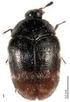 Rev. Chilena Ent. 2012, 37: 17-21 CONTRIBUTION TO THE KNOWLEDGE OF DERMESTIDAE (COLEOPTERA) FROM CHILE CONTRIBUCIÓN AL CONOCIMIENTO DE LOS DERMESTIDAE (COLEOPTERA) DE CHILE Jiří Háva 1 and Jaime Solervicens
Objectives. EAB Symptoms 8/18/14. Emerald Ash Borer: A Threat to Colorado s Community Forests. 1- to 2-Year Life Cycle.
 8/18/14 Emerald Ash Borer: A Threat to Colorado s Community Forests Objectives Introduce EAB Pest origins and biology Current impacts Threat to Colorado Keith Wood Community Forestry Program Manager Colorado
Recent ostracods from the Azores archipelago
 Joannea Geol. Paläont. 11: 132-136 (2011) Recent ostracods from the Azores archipelago Ricardo P. MEIRELES, Antonio FRIAS MARTINS & Sérgio ÁVILA The Azores is an archipelago in the Atlantic Ocean between
Review of the Late Pleistocene Soricidae (Mammalia) fauna of the Vaskapu Cave (North Hungary)
 Hantkeniana 8, 163 169, Budapest, 2013 Review of the Late Pleistocene Soricidae (Mammalia) fauna of the Vaskapu Cave (North Hungary) Lukács MÉSZÁROS 1 (with 2 figures, 2 tables and 1 plate) The summary
Growing Cocoa Beans. Growing Region
 Growing Cocoa Beans All chocolate begins with cocoa beans, the fruit of the cacao tree (also called a cocoa tree). Scientists know that the cacao tree originated somewhere in South or Central America.
Rhodes, E. M., N. D. Benda, and O. E. Liburd. 2014. Field Distribution of Dasineura
 Elena M. Rhodes Entomology and Nematology Department, UF P.O. box 110620 Bldg. 970 Natural Area Dr. Gainesville, Fl 32611 Office (352) 273-3926 [email protected] http://www.erhodes.info/ Profile. I am a
Second attempt for determining the Lepidoptera fauna of Kozluk with notes on some other insects of the District (Batman Prov.
 Vxát axãá Information about the activities of the Cesa free irregular internet Issues Centre for Entomological Studies Ankara established in 1988 Announcements- General News Expeditions- Publications Visitors
A Visual Guide to Detecting Emerald Ash Borer Damage
 cfs.nrcan.gc.ca A Visual Guide to Detecting Emerald Ash Borer Damage Ontario Ministry of Natural Resources Library and Archives Canada Cataloguing in Publication A visual guide to detecting emerald ash
... 2... 5... 9... 10... 12... 16! "#... 17 $#%&... 18 $#' ()*... 20
 ... 2... 5... 9... 10... 12... 16! "#... 17 $#%&... 18 $#' ()*... 20 pàg 1 de 58 +,-.-/01 / 2 ) 1 $ /10 0 1.- -1 - + 3-,),.-0 4 5 0 0, -02,- 6 4 4 1 0-70880, /,- 0/1-0 1 / 01, 1 )9 $,, 2-0 -4 -.--- 5-1.,001-1-20
GR 221 Dry-stone Route
 Trekking First GR in Mallorca. This route was designed to allow people go along the Serra de Tramuntana from one end to the other. The name Piedra Seca is due to the many constructions along the Serra
ARIMNet 2 Call 2014-15
 Coordination of the Agricultural Research In the Mediterranean Area Call i text ARIMNet 2 Call 2014-15 SUBMISSION Pre-proposal by December 1 st, 2014 Full Proposal by May 11 th 2015 on http://arimnet-call.eu/
ENTERING THE EU BORDERS & VISAS THE SCHENGEN AREA OF FREE MOVEMENT. EU Schengen States. Non-Schengen EU States. Non-EU Schengen States.
 ENTERING THE EU BORDERS & VISAS THE SCHENGEN AREA OF FREE MOVEMENT An area without internal borders where EU citizens and non-eu nationals may move freely EU Schengen States Non-Schengen EU States IS Azores
Nectar host plant selection and floral probing by the Indian butterfly Danaus genutia (Nympahlidae)
 Journal of Research on the Lepidoptera 38: 79-84, 1999 (2005) Nectar host plant selection and floral probing by the Indian butterfly Danaus genutia (Nympahlidae) Mantu Bhuyan Division of Plant Sciences
Major/Specialization. B.Sc. Degree
 B.Sc. Degree Extension and Extension and Forestry and Forest Reclamation of Arid & Mountainous Regions Agronomy & with two specializations Landscape Design Aquatic Ecology Fish Processing Forestry and
eflora and DialGraph, tools for enhancing identification processes in plants Fernando Sánchez Laulhé, Cecilio Cano Calonge, Antonio Jiménez Montaño
 Nimis P. L., Vignes Lebbe R. (eds.) Tools for Identifying Biodiversity: Progress and Problems pp. 163-169. ISBN 978-88-8303-295-0. EUT, 2010. eflora and DialGraph, tools for enhancing identification processes
Principles of Crop Production
 Higher Technical School of Agricultural Engineering UPCT Principles of Crop Production Qualification: Degree in Agri-food Engineering and Biological Systems Course: 2015/2016 1. Subject Information Name
How Insects Feed from Flowers
 The Pollinator Garden: www.foxleas.com How Insects Feed from Flowers The main insect groupings that include species that use flowers as a food source are: Butterflies and Moths (Lepidoptera), Bees and
Cloud Mountain Farm Center 6906 Goodwin Rd., Everson, WA 98247 (360)966-5859 voice, (360)966-0921 fax, www.cloudmountainfarmcenter.
 Disease and Pest Management in the Home Orchard Fruit trees have been grown in home orchards for centuries. The goal of many gardeners today is to have fresh fruit from their own trees with a minimum of
EUROPASS DIPLOMA SUPPLEMENT TO TECHNICAL VOCATIONAL TRAINING
 EUROPASS DIPLOMA SUPPLEMENT TO TECHNICAL VOCATIONAL TRAINING TITLE OF THE DIPLOMA (ES) Técnico en Jardinería y Floristería TRANSLATED TITLE OF THE DIPLOMA (EN) (1) Technician in Gardening and Floristry
Investing in Real Estate in Malta and Cyprus
 Investing in Real Estate in Malta and Cyprus ==================================== The Social Capital Foundation 135 rue des combattants BP 30, B 1310 La Hulpe Website: http://www.socialcapitalfoundation.is/tscf/aboutus_realestate.htm
Group 1 Group 2 Group 3 Group 4
 Open Cities Lesson 1: Different kinds of cities Worksheet Task 1 Find the countries on the map Group 1 Group 2 Group 3 Group 4 1 Austria 2 Belgium 3 Bulgaria 4 Cyprus 5 Czech Republic 6 Denmark 7 Estonia
Control of aphids and mites on Celebrity tomato plants using organic controls
 Control of aphids and mites on Celebrity tomato plants using organic controls Kimberly chofield, Program pecialist-ipm Texas AgriLife Extension ervice, Dallas, TX Vicki Burk, Amy Dessert, Joyce Flachmeier-
MONITORING OF DROUGHT ON THE CHMI WEBSITE
 MONITORING OF DROUGHT ON THE CHMI WEBSITE Richterová D. 1, 2, Kohut M. 3 1 Department of Applied and Land scape Ecology, Faculty of Agronomy, Mendel University in Brno, Zemedelska 1, 613 00 Brno, Czech
Ecological Restoration of an altered area at the Majuy
 Ecological Restoration of an altered area at the Majuy Mountain in Cota, Colombia Introduction Human kind's constant pressure has generated alarming transformations to the natural ecosystems, which has
Integrated Pest Management
 Integrated Pest Management Science and Language Arts Brief Description: This lesson will focus all of the information the students have learned about pests in the other insect lessons in a decision-making
Controlling Invasive Plants and Animals in our Community
 Controlling Invasive Plants and Animals in our Community PROVIDED BY THE WILDLIFE COMMITTEE What makes a plant or animal invasive? When a plant or animal from another region of the world (usually Europe
How To Understand The Biology Of Olea Europaea
 Carlos García-Verdugo de Lucas [email protected] Education - Ph.D. Plant Evolution and Conservation. Universidad Complutense de Madrid. Patterns and mechanisms involved in microevolutionary
Tetraneura ulmi (L.) (Hemiptera, Eriosomatinae) on elm as its primary host
 APHIDS AND OTHER HEMIPTEROUS INSECTS VOL. 13 145-149 Tetraneura ulmi (L.) (Hemiptera, Eriosomatinae) on elm as its primary host KATARZYNA KMIECÂ *, IZABELA KOT** Department of Entomology, Agricultural
Mapping Forest-Fire Damage with Envisat
 Mapping Forest-Fire Damage with Envisat Mapping Forest-Fire Damage Federico González-Alonso, S. Merino-de-Miguel, S. García-Gigorro, A. Roldán-Zamarrón & J.M. Cuevas Remote Sensing Laboratory, INIA, Ministry
Fecha: 04/12/2010. New standard treatment for breast cancer at early stages established
 New standard treatment for breast cancer at early stages established London December 04, 2010 12:01:13 AM IST Spanish Oncology has established a new standard treatment for breast cancer at early stages,
DEVELOPMENT OF RENEWABLE ENERGY IN SICILY
 DEVELOPMENT OF RENEWABLE ENERGY IN SICILY Claudio Basso (1), Fabio V. Matera* (2) (1) Regione Siciliana Assessorato Industria Ufficio Speciale per il Coordinamento delle Iniziative Energetiche, Unità Operativa
Student worksheet. Bugs. Complete metamorphosis Dung Beetle lifecycle. Incomplete metamorphosis Leafhopper lifecycle
 Complete metamorphosis Dung Beetle lifecycle Incomplete metamorphosis Leafhopper lifecycle Museum Victoria Bugs Classroom Activities Section 3 6 A Diving Beetle s story Museum Victoria Bugs Classroom Activities
CURRICULUM VITAE : AHMED HUSSEIN EL-HENEIDY
 CURRICULUM VITAE NAME : AHMED HUSSEIN EL-HENEIDY DATE OF BIRTH : 25 APRIL 1946 CITIZENSHIP : EGYPTIAN COUNTRY OF RESIDENCE: EGYPT ADDRESS : P. O. Box # 915, P. Code 11728, MAADI, CAIRO, EGYPT E-mail Address:
Where Do Birds Live?
 Objectives You will learn about 1) where birds build nests, 2) the materials they use, 3) different nest characteristics and 4) how to observe nesting activity. Introduction Birds hatch their young in
REFERENCES THOMAS E. DIMOCK. 464 Fairfax Avenue, Ventura, California 93003
 274 JOURNAL OF THE LEPIDOPTERISTS' SOCIETY REFERENCES CLARKE, J. F. GATES. 1958. Catalogue of the Type Specimens of Microlepidoptera in the British Museum (Natural History) described by Edward Meyrick
Tailoring solutions for a region of diversity Global Press Conference 2013
 Tailoring solutions for a region of diversity Global Press Conference 2013 Vincent Gros Senior Vice President, BASF Crop Protection Europe, CIS, Central Asia, Africa and Middle East October 2 nd, 2013
Payments to Overseas banks Things to be aware of
 Payments to Overseas banks Things to be aware of Payment can be made to accounts in most countries. If you wish to have your pension paid overseas, the Royal Bank of Scotland (RBS), the Funds bankers,
Garden design and restoration - rebuilding hystorical places Yvoire France
 Volume 17(3), 118-122, 2013 JOURNAL of Horticulture, Forestry and Biotechnology www.journal-hfb.usab-tm.ro Garden design and restoration - rebuilding hystorical places Yvoire France Szekely G. 1 * 1 Banat
CSL Pest Risk Analysis For Planococcus lilacinus
 CSL Pest Risk Analysis For Planococcus lilacinus STAGE 1: PRA INITIATION 1. What is the name of the pest? Planococcus lilacinus Cockerell Hemiptera Pseudococcidae coffee mealybug Synonyms Dactylopius coffeae
Digitization of the Albion College Herbarium. Matthew Kleinow
 Digitization of the Albion College Herbarium Matthew Kleinow What is a Herbarium? Reference collection of dried or liquidpreserved plant specimens World s largest herbarium is at National Museum of Natural
A REVIEW OF PEST CONTROL IN AVOCADOS
 California Avocado Society 1979 Yearbook 63: 58-65 A REVIEW OF PEST CONTROL IN AVOCADOS C. Don Gustafson Farm Advisor, Cooperative Extension Service, University of California, San Diego County. Introduction
BALBHARATI PUBLIC SCHOOL, PITAMPURA,NEW DELHI COMPREHENSIVE NOTES CHAPTER-6 HUMAN RESOURCES CLASS-VIII SUBJECT-GEOGRAPHY FINAL TERM
 BALBHARATI PUBLIC SCHOOL, PITAMPURA,NEW DELHI COMPREHENSIVE NOTES CHAPTER-6 HUMAN RESOURCES CLASS-VIII SUBJECT-GEOGRAPHY FINAL TERM Q1. Why are people considered as a resource? A1. People are a nation